IMAGE PROCESSING
IN AGRO-BASED
INDUSTRIES
Sandeep Pawar (143350016)
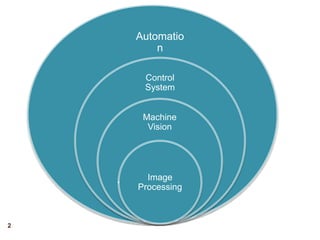
Automatio
n
Control
System
Machine
Vision
Image
Processing
2
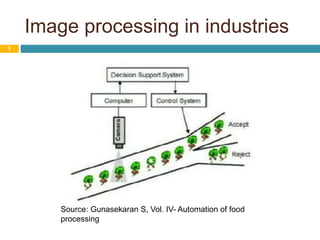
Image processing in industries
Source: Gunasekaran S, Vol. IV- Automation of food
processing
3
4
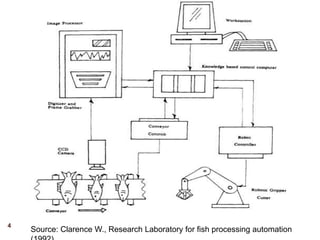
Source: Clarence W., Research Laboratory for fish processing automation
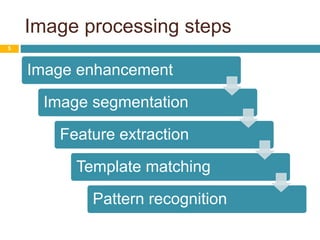
Image processing steps
Image enhancement
Image segmentation
Feature extraction
Template matching
Pattern recognition
5
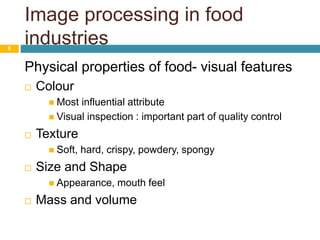
Image processing in food
industries6
Physical properties of food- visual features
 Colour
 Most influential attribute
 Visual inspection : important part of quality control
 Texture
 Soft, hard, crispy, powdery, spongy
 Size and Shape
 Appearance, mouth feel
 Mass and volume
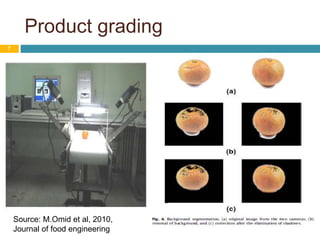
Product grading
7
Source: M.Omid et al, 2010,
Journal of food engineering
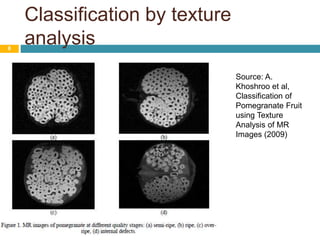
Classification by texture
analysis8
Source: A.
Khoshroo et al,
Classification of
Pomegranate Fruit
using Texture
Analysis of MR
Images (2009)
Image processing in packaging
9
 Package inspection
 Label verification
 Seal inspection
 Wrinkle alignment
 Carton inspection
 Automatic glue placement
Image processing : two sides
10
 Precision, objectivity, speed
 Saves tedious, inefficient manual inspection
tasks
 Must be sufficiently flexible and robust to cope
with biological flexibility
 Specialized hardware and software systems to
cope up with ever increasing demands of
speed and precision
Current scenario and Future
scope11
 Infancy stage
 Systems: successful under constrained
conditions for specific applications
 Most of the systems 2D and monochromatic
 Needs 3D systems with colour processing
 More robust, humanlike (artificial intelligence)
 Developing generic image processing systems
that can be used for multiple applications may
increase acceptability.
Conclusion
12
 Due to advances in electronics and computer
technologies, vision systems can be installed in
almost all food plants for an effective quality
evaluation/control operation.
 One of the biggest barriers in applying machine
vision to the food processing industry is the
system cost.
 Though the system cost for image processing
system has been significantly reduced the ratio of
cost to benefit is still unacceptable in many
potential applications.

Image Processing in agro-based industries

  • 1.
  • 2.
  • 3.
    Image processing inindustries Source: Gunasekaran S, Vol. IV- Automation of food processing 3
  • 4.
    4 Source: Clarence W.,Research Laboratory for fish processing automation
  • 5.
    Image processing steps Imageenhancement Image segmentation Feature extraction Template matching Pattern recognition 5
  • 6.
    Image processing infood industries6 Physical properties of food- visual features  Colour  Most influential attribute  Visual inspection : important part of quality control  Texture  Soft, hard, crispy, powdery, spongy  Size and Shape  Appearance, mouth feel  Mass and volume
  • 7.
    Product grading 7 Source: M.Omidet al, 2010, Journal of food engineering
  • 8.
    Classification by texture analysis8 Source:A. Khoshroo et al, Classification of Pomegranate Fruit using Texture Analysis of MR Images (2009)
  • 9.
    Image processing inpackaging 9  Package inspection  Label verification  Seal inspection  Wrinkle alignment  Carton inspection  Automatic glue placement
  • 10.
    Image processing :two sides 10  Precision, objectivity, speed  Saves tedious, inefficient manual inspection tasks  Must be sufficiently flexible and robust to cope with biological flexibility  Specialized hardware and software systems to cope up with ever increasing demands of speed and precision
  • 11.
    Current scenario andFuture scope11  Infancy stage  Systems: successful under constrained conditions for specific applications  Most of the systems 2D and monochromatic  Needs 3D systems with colour processing  More robust, humanlike (artificial intelligence)  Developing generic image processing systems that can be used for multiple applications may increase acceptability.
  • 12.
    Conclusion 12  Due toadvances in electronics and computer technologies, vision systems can be installed in almost all food plants for an effective quality evaluation/control operation.  One of the biggest barriers in applying machine vision to the food processing industry is the system cost.  Though the system cost for image processing system has been significantly reduced the ratio of cost to benefit is still unacceptable in many potential applications.