1
IL-17A in Atherosclerosis / MI
Presented by: Safoora Pordel
2
 Cardiovascular diseases are the most common cause of
death in most countries of the world. (Roger, 2012)
 Heart diseases are the first cause of death in US.
(Health United States, 2014)
 Almost 50% of deaths in Iran is due to coronary artery
disease. (Hatami, 2007)
 Cardiovascular diseases are the first cause of death Iran.
(Saadat, 2015)
3
Age
Male sex
Blood lipids levels
Diabetes
Genes
Hypertension
 Smoking
Risk factors of MI
4
Symptoms of MI
 chest pain
 Dyspnea (shortness of breath(
 Face seems gray
 Coughing
 Nausea
 Vomiting
 Dizziness
 Restlessness & Anxiety
 The patient is clammy and sweaty
Symptom of MI
5
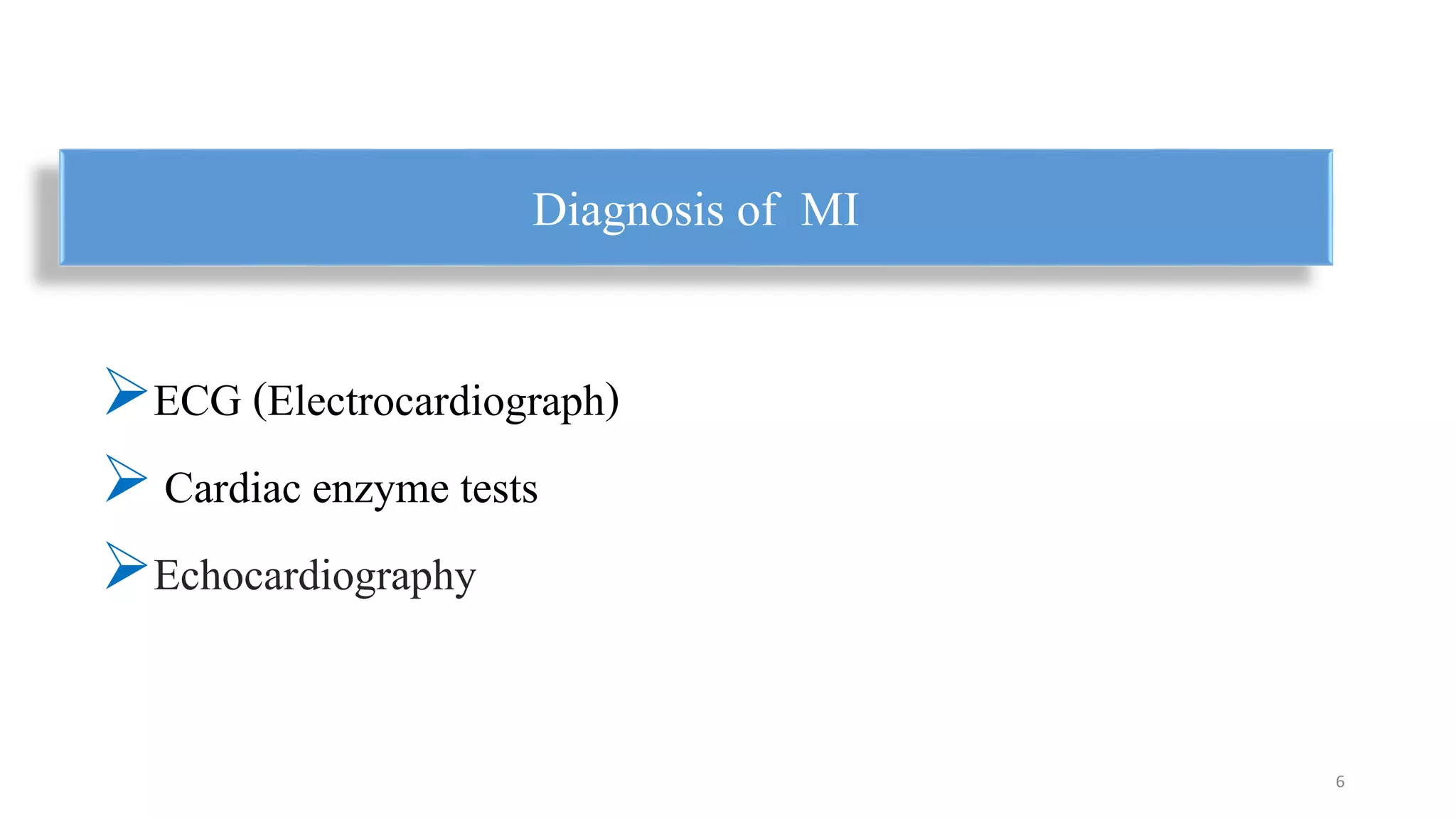
ECG (Electrocardiograph)
 Cardiac enzyme tests
Echocardiography
Diagnosis of MI
6
Treatment
Medication
Aspirin
Thrombolytic
Anti-plateletagents
Surgical and other procedure
PCI
CABG
7
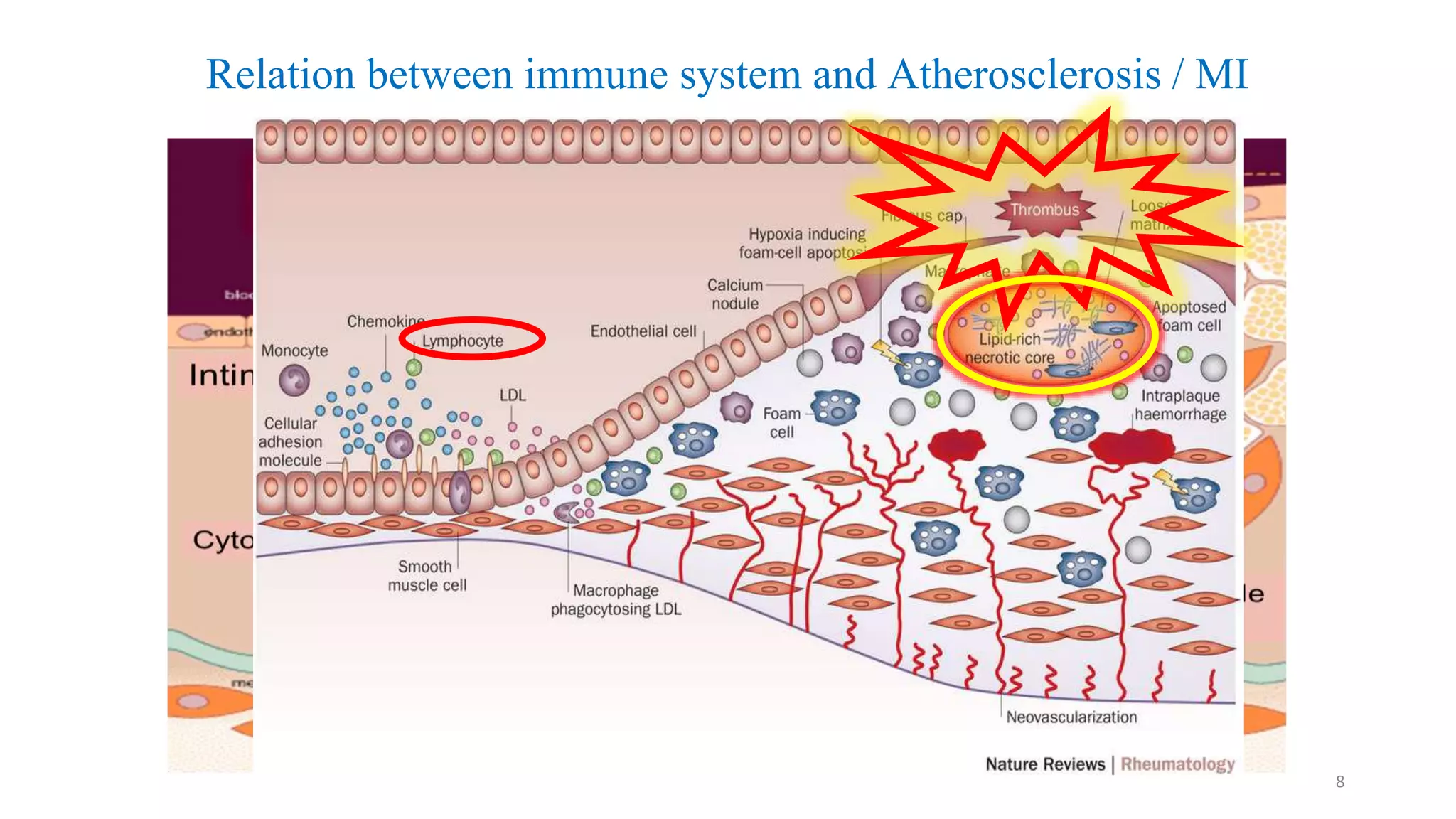
Relation between immune system and Atherosclerosis / MI
8
9
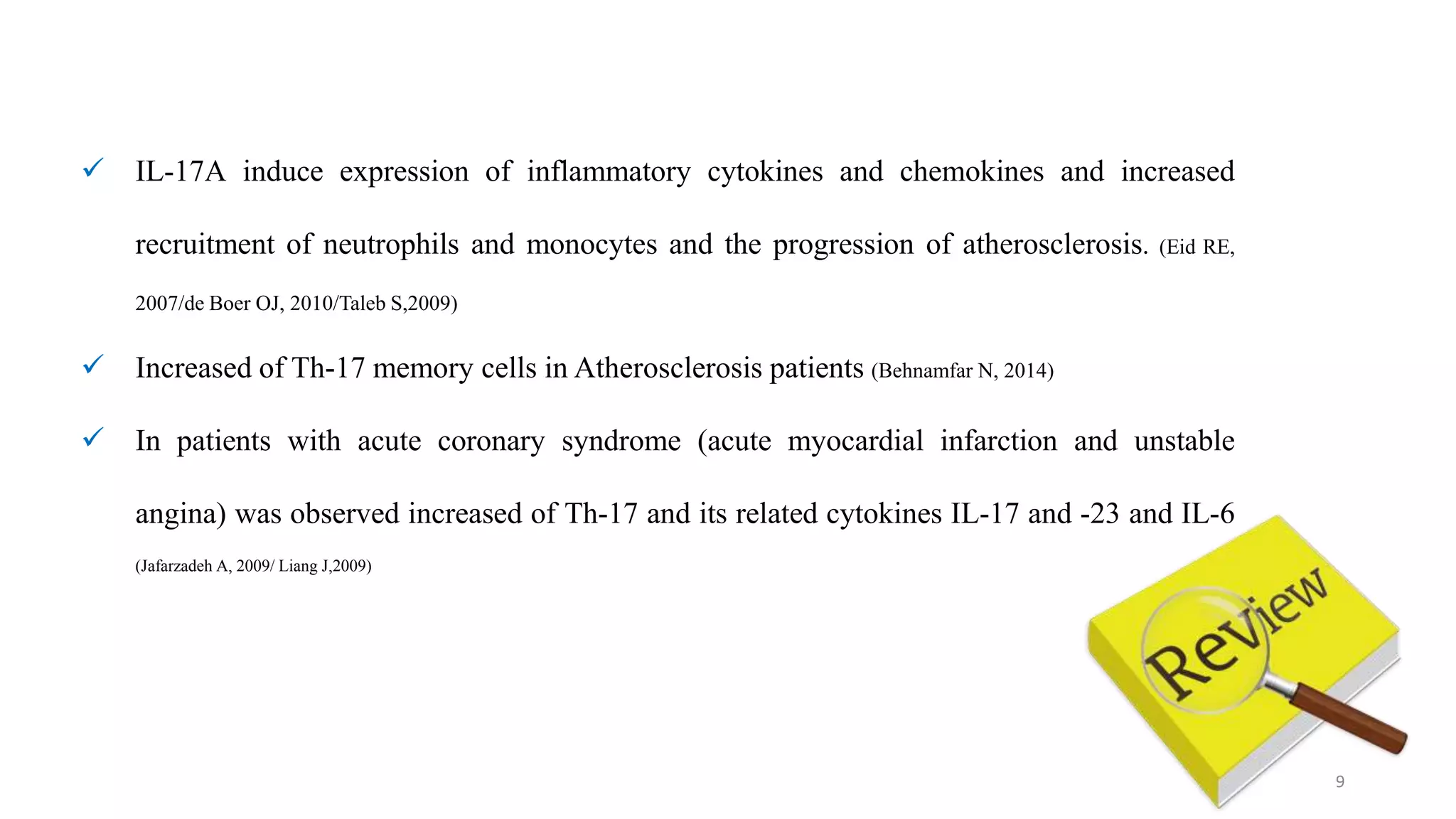
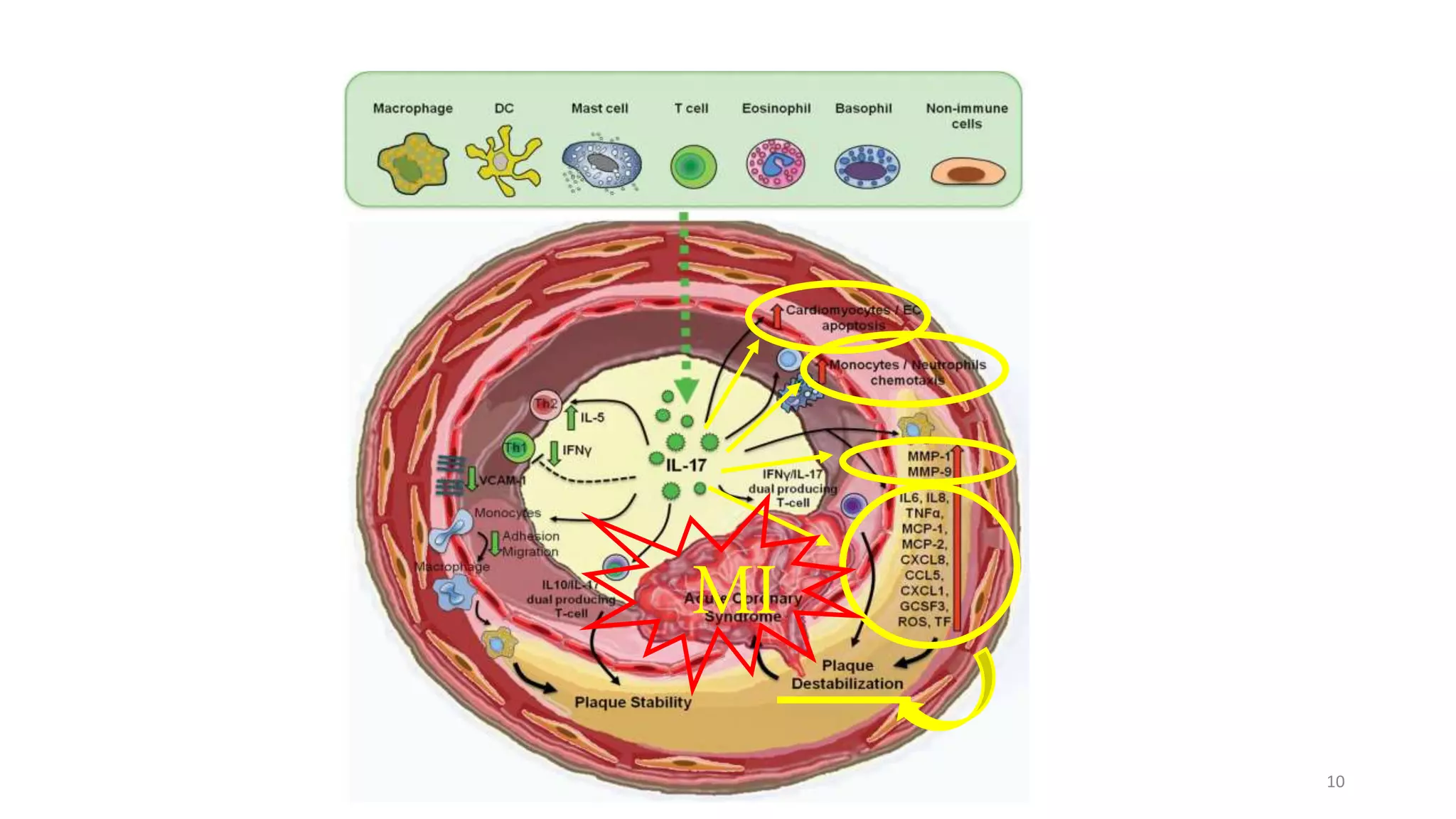
 IL-17A induce expression of inflammatory cytokines and chemokines and increased
recruitment of neutrophils and monocytes and the progression of atherosclerosis. (Eid RE,
2007/de Boer OJ, 2010/Taleb S,2009)
 Increased of Th-17 memory cells in Atherosclerosis patients (Behnamfar N, 2014)
 In patients with acute coronary syndrome (acute myocardial infarction and unstable
angina) was observed increased of Th-17 and its related cytokines IL-17 and -23 and IL-6
(Jafarzadeh A, 2009/ Liang J,2009)
MI
10
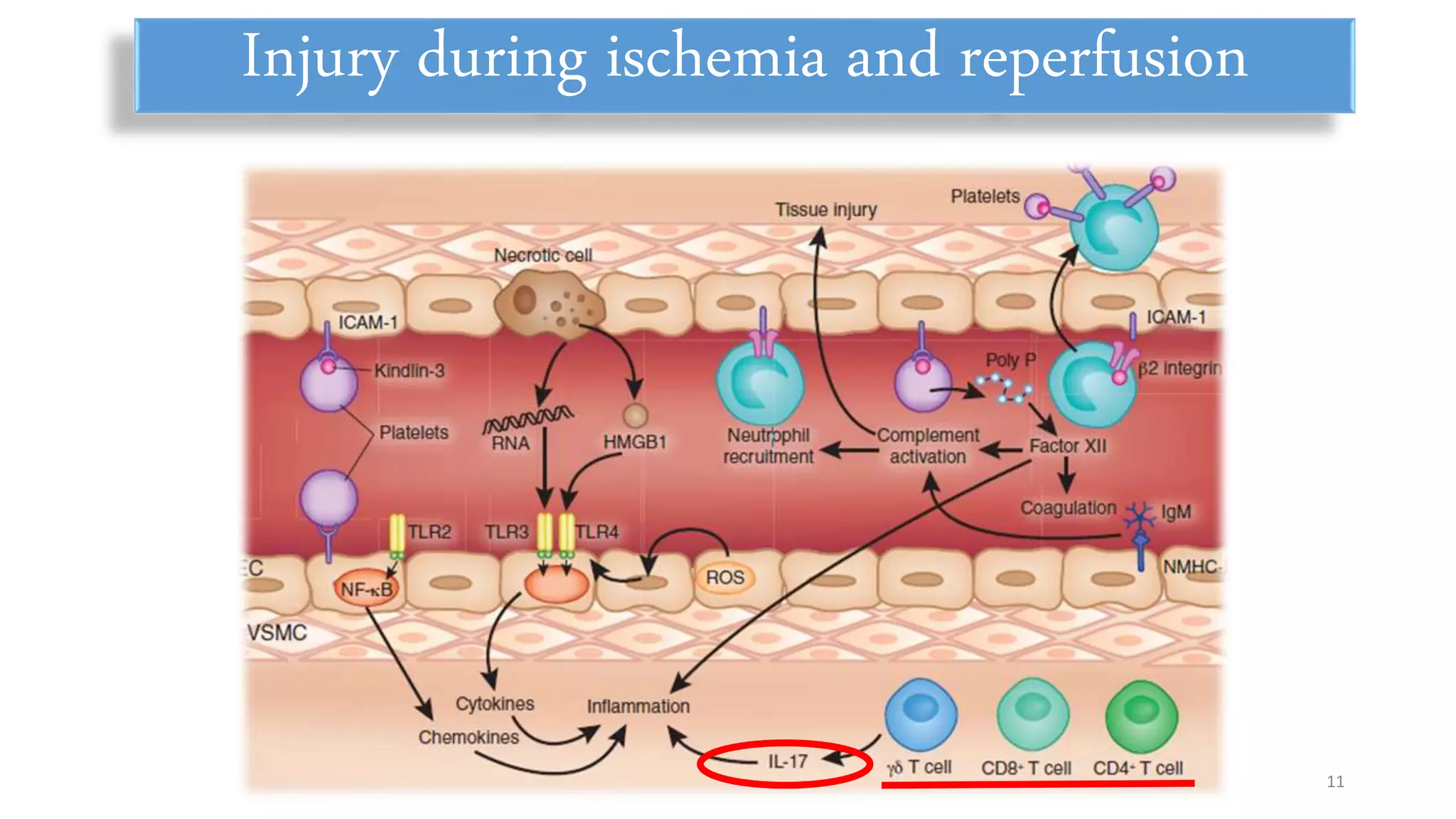
Injury during ischemia and reperfusion
11
12
 Ischemia-reperfusion injury in the heart caused enhancement of expression of IL-17RA
receptors and IL-17A and IL-17F & Increased signaling through activation of MAPK kinase ;
increased expression of proinflammatory downstream targets, such as the CXCL1 and IL-6.
(Barry SP; 2013/ Hamacher-Brady A;2006)
 In vivo studies in mouse models have shown that neutralizing IL-17 to reduce necrosis and
apoptosis .
 Treatment with Monoclonal Antibody Anti-IL-17A and IL-17A genetic defect improved
ischemia-reperfusion injury, reduced the size of the damaged tissue, reduced Cardiac troponin
T levels and improve heart function. (Liao Y-H, 2012)
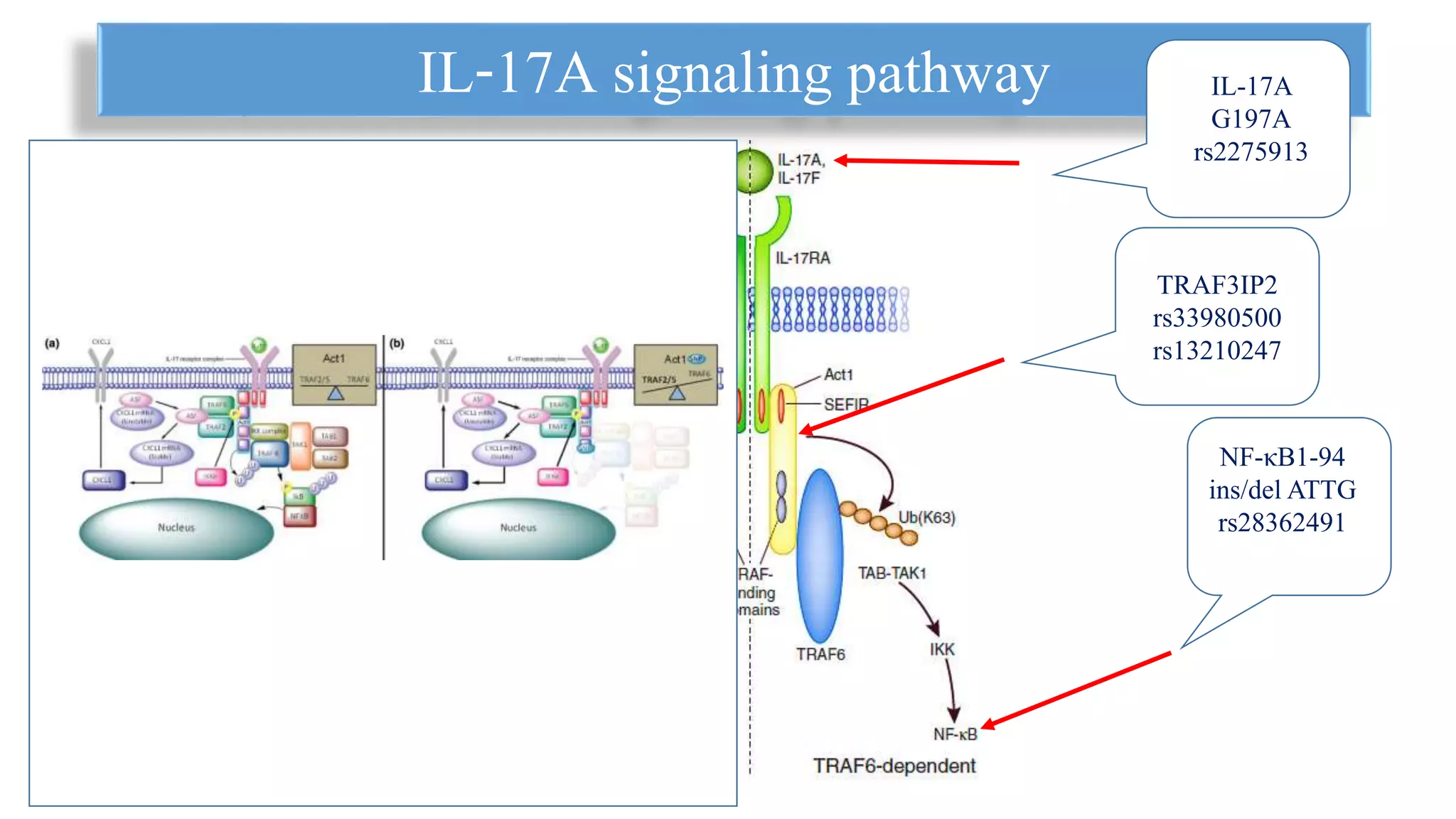
IL-17A signaling pathway
TRAF3IP2
rs33980500
rs13210247
IL-17A
G197A
rs2275913
NF-κB1-94
ins/del ATTG
rs28362491
14

Il17a in atherosclerosis and MI

  • 1.
  • 2.
    IL-17A in Atherosclerosis/ MI Presented by: Safoora Pordel 2
  • 3.
     Cardiovascular diseasesare the most common cause of death in most countries of the world. (Roger, 2012)  Heart diseases are the first cause of death in US. (Health United States, 2014)  Almost 50% of deaths in Iran is due to coronary artery disease. (Hatami, 2007)  Cardiovascular diseases are the first cause of death Iran. (Saadat, 2015) 3
  • 4.
    Age Male sex Blood lipidslevels Diabetes Genes Hypertension  Smoking Risk factors of MI 4
  • 5.
    Symptoms of MI chest pain  Dyspnea (shortness of breath(  Face seems gray  Coughing  Nausea  Vomiting  Dizziness  Restlessness & Anxiety  The patient is clammy and sweaty Symptom of MI 5
  • 6.
    ECG (Electrocardiograph)  Cardiacenzyme tests Echocardiography Diagnosis of MI 6
  • 7.
  • 8.
    Relation between immunesystem and Atherosclerosis / MI 8
  • 9.
    9  IL-17A induceexpression of inflammatory cytokines and chemokines and increased recruitment of neutrophils and monocytes and the progression of atherosclerosis. (Eid RE, 2007/de Boer OJ, 2010/Taleb S,2009)  Increased of Th-17 memory cells in Atherosclerosis patients (Behnamfar N, 2014)  In patients with acute coronary syndrome (acute myocardial infarction and unstable angina) was observed increased of Th-17 and its related cytokines IL-17 and -23 and IL-6 (Jafarzadeh A, 2009/ Liang J,2009)
  • 10.
  • 11.
    Injury during ischemiaand reperfusion 11
  • 12.
    12  Ischemia-reperfusion injuryin the heart caused enhancement of expression of IL-17RA receptors and IL-17A and IL-17F & Increased signaling through activation of MAPK kinase ; increased expression of proinflammatory downstream targets, such as the CXCL1 and IL-6. (Barry SP; 2013/ Hamacher-Brady A;2006)  In vivo studies in mouse models have shown that neutralizing IL-17 to reduce necrosis and apoptosis .  Treatment with Monoclonal Antibody Anti-IL-17A and IL-17A genetic defect improved ischemia-reperfusion injury, reduced the size of the damaged tissue, reduced Cardiac troponin T levels and improve heart function. (Liao Y-H, 2012)
  • 13.
  • 14.

Editor's Notes

  • #4 Most MIs occur due to coronary artery disease.[5] Risk factors include high blood pressure, smoking, diabetes, lack of exercise,obesity, high blood cholesterol, poor diet, and excessive alcohol intake, among others.[7][8] The mechanism of an MI often involves the complete blockage of a coronary artery caused by a rupture of an atherosclerotic plaque.[5] MIs are less commonly caused bycoronary artery spasms, which may be due to cocaine, significant emotional stress, and extreme cold, among others.[9][10] A number of tests are useful to help with diagnosis, including electrocardiograms (ECGs), blood tests, and coronary angiography.[11] An ECG may confirm an ST elevation MI if ST elevation is present.[2] Commonly used blood tests include troponin and less often creatine kinase MB.[11]