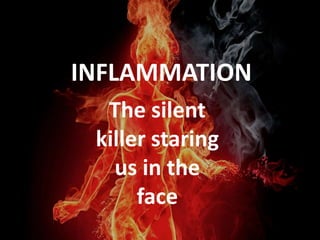


INFLAMMATION
The silent
killer staring
us in the
face
What we will be talking about
• A brief introduction
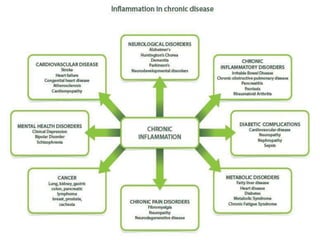
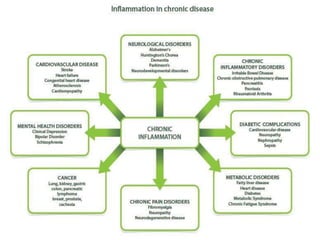
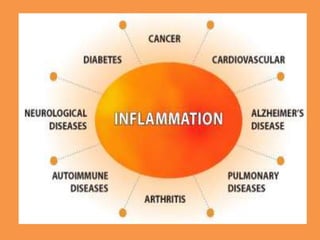
• Its common role in various disease processes
• Clinical Correlation and studies
• Emerging trends in anti inflammatory agents
• Anticipating future trends in therapy
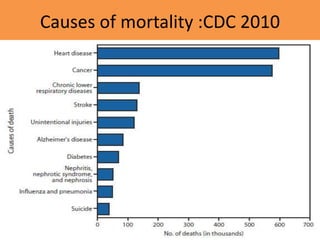
Causes of mortality :CDC 2010
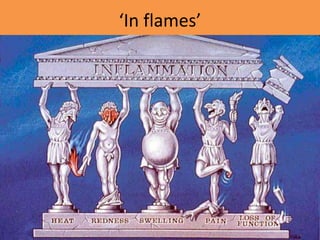
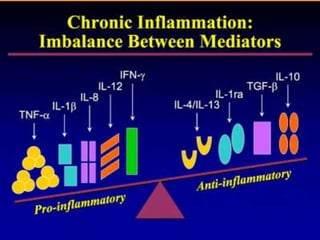
‘In flames’
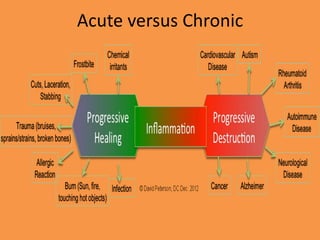
Acute versus Chronic
In the end we are a
one big chemical
reaction
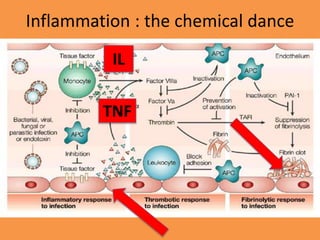
Inflammation : the chemical dance
IL
TNF
Inflammation
&
Atherosclerosis
You are only as old as your endothelium
-- Paul VanHoutte, Mayo Clinic (1983)
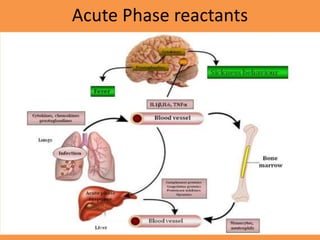
Acute Phase reactants
Acute phase reactants
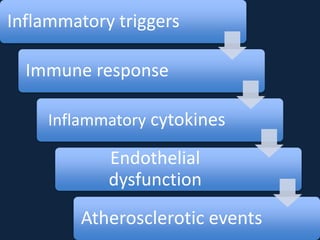
Inflammatory triggers
Immune response
Inflammatory cytokines
Endothelial
dysfunction
Atherosclerotic events
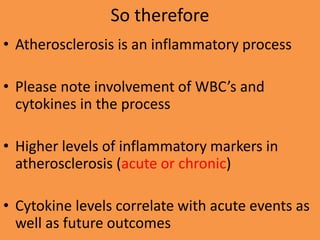
So therefore
• Atherosclerosis is an inflammatory process
• Please note involvement of WBC’s and
cytokines in the process
• Higher levels of inflammatory markers in
atherosclerosis (acute or chronic)
• Cytokine levels correlate with acute events as
well as future outcomes
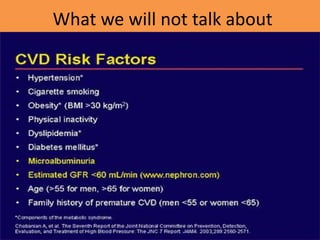
What we will not talk about
Emerging risk factors : Inflammation
and atherosclerosis
ACUTE CONDITIONS
• Infections
Pneumonias, Flu
• Role of vaccines
CHRONIC CONDITIONS
• Poor oral-dental
hygiene
• Chronic
Osteomyelitis
• HIV, HCV
• Rheumatologic
disease/ vasculitis
More the inflammation worse the
atherosclerosis
Acute Chronic
Inflammation Inflammation
Atherosclerotic events
Strokes & MI’s
Infections
as an example for
enhanced risk of atherosclerosis
Infections and Atherosclerotic events
• First questioned in 1911 and 1921
• Now we have new diagnostic tools to explore
the same
1.Frothingham C. The relationship between acute infectious
diseases and arterial lesions. Arch Intern Med. 1911; 8: 153–162.
2. Ophuls W. Arteriosclerosis and cardiovascular disease: their
relation to infectious diseases. JAMA. 1921; 76: 700–701.
Infections and
Risk of Strokes and MI’s
Is there a link ?
Simultaneous factors acting at levels of systemic homeostasis and local vascular wall.
Lindsberg P J , and Grau A J Stroke. 2003;34:2518-2532.
Risk of MI and Stroke
after
Acute Infection or Vaccination
N Engl J Med 2004; 351:2611-2618 : Smeeth et al
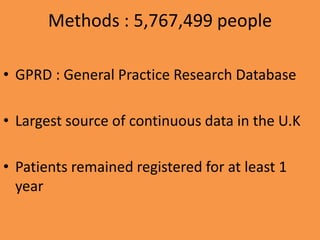
Methods : 5,767,499 people
• GPRD : General Practice Research Database
• Largest source of continuous data in the U.K
• Patients remained registered for at least 1
year
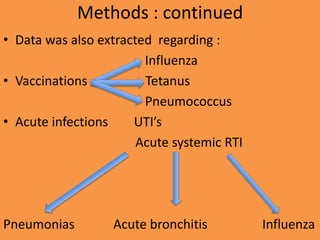
Methods : continued
• Data was also extracted regarding :
Influenza
• Vaccinations Tetanus
Pneumococcus
• Acute infections UTI’s
Acute systemic RTI
Pneumonias Acute bronchitis Influenza
Null Hypothesis
Vascular-events are not affected by
Acute exposure
to
Vaccination or Infection.
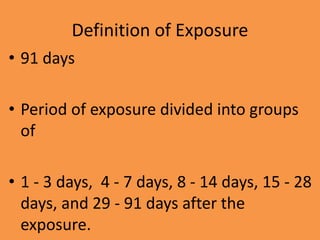
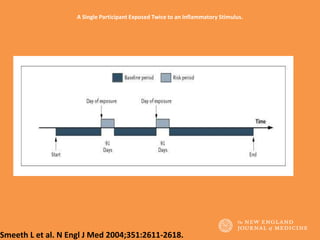
Definition of Exposure
• 91 days
• Period of exposure divided into groups
of
• 1 - 3 days, 4 - 7 days, 8 - 14 days, 15 - 28
days, and 29 - 91 days after the
exposure.
A Single Participant Exposed Twice to an Inflammatory Stimulus.
Smeeth L et al. N Engl J Med 2004;351:2611-2618.
Risk for Post exposure MI’s
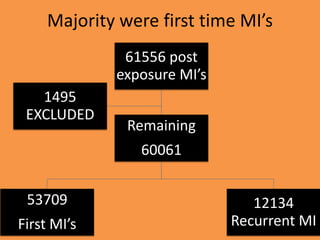
Majority were first time MI’s
61556 post
exposure MI’s
53709
First MI’s
Remaining
60061
12134
Recurrent MI
1495
EXCLUDED
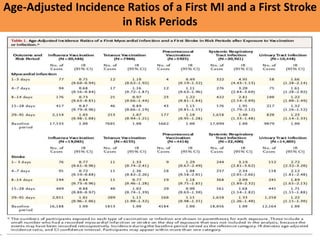
Age-Adjusted Incidence Ratios of a First MI and a First Stroke
in Risk Periods
.
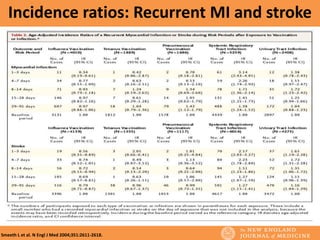
Incidence ratios: Recurrent MI and stroke
Smeeth L et al. N Engl J Med 2004;351:2611-2618.
Conclusion
• Acute infections cause a transient
increase in the risk of vascular
events.
• By contrast, influenza, tetanus, and
pneumonia vaccinations do not
So in retrospect …
If Infections do increase risk of
atherosclerotic events …
Vaccines should protect
Prevention of Acute Myocardial Infarction
and Stroke among Elderly Persons
with
Dual Pneumococcal and Influenza
Vaccination
Hung I F N et al : Clin Infect Dis. (2010) 51 (9): 1007-1016.
36,636 outpatients aged ≥65 years
Divided into 3 groups
Pneumonia Pneumonia Influenza
and Influenza alone alone
A Prospective Cohort Study :64 weeks
Eligibility criteria
• Age ⩾65 years
• Had 1 or more chronic illness as follows
Asthma COPD CAD
HTN DM CVA
CKD Liver disease Malignancy
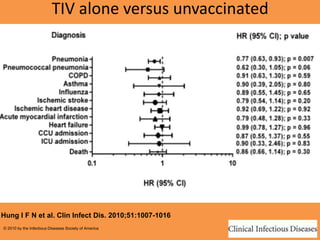
TIV alone versus unvaccinated
Hung I F N et al. Clin Infect Dis. 2010;51:1007-1016
© 2010 by the Infectious Diseases Society of America
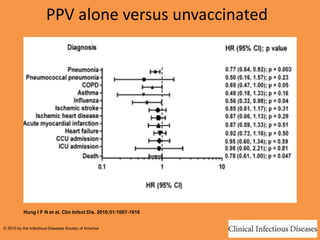
PPV alone versus unvaccinated
Hung I F N et al. Clin Infect Dis. 2010;51:1007-1016
© 2010 by the Infectious Diseases Society of America
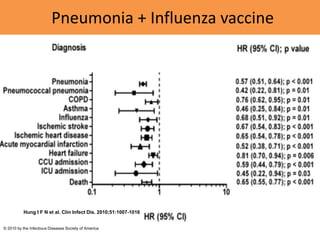
Pneumonia + Influenza vaccine
Hung I F N et al. Clin Infect Dis. 2010;51:1007-1016
© 2010 by the Infectious Diseases Society of America
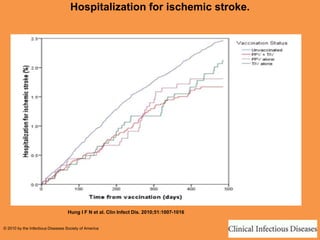
Hospitalization for ischemic stroke.
Hung I F N et al. Clin Infect Dis. 2010;51:1007-1016
© 2010 by the Infectious Diseases Society of America
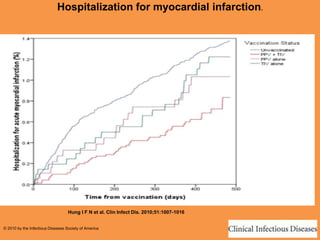
Hospitalization for myocardial infarction.
Hung I F N et al. Clin Infect Dis. 2010;51:1007-1016
© 2010 by the Infectious Diseases Society of America
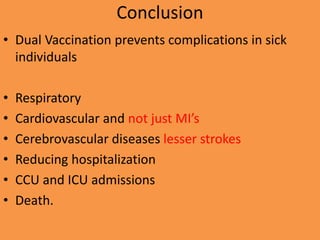
Conclusion
• Dual Vaccination prevents complications in sick
individuals
• Respiratory
• Cardiovascular and not just MI’s
• Cerebrovascular diseases lesser strokes
• Reducing hospitalization
• CCU and ICU admissions
• Death.
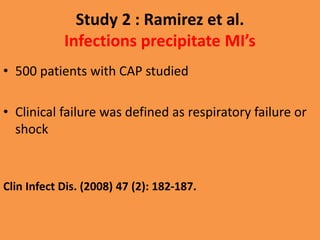
Study 2 : Ramirez et al.
Infections precipitate MI’s
• 500 patients with CAP studied
• Clinical failure was defined as respiratory failure or
shock
Clin Infect Dis. (2008) 47 (2): 182-187.
Incidence of acute myocardial infarction (AMI) in patients
with community-acquired pneumonia (CAP), according to
the severity of disease at hospital admission and the
development of clinical failure during hospitalization.
Ramirez J et al. Clin Infect Dis. 2008;47:182-187
© 2008 by the Infectious Diseases Society of America
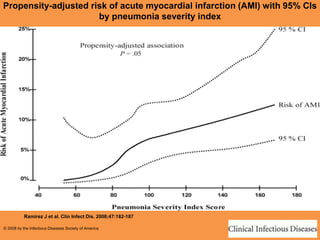
Propensity-adjusted risk of acute myocardial infarction (AMI) with 95% CIs
by pneumonia severity index
Ramirez J et al. Clin Infect Dis. 2008;47:182-187
© 2008 by the Infectious Diseases Society of America
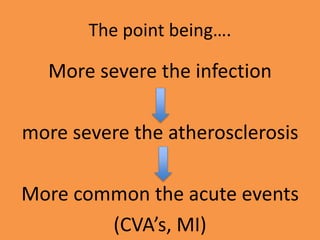
The point being….
More severe the infection
more severe the atherosclerosis
More common the acute events
(CVA’s, MI)
Seasonal variations in
atherosclerotic disease
The inflammation link
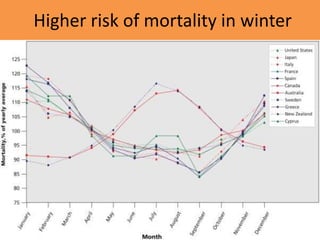
Higher risk of mortality in winter
Date of download:
8/18/2014
Copyright © The American College of Cardiology.
All rights reserved.
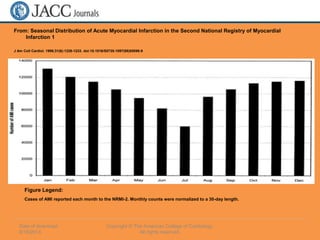
From: Seasonal Distribution of Acute Myocardial Infarction in the Second National Registry of Myocardial
Infarction 1
J Am Coll Cardiol. 1998;31(6):1226-1233. doi:10.1016/S0735-1097(98)00098-9
Cases of AMI reported each month to the NRMI-2. Monthly counts were normalized to a 30-day length.
Figure Legend:
Date of download:
8/18/2014
Copyright © The American College of Cardiology.
All rights reserved.
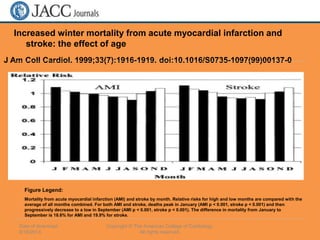
Increased winter mortality from acute myocardial infarction and
stroke: the effect of age
J Am Coll Cardiol. 1999;33(7):1916-1919. doi:10.1016/S0735-1097(99)00137-0
Mortality from acute myocardial infarction (AMI) and stroke by month. Relative risks for high and low months are compared with the
average of all months combined. For both AMI and stroke, deaths peak in January (AMI p < 0.001, stroke p < 0.001) and then
progressively decrease to a low in September (AMI p < 0.001, stroke p < 0.001). The difference in mortality from January to
September is 18.6% for AMI and 19.9% for stroke.
Figure Legend:
Peak Month of Flu Activity 1982-83
through 2013-14 (CDC)
Role of flu vaccine ?
Chronic Infections and
Atherosclerosis
Microbes and us
• For every cell in our body, we carry 10 bacteria
• Bacteria comprise 1-3 % of our body weight
Chronic Infections and Atherosclerosis
• H. Pylori
• Periodontal disease :
Porphyromonas gingivalis
• HCV
• HIV
• HSV
• Chlamydia pneumoniae
Chronic Infection
Is it plaque infection as well
?
The link between
Chlamydia Pneumoniae, CMV, and HSV
in
Atherosclerosis of the Carotid Artery
Chiu et al : Circulation.1997; 96: 2144-2148
76 patients with carotid
artery stenosis
Endarterectomy specimens
stained for
Chlamydia, CMV, and HSV
IgG antibodies measured to
CMV and Chlamydia
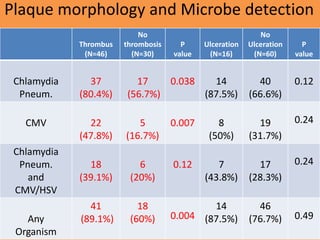
IgG’s correlated with plaque morphology
and the presence of the microorganisms
detected using immunohistochemistry
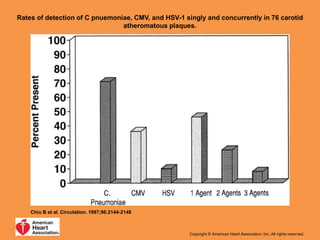
Results
• C pneumoniae detected in 71%
(95% confidence interval [CI], 59.5% to 80.9%)
• CMV was detected in 35.5%
(CI, 24.9% to 47.3%)
• HSV-1 10.5%
(CI, 4.7% to 19.7%)
Rates of detection of C pnuemoniae, CMV, and HSV-1 singly and concurrently in 76 carotid
atheromatous plaques.
Chiu B et al. Circulation. 1997;96:2144-2148
Copyright © American Heart Association, Inc. All rights reserved.
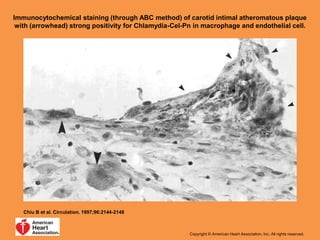
Immunocytochemical staining (through ABC method) of carotid intimal atheromatous plaque
with (arrowhead) strong positivity for Chlamydia-Cel-Pn in macrophage and endothelial cell.
Chiu B et al. Circulation. 1997;96:2144-2148
Copyright © American Heart Association, Inc. All rights reserved.
Thrombus
(N=46)
No
thrombosis
(N=30)
P
value
Ulceration
(N=16)
No
Ulceration
(N=60)
P
value
Chlamydia
Pneum.
37
(80.4%)
17
(56.7%)
0.038 14
(87.5%)
40
(66.6%)
0.12
CMV 22
(47.8%)
5
(16.7%)
0.007 8
(50%)
19
(31.7%)
0.24
Chlamydia
Pneum.
and
CMV/HSV
18
(39.1%)
6
(20%)
0.12 7
(43.8%)
17
(28.3%)
0.24
Any
Organism
41
(89.1%)
18
(60%) 0.004
14
(87.5%)
46
(76.7%) 0.49
Plaque morphology and Microbe detection
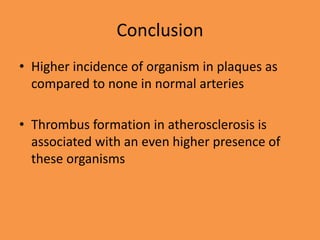
Conclusion
• Higher incidence of organism in plaques as
compared to none in normal arteries
• Thrombus formation in atherosclerosis is
associated with an even higher presence of
these organisms
• Innocent bystander theory …. However …..
• C pneumoniae has even been successfully cultured
from arteries as well **
• Positive correlation between worse plaque
morphology and the presence of microorganisms
• Surely they are up to no good if they are not meant
to be there
**Jackson et al :Chemotherapy, September 15-18, 1996
**Ramirez et al : Ann Intern Med. 1996;125:979-982
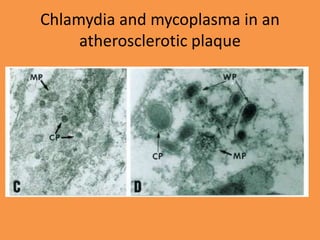
Chlamydia and mycoplasma in an
atherosclerotic plaque
Continued
• Several other studies involving H. pylori, HCV
as well
• HIV is widely known as a risk factor for CAD
• Chronic infections may therefore make the
inflammatory process we call atherosclerosis
worse
HCV as an example of
chronic inflammation and
its multisystem manifestations
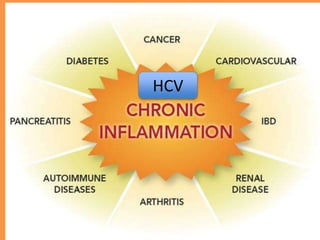
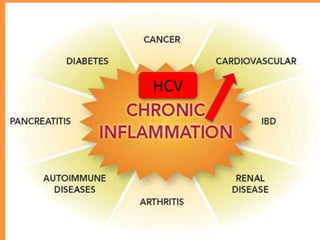
Hep C infection as an example of
chronic inflammation
and it’s associations
HCV
Hepatitis C : Extrahepatic manifestations
• Autoimmunity
• Vasculitis
• Malignancy
• Renal Disease
• Hormonal
• Arthritis
• Neurological
Chronic Hepatitis C
and
Autoimmunity
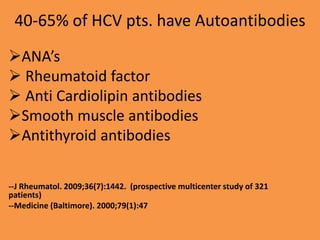
40-65% of HCV pts. have Autoantibodies
ANA’s
 Rheumatoid factor
 Anti Cardiolipin antibodies
Smooth muscle antibodies
Antithyroid antibodies
--J Rheumatol. 2009;36(7):1442. (prospective multicenter study of 321
patients)
--Medicine (Baltimore). 2000;79(1):47
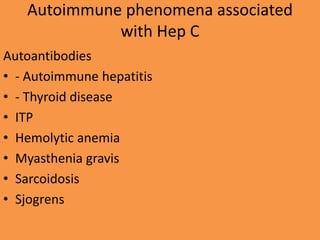
Autoimmune phenomena associated
with Hep C
Autoantibodies
• - Autoimmune hepatitis
• - Thyroid disease
• ITP
• Hemolytic anemia
• Myasthenia gravis
• Sarcoidosis
• Sjogrens
Hep C infection as an example of
chronic inflammation
and it’s associations
HCV
Chronic Hepatitis C
and
ATHEROSCLEROSIS
Ishizaka et al : Lancet. 2002;359:133–135
Association between HCV
seropositivity,
carotid-artery plaque,
and intima-media thickening
Methods
• 4784 individuals enrolled
• 104 (2·2%) were seropositive for HCV
• high-resolution carotid ultrasound
• Plaque defined as a thickening of the intima
media of 1·3 mm or more
Results
• Plaques were twice as common in
seropositives
40 of 1070 [3·7%] vs 64 of 3714 [1·7%]
• Intima-media thickening 4 times as common
(38 of 605 [6·3%] and 66 of 4179 [1·6%]
Odds ratio and p values
• Increased risk of carotid-artery plaque
(odds ratio 1.92 [95% CI 1.56-2.38], p=0.002)
• Also with carotid intima-media thickening
(odds ratio 2.85 [2.28-3.57], p<0.0001)
Evidence was irrespective of known
atherogenic risk factors
---Ishizaka et al : Lancet. 2002;359:133–135
There are many more similar studies
There was even one with Hepatitis A
carriers …
(and the numbers looked good)
Role of interferons
• Immunomodulation
• Affects the cytokine cascade
• Have several anti-inflammatory
properties
• Impart mortality and morbidity benefit
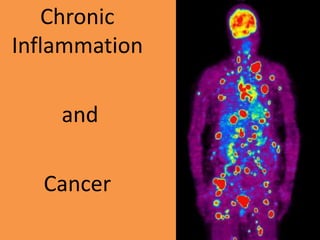
Chronic
Inflammation
and
Cancer
Chronic inflammation in any organ
can
cause cancer in the same
To name a few …
• GERD
• Gastritis
• Chronic osteomyelitis
• Pancreatitis
• Cystitis
• Chronic hepatitis and Cirrhosis
• Cervicitis
• Cholecytitis
• ESRD
• Kangri cancer
C
H
R
O
N
I
C
I
N
N
O
I
T
A
M
M
A
L
F
Cancer
ESOPHAGITIS
HEPATITIS
CIRRHOSIS
PANCREATITIS
GASTRITIS
CERVICITIS
ESRD
OSTEOMYELITIS
IBD
CHRONIC
INFECTIONS
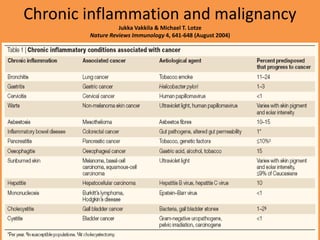
Chronic inflammation and malignancy
Jukka Vakkila & Michael T. Lotze
Nature Reviews Immunology 4, 641-648 (August 2004)
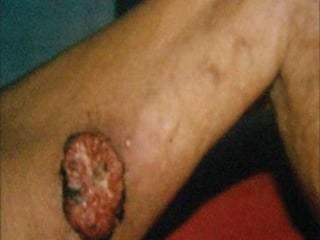
Kangri Cancer
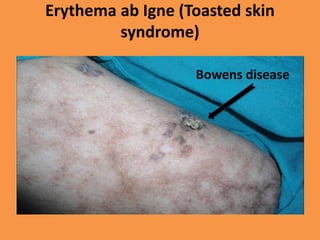
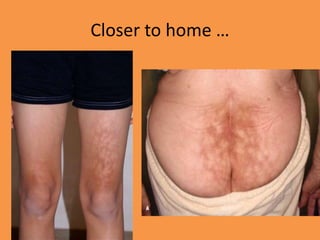
Erythema ab Igne (Toasted skin
syndrome)
Bowens disease
Closer to home …
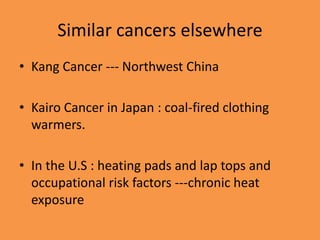
Similar cancers elsewhere
• Kang Cancer --- Northwest China
• Kairo Cancer in Japan : coal-fired clothing
warmers.
• In the U.S : heating pads and lap tops and
occupational risk factors ---chronic heat
exposure
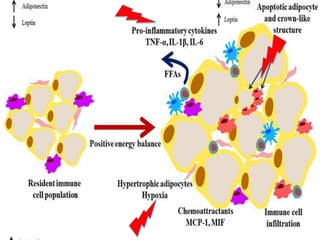
Obesity and inflammation
Access adipose tissue
causes
Inflammation
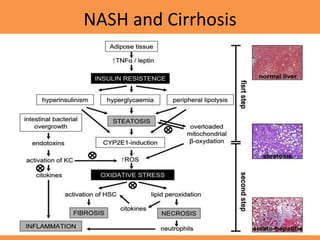
NASH and Cirrhosis
Aging and inflammation
Aging : Also called inflammaging
• Fall in T and B cell population
• Decrease in their receptor diversity as well
• Less brisk immune responses
• Oxidative stress from infections and cell death
• Higher levels of inflammatory markers
• More gene defects in cells and less self
tolerance
Depression and neurological
disorders
Neuropsychiatry and Inflammation
• Interferon alpha and depression
• Hepatitis C and depression
• Depression/Mood changes and SLE
Neuropsychiatry & Inflammation
• Hepatitis C and dementia
• HIV and dementia
• Syphilis and dementia
• SLE and multi infarct dementia
• Vascular dementia from atherosclerosis
• Alzheimers : inflammatory markers in the csf
• Worsening of CNS disease during infections
Emerging therapeutic trends
to counter
Inflammatory mechanisms of
various diseases
Anti inflammatory drugs and cancer
• ASA and colon cancer risk reduction
• COX 2 inhibitors and reduction in colon cancer
• NSAIDS and breast cancer
• ASA/PPI’s for Barrett's esophagus (AspECT )
Anti inflammatory drugs and cancer
• Steroids as adjuvants to chemotherapy
• NSAIDS combined with chemotherapy (COX 2)
Nitric Oxide :Molecule of the year
1992
Recent developments in
Nitric Oxide donor drugs
Nitric oxide :The Nobel prize winning
molecule
Robert F. Furchgott
SUNY Downstate
Louis J. Ignarro
UCLA
Ferid Murad
University of Texas
Medical School
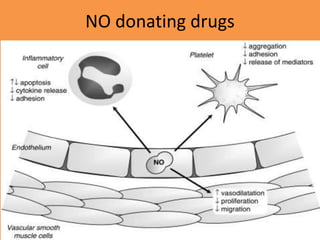
NO donating drugs
NO donating drugs
• NO with NSAIDS to enhance their
antiinflammatory effects
• NO with chemotherapy agents have higher
cytotoxicity
• NO with ASA
• Nitroso captopril
• Furaxan + Calcium channel blocker and other
antihypertensives
• Emergence of new biological agents as the
inflammatory mechanisms of disease become
better understood
• TNF alpha inhibitors in RA eg infliximab
• T cell targeted therapy :
• Interleukin inhibitors : toclizumab
• nuclear factor kappa B (RANKL) inhibition for
treatment of osteoporosis
• They are also being used to treat cancer
In conclusion
We have only touched the tip of
the iceberg
For the House staff
All pathology triggers inflammation
 Always see if your patient has SIRS or not
Have fun and correlate : Avoid isolating
diseases to a single system
Look for disease associations
For the faculty
More anti-inflammatory and immuno-modulatory
agents especially biological ones are coming
There will be even more stress on vaccination as time
passes because of their cost effectivity
As life expectancy increases and obesity epidemic
grows, inflammation will be talked more about
Reducing inflammation imparts mortality benefit
What more could we ask for as clinicians ?
Questions ?

Inflammation : atherosclerosis, cancer, obesity, infections, dementia, depression

  • 1.
  • 2.
    What we willbe talking about • A brief introduction • Its common role in various disease processes • Clinical Correlation and studies • Emerging trends in anti inflammatory agents • Anticipating future trends in therapy
  • 3.
  • 4.
  • 5.
  • 8.
    In the endwe are a one big chemical reaction
  • 9.
    Inflammation : thechemical dance IL TNF
  • 11.
  • 12.
    You are onlyas old as your endothelium -- Paul VanHoutte, Mayo Clinic (1983)
  • 13.
  • 14.
  • 15.
    Inflammatory triggers Immune response Inflammatorycytokines Endothelial dysfunction Atherosclerotic events
  • 16.
    So therefore • Atherosclerosisis an inflammatory process • Please note involvement of WBC’s and cytokines in the process • Higher levels of inflammatory markers in atherosclerosis (acute or chronic) • Cytokine levels correlate with acute events as well as future outcomes
  • 18.
    What we willnot talk about
  • 19.
    Emerging risk factors: Inflammation and atherosclerosis ACUTE CONDITIONS • Infections Pneumonias, Flu • Role of vaccines CHRONIC CONDITIONS • Poor oral-dental hygiene • Chronic Osteomyelitis • HIV, HCV • Rheumatologic disease/ vasculitis
  • 20.
    More the inflammationworse the atherosclerosis Acute Chronic Inflammation Inflammation Atherosclerotic events Strokes & MI’s
  • 21.
    Infections as an examplefor enhanced risk of atherosclerosis
  • 22.
    Infections and Atheroscleroticevents • First questioned in 1911 and 1921 • Now we have new diagnostic tools to explore the same 1.Frothingham C. The relationship between acute infectious diseases and arterial lesions. Arch Intern Med. 1911; 8: 153–162. 2. Ophuls W. Arteriosclerosis and cardiovascular disease: their relation to infectious diseases. JAMA. 1921; 76: 700–701.
  • 23.
    Infections and Risk ofStrokes and MI’s Is there a link ?
  • 24.
    Simultaneous factors actingat levels of systemic homeostasis and local vascular wall. Lindsberg P J , and Grau A J Stroke. 2003;34:2518-2532.
  • 25.
    Risk of MIand Stroke after Acute Infection or Vaccination N Engl J Med 2004; 351:2611-2618 : Smeeth et al
  • 26.
    Methods : 5,767,499people • GPRD : General Practice Research Database • Largest source of continuous data in the U.K • Patients remained registered for at least 1 year
  • 27.
    Methods : continued •Data was also extracted regarding : Influenza • Vaccinations Tetanus Pneumococcus • Acute infections UTI’s Acute systemic RTI Pneumonias Acute bronchitis Influenza
  • 28.
    Null Hypothesis Vascular-events arenot affected by Acute exposure to Vaccination or Infection.
  • 29.
    Definition of Exposure •91 days • Period of exposure divided into groups of • 1 - 3 days, 4 - 7 days, 8 - 14 days, 15 - 28 days, and 29 - 91 days after the exposure.
  • 30.
    A Single ParticipantExposed Twice to an Inflammatory Stimulus. Smeeth L et al. N Engl J Med 2004;351:2611-2618.
  • 31.
    Risk for Postexposure MI’s
  • 32.
    Majority were firsttime MI’s 61556 post exposure MI’s 53709 First MI’s Remaining 60061 12134 Recurrent MI 1495 EXCLUDED
  • 33.
    Age-Adjusted Incidence Ratiosof a First MI and a First Stroke in Risk Periods .
  • 34.
    Incidence ratios: RecurrentMI and stroke Smeeth L et al. N Engl J Med 2004;351:2611-2618.
  • 35.
    Conclusion • Acute infectionscause a transient increase in the risk of vascular events. • By contrast, influenza, tetanus, and pneumonia vaccinations do not
  • 36.
    So in retrospect… If Infections do increase risk of atherosclerotic events … Vaccines should protect
  • 37.
    Prevention of AcuteMyocardial Infarction and Stroke among Elderly Persons with Dual Pneumococcal and Influenza Vaccination Hung I F N et al : Clin Infect Dis. (2010) 51 (9): 1007-1016.
  • 38.
    36,636 outpatients aged≥65 years Divided into 3 groups Pneumonia Pneumonia Influenza and Influenza alone alone A Prospective Cohort Study :64 weeks
  • 39.
    Eligibility criteria • Age⩾65 years • Had 1 or more chronic illness as follows Asthma COPD CAD HTN DM CVA CKD Liver disease Malignancy
  • 40.
    TIV alone versusunvaccinated Hung I F N et al. Clin Infect Dis. 2010;51:1007-1016 © 2010 by the Infectious Diseases Society of America
  • 41.
    PPV alone versusunvaccinated Hung I F N et al. Clin Infect Dis. 2010;51:1007-1016 © 2010 by the Infectious Diseases Society of America
  • 42.
    Pneumonia + Influenzavaccine Hung I F N et al. Clin Infect Dis. 2010;51:1007-1016 © 2010 by the Infectious Diseases Society of America
  • 43.
    Hospitalization for ischemicstroke. Hung I F N et al. Clin Infect Dis. 2010;51:1007-1016 © 2010 by the Infectious Diseases Society of America
  • 44.
    Hospitalization for myocardialinfarction. Hung I F N et al. Clin Infect Dis. 2010;51:1007-1016 © 2010 by the Infectious Diseases Society of America
  • 45.
    Conclusion • Dual Vaccinationprevents complications in sick individuals • Respiratory • Cardiovascular and not just MI’s • Cerebrovascular diseases lesser strokes • Reducing hospitalization • CCU and ICU admissions • Death.
  • 46.
    Study 2 :Ramirez et al. Infections precipitate MI’s • 500 patients with CAP studied • Clinical failure was defined as respiratory failure or shock Clin Infect Dis. (2008) 47 (2): 182-187.
  • 47.
    Incidence of acutemyocardial infarction (AMI) in patients with community-acquired pneumonia (CAP), according to the severity of disease at hospital admission and the development of clinical failure during hospitalization. Ramirez J et al. Clin Infect Dis. 2008;47:182-187 © 2008 by the Infectious Diseases Society of America
  • 48.
    Propensity-adjusted risk ofacute myocardial infarction (AMI) with 95% CIs by pneumonia severity index Ramirez J et al. Clin Infect Dis. 2008;47:182-187 © 2008 by the Infectious Diseases Society of America
  • 49.
    The point being…. Moresevere the infection more severe the atherosclerosis More common the acute events (CVA’s, MI)
  • 50.
    Seasonal variations in atheroscleroticdisease The inflammation link
  • 51.
    Higher risk ofmortality in winter
  • 52.
    Date of download: 8/18/2014 Copyright© The American College of Cardiology. All rights reserved. From: Seasonal Distribution of Acute Myocardial Infarction in the Second National Registry of Myocardial Infarction 1 J Am Coll Cardiol. 1998;31(6):1226-1233. doi:10.1016/S0735-1097(98)00098-9 Cases of AMI reported each month to the NRMI-2. Monthly counts were normalized to a 30-day length. Figure Legend:
  • 53.
    Date of download: 8/18/2014 Copyright© The American College of Cardiology. All rights reserved. Increased winter mortality from acute myocardial infarction and stroke: the effect of age J Am Coll Cardiol. 1999;33(7):1916-1919. doi:10.1016/S0735-1097(99)00137-0 Mortality from acute myocardial infarction (AMI) and stroke by month. Relative risks for high and low months are compared with the average of all months combined. For both AMI and stroke, deaths peak in January (AMI p < 0.001, stroke p < 0.001) and then progressively decrease to a low in September (AMI p < 0.001, stroke p < 0.001). The difference in mortality from January to September is 18.6% for AMI and 19.9% for stroke. Figure Legend:
  • 54.
    Peak Month ofFlu Activity 1982-83 through 2013-14 (CDC)
  • 55.
    Role of fluvaccine ?
  • 56.
  • 57.
    Microbes and us •For every cell in our body, we carry 10 bacteria • Bacteria comprise 1-3 % of our body weight
  • 58.
    Chronic Infections andAtherosclerosis • H. Pylori • Periodontal disease : Porphyromonas gingivalis • HCV • HIV • HSV • Chlamydia pneumoniae
  • 59.
    Chronic Infection Is itplaque infection as well ?
  • 60.
    The link between ChlamydiaPneumoniae, CMV, and HSV in Atherosclerosis of the Carotid Artery Chiu et al : Circulation.1997; 96: 2144-2148
  • 61.
    76 patients withcarotid artery stenosis Endarterectomy specimens stained for Chlamydia, CMV, and HSV IgG antibodies measured to CMV and Chlamydia IgG’s correlated with plaque morphology and the presence of the microorganisms detected using immunohistochemistry
  • 62.
    Results • C pneumoniaedetected in 71% (95% confidence interval [CI], 59.5% to 80.9%) • CMV was detected in 35.5% (CI, 24.9% to 47.3%) • HSV-1 10.5% (CI, 4.7% to 19.7%)
  • 63.
    Rates of detectionof C pnuemoniae, CMV, and HSV-1 singly and concurrently in 76 carotid atheromatous plaques. Chiu B et al. Circulation. 1997;96:2144-2148 Copyright © American Heart Association, Inc. All rights reserved.
  • 64.
    Immunocytochemical staining (throughABC method) of carotid intimal atheromatous plaque with (arrowhead) strong positivity for Chlamydia-Cel-Pn in macrophage and endothelial cell. Chiu B et al. Circulation. 1997;96:2144-2148 Copyright © American Heart Association, Inc. All rights reserved.
  • 65.
    Thrombus (N=46) No thrombosis (N=30) P value Ulceration (N=16) No Ulceration (N=60) P value Chlamydia Pneum. 37 (80.4%) 17 (56.7%) 0.038 14 (87.5%) 40 (66.6%) 0.12 CMV 22 (47.8%) 5 (16.7%) 0.0078 (50%) 19 (31.7%) 0.24 Chlamydia Pneum. and CMV/HSV 18 (39.1%) 6 (20%) 0.12 7 (43.8%) 17 (28.3%) 0.24 Any Organism 41 (89.1%) 18 (60%) 0.004 14 (87.5%) 46 (76.7%) 0.49 Plaque morphology and Microbe detection
  • 66.
    Conclusion • Higher incidenceof organism in plaques as compared to none in normal arteries • Thrombus formation in atherosclerosis is associated with an even higher presence of these organisms
  • 67.
    • Innocent bystandertheory …. However ….. • C pneumoniae has even been successfully cultured from arteries as well ** • Positive correlation between worse plaque morphology and the presence of microorganisms • Surely they are up to no good if they are not meant to be there **Jackson et al :Chemotherapy, September 15-18, 1996 **Ramirez et al : Ann Intern Med. 1996;125:979-982
  • 68.
    Chlamydia and mycoplasmain an atherosclerotic plaque
  • 69.
    Continued • Several otherstudies involving H. pylori, HCV as well • HIV is widely known as a risk factor for CAD • Chronic infections may therefore make the inflammatory process we call atherosclerosis worse
  • 70.
    HCV as anexample of chronic inflammation and its multisystem manifestations
  • 72.
    Hep C infectionas an example of chronic inflammation and it’s associations HCV
  • 73.
    Hepatitis C :Extrahepatic manifestations • Autoimmunity • Vasculitis • Malignancy • Renal Disease • Hormonal • Arthritis • Neurological
  • 74.
  • 75.
    40-65% of HCVpts. have Autoantibodies ANA’s  Rheumatoid factor  Anti Cardiolipin antibodies Smooth muscle antibodies Antithyroid antibodies --J Rheumatol. 2009;36(7):1442. (prospective multicenter study of 321 patients) --Medicine (Baltimore). 2000;79(1):47
  • 76.
    Autoimmune phenomena associated withHep C Autoantibodies • - Autoimmune hepatitis • - Thyroid disease • ITP • Hemolytic anemia • Myasthenia gravis • Sarcoidosis • Sjogrens
  • 77.
    Hep C infectionas an example of chronic inflammation and it’s associations HCV
  • 78.
  • 79.
    Ishizaka et al: Lancet. 2002;359:133–135 Association between HCV seropositivity, carotid-artery plaque, and intima-media thickening
  • 80.
    Methods • 4784 individualsenrolled • 104 (2·2%) were seropositive for HCV • high-resolution carotid ultrasound • Plaque defined as a thickening of the intima media of 1·3 mm or more
  • 81.
    Results • Plaques weretwice as common in seropositives 40 of 1070 [3·7%] vs 64 of 3714 [1·7%] • Intima-media thickening 4 times as common (38 of 605 [6·3%] and 66 of 4179 [1·6%]
  • 82.
    Odds ratio andp values • Increased risk of carotid-artery plaque (odds ratio 1.92 [95% CI 1.56-2.38], p=0.002) • Also with carotid intima-media thickening (odds ratio 2.85 [2.28-3.57], p<0.0001) Evidence was irrespective of known atherogenic risk factors ---Ishizaka et al : Lancet. 2002;359:133–135
  • 83.
    There are manymore similar studies There was even one with Hepatitis A carriers … (and the numbers looked good)
  • 84.
    Role of interferons •Immunomodulation • Affects the cytokine cascade • Have several anti-inflammatory properties • Impart mortality and morbidity benefit
  • 85.
  • 86.
    Chronic inflammation inany organ can cause cancer in the same
  • 87.
    To name afew … • GERD • Gastritis • Chronic osteomyelitis • Pancreatitis • Cystitis • Chronic hepatitis and Cirrhosis • Cervicitis • Cholecytitis • ESRD • Kangri cancer
  • 88.
  • 89.
    Chronic inflammation andmalignancy Jukka Vakkila & Michael T. Lotze Nature Reviews Immunology 4, 641-648 (August 2004)
  • 90.
  • 91.
    Erythema ab Igne(Toasted skin syndrome) Bowens disease
  • 92.
  • 94.
    Similar cancers elsewhere •Kang Cancer --- Northwest China • Kairo Cancer in Japan : coal-fired clothing warmers. • In the U.S : heating pads and lap tops and occupational risk factors ---chronic heat exposure
  • 95.
    Obesity and inflammation Accessadipose tissue causes Inflammation
  • 97.
  • 98.
  • 99.
    Aging : Alsocalled inflammaging • Fall in T and B cell population • Decrease in their receptor diversity as well • Less brisk immune responses • Oxidative stress from infections and cell death • Higher levels of inflammatory markers • More gene defects in cells and less self tolerance
  • 100.
  • 101.
    Neuropsychiatry and Inflammation •Interferon alpha and depression • Hepatitis C and depression • Depression/Mood changes and SLE
  • 102.
    Neuropsychiatry & Inflammation •Hepatitis C and dementia • HIV and dementia • Syphilis and dementia • SLE and multi infarct dementia
  • 103.
    • Vascular dementiafrom atherosclerosis • Alzheimers : inflammatory markers in the csf • Worsening of CNS disease during infections
  • 104.
    Emerging therapeutic trends tocounter Inflammatory mechanisms of various diseases
  • 105.
    Anti inflammatory drugsand cancer • ASA and colon cancer risk reduction • COX 2 inhibitors and reduction in colon cancer • NSAIDS and breast cancer • ASA/PPI’s for Barrett's esophagus (AspECT )
  • 106.
    Anti inflammatory drugsand cancer • Steroids as adjuvants to chemotherapy • NSAIDS combined with chemotherapy (COX 2)
  • 107.
    Nitric Oxide :Moleculeof the year 1992 Recent developments in Nitric Oxide donor drugs
  • 108.
    Nitric oxide :TheNobel prize winning molecule Robert F. Furchgott SUNY Downstate Louis J. Ignarro UCLA Ferid Murad University of Texas Medical School
  • 109.
  • 110.
    NO donating drugs •NO with NSAIDS to enhance their antiinflammatory effects • NO with chemotherapy agents have higher cytotoxicity • NO with ASA • Nitroso captopril • Furaxan + Calcium channel blocker and other antihypertensives
  • 111.
    • Emergence ofnew biological agents as the inflammatory mechanisms of disease become better understood • TNF alpha inhibitors in RA eg infliximab • T cell targeted therapy : • Interleukin inhibitors : toclizumab • nuclear factor kappa B (RANKL) inhibition for treatment of osteoporosis • They are also being used to treat cancer
  • 112.
    In conclusion We haveonly touched the tip of the iceberg
  • 113.
    For the Housestaff All pathology triggers inflammation  Always see if your patient has SIRS or not Have fun and correlate : Avoid isolating diseases to a single system Look for disease associations
  • 114.
    For the faculty Moreanti-inflammatory and immuno-modulatory agents especially biological ones are coming There will be even more stress on vaccination as time passes because of their cost effectivity As life expectancy increases and obesity epidemic grows, inflammation will be talked more about Reducing inflammation imparts mortality benefit What more could we ask for as clinicians ?
  • 115.