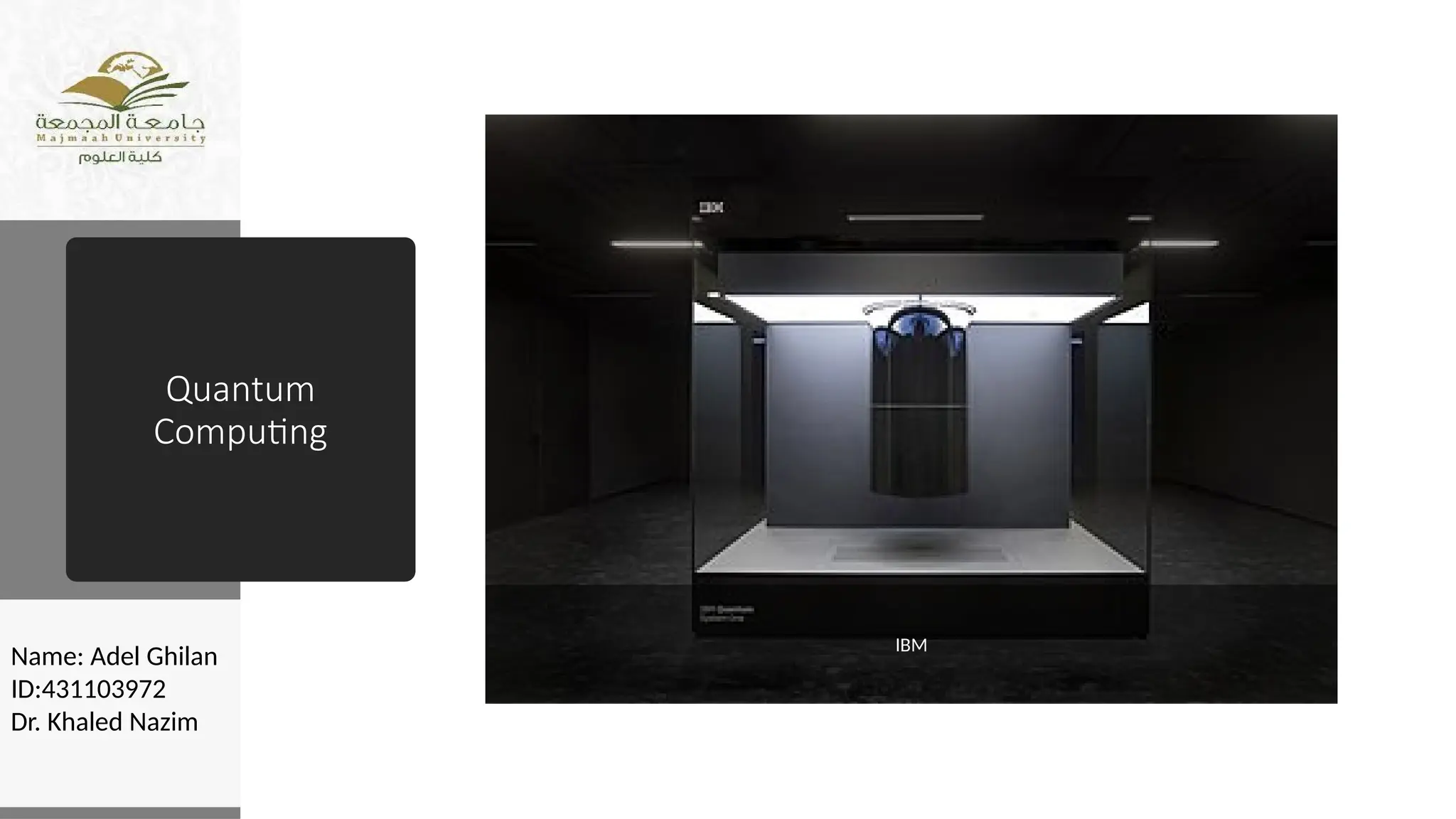
IBM
Quantum
Computing
Name: Adel Ghilan
ID:431103972
Dr. Khaled Nazim
Interdiction to Quantum Computing
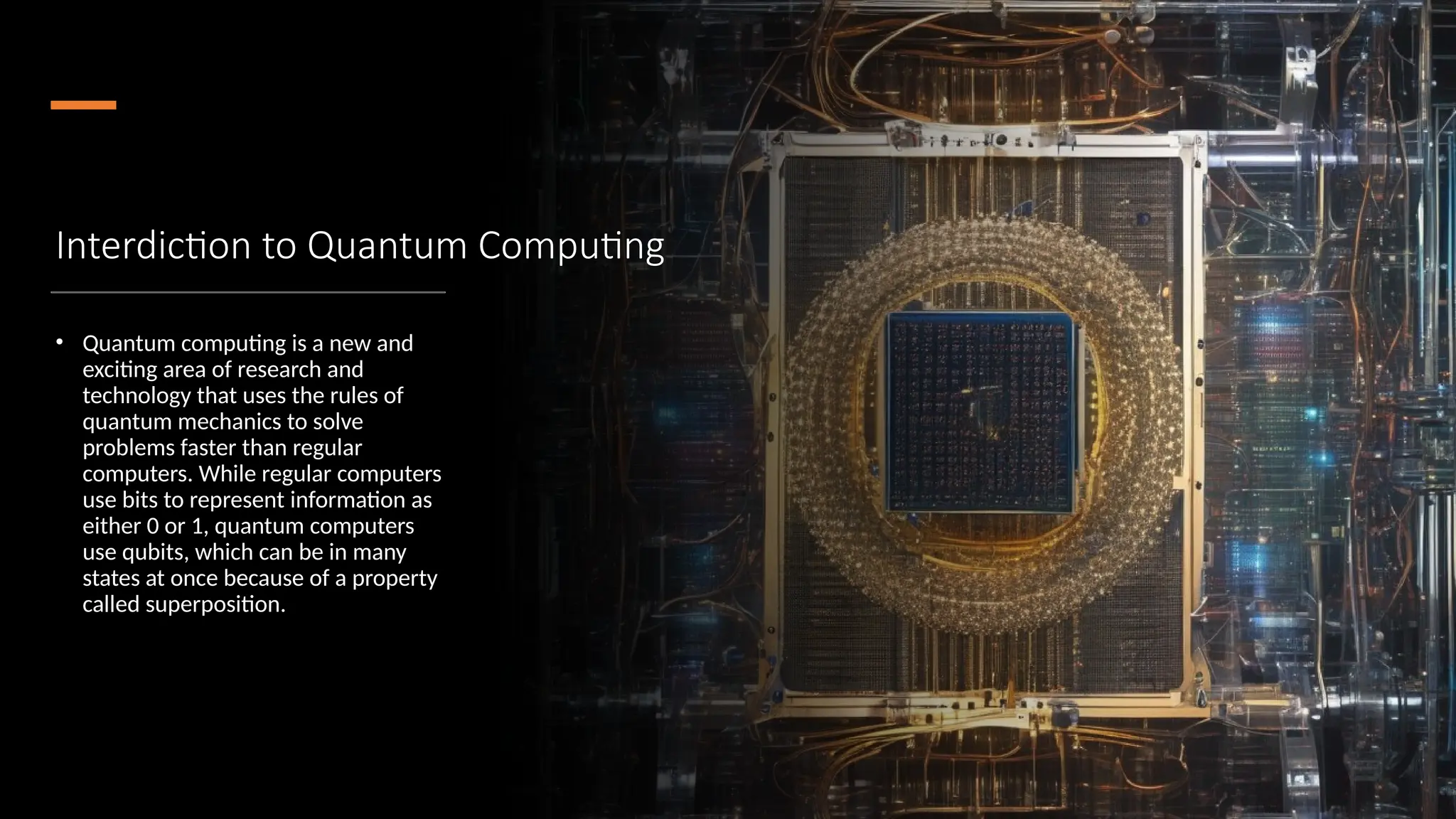
• Quantum computing is a new and
exciting area of research and
technology that uses the rules of
quantum mechanics to solve
problems faster than regular
computers. While regular computers
use bits to represent information as
either 0 or 1, quantum computers
use qubits, which can be in many
states at once because of a property
called superposition.
What is Quantum Superposition
• Qubits have a special feature
called superposition, which
means they can be in multiple
states at the same time. Unlike
regular bits that are either 0 or 1,
qubits can represent both 0 and 1
simultaneously. This ability allows
quantum computers to work on
many different possibilities all at
once, which can make them much
faster for certain types of
calculations.
Quantum Entanglement
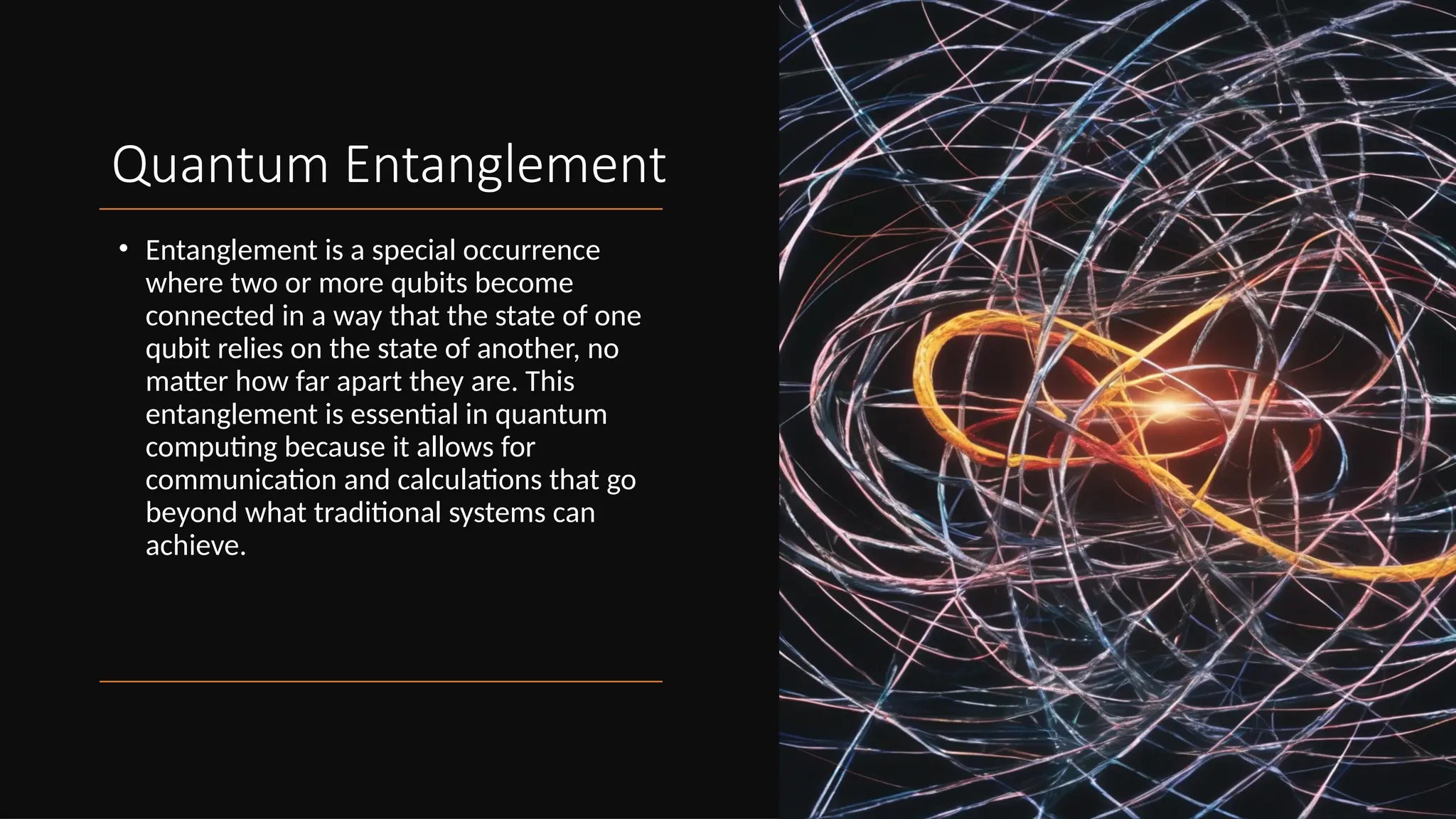
• Entanglement is a special occurrence
where two or more qubits become
connected in a way that the state of one
qubit relies on the state of another, no
matter how far apart they are. This
entanglement is essential in quantum
computing because it allows for
communication and calculations that go
beyond what traditional systems can
achieve.
Quantum Algorithms
• Quantum computing has the
potential to provide more efficient
solutions for specific problems
compared to classical computers.
Notable quantum algorithms include
Shor's algorithm, which can factor
large numbers and has implications
for breaking encryption. Another
important algorithm is Grover's
algorithm, which enables faster
unstructured search. These
algorithms offer the possibility of
significant speed improvements
compared to classical approaches.
Applications of
Quantum Computing
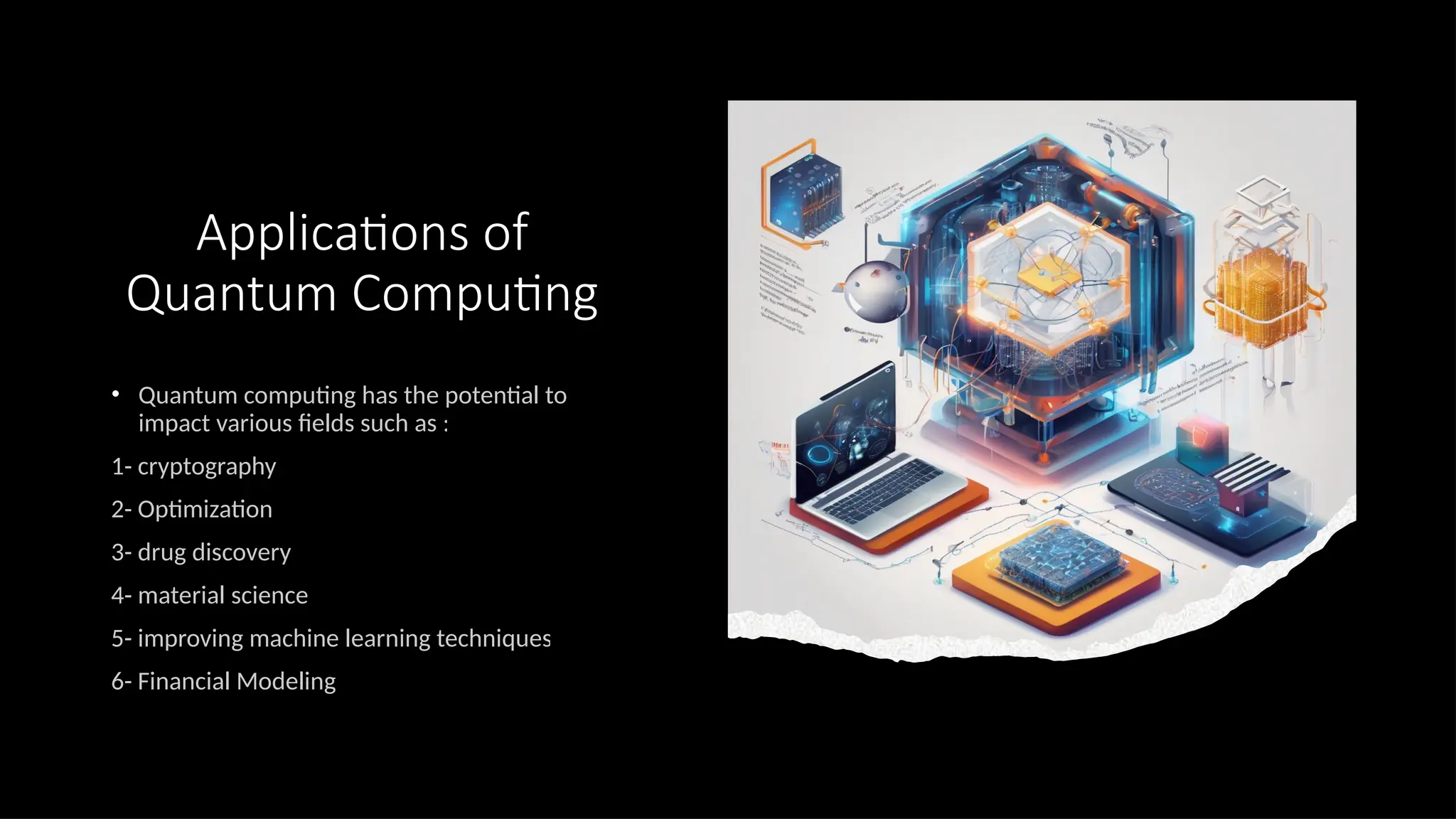
• Quantum computing has the potential to
impact various fields such as :
1- cryptography
2- Optimization
3- drug discovery
4- material science
5- improving machine learning techniques
6- Financial Modeling
In the End
• Quantum computing is currently in its early
stages, and we have yet to witness the
practical implementation of large-scale
quantum computers. However, researchers
and organizations are making significant
progress in the development of quantum
hardware, algorithms, and error correction
techniques.
Any Question
References
•
https://www.ibm.com/topics/quan
tum-computing
•
https://aws.amazon.com/what-is/
quantum-computing/
•
https://builtin.com/hardware/quan
tum-computing-applications

ijntroduction to selected topics quantum computers

  • 1.
  • 2.
    Interdiction to QuantumComputing • Quantum computing is a new and exciting area of research and technology that uses the rules of quantum mechanics to solve problems faster than regular computers. While regular computers use bits to represent information as either 0 or 1, quantum computers use qubits, which can be in many states at once because of a property called superposition.
  • 3.
    What is QuantumSuperposition • Qubits have a special feature called superposition, which means they can be in multiple states at the same time. Unlike regular bits that are either 0 or 1, qubits can represent both 0 and 1 simultaneously. This ability allows quantum computers to work on many different possibilities all at once, which can make them much faster for certain types of calculations.
  • 4.
    Quantum Entanglement • Entanglementis a special occurrence where two or more qubits become connected in a way that the state of one qubit relies on the state of another, no matter how far apart they are. This entanglement is essential in quantum computing because it allows for communication and calculations that go beyond what traditional systems can achieve.
  • 5.
    Quantum Algorithms • Quantumcomputing has the potential to provide more efficient solutions for specific problems compared to classical computers. Notable quantum algorithms include Shor's algorithm, which can factor large numbers and has implications for breaking encryption. Another important algorithm is Grover's algorithm, which enables faster unstructured search. These algorithms offer the possibility of significant speed improvements compared to classical approaches.
  • 6.
    Applications of Quantum Computing •Quantum computing has the potential to impact various fields such as : 1- cryptography 2- Optimization 3- drug discovery 4- material science 5- improving machine learning techniques 6- Financial Modeling
  • 7.
    In the End •Quantum computing is currently in its early stages, and we have yet to witness the practical implementation of large-scale quantum computers. However, researchers and organizations are making significant progress in the development of quantum hardware, algorithms, and error correction techniques.
  • 8.
  • 9.