Python
Title Of The Course With Code: CSI 513: Programming
Language Concepts
Faculty In Charge : Dr. Khalid Nazim Abdul Sattar
Name : Sami Alkhunayni
ID: 381100005
Content
 The Definition .
 History .
 It Is Used For …
 What Can Python Do?
 Why Python?
 Example
 Advantages And Disadvantages
 References
The
Definition.
• Python Is An Interpreted, High-level And General-
purpose Programming Language. Python's Design
Philosophy Emphasizes Code Readability With Its
Notable Use Of Significant Indentation.
• Its Language Constructs And Object-oriented Approach
Aim To Help Programmers Write Clear, Logical Code For
Small And Large-scale Projects.
History .
• Python Was Conceived In The Late 1980s By Guido Van
Rossum At Centrum Wiskunde & Informatica (CWI) In The
Netherlands As A Successor To ABC Programming
Language, Which Was Inspired By SETL, Capable Of
Exception Handling And Interfacing With The Amoeba
Operating System.
• Its Implementation Began In December 1989. Van Rossum
Shouldered Sole Responsibility For The Project, As The
Lead Developer, Until 12 July 2018, When He Announced
His "Permanent Vacation" From His Responsibilities As
Python's Benevolent Dictator For Life, A Title The Python
Community Bestowed Upon Him To Reflect His Long-term
Commitment As The Project's Chief Decision-maker.
• He Now Shares His Leadership As A Member Of A Five-
person Steering Council. In January 2019, Active
Python Core Developers Elected Brett Cannon, Nick
Coghlan, Barry Warsaw, Carol Willing And Van Rossum
To A Five-member "Steering Council" To Lead The
Project. Guido Van Rossum Has Since Then Withdrawn
His Nomination For The 2020 Steering Council.
History .
It Is Used For
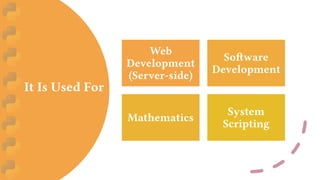
Web
Development
(Server-side)
Software
Development
Mathematics
System
Scripting
What Can
Python Do?
 Python Can Be Used On A Server To Create Web
Applications.
 Python Can Be Used Alongside Software To Create
Workflows.
 Python Can Connect To Database Systems. It Can
Also Read And Modify Files.
 Python Can Be Used To Handle Big Data And
Perform Complex Mathematics.
 Python Can Be Used For Rapid Prototyping, Or For
Production-ready Software Development.
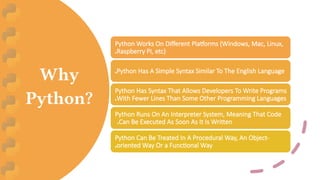
Why
Python?
Python Works On Different Platforms (Windows, Mac, Linux,
Raspberry Pi, etc)
.
Python Has A Simple Syntax Similar To The English Language
.
Python Has Syntax That Allows Developers To Write Programs
With Fewer Lines Than Some Other Programming Languages
.
Python Runs On An Interpreter System, Meaning That Code
Can Be Executed As Soon As It Is Written
.
Python Can Be Treated In A Procedural Way, An Object-
oriented Way Or a Functional Way
.
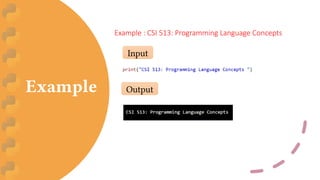
Example
Example : CSI 513: Programming Language Concepts
Input
Output
Advantages
1. Easy to Read, Learn and Write.
2. Improved Productivity.
3. Interpreted Language.
4. Dynamically Typed.
5. Free and Open-Source.
Disadvantages
1. Slow Speed.
2. Not Memory Efficient.
3. Weak in Mobile Computing.
4. Database Access.
5. Runtime Errors.
References
1. https://www.w3schools.com/python/python_intro.asp
2. https://en.wikipedia.org/wiki/Python_(programming_language)#H
istory
3. https://techvidvan.com/tutorials/python-advantages-and-disadva
ntages/
4. https://www.w3schools.com/python/trypython.asp?filename=de
mo_default
python programming tutorial in computers.pptx

python programming tutorial in computers.pptx

  • 1.
    Python Title Of TheCourse With Code: CSI 513: Programming Language Concepts Faculty In Charge : Dr. Khalid Nazim Abdul Sattar Name : Sami Alkhunayni ID: 381100005
  • 2.
    Content  The Definition.  History .  It Is Used For …  What Can Python Do?  Why Python?  Example  Advantages And Disadvantages  References
  • 3.
    The Definition. • Python IsAn Interpreted, High-level And General- purpose Programming Language. Python's Design Philosophy Emphasizes Code Readability With Its Notable Use Of Significant Indentation. • Its Language Constructs And Object-oriented Approach Aim To Help Programmers Write Clear, Logical Code For Small And Large-scale Projects.
  • 4.
    History . • PythonWas Conceived In The Late 1980s By Guido Van Rossum At Centrum Wiskunde & Informatica (CWI) In The Netherlands As A Successor To ABC Programming Language, Which Was Inspired By SETL, Capable Of Exception Handling And Interfacing With The Amoeba Operating System. • Its Implementation Began In December 1989. Van Rossum Shouldered Sole Responsibility For The Project, As The Lead Developer, Until 12 July 2018, When He Announced His "Permanent Vacation" From His Responsibilities As Python's Benevolent Dictator For Life, A Title The Python Community Bestowed Upon Him To Reflect His Long-term Commitment As The Project's Chief Decision-maker.
  • 5.
    • He NowShares His Leadership As A Member Of A Five- person Steering Council. In January 2019, Active Python Core Developers Elected Brett Cannon, Nick Coghlan, Barry Warsaw, Carol Willing And Van Rossum To A Five-member "Steering Council" To Lead The Project. Guido Van Rossum Has Since Then Withdrawn His Nomination For The 2020 Steering Council. History .
  • 6.
    It Is UsedFor Web Development (Server-side) Software Development Mathematics System Scripting
  • 7.
    What Can Python Do? Python Can Be Used On A Server To Create Web Applications.  Python Can Be Used Alongside Software To Create Workflows.  Python Can Connect To Database Systems. It Can Also Read And Modify Files.  Python Can Be Used To Handle Big Data And Perform Complex Mathematics.  Python Can Be Used For Rapid Prototyping, Or For Production-ready Software Development.
  • 8.
    Why Python? Python Works OnDifferent Platforms (Windows, Mac, Linux, Raspberry Pi, etc) . Python Has A Simple Syntax Similar To The English Language . Python Has Syntax That Allows Developers To Write Programs With Fewer Lines Than Some Other Programming Languages . Python Runs On An Interpreter System, Meaning That Code Can Be Executed As Soon As It Is Written . Python Can Be Treated In A Procedural Way, An Object- oriented Way Or a Functional Way .
  • 9.
    Example Example : CSI513: Programming Language Concepts Input Output
  • 10.
    Advantages 1. Easy toRead, Learn and Write. 2. Improved Productivity. 3. Interpreted Language. 4. Dynamically Typed. 5. Free and Open-Source.
  • 11.
    Disadvantages 1. Slow Speed. 2.Not Memory Efficient. 3. Weak in Mobile Computing. 4. Database Access. 5. Runtime Errors.
  • 12.
    References 1. https://www.w3schools.com/python/python_intro.asp 2. https://en.wikipedia.org/wiki/Python_(programming_language)#H istory 3.https://techvidvan.com/tutorials/python-advantages-and-disadva ntages/ 4. https://www.w3schools.com/python/trypython.asp?filename=de mo_default