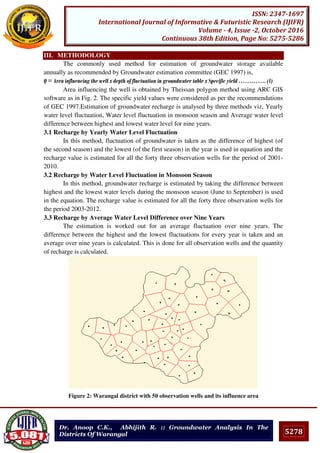
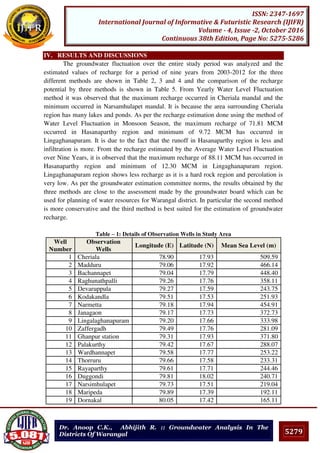
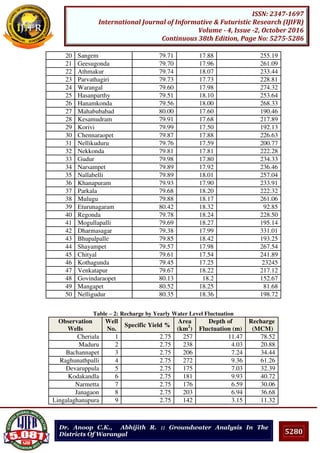
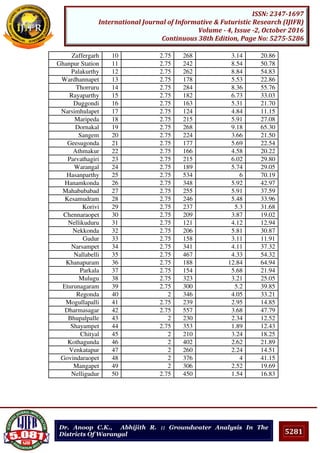
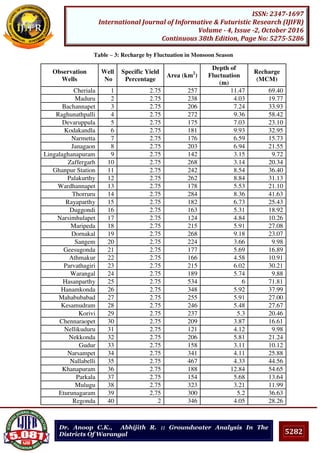
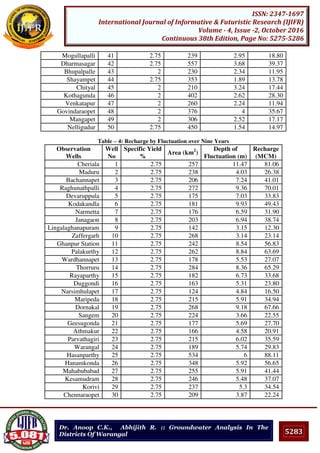
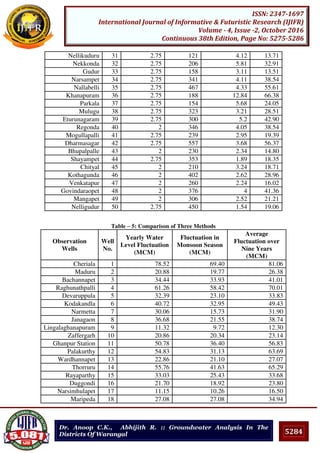
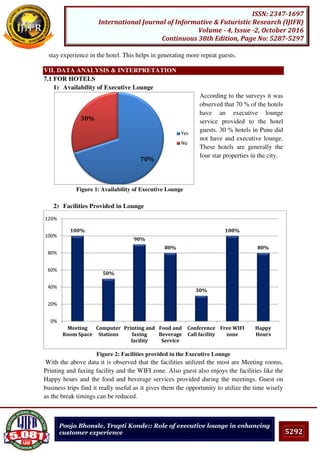
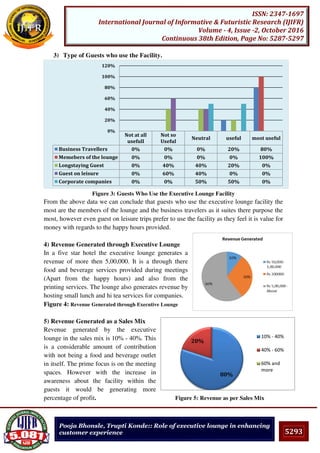
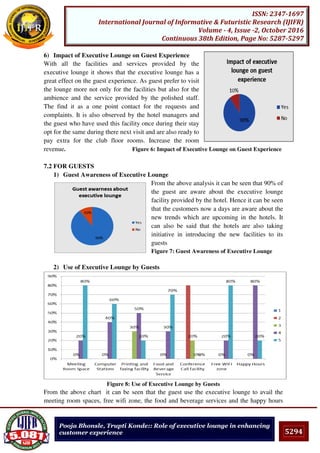
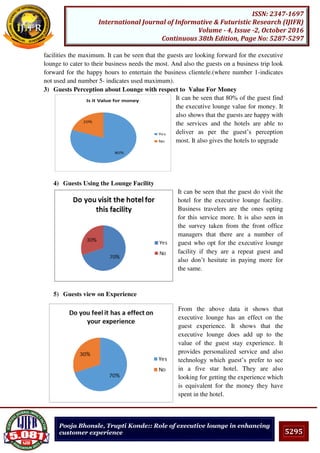
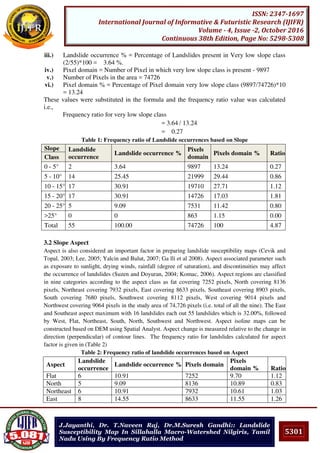
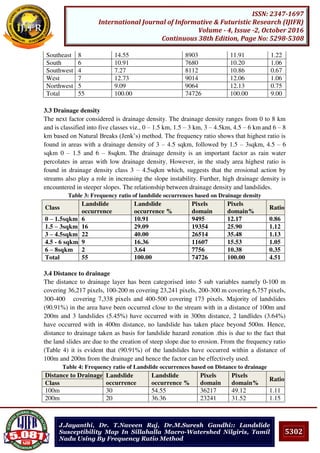
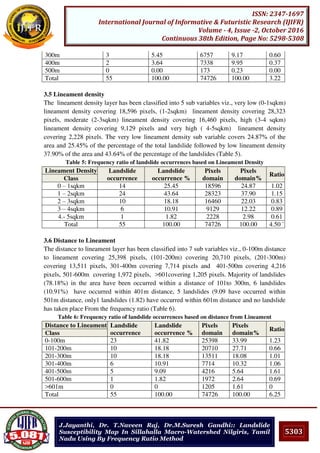
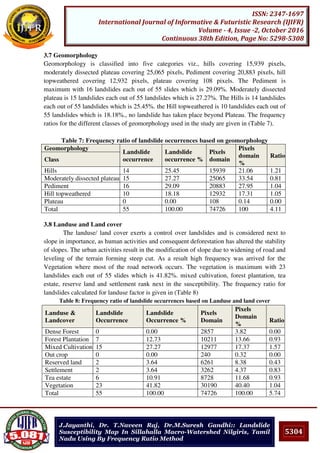
.
5216This work is published under Attribution-NonCommercial-ShareAlike 4.0 International License
Copyright©IJIFR 2016
InternationalJournalofInformative& FuturisticResearch ISSN: 2347-1697
Volume 4 Issue 2 October 2016www.ijifr.com
Abstract
This paper highlights on the issue or the major limitations of Wireless
Sensor Networks that are battery operated with limited battery powers.
This study deals with overcoming this limited battery using Compressive
Sensing and PEGASIS protocol. The study concentrates on Wireless Body
Area Networks (WBAN) where wireless sensors are used to capture
potential data from human body and sends it to the medical room in case of
emergency. These captured data are huge and complex images like ECG,
Scanning etc., and these data has to be exchanged across the network
efficiently without any break in the network that operates with limited
battery power. To overcome the problem of battery power limitation this
study proposes a compressive sensing PEGASIS based algorithm for
efficient handling of the network without network breakages.
I. INTRODUCTION
There is a vast growth of technological advances recently in the area of wireless sensor
networks and in particular with wireless body area networks which has become a mandatory
part of the medical science that helps doctors to provide emergency services to their patients
HANDLING LARGE MEDICAL IMAGES WITH
COMPRESSIVE SENSING AND PEGASIS
PROTOCOL FOR ENERGY OPTIMIZATION
Paper ID IJIFR/V4/ E2/ 036 Page No. 5216-5222 Subject Area
Information
Technology
Keywords Gateway, LEACH, PEGASIS, Sensors, WBAN
1st R. Saranya
M.Phil. Scholar
Department of Computer Science,
C.M.S.College of Science & Commerce (Autonomous),
Coimbatore, Tamil Nadu.
2nd S. Uma
Assistant Professor
Department of Information Technology,
C.M.S.College of Science & Commerce (Autonomous),
Coimbatore, Tamil Nadu.
5217
ISSN: 2347-1697
International Journal of Informative & Futuristic Research (IJIFR)
Volume - 4, Issue -2, October 2016
Continuous 38th Edition, Page No: 5216-5222
R. Saranya, S. Uma :: Handling Large Medical Images With
Compressive Sensing And PEGASIS Protocol For Energy
Optimization
instantly from remote locations. For this remote monitoring of patients to happen real time
the entire network requires uninterrupted data exchange that are complex data objects in
terms of text, images and videos that needs to be exchanged across the network efficiently.
One such area in WBAN is the long-term and ubiquitous real-time ECG monitoring that is
becoming increasingly popular [1]. Though these areas have started gaining momentum,
such systems face a large number of constraints, such as limited memory, limited energy,
and limited computation and communication capabilities. In WBAN energy requirement is
necessary for sensing, wireless communication and data processing. The actual limitation of
this body area network is the cost to wirelessly transmit data which is on the higher side and
demands some data reduction strategy at the sensor node. Compressed sensing (CS) is one
suitable approach to lower energy consumption and complexity in WBAN. Their results
show that CS outperforms state-of-the-art wavelet transform-based compression methods in
terms of energy efficiency. This paper discusses on employing combination of compressed
sensing and energy efficient PEGASIS protocol for efficient data handling in WBAN.
II. WBAN AND ITS LIMITATIONS
Wireless body area networks (WBANs) are a subset of Wireless Sensor Networks and
provide support for telemedicine or remote healthcare monitoring. WBANs are biomedical
carriers capable of carrying biomedical data to facilitate early diagnosis and treatment in a
continuous health monitoring system by using various biomedical wireless sensors used for
the human body. A remote data center operates in co-ordination with these sensors to
process the bio-medical signals through cellular network. Some of the major limitations
posed by this WBAN are its power consumption and sampling rate. Compressed sensing
(CS) is a signal acquisition/compression methodology which gives an alternative to
traditional signal acquisition along with PEGASIS protocol for improving on the factor of
minimizing energy utilization.
III. COMPRESSIVE SENSING
The traditional method of reconstructing images from the measured data follows Shannon
sampling theorem. The sampling rate must be twice as that of the highest frequency [2].
Similarly, the fundamental theorem of linear algebra suggests that the number of collected
measurements or samples of a discrete finite-dimensional signal should be at least as large
as its dimension for reconstruction. This underlying principle was followed to most of the
recent technology such as medical imaging, analog to digital conversion, audio and video.
Compressive sampling or Compressive sensing or parse recovery provides a new approach
to data acquisition that overcomes this common thinking. Compressive sensing is a new
type of sampling theory which predicts certain signals or images which can be recovered
from what was previously believed to be highly incomplete information.
Algorithms such as ℓ1-minimization can be used for recovery. Compressive sensing has
many potential applications in signal processing and imaging. Compressive sensing is a
new framework for sensor design and signal acquisition [3]. It also performs sensing with
5218
ISSN: 2347-1697
International Journal of Informative & Futuristic Research (IJIFR)
Volume - 4, Issue -2, October 2016
Continuous 38th Edition, Page No: 5216-5222
R. Saranya, S. Uma :: Handling Large Medical Images With
Compressive Sensing And PEGASIS Protocol For Energy
Optimization
image compression thereby helps in image size reduction with improved quality.
The major advantage of Compressive Sensing is that it enables a large reduction in the
computation costs and sampling for sensing signals which has a compressible
representation. Nyquist Shannon sampling theorem states that in order to capture an
arbitrary band limited signal, certain minimum number of samples are required. Using
compressive sensing it is possible to gradually reduce the number of samplings to be stored,
when the signal is sparse in a known basis. In other words using compressive sensing one
can recover certain images and signals from fewer measurements or samples using
traditional methods. Compressive Sensing relies on two principles sparsity that pertains to
the signals of interest and incoherence that pertains to the sensing modality.
Sparsity provides the idea that in the continuous time signal, information rate may be much
smaller than its bandwidth, or that a discrete-time signal depends on a number of degrees of
freedom that is comparably much smaller than its finite length. Incoherence expresses the
idea that the objects having a sparse representation must be spread out in the domain they
are acquired and extends the duality between time and frequency [4]. In recent years,
compressed sensing has been widely used in the areas of computer science, applied
mathematics, and electrical engineering.
IV. ENERGY EFFICIENT ALGORITHM
Energy conservation has become a major concern that needs to be addressed by many
sectors over the world. There are many Federal programs that provide incentives to save
energy and promote the use of renewable energy resources. There is a high time demand
from Individuals, companies, and organizations seeking energy efficient products as the
energy cost to run equipment has grown to be a major factor that overruns the total setup
cost. Energy consumption is very critical to all electronic gadgets in terms of both cost and
availability. Electricity costs impose a substantial strain on the budget of data and
computing centers. Google engineers, maintaining thousands of servers, warned that if
power consumption continues to grow, power costs can easily overtake hardware costs by a
large margin. Energy has become a leading design constraint for computing and digital
devices. Hardware engineers and system designers explore new directions to reduce the
energy consumption of their products. Energy efficiency is one of the easiest and most cost
effective ways to combat climate change clean the air we breathe, improve the
competitiveness of our businesses and reduce energy costs for consumers. The Department
of Energy is working with universities, businesses and the National Labs to develop new,
energy-efficient technologies while boosting the efficiency of current technologies on the
market [5].
V. IMPORTANCE OF ENERGY OPTIMIZATION IN WBAN
WBAN consist of miniature sensors that are able to sense and communicate with other
devices. These wireless sensors will be in the form of wearables like rings and watches.
These wireless sensors will detect changes in human body and passes information to the
5219
ISSN: 2347-1697
International Journal of Informative & Futuristic Research (IJIFR)
Volume - 4, Issue -2, October 2016
Continuous 38th Edition, Page No: 5216-5222
R. Saranya, S. Uma :: Handling Large Medical Images With
Compressive Sensing And PEGASIS Protocol For Energy
Optimization
measuring device. These measurements can be displayed in the monitor as like scanning
machine and even this reading can be transmitted to a mobile app with the help of Bluetooth
and the patient with high risk can be monitored frequently and the results can be stored in
other device for future references. When more devices are involved in WBAN, there should
not be any interruption between the communications of nodes. To avoid interruption and
network traffic, energy saving of the resources is must.
VI. PEGASIS PROTOCOL
Power-Efficient Gathering in Sensor Information Systems (PEGASIS) is a clustering and chaining
protocol that is focused around the chain structure formation for efficient data exchange. Each node
communicates only with a close neighboring node and takes turns by transmitting to the base station,
thus the amount of energy spent per round get reduced. The main aim of this protocol is to extend
the lifetime of a network by achieving a high level of energy efficiency and uniform consumption of
energy across all network nodes. PEGASIS reduce the delay that data incur on their way to the sink.
The PEGASIS protocol achieves about 90-100% to improvement when compared to the LEACH
protocol [6].
6.1 Working of PEGASIS Protocol
PEGASIS, convention is focused around the chain structure. Chain is a collection of nodes
belonging to a cluster and each chain can have one and only group head. The group head
takes the complete control of nodes in the chain through accepting and sending messages
between nodes that fit in with the chain. The bunch head devour expansive vitality as the
chain keeps expanding. In PEGASIS, information exchange takes place with the nearest
neighbor policy thereby transmission across the chain to base station is taken care by the
group head thereby spare the battery for WSN and expanding the lifetime of the system [7].
6.2 Application Of Pegasis Protocol With Compressive Sensing
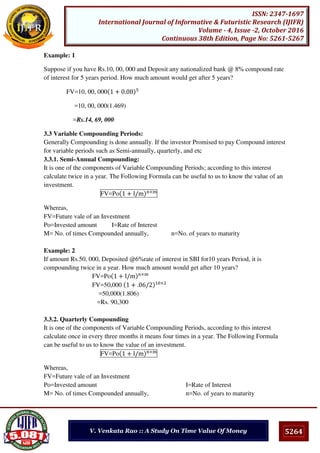
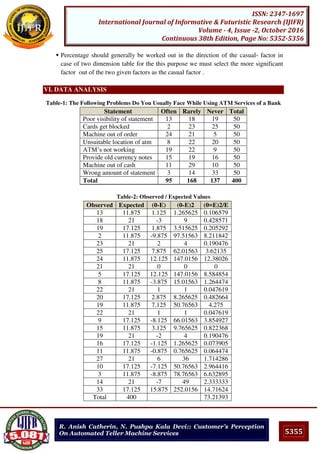
Figure1. Application of PEGASIS Protocol with Compressive Sensing
6.2.1 WBAN
WBAN is the Wireless Body Area Network. In today’s technological world with technology
developments on the verge and technological gadgets thronging the market, health issues
and concerns have become a greater mystique. In such a prevailing situation it is necessary
5220
ISSN: 2347-1697
International Journal of Informative & Futuristic Research (IJIFR)
Volume - 4, Issue -2, October 2016
Continuous 38th Edition, Page No: 5216-5222
R. Saranya, S. Uma :: Handling Large Medical Images With
Compressive Sensing And PEGASIS Protocol For Energy
Optimization
that the technology world should come out with a better or improved health monitoring
system that is capable of handling the monitoring gadgets and the communication gadgets
with minimum resource utilization and that has led to the development of WBAN, a health
monitoring system. The wireless body sensors sense the body and pass the signals to the
personal devices.
6.2.2 Personal devices (WBAN Gateway)
The personal devices or otherwise called the gateway of WBAN. Personal devices are the
components that are use to receive signals from body sensors. The personal devices are then
connected to internet through which signals are passed to medical network. It can be
anything like computer, watches that are connected internally with WBAN. The signals
provided by Body sensors are internally stored in personal networks and the networks
transfer the signals to medical network that is external network through internet.
6.2.3 Medical Monitoring Center
Medical networks are nothing but doctors, emergency vehicle or the medical case history
storage device. When the signals from WBAN are normal then they are stored in case
history storage. If any abnormalities found in WBAN then alert signals are passed to doctors
or to the emergency vehicle.
Along with this basic setup the compressive sensing and PEGASIS algorithm can be
implemented over the wireless area network to improve upon faster and effective data
transmission and energy efficiency and this architecture could offer better performance than
any other system that solely works with either compressive sensing or PEGASIS protocol.
VII. PERFORMANCE OF PEGASIS PROTOCOLS
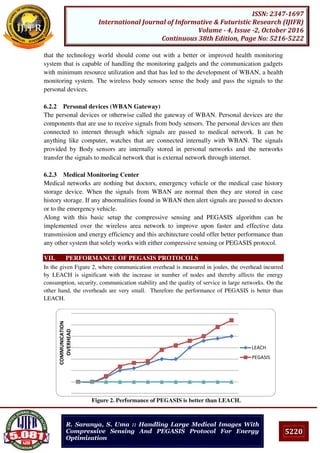
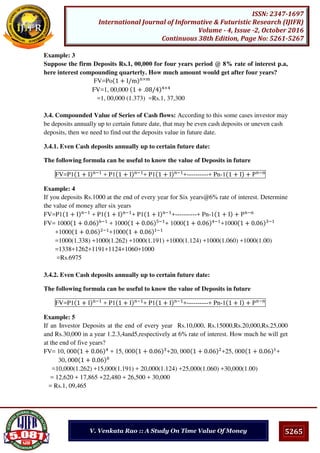
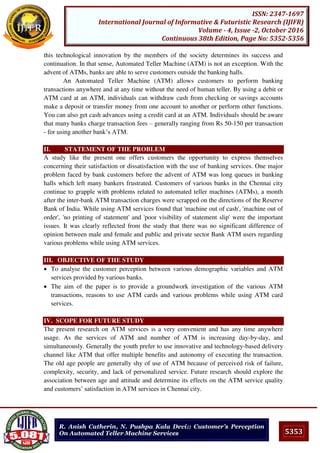
In the given Figure 2, where communication overhead is measured in joules, the overhead incurred
by LEACH is significant with the increase in number of nodes and thereby affects the energy
consumption, security, communication stability and the quality of service in large networks. On the
other hand, the overheads are very small. Therefore the performance of PEGASIS is better than
LEACH.
Figure 2. Performance of PEGASIS is better than LEACH.
LEACH
PEGASIS
COMMUNICATION
OVERHEAD
5221
ISSN: 2347-1697
International Journal of Informative & Futuristic Research (IJIFR)
Volume - 4, Issue -2, October 2016
Continuous 38th Edition, Page No: 5216-5222
R. Saranya, S. Uma :: Handling Large Medical Images With
Compressive Sensing And PEGASIS Protocol For Energy
Optimization
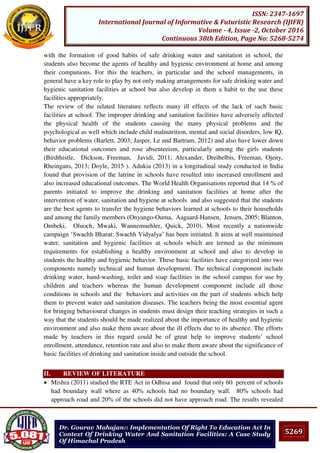
Figure 3: Stability and Lifetime in large networks of LEACH, PEGASIS
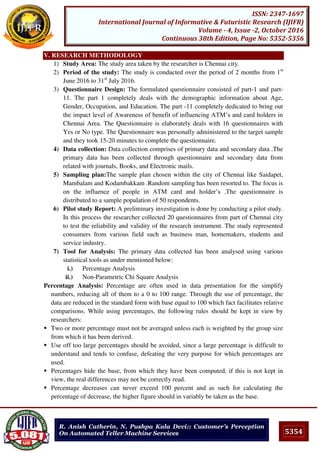
As shown in the Fig. 3 PEGASIS achieves around 2x the number of rounds compared to LEACH at
all values of number of nodes deployed in the network. This shows that as compared to LEACH,
PEGASIS offers better stability and lifetime in large networks.
VIII. CONCLUSION
This paper makes a detailed study on the WBAN architecture and the implementation of
compressive sensing and PEGAIS protocol for enhanced data delivery with the available battery
power. The paper also makes a comparative study of LEACH and PEGASIS protocol and the study
proves that the PEGASIS protocol performs better in handling energy factor and sets the network
work for longer hours without any network failure. In future this work can be extended to
implement the model of WBAN with compressive sensing and PEGASIS protocol.
IX. REFERENCES
[1] Cao. H. Leung. V, Chow. C, and Chan. H. (2009, Dec). Enabling Technologies for Wireless
Body Area Networks: A Survey and Outlook. IEEE Communication Magazine. [Online].
47(12), 84-93. “Home page” http://dl.acm.org/citation.cfm?id=2294013
[2] M. Unser. (2000). Sampling—50 Years after Shannon. Proceedings of IEEE. [Online].
88(4), 569-587. “Home page”, http://bigwww.epfl.ch/publications/unser0001.pdf
[3] Massimo Fornasier and Holger Rauhut. (2010, Apr).Compressive Sensing. [Online]. “Home
page”, www.math.umu.se/digitalAssets/115/115905_csfornasierrauhut.pdf
[4] Emmanuel J. Candès and Michael B. Wakin. (2008, Mar). An Introduction To Compressive
Sampling. IEEE Signal Processing Magazine. [Online]. “Home page”,
http://pami.uwaterloo.ca/~basir/ECE750/p9.pdf
[5] Susanne Albers. (2010, May). Energy Efficient Algorithms. Communications of the ACM.
[Online]. 53(5), “Home page”, http://cacm.acm.org/magazines/2010/5/87271-energy-
efficient-algorithms/fulltext
[6] Daniel Benedict Ndawi. (2015, Oct). Improved Pegasis Protocol for Energy Efficient
Wireless Sensor Network by Ant Colony Optimization. International Journal and Magazine
LEACH PEGASIS
Number of Rounds
Nodedeathrates
5222
ISSN: 2347-1697
International Journal of Informative & Futuristic Research (IJIFR)
Volume - 4, Issue -2, October 2016
Continuous 38th Edition, Page No: 5216-5222
R. Saranya, S. Uma :: Handling Large Medical Images With
Compressive Sensing And PEGASIS Protocol For Energy
Optimization
of Technology. [Online]. “Home page”
http://www.ijmetmr.com/oloctober2015/DanielBenedictNdawi-A-28.pdf
[7] Stephanie Lindsey and Cauligi S. Raghavendra. PEGASIS: Power-Efficient Gathering in
Sensor Information Systems. [Online]. , “Home page”,
http://ceng.usc.edu/~raghu/pegasisrev.pdf
X. AUTHOR’S BIOGRAPHIES
1
R.Saranya received master’s degree in Computer Science from
Bharathiar University, Coimbatore in 2013 and doing Part Time M.Phil
Computer Science in, C.M.S. College of Science & Commerce
(Autonomous), Coimbatore, Tamil Nadu. She is working as a Teacher
in Cambridge Matric Hr.Sec School. Her research interests are Image
Processing.
2
S.Uma received master’s degree in Information Technology from
Bharathidasan University, Trichy in 2004 and M.Phil degree in
Computer Science from Bharathidasan University, Trichy in 2007. She is
currently an Assistant Professor in Department of Information
Technology, C.M.S.College of Science & Commerce (Autonomous),
Coimbatore, Tamil Nadu. Her research interests are Data Mining and
Image Processing.
To Cite This Paper
[1]
[2]
Saranya, R. , Uma, S. (2016): “Handling Large Medical Images With Compressive
Sensing And PEGASIS Protocol For Energy Optimization” International Journal of
Informative & Futuristic Research ( ISSN: 2347-1697 ), Vol. 4 No. (2), October 2016, pp.
5216-5222, Paper ID: IJIFR/V4/E2/036.
.
5223This work is published under Attribution-NonCommercial-ShareAlike 4.0 International License
Copyright©IJIFR 2016
InternationalJournalofInformative&FuturisticResearch ISSN: 2347-1697
Volume 4 Issue 2 October 2016www.ijifr.com
Abstract
This paper highlights on the issue or the major limitations of Wireless
Sensor Networks that are battery operated with limited battery powers.
This study deals with overcoming this limited battery using Compressive
Sensing and PEGASIS protocol. The study concentrates on Wireless Body
Area Networks (WBAN) where wireless sensors are used to capture
potential data from human body and sends it to the medical room in case of
emergency. These captured data are huge and complex images like ECG,
Scanning etc., and these data has to be exchanged across the network
efficiently without any break in the network that operates with limited
battery power. To overcome the problem of battery power limitation this
study proposes a compressive sensing PEGASIS based algorithm for
efficient handling of the network without network breakages.
I. INTRODUCTION
An impulse buying is an unplanned or spontaneous purchase, where the consumer gets a
sudden persistent urge to buy something on the spur of moment. The typical characteristic
of impulse buying is an unplanned purchase made by a spontaneous decision and a
subjective bias in favour of immediate possession (Kacen and Lee, 2002). Compulsive
A STUDY ON IMPACT OF DEMOGRAPHIC AND
PSYCHO-SOCIAL FACTORS ON IMPULSIVE AND
COMPULSIVE BUYING BEHAVIOR IN ORGANIZED
RETAIL ENVIRONMENT
Paper ID IJIFR/V4/ E2/ 038 Page No. 5223-5227 Subject Area
Business
Administration
Keywords Impulsive Buying, Compulsive Buying, Factors Influencing Buying Behavior
1st Dr.K.Vidyakala
Assistant Professor,
Department of Business Administration,
PSGR Krishnammal College for Women,
Peelamedu, Coimbatore- Tamilnadu
2nd J.Divyabharathi
Research Scholar
Department of Business Administration,
PSGR Krishnammal College for Women,
Peelamedu, Coimbatore- Tamilnadu
5224
ISSN: 2347-1697
International Journal of Informative & Futuristic Research (IJIFR)
Volume - 4, Issue -2, October 2016
Continuous 38th Edition, Page No: 5223-5227
Dr.K.Vidyakala, J.Divyabharathi :: A Study On Impact Of
Demographic And Psycho-Social Factors On Impulsive And
Compulsive Buying Behavior In Organized Retail Environment
buying is characterized as repetitive, time consuming, excessive and uncontrolled buying
(Faber & O’Guinn, 1992). The factors influencing consumer’s compulsive buying behavior
can be categorized into two wide categories i.e. external (environmental) influences and
internal (psychological) influences (Aboujaoude, 2013).
It is difficult to distinguish between impulsive buying behavior and compulsive buying
behavior based on their consequences (Callesen et al., 2014). Impulsive buying behavior
may further become a cause of impulse control disorder and ultimately turn into compulsive
buying behavior (Kwak et al., 2006). Planning and control mechanism is the only difference
between both these behaviors (Xiao & Nicholson, 2013).
II. REVIEW OF LITREATURE
 Ahmed et al., (2015) analysed the core self-evaluation (CSE) personality traits model in
impulsive and compulsive buying behavior among 641 fashion shoppers using Structural
Equation Modelling. The results of the study concluded that compulsive buying is
generated by impulsive buying behavior. Moreover the study also provided evidence that
consumers with low score on CSE exhibited more impulsive buying behavior than
compulsive buying behavior.
 Anant and Anshul (2014) examined the effect of five intrinsic factors (personality,
culture, materialism, shopping enjoyment tendency, and impulsive buying tendency) on
impulsive buying behaviour among 508 consumers in different parts of India. The results
of the study showed that materialism, shopping enjoyment tendency, and impulsive
buying tendency had significant positive relationship with impulsive buying behaviour,
and the cultural construct of collectivism and two personality constructs of extraversion
and conscientiousness also showed significant relationship.
 Li et al., (2014) investigated the prevalence of compulsive buying tendencies among 659
Chinese students. The results of the study identified three important factorial dimensions
of compulsive buying behavior they are: impairment of impulse control and reactive or
compensatory aspects, reduced rationality according to money spending, and post-
purchase guilt. The findings revealed that majority of female shows compulsive buying
pattern.
 Flight and Scherle (2013) analysed the interaction of shopping context (online or offline)
in relation to impulsive and compulsive buying behaviors among 353 respondents in USA.
The results of the study concluded that the impulsive and compulsive behavior vary
significantly across store and product type, shopping intent (planned or spontaneous),
affective state, and store location (online versus offline).
III. OBJECTIVES OF THE STUDY
 To analyse the impact of demographic factors on impulsive and compulsive buying
behavior.
 To analyse the impact of psycho-social factors on impulsive and compulsive buying
behavior.
5225
ISSN: 2347-1697
International Journal of Informative & Futuristic Research (IJIFR)
Volume - 4, Issue -2, October 2016
Continuous 38th Edition, Page No: 5223-5227
Dr.K.Vidyakala, J.Divyabharathi :: A Study On Impact Of
Demographic And Psycho-Social Factors On Impulsive And
Compulsive Buying Behavior In Organized Retail Environment
IV. RESEARCH DESIGN
Primary data collection was done through survey method using a well-structured
questionnaire. The Sample Size of 403 respondents from the urban and rural areas in
Coimbatore was chosen through simple random sampling method.
Tools used for analysis: Percentage analysis is used to explore the distribution in the
demographic and psycho-social factors of the respondents, One-way ANOVA is used to
analyze the impact of demographic and psycho-social factors on impulsive and compulsive
buying behavior.
V. DATA ANALYSIS AND INTERPRETATION
Demographic profile of the respondents
Among 403 respondents 54.6% are female, 32.8% are in the age group of 18-25 years, 60%
are married, 56.3% are undergraduates, 46.4% are employed, 33.5% have a monthly income
above Rs.50001, 66.3% are from nuclear family, 66.7% have 3-5 members in their family
and 49.1% are from urban area. The percentage analysis on psycho - social factors presented
that majority 84.6% follow creative lifestyle, 47.4% are emotional and 61.3% have a
positive attitude.
5.1 Impact of Demographic factors on impulsive and compulsive buying behavior
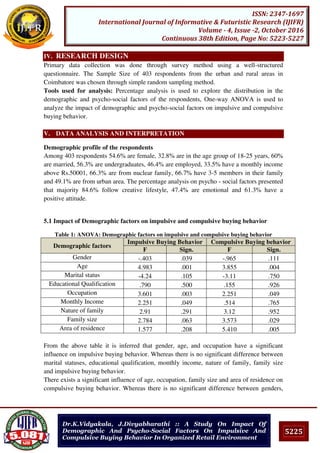
Table 1: ANOVA: Demographic factors on impulsive and compulsive buying behavior
Demographic factors
Impulsive Buying Behavior Compulsive Buying behavior
F Sign. F Sign.
Gender -.403 .039 -.965 .111
Age 4.983 .001 3.855 .004
Marital status -4.24 .105 -3.11 .750
Educational Qualification .790 .500 .155 .926
Occupation 3.601 .003 2.251 .049
Monthly Income 2.251 .049 .514 .765
Nature of family 2.91 .291 3.12 .952
Family size 2.784 .063 3.573 .029
Area of residence 1.577 .208 5.410 .005
From the above table it is inferred that gender, age, and occupation have a significant
influence on impulsive buying behavior. Whereas there is no significant difference between
marital statuses, educational qualification, monthly income, nature of family, family size
and impulsive buying behavior.
There exists a significant influence of age, occupation, family size and area of residence on
compulsive buying behavior. Whereas there is no significant difference between genders,
5226
ISSN: 2347-1697
International Journal of Informative & Futuristic Research (IJIFR)
Volume - 4, Issue -2, October 2016
Continuous 38th Edition, Page No: 5223-5227
Dr.K.Vidyakala, J.Divyabharathi :: A Study On Impact Of
Demographic And Psycho-Social Factors On Impulsive And
Compulsive Buying Behavior In Organized Retail Environment
marital status, educational qualification, monthly income, nature of family and compulsive
buying behavior.
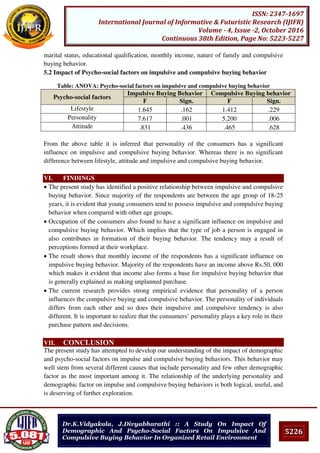
5.2 Impact of Psycho-social factors on impulsive and compulsive buying behavior
Table: ANOVA: Psycho-social factors on impulsive and compulsive buying behavior
Psycho-social factors
Impulsive Buying Behavior Compulsive Buying behavior
F Sign. F Sign.
Lifestyle 1.645 .162 1.412 .229
Personality 7.617 .001 5.200 .006
Attitude .831 .436 .465 .628
From the above table it is inferred that personality of the consumers has a significant
influence on impulsive and compulsive buying behavior. Whereas there is no significant
difference between lifestyle, attitude and impulsive and compulsive buying behavior.
VI. FINDINGS
 The present study has identified a positive relationship between impulsive and compulsive
buying behavior. Since majority of the respondents are between the age group of 18-25
years, it is evident that young consumers tend to possess impulsive and compulsive buying
behavior when compared with other age groups.
 Occupation of the consumers also found to have a significant influence on impulsive and
compulsive buying behavior. Which implies that the type of job a person is engaged in
also contributes in formation of their buying behavior. The tendency may a result of
perceptions formed at their workplace.
 The result shows that monthly income of the respondents has a significant influence on
impulsive buying behavior. Majority of the respondents have an income above Rs.50, 000
which makes it evident that income also forms a base for impulsive buying behavior that
is generally explained as making unplanned purchase.
 The current research provides strong empirical evidence that personality of a person
influences the compulsive buying and compulsive behavior. The personality of individuals
differs from each other and so does their impulsive and compulsive tendency is also
different. It is important to realize that the consumers’ personality plays a key role in their
purchase pattern and decisions.
VII. CONCLUSION
The present study has attempted to develop our understanding of the impact of demographic
and psycho-social factors on impulse and compulsive buying behaviors. This behavior may
well stem from several different causes that include personality and few other demographic
factor as the most important among it. The relationship of the underlying personality and
demographic factor on impulse and compulsive buying behaviors is both logical, useful, and
is deserving of further exploration.
5227
ISSN: 2347-1697
International Journal of Informative & Futuristic Research (IJIFR)
Volume - 4, Issue -2, October 2016
Continuous 38th Edition, Page No: 5223-5227
Dr.K.Vidyakala, J.Divyabharathi :: A Study On Impact Of
Demographic And Psycho-Social Factors On Impulsive And
Compulsive Buying Behavior In Organized Retail Environment
VIII. REFERENCES
[1] Anant Jyoti Badgaiyana,n, Anshul Vermab,(2014) “Intrinsic factors affecting impulsive
buying behaviour—Evidence from India”, Journal of Retailing and Consumer Services, Vol.
21, Pp.537-549.
[2] Moin Ahmed Moon , Hassan Rasool, Saman Attiq (2015) “Personality and Irregular Buying
Behavior: Adaptation and Validation of Core Self Evaluation Personality Trait Model in
Consumer Impulsive and Compulsive Buying Behavior”, Journal of Marketing and
Consumer Research,Vol.15 Pp.121-131.
[3] Shuang Li, Alexander Unger, Chongzeng Bi (2014), “Different facets of compulsive buying
among Chinese students”, J Behav Addict, Vol.3 Iss.4, Pp.238–245.
[4] Richard L. Flight, Jarrod Scherle (2013) “Shopping Context and the Impulsive and
Compulsive Buyer”, Atlantic Marketing Journal, Vol. 2: Iss. 2, Pp.54-69.
[5] Callesen, M. B., Weintraub, D., Damholdt, M. F., & Møller, A. (2014). “Impulsive and
compulsive behaviors among Danish patients with Parkinson's disease: Prevalence,
depression, and personality. Parkinsonism & related disorders”,Vol. 20, Iss.1, Pp. 22-26.
[6] Defty, M., Xiao, S. H. & Iyer, G. (2013, May), The Influence of Buyer Attitudes on the
Organization’s Green Buying Paper presented at 2013 Academy of Marketing Science
Annual Conference, Monterey Bay, California.US
To Cite This Paper
[1]
[2]
Vidyakala, K., Divyabharathi, J. (2016): “A Study On Impact Of Demographic And
Psycho-Social Factors On Impulsive And Compulsive Buying Behavior In Organized
Retail Environment” International Journal of Informative & Futuristic Research
(ISSN: 2347-1697 ), Vol. 4 No. (2), October 2016, pp. 5223-5227, Paper ID:
IJIFR/V4/E2/038.
.
5223This work is published under Attribution-NonCommercial-ShareAlike 4.0 International License
Copyright©IJIFR 2016
InternationalJournalofInformative&FuturisticResearch ISSN: 2347-1697
Volume 4 Issue 2 October 2016www.ijifr.com
Abstract
In the era of globalization electronic marketing is a great revolution. Over
the last decade maximum business organizations are running with
technological change. Online shopping or marketing is the use of
technology (i.e., computer) for better marketing performance. Online
shopping/e-shopping is a form of electronic commerce which allows
consumers to directly buy goods or services from a seller over the internet
using a web browser. Evaluating the customer’s attitude towards online
shopping and the factors affecting it can assist the marketers and managers
to plan appropriate strategies in order to make more profit. The current
study is based on online shopping behavior among students in various
colleges in Ernakulum district. The study focuses on the area of internet
usage pattern of the respondents, type of product they purchase, factors
stimulating online sales, loopholes in online shopping and suggestions for
the improvement of online shopping.
I. INTRODUCTION
Electronic commerce has witnessed an exponential growth resulting in greater use of this
tool by the traders. Also the competition in e-commerce is intensified. Therefore it becomes
more important for online retailers to understand the antecedents of consumer acceptance of
online shopping. Such knowledge is essential to customer relationship management, which
has been recognized as an effective business strategy to achieve success in the electronic
market.English entrepreneur Michael Aldrich invented online shopping in 1979. Online
shopping (sometimes known as e-tail from "electronic retail" or e-shopping) is a form of
electronic commerce which allows consumers to directly buy goods or services from a seller
over the Internet using a web browser. Alternative names are: e-web-store, e-shop, e-store,
ONLINE SHOPPING BEHAVIOUR AMONG
COLLEGE STUDENTS IN ERNAKULAM DISTRICT
Paper ID IJIFR/V4/ E2/ 043 Page No. 5228-5234 Research Area E-Commerce
Keywords Consumer Attitude, Online Shopping, Virtual Store, e-Tailware
Lidia Durom
Assistant Professor
P.G. Department of Commerce(Self-Finance)
St. Teresa’s College, Ernakulam(Kerala)-India
5224
ISSN: 2347-1697
International Journal of Informative & Futuristic Research (IJIFR)
Volume - 4, Issue -2, October 2016
Continuous 38th Edition, Page No: 5228-5234
Lidia Durom :: Online Shopping Behaviour Among College
Students In Ernakulam District
Internet shop, web-shop, web-store, online store, online storefront and virtual store. When
people buy things, they will engage in a decision making process. One of the major
problems of E- commerce web sites is that they fail in supporting the customers in this
process. By understanding the customer’s needs and concerns the marketer can provide
better products and services. According to UCLA Centre for Communication Policy
(2001), online shopping has become the third most popular Internet activity, immediately
following e-mail using/instant messaging and web browsing. It is even more popular than
seeking out entertainment information and news, two commonly thought of activities when
considering what Internet users do when online.
Online shopping behaviour (also called online buying behaviour and Internet
shopping/buying behaviour) refers to the process of purchasing products or services via the
Internet. The process consists of five steps similar to those associated with traditional
shopping behaviour (Liang and Lai 2000). In the typical online shopping process, when
potential consumers recognize a need for some merchandise or service, they go to the
Internet and search for need-related information. However, rather than searching actively, at
times potential consumers are attracted by information about products or services associated
with the felt need. They then evaluate alternatives and choose the one that best fits their
criteria for meeting the felt need. Finally, a transaction is conducted and post-sales services
provided. Online shopping attitude refers to consumer’s psychological state in terms of
making purchases on the Internet e-Commerce is a general concept covering any form of
business transaction or information exchange executed using Information And
Communication Technology (ICT’s). E-Commerce takes place between companies and
their consumers, or between companies & Government. E-Commerce includes buying and
selling of goods and services and doing business over electronic- computer networks. The
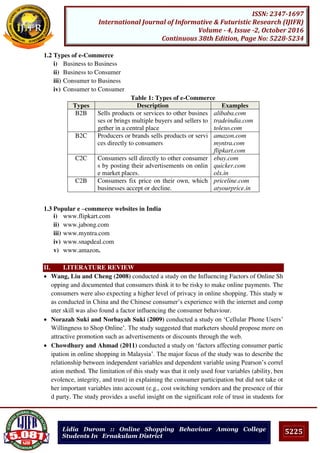
following Chart illustrates the broad divisions of e-commerce.
1.1 Divisions of e-Commerce
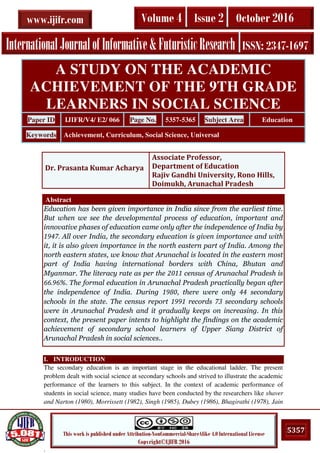
Figure 1: e commerce divisions
COMMERCE
ELECTRONIC
COMMERCE
INTERNET
COMMERCE
BUSINESS FOCUSED
E-COMMERCE
CONSUMER FOCUSED
E-COMMERCE
MOBILE COMMERCE
TRADITIONAL
COMMERCE
5225
ISSN: 2347-1697
International Journal of Informative & Futuristic Research (IJIFR)
Volume - 4, Issue -2, October 2016
Continuous 38th Edition, Page No: 5228-5234
Lidia Durom :: Online Shopping Behaviour Among College
Students In Ernakulam District
1.2 Types of e-Commerce
i) Business to Business
ii) Business to Consumer
iii) Consumer to Business
iv) Consumer to Consumer
Table 1: Types of e-Commerce
Types Description Examples
B2B Sells products or services to other busines
ses or brings multiple buyers and sellers to
gether in a central place
alibaba.com
tradeindia.com
tolexo.com
B2C Producers or brands sells products or servi
ces directly to consumers
amazon.com
myntra.com
flipkart.com
C2C Consumers sell directly to other consumer
s by posting their advertisements on onlin
e market places.
ebay.com
quicker.com
olx.in
C2B Consumers fix price on their own, which
businesses accept or decline.
priceline.com
atyourprice.in
1.3 Popular e –commerce websites in India
i) www.flipkart.com
ii) www.jabong.com
iii) www.myntra.com
iv) www.snapdeal.com
v) www.amazon.
II. LITERATURE REVIEW
 Wang, Liu and Cheng (2008) conducted a study on the Influencing Factors of Online Sh
opping and documented that consumers think it to be risky to make online payments. The
consumers were also expecting a higher level of privacy in online shopping. This study w
as conducted in China and the Chinese consumer’s experience with the internet and comp
uter skill was also found a factor influencing the consumer behaviour.
 Norazah Suki and Norbayah Suki (2009) conducted a study on ‘Cellular Phone Users’
Willingness to Shop Online’. The study suggested that marketers should propose more on
attractive promotion such as advertisements or discounts through the web.
 Chowdhury and Ahmad (2011) conducted a study on ‘factors affecting consumer partic
ipation in online shopping in Malaysia’. The major focus of the study was to describe the
relationship between independent variables and dependent variable using Pearson’s correl
ation method. The limitation of this study was that it only used four variables (ability, ben
evolence, integrity, and trust) in explaining the consumer participation but did not take ot
her important variables into account (e.g., cost switching vendors and the presence of thir
d party. The study provides a useful insight on the significant role of trust in students for
5226
ISSN: 2347-1697
International Journal of Informative & Futuristic Research (IJIFR)
Volume - 4, Issue -2, October 2016
Continuous 38th Edition, Page No: 5228-5234
Lidia Durom :: Online Shopping Behaviour Among College
Students In Ernakulam District
online shopping.
 Yulihasri, Islam and Daud (2011) conducted a study on ‘Factors that Influence Custom
er’s Buying Intention on Shopping Online’. The variables that were tested included usefu
lness of internet shopping, ease of use, compatibility, privacy, security, normative beliefs,
self-efficacy, attitude and student’s buying intention. Pearson correlation analysis provide
d statistical information about the relationship of each independent variablewith depende
nt variables. It was studied that web advertising favourably influences the purchasing of a
company’s products.
 Karim (2013) conducted a study on online shopping behaviour of customers and docume
nted that online vendors can assure their consumers for transaction security and avoid lon
g delays in completing online orders and the hassle of returning goods for better online sh
opping experience.
 Morris (2013) conducted a study on ‘More Consumers Prefer Online Shopping’ Shopper
s increasingly want what’s called a “seamless omnichannel experience,” meaning one in
which retailers allow them to combine online and brick and mortar browsing, shopping, o
rdering and returning in whatever combo they would like.
III. NEED AND SIGNIFICANCE OF THE STUDY
The study is basically descriptive in nature. .Online shopping is considered to be a very help
ful way of buying products through the internet especially during the holidays and clearance
seasons. The e-commerce market has a great potential for youth segment. It allows customer
s to enjoy a wide variety of products and items not only from a specific store, but from a div
erse storage that includes all kinds of items. Online shopping also provides customers with a
good customer service that also occurs online. Specially understanding the consumer’s attitu
des towards online shopping , making improvement in the factors that influence consumers t
o shop online and working on factors that affect consumers to shop online will help markete
rs to gain the competitive edge over others.
Many people around the world prefer to shop online and buy products from several brands a
nd companies that they cannot find or are not available for purchase in their home countries.
Nowadays, and with the help of the new technology and the support of the internet, people f
rom all around the world started to purchase items online by simply sitting in their homes.
Purchasing items and products through the Web is a very easy task to do. It is now playing a
very important role in everybody’s life especially elderly people, as well as people with a ve
ry busy life schedule. It provides a very comfortable service for its customers, by being able
to save the item in the personal shopping bag, and buy it later on. But the statistics available
has shown that Indian market is still not a fully developed market for e-tail stores. There is h
uge scope of web-stores in various areas and in almost all the segments. The young populati
on is the biggest attraction of this industry and they may contribute substantially to the grow
th of online shopping in India. The majority of internet users are youngsters, the majority of
goods and services demanded are related to only this segment.
5227
ISSN: 2347-1697
International Journal of Informative & Futuristic Research (IJIFR)
Volume - 4, Issue -2, October 2016
Continuous 38th Edition, Page No: 5228-5234
Lidia Durom :: Online Shopping Behaviour Among College
Students In Ernakulam District
IV. OBJECTIVES OF THE STUDY
1. To understand the internet usage patern among college students.
2. To give an idea regarding on line shopping
3. To review studies on online shopping
4. To analyse the type of products the respondents’ shop online
5. To discover the factors stimulating online sales.
6. To discover the loopholes in online shopping.
7. To find out the most and least popular categories purchased online.
8. To offer suitable suggestions for the present study
IV. RESEARCH METHODOLOGY
 Methodology
 The study includes respondents various colleges in Ernakulam district
 Sources of Data: This study uses both Primary Data and Secondary Data. The prima
ry data are collected from 100 students in 5 colleges in Ernakulum district. For conv
enience the researcher selected 20 students from St. Albert’s college, Maharajas Coll
ege, St. Teresa’s College, Aquinas College and Cochin College. The Secondary Data
has been collected from books, articles, magazines and from websites.
 Sampling Technique: For the purpose of study 100 respondents were chosen. Conv
enience sampling has been adopted.
 Tools for Analysis:
 Percentage analysis is the tool used for the study.
 Limitation: Due to paucity of time only limited samples were taken for study.
V. DATA ANALYSIS & INTERPRETATION
5.1Gender wise classification of on-line Shoppers
Sl. No.
Name of
the College
Gender
Boys Girls
1 Maharaja’s College 96% 4%
2 St. Albert’s College 80% 20%
3 St.Teresa’s College 0% 100%
4 Cochin College 55% 45%
5 Aquinas College 60% 40%
Total 58.2% 41.8%
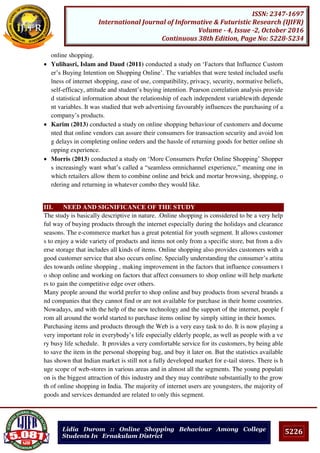
In Ernakulam City boys are used online shopping fac
ilities for purchasing products except St. Teresa’s Co
llege.
Figure 1: Genderwise Classification Of Respondents
5228
ISSN: 2347-1697
International Journal of Informative & Futuristic Research (IJIFR)
Volume - 4, Issue -2, October 2016
Continuous 38th Edition, Page No: 5228-5234
Lidia Durom :: Online Shopping Behaviour Among College
Students In Ernakulam District
5.2 .Internet Usage Patern of the Respondents
Sl. No. Name of the College Usage Pattern No Users
Mobile
Networks
Broadband
connection
WiFi data
connection
1 Maharaja’s College 73% 12% 4% 11%
2 St. Albert’s College 72% 20% 2% 6%
3 St.Theresas College 57% 40% 2% 1%
4 Cochin College 71% 8% 0% 21%
5 Aquinas College 41% 7% 0% 52%
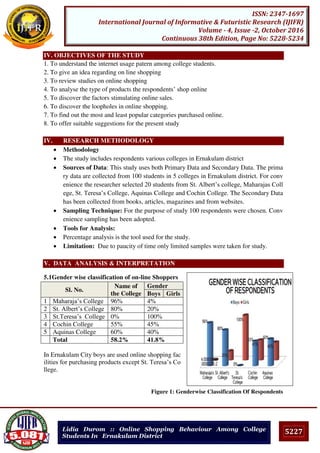
Total 62.8% 17.4% 1.6% 18.2%
In Ernakulam city 73% students of Maharaja’s college owns mobile phones & have internet
connections. Aquinas College students are lesser in mobile network using community.
Figure 2: Internet usage pattern of respondents
5.3. Frequency of Online shopping preferences
Sl No Name of the College Online
shopping habit
Traditional
shopping habit
Both online &
Traditional
1 Maharaja’s College 57% 40% 3%
2 St. Albert’s College 60% 10% 30%
3 St.Teresa’s College 70% 5% 25%
4 Cochin College 40% 55% 5%
5 Aquinas College 32% 60% 8%
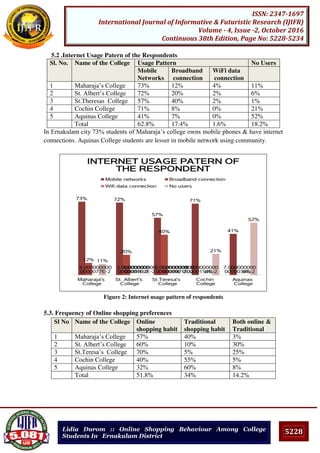
Total 51.8% 34% 14.2%
5229
ISSN: 2347-1697
International Journal of Informative & Futuristic Research (IJIFR)
Volume - 4, Issue -2, October 2016
Continuous 38th Edition, Page No: 5228-5234
Lidia Durom :: Online Shopping Behaviour Among College
Students In Ernakulam District
Figure 3: Frequency of Online shopping preferences
In Ernakulam City 51.8% students are engaged in online shopping habit & 14.2% students li
kes both online & off line shopping. Among 5 Colleges St.Teresa’s Students prefers on line
shopping more compared to others.
5.4. The Type of Products the Respondents’ Shop Online
Sl. No. Name of the College Items
Beauty ,
Wellness & Medicines
Sports
Items
Life Style
Products
1 Maharaja’s College 54% 45% 1%
2 St. Albert’s College 40% 60% 0%
3 St.Teresa’s College 75% 0% 25%
4 Cochin College 32% 62% 6%
5 Aquinas College 45% 35% 20%
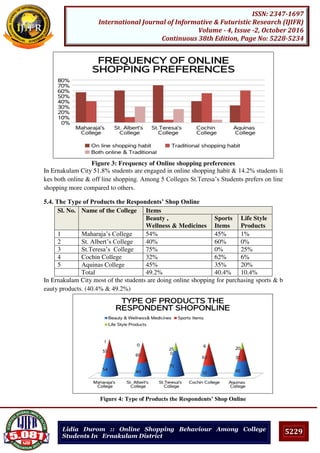
Total 49.2% 40.4% 10.4%
In Ernakulam City most of the students are doing online shopping for purchasing sports & b
eauty products. (40.4% & 49.2%)
Figure 4: Type of Products the Respondents’ Shop Online
5230
ISSN: 2347-1697
International Journal of Informative & Futuristic Research (IJIFR)
Volume - 4, Issue -2, October 2016
Continuous 38th Edition, Page No: 5228-5234
Lidia Durom :: Online Shopping Behaviour Among College
Students In Ernakulam District
5.5. Payment system
Sl. No. Name of the College Payment Systems
Credit Cards Debit Cards Cash on Delivery
1 Maharaja’s College 96% 4% 0%
2 St. Albert’s College 80% 10% 10%
3 St.Teresa’s College 84% 16% 0%
4 Cochin College 54% 20% 26%
5 Aquinas College 60% 20% 20%
Total 74.8% 14% 11.2%
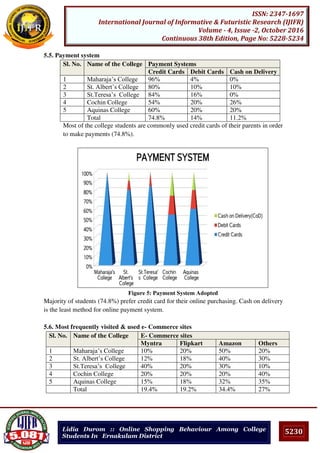
Most of the college students are commonly used credit cards of their parents in order
to make payments (74.8%).
Figure 5: Payment System Adopted
Majority of students (74.8%) prefer credit card for their online purchasing. Cash on delivery
is the least method for online payment system.
5.6. Most frequently visited & used e- Commerce sites
Sl. No. Name of the College E- Commerce sites
Myntra Flipkart Amazon Others
1 Maharaja’s College 10% 20% 50% 20%
2 St. Albert’s College 12% 18% 40% 30%
3 St.Teresa’s College 40% 20% 30% 10%
4 Cochin College 20% 20% 20% 40%
5 Aquinas College 15% 18% 32% 35%
Total 19.4% 19.2% 34.4% 27%
5231
ISSN: 2347-1697
International Journal of Informative & Futuristic Research (IJIFR)
Volume - 4, Issue -2, October 2016
Continuous 38th Edition, Page No: 5228-5234
Lidia Durom :: Online Shopping Behaviour Among College
Students In Ernakulam District
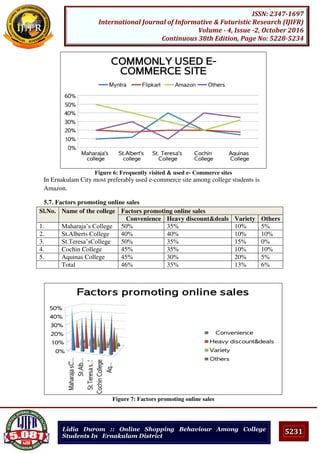
Figure 6: Frequently visited & used e- Commerce sites
In Ernakulam City most preferably used e-commerce site among college students is
Amazon.
5.7. Factors promoting online sales
Sl.No. Name of the college Factors promoting online sales
Convenience Heavy discount&deals Variety Others
1. Maharaja’s College 50% 35% 10% 5%
2. St.Alberts College 40% 40% 10% 10%
3. St.Teresa’sCollege 50% 35% 15% 0%
4. Cochin College 45% 35% 10% 10%
5. Aquinas College 45% 30% 20% 5%
Total 46% 35% 13% 6%
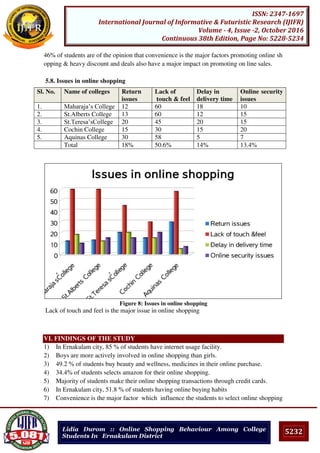
Figure 7: Factors promoting online sales
5232
ISSN: 2347-1697
International Journal of Informative & Futuristic Research (IJIFR)
Volume - 4, Issue -2, October 2016
Continuous 38th Edition, Page No: 5228-5234
Lidia Durom :: Online Shopping Behaviour Among College
Students In Ernakulam District
46% of students are of the opinion that convenience is the major factors promoting online sh
opping & heavy discount and deals also have a major impact on promoting on line sales.
5.8. Issues in online shopping
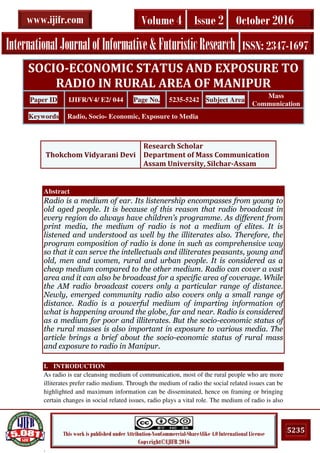
Figure 8: Issues in online shopping
Lack of touch and feel is the major issue in online shopping
VI. FINDINGS OF THE STUDY
1) In Ernakulam city, 85 % of students have internet usage facility.
2) Boys are more actively involved in online shopping than girls.
3) 49.2 % of students buy beauty and wellness, medicines in their online purchase.
4) 34.4% of students selects amazon for their online shopping.
5) Majority of students make their online shopping transactions through credit cards.
6) In Ernakulam city, 51.8 % of students having online buying habits
7) Convenience is the major factor which influence the students to select online shopping
Sl. No. Name of colleges Return
issues
Lack of
touch & feel
Delay in
delivery time
Online security
issues
1. Maharaja’s College 12 60 18 10
2. St.Alberts College 13 60 12 15
3. St.Teresa’sCollege 20 45 20 15
4. Cochin College 15 30 15 20
5. Aquinas College 30 58 5 7
Total 18% 50.6% 14% 13.4%
5233
ISSN: 2347-1697
International Journal of Informative & Futuristic Research (IJIFR)
Volume - 4, Issue -2, October 2016
Continuous 38th Edition, Page No: 5228-5234
Lidia Durom :: Online Shopping Behaviour Among College
Students In Ernakulam District
8) The ease and convenience provided by these stores for 24x7 has made very easy
shopping for consumers.
VII. SUGGESTIONS
1. The online shoppers secure their PC from viruses and other attacks by using a good anti-
malware program.
2. Online shoppers indicate that they would not even buy electronics without consulting
online reviews first.
3. The e-stores specifically mention about the security of transactions of their e-stores
which will increase the faith of customers for online shopping
4. Government should play a pivotal role in encouraging online shopping.
5. Online retailers should focus on better home page presentation to appeal the prospects
and sustain the existing buyers.
6. Use credit card instead of debit card for online purchases.
7. E-marketers must give a thought to secure, time saving, information about product and
services factors when they design their product strategy.
8. Payment through PayPal account
VIII. CONCLUSION
Online shopping is becoming more popular day by day with the increase in the usage of Wo
rld Wide Web known as www. Understanding customer’s need for online selling has becom
e challenge for marketers. .The e-commerce market has a great potential for youth segment.
If the demographic features are considered carefully then it can be easily identified that max
imum number of respondents of online shopping are lying in age group of 18- 25 years. Spe
cially understanding the consumer’s attitudes towards online shopping , making improveme
nt in the factors that influence consumers to shop online and working on factors that affect c
onsumers to shop online will help marketers to gain the competitive edge over others. The b
uying behaviour of youth can be elaborated through findings obtained through survey. By fo
cussing on various factors identified in this study, the corporate can make their marketing str
ategies in better way.
IX. REFERENCES
[1] Renuka Sharma, Mehta ad Shashanka (2014), “understanding online shopping behaviour of
Indian shoppers”, international journal of management and business studies, CVol.4, pp.9-
17
[2] M.M. Goyal (2014), “online shopping: a survey on consumers perception”, the international
journal of business and management, Vol .2(11), 73-79
[3] Devika Veeralakshmi (2013), “A study on online shopping behaviour of customers”,
International journal of scientific research and management, pp-28-32
[4] Anju Pawar and Neha chahal (2013), “Online shopping trends in Faridabad city”, Asia
pacific journal of marketing and management review, Vol.2 (3),pp-111-116
[5] Nazir, Tayyab and Javed (2012), “How online shopping is affecting consumers buying
behaviour in Pakistan”, International journal of computer science issues, Vol 9(3),pp-486-
495
5234
ISSN: 2347-1697
International Journal of Informative & Futuristic Research (IJIFR)
Volume - 4, Issue -2, October 2016
Continuous 38th Edition, Page No: 5228-5234
Lidia Durom :: Online Shopping Behaviour Among College
Students In Ernakulam District
[6] Shergill and Zhabin chen ( 2005), “Web based shopping: consumers attitude towards online
shopping in New Zealand”, Journal of electronic commerce research vol-6 No.2, pp-79-94
[7] Payal Upadhay and Jasvinder Kaur, “Analysis of online shopping behaviour of customers in
Kota city”, International journal of multidisciplinary and academic research, Vol.2, No.1 pp-
1-28
To Cite This Paper
[1]
[2]
Durom, L.(2016): “Online Shopping Behaviour Among College Students In
Ernakulam District” International Journal of Informative & Futuristic Research
(ISSN: 2347-1697 ), Vol. 4 No. (2), October 2016, pp. 5228-5234, Paper ID:
IJIFR/V4/E2/043.
.
5235This work is published under Attribution-NonCommercial-ShareAlike 4.0 International License
Copyright©IJIFR 2016
InternationalJournalofInformative&FuturisticResearch ISSN: 2347-1697
Volume 4 Issue 2 October 2016www.ijifr.com
Abstract
Radio is a medium of ear. Its listenership encompasses from young to
old aged people. It is because of this reason that radio broadcast in
every region do always have children’s programme. As different from
print media, the medium of radio is not a medium of elites. It is
listened and understood as well by the illiterates also. Therefore, the
program composition of radio is done in such as comprehensive way
so that it can serve the intellectuals and illiterates peasants, young and
old, men and women, rural and urban people. It is considered as a
cheap medium compared to the other medium. Radio can cover a vast
area and it can also be broadcast for a specific area of coverage. While
the AM radio broadcast covers only a particular range of distance.
Newly, emerged community radio also covers only a small range of
distance. Radio is a powerful medium of imparting information of
what is happening around the globe, far and near. Radio is considered
as a medium for poor and illiterates. But the socio-economic status of
the rural masses is also important in exposure to various media. The
article brings a brief about the socio-economic status of rural mass
and exposure to radio in Manipur.
I. INTRODUCTION
As radio is ear cleansing medium of communication, most of the rural people who are more
illiterates prefer radio medium. Through the medium of radio the social related issues can be
highlighted and maximum information can be disseminated, hence on framing or bringing
certain changes in social related issues, radio plays a vital role. The medium of radio is also
SOCIO-ECONOMIC STATUS AND EXPOSURE TO
RADIO IN RURAL AREA OF MANIPUR
Paper ID IJIFR/V4/ E2/ 044 Page No. 5235-5242 Subject Area
Mass
Communication
Keywords Radio, Socio- Economic, Exposure to Media
Thokchom Vidyarani Devi
Research Scholar
Department of Mass Communication
Assam University, Silchar-Assam
5236
ISSN: 2347-1697
International Journal of Informative & Futuristic Research (IJIFR)
Volume - 4, Issue -2, October 2016
Continuous 38th Edition, Page No: 5235-5242
Thokchom Vidyarani Devi :: Socio-Economic Status And Exposure
To Radio In Rural Area Of Manipur
a powerful tool imparting information and entertainment for the rural masses. Rural
programs catering the needs of agriculture and allied activities, rural women and rural
children are remain as important components of the radio programme composition down the
years.
In India, the print media took roots first in the major provincial capitals of British India,
Calcutta and later Bombay. These cities with their surrounding areas accounted for the bulk
of their newspaper circulations. Later in some other cities also published newspapers and
also had their own radio stations. But newspaper readership continued to remain in urban
areas. The broadcasting media (TV and Radio), though under government control, have the
capacity to reach out to the people in every nook and corner of the country. While both are
highly capital- intensive, it is their capacity to reach out to millions that makes them a
people’s medium. Radio has a much wider reach and access. Radio is supposed to be highly
popular medium since it has no geographical and literacy barriers. It can educate as well as
entertain people belonging to different strata of population. For the rural masses also radio is
a pleasing medium. But the socio- economic status of the rural masses is also important
exposure to various media.
II. LITERATURE REVIEW
 The mass communication tools broadly follow the outlines perspective of the social
learning theory. In India, where most of the rural people are illiterate, radio is applying
the theory while framing the programmes for social development. In India, radio plays
an important role in development communication through circulation of knowledge,
providing forum for discussion of issues, teach ideas, skills for a better life and create a
base of consensus for stability of the state.
 Broadcasting was introduced in India by amateur radio clubs in Calcutta, Bombay,
Madras and Lahore, though even before the clubs launched their ventures, several
experimental broadcasts were conducted in Bombay and other cities. The times of India
records that a broadcast was transmitted from the roof of its building on August 20,
1921. However, the first license granted for transmitting a broadcast was given only on
February 23, 1922.
 The Radio club of Calcutta was perhaps the first amateur club to start functioning (in
November 1923), followed by the Madras Presidency Radio club which was formed on
May 16, 1924 and began broadcasting on July 31. Financial difficulties forced the clubs
to come together in 1927 to form the Indian Broadcasting Company Limited (IBC).
 The government –run broadcasting, set up was called the Indian State Broadcasting
(ISBS) with Lionel Fielden from BBC as its first controller. Initially placed under the
department of Industries and Labour, All India Radio was transferred to the Department
of Communication, the administration of broadcasting was ultimately entrusted to the
department of Information and Broadcasting in 1941. It remained with the Ministry until
September 1997 when the Prasar Bharati, an autonomous statutory body, was
constituted under the Prasar Bharati (1990).
5237
ISSN: 2347-1697
International Journal of Informative & Futuristic Research (IJIFR)
Volume - 4, Issue -2, October 2016
Continuous 38th Edition, Page No: 5235-5242
Thokchom Vidyarani Devi :: Socio-Economic Status And Exposure
To Radio In Rural Area Of Manipur
 The persuasive power of radio is more than that of print. Again Klapper goes on
reporting that among the less educated and intelligent people, radio also shows greater
retention power (Klapper, 1960).
 Menefee and Menefee opine that in any area where illiteracy predominates, the radio
must be relied upon for day-to-day communication with people (Menefee and Menefee,
1964).
 Radio Listening Habits among Rural Audiences: An Ethnographic Study of Kieni West
Division in Central Kenya, A dissertation presented to the faculty of the Scripps College
of Communication of Ohio University, George W. Gathigi August 2009. This is a
research on the role of radio in rural listeners’ everyday lives within a liberalized media
environment. Using the media ethnography method, he examined the radio consumption
habits of rural people of the Kieni West Division, Nyeri District, Kenya. How do they
choose content from the stations that are available? What type of content do they seek
and how does this relate to their daily lives?
 To explore this, an ethnographic study was undertaken of the Kothmale Community
Radio and Internet Project (KCRIP) in Central Province, Sri Lanka. The Kothmale
community radio station had been operating since the 1980s, while the Internet centre
was a fairly recent addition (since 2000). KCRIP provided an interesting example of a
‘community multimedia centre’ that was anecdotally having a lot of positive outcomes,
but little rigorous research and no regular monitoring and evaluation was taking place to
back up this impression. The combination of the Internet centre and the radio station was
of particular interest in this area where most people had access to radio, but very few to
other communication technologies such as telephones, computers and the Internet.
 All India Radio took up the task of aiding overall development in the country and
designed programmes to contribute to the process of socio-economic development.
During the Green Revolution and the White Revolution in the country the radio was
used successfully for disseminating information to farmers (Maru, 2003).
III. OBJECTIVE OF THE STUDY
To find out whether there is any difference in the extend of interconnection between the
exposure to radio of the rural people on account of the difference in the people’s socio-
economic status.
IV. RESEARCH METHODOLOGY
For the proposed study, one village (Pungdongbam village) from the Imphal East district of
the Manipur will be taken for case study.
Empirical, qualitative as well as quantitative data will be collected from the selected areas of
the study through ethnographic field work.
 Observation- participant, non- participant observation
 Interview schedule- open and closed ended question, diaries, feedback mechanisms
and other ‘self-documentation’.
5238
ISSN: 2347-1697
International Journal of Informative & Futuristic Research (IJIFR)
Volume - 4, Issue -2, October 2016
Continuous 38th Edition, Page No: 5235-5242
Thokchom Vidyarani Devi :: Socio-Economic Status And Exposure
To Radio In Rural Area Of Manipur
4.1 Variables/ Parameters of the study
Socio-economic status: The socio-economic status of the respondents is studied in terms of
their educational attainment, occupation, income and monthly savings.
4.2 Population and Sample
The field work for the study was conducted in one of the rural areas of Imphal –east districts
of Manipur. The heads of households of the area constituted the Universe for the study. 300
heads of households constituted the sample for the study. The households were selected
according to the list of the electoral roll.
4.3 Analyses of Data
The collected data were carried out through statistical analysis. Association between
attributes and variables was found out by applying chi-square test. 0.05 level is used for
testing significance.
4.4 Testing
The chi-square test also called Pearson’s chi-square test or the chi-square test of association
is used to discover if there is relationship between two categorical variables.
V. ANALYTICAL INTERPRETATION OF DATA
5.1 Socio Economic Status of the Respondents
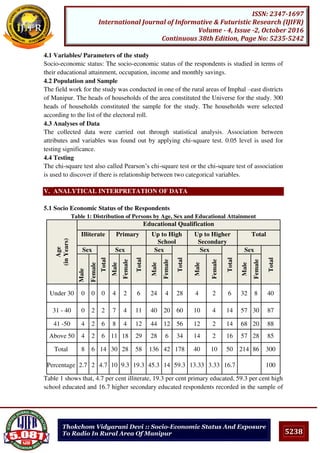
Table 1: Distribution of Persons by Age, Sex and Educational Attainment
Age
(inYears)
Educational Qualification
Illiterate Primary Up to High
School
Up to Higher
Secondary
Total
Sex
Total
Sex
Total
Sex
Total
Sex
Total
Sex
Total
Male
Female
Male
Female
Male
Female
Male
Female
Male
Female
Under 30 0 0 0 4 2 6 24 4 28 4 2 6 32 8 40
31 - 40 0 2 2 7 4 11 40 20 60 10 4 14 57 30 87
41 -50 4 2 6 8 4 12 44 12 56 12 2 14 68 20 88
Above 50 4 2 6 11 18 29 28 6 34 14 2 16 57 28 85
Total 8 6 14 30 28 58 136 42 178 40 10 50 214 86 300
Percentage 2.7 2 4.7 10 9.3 19.3 45.3 14 59.3 13.33 3.33 16.7 100
Table 1 shows that, 4.7 per cent illiterate, 19.3 per cent primary educated, 59.3 per cent high
school educated and 16.7 higher secondary educated respondents recorded in the sample of
5239
ISSN: 2347-1697
International Journal of Informative & Futuristic Research (IJIFR)
Volume - 4, Issue -2, October 2016
Continuous 38th Edition, Page No: 5235-5242
Thokchom Vidyarani Devi :: Socio-Economic Status And Exposure
To Radio In Rural Area Of Manipur
the survey. No graduate and post graduate respondents found in the sample of survey, so it
is excluded from the table.
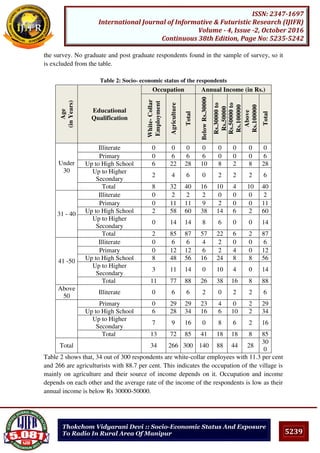
Table 2: Socio- economic status of the respondents
Table 2 shows that, 34 out of 300 respondents are white-collar employees with 11.3 per cent
and 266 are agriculturists with 88.7 per cent. This indicates the occupation of the village is
mainly on agriculture and their source of income depends on it. Occupation and income
depends on each other and the average rate of the income of the respondents is low as their
annual income is below Rs 30000-50000.
Age
(inYears)
Educational
Qualification
Occupation Annual Income (in Rs.)
White-Collar
Employment
Agriculture
Total
BelowRs.30000
Rs.30000to
Rs.50000
Rs.50000to
Rs.100000
Above
Rs.100000
Total
Under
30
Illiterate 0 0 0 0 0 0 0 0
Primary 0 6 6 6 0 0 0 6
Up to High School 6 22 28 10 8 2 8 28
Up to Higher
Secondary
2 4 6 0 2 2 2 6
Total 8 32 40 16 10 4 10 40
31 - 40
Illiterate 0 2 2 2 0 0 0 2
Primary 0 11 11 9 2 0 0 11
Up to High School 2 58 60 38 14 6 2 60
Up to Higher
Secondary
0 14 14 8 6 0 0 14
Total 2 85 87 57 22 6 2 87
41 -50
Illiterate 0 6 6 4 2 0 0 6
Primary 0 12 12 6 2 4 0 12
Up to High School 8 48 56 16 24 8 8 56
Up to Higher
Secondary
3 11 14 0 10 4 0 14
Total 11 77 88 26 38 16 8 88
Above
50
Illiterate 0 6 6 2 0 2 2 6
Primary 0 29 29 23 4 0 2 29
Up to High School 6 28 34 16 6 10 2 34
Up to Higher
Secondary
7 9 16 0 8 6 2 16
Total 13 72 85 41 18 18 8 85
Total 34 266 300 140 88 44 28
30
0
5240
ISSN: 2347-1697
International Journal of Informative & Futuristic Research (IJIFR)
Volume - 4, Issue -2, October 2016
Continuous 38th Edition, Page No: 5235-5242
Thokchom Vidyarani Devi :: Socio-Economic Status And Exposure
To Radio In Rural Area Of Manipur
5.2 Listening Radio
Table 3: Radio listener
Age
Sex
Male Female Total
Listening
Radio
Total Listening
Radio
Total Listening
Radio
Total
Yes No Yes No Yes No
Under 30 Years 28 4 32 8 0 8 36 4 40
31 - 40 Years 48 9 57 28 2 30 76 11 87
41 -50 56 12 68 18 2 20 74 14 88
Above 50 46 11 57 14 14 28 60 25 85
Total 178 36 214 68 18 86 246 54 300
Percentage 59.3 12 71.3 22.6 6 28.7 82 18 100
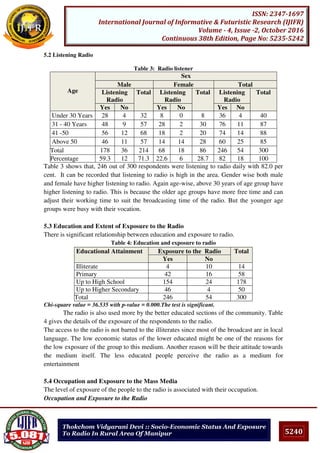
Table 3 shows that, 246 out of 300 respondents were listening to radio daily with 82.0 per
cent. It can be recorded that listening to radio is high in the area. Gender wise both male
and female have higher listening to radio. Again age-wise, above 30 years of age group have
higher listening to radio. This is because the older age groups have more free time and can
adjust their working time to suit the broadcasting time of the radio. But the younger age
groups were busy with their vocation.
5.3 Education and Extent of Exposure to the Radio
There is significant relationship between education and exposure to radio.
Table 4: Education and exposure to radio
Educational Attainment Exposure to the Radio Total
Yes No
Illiterate 4 10 14
Primary 42 16 58
Up to High School 154 24 178
Up to Higher Secondary 46 4 50
Total 246 54 300
Chi-square value = 36.535 with p-value = 0.000.The test is significant.
The radio is also used more by the better educated sections of the community. Table
4 gives the details of the exposure of the respondents to the radio.
The access to the radio is not barred to the illiterates since most of the broadcast are in local
language. The low economic status of the lower educated might be one of the reasons for
the low exposure of the group to this medium. Another reason will be their attitude towards
the medium itself. The less educated people perceive the radio as a medium for
entertainment
5.4 Occupation and Exposure to the Mass Media
The level of exposure of the people to the radio is associated with their occupation.
Occupation and Exposure to the Radio
5241
ISSN: 2347-1697
International Journal of Informative & Futuristic Research (IJIFR)
Volume - 4, Issue -2, October 2016
Continuous 38th Edition, Page No: 5235-5242
Thokchom Vidyarani Devi :: Socio-Economic Status And Exposure
To Radio In Rural Area Of Manipur
Table 5: Occupation and Exposure to the Radio
Occupation Exposure to the Radio Total
Yes No
White-collar employment 32 2 34
Agriculture 214 52 266
Total 246 54 300
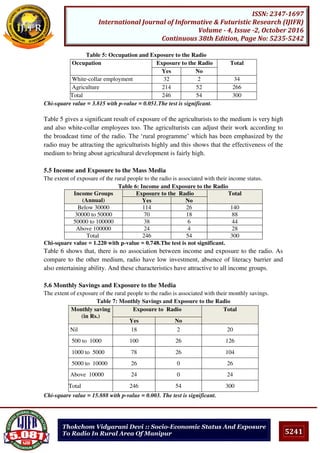
Chi-square value = 3.815 with p-value = 0.051.The test is significant.
Table 5 gives a significant result of exposure of the agriculturists to the medium is very high
and also white-collar employees too. The agriculturists can adjust their work according to
the broadcast time of the radio. The ‘rural programme’ which has been emphasized by the
radio may be attracting the agriculturists highly and this shows that the effectiveness of the
medium to bring about agricultural development is fairly high.
5.5 Income and Exposure to the Mass Media
The extent of exposure of the rural people to the radio is associated with their income status.
Table 6: Income and Exposure to the Radio
Income Groups
(Annual)
Exposure to the Radio Total
Yes No
Below 30000 114 26 140
30000 to 50000 70 18 88
50000 to 100000 38 6 44
Above 100000 24 4 28
Total 246 54 300
Chi-square value = 1.220 with p-value = 0.748.The test is not significant.
Table 6 shows that, there is no association between income and exposure to the radio. As
compare to the other medium, radio have low investment, absence of literacy barrier and
also entertaining ability. And these characteristics have attractive to all income groups.
5.6 Monthly Savings and Exposure to the Media
The extent of exposure of the rural people to the radio is associated with their monthly savings.
Table 7: Monthly Savings and Exposure to the Radio
Monthly saving
(in Rs.)
Exposure to Radio Total
Yes No
Nil 18 2 20
500 to 1000 100 26 126
1000 to 5000 78 26 104
5000 to 10000 26 0 26
Above 10000 24 0 24
Total 246 54 300
Chi-square value = 15.888 with p-value = 0.003. The test is significant.
5242
ISSN: 2347-1697
International Journal of Informative & Futuristic Research (IJIFR)
Volume - 4, Issue -2, October 2016
Continuous 38th Edition, Page No: 5235-5242
Thokchom Vidyarani Devi :: Socio-Economic Status And Exposure
To Radio In Rural Area Of Manipur
Table 7 shows the association between the monthly savings and exposure to the radio. Respondents
who have more monthly savings have greater exposure to the medium.
6. CONCLUSION
Exposure to the media is found to increase with increase in educational attainment. It is found that
radio which is not barred to the illiterates section, but the educated are more exposed to it.
Occupation and exposure to the media are also related factors. The agriculturists have expose to the
medium very highly. The agriculturists can adjust their work according to the broadcast time of the
radio. Also the white-collar employees also have high exposure.The income and exposure to the
mass media is also related factor. Since income is found to influence many of the human behaviours.
Increase in mass media exposure of the respondents is very consistent with their increase in income
status. But, radio is the cheapest medium; the analysis also revealed that all income groups have
greater exposure to it. Monthly savings is also another factor which influences the exposure to the
mass media. Radio have greater exposed to the higher monthly savings group.Thus, the study
revealed that the socio-economic status is highly positively associated with exposure to the radio.
7. REFERENES
1. All India Radio, Imphal (2011), Radio Audience Survey
2. Choudhury, Payel Sen (2011), Media in Development Communication, Global Media Journal-
India Edition/ ISSN 2249-5835.
3. Dube, S.C. (1967), “A note on Communication in Economic Development”, in Lerner, Daniel
and Schramm, Wilbur, (eds.), Communication and Change in Developing Countries, East-West
Centre Press, Honolulu.
4. Joseph, Joni C, Mass Media and Rural Development, Published by Rawat Publication , 1997.
5. Khan, Nawaz (2012), Radio and Social Change: Patterns of Radio Listening and Socio-Cultural
Change in Rural Areas of Manipur, Thesis.
6. Kothari, C.R (2009), Research Methodology, New age International Publishers, New Delhi.
7. Kumar, Keval J (1994), Mass Communication in India, Fourth Updated Edition, Published by
JAICO Publishing House.
8. Manipal University, Media and Development, Published by Sikkim Manipal University, 2006
9. Pandey, G.P, and Arun Kumar Singh (2000), Communication and Social Transformation; New
Delhi, Manak Publication
10. Raghavan, G.N.S. (1980), “Do Media Reach the Masses: The Indian Experience”,
Communicator, Vol. 15, No. 3.
11. Rao, Lakshmana, Y.V. (1966), Communication and Development, University of Minesota Press.
12. S, Ganesh (1995), Lectures on Mass communication, Published by Indian Publishers
Distributors
13. Wimmer, D Roger and Dominick, R Joseph (2002), Mass Media Research, Sage Publication.
14. Yadava, J.S. (1979), “Communication Strategy and the Challenge of Rural Development”,
Communicator, Vol. 14, No. 2.
To Cite This Paper
[1]
[2]
Devi, V.T. (2016): “Socio-Economic Status and Exposure to Radio in Rural Area of
Manipur” International Journal of Informative & Futuristic Research (ISSN: 2347-
1697), Vol. 4 No. (2), October 2016, pp. 5235-5242, Paper ID: IJIFR/V4/E2/044.
.
5243This work is published under Attribution-NonCommercial-ShareAlike 4.0 International License
Copyright©IJIFR 2016
InternationalJournalofInformative&FuturisticResearch ISSN: 2347-1697
Volume 4 Issue 2 October 2016www.ijifr.com
Abstract
The purpose of the study was to find out the effect of yoga practice and
physical exercises on vital capacity of middle aged men. To achieve the
purpose of the study the investigator selected forty five middle aged
men as subject in the age group of 18 years to 23 years. They were
divided into three equal groups of fifteen each (n=15) at random.
Group-I performed yoga practice, group-II performed physical
exercises and group-III acted as control. ANCOVA was used to find out
the adjusted mean difference between the groups. The result of the
study reveals that due to the effect of yoga practices and physical
exercises the vital capacity of the subjects was significantly improved.
It is also concluded that yogic practices significantly better than
physical exercises in improving vital capacity of middle aged men.
I. INTRODUCTION
Good health means that all organs of the body are working efficiently. The important proverb
is, ‘Health is wealth’, ‘if health is lost everything is lost’, and is realized more in its absence
than by its presence. Middle age is not a time of life it is a state of mind. The importance of
health is more than education, money and other material comforts. Happiness is intimately
RELATIVE EFFECT OF YOGA PRACTICE AND
PHYSICAL EXERCISES ON VITAL CAPACITY OF
MIDDLE AGED MEN
Paper ID IJIFR/V4/ E2/ 046 Page No. 5243-5248 Subject Area
Physical
Education
Keywords Yoga Practice, Physical Exercises, Vital Capacity
1st Kantheti Bhanu Prasad
Lecturer
Department of Physical Education,
P.B.N. Degree College, Nidubrolu,
Guntur District, Andhra Pradesh, India
2nd Dr. I. Devi Vara Prasad
Assistant Professor & Co-ordinator,
B.P.Ed., Course, Acharya Nagarjuna University,
Ongole Campus, Ongole - Andhra Pradesh, India
5244
ISSN: 2347-1697
International Journal of Informative & Futuristic Research (IJIFR)
Volume - 4, Issue -2, October 2016
Continuous 38th Edition, Page No: 5243-5248
Kantheti Bhanu Prasad, Dr. I. Devi Vara Prasad:: Relative Effect
Of Yoga Practice And Physical Exercises On Vital Capacity Of
Middle Aged Men
concerned more with good physical and mental health than other outside factors. At this
stage, we need to know the essential conditions to keep ourselves healthy (Dev, 1999).
Physical exercises are repetitive movements whereas yoga exercise involves very
little movement and only postures maintained for a period of time. Physical exercises lay
emphasis on strong movements of muscles whereas yoga opposes violent movements.
Yogic postures tone up the body and the mind whereas physical exercise affects mainly the
body. The caloric requirement in yogic asanas varies from 0.8 to 3calories per minute while
the caloric requirement of a physical exercise varies from 3 to 20 calories per minute. The
main purpose of physical exercise is to increase the circulation of the blood and the intake
of oxygen. This can be done by yoga’s simple movements of the spine and various joints of
the body with deep breathing, but without violent movements and asanas, the various blood
vessels are pulled and stretched and blood is equally distributed to every part of the body.
The stretched and blood is equally distributed to every part of the body. The stretched
muscles and ligaments during yoga practices are immediately relaxed muscles. Fatigue
appears after doing physical exercises.
Fatigue disappears if yoga and pranayama is practiced. Tension increases and nerves
are more tightened through physical exercise. Nerves and body muscles are relaxed by yoga.
Yogic exercise aims at both prevention and treatment of various diseases. Breathing
exercise aims at both prevention and treatment of various diseases. Breathing exercises like
pranayama including Kapalabhati is very effective for keeping the lungs healthy and prevent
lung infections. With deep breathing air circulates to every part of the lungs whereas with
most other physical exercises, there is mainly an increase in the respiratory rate. However,
physical exercise wastes more energy due to quick movements and more lactic acids are
formed in the muscle fibres. But energy is not wasted in yoga practices. Yoga postures and
breathing exercises unlike physical exercises do not strain the cardio vascular system, and
they improve one’s physical fitness and endurance.
Physiological functions of the body may be improved by exercise. In order to assess
the training impact on vital capacity among middle aged men, the investigator selected yoga
practice and physical exercises as the independent variable. Information related to the
impact of yoga practice and physical exercises among middle aged men is scanty. So the
present study is planned.
II. METHODOLOGY
2.1 Selection of Subject
To achieve the purpose of the study the investigator proposed to select forty five male
middle aged men from the inhabitants of Ongole, a small town in the southern state of
Andhra Pradesh, India as subject in the age group of 18 years to 23 years. They were divided
into three equal groups of fifteen each (n=15) at random. Group-I performed yoga practice,
group-II performed physical exercises and group-III acted as control. All the subjects
selected for the experimental treatment was subjected to medical evaluation and certification
from a doctor ensuring their health capacities to undergo the training program.
5245
ISSN: 2347-1697
International Journal of Informative & Futuristic Research (IJIFR)
Volume - 4, Issue -2, October 2016
Continuous 38th Edition, Page No: 5243-5248
Kantheti Bhanu Prasad, Dr. I. Devi Vara Prasad:: Relative Effect
Of Yoga Practice And Physical Exercises On Vital Capacity Of
Middle Aged Men
2.2 Training Programme
The training program was scheduled for one session a day each session lasted between forty
five minutes to one hour approximately. Training programme was administered to the
middle aged men for twelve weeks with six training units per week. The experimental
group-I performed yoga practice and group-II performed physical exercises.
2.3 Collection of the Data
The pretest data was collected prior to the training programme and posttest data was
collected immediately after the twelve weeks of yoga practice and physical exercises, from
the experimental groups and a control group.
2.4 Experimental Design and Statistical Technique
The data collected from the three groups prior to and post experimentation on selected
dependent variable was statistically analyzed to find out the significant difference if any, by
applying the analysis of covariance (ANCOVA). Since three groups are involved, whenever
the obtained ‘F’ ratio value was found to be significant for adjusted post test means, the
Scheffe’s test was applied as post hoc test to determine the paired mean differences, if any.
In all the cases the level of confidence was fixed at 0.05 for significance.
III. DATA ANALYSI & RESULTS
The pre and post test data collected from the experimental and control groups on vital
capacity is statistically analyzed by ANCOVA and the results are presented in table-I.
Table-1: Analysis of Covariance on Vital Capacity of Experimental and Control Groups
Yogic
Practice
Group
Physical
Exercise
Group
Control
Group
S
o
V
Sum of
Squares
Df
Mean
Squares
‘F’
ratio
Pre test
Mean
SD
2810.66 2810.06 2821.33 B 2316.48 2 1158.24
0.12
77.36 83.36 78.61 W 256506.51 27 9500.24
Post test
Mean
SD
3055.01 2902.66 2811.73 B 455497.37 2 227748.68
15.98*
88.05 111.62 47.98 W 384702.26 27 14248.23
Adjusted
Post test
Mean
3056.01 2903.86 2808.85
B 465091.74 2 232545.87
16.78*
W 360288.13 26 13857.24
(The required table value for significance at 0.05 level of confidence with degrees of freedom 2
and 27 is 3.35 and degree of freedom 2 and 26 is 3.37)
*Significant at .05 level of confidence
Table-I shows that the pre test mean and standard deviation on vital capacity of
yogic practices, physical exercise and control groups are 2810.66 + 77.36, 2810.06 + 83.36
and 2821.33 + 78.61 respectively. The obtained ‘F’ ratio value of 0.12 for pre test means on
vital capacity of yogic practices, physical exercise and control groups are less than the
required table value of 3.35 for the degrees of freedom 2 and 27 at 0.05 level of confidence.
5246
ISSN: 2347-1697
International Journal of Informative & Futuristic Research (IJIFR)
Volume - 4, Issue -2, October 2016
Continuous 38th Edition, Page No: 5243-5248
Kantheti Bhanu Prasad, Dr. I. Devi Vara Prasad:: Relative Effect
Of Yoga Practice And Physical Exercises On Vital Capacity Of
Middle Aged Men
2600
2700
2800
2900
3000
3100
Pre test Post test Adjusted Post test
Yogic Practice Group Physical Exercise Group Control Group
It revealed that there is statistically insignificant difference exist among the yogic practices,
physical exercise and control groups during pre test period. The post test mean and standard
deviation on vital capacity of yogic practices, physical exercise and control groups are
3055.01 + 88.05, 2902.66 + 111.62 and 2811.73 + 47.98 respectively. The obtained ‘F’ ratio
value of 15.98 for post test means on vital capacity of yogic practices, physical exercise and
control groups are greater than the required table value of 3.35 for the degrees of freedom 2
and 27 at 0.05 level of confidence.
The adjusted post test means on vital capacity of yogic practices, physical exercise
and control groups are 3056.01, 2903.86 and 2808.85 respectively. The obtained ‘F’ ratio
value of 16.78 on vital capacity are greater than the required table value of 3.22 for the
degrees of freedom 2 and 26 at 0.05 level of confidence. It was observed from this finding
that significant differences existed among the adjusted post test means of experimental and
control groups on vital capacity.Since, the adjusted post test ‘F’ ratio value was found to be
significant the Scheffe’s test is applied as post-hoc-test to determine the paired mean
differences, and it is presented in table-II.
Table-2: Scheffe’s Test for the Difference between the Adjusted Post Test Paired Means of
Vital Capacity
Adjusted Post Test Means
Difference
between Means
Confidence
Interval
Yogic Practice
Group
Physical
Exercise
Group
Control
Group
3056.01 2903.86 152.15* 61.42
3056.01 2808.85 247.16* 61.42
2903.86 2808.85 95.01* 61.42
*Significant
Figure – I: Pre Post and Adjusted Post Test Mean Scores of Experimental and Control Groups
on Vital Capacity
5247
ISSN: 2347-1697
International Journal of Informative & Futuristic Research (IJIFR)
Volume - 4, Issue -2, October 2016
Continuous 38th Edition, Page No: 5243-5248
Kantheti Bhanu Prasad, Dr. I. Devi Vara Prasad:: Relative Effect
Of Yoga Practice And Physical Exercises On Vital Capacity Of
Middle Aged Men
Table-II shows that there was significant difference existed between yogic practices
and physical exercise groups, yogic practices and control groups, physical exercise and
control groups on vital capacity. Since, the mean differences 152.15, 247.16 and 95.01 are
higher than the confidence interval value of 61.42; it reveals that both experimental groups
had significantly improved the vital capacity. However, yogic practices were significantly
better than physical exercise in altering the vital capacity.The pre, post and adjusted post
test mean values on vital capacity of the experimental and control groups is graphically
represented in figure- I for better understanding.
IV. DISCUSSION
Yoga helps to tone up the entire body to regularize blood compositions and improve
blood circulations, tones up glands and visceral muscles. Robson states that “yoga develops
flexibility and vital capacity”. Regular practice of yoga helps to keep our body fit, controls
cholesterol level, reduces weight, normalizes blood pressure and improves heart
performances. Further, preliminary studies in the United States and India suggest that yoga
may be helpful for specific conditions, such as asthma, epilepsy, anxiety, stress and others.
Regular exercise results in an increase in the blood flow and improves oxygen carrying and
waste removal capacity and further increases work load capacity (Vitale, 1973). Exercise
increases the volume of hemoglobin and erythrocyte of the blood. Also blood vessels are
seen to maintain elasticity and suppleness when stressed systematically probably by the
beneficial effect of the heart. Yogic practices demonstrated a significant difference in heart
rate, with breathing practices and asanas lowering heart rate significantly so yogic practices
into a lower-impact workout may be beneficial. Chaya et al., (2008) reported that long-term
practice of yogic asanas along with pranayama and meditation causes reduced sympathetic
activity resulting in reduced metabolic rate and greater metabolic efficiency in yoga
practitioners. Hagins et al., (2007) suggested that yoga is a mind-body practice where
practice of physical postures is combined with control of breathing, meditation along with
stretching exercise, isometric exercise, and dynamic exercises of skeletal muscles. Raub
(2002) find that Practice of hatha yoga may help control such physiological variables as
blood pressure, respiration, HR and metabolic rate to improve overall exercise capacity.
V. CONCLUSION
The result of the study reveals that due to the effect of yoga practice and physical exercises
the vital capacity of the subjects was significantly improved. It is also concluded that yogic
practices significantly better than physical exercises in improving vital capacity of middle
aged men.
VI. REFERENCES
[1] Brandon, Raphael. (2011). Peak Performance, www.google.co.in.
[2] Chaya MS, Nagendra HR. (2008). Long-term effect of yogic practices on diurnal metabolic rates
of healthy subjects. Int J Yoga. 1:27–32.
[3] Cope Haley, (Jan 2011), www.google.co.in.
5248
ISSN: 2347-1697
International Journal of Informative & Futuristic Research (IJIFR)
Volume - 4, Issue -2, October 2016
Continuous 38th Edition, Page No: 5243-5248
Kantheti Bhanu Prasad, Dr. I. Devi Vara Prasad:: Relative Effect
Of Yoga Practice And Physical Exercises On Vital Capacity Of
Middle Aged Men
[4] Cowen VS. and Adams, TB., (2007). “Heart rate in yoga asana practice: a comparison of styles”,
Journal of Body Work and movement Therapies, 11(1), pp.91-95.
[5] Cowen, Virginia S. and Adams, Troy B., (2005), “Physical and perceptual benefits of yoga
asana practice: Results of a Pilot Study”, Journal of Body Work and Movement Therapies, 9(3),
pp. 211-219.
[6] Dev, AB., (1999). Yoga for Better Health, New Delhi: Diamond Pocket Books – Publishers, 10.
[7] Hagins M, Moore W, Rundle A. (2007). Does practicing hatha yoga satisfy recommendations
for intensity of physical activity which improves and maintains health and cardiovascular
fitness? BMC Complement Altern Med. 7:40.
[8] Harinath K, Malhotra AS, Pal K, Prasad R, Kumar R, Kain TC, et al. (2004). Effects of hatha
yoga and omkar meditation on cardiorespiratory performance, psychologic profile, and
melatonin secretion. J Altern Complement Med. ;10:261–8.
[9] Raub JA. (2002). Psychophysiologic effects of Hatha Yoga on musculoskeletal and
cardiopulmonary function: A literature review. J Altern Complement Med. 8:797–812.
[10] Sasi AK, Sivapriya DV, Thirumeni S. (2011). Effects of surya namaskar on cardiovascular and
respiratory parameters in school students. Recent Res Sci Tech. 3:19–24.
[11] Vitale, Frank, (1973). Individualized Fitness Programs. Englewood Cliffs, New Jersey Prentice
Hall Inc., p.9. 144.
To Cite This Paper
[1]Prasad,B.K.,VaraPrasad,D.I. (2016): “Relative Effect Of Yoga Practice And Physical
Exercises On Vital Capacity Of Middle Aged Men” International Journal of
Informative & Futuristic Research (ISSN: 2347-1697), Vol. 4 No. (2), October 2016,
pp. 5243-5248, Paper ID: IJIFR/V4/E2/046.
.
5249This work is published under Attribution-NonCommercial-ShareAlike 4.0 International License
Copyright©IJIFR 2016
InternationalJournalofInformative&FuturisticResearch ISSN: 2347-1697
Volume 4 Issue 2 October 2016www.ijifr.com
Abstract
We report an efficient, mild and rapid approach for the synthesis of β-
amino ketone dervatives via three component coupling of aromatic
aldehydes, enolizable ketones and nitriles in presence of acetyl chloride
by using ammonium fluoride as a new and highly effective catalyst
under solvent free conditions. Our continuing interest in developing
this methodology as a novel route to access highly functionalized
structural scaffolds in a cost-effective, environmentally friendly and
more importantly, a process requires less operational skill and
conditions.
I. INTRODUCTION
Multicomponent reactions (MCRs) have great contribution in convergent synthesis of
complex and important organic molecules from simple and readily available starting
materials, and have emerged as powerful tools for drug discovery.1
Today, the chemical
industry demands from chemists the development of new reaction methodologies to obtain
novel compounds in a fast, clean and efficient way.1
In this scenario, multicomponent
reactions (MCRs) offer an alternative to the traditional synthesis mainly because it is based
A NEW GREEN SYNTHETIC PROTOCOL FOR
THE SYNTHESIS OF N-SUBSTITUTED BETA
AMINO KETONE DERIVATIVES USING
AMMONIUM FLUORIDE AS CATALYST
Paper ID IJIFR/V4/ E2/ 040 Page No. 5249-5255 Subject Area Chemistry
Keywords Multicomponent Synthesis, Amino Ketones, Ammonium Fluoride
1st S. Arun
Assistant Professor,
Department of Chemistry,
Christ College, Irinjalakuda (Kerala)
2nd V.S. Shinu
Assistant Professor,
Department of Chemistry,
St.Joseph College, Devagiri(Kerala)
5250
ISSN: 2347-1697
International Journal of Informative & Futuristic Research (IJIFR)
Volume - 4, Issue -2, October 2016
Continuous 38th Edition, Page No: 5249-5255
S. Arun, V.S. Shinu :: A New Green Synthetic Protocol For The
Synthesis Of N-Substituted Beta Amino Ketone Derivatives Using
Ammonium Fluoride As Catalyst
on available starting materials, operationally simple, easily automatable, resource effective,
atom economical and ecologically benign.1b
Mannich-Type products, specifically β-amino
carbonyl compounds are useful chiral building blocks for the synthesis of β-amino acids, β-
lactams, β-amino alcohols, and so forth.2
These class of compounds are generally
synthesized by chiral Lewis acids assisted catalytic asymmetric reactions of imines derived
from aldehydes and amines with enolate compounds.
Several efficient Lewis acids have been reported over the years3
and a recent
attraction in this field is the development of the concept of bifunctional catalysis, wherein
both partners of a bimolecular reaction are simultaneously activated, is very powerful for
developing efficient asymmetric catalysts.4
Even though these chiral Lewis acids have
proven to be efficient for many reactions, a major drawback is that most Lewis acids are
unstable in presence of water and some of them are even moisture sensitive and also based
on multi-step programme demands high synthetic skill. As an efficient alternative to the
synthesis of Mannich-Type products, we and other groups have developed a one pot
multicomponent protocol based on the coupling between an aldehyde, an enolizable ketone,
and a nitrile molecule in the presence of an acid chloride and an acid catalyst.5
Several
efficient catalysts have been reported by various research groups which includes
SnCl4/SiO2, 6a
Cu(OTf)2
6b
and Sc(OTf)3,6c
Mn(bpdo)2Cl2/MCM-41,6d
CeCl3·7H2O,6e
iron
(III) chloride 6f
etc. Until recently, the scope of this three component process was limited to
the synthesis of β-acetamido carbonyl compounds. Recent developments in this area,
particularly from our laboratory,7
revealed that this process is highly useful for the one step
synthesis of highly functionalized organic intermediates.
Our interest in developing this methodology as a novel route to access highly
functionalized structural scaffolds in a cost-effective, environmentally friendly and more
importantly, a process requires less operational skill and conditions; we considered the
possibility of performing this reaction in very mild conditions for the incorporation of a
large variety of substrates. For this, we decided to follow this reaction in the presence of
ammonium fluride.
II. EXPERIMENTAL PROCEDURE
 Materials
Chemical reagents were purchased from the Merck Chemical Company in high purity. All
the materials were of commercial grade reagent.
Typical Experimental Procedure for One Pot Three Component Coupling Reactions
of Aldehydes with α-Substituted Ketones and Acetonitrile with ammonium fluoride as
Catalyst.
A 100 mL Rb flask was charged with a solution of the aryl aldehyde (1.25 mmol),
aryl ketone (1.25 mmol), acetyl chloride (3 mL) and acetonitrile (5 mL) in the presence of
ammonium fluoride (30mol%). The resulting mixture was then set to stirr continuously for 4
hours at room temperature. After the completion of the reaction as indicated by TLC, the
reaction mixture was diluted with distilled water and stirred well. The precipitate obtained
5251
ISSN: 2347-1697
International Journal of Informative & Futuristic Research (IJIFR)
Volume - 4, Issue -2, October 2016
Continuous 38th Edition, Page No: 5249-5255
S. Arun, V.S. Shinu :: A New Green Synthetic Protocol For The
Synthesis Of N-Substituted Beta Amino Ketone Derivatives Using
Ammonium Fluoride As Catalyst
was collected by filtration, washed with distilled water (3 x 20 mL) and dried under
vacuum. The dried solid was then washed with diethyl ether (3 x 15 mL) and air-dried to
yield the pure β-amino ketone derivative. The product was identified by comparing its NMR
and IR values.
III. RESULTS AND DISCUSSION
We have initiated our studies with the synthesis of the β-amino ketone derivatives
using ammonium fluoride and optimization of the reaction conditions (Table 1). In the first
round optimizations, the reaction between 2-chlorobenzaldehyde and 4-bromo acetophenone
was selected as the model reaction for the screening purpose. Optimizations were carried
out in terms of the amount of catalyst, reaction time and temperature while keeping
acetonitrile as solvent in all the cases. Taking into account of our previous experiences with
Mont K10 and SelectfluorTM , we decided to carry out the screening experiments at room
temperature and at the boiling point of acetonitrile. We found that a room temperature
reaction with 30 mol% of the catalyst gives the maximum yield- 88% (Table 1, entry 6).
After the optimization reactions, the substrate scope studies were carried out with catalyst
(Table 2). Sequential addition of aldehyde, ketone and acetyl chloride in the presence of
ammonium fluoride in acetonitrile resulted in the rapid formation of the product. With a
very low amount of the catalyst (30 mol %), the reaction reached completion in 4 hours as
indicated by TLC. Here the nitrile source acted as both reagent and solvent. FT-IR
spectroscopy is very useful for following the reaction. In the FT-IR spectrum, the
disappearance of the aldehyde peak followed by the appearance of amide peak at 1650 cm-1
is a clear indication about the commencement of the reaction. The structure of the product
was confirmed via 1
H NMR, FT-IR and mass spectral studies. All the reactions yielded
clean products that can be directly used for analysis. The reaction conditions were mild and
avoided the use of environmentally hazardous chemicals.
5252
ISSN: 2347-1697
International Journal of Informative & Futuristic Research (IJIFR)
Volume - 4, Issue -2, October 2016
Continuous 38th Edition, Page No: 5249-5255
S. Arun, V.S. Shinu :: A New Green Synthetic Protocol For The
Synthesis Of N-Substituted Beta Amino Ketone Derivatives Using
Ammonium Fluoride As Catalyst
Figure 1: FTIR spectrum of compound 1a
5253
ISSN: 2347-1697
International Journal of Informative & Futuristic Research (IJIFR)
Volume - 4, Issue -2, October 2016
Continuous 38th Edition, Page No: 5249-5255
S. Arun, V.S. Shinu :: A New Green Synthetic Protocol For The
Synthesis Of N-Substituted Beta Amino Ketone Derivatives Using
Ammonium Fluoride As Catalyst
Figure 2: 1
H NMR spectrum of compound 1a
Figure 3: Mass spectrum of compound 1a
Scheme 1: Proposed mecanism for the formation of β-amido carbonyl scaffolds using
ammonium fluoride as catalyst
5254
ISSN: 2347-1697
International Journal of Informative & Futuristic Research (IJIFR)
Volume - 4, Issue -2, October 2016
Continuous 38th Edition, Page No: 5249-5255
S. Arun, V.S. Shinu :: A New Green Synthetic Protocol For The
Synthesis Of N-Substituted Beta Amino Ketone Derivatives Using
Ammonium Fluoride As Catalyst
The suggested Mechanism of the reaction is shown in Scheme 1. The reaction is initiated by
the co-ordination of the carbonyl oxygen of the ketone moiety with catalyst. Ammonium
fluoride acts as a Lewis acid and thus activates the enol 3 formation. The addition of
aldehyde moiety 4 followed by acid chloride to this complex resulted in the carbon-carbon
bond formation to produce a β-acyloxy ketone derivative 5. The acyloxy group in 5 is then
displaced by the more nucleophilic nitrogen of the nitrile to produce a stable cation
intermediate 7. Addition of water leads to the formation of the β-amino ketone derivative 8.
IV. CONCLUSION
In summary, we have reported the efficiency of ammonium fluoride catalyst for the
synthesis of β-amino ketone derivatives via four-component coupling reaction. The study
reveals that the catalyst is more efficient in catalyzing the reaction. The method offers
several advantages such as high yields, short reaction times, mild reaction conditions,
simple experimental procedures, cost effectiveness and tolerance to a wide variety of
reactants. The catalysts used are also environmentally friendly, inexpensive and highly
efficient.
V. REFERENCES
[1] J. Zhu, H. Bienayme (Eds.); Wiley-VCH: Weinheime, 2005.(b) Rothenberg, G. Wiley-VCH,
Verlag GmbH & Co. KGa: Weinheim, 2008.
[2] (a) Josephsohn, N. S.; Snapper, M. L.; Hoveyda, A. H. J. Am. Chem. Soc. 2004, 126, 3734-3735
.(b)Kobayashi, S.; Ishitani, H. Chem. Rev. 1999, 99, 1069-1094; (c) Cordova, A Acc. Chem.
Res. 2004, 37, 102-112. (c) R. Robinson,J. Chem. Soc. 1917, 111
[3] (a) D. Schinzer (Ed.); Kluwer Academic Publishers: Dordrecht, The Netherlands, 1989; (b) ;
Wiley-VHC: Weinheim, Germany, 2000; (c) Kobayashi, S.; Salter, M. M.; Yamazaki, Y.;
Yamashita, Y. . Chem. Asian J. 2010, 5, 493-495; (d) Poisson, T.; Tsubogo, T.; Yamashita, Y.;
Kobayashi, S. Org. Chem. 2010, 75, 963-965; (e) Matsubara, R.; Berthiol, F.; Nguyen, H. V.;
Kobayashi, S. . Chem. Soc. Jpn. 2009, 82, 1083-1102; (f) Ishitani, H.; Ueno, M.; Kobayashi, S.
.J Am. Chem. Soc. 2000, 122, 8180-8186; (g) Ishitani, H.; Ueno, M.; Kobayashi, S. J. Am.
Chem. Soc. 1997, 119, 7153-7154; (h) Wenzel, A. G.; Jacobsen, E. N. J. Am. Chem. Soc. 2002,
124, 12964-12965; (i) Kobayashi, S.; Ueno, M. In Comprehensive Asymmetric Catalysis,
Supplement I; E. N. Jacobsen, A. Pfalz, H. Yamamoto (Eds.); Springer: Berlin, 2003; Chapter
29.5
[4] For recent reviews see: (a) Shibasaki, M.; Kanai, M.; Matsunaga, S.; Kumagai, N. Acc. Chem.
Res. 2009, 42, 1117-1127; (b) Kanai, M.; Kato, N.; Ichikawa, E.; Shibasaki, M. Synlett 2005,
1491–1508; (c) Shibasaki, M.; Matsunaga, S. Chem. Soc. Rev. 2006, 35, 269–279. (d)
Shibasaki, M.; Kanai, M. Org. Biomol. Chem. 2007, 5, 2027–2039; (e) Matsunaga, S.;
Shibasaki, M. Bull. Chem. Soc. Jpn. 2008, 81, 60–75; (f) Shibasaki, M.; Matsunaga, M.;
Kumagai, N. Synlett. 2008, 1583–1602; (g) Yamamoto, H.; Futatsugi, K. Angew. Chem., Int.
Ed. 2005, 44, 1924–1942; (h) Ma, J.; Cahard, D. Angew. Chem., Int. Ed. 2004, 43, 4566–4583;
(i) Taylor, M. S.; Jacobsen, E. N. Angew. Chem., Int. Ed. 2006, 45, 1520–1543
[5] (a) Rao, I. N.; Prabhakaran, E. N.; Das, S. K.; Iqbal, J. J. Org. Chem. 2003, 68, 4079–4082; (b)
Maghsoodlou, M. T.; Hassankhani, A.; Shaterian, H. R.; Habibi-Khorasani, S. M.; Mosaddegh,
E. Tetrahedron Lett. 2007, 48, 1729-1734; (c) Khodaei, M. M.; Khosropour, A.R.; Fattahpour,
P. Tetrahedron Lett. 2005, 46, 2105-2108.
[6] (a) Mirjalili, B. B. F.; Hashemi, M. M.; Sadeghi, B.; Emtiazi, H. J. Chinese Chem. Soc. 2009,
56, 386-391; (b) Pandey, G.; Singh, R. P.; Garg, A.; Singh, V. K. Tetrahedron Lett. 2005, 46,
5255
ISSN: 2347-1697
International Journal of Informative & Futuristic Research (IJIFR)
Volume - 4, Issue -2, October 2016
Continuous 38th Edition, Page No: 5249-5255
S. Arun, V.S. Shinu :: A New Green Synthetic Protocol For The
Synthesis Of N-Substituted Beta Amino Ketone Derivatives Using
Ammonium Fluoride As Catalyst
2137-2140 ; (c) Heravi, M. M.; Daraie, M.; Behbahani, F. K.; Malakooti, R.. Synth. Commun.
2010, 40, 1180-1186 ; (d) Khan, A. T.; Choudhury, L. H.; Parvin, T.; Ali, M. D. A.
Tetrahedron Lett. 2006, 47, 8137-8141.
[7] (a) Bahulayan, D.; Das, S. K.; Iqbal, J. ; J. Org. Chem. 2003, 68, 5735-5738; (b) Shinu, V. S.;
Sheeja, B.; Purushothaman, E.; Bahulayan, D. Tetrahedron Lett. 2009, 50, 4838–4842; (c)
Shinu, V. S.; Pramitha, P.; Bahulayan, D. Tetrahedron Lett. 2011, 52, 3110–3115; (d)
Bahulayan, D.; Shinu, V. S.; Pramitha, P.; Arun, S.; Sheeja, B. Synth. Commun. 2012, 42, 1162–
1176
To Cite This Paper
[1]Arun,S., Shinu,V.S. (2016) : “A New Green Synthetic Protocol For The Synthesis Of N-
Substituted Beta Amino Ketone Derivatives Using Ammonium Fluoride As Catalyst”
International Journal of Informative & Futuristic Research (ISSN: 2347-1697), Vol. 4 No.
(2), October 2016, pp. 5249-5255, Paper ID: IJIFR/V4/E2/040.
.
5256This work is published under Attribution-NonCommercial-ShareAlike 4.0 International License
Copyright©IJIFR 2016
InternationalJournalofInformative&FuturisticResearch ISSN: 2347-1697
Volume 4 Issue 2 October 2016www.ijifr.com
Abstract
The relativistic approach gives us the apparent time of the events happening
on a fast moving object away from us. It is called scale factor. It is given by
Scale factor = 1+z, where z = v/c, v= velocity of moving object and c= speed
of light in vacuum. This paper aims to illustrate that the above relativistic
time correction when applied to Hubble’s law, gives us the age of the
universe as 2/H0 and not 1/H0, where H0 is the present Hubble constant.
This makes the age of the universe to a value double that of the present
estimate. That is from 14.1 billion light years to 28.2 billion light years.
Linear expansion of the universe is assumed.
I. INTRODUCTION
According to big bang theory, universe is
expanding. Hubble’s law gives us the
distances of galaxies from us and also their
velocities of recession from the observer.
The Hubble constant at present is about 70
km/sec/M Parsec. That means a galaxy at a
distance of one mega parsec is moving at
70km/sec. one mega parsec is
approximately equal to 3.3 light years. So,
for a galaxy appearing at one billion light
RELATIVISTIC TIME CORRECTION ON
MOVEMENT OF DISTANT GALAXIES MAKES
THE PRESENT AGE OF THE UNIVERSE AS
28.2 BILLION YEARS
Paper ID IJIFR/V4/ E2/ 048 Page No. 5256-5260 Research Area Astrophysics
Keywords Hubble Constant, Age of the Universe, Relativistic Time
Jayaram. A .S.
Associate professor.
Mechanical Department
Dr. Ambedkar Institute Of Technology
Mallatthahalli, Bangalore-560056
5257
ISSN: 2347-1697
International Journal of Informative & Futuristic Research (IJIFR)
Volume - 4, Issue -2, October 2016
Continuous 38th Edition, Page No: 5256-5260
Jayaram. A .S. :: Relativistic Time Correction On Movement Of
Distant Galaxies Makes The Present Age Of The Universe As 28.2
Billion Years
years from us, the recession velocity is 21000km/sec. But maximum possible velocity is
equal to velocity of light. So, this puts the limit on the most distant galaxy that we can see as
14.1 billion light years away from us. This is called the radius of the observable universe,
as shown in figure 1. This is given by 1/H0. It is calculated from the simple logic that:
Time= distance / velocity.
II. CONTRADICTION IN ABOVE METHOD
The latest information of the farthest galaxy is GN z11, having red shift 11. It is at apparent
distance of 13.4 billion light years from Earth. That means, light that we have just received
is giving information about 13.4 billion years old. This galaxy is reported to be containing
stars. Suppose there is a Sun like star of about 5 billion years old, then that star was formed
at about 13.4+5=18.4 billion years ago. (In fact, present age of this star is to be multiplied
by 1+z =1.98. So it is 5x1.98= 9.9 billion light years.
But we have just received light from that galaxy and hence cannot see the past life of star).
But 18.4 billion years is greater than the present estimated age of the universe. It means that
star was formed even before big bang! This is happening because; we are not applying
relativistic time correction to galaxies.
III. APPLYING RELATIVISTIC TIME CORRECTION
According to Einstein’s theory of relativity, apparent time of objects moving away at
constant velocity is stretched by a factor (1+z), as said above. If a galaxy is travelling at say
0.5c, then z=0.5 and scale factor = 1+z = 1+0.5 = 1.5.
This means every one second of time on that galaxy appears as 1.5 seconds for us. This
happens to every event happening in that galaxy. If a planet in that galaxy is revolving
around a star in that galaxy taking one year, we see it as 1.5 years (figure 2.). The most
important part is that this is
applicable to the movement of the
galaxy itself. That means, the
apparent velocity of galaxy will be
1.5 times less than the actual velocity
as estimated by Hubble’s law. Then
how can Hubble’s law gives the
actual velocity? This is because the
important fact from theory of
relativity that there will be no change
in the velocity of light emitted
irrespective of the velocity of the
moving object from which it is
coming out. Illustration of the concept: As shown in figure 3, let us consider a galaxy just
started from us. Let it moving away from us at velocity z=0.5. To reach one light year actual
distance, it takes two years. We see it as taking 2x1.5= 3 years.
5258
ISSN: 2347-1697
International Journal of Informative & Futuristic Research (IJIFR)
Volume - 4, Issue -2, October 2016
Continuous 38th Edition, Page No: 5256-5260
Jayaram. A .S. :: Relativistic Time Correction On Movement Of
Distant Galaxies Makes The Present Age Of The Universe As 28.2
Billion Years
Figure 3: Example of a galaxy moving away
That means, it will appear at 1 light year after 3 years. So, its apparent speed is 0.3333. In
case of the farthest known galaxy at present, GN z11, we have z = 0.98. So, for every one
hour on that galaxy, we feel 1.98 hours on Earth, as shown in figure 4.
Figure 4: Relative Time Concept
IV. SOLUTION TO ABOVE CONTRADICTION AFTER APPLYING
RELATIVISTIC TIME CORRECTION
Now, in case of GN z11, we are seeing 5 billion years star of 13.4 billion years old
information. So it is 5x1.98= 9.9 billion light years old. Then it is 13.4 +9.9 =23.3 billion
light yrs.Subtracting from corrected age of 28.2, we get 28.2-23.3=4.9 billion light yr.
Hence there is no contradiction at all.
5259
ISSN: 2347-1697
International Journal of Informative & Futuristic Research (IJIFR)
Volume - 4, Issue -2, October 2016
Continuous 38th Edition, Page No: 5256-5260
Jayaram. A .S. :: Relativistic Time Correction On Movement Of
Distant Galaxies Makes The Present Age Of The Universe As 28.2
Billion Years
V. RESULTS AND DISCUSSIONS
Figure 5: Illustration of Hubble’s law.
Figure 5: Illustrates the linear correlation between distance and speed of galaxies.
Figure 6: Actual distance v/s apparent distances
Figure 6 shows the real factor causing the error. In the relation Time = distance/ velocity, it
was apparent distance / actual velocity was used. Actually, it should be
Time = apparent distance/ apparent speed.
0
50000
100000
150000
200000
250000
300000
350000
0 5 10 15
ActualSpeedkm/Billionlightyears.
Apperent distance In Billion light years
Distance vs actual speed using Hubble's
law.
Hubble constant.
0
5
10
15
20
25
30
0 5 10 15
ActualdistanceinBillionlightyears.
Apparent distance in billion light years.
Actual vs apparent distances.
Distances of Glaxies.
5260
ISSN: 2347-1697
International Journal of Informative & Futuristic Research (IJIFR)
Volume - 4, Issue -2, October 2016
Continuous 38th Edition, Page No: 5256-5260
Jayaram. A .S. :: Relativistic Time Correction On Movement Of
Distant Galaxies Makes The Present Age Of The Universe As 28.2
Billion Years
Figure 7: Actual speed and Apparent speed against apparent distances.
Figure 7 shows the degree of error between two speeds with respect to apparent distances of
galaxies.
VI. CONCLUSION
The maximum value of z=1, when v=c. So, if a galaxy at the edge of the observable
universe is moving at z=1, apparent speed= 0.5c as, the scale factor =1+z=2. That means in
travelling 14.1 billion light years of apparent distance, it must have taken 2x14.1=28.2
billion years. That means, actual age of the universe = twice the apparent age = 2/H0. This
result is obtained after applying relativistic time correction to the speed of galaxies.
VII. REFERENCES
[1] Hubble constant and the age the universe
http://www.astro.caltech.edu/~george/ay127/readings/FreedmanMadore2010.pdf
[2] variation with time http://physics.stackexchange.com/questions/18301/value-of-the-hubble-
parameter-over-time
[3] Wikipedia Hubble’s law https://en.wikipedia.org/wiki/Hubble%27s_law
[4] Constant over time https://briankoberlein.com/2016/09/13/the-constant-of-time/
[5] Local variation of Hubble constant https://arxiv.org/pdf/1407.7364.pdf
[6] Hubble time http://physics.stackexchange.com/questions/136056/how-does-the-hubble-
parameter-change-with-the-age-of-the-universe
[7] Quasar http://www.bigbangcentral.com/accel_page.html
[8] Fundamentals http://spiff.rit.edu/classes/phys301/lectures/age/age.html
[9] Hubble telescope http://www.forbes.com/sites/startswithabang/2016/10/14/hubbles-latest-
breakthrough-reveals-trillions-of-unknown-galaxies-in-the-universe/#52aef1ba4ddc
[10] GN-z11 Source: http://astronomy.as.virginia.edu/
To Cite This Paper
[1]
0
50000
100000
150000
200000
250000
300000
0 5 10 15
Speedinkm/second.
Apparent distance in Billion light years.
Actual
Speed
Apparent
Speed
Jayaram. A .S. (2016) : “Relativistic Time Correction On Movement Of Distant Galaxies
Makes The Present Age Of The Universe As 28.2 Billion Years” International Journal of
Informative & Futuristic Research (ISSN: 2347-1697), Vol. 4 No. (2), October 2016, pp.
5256-5260, Paper ID: IJIFR/V4/E2/048.
.
5261This work is published under Attribution-NonCommercial-ShareAlike 4.0 International License
Copyright©IJIFR 2016
InternationalJournalofInformative&FuturisticResearch ISSN: 2347-1697
Volume 4 Issue 2 October 2016www.ijifr.com
Abstract
Time value of money is an important concept in financial management, It
plays a crucial role in Banking and Non-Banking sector, generally it refers
to the value of money is different in different time periods; it is called time
value of money. It is one of the Limitation of Profit maximization. At the
same time it does not consider the magnitude and timing of earnings. The
time value of money impacts business finance, consumer finance, and
government finance. Time value of money results from the concept of
interest.
I. INTRODUCTION
Most of the financial decisions depend on time value of money such as financing decision,
investment decision and dividend decision. For example if invested Rs.10, 000 @ 8%
interest in any nationalized bank, how much amount would get after one year (10,000+
10,000×0.08=10,800). Beginning of the year the value of money is Rs.10, 000 at the end of
the year the value of money is 10,800, so end of the year the value of money is greater than
beginning of the year. So the value of money is different in different time periods.
The value of Money is depends on two techniques, such as
• Compounding Technique
• Discounting Technique
II. OBJECTIVES OF THE STUDY
 To Understand the Time value of Money
 To Know How it Calculate the Time value of money
 To Know how it influence the Investment decision
A STUDY ON TIME VALUE OF MONEY
Paper ID IJIFR/V4/ E2/ 049 Page No. 5261-5267 Subject Area
Business
Administration
Keywords Compounding Techniques, Compound Interest, Discounting Techniques
V. Venkata Rao
HOD & Associate Professor,
Department of Business Administration,
Chirala Engineering College, Chirala.
5262
ISSN: 2347-1697
International Journal of Informative & Futuristic Research (IJIFR)
Volume - 4, Issue -2, October 2016
Continuous 38th Edition, Page No: 5261-5267
V. Venkata Rao :: A Study On Time Value Of Money
95
100
105
110
115
120
125
Year 1 Year 2 Year 3 Year 4 Year 5
105
110
115
120
125
Graph I: The value of money is different in different
timeperiods
III. COMPOUNDING TECHNIQUE
Compounding Technique is one of the Ingredients of time value of money. It
is a Method of estimating the future value of a present investment by applying compound
interest rates. This technique can be useful to know the future value of present cash out flow.
Future value is depends on Size of investment, market rate of interest and maturity period.
Generally compounding is refers to the process of accumulating the time value of money
forward in time. For example interest earned in one period earns additional interest during
each subsequent period. Before going to know the compounding technique first of all to know
the simple interest.
Simple Interest:
Simple interest is one of the topic that most of the people cover in elementary school in their
education. Interest may be thought of as rent paid on borrowed money. Simple interest is
calculated only on the beginning principal. For instance, if one were to receive 5% interest
on a beginning value of Rs.100, the first year interest would be:
Interest =P×I
Whereas,
P= Principal amount, I= Rate of interest
Here, P=Rs. 100 I= 5% (0.05)
Interest =100×0.05=5
Continuing to receive 5% interest on the original amount, Rs.100, over five years the growth
of the original investment would look like:
Year 1 5% of Rs.100 =Rs. 5 + Rs.100 = 105
Year 2 5% of Rs.100 =Rs. 5 +Rs.105 =110
Year 3 5% of Rs.100 =Rs.5 + Rs.110 =115
Year 4 5% of Rs.100 =Rs.5 + Rs.115 =120
Year 5 5% of Rs.100 =Rs.5 + Rs.120 =125
5263
ISSN: 2347-1697
International Journal of Informative & Futuristic Research (IJIFR)
Volume - 4, Issue -2, October 2016
Continuous 38th Edition, Page No: 5261-5267
V. Venkata Rao :: A Study On Time Value Of Money
3.1 Compound interest
Compound interest is another Topic. It's good to receive compound interest, but not so good
to pay compound interest. With compound interest, interest is calculated not only on the
beginning interest, but on any interest accumulated in the meantime. For instance, if one
were to receive 5% compound interest on a beginning value of Rs.100, the first year interest
would be the same as simple interest on the Rs.100, or Rs. 5. The second year, though,
interest would be calculated on the beginning amount of year 2, which would be Rs.105. So
the interest would be:
Rs.105 × .05– or – Rs.5.25 in Interest
This provides a balance at the end of year two of Rs.110.25. If this were to
continue for 5 years, the growth in the investment would look like:
Year 1 5% of Rs.100.00 =Rs. 5.00 + Rs.100 = 105.00
Year 2 5% of Rs. 105.00 =Rs. 5.25 + Rs.105 =110.25
Year 3 5% of Rs. 110.25 =Rs. 5.51 + Rs.110 =115.76
Year 4 5% of Rs. 115.76 =Rs. 5.79 + Rs.115 =121.55
Year 5 5% of Rs. 121.55 =Rs. 6.08 + Rs.120 =127.63
There is a significant difference between simple and compound interest. In simple interest
there is no opportunity to earn interest on interest where as in compounding interest each
interest payment is (reinvested) having the opportunity to earn interest on interest. There is no
difference between simple interest and compound interest when investment maturity period is
one year maturity. But difference can be seen only when the investment is made for more than
two years between
3.2 Compounding Value of A Single amount
Compound value or future value of single amount at single time for future period can be
calculated by the following formula
FV=Po + I
0
20
40
60
80
100
120
140
Year-1 Year-2 Year-3 Year-4 Year-5
105 110.25 115.76 121.55 127.63
Graph II: The value of money is different in different
timeperiods
Interest
5264
ISSN: 2347-1697
International Journal of Informative & Futuristic Research (IJIFR)
Volume - 4, Issue -2, October 2016
Continuous 38th Edition, Page No: 5261-5267
V. Venkata Rao :: A Study On Time Value Of Money
Example: 1
Suppose if you have Rs.10, 00, 000 and Deposit any nationalized bank @ 8% compound rate
of interest for 5 years period. How much amount would get after 5 years?
FV=10, 00, 000 + . 8
=10, 00, 000(1.469)
=Rs.14, 69, 000
3.3 Variable Compounding Periods:
Generally Compounding is done annually. If the investor Promised to pay Compound interest
for variable periods such as Semi-annually, quarterly, and etc
3.3.1. Semi-Annual Compounding:
It is one of the components of Variable Compounding Periods; according to this interest
calculate twice in a year. The Following Formula can be useful to us to know the value of an
investment.
FV=Po + I/m ×
Whereas,
FV=Future vale of an Investment
Po=Invested amount I=Rate of Interest
M= No. of times Compounded annually, n=No. of years to maturity
Example: 2
If amount Rs.50, 000, Deposited @6%rate of interest in SBI for10 years Period, it is
compounding twice in a year. How much amount would get after 10 years?
FV=Po + I/m ×
FV=50,000 + . 6/ ×
=50,000(1.806)
=Rs. 90,300
3.3.2. Quarterly Compounding
It is one of the components of Variable Compounding Periods, according to this interest
calculate once in every three months it means four times in a year. The Following Formula
can be useful to us to know the value of an investment.
FV=Po + I/m ×
Whereas,
FV=Future vale of an Investment
Po=Invested amount I=Rate of Interest
M= No. of times Compounded annually, n=No. of years to maturity
5265
ISSN: 2347-1697
International Journal of Informative & Futuristic Research (IJIFR)
Volume - 4, Issue -2, October 2016
Continuous 38th Edition, Page No: 5261-5267
V. Venkata Rao :: A Study On Time Value Of Money
Example: 3
Suppose the firm Deposits Rs.1, 00,000 for four years period @ 8% rate of interest p.a,
here interest compounding quarterly. How much amount would get after four years?
FV=Po + I/m ×
FV=1, 00,000 + . 8/4 ×
=1, 00,000 (1.373) =Rs.1, 37,300
3.4. Compounded Value of Series of Cash flows: According to this some cases investor may
be deposits annually up to certain future date, that may be even cash deposits or uneven cash
deposits, then we need to find out the deposits value in future date.
3.4.1. Even Cash deposits annually up to certain future date:
The following formula can be useful to know the value of Deposits in future
FV=P1 + I −
+ P1 + I −
+ P1 + I −
+----------+ Pn-1 + I + P −
Example: 4
If you deposits Rs.1000 at the end of every year for Six years@6% rate of interest. Determine
the value of money after six years
FV=P1 + I −
+ P1 + I −
+ P1 + I −
+----------+ Pn-1 + I + P −
FV= 1000 + . 6 −
+ 1000 + . 6 −
+ 1000 + . 6 −
+1000 + . 6 −
+1000 + . 6 −
+1000 + . 6 −
=1000(1.338) +1000(1.262) +1000(1.191) +1000(1.124) +1000(1.060) +1000(1.00)
=1338+1262+1191+1124+1060+1000
=Rs.6975
3.4.2. Even Cash deposits annually up to certain future date:
The following formula can be useful to know the value of Deposits in future
FV=P1 + I −
+ P1 + I −
+ P1 + I −
+----------+ Pn-1 + I + P −
Example: 5
If an Investor Deposits at the end of every year Rs.10,000, Rs.15000,Rs.20,000,Rs.25,000
and Rs.30,000 in a year 1.2.3,4and5,respectively at 6% rate of interest. How much he will get
at the end of five years?
FV= 10, 00 + . 6 + 15, 00 + . 6 +20, 00 + . 6 +25, 00 + . 6 +
30, 00 + . 6
=10,000(1.262) +15,000(1.191) + 20,000(1.124) +25,000(1.060) +30,000(1.00)
= 12,620 + 17,865 +22,480 + 26,500 + 30,000
= Rs.1, 09,465
5266
ISSN: 2347-1697
International Journal of Informative & Futuristic Research (IJIFR)
Volume - 4, Issue -2, October 2016
Continuous 38th Edition, Page No: 5261-5267
V. Venkata Rao :: A Study On Time Value Of Money
IV. DISCOUNTING TECHNIQUE
It is an important component of Time value of money it can be useful to know the present
value of future cash inflows. Present value is exact contrary to compound value. The process
of determining present value of future cash flows is called discounting. It is concerned with
determining the present value of future amount with that value investors will take decision
whether accept or reject of the investment proposal.
4.1. Present Value of Future Single amount:
It is one of the ingredients of discounting technique it can be useful to know Present
value of future single cash flow. Through the following formula we can calculate the
present value.
PV=FV / + I
Where
PV=Present Value, FV= Future value receivable at the end of ‘n’ years
I = Interest rate N = Duration of the cash flow
Example: 6
An Investor wants to know the Present value of Rs.20, 000, it will come after 3 years current
market interest rate is 10%
PV=20,000 / + .
= 20,000 (0.751)
=Rs. 15,020.
4.2 Present Value of a series of Cash flows
We have calculated present value of a single cash flow to be received in future date.
Not only that some cases we need to convert future series of cash inflows into present
values. This may be uneven cash inflows or even cash inflows.
4.2.1 Present Value of Even Cash inflows
In future if we will get even cash inflows annually up to certain future. Through the
following formula we can calculate the present value.
PV=CF [
+I n−
I +I n
]
Example: 7
Mr. Anand wants to invest his funds in a particular project, expected cash inflows from that
project Rs.50, 000 annually up to six years period and he wants to know the Present value of
future cash inflows. Current market interest rate is 10%
PV=CF [
+I n−
I +I n
]
= 50,000 [
+ . −
. + .
]
= 50,000 (4.355) = 2, 17,750
4.2.2 Present Value of uneven Cash inflows
In future if we will get uneven cash inflows annually up to certain future. Through
the following formula we can calculate the present value.
5267
ISSN: 2347-1697
International Journal of Informative & Futuristic Research (IJIFR)
Volume - 4, Issue -2, October 2016
Continuous 38th Edition, Page No: 5261-5267
V. Venkata Rao :: A Study On Time Value Of Money
PV=
C
+I
+
C
+I
+
C
+I
+…….. +
C
+I n
Where
C1, C2, C3 and Cn = Expected future cash flows
I= Rate of Interest Rate
n = Duration of cash flows
Example: 8
Ms. Sahasra wants to invest of her funds in particular Project, expected cash inflows from that
project Rs.10,000 Rs.15,000 Rs.20,000, Rs.22,000 and Rs.18,000 in years 1,2,3,4 and 5
respectively. Current market interest rate is 10% and finds out the Present value of future cash
inflows.
PV=
C
+I
+
C
+I
+
C
+I
+…….. +
C
+I n
PV=
,
+ .
+
,
+ .
+
,
+ .
+
,
+ .
+
8,
+ .
=9,090 +12,390 +15,020 +15,026 +11,178
=Rs.62, 704
V. CONCLUSION
Companies apply the time value of money to make yes-or-no decisions on capital projects as
well as to decide between competing projects. Two of the most popular methods are net
present value and internal rate of return. You start with the cost of the project and determine
the rate of return that would make the present value of the future cash flows equal to your
upfront cost. This concept is crucial in areas like capital budgeting, lease-or-buy decisions,
accounts receivable analysis and many others.
VI. REFERENCES
[1] IM Pandy Vikas Publications “ Financial Management”
To Cite This Paper
[1]Rao, V.V. (2016) : “A Study On Time Value Of Money” International Journal of
Informative & Futuristic Research (ISSN: 2347-1697), Vol. 4 No. (2), October 2016, pp.
5261-5267, Paper ID: IJIFR/V4/E2/049.
.
5268This work is published under Attribution-NonCommercial-ShareAlike 4.0 International License
Copyright©IJIFR 2016
InternationalJournalofInformative&FuturisticResearch ISSN: 2347-1697
Volume 4 Issue 2 October 2016www.ijifr.com
Abstract
The prevalence of basic facilities in the schools creates an environment
which ensures the high rate of students’ participation in school education.
The availability of these facilities make the school environment supportive
and motivated to them which help them to perform better in their academic
activities and also increase their interest in school education. The much has
been done and much has to be done to provide better basic drinking and
sanitation facilities in the schools. More comprehensive strategies need to be
designed not only to provide these facilities but also to ensure its proper
maintenance. The present paper aimed at examining the status of
implementation of right to education act in context of drinking water and
sanitation facilities in Himachal Pradesh.
I. INTRODUCTION
Every child has a basic right of some basic facilities at school which include the drinking
water, toilets, safe campus, playgrounds etc. These basic facilities at school have manifold
positive effects on the development and the education of the children (UNICEF, 2012). A
study by UNDP (2006) reveals that in many of the countries of world high occurrence of
water related illness among children adversely affected regularity of students in schools,
their intellectual development and also led to the problem of stagnation and drop out.
The prevalence of basic facilities in the schools creates an environment which ensures the
high rate of students’ participation in school education. The availability of these facilities
make the school environment supportive and motivated to them which help them to perform
better in their academic activities and also increase their interest in school education. Also,
IMPLEMENTATION OF RIGHT TO
EDUCATION ACT IN CONTEXT OF DRINKING
WATER AND SANITATION FACILITIES:
A CASE STUDY OF HIMACHAL PRADESH
Paper ID IJIFR/V4/ E2/ 042 Page No. 5268-5274 Subject Area Education
Keywords Basic facilities, Drinking Water, Sanitation Facilities
Dr. Gourav Mahajan
Assistant Professor,
Department Of education
Sri Sai College of Education, Badhani( Punjab)
5269
ISSN: 2347-1697
International Journal of Informative & Futuristic Research (IJIFR)
Volume - 4, Issue -2, October 2016
Continuous 38th Edition, Page No: 5268-5274
Dr. Gourav Mahajan:: Implementation Of Right To Education Act In
Context Of Drinking Water And Sanitation Facilities: A Case Study
Of Himachal Pradesh
with the formation of good habits of safe drinking water and sanitation in school, the
students also become the agents of healthy and hygienic environment at home and among
their companions. For this the teachers, in particular and the school managements, in
general have a key role to play by not only making arrangements for safe drinking water and
hygienic sanitation facilities at school but also develop in them a habit to the use these
facilities appropriately.
The review of the related literature reflects many ill effects of the lack of such basic
facilities at school. The improper drinking and sanitation facilities have adversely affected
the physical health of the students causing the many physical problems and the
psychological as well which include child malnutrition, mental and social disorders, low IQ,
behavior problems (Barlett, 2003; Jasper, Le and Bartram, 2012) and also have lower down
their educational outcomes and rose absenteeism, particularly among the girls students
(Birdthistle, Dickson, Freeman, Javidi, 2011; Alexander, Dreibelbis, Freeman, Ojeny,
Rheingans, 2013; Doyle, 2015 ). Adukia (2013) in a longitudinal study conducted in India
found that provision of the latrine in schools have resulted into increased enrollment and
also increased educational outcomes. The World Health Organisations reported that 14 % of
parents initiated to improve the drinking and sanitation facilities at home after the
intervention of water, sanitation and hygiene at schools and also suggested that the students
are the best agents to transfer the hygiene behaviors learned at schools to their households
and among the family members (Onyango-Ouma, Aagaard-Hansen, Jensen, 2005; Blanton,
Ombeki, Oluoch, Mwaki, Wannemuehler, Quick, 2010). Most recently a nationwide
campaign ‘Swachh Bharat: Swachh Vidyalya’ has been initiated. It aims at well maintained
water, sanitation and hygienic facilities at schools which are termed as the minimum
requirements for establishing a healthy environment at school and also to develop in
students the healthy and hygienic behavior. These basic facilities have categorized into two
components namely technical and human development. The technical component include
drinking water, hand-washing, toilet and soap facilities in the school campus for use by
children and teachers whereas the human development component include all those
conditions in schools and the behaviors and activities on the part of students which help
them to prevent water and sanitation diseases. The teachers being the most essential agent
for bringing behavioural changes in students must design their teaching strategies in such a
way that the students should be made realized about the importance of healthy and hygienic
environment and also make them aware about the ill effects due to its absence. The efforts
made by teachers in this regard could be of great help to improve students’ school
enrollment, attendance, retention rate and also to make them aware about the significance of
basic facilities of drinking and sanitation inside and outside the school.
II. REVIEW OF LITERATURE
 Mishra (2011) studied the RTE Act in Odhisa and found that only 60 percent of schools
had boundary wall where as 40% schools had no boundary wall. 80% schools had
approach road and 20% of the schools did not have approach road. The results revealed
5270
ISSN: 2347-1697
International Journal of Informative & Futuristic Research (IJIFR)
Volume - 4, Issue -2, October 2016
Continuous 38th Edition, Page No: 5268-5274
Dr. Gourav Mahajan:: Implementation Of Right To Education Act In
Context Of Drinking Water And Sanitation Facilities: A Case Study
Of Himachal Pradesh
that only 40 percent of schools had head master’s room whereas, around 60% schools had
no such rooms for the head masters. . Most of the schools had adequate teachers but only
5% schools had teachers at the ratio one teacher per class. The study observed that 56.3%
co-educational schools had no separate toilet facilities for male and female students
where as 43.7% schools had separate toilet facilities. 50% of schools had safe drinking
water provision where as 50% schools had no such facility for the students. About 45%
schools had kitchen for cooking mid-day meals and 55% schools have no kitchen facility.
The study found that 55% schools had no play ground facility.
 Soni & Rahman (2013) examined the status of implementation of RTE Act-2009 in
context of disadvantaged children at elementary stage. The study found that there were
very few cases of age appropriate admissions of disadvantage and children with
disabilities. The materials for training of children admitted under age appropriate
placement in different classes were not available in majority of cases. The study found
that the state, district, block level functionaries and teachers were aware of provisions of
RTE Act, 2009. The study also revealed that the shortage of teachers, alarming pupil-
teacher ratio, other official duties assigned to teachers, busyness in training programmes,
duties in block level office, making Aadhar cards and voter ID Cards etc, no training of
regular teachers in education of children with disabilities and non-availability of special
teacher support on daily basis are challenges in the implementation of RTE.
 Uma (2013) found that there was lack of basic facilities in the Government Primary
Schools of Mohali. Furniture was not available in majority of schools for the students.
The study also revealed that no separate toilets were available for male and female
students.
 Singh (2016) explored the status of implementation of the Right to Education Act, 2009
in Himachal Pradesh. The study found that after the implementation of RTE Act, 2009
that drinking water facility increased by 22 percent, ramp facility increased by 10
percent, play ground facility increased by 21 percent, boundary wall facility increased by
14 percent and kitchen shed facility increased by 70 percent in the schools of Himachal
Pradesh.
III. STATEMENT OF THE PROBLEM
Implementation Of Right To Education Act In Context Of Drinking Water And
Sanitation Facilities: A Case Study Of Himachal Pradesh
IV. OBJECTIVES OF THE STUDY
1. To examine the status of drinking water facilities in the primary and upper primary
schools of Himachal Pradesh with respect to Right to Education Act.
2. To examine the of sanitation facilities in the primary and upper primary schools of
Himachal Pradesh with respect to Right to Education Act.
5271
ISSN: 2347-1697
International Journal of Informative & Futuristic Research (IJIFR)
Volume - 4, Issue -2, October 2016
Continuous 38th Edition, Page No: 5268-5274
Dr. Gourav Mahajan:: Implementation Of Right To Education Act In
Context Of Drinking Water And Sanitation Facilities: A Case Study
Of Himachal Pradesh
V. JUSTIFICATION OF THE STUDY
In India many programmes related to safe drinking water and proper sanitation facilities
have been launched by central and the state govt. as well. The Ministry of Drinking Water
and Sanitation (MDWS) national sanitation guidelines provide for additional sanitation
facilities in schools, including incinerators for menstrual hygiene management through the
NGP incentive. In the most promising programme of universalisation of elementary
education, Right To Education Act (2009), the strong emphasis has been laid on the
provision of safe drinking water and the sanitation facilities in schools. The present paper,
therefore, was undertaken to examine the status of drinking water and toilet facilities in the
primary and the upper primary schools of Himachal Pradesh, which are functioning under
the Department of Education, after the implementation of Right to Education, Act, 2009.
VI. RESEARCH METHODOLOGY
As the present research aimed at examining the status of implementation of Right to
Education Act, 2009 with respect to the provision of drinking water facilities and the
sanitation facilities in the primary and upper primary schools in Himachal Pradesh, therefore
the present research falls under the category of evaluative research.
Data Collection
In the present research the investigator used the secondary data in the form of educational
data published by Govt. of Himachal Pradesh since the year 2010.
VII. RESULTS AND DISCUSSION
Table 1: Status of Drinking Water facilities in Primary and Upper Primary Schools
(Department of Education)
Level
Year
Primary Schools
(in %)
Upper Primary Schools
(in %)
2010 97.26 96.95
2011 98.69 98.58
2012 98.89 98.51
2013 98.90 98.23
2014 98.93 98.09
2015 99.88 99.44
The above table shows that the majority of primary and the upper primary schools
(functioning under the department of education) had been having the drinking water facility
since 2010 i.e. prior to the implementation of RTE Act, 2009. The 97.26 % of the primary
schools of Himachal Pradesh were equipped with the drinking water facility whereas the
same for the upper primary schools was 96.95% which further increased to 99.88 % and
99.44 % respectively in the year 2015. It is clear from the above table that 0.12 % of total
primary schools (13 schools out of 10710) and 0.56 % of total upper primary schools (12
schools out of 2130) still lack the basic drinking water facility.
5272
ISSN: 2347-1697
International Journal of Informative & Futuristic Research (IJIFR)
Volume - 4, Issue -2, October 2016
Continuous 38th Edition, Page No: 5268-5274
Dr. Gourav Mahajan:: Implementation Of Right To Education Act In
Context Of Drinking Water And Sanitation Facilities: A Case Study
Of Himachal Pradesh
Table 2: Status of Separate Toilets for Boys and Girls in Primary and Upper Primary Schools
(Department of Education)
Level
Year
Primary Schools
(in %)
Upper Primary Schools
(in %)
Boys’ Toilets Girls’ Toilets Boys’ Toilets Girls’ Toilets
2010 NA* 60.06 NA* 75.76
2011 NA* 96.40 77.31 97.55
2012 90.12 97.02 90.83 96.66
2013 93.32 96.89 92.03 94.87
2014 94.92 97.56 91.87 93.96
2015 99.65 99.79 98.97 99.25
* In these years data for common toilet were available instead of separate boys’ toilet.
It is clear from the above table that till the year 2010 there has been only 60.06 % of the
primary schools which had the separate toilet facility for the girl students which rapidly
increased to 96.40 % of the primary schools in 2011 i.e. just one year after the
implementation of RTE Act 2009. The consistent rise in percentage of primary schools with
separate boys’ toilets has been observed from 90.12 % in 2012 to 99.65 % in 2015. The
above table also indicates the retrogressive change in percentage of girls’ toilet as the same
decreased from 97.02% in 2012 to 96.89% in 2013. It could be attributed to the reason that
the total number of primary schools goes up to 10650 in 2013 as compared to 10613 in
2012. However, all the newly constructed schools could not have the facility of separate
girls’ toilet. In-case of upper primary schools the percentage of separate girls’ toilets rose
from 75.76 % in 2010 to 97.55 % in 2011 whereas the percentage of separate boys’ toilets
increased significantly from 77.31 % in 2011 to 90.83% in 2012. The percentage of total
upper primary schools with separate girls’ toilet fell down to 96.66%, 94.87%, 93.96% in
the successive years 2012, 2013 and 2014 respectively. It could be due to the reason that in
2012 total number of upper primary schools were 2278 which increased to 2321 in 2013
however, no proportionate change was observed in number of separate toilets for girls,
which remained constant (2202) in both the years. In 2014 many of the upper primary
schools upgraded o high schools and the total number of these schools reduced to 2201, out
of which only 2068 (93.96%) schools were equipped with separate toilet facility for girl
students. However, in 2015 the same rose to 99.25 % indicating that 16 upper primary
schools out of total of 2130 still do not have separate toilet for girls.
Table 3: Status of Toilet Facilities for CWSN in Primary and Upper Primary Schools
(Department of Education)
Level
Year
Primary Schools
(in %)
Upper Primary Schools
(in %)
2010 NA NA
2011 NA NA
2012 NA NA
2013 11.61 11.29
2014 15.33 18.04
2015 17.96 22.21
5273
ISSN: 2347-1697
International Journal of Informative & Futuristic Research (IJIFR)
Volume - 4, Issue -2, October 2016
Continuous 38th Edition, Page No: 5268-5274
Dr. Gourav Mahajan:: Implementation Of Right To Education Act In
Context Of Drinking Water And Sanitation Facilities: A Case Study
Of Himachal Pradesh
The above table clearly shows that the status of toilet facilities for the children with special
needs in both the primary and the upper primary schools operating under the department of
state education even after the 5 years of implementation of RTE Act. Till 2012 none of
these schools had toilet facility for CSWN. In 2013 11.61 % of the primary schools and
11.29% of the upper primary schools were equipped with such facility which further
increased to 17.96 % of primary schools while 22.21 % of upper primary schools in 2015.
The increase is still insignificant as the majority of the schools are lacking the basic facility
for CSWN.
VIII. CONCLUSION
The much has been done and much has to be done to provide better basic drinking and
sanitation facilities in the schools. More comprehensive strategies need to be designed not
only to provide these facilities but also to ensure its proper maintenance. Special efforts are
required to ensure separate toilet facilities for the girls of the adolescence stage as biological
realities mean that girls need adequate sanitary facilities at school to manage menstruation.
Basic facilities that provide for good hygiene and privacy, along with sensitive health
promotion assist girls to stay in school and complete their education. Children with
disabilities are also vulnerable to dropping out of school. Accessible school facilities are a
key to school attendance for children with disabilities. An effective water, sanitation and
hygiene programmes seeks to remove barriers by promoting inclusive design – user-
friendly, child-friendly facilities that benefit all users, including adolescent girls, small
children and children who are sick or disabled.
IX. REFERENCES
[1] Adukia, A. Sanitation and Education; Harvard Graduate School of Education: Cambridge,
MA,USA, 2013.
[2] Alexander, K.T., Dreibelbis, R., Freeman, M.C., Ojeny, B., & Rheingans, R. (2013).
Improving service delivery of water, sanitation, and hygiene in primary schools: A cluster-
randomized trial in western Kenya. Journal of Water Health, 11, 507–519.
[3] Bartlett, S.(2003). Water, sanitation and urban children: The need to go beyond “improved”
provision. Environment Urban, 15, 57–70.
[4] Birdthistle, I., Dickson, K., Freeman, M., & Javidi, L. (2011). What Impact does the
Provision of Separate Toilets for Girls at Schools Have on Their Primary and Secondary
School Enrolment, Attendance and Completion?: A Systematic Review of the Evidence;
Social Science Research Unit, EPPI-Centre, Institute of Education, University of London:
London, UK, 2011.
[5] Blanton, E.; Ombeki, S.; Oluoch, G.O.; Mwaki, A.; Wannemuehler, K.; Quick, R.(2010).
Evaluation of the role of school children in the promotion of point-of-use water treatment
and handwashing in schools and households—Nyanza province, western Kenya, 2007. The
American Journal of Tropical Medicine and Hygiene , 82, 664–671.
[6] Doyle, B.A. (2015). Increasing Education and Other Opportunities for Girls and Women
with Water, Sanitation and Hygiene. Available online:
http://www.ircwash.org/resources/increasing-education-and-otheropportunities-
[7] Govt. of Himachal Pradesh. (2010). Statistical Data: Unified Distt. Information System for
Education,2010. Retrieved from
http://edumis.hp.gov.in/Application/uploadDocuments/content/Enrolment_Profile_2010-11.pdf
5274
ISSN: 2347-1697
International Journal of Informative & Futuristic Research (IJIFR)
Volume - 4, Issue -2, October 2016
Continuous 38th Edition, Page No: 5268-5274
Dr. Gourav Mahajan:: Implementation Of Right To Education Act In
Context Of Drinking Water And Sanitation Facilities: A Case Study
Of Himachal Pradesh
[8] Govt. of Himachal Pradesh. (2011). Statistical Data: Unified Distt. Information System for
Education,2011. Retrieved from
http://edumis.hp.gov.in/Application/uploadDocuments/content/Enrolment_Profile_2011-12.pdf
[9] Govt. of Himachal Pradesh. (2012). Statistical Data: Unified Distt. Information System for
Education,2012. Retrieved from
http://edumis.hp.gov.in/Application/uploadDocuments/content/Enrolment_Profile_2012-13.pdf
[10] Govt. of Himachal Pradesh. (2013). Statistical Data: Unified Distt. Information System for
Education,2013. Retrieved from
http://edumis.hp.gov.in/Application/uploadDocuments/content/Enrolment_Profile_2013-14.pdf
[11] Govt. of Himachal Pradesh. (2014). Statistical Data: Unified Distt. Information System for
Education, 2014. Retrieved from
http://edumis.hp.gov.in/Application/uploadDocuments/content/Enrolment_Profile_2014-15.pdf
[12] Govt. of Himachal Pradesh. (2015). Statistical Data: Unified Distt. Information System for
Education, 2015. Retrieved from
http://edumis.hp.gov.in/Application/uploadDocuments/content/Enrolment_Profile_2015-16.pdf
[13] Jasper, C., Le, T.T., & Bartram, J. (2012). Water and sanitation in schools: A systematic
review of the health and educational outcomes. International Journal of Environmental
Research Public Health, 9, 2772–2787.
[14] Mishra, A. (2011). Understanding of Right to Education Act, 2009 with specific reference
to Orissa: Problems and challenges. Available online at www.ksrm.ac.in
[15] Onyango-Ouma, W., Aagaard-Hansen, J.,& Jensen, B.B (2005). The potential of
schoolchildren as health change agents in rural western Kenya. Social Science and
Medicine, 61, 1711–1722.
[16] O’Reilly, C.E., Freeman, M.C., Ravani, M., Migele, J., Mwaki, A., Ayalo, M., Ombeki, S.,
Hoekstra, R.M., & Quick, R. (2008) The impact of a school-based safe water and hygiene
programme on knowledge and practices of students and their parents: Nyanza Province,
western Kenya, 2006. Epidemiology and Infection, 136, 80–91.
[17] Singh, V. (2016). Status of implementation of the Right to Education Act, 2009 in Himachal
Pradesh. International Journal of Scientific Engineering and Applied Science, 2(1), 491-505.
[18] Soni, R.B.L., & Rahman, M.A. (2013). Status of implementation of RTE Act-2009 in
context of disadvantaged children at elementary stage. Available online at
http://www.ncert.nic.in/departments/nie/dee/publication/pdf/StatusreportRTE2013.pdf
[19] Uma (2013). Right to Education (RTE): A critical appraisal. Journal Of Humanities And
Social Science, 6(4), 55-60.
To Cite This Paper
[1]Mahajan,G.(2016) : “Implementation Of Right To Education Act In Context Of
Drinking Water And Sanitation Facilities: A Case Study Of Himachal Pradesh”
International Journal of Informative & Futuristic Research (ISSN: 2347-1697), Vol. 4 No.
(2), October 2016, pp. 5268-5264, Paper ID: IJIFR/V4/E2/042.
.
5275This work is published under Attribution-NonCommercial-ShareAlike 4.0 International License
Copyright©IJIFR 2016
InternationalJournalofInformative&FuturisticResearch ISSN: 2347-1697
Volume 4 Issue 2 October 2016www.ijifr.com
Abstract
In view of increasing demand of water for various uses like agriculture,
domestic and industrial purposes, a greater emphasis is being laid for
planned and optimal utilization of water resources. Among the two major
water resources, surface water and groundwater, the groundwater
resources need to be managed carefully. Assessment of groundwater
potential is a suitable and accurate technique for estimating the potential of
water storage in the groundwater reservoirs. Measurement of groundwater
levels, especially in monitoring wells, is done by several means. In this
paper an attempt is made to study the different methods of estimating the
groundwater potential and compared to arrive at the most suitable
technique for practical utility. In this study, groundwater potential is
estimated by three methods viz, Yearly water level fluctuation, Fluctuation
in Monsoon Season and Average Water Level Fluctuation over Nine Years
as recommended by Groundwater Estimation Committee, GEC (1997). From
the study it was observed that among the three methods , the results
obtained by the second method is more conservative and the result obtained
from the third method is best suited for recharge of groundwater in
Warangal district. The results of this study help in accurate prediction of
groundwater availability, which in turn may avoid groundwater over
exploitation and suggest proper management of the available resources.
GROUNDWATER ANALYSIS IN THE
DISTRICTS OF WARANGAL
Paper ID IJIFR/V4/ E2/ 052 Page No. 5275-5286 Subject Area
Civil
Engineering
Keywords
Groundwater, Yearly Water Level Fluctuation, Monsoon Season Fluctuation ,
Average Water Level Fluctuation Over Nine Years, Groundwater Estimation
Committee
1st Dr. Anoop C.K.
Associate Professor and Head of Research,
Department of Civil Engineering,
Viswajyothi College of Engineering and Technology,
Kerala, India
2nd Abhijith R.
Assistant Professor,
Department of Civil Engineering,
Viswajyothi College of Engineering and Technology,
Kerala, India
5276
ISSN: 2347-1697
International Journal of Informative & Futuristic Research (IJIFR)
Volume - 4, Issue -2, October 2016
Continuous 38th Edition, Page No: 5275-5286
Dr. Anoop C.K., Abhijith R. :: Groundwater Analysis In The
Districts Of Warangal
I. INTRODUCTION
Increased demand for water has resulted into over dependence on groundwater, especially in
regions where surface water resources are limited and temporal rainfall is uneven.
Exploitation of groundwater for various reasons has resulted in depletion of resources and
rapid decline in groundwater table in several parts of India. Quantification of the rate of
natural groundwater recharge is a pre requisite for efficient groundwater resource
management. The rate of aquifer recharge is one of the most difficult factors to measure in
the evaluation of groundwater resources. Estimation of recharge, by any method is normally
subjected to uncertainties and errors. This paper presents the methods for estimating
groundwater potential of Warangal district, Andhra Pradesh. The approach accounts for
different time periods for the recharge potential of the aquifer. A comparative evaluation is
made on these methods.
A fundamental problem of groundwater systems is that most of the subsurface is
inaccessible, therefore most measurements related to groundwater and its flow as well as
aquifer characteristics are generally indirect. The most direct groundwater measurements are
groundwater levels measured in wells. Groundwater level data are extremely important in
providing information about the overall groundwater flow regime and water budget of an
aquifer. Groundwater flows from regions of higher potential to regions of lower potential.
Rate of groundwater movement depends upon the slope of the hydraulic head (hydraulic
gradient) and intrinsic aquifer and fluid properties. If head measurements from regular wells
are available, it is possible to infer the horizontal direction of flow from higher to lower
head, but not the vertical flow. If there is a vertical component of the groundwater flow,
there must be differences in vertical head. This can be determined if two or more
piezometers, designed to probe different depths, are available at the same location.
However, only by noticing the difference in head between the two piezometers, it is possible
to infer that groundwater in the unconfined aquifer is flowing upwards, as well as from left
to right.
Accurate measurements of groundwater level can be made more rapidly with an
electronic water level meter (or water level indicator). In the field, groundwater level
measurements are made with reference to a local datum that is often the top of well casing,
concrete plinth, drill table, etc. These measurements must be reduced to a regional datum or
the mean sea level before plotting and interpretation for regional groundwater flow. Long-
term, in-situ monitoring of groundwater levels is useful for developing regional water tables
in order to establish sources of water for industry, agriculture, human consumption and
evaluation of ground water potential of the area.
II. STUDY AREA
Warangal is one of the 10 districts of Telangana region of Andhra Pradesh (A.P.).
The district lies between 17o
19’ & 18o
36’ N latitude and 78o
49’ & 80o
43’ East longitude.
The district is bounded by Khammam district of AP on the East, Karimnagar district on the
North, Nalgonda on the South and Medak on the West. River Godavari serves as border on
5277
ISSN: 2347-1697
International Journal of Informative & Futuristic Research (IJIFR)
Volume - 4, Issue -2, October 2016
Continuous 38th Edition, Page No: 5275-5286
Dr. Anoop C.K., Abhijith R. :: Groundwater Analysis In The
Districts Of Warangal
one side. The District Headquarter is Warangal, which lies about 150 kms away from the
capital city of Hyderabad. The geographic area of the district is 12846 Sq.Kms. The
topography of the district consists of isolated hills, rainfed tanks, lakes and shrubby forests.
River Godavari forms the North East border of the district, but is not yet tapped for
irrigation. The major soil types found in the district are red Chalka (55%), Black cotton soil
(22%), Loamy soil (14%), and Sandy loams (9%). The climate in Warangal district is
generally dry. Summers are hot, with mercury sometimes touching 50o
C. The temperature
dips to 13o
C in winter months of December and January. Warangal district receives
maximum rainfall from the South – West monsoon, during the months of July, August and
September. The normal annual rainfall of the district is 994 mm,with Cherial, Maddur, and
Bachannapet areas receiving rainfall only upto 750 mm and classified as dry areas whereas
Mulugu, Parkal, Mahabubabad and Narsampet Mandals receive the maximum rainfall.
Ground water occurs in all the geological formations in the district. The occurrence
and movement of the groundwater is a consequence of a finite combination of
topographical, climatological, hydrological, geological, structural and pedalogical factors,
which together form integrated dynamic system. Ground water levels are monitored from a
network of observation wells three times in a year. In Pre monsoon the depth to water levels
range from 2.98 meters below ground level (mbgl) to 28.5 m below ground level. The
shallow water level of <5 m is observed in the north western part of the district. The deeper
water levels of more than 20 m bgl are observed in north eastern part of the district. In rest
of the area it varies from 5 to20 m bgl. In Post monsoon the water levels are between 2 and
10 mbgl. The area under < 2 mbgl occurs in the north eastern and eastern parts of the
district. Water level of more than 10 mbgl is seen only in a very small isolated patch in the
north western part. The water levels are between 2 and 5 mbgl in the central part from south
to north and it varies from 5 to 10 mbgl all along the western part. In general the water
levels are deep in the western part and shallow in eastern parts of the district. The study area
of Warangal district is shown in Fig.1.
2.1 Field Data Collected
Monthly rainfall data for a period of
nine years during 2003-2012 was
collected from Meteorological
department, Warangal. Monthly
groundwater level data for fifty
observation wells in the district was
collected from Groundwater division,
Warangal district, Andhra Pradesh. The
details of locations of the observation
wells along with their elevation from
mean sea level are shown in Table 1.
Figure - 1: Map of India showing exact location of Warangal district in Andhra Pradesh
5278
ISSN: 2347-1697
International Journal of Informative & Futuristic Research (IJIFR)
Volume - 4, Issue -2, October 2016
Continuous 38th Edition, Page No: 5275-5286
Dr. Anoop C.K., Abhijith R. :: Groundwater Analysis In The
Districts Of Warangal
III. METHODOLOGY
The commonly used method for estimation of groundwater storage available
annually as recommended by Groundwater estimation committee (GEC 1997) is,
Q = Area influencing the well x depth of fluctuation in groundwater table x Specific yield …………. (1)
Area influencing the well is obtained by Theissan polygon method using ARC GIS
software as in Fig. 2. The specific yield values were considered as per the recommendations
of GEC 1997.Estimation of groundwater recharge is analysed by three methods viz, Yearly
water level fluctuation, Water level fluctuation in monsoon season and Average water level
difference between highest and lowest water level for nine years.
3.1 Recharge by Yearly Water Level Fluctuation
In this method, fluctuation of groundwater is taken as the difference of highest (of
the second season) and the lowest (of the first season) in the year is used in equation and the
recharge value is estimated for all the forty three observation wells for the period of 2001-
2010.
3.2 Recharge by Water Level Fluctuation in Monsoon Season
In this method, groundwater recharge is estimated by taking the difference between
highest and the lowest water levels during the monsoon season (June to September) is used
in the equation. The recharge value is estimated for all the forty three observation wells for
the period 2003-2012.
3.3 Recharge by Average Water Level Difference over Nine Years
The estimation is worked out for an average fluctuation over nine years. The
difference between the highest and the lowest fluctuations for every year is taken and an
average over nine years is calculated. This is done for all observation wells and the quantity
of recharge is calculated.
Figure 2: Warangal district with 50 observation wells and its influence area
5279
ISSN: 2347-1697
International Journal of Informative & Futuristic Research (IJIFR)
Volume - 4, Issue -2, October 2016
Continuous 38th Edition, Page No: 5275-5286
Dr. Anoop C.K., Abhijith R. :: Groundwater Analysis In The
Districts Of Warangal
IV. RESULTS AND DISCUSSIONS
The groundwater fluctuation over the entire study period was analyzed and the
estimated values of recharge for a period of nine years from 2003-2012 for the three
different methods are shown in Table 2, 3 and 4 and the comparison of the recharge
potential by three methods is shown in Table 5. From Yearly Water Level Fluctuation
method it was observed that the maximum recharge occurred in Cheriala mandal and the
minimum occurred in Narsamhulapet mandal. It is because the area surrounding Cheriala
region has many lakes and ponds. As per the recharge estimation done using the method of
Water Level Fluctuation in Monsoon Season, the maximum recharge of 71.81 MCM
occurred in Hasanaparthy region and minimum of 9.72 MCM has occurred in
Lingaghanapuram. It is due to the fact that the runoff in Hasanaparthy region is less and
infiltration is more. From the recharge estimated by the Average Water Level Fluctuation
over Nine Years, it is observed that the maximum recharge of 88.11 MCM has occurred in
Hasanaparthy region and minimum of 12.30 MCM in Lingaghanapuram region.
Lingaghanapuram region shows less recharge as it is a hard rock region and percolation is
very low. As per the groundwater estimation committee norms, the results obtained by the
three methods are close to the assessment made by the groundwater board which can be
used for planning of water resources for Warangal district. In particular the second method
is more conservative and the third method is best suited for the estimation of groundwater
recharge.
Table – 1: Details of Observation Wells in Study Area
Well
Number
Observation
Wells
Longitude (E) Latitude (N) Mean Sea Level (m)
1 Cheriala 78.90 17.93 509.59
2 Madduru 79.06 17.92 466.14
3 Bachannapet 79.04 17.79 448.40
4 Raghunathpalli 79.26 17.76 358.11
5 Devaruppula 79.27 17.59 243.75
6 Kodakandla 79.51 17.53 251.93
7 Narmetta 79.18 17.94 454.91
8 Janagaon 79.17 17.73 372.73
9 Lingalaghanapuram 79.20 17.66 333.98
10 Zaffergadh 79.49 17.76 281.09
11 Ghanpur station 79.31 17.93 371.80
12 Palakurthy 79.42 17.67 288.07
13 Wardhannapet 79.58 17.77 253.22
14 Thorruru 79.66 17.58 233.31
15 Rayaparthy 79.61 17.71 244.46
16 Duggondi 79.81 18.02 240.71
17 Narsimhulapet 79.73 17.51 219.04
18 Maripeda 79.89 17.39 192.11
19 Dornakal 80.05 17.42 165.11
5280
ISSN: 2347-1697
International Journal of Informative & Futuristic Research (IJIFR)
Volume - 4, Issue -2, October 2016
Continuous 38th Edition, Page No: 5275-5286
Dr. Anoop C.K., Abhijith R. :: Groundwater Analysis In The
Districts Of Warangal
20 Sangem 79.71 17.88 255.19
21 Geesugonda 79.70 17.96 261.09
22 Athmakur 79.74 18.07 233.44
23 Parvathagiri 79.73 17.73 228.81
24 Warangal 79.60 17.98 274.32
25 Hasanparthy 79.51 18.10 253.64
26 Hanamkonda 79.56 18.00 268.33
27 Mahabubabad 80.00 17.60 190.46
28 Kesamudram 79.91 17.68 217.89
29 Korivi 79.99 17.50 192.13
30 Chennaraopet 79.87 17.88 226.63
31 Nellikuduru 79.76 17.59 200.77
32 Nekkonda 79.81 17.81 222.28
33 Gudur 79.98 17.80 234.33
34 Narsampet 79.89 17.92 236.46
35 Nallabelli 79.89 18.01 257.04
36 Khanapuram 79.93 17.90 233.91
37 Parkala 79.68 18.20 222.32
38 Mulugu 79.88 18.17 261.06
39 Eturunagaram 80.42 18.32 92.85
40 Regonda 79.78 18.24 228.50
41 Mogullapalli 79.69 18.27 195.14
42 Dharmasagar 79.38 17.99 331.01
43 Bhupalpalle 79.85 18.42 193.25
44 Shayampet 79.57 17.98 267.54
45 Chityal 79.61 17.54 241.89
46 Kothagunda 79.45 17.25 23245
47 Venkatapur 79.67 18.22 217.12
48 Govindaraopet 80.13 18.2 152.67
49 Mangapet 80.52 18.25 81.68
50 Nelligudur 80.35 18.36 198.72
Table – 2: Recharge by Yearly Water Level Fluctuation
Observation
Wells
Well
No.
Specific Yield %
Area
(km2
)
Depth of
Fluctuation (m)
Recharge
(MCM)
Cheriala 1 2.75 257 11.47 78.52
Maduru 2 2.75 238 4.03 20.88
Bachannapet 3 2.75 206 7.24 34.44
Raghunathpalli 4 2.75 272 9.36 61.26
Devaruppula 5 2.75 175 7.03 32.39
Kodakandla 6 2.75 181 9.93 40.72
Narmetta 7 2.75 176 6.59 30.06
Janagaon 8 2.75 203 6.94 36.68
Lingalaghanapura 9 2.75 142 3.15 11.32
5281
ISSN: 2347-1697
International Journal of Informative & Futuristic Research (IJIFR)
Volume - 4, Issue -2, October 2016
Continuous 38th Edition, Page No: 5275-5286
Dr. Anoop C.K., Abhijith R. :: Groundwater Analysis In The
Districts Of Warangal
Zaffergarh 10 2.75 268 3.14 20.86
Ghanpur Station 11 2.75 242 8.54 50.78
Palakurthy 12 2.75 262 8.84 54.83
Wardhannapet 13 2.75 178 5.53 22.86
Thorruru 14 2.75 284 8.36 55.76
Rayaparthy 15 2.75 182 6.73 33.03
Duggondi 16 2.75 163 5.31 21.70
Narsimhulapet 17 2.75 124 4.84 11.15
Maripeda 18 2.75 215 5.91 27.08
Dornakal 19 2.75 268 9.18 65.30
Sangem 20 2.75 224 3.66 21.50
Geesugonda 21 2.75 177 5.69 22.54
Athmakur 22 2.75 166 4.58 20.22
Parvathagiri 23 2.75 215 6.02 29.80
Warangal 24 2.75 189 5.74 29.05
Hasanparthy 25 2.75 534 6 70.19
Hanamkonda 26 2.75 348 5.92 42.97
Mahabubabad 27 2.75 255 5.91 37.59
Kesamudram 28 2.75 246 5.48 33.96
Korivi 29 2.75 237 5.3 31.68
Chennaraopet 30 2.75 209 3.87 19.02
Nellikuduru 31 2.75 121 4.12 12.94
Nekkonda 32 2.75 206 5.81 30.87
Gudur 33 2.75 158 3.11 11.91
Narsampet 34 2.75 341 4.11 37.32
Nallabelli 35 2.75 467 4.33 54.32
Khanapuram 36 2.75 188 12.84 64.94
Parkala 37 2.75 154 5.68 21.94
Mulugu 38 2.75 323 3.21 25.05
Eturunagaram 39 2.75 300 5.2 39.85
Regonda 40 2 346 4.05 33.21
Mogullapalli 41 2.75 239 2.95 14.85
Dharmasagar 42 2.75 557 3.68 47.79
Bhupalpalle 43 2 230 2.34 12.52
Shayampet 44 2.75 353 1.89 12.43
Chityal 45 2 210 3.24 18.25
Kothagunda 46 2 402 2.62 21.89
Venkatapur 47 2 260 2.24 14.51
Govindaraopet 48 2 376 4 41.15
Mangapet 49 2 306 2.52 19.69
Nelligudur 50 2.75 450 1.54 16.83
5282
ISSN: 2347-1697
International Journal of Informative & Futuristic Research (IJIFR)
Volume - 4, Issue -2, October 2016
Continuous 38th Edition, Page No: 5275-5286
Dr. Anoop C.K., Abhijith R. :: Groundwater Analysis In The
Districts Of Warangal
Table – 3: Recharge by Fluctuation in Monsoon Season
Observation
Wells
Well
No
Specific Yield
Percentage
Area (km2
)
Depth of
Fluctuation
(m)
Recharge
(MCM)
Cheriala 1 2.75 257 11.47 69.40
Maduru 2 2.75 238 4.03 19.77
Bachannapet 3 2.75 206 7.24 33.93
Raghunathpalli 4 2.75 272 9.36 58.42
Devaruppula 5 2.75 175 7.03 23.10
Kodakandla 6 2.75 181 9.93 32.95
Narmetta 7 2.75 176 6.59 15.73
Janagaon 8 2.75 203 6.94 21.55
Lingalaghanapuram 9 2.75 142 3.15 9.72
Zaffergarh 10 2.75 268 3.14 20.34
Ghanpur Station 11 2.75 242 8.54 36.40
Palakurthy 12 2.75 262 8.84 31.13
Wardhannapet 13 2.75 178 5.53 21.10
Thorruru 14 2.75 284 8.36 41.63
Rayaparthy 15 2.75 182 6.73 25.43
Duggondi 16 2.75 163 5.31 18.92
Narsimhulapet 17 2.75 124 4.84 10.26
Maripeda 18 2.75 215 5.91 27.08
Dornakal 19 2.75 268 9.18 23.07
Sangem 20 2.75 224 3.66 9.98
Geesugonda 21 2.75 177 5.69 16.89
Athmakur 22 2.75 166 4.58 10.91
Parvathagiri 23 2.75 215 6.02 30.21
Warangal 24 2.75 189 5.74 9.88
Hasanparthy 25 2.75 534 6 71.81
Hanamkonda 26 2.75 348 5.92 37.99
Mahabubabad 27 2.75 255 5.91 27.00
Kesamudram 28 2.75 246 5.48 27.67
Korivi 29 2.75 237 5.3 20.46
Chennaraopet 30 2.75 209 3.87 16.61
Nellikuduru 31 2.75 121 4.12 9.98
Nekkonda 32 2.75 206 5.81 21.24
Gudur 33 2.75 158 3.11 10.12
Narsampet 34 2.75 341 4.11 25.88
Nallabelli 35 2.75 467 4.33 44.56
Khanapuram 36 2.75 188 12.84 54.65
Parkala 37 2.75 154 5.68 13.64
Mulugu 38 2.75 323 3.21 11.99
Eturunagaram 39 2.75 300 5.2 36.63
Regonda 40 2 346 4.05 28.26
5283
ISSN: 2347-1697
International Journal of Informative & Futuristic Research (IJIFR)
Volume - 4, Issue -2, October 2016
Continuous 38th Edition, Page No: 5275-5286
Dr. Anoop C.K., Abhijith R. :: Groundwater Analysis In The
Districts Of Warangal
Mogullapalli 41 2.75 239 2.95 18.80
Dharmasagar 42 2.75 557 3.68 39.37
Bhupalpalle 43 2 230 2.34 11.95
Shayampet 44 2.75 353 1.89 13.78
Chityal 45 2 210 3.24 17.44
Kothagunda 46 2 402 2.62 28.30
Venkatapur 47 2 260 2.24 11.94
Govindaraopet 48 2 376 4 35.67
Mangapet 49 2 306 2.52 17.17
Nelligudur 50 2.75 450 1.54 14.97
Table – 4: Recharge by Fluctuation over Nine Years
Observation
Wells
Well
No
Specific Yield
%
Area (km2
)
Depth of
Fluctuation (m)
Recharge
(MCM)
Cheriala 1 2.75 257 11.47 81.06
Maduru 2 2.75 238 4.03 26.38
Bachannapet 3 2.75 206 7.24 41.01
Raghunathpalli 4 2.75 272 9.36 70.01
Devaruppula 5 2.75 175 7.03 33.83
Kodakandla 6 2.75 181 9.93 49.43
Narmetta 7 2.75 176 6.59 31.90
Janagaon 8 2.75 203 6.94 38.74
Lingalaghanapuram 9 2.75 142 3.15 12.30
Zaffergarh 10 2.75 268 3.14 23.14
Ghanpur Station 11 2.75 242 8.54 56.83
Palakurthy 12 2.75 262 8.84 63.69
Wardhannapet 13 2.75 178 5.53 27.07
Thorruru 14 2.75 284 8.36 65.29
Rayaparthy 15 2.75 182 6.73 33.68
Duggondi 16 2.75 163 5.31 23.80
Narsimhulapet 17 2.75 124 4.84 16.50
Maripeda 18 2.75 215 5.91 34.94
Dornakal 19 2.75 268 9.18 67.66
Sangem 20 2.75 224 3.66 22.55
Geesugonda 21 2.75 177 5.69 27.70
Athmakur 22 2.75 166 4.58 20.91
Parvathagiri 23 2.75 215 6.02 35.59
Warangal 24 2.75 189 5.74 29.83
Hasanparthy 25 2.75 534 6 88.11
Hanamkonda 26 2.75 348 5.92 56.65
Mahabubabad 27 2.75 255 5.91 41.44
Kesamudram 28 2.75 246 5.48 37.07
Korivi 29 2.75 237 5.3 34.54
Chennaraopet 30 2.75 209 3.87 22.24
5284
ISSN: 2347-1697
International Journal of Informative & Futuristic Research (IJIFR)
Volume - 4, Issue -2, October 2016
Continuous 38th Edition, Page No: 5275-5286
Dr. Anoop C.K., Abhijith R. :: Groundwater Analysis In The
Districts Of Warangal
Nellikuduru 31 2.75 121 4.12 13.71
Nekkonda 32 2.75 206 5.81 32.91
Gudur 33 2.75 158 3.11 13.51
Narsampet 34 2.75 341 4.11 38.54
Nallabelli 35 2.75 467 4.33 55.61
Khanapuram 36 2.75 188 12.84 66.38
Parkala 37 2.75 154 5.68 24.05
Mulugu 38 2.75 323 3.21 28.51
Eturunagaram 39 2.75 300 5.2 42.90
Regonda 40 2 346 4.05 38.54
Mogullapalli 41 2.75 239 2.95 19.39
Dharmasagar 42 2.75 557 3.68 56.37
Bhupalpalle 43 2 230 2.34 14.80
Shayampet 44 2.75 353 1.89 18.35
Chityal 45 2 210 3.24 18.71
Kothagunda 46 2 402 2.62 28.96
Venkatapur 47 2 260 2.24 16.02
Govindaraopet 48 2 376 4 41.36
Mangapet 49 2 306 2.52 21.21
Nelligudur 50 2.75 450 1.54 19.06
Table – 5: Comparison of Three Methods
Observation
Wells
Well
No.
Yearly Water
Level Fluctuation
(MCM)
Fluctuation in
Monsoon Season
(MCM)
Average
Fluctuation over
Nine Years
(MCM)
Cheriala 1 78.52 69.40 81.06
Maduru 2 20.88 19.77 26.38
Bachannapet 3 34.44 33.93 41.01
Raghunathpalli 4 61.26 58.42 70.01
Devaruppula 5 32.39 23.10 33.83
Kodakandla 6 40.72 32.95 49.43
Narmetta 7 30.06 15.73 31.90
Janagaon 8 36.68 21.55 38.74
Lingalaghanapuram 9 11.32 9.72 12.30
Zaffergarh 10 20.86 20.34 23.14
Ghanpur Station 11 50.78 36.40 56.83
Palakurthy 12 54.83 31.13 63.69
Wardhannapet 13 22.86 21.10 27.07
Thorruru 14 55.76 41.63 65.29
Rayaparthy 15 33.03 25.43 33.68
Duggondi 16 21.70 18.92 23.80
Narsimhulapet 17 11.15 10.26 16.50
Maripeda 18 27.08 27.08 34.94
5285
ISSN: 2347-1697
International Journal of Informative & Futuristic Research (IJIFR)
Volume - 4, Issue -2, October 2016
Continuous 38th Edition, Page No: 5275-5286
Dr. Anoop C.K., Abhijith R. :: Groundwater Analysis In The
Districts Of Warangal
Dornakal 19 65.30 23.07 67.66
Sangem 20 21.50 9.98 22.55
Geesugonda 21 22.54 16.89 27.70
Athmakur 22 20.22 10.91 20.91
Parvathagiri 23 29.80 30.21 35.59
Warangal 24 29.05 9.88 29.83
Hasanparthy 25 70.19 71.81 88.11
Hanamkonda 26 42.97 37.99 56.65
Mahabubabad 27 37.59 27.00 41.44
Kesamudram 28 33.96 27.67 37.07
Korivi 29 31.68 20.46 34.54
Chennaraopet 30 19.02 16.61 22.24
Nellikuduru 31 12.94 9.98 13.71
Nekkonda 32 30.87 21.24 32.91
Gudur 33 11.91 10.12 13.51
Narsampet 34 37.32 25.88 38.54
Nallabelli 35 54.32 44.56 55.61
Khanapuram 36 64.94 54.65 66.38
Parkala 37 21.94 13.64 24.05
Mulugu 38 25.05 11.99 28.51
Eturunagaram 39 39.85 36.63 42.90
Regonda 40 33.21 28.26 38.54
Mogullapalli 41 14.85 18.80 19.39
Dharmasagar 42 47.79 39.37 56.37
Bhupalpalle 43 12.52 11.95 14.80
Shayampet 44 12.43 13.78 18.35
Chityal 45 18.25 17.44 18.71
Kothagunda 46 21.89 28.30 28.96
Venkatapur 47 14.51 11.94 16.02
Govindaraopet 48 41.15 35.67 41.36
Mangapet 49 19.69 17.17 21.21
Nelligudur 50 16.83 14.97 19.06
V. CONCLUSIONS
In this work, the optimum average recoverable groundwater reserve that can be exploited
from the aquifer was found out using different time scale for the depth of fluctuation.
Among the three methods, the recharge obtained by the first method is more conservative
and the results obtained from the third method are best suited for recharge of groundwater in
Warangal district. Here the estimation of groundwater potential using the water level
fluctuations in the dug wells enhances the assessment of water resources.
VI. REFERENCES
[1] Chandra, Satish and Saxena. R.S., (1975). “Water balance study for estimation of
groundwater resources”, Journal of Irrigation and power, India, pp. 443-449
5286
ISSN: 2347-1697
International Journal of Informative & Futuristic Research (IJIFR)
Volume - 4, Issue -2, October 2016
Continuous 38th Edition, Page No: 5275-5286
Dr. Anoop C.K., Abhijith R. :: Groundwater Analysis In The
Districts Of Warangal
[2] Johnson. A.I., (1963). “Application of Laboratory permeability data” Open file Report,
USGS, Water resources Divison, Denver, Colarado, pp.34
[3] Karanth, K.R., (1987). “Groundwater Assessment, Development and Management”, Tata
McGraw-Hill Publishing company limited, NewDelhi, pp. 576-657
[4] Kumar, C.P. and Seethapathi, P.V., (2002). “Assessment of natural groundwater recharge in
upper Ganga Canal Command area”, Journal of Applied hydrology, Association of
hydrologists of India, Vol. XV, No. 4, October 2002, pp. 13-20
[5] Kumar, C.P., (1977). “Estimation of Natural groundwater recharge”. ISH Journal of
hydraulic Engineering, Vol.3, No.1, pp 61-74
[6] [Linsley R.K. (1992), “Groundwater, water resources engineering, fourth edition” Tata
McGraw-Hill publishing company Ltd.
[7] Ministry of Water Resources (1997) “Groundwater Resources estimation Methodology”
Report of the groundwater resources estimation committee, Government of New Delhi.
[8] Mishra, G.C., (1993). “Current status of Methodology for groundwater assessment in the
country in different region”, National Institute of Hydrology, Technical Report No. TR-140,
1992-93, p 25
[9] Sophocleous, Marios A., (1991). “Combining the soil water balance and water level
fluctuation methods to estimate natural groundwater recharge: Practical Aspects”, Jounal of
Hydrology, Vol.124, pp.229-241
[10] Kumar, Sumant, Singh, Surjeet. (2013). “Status of Managed aquifer recharge in India”,
Proceeding on International conference on integrated Water, Wastewater and Isotope
hydrology, Vol.1, pp 93-99
[11] Yeshoda.L.,Meenambal.T., Ranganna.G., (2013) “Estimation of groundwater potential – A
Comparative analysis”, Proceeding on International conference on integrated Water,
Wastewater and Isotope hydrology,Vol.1, pp 100-104
[12] Gupta. S .K, (2011) “Modern hydrology and sustainable water development-First Edition” A
John Wiley & Sons Publication pp. 70-89.
AUTHOR’S BIOGRAPHIES
Dr. Anoop C K, Associate Professor and Head of Research to the Dept.
of Civil Engineering, has done his PhD from NIT Warangal with
specialization in Environmental and Water Resource Management.
Abhijith R, Assistant Professor to the Dept. of Civil Engineering has
done his Master in Technology from NIT Surathkal, Karnataka with
specialization in Marine Structures.
To Cite This Paper
[1]Anoop C.K., Abhijith R. (2016):“Groundwater Analysis in the Districts of Warangal”
International Journal of Informative & Futuristic Research (ISSN: 2347-1697), Vol. 4
No. (2), October 2016, pp. 5275-5286, Paper ID: IJIFR/V4/E2/052.
.
5287This work is published under Attribution-NonCommercial-ShareAlike 4.0 International License
Copyright©IJIFR 2016
InternationalJournalofInformative&FuturisticResearch ISSN: 2347-1697
Volume 4 Issue 2 October 2016www.ijifr.com
Abstract
Service management is becoming the new paradigm in the hospitality
industry. Hospitality establishments offer services to fulfill the needs and
experiences of customers through innovative concierge or personalized
services. Hospitality managers are conceptualizing their hospitality
offerings as service offerings conducted in a framework of human
relationships. This essay will advance the framework through a concierge
service study to determine how and why customer service has either
increased or decreased in regards to the acquisition of concierge service
marketing techniques. The purpose of this research is to first, analyze how
and why customers seek concierge services and second, determine whether
the acquisition of these concierge services affect guest stay experience and
offer increased choices in guest services. The hotel lounge was once a simple
affair, offering a television, perhaps, and a small buffet to its regular
customers. But as business travel has started to pick up, and revenue along
with it, a number of major hotel brands are once more turning to sprucing
up their executive club lounges, making them more residential in feel and
providing healthier food and improved technology like free Wi-Fi.
ROLE OF EXECUTIVE LOUNGE IN
ENHANCING CUSTOMER EXPERIENCE
Paper ID IJIFR/V4/ E2/ 057 Page No. 5287-5297 Subject Area
Hotel
Management
Keywords Concierge, Executive, Lounge, Hotel
1st Pooja Bhonsle
Assistant Professor
AISSMS College Of Hotel Management & Catering Technology
Pune-Maharashtra
2nd Trupti Konde
Assistant Professor
AISSMS College of Hotel Management & Catering Technology
Pune-Maharashtra
5288
ISSN: 2347-1697
International Journal of Informative & Futuristic Research (IJIFR)
Volume - 4, Issue -2, October 2016
Continuous 38th Edition, Page No: 5287-5297
Pooja Bhonsle, Trupti Konde:: Role of executive lounge in enhancing
customer experience
I. INTRODUCTION
Concierge Level -- the very phrase conjures up an image of your own personal hotel staff
member, catering to your every request, no matter what time of night. Is it worth it? The
answer depends on the particular hotel's service at concierge level and your own personal
needs. Here's a rundown of what you can expect. This might include meeting room spaces,
internet stations, a reception area with complimentary food and drinks, and of course, a
special concierge desk to help you with requests. It is a lounge that is value for money. This
concept was introduced by the Marriott Hotels, by starting a lounge facility for their repeat
customers and business travelers. Over time it was a known fact that guests were ready to
pay extra for the lounge facility. It also played a major role in guest satisfaction and repeat
business.The American concierge is most common in larger cities and performs many of the
same duties as the European concierge. One significant difference is that the American
concierge deals primarily with business travelers, and thus, the need for foreign language
skills is less important. The American concierge is less supervisory also, and therefore, does
not have a large service staff reporting to them for direction.
Executive floors are fairly standard features across four- and five-star hotels. You almost
certainly will find them at the well-known hotel brands: Hilton (hilton.com), Marriott
(marriott.com) and Hyatt (hyatt.com) offer them at many of their properties, for example.
Upper-tier boutique or independent hotels in major cities also are likely to have them. You'll
find them less frequently at lower tiers of hotels, but some do offer them, particularly in
business-travel-heavy locations. Holiday Inn (holidayinn.com), for example, has business
and executive levels in some of its larger properties.
Amenities on an executive floor can vary wildly, even among properties in the same hotel
brand, so you will need to check with your hotel, either by phone or on its website, for the
exact offerings. As a base expectation, they should offer a public lounge area with work
spaces and a small buffet, and a room with extra working areas. Many hotels, however, have
invested well beyond that. In the lounge, you might find cocktails, gaming areas and free
Wi-Fi hot spots. Your room might have free goodies to eat and drink and nicer bedding and
furniture. You also might have an elevator exclusive to lounge floors or a private check-in
area. Some luxury properties even offer high-service perks such as a butler to handle your
packing and unpacking.All the hotel lounges do not provide the same services the services
may vary from hotel to hotel or brand to brand. The customers’ requirements are also a part
in setting up for the services and facilities. Some of the common services provided by the
hotels are:
 Full Buffet Breakfast:
Most travelers, families included, love the convenience of getting breakfast without
having to leave the hotel in the morning. That becomes even more important on days you
chose to take early day trips or leave very early for the airport since many places are not
even open at that hour. Note that breakfasts can vary by chain, country, and property.
While some might offer a continental version, others have a full brunch-like buffet
5289
ISSN: 2347-1697
International Journal of Informative & Futuristic Research (IJIFR)
Volume - 4, Issue -2, October 2016
Continuous 38th Edition, Page No: 5287-5297
Pooja Bhonsle, Trupti Konde:: Role of executive lounge in enhancing
customer experience
 Extravagant Happy Hours:
The “Happy Hour” that first started in restaurants has successfully crossed over to hotel
lounges. Most properties offer appetizers and drinks as a free option between 5-8 pm.
Some executive lounges offer potatoes chips, pretzels, and cheeses, while others can offer
ample spreads making it unnecessary for some to eat dinner (which can be a money saver
for the average family.)
 Ample Seating Space:
Depending on the space allocated by the property the executive lounge can feel
spacious or crowded. Naturally, the larger the room the more comfortable the traveler will
feel. Bear in mind that during the peak hours of 8am-10am and 6pm-8pm even some of
the larger lounges might appear packed.
 Unlimited Sodas or Drinks:
Though many hotels in the United States offer unlimited bottled waters, sodas and coffees
throughout the day, this will vary from country to country. You will discover greater
differences on the wines, beers and hard liquor policies – some places offering very few
choices and actively limiting patron consumption.
 Separate family space:
A growing number of hotels wishing to cater to traveling families now offer a separate
room with books, toys and the quintessential TV/video set to help occupy the kids. This is
a good idea for all lounge guests – the adults enjoy a relaxing atmosphere while the kids
get to play and enjoy their own TV shows.
II. RESEARCH DESIGN
2.1 Need & Significance of the study: Hotels will understand how a concierge lounge can
be effectively used for improving Guest Experience. The hotels that do not currently have a
concierge lounge will get a ready insight on the details, and it would help them if they
intend to propose for their property. The research will help academicians to understand the
comparisons between hotels that have a concierge facility, and those who do not have. Thus
it will provide as a platform for further studying the reasons and limitations of not having
such a facility, mainly with regards to cost implications. This research will thus further
create a platform for further studies by academicians.
2.2 Scope of the study: The scope of the study will be beneficial to the following
hospitality professionals- hotels that intend to have an executive lounge will be able to this
study.The research experience will help us, (the researchers) in understanding the subject in
detail.It will act as a ready reference for hospitality students, to know more about the
subject.
2.3 Limitations of the Study
The study is based on information received by the employees, managers and guests of
sample hotels in Pune city.
2.4 Statement of the Problem
5290
ISSN: 2347-1697
International Journal of Informative & Futuristic Research (IJIFR)
Volume - 4, Issue -2, October 2016
Continuous 38th Edition, Page No: 5287-5297
Pooja Bhonsle, Trupti Konde:: Role of executive lounge in enhancing
customer experience
The executive lounge which is a new trend in the hotels these days, does it contribute
towards enhancing guest satisfaction in the hotels.
2.5 Definitions
Concierge: The word “concierge” is uncertain, but some suggest that it comes from the
Latin “conserves,” meaning “fellow slave.” Others claim that the first concierge “Count of
the Candles” was in charge of Paris’s royal prison. The concierge is a separate entity from
the reception staff, room clerks, and cashiers.
III. LITERATURE REVIEW
 Richard Mills, Denis P. Rudd, Frank Flanegin, 2009, this paper suggests that the
concierge services are not only related to the facilities provided but also to the service
provider. It determines that the concierge facility also helps to find the customer
satisfaction level. Now days the customers are looking forward to innovative concierge or
personalized services. The paper also throws light on the human relationship.
 Jane L. Levere, 2004, this article is saying that the customers do return to the hotels
offering concierge services as a part of the facilities. It was noticed that 90% of the repeat
customers were business travelers, who look forward to use this facility as it aids in their
business trip needs.
 Sara Dolnicar, 2003, in this research the author focuses on the Hotel attributes which
turns out to be a wide and extremely heterogeneous field of research. The authors review
empirical studies investigating the importance of hotel attributes, provide attribute
rankings and suggest a framework for past and future research projects in the field, based
on the dimensions.
 Noora Sirkiä,2013, This thesis gives information about the types of VIP guests in hotel
industry in the United States and the specific procedures the hotel departments use in
order to answer to the various needs of the guests and to provide high quality customer
service, and one way of achieving the same is through the executive lounge.
 SuzanaMarkovic, SanjaRaspor and KlaudioSegaric, 2010, have examined and
analyzed that satisfaction has a greater impact on customer loyalty. And it can be
achieved through the services and facilities provided by the hotels.
 Sarah Peterhans, 2010, Standards, has studied that maintaining the level of service in the
hotel should be done by understanding the guests’ expectations and setting service
standards to meet the guests’ expectations.
 Jiao Mingyu, 2014, this paper analyses the formation of customer value and has
identified the five driving factors which are functional value, social value, emotional
value, utility value and cost value.
 Phillips Paul Louvieris Panos, 2005 have analyzed the performance measurement
processes. And have suggested a balance score card for the improving the service quality
for customer retention in the hotel.
5291
ISSN: 2347-1697
International Journal of Informative & Futuristic Research (IJIFR)
Volume - 4, Issue -2, October 2016
Continuous 38th Edition, Page No: 5287-5297
Pooja Bhonsle, Trupti Konde:: Role of executive lounge in enhancing
customer experience
IV. OBJECTIVES OF THE STUDY
1. To study the availability of various services and facility in the executive lounge.
2. To find out how executive lounge, helps in enhancing the guest experience.
3. To understand guests expectations from the executive lounge.
V. RESEARCH METHODOLOGY
5.1 Primary Data: Primary data was collected through following sources-
 Through Questionnaires for guests: A well designed questionnaire was drafted
and circulated to hotel managers of 5 and 4 star hotels.
 Through Personal Interviews: Personal Interviews and Interaction with hotel
employees and the Managers of 5 star and 4 star hotels were conducted to
understand how guests were satisfied and retained at their property.
 Through Questionnaires for guests: Also a separate questionnaire would be
circulated to guests to understand their expectations from the concierge lounge.
5.2 Secondary Data collection: Secondary data was collected through various internet sites
and research journals. Information is also taken published articles in magazines and
newspapers.
5.3 Sampling Technique: The population of the research was homogeneous in nature –
“The hotel managers and guests”. Hence few perspectives and ideas might be on similar
grounds. Considering this fact a random sample of 30 hotel managers was selected from
various five star hotels in Pune, as a Sample Size for the research. Also 70 guests were
selected randomly as a sample size for the survey.
VI. OBSERVATIONS AND DISCUSSIONS
i. 70% of the hotels have executive lounge facility provided in the hotel. Maximum of the
hotels believe that the concierge lounge helps to enhance the stay of the guest as it not
mere a business center. However there are 30% of hotels which do not provide an
executive lounge facility but are looking forward to do so. As it is also seen that 80% of
the guest are aware about this facility it is also important decision making factor for the
guest while selecting a property.
ii. As the guests are using the lounge for the meeting spaces, Wi-Fi, food and beverage and
the happy hour it is also necessary that the hotel should take efforts in improvising the
other facilities like conference calling, computer stations and printing facilities.
iii. It is observed that the guest utilizing this facility the maximum is the business travelers
and the members of the lounge also there are corporate company guests who also use this
facility for hosting small meetings and lunches.
iv. The lounge is making a considerable amount of revenue in the sales mix. It is also seen
that as an outlet in itself it is making a revenue of more then 5,00,00/-
v. The percentage of guests who are aware about the facility and are using the same is 70%,
which shows that the guests are aware about the latest trends in the industry.
vi. It is also observed that 80% of guests say that the executive lounge does add on to their
5292
ISSN: 2347-1697
International Journal of Informative & Futuristic Research (IJIFR)
Volume - 4, Issue -2, October 2016
Continuous 38th Edition, Page No: 5287-5297
Pooja Bhonsle, Trupti Konde:: Role of executive lounge in enhancing
customer experience
stay experience in the hotel. This helps in generating more repeat guests.
VII. DATA ANALYSIS & INTERPRETATION
7.1 FOR HOTELS
1) Availability of Executive Lounge
According to the surveys it was
observed that 70 % of the hotels
have an executive lounge
service provided to the hotel
guests. 30 % hotels in Pune did
not have and executive lounge.
These hotels are generally the
four star properties in the city.
Figure 1: Availability of Executive Lounge
2) Facilities Provided in Lounge
Figure 2: Facilities provided in the Executive Lounge
With the above data it is observed that the facilities utilized the most are Meeting rooms,
Printing and faxing facility and the WIFI zone. Also guest also enjoys the facilities like the
Happy hours and the food and beverage services provided during the meetings. Guest on
business trips find it really useful as it gives them the opportunity to utilize the time wisely
as the break timings can be reduced.
100%
50%
90%
80%
30%
100%
80%
0%
20%
40%
60%
80%
100%
120%
Meeting
Room Space
Computer
Stations
Printing and
faxing
facility
Food and
Beverage
Service
Conference
Call facility
Free WIFI
zone
Happy
Hours
70%
30%
Yes
No
5293
ISSN: 2347-1697
International Journal of Informative & Futuristic Research (IJIFR)
Volume - 4, Issue -2, October 2016
Continuous 38th Edition, Page No: 5287-5297
Pooja Bhonsle, Trupti Konde:: Role of executive lounge in enhancing
customer experience
3) Type of Guests who use the Facility.
Figure 3: Guests Who Use the Executive Lounge Facility
From the above data we can conclude that guests who use the executive lounge facility the
most are the members of the lounge and the business travelers as it suites there purpose the
most, however even guest on leisure trips prefer to use the facility as they feel it is value for
money with regards to the happy hours provided.
4) Revenue Generated through Executive Lounge
In a five star hotel the executive lounge generates a
revenue of more then 5,00,000. It is a through there
food and beverage services provided during meetings
(Apart from the happy hours) and also from the
printing services. The lounge also generates revenue by
hosting small lunch and hi tea services for companies.
Figure 4: Revenue Generated through Executive Lounge
5) Revenue Generated as a Sales Mix
Revenue generated by the executive
lounge in the sales mix is 10% - 40%. This
is a considerable amount of contribution
with not being a food and beverage outlet
in itself. The prime focus is on the meeting
spaces. However with the increase in
awareness about the facility within the
guests it would be generating more
percentage of profit. Figure 5: Revenue as per Sales Mix
Not at all
usefull
Not so
Useful
Neutral useful most useful
Business Travellers 0% 0% 0% 20% 80%
Memebers of the lounge 0% 0% 0% 0% 100%
Longstaying Guest 0% 40% 40% 20% 0%
Guest on leisure 0% 60% 40% 0% 0%
Corporate companies 0% 0% 50% 50% 0%
0%
20%
40%
60%
80%
100%
120%
80%
20%
10% - 40%
40% - 60%
60% and
more
5294
ISSN: 2347-1697
International Journal of Informative & Futuristic Research (IJIFR)
Volume - 4, Issue -2, October 2016
Continuous 38th Edition, Page No: 5287-5297
Pooja Bhonsle, Trupti Konde:: Role of executive lounge in enhancing
customer experience
6) Impact of Executive Lounge on Guest Experience
With all the facilities and services provided by the
executive lounge it shows that the executive lounge has a
great effect on the guest experience. As guest prefer to visit
the lounge more not only for the facilities but also for the
ambience and the service provided by the polished staff.
The find it as a one point contact for the requests and
complaints. It is also observed by the hotel managers and
the guest who have used this facility once during their stay
opt for the same during there next visit and are also ready to
pay extra for the club floor rooms. Increase the room
revenue. Figure 6: Impact of Executive Lounge on Guest Experience
7.2 FOR GUESTS
1) Guest Awareness of Executive Lounge
From the above analysis it can be seen that 90% of
the guest are aware about the executive lounge
facility provided by the hotel. Hence it can be seen
that the customers now a days are aware about the
new trends which are upcoming in the hotels. It
can also be said that the hotels are also taking
initiative in introducing the new facilities to its
guests
Figure 7: Guest Awareness of Executive Lounge
2) Use of Executive Lounge by Guests
Figure 8: Use of Executive Lounge by Guests
From the above chart it can be seen that the guest use the executive lounge to avail the
meeting room spaces, free wifi zone, the food and beverage services and the happy hours
5295
ISSN: 2347-1697
International Journal of Informative & Futuristic Research (IJIFR)
Volume - 4, Issue -2, October 2016
Continuous 38th Edition, Page No: 5287-5297
Pooja Bhonsle, Trupti Konde:: Role of executive lounge in enhancing
customer experience
facilities the maximum. It can be seen that the guests are looking forward for the executive
lounge to cater to their business needs the most. And also the guests on a business trip look
forward for the happy hours to entertain the business clientele.(where number 1-indicates
not used and number 5- indicates used maximum).
3) Guests Perception about Lounge with respect to Value For Money
It can be seen that 80% of the guest find
the executive lounge value for money. It
also shows that the guests are happy with
the services and the hotels are able to
deliver as per the guest’s perception
most. It also gives the hotels to upgrade
4) Guests Using the Lounge Facility
It can be seen that the guest do visit the
hotel for the executive lounge facility.
Business travelers are the ones opting
for this service more. It is also seen in
the survey taken from the front office
managers that there are a number of
guest who opt for the executive lounge
facility if they are a repeat guest and
also don’t hesitate in paying more for
the same.
5) Guests view on Experience
From the above data it shows that
executive lounge has an effect on the
guest experience. It shows that the
executive lounge does add up to the
value of the guest stay experience. It
provides personalized service and also
technology which guest’s prefer to see
in a five star hotel. They are also
looking for getting the experience which
is equivalent for the money they have
spent in the hotel.
5296
ISSN: 2347-1697
International Journal of Informative & Futuristic Research (IJIFR)
Volume - 4, Issue -2, October 2016
Continuous 38th Edition, Page No: 5287-5297
Pooja Bhonsle, Trupti Konde:: Role of executive lounge in enhancing
customer experience
7. RECOMMENDATIONS AND SUGGESTIONS
 Hotels which do not provide the executive lounge facility should provide this facility as
the guest awareness about the executive lounge is high and a hotel may end losing
business as business travelers would prefer a hotel which provides such facility.
 It is also recommended that hotels should take measures in introducing services in the
lounge which would also draw more guests who are travelling on leisure. It would help
to increase the revenue.
 Guests are using the lounge mostly for the business oriented needs, hence hotels should
upgrade and introduce facilities which would aid in providing better experience.
 Also as there is high percentage of guest who do not find the lounge to be value for
money , hence the hotel should take initiative in understanding there expectations from
the lounge through feedback or a personal conversation.
 Hotels should take into consideration in making the guests aware of such a facility
provided through the check in process, website or promotions in the hotel. It would help
in increasing awareness about the facility.
 As it can be seen that the facility does have an effect on the guest stay experience it is
necessary for the hotels to provide more personalized service, which would require a
well-trained and well informed staff. It is also important.
 It is also recommended that the hotels should incorporate services which would help
draw more long staying guests and guest on leisure trips to the hotel.
8. CONCLUSIONS
The executive lounge services continue to have a great impact on the hospitality industry
that is greatly affected by loyalty programs. Therefore the level of executive lounge services
continues to have a great impact on the revenue of the business as well. To be able to
maintain the relations the property needs to excel in the job without exceptions. As
executive lounge guests also include high profile individuals from around the world and
therefore it is imperative in the hospitality business to make a long lasting impression that
gives a positive impression of the property and furthermore effects on the reputation and
revenue of the hotel. In the future the executive lounge guest services could be further
researched by utilizing properties that are more involved with transient guests or properties
that are located in other countries. This might provide surprising information on the
executive lounges. Although executive lounge guests in different cultures and locations may
have different requests and preferences, the fact that the hotel should nevertheless provide
the guest with undivided attention and act on preferences and requests does not in my
opinion change. I believe that the fact that unobtrusive personal service keeps the guests
coming back to the property.
Also for future reference I would recommend using an objective guest satisfaction
survey targeted to the executive lounge guests. I think if would correctly executed provide
valuable information to hospitality industry. Because hospitality industry relies on customer
service, it is essential to have a comprehensive training program for the associates who are
5297
ISSN: 2347-1697
International Journal of Informative & Futuristic Research (IJIFR)
Volume - 4, Issue -2, October 2016
Continuous 38th Edition, Page No: 5287-5297
Pooja Bhonsle, Trupti Konde:: Role of executive lounge in enhancing
customer experience
providing the service. By providing professional and polished customer service the hotel is
able to demonstrate that every guest is as important and that the guest is the reason for the
hotel’s existence. In my opinion the basis for excellent executive lounge service starts from
recruitment and continues through training. This combined with well-planned executive
lounge service processes results in high-quality customer service and in impressed guests.
9. BIBLIOGRAPHY AND REFERENCES
[1] Ref : Journal of International Business & Cultural Studies;Feb2009, Vol. 1, p1
[2] Ref: Concierge hotel floors mark return of business travelers. (HOTELS),Article from
Commercial Property News, March 1, 2005
[3] Which Hotel attributes Matter? A review of previous and a framework for future
research, 2003.
[4] VIP services in the hospitality Industry,2013
[5] Customer Satisfaction and customer loyalty measurement in hotel settings: An Empirial
Analysis, Tourism & Hospitality Management 2010, Conference Proceedings, 2010.
[6] Standards, training and guests’ Perception in luxury hotels, Honours College at Digital
Commons @EMU.
[7] Customer Satisfaction Measurement of Budget-type Hotels Based on Customer Value,
Tourism Tribune,2014
[8] Performance Measurement Systems in Tourism, Hospitality, and Leisure Small
Medium-Sized Enterprises: A Balanced Scorecard Perspective, Journal of Travel
Research,2005
To Cite This Paper
[1]Bhonsle, P., Konde, T.(2016): “Role of executive lounge in enhancing customer
experience” International Journal of Informative & Futuristic Research (ISSN: 2347-
1697), Vol. 4 No. (2), October 2016, pp. 5287-5297, Paper ID: IJIFR/V4/E2/057.
.
5298This work is published under Attribution-NonCommercial-ShareAlike 4.0 International License
Copyright©IJIFR 2016
InternationalJournalofInformative&FuturisticResearch ISSN: 2347-1697
Volume 4 Issue 2 October 2016www.ijifr.com
Abstract
This study considers landslide susceptibility mapping by means of
frequency ratio methods using geographical information system (GIS)
techniques as a basic analysis tool. The selected study area was that of the
Sillahalla macro watershed in Nilgiri district, Tamil Nadu. GIS was used for
the management and manipulation of spatial data. Landslide locations
were identified from field survey and aerial photographic interpretation
was used for location of lineaments. Nine factors in total are related to the
occurrence were slope, aspect, drainage density, distance from drainage,
lineament density, distance from lineament, distance from road, land cover
density, geomorphology density are recommended to analyze the
mechanism of landslides. Based on the same set of factors, landslide
susceptibility maps were produced from frequency ratio methods were then
compared and evaluated.
LANDSLIDE SUSCEPTIBILITY MAP IN
SILLAHALLA MACRO-WATERSHED
NILGIRIS, TAMIL NADU USING BY
FREQUENCY RATIO METHOD
Paper ID IJIFR/V4/ E2/ 062 Page No. 5298-5308 Subject Area
Civil
Engineering
Keywords Landslide, GIS, Frequency ratio, Nilgiris
1st J.Jayanthi
Research Scholar,
Department of Geology,
University of Madras, Tamilnadu, India
2nd Dr. T.Naveen Raj
Assistant Professor,
Department of Civil Engineering,
Velammal College of Engineering and Technology,
Tamilnadu, India
3rd Dr.M.Suresh Gandhi
Assistant Professor,
Department of Geology,
University of Madras, Tamilnadu, India
5299
ISSN: 2347-1697
International Journal of Informative & Futuristic Research (IJIFR)
Volume - 4, Issue -2, October 2016
Continuous 38th Edition, Page No: 5298-5308
J.Jayanthi, Dr. T.Naveen Raj, Dr.M.Suresh Gandhi:: Landslide
Susceptibility Map In Sillahalla Macro-Watershed Nilgiris, Tamil
Nadu Using By Frequency Ratio Method
I. INTRODUCTION
Landslides are amongst the most damaging natural hazards in mountainous regions. Every
year, hundreds of people all over the world lose their lives in landslides; furthermore there
are large impacts on the local and global economy from these events. Nilgiris mountains is
one of the most popular hill stations in south India and during the past hundred years it has
undergone tremendous development. Landslides are the second most common natural
hazard after earthquakes. The goal of this paper is to present a simple procedure for
assessing landslide hazard and consequent mapping. Landslides occur due to the
combination of factors such as heavy rainfall, steep slopes, rugged topography, lack of
vegetation or deforestation, incompetent geological formation, and structurally fragmented
rock. Human activity also often aggravates hazards due to insufficient attention being given
in the traditional methods of cultivation and during infrastructures development, or in the
over-exploration of natural resources. The frequency ratio is the ratio of the area where
landslides occurred to the total study area and calculated by dividing the percentage of
landslide in a sub-variable by the percentage of the sub-variable in the total area. The
correlation between landslide areas and associated factors that cause landslide can be
allocated from the connection between areas without past landslide and landslide-related
parameters. In order to prepare the landslide susceptibility map quantitatively, the frequency
ratio method was implemented using GIS techniques.
II. STUDY AREA
This study was conducted in a landslide-prone area in the Sillahalla macro-watersheds in
Nilgiris, using a variety of spatial datasets. The study is located a total extent of 67 km2
is
selected for study as the area is affected by landslides during the years 1969 and 1970. It lies
between the latitudes 11o
25’0”N and 11o
20’0”N, and longitudes 76o
38’0”E and 76o
44’0”E,
and forms parts of Survey of India Toposheet Nos 58 A/11/N (Fig.1). The minimum and
maximum altitude of the area selected is 1860 m and 2640 m respectively above mean sea
level.
Figure 2.1: Base Map of the study area
5300
ISSN: 2347-1697
International Journal of Informative & Futuristic Research (IJIFR)
Volume - 4, Issue -2, October 2016
Continuous 38th Edition, Page No: 5298-5308
J.Jayanthi, Dr. T.Naveen Raj, Dr.M.Suresh Gandhi:: Landslide
Susceptibility Map In Sillahalla Macro-Watershed Nilgiris, Tamil
Nadu Using By Frequency Ratio Method
3. FREQUENCY RATIO METHOD
Frequency ratio model was used based on the assumption that future landslides will
occur under circumstances similar to those of past landslides (Lee, et al., 2004a). Frequency
ratio approach is based on the observed relationships between distribution of landslides and
each landslide-related factor, to reveal the correlation between landslide locations and the
factors in the study area (Lee and Pradhan, 2006). This method is based on the concept of the
favorability function (Chung and Fabbri, 1993; Fabbri, et al., 2002). It assumes that the
likelihood of landslide occurrence can be measured by statistical relationships between past
landslides of a given type and specified spatial data sets. The relationship between the
landslide occurrence area and the landslide related factors could be deduced from the
relationship between areas where landslides had not occurred and the landslide related
factors. To represent this distinction quantitatively, the probability likelihood (frequency
ratio) was used. The probability likelihood (frequency ratio) is the ratio of the probability of
an occurrence to the probability of a non-occurrence for given attributes (Bonham-Carter
1994). For calculating the frequency ratio the raster data set of a thematic layer of is
vectorised into polygons after reclassifying using spatial analyst. The landslide inventory
map is overlaid on the vector layer and by intersection method using analysis tool, the class
in which each landslide falls is obtained. The attribute table of the intersect layer is opened
and the class column is summarised. The summary output attribute gives the number of
landslides in each sub-variable from which the percentage of landslides is calculated. If the
thematic layer is in vector format as in landuse and geomorphology, the layer is directly used
for intersection. The area for the subvariables was also calculated. The data from summarised
output is used for the calculation of percentage of landslides in each class and the
percentages of pixels in domain are also calculated to arrive at the frequency ratio.
3.1 Slope
The major parameter of slope stability analysis is the slope angle (Lee and Min, 2001). Slope
angle is very regularly used in landslide susceptibility studies since landsliding is directly
related to slope angle (Dai et al.,2001; Cevik and Topal, 2003;). Slope map of the study area
was divided into six categories viz., 0 – 5°, 5 – 10°, 10 – 15°, 15 – 20°, 20 – 25°, >25°. It is
found that majority of the area falls in the category of 10 – 15° followed by 15 – 20°, 5– 10°,
20 – 25°, 0 – 5°, >25°. From the calculation of frequency ratio, class intervals of 10-15° and
15-20° are maximum with 34 landslides each out of 55 slides which is 61.82%. The
frequency ratios for the different classes of slope used in the study are given in (Table 1).
The frequency ratio was worked out for the each class of slope as shown below:
Frequency ratio of very low slope = Landslide Occurrences%
Pixel domain %
Where,
i.) Landslide occurrence = Number of Landslide occurrence present in very low slope
class (0 to 5°) = 2
ii.) Total number of landslides = 55
5301
ISSN: 2347-1697
International Journal of Informative & Futuristic Research (IJIFR)
Volume - 4, Issue -2, October 2016
Continuous 38th Edition, Page No: 5298-5308
J.Jayanthi, Dr. T.Naveen Raj, Dr.M.Suresh Gandhi:: Landslide
Susceptibility Map In Sillahalla Macro-Watershed Nilgiris, Tamil
Nadu Using By Frequency Ratio Method
iii.) Landslide occurrence % = Percentage of Landslides present in Very low slope class
(2/55)*100 = 3.64 %.
iv.) Pixel domain = Number of Pixel in which very low slope class is present - 9897
v.) Number of Pixels in the area = 74726
vi.) Pixel domain % = Percentage of Pixel domain very low slope class (9897/74726)*10
= 13.24
These values were substituted in the formula and the frequency ratio value was calculated
i.e.,
Frequency ratio for very low slope class
= 3.64 / 13.24
= 0.27
Table 1: Frequency ratio of Landslide occurrences based on Slope
Slope Landslide
occurrence
Landslide occurrence %
Pixels
domain
Pixels domain % Ratio
Class
0 - 5° 2 3.64 9897 13.24 0.27
5 - 10° 14 25.45 21999 29.44 0.86
10 - 15° 17 30.91 19710 27.71 1.12
15 - 20° 17 30.91 14726 17.03 1.81
20 - 25° 5 9.09 7531 11.42 0.80
>25° 0 0 863 1.15 0.00
Total 55 100.00 74726 100 4.87
3.2 Slope Aspect
Aspect is also considered an important factor in preparing landslide susceptibility maps (Cevik and
Topal, 2003; Lee, 2005; Yalcin and Bulut, 2007; Ga lli et al 2008). Aspect associated parameter such
as exposure to sunlight, drying winds, rainfall (degree of saturation), and discontinuities may affect
the occurrence of landslides (Suzen and Doyuran, 2004; Komac, 2006). Aspect regions are classified
in nine categories according to the aspect class as fat covering 7252 pixels, North covering 8136
pixels, Northeast covering 7932 pixels, East covering 8633 pixels, Southeast covering 8903 pixels,
South covering 7680 pixels, Southwest covering 8112 pixels, West covering 9014 pixels and
Northwest covering 9064 pixels in the study area of 74,726 pixels (i.e. total of all the nine). The East
and Southeast aspect maximum with 16 landslides each out 55 landslides which is 32.00%, followed
by West, Flat, Northeast, South, North, Southwest and Northwest. Aspect isoline maps can be
constructed based on DEM using Spatial Analyst. Aspect change is measured relative to the change in
direction (perpendicular) of contour lines. The frequency ratio for landslides calculated for aspect
factor is given in (Table 2)
Table 2: Frequency ratio of landslide occurrences based on Aspect
Aspect
Landslide
occurrence
Landslide occurrence % Pixels domain
Pixels
domain % Ratio
Flat 6 10.91 7252 9.70 1.12
North 5 9.09 8136 10.89 0.83
Northeast 6 10.91 7932 10.61 1.03
East 8 14.55 8633 11.55 1.26
5302
ISSN: 2347-1697
International Journal of Informative & Futuristic Research (IJIFR)
Volume - 4, Issue -2, October 2016
Continuous 38th Edition, Page No: 5298-5308
J.Jayanthi, Dr. T.Naveen Raj, Dr.M.Suresh Gandhi:: Landslide
Susceptibility Map In Sillahalla Macro-Watershed Nilgiris, Tamil
Nadu Using By Frequency Ratio Method
Southeast 8 14.55 8903 11.91 1.22
South 6 10.91 7680 10.20 1.06
Southwest 4 7.27 8112 10.86 0.67
West 7 12.73 9014 12.06 1.06
Northwest 5 9.09 9064 12.13 0.75
Total 55 100.00 74726 100.00 9.00
3.3 Drainage density
The next factor considered is drainage density. The drainage density ranges from 0 to 8 km
and is classified into five classes viz., 0 – 1.5 km, 1.5 – 3 km, 3 – 4.5km, 4.5 – 6 km and 6 – 8
km based on Natural Breaks (Jenk’s) method. The frequency ratio shows that highest ratio is
found in areas with a drainage density of 3 – 4.5 sqkm, followed by 1.5 – 3sqkm, 4.5 – 6
sqkm 0 – 1.5 and 6 – 8sqkm. The drainage density is an important factor as rain water
percolates in areas with low drainage density. However, in the study area highest ratio is
found in drainage density class 3 – 4.5sqkm which, suggests that the erosional action by
streams also play a role in increasing the slope instability. Further, high drainage density is
encountered in steeper slopes. The relationship between drainage density and landslides.
Table 3: Frequency ratio of landslide occurrences based on Drainage density
Class
Landslide
occurrence
Landslide
occurrence %
Pixels
domain
Pixels
domain%
Ratio
0 – 1.5sqkm 6 10.91 9495 12.17 0.86
1.5 – 3sqkm 16 29.09 19354 25.90 1.12
3 – 4.5sqkm 22 40.00 26514 35.48 1.13
4.5 - 6 sqkm 9 16.36 11607 15.53 1.05
6 – 8sqkm 2 3.64 7756 10.38 0.35
Total 55 100.00 74726 100.00 4.51
3.4 Distance to drainage
The distance to drainage layer has been categorised into 5 sub variables namely 0-100 m
covering 36,217 pixels, 100-200 m covering 23,241 pixels, 200-300 m covering 6,757 pixels,
300-400 covering 7,338 pixels and 400-500 covering 173 pixels. Majority of landslides
(90.91%) in the area have been occurred close to the stream with in a distance of 100m and
200m and 3 landslides (5.45%) have occurred with in 300m distance, 2 landlides (3.64%)
have occurred with in 400m distance, no landslide has taken place beyond 500m. Hence,
distance to drainage taken as basis for landslide hazard zonation .this is due to the fact that
the land slides are due to the creation of steep slope due to erosion. From the frequency ratio
(Table 4) it is evident that (90.91%) of the landslides have occurred within a distance of
100m and 200m from the drainage and hence the factor can be effectively used.
Table 4: Frequency ratio of Landslide occurrences based on Distance to drainage
Distance to Drainage Landslide
occurrence
Landslide
occurrence %
Pixels
domain
Pixels
domain%
Ratio
Class
100m 30 54.55 36217 49.12 1.11
200m 20 36.36 23241 31.52 1.15
5303
ISSN: 2347-1697
International Journal of Informative & Futuristic Research (IJIFR)
Volume - 4, Issue -2, October 2016
Continuous 38th Edition, Page No: 5298-5308
J.Jayanthi, Dr. T.Naveen Raj, Dr.M.Suresh Gandhi:: Landslide
Susceptibility Map In Sillahalla Macro-Watershed Nilgiris, Tamil
Nadu Using By Frequency Ratio Method
300m 3 5.45 6757 9.17 0.60
400m 2 3.64 7338 9.95 0.37
500m 0 0.00 173 0.23 0.00
Total 55 100.00 74726 100.00 3.22
3.5 Lineament density
The lineament density layer has been classified into 5 sub variables viz., very low (0-1sqkm)
lineament density covering 18,596 pixels, (1-2sqkm) lineament density covering 28,323
pixels, moderate (2-3sqkm) lineament density covering 16,460 pixels, high (3-4 sqkm)
lineament density covering 9,129 pixels and very high ( 4-5sqkm) lineament density
covering 2,228 pixels. The very low lineament density sub variable covers 24.87% of the
area and 25.45% of the percentage of the total landslide followed by low lineament density
37.90% of the area and 43.64% of the percentage of the landslides (Table 5).
Table 5: Frequency ratio of landslide occurrences based on Lineament Density
Lineament Density Landslide
occurrence
Landslide
occurrence %
Pixels
domain
Pixels
domain%
Ratio
Class
0 – 1sqkm 14 25.45 18596 24.87 1.02
1 – 2sqkm 24 43.64 28323 37.90 1.15
2 – 3sqkm 10 18.18 16460 22.03 0.83
3 – 4sqkm 6 10.91 9129 12.22 0.89
4.- 5sqkm 1 1.82 2228 2.98 0.61
Total 55 100.00 74726 100.00 4.50 `
3.6 Distance to Lineament
The distance to lineament layer has been classified into 7 sub variables viz., 0-100m distance
to lineament covering 25,398 pixels, (101-200m) covering 20,710 pixels, (201-300m)
covering 13,511 pixels, 301-400m covering 7,714 pixels and 401-500m covering 4,216
pixels, 501-600m covering 1,972 pixels, >601covering 1,205 pixels. Majority of landslides
(78.18%) in the area have been occurred within a distance of 101to 300m, 6 landslides
(10.91%) have occurred within 401m distance, 5 landslides (9.09 have occurred within
501m distance, only1 landslides (1.82) have occurred within 601m distance and no landslide
has taken place From the frequency ratio (Table 6).
Table 6: Frequency ratio of landslide occurrences based on distance from Lineament
Distance to Lineament Landslide
occurrence
Landslide
occurrence %
Pixels
domain
Pixels
domain%
Ratio
Class
0-100m 23 41.82 25398 33.99 1.23
101-200m 10 18.18 20710 27.71 0.66
201-300m 10 18.18 13511 18.08 1.01
301-400m 6 10.91 7714 10.32 1.06
401-500m 5 9.09 4216 5.64 1.61
501-600m 1 1.82 1972 2.64 0.69
>601m 0 0 1205 1.61 0
Total 55 100.00 74726 100.00 6.25
5304
ISSN: 2347-1697
International Journal of Informative & Futuristic Research (IJIFR)
Volume - 4, Issue -2, October 2016
Continuous 38th Edition, Page No: 5298-5308
J.Jayanthi, Dr. T.Naveen Raj, Dr.M.Suresh Gandhi:: Landslide
Susceptibility Map In Sillahalla Macro-Watershed Nilgiris, Tamil
Nadu Using By Frequency Ratio Method
3.7 Geomorphology
Geomorphology is classified into five categories viz., hills covering 15,939 pixels,
moderately dissected plateau covering 25,065 pixels, Pediment covering 20,883 pixels, hill
topweathered covering 12,932 pixels, plateau covering 108 pixels. The Pediment is
maximum with 16 landslides each out of 55 slides which is 29.09%. Moderately dissected
plateau is 15 landslides each out of 55 landslides which is 27.27%. The Hills is 14 landslides
each out of 55 landslides which is 25.45%. the Hill topweathered is 10 landslides each out of
55 landslides which is 18.18%., no landslide has taken place beyond Plateau. The frequency
ratios for the different classes of geomorphology used in the study are given in (Table 7).
Table 7: Frequency ratio of landslide occurrences based on geomorphology
Geomorphology
Landslide
occurrence
Landslide
occurrence %
Pixels
domain
Pixels
domain
%
Ratio
Class
Hills 14 25.45 15939 21.06 1.21
Moderately dissected plateau 15 27.27 25065 33.54 0.81
Pediment 16 29.09 20883 27.95 1.04
Hill topweathered 10 18.18 12932 17.31 1.05
Plateau 0 0.00 108 0.14 0.00
Total 55 100.00 74726 100 4.11
3.8 Landuse and Land cover
The landuse/ land cover exerts a control over landslides and is considered next to
slope in importance, as human activities and consequent deforestation has altered the stability
of slopes. The urban activities result in the modification of slope due to widening of road and
leveling of the terrain forming steep cut. As a result high frequency was arrived for the
Vegetation where most of the road network occurs. The vegetation is maximum with 23
landslides each out of 55 slides which is 41.82%. mixed cultivation, forest plantation, tea
estate, reserve land and settlement rank next in the susceptibility. The frequency ratio for
landslides calculated for landuse factor is given in (Table 8)
Table 8: Frequency ratio of landslide occurrences based on Landuse and land cover
Landuse &
Landcover
Landslide
Occurrence
Landslide
Occurrence %
Pixels
Domain
Pixels
Domain
%
Ratio
Dense Forest 0 0.00 2857 3.82 0.00
Forest Plantation 7 12.73 10211 13.66 0.93
Mixed Cultivation 15 27.27 12977 17.37 1.57
Out crop 0 0.00 240 0.32 0.00
Reserved land 2 3.64 6261 8.38 0.43
Settlement 2 3.64 3262 4.37 0.83
Tea estate 6 10.91 8728 11.68 0.93
Vegetation 23 41.82 30190 40.40 1.04
Total 55 100.00 74726 100.00 5.74
5305
ISSN: 2347-1697
International Journal of Informative & Futuristic Research (IJIFR)
Volume - 4, Issue -2, October 2016
Continuous 38th Edition, Page No: 5298-5308
J.Jayanthi, Dr. T.Naveen Raj, Dr.M.Suresh Gandhi:: Landslide
Susceptibility Map In Sillahalla Macro-Watershed Nilgiris, Tamil
Nadu Using By Frequency Ratio Method
3.9 Distance to Road
The Distance to Road layer has been classified into 6 sub variables viz., 0– 100 m covering
17,761 pixels, 100 – 200 m covering 13,674 pixels, 200 – 300 m covering 10,575 pixels, 300
– 400 m covering 8,489 pixels, 400 – 500 m covering 6,573 pixels and 500-600 m covering
17,654 pixels (Table 6.9). Majority of landslides (54.55%) in the area have been occurred
within a distance of 100m, 13 landslides (23.64%) have occurred within >600m distance, 9
landslides (16.66%) have occurred within 300m distance, 6 landslides (10.91%) have
occurred within 200m distance, 6 landslides (10.91%) have occurred within 500m distance.
Hence, distance to road taken as basis for landslide hazard Zonation. From the frequency
ratio (Table 9) it is evident that 25.45% of the landslides have occurred within a distance of
100m and hence the factor can be effectively used.
Table: 9 Frequency ratio of landslide occurrences based on distance to Road
Distance to Road Landslide
occurrence
Landslide
occurrence %
Pixels
domain
Pixels
domain%
Ratio
Class
100m 14 25.45 17761 23.77 1.07
200m 6 10.91 13674 18.30 0.60
300m 9 16.36 10575 14.15 1.16
400m 7 12.73 8489 11.36 1.12
500m 6 10.91 6573 8.80 1.24
> 600m 13 23.64 17654 23.62 1.00
Total 55 100.00 76726 100.00 5.11
3.10 Landslide Susceptibility Map
Figure.3.1 Map showing the reclassified layers using Frequency Ratio method
5306
ISSN: 2347-1697
International Journal of Informative & Futuristic Research (IJIFR)
Volume - 4, Issue -2, October 2016
Continuous 38th Edition, Page No: 5298-5308
J.Jayanthi, Dr. T.Naveen Raj, Dr.M.Suresh Gandhi:: Landslide
Susceptibility Map In Sillahalla Macro-Watershed Nilgiris, Tamil
Nadu Using By Frequency Ratio Method
The frequency ratios calculated display the relationship between a landslide location and
each landslide causative factor (Lee and Pradhan, 2006). Using the frequency ratios, the
Landslide Susceptibility Index (LSI) is calculated by adding the frequency ratio for each
pixel by weighted sum overlay analysis in ArcGIS.
LSI = ƩFr
To calculate the LSI for each pixel, the thematic layers are reclassified with the frequency
ratio which is multiplied by 1000 to make it an integer. The pixel size of all the reclassified
layers is maintained as 30 x 30m and is presented analysis was carried out using all the 9
parameters selected for the landslide susceptibility analysis in Spatial Analyst extension of
ArcGIS. . The LSM generated is reclassified based on Natural Breaks (Jenks) method into
five classes viz., Very Low, Low, Moderate, High and Very High. In summary >90% of the
slides fall in the field of very high and high landslide hazard zoned validating the model and
methodology adopted.
Figure.3.2 Map showing the reclassified layers using Frequency Ratio method
5307
ISSN: 2347-1697
International Journal of Informative & Futuristic Research (IJIFR)
Volume - 4, Issue -2, October 2016
Continuous 38th Edition, Page No: 5298-5308
J.Jayanthi, Dr. T.Naveen Raj, Dr.M.Suresh Gandhi:: Landslide
Susceptibility Map In Sillahalla Macro-Watershed Nilgiris, Tamil
Nadu Using By Frequency Ratio Method
Figure.3.3 Landslide Susceptibility Map
4. CONCLUSION
In the study, a neural network approach for assessing landslide susceptibility process in
Nilgiris was applied different ways compared with previous analyses based on frequency
ratio models using GIS and remote sensing data. To determine the level of correlation
between the location of landslides with the factors, such as the slope angle, aspect, drainage
density, distance to drainage, lineament density, distance to lineament, geomorphology, land
cover, distance to road frequency ratio was used. The landslides on regional extent were
first experienced in 1978 and 1979. Since then the frequency of landslides are increasing,
due to increased instability caused by human activities killing people, destroying houses and
disrupting communication whenever heavy rains devastate the mountains. While the
landslides of the past were isolated taking place in uninhabited areas, landslides are now
taking place in areas where settlements have been established. The reason is housing sites
were developed in unstable slopes and people are buying those areas without realising that
the landslide proneness. As a result, the death toll and damage to houses are increasing. The
study has demonstrated the usefulness of GIS in the preparation of landslide susceptibility
maps. The probabilistic analysis has provided good results and hence studies should be
extended to other macro-watersheds in the district.
5308
ISSN: 2347-1697
International Journal of Informative & Futuristic Research (IJIFR)
Volume - 4, Issue -2, October 2016
Continuous 38th Edition, Page No: 5298-5308
J.Jayanthi, Dr. T.Naveen Raj, Dr.M.Suresh Gandhi:: Landslide
Susceptibility Map In Sillahalla Macro-Watershed Nilgiris, Tamil
Nadu Using By Frequency Ratio Method
5. REFERENCES
[1] Cevik E, Topal T, (2003) GIS-based landslide susceptibility mapping for a problematic
segment of the natural gas pipeline, hendek (Turkey). Environ Geol 44:949-942
[2] Chung, C.-J.F., Fabric, A.G., 2003. Validation of spatial prediction models for landslide hazards
mapping. Nat. Hazards 30 (3), 451-472.
[3] Cruden D.M., (1991) A simple definition of a landslide. Bulletin International Association of
engineering Geology, Vol. 43.pp:27-29.
[4] Dai F., Lee C.F., Ngai Y.Y., (2002) Landslide risk assessment and management: an overview,
Engineering Geology, 64,pp.65-87.
[5] Dai., Lee C.F., (2002) Landslide Hazard characteristic and slope instability modelling using
GIS, Lantau Island, Hong Kong .Geomorphology, Vol. 42,pp:213-228.
[6] Ganapathy, G. P.,Hala, C. L., (2012), Landslide Hazards Mitigation in the Nilgiris District,
India – Environmental and Societal Issues, International Journal of Environmental science and
Development, 3, pp 497 – 500.
[7] Guzzetti, F., (2000), Landslide fatalities and theevalution of landslide risk in Italy, Engineering
Geology, 58pp89-107.
[8] Komac, M., 2006. A landslide susceptibility model using the analytical hierarchy process
method and multivariate statistics in perialpine slovenia. Geomorphology 74 (1 - 4), 17-28.
[9] Lee S, Choi J, Min K (2004a) probabilistic landslide hazard mapping using GIS and remote
sensing data at Boun, Korea. Int J Remote Sens 25:2037-2052
[10]Lee, S., Pradhan, B., (2006), probabilistic landslide hazard and risk mapping on Penang Island,
Malaysia. J Earth Syst Sci, 115, pp 661-672.
[11] Lee, S., Talib, J.A., (2005), Probabilistic landslide susceptibility and factors effects analysis.
Environ Geol, 47, pp 982-990.
[12]Mathew, J., V.K., Rawat, G.S., (2007), Weight of evidence modeling for landslide hazard
zonation mapping in part of Bhagirathi valley, Uttarakhand Current Sciences, 92(5), pp 628-
638.
[13]Susen ML, Doyuran V (2004b) A comparison of the based landslide susceptibility assessment
methods: multivariate versus bivariate. Environ Geol 45:665-679
[14]Varnes, D.J., (1984), Landslide Hazard zonation: A Review of Principles and Practise, natural
Hazards (UNESCO) Paris. 3, pp63.
[15]Wieczorek, G. F., (1984), prepares a detailed landslide Inventory Map for Hazard Evaluation
and Reduction: Bulletin of the asocitation of Engineering Geologists, 21, pp 337-342.
To Cite This Paper
[1]Jayanthi,J., Raj,N.T., Gandhi,S.M. (2016): “Landslide Susceptibility Map In
Sillahalla Macro-Watershed Nilgiris, Tamil Nadu Using By Frequency Ratio
Method” International Journal of Informative & Futuristic Research (ISSN: 2347-
1697), Vol. 4 No. (2), October 2016, pp. 5298-5308, Paper ID: IJIFR/V4/E2/062.
.
5309This work is published under Attribution-NonCommercial-ShareAlike 4.0 International License
Copyright©IJIFR 2016
InternationalJournalofInformative&FuturisticResearch ISSN: 2347-1697
Volume 4 Issue 2 October 2016www.ijifr.com
Abstract
Plastic waste is an emerging issue posing serious pollution problems to the
human and the environment. New effective waste management options
need to be considered especially on recycling concepts. This project presents
the results of an investigation to study the performance of bituminous
pavement with plastic waste mixed with bitumen. An effort has been made
for detail a systematic study of Marshall Stability specimens with various
proportions of coarse aggregates, fine aggregates, fillers, bitumen along
with plastics waste. Efforts have been made to use plastic waste as a partial
replacement of the bitumen. An experimental study is made on the
utilization of waste particles as binder in bituminous pavement with a
percentage replacement ranging from 3 % to 6% on the strength criteria of
VG 30 grade of bitumen. The test results shows that no significant loss in
strength was found in the plastic modified bituminous pavement compared
to conventional bituminous pavement.
DESIGN AND ESTIMATE OF
MODIFIED (WITH PLASTIC WASTE)
BITUMINOUS PAVEMENT FOR A
GIVEN STRETCH OF ROAD
Paper ID IJIFR/V4/ E2/ 051 Page No. 5309-5321 Subject Area
Civil
Engineering
Keywords Plastic Waste, Bitumen, Aggregates, Plastic Roads, Flow Value
1st S.Raji
Lecturer
Department of Civil Engineering
Dr.B.R.Ambedkar Institute of Technology
Andaman & Nicobar Islands, India
2nd Shivananda Roy
B.Tech Student
Department of Civil Engineering
Dr.B.R.Ambedkar Institute of Technology
Andaman & Nicobar Islands, India
3rd Renuka Roy
4th Hamet Sahu
5th Vipul Kumar
5310
ISSN: 2347-1697
International Journal of Informative & Futuristic Research (IJIFR)
Volume - 4, Issue -2, October 2016
Continuous 38th Edition, Page No: 5309-5321
S.Raji , Shivananda Roy, Renuka Roy, Hamet Sahu and Vipul
Kumar :: Design And Estimate Of Modified (With Plastic Waste)
Bituminous Pavement For A Given Stretch Of Road
I. INTRODUCTION
Bitumen is a useful binder for road construction. Different grades of bitumen like30/40,
60/70, and 80/100 are available on the basis of their penetration values. Nowadays more
rational type of paving bitumen, known as ‘Viscosity Grade (VG) has been adopted by
Bureau of Indian Standards (BIS) which is based on the viscosity test values. Different
viscosity grade of bitumen with respect to penetration values are VG40 (30/40), VG30
(60/70), VG20 (70/80), VG10 (80/100). The steady increase in high traffic intensity in terms
of commercial vehicles, the increase in overloading of trucks and the significant variation in
daily and seasonal temperature demands improved road characteristics. Any improvement in
the property of the binder is the need of the hour.
Elastomers like natural rubber, crumb rubber, SBR, etc. as well as plastomeric substances
like Polyethylene, Ethylene Vinyl Acetate and Ethylene Butyl Acrylates are mixed with
Bitumen to modify the properties. Modified Bitumen possesses better quality. Today the
availability of the waste plastics is enormous, as the plastic material shave become part and
parcel of daily life. They either get mixed with Municipal Solid Waste and or thrown over
land area. Their present disposal is either by land filling or by incineration. Both the
processes are not eco-friendly. Under these circumstances, an alternate use for the waste
plastics is also the need of the hour. Plastics are organic in nature and Bitumen is also a
mixture of organic compounds. Hence the mixture of the two is possible.
II. OBJECTIVES
The objectives derived for the study are :
 To find out the properties of modified bitumen (with Non-Biodegradable Plastic
waste)
 To Design a bituminous mix with modified bitumen
 To use the designed mix in wearing course of flexible pavement for a selected
stretch with present traffic load.
 Find out the cost benefit analysis with modified bitumen for wearing coarse for 1 km
stretch of road in Port Blair conditions
III. MATERIAL INVESTIGATION
The physical properties of the materials used for construction of road pavement were
investigated and the materials required for pavement construction including their
specification were verified.
3.1 Aggregates
The tests carried out to assure the quality of aggregates includes Aggregate Impact test ,
Crushing Test, Los Angeles Abrasion Test and Shape test for Flakiness Index and
Elongation Index. In addition to the above specific gravity and water absorption tests were
also carried out for the aggregate to ensure its suitability for the proposed pavement with
modified bitumen. The tests results obtained from the investigation is as shown in Table 3.1
5311
ISSN: 2347-1697
International Journal of Informative & Futuristic Research (IJIFR)
Volume - 4, Issue -2, October 2016
Continuous 38th Edition, Page No: 5309-5321
S.Raji , Shivananda Roy, Renuka Roy, Hamet Sahu and Vipul
Kumar :: Design And Estimate Of Modified (With Plastic Waste)
Bituminous Pavement For A Given Stretch Of Road
Table 3.1: Test Results of Aggregate
3.2 Bitumen
The various tests carried out on Bitumen samples includes Penetration Tests, Softening
point, Ductility tests and Viscosity tests to assure its suitability according to its grade for
being used for wearing course . The tests results obtained for Bitumen is shown in Table
3.2.
Table 3.2: Test Result of Bitumen
S. No. Property Test Result Specified Value Remark
1. Softening Point 50°C More Than 30 Satisfactory
2. Ductility Value 100 cm >100 Satisfactory
3. Penetration Value 62 50-70 Satisfactory
4. Viscosity of Bitumen 75seconds Min. 45-50 Satisfactory
These results were compared with IRC (Indian Road Congress) specified values and the
same is shown in graph in Figure 3.1.
Figure 3.1: Graph Showing Test Result of Conventional Bitumen and IRC Range of Bitumen
In addition to the conventional Bitumen, Modified Bitumen (with Plastic waste) was also
tested for the all the above stated properties. The content of Bitumen was kept same varying
the quantity of modified bitumen (starting from 3 % to 7%). The results obtained during the
69
92
50
65
47 50
40
45
0
10
20
30
40
50
60
70
80
90
100
Penetration
(mm)
Ductility (cm) Softening (°C) Viscosity
(Seconds)
RANGE
PHYSICAL PROPERTIES OF BITUMEN
Conventional bitumen
IRC Range (min)
SN Property Test Result Remark IRC
1. Aggregate crushing value 18.22% Satisfactory < 30%
2. Impact value 20.825 Satisfactory < 30%
3. Specific gravity of course aggregate 2.66 Satisfactory 2-2.85
4. Specific gravity of fine aggregate 2.03 Satisfactory 2-2.9
5. Specific gravity of filler material 1.72 Satisfactory -
6. Flakiness index 58.66% Satisfactory < 15%
7. Elongation index 86.06% Satisfactory -
8. Abrasion value 22.05 Satisfactory 35-40
9. Water absorption for course aggregate 2.03 Satisfactory 2-2.65
10. Water absorption for fine aggregate 2.615 Satisfactory 2-2.65
5312
ISSN: 2347-1697
International Journal of Informative & Futuristic Research (IJIFR)
Volume - 4, Issue -2, October 2016
Continuous 38th Edition, Page No: 5309-5321
S.Raji , Shivananda Roy, Renuka Roy, Hamet Sahu and Vipul
Kumar :: Design And Estimate Of Modified (With Plastic Waste)
Bituminous Pavement For A Given Stretch Of Road
specified tests with Bitumen and modified bitumen was compared with IRC specified values
as shown in Figure 3.2
Figure 3.2: Graph Showing Difference with Conventional Bitumen and Modified Bitumen
3.3 Gradation of Aggregates
Gradation of an aggregate is one of the most influential aggregate characteristics in
determining its performance as a pavement material. In HMA (Hot Mix Asphalt), the
gradation helps to determine important properties such as stability, durability, permeability,
workability, fatigue resistance or frictional resistance and moisture susceptibility. Best
gradation is the one which produce the maximum density. The gradation of final mix after
blending of the aggregates and filler should be within the specified range as per the
specifications of both IRC and MoRTH, Government of India (shown in Table 3.3). In this
project we are using gradation specification of MoRTH.
. Table 3.3: Grading of Aggregate
Grading
Desired
Gradation
for BC I as
per MoRTH
BC I as
per
MoRTH
Gradation
%
Cumulative
Retained
%
Retained
Wt. %
Retained
for one
sample
Total
for 24
Samples
25 100 100 0 0 0 0
20 79-100 89.5 10.5 10.5 0.126 3.024
12.5 59-79 69 31 20.5 0.246 5.904
10 52-72 62 38 7 0.084 2.016
4.75mm 35-55 45 55 17 0.204 4.896
2.36mm 28-44 36 64 9 0.108 2.592
1.18mm 20-34 27 73 9 0.108 2.592
600mic. 15-27 21 79 13 0.156 3.744
300mic. 10 10 90 5 0.060 1.44
150mic. 5 5 95 3 0.036 0.864
75 mic. 2 2 98 2 0.024 0.576
< 75 (filler) 4 0.048 1.152
TOTAL = 1200gms
69
92
50
6562
82
68
81
47 50
40
45
0
10
20
30
40
50
60
70
80
90
100
Penetration (mm) Ductility (cm) Softening (°C) Viscosity
(Seconds)
RANGE
PHYSICAL PROPERTIES OF BITUMEN
Conventional bitumen
Modified bitumen
IRC Range (min)
5313
ISSN: 2347-1697
International Journal of Informative & Futuristic Research (IJIFR)
Volume - 4, Issue -2, October 2016
Continuous 38th Edition, Page No: 5309-5321
S.Raji , Shivananda Roy, Renuka Roy, Hamet Sahu and Vipul
Kumar :: Design And Estimate Of Modified (With Plastic Waste)
Bituminous Pavement For A Given Stretch Of Road
IV. PREPERATION FOR MARSHAL STABILITY TEST
4 .1 Marshal Method of Mix Design for the Determination of Optimum Binder
Content (OBC)
Indian specifications recommend the use of Marshall Method for mix design of bituminous
mixtures by using standard cylindrical test specimens of 63.5mm height and 101.6mm
diameter. The procedure for Marshall Test has been standardized by American Society for
Testing and Materials, ASTM D-1559 to determine the OBC of different mixes. The vital
aim of Marshall Mix design is to determine the design bitumen content and this process
starts with preparing at least three samples for each binder content in the sequence of 4.5%,
5%, 5.5% and 6.0%. The range of binder contents taken varies by 0.5% to ensure that the
design bitumen content is lying within the range and in this present study the selected
mixing and compaction temperatures of bituminous mixes using VG 30 were 160°C and
140°C respectively which is in the considerable range (mixing temperature: 150-165°C and
compaction temperature: 140°C) of bituminous mixes as per the IRC 111:2009 guidelines.
During the mix design process, after the batching of aggregate as per their respective binder
content, aggregates are then placed in oven to attain the temperature of +10°C above the
mixing temperature. Then mixing is done and the loose bituminous mix is placed in
temperature controlled oven at the compaction temperature for 2 hours as conditioning time.
After conditioning, the loose mix is compacted in manual Marshall Compactor by applying
75 blows on either side of the specimen and then, after 24 hours of curing, the samples are
extracted from the mould and are tested for Bulk Density (Gmb) and Air Void (Va) analysis.
After Bulk Density and Air Void analysis the samples were tested for stability and flow.
4.2 Mixing and Casting
The mixing of ingredients was done as per the following procedure (ASTM - 1559).
 Required quantities of coarse aggregate, fine aggregate & mineral fillers were taken
in an iron pan.
 This was kept in an oven at temperature 1600°C for 2 hours. This is because the
aggregate and bitumen are to be mixed in heated state so preheating is required.
 The bitumen was also heated up to its melting point prior to the mixing.
 The required amount of shredded polythene was weighed and kept in a separate
container.
 The aggregates in the pan were heated on a controlled gas stove for a few minutes
maintaining the above temperature.
 The polythene was added to the aggregate and was mixed for 2 minutes.
 Now bitumen (60 gm.), i.e. 5% was added to this mix and the whole mix was stirred
uniformly and homogenously. This was continued for 15-20 minutes till they were
properly mixed which was evident from the uniform colour throughout the mix.
 Then the mix was transferred to a casting mould.
 This mix was then compacted by the Marshall Hammer.
5314
ISSN: 2347-1697
International Journal of Informative & Futuristic Research (IJIFR)
Volume - 4, Issue -2, October 2016
Continuous 38th Edition, Page No: 5309-5321
S.Raji , Shivananda Roy, Renuka Roy, Hamet Sahu and Vipul
Kumar :: Design And Estimate Of Modified (With Plastic Waste)
Bituminous Pavement For A Given Stretch Of Road
 75 no. Of blows were given per each side of the sample so subtotal of 150 no. of
blows was given per sample. The Figure 4.1 shows the pictures of specimen
preparation
 Then these samples with moulds were kept separately and marked.
Mixing of mixture Pouring of mixture
Tamping
Prepared specimen 24 hours cooling Weighing in water
Weighing balance Prepared Specimen
Figure 4.1: Preparation of Marshall Specimen
V. MARSHAL STABILITY TEST
In Marshall Test, mix design for three samples was prepared after compaction with separate
binder content. All compacted specimen were tested (as shown in Figure 5.1) to find out the
maximum Marshall Value and Flow value. After that calculation of bulk density, percentage
of air voids (Vv), percentage volume of bitumen (Vb), voids in mineral aggregate (VMA),
void filled with bitumen (VFB) were calculated as given in Table 5.1 and Table 5.2
5315
ISSN: 2347-1697
International Journal of Informative & Futuristic Research (IJIFR)
Volume - 4, Issue -2, October 2016
Continuous 38th Edition, Page No: 5309-5321
S.Raji , Shivananda Roy, Renuka Roy, Hamet Sahu and Vipul
Kumar :: Design And Estimate Of Modified (With Plastic Waste)
Bituminous Pavement For A Given Stretch Of Road
Figure 5.1(a): Marshall Specimen with Modified Bitumen
Figure 5.2(b): Testing of Modified Bitumen Sample
Table 5.1: Recommendation of marshal value and flow value as per IRC
S. No. Description Requirement
1.
Marshall stability (ASTM Designation: D-1559) determined
on Marshall specimens compacted by 75 compaction blows
on each end
820 kg (1800 lb.)
Minimum
2. Marshall flow (mm) 2-4
3. Per cent voids in mix 3-5
4. Per cent voids in mineral aggregates (VMA) Minimum 11-13 per cent
5. Per cent voids in mineral aggregates filled by bitumen(VFB) 65-75
6. Binder content, per cent by weight of total mix Minimum 4.5
Table 5.2: Results of BC Mix Design Using VG-30 Grade Bitumen
S.No.
%
Bitumen
Marshall
Stability
Value
Flow
Value
Bulk
Density
(Gm)
Air
Void %
( Vv)
% of
Bitumen
(Vb)
VMA VFB
1 4 686 3.26 2.006 3.9 7.622 11.522 65.96
2 4.5 765 3.36 2.010 3.26 8.560 11.82 67.68
3 5 820 3.8 2.012 2.6 9.46 12.06 78.44
4 5.5 672 4.2 2.020 1.46 10.340 11.80 85.6
5 6 518 4.3 2.004 1.43 10.540 11.97 87.0
5316
ISSN: 2347-1697
International Journal of Informative & Futuristic Research (IJIFR)
Volume - 4, Issue -2, October 2016
Continuous 38th Edition, Page No: 5309-5321
S.Raji , Shivananda Roy, Renuka Roy, Hamet Sahu and Vipul
Kumar :: Design And Estimate Of Modified (With Plastic Waste)
Bituminous Pavement For A Given Stretch Of Road
The tests results were plotted to obtain Marshal Stability value and Flow value as shown in
Figure 5.3
Figure5.3: Marshal Stability Curve for optimized sample
5.1 Marshal Stability Test with Modified Bitumen
Plastic Shredding is an integral part of the modified bitumen preparation with plastic waste.
Firstly first sorting of LDPE (as shown in Figure 5.4) was done from vast amount of
different plastics. The plastic was shredded in a size of about 2mm or less for better melting
and binding properties. Table 5.3 shows the result of Bituminous Concrete Mix Design
using VG 30 grade with varying percentage of LPDE. And the related values of Marshal
Stability Value and Flow value is shown in Figure 5.5 to 5.7
.
Figure 5.4: Shredded Plastic
The Bituminous concrete was made with Modified Bitumen for varying mixes to analyse
the optimum content of modified Bitumen for economising the construction
Table 5.3: Results of BC Mix Design Using VG-30 Grade Bitumen Along With Varying % of LDPE
S.N
Bitum
en
LDPE
%
Marshal
Stability
Flow
Value
Bulk
Density
(G)
Air
Voids
Vv
Vb VMA VFB
1 3.50% 3 650 2.5 1.970 4.36 9.259 13.619 67.980
3.5 665 2.8 1.968 4.99 9.250 14.250 64.910
4 680 3.1 1.973 4.77 9.273 14.040 66.047
4; 648
4,5; 765
5; 820
5,5; 672
6; 518
4; 648
4,5; 765
5; 820
5,5; 672
6; 518
0
100
200
300
400
500
600
700
800
900
3 4 5 6 7
MarshallStabilityValue(Kg)
Bitumen(%)
4; 3,264,5; 3,36
5; 3,8
5,5; 4,26; 4,3
0
0,5
1
1,5
2
2,5
3
3,5
4
4,5
5
3 4 5 6 7
FlowValue
Bitumen(%)
5317
ISSN: 2347-1697
International Journal of Informative & Futuristic Research (IJIFR)
Volume - 4, Issue -2, October 2016
Continuous 38th Edition, Page No: 5309-5321
S.Raji , Shivananda Roy, Renuka Roy, Hamet Sahu and Vipul
Kumar :: Design And Estimate Of Modified (With Plastic Waste)
Bituminous Pavement For A Given Stretch Of Road
4.5 698 3.3 1.979 4.48 9.300 13.780 67.480
2 4 3 720 2.7 2.006 2.6 9.420 12.02 78.315
3.5 790 3.1 2.011 2.36 9.450 11.81 80.000
4 860 3.4 2.010 2.43 9.440 11.877 79.480
4.5 910 3.6 2.020 1.94 9.49 11.434 82.99
5 840 3.7 2.0190 1.97 9.489 11.459 82.800
3 4.5 3 950 3.4 2.0120 2.28 9.456 11.744 80.510
3.5 1040 3.6 2.060 2.13 9.548 11.6 81.650
4 1120 3.8 2.020 1.94 9.494 11.434 83.030
4.5 1200 4.2 2.032 1.35 9.550 10.9 87.610
5 1150 4.4 2.028 1.54 9.660 11.2 86.250
5.5 1110 4.6 2.020 1.80 9.750 11.45 84.820
6 1080 4.7 2.010 2.16 9.860 12.02 82.110
4 5 3 940 3.8 1.997 3.05 9.385 12.435 75.467
3.5 1050 4.2 2.002 2.80 9.410 12.200 77.070
4 1095 4.4 2.010 2.40 9.447 11.850 79.740
4.5 1180 4.6 2.020 1.94 9.494 11.430 83.033
5 1150 4.7 2.018 1.99 9.484 11.482 82.950
5.5 1145 4.9 2.014 2.23 9.465 11.690 80.926
6 1115 5 2.000 2.90 9.400 12.300 76.423
5 5.5 3 740 4.4 2.000 1.94 9.400 11.340 82.900
3.5 810 4.6 2.010 2.42 9.440 11.867 79.540
4 890 4.9 2.020 1.94 9.494 11.434 83.030
4.5 950 5.2 2.022 1.84 9.500 11.340 83.770
5 910 5.3 2.030 1.46 9.540 11.000 86.720
5.5 870 5.5 2.029 1.50 9.530 11.030 86.400
6 830 5.7 2.040 0.97 9.580 10.550 90.730
Figure 5.5: Marshal Stability Curve for LDPE% along with 3.5 % and 4% Bitumen
650
665
680
698
MARSHALLSTABILITYVALUE
VARIOUS LDPE% ALONG WITH 3.5% OF
BITUMEN
720
790
860
910
840
780
MARSHALLSTABILITYVALUE
VARIOUS LDPE% ALONG WITH 4% OF
BITUMEN
5318
ISSN: 2347-1697
International Journal of Informative & Futuristic Research (IJIFR)
Volume - 4, Issue -2, October 2016
Continuous 38th Edition, Page No: 5309-5321
S.Raji , Shivananda Roy, Renuka Roy, Hamet Sahu and Vipul
Kumar :: Design And Estimate Of Modified (With Plastic Waste)
Bituminous Pavement For A Given Stretch Of Road
Figure 5.6: Marshal Stability Curve for LDPE% along with 4.5% and 5 % Bitumen
Figure 5.7: Marshal Stability Curve for LDPE% along with 5.5% Bitumen
The Flow value for the varying percentage of Modified Bitumen obtained for the attempted Mixes
of sample is shown in Figure 5.8 to Figure 5.10
Figure 5.8: Flow Curve for LDPE% along with 3.5% and 4 % of Bitumen
950
1040
1120
1200
1150
11101080
MARSHARLLSTABILITYVALUE
VARIOUS LDPE% ALONG WITH 4.5% OF
BITUMEN
940
1050
1095
1180 1150 1145 1115
MARSHALLSTABILITYVALUE
VARIOUS LDPE% ALONG WITH 5% OF
BITUMEN
740
810
890
950 910
870
830
MARSHALLSTABILITYVALUE
VARIOUS LDPE% ALONG WITH 5.5% OF BITUMEN
2,5
2,8
3,1
3,3
FLOWVALUE
VARIOUS LDPE% ALONG WITH 3.5% OF
BITUMEN
2,7
3,1
3,4
3,6 3,7
3,9
FLOWVALUE
VARIOUS LDPE% ALONG WITH 4% OF
BITUMEN
5319
ISSN: 2347-1697
International Journal of Informative & Futuristic Research (IJIFR)
Volume - 4, Issue -2, October 2016
Continuous 38th Edition, Page No: 5309-5321
S.Raji , Shivananda Roy, Renuka Roy, Hamet Sahu and Vipul
Kumar :: Design And Estimate Of Modified (With Plastic Waste)
Bituminous Pavement For A Given Stretch Of Road
Figure 5.9: Flow Curve for LDPE% along with 4.5% and 5 % of Bitumen
Figure 5.10: Flow Curve for LDPE% along with 5.5% of Bitumen
If you draw 0the figure directly in Word, make sure the various parts are grouped together. Right-
click on the (grouped) figure and under Format Object go to Layout and Advanced. On the text
wrapping tab select top and bottom, and on the picture position tab select centred relative to column
and absolute position 0.5cm below paragraph. Under Options select move with text, lock anchor, but
not allow overlap. This combination generally keeps the figure in place.
VI. COST ANALYSIS FOR RE-SURFACING FOR 1 KM STRETCH ROAD
USING MODIEFIED BITUMEN
The road stretch of 1 km was evaluated for Port Blair condition, with Bitumen replacing
with modified bitumen. The modified Bitumen chosen for the analysis was the one which
gave the optimum Marshall Stability Value. The analysis is shown in Table 6.1
Table 6.1: Calculation for Optimization of Bitumen Content
SNo. Description Quantity
1. Bitumen required for tack coat 1819.0Kg
2. Bitumen required for BPM OF 50 mm thick 1825.0Kg
3. Bitumen required for premix concrete 5256.0Kg
4. Bitumen required for seal coat (VG-10, 80/100
Grade)
2803.20 Kg
5. Total bitumen quantity 11703.2 Kg
6. Total bitumen required in BPM and PC 7081.0 Kg or 7.081 ton
7. Total LDPE % (i.e. 4.5% of total bitumen
required in BPM & PC)
4.5% of 7081.0 = 318.645Kg =
0.318645 ton
3,4
3,6
3,8
4,2
4,4 4,6 4,7FLOWVALUE
VARIOUS LDPE% ALONG WITH 4.5% OF
BITUMEN
3,8
4,2 4,4 4,6 4,7 4,9 5
FLOWVALUE
VARIOUS LDPE% ALONG WITH 5% OF
BITUMEN
4,4 4,6
4,9
5,2 5,3 5,5 5,7
FLOWVALUE
VARIOUS LDPE% ALONG WITH 5.5% OF BITUMEN
5320
ISSN: 2347-1697
International Journal of Informative & Futuristic Research (IJIFR)
Volume - 4, Issue -2, October 2016
Continuous 38th Edition, Page No: 5309-5321
S.Raji , Shivananda Roy, Renuka Roy, Hamet Sahu and Vipul
Kumar :: Design And Estimate Of Modified (With Plastic Waste)
Bituminous Pavement For A Given Stretch Of Road
8. Quantity of Bitumen required in BPM & PC
after the addition of LDPE
7081.0 – 318.645 = 6762.355 Kg
=6.762355ton
9. Total quantity of bitumen saved 318.645 Kg = 0.318645 ton
10. Total cost of the project Rs.25,92,047.50
11. Final cost of project Rs 25,78,106.782
VII. CONCLUSION
This project work included preparation and testing of various Marshall specimen with
60/70 grade (VG30) of varying percentage of conventional bitumen as well as varying
percentage of modified bitumen (using waste plastic), to know the optimum content of
bitumen required for getting the maximum Marshall value, flow value. And it has been
observed that the values of other parameters i.e. Vv, Vb VMA and VFB in the cases
conventional and LDPE modified bitumen have found out to be within required
specifications. The study also found that at 4% of bitumen along with 4.5% of plastic
modified bitumen shows higher value of Marshall Stability value and suitable flow value
which achieves greater density. The study revealed that utilization of waste plastic in road
construction can be considered for waste management as well as to improve longevity of
road performance. Though the cost analysis was carried out only for the Bitumen
requirement for re-surfacing purpose which showed the reduction by around 4.5%
i.e318.645Kg (0.318645 ton) for 1km stretch of road. This will provide more stable and
durable mix for the flexible pavements. The serviceability and resistance to moisture will
also be better when compared to the conventional method of construction.
However this modified bitumen used in designed mix for pavement construction will have
strong, durable and eco-friendly roads which will relieve the earth from all type of plastic-
waste. This will help in increase in the life span as well as maintenance period of roads.
VIII. REFERENCES
[1] Mr. P.B Rajmane, Prof. A.K Gupta, Prof. D. B. Desai , Effective Utilization of Waste Plastic In
Construction Of Flexible Pavement For Improving Their Performance, IOSR Journal of
Mechanical & Civil Engineering.
[2] Kapil Soni, K.K Panjabi, Improving the performance of bituminous concrete mix by waste
plastic, ISSN Research Article.
[3] Arijit Kumar Banerji, Antu Das, Arobinda Mondal, Rahul Biswas, Md. Obaidullah, A
comparative evaluation on the properties of HMA with variations in aggregate gradation of
laboratory and field produced mixes, IJRET.
[4] Dr. Abhay Kumar Wayal , Mudassir D. Wagle, Use of waste plastic and waste rubber in
aggregate and bitumen for road material, International Journal Of Emerging Technology And
Advanced Engineering.
[5] Amit Gawande, G.S.Zamre, V.C. Renge, G.R.Bharsakale, Saurabh Tayde, Utilization of waste
plastic in asphalting of roads, Scientific Reviews & Chemical Composition.
[6] S.Rajasekaran, Dr. R. Vasudevan, Dr. Samuvel Paulraj, Reuse of waste plastics coated
aggregates – bitumen mix composite for road application green method, American journal of
engineering research.
[7] S. K. Khanna, C. E. G. Justo, A. Veeraragavan, Highway Engineering by, Revised 10th
edition,Nem Chand & Bros.,Roorkee,2014
[8] IRC,Guidelines for the design of flexible pavement, IRC:37-2001( Second Revision),Indian
Road Congress, New Delhi.
5321
ISSN: 2347-1697
International Journal of Informative & Futuristic Research (IJIFR)
Volume - 4, Issue -2, October 2016
Continuous 38th Edition, Page No: 5309-5321
S.Raji , Shivananda Roy, Renuka Roy, Hamet Sahu and Vipul
Kumar :: Design And Estimate Of Modified (With Plastic Waste)
Bituminous Pavement For A Given Stretch Of Road
[9] BIS, Indian standard methods of testing tar and bituminous materials” ,IS 1202-1209,1978,
Bureau of Indian Standard, New Delhi
[10] American Standard of testing Machine)ASTM 1559, Marshal Stability test procedures
[11] MoRTH “Specification for road and bridge works”(4th
Revision), 2001, Indian Road Congress.
9 BIOGRAPHIES
.
To Cite This Paper
[1]Raji,S., Roy,S., Roy,R., Sahu, H., Kumar,V. (2016): “Design And Estimate Of
Modified (With Plastic Waste) Bituminous Pavement For A Given Stretch Of Road”
International Journal of Informative & Futuristic Research (ISSN: 2347-1697), Vol. 4
No. (2), October 2016, pp. 5309-5321, Paper ID: IJIFR/V4/E2/051.
Corresponding author is a Civil Engineer and has done her Post graduation
(M.E.) in construction Management & Technology. She is born and
brought up in Andaman Islands and did her graduation from Gujarat
University in the year 1993 and her Post graduation from NITTTR,
Chandigarh with Punjab University. She is been in teaching profession for
last 22 years and has been actively guiding both Diploma & Degree
(B.Tech) students of Civil Engineering Department of BRAIT, in their
Major Projects Her field of interest is Traffic Engineering. The other four
authors are her students.
.
5322This work is published under Attribution-NonCommercial-ShareAlike 4.0 International License
Copyright©IJIFR 2016
InternationalJournalofInformative& FuturisticResearch ISSN: 2347-1697
Volume 4 Issue 2 October 2016www.ijifr.com
Abstract
Musa acuminata cv. Njalipoovan (AB) is a popular shade loving tolerant
variety, cultivated mainly in South Indian states, have great demand
among the consumers due to its fruit quality. Embryogenic callus was
obtained from leaf sheath explants inoculated on Murashige and Skoog
medium supplemented with . μM - . μM picloram and , -D (2.25
μM – 9. μM ). Cytological analysis of non- embryogenic calli derived on 2,
4-D containing medium showed high frequency of polyploid cells. While
embryogenic calli induced from picloram containing medium showed high
frequency of diploid cells, cells with interphase stage and chromocentres.
I. INTRODUCTION
India has a rich genetic diversity of banana with more than 90 distinct clones. South India is
well known for the presence of numerous diploid as well as triploid edible banana cultivars
(Heslop Harrison and Schwarzacher, 2007). With the development and refinement of plant
CYTOLOGICAL ANALYSIS OF CALLUS
CULTURES OF DIPLOID MUSA
ACUMINATA CV.NJALIPOOVAN
Paper ID IJIFR/V4/ E2/ 054 Page No. 5322-5326 Subject Area Botany
Keywords Musa Acuminata cv. Njalipoovan, Polyploid , Diploid
1st P. D. Smitha
Assistant Professor
Department of Botany
University of Kerala, Kariavattom,
Thiruvananthapuram-India
2nd K. R. Binoy
Assistant Professor
Department of Botany,
Govt. Victoria College, Palakkad,
Kerala, India
3rd Ashalatha S. Nair
Assistant Professor
Department of Botany
University of Kerala, Kariavattom,
Thiruvananthapuram-India
5323
ISSN: 2347-1697
International Journal of Informative & Futuristic Research (IJIFR)
Volume - 4, Issue -2, October 2016
Continuous 38th Edition, Page No: 5322-5326
P. D. Smitha, K. R. Binoy, Ashalatha S. Nair :: Cytological Analysis
Of Callus Cultures Of Diploid Musa Acuminata c.v.Njalipoovan
tissue culture technique the prospect of chromosome manipulation at the cellular level is
quite promising. The extent of change in the chromosomal status of the cell population may
be the response of physical and chemical composition of the medium. Njalipoovan is a
popular shade loving tolerant variety, having great demand among consumers due to its fruit
quality. It is a tall growing cultivar with relatively small bunches and fingers. The fruits are
very sweet and soft with thin peel. This variety is less susceptible to most of the pests and
diseases and adapted to rainfed cultivation with ratooning. It is also known as Safed Velchi,
Ney Poovan, Ney Kadali, Vadakan Kadali Deva bale or Elakki bale (Narayana et al., 2006).
Banana cultivars of AB are recognized as the gene pool for imparting resistance to leaf spot
and wilt (INIBAP, 2001). Present study is aimed to examine the extent of chromosomal
variation during callus culture in the presence of different plant growth regulators and to
clarify the change in chromosome number. Such an attempt will be useful for the production
of plantlets with novel genotypes for exploitation in crop improvement programme.
II. MATERIALS AND METHODS
The rhizome of sword suckers were collected and sterilized as per the methods developed
by Vidhya and Nair (2002) for callus induction. Three or four leaf sheaths surrounding the
shoot meristem were collected from sterilized rhizome. The leaf sheath explants with basal
meristem of ~ 1 sq cm were isolated and inoculated on MS medium supplemented with 2,4-
D (2.25 μM – 9.00μM ), and Picloram (0.414 μM - 16.56 μM) alone. The cultures were
incubated at 25ºC, 50-70% relative humidity and 16h photoperiod with light intensity of
3000 lux. The cultures were maintained through subculturing on same medium in one-
month interval for a period of three months. For mitosis preparation, the procedure
described by Fluminhan (1990) was employed. Samples of globular stage proembryoids
were taken from picloram derived embryogenic calli 7 day after their transfer to fresh
medium. As for non-embryogenic cultures, actively growing regions were collected from
the surface of calli. These calli were fixed in Carnoy’s fluid (1 alcohol:3 acetic acid)
overnight. Squash preparations were made in 1% acetocarmine solution, and the cells were
observed under a microscope. Photographs were taken with the help of image analyzer.
III. RESULTS
The somatic chromosome number of Musa acuminata cv.Njalipoovan is 2n=2x=22. In
the present study mitotic preparation of root of field grown cv. Njalipoovan showed
chromosome number 2n=22 (Fig.1). Similarly the mitotic preparation of root of in vitro
regenerated plantlet also possess the chromosome number 2n=22 (Fig.2). Cytological
analysis of two month old non-embryogenic calli induced in MS medium supplemented
with various concentrations of 2,4-D (Type 1 callus) and embryogenic calli induced on MS
medium fortified with picloram alone (Type 2 callus) were selected for cytological analysis.
Callus culture induced on 2,4-D (4.5 µM) revealed a high frequency of polyploid cells than
diploid cells. The chromosome number observed in the polyploid cell was 3n=33 (Fig.3).
Cells with varying number of chromosome such as >44 were also observed (Fig.4). The
5324
ISSN: 2347-1697
International Journal of Informative & Futuristic Research (IJIFR)
Volume - 4, Issue -2, October 2016
Continuous 38th Edition, Page No: 5322-5326
P. D. Smitha, K. R. Binoy, Ashalatha S. Nair :: Cytological Analysis
Of Callus Cultures Of Diploid Musa Acuminata c.v.Njalipoovan
embryogenic calli (Type 2) in most of the combinations showed interphase with
chromocentres. Compared to type 1 non-embryogenic calli, type 2 embryogenic calli
showed diploid cells in a high frequency with nucleolus (Fig.5). The cells with diploid
chromosome numbers were shown in Fig 6. The dividing cells at metaphase were observed
in very low frequency in both the calli. A remarkable variation in chromosome number was
observed in leafsheath derived calli at different hormonal concentrations. It was noted that
karyotypic composition of callus cultures ranges from diploid to tetraploid. It was clear
from the present observation that in this callus line there was a tendency to an increase of
the proportion of euploids. Besides the change in the chromosome number, alterations in the
morphology of chromosome were also observed.
Figure 1: Mitotic preparation of roots of field grown plants showing chromosome number
2n=22
Figure 2: Mitotic preparation of roots of in vitro plantlet showing chromosome number 2n=22.
Figure 3: Polyploid cell showing 3n=33
Figure 4: Polyploid cell showing tetraploidy (44)
Figure 5: Diploid cell with nucleolus
Figure 6: in vitro cell showing diploidy
IV. DISCUSSION
Stability of plant genome under in vitro condition is an important factor, determining
the successful application of any culture system. In some plant system lack of such
instability result in increased variability, which was commonly described as somaclonal
variation (Larkin and Scowcroft,1981).Variations associated with in vitro culture can be
classified as chromosomal changes as well as physical and morphological changes in the
undifferentiated plantlets. The most widely employed technique for creating variation via
tissue culture has been the regeneration of plantlets through the callus phase. In the present
5325
ISSN: 2347-1697
International Journal of Informative & Futuristic Research (IJIFR)
Volume - 4, Issue -2, October 2016
Continuous 38th Edition, Page No: 5322-5326
P. D. Smitha, K. R. Binoy, Ashalatha S. Nair :: Cytological Analysis
Of Callus Cultures Of Diploid Musa Acuminata c.v.Njalipoovan
study high frequency of cytological variations were observed in Type1 non-embryogenic
calli compared to Type 2 embryogenic calli. Cytological analysis of callus culture revealed
a wide range of variation in chromosome number during culture. The variation partly
reflects the nuclear conditions of primary explant and partly it results from the nuclear
change under in vitro conditions, induction and during further growth in vitro, in the
presence of growth substance. Increase in the concentration of 2,4-D enhanced the
frequency of polyploid cells with the age of culture as reported in Allium sativum L. (Novak
et.al,1981). Prolonged culture of callus on high concentrations of 2,4-D in the medium
resulted in polyploid cells due to endomitosis was also reported in barley (Ziauddin and
Kaswa,1990). According to Balzan (1978) considerable increase in the volume of nuclei in
plant cells during in vitro cultures, can be attributed to the high degree of ploidy. Polyploid
plant material has been widely used in plant breeding programs for the production of new
improved and elite varieties permitting the restoration of hybrid fertility and it was known to
be the most wide spread cytogenetic process which has greatly contributed species
formation and evolution in higher plants (Stebbins, 1971). According to Jones and Smith
(1967) polyploidy clearly plays a part in initiating discontinuity both within and between
species. There was also evidence that embryogenic response can be introduced by breeding
into agronomically valuable genotypes.
V. CONCLUSION
The result of this study also indicates that different hormonal concentration enhance
polyploidy could be induced during in vitro culture in a relatively short period, and that
abnormal ploidy levels coincide with poor regeneration ability. Callus cultures of Musa
indicate its potential source as a reservoir of variable genotypes. The use of chromosomal
changes in plant regeneration experiments allows the exploitation of the available genetic
variation. However, in this culture, it remains to be investigated to what extent this variation
can be advantageously exploited through plant regeneration.
VI. REFERENCES
[1] Heslop-Harrison JS, Schwarzacher T (2007) Domestication, genomics and the future for
Banana. Annals of Botany 100: 1073-1084
[2] INIBAP (2001). Minutes of the second PROMUSA steering committee meeting, Bangkok,
Thailand,7-8 November 2000. INFOMUSA 9:1-14
[3] Narayana CK, Sathiamoorthy M and Mustaffa MM (2006) Commercial value added banana
products. NRCB Technical Bulletin.7.
[4] Vidhya R and Nair AS (2002) Molecular analysis of somaclonal variations in Musa
acuminata (AAA) Cv. Red. Phytomorphology 52 (4): 293-300.
[5] Stebbins, G.L., Jr. 1971. Processes of Organic Evolution. Englewood Cliffs, N: Prentice-
Hall
[6] Larkin PJ, Scowcroft WR. 1981. Somaclonal variation and crop improvement. In: Genetic
Engineering of Plants. An Agricultural Perspective, T. Kosuge, C.R. Meredilh and M.
Hollander (eds.) Plenum Press, 289-314.
5326
ISSN: 2347-1697
International Journal of Informative & Futuristic Research (IJIFR)
Volume - 4, Issue -2, October 2016
Continuous 38th Edition, Page No: 5322-5326
P. D. Smitha, K. R. Binoy, Ashalatha S. Nair :: Cytological Analysis
Of Callus Cultures Of Diploid Musa Acuminata c.v.Njalipoovan
[7] Fluminhan A, Kameya T. 1996. Behavior of chromosomes in anaphase cells in embryogenic
callus cultures of maize (Zea mays L.).Theoretical and Applied Genetics 92: 982±990
To Cite This Paper
[1]Smitha,D.P., Binoy, R. K., Nair, S.A. (2016): “Cytological Analysis Of Callus
Cultures Of Diploid Musa Acuminata c.v.Njalipoovan” International Journal of
Informative & Futuristic Research (ISSN: 2347-1697), Vol. 4 No. (2), October 2016, pp.
5322-5326, Paper ID: IJIFR/V4/E2/054.
.
5327This work is published under Attribution-NonCommercial-ShareAlike 4.0 International License
Copyright©IJIFR 2016
InternationalJournalofInformative&FuturisticResearch ISSN: 2347-1697
Volume 4 Issue 2 October 2016www.ijifr.com
Abstract
We report a green synthetic approach for the synthesis of amino carbonyl
scaffolds via four component coupling of aromatic aldehydes, ketones and
nitriles in presence of acetyl chloride by using bentonite clay as catalyst
under solvent free conditions. Our interest is in developing this methodology
as a novel route to access highly functionalized carbonyl scaffolds via green
synthetic approach.
I. INTRODUCTION
The increasing rates of petrochemicals and increase of energy and raw material utilization is
forcing the traditional chemistry to gain a greener look. As a consequence, chemical
industry demands the development of green reaction methodologies to obtain novel
structural scaffolds in a fast, clean and efficient way1-11
. The same thing is happening in the
area of multicomponent reactions (MCRs) and scientists practicing MCRs are constantly
engaged in the search for new catalysts and processes. The chemistry of amido carbonyl
compounds is also subjected to such a change and consequently, large numbers of new
catalysts are available for this process12-18
. This includes SnCl4/SiO2
19a
, Cu (OTf)2 and
Sc(OTf)3
19b
, Mn(bpdo)2Cl2/MCM-4119c
, CeCl3·7H2O 19d
, iron (III) chloride 19e
SiCl4-
ZnCl2
19f
etc. Even though these chiral Lewis acids have proven to be efficient for many
AN ECO FRIENDLY BENTONITE
CLAY CATALYSIS FOR THE
STEREOSELECTIVE SYNTHESIS OF
AMINO CARBONYL SCAFFOLDS
Paper ID IJIFR/V4/ E2/ 055 Page No. 5327-5333 Subject Area Chemistry
Keywords Green Synthesis, Carbonyl Scaffolds, Multicomponent Reactions
1st S. Arun
Assistant Professor
Department of Chemistry
Christ College, Irinjalakuda , Kerala
2nd V.S. Shinu
Assistant Professor
Department of Chemistry
St.Joseph College, Devagiri- Kozhikode, Kerala
5328
ISSN: 2347-1697
International Journal of Informative & Futuristic Research (IJIFR)
Volume - 4, Issue -2, October 2016
Continuous 38th Edition, Page No: 5327-5333
S. Arun, V.S. Shinu :: An Eco Friendly Bentonite Clay Catalysis For
The Stereoselective Synthesis Of Amino Carbonyl Scaffolds
reactions, a major drawback is that most Lewis acids are unstable in presence of water and
some of them are even moisture sensitive and also the multi-step program demands high
synthetic skill. On regarding the new methodologies, some are efficient and provide the
practical means for the synthesis of acetamido ketones, but some of the reported methods
suffer draw backs such as longer reaction times, tedious work up, higher temperatures,
expensive catalysts, lower yields and feasible only under an inert atmosphere.
Until recently, the scope of this four component process was limited to the synthesis
of amido carbonyl compounds. Recent developments in this area, particularly from our
laboratory, revealed the potential of this protocol as an economic way for the synthesis of
highly functionalized organic intermediates. Therefore, the introduction of new and efficient
methods is still necessary for this reaction. Towards this goal, and in continuation of our
investigations on the synthesis of highly functionalized structural scaffolds in a cost-
effective, environmentally friendly and more importantly, for the development of a process
which requires less operational skill and infrastructure, we were prompted to explore new
methods for the incorporation of a large variety of substrates in mild conditions. For this, we
decided to explore the possibility of Bentonite Clay Catalysis (BCC) in this reaction.
II. EXPERIMENTAL PROCEDURE
General: All solvents and reagents were of reagent grade quality from Aldrich
Chemical Company, Fluka, or Merck and used without any further purification. Fourier
transform infrared (FT-IR) spectra were recorded on a Jasco FTIR-4100 spectrometer. The
1
H-nuclear magnetic resonance (NMR) spectra operating at the frequencies of 400,
respectively, were measured with Varian NMR (VNMRS-400) spectrometer in
dimethylsulphoxide-d (DMSO-d6). Chemical shifts are reported in parts per million (ppm)
relative to TMS as internal standard (d=0ppm) for 1
H NMR. The coupling constants are
reported in hertz (Hz). Reactions were monitored by thin-layer chromatography (TLC)
using plates prepared with Merck silica gel G by irradiation with UV light and/or treatment
with iodine. Column chromatography was performed on Merck silica (100 to 200 meshes)
eluting with the indicated solvent system. Stereochemistry of the compounds were assigned
by comparing the coupling constant (J value) of the methine proton with reported data.
Typical Experimental Procedure for the Stereoselective One Pot Three Component
Coupling Reaction of Aldehydes, Ketones and Acetonitrile with bentonite as catalyst.
A 100 mL Rb flask was charged with a solution of the aryl aldehyde (1.25 mmol),
aryl ketone (1.25 mmol), acetyl chloride (3 mL) and acetonitrile (5 mL) in the presence of
bentonite clay (10wt%). The resulting mixture was then set to stirr continuously for 4 hours
at700
C. After the completion of the reaction as indicated by TLC, the reaction mixture was
diluted with distilled water and stirred well. The obtained precipitate was collected by
filtration, washed with distilled water (3 x 20 mL) and dried under vacuum. Column
chromatography was performed on Merck silica (100 to 200 mesh) . The product was
identified by comparing its NMR and IR values.
5329
ISSN: 2347-1697
International Journal of Informative & Futuristic Research (IJIFR)
Volume - 4, Issue -2, October 2016
Continuous 38th Edition, Page No: 5327-5333
S. Arun, V.S. Shinu :: An Eco Friendly Bentonite Clay Catalysis For
The Stereoselective Synthesis Of Amino Carbonyl Scaffolds
III. RESULTS AND DISCUSSION
We have initiated our studies with the synthesis of the amino carbonyl compound 2a (Table
2). The sequential addition of benzaldehyde, ethyl methyl ketone and acetyl chloride in the
presence of bentonite clay in acetonitrile resulted in the rapid formation of 2a. With a very
low amount of the clay, the reaction reached 55% conversion (with respect to the
consumption of aldehyde and ketone) within 4 hour. Here the nitrile source acted as both
reagent and solvent. Many nitriles are expensive and their uses in quantities at solvent level
are not affordable. In order to overcome this problem, we then examined the synthesis of 2a
in solvents like chloroform and dichloromethane with stoichiometric amount of aldehyde,
enolizable ketone, nitrile source and acid chloride and successfully isolated the desired
amino acid derivatives in comparable yield corresponding to that obtained from reactions
carried out with excess amount of nitriles.
Table 1: Activity of bentonite clay for the multicomponent synthesis of amino carbonyl scaffolds.
Entry Catalyst Amount of the
catalyst (wt %)
Reaction
time (h)
Yield (%)a
Reaction at
70 °C
Reaction
at rt.
1 Bentonite 10 1.0 40 20
2 Bentonite 10 1.5 42 20
3 Bentonite 10 2.0 43 22
4 Bentonite 10 2.5 44 23
5 Bentonite 10 3.0 46 23
6 Bentonite 10 3.5 49 24
7 Bentonite 10 4.0 55 24
8 Nil - 4.5 0 0
a
Based on the weight of the isolated pure products.
The reaction can be readily followed by FT-IR spectroscopy by recording the disappearance
of the aldehyde peak followed by the appearance of amide peak at 1654 cm-1
. The structure
of the product was confirmed via 1
H NMR and FT-IR studies. Stereochemistry was assigned
by comparing the J values of the methine proton with reported data.
5330
ISSN: 2347-1697
International Journal of Informative & Futuristic Research (IJIFR)
Volume - 4, Issue -2, October 2016
Continuous 38th Edition, Page No: 5327-5333
S. Arun, V.S. Shinu :: An Eco Friendly Bentonite Clay Catalysis For
The Stereoselective Synthesis Of Amino Carbonyl Scaffolds
Figure 1: 1
H NMR spectrum of compound 2a
Figure 2: FT IR spectrum of compound 2a
The substrate scope of the reaction was demonstrated with various aldehydes and
ketones (Tables 2). The reactions were generally conducted with 2g of bentonite clay. In
general, variations in the substitution patterns on aldehyde and ketone units were well
tolerated (Table 2).
5331
ISSN: 2347-1697
International Journal of Informative & Futuristic Research (IJIFR)
Volume - 4, Issue -2, October 2016
Continuous 38th Edition, Page No: 5327-5333
S. Arun, V.S. Shinu :: An Eco Friendly Bentonite Clay Catalysis For
The Stereoselective Synthesis Of Amino Carbonyl Scaffolds
Table 2: Bentonite clay catalyzed stereoselective four component reactions of aldehydes,
substituted ketones , acetonitrile and acetyl chloride.
a
All reactions were carried out at room temperature.
b
Isolated yield, all products were identified by comparing their NMR and IR values with those for
authentic samples.
c
Assigned based on comparison with literature value for the coupling constants of methine
proton.19a
The reaction is initiated by the complexation of the carbonyl oxygen of the ketone to
the catalyst to produce a more sterically hindered enolate anion with a more nucleophilic
carbon. Subsequent reactions of this enolate with aldehyde and acid chloride resulted in the
carbon-carbon bond formation to produce a acyloxy ketone derivative. The steric interaction
between the acyloxy group present in the aldehyde carbon and the more hindered substituted
enolate anion restricts the addition to takes place through the less hindered face to produce
an intermediate in the anti form. The acyloxy group in the intermediate then displaced by
nucleophilic nitrogen of the nitrile to produce a stable cation intermediate. Addition of
water or other reactive species like HOCl formed during the reaction leads to the formation
of the anti-diastereomer.
IV. CONCLUSION
Conclusively, we have reported the efficiency of bentonite clay catalysts for the synthesis of
amido carbonyl compounds (Mannich type products) via a four component coupling
reaction. Under the described catalytic conditions, a diverse array of functional groups,
present in aldehydes, ketones and nitriles are tolerated. The reusability of the catalyst and
increased anti-diastereoselectivity makes it as a green alternative to the rapid generation of
Mannich-type products. To our knowledge, this report describes the first example of the use
of bentonite clay in a stereoselective multicomponent process.
5332
ISSN: 2347-1697
International Journal of Informative & Futuristic Research (IJIFR)
Volume - 4, Issue -2, October 2016
Continuous 38th Edition, Page No: 5327-5333
S. Arun, V.S. Shinu :: An Eco Friendly Bentonite Clay Catalysis For
The Stereoselective Synthesis Of Amino Carbonyl Scaffolds
V. REFERENCES
[1] G. Rothenberg,.; Wiley-VCH, Verlag GmbH &Co.KGa: Weinheim, 2008
[2] For reviews, see: (a) R. Elco.; S. Rachel.; V.A.O; Romano, Angew. Chem. Int. Ed. 2011, 50,
6234-6246; (b) L. H Choudhary, ; T Parvin,.; Tetrahedron; 2011, 67, 8213-8228; (c) D. Bonne.;
Y Coquerel; T Constantieux.; J Rodriguez,; Tetrahedron: Asymmetry 2010, 21, 1085-1109; (d)
B. B. Toure ; D. G. Hall,; Chem. Rev.; 2009, 109, 4439-4486; (e) K. Dortz, Jr. Stendel, K. H. ; J
.Chem. Rev. 2009, 109, 3227-3274; (f) B .Ganem,. ; Acc. Chem. Res. 2009, 42, 463-472; (g) L.
A. Wes Johann, D. G. Rivera, O.E Vercillo, ; Chem. Rev. ; 2009, 109, 796-814; (h) I. Ugi.; A.
Domling; Angew .Chem. Int. Ed. 2000, 39, 3168-3210; (i) A Domling; Chem. Rev. 2006, 106,
17-89; (j) A Domling, W Wang.; K Wang.; Chem. Rev. 2012, 112, 3083; (k) V A Guelvich, G
A Zhdanko, . V.A.O. Romano,; G. V. Nenajdenko.; Chem. Rev. ; 2010, 110, 5235-5331; (i) U
Corienda, R Felco, V. A. O. Romano; Chem. Soc. Rev.,; 2010, 41, 3969-4009
[3] a)L.F. Tietze, F. Haunert in stimulating concepts in chemistry (Eds.: M Shibasaki, J F Stoddart,
F. Vogtle), Wiley-VCH, Weinheim, 2000 pp. 39-64; b) Hulme G Oddon, P. Schmitt, Chem. Eur.
J 2000, 6, 3321-3339; c) L. F. Tietze, A. Modi, Med. Res. Rev. 2000, 20, 304-322; d) G. H.
Posner, Chem. Rev. 1986, 86, 831-844; e) R. W. Armstrong, A. P. Combs, P. A. Tempest, S. D.
Brown, T. A. Keating,; Acc. Chem. Res; 1996, 29, 123-131,
[4] L. F. Tietze Chem. Rev 1996, 96, 115-136.
[5] P. Arya, D. T. H. Chou, M. G. Baek,; Angew. Chem.; 2001, 113, 351-358; Angew. Chem. Int.
Ed .2001, 40, 339-346; b) S. L Shreiber, Science 2000, 287, 1964-1969.
[6] Lurtz Weber, MultiComponent Reactions and evolutionary chemistry, DDT, vol.7, No.2,
[7] I. Ugi., Pure Appl. Chem, 2001, 73, No.1, 187-191,
[8] (a) M. Arend, B. Westerman, N. Risch,; Angew. Chem;. 1998, 1096-1122: Angew. Chem. Int.
Ed.; 1998, 37, 1044-1070. (b) A. Laurent and C. F. Gerhardt.; Ann. Chem. et Physique; 1838,
66, 181; (c) A. Strecker. Ann. Chem.; 1850, 75, 27.
[9] A Dömling, Chem. Rev. 2006, 106, 17-89.
[10] (a) I. Ugi, Angew. Chem. Int. Ed. Engl. 1962, 1, 8-20. (b) S Lehnhoff,.; M Goebel,.; , R. M.
Karl.; R Klösel,.; I. Ugi,. Angew. Chem. Int. Ed. Engl. 1995, 34, 10, 1104-1107.
[11] I. Kanizsai; Z. Szakonyi, R Sillanpää, ; F. Fülöp,. Tetrahedron Lett. 2006, 47, 9113- 9116.
[12] U. Kusebauch, B. Beck, K. Messer, E. Herdtweck, A. Dömling,; Org. Lett. 2003, 5, 4021-4024.
[13] J. Zhu. H. Bienaymé,, Wiley-VCH, Verlag GmbH & Co. KGaA, Weinheim, 2005. pp.7-8
[14] A. Domling, Org. Chem. Highlights; 2004, April 5
[15] D. Enders, M. Moser, Geibel, G.; M. C Laufer; Synthesis; 2004, 2040- 2046.
[16] J. Barluenga, E Aguilar, S Fustero, B. Olano,; J. Org. Chem. 1993, 58, 5972-5975.
[17] a) K. Kobinata,; M. Uramoto,.; M. Nishii,.; H. Kusakabe,.; G. Nakamura,.; Isono,. Agric. Biol.
Chem. 1980, 44, 1709-1711. (b) U. Dahn; H. Hagenmaier; H. Hohne; W. A. Konig; G. Wolf; H.
Zahner. Arch. Microbiol. 1976, 107, 143-60.
[18] a) H.D. Dakin, R.J. Weast; J. Biol. Chem. 1928, 91, 745 b) D. Bahulayan,.; S. K. Das,.; J. Iqbal,;
J. Org. Chem;. 2003, 68, 5735-5738; c) B. Bhatia,.; M. M. Reddy, J. Iqbal,; J. Chem. Soc. Chem.
Commun. 1994, 713-714. d) R Ghosh; S. Maity,; Chakraborty, Synlett 2005, 115-118 e) M. M
Khodaei,.; A. R Khosropour,.; P. Fattahpour,. Tetrahedron Lett. 2005, 46, 2105-2108. f) P.
Rafiee,; F. Shahbazi,.; M. Joshaghani,.; F. Tork,. J. Mol. Catl. A: chemical; l 2005, 242, 129-
134. g) Zohreh Mirjafary, Hamdollah Saeidian, Azam Sadeghi, Firouz Matloubi Moghaddam;
Catalysis Communications .; 2008, 9, 299–306.; h) Jihillu. S. Yadav, Basi. V. Subba Reddy,
Kaltela S. Shankar and Kokku Premalatha, Org. Commun.1:4; 2008 76-83 i) R. Ghosh,.; S.
Maiti,.; A. Chakraborty,.; S. Chakraborty,.; A. K. Mukherjee,. Tetrahedron 2006, 62, 4059-4064
; j) Biswanth Das, K. Ravinder Reddy, R. Ramu, P. Thirupathi, B. Ravikanth, Synlett. 2006, No.
11 1756-1758 k) Biswanth Das, Malampathi srilatha, Boyapati Veeranjaneyulu, Beethapudi
Rama Rao, Synthesis 2010, No.5, 803-806 l) E.N. Prabhakaran and Javed Iqbal J. Org. Chem.
1999, 64, 3339-3341 m) Ahmed Reza Momeni, Maryam Sadeghi Applied catalysis A: General;
2009, 357, 100-105 n) Majid M. Heravi, Leila Ranjbar, Fatemeh Derikvand, Fatemeh F.
Bamoharram ; Journal of Molecular catalysis A: Chemical; 2007, 276, 226-229 o) V. S. Shinu ,
5333
ISSN: 2347-1697
International Journal of Informative & Futuristic Research (IJIFR)
Volume - 4, Issue -2, October 2016
Continuous 38th Edition, Page No: 5327-5333
S. Arun, V.S. Shinu :: An Eco Friendly Bentonite Clay Catalysis For
The Stereoselective Synthesis Of Amino Carbonyl Scaffolds
B. Sheeja, E. Purushothaman, D. Bahulayan, Tetrahedron Letters, 2009, 50, 4838–4843 p) V. S.
Shinu , P. Pramitha, D. Bahulayan, Tetrahedron Letters 52, 2011, 3110-3115 q) D. Bahulayan
,V. S. Shinu , P.Pramitha, S.Arun, B. Sheeja, Tetrahedron Letters, 2012, 42:8, 1162-1176
[19] (a) B. F. Mirjalili,.; M. M. Hashemi,.; B. Sadeghi,.; H. Emtiazi,.; J. Chinese Chem. Soc. 2009,
56, 386-391; (b) G. Pandey; R. P Singh; A. Garg ; V. K. Singh,; Tetrahedron Lett. 2005, 46,
2137-2140 (c) M. M. Heravi; M. Daraie,; F. K. Behbahani,; R. Malakooti.; Synth. Commun,
2010, 40, 1180-1186. (d) A. T Khan; L. H. Choudhary; T. Parvin; Md. Asif Ali, Tetarhedron
Lett. 2006, 47, 8137-8141. (e) A. T. Khan; T. Parvin,.; L. H. Choudhari.; Tetrahedron,; 2007,
63, 5593-5601.
[20] I. N. Rao,; E. N. Prabhakaran,.; S. K. Das,.; J. Iqbal,.; J. Org. Chem.; 2003, 68, 4079-4082.
[21] a) Bahulayan, D.; Das, S. K.; Iqbal, J. ; J. Org. Chem. 2003, 68, 5735-5738; (b) Shinu, V. S.;
Sheeja, B.; Purushothaman, E.; Bahulayan, D. Tetrahedron Lett. 2009, 50, 4838–4842; (c)
Shinu, V. S.; Pramitha, P.; Bahulayan, D. Tetrahedron Lett. 2011, 52, 3110–3115; (d)
Bahulayan, D.; Shinu, V. S.; Pramitha, P.; Arun, S.; Sheeja, B. Synth. Commun. 2012, 42, 1162–
1176
To Cite This Paper
[1]Arun,S., Shinu,S.V. (2016): “An Eco Friendly Bentonite Clay Catalysis For The
Stereoselective Synthesis Of Amino Carbonyl Scaffolds” International Journal of
Informative & Futuristic Research (ISSN: 2347-1697), Vol. 4 No. (2), October 2016, pp.
5327-5333, Paper ID: IJIFR/V4/E2/055.
.
5334This work is published under Attribution-NonCommercial-ShareAlike 4.0 International License
Copyright©IJIFR 2016
InternationalJournalofInformative&FuturisticResearch ISSN: 2347-1697
Volume 4 Issue 2 October 2016www.ijifr.com
Abstract
Depression is considered to be a serious problem amongst university
teachers, who perform their job in various environments. Therefore, their
psychological problems caused by work conditions, their perception of work
environment and how they cope-up with these problems differ. The present
study intended is to determine the level of depression of university teachers
caused by the work done in different environments and the managerial
skills used to cope with this depression. Significant difference between male
and female university teachers in their level of depression managerial skills
the reason can be similar kinds of limited facilities available to both and no
significant relationship exists between level of depression and managerial
skills of male university teachers. Similar results are found in case of female
university teachers as well. It is due to the fact that depression and
managerial skills are two different streams of mind, flowing in two different
directions.
I. INTRODUCTION
The number of universities is increasing tremendously over the past few years. Due to the
competitive pressure on the management, the academic staff is eventually bearing difficulty
in executing their job. The primary duty of the university teachers is to teach and to prepare
MANAGERIAL COMPETENCIES AS
RELIABLE CONTRIVANCE FOR
COPING DEPRESSION
Paper ID IJIFR/V4/ E2/ 058 Page No. 5334-5342 Subject Area Education
Keywords Depression, university teachers, managerial skills differences,
Dr. Savita Gupta
Associate Professor,
Lovely Faculty of Education,
Lovely Professional University,
Phagwara, Jalandhar(Punjab)-India
5335
ISSN: 2347-1697
International Journal of Informative & Futuristic Research (IJIFR)
Volume - 4, Issue -2, October 2016
Continuous 38th Edition, Page No: 5334-5342
Dr.Savita Gupta :: Managerial Competencies As Reliable
Contrivance For Coping Depression
for the classroom experience .Faculty members are also expected to support an educational
environment which stimulates inquiry and a shared sense of responsibility for the education
of a "whole man". The duties of faculty members are many and varied. Like every
profession, teaching job requires satisfaction in the job and commitment towards this noble
profession on the part of teachers. Unless a teacher feels satisfied and is professionally
committed in his job, he will not be able to discharge his duties and responsibilities
intelligently and effectively. In addition to classroom teaching, faculty members are
expected to carry out a variety of duties, viz. advising students and student organizations;
accompanying students on field trips and other educational excursions, including attendance
in professional meetings; directing independent study and research projects: supervising
honors theses; supervising academic year and summer research projects; engaging otherwise
in a significant amount of teaching that takes place outside the usual boundaries of the
classroom.
The university teachers also face many problems due to work load, excessive
pressure from higher authorities, low salary, non availability of resources and cut throat
competition, which results in non satisfaction of job and finally results in depression among
teachers. Teacher depression has been documented by a number of researchers over the
years. Researchers have identified depression in the university setting such as relationship
with students, colleagues, parents and administrators, time pressures, workload, excessive
societal expectations and feelings of isolation in the class. In addition, there are professional
issues that impact teacher depression such as low salary concerns, departmental and college
policy problems, demands from continuing education or training for recertification and lack
of opportunities for part time employment.
Depression is one of the many reasons teachers leave their job. Unfortunately, our
universities often cannot find sufficient replacements and frequently face severe teacher
shortages. Across the nation, one out of every five full-time teachers leave their teaching
profession to pursue a career outside the education field (National Center for Education
Statistics, 1998).
Teacher depression is defined by Kyriacou (1987) as “the experience by a teacher of
unpleasant emotions, such as tension, frustration, anxiety, anger, and depression, resulting
from aspects of work as a teacher”
Teacher burnout is defined by Kyriacou (1987) as “the syndrome resulting from prolonged
teacher stress, primarily characterized by physical, emotional and attitudinal exhaustion”.
In order to be an effective teacher, it is necessary to posses many skills. These common
skills include problem solving, organizational, interpersonal and communication skills.
Teachers can do miracles and shape the destiny of children.
According to Lavingia (1979), a teacher who is happy with his work, finds satisfaction in
his life and plays a pivotal role in the uplift of society. Such a teacher can do justice to his
work and is highly accepted personality among students. The styles of managing learning
situations largely determine the effectiveness of teachers as managers. The recently
established teaching and learning development units in universities should adopt a more
5336
ISSN: 2347-1697
International Journal of Informative & Futuristic Research (IJIFR)
Volume - 4, Issue -2, October 2016
Continuous 38th Edition, Page No: 5334-5342
Dr.Savita Gupta :: Managerial Competencies As Reliable
Contrivance For Coping Depression
realistic approach towards promoting high teaching standards, since teaching constitutes
only one aspect of the teachers', lecturers' and trainers' daily activities as they go about
managing learning situations and all that they entail. Thus to get rid of depression one needs
to come out of it and apply the managerial skills efficiently to make a mark in profession.
Schonfeld (1991) revealed that teachers in most difficult schools showed an increase in
depressive symptoms and that the relationship between working conditions and depressive
symptoms is strong. Teachers in the most adverse school environments exhibit the most
depressive symptoms. It was also found that adverse school conditions may have
detrimental effects on mental health and that more benign work environments may be
related to better mental health. Semra and Unal (2000) stated that teachers do not differ
according to variants as gender, age, working environment, weekly lesson load in regard
with stress indicators and coping techniques. In order to decrease stresses of teachers within
obtained results, it was recommended to improve their working conditions, decrease their
weekly lesson loads to get them work more efficiently, to promote sports activities, to
integrate them in social and cultural activities and to improve their financial opportunities.
McManaman (2004) asserted that the cause of this dramatic increase in teacher depression
can be attributed to the changes in education that have accompanied changes in government
over the years, what it refers to as the "education wars" of the last decade. These changes
include the new curriculum, cutbacks, increased paperwork, stressed students and concerned
parents.
Mustafa and Jaseena (2008) concluded that teachers above ten years experience were found
highly satisfied in their job than the teachers belonging to the category below ten years
experience. Trained teachers were highly satisfied in their job in comparison to untrained
teachers as they are able to easily cope up with the situations by using their interpersonal
skills. From all studies it is indicated that untrained teachers were rated lowest in response
to administrative problems while trained teachers were rated lowest in response to teacher
related problems. Increase in anxiety will ensure in depression and approximately one out of
ten individuals working in the education sector will have depression over the course of a
year. Depression causes limitation in the type or amount of work that can be done. It may
lead to complete withdrawal from the labor force. It also indicated that leadership behaviors
and skills are the most important factors for the success of quality management plans in
universities. A person with strong managerial skills will be able to adapt and overcome any
and all obstacles that the work environment throws their way.
All studies have indicated mostly the depression in teachers related to students, colleagues,
parents and administrators, time pressures, workload, excessive societal expectations and
feelings of isolation in the class. In addition, there are professional issues that impact
teacher depression such as low salary concerns, departmental and college policy problems,
demands from continuing education or training for recertification and lack of opportunities
for part time employment but a very few studies has been done in the area of depression in
relation to managerial skills of university teachers. That is why the investigator felt tempted
to study the depression among university teachers in relation to their managerial skills.
5337
ISSN: 2347-1697
International Journal of Informative & Futuristic Research (IJIFR)
Volume - 4, Issue -2, October 2016
Continuous 38th Edition, Page No: 5334-5342
Dr.Savita Gupta :: Managerial Competencies As Reliable
Contrivance For Coping Depression
II. OBJECTIVES OF THE STUDY
The study was conducted with following objectives:
1.To explore the depression of male and female university faculty members.
2.To explore the managerial skills of male and female university faculty members.
3.To find out the significant difference between male and female university teachers in
their level of depression.
4.To find out significant difference between male and female university teachers in
relation to their managerial skills.
5.To find out the relationship between depression and managerial skills of the male
university teachers.
III. HYPOTHESES
1. The depression among more experienced male university teachers is less than the less
experienced male university teachers.
2. There is significant difference of depression among more experienced female university
teachers and less experienced female university teachers.
3. There is no significant difference in the depression between the female university
teachers and male university teachers.
4. There is significant difference in the managerial skills among more experienced male
university teachers and less experienced male university teachers.
5. There is significant difference in the managerial skills among more experienced female
university teachers and less experienced female university teachers.
6. There is no significant difference in the managerial skills between the female university
teachers and male university teachers.
7. There is no significant relationship in the managerial skills and depression between the
female and male university teachers.
IV. RESEARCH METHODOLOGY
The study was descriptive survey type.
4.1 Population and Sample: The present study was conducted on Lovely professional
university teachers. Total 100 university teachers were taken as sample for the present study
of which equal number of male and female university teachers was included in the sample.
Keeping in mind the nature of the problem, purposive random sampling technique was used.
4.2 Tools: In order to collect data the following tools were used.
1. Beck Depression Inventory – 2nd
Edition ( BDI II ) by Aaron T Beck, Robert A Steer
and Gregory K Brown, (1996)
2. Managerial effectiveness scale by Upinder Dhar, Santosh Dhar and Preeti jain(2005)
4.3 Data Collection: Data was collected from 100 university teachers and collected data
was analyzed keeping in view the objectives and hypotheses of study by applying
correlation and z-test. In z-tests the observed values were compared with critical values at
0.05 and 0.01 levels to know whether the results are significant or not.
5338
ISSN: 2347-1697
International Journal of Informative & Futuristic Research (IJIFR)
Volume - 4, Issue -2, October 2016
Continuous 38th Edition, Page No: 5334-5342
Dr.Savita Gupta :: Managerial Competencies As Reliable
Contrivance For Coping Depression
V. ANALYSIS AND INTERPRETATION OF DATA
1. Results pertaining to depression among university teachers
In order to study depression among university teacher’s data was collected and scores were
tabulated and interpreted in the light of the following hypothesis:
Hypothesis1: There is no significant difference between male and female university
teachers in their level of depression. Results pertaining to depression among university
teachers are shown in table 1
Table 1 Depression among university teachers
Variable N Mean S.D Z Value Remarks
Depression
50(Male) 18.52 7.95
1.021 Insignificant50(Female) 16.62 7.099
It is revealed from table 1 that the value for mean turned out to be 18.52 for male whereas
for female it is 16.62. It shows the average level of depression of university teachers. The
S.D for male university teachers is 7.95 whereas for female university teachers are 7.099.
The z statistics regarding their depression level turned out to be 1.021 which is insignificant.
Hence the hypothesis namely there is no significant difference between male and female
university teachers in their level of depression is found to be accepted in the light of above
evidences.
2. Results pertaining to managerial skills among university teachers
In order to study managerial skills among university teacher’s data was collected and scores
of managerial skills were tabulated and interpreted in the light of the following hypothesis
Hypothesis 2: There is no significant difference between male and female university
teachers in their managerial skills. A result pertaining to managerial skills of university
teachers is shown in table 2.
Table 2: Managerial skills among university teachers
Variable N Mean S.D Z Value Remarks
Managerial skills
50(Male) 109.5 23.09
1.08 Insignificant
50(Female) 117.62 23.72
It is evident from table 2 that the value for mean turned out to be 109.5 for male whereas for
female it is 117.62. It shows level of managerial skills of female university teachers is more.
The S.D for male university teachers is 23.09 whereas for female university teachers is
23.72. The z statistics regarding their depression level turned out to be 1.08 which is
insignificant. Hence the hypothesis namely there is no significant difference between male
and female university teachers in their managerial skills is found to be accepted in the light
of above evidences.
3. Relationship between depression and managerial skills among male university
teachers.
In order to assess relationship between depression and managerial skills among university
teachers, collected data were scored and tabulated to test the following hypothesis.
5339
ISSN: 2347-1697
International Journal of Informative & Futuristic Research (IJIFR)
Volume - 4, Issue -2, October 2016
Continuous 38th Edition, Page No: 5334-5342
Dr.Savita Gupta :: Managerial Competencies As Reliable
Contrivance For Coping Depression
Hypothesis 3: There is no significant relationship between level of depression and
managerial skills of the male university teachers. Results pertaining to relationship between
depression and managerial skills of male university teachers are shown in table 3
Table 3: Level of depression and managerial skills among male university teachers
Computation Male
N=50
(Depression)
Male
N=50
(Managerial skills)
Correlation
Value
Remarks
Mean 18.52 109.5
0.16 InsignificantS.D 7.959 23.09
It is revealed from table 3 that the value of mean for depression turned out to be 18.52
whereas for managerial skills it is 109.5. It shows more level of managerial skills is used by
male university teachers to overcome depression. The S.D for depression of male university
teachers is 7.959 whereas for managerial skills is 23.09. The value of correlation turned out
to be 0.16 which is insignificant. Hence the hypothesis namely there is no significant
relationship between level of depression and managerial skills of the male university
teachers is found to be accepted in the light of above evidences.
4. Results pertaining to relationship between depression and managerial skills of
female university teachers.
In order to assess relationship between depression and managerial skills among female
university teachers, collected data were scored and tabulated. In order to test the following
hypothesis, mean and S.D was computed on tabulated data.
Hypothesis 4: There is no significant relationship between level of depression and
managerial skills of the female university teachers. Results pertaining to relationship
between depression and managerial skills of female university teachers have been shown in
table 4.
Table 4: Depression and managerial skills among female university teachers
Computation Female
N=50
(Depression)
Female
N=50
Managerial skills
Correlation
Value
Remarks
Mean 16.62 117.62
0.040 InsignificantS.D 7.099 23.72
It is revealed from table 4 that the value of mean for depression turned out to be 16.62
whereas for managerial skills it is 117.62. It shows more level of managerial skills is used
by female university teachers to overcome depression. The S.D for depression of female
university teachers is 7.099 whereas for managerial skills is 23.72. The value of correlation
turned out to be 0.040 which is insignificant.
Hence the hypothesis namely there is no significant relationship between level of depression
and managerial skills of the female university teachers is found to be accepted in the light of
above evidences.
5340
ISSN: 2347-1697
International Journal of Informative & Futuristic Research (IJIFR)
Volume - 4, Issue -2, October 2016
Continuous 38th Edition, Page No: 5334-5342
Dr.Savita Gupta :: Managerial Competencies As Reliable
Contrivance For Coping Depression
5. Results pertaining to relationship between depression and managerial skills of
university teachers.
In order to assess relationship between depression and managerial skills of university
teachers, collected data were scored and tabulated. In order to test the following hypothesis,
mean and S.D. was computed on tabulated data.
Hypothesis 5: There is no significant relationship between level of depression and
managerial skills of the university teachers. Results pertaining to relationship between
depression and managerial skills of university teachers are shown in table 5.
Table 5 Depression and managerial skills of university teachers
Computation N Depression
among university
teachers
Managerial skills
of university
teachers
Correlation
Value
Remarks
Mean 100 17.58 113.5
0.025 InsignificantS.D 7.987 23.75
It is revealed from table 5 that the value of mean for depression turned out to be 17.58
whereas for managerial skills it is 113.5. It shows appropriate level of managerial skills is
used by university teachers to overcome depression. It is 14 for depression and 123 for
managerial skills. The S.D for depression of university teachers is 7.987 whereas for
managerial skills is 23.75. The value of correlation turned out to be 0.025 which is
insignificant. Hence the hypothesis namely there is no significant relationship between level
of depression and managerial skills of the university teachers is found to be accepted in the
light of above evidences.
V. SUGGESTIONS
On the basis of results and discussion following suggestions were drawn:
 Stress Awareness: Teachers should participate in awareness sessions presented in a
non-threatening environment with updated information about the nature, signs, causes,
and symptoms of stress which would help to reduce depression.
 Environmental Adjustment: Another major component of successful prevention from
depression is the development of situational coping strategies which would help them
either change their reaction to specific stressful situations or alter their work
environment.
 Training focuses on several mental techniques: Replacing self-defeating, self-limiting
beliefs with more constructive, realistic, and empowering ones: learning how to
recognize self-doubt in order to coach one into changing these thoughts.
 Identifying barriers: Examining personal values, both work- and non-work related, and
setting goals. Through this technique, roadblocks are identified. With training in other
techniques such as time management, barriers can be overcome. Activities such as to do
lists, weekly schedules, and six month planning calendars can help teachers to focus
energy and combat procrastination.
5341
ISSN: 2347-1697
International Journal of Informative & Futuristic Research (IJIFR)
Volume - 4, Issue -2, October 2016
Continuous 38th Edition, Page No: 5334-5342
Dr.Savita Gupta :: Managerial Competencies As Reliable
Contrivance For Coping Depression
 Using problem-solving techniques: Encouraging teachers to analyze, understand, and
deal with problem situations rather than avoiding them, blaming others, or feeling
helpless.
 Handling emotions: looking closely at how emotions such as frustration, anxiety, and
fear contribute to ineffective coping strategies; and allowing participants to reassess
their feelings and “re-write” effective responses.
 Dealing with life changes: Developing counseling skills among teachers in order to
help deal with stressful events. This includes listening and empathy; actively listening as
well as communicating ones’ thoughts effectively; and clarifying one’s personal
feelings.
VII. CONCLUSION
The above cited results enabled the researcher to conclude rationally that there is no
significant difference between male and female university teachers in their level of
depression. The reason can be similar kinds of limited facilities available to both. It may
also be due to the same adverse environment in which they work. Further, the lack of
respect and recognition from students towards both male and female teachers may be
leading to similar levels of depression amongst them. There is no significant difference
between male and female university teachers in their managerial skills. Managerial skills are
not just honed during learning; they also get imbibed with experience. The reason for
similar managerial skills amongst male and female university teachers can be the similar
type of formal education system and opportunities provided to them in service.No
significant relationship exists between level of depression and managerial skills of male
university teachers. Similar results are found in case of female university teachers as well. It
is due to the fact that depression and managerial skills are two different streams of mind,
flowing in two different directions. Depression sets in not just due to professional reasons,
but as a result of many personal experien ces as well. Further, depression is within oneself
and affects our own life. On the other hand, managerial skills are more to do with the
outside world. It is the way how we affect the functioning of others. Depression is a state of
working, while managerial skill is an attribute.
VIII. REFERENCES
[1] Ahsan,N. and Gun,F.(2009). A study of job satisfaction among university staff in Malaysia
Empirical study, european journal of social sciences-vol 8 Nov 1.
[2] Asthtiani, and Tarkhorani,(2007). Relationship between self concept, self esteem, anxiety,
depression and academic achievement in adolescents, journal of applied sciences7 (7):995-
1000, 2007.
[3] Balci,M. and Ankara,A.(1994). Work stress of university lecturers, Review of educational
sciences faculty, 27(1) Issue 1.
[4] Basu,R. (2009). Job satisfaction of secondary school teachers,Indian journal of psychometry
and education Vol 40 1&2.
5342
ISSN: 2347-1697
International Journal of Informative & Futuristic Research (IJIFR)
Volume - 4, Issue -2, October 2016
Continuous 38th Edition, Page No: 5334-5342
Dr.Savita Gupta :: Managerial Competencies As Reliable
Contrivance For Coping Depression
[5] Beck, AT, CH Ward, M Mendelson, J Mock, and J Erbaugh. (1961). An inventory for
measuring depression, Arch Gen Psychiatry 4: 561-571.
[6] Beck, AT, Steer RA. (1984)Internal consistencies of the original and revised Beck
Depression Inventory. J Clin Psychol. 1984 Nov; 40(6):1365-7.
[7] Beck, AT, Rial WY, Rickets K. Short form of depression inventory: cross-validation.(1974)
Psychol Rep. 1974 Jun; 34(3):1184-6.
[8] Harvey,M. (2000).Under stress the concerns and coping strategies of teacher education,
students School education flinders university.
[9] Kyriacou, C. (1987). Teacher stress and burnout: An international review. Educational
Research, 29(2), 146-152.
[10] LAVINGIA, K. U., (1974). A study of job satisfaction among school teachers, Ph.D. Edu.,
Guj. U., 1974-2
[11] Mc Manaman (2004) Depression haunts teachers. Toronto Star featured article
[12] Mustafa,O. and Jaseena,N. (2008). Job satisfaction of pre school teachers of kerela,
International educator Vol.20 No.2.
[13] Unal,S. (2000). Professional stress of teachers its indicators and coping attitudes, Hacettepe
Universities Egitum Fakultesi Dergisi 19: 149-155.
IX. WEB PAGES
[1] www.agingsociety.org
[2] http://depression.wikia.com/wiki/beck_depression_inventory
[3] http://en.wikipedia.org/wiki/beck_depression_inventory
[4] http://www.ibogaine.desk.nl/graphics/3639b1c_23.pdf
[5] http://eku.comu.edu.tr/index/5/1/mbalkis_eduru.pdf
[6] http://www.depression.com
[7] http://ihcrp.georgetown.edu/agingsociety/pdfs/depression.pdf
[8] file://localhost/D:/depression%20folder/define_depression%20-%20Google%20Search.mht
[9] file://localhost/D:/depression%20folder/management_%20Definition,%20Synonyms%20fro
m%20Answers.com.mht
[10] file://localhost/D:/depression%20folder/Psych%20Central%20-
%20Depression%20Research.mht
[11] file://localhost/D:/depression%20folder/Teacher%20Depression.mht
[12] file://localhost/D:/depression%20folder/What%20Are%20Managerial%20Skills_%20-
%20Blurtit.mht
To Cite This Paper
[1]Gupta, S. (2016): “Managerial Competencies As Reliable Contrivance For Coping
Depression” International Journal of Informative & Futuristic Research (ISSN: 2347-
1697), Vol. 4 No. (2), October 2016, pp. 5334-5342, Paper ID: IJIFR/V4/E2/058.
.
5343This work is published under Attribution-NonCommercial-ShareAlike 4.0 International License
Copyright©IJIFR 2016
InternationalJournalofInformative&FuturisticResearch ISSN: 2347-1697
Volume 4 Issue 2 October 2016www.ijifr.com
Abstract
Web mining is the important area of data mining, it is used to discover
patterns and extract useful information from web documents and web
services. Web mining is categorized into web usage mining, web content
mining and web structure mining. This research work mainly focused on
web content mining. It is used to extract the useful data, information and
knowledge from the web page content. It describes the discovery of useful
information from web pages. In web content mining the contents may be a
text, image, audio, video, metadata and hyperlinks. It is mainly used in the
area of document clustering, document classification and information
extraction from the web pages. In this research work, pattern matching
algorithms are used for web page content analysis and these algorithms are
used to match the pattern accurately. The main objective of this research
work is to retrieve the relevant information from a collection of web
documents. For this analysis, two algorithms are used; they are, Reverse
factor algorithm and Smith algorithm. From this analysis, based on the
performance measures it is observed that the Smith pattern matching
algorithm gives the better result.
PATTERN MATCHING ALGORITHMS
FOR RETRIEVING INFORMATION
FROM WEB DOCUMENTS
Paper ID IJIFR/V4/ E2/ 061 Page No. 5343-5351 Subject Area
Computer
Engineering
Keywords
Web Mining, Text Mining, Pattern Matching, Content Mining, Reverse
Factor, Smith
1st R.Janani
Ph.D. Research Scholar
Department of Computer Science
School of Computer Science and Engineering,
Bharathiar University, Coimbatore
2nd Dr. S.Vijayarani
Assistant Professor
Department of Computer Science
School of Computer Science and Engineering
Bharathiar University, Coimbatore
5344
ISSN: 2347-1697
International Journal of Informative & Futuristic Research (IJIFR)
Volume - 4, Issue -2, October 2016
Continuous 38th Edition, Page No: 5343-5351
R.Janani, Dr. S.Vijayarani :: Pattern Matching Algorithms for
Retrieving Information from Web Documents
I. INTRODUCTION
Web mining is the application of data mining techniques to extract knowledge from
Web data, which includes Web documents, hyperlinks between documents, and usage logs
of web sites [1]. This research work mainly focused on web content mining. For analyzing
the content, pattern matching algorithms are used. Pattern matching algorithm is an essential
idea for many problems and it is used in various applications which include text mining,
data retrieval, DNA pattern matching and finding certain vital keywords in security
applications [2]. This algorithm has two strategies such as, exact matching and
approximates matching. In exact matching, the pattern is completely matched with the
specific text window of input text and it displays the initial index position [3]. In
approximate matching, if precise portion of the pattern matched with the selected text
window straight away it displays the output.
This paper organized as follows section II describes the related works; section III
illustrates the methodology of this research work. Result and discussion given in Section IV
and section V describes the conclusion of this research work.
II. RELATED WORKS
Sathish Kumar et al. [1] the research in the area of applications of neural networks and
pattern matching algorithms in classification is presented. Artificial neural networks for
classification and different pattern matching algorithms for matching the given DNA
patterns or strings with the existing DNA sequences available in the databases are specially
studied. A set of local searching algorithms were experimented for different test string
lengths and their time complexity is tabulated.
Abdulwahab Ali Al-mazroi et al. [5] proposed a new hybrid algorithm called BRSS by
combining two algorithms, Berry-Ravindran and Skip Search. The hybrid algorithm
demonstrates enhanced character comparisons, number of attempts and searching time
performances in all the different data size and pattern lengths, therefore the proposed
algorithm is useful for searching DNA, Protein and English text. This also proved that the
application of the hybrid algorithm will lead to better searching and matching of the patterns
than the use of one algorithm as data is becoming more complex presently.
Saima Hasib et al. [6] discussed the Aho-Corasick algorithm is best suited for multiple
pattern matching and it can be used in many application areas. The complexity of the
algorithm is linear in the length of the patterns plus the time taken of the searched text plus
the amount of output matches. It is found to be attractive in large numbers of keywords,
since all keywords can be simultaneously matched in one pass. Aho-Corasick provides
solution to many real world problems like Intrusion detection, Plagiarism detection,
bioinformatics, digital forensic, text mining and many more. Aho-Corasick is one of the
most productive algorithms in text mining.
Jorma Tarhio et al. [7] proposed an efficient string matching algorithm with compact
memory as well as high worst-case performance. Using a magic number heuristic based on
the Chinese Remainder Theorem, the proposed ACM significantly reduces the memory
5345
ISSN: 2347-1697
International Journal of Informative & Futuristic Research (IJIFR)
Volume - 4, Issue -2, October 2016
Continuous 38th Edition, Page No: 5343-5351
R.Janani, Dr. S.Vijayarani :: Pattern Matching Algorithms for
Retrieving Information from Web Documents
requirement without bringing complex processes. Furthermore, the latency of off-chip
memory references is drastically reduced. The proposed ACM can be easily implemented in
hardware and software. As a result, ACM enables cost-effective and efficient IDSs.
Chinta Someswara Rao et al [13] implemented parallel string matching with JAVA
Multithreading with multi core processing, and performed a comparative study on Knuth
Morris Pratt, Boyer Moore and Brute force string matching algorithms. For testing, gene
sequence database are used which consists of lacks of records. From the test results it is
shown that the multi core processing is better compared to lower versions. Finally this
proposed parallel string matching with multi core processing is better compared to other
sequential approaches.
III. METHODOLOGY
The main objective of this research work is to retrieve the relevant information from
a collection of web documents. In order to perform this task this research work uses two
phases; Pre-processing phase and Searching phase. In the preprocessing phase the converter
has to be used to convert the wed documents into the pdf file format. In the searching phase,
there are two pattern matching algorithms are used namely reverse factor algorithm and
smith algorithm. The performance factors are time taken for searching the pattern, number
of iterations and the relevancy. Figure 1 shows the methodology of this research work.
Figure 1: System Architecture
5346
ISSN: 2347-1697
International Journal of Informative & Futuristic Research (IJIFR)
Volume - 4, Issue -2, October 2016
Continuous 38th Edition, Page No: 5343-5351
R.Janani, Dr. S.Vijayarani :: Pattern Matching Algorithms for
Retrieving Information from Web Documents
A. Web Documents
In order to perform this task, the input documents are collected from the web. For this
analysis the ten web document links are used as input. The sample input document links are
given in Table 1.
TABLE 1: SAMPLE INPUT
S.
N.
Web Document Links
1 https://en.wikipedia.org/wiki/Document_clustering
2 https://en.wikipedia.org/wiki/Web_mining
3 https://en.wikipedia.org/wiki/Data_mining
4 https://en.wikipedia.org/wiki/Social_media_mining
5 http://scikit-learn.org/stable/auto_examples/text/document_clustering.html
6 http://wikid.eu/index.php/Image_Mining
7 http://www.tcs.com/SiteCollectionDocuments/White%20Papers/Insurance_Whitepaper_Mining_U
nstructured_Text_Data_for_Insurance_Analytics_08_2010
8 https://www.linguamatics.com/blog/text-mining-full-text-scientific-articles-more-facts-more-types-
facts-faster
9 http://searchbusinessanalytics.techtarget.com/definition/association-rules-in-data-mining
10 http://www.sciencedirect.com/science/article/pii
B. Preprocessing Phase
In this phase the converter is used for converting web documents into pdf file
format. The content analysis has to done in the pdf file format [8]. The name of the
converter is Wed2PDF. It is the open source online tool, and it helps web users, website
publishers and bloggers to save their web content to PDF files. So that they can print, share
and archive the web documents. This converter is made by Baltsoft software; it is an
information technology company and specializing in the development of high quality
software for organization, business and individuals [9]. The original web pages given into
the Web2PDF and it convert the web pages into PDF files. The converted PDF with their
names is given in Table 2.
TABLE 2: PDF CONVERSION OF WEB PAGES – PDF NAMES
S.No Web Document Links Converting the Link to Pdf
using Web2PDF
1 https://en.wikipedia.org/wiki/Document_clustering Document Clustering-
Wikipedia.pdf
2 https://en.wikipedia.org/wiki/Web_mining Web Mining-Wikipedia.pdf
3 https://en.wikipedia.org/wiki/Data_mining Data Mining-Wikipedia.pdf
4 https://en.wikipedia.org/wiki/Social_media_mining Social Media Mining-
Wikipedia.pdf
5 http://scikit-
learn.org/stable/auto_examples/text/document_clusterin
g.html
scikit-learn-org.pdf
6 http://wikid.eu/index.php/Image_Mining wikid-eu.pdf
7 http://www.tcs.com/SiteCollectionDocuments/White%2
0Papers/Insurance_Whitepaper_Mining_Unstructured_T
ext_Data_for_Insurance_Analytics_08_2010
www-tcs-com.pdf
8 https://www.linguamatics.com/blog/text-mining-full- www-linguamatics-com.pdf
5347
ISSN: 2347-1697
International Journal of Informative & Futuristic Research (IJIFR)
Volume - 4, Issue -2, October 2016
Continuous 38th Edition, Page No: 5343-5351
R.Janani, Dr. S.Vijayarani :: Pattern Matching Algorithms for
Retrieving Information from Web Documents
text-scientific-articles-more-facts-more-types-facts-
faster
9 http://searchbusinessanalytics.techtarget.com/definition/
association-rules-in-data-mining
searchbusinessanalytics-
techtarget-com.pdf
10 http://www.sciencedirect.com/science/article/pii www-sciencedirect-com.pdf
C. Searching Phase
In this phase the pattern matching algorithms are used to search the particular pattern
in the text. For this analysis, two algorithms are used they are reverse factor algorithm and
smith algorithm.
1. Reverse Factor Algorithm
The Boyer-Moore based algorithms match some suffixes of the pattern [10]. But it is
possible to match the prefix of the pattern also by scanning from the right to left of the
string. Instead of doing this, we can do by using the smallest suffix automaton of the reverse
pattern of the string [11]. This approach is called as Reverse Factor algorithm. This
algorithm parses the character of the window from right to left with the help of the
automaton in its searching phase. This process continues until there is no more transition
outlined for the current character in the current automaton. This algorithm uses the suffix
automation and it is very fast for long patterns and small alphabets. The time complexity for
the preprocessing phase is O (m) and for the searching phase is O (mn).
Algorithm 1: Reverse Factor Algorithm
Input: A text string T and a pattern string P with lengths n and m respectively
W be the Window
Output: All occurrences of P in T.
Set i to 1;
Step 1: if i+m-1 >n then exit.
else let W is equal to T (i, i+m-1) be a window.
find LSP (W, P)
if |LSP (W, P)| is equal to m,
return the pattern; match is found at ti and a is equal to m-|LSP (W, P)|.
Else, set a=m-|LSP (W, P)|.
increment i by a
Go to Step 1.
2. Smith Algorithm
Smith algorithm is used to compute the shift with the text character just next to the
rightmost text character of the particular window [12]. This operation gives sometimes
shorter shift than using the rightmost text character of the particular window. The
preprocessing phase of this algorithm consists in computing the bad character shift function
and the Quick Search bad-character shift function [13]. The preprocessing phase is in O
(m+σ) time and the searching phase has a quadratic worst case time complexity.
Algorithm 2: Smith Algorithm
void SMITH(character x, integer m, character y, integer n)
5348
ISSN: 2347-1697
International Journal of Informative & Futuristic Research (IJIFR)
Volume - 4, Issue -2, October 2016
Continuous 38th Edition, Page No: 5343-5351
R.Janani, Dr. S.Vijayarani :: Pattern Matching Algorithms for
Retrieving Information from Web Documents
begin
initialize j, bmBc[ASIZE], qsBc[ASIZE];
preprocess preBmBc(x, m, bmBc);
preprocess preQsBc(x, m, qsBc);
initialize j = 0;
while (j<= n - m)
begin
if (memcmp(x, y + j, m) is equal to 0)
OUTPUT(j);
Equal j to j + max of bmBc[y[j + m - 1]], qsBc[y[j + m]]
end
end
IV. RESULT AND DISCUSSION
In order to perform this analysis, the performance factors are search time, number of
iterations and relevancy for various types of inputs. The inputs are single word, multiple
words and a file for .pdf file format. For this analysis, the pattern matching algorithms were
implemented by using Java. Here the input query is “Mining”, “Text Mining” and “Text
mining is also known as text data mining” for single word, multiple words and a file
respectively. Based on this input query only the results are analyzed.
 Search Time: It refers the time taken for searching the pattern within the input text. It
can be estimated by comparison of each character in pattern with the input text.
 Iterations: It refers the total number of iterations for matching the pattern with the input
text. It is based on the given input document and various algorithms.
 Relevancy: It refers the accuracy of the algorithm; the accuracy is calculated by using
the formula is given in Equation (1).
………Equ (1)
Table 3 shows the sample input for this experimentation and the size of the each files. These
input documents are collected from web pages.
TABLE 3: SAMPLE INPUT
File Name Size (Kb)
Document Clustering-Wikipedia.pdf 151
Web Mining-Wikipedia.pdf 198
Data Mining-Wikipedia.pdf 481
Social Media Mining-Wikipedia.pdf 271
scikit-learn-org.pdf 377
wikid-eu.pdf 91
Www-tcs-com.pdf 736
Www-linguamatics-com.pdf 81
Searchbusinessanalytics-techtarget-com.pdf 416
Www-sciencedirect-com.pdf 48
Accuracy=
� � � � � � ��
� � � � � � � �
X 100
5349
ISSN: 2347-1697
International Journal of Informative & Futuristic Research (IJIFR)
Volume - 4, Issue -2, October 2016
Continuous 38th Edition, Page No: 5343-5351
R.Janani, Dr. S.Vijayarani :: Pattern Matching Algorithms for
Retrieving Information from Web Documents
Figure 2: Sample Input with Size
Figure 2 illustrates the sample input of the ten documents used for this analysis and the size
of the each document. Table 4 describes the performance analysis of Reverse Factor and
Smith pattern matching algorithms.
TABLE 4: PERFORMANCE ANALYSIS OF REVERSE FACTOR AND SMITH ALGORITHM
Input Pattern
Reverse Factor Algorithm Smith Algorithm
Time
(ms)
Number of
Iterations
Relevancy
(%)
Time
(ms)
Number of
Iterations
Relevancy
(%)
Single Word 09 12 100 09 10 100
Multiple Words 29 27 100 21 27 100
File 59 20 93 49 18 96
Figure 3: Performance analysis of Reverse Factor and Smith Algorithm
151
198
481
271
377
91
736
81
416
48
0
100
200
300
400
500
600
700
800
Size (Kb)
5350
ISSN: 2347-1697
International Journal of Informative & Futuristic Research (IJIFR)
Volume - 4, Issue -2, October 2016
Continuous 38th Edition, Page No: 5343-5351
R.Janani, Dr. S.Vijayarani :: Pattern Matching Algorithms for
Retrieving Information from Web Documents
Figure 3 illustrates the performance analysis of Reverse Factor and Smith pattern matching
algorithms. From this figure it is observed that Smith algorithm gives better result. Table 5 illustrates
the ranking the documents based on pattern occurred in the particular document.
TABLE 5: RANKING THE DOCUMENTS BASED ON PATTERN OCCURRED IN THE PARTICULAR DOCUMENT
File Name Total Number of
words
Total number of times
Pattern occurred
Rank
Document Clustering-Wikipedia.pdf 1194 0 10
Web Mining-Wikipedia.pdf 2642 71 2
Data Mining-Wikipedia.pdf 6118 109 1
Social Media Mining-Wikipedia.pdf 2931 28 4
scikit-learn-org.pdf 1041 1 9
wikid-eu.pdf 956 10 6
Www-tcs-com.pdf 5680 66 3
Www-linguamatics-com.pdf 867 6 8
Searchbusinessanalytics-techtarget-
com.pdf
978 12 5
Www-sciencedirect-com.pdf 594 8 7
Figure 4: Ranking of Documents
Figure 4 describes the ranking of the documents based on pattern occurred in the particular
document. From this figure, the pattern “Mining” occurred more times in the document “Data
Mining-Wikipedia.pdf”.
10
2
1
4
9
6
3
8
5
7
0
2
4
6
8
10
12
Rank
Rank
5351
ISSN: 2347-1697
International Journal of Informative & Futuristic Research (IJIFR)
Volume - 4, Issue -2, October 2016
Continuous 38th Edition, Page No: 5343-5351
R.Janani, Dr. S.Vijayarani :: Pattern Matching Algorithms for
Retrieving Information from Web Documents
V. CONCLUSION
Web mining is used to gather, organize and provide the exact information on the web based
on the user’s query. It is used to determine the relevance of the content to the search query.
This research work focused on web content mining, it uses the ideas of data mining. For
mining or analyzing the web content, the pattern matching algorithms are used in this
research work. The main objective of this work is to retrieve the relevant information form
web pages. In order to perform this task, there are two pattern matching algorithms are used
they are reverse factor algorithm and smith algorithm. From the experimental results it is
clearly observed that the Smith algorithm gives the better accuracy.
VI. REFERENCES
[1]. Sathish Kumar S and N. Duraipandian , Artificial Neural Network based String Matching
Algorithms for Species Classification – A Preliminary Study and Experimental Results,
International Journal of Computer Applications (0975 – 8887) Volume 52– No.14, August 2012
[2]. Mahmoud Moh’dMhashi , Mohammed Alwakeel, New Enhanced Exact String, Searching
Algorithm, IJCSNS International Journal of Computer Science and Network Security, VOL.10
No.4, April 2010
[3]. Christian Charras, Thierry Lecroq and Joseph Daniel, A Very fast string searching algorithm for
small alphabets and long patterns, Combinational Pattern Matching, 9th Annual Symposium,
CPM 98 Piscataway, New Jersey, USA, 2005
[4]. R.S. Boyer, J.S. Moore, "A fast string searching algorithm," Communication of the ACM, Vol.
20, No. 10, 1977, pp.762– 772.
[5]. Abdulwahab Ali Al-Mazroi and Nur’aini Abdul Rashid, A Fast Hybrid Algorithm for the Exact
String Matching Problem, American Journal of Engineering and Applied Sciences 4 (1): 102-
107, 2011.
[6]. Ababneh Mohammad, OqeiliSaleh and Rawan A Abdeen, Occurrences Algorithm for String
Searching Based on Brute-Force Algorithm, Journal of Computer Science, 2(1): 82-85, 2006.
[7]. Bin Wang, Zhiwei Li, Mingjing Li and Wei-Ying Ma, Large-Scale Duplicate Detection for Web
Image Search, Multimedia and Expo, IEEE International Conference, 353-356, 2006
[8]. Pandiselvam.P, Marimuthu.T, Lawrance. R, A Comparative Study on String Matching
Algorithms of Biological Sequences.
[9]. http://www.web2pdfconvert.com/
[10]. JormaTarhio and EskoUkkonen, Approximate Boyer-Moore String Matching, SIAM Journal on
Computing, Volume 22 Issue 2, 243 – 260, 1993.
[11]. Olivier Danvy, Henning Korsholm Rohde, On Obtaining the Boyer-Moore String-Matching
Algorithm by Partial Evaluation, Journal of Information Processing Letters, Volume 99 Issue 4,
158-162, 2005.
[12]. Akinul Islam Jony, Analysis of Multiple String Pattern Matching Algorithms, International
Journal of Advanced Computer Science and Information Technology (IJACSIT) Vol. 3, No. 4,
2014, Page: 344-353, ISSN: 2296-1739
[13]. Pandiselvam.P, Marimuthu.T, Lawrance. R, A comparative study on string matching algorithms
of biological sequences, https://arxiv.org/ftp/arxiv/papers/1401/1401.7416.pdf
To Cite This Paper
[1]Janani, R., Vijayarani, S. (2016): “Pattern Matching Algorithms for Retrieving
Information from Web Documents” International Journal of Informative &
Futuristic Research (ISSN: 2347-1697), Vol. 4 No. (2), October 2016, pp. 5343-5351,
Paper ID: IJIFR/V4/E2/061.
.
5352This work is published under Attribution-NonCommercial-ShareAlike 4.0 International License
Copyright©IJIFR 2016
InternationalJournalofInformative&FuturisticResearch ISSN: 2347-1697
Volume 4 Issue 2 October 2016www.ijifr.com
Abstract
This research study was carried out to obtain the Customer perception of
ATM Card holders in Chennai city. Research on the use of ATM system of
banking customer perception remains unrepresented and is a growing area
of interest. It further offered a controversial topic that ATM holders could
engage in to further make sense of the different negative and positive effects
of ATM use that exist, and how these directly influenced responses to
gendered phenomena. It was therefore elicited significant constructions of
results and hence was used as a vehicle to further add insight into the
constructed nature of awareness about the customer services offered by
ATM points to account holders, effectiveness of ATM service on account
holders and the relationships between ATM services and customer
satisfaction. This study thus shed light on the awareness of the ATM services
to nurture evident results in customer satisfaction in society and as a view
point for banking industry by showing how quality services offered by ATM
service points are essential and its relationship to customer satisfaction.
I. INTRODUCTION
ATM (Automated Teller Machine) channel provides opportunity for banks to go for
competent and cost effective models. There was a belief that internet banking channel will
make the ATM channel irrelevant. However, ATM Channel has dominated the public
technology segment, and future of ATM industry is also quite bright in India. New
technological innovations emerge in our society on a continuous basis. But the diffusion of
CUSTOMER’S PERCEPTION ON
AUTOMATED TELLER MACHINE SERVICES
Paper ID IJIFR/V4/ E2/ 060 Page No. 5352-5356 Subject Area Commerce
Keywords
Customer Perception, Account Holder, ATM-(Automated Teller Machine)
Customer Satisfaction , ATM Card Holders
1st R. Anish Catherin Assistant Professor
Department of Commerce
Holy Cross Home Science College,
Thoothukudi- Tamil Nadu
2nd N. Pushpa Kala Devi
5353
ISSN: 2347-1697
International Journal of Informative & Futuristic Research (IJIFR)
Volume - 4, Issue -2, October 2016
Continuous 38th Edition, Page No: 5352-5356
R. Anish Catherin, N. Pushpa Kala Devi:: Customer’s Perception
On Automated Teller Machine Services
this technological innovation by the members of the society determines its success and
continuation. In that sense, Automated Teller Machine (ATM) is not an exception. With the
advent of ATMs, banks are able to serve customers outside the banking halls.
An Automated Teller Machine (ATM) allows customers to perform banking
transactions anywhere and at any time without the need of human teller. By using a debit or
ATM card at an ATM, individuals can withdraw cash from checking or savings accounts
make a deposit or transfer money from one account to another or perform other functions.
You can also get cash advances using a credit card at an ATM. Individuals should be aware
that many banks charge transaction fees – generally ranging from Rs 50-150 per transaction
- for using another bank’s ATM.
II. STATEMENT OF THE PROBLEM
A study like the present one offers customers the opportunity to express themselves
concerning their satisfaction or dissatisfaction with the use of banking services. One major
problem faced by bank customers before the advent of ATM was long queues in banking
halls which left many bankers frustrated. Customers of various banks in the Chennai city
continue to grapple with problems related to automated teller machines (ATMs), a month
after the inter-bank ATM transaction charges were scrapped on the directions of the Reserve
Bank of India. While using ATM services found that 'machine out of cash', 'machine out of
order', 'no printing of statement' and 'poor visibility of statement slip' were the important
issues. It was clearly reflected from the study that there was no significant difference of
opinion between male and female and public and private sector Bank ATM users regarding
various problems while using ATM services.
III. OBJECTIVE OF THE STUDY
 To analyse the customer perception between various demographic variables and ATM
services provided by various banks.
 The aim of the paper is to provide a groundwork investigation of the various ATM
transactions, reasons to use ATM cards and various problems while using ATM card
services.
IV. SCOPE FOR FUTURE STUDY
The present research on ATM services is a very convenient and has any time anywhere
usage. As the services of ATM and number of ATM is increasing day-by-day, and
simultaneously. Generally the youth prefer to use innovative and technology-based delivery
channel like ATM that offer multiple benefits and autonomy of executing the transaction.
The old age people are generally shy of use of ATM because of perceived risk of failure,
complexity, security, and lack of personalized service. Future research should explore the
association between age and attitude and determine its effects on the ATM service quality
and customers’ satisfaction in ATM services in Chennai city.
5354
ISSN: 2347-1697
International Journal of Informative & Futuristic Research (IJIFR)
Volume - 4, Issue -2, October 2016
Continuous 38th Edition, Page No: 5352-5356
R. Anish Catherin, N. Pushpa Kala Devi:: Customer’s Perception
On Automated Teller Machine Services
V. RESEARCH METHODOLOGY
1) Study Area: The study area taken by the researcher is Chennai city.
2) Period of the study: The study is conducted over the period of 2 months from 1st
June 2016 to 31st
July 2016.
3) Questionnaire Design: The formulated questionnaire consisted of part-1 and part-
11. The part 1 completely deals with the demographic information about Age,
Gender, Occupation, and Education. The part -11 completely dedicated to bring out
the impact level of Awareness of benefit of influencing ATM’s and card holders in
Chennai Area. The Questionnaire is elaborately deals with 16 questionnaires with
Yes or No type. The Questionnaire was personally administered to the target sample
and they took 15-20 minutes to complete the questionnaire.
4) Data collection: Data collection comprises of primary data and secondary data .The
primary data has been collected through questionnaire and secondary data from
related with journals, Books, and Electronic mails.
5) Sampling plan:The sample plan chosen within the city of Chennai like Saidapet,
Mambalam and Kodambakkam .Random sampling has been resorted to. The focus is
on the influence of people in ATM card and holder’s .The questionnaire is
distributed to a sample population of 50 respondents.
6) Pilot study Report: A preliminary investigation is done by conducting a pilot study.
In this process the researcher collected 20 questionnaires from part of Chennai city
to test the reliability and validity of the research instrument. The study represented
consumers from various field such as business man, homemakers, students and
service industry.
7) Tool for Analysis: The primary data collected has been analysed using various
statistical tools as under mentioned below:
i.) Percentage Analysis
ii.) Non-Parametric Chi Square Analysis
Percentage Analysis: Percentage are often used in data presentation for the simplify
numbers, reducing all of them to a 0 to 100 range. Through the use of percentage, the
data are reduced in the standard form with base equal to 100 which fact facilitates relative
comparisons. While using percentages, the following rules should be kept in view by
researchers:
 Two or more percentage must not be averaged unless each is weighted by the group size
from which it has been derived.
 Use off too large percentages should be avoided, since a large percentage is difficult to
understand and tends to confuse, defeating the very purpose for which percentages are
used.
 Percentages hide the base, from which they have been computed, if this is not kept in
view, the real differences may not be correctly read.
 Percentage decreases can never exceed 100 percent and as such for calculating the
percentage of decrease, the higher figure should in variably be taken as the base.
5355
ISSN: 2347-1697
International Journal of Informative & Futuristic Research (IJIFR)
Volume - 4, Issue -2, October 2016
Continuous 38th Edition, Page No: 5352-5356
R. Anish Catherin, N. Pushpa Kala Devi:: Customer’s Perception
On Automated Teller Machine Services
 Percentage should generally be worked out in the direction of the casual- factor in
case of two dimension table for the this purpose we must select the more significant
factor out of the two given factors as the casual factor .
VI. DATA ANALYSIS
Table-1: The Following Problems Do You Usually Face While Using ATM Services of a Bank
Statement Often Rarely Never Total
Poor visibility of statement 13 18 19 50
Cards get blocked 2 23 25 50
Machine out of order 24 21 5 50
Unsuitable location of atm 8 22 20 50
ATM’s not working 19 22 9 50
Provide old currency notes 15 19 16 50
Machine out of cash 11 29 10 50
Wrong amount of statement 3 14 33 50
Total 95 168 137 400
Table-2: Observed / Expected Values
Observed Expected (0-E) (0-E)2 (0=E)2/E
13 11.875 1.125 1.265625 0.106579
18 21 -3 9 0.428571
19 17.125 1.875 3.515625 0.205292
2 11.875 -9.875 97.51563 8.211842
23 21 2 4 0.190476
25 17.125 7.875 62.01563 3.62135
24 11.875 12.125 147.0156 12.38026
21 21 0 0 0
5 17.125 12.125 147.0156 8.584854
8 11.875 -3.875 15.01563 1.264474
22 21 1 1 0.047619
20 17.125 2.875 8.265625 0.482664
19 11.875 7.125 50.76563 4.275
22 21 1 1 0.047619
9 17.125 -8.125 66.01563 3.854927
15 11.875 3.125 9.765625 0.822368
19 21 -2 4 0.190476
16 17.125 -1.125 1.265625 0.073905
11 11.875 -0.875 0.765625 0.064474
27 21 6 36 1.714286
10 17.125 -7.125 50.76563 2.964416
3 11.875 -8.875 78.76563 6.632895
14 21 -7 49 2.333333
33 17.125 15.875 252.0156 14.71624
Total 400 73.21393
5356
ISSN: 2347-1697
International Journal of Informative & Futuristic Research (IJIFR)
Volume - 4, Issue -2, October 2016
Continuous 38th Edition, Page No: 5352-5356
R. Anish Catherin, N. Pushpa Kala Devi:: Customer’s Perception
On Automated Teller Machine Services
Table-3: The table value of chi-square for 14 degree of freedom
Chi-square value Degree of Freedom Table Value
73.21393 14 23.685
Source: Primary Data
Inference:
The table value of chi-square for 14 degree of freedom at 5 percent level of
significance is 23.685. The calculate value of chi-square is much higher than this table value
and hence the result of the hypothesis is does not support the hypothesis. Therefore the
hypothesis is rejected.
Hypothesis:
Ho: There is no association between using ATM services of bank in Chennai city.
VII. CONCLUSION
Based on the ATM studies we hereby conclude that ATM is the easiest way of
depositing and withdrawing money. Transaction is possible any time, that’s why in India
some people call ATM as “all-time money”. If ATM machines are connected to internet
then it’s possible to do transaction from anywhere, 24 hours days and 365 days a year. With
the security of ATM improving it has now become a safe mode of transaction. Thus the
findings of the study may be very useful for bank officials and it may also help the ATM
section of the banks to develop their future plans and strategies. Hence it can be concluded
that ATM is safe, fast, reliable, convenient, excisable and any time money machine.
VIII. REFERENCES
1. Amutha.R, “A Study on Customer Satisfaction towards Quality of Service of an Indian Private
Sector Bank” Asia Pacific Journal of Management Research and Innovation 2013, Volume 2,
Issue 8.
2. Kumaran. C, “Customer Satisfaction with bank ATMs in Thiruvarur district” Asian Journal of
Management Research 2011, ISSN 2229 – 3795, Volume 2.
3. McAndrews,J.J “Impact of ATM on Customer Satisfaction” Journal of Banking Financial
Service 2006, ISSN 2202 – 4259 Volume 4, Issue 7.
4. Manvinder Singh Pahwa et al. “Analytical Study of Customer Satisfaction at ICICI bank with
Special reference to ATMs” International Journal of Finance, 2011, Vol 12.
5. RichaTuli et.al. “A comparative study of customer attitude towards ATM of SBI and ICICI
bank” International Journal of Marketing and Technology, 2012, ISSN: 2249 – 1058, Volume 2,
Issue 8.
6. Sivesan S(2012) “Service Quality and Customer Satisfaction”, International Journal of
Marketing, Financial services and Management research, vol.1, Issue 10.
7.
To Cite This Paper
[1]
Catherin,A.R., KalaDevi,P.K. (2016): “Customer’s Perception On Automated
Teller Machine Services” International Journal of Informative & Futuristic
Research (ISSN: 2347-1697), Vol. 4 No. (2), October 2016, pp. 5352-5356, Paper
ID: IJIFR/V4/E2/060.
.
5357This work is published under Attribution-NonCommercial-ShareAlike 4.0 International License
Copyright©IJIFR 2016
InternationalJournalofInformative&FuturisticResearch ISSN: 2347-1697
Volume 4 Issue 2 October 2016www.ijifr.com
Abstract
Education has been given importance in India since from the earliest time.
But when we see the developmental process of education, important and
innovative phases of education came only after the independence of India by
1947. All over India, the secondary education is given importance and with
it, it is also given importance in the north eastern part of India. Among the
north eastern states, we know that Arunachal is located in the eastern most
part of India having international borders with China, Bhutan and
Myanmar. The literacy rate as per the 2011 census of Arunachal Pradesh is
66.96%. The formal education in Arunachal Pradesh practically began after
the independence of India. During 1980, there were only 44 secondary
schools in the state. The census report 1991 records 73 secondary schools
were in Arunachal Pradesh and it gradually keeps on increasing. In this
context, the present paper intents to highlight the findings on the academic
achievement of secondary school learners of Upper Siang District of
Arunachal Pradesh in social sciences..
I. INTRODUCTION
The secondary education is an important stage in the educational ladder. The present
problem dealt with social science at secondary schools and strived to illustrate the academic
performance of the learners to this subject. In the context of academic performance of
students in social science, many studies have been conducted by the researchers like shaver
and Narton (1980), Morrissett (1982), Singh (1985), Dubey (1986), Bhagirathi (1978), Jain
A STUDY ON THE ACADEMIC
ACHIEVEMENT OF THE 9TH GRADE
LEARNERS IN SOCIAL SCIENCE
Paper ID IJIFR/V4/ E2/ 066 Page No. 5357-5365 Subject Area Education
Keywords Achievement, Curriculum, Social Science, Universal
Dr. Prasanta Kumar Acharya
Associate Professor,
Department of Education
Rajiv Gandhi University, Rono Hills,
Doimukh, Arunachal Pradesh
5358
ISSN: 2347-1697
International Journal of Informative & Futuristic Research (IJIFR)
Volume - 4, Issue -2, October 2016
Continuous 38th Edition, Page No: 5357-5365
Dr. Prasanta Kumar Acharya :: A Study on the Academic
Achievement of the 9th Grade Learners in Social Science
(1981), Mishra (2002), Acharya et-al(2010) etc. with several variables. But on the other
hand, when we look at a glance about the current trends and status of social science in the
school curriculum of Arunachal Pradesh at secondary education, this area is most
considered spectacular in terms of student’s performance and felt by the investigator as a
neglected area of study. Although many studies have been conducted by the earlier
researchers on social studies in India, Arunachal Pradesh and abroad , but no study has been
undertaken by any researcher on social science curriculum in relation to academic
performance particularly in upper siang district of Arunachal Pradesh. Taking into
cognizance an attempt is made by the investigator to study the present area in upper siang
district of Arunachal Pradesh on academic performance of secondary school students in
relation to management, location, gender, race and socio-economic variables. It is to be seen
that the present system of secondary education in social science is performing well in upper
siang district. A number of types of regional disparities may exist in the performance of the
system. If so, it is imperative to explore the ways and means by which the regional
disparities in secondary education in social science can be overcome and also to find out
factors which facilitate or inhibit the performance of secondary school system. Such
discussions will provide light for future policies in establishment and management of
secondary schools taking consideration in social science subject. They will help the
curriculum framers to frame the syllabus of the secondary learner in a sequence and logical
way.
II. OBJECTIVES OF THE STUDY
In tune with the nature of the present research problem, the chief objective of the study was
to examine the academic achievement of the 9th
grade learners in social science. The
formulated objectives for the study were:
1) To study the status of secondary education in the upper siang district in term of
enrolment, gender gap and pupil-teacher ratio.
2) To investigate the academic performance of 9th
grade learners of upper siang district on
social science with respect to settlement, and gender.
III. HYPOTHESES OF THE STUDY
Keeping in view the formulated objectives, the investigator devised the following
hypotheses in null form.
1. Ho1: There lies no significant difference between the academic performances of the 9th
grade learners of upper siang district on social science in relation to settlement variation.
2. Ho2: There does not exist significant difference in the academic performance of 9th
grade
learners of upper siang district on social science in relation to their gender variation.
IV. METHODOLOGY
In this part of paper the investigator has highlighted the research design and procedure of
investigation, i.e. how the investigator used the tools for the students of government
5359
ISSN: 2347-1697
International Journal of Informative & Futuristic Research (IJIFR)
Volume - 4, Issue -2, October 2016
Continuous 38th Edition, Page No: 5357-5365
Dr. Prasanta Kumar Acharya :: A Study on the Academic
Achievement of the 9th Grade Learners in Social Science
secondary schools Yingkiong for finding the academic achievement of 9th
grade learners of
upper siang district in social science of Arunachal Pradesh. Therefore, the investigator had
used the descriptive –cum –survey method of educational research for the completion of the
research work.
4.1 Method
In this present chapter, the investigator applied Descriptive-Cum- Survey Method of
educational research in order to discover the academic achievement of 9th grade learners of
upper siang district in social science of Arunachal Pradesh of government secondary
schools.
4.2 Population of the Study
The target population of the present study consisted of Male-Female students, rural and
urban, 9th
grades learners of government secondary school Yingkiong upper siang district,
Arunachal Pradesh during the session 2013-14.
4.3 Sample of the Study
In this study, since there was no sufficient time to conduct the study or to cover up the
whole population, in this context a small number of sample was selected as representative of
the target population. So far the sampling procedure is concerned the investigator used the
stratified random sampling procedure for collection of data which was consisted of 5
government secondary schools of Yingkiong session 2013-14, Upper Siang District
,Arunachal Pradesh.
4.4 Tools used in the Study
The selection of any tools in any piece of research study may be considered as a significant
part of the study depending upon the data and the data depend upon the accuracy of the tools
through the establishment of validity and estimation of reliability as the characteristics of
good tools of evaluation. Therefore, investigator in the present study used a self-developed
Data Capturing Format (DCF) to find out the academic achievement the 9th
grade learners
in social science of upper siang district, Arunachal Pradesh.
It is important to note that the investigators did not use any achievement test for collecting
the required data from the selected sample of 362 of 9th
grade learners. But, the investigator
visited all the selected schools personally and collected the achievement scores of 9th
grade
learners which were scored in the session 2013-14.The investigator visited each selected
school and collected the achievement scores of 9th
grade learners in social sciences. The
investigator visited 5 government secondary schools of Upper Siang District in Arunachal
Pradesh and collected the raw score on the achievement test of the learners of 9th
grade of
session 2013-14.The investigator did his field work with utmost care by taking and
considering all the legacies and ethics of data collection in educational research. After
completion of the field study, the investigator completed the scoring work.
4.5 Statistical Techniques used in the Study
The present study was concerning to the academic achievement of 9th
grade learners in
social science of Upper Siang District, Arunachal Pradesh. For analyzing and computing the
5360
ISSN: 2347-1697
International Journal of Informative & Futuristic Research (IJIFR)
Volume - 4, Issue -2, October 2016
Continuous 38th Edition, Page No: 5357-5365
Dr. Prasanta Kumar Acharya :: A Study on the Academic
Achievement of the 9th Grade Learners in Social Science
result, the investigator used measures of central tendency, measures variability, and t-test for
computing the results.
V. MAJOR FINDINGS OF THE STUDY
The analysis and computation along with interpretations have been placed objective wise in
the following sections.
Objective -1: To Study the Status of Secondary Education in Upper Siang District in
term of Enrolment, Gender-gap, Pupil-teacher ratio.
Table -1: Indicating the total Enrolment of Students in Secondary Schools of Upper Siang
District, Arunachal Pradesh.
Group Numbers
Boys 417
Girls 392
Total 809
Table -2: Showing the Gender gap in Secondary Schools of Upper Siang District, Arunachal
Pradesh.
Group Number
Boys 417
Girls 392
Gender gap 25
Table-3: Showing the Total Teachers in Secondary Schools of Upper Siang District, Arunachal
Pradesh.
Group Numbers
Female Teacher 193
Male Teacher 502
Total 695
Table-4: Indicating the Pupil - Teacher Ratio in Secondary Schools of Upper Siang District,
Arunachal Pradesh.
Group Numbers
Total Teachers 14
Total Student 326
Pupil Teacher ratio 1:23
Interpretation:
An examination of the above tables reveal that at present the total number of schools
in upper siang district, Arunachal Pradesh were 119 and the total secondary school were 9.
The total enrolment of Secondary school in class IX for session 2013-14 have been shown
in the Table no.1.1. The total number of girls learners were 392 and the boys learners were
417.By seeing the enrolment of all the learners, it can be said that the boy learners were out
5361
ISSN: 2347-1697
International Journal of Informative & Futuristic Research (IJIFR)
Volume - 4, Issue -2, October 2016
Continuous 38th Edition, Page No: 5357-5365
Dr. Prasanta Kumar Acharya :: A Study on the Academic
Achievement of the 9th Grade Learners in Social Science
numbered than the girl learners. Likewise,the table no.1.2. reveals that the total number of
teachers in upper siang district. In Upper siang district of Arunachal Pradesh, there were 193
female teachers and 502 male teachers in the secondary schools level during the session
2014-2015. The study revealed that there are more male teachers than the female teachers in
the said district. The gender gap of the boys and girls found to be 25 during 2013-14
session in class IX, and the pupil –teacher ratio of the 5 selected government schools
also came out to be = 1:23.
Objective-2: To investigate the academic performance of 9th
grade learners of upper
siang district on social science with respect to settlement, and gender.
Hypothesis -1: There does not exist significant difference in the academic performance of
9th
grade learners of upper siang district on social science in relation their settlement
variation.
Table-5: Summary of Comparison between the Performance of Urban and Rural Learner in
Government School in Upper Siang District, Arunachal Pradesh.
Groups N Mean Scores SD SED t - value
Urban 246 27.1 11.39
1.11 27.02Rural 100 57.1 8.44
Interpretation: The above Table no. 5 reveals that the computed t-value came out to be
24.02 which is greater than the criterion t-value 1.97 at .05 level of confidence for 344 o df.
These 27.02 is significant at .05 levels. Therefore, the formulated hypothesis “There does
not exist significant difference in the academic performance of 9th
learners of upper siang
district on social sciences in relation to their settlement variation gets rejected.
From this it is understood that there is significant difference in the academic
achievement of 9th
grade learners in social science of upper siang district in Arunachal
Pradesh. The computation signifies that the rural learners performed better than the urban
learners according to their respective mean scores which have been shown in the above
Table no. 5.
Objective -2: To investigate the academic performance of 9th
Grade learners of upper
siang district on social science with respect to gender variation.
Hypothesis-2: There is no significant difference between the academic performances of 9th
Grade learners of upper siang district on social science in relation to the gender.
Table -6: Summary of Comparison between the Performance of Male and Female Learners of
Government Schools
Groups N Mean Scores SD SED t - value
Male 155 39.1 16.11 1.74 1.83
Female 207 42.3 16.85
5362
ISSN: 2347-1697
International Journal of Informative & Futuristic Research (IJIFR)
Volume - 4, Issue -2, October 2016
Continuous 38th Edition, Page No: 5357-5365
Dr. Prasanta Kumar Acharya :: A Study on the Academic
Achievement of the 9th Grade Learners in Social Science
Interpretation: The above Table no. 6 reveals that the computed t-value came out to be
1.83 which is less than the criterion. t-value 1.97 to .05 level of confidence for 360 df.
Therefore, 1.83 is not significant at .05 level of significance. Therefore, the formulated
hypothesis “There is no significant difference between the academic performance of 9th
grade learners of upper siang district on social sciences in relation to Gender variation gets
accepted.From this, it is understood that there is significance difference in the academic
achievement of 9th
grade learners in social sciences of upper siang district in Arunachal
Pradesh. The computation signifies that the female learners performed better than the male
learners according to their respective mean scores which have been shown in the above
Table no 1.6.
VI. DISCUSSION OF THE RESULT
The analyses and interpretations of the result has drawn the generalization of the study that:
1. The enrolment of female learners was more than the male learners and the female
learners had better academic achievement than the male learners.
2. The learners whose parents are in service had better academic achievement than those
learners whose parents are farmers.
3. Non-APST /General .had better academic achievement than the APST learners.
4. The rural learners had better academic achievement than the urban learners
From the findings of the study, it can be taken into consideration that the male
learners need guidance by the teachers as well as their parents immediately. The parents
whose occupations are farming should be given awareness on importance of education so
that those parents will also realize the importance of education and encourage and motivate
their children. Apart from these, there should be guidance and counseling programmes for
the urban dweller parents to create time for their children and pay attention for their studies
than offering only luxurious items as and when they need.
In this perspectives, proper guidance, counseling and orientation programmes should
be organized for the teachers, parents and the students knowing about the importance of
social science in the secondary school than that of other subjects, because social sciences
talk about the development of social mobility , adjustment and humanitarian values among
the learners.
VII. EDUCATIONAL IMPLICATIONS OF THE STUDY
In tune of the analysis of the present study, the investigator has recommended some
pertinent educational implications in reference to the academic achievement on social
science. They are as under-
1. The study would help the teachers of secondary schools to know about the student’s
performances on social science and their level of achievement on it.
2. The study would help the teacher to use the teaching learning materials for making the
teaching –learning process more interesting on social science subject so that the learner
can perform better.
5363
ISSN: 2347-1697
International Journal of Informative & Futuristic Research (IJIFR)
Volume - 4, Issue -2, October 2016
Continuous 38th Edition, Page No: 5357-5365
Dr. Prasanta Kumar Acharya :: A Study on the Academic
Achievement of the 9th Grade Learners in Social Science
3. It is found that female learners performed better than the male learners, so accord
should be there for counseling for male learners and to develop positive parent’s
attitude towards their son.
4. The study would help the curriculum framers to frame the social science curriculum of
the secondary school level on the basis of the finding of the study.
5. The study would help the education departments to strengthen the quality and balance
approach to deal with the students of secondary schools level on social science subject.
6. Necessary attention should also be accorded for the conduction of orientation
programme for all the secondary school teachers, parents and students about the
importance of social science in daily life.
7. In the study, it is found that learners of rural areas perform better than the learners in
urban areas, so from the study it has found that only urban learners did not perform
better always but the rural learners also had better achievement. Therefore, the urban
learner’s parents also should be given proper guidance and counseling for their children
academic performances.
8. The study would help the APST parents to take care of their children’s academic
performances and give them orientation programme.
9. The study would help to give orientation and counseling programme for the learners
whose parents are farmers, so that even their children will perform better in the subject
of study.
10. The study would help the teacher to make the learners more active on social science
subject along with science and mathematics subjects.
VIII. CONCLUSION
The present study has revealed that the performance of 9th
grade learners in social
sciences of upper siang district, Arunachal Pradesh. Thus, Secondary education has become
very important in the sphere of education. The part of the curriculum which deals with
human relationships and aims to contribute to the development of good citizenship is
usually referred to as social studies. In numerous school systems, it means a series of
separately taught subjects such geography, economics, and civics, and history. In other
educational systems social studies consist of the direct examination of issues and problem
encountered in the learner’s environment. In 9th
grade this latter approach is more common
than separate subject centered approach. This deals with social studies and strives to
illustrate specifically academic performance of learners to this subject by presenting detailed
information about teaching social studies in 9th
grade of upper siang district, Arunachal
Pradesh.Thus, the government of Arunachal Pradesh should take importance on the
performance of the achievement on social science along with the other academic subject
because social science subject is very important for any individual who lives in the society.
Social science teaches us about the mobility and adjustment within the society. Social
science teaches about the humanitarian and tolerance unlike those of scientific thought. Last
not the least; it is the education which creates a backbone for a nation. Where there is good
5364
ISSN: 2347-1697
International Journal of Informative & Futuristic Research (IJIFR)
Volume - 4, Issue -2, October 2016
Continuous 38th Edition, Page No: 5357-5365
Dr. Prasanta Kumar Acharya :: A Study on the Academic
Achievement of the 9th Grade Learners in Social Science
quality of education, there will be certainly good and quality citizen and when there is good
citizen then any obstacles cannot prevent a nation from prospering and development. Hence,
education should be the most priority for any nation whether it is pre - primary, primary,
elementary, secondary and higher secondary level.
IX. REFERENCES
1. Ahuja, R.(2011): Research Method. Rawat Publication, Satyam Apts, Sector 3, Jawahar Nagar,
Jaipur.
2. Bachi, K.K. (2007) : Research Methodology in Social Science : A Practical Guide, Abhijit
Publication, New Delhi.
3. Baumgardner, Karl F. (1985): Five Major Trends in Social Studies Education Perspectives,
Volume 18, No. 1, Spring, Pp. 1 – 5.
4. Begi, J. (2007): Education in Arunachal Pradesh since 1947.(Constraints, opportunities,
initiatives and needs). Mittal Publications, New Delhi.
5. Bhatia H. S. Ganesha (1990): Secondary Education: A System Perspective, Ashish Publishing
House, New Delhi, 1990.
6. Bhattacharya, Srinibas and Darji, D.R (1966): Teaching Social Studies in Indian Schools,
Baroda, Acharya Book Depot.
7. Billups, L.H. and M. Rauth (1987): “Teachers and Research”. Educators Handbook: A
Research Perspective. V. Richardson-Koehler (ed.) white Plains, New York, Longman, Inc.,
Pp. 624 – 640.
8. Biswas, N.K. (1995): Development of Education in Arunachal Pradesh, AURJ, Rajiv Gandhi
University, Itanagar.
9. Buch, M.B.(Ed) (1991): Fourth Survey of Research in Education (1983-1988).Vol. I, NCERT,
New Delhi.
10. Cano, V. (2002) : The importance of literature Review, Google Search. Retrieved from internet
vol- II.
11. Chinnappa. S. Paul (1988): The British System of Education in India, Swati Publications, Delhi
110052.
12. Council of State Social Studies Specialists (1986): Social Studies Education: Kindergarten to
Grade 12 – National Survey, Richmond, VA. : Virginia Department of Education.
13. Creasey, George B. (1962): High School Social Studies Perspectives, Boston, Houghton Mifflin
Company.
14. Datta, P.S. (1989): Arunachal Pradesh; An overview, Directorate of Research, Itanagar,
Arunachal Pradesh.
15. Deshmukh, B.A. (2004): Tribal Education, Sonali Publications, New Delhi.
16. Dutt, Dev Raj (1967): A Textbook of Social Studies, Allahabad, Kitab Mahal.
17. Gareett, H.E, (1986): Statistics in Psychology and Education. Allied practice Private Ltd;
Bombay
18. High, James (1962): Teaching Secondary School Social Studies, New York, John Wiley and
sons, Inc.
19. Jain, T. (2012): Educational Measurement and Evaluation.APH Publishing Corporation, 4435-
110002, New Delhi.
20. Koul, L. (2008): Methodology of Research (4th
Edition): Vikash Publishing House Pvt limited,
Noida.
21. Lyndem B. and De Utpal Kumar (2004): Education in North East India Experience and
Challenge, Concept Publication Company, Delhi.
22. McLendon, Jonathon C. (1965): Social Studies in Secondary Education, New York The
MacMillan Company.
23. Mohan, J.R. (1986): Measuring Educational Achievement. Vol-24, Mcraw Hill, New York.
5365
ISSN: 2347-1697
International Journal of Informative & Futuristic Research (IJIFR)
Volume - 4, Issue -2, October 2016
Continuous 38th Edition, Page No: 5357-5365
Dr. Prasanta Kumar Acharya :: A Study on the Academic
Achievement of the 9th Grade Learners in Social Science
24. NCERT (Ed) (1997): Fifth Survey of Educational Research and Training. Volume – I. New
Delhi.
25. NCERT (2000): Sixth Survey of Educational Research (1988-92) Abstract. National Council of
Educational Research and Training. Volume –II; New Delhi.
26. : NCERT (2006):Sixth Survey of Educational Research 1993- 2009, Volume – I. NCERT, New
Delhi.
27. NCERT (2006): Indian Educational Abstract. National Council of Educational Research and
Training. Volume – 6(2), July; New Delhi.
28. Osik, W.W.(1990): Early Education in Arunachal Pradesh; An article in Arunachal review.
29. Padhi Soubhagya Ranjen (2011): Educational Scenario of Tribals in India, Current Issues and
Concerns, Manglam Publishers and distributions, Delhi.
30. Pandva, R.P.(2010) : Educational Research. APH Publishing Corporation, 4435-36/7, Ansari
Road, Daryaganj, New Delhi – 110002
31. Arunachal Pradesh Human Development Report (2005): Department of Planning, Government
of Arunachal Pradesh, Itanagar.
32. Arunachal Pradesh as the Move (2008): Directorate of Information Public Relations and
Printing, Government of Arunachal Pradesh-791110.
33. Education Commission Report (1964 – 66): Education & National Development, Ministry of
Education, Government of India. New Delhi.
34. Government of India: National Policy of Education-1986, Ministry of Human Resource
Development, Govt of India, New Delhi
To Cite This Paper
[1]
Acharya, K.P. (2016): “A Study on the Academic Achievement of the 9th Grade
Learners in Social Science” International Journal of Informative & Futuristic
Research (ISSN: 2347-1697), Vol. 4 No. (2), October 2016, pp. 5357-5365, Paper
ID: IJIFR/V4/E2/066.
.
5366This work is published under Attribution-NonCommercial-ShareAlike 4.0 International License
Copyright©IJIFR 2016
InternationalJournalofInformative&FuturisticResearch ISSN: 2347-1697
Volume 4 Issue 2 October 2016www.ijifr.com
Abstract
The quality, necessitated as the renewed interest in teacher education, has
been spurred by the free spirit and the new world enterprise, which seeks to
create human talent pool that can adapt to new ideas, cultures and
environment (Hariharan and Mohanasundaram (2013). Further, Looking
to the 2030 horizon, a highly competitive and sustainable social market
economy will be needed in order to maintain social cohesion according to
the European council. The teacher education and training are the key
factors to achieve this aim (HariHaran, Zascerinska & Swamydhas, 2013).
I. INTRODUCTION
But for now, the 2030 horizon requires teacher training reform in order to facilitate
teacher’s creation of new products, new patents, new entrepreneurial activities and new jobs
as prospective teachers succeed harder to find a job in the light of enormous socio‐economic
and unprecedented demographic challenges. Therefore, innovative teacher training should
teach how to turn challenges into advantages, thereby producing innovative products and
services of the highest quality and improving their competitiveness (HariHaran, Zascerinska
& Swamydhas, 2013).
ACADEMIC PROJECT CHARTER OF
SIX SIGMA DMAIC METHOD - THE
NEW PARADIGM SHIFT OF
EDUCATIONAL RESEARCH
Paper ID IJIFR/V4/ E2/ 063 Page No. 5366-5372 Subject Area Education
Keywords
Academic Project Charter, Six Sigma DMAIC Method, Educational
Research
1st Dr.Hariharan
Assistant professor
Department Of Education
Indira Gandhi National Tribal University
Amarkantak, Madhya Pradesh
2nd Dr. K. Mohanasundaram
Principal,
Government Arts college (Autonomous)
Kumbakonam-TamilNadu
5367
ISSN: 2347-1697
International Journal of Informative & Futuristic Research (IJIFR)
Volume - 4, Issue -2, October 2016
Continuous 38th Edition, Page No: 5366-5372
Dr.Hariharan, Dr. K. Mohanasundaram:: Academic Project
Charter Of Six Sigma Dmaic Method - The New Paradigm Shift Of
Educational Research
Figure: 1 – Six sigma – DMAIC based analysis of learning
For attaining the quality, Six Sigma methodology can be applied and this has seen
broad acceptance in industry, no study has been published about its use in the learning
Six Sigma
A-Analysis
Performance indicators
D-Define
I-Improve
M-Measure
C-Control
Analytical tools
Learning objectives:
cognitive strategies,
attitude towards
writing reading, note
taking etc.
Critical to quality:
The learning
deficiencies in the
classroom sessions of
the ICT curriculum
Frequency check list,
process sigma mean,
analysis of DPMO,
DPU for test score
and deficiency
factors
Cause and effect
analysis (fish bone
diagram),
Brainstorm sessions
to realize the defects
Collective, acquisitive,
progressive dimensions
in reading, note taking,
writing, self- expression,
self – evaluation
Efficiency level of the
ICT learning through
various process self-
learning, traditional
method, ICT method
Sustenance of quality
outcomes for better
impact in the learning
the concepts with
futuristic concern
The rolled
throughput yield
for process
outcome, control
chart, process
Process optimization
by Contextual and
experiential learning
tools prepared from
the ICT concepts
Improvement of
learning skills
through repetitive
learning strategies
of the ICT
5368
ISSN: 2347-1697
International Journal of Informative & Futuristic Research (IJIFR)
Volume - 4, Issue -2, October 2016
Continuous 38th Edition, Page No: 5366-5372
Dr.Hariharan, Dr. K. Mohanasundaram:: Academic Project
Charter Of Six Sigma Dmaic Method - The New Paradigm Shift Of
Educational Research
process of secondary teacher trainees. Although some indicate that the methodology would
be applicable to higher education (Raifsnider & Kurt, 2004) but its approach is limited only
to specific administrative setting. It has five stages with each letter in the acronym stands for
one as in figure 1 in which the various performance indicators and its analytical tools are
illustrated.
The DMAIC method emphasizes data analysis and fact-based decision making. The
method guides a structured exploration of reasons leading to the problem. The essence of
the DMAIC method is to reduce variation in a process to achieve high conformance quality
in customers’ terms and its application in the class room learning framed by HariHaran,
Zascerinska & Swamydhas (2013), is shown in the table 1.
Table – 1: DMAIC Principles Applied to the class room learning System
D : Define the instructional process with learning objectives and outcomes
M : Measure student learning in the classrooms of prospective teachers
A : Analyse student learning in the classroom by statistical process
I : Improve student learning based on the data analysis in the analyse phase
C : Control plans that institutionalize the improvements for the future to ensure that
student learning stay at a desired level
The whole concept of Six Sigma DMAIC is discussed in detail as under:
II. CONCEPT OF SIX SIGMA DMAIC
2.1. Define Phase
This phase defines the academic process, identifies critical learning requirements and links
them with the academic needs. It also defines the strategy charter and class room processes
to be undertaken for Six Sigma and present case study focuses on the project through which
the passing rate of the prospective teachers in a teacher education college is to be improved.
In the define phase, the goals of the improvement activity are clearly defined. The
parameters which greatly influence the goals of the academic practice in respect to quality
are called critical to quality (CTQ) parameters. In the process of defining, the goals of CTQ
are identified through Voice of Customer (VOC). VOC is collected by conducting brain
storming sessions among the customers. Project Charter, CTQ flow down and Process
mapping are the important tools used in this phase.
2.2. Academic Project charter
Academic project charter revealed in table 2 is a document stating the purposes of
the project. It contains the elements such as academic activities, problem statement and goal
statement. Academic charter indicates the purpose of the project in which the goals and
objectives are established. The next element is the problem statement which clearly
expresses the problem to execute. After establishing the problem statement the six sigma
team has to decide the target values by thoroughly observing the past data. These values are
mentioned in a statement called Goal statement.
5369
ISSN: 2347-1697
International Journal of Informative & Futuristic Research (IJIFR)
Volume - 4, Issue -2, October 2016
Continuous 38th Edition, Page No: 5366-5372
Dr.Hariharan, Dr. K. Mohanasundaram:: Academic Project
Charter Of Six Sigma Dmaic Method - The New Paradigm Shift Of
Educational Research
Table 2 - Academic project charter
Project title: Enhancement of learning ICT concepts of prospective teachers
Project description: The psycho - somatic variations occur during the learning of ICT
concepts in the classroom and these variations may be disruptive factors of learning
outcome which is reflective through depleted level in writing, reading, self – expression,
cognitive, note taking etc. While this study analyses to bring these effects down, The
potential effect of various learning modes on the positive development of learning have also
been additionally analyzed.
Scope: The classroom analysis on learning by suitable statistical tools
Project
objectives:
To enhance the learning
efficiency the
prospective teachers
To the minimize
learning deficiencies
Mode of learning
process
variations
process outcome
1. Self– learning
2. Traditional
teaching
3. ICT based
learning
Cognitive, writing,
Reading, note
taking, self–
expression and
self – evaluation
To reduce the defects
in learning.
To increase
achievement level.
The need for the
analysis
Customer Impact : The students are ‘customer’ and learning
efficiency is ‘product’ and making the more productive learning
in the class rooms is an indispensable impact
Process impact : To minimize the influence of the psycho –
somatic factors
Social impact: quality in learning of prospective teachers is the
supreme essence for the best societal transformation at all levels
in this modern global scenario which is based on neo economical
world order. Moreover, This will yield the best impact in the
entire functioning of the school system.
Academic officials Members of management council
Entire process
responsibility
Project champion
Dr.K.Mohanasundaram,
Theprincipal-grade-1, Government
Arts college, The chief of research
work on academic six sigma for
process performance.
Advocates the team efforts
to manifest the perfect
leaning by remarkable
modifications of the class
room instructional process.
The master Black
Belt
R. Hariharan ,
The investigator of the six sigma
research work
Deals to implement Six
Sigma & gathers and
analyses data about team
activities as per the direction
of the project champion.
The Black Belts
(Team of professors)
Dr.P. SwamyDas
Dr.R. Arumuga Rajan
Dr.D.Sivakumar
Dr. K. Thiyagu
&
Shri.K.Natarajan
Reviews/revises/clarifies the
project, Works with team
members, Selects project
team members and
Identifies resources for the
team, Documents final
project results.
Process owners All staff members become
responsible “owners”
They are responsible for
continuous improvement
5370
ISSN: 2347-1697
International Journal of Informative & Futuristic Research (IJIFR)
Volume - 4, Issue -2, October 2016
Continuous 38th Edition, Page No: 5366-5372
Dr.Hariharan, Dr. K. Mohanasundaram:: Academic Project
Charter Of Six Sigma Dmaic Method - The New Paradigm Shift Of
Educational Research
Receiving the solutions
for improvement
and maintenance of the
same
The Green Belt
The team members bring the brain
and measure for collection and
analysis of data needed to improve
the process
Student Advisory
Committee
• Carries out instructions for
data collection and analysis
• Carries out assignments.
• Reviews the efforts of the
team itself.
• Learns new data-driven
ways to manage the
operation
Process acceptance
(The Association of
Teacher Education in
Europe-ATTE)
Prof. Irena Zogla
Prof. Andris Grinfields
Dr.Linda Daniella
Dr.Sanita Baranova
Verification of process
report presentation in its
final form.
Process Discussion
Dr. Jelena Zascerinska
Dr. Alaster. S. Douglas
Dr. Paulo Dias
Discussing the processes
outcome and the publication
of the research reports.
2.3. Measure Phase
This phase is inclusive of identifying the critical to quality (CTQs) characteristics of the
process which is decisive to determine the factors that contribute to student attrition. Once
the CTQs are identified, surveys and interviews can be used to measure their effects on
passing rate and data collection is the main emphasis of this phase.
The baseline statistics such as sample mean (μ), standard deviation (σ) and process
capability indices Cp and the Cpk for each CTQ are calculated. The process capability index
is an easily understood aggregate measure of the goodness of process performance. The
Failure mode and effect analysis (FMEA) can also be performed to measure the failure
factor.
2.4 Analyse phase
In this phase, process capability analysis is analysed to find out the actual state of the
process. The existing DPMO (Defects per million opportunities) or PPM (Parts per million)
Define Measure Analyse Improve control
Project
definition
( 31-10-2010)
Top level
process
(13-11-2010)
Team
formation
(13-11-2010)
Process
variation
Estimation
of variation
Estimation
of Baseline
Value stream
analysis (muda
analysis )
Statistical
inference
Implementation
of new process
Access the
benefits
Evaluation of
failure mode
Standardising
academic
plans
Control plan
Learning the
process more
5371
ISSN: 2347-1697
International Journal of Informative & Futuristic Research (IJIFR)
Volume - 4, Issue -2, October 2016
Continuous 38th Edition, Page No: 5366-5372
Dr.Hariharan, Dr. K. Mohanasundaram:: Academic Project
Charter Of Six Sigma Dmaic Method - The New Paradigm Shift Of
Educational Research
level which is the way to calculate the sigma level or yield of a process is determined using
process capability analysis. Minitab software may be used for analysing the data and it
generates a process capability report.In the present case, a survey is conducted among the
prospective teachers on the basis of collection opinion method through check lists. This is
the most appropriate way of finding the Key Critical Factors (KCF) of a teacher training
college which directly or indirectly affects the passing rate of the students. The procedure
followed is enumerated:
 As the academic process has found the key critical factors of the institute so we are
opting for the student system. Being students this would be most appropriate to collect
the data.
 The student performance will be adjudged in the most important fields like class room
learning.
 A survey will be conducted among the students to categorize the degree of importance
of various factors of learning.
 The learning deficiencies and some key performance areas will be located in sub-
systems like home environment and assigned weightage according to the importance.
2.5 Improve phase
Improve the process to remove cause of defects. The optimal solution for reducing
mean and variation is determined and confirmed in improve phase. The gains from the
improve phase are immediate and are corrective in nature. Specific problem identified
during analysis are attended in improve phase. This phase involves improving process
performance characteristics for achieving desired results and goals.
2.6 Control phase
This phase requires the process conditions to be properly documented and monitored
through statistical process control methods. After achieving the desired level of Sigma in the
learning stage of DMAIC cycle, there is a continuous control of the process. The control
phase aims to institutionalize the improvement results from six sigma methods through
documentation and standardization of the new procedures. It includes the setting up of
monitoring and process control systems. Control charts are used to monitor the system
performance. In the control phase control charts are prepared in respect of CTQs to sustain
the quality improvement
III. CONCLUSION
The academic six sigma as a comprehensive and flexible system of achieving,
sustaining and maximizing the process outcome through adopting the societal needs,
efficient use of facts, statistical quality control principles and attaining the objectives
through effortful consideration to manage, improve and reinventing the educational process
(Hari Haran & Mohanasundaram, 2013 ).
IV. REFERENCES
[1] Brue, G. (2003), Six Sigma for managers, Delhi, Tata McGraw hill, Fourth edition.
5372
ISSN: 2347-1697
International Journal of Informative & Futuristic Research (IJIFR)
Volume - 4, Issue -2, October 2016
Continuous 38th Edition, Page No: 5366-5372
Dr.Hariharan, Dr. K. Mohanasundaram:: Academic Project
Charter Of Six Sigma Dmaic Method - The New Paradigm Shift Of
Educational Research
[2] Eugene, L.Grant., & Richards, S.Leawenwoth. (2000). Statistical quality control. New York:
The McGraw-Hill companies, Inc.
[3] Hariharan, R.& Mohanasundaram ,K.(2013 a). Impact of Six Sigma – DMAIC Approach in
Learning the ICT Concept by the Prospective Teachers. Book of abstracts of the
Association for Teacher Education in Europe Spring Conference 2013: Teacher of the 21st
Century: International conference Quality Education for Quality Teaching, p. 31, Riga,
Latvia. May 10-11, 2013.
[4] Hariharan, R., & Mohanasundaram, K. (2013 b).Quality analysis of teacher educative
process by six sigma based relational data base model. Book of abstracts of the International
conference on Learning and Teaching 2013:Transforming Learning and Teaching to meet
challenges of 21st centuryEducation : p.65,Taylors University,Grand Slam, Sha Alam,
Malaysia.
[5] Hariharan, R., Zascerinska, J., & Swamydhas.P. (2013). A Comparative Study of
Methodologies of Teaching Web Technologies to Prospective Teachers in India and Latvia.
International Journal of Modern Education Forum (IJMEF).Volume 2 Issue 4, November
2013.p.84-91. U.S.A. Science and Engineering Publishing Company (SEP).
[6] Hariharan, R., (2015). Impact of Six Sigma – DMAIC approach in learning the concepts of
ICT education by secondary teacher trainees. An unpublished thesis submitted to
Manonmaniam Sundaranar University, Tirunelveli.
[7] Shewhart, W. A. (1939). Statistical Method from the Viewpoint of Quality Control.
Washington, The Graduate School, Department of Agriculture.
[8] Shina, S. G. (2002). Six Sigma for Electronics Design and Manufacturing, New York,
McGraw-Hill.
[9] Small, B.B. Chairman Writing Committee, (1956). Statistical Quality Control Handbook,
Western Electric Company, Mack Printing Company Easton, PA.
[10] Xingxing, Zu., Lawrence, D, Fredendall., Thomas., & Douglas, J. (2008). The evolving
theory of quality management: The role of Six Sigma. Journal of Operations Management
26 (2008) 630–650. doi:10.1016/j.jom.2008.02.001
To Cite This Paper
[1]
Hariharan, Mohanasundaram K. (2016): “Academic Project Charter Of Six
Sigma Dmaic Method - The New Paradigm Shift Of Educational Research”
International Journal of Informative & Futuristic Research (ISSN: 2347-1697),
Vol. 4 No. (2), October 2016, pp. 5366-5372, Paper ID: IJIFR/V4/E2/063.
.
5373This work is published under Attribution-NonCommercial-ShareAlike 4.0 International License
Copyright©IJIFR 2016
InternationalJournalofInformative&FuturisticResearch ISSN: 2347-1697
Volume 4 Issue 2 October 2016www.ijifr.com
Abstract
Social networking sites (SNSs) have created a new social dimension where
individuals can increase their social awareness by keeping, dispensing new
data or products and gathering information in every of life. SNSs are
dominating all internet users’, especially the students’ community. The use
of social media to exchange information for the purposes of learning and
social activity has become a common practice among the college students.
The present study investigates the usage and the purpose of usage of SNSs
among college students.
I. INTRODUCTION
A social networking service (social networking site or SNS) is a platform to build social
networks or social relations among people who share similar interests, activities,
backgrounds or real-life connections. Social Media are media that allow users to meet
online via the internet, communicate in social forum like Facebook, Twitter, etc., and other
chat sites, where users generally socialize by sharing news, photo or ideas and thoughts, or
respond to issues and other contents with other people. Social network site (SNS) has
become the most dynamic Web 2.0 application which enables students not only to socialize
with friends but also interact with lecturers (Hamat et al., 2012). The usage of Social
Networking Sites (SNS) among the people of India is evidently increasing, particularly
AN ANALYSIS OF USAGE OF SOCIAL
NETWORKING SITES AMONG
COLLEGE STUDENTS
Paper ID IJIFR/V4/ E2/ 067 Page No. 5373-5377 Subject Area Management
Keywords Social Media, SNSs Among Students, Usage Of Social Networking Sites
1st Dr.K.Vidyakala
Assistant professor
Department of Business Administration,
PSGR Krishnammal College for Women
Peelamedu, Coimbatore -Tamilnadu
2nd Dr.K.Nithyakala
Assistant professor
Department of Business Administration,
PSGR Krishnammal College for Women
Peelamedu, Coimbatore -Tamilnadu
5374
ISSN: 2347-1697
International Journal of Informative & Futuristic Research (IJIFR)
Volume - 4, Issue -2, October 2016
Continuous 38th Edition, Page No: 5373-5377
Dr.K.Vidyakala, Dr.K.Nithyakala :: An Analysis Of Usage Of
Social Networking Sites Among College Students
among the Indian college students (Manjunatha, 2013). Today`s college students have
matured by playing video games and using social networking sites. This generation students
prefers to stay connected around clock with their friends and family by means of texting,
instant messaging, mobile phones and facebook (Ito et al., 2008).
II. OBJECTIVES OF THE STUDY
 To analyze the usage of social networking sites.
 To identify the purpose of usage of social networking sites.
III. LIMITATIONS OF THE STUDY
 Most of the students are not ready to express their full information based on the
structured questionnaire.
 The sample size was only 150, so the results of the study cannot be generalized.
IV. REVIEW OF LITERATURE
 Helou et al., (2014) attempted to obtain students’ perceptions on how social networking
sites impact their academic performance. The study confirmed that most of the students are
engaged in the use of SNS mainly for socializing activities rather than for academic
purpose. However, most of the students felt that the SNS have more positive impact on their
academic performance especially among the undergraduate students.
 Salvation and Azharuddin (2014) opined that Social network sites (SNS) attracts
considerable attention among teens and young adults who tend to connect and share
common interest. The study was designed in ways to analyze the impact of social network
sites on students’ academic performance in Malaysia, using a conceptual approach. The
study concluded that more students prefer the use of facebook and twitter in academic
related discussions in complementing conventional classroom teaching and learning
process.
 Shahzad et al., (2014) investigated the use of social media to exchange information for the
purposes of learning and social activity among the university students at Saudi Arabia. The
analysis revealed that there is no direct relationship between the social media usage and the
academic grades unless the usage does not become excessive. Average use of social media
by students exceeding 13 hours a week and 2 hours a day has negative effect on their
academic grades.
 Tayseer et al., (2014) in their study examined the effect of usage of social networks on
students’ engagement in both academic and social aspects. The study revealed that students
use social networks for social purposes more than the academics. Students consider social
media as entertainment networks and it reduces stress and makes them forget about
academics.
V. METHODOLOGY
The present study is descriptive research. The study was conducted for a period of 3 months
(April 2016- June 2016). The study was conducted among the various college students in
5375
ISSN: 2347-1697
International Journal of Informative & Futuristic Research (IJIFR)
Volume - 4, Issue -2, October 2016
Continuous 38th Edition, Page No: 5373-5377
Dr.K.Vidyakala, Dr.K.Nithyakala :: An Analysis Of Usage Of
Social Networking Sites Among College Students
Coimbatore. A sample size of 150 respondents is selected using convenience sampling
technique.
VI. ANALYSIS AND INTERPRETATION
6.1 Percentage Analysis
The following are the findings based on Percentage analysis:
 Personal Details: 80% of the respondents are in the age group of 19-23 years,
74.7% of the respondents are female, 46% the respondents are from urban area,
65.3% of the respondents are UG students , 50% of the respondents are arts students,
90% of the respondents are single, 78.7% of the respondents belong to family size of
3-5 members.
 Usage Pattern of Social Networking Sites: 56.7% of the respondents use SNS
daily, 64.7% of the respondents use SNS socially, 92.7% of the respondents feel
SNS are important , 72% of the respondent’s parents are aware of SNS usage of their
children , 67.3% of the respondents access SNS through smart phone, 42.7% of the
respondents use Social Networking Sites in evening, 33.3% of the respondents use
SNS 2-3 years, 40.7% of the respondents spend between 1-2 hours daily in SNS,
32% of the respondents have 51-100 friends in SNS, 51.3% of the respondents use
SNS for e-learning and 44.7% of the respondents are neutral in initiating online
courses.
The following table shows the ranking factors for usage of social networking websites
Table- 1: Ranking Of Usage Of Social Networking Web Sites
It is inferred that facebook (20.17) is the main social networking website used by the
respondents.
6.2 Descriptive Analysis
The following table shows the descriptive statistics of the respondent’s opinion on purpose
of using social networking sites
PARTICULARS WEIGHTED AVERAGE RANKING
Youtube 18.33 2
Wikipedia 16.52 4
Facebook 20.17 1
Twitter 14.36 5
Google+ 16.64 3
Linked in 9.80 6
Flickr 9.48 7
Slideshare 9.19 8
Blogger 7.79 9
Orkut 6.77 10
5376
ISSN: 2347-1697
International Journal of Informative & Futuristic Research (IJIFR)
Volume - 4, Issue -2, October 2016
Continuous 38th Edition, Page No: 5373-5377
Dr.K.Vidyakala, Dr.K.Nithyakala :: An Analysis Of Usage Of
Social Networking Sites Among College Students
Table -2: Purpose Of Using Social Networking Sites
Purpose of using SNS N Mean Std. Deviation
To meet people 150 4.0333 1.06448
Sharing photo files, music, videos 150 3.9267 1.12981
Instant message 150 4.3667 .86247
To find information 150 4.1733 1.02811
Updating profile information 150 3.9333 1.04056
Entertainment 150 4.2133 1.00727
Asking question or responding to question 150 3.6667 1.02103
Expand applied knowledge in a subject 150 3.7800 1.01578
Helps to build a student- lecture relationship 150 3.6133 1.10391
Help academic performance 150 3.8667 1.08477
Understand lecture 150 3.6867 1.01754
Valid N (list wise) 150
AVERAGE MEAN 3.932727
The result from the above table shows the agreeability of the purpose of using social
networking sites among the respondents. The highest mean score of 4.36 implied that
respondents use social networking sites for the purpose to message instantly and the lowest
mean score of 3.61implied that respondents use social networking sites for the purpose to
build a student – lecture relationship.
The average mean score of (3.93) denotes that the respondents agree with the purpose of
usage of social networking sites.
VII. SUGGESTIONS
 Students should use social networking sites academically more than using it for
socially.
 Students should use social media to improve their academic performance.
 Students should ignore the unwanted attention and messages from unknown persons.
Students should not get addicted to social networking sites.
 Education institutions can create some education sites in Social Networking Sites to
help students.
 Students should be taught proper time management to enhance their better academic
performance through Social Networking Sites.
VIII. CONCLUSION
In this study the impact of social networking sites has been presented and discussed. It is
found that most of the respondents belong to the age group of 18-23years, are female, most
of them use social networking sites socially rather than using it for academic performance.
The social networking sites such as facebook, twitter, youtube is most widely used
nowadays. Social network sites revealed that it has attracted millions of users due to
affordance and reach. While some use it for socializing purposes, others use it for academic
purposes to complement classroom teaching and learning activities. Students personally
achieve the basic competences required to access SNS applications by themselves or
5377
ISSN: 2347-1697
International Journal of Informative & Futuristic Research (IJIFR)
Volume - 4, Issue -2, October 2016
Continuous 38th Edition, Page No: 5373-5377
Dr.K.Vidyakala, Dr.K.Nithyakala :: An Analysis Of Usage Of
Social Networking Sites Among College Students
through friends. They open accounts for themselves, post photos or even video and audio,
exchange messages, and build groups of interest.
IX. REFERENCES
[1] Helou, Rahim and Oye 2012 “Students’ Perceptions on Social Networking Sites Influence on
Academic Performance”, International Journal of Social Networking and Virtual Communities,
Vol. 1, No. 1, pp. 7~15 ISSN: 2252-8784.
[2] Salvation and Adzharuddin 2014, “The Influence of Social Network Sites (SNS) upon
Academic Performance of Malaysian Students” International Journal of Humanities and Social
Science Vol. 4, No. 10(1).
[3] Esam Alwagait, Basit Shahzad, Sophia Alim “Impact of social media usage on students’
academic performance in Saudi Arabia” Recent Advances in Electrical Engineering and
Educational Technologies pp. 211-214, October 2014
[4] Tayseer, Zoghieb, Alcheikh, Awadallah 2014,” Social Network: Academic and Social Impact
on College Students”, ASEE 2014 Zone I Conference, April 3-5, 2014.
[5] Afendi Hamat, Mohamed Amin Embi, Haslinda Abu Hassan 2012, “The use of social
networking sites among Malaysian university Students”. International Education Studies,
Vol.5, No. 3, Pp. 56- 66. 28 July, 2013
[6] Manjunatha, S “The Usage of Social Networking Sites among the College Students in India”,
International Research Journal of Social Sciences, Vol.2, No.5, Pp.15-21, May 2013.
[7] Ito, M., Baumer, S., Bittanti, M., boyd, d., Cody, R., & Herr-Stephenson, B.Living and learning
with new media, Summary of findings from the digital youth project. Cambridge, MA: MIT
Press 2009.
To Cite This Paper
[1]
Vidyakala, K., Nithyakala, K. (2016): “An Analysis Of Usage Of Social
Networking Sites Among College Students” International Journal of Informative
& Futuristic Research (ISSN: 2347-1697), Vol. 4 No. (2), October 2016, pp. 5373-
5377, Paper ID: IJIFR/V4/E2/067.

IJIFR VOLUME 4 ISSUE 2 SECTION 2 OCTOBER 2016

  • 1.
    . 5216This work ispublished under Attribution-NonCommercial-ShareAlike 4.0 International License Copyright©IJIFR 2016 InternationalJournalofInformative& FuturisticResearch ISSN: 2347-1697 Volume 4 Issue 2 October 2016www.ijifr.com Abstract This paper highlights on the issue or the major limitations of Wireless Sensor Networks that are battery operated with limited battery powers. This study deals with overcoming this limited battery using Compressive Sensing and PEGASIS protocol. The study concentrates on Wireless Body Area Networks (WBAN) where wireless sensors are used to capture potential data from human body and sends it to the medical room in case of emergency. These captured data are huge and complex images like ECG, Scanning etc., and these data has to be exchanged across the network efficiently without any break in the network that operates with limited battery power. To overcome the problem of battery power limitation this study proposes a compressive sensing PEGASIS based algorithm for efficient handling of the network without network breakages. I. INTRODUCTION There is a vast growth of technological advances recently in the area of wireless sensor networks and in particular with wireless body area networks which has become a mandatory part of the medical science that helps doctors to provide emergency services to their patients HANDLING LARGE MEDICAL IMAGES WITH COMPRESSIVE SENSING AND PEGASIS PROTOCOL FOR ENERGY OPTIMIZATION Paper ID IJIFR/V4/ E2/ 036 Page No. 5216-5222 Subject Area Information Technology Keywords Gateway, LEACH, PEGASIS, Sensors, WBAN 1st R. Saranya M.Phil. Scholar Department of Computer Science, C.M.S.College of Science & Commerce (Autonomous), Coimbatore, Tamil Nadu. 2nd S. Uma Assistant Professor Department of Information Technology, C.M.S.College of Science & Commerce (Autonomous), Coimbatore, Tamil Nadu.
  • 2.
    5217 ISSN: 2347-1697 International Journalof Informative & Futuristic Research (IJIFR) Volume - 4, Issue -2, October 2016 Continuous 38th Edition, Page No: 5216-5222 R. Saranya, S. Uma :: Handling Large Medical Images With Compressive Sensing And PEGASIS Protocol For Energy Optimization instantly from remote locations. For this remote monitoring of patients to happen real time the entire network requires uninterrupted data exchange that are complex data objects in terms of text, images and videos that needs to be exchanged across the network efficiently. One such area in WBAN is the long-term and ubiquitous real-time ECG monitoring that is becoming increasingly popular [1]. Though these areas have started gaining momentum, such systems face a large number of constraints, such as limited memory, limited energy, and limited computation and communication capabilities. In WBAN energy requirement is necessary for sensing, wireless communication and data processing. The actual limitation of this body area network is the cost to wirelessly transmit data which is on the higher side and demands some data reduction strategy at the sensor node. Compressed sensing (CS) is one suitable approach to lower energy consumption and complexity in WBAN. Their results show that CS outperforms state-of-the-art wavelet transform-based compression methods in terms of energy efficiency. This paper discusses on employing combination of compressed sensing and energy efficient PEGASIS protocol for efficient data handling in WBAN. II. WBAN AND ITS LIMITATIONS Wireless body area networks (WBANs) are a subset of Wireless Sensor Networks and provide support for telemedicine or remote healthcare monitoring. WBANs are biomedical carriers capable of carrying biomedical data to facilitate early diagnosis and treatment in a continuous health monitoring system by using various biomedical wireless sensors used for the human body. A remote data center operates in co-ordination with these sensors to process the bio-medical signals through cellular network. Some of the major limitations posed by this WBAN are its power consumption and sampling rate. Compressed sensing (CS) is a signal acquisition/compression methodology which gives an alternative to traditional signal acquisition along with PEGASIS protocol for improving on the factor of minimizing energy utilization. III. COMPRESSIVE SENSING The traditional method of reconstructing images from the measured data follows Shannon sampling theorem. The sampling rate must be twice as that of the highest frequency [2]. Similarly, the fundamental theorem of linear algebra suggests that the number of collected measurements or samples of a discrete finite-dimensional signal should be at least as large as its dimension for reconstruction. This underlying principle was followed to most of the recent technology such as medical imaging, analog to digital conversion, audio and video. Compressive sampling or Compressive sensing or parse recovery provides a new approach to data acquisition that overcomes this common thinking. Compressive sensing is a new type of sampling theory which predicts certain signals or images which can be recovered from what was previously believed to be highly incomplete information. Algorithms such as ℓ1-minimization can be used for recovery. Compressive sensing has many potential applications in signal processing and imaging. Compressive sensing is a new framework for sensor design and signal acquisition [3]. It also performs sensing with
  • 3.
    5218 ISSN: 2347-1697 International Journalof Informative & Futuristic Research (IJIFR) Volume - 4, Issue -2, October 2016 Continuous 38th Edition, Page No: 5216-5222 R. Saranya, S. Uma :: Handling Large Medical Images With Compressive Sensing And PEGASIS Protocol For Energy Optimization image compression thereby helps in image size reduction with improved quality. The major advantage of Compressive Sensing is that it enables a large reduction in the computation costs and sampling for sensing signals which has a compressible representation. Nyquist Shannon sampling theorem states that in order to capture an arbitrary band limited signal, certain minimum number of samples are required. Using compressive sensing it is possible to gradually reduce the number of samplings to be stored, when the signal is sparse in a known basis. In other words using compressive sensing one can recover certain images and signals from fewer measurements or samples using traditional methods. Compressive Sensing relies on two principles sparsity that pertains to the signals of interest and incoherence that pertains to the sensing modality. Sparsity provides the idea that in the continuous time signal, information rate may be much smaller than its bandwidth, or that a discrete-time signal depends on a number of degrees of freedom that is comparably much smaller than its finite length. Incoherence expresses the idea that the objects having a sparse representation must be spread out in the domain they are acquired and extends the duality between time and frequency [4]. In recent years, compressed sensing has been widely used in the areas of computer science, applied mathematics, and electrical engineering. IV. ENERGY EFFICIENT ALGORITHM Energy conservation has become a major concern that needs to be addressed by many sectors over the world. There are many Federal programs that provide incentives to save energy and promote the use of renewable energy resources. There is a high time demand from Individuals, companies, and organizations seeking energy efficient products as the energy cost to run equipment has grown to be a major factor that overruns the total setup cost. Energy consumption is very critical to all electronic gadgets in terms of both cost and availability. Electricity costs impose a substantial strain on the budget of data and computing centers. Google engineers, maintaining thousands of servers, warned that if power consumption continues to grow, power costs can easily overtake hardware costs by a large margin. Energy has become a leading design constraint for computing and digital devices. Hardware engineers and system designers explore new directions to reduce the energy consumption of their products. Energy efficiency is one of the easiest and most cost effective ways to combat climate change clean the air we breathe, improve the competitiveness of our businesses and reduce energy costs for consumers. The Department of Energy is working with universities, businesses and the National Labs to develop new, energy-efficient technologies while boosting the efficiency of current technologies on the market [5]. V. IMPORTANCE OF ENERGY OPTIMIZATION IN WBAN WBAN consist of miniature sensors that are able to sense and communicate with other devices. These wireless sensors will be in the form of wearables like rings and watches. These wireless sensors will detect changes in human body and passes information to the
  • 4.
    5219 ISSN: 2347-1697 International Journalof Informative & Futuristic Research (IJIFR) Volume - 4, Issue -2, October 2016 Continuous 38th Edition, Page No: 5216-5222 R. Saranya, S. Uma :: Handling Large Medical Images With Compressive Sensing And PEGASIS Protocol For Energy Optimization measuring device. These measurements can be displayed in the monitor as like scanning machine and even this reading can be transmitted to a mobile app with the help of Bluetooth and the patient with high risk can be monitored frequently and the results can be stored in other device for future references. When more devices are involved in WBAN, there should not be any interruption between the communications of nodes. To avoid interruption and network traffic, energy saving of the resources is must. VI. PEGASIS PROTOCOL Power-Efficient Gathering in Sensor Information Systems (PEGASIS) is a clustering and chaining protocol that is focused around the chain structure formation for efficient data exchange. Each node communicates only with a close neighboring node and takes turns by transmitting to the base station, thus the amount of energy spent per round get reduced. The main aim of this protocol is to extend the lifetime of a network by achieving a high level of energy efficiency and uniform consumption of energy across all network nodes. PEGASIS reduce the delay that data incur on their way to the sink. The PEGASIS protocol achieves about 90-100% to improvement when compared to the LEACH protocol [6]. 6.1 Working of PEGASIS Protocol PEGASIS, convention is focused around the chain structure. Chain is a collection of nodes belonging to a cluster and each chain can have one and only group head. The group head takes the complete control of nodes in the chain through accepting and sending messages between nodes that fit in with the chain. The bunch head devour expansive vitality as the chain keeps expanding. In PEGASIS, information exchange takes place with the nearest neighbor policy thereby transmission across the chain to base station is taken care by the group head thereby spare the battery for WSN and expanding the lifetime of the system [7]. 6.2 Application Of Pegasis Protocol With Compressive Sensing Figure1. Application of PEGASIS Protocol with Compressive Sensing 6.2.1 WBAN WBAN is the Wireless Body Area Network. In today’s technological world with technology developments on the verge and technological gadgets thronging the market, health issues and concerns have become a greater mystique. In such a prevailing situation it is necessary
  • 5.
    5220 ISSN: 2347-1697 International Journalof Informative & Futuristic Research (IJIFR) Volume - 4, Issue -2, October 2016 Continuous 38th Edition, Page No: 5216-5222 R. Saranya, S. Uma :: Handling Large Medical Images With Compressive Sensing And PEGASIS Protocol For Energy Optimization that the technology world should come out with a better or improved health monitoring system that is capable of handling the monitoring gadgets and the communication gadgets with minimum resource utilization and that has led to the development of WBAN, a health monitoring system. The wireless body sensors sense the body and pass the signals to the personal devices. 6.2.2 Personal devices (WBAN Gateway) The personal devices or otherwise called the gateway of WBAN. Personal devices are the components that are use to receive signals from body sensors. The personal devices are then connected to internet through which signals are passed to medical network. It can be anything like computer, watches that are connected internally with WBAN. The signals provided by Body sensors are internally stored in personal networks and the networks transfer the signals to medical network that is external network through internet. 6.2.3 Medical Monitoring Center Medical networks are nothing but doctors, emergency vehicle or the medical case history storage device. When the signals from WBAN are normal then they are stored in case history storage. If any abnormalities found in WBAN then alert signals are passed to doctors or to the emergency vehicle. Along with this basic setup the compressive sensing and PEGASIS algorithm can be implemented over the wireless area network to improve upon faster and effective data transmission and energy efficiency and this architecture could offer better performance than any other system that solely works with either compressive sensing or PEGASIS protocol. VII. PERFORMANCE OF PEGASIS PROTOCOLS In the given Figure 2, where communication overhead is measured in joules, the overhead incurred by LEACH is significant with the increase in number of nodes and thereby affects the energy consumption, security, communication stability and the quality of service in large networks. On the other hand, the overheads are very small. Therefore the performance of PEGASIS is better than LEACH. Figure 2. Performance of PEGASIS is better than LEACH. LEACH PEGASIS COMMUNICATION OVERHEAD
  • 6.
    5221 ISSN: 2347-1697 International Journalof Informative & Futuristic Research (IJIFR) Volume - 4, Issue -2, October 2016 Continuous 38th Edition, Page No: 5216-5222 R. Saranya, S. Uma :: Handling Large Medical Images With Compressive Sensing And PEGASIS Protocol For Energy Optimization Figure 3: Stability and Lifetime in large networks of LEACH, PEGASIS As shown in the Fig. 3 PEGASIS achieves around 2x the number of rounds compared to LEACH at all values of number of nodes deployed in the network. This shows that as compared to LEACH, PEGASIS offers better stability and lifetime in large networks. VIII. CONCLUSION This paper makes a detailed study on the WBAN architecture and the implementation of compressive sensing and PEGAIS protocol for enhanced data delivery with the available battery power. The paper also makes a comparative study of LEACH and PEGASIS protocol and the study proves that the PEGASIS protocol performs better in handling energy factor and sets the network work for longer hours without any network failure. In future this work can be extended to implement the model of WBAN with compressive sensing and PEGASIS protocol. IX. REFERENCES [1] Cao. H. Leung. V, Chow. C, and Chan. H. (2009, Dec). Enabling Technologies for Wireless Body Area Networks: A Survey and Outlook. IEEE Communication Magazine. [Online]. 47(12), 84-93. “Home page” http://dl.acm.org/citation.cfm?id=2294013 [2] M. Unser. (2000). Sampling—50 Years after Shannon. Proceedings of IEEE. [Online]. 88(4), 569-587. “Home page”, http://bigwww.epfl.ch/publications/unser0001.pdf [3] Massimo Fornasier and Holger Rauhut. (2010, Apr).Compressive Sensing. [Online]. “Home page”, www.math.umu.se/digitalAssets/115/115905_csfornasierrauhut.pdf [4] Emmanuel J. Candès and Michael B. Wakin. (2008, Mar). An Introduction To Compressive Sampling. IEEE Signal Processing Magazine. [Online]. “Home page”, http://pami.uwaterloo.ca/~basir/ECE750/p9.pdf [5] Susanne Albers. (2010, May). Energy Efficient Algorithms. Communications of the ACM. [Online]. 53(5), “Home page”, http://cacm.acm.org/magazines/2010/5/87271-energy- efficient-algorithms/fulltext [6] Daniel Benedict Ndawi. (2015, Oct). Improved Pegasis Protocol for Energy Efficient Wireless Sensor Network by Ant Colony Optimization. International Journal and Magazine LEACH PEGASIS Number of Rounds Nodedeathrates
  • 7.
    5222 ISSN: 2347-1697 International Journalof Informative & Futuristic Research (IJIFR) Volume - 4, Issue -2, October 2016 Continuous 38th Edition, Page No: 5216-5222 R. Saranya, S. Uma :: Handling Large Medical Images With Compressive Sensing And PEGASIS Protocol For Energy Optimization of Technology. [Online]. “Home page” http://www.ijmetmr.com/oloctober2015/DanielBenedictNdawi-A-28.pdf [7] Stephanie Lindsey and Cauligi S. Raghavendra. PEGASIS: Power-Efficient Gathering in Sensor Information Systems. [Online]. , “Home page”, http://ceng.usc.edu/~raghu/pegasisrev.pdf X. AUTHOR’S BIOGRAPHIES 1 R.Saranya received master’s degree in Computer Science from Bharathiar University, Coimbatore in 2013 and doing Part Time M.Phil Computer Science in, C.M.S. College of Science & Commerce (Autonomous), Coimbatore, Tamil Nadu. She is working as a Teacher in Cambridge Matric Hr.Sec School. Her research interests are Image Processing. 2 S.Uma received master’s degree in Information Technology from Bharathidasan University, Trichy in 2004 and M.Phil degree in Computer Science from Bharathidasan University, Trichy in 2007. She is currently an Assistant Professor in Department of Information Technology, C.M.S.College of Science & Commerce (Autonomous), Coimbatore, Tamil Nadu. Her research interests are Data Mining and Image Processing. To Cite This Paper [1] [2] Saranya, R. , Uma, S. (2016): “Handling Large Medical Images With Compressive Sensing And PEGASIS Protocol For Energy Optimization” International Journal of Informative & Futuristic Research ( ISSN: 2347-1697 ), Vol. 4 No. (2), October 2016, pp. 5216-5222, Paper ID: IJIFR/V4/E2/036.
  • 8.
    . 5223This work ispublished under Attribution-NonCommercial-ShareAlike 4.0 International License Copyright©IJIFR 2016 InternationalJournalofInformative&FuturisticResearch ISSN: 2347-1697 Volume 4 Issue 2 October 2016www.ijifr.com Abstract This paper highlights on the issue or the major limitations of Wireless Sensor Networks that are battery operated with limited battery powers. This study deals with overcoming this limited battery using Compressive Sensing and PEGASIS protocol. The study concentrates on Wireless Body Area Networks (WBAN) where wireless sensors are used to capture potential data from human body and sends it to the medical room in case of emergency. These captured data are huge and complex images like ECG, Scanning etc., and these data has to be exchanged across the network efficiently without any break in the network that operates with limited battery power. To overcome the problem of battery power limitation this study proposes a compressive sensing PEGASIS based algorithm for efficient handling of the network without network breakages. I. INTRODUCTION An impulse buying is an unplanned or spontaneous purchase, where the consumer gets a sudden persistent urge to buy something on the spur of moment. The typical characteristic of impulse buying is an unplanned purchase made by a spontaneous decision and a subjective bias in favour of immediate possession (Kacen and Lee, 2002). Compulsive A STUDY ON IMPACT OF DEMOGRAPHIC AND PSYCHO-SOCIAL FACTORS ON IMPULSIVE AND COMPULSIVE BUYING BEHAVIOR IN ORGANIZED RETAIL ENVIRONMENT Paper ID IJIFR/V4/ E2/ 038 Page No. 5223-5227 Subject Area Business Administration Keywords Impulsive Buying, Compulsive Buying, Factors Influencing Buying Behavior 1st Dr.K.Vidyakala Assistant Professor, Department of Business Administration, PSGR Krishnammal College for Women, Peelamedu, Coimbatore- Tamilnadu 2nd J.Divyabharathi Research Scholar Department of Business Administration, PSGR Krishnammal College for Women, Peelamedu, Coimbatore- Tamilnadu
  • 9.
    5224 ISSN: 2347-1697 International Journalof Informative & Futuristic Research (IJIFR) Volume - 4, Issue -2, October 2016 Continuous 38th Edition, Page No: 5223-5227 Dr.K.Vidyakala, J.Divyabharathi :: A Study On Impact Of Demographic And Psycho-Social Factors On Impulsive And Compulsive Buying Behavior In Organized Retail Environment buying is characterized as repetitive, time consuming, excessive and uncontrolled buying (Faber & O’Guinn, 1992). The factors influencing consumer’s compulsive buying behavior can be categorized into two wide categories i.e. external (environmental) influences and internal (psychological) influences (Aboujaoude, 2013). It is difficult to distinguish between impulsive buying behavior and compulsive buying behavior based on their consequences (Callesen et al., 2014). Impulsive buying behavior may further become a cause of impulse control disorder and ultimately turn into compulsive buying behavior (Kwak et al., 2006). Planning and control mechanism is the only difference between both these behaviors (Xiao & Nicholson, 2013). II. REVIEW OF LITREATURE  Ahmed et al., (2015) analysed the core self-evaluation (CSE) personality traits model in impulsive and compulsive buying behavior among 641 fashion shoppers using Structural Equation Modelling. The results of the study concluded that compulsive buying is generated by impulsive buying behavior. Moreover the study also provided evidence that consumers with low score on CSE exhibited more impulsive buying behavior than compulsive buying behavior.  Anant and Anshul (2014) examined the effect of five intrinsic factors (personality, culture, materialism, shopping enjoyment tendency, and impulsive buying tendency) on impulsive buying behaviour among 508 consumers in different parts of India. The results of the study showed that materialism, shopping enjoyment tendency, and impulsive buying tendency had significant positive relationship with impulsive buying behaviour, and the cultural construct of collectivism and two personality constructs of extraversion and conscientiousness also showed significant relationship.  Li et al., (2014) investigated the prevalence of compulsive buying tendencies among 659 Chinese students. The results of the study identified three important factorial dimensions of compulsive buying behavior they are: impairment of impulse control and reactive or compensatory aspects, reduced rationality according to money spending, and post- purchase guilt. The findings revealed that majority of female shows compulsive buying pattern.  Flight and Scherle (2013) analysed the interaction of shopping context (online or offline) in relation to impulsive and compulsive buying behaviors among 353 respondents in USA. The results of the study concluded that the impulsive and compulsive behavior vary significantly across store and product type, shopping intent (planned or spontaneous), affective state, and store location (online versus offline). III. OBJECTIVES OF THE STUDY  To analyse the impact of demographic factors on impulsive and compulsive buying behavior.  To analyse the impact of psycho-social factors on impulsive and compulsive buying behavior.
  • 10.
    5225 ISSN: 2347-1697 International Journalof Informative & Futuristic Research (IJIFR) Volume - 4, Issue -2, October 2016 Continuous 38th Edition, Page No: 5223-5227 Dr.K.Vidyakala, J.Divyabharathi :: A Study On Impact Of Demographic And Psycho-Social Factors On Impulsive And Compulsive Buying Behavior In Organized Retail Environment IV. RESEARCH DESIGN Primary data collection was done through survey method using a well-structured questionnaire. The Sample Size of 403 respondents from the urban and rural areas in Coimbatore was chosen through simple random sampling method. Tools used for analysis: Percentage analysis is used to explore the distribution in the demographic and psycho-social factors of the respondents, One-way ANOVA is used to analyze the impact of demographic and psycho-social factors on impulsive and compulsive buying behavior. V. DATA ANALYSIS AND INTERPRETATION Demographic profile of the respondents Among 403 respondents 54.6% are female, 32.8% are in the age group of 18-25 years, 60% are married, 56.3% are undergraduates, 46.4% are employed, 33.5% have a monthly income above Rs.50001, 66.3% are from nuclear family, 66.7% have 3-5 members in their family and 49.1% are from urban area. The percentage analysis on psycho - social factors presented that majority 84.6% follow creative lifestyle, 47.4% are emotional and 61.3% have a positive attitude. 5.1 Impact of Demographic factors on impulsive and compulsive buying behavior Table 1: ANOVA: Demographic factors on impulsive and compulsive buying behavior Demographic factors Impulsive Buying Behavior Compulsive Buying behavior F Sign. F Sign. Gender -.403 .039 -.965 .111 Age 4.983 .001 3.855 .004 Marital status -4.24 .105 -3.11 .750 Educational Qualification .790 .500 .155 .926 Occupation 3.601 .003 2.251 .049 Monthly Income 2.251 .049 .514 .765 Nature of family 2.91 .291 3.12 .952 Family size 2.784 .063 3.573 .029 Area of residence 1.577 .208 5.410 .005 From the above table it is inferred that gender, age, and occupation have a significant influence on impulsive buying behavior. Whereas there is no significant difference between marital statuses, educational qualification, monthly income, nature of family, family size and impulsive buying behavior. There exists a significant influence of age, occupation, family size and area of residence on compulsive buying behavior. Whereas there is no significant difference between genders,
  • 11.
    5226 ISSN: 2347-1697 International Journalof Informative & Futuristic Research (IJIFR) Volume - 4, Issue -2, October 2016 Continuous 38th Edition, Page No: 5223-5227 Dr.K.Vidyakala, J.Divyabharathi :: A Study On Impact Of Demographic And Psycho-Social Factors On Impulsive And Compulsive Buying Behavior In Organized Retail Environment marital status, educational qualification, monthly income, nature of family and compulsive buying behavior. 5.2 Impact of Psycho-social factors on impulsive and compulsive buying behavior Table: ANOVA: Psycho-social factors on impulsive and compulsive buying behavior Psycho-social factors Impulsive Buying Behavior Compulsive Buying behavior F Sign. F Sign. Lifestyle 1.645 .162 1.412 .229 Personality 7.617 .001 5.200 .006 Attitude .831 .436 .465 .628 From the above table it is inferred that personality of the consumers has a significant influence on impulsive and compulsive buying behavior. Whereas there is no significant difference between lifestyle, attitude and impulsive and compulsive buying behavior. VI. FINDINGS  The present study has identified a positive relationship between impulsive and compulsive buying behavior. Since majority of the respondents are between the age group of 18-25 years, it is evident that young consumers tend to possess impulsive and compulsive buying behavior when compared with other age groups.  Occupation of the consumers also found to have a significant influence on impulsive and compulsive buying behavior. Which implies that the type of job a person is engaged in also contributes in formation of their buying behavior. The tendency may a result of perceptions formed at their workplace.  The result shows that monthly income of the respondents has a significant influence on impulsive buying behavior. Majority of the respondents have an income above Rs.50, 000 which makes it evident that income also forms a base for impulsive buying behavior that is generally explained as making unplanned purchase.  The current research provides strong empirical evidence that personality of a person influences the compulsive buying and compulsive behavior. The personality of individuals differs from each other and so does their impulsive and compulsive tendency is also different. It is important to realize that the consumers’ personality plays a key role in their purchase pattern and decisions. VII. CONCLUSION The present study has attempted to develop our understanding of the impact of demographic and psycho-social factors on impulse and compulsive buying behaviors. This behavior may well stem from several different causes that include personality and few other demographic factor as the most important among it. The relationship of the underlying personality and demographic factor on impulse and compulsive buying behaviors is both logical, useful, and is deserving of further exploration.
  • 12.
    5227 ISSN: 2347-1697 International Journalof Informative & Futuristic Research (IJIFR) Volume - 4, Issue -2, October 2016 Continuous 38th Edition, Page No: 5223-5227 Dr.K.Vidyakala, J.Divyabharathi :: A Study On Impact Of Demographic And Psycho-Social Factors On Impulsive And Compulsive Buying Behavior In Organized Retail Environment VIII. REFERENCES [1] Anant Jyoti Badgaiyana,n, Anshul Vermab,(2014) “Intrinsic factors affecting impulsive buying behaviour—Evidence from India”, Journal of Retailing and Consumer Services, Vol. 21, Pp.537-549. [2] Moin Ahmed Moon , Hassan Rasool, Saman Attiq (2015) “Personality and Irregular Buying Behavior: Adaptation and Validation of Core Self Evaluation Personality Trait Model in Consumer Impulsive and Compulsive Buying Behavior”, Journal of Marketing and Consumer Research,Vol.15 Pp.121-131. [3] Shuang Li, Alexander Unger, Chongzeng Bi (2014), “Different facets of compulsive buying among Chinese students”, J Behav Addict, Vol.3 Iss.4, Pp.238–245. [4] Richard L. Flight, Jarrod Scherle (2013) “Shopping Context and the Impulsive and Compulsive Buyer”, Atlantic Marketing Journal, Vol. 2: Iss. 2, Pp.54-69. [5] Callesen, M. B., Weintraub, D., Damholdt, M. F., & Møller, A. (2014). “Impulsive and compulsive behaviors among Danish patients with Parkinson's disease: Prevalence, depression, and personality. Parkinsonism & related disorders”,Vol. 20, Iss.1, Pp. 22-26. [6] Defty, M., Xiao, S. H. & Iyer, G. (2013, May), The Influence of Buyer Attitudes on the Organization’s Green Buying Paper presented at 2013 Academy of Marketing Science Annual Conference, Monterey Bay, California.US To Cite This Paper [1] [2] Vidyakala, K., Divyabharathi, J. (2016): “A Study On Impact Of Demographic And Psycho-Social Factors On Impulsive And Compulsive Buying Behavior In Organized Retail Environment” International Journal of Informative & Futuristic Research (ISSN: 2347-1697 ), Vol. 4 No. (2), October 2016, pp. 5223-5227, Paper ID: IJIFR/V4/E2/038.
  • 13.
    . 5223This work ispublished under Attribution-NonCommercial-ShareAlike 4.0 International License Copyright©IJIFR 2016 InternationalJournalofInformative&FuturisticResearch ISSN: 2347-1697 Volume 4 Issue 2 October 2016www.ijifr.com Abstract In the era of globalization electronic marketing is a great revolution. Over the last decade maximum business organizations are running with technological change. Online shopping or marketing is the use of technology (i.e., computer) for better marketing performance. Online shopping/e-shopping is a form of electronic commerce which allows consumers to directly buy goods or services from a seller over the internet using a web browser. Evaluating the customer’s attitude towards online shopping and the factors affecting it can assist the marketers and managers to plan appropriate strategies in order to make more profit. The current study is based on online shopping behavior among students in various colleges in Ernakulum district. The study focuses on the area of internet usage pattern of the respondents, type of product they purchase, factors stimulating online sales, loopholes in online shopping and suggestions for the improvement of online shopping. I. INTRODUCTION Electronic commerce has witnessed an exponential growth resulting in greater use of this tool by the traders. Also the competition in e-commerce is intensified. Therefore it becomes more important for online retailers to understand the antecedents of consumer acceptance of online shopping. Such knowledge is essential to customer relationship management, which has been recognized as an effective business strategy to achieve success in the electronic market.English entrepreneur Michael Aldrich invented online shopping in 1979. Online shopping (sometimes known as e-tail from "electronic retail" or e-shopping) is a form of electronic commerce which allows consumers to directly buy goods or services from a seller over the Internet using a web browser. Alternative names are: e-web-store, e-shop, e-store, ONLINE SHOPPING BEHAVIOUR AMONG COLLEGE STUDENTS IN ERNAKULAM DISTRICT Paper ID IJIFR/V4/ E2/ 043 Page No. 5228-5234 Research Area E-Commerce Keywords Consumer Attitude, Online Shopping, Virtual Store, e-Tailware Lidia Durom Assistant Professor P.G. Department of Commerce(Self-Finance) St. Teresa’s College, Ernakulam(Kerala)-India
  • 14.
    5224 ISSN: 2347-1697 International Journalof Informative & Futuristic Research (IJIFR) Volume - 4, Issue -2, October 2016 Continuous 38th Edition, Page No: 5228-5234 Lidia Durom :: Online Shopping Behaviour Among College Students In Ernakulam District Internet shop, web-shop, web-store, online store, online storefront and virtual store. When people buy things, they will engage in a decision making process. One of the major problems of E- commerce web sites is that they fail in supporting the customers in this process. By understanding the customer’s needs and concerns the marketer can provide better products and services. According to UCLA Centre for Communication Policy (2001), online shopping has become the third most popular Internet activity, immediately following e-mail using/instant messaging and web browsing. It is even more popular than seeking out entertainment information and news, two commonly thought of activities when considering what Internet users do when online. Online shopping behaviour (also called online buying behaviour and Internet shopping/buying behaviour) refers to the process of purchasing products or services via the Internet. The process consists of five steps similar to those associated with traditional shopping behaviour (Liang and Lai 2000). In the typical online shopping process, when potential consumers recognize a need for some merchandise or service, they go to the Internet and search for need-related information. However, rather than searching actively, at times potential consumers are attracted by information about products or services associated with the felt need. They then evaluate alternatives and choose the one that best fits their criteria for meeting the felt need. Finally, a transaction is conducted and post-sales services provided. Online shopping attitude refers to consumer’s psychological state in terms of making purchases on the Internet e-Commerce is a general concept covering any form of business transaction or information exchange executed using Information And Communication Technology (ICT’s). E-Commerce takes place between companies and their consumers, or between companies & Government. E-Commerce includes buying and selling of goods and services and doing business over electronic- computer networks. The following Chart illustrates the broad divisions of e-commerce. 1.1 Divisions of e-Commerce Figure 1: e commerce divisions COMMERCE ELECTRONIC COMMERCE INTERNET COMMERCE BUSINESS FOCUSED E-COMMERCE CONSUMER FOCUSED E-COMMERCE MOBILE COMMERCE TRADITIONAL COMMERCE
  • 15.
    5225 ISSN: 2347-1697 International Journalof Informative & Futuristic Research (IJIFR) Volume - 4, Issue -2, October 2016 Continuous 38th Edition, Page No: 5228-5234 Lidia Durom :: Online Shopping Behaviour Among College Students In Ernakulam District 1.2 Types of e-Commerce i) Business to Business ii) Business to Consumer iii) Consumer to Business iv) Consumer to Consumer Table 1: Types of e-Commerce Types Description Examples B2B Sells products or services to other busines ses or brings multiple buyers and sellers to gether in a central place alibaba.com tradeindia.com tolexo.com B2C Producers or brands sells products or servi ces directly to consumers amazon.com myntra.com flipkart.com C2C Consumers sell directly to other consumer s by posting their advertisements on onlin e market places. ebay.com quicker.com olx.in C2B Consumers fix price on their own, which businesses accept or decline. priceline.com atyourprice.in 1.3 Popular e –commerce websites in India i) www.flipkart.com ii) www.jabong.com iii) www.myntra.com iv) www.snapdeal.com v) www.amazon. II. LITERATURE REVIEW  Wang, Liu and Cheng (2008) conducted a study on the Influencing Factors of Online Sh opping and documented that consumers think it to be risky to make online payments. The consumers were also expecting a higher level of privacy in online shopping. This study w as conducted in China and the Chinese consumer’s experience with the internet and comp uter skill was also found a factor influencing the consumer behaviour.  Norazah Suki and Norbayah Suki (2009) conducted a study on ‘Cellular Phone Users’ Willingness to Shop Online’. The study suggested that marketers should propose more on attractive promotion such as advertisements or discounts through the web.  Chowdhury and Ahmad (2011) conducted a study on ‘factors affecting consumer partic ipation in online shopping in Malaysia’. The major focus of the study was to describe the relationship between independent variables and dependent variable using Pearson’s correl ation method. The limitation of this study was that it only used four variables (ability, ben evolence, integrity, and trust) in explaining the consumer participation but did not take ot her important variables into account (e.g., cost switching vendors and the presence of thir d party. The study provides a useful insight on the significant role of trust in students for
  • 16.
    5226 ISSN: 2347-1697 International Journalof Informative & Futuristic Research (IJIFR) Volume - 4, Issue -2, October 2016 Continuous 38th Edition, Page No: 5228-5234 Lidia Durom :: Online Shopping Behaviour Among College Students In Ernakulam District online shopping.  Yulihasri, Islam and Daud (2011) conducted a study on ‘Factors that Influence Custom er’s Buying Intention on Shopping Online’. The variables that were tested included usefu lness of internet shopping, ease of use, compatibility, privacy, security, normative beliefs, self-efficacy, attitude and student’s buying intention. Pearson correlation analysis provide d statistical information about the relationship of each independent variablewith depende nt variables. It was studied that web advertising favourably influences the purchasing of a company’s products.  Karim (2013) conducted a study on online shopping behaviour of customers and docume nted that online vendors can assure their consumers for transaction security and avoid lon g delays in completing online orders and the hassle of returning goods for better online sh opping experience.  Morris (2013) conducted a study on ‘More Consumers Prefer Online Shopping’ Shopper s increasingly want what’s called a “seamless omnichannel experience,” meaning one in which retailers allow them to combine online and brick and mortar browsing, shopping, o rdering and returning in whatever combo they would like. III. NEED AND SIGNIFICANCE OF THE STUDY The study is basically descriptive in nature. .Online shopping is considered to be a very help ful way of buying products through the internet especially during the holidays and clearance seasons. The e-commerce market has a great potential for youth segment. It allows customer s to enjoy a wide variety of products and items not only from a specific store, but from a div erse storage that includes all kinds of items. Online shopping also provides customers with a good customer service that also occurs online. Specially understanding the consumer’s attitu des towards online shopping , making improvement in the factors that influence consumers t o shop online and working on factors that affect consumers to shop online will help markete rs to gain the competitive edge over others. Many people around the world prefer to shop online and buy products from several brands a nd companies that they cannot find or are not available for purchase in their home countries. Nowadays, and with the help of the new technology and the support of the internet, people f rom all around the world started to purchase items online by simply sitting in their homes. Purchasing items and products through the Web is a very easy task to do. It is now playing a very important role in everybody’s life especially elderly people, as well as people with a ve ry busy life schedule. It provides a very comfortable service for its customers, by being able to save the item in the personal shopping bag, and buy it later on. But the statistics available has shown that Indian market is still not a fully developed market for e-tail stores. There is h uge scope of web-stores in various areas and in almost all the segments. The young populati on is the biggest attraction of this industry and they may contribute substantially to the grow th of online shopping in India. The majority of internet users are youngsters, the majority of goods and services demanded are related to only this segment.
  • 17.
    5227 ISSN: 2347-1697 International Journalof Informative & Futuristic Research (IJIFR) Volume - 4, Issue -2, October 2016 Continuous 38th Edition, Page No: 5228-5234 Lidia Durom :: Online Shopping Behaviour Among College Students In Ernakulam District IV. OBJECTIVES OF THE STUDY 1. To understand the internet usage patern among college students. 2. To give an idea regarding on line shopping 3. To review studies on online shopping 4. To analyse the type of products the respondents’ shop online 5. To discover the factors stimulating online sales. 6. To discover the loopholes in online shopping. 7. To find out the most and least popular categories purchased online. 8. To offer suitable suggestions for the present study IV. RESEARCH METHODOLOGY  Methodology  The study includes respondents various colleges in Ernakulam district  Sources of Data: This study uses both Primary Data and Secondary Data. The prima ry data are collected from 100 students in 5 colleges in Ernakulum district. For conv enience the researcher selected 20 students from St. Albert’s college, Maharajas Coll ege, St. Teresa’s College, Aquinas College and Cochin College. The Secondary Data has been collected from books, articles, magazines and from websites.  Sampling Technique: For the purpose of study 100 respondents were chosen. Conv enience sampling has been adopted.  Tools for Analysis:  Percentage analysis is the tool used for the study.  Limitation: Due to paucity of time only limited samples were taken for study. V. DATA ANALYSIS & INTERPRETATION 5.1Gender wise classification of on-line Shoppers Sl. No. Name of the College Gender Boys Girls 1 Maharaja’s College 96% 4% 2 St. Albert’s College 80% 20% 3 St.Teresa’s College 0% 100% 4 Cochin College 55% 45% 5 Aquinas College 60% 40% Total 58.2% 41.8% In Ernakulam City boys are used online shopping fac ilities for purchasing products except St. Teresa’s Co llege. Figure 1: Genderwise Classification Of Respondents
  • 18.
    5228 ISSN: 2347-1697 International Journalof Informative & Futuristic Research (IJIFR) Volume - 4, Issue -2, October 2016 Continuous 38th Edition, Page No: 5228-5234 Lidia Durom :: Online Shopping Behaviour Among College Students In Ernakulam District 5.2 .Internet Usage Patern of the Respondents Sl. No. Name of the College Usage Pattern No Users Mobile Networks Broadband connection WiFi data connection 1 Maharaja’s College 73% 12% 4% 11% 2 St. Albert’s College 72% 20% 2% 6% 3 St.Theresas College 57% 40% 2% 1% 4 Cochin College 71% 8% 0% 21% 5 Aquinas College 41% 7% 0% 52% Total 62.8% 17.4% 1.6% 18.2% In Ernakulam city 73% students of Maharaja’s college owns mobile phones & have internet connections. Aquinas College students are lesser in mobile network using community. Figure 2: Internet usage pattern of respondents 5.3. Frequency of Online shopping preferences Sl No Name of the College Online shopping habit Traditional shopping habit Both online & Traditional 1 Maharaja’s College 57% 40% 3% 2 St. Albert’s College 60% 10% 30% 3 St.Teresa’s College 70% 5% 25% 4 Cochin College 40% 55% 5% 5 Aquinas College 32% 60% 8% Total 51.8% 34% 14.2%
  • 19.
    5229 ISSN: 2347-1697 International Journalof Informative & Futuristic Research (IJIFR) Volume - 4, Issue -2, October 2016 Continuous 38th Edition, Page No: 5228-5234 Lidia Durom :: Online Shopping Behaviour Among College Students In Ernakulam District Figure 3: Frequency of Online shopping preferences In Ernakulam City 51.8% students are engaged in online shopping habit & 14.2% students li kes both online & off line shopping. Among 5 Colleges St.Teresa’s Students prefers on line shopping more compared to others. 5.4. The Type of Products the Respondents’ Shop Online Sl. No. Name of the College Items Beauty , Wellness & Medicines Sports Items Life Style Products 1 Maharaja’s College 54% 45% 1% 2 St. Albert’s College 40% 60% 0% 3 St.Teresa’s College 75% 0% 25% 4 Cochin College 32% 62% 6% 5 Aquinas College 45% 35% 20% Total 49.2% 40.4% 10.4% In Ernakulam City most of the students are doing online shopping for purchasing sports & b eauty products. (40.4% & 49.2%) Figure 4: Type of Products the Respondents’ Shop Online
  • 20.
    5230 ISSN: 2347-1697 International Journalof Informative & Futuristic Research (IJIFR) Volume - 4, Issue -2, October 2016 Continuous 38th Edition, Page No: 5228-5234 Lidia Durom :: Online Shopping Behaviour Among College Students In Ernakulam District 5.5. Payment system Sl. No. Name of the College Payment Systems Credit Cards Debit Cards Cash on Delivery 1 Maharaja’s College 96% 4% 0% 2 St. Albert’s College 80% 10% 10% 3 St.Teresa’s College 84% 16% 0% 4 Cochin College 54% 20% 26% 5 Aquinas College 60% 20% 20% Total 74.8% 14% 11.2% Most of the college students are commonly used credit cards of their parents in order to make payments (74.8%). Figure 5: Payment System Adopted Majority of students (74.8%) prefer credit card for their online purchasing. Cash on delivery is the least method for online payment system. 5.6. Most frequently visited & used e- Commerce sites Sl. No. Name of the College E- Commerce sites Myntra Flipkart Amazon Others 1 Maharaja’s College 10% 20% 50% 20% 2 St. Albert’s College 12% 18% 40% 30% 3 St.Teresa’s College 40% 20% 30% 10% 4 Cochin College 20% 20% 20% 40% 5 Aquinas College 15% 18% 32% 35% Total 19.4% 19.2% 34.4% 27%
  • 21.
    5231 ISSN: 2347-1697 International Journalof Informative & Futuristic Research (IJIFR) Volume - 4, Issue -2, October 2016 Continuous 38th Edition, Page No: 5228-5234 Lidia Durom :: Online Shopping Behaviour Among College Students In Ernakulam District Figure 6: Frequently visited & used e- Commerce sites In Ernakulam City most preferably used e-commerce site among college students is Amazon. 5.7. Factors promoting online sales Sl.No. Name of the college Factors promoting online sales Convenience Heavy discount&deals Variety Others 1. Maharaja’s College 50% 35% 10% 5% 2. St.Alberts College 40% 40% 10% 10% 3. St.Teresa’sCollege 50% 35% 15% 0% 4. Cochin College 45% 35% 10% 10% 5. Aquinas College 45% 30% 20% 5% Total 46% 35% 13% 6% Figure 7: Factors promoting online sales
  • 22.
    5232 ISSN: 2347-1697 International Journalof Informative & Futuristic Research (IJIFR) Volume - 4, Issue -2, October 2016 Continuous 38th Edition, Page No: 5228-5234 Lidia Durom :: Online Shopping Behaviour Among College Students In Ernakulam District 46% of students are of the opinion that convenience is the major factors promoting online sh opping & heavy discount and deals also have a major impact on promoting on line sales. 5.8. Issues in online shopping Figure 8: Issues in online shopping Lack of touch and feel is the major issue in online shopping VI. FINDINGS OF THE STUDY 1) In Ernakulam city, 85 % of students have internet usage facility. 2) Boys are more actively involved in online shopping than girls. 3) 49.2 % of students buy beauty and wellness, medicines in their online purchase. 4) 34.4% of students selects amazon for their online shopping. 5) Majority of students make their online shopping transactions through credit cards. 6) In Ernakulam city, 51.8 % of students having online buying habits 7) Convenience is the major factor which influence the students to select online shopping Sl. No. Name of colleges Return issues Lack of touch & feel Delay in delivery time Online security issues 1. Maharaja’s College 12 60 18 10 2. St.Alberts College 13 60 12 15 3. St.Teresa’sCollege 20 45 20 15 4. Cochin College 15 30 15 20 5. Aquinas College 30 58 5 7 Total 18% 50.6% 14% 13.4%
  • 23.
    5233 ISSN: 2347-1697 International Journalof Informative & Futuristic Research (IJIFR) Volume - 4, Issue -2, October 2016 Continuous 38th Edition, Page No: 5228-5234 Lidia Durom :: Online Shopping Behaviour Among College Students In Ernakulam District 8) The ease and convenience provided by these stores for 24x7 has made very easy shopping for consumers. VII. SUGGESTIONS 1. The online shoppers secure their PC from viruses and other attacks by using a good anti- malware program. 2. Online shoppers indicate that they would not even buy electronics without consulting online reviews first. 3. The e-stores specifically mention about the security of transactions of their e-stores which will increase the faith of customers for online shopping 4. Government should play a pivotal role in encouraging online shopping. 5. Online retailers should focus on better home page presentation to appeal the prospects and sustain the existing buyers. 6. Use credit card instead of debit card for online purchases. 7. E-marketers must give a thought to secure, time saving, information about product and services factors when they design their product strategy. 8. Payment through PayPal account VIII. CONCLUSION Online shopping is becoming more popular day by day with the increase in the usage of Wo rld Wide Web known as www. Understanding customer’s need for online selling has becom e challenge for marketers. .The e-commerce market has a great potential for youth segment. If the demographic features are considered carefully then it can be easily identified that max imum number of respondents of online shopping are lying in age group of 18- 25 years. Spe cially understanding the consumer’s attitudes towards online shopping , making improveme nt in the factors that influence consumers to shop online and working on factors that affect c onsumers to shop online will help marketers to gain the competitive edge over others. The b uying behaviour of youth can be elaborated through findings obtained through survey. By fo cussing on various factors identified in this study, the corporate can make their marketing str ategies in better way. IX. REFERENCES [1] Renuka Sharma, Mehta ad Shashanka (2014), “understanding online shopping behaviour of Indian shoppers”, international journal of management and business studies, CVol.4, pp.9- 17 [2] M.M. Goyal (2014), “online shopping: a survey on consumers perception”, the international journal of business and management, Vol .2(11), 73-79 [3] Devika Veeralakshmi (2013), “A study on online shopping behaviour of customers”, International journal of scientific research and management, pp-28-32 [4] Anju Pawar and Neha chahal (2013), “Online shopping trends in Faridabad city”, Asia pacific journal of marketing and management review, Vol.2 (3),pp-111-116 [5] Nazir, Tayyab and Javed (2012), “How online shopping is affecting consumers buying behaviour in Pakistan”, International journal of computer science issues, Vol 9(3),pp-486- 495
  • 24.
    5234 ISSN: 2347-1697 International Journalof Informative & Futuristic Research (IJIFR) Volume - 4, Issue -2, October 2016 Continuous 38th Edition, Page No: 5228-5234 Lidia Durom :: Online Shopping Behaviour Among College Students In Ernakulam District [6] Shergill and Zhabin chen ( 2005), “Web based shopping: consumers attitude towards online shopping in New Zealand”, Journal of electronic commerce research vol-6 No.2, pp-79-94 [7] Payal Upadhay and Jasvinder Kaur, “Analysis of online shopping behaviour of customers in Kota city”, International journal of multidisciplinary and academic research, Vol.2, No.1 pp- 1-28 To Cite This Paper [1] [2] Durom, L.(2016): “Online Shopping Behaviour Among College Students In Ernakulam District” International Journal of Informative & Futuristic Research (ISSN: 2347-1697 ), Vol. 4 No. (2), October 2016, pp. 5228-5234, Paper ID: IJIFR/V4/E2/043.
  • 25.
    . 5235This work ispublished under Attribution-NonCommercial-ShareAlike 4.0 International License Copyright©IJIFR 2016 InternationalJournalofInformative&FuturisticResearch ISSN: 2347-1697 Volume 4 Issue 2 October 2016www.ijifr.com Abstract Radio is a medium of ear. Its listenership encompasses from young to old aged people. It is because of this reason that radio broadcast in every region do always have children’s programme. As different from print media, the medium of radio is not a medium of elites. It is listened and understood as well by the illiterates also. Therefore, the program composition of radio is done in such as comprehensive way so that it can serve the intellectuals and illiterates peasants, young and old, men and women, rural and urban people. It is considered as a cheap medium compared to the other medium. Radio can cover a vast area and it can also be broadcast for a specific area of coverage. While the AM radio broadcast covers only a particular range of distance. Newly, emerged community radio also covers only a small range of distance. Radio is a powerful medium of imparting information of what is happening around the globe, far and near. Radio is considered as a medium for poor and illiterates. But the socio-economic status of the rural masses is also important in exposure to various media. The article brings a brief about the socio-economic status of rural mass and exposure to radio in Manipur. I. INTRODUCTION As radio is ear cleansing medium of communication, most of the rural people who are more illiterates prefer radio medium. Through the medium of radio the social related issues can be highlighted and maximum information can be disseminated, hence on framing or bringing certain changes in social related issues, radio plays a vital role. The medium of radio is also SOCIO-ECONOMIC STATUS AND EXPOSURE TO RADIO IN RURAL AREA OF MANIPUR Paper ID IJIFR/V4/ E2/ 044 Page No. 5235-5242 Subject Area Mass Communication Keywords Radio, Socio- Economic, Exposure to Media Thokchom Vidyarani Devi Research Scholar Department of Mass Communication Assam University, Silchar-Assam
  • 26.
    5236 ISSN: 2347-1697 International Journalof Informative & Futuristic Research (IJIFR) Volume - 4, Issue -2, October 2016 Continuous 38th Edition, Page No: 5235-5242 Thokchom Vidyarani Devi :: Socio-Economic Status And Exposure To Radio In Rural Area Of Manipur a powerful tool imparting information and entertainment for the rural masses. Rural programs catering the needs of agriculture and allied activities, rural women and rural children are remain as important components of the radio programme composition down the years. In India, the print media took roots first in the major provincial capitals of British India, Calcutta and later Bombay. These cities with their surrounding areas accounted for the bulk of their newspaper circulations. Later in some other cities also published newspapers and also had their own radio stations. But newspaper readership continued to remain in urban areas. The broadcasting media (TV and Radio), though under government control, have the capacity to reach out to the people in every nook and corner of the country. While both are highly capital- intensive, it is their capacity to reach out to millions that makes them a people’s medium. Radio has a much wider reach and access. Radio is supposed to be highly popular medium since it has no geographical and literacy barriers. It can educate as well as entertain people belonging to different strata of population. For the rural masses also radio is a pleasing medium. But the socio- economic status of the rural masses is also important exposure to various media. II. LITERATURE REVIEW  The mass communication tools broadly follow the outlines perspective of the social learning theory. In India, where most of the rural people are illiterate, radio is applying the theory while framing the programmes for social development. In India, radio plays an important role in development communication through circulation of knowledge, providing forum for discussion of issues, teach ideas, skills for a better life and create a base of consensus for stability of the state.  Broadcasting was introduced in India by amateur radio clubs in Calcutta, Bombay, Madras and Lahore, though even before the clubs launched their ventures, several experimental broadcasts were conducted in Bombay and other cities. The times of India records that a broadcast was transmitted from the roof of its building on August 20, 1921. However, the first license granted for transmitting a broadcast was given only on February 23, 1922.  The Radio club of Calcutta was perhaps the first amateur club to start functioning (in November 1923), followed by the Madras Presidency Radio club which was formed on May 16, 1924 and began broadcasting on July 31. Financial difficulties forced the clubs to come together in 1927 to form the Indian Broadcasting Company Limited (IBC).  The government –run broadcasting, set up was called the Indian State Broadcasting (ISBS) with Lionel Fielden from BBC as its first controller. Initially placed under the department of Industries and Labour, All India Radio was transferred to the Department of Communication, the administration of broadcasting was ultimately entrusted to the department of Information and Broadcasting in 1941. It remained with the Ministry until September 1997 when the Prasar Bharati, an autonomous statutory body, was constituted under the Prasar Bharati (1990).
  • 27.
    5237 ISSN: 2347-1697 International Journalof Informative & Futuristic Research (IJIFR) Volume - 4, Issue -2, October 2016 Continuous 38th Edition, Page No: 5235-5242 Thokchom Vidyarani Devi :: Socio-Economic Status And Exposure To Radio In Rural Area Of Manipur  The persuasive power of radio is more than that of print. Again Klapper goes on reporting that among the less educated and intelligent people, radio also shows greater retention power (Klapper, 1960).  Menefee and Menefee opine that in any area where illiteracy predominates, the radio must be relied upon for day-to-day communication with people (Menefee and Menefee, 1964).  Radio Listening Habits among Rural Audiences: An Ethnographic Study of Kieni West Division in Central Kenya, A dissertation presented to the faculty of the Scripps College of Communication of Ohio University, George W. Gathigi August 2009. This is a research on the role of radio in rural listeners’ everyday lives within a liberalized media environment. Using the media ethnography method, he examined the radio consumption habits of rural people of the Kieni West Division, Nyeri District, Kenya. How do they choose content from the stations that are available? What type of content do they seek and how does this relate to their daily lives?  To explore this, an ethnographic study was undertaken of the Kothmale Community Radio and Internet Project (KCRIP) in Central Province, Sri Lanka. The Kothmale community radio station had been operating since the 1980s, while the Internet centre was a fairly recent addition (since 2000). KCRIP provided an interesting example of a ‘community multimedia centre’ that was anecdotally having a lot of positive outcomes, but little rigorous research and no regular monitoring and evaluation was taking place to back up this impression. The combination of the Internet centre and the radio station was of particular interest in this area where most people had access to radio, but very few to other communication technologies such as telephones, computers and the Internet.  All India Radio took up the task of aiding overall development in the country and designed programmes to contribute to the process of socio-economic development. During the Green Revolution and the White Revolution in the country the radio was used successfully for disseminating information to farmers (Maru, 2003). III. OBJECTIVE OF THE STUDY To find out whether there is any difference in the extend of interconnection between the exposure to radio of the rural people on account of the difference in the people’s socio- economic status. IV. RESEARCH METHODOLOGY For the proposed study, one village (Pungdongbam village) from the Imphal East district of the Manipur will be taken for case study. Empirical, qualitative as well as quantitative data will be collected from the selected areas of the study through ethnographic field work.  Observation- participant, non- participant observation  Interview schedule- open and closed ended question, diaries, feedback mechanisms and other ‘self-documentation’.
  • 28.
    5238 ISSN: 2347-1697 International Journalof Informative & Futuristic Research (IJIFR) Volume - 4, Issue -2, October 2016 Continuous 38th Edition, Page No: 5235-5242 Thokchom Vidyarani Devi :: Socio-Economic Status And Exposure To Radio In Rural Area Of Manipur 4.1 Variables/ Parameters of the study Socio-economic status: The socio-economic status of the respondents is studied in terms of their educational attainment, occupation, income and monthly savings. 4.2 Population and Sample The field work for the study was conducted in one of the rural areas of Imphal –east districts of Manipur. The heads of households of the area constituted the Universe for the study. 300 heads of households constituted the sample for the study. The households were selected according to the list of the electoral roll. 4.3 Analyses of Data The collected data were carried out through statistical analysis. Association between attributes and variables was found out by applying chi-square test. 0.05 level is used for testing significance. 4.4 Testing The chi-square test also called Pearson’s chi-square test or the chi-square test of association is used to discover if there is relationship between two categorical variables. V. ANALYTICAL INTERPRETATION OF DATA 5.1 Socio Economic Status of the Respondents Table 1: Distribution of Persons by Age, Sex and Educational Attainment Age (inYears) Educational Qualification Illiterate Primary Up to High School Up to Higher Secondary Total Sex Total Sex Total Sex Total Sex Total Sex Total Male Female Male Female Male Female Male Female Male Female Under 30 0 0 0 4 2 6 24 4 28 4 2 6 32 8 40 31 - 40 0 2 2 7 4 11 40 20 60 10 4 14 57 30 87 41 -50 4 2 6 8 4 12 44 12 56 12 2 14 68 20 88 Above 50 4 2 6 11 18 29 28 6 34 14 2 16 57 28 85 Total 8 6 14 30 28 58 136 42 178 40 10 50 214 86 300 Percentage 2.7 2 4.7 10 9.3 19.3 45.3 14 59.3 13.33 3.33 16.7 100 Table 1 shows that, 4.7 per cent illiterate, 19.3 per cent primary educated, 59.3 per cent high school educated and 16.7 higher secondary educated respondents recorded in the sample of
  • 29.
    5239 ISSN: 2347-1697 International Journalof Informative & Futuristic Research (IJIFR) Volume - 4, Issue -2, October 2016 Continuous 38th Edition, Page No: 5235-5242 Thokchom Vidyarani Devi :: Socio-Economic Status And Exposure To Radio In Rural Area Of Manipur the survey. No graduate and post graduate respondents found in the sample of survey, so it is excluded from the table. Table 2: Socio- economic status of the respondents Table 2 shows that, 34 out of 300 respondents are white-collar employees with 11.3 per cent and 266 are agriculturists with 88.7 per cent. This indicates the occupation of the village is mainly on agriculture and their source of income depends on it. Occupation and income depends on each other and the average rate of the income of the respondents is low as their annual income is below Rs 30000-50000. Age (inYears) Educational Qualification Occupation Annual Income (in Rs.) White-Collar Employment Agriculture Total BelowRs.30000 Rs.30000to Rs.50000 Rs.50000to Rs.100000 Above Rs.100000 Total Under 30 Illiterate 0 0 0 0 0 0 0 0 Primary 0 6 6 6 0 0 0 6 Up to High School 6 22 28 10 8 2 8 28 Up to Higher Secondary 2 4 6 0 2 2 2 6 Total 8 32 40 16 10 4 10 40 31 - 40 Illiterate 0 2 2 2 0 0 0 2 Primary 0 11 11 9 2 0 0 11 Up to High School 2 58 60 38 14 6 2 60 Up to Higher Secondary 0 14 14 8 6 0 0 14 Total 2 85 87 57 22 6 2 87 41 -50 Illiterate 0 6 6 4 2 0 0 6 Primary 0 12 12 6 2 4 0 12 Up to High School 8 48 56 16 24 8 8 56 Up to Higher Secondary 3 11 14 0 10 4 0 14 Total 11 77 88 26 38 16 8 88 Above 50 Illiterate 0 6 6 2 0 2 2 6 Primary 0 29 29 23 4 0 2 29 Up to High School 6 28 34 16 6 10 2 34 Up to Higher Secondary 7 9 16 0 8 6 2 16 Total 13 72 85 41 18 18 8 85 Total 34 266 300 140 88 44 28 30 0
  • 30.
    5240 ISSN: 2347-1697 International Journalof Informative & Futuristic Research (IJIFR) Volume - 4, Issue -2, October 2016 Continuous 38th Edition, Page No: 5235-5242 Thokchom Vidyarani Devi :: Socio-Economic Status And Exposure To Radio In Rural Area Of Manipur 5.2 Listening Radio Table 3: Radio listener Age Sex Male Female Total Listening Radio Total Listening Radio Total Listening Radio Total Yes No Yes No Yes No Under 30 Years 28 4 32 8 0 8 36 4 40 31 - 40 Years 48 9 57 28 2 30 76 11 87 41 -50 56 12 68 18 2 20 74 14 88 Above 50 46 11 57 14 14 28 60 25 85 Total 178 36 214 68 18 86 246 54 300 Percentage 59.3 12 71.3 22.6 6 28.7 82 18 100 Table 3 shows that, 246 out of 300 respondents were listening to radio daily with 82.0 per cent. It can be recorded that listening to radio is high in the area. Gender wise both male and female have higher listening to radio. Again age-wise, above 30 years of age group have higher listening to radio. This is because the older age groups have more free time and can adjust their working time to suit the broadcasting time of the radio. But the younger age groups were busy with their vocation. 5.3 Education and Extent of Exposure to the Radio There is significant relationship between education and exposure to radio. Table 4: Education and exposure to radio Educational Attainment Exposure to the Radio Total Yes No Illiterate 4 10 14 Primary 42 16 58 Up to High School 154 24 178 Up to Higher Secondary 46 4 50 Total 246 54 300 Chi-square value = 36.535 with p-value = 0.000.The test is significant. The radio is also used more by the better educated sections of the community. Table 4 gives the details of the exposure of the respondents to the radio. The access to the radio is not barred to the illiterates since most of the broadcast are in local language. The low economic status of the lower educated might be one of the reasons for the low exposure of the group to this medium. Another reason will be their attitude towards the medium itself. The less educated people perceive the radio as a medium for entertainment 5.4 Occupation and Exposure to the Mass Media The level of exposure of the people to the radio is associated with their occupation. Occupation and Exposure to the Radio
  • 31.
    5241 ISSN: 2347-1697 International Journalof Informative & Futuristic Research (IJIFR) Volume - 4, Issue -2, October 2016 Continuous 38th Edition, Page No: 5235-5242 Thokchom Vidyarani Devi :: Socio-Economic Status And Exposure To Radio In Rural Area Of Manipur Table 5: Occupation and Exposure to the Radio Occupation Exposure to the Radio Total Yes No White-collar employment 32 2 34 Agriculture 214 52 266 Total 246 54 300 Chi-square value = 3.815 with p-value = 0.051.The test is significant. Table 5 gives a significant result of exposure of the agriculturists to the medium is very high and also white-collar employees too. The agriculturists can adjust their work according to the broadcast time of the radio. The ‘rural programme’ which has been emphasized by the radio may be attracting the agriculturists highly and this shows that the effectiveness of the medium to bring about agricultural development is fairly high. 5.5 Income and Exposure to the Mass Media The extent of exposure of the rural people to the radio is associated with their income status. Table 6: Income and Exposure to the Radio Income Groups (Annual) Exposure to the Radio Total Yes No Below 30000 114 26 140 30000 to 50000 70 18 88 50000 to 100000 38 6 44 Above 100000 24 4 28 Total 246 54 300 Chi-square value = 1.220 with p-value = 0.748.The test is not significant. Table 6 shows that, there is no association between income and exposure to the radio. As compare to the other medium, radio have low investment, absence of literacy barrier and also entertaining ability. And these characteristics have attractive to all income groups. 5.6 Monthly Savings and Exposure to the Media The extent of exposure of the rural people to the radio is associated with their monthly savings. Table 7: Monthly Savings and Exposure to the Radio Monthly saving (in Rs.) Exposure to Radio Total Yes No Nil 18 2 20 500 to 1000 100 26 126 1000 to 5000 78 26 104 5000 to 10000 26 0 26 Above 10000 24 0 24 Total 246 54 300 Chi-square value = 15.888 with p-value = 0.003. The test is significant.
  • 32.
    5242 ISSN: 2347-1697 International Journalof Informative & Futuristic Research (IJIFR) Volume - 4, Issue -2, October 2016 Continuous 38th Edition, Page No: 5235-5242 Thokchom Vidyarani Devi :: Socio-Economic Status And Exposure To Radio In Rural Area Of Manipur Table 7 shows the association between the monthly savings and exposure to the radio. Respondents who have more monthly savings have greater exposure to the medium. 6. CONCLUSION Exposure to the media is found to increase with increase in educational attainment. It is found that radio which is not barred to the illiterates section, but the educated are more exposed to it. Occupation and exposure to the media are also related factors. The agriculturists have expose to the medium very highly. The agriculturists can adjust their work according to the broadcast time of the radio. Also the white-collar employees also have high exposure.The income and exposure to the mass media is also related factor. Since income is found to influence many of the human behaviours. Increase in mass media exposure of the respondents is very consistent with their increase in income status. But, radio is the cheapest medium; the analysis also revealed that all income groups have greater exposure to it. Monthly savings is also another factor which influences the exposure to the mass media. Radio have greater exposed to the higher monthly savings group.Thus, the study revealed that the socio-economic status is highly positively associated with exposure to the radio. 7. REFERENES 1. All India Radio, Imphal (2011), Radio Audience Survey 2. Choudhury, Payel Sen (2011), Media in Development Communication, Global Media Journal- India Edition/ ISSN 2249-5835. 3. Dube, S.C. (1967), “A note on Communication in Economic Development”, in Lerner, Daniel and Schramm, Wilbur, (eds.), Communication and Change in Developing Countries, East-West Centre Press, Honolulu. 4. Joseph, Joni C, Mass Media and Rural Development, Published by Rawat Publication , 1997. 5. Khan, Nawaz (2012), Radio and Social Change: Patterns of Radio Listening and Socio-Cultural Change in Rural Areas of Manipur, Thesis. 6. Kothari, C.R (2009), Research Methodology, New age International Publishers, New Delhi. 7. Kumar, Keval J (1994), Mass Communication in India, Fourth Updated Edition, Published by JAICO Publishing House. 8. Manipal University, Media and Development, Published by Sikkim Manipal University, 2006 9. Pandey, G.P, and Arun Kumar Singh (2000), Communication and Social Transformation; New Delhi, Manak Publication 10. Raghavan, G.N.S. (1980), “Do Media Reach the Masses: The Indian Experience”, Communicator, Vol. 15, No. 3. 11. Rao, Lakshmana, Y.V. (1966), Communication and Development, University of Minesota Press. 12. S, Ganesh (1995), Lectures on Mass communication, Published by Indian Publishers Distributors 13. Wimmer, D Roger and Dominick, R Joseph (2002), Mass Media Research, Sage Publication. 14. Yadava, J.S. (1979), “Communication Strategy and the Challenge of Rural Development”, Communicator, Vol. 14, No. 2. To Cite This Paper [1] [2] Devi, V.T. (2016): “Socio-Economic Status and Exposure to Radio in Rural Area of Manipur” International Journal of Informative & Futuristic Research (ISSN: 2347- 1697), Vol. 4 No. (2), October 2016, pp. 5235-5242, Paper ID: IJIFR/V4/E2/044.
  • 33.
    . 5243This work ispublished under Attribution-NonCommercial-ShareAlike 4.0 International License Copyright©IJIFR 2016 InternationalJournalofInformative&FuturisticResearch ISSN: 2347-1697 Volume 4 Issue 2 October 2016www.ijifr.com Abstract The purpose of the study was to find out the effect of yoga practice and physical exercises on vital capacity of middle aged men. To achieve the purpose of the study the investigator selected forty five middle aged men as subject in the age group of 18 years to 23 years. They were divided into three equal groups of fifteen each (n=15) at random. Group-I performed yoga practice, group-II performed physical exercises and group-III acted as control. ANCOVA was used to find out the adjusted mean difference between the groups. The result of the study reveals that due to the effect of yoga practices and physical exercises the vital capacity of the subjects was significantly improved. It is also concluded that yogic practices significantly better than physical exercises in improving vital capacity of middle aged men. I. INTRODUCTION Good health means that all organs of the body are working efficiently. The important proverb is, ‘Health is wealth’, ‘if health is lost everything is lost’, and is realized more in its absence than by its presence. Middle age is not a time of life it is a state of mind. The importance of health is more than education, money and other material comforts. Happiness is intimately RELATIVE EFFECT OF YOGA PRACTICE AND PHYSICAL EXERCISES ON VITAL CAPACITY OF MIDDLE AGED MEN Paper ID IJIFR/V4/ E2/ 046 Page No. 5243-5248 Subject Area Physical Education Keywords Yoga Practice, Physical Exercises, Vital Capacity 1st Kantheti Bhanu Prasad Lecturer Department of Physical Education, P.B.N. Degree College, Nidubrolu, Guntur District, Andhra Pradesh, India 2nd Dr. I. Devi Vara Prasad Assistant Professor & Co-ordinator, B.P.Ed., Course, Acharya Nagarjuna University, Ongole Campus, Ongole - Andhra Pradesh, India
  • 34.
    5244 ISSN: 2347-1697 International Journalof Informative & Futuristic Research (IJIFR) Volume - 4, Issue -2, October 2016 Continuous 38th Edition, Page No: 5243-5248 Kantheti Bhanu Prasad, Dr. I. Devi Vara Prasad:: Relative Effect Of Yoga Practice And Physical Exercises On Vital Capacity Of Middle Aged Men concerned more with good physical and mental health than other outside factors. At this stage, we need to know the essential conditions to keep ourselves healthy (Dev, 1999). Physical exercises are repetitive movements whereas yoga exercise involves very little movement and only postures maintained for a period of time. Physical exercises lay emphasis on strong movements of muscles whereas yoga opposes violent movements. Yogic postures tone up the body and the mind whereas physical exercise affects mainly the body. The caloric requirement in yogic asanas varies from 0.8 to 3calories per minute while the caloric requirement of a physical exercise varies from 3 to 20 calories per minute. The main purpose of physical exercise is to increase the circulation of the blood and the intake of oxygen. This can be done by yoga’s simple movements of the spine and various joints of the body with deep breathing, but without violent movements and asanas, the various blood vessels are pulled and stretched and blood is equally distributed to every part of the body. The stretched and blood is equally distributed to every part of the body. The stretched muscles and ligaments during yoga practices are immediately relaxed muscles. Fatigue appears after doing physical exercises. Fatigue disappears if yoga and pranayama is practiced. Tension increases and nerves are more tightened through physical exercise. Nerves and body muscles are relaxed by yoga. Yogic exercise aims at both prevention and treatment of various diseases. Breathing exercise aims at both prevention and treatment of various diseases. Breathing exercises like pranayama including Kapalabhati is very effective for keeping the lungs healthy and prevent lung infections. With deep breathing air circulates to every part of the lungs whereas with most other physical exercises, there is mainly an increase in the respiratory rate. However, physical exercise wastes more energy due to quick movements and more lactic acids are formed in the muscle fibres. But energy is not wasted in yoga practices. Yoga postures and breathing exercises unlike physical exercises do not strain the cardio vascular system, and they improve one’s physical fitness and endurance. Physiological functions of the body may be improved by exercise. In order to assess the training impact on vital capacity among middle aged men, the investigator selected yoga practice and physical exercises as the independent variable. Information related to the impact of yoga practice and physical exercises among middle aged men is scanty. So the present study is planned. II. METHODOLOGY 2.1 Selection of Subject To achieve the purpose of the study the investigator proposed to select forty five male middle aged men from the inhabitants of Ongole, a small town in the southern state of Andhra Pradesh, India as subject in the age group of 18 years to 23 years. They were divided into three equal groups of fifteen each (n=15) at random. Group-I performed yoga practice, group-II performed physical exercises and group-III acted as control. All the subjects selected for the experimental treatment was subjected to medical evaluation and certification from a doctor ensuring their health capacities to undergo the training program.
  • 35.
    5245 ISSN: 2347-1697 International Journalof Informative & Futuristic Research (IJIFR) Volume - 4, Issue -2, October 2016 Continuous 38th Edition, Page No: 5243-5248 Kantheti Bhanu Prasad, Dr. I. Devi Vara Prasad:: Relative Effect Of Yoga Practice And Physical Exercises On Vital Capacity Of Middle Aged Men 2.2 Training Programme The training program was scheduled for one session a day each session lasted between forty five minutes to one hour approximately. Training programme was administered to the middle aged men for twelve weeks with six training units per week. The experimental group-I performed yoga practice and group-II performed physical exercises. 2.3 Collection of the Data The pretest data was collected prior to the training programme and posttest data was collected immediately after the twelve weeks of yoga practice and physical exercises, from the experimental groups and a control group. 2.4 Experimental Design and Statistical Technique The data collected from the three groups prior to and post experimentation on selected dependent variable was statistically analyzed to find out the significant difference if any, by applying the analysis of covariance (ANCOVA). Since three groups are involved, whenever the obtained ‘F’ ratio value was found to be significant for adjusted post test means, the Scheffe’s test was applied as post hoc test to determine the paired mean differences, if any. In all the cases the level of confidence was fixed at 0.05 for significance. III. DATA ANALYSI & RESULTS The pre and post test data collected from the experimental and control groups on vital capacity is statistically analyzed by ANCOVA and the results are presented in table-I. Table-1: Analysis of Covariance on Vital Capacity of Experimental and Control Groups Yogic Practice Group Physical Exercise Group Control Group S o V Sum of Squares Df Mean Squares ‘F’ ratio Pre test Mean SD 2810.66 2810.06 2821.33 B 2316.48 2 1158.24 0.12 77.36 83.36 78.61 W 256506.51 27 9500.24 Post test Mean SD 3055.01 2902.66 2811.73 B 455497.37 2 227748.68 15.98* 88.05 111.62 47.98 W 384702.26 27 14248.23 Adjusted Post test Mean 3056.01 2903.86 2808.85 B 465091.74 2 232545.87 16.78* W 360288.13 26 13857.24 (The required table value for significance at 0.05 level of confidence with degrees of freedom 2 and 27 is 3.35 and degree of freedom 2 and 26 is 3.37) *Significant at .05 level of confidence Table-I shows that the pre test mean and standard deviation on vital capacity of yogic practices, physical exercise and control groups are 2810.66 + 77.36, 2810.06 + 83.36 and 2821.33 + 78.61 respectively. The obtained ‘F’ ratio value of 0.12 for pre test means on vital capacity of yogic practices, physical exercise and control groups are less than the required table value of 3.35 for the degrees of freedom 2 and 27 at 0.05 level of confidence.
  • 36.
    5246 ISSN: 2347-1697 International Journalof Informative & Futuristic Research (IJIFR) Volume - 4, Issue -2, October 2016 Continuous 38th Edition, Page No: 5243-5248 Kantheti Bhanu Prasad, Dr. I. Devi Vara Prasad:: Relative Effect Of Yoga Practice And Physical Exercises On Vital Capacity Of Middle Aged Men 2600 2700 2800 2900 3000 3100 Pre test Post test Adjusted Post test Yogic Practice Group Physical Exercise Group Control Group It revealed that there is statistically insignificant difference exist among the yogic practices, physical exercise and control groups during pre test period. The post test mean and standard deviation on vital capacity of yogic practices, physical exercise and control groups are 3055.01 + 88.05, 2902.66 + 111.62 and 2811.73 + 47.98 respectively. The obtained ‘F’ ratio value of 15.98 for post test means on vital capacity of yogic practices, physical exercise and control groups are greater than the required table value of 3.35 for the degrees of freedom 2 and 27 at 0.05 level of confidence. The adjusted post test means on vital capacity of yogic practices, physical exercise and control groups are 3056.01, 2903.86 and 2808.85 respectively. The obtained ‘F’ ratio value of 16.78 on vital capacity are greater than the required table value of 3.22 for the degrees of freedom 2 and 26 at 0.05 level of confidence. It was observed from this finding that significant differences existed among the adjusted post test means of experimental and control groups on vital capacity.Since, the adjusted post test ‘F’ ratio value was found to be significant the Scheffe’s test is applied as post-hoc-test to determine the paired mean differences, and it is presented in table-II. Table-2: Scheffe’s Test for the Difference between the Adjusted Post Test Paired Means of Vital Capacity Adjusted Post Test Means Difference between Means Confidence Interval Yogic Practice Group Physical Exercise Group Control Group 3056.01 2903.86 152.15* 61.42 3056.01 2808.85 247.16* 61.42 2903.86 2808.85 95.01* 61.42 *Significant Figure – I: Pre Post and Adjusted Post Test Mean Scores of Experimental and Control Groups on Vital Capacity
  • 37.
    5247 ISSN: 2347-1697 International Journalof Informative & Futuristic Research (IJIFR) Volume - 4, Issue -2, October 2016 Continuous 38th Edition, Page No: 5243-5248 Kantheti Bhanu Prasad, Dr. I. Devi Vara Prasad:: Relative Effect Of Yoga Practice And Physical Exercises On Vital Capacity Of Middle Aged Men Table-II shows that there was significant difference existed between yogic practices and physical exercise groups, yogic practices and control groups, physical exercise and control groups on vital capacity. Since, the mean differences 152.15, 247.16 and 95.01 are higher than the confidence interval value of 61.42; it reveals that both experimental groups had significantly improved the vital capacity. However, yogic practices were significantly better than physical exercise in altering the vital capacity.The pre, post and adjusted post test mean values on vital capacity of the experimental and control groups is graphically represented in figure- I for better understanding. IV. DISCUSSION Yoga helps to tone up the entire body to regularize blood compositions and improve blood circulations, tones up glands and visceral muscles. Robson states that “yoga develops flexibility and vital capacity”. Regular practice of yoga helps to keep our body fit, controls cholesterol level, reduces weight, normalizes blood pressure and improves heart performances. Further, preliminary studies in the United States and India suggest that yoga may be helpful for specific conditions, such as asthma, epilepsy, anxiety, stress and others. Regular exercise results in an increase in the blood flow and improves oxygen carrying and waste removal capacity and further increases work load capacity (Vitale, 1973). Exercise increases the volume of hemoglobin and erythrocyte of the blood. Also blood vessels are seen to maintain elasticity and suppleness when stressed systematically probably by the beneficial effect of the heart. Yogic practices demonstrated a significant difference in heart rate, with breathing practices and asanas lowering heart rate significantly so yogic practices into a lower-impact workout may be beneficial. Chaya et al., (2008) reported that long-term practice of yogic asanas along with pranayama and meditation causes reduced sympathetic activity resulting in reduced metabolic rate and greater metabolic efficiency in yoga practitioners. Hagins et al., (2007) suggested that yoga is a mind-body practice where practice of physical postures is combined with control of breathing, meditation along with stretching exercise, isometric exercise, and dynamic exercises of skeletal muscles. Raub (2002) find that Practice of hatha yoga may help control such physiological variables as blood pressure, respiration, HR and metabolic rate to improve overall exercise capacity. V. CONCLUSION The result of the study reveals that due to the effect of yoga practice and physical exercises the vital capacity of the subjects was significantly improved. It is also concluded that yogic practices significantly better than physical exercises in improving vital capacity of middle aged men. VI. REFERENCES [1] Brandon, Raphael. (2011). Peak Performance, www.google.co.in. [2] Chaya MS, Nagendra HR. (2008). Long-term effect of yogic practices on diurnal metabolic rates of healthy subjects. Int J Yoga. 1:27–32. [3] Cope Haley, (Jan 2011), www.google.co.in.
  • 38.
    5248 ISSN: 2347-1697 International Journalof Informative & Futuristic Research (IJIFR) Volume - 4, Issue -2, October 2016 Continuous 38th Edition, Page No: 5243-5248 Kantheti Bhanu Prasad, Dr. I. Devi Vara Prasad:: Relative Effect Of Yoga Practice And Physical Exercises On Vital Capacity Of Middle Aged Men [4] Cowen VS. and Adams, TB., (2007). “Heart rate in yoga asana practice: a comparison of styles”, Journal of Body Work and movement Therapies, 11(1), pp.91-95. [5] Cowen, Virginia S. and Adams, Troy B., (2005), “Physical and perceptual benefits of yoga asana practice: Results of a Pilot Study”, Journal of Body Work and Movement Therapies, 9(3), pp. 211-219. [6] Dev, AB., (1999). Yoga for Better Health, New Delhi: Diamond Pocket Books – Publishers, 10. [7] Hagins M, Moore W, Rundle A. (2007). Does practicing hatha yoga satisfy recommendations for intensity of physical activity which improves and maintains health and cardiovascular fitness? BMC Complement Altern Med. 7:40. [8] Harinath K, Malhotra AS, Pal K, Prasad R, Kumar R, Kain TC, et al. (2004). Effects of hatha yoga and omkar meditation on cardiorespiratory performance, psychologic profile, and melatonin secretion. J Altern Complement Med. ;10:261–8. [9] Raub JA. (2002). Psychophysiologic effects of Hatha Yoga on musculoskeletal and cardiopulmonary function: A literature review. J Altern Complement Med. 8:797–812. [10] Sasi AK, Sivapriya DV, Thirumeni S. (2011). Effects of surya namaskar on cardiovascular and respiratory parameters in school students. Recent Res Sci Tech. 3:19–24. [11] Vitale, Frank, (1973). Individualized Fitness Programs. Englewood Cliffs, New Jersey Prentice Hall Inc., p.9. 144. To Cite This Paper [1]Prasad,B.K.,VaraPrasad,D.I. (2016): “Relative Effect Of Yoga Practice And Physical Exercises On Vital Capacity Of Middle Aged Men” International Journal of Informative & Futuristic Research (ISSN: 2347-1697), Vol. 4 No. (2), October 2016, pp. 5243-5248, Paper ID: IJIFR/V4/E2/046.
  • 39.
    . 5249This work ispublished under Attribution-NonCommercial-ShareAlike 4.0 International License Copyright©IJIFR 2016 InternationalJournalofInformative&FuturisticResearch ISSN: 2347-1697 Volume 4 Issue 2 October 2016www.ijifr.com Abstract We report an efficient, mild and rapid approach for the synthesis of β- amino ketone dervatives via three component coupling of aromatic aldehydes, enolizable ketones and nitriles in presence of acetyl chloride by using ammonium fluoride as a new and highly effective catalyst under solvent free conditions. Our continuing interest in developing this methodology as a novel route to access highly functionalized structural scaffolds in a cost-effective, environmentally friendly and more importantly, a process requires less operational skill and conditions. I. INTRODUCTION Multicomponent reactions (MCRs) have great contribution in convergent synthesis of complex and important organic molecules from simple and readily available starting materials, and have emerged as powerful tools for drug discovery.1 Today, the chemical industry demands from chemists the development of new reaction methodologies to obtain novel compounds in a fast, clean and efficient way.1 In this scenario, multicomponent reactions (MCRs) offer an alternative to the traditional synthesis mainly because it is based A NEW GREEN SYNTHETIC PROTOCOL FOR THE SYNTHESIS OF N-SUBSTITUTED BETA AMINO KETONE DERIVATIVES USING AMMONIUM FLUORIDE AS CATALYST Paper ID IJIFR/V4/ E2/ 040 Page No. 5249-5255 Subject Area Chemistry Keywords Multicomponent Synthesis, Amino Ketones, Ammonium Fluoride 1st S. Arun Assistant Professor, Department of Chemistry, Christ College, Irinjalakuda (Kerala) 2nd V.S. Shinu Assistant Professor, Department of Chemistry, St.Joseph College, Devagiri(Kerala)
  • 40.
    5250 ISSN: 2347-1697 International Journalof Informative & Futuristic Research (IJIFR) Volume - 4, Issue -2, October 2016 Continuous 38th Edition, Page No: 5249-5255 S. Arun, V.S. Shinu :: A New Green Synthetic Protocol For The Synthesis Of N-Substituted Beta Amino Ketone Derivatives Using Ammonium Fluoride As Catalyst on available starting materials, operationally simple, easily automatable, resource effective, atom economical and ecologically benign.1b Mannich-Type products, specifically β-amino carbonyl compounds are useful chiral building blocks for the synthesis of β-amino acids, β- lactams, β-amino alcohols, and so forth.2 These class of compounds are generally synthesized by chiral Lewis acids assisted catalytic asymmetric reactions of imines derived from aldehydes and amines with enolate compounds. Several efficient Lewis acids have been reported over the years3 and a recent attraction in this field is the development of the concept of bifunctional catalysis, wherein both partners of a bimolecular reaction are simultaneously activated, is very powerful for developing efficient asymmetric catalysts.4 Even though these chiral Lewis acids have proven to be efficient for many reactions, a major drawback is that most Lewis acids are unstable in presence of water and some of them are even moisture sensitive and also based on multi-step programme demands high synthetic skill. As an efficient alternative to the synthesis of Mannich-Type products, we and other groups have developed a one pot multicomponent protocol based on the coupling between an aldehyde, an enolizable ketone, and a nitrile molecule in the presence of an acid chloride and an acid catalyst.5 Several efficient catalysts have been reported by various research groups which includes SnCl4/SiO2, 6a Cu(OTf)2 6b and Sc(OTf)3,6c Mn(bpdo)2Cl2/MCM-41,6d CeCl3·7H2O,6e iron (III) chloride 6f etc. Until recently, the scope of this three component process was limited to the synthesis of β-acetamido carbonyl compounds. Recent developments in this area, particularly from our laboratory,7 revealed that this process is highly useful for the one step synthesis of highly functionalized organic intermediates. Our interest in developing this methodology as a novel route to access highly functionalized structural scaffolds in a cost-effective, environmentally friendly and more importantly, a process requires less operational skill and conditions; we considered the possibility of performing this reaction in very mild conditions for the incorporation of a large variety of substrates. For this, we decided to follow this reaction in the presence of ammonium fluride. II. EXPERIMENTAL PROCEDURE  Materials Chemical reagents were purchased from the Merck Chemical Company in high purity. All the materials were of commercial grade reagent. Typical Experimental Procedure for One Pot Three Component Coupling Reactions of Aldehydes with α-Substituted Ketones and Acetonitrile with ammonium fluoride as Catalyst. A 100 mL Rb flask was charged with a solution of the aryl aldehyde (1.25 mmol), aryl ketone (1.25 mmol), acetyl chloride (3 mL) and acetonitrile (5 mL) in the presence of ammonium fluoride (30mol%). The resulting mixture was then set to stirr continuously for 4 hours at room temperature. After the completion of the reaction as indicated by TLC, the reaction mixture was diluted with distilled water and stirred well. The precipitate obtained
  • 41.
    5251 ISSN: 2347-1697 International Journalof Informative & Futuristic Research (IJIFR) Volume - 4, Issue -2, October 2016 Continuous 38th Edition, Page No: 5249-5255 S. Arun, V.S. Shinu :: A New Green Synthetic Protocol For The Synthesis Of N-Substituted Beta Amino Ketone Derivatives Using Ammonium Fluoride As Catalyst was collected by filtration, washed with distilled water (3 x 20 mL) and dried under vacuum. The dried solid was then washed with diethyl ether (3 x 15 mL) and air-dried to yield the pure β-amino ketone derivative. The product was identified by comparing its NMR and IR values. III. RESULTS AND DISCUSSION We have initiated our studies with the synthesis of the β-amino ketone derivatives using ammonium fluoride and optimization of the reaction conditions (Table 1). In the first round optimizations, the reaction between 2-chlorobenzaldehyde and 4-bromo acetophenone was selected as the model reaction for the screening purpose. Optimizations were carried out in terms of the amount of catalyst, reaction time and temperature while keeping acetonitrile as solvent in all the cases. Taking into account of our previous experiences with Mont K10 and SelectfluorTM , we decided to carry out the screening experiments at room temperature and at the boiling point of acetonitrile. We found that a room temperature reaction with 30 mol% of the catalyst gives the maximum yield- 88% (Table 1, entry 6). After the optimization reactions, the substrate scope studies were carried out with catalyst (Table 2). Sequential addition of aldehyde, ketone and acetyl chloride in the presence of ammonium fluoride in acetonitrile resulted in the rapid formation of the product. With a very low amount of the catalyst (30 mol %), the reaction reached completion in 4 hours as indicated by TLC. Here the nitrile source acted as both reagent and solvent. FT-IR spectroscopy is very useful for following the reaction. In the FT-IR spectrum, the disappearance of the aldehyde peak followed by the appearance of amide peak at 1650 cm-1 is a clear indication about the commencement of the reaction. The structure of the product was confirmed via 1 H NMR, FT-IR and mass spectral studies. All the reactions yielded clean products that can be directly used for analysis. The reaction conditions were mild and avoided the use of environmentally hazardous chemicals.
  • 42.
    5252 ISSN: 2347-1697 International Journalof Informative & Futuristic Research (IJIFR) Volume - 4, Issue -2, October 2016 Continuous 38th Edition, Page No: 5249-5255 S. Arun, V.S. Shinu :: A New Green Synthetic Protocol For The Synthesis Of N-Substituted Beta Amino Ketone Derivatives Using Ammonium Fluoride As Catalyst Figure 1: FTIR spectrum of compound 1a
  • 43.
    5253 ISSN: 2347-1697 International Journalof Informative & Futuristic Research (IJIFR) Volume - 4, Issue -2, October 2016 Continuous 38th Edition, Page No: 5249-5255 S. Arun, V.S. Shinu :: A New Green Synthetic Protocol For The Synthesis Of N-Substituted Beta Amino Ketone Derivatives Using Ammonium Fluoride As Catalyst Figure 2: 1 H NMR spectrum of compound 1a Figure 3: Mass spectrum of compound 1a Scheme 1: Proposed mecanism for the formation of β-amido carbonyl scaffolds using ammonium fluoride as catalyst
  • 44.
    5254 ISSN: 2347-1697 International Journalof Informative & Futuristic Research (IJIFR) Volume - 4, Issue -2, October 2016 Continuous 38th Edition, Page No: 5249-5255 S. Arun, V.S. Shinu :: A New Green Synthetic Protocol For The Synthesis Of N-Substituted Beta Amino Ketone Derivatives Using Ammonium Fluoride As Catalyst The suggested Mechanism of the reaction is shown in Scheme 1. The reaction is initiated by the co-ordination of the carbonyl oxygen of the ketone moiety with catalyst. Ammonium fluoride acts as a Lewis acid and thus activates the enol 3 formation. The addition of aldehyde moiety 4 followed by acid chloride to this complex resulted in the carbon-carbon bond formation to produce a β-acyloxy ketone derivative 5. The acyloxy group in 5 is then displaced by the more nucleophilic nitrogen of the nitrile to produce a stable cation intermediate 7. Addition of water leads to the formation of the β-amino ketone derivative 8. IV. CONCLUSION In summary, we have reported the efficiency of ammonium fluoride catalyst for the synthesis of β-amino ketone derivatives via four-component coupling reaction. The study reveals that the catalyst is more efficient in catalyzing the reaction. The method offers several advantages such as high yields, short reaction times, mild reaction conditions, simple experimental procedures, cost effectiveness and tolerance to a wide variety of reactants. The catalysts used are also environmentally friendly, inexpensive and highly efficient. V. REFERENCES [1] J. Zhu, H. Bienayme (Eds.); Wiley-VCH: Weinheime, 2005.(b) Rothenberg, G. Wiley-VCH, Verlag GmbH & Co. KGa: Weinheim, 2008. [2] (a) Josephsohn, N. S.; Snapper, M. L.; Hoveyda, A. H. J. Am. Chem. Soc. 2004, 126, 3734-3735 .(b)Kobayashi, S.; Ishitani, H. Chem. Rev. 1999, 99, 1069-1094; (c) Cordova, A Acc. Chem. Res. 2004, 37, 102-112. (c) R. Robinson,J. Chem. Soc. 1917, 111 [3] (a) D. Schinzer (Ed.); Kluwer Academic Publishers: Dordrecht, The Netherlands, 1989; (b) ; Wiley-VHC: Weinheim, Germany, 2000; (c) Kobayashi, S.; Salter, M. M.; Yamazaki, Y.; Yamashita, Y. . Chem. Asian J. 2010, 5, 493-495; (d) Poisson, T.; Tsubogo, T.; Yamashita, Y.; Kobayashi, S. Org. Chem. 2010, 75, 963-965; (e) Matsubara, R.; Berthiol, F.; Nguyen, H. V.; Kobayashi, S. . Chem. Soc. Jpn. 2009, 82, 1083-1102; (f) Ishitani, H.; Ueno, M.; Kobayashi, S. .J Am. Chem. Soc. 2000, 122, 8180-8186; (g) Ishitani, H.; Ueno, M.; Kobayashi, S. J. Am. Chem. Soc. 1997, 119, 7153-7154; (h) Wenzel, A. G.; Jacobsen, E. N. J. Am. Chem. Soc. 2002, 124, 12964-12965; (i) Kobayashi, S.; Ueno, M. In Comprehensive Asymmetric Catalysis, Supplement I; E. N. Jacobsen, A. Pfalz, H. Yamamoto (Eds.); Springer: Berlin, 2003; Chapter 29.5 [4] For recent reviews see: (a) Shibasaki, M.; Kanai, M.; Matsunaga, S.; Kumagai, N. Acc. Chem. Res. 2009, 42, 1117-1127; (b) Kanai, M.; Kato, N.; Ichikawa, E.; Shibasaki, M. Synlett 2005, 1491–1508; (c) Shibasaki, M.; Matsunaga, S. Chem. Soc. Rev. 2006, 35, 269–279. (d) Shibasaki, M.; Kanai, M. Org. Biomol. Chem. 2007, 5, 2027–2039; (e) Matsunaga, S.; Shibasaki, M. Bull. Chem. Soc. Jpn. 2008, 81, 60–75; (f) Shibasaki, M.; Matsunaga, M.; Kumagai, N. Synlett. 2008, 1583–1602; (g) Yamamoto, H.; Futatsugi, K. Angew. Chem., Int. Ed. 2005, 44, 1924–1942; (h) Ma, J.; Cahard, D. Angew. Chem., Int. Ed. 2004, 43, 4566–4583; (i) Taylor, M. S.; Jacobsen, E. N. Angew. Chem., Int. Ed. 2006, 45, 1520–1543 [5] (a) Rao, I. N.; Prabhakaran, E. N.; Das, S. K.; Iqbal, J. J. Org. Chem. 2003, 68, 4079–4082; (b) Maghsoodlou, M. T.; Hassankhani, A.; Shaterian, H. R.; Habibi-Khorasani, S. M.; Mosaddegh, E. Tetrahedron Lett. 2007, 48, 1729-1734; (c) Khodaei, M. M.; Khosropour, A.R.; Fattahpour, P. Tetrahedron Lett. 2005, 46, 2105-2108. [6] (a) Mirjalili, B. B. F.; Hashemi, M. M.; Sadeghi, B.; Emtiazi, H. J. Chinese Chem. Soc. 2009, 56, 386-391; (b) Pandey, G.; Singh, R. P.; Garg, A.; Singh, V. K. Tetrahedron Lett. 2005, 46,
  • 45.
    5255 ISSN: 2347-1697 International Journalof Informative & Futuristic Research (IJIFR) Volume - 4, Issue -2, October 2016 Continuous 38th Edition, Page No: 5249-5255 S. Arun, V.S. Shinu :: A New Green Synthetic Protocol For The Synthesis Of N-Substituted Beta Amino Ketone Derivatives Using Ammonium Fluoride As Catalyst 2137-2140 ; (c) Heravi, M. M.; Daraie, M.; Behbahani, F. K.; Malakooti, R.. Synth. Commun. 2010, 40, 1180-1186 ; (d) Khan, A. T.; Choudhury, L. H.; Parvin, T.; Ali, M. D. A. Tetrahedron Lett. 2006, 47, 8137-8141. [7] (a) Bahulayan, D.; Das, S. K.; Iqbal, J. ; J. Org. Chem. 2003, 68, 5735-5738; (b) Shinu, V. S.; Sheeja, B.; Purushothaman, E.; Bahulayan, D. Tetrahedron Lett. 2009, 50, 4838–4842; (c) Shinu, V. S.; Pramitha, P.; Bahulayan, D. Tetrahedron Lett. 2011, 52, 3110–3115; (d) Bahulayan, D.; Shinu, V. S.; Pramitha, P.; Arun, S.; Sheeja, B. Synth. Commun. 2012, 42, 1162– 1176 To Cite This Paper [1]Arun,S., Shinu,V.S. (2016) : “A New Green Synthetic Protocol For The Synthesis Of N- Substituted Beta Amino Ketone Derivatives Using Ammonium Fluoride As Catalyst” International Journal of Informative & Futuristic Research (ISSN: 2347-1697), Vol. 4 No. (2), October 2016, pp. 5249-5255, Paper ID: IJIFR/V4/E2/040.
  • 46.
    . 5256This work ispublished under Attribution-NonCommercial-ShareAlike 4.0 International License Copyright©IJIFR 2016 InternationalJournalofInformative&FuturisticResearch ISSN: 2347-1697 Volume 4 Issue 2 October 2016www.ijifr.com Abstract The relativistic approach gives us the apparent time of the events happening on a fast moving object away from us. It is called scale factor. It is given by Scale factor = 1+z, where z = v/c, v= velocity of moving object and c= speed of light in vacuum. This paper aims to illustrate that the above relativistic time correction when applied to Hubble’s law, gives us the age of the universe as 2/H0 and not 1/H0, where H0 is the present Hubble constant. This makes the age of the universe to a value double that of the present estimate. That is from 14.1 billion light years to 28.2 billion light years. Linear expansion of the universe is assumed. I. INTRODUCTION According to big bang theory, universe is expanding. Hubble’s law gives us the distances of galaxies from us and also their velocities of recession from the observer. The Hubble constant at present is about 70 km/sec/M Parsec. That means a galaxy at a distance of one mega parsec is moving at 70km/sec. one mega parsec is approximately equal to 3.3 light years. So, for a galaxy appearing at one billion light RELATIVISTIC TIME CORRECTION ON MOVEMENT OF DISTANT GALAXIES MAKES THE PRESENT AGE OF THE UNIVERSE AS 28.2 BILLION YEARS Paper ID IJIFR/V4/ E2/ 048 Page No. 5256-5260 Research Area Astrophysics Keywords Hubble Constant, Age of the Universe, Relativistic Time Jayaram. A .S. Associate professor. Mechanical Department Dr. Ambedkar Institute Of Technology Mallatthahalli, Bangalore-560056
  • 47.
    5257 ISSN: 2347-1697 International Journalof Informative & Futuristic Research (IJIFR) Volume - 4, Issue -2, October 2016 Continuous 38th Edition, Page No: 5256-5260 Jayaram. A .S. :: Relativistic Time Correction On Movement Of Distant Galaxies Makes The Present Age Of The Universe As 28.2 Billion Years years from us, the recession velocity is 21000km/sec. But maximum possible velocity is equal to velocity of light. So, this puts the limit on the most distant galaxy that we can see as 14.1 billion light years away from us. This is called the radius of the observable universe, as shown in figure 1. This is given by 1/H0. It is calculated from the simple logic that: Time= distance / velocity. II. CONTRADICTION IN ABOVE METHOD The latest information of the farthest galaxy is GN z11, having red shift 11. It is at apparent distance of 13.4 billion light years from Earth. That means, light that we have just received is giving information about 13.4 billion years old. This galaxy is reported to be containing stars. Suppose there is a Sun like star of about 5 billion years old, then that star was formed at about 13.4+5=18.4 billion years ago. (In fact, present age of this star is to be multiplied by 1+z =1.98. So it is 5x1.98= 9.9 billion light years. But we have just received light from that galaxy and hence cannot see the past life of star). But 18.4 billion years is greater than the present estimated age of the universe. It means that star was formed even before big bang! This is happening because; we are not applying relativistic time correction to galaxies. III. APPLYING RELATIVISTIC TIME CORRECTION According to Einstein’s theory of relativity, apparent time of objects moving away at constant velocity is stretched by a factor (1+z), as said above. If a galaxy is travelling at say 0.5c, then z=0.5 and scale factor = 1+z = 1+0.5 = 1.5. This means every one second of time on that galaxy appears as 1.5 seconds for us. This happens to every event happening in that galaxy. If a planet in that galaxy is revolving around a star in that galaxy taking one year, we see it as 1.5 years (figure 2.). The most important part is that this is applicable to the movement of the galaxy itself. That means, the apparent velocity of galaxy will be 1.5 times less than the actual velocity as estimated by Hubble’s law. Then how can Hubble’s law gives the actual velocity? This is because the important fact from theory of relativity that there will be no change in the velocity of light emitted irrespective of the velocity of the moving object from which it is coming out. Illustration of the concept: As shown in figure 3, let us consider a galaxy just started from us. Let it moving away from us at velocity z=0.5. To reach one light year actual distance, it takes two years. We see it as taking 2x1.5= 3 years.
  • 48.
    5258 ISSN: 2347-1697 International Journalof Informative & Futuristic Research (IJIFR) Volume - 4, Issue -2, October 2016 Continuous 38th Edition, Page No: 5256-5260 Jayaram. A .S. :: Relativistic Time Correction On Movement Of Distant Galaxies Makes The Present Age Of The Universe As 28.2 Billion Years Figure 3: Example of a galaxy moving away That means, it will appear at 1 light year after 3 years. So, its apparent speed is 0.3333. In case of the farthest known galaxy at present, GN z11, we have z = 0.98. So, for every one hour on that galaxy, we feel 1.98 hours on Earth, as shown in figure 4. Figure 4: Relative Time Concept IV. SOLUTION TO ABOVE CONTRADICTION AFTER APPLYING RELATIVISTIC TIME CORRECTION Now, in case of GN z11, we are seeing 5 billion years star of 13.4 billion years old information. So it is 5x1.98= 9.9 billion light years old. Then it is 13.4 +9.9 =23.3 billion light yrs.Subtracting from corrected age of 28.2, we get 28.2-23.3=4.9 billion light yr. Hence there is no contradiction at all.
  • 49.
    5259 ISSN: 2347-1697 International Journalof Informative & Futuristic Research (IJIFR) Volume - 4, Issue -2, October 2016 Continuous 38th Edition, Page No: 5256-5260 Jayaram. A .S. :: Relativistic Time Correction On Movement Of Distant Galaxies Makes The Present Age Of The Universe As 28.2 Billion Years V. RESULTS AND DISCUSSIONS Figure 5: Illustration of Hubble’s law. Figure 5: Illustrates the linear correlation between distance and speed of galaxies. Figure 6: Actual distance v/s apparent distances Figure 6 shows the real factor causing the error. In the relation Time = distance/ velocity, it was apparent distance / actual velocity was used. Actually, it should be Time = apparent distance/ apparent speed. 0 50000 100000 150000 200000 250000 300000 350000 0 5 10 15 ActualSpeedkm/Billionlightyears. Apperent distance In Billion light years Distance vs actual speed using Hubble's law. Hubble constant. 0 5 10 15 20 25 30 0 5 10 15 ActualdistanceinBillionlightyears. Apparent distance in billion light years. Actual vs apparent distances. Distances of Glaxies.
  • 50.
    5260 ISSN: 2347-1697 International Journalof Informative & Futuristic Research (IJIFR) Volume - 4, Issue -2, October 2016 Continuous 38th Edition, Page No: 5256-5260 Jayaram. A .S. :: Relativistic Time Correction On Movement Of Distant Galaxies Makes The Present Age Of The Universe As 28.2 Billion Years Figure 7: Actual speed and Apparent speed against apparent distances. Figure 7 shows the degree of error between two speeds with respect to apparent distances of galaxies. VI. CONCLUSION The maximum value of z=1, when v=c. So, if a galaxy at the edge of the observable universe is moving at z=1, apparent speed= 0.5c as, the scale factor =1+z=2. That means in travelling 14.1 billion light years of apparent distance, it must have taken 2x14.1=28.2 billion years. That means, actual age of the universe = twice the apparent age = 2/H0. This result is obtained after applying relativistic time correction to the speed of galaxies. VII. REFERENCES [1] Hubble constant and the age the universe http://www.astro.caltech.edu/~george/ay127/readings/FreedmanMadore2010.pdf [2] variation with time http://physics.stackexchange.com/questions/18301/value-of-the-hubble- parameter-over-time [3] Wikipedia Hubble’s law https://en.wikipedia.org/wiki/Hubble%27s_law [4] Constant over time https://briankoberlein.com/2016/09/13/the-constant-of-time/ [5] Local variation of Hubble constant https://arxiv.org/pdf/1407.7364.pdf [6] Hubble time http://physics.stackexchange.com/questions/136056/how-does-the-hubble- parameter-change-with-the-age-of-the-universe [7] Quasar http://www.bigbangcentral.com/accel_page.html [8] Fundamentals http://spiff.rit.edu/classes/phys301/lectures/age/age.html [9] Hubble telescope http://www.forbes.com/sites/startswithabang/2016/10/14/hubbles-latest- breakthrough-reveals-trillions-of-unknown-galaxies-in-the-universe/#52aef1ba4ddc [10] GN-z11 Source: http://astronomy.as.virginia.edu/ To Cite This Paper [1] 0 50000 100000 150000 200000 250000 300000 0 5 10 15 Speedinkm/second. Apparent distance in Billion light years. Actual Speed Apparent Speed Jayaram. A .S. (2016) : “Relativistic Time Correction On Movement Of Distant Galaxies Makes The Present Age Of The Universe As 28.2 Billion Years” International Journal of Informative & Futuristic Research (ISSN: 2347-1697), Vol. 4 No. (2), October 2016, pp. 5256-5260, Paper ID: IJIFR/V4/E2/048.
  • 51.
    . 5261This work ispublished under Attribution-NonCommercial-ShareAlike 4.0 International License Copyright©IJIFR 2016 InternationalJournalofInformative&FuturisticResearch ISSN: 2347-1697 Volume 4 Issue 2 October 2016www.ijifr.com Abstract Time value of money is an important concept in financial management, It plays a crucial role in Banking and Non-Banking sector, generally it refers to the value of money is different in different time periods; it is called time value of money. It is one of the Limitation of Profit maximization. At the same time it does not consider the magnitude and timing of earnings. The time value of money impacts business finance, consumer finance, and government finance. Time value of money results from the concept of interest. I. INTRODUCTION Most of the financial decisions depend on time value of money such as financing decision, investment decision and dividend decision. For example if invested Rs.10, 000 @ 8% interest in any nationalized bank, how much amount would get after one year (10,000+ 10,000×0.08=10,800). Beginning of the year the value of money is Rs.10, 000 at the end of the year the value of money is 10,800, so end of the year the value of money is greater than beginning of the year. So the value of money is different in different time periods. The value of Money is depends on two techniques, such as • Compounding Technique • Discounting Technique II. OBJECTIVES OF THE STUDY  To Understand the Time value of Money  To Know How it Calculate the Time value of money  To Know how it influence the Investment decision A STUDY ON TIME VALUE OF MONEY Paper ID IJIFR/V4/ E2/ 049 Page No. 5261-5267 Subject Area Business Administration Keywords Compounding Techniques, Compound Interest, Discounting Techniques V. Venkata Rao HOD & Associate Professor, Department of Business Administration, Chirala Engineering College, Chirala.
  • 52.
    5262 ISSN: 2347-1697 International Journalof Informative & Futuristic Research (IJIFR) Volume - 4, Issue -2, October 2016 Continuous 38th Edition, Page No: 5261-5267 V. Venkata Rao :: A Study On Time Value Of Money 95 100 105 110 115 120 125 Year 1 Year 2 Year 3 Year 4 Year 5 105 110 115 120 125 Graph I: The value of money is different in different timeperiods III. COMPOUNDING TECHNIQUE Compounding Technique is one of the Ingredients of time value of money. It is a Method of estimating the future value of a present investment by applying compound interest rates. This technique can be useful to know the future value of present cash out flow. Future value is depends on Size of investment, market rate of interest and maturity period. Generally compounding is refers to the process of accumulating the time value of money forward in time. For example interest earned in one period earns additional interest during each subsequent period. Before going to know the compounding technique first of all to know the simple interest. Simple Interest: Simple interest is one of the topic that most of the people cover in elementary school in their education. Interest may be thought of as rent paid on borrowed money. Simple interest is calculated only on the beginning principal. For instance, if one were to receive 5% interest on a beginning value of Rs.100, the first year interest would be: Interest =P×I Whereas, P= Principal amount, I= Rate of interest Here, P=Rs. 100 I= 5% (0.05) Interest =100×0.05=5 Continuing to receive 5% interest on the original amount, Rs.100, over five years the growth of the original investment would look like: Year 1 5% of Rs.100 =Rs. 5 + Rs.100 = 105 Year 2 5% of Rs.100 =Rs. 5 +Rs.105 =110 Year 3 5% of Rs.100 =Rs.5 + Rs.110 =115 Year 4 5% of Rs.100 =Rs.5 + Rs.115 =120 Year 5 5% of Rs.100 =Rs.5 + Rs.120 =125
  • 53.
    5263 ISSN: 2347-1697 International Journalof Informative & Futuristic Research (IJIFR) Volume - 4, Issue -2, October 2016 Continuous 38th Edition, Page No: 5261-5267 V. Venkata Rao :: A Study On Time Value Of Money 3.1 Compound interest Compound interest is another Topic. It's good to receive compound interest, but not so good to pay compound interest. With compound interest, interest is calculated not only on the beginning interest, but on any interest accumulated in the meantime. For instance, if one were to receive 5% compound interest on a beginning value of Rs.100, the first year interest would be the same as simple interest on the Rs.100, or Rs. 5. The second year, though, interest would be calculated on the beginning amount of year 2, which would be Rs.105. So the interest would be: Rs.105 × .05– or – Rs.5.25 in Interest This provides a balance at the end of year two of Rs.110.25. If this were to continue for 5 years, the growth in the investment would look like: Year 1 5% of Rs.100.00 =Rs. 5.00 + Rs.100 = 105.00 Year 2 5% of Rs. 105.00 =Rs. 5.25 + Rs.105 =110.25 Year 3 5% of Rs. 110.25 =Rs. 5.51 + Rs.110 =115.76 Year 4 5% of Rs. 115.76 =Rs. 5.79 + Rs.115 =121.55 Year 5 5% of Rs. 121.55 =Rs. 6.08 + Rs.120 =127.63 There is a significant difference between simple and compound interest. In simple interest there is no opportunity to earn interest on interest where as in compounding interest each interest payment is (reinvested) having the opportunity to earn interest on interest. There is no difference between simple interest and compound interest when investment maturity period is one year maturity. But difference can be seen only when the investment is made for more than two years between 3.2 Compounding Value of A Single amount Compound value or future value of single amount at single time for future period can be calculated by the following formula FV=Po + I 0 20 40 60 80 100 120 140 Year-1 Year-2 Year-3 Year-4 Year-5 105 110.25 115.76 121.55 127.63 Graph II: The value of money is different in different timeperiods Interest
  • 54.
    5264 ISSN: 2347-1697 International Journalof Informative & Futuristic Research (IJIFR) Volume - 4, Issue -2, October 2016 Continuous 38th Edition, Page No: 5261-5267 V. Venkata Rao :: A Study On Time Value Of Money Example: 1 Suppose if you have Rs.10, 00, 000 and Deposit any nationalized bank @ 8% compound rate of interest for 5 years period. How much amount would get after 5 years? FV=10, 00, 000 + . 8 =10, 00, 000(1.469) =Rs.14, 69, 000 3.3 Variable Compounding Periods: Generally Compounding is done annually. If the investor Promised to pay Compound interest for variable periods such as Semi-annually, quarterly, and etc 3.3.1. Semi-Annual Compounding: It is one of the components of Variable Compounding Periods; according to this interest calculate twice in a year. The Following Formula can be useful to us to know the value of an investment. FV=Po + I/m × Whereas, FV=Future vale of an Investment Po=Invested amount I=Rate of Interest M= No. of times Compounded annually, n=No. of years to maturity Example: 2 If amount Rs.50, 000, Deposited @6%rate of interest in SBI for10 years Period, it is compounding twice in a year. How much amount would get after 10 years? FV=Po + I/m × FV=50,000 + . 6/ × =50,000(1.806) =Rs. 90,300 3.3.2. Quarterly Compounding It is one of the components of Variable Compounding Periods, according to this interest calculate once in every three months it means four times in a year. The Following Formula can be useful to us to know the value of an investment. FV=Po + I/m × Whereas, FV=Future vale of an Investment Po=Invested amount I=Rate of Interest M= No. of times Compounded annually, n=No. of years to maturity
  • 55.
    5265 ISSN: 2347-1697 International Journalof Informative & Futuristic Research (IJIFR) Volume - 4, Issue -2, October 2016 Continuous 38th Edition, Page No: 5261-5267 V. Venkata Rao :: A Study On Time Value Of Money Example: 3 Suppose the firm Deposits Rs.1, 00,000 for four years period @ 8% rate of interest p.a, here interest compounding quarterly. How much amount would get after four years? FV=Po + I/m × FV=1, 00,000 + . 8/4 × =1, 00,000 (1.373) =Rs.1, 37,300 3.4. Compounded Value of Series of Cash flows: According to this some cases investor may be deposits annually up to certain future date, that may be even cash deposits or uneven cash deposits, then we need to find out the deposits value in future date. 3.4.1. Even Cash deposits annually up to certain future date: The following formula can be useful to know the value of Deposits in future FV=P1 + I − + P1 + I − + P1 + I − +----------+ Pn-1 + I + P − Example: 4 If you deposits Rs.1000 at the end of every year for Six years@6% rate of interest. Determine the value of money after six years FV=P1 + I − + P1 + I − + P1 + I − +----------+ Pn-1 + I + P − FV= 1000 + . 6 − + 1000 + . 6 − + 1000 + . 6 − +1000 + . 6 − +1000 + . 6 − +1000 + . 6 − =1000(1.338) +1000(1.262) +1000(1.191) +1000(1.124) +1000(1.060) +1000(1.00) =1338+1262+1191+1124+1060+1000 =Rs.6975 3.4.2. Even Cash deposits annually up to certain future date: The following formula can be useful to know the value of Deposits in future FV=P1 + I − + P1 + I − + P1 + I − +----------+ Pn-1 + I + P − Example: 5 If an Investor Deposits at the end of every year Rs.10,000, Rs.15000,Rs.20,000,Rs.25,000 and Rs.30,000 in a year 1.2.3,4and5,respectively at 6% rate of interest. How much he will get at the end of five years? FV= 10, 00 + . 6 + 15, 00 + . 6 +20, 00 + . 6 +25, 00 + . 6 + 30, 00 + . 6 =10,000(1.262) +15,000(1.191) + 20,000(1.124) +25,000(1.060) +30,000(1.00) = 12,620 + 17,865 +22,480 + 26,500 + 30,000 = Rs.1, 09,465
  • 56.
    5266 ISSN: 2347-1697 International Journalof Informative & Futuristic Research (IJIFR) Volume - 4, Issue -2, October 2016 Continuous 38th Edition, Page No: 5261-5267 V. Venkata Rao :: A Study On Time Value Of Money IV. DISCOUNTING TECHNIQUE It is an important component of Time value of money it can be useful to know the present value of future cash inflows. Present value is exact contrary to compound value. The process of determining present value of future cash flows is called discounting. It is concerned with determining the present value of future amount with that value investors will take decision whether accept or reject of the investment proposal. 4.1. Present Value of Future Single amount: It is one of the ingredients of discounting technique it can be useful to know Present value of future single cash flow. Through the following formula we can calculate the present value. PV=FV / + I Where PV=Present Value, FV= Future value receivable at the end of ‘n’ years I = Interest rate N = Duration of the cash flow Example: 6 An Investor wants to know the Present value of Rs.20, 000, it will come after 3 years current market interest rate is 10% PV=20,000 / + . = 20,000 (0.751) =Rs. 15,020. 4.2 Present Value of a series of Cash flows We have calculated present value of a single cash flow to be received in future date. Not only that some cases we need to convert future series of cash inflows into present values. This may be uneven cash inflows or even cash inflows. 4.2.1 Present Value of Even Cash inflows In future if we will get even cash inflows annually up to certain future. Through the following formula we can calculate the present value. PV=CF [ +I n− I +I n ] Example: 7 Mr. Anand wants to invest his funds in a particular project, expected cash inflows from that project Rs.50, 000 annually up to six years period and he wants to know the Present value of future cash inflows. Current market interest rate is 10% PV=CF [ +I n− I +I n ] = 50,000 [ + . − . + . ] = 50,000 (4.355) = 2, 17,750 4.2.2 Present Value of uneven Cash inflows In future if we will get uneven cash inflows annually up to certain future. Through the following formula we can calculate the present value.
  • 57.
    5267 ISSN: 2347-1697 International Journalof Informative & Futuristic Research (IJIFR) Volume - 4, Issue -2, October 2016 Continuous 38th Edition, Page No: 5261-5267 V. Venkata Rao :: A Study On Time Value Of Money PV= C +I + C +I + C +I +…….. + C +I n Where C1, C2, C3 and Cn = Expected future cash flows I= Rate of Interest Rate n = Duration of cash flows Example: 8 Ms. Sahasra wants to invest of her funds in particular Project, expected cash inflows from that project Rs.10,000 Rs.15,000 Rs.20,000, Rs.22,000 and Rs.18,000 in years 1,2,3,4 and 5 respectively. Current market interest rate is 10% and finds out the Present value of future cash inflows. PV= C +I + C +I + C +I +…….. + C +I n PV= , + . + , + . + , + . + , + . + 8, + . =9,090 +12,390 +15,020 +15,026 +11,178 =Rs.62, 704 V. CONCLUSION Companies apply the time value of money to make yes-or-no decisions on capital projects as well as to decide between competing projects. Two of the most popular methods are net present value and internal rate of return. You start with the cost of the project and determine the rate of return that would make the present value of the future cash flows equal to your upfront cost. This concept is crucial in areas like capital budgeting, lease-or-buy decisions, accounts receivable analysis and many others. VI. REFERENCES [1] IM Pandy Vikas Publications “ Financial Management” To Cite This Paper [1]Rao, V.V. (2016) : “A Study On Time Value Of Money” International Journal of Informative & Futuristic Research (ISSN: 2347-1697), Vol. 4 No. (2), October 2016, pp. 5261-5267, Paper ID: IJIFR/V4/E2/049.
  • 58.
    . 5268This work ispublished under Attribution-NonCommercial-ShareAlike 4.0 International License Copyright©IJIFR 2016 InternationalJournalofInformative&FuturisticResearch ISSN: 2347-1697 Volume 4 Issue 2 October 2016www.ijifr.com Abstract The prevalence of basic facilities in the schools creates an environment which ensures the high rate of students’ participation in school education. The availability of these facilities make the school environment supportive and motivated to them which help them to perform better in their academic activities and also increase their interest in school education. The much has been done and much has to be done to provide better basic drinking and sanitation facilities in the schools. More comprehensive strategies need to be designed not only to provide these facilities but also to ensure its proper maintenance. The present paper aimed at examining the status of implementation of right to education act in context of drinking water and sanitation facilities in Himachal Pradesh. I. INTRODUCTION Every child has a basic right of some basic facilities at school which include the drinking water, toilets, safe campus, playgrounds etc. These basic facilities at school have manifold positive effects on the development and the education of the children (UNICEF, 2012). A study by UNDP (2006) reveals that in many of the countries of world high occurrence of water related illness among children adversely affected regularity of students in schools, their intellectual development and also led to the problem of stagnation and drop out. The prevalence of basic facilities in the schools creates an environment which ensures the high rate of students’ participation in school education. The availability of these facilities make the school environment supportive and motivated to them which help them to perform better in their academic activities and also increase their interest in school education. Also, IMPLEMENTATION OF RIGHT TO EDUCATION ACT IN CONTEXT OF DRINKING WATER AND SANITATION FACILITIES: A CASE STUDY OF HIMACHAL PRADESH Paper ID IJIFR/V4/ E2/ 042 Page No. 5268-5274 Subject Area Education Keywords Basic facilities, Drinking Water, Sanitation Facilities Dr. Gourav Mahajan Assistant Professor, Department Of education Sri Sai College of Education, Badhani( Punjab)
  • 59.
    5269 ISSN: 2347-1697 International Journalof Informative & Futuristic Research (IJIFR) Volume - 4, Issue -2, October 2016 Continuous 38th Edition, Page No: 5268-5274 Dr. Gourav Mahajan:: Implementation Of Right To Education Act In Context Of Drinking Water And Sanitation Facilities: A Case Study Of Himachal Pradesh with the formation of good habits of safe drinking water and sanitation in school, the students also become the agents of healthy and hygienic environment at home and among their companions. For this the teachers, in particular and the school managements, in general have a key role to play by not only making arrangements for safe drinking water and hygienic sanitation facilities at school but also develop in them a habit to the use these facilities appropriately. The review of the related literature reflects many ill effects of the lack of such basic facilities at school. The improper drinking and sanitation facilities have adversely affected the physical health of the students causing the many physical problems and the psychological as well which include child malnutrition, mental and social disorders, low IQ, behavior problems (Barlett, 2003; Jasper, Le and Bartram, 2012) and also have lower down their educational outcomes and rose absenteeism, particularly among the girls students (Birdthistle, Dickson, Freeman, Javidi, 2011; Alexander, Dreibelbis, Freeman, Ojeny, Rheingans, 2013; Doyle, 2015 ). Adukia (2013) in a longitudinal study conducted in India found that provision of the latrine in schools have resulted into increased enrollment and also increased educational outcomes. The World Health Organisations reported that 14 % of parents initiated to improve the drinking and sanitation facilities at home after the intervention of water, sanitation and hygiene at schools and also suggested that the students are the best agents to transfer the hygiene behaviors learned at schools to their households and among the family members (Onyango-Ouma, Aagaard-Hansen, Jensen, 2005; Blanton, Ombeki, Oluoch, Mwaki, Wannemuehler, Quick, 2010). Most recently a nationwide campaign ‘Swachh Bharat: Swachh Vidyalya’ has been initiated. It aims at well maintained water, sanitation and hygienic facilities at schools which are termed as the minimum requirements for establishing a healthy environment at school and also to develop in students the healthy and hygienic behavior. These basic facilities have categorized into two components namely technical and human development. The technical component include drinking water, hand-washing, toilet and soap facilities in the school campus for use by children and teachers whereas the human development component include all those conditions in schools and the behaviors and activities on the part of students which help them to prevent water and sanitation diseases. The teachers being the most essential agent for bringing behavioural changes in students must design their teaching strategies in such a way that the students should be made realized about the importance of healthy and hygienic environment and also make them aware about the ill effects due to its absence. The efforts made by teachers in this regard could be of great help to improve students’ school enrollment, attendance, retention rate and also to make them aware about the significance of basic facilities of drinking and sanitation inside and outside the school. II. REVIEW OF LITERATURE  Mishra (2011) studied the RTE Act in Odhisa and found that only 60 percent of schools had boundary wall where as 40% schools had no boundary wall. 80% schools had approach road and 20% of the schools did not have approach road. The results revealed
  • 60.
    5270 ISSN: 2347-1697 International Journalof Informative & Futuristic Research (IJIFR) Volume - 4, Issue -2, October 2016 Continuous 38th Edition, Page No: 5268-5274 Dr. Gourav Mahajan:: Implementation Of Right To Education Act In Context Of Drinking Water And Sanitation Facilities: A Case Study Of Himachal Pradesh that only 40 percent of schools had head master’s room whereas, around 60% schools had no such rooms for the head masters. . Most of the schools had adequate teachers but only 5% schools had teachers at the ratio one teacher per class. The study observed that 56.3% co-educational schools had no separate toilet facilities for male and female students where as 43.7% schools had separate toilet facilities. 50% of schools had safe drinking water provision where as 50% schools had no such facility for the students. About 45% schools had kitchen for cooking mid-day meals and 55% schools have no kitchen facility. The study found that 55% schools had no play ground facility.  Soni & Rahman (2013) examined the status of implementation of RTE Act-2009 in context of disadvantaged children at elementary stage. The study found that there were very few cases of age appropriate admissions of disadvantage and children with disabilities. The materials for training of children admitted under age appropriate placement in different classes were not available in majority of cases. The study found that the state, district, block level functionaries and teachers were aware of provisions of RTE Act, 2009. The study also revealed that the shortage of teachers, alarming pupil- teacher ratio, other official duties assigned to teachers, busyness in training programmes, duties in block level office, making Aadhar cards and voter ID Cards etc, no training of regular teachers in education of children with disabilities and non-availability of special teacher support on daily basis are challenges in the implementation of RTE.  Uma (2013) found that there was lack of basic facilities in the Government Primary Schools of Mohali. Furniture was not available in majority of schools for the students. The study also revealed that no separate toilets were available for male and female students.  Singh (2016) explored the status of implementation of the Right to Education Act, 2009 in Himachal Pradesh. The study found that after the implementation of RTE Act, 2009 that drinking water facility increased by 22 percent, ramp facility increased by 10 percent, play ground facility increased by 21 percent, boundary wall facility increased by 14 percent and kitchen shed facility increased by 70 percent in the schools of Himachal Pradesh. III. STATEMENT OF THE PROBLEM Implementation Of Right To Education Act In Context Of Drinking Water And Sanitation Facilities: A Case Study Of Himachal Pradesh IV. OBJECTIVES OF THE STUDY 1. To examine the status of drinking water facilities in the primary and upper primary schools of Himachal Pradesh with respect to Right to Education Act. 2. To examine the of sanitation facilities in the primary and upper primary schools of Himachal Pradesh with respect to Right to Education Act.
  • 61.
    5271 ISSN: 2347-1697 International Journalof Informative & Futuristic Research (IJIFR) Volume - 4, Issue -2, October 2016 Continuous 38th Edition, Page No: 5268-5274 Dr. Gourav Mahajan:: Implementation Of Right To Education Act In Context Of Drinking Water And Sanitation Facilities: A Case Study Of Himachal Pradesh V. JUSTIFICATION OF THE STUDY In India many programmes related to safe drinking water and proper sanitation facilities have been launched by central and the state govt. as well. The Ministry of Drinking Water and Sanitation (MDWS) national sanitation guidelines provide for additional sanitation facilities in schools, including incinerators for menstrual hygiene management through the NGP incentive. In the most promising programme of universalisation of elementary education, Right To Education Act (2009), the strong emphasis has been laid on the provision of safe drinking water and the sanitation facilities in schools. The present paper, therefore, was undertaken to examine the status of drinking water and toilet facilities in the primary and the upper primary schools of Himachal Pradesh, which are functioning under the Department of Education, after the implementation of Right to Education, Act, 2009. VI. RESEARCH METHODOLOGY As the present research aimed at examining the status of implementation of Right to Education Act, 2009 with respect to the provision of drinking water facilities and the sanitation facilities in the primary and upper primary schools in Himachal Pradesh, therefore the present research falls under the category of evaluative research. Data Collection In the present research the investigator used the secondary data in the form of educational data published by Govt. of Himachal Pradesh since the year 2010. VII. RESULTS AND DISCUSSION Table 1: Status of Drinking Water facilities in Primary and Upper Primary Schools (Department of Education) Level Year Primary Schools (in %) Upper Primary Schools (in %) 2010 97.26 96.95 2011 98.69 98.58 2012 98.89 98.51 2013 98.90 98.23 2014 98.93 98.09 2015 99.88 99.44 The above table shows that the majority of primary and the upper primary schools (functioning under the department of education) had been having the drinking water facility since 2010 i.e. prior to the implementation of RTE Act, 2009. The 97.26 % of the primary schools of Himachal Pradesh were equipped with the drinking water facility whereas the same for the upper primary schools was 96.95% which further increased to 99.88 % and 99.44 % respectively in the year 2015. It is clear from the above table that 0.12 % of total primary schools (13 schools out of 10710) and 0.56 % of total upper primary schools (12 schools out of 2130) still lack the basic drinking water facility.
  • 62.
    5272 ISSN: 2347-1697 International Journalof Informative & Futuristic Research (IJIFR) Volume - 4, Issue -2, October 2016 Continuous 38th Edition, Page No: 5268-5274 Dr. Gourav Mahajan:: Implementation Of Right To Education Act In Context Of Drinking Water And Sanitation Facilities: A Case Study Of Himachal Pradesh Table 2: Status of Separate Toilets for Boys and Girls in Primary and Upper Primary Schools (Department of Education) Level Year Primary Schools (in %) Upper Primary Schools (in %) Boys’ Toilets Girls’ Toilets Boys’ Toilets Girls’ Toilets 2010 NA* 60.06 NA* 75.76 2011 NA* 96.40 77.31 97.55 2012 90.12 97.02 90.83 96.66 2013 93.32 96.89 92.03 94.87 2014 94.92 97.56 91.87 93.96 2015 99.65 99.79 98.97 99.25 * In these years data for common toilet were available instead of separate boys’ toilet. It is clear from the above table that till the year 2010 there has been only 60.06 % of the primary schools which had the separate toilet facility for the girl students which rapidly increased to 96.40 % of the primary schools in 2011 i.e. just one year after the implementation of RTE Act 2009. The consistent rise in percentage of primary schools with separate boys’ toilets has been observed from 90.12 % in 2012 to 99.65 % in 2015. The above table also indicates the retrogressive change in percentage of girls’ toilet as the same decreased from 97.02% in 2012 to 96.89% in 2013. It could be attributed to the reason that the total number of primary schools goes up to 10650 in 2013 as compared to 10613 in 2012. However, all the newly constructed schools could not have the facility of separate girls’ toilet. In-case of upper primary schools the percentage of separate girls’ toilets rose from 75.76 % in 2010 to 97.55 % in 2011 whereas the percentage of separate boys’ toilets increased significantly from 77.31 % in 2011 to 90.83% in 2012. The percentage of total upper primary schools with separate girls’ toilet fell down to 96.66%, 94.87%, 93.96% in the successive years 2012, 2013 and 2014 respectively. It could be due to the reason that in 2012 total number of upper primary schools were 2278 which increased to 2321 in 2013 however, no proportionate change was observed in number of separate toilets for girls, which remained constant (2202) in both the years. In 2014 many of the upper primary schools upgraded o high schools and the total number of these schools reduced to 2201, out of which only 2068 (93.96%) schools were equipped with separate toilet facility for girl students. However, in 2015 the same rose to 99.25 % indicating that 16 upper primary schools out of total of 2130 still do not have separate toilet for girls. Table 3: Status of Toilet Facilities for CWSN in Primary and Upper Primary Schools (Department of Education) Level Year Primary Schools (in %) Upper Primary Schools (in %) 2010 NA NA 2011 NA NA 2012 NA NA 2013 11.61 11.29 2014 15.33 18.04 2015 17.96 22.21
  • 63.
    5273 ISSN: 2347-1697 International Journalof Informative & Futuristic Research (IJIFR) Volume - 4, Issue -2, October 2016 Continuous 38th Edition, Page No: 5268-5274 Dr. Gourav Mahajan:: Implementation Of Right To Education Act In Context Of Drinking Water And Sanitation Facilities: A Case Study Of Himachal Pradesh The above table clearly shows that the status of toilet facilities for the children with special needs in both the primary and the upper primary schools operating under the department of state education even after the 5 years of implementation of RTE Act. Till 2012 none of these schools had toilet facility for CSWN. In 2013 11.61 % of the primary schools and 11.29% of the upper primary schools were equipped with such facility which further increased to 17.96 % of primary schools while 22.21 % of upper primary schools in 2015. The increase is still insignificant as the majority of the schools are lacking the basic facility for CSWN. VIII. CONCLUSION The much has been done and much has to be done to provide better basic drinking and sanitation facilities in the schools. More comprehensive strategies need to be designed not only to provide these facilities but also to ensure its proper maintenance. Special efforts are required to ensure separate toilet facilities for the girls of the adolescence stage as biological realities mean that girls need adequate sanitary facilities at school to manage menstruation. Basic facilities that provide for good hygiene and privacy, along with sensitive health promotion assist girls to stay in school and complete their education. Children with disabilities are also vulnerable to dropping out of school. Accessible school facilities are a key to school attendance for children with disabilities. An effective water, sanitation and hygiene programmes seeks to remove barriers by promoting inclusive design – user- friendly, child-friendly facilities that benefit all users, including adolescent girls, small children and children who are sick or disabled. IX. REFERENCES [1] Adukia, A. Sanitation and Education; Harvard Graduate School of Education: Cambridge, MA,USA, 2013. [2] Alexander, K.T., Dreibelbis, R., Freeman, M.C., Ojeny, B., & Rheingans, R. (2013). Improving service delivery of water, sanitation, and hygiene in primary schools: A cluster- randomized trial in western Kenya. Journal of Water Health, 11, 507–519. [3] Bartlett, S.(2003). Water, sanitation and urban children: The need to go beyond “improved” provision. Environment Urban, 15, 57–70. [4] Birdthistle, I., Dickson, K., Freeman, M., & Javidi, L. (2011). What Impact does the Provision of Separate Toilets for Girls at Schools Have on Their Primary and Secondary School Enrolment, Attendance and Completion?: A Systematic Review of the Evidence; Social Science Research Unit, EPPI-Centre, Institute of Education, University of London: London, UK, 2011. [5] Blanton, E.; Ombeki, S.; Oluoch, G.O.; Mwaki, A.; Wannemuehler, K.; Quick, R.(2010). Evaluation of the role of school children in the promotion of point-of-use water treatment and handwashing in schools and households—Nyanza province, western Kenya, 2007. The American Journal of Tropical Medicine and Hygiene , 82, 664–671. [6] Doyle, B.A. (2015). Increasing Education and Other Opportunities for Girls and Women with Water, Sanitation and Hygiene. Available online: http://www.ircwash.org/resources/increasing-education-and-otheropportunities- [7] Govt. of Himachal Pradesh. (2010). Statistical Data: Unified Distt. Information System for Education,2010. Retrieved from http://edumis.hp.gov.in/Application/uploadDocuments/content/Enrolment_Profile_2010-11.pdf
  • 64.
    5274 ISSN: 2347-1697 International Journalof Informative & Futuristic Research (IJIFR) Volume - 4, Issue -2, October 2016 Continuous 38th Edition, Page No: 5268-5274 Dr. Gourav Mahajan:: Implementation Of Right To Education Act In Context Of Drinking Water And Sanitation Facilities: A Case Study Of Himachal Pradesh [8] Govt. of Himachal Pradesh. (2011). Statistical Data: Unified Distt. Information System for Education,2011. Retrieved from http://edumis.hp.gov.in/Application/uploadDocuments/content/Enrolment_Profile_2011-12.pdf [9] Govt. of Himachal Pradesh. (2012). Statistical Data: Unified Distt. Information System for Education,2012. Retrieved from http://edumis.hp.gov.in/Application/uploadDocuments/content/Enrolment_Profile_2012-13.pdf [10] Govt. of Himachal Pradesh. (2013). Statistical Data: Unified Distt. Information System for Education,2013. Retrieved from http://edumis.hp.gov.in/Application/uploadDocuments/content/Enrolment_Profile_2013-14.pdf [11] Govt. of Himachal Pradesh. (2014). Statistical Data: Unified Distt. Information System for Education, 2014. Retrieved from http://edumis.hp.gov.in/Application/uploadDocuments/content/Enrolment_Profile_2014-15.pdf [12] Govt. of Himachal Pradesh. (2015). Statistical Data: Unified Distt. Information System for Education, 2015. Retrieved from http://edumis.hp.gov.in/Application/uploadDocuments/content/Enrolment_Profile_2015-16.pdf [13] Jasper, C., Le, T.T., & Bartram, J. (2012). Water and sanitation in schools: A systematic review of the health and educational outcomes. International Journal of Environmental Research Public Health, 9, 2772–2787. [14] Mishra, A. (2011). Understanding of Right to Education Act, 2009 with specific reference to Orissa: Problems and challenges. Available online at www.ksrm.ac.in [15] Onyango-Ouma, W., Aagaard-Hansen, J.,& Jensen, B.B (2005). The potential of schoolchildren as health change agents in rural western Kenya. Social Science and Medicine, 61, 1711–1722. [16] O’Reilly, C.E., Freeman, M.C., Ravani, M., Migele, J., Mwaki, A., Ayalo, M., Ombeki, S., Hoekstra, R.M., & Quick, R. (2008) The impact of a school-based safe water and hygiene programme on knowledge and practices of students and their parents: Nyanza Province, western Kenya, 2006. Epidemiology and Infection, 136, 80–91. [17] Singh, V. (2016). Status of implementation of the Right to Education Act, 2009 in Himachal Pradesh. International Journal of Scientific Engineering and Applied Science, 2(1), 491-505. [18] Soni, R.B.L., & Rahman, M.A. (2013). Status of implementation of RTE Act-2009 in context of disadvantaged children at elementary stage. Available online at http://www.ncert.nic.in/departments/nie/dee/publication/pdf/StatusreportRTE2013.pdf [19] Uma (2013). Right to Education (RTE): A critical appraisal. Journal Of Humanities And Social Science, 6(4), 55-60. To Cite This Paper [1]Mahajan,G.(2016) : “Implementation Of Right To Education Act In Context Of Drinking Water And Sanitation Facilities: A Case Study Of Himachal Pradesh” International Journal of Informative & Futuristic Research (ISSN: 2347-1697), Vol. 4 No. (2), October 2016, pp. 5268-5264, Paper ID: IJIFR/V4/E2/042.
  • 65.
    . 5275This work ispublished under Attribution-NonCommercial-ShareAlike 4.0 International License Copyright©IJIFR 2016 InternationalJournalofInformative&FuturisticResearch ISSN: 2347-1697 Volume 4 Issue 2 October 2016www.ijifr.com Abstract In view of increasing demand of water for various uses like agriculture, domestic and industrial purposes, a greater emphasis is being laid for planned and optimal utilization of water resources. Among the two major water resources, surface water and groundwater, the groundwater resources need to be managed carefully. Assessment of groundwater potential is a suitable and accurate technique for estimating the potential of water storage in the groundwater reservoirs. Measurement of groundwater levels, especially in monitoring wells, is done by several means. In this paper an attempt is made to study the different methods of estimating the groundwater potential and compared to arrive at the most suitable technique for practical utility. In this study, groundwater potential is estimated by three methods viz, Yearly water level fluctuation, Fluctuation in Monsoon Season and Average Water Level Fluctuation over Nine Years as recommended by Groundwater Estimation Committee, GEC (1997). From the study it was observed that among the three methods , the results obtained by the second method is more conservative and the result obtained from the third method is best suited for recharge of groundwater in Warangal district. The results of this study help in accurate prediction of groundwater availability, which in turn may avoid groundwater over exploitation and suggest proper management of the available resources. GROUNDWATER ANALYSIS IN THE DISTRICTS OF WARANGAL Paper ID IJIFR/V4/ E2/ 052 Page No. 5275-5286 Subject Area Civil Engineering Keywords Groundwater, Yearly Water Level Fluctuation, Monsoon Season Fluctuation , Average Water Level Fluctuation Over Nine Years, Groundwater Estimation Committee 1st Dr. Anoop C.K. Associate Professor and Head of Research, Department of Civil Engineering, Viswajyothi College of Engineering and Technology, Kerala, India 2nd Abhijith R. Assistant Professor, Department of Civil Engineering, Viswajyothi College of Engineering and Technology, Kerala, India
  • 66.
    5276 ISSN: 2347-1697 International Journalof Informative & Futuristic Research (IJIFR) Volume - 4, Issue -2, October 2016 Continuous 38th Edition, Page No: 5275-5286 Dr. Anoop C.K., Abhijith R. :: Groundwater Analysis In The Districts Of Warangal I. INTRODUCTION Increased demand for water has resulted into over dependence on groundwater, especially in regions where surface water resources are limited and temporal rainfall is uneven. Exploitation of groundwater for various reasons has resulted in depletion of resources and rapid decline in groundwater table in several parts of India. Quantification of the rate of natural groundwater recharge is a pre requisite for efficient groundwater resource management. The rate of aquifer recharge is one of the most difficult factors to measure in the evaluation of groundwater resources. Estimation of recharge, by any method is normally subjected to uncertainties and errors. This paper presents the methods for estimating groundwater potential of Warangal district, Andhra Pradesh. The approach accounts for different time periods for the recharge potential of the aquifer. A comparative evaluation is made on these methods. A fundamental problem of groundwater systems is that most of the subsurface is inaccessible, therefore most measurements related to groundwater and its flow as well as aquifer characteristics are generally indirect. The most direct groundwater measurements are groundwater levels measured in wells. Groundwater level data are extremely important in providing information about the overall groundwater flow regime and water budget of an aquifer. Groundwater flows from regions of higher potential to regions of lower potential. Rate of groundwater movement depends upon the slope of the hydraulic head (hydraulic gradient) and intrinsic aquifer and fluid properties. If head measurements from regular wells are available, it is possible to infer the horizontal direction of flow from higher to lower head, but not the vertical flow. If there is a vertical component of the groundwater flow, there must be differences in vertical head. This can be determined if two or more piezometers, designed to probe different depths, are available at the same location. However, only by noticing the difference in head between the two piezometers, it is possible to infer that groundwater in the unconfined aquifer is flowing upwards, as well as from left to right. Accurate measurements of groundwater level can be made more rapidly with an electronic water level meter (or water level indicator). In the field, groundwater level measurements are made with reference to a local datum that is often the top of well casing, concrete plinth, drill table, etc. These measurements must be reduced to a regional datum or the mean sea level before plotting and interpretation for regional groundwater flow. Long- term, in-situ monitoring of groundwater levels is useful for developing regional water tables in order to establish sources of water for industry, agriculture, human consumption and evaluation of ground water potential of the area. II. STUDY AREA Warangal is one of the 10 districts of Telangana region of Andhra Pradesh (A.P.). The district lies between 17o 19’ & 18o 36’ N latitude and 78o 49’ & 80o 43’ East longitude. The district is bounded by Khammam district of AP on the East, Karimnagar district on the North, Nalgonda on the South and Medak on the West. River Godavari serves as border on
  • 67.
    5277 ISSN: 2347-1697 International Journalof Informative & Futuristic Research (IJIFR) Volume - 4, Issue -2, October 2016 Continuous 38th Edition, Page No: 5275-5286 Dr. Anoop C.K., Abhijith R. :: Groundwater Analysis In The Districts Of Warangal one side. The District Headquarter is Warangal, which lies about 150 kms away from the capital city of Hyderabad. The geographic area of the district is 12846 Sq.Kms. The topography of the district consists of isolated hills, rainfed tanks, lakes and shrubby forests. River Godavari forms the North East border of the district, but is not yet tapped for irrigation. The major soil types found in the district are red Chalka (55%), Black cotton soil (22%), Loamy soil (14%), and Sandy loams (9%). The climate in Warangal district is generally dry. Summers are hot, with mercury sometimes touching 50o C. The temperature dips to 13o C in winter months of December and January. Warangal district receives maximum rainfall from the South – West monsoon, during the months of July, August and September. The normal annual rainfall of the district is 994 mm,with Cherial, Maddur, and Bachannapet areas receiving rainfall only upto 750 mm and classified as dry areas whereas Mulugu, Parkal, Mahabubabad and Narsampet Mandals receive the maximum rainfall. Ground water occurs in all the geological formations in the district. The occurrence and movement of the groundwater is a consequence of a finite combination of topographical, climatological, hydrological, geological, structural and pedalogical factors, which together form integrated dynamic system. Ground water levels are monitored from a network of observation wells three times in a year. In Pre monsoon the depth to water levels range from 2.98 meters below ground level (mbgl) to 28.5 m below ground level. The shallow water level of <5 m is observed in the north western part of the district. The deeper water levels of more than 20 m bgl are observed in north eastern part of the district. In rest of the area it varies from 5 to20 m bgl. In Post monsoon the water levels are between 2 and 10 mbgl. The area under < 2 mbgl occurs in the north eastern and eastern parts of the district. Water level of more than 10 mbgl is seen only in a very small isolated patch in the north western part. The water levels are between 2 and 5 mbgl in the central part from south to north and it varies from 5 to 10 mbgl all along the western part. In general the water levels are deep in the western part and shallow in eastern parts of the district. The study area of Warangal district is shown in Fig.1. 2.1 Field Data Collected Monthly rainfall data for a period of nine years during 2003-2012 was collected from Meteorological department, Warangal. Monthly groundwater level data for fifty observation wells in the district was collected from Groundwater division, Warangal district, Andhra Pradesh. The details of locations of the observation wells along with their elevation from mean sea level are shown in Table 1. Figure - 1: Map of India showing exact location of Warangal district in Andhra Pradesh
  • 68.
    5278 ISSN: 2347-1697 International Journalof Informative & Futuristic Research (IJIFR) Volume - 4, Issue -2, October 2016 Continuous 38th Edition, Page No: 5275-5286 Dr. Anoop C.K., Abhijith R. :: Groundwater Analysis In The Districts Of Warangal III. METHODOLOGY The commonly used method for estimation of groundwater storage available annually as recommended by Groundwater estimation committee (GEC 1997) is, Q = Area influencing the well x depth of fluctuation in groundwater table x Specific yield …………. (1) Area influencing the well is obtained by Theissan polygon method using ARC GIS software as in Fig. 2. The specific yield values were considered as per the recommendations of GEC 1997.Estimation of groundwater recharge is analysed by three methods viz, Yearly water level fluctuation, Water level fluctuation in monsoon season and Average water level difference between highest and lowest water level for nine years. 3.1 Recharge by Yearly Water Level Fluctuation In this method, fluctuation of groundwater is taken as the difference of highest (of the second season) and the lowest (of the first season) in the year is used in equation and the recharge value is estimated for all the forty three observation wells for the period of 2001- 2010. 3.2 Recharge by Water Level Fluctuation in Monsoon Season In this method, groundwater recharge is estimated by taking the difference between highest and the lowest water levels during the monsoon season (June to September) is used in the equation. The recharge value is estimated for all the forty three observation wells for the period 2003-2012. 3.3 Recharge by Average Water Level Difference over Nine Years The estimation is worked out for an average fluctuation over nine years. The difference between the highest and the lowest fluctuations for every year is taken and an average over nine years is calculated. This is done for all observation wells and the quantity of recharge is calculated. Figure 2: Warangal district with 50 observation wells and its influence area
  • 69.
    5279 ISSN: 2347-1697 International Journalof Informative & Futuristic Research (IJIFR) Volume - 4, Issue -2, October 2016 Continuous 38th Edition, Page No: 5275-5286 Dr. Anoop C.K., Abhijith R. :: Groundwater Analysis In The Districts Of Warangal IV. RESULTS AND DISCUSSIONS The groundwater fluctuation over the entire study period was analyzed and the estimated values of recharge for a period of nine years from 2003-2012 for the three different methods are shown in Table 2, 3 and 4 and the comparison of the recharge potential by three methods is shown in Table 5. From Yearly Water Level Fluctuation method it was observed that the maximum recharge occurred in Cheriala mandal and the minimum occurred in Narsamhulapet mandal. It is because the area surrounding Cheriala region has many lakes and ponds. As per the recharge estimation done using the method of Water Level Fluctuation in Monsoon Season, the maximum recharge of 71.81 MCM occurred in Hasanaparthy region and minimum of 9.72 MCM has occurred in Lingaghanapuram. It is due to the fact that the runoff in Hasanaparthy region is less and infiltration is more. From the recharge estimated by the Average Water Level Fluctuation over Nine Years, it is observed that the maximum recharge of 88.11 MCM has occurred in Hasanaparthy region and minimum of 12.30 MCM in Lingaghanapuram region. Lingaghanapuram region shows less recharge as it is a hard rock region and percolation is very low. As per the groundwater estimation committee norms, the results obtained by the three methods are close to the assessment made by the groundwater board which can be used for planning of water resources for Warangal district. In particular the second method is more conservative and the third method is best suited for the estimation of groundwater recharge. Table – 1: Details of Observation Wells in Study Area Well Number Observation Wells Longitude (E) Latitude (N) Mean Sea Level (m) 1 Cheriala 78.90 17.93 509.59 2 Madduru 79.06 17.92 466.14 3 Bachannapet 79.04 17.79 448.40 4 Raghunathpalli 79.26 17.76 358.11 5 Devaruppula 79.27 17.59 243.75 6 Kodakandla 79.51 17.53 251.93 7 Narmetta 79.18 17.94 454.91 8 Janagaon 79.17 17.73 372.73 9 Lingalaghanapuram 79.20 17.66 333.98 10 Zaffergadh 79.49 17.76 281.09 11 Ghanpur station 79.31 17.93 371.80 12 Palakurthy 79.42 17.67 288.07 13 Wardhannapet 79.58 17.77 253.22 14 Thorruru 79.66 17.58 233.31 15 Rayaparthy 79.61 17.71 244.46 16 Duggondi 79.81 18.02 240.71 17 Narsimhulapet 79.73 17.51 219.04 18 Maripeda 79.89 17.39 192.11 19 Dornakal 80.05 17.42 165.11
  • 70.
    5280 ISSN: 2347-1697 International Journalof Informative & Futuristic Research (IJIFR) Volume - 4, Issue -2, October 2016 Continuous 38th Edition, Page No: 5275-5286 Dr. Anoop C.K., Abhijith R. :: Groundwater Analysis In The Districts Of Warangal 20 Sangem 79.71 17.88 255.19 21 Geesugonda 79.70 17.96 261.09 22 Athmakur 79.74 18.07 233.44 23 Parvathagiri 79.73 17.73 228.81 24 Warangal 79.60 17.98 274.32 25 Hasanparthy 79.51 18.10 253.64 26 Hanamkonda 79.56 18.00 268.33 27 Mahabubabad 80.00 17.60 190.46 28 Kesamudram 79.91 17.68 217.89 29 Korivi 79.99 17.50 192.13 30 Chennaraopet 79.87 17.88 226.63 31 Nellikuduru 79.76 17.59 200.77 32 Nekkonda 79.81 17.81 222.28 33 Gudur 79.98 17.80 234.33 34 Narsampet 79.89 17.92 236.46 35 Nallabelli 79.89 18.01 257.04 36 Khanapuram 79.93 17.90 233.91 37 Parkala 79.68 18.20 222.32 38 Mulugu 79.88 18.17 261.06 39 Eturunagaram 80.42 18.32 92.85 40 Regonda 79.78 18.24 228.50 41 Mogullapalli 79.69 18.27 195.14 42 Dharmasagar 79.38 17.99 331.01 43 Bhupalpalle 79.85 18.42 193.25 44 Shayampet 79.57 17.98 267.54 45 Chityal 79.61 17.54 241.89 46 Kothagunda 79.45 17.25 23245 47 Venkatapur 79.67 18.22 217.12 48 Govindaraopet 80.13 18.2 152.67 49 Mangapet 80.52 18.25 81.68 50 Nelligudur 80.35 18.36 198.72 Table – 2: Recharge by Yearly Water Level Fluctuation Observation Wells Well No. Specific Yield % Area (km2 ) Depth of Fluctuation (m) Recharge (MCM) Cheriala 1 2.75 257 11.47 78.52 Maduru 2 2.75 238 4.03 20.88 Bachannapet 3 2.75 206 7.24 34.44 Raghunathpalli 4 2.75 272 9.36 61.26 Devaruppula 5 2.75 175 7.03 32.39 Kodakandla 6 2.75 181 9.93 40.72 Narmetta 7 2.75 176 6.59 30.06 Janagaon 8 2.75 203 6.94 36.68 Lingalaghanapura 9 2.75 142 3.15 11.32
  • 71.
    5281 ISSN: 2347-1697 International Journalof Informative & Futuristic Research (IJIFR) Volume - 4, Issue -2, October 2016 Continuous 38th Edition, Page No: 5275-5286 Dr. Anoop C.K., Abhijith R. :: Groundwater Analysis In The Districts Of Warangal Zaffergarh 10 2.75 268 3.14 20.86 Ghanpur Station 11 2.75 242 8.54 50.78 Palakurthy 12 2.75 262 8.84 54.83 Wardhannapet 13 2.75 178 5.53 22.86 Thorruru 14 2.75 284 8.36 55.76 Rayaparthy 15 2.75 182 6.73 33.03 Duggondi 16 2.75 163 5.31 21.70 Narsimhulapet 17 2.75 124 4.84 11.15 Maripeda 18 2.75 215 5.91 27.08 Dornakal 19 2.75 268 9.18 65.30 Sangem 20 2.75 224 3.66 21.50 Geesugonda 21 2.75 177 5.69 22.54 Athmakur 22 2.75 166 4.58 20.22 Parvathagiri 23 2.75 215 6.02 29.80 Warangal 24 2.75 189 5.74 29.05 Hasanparthy 25 2.75 534 6 70.19 Hanamkonda 26 2.75 348 5.92 42.97 Mahabubabad 27 2.75 255 5.91 37.59 Kesamudram 28 2.75 246 5.48 33.96 Korivi 29 2.75 237 5.3 31.68 Chennaraopet 30 2.75 209 3.87 19.02 Nellikuduru 31 2.75 121 4.12 12.94 Nekkonda 32 2.75 206 5.81 30.87 Gudur 33 2.75 158 3.11 11.91 Narsampet 34 2.75 341 4.11 37.32 Nallabelli 35 2.75 467 4.33 54.32 Khanapuram 36 2.75 188 12.84 64.94 Parkala 37 2.75 154 5.68 21.94 Mulugu 38 2.75 323 3.21 25.05 Eturunagaram 39 2.75 300 5.2 39.85 Regonda 40 2 346 4.05 33.21 Mogullapalli 41 2.75 239 2.95 14.85 Dharmasagar 42 2.75 557 3.68 47.79 Bhupalpalle 43 2 230 2.34 12.52 Shayampet 44 2.75 353 1.89 12.43 Chityal 45 2 210 3.24 18.25 Kothagunda 46 2 402 2.62 21.89 Venkatapur 47 2 260 2.24 14.51 Govindaraopet 48 2 376 4 41.15 Mangapet 49 2 306 2.52 19.69 Nelligudur 50 2.75 450 1.54 16.83
  • 72.
    5282 ISSN: 2347-1697 International Journalof Informative & Futuristic Research (IJIFR) Volume - 4, Issue -2, October 2016 Continuous 38th Edition, Page No: 5275-5286 Dr. Anoop C.K., Abhijith R. :: Groundwater Analysis In The Districts Of Warangal Table – 3: Recharge by Fluctuation in Monsoon Season Observation Wells Well No Specific Yield Percentage Area (km2 ) Depth of Fluctuation (m) Recharge (MCM) Cheriala 1 2.75 257 11.47 69.40 Maduru 2 2.75 238 4.03 19.77 Bachannapet 3 2.75 206 7.24 33.93 Raghunathpalli 4 2.75 272 9.36 58.42 Devaruppula 5 2.75 175 7.03 23.10 Kodakandla 6 2.75 181 9.93 32.95 Narmetta 7 2.75 176 6.59 15.73 Janagaon 8 2.75 203 6.94 21.55 Lingalaghanapuram 9 2.75 142 3.15 9.72 Zaffergarh 10 2.75 268 3.14 20.34 Ghanpur Station 11 2.75 242 8.54 36.40 Palakurthy 12 2.75 262 8.84 31.13 Wardhannapet 13 2.75 178 5.53 21.10 Thorruru 14 2.75 284 8.36 41.63 Rayaparthy 15 2.75 182 6.73 25.43 Duggondi 16 2.75 163 5.31 18.92 Narsimhulapet 17 2.75 124 4.84 10.26 Maripeda 18 2.75 215 5.91 27.08 Dornakal 19 2.75 268 9.18 23.07 Sangem 20 2.75 224 3.66 9.98 Geesugonda 21 2.75 177 5.69 16.89 Athmakur 22 2.75 166 4.58 10.91 Parvathagiri 23 2.75 215 6.02 30.21 Warangal 24 2.75 189 5.74 9.88 Hasanparthy 25 2.75 534 6 71.81 Hanamkonda 26 2.75 348 5.92 37.99 Mahabubabad 27 2.75 255 5.91 27.00 Kesamudram 28 2.75 246 5.48 27.67 Korivi 29 2.75 237 5.3 20.46 Chennaraopet 30 2.75 209 3.87 16.61 Nellikuduru 31 2.75 121 4.12 9.98 Nekkonda 32 2.75 206 5.81 21.24 Gudur 33 2.75 158 3.11 10.12 Narsampet 34 2.75 341 4.11 25.88 Nallabelli 35 2.75 467 4.33 44.56 Khanapuram 36 2.75 188 12.84 54.65 Parkala 37 2.75 154 5.68 13.64 Mulugu 38 2.75 323 3.21 11.99 Eturunagaram 39 2.75 300 5.2 36.63 Regonda 40 2 346 4.05 28.26
  • 73.
    5283 ISSN: 2347-1697 International Journalof Informative & Futuristic Research (IJIFR) Volume - 4, Issue -2, October 2016 Continuous 38th Edition, Page No: 5275-5286 Dr. Anoop C.K., Abhijith R. :: Groundwater Analysis In The Districts Of Warangal Mogullapalli 41 2.75 239 2.95 18.80 Dharmasagar 42 2.75 557 3.68 39.37 Bhupalpalle 43 2 230 2.34 11.95 Shayampet 44 2.75 353 1.89 13.78 Chityal 45 2 210 3.24 17.44 Kothagunda 46 2 402 2.62 28.30 Venkatapur 47 2 260 2.24 11.94 Govindaraopet 48 2 376 4 35.67 Mangapet 49 2 306 2.52 17.17 Nelligudur 50 2.75 450 1.54 14.97 Table – 4: Recharge by Fluctuation over Nine Years Observation Wells Well No Specific Yield % Area (km2 ) Depth of Fluctuation (m) Recharge (MCM) Cheriala 1 2.75 257 11.47 81.06 Maduru 2 2.75 238 4.03 26.38 Bachannapet 3 2.75 206 7.24 41.01 Raghunathpalli 4 2.75 272 9.36 70.01 Devaruppula 5 2.75 175 7.03 33.83 Kodakandla 6 2.75 181 9.93 49.43 Narmetta 7 2.75 176 6.59 31.90 Janagaon 8 2.75 203 6.94 38.74 Lingalaghanapuram 9 2.75 142 3.15 12.30 Zaffergarh 10 2.75 268 3.14 23.14 Ghanpur Station 11 2.75 242 8.54 56.83 Palakurthy 12 2.75 262 8.84 63.69 Wardhannapet 13 2.75 178 5.53 27.07 Thorruru 14 2.75 284 8.36 65.29 Rayaparthy 15 2.75 182 6.73 33.68 Duggondi 16 2.75 163 5.31 23.80 Narsimhulapet 17 2.75 124 4.84 16.50 Maripeda 18 2.75 215 5.91 34.94 Dornakal 19 2.75 268 9.18 67.66 Sangem 20 2.75 224 3.66 22.55 Geesugonda 21 2.75 177 5.69 27.70 Athmakur 22 2.75 166 4.58 20.91 Parvathagiri 23 2.75 215 6.02 35.59 Warangal 24 2.75 189 5.74 29.83 Hasanparthy 25 2.75 534 6 88.11 Hanamkonda 26 2.75 348 5.92 56.65 Mahabubabad 27 2.75 255 5.91 41.44 Kesamudram 28 2.75 246 5.48 37.07 Korivi 29 2.75 237 5.3 34.54 Chennaraopet 30 2.75 209 3.87 22.24
  • 74.
    5284 ISSN: 2347-1697 International Journalof Informative & Futuristic Research (IJIFR) Volume - 4, Issue -2, October 2016 Continuous 38th Edition, Page No: 5275-5286 Dr. Anoop C.K., Abhijith R. :: Groundwater Analysis In The Districts Of Warangal Nellikuduru 31 2.75 121 4.12 13.71 Nekkonda 32 2.75 206 5.81 32.91 Gudur 33 2.75 158 3.11 13.51 Narsampet 34 2.75 341 4.11 38.54 Nallabelli 35 2.75 467 4.33 55.61 Khanapuram 36 2.75 188 12.84 66.38 Parkala 37 2.75 154 5.68 24.05 Mulugu 38 2.75 323 3.21 28.51 Eturunagaram 39 2.75 300 5.2 42.90 Regonda 40 2 346 4.05 38.54 Mogullapalli 41 2.75 239 2.95 19.39 Dharmasagar 42 2.75 557 3.68 56.37 Bhupalpalle 43 2 230 2.34 14.80 Shayampet 44 2.75 353 1.89 18.35 Chityal 45 2 210 3.24 18.71 Kothagunda 46 2 402 2.62 28.96 Venkatapur 47 2 260 2.24 16.02 Govindaraopet 48 2 376 4 41.36 Mangapet 49 2 306 2.52 21.21 Nelligudur 50 2.75 450 1.54 19.06 Table – 5: Comparison of Three Methods Observation Wells Well No. Yearly Water Level Fluctuation (MCM) Fluctuation in Monsoon Season (MCM) Average Fluctuation over Nine Years (MCM) Cheriala 1 78.52 69.40 81.06 Maduru 2 20.88 19.77 26.38 Bachannapet 3 34.44 33.93 41.01 Raghunathpalli 4 61.26 58.42 70.01 Devaruppula 5 32.39 23.10 33.83 Kodakandla 6 40.72 32.95 49.43 Narmetta 7 30.06 15.73 31.90 Janagaon 8 36.68 21.55 38.74 Lingalaghanapuram 9 11.32 9.72 12.30 Zaffergarh 10 20.86 20.34 23.14 Ghanpur Station 11 50.78 36.40 56.83 Palakurthy 12 54.83 31.13 63.69 Wardhannapet 13 22.86 21.10 27.07 Thorruru 14 55.76 41.63 65.29 Rayaparthy 15 33.03 25.43 33.68 Duggondi 16 21.70 18.92 23.80 Narsimhulapet 17 11.15 10.26 16.50 Maripeda 18 27.08 27.08 34.94
  • 75.
    5285 ISSN: 2347-1697 International Journalof Informative & Futuristic Research (IJIFR) Volume - 4, Issue -2, October 2016 Continuous 38th Edition, Page No: 5275-5286 Dr. Anoop C.K., Abhijith R. :: Groundwater Analysis In The Districts Of Warangal Dornakal 19 65.30 23.07 67.66 Sangem 20 21.50 9.98 22.55 Geesugonda 21 22.54 16.89 27.70 Athmakur 22 20.22 10.91 20.91 Parvathagiri 23 29.80 30.21 35.59 Warangal 24 29.05 9.88 29.83 Hasanparthy 25 70.19 71.81 88.11 Hanamkonda 26 42.97 37.99 56.65 Mahabubabad 27 37.59 27.00 41.44 Kesamudram 28 33.96 27.67 37.07 Korivi 29 31.68 20.46 34.54 Chennaraopet 30 19.02 16.61 22.24 Nellikuduru 31 12.94 9.98 13.71 Nekkonda 32 30.87 21.24 32.91 Gudur 33 11.91 10.12 13.51 Narsampet 34 37.32 25.88 38.54 Nallabelli 35 54.32 44.56 55.61 Khanapuram 36 64.94 54.65 66.38 Parkala 37 21.94 13.64 24.05 Mulugu 38 25.05 11.99 28.51 Eturunagaram 39 39.85 36.63 42.90 Regonda 40 33.21 28.26 38.54 Mogullapalli 41 14.85 18.80 19.39 Dharmasagar 42 47.79 39.37 56.37 Bhupalpalle 43 12.52 11.95 14.80 Shayampet 44 12.43 13.78 18.35 Chityal 45 18.25 17.44 18.71 Kothagunda 46 21.89 28.30 28.96 Venkatapur 47 14.51 11.94 16.02 Govindaraopet 48 41.15 35.67 41.36 Mangapet 49 19.69 17.17 21.21 Nelligudur 50 16.83 14.97 19.06 V. CONCLUSIONS In this work, the optimum average recoverable groundwater reserve that can be exploited from the aquifer was found out using different time scale for the depth of fluctuation. Among the three methods, the recharge obtained by the first method is more conservative and the results obtained from the third method are best suited for recharge of groundwater in Warangal district. Here the estimation of groundwater potential using the water level fluctuations in the dug wells enhances the assessment of water resources. VI. REFERENCES [1] Chandra, Satish and Saxena. R.S., (1975). “Water balance study for estimation of groundwater resources”, Journal of Irrigation and power, India, pp. 443-449
  • 76.
    5286 ISSN: 2347-1697 International Journalof Informative & Futuristic Research (IJIFR) Volume - 4, Issue -2, October 2016 Continuous 38th Edition, Page No: 5275-5286 Dr. Anoop C.K., Abhijith R. :: Groundwater Analysis In The Districts Of Warangal [2] Johnson. A.I., (1963). “Application of Laboratory permeability data” Open file Report, USGS, Water resources Divison, Denver, Colarado, pp.34 [3] Karanth, K.R., (1987). “Groundwater Assessment, Development and Management”, Tata McGraw-Hill Publishing company limited, NewDelhi, pp. 576-657 [4] Kumar, C.P. and Seethapathi, P.V., (2002). “Assessment of natural groundwater recharge in upper Ganga Canal Command area”, Journal of Applied hydrology, Association of hydrologists of India, Vol. XV, No. 4, October 2002, pp. 13-20 [5] Kumar, C.P., (1977). “Estimation of Natural groundwater recharge”. ISH Journal of hydraulic Engineering, Vol.3, No.1, pp 61-74 [6] [Linsley R.K. (1992), “Groundwater, water resources engineering, fourth edition” Tata McGraw-Hill publishing company Ltd. [7] Ministry of Water Resources (1997) “Groundwater Resources estimation Methodology” Report of the groundwater resources estimation committee, Government of New Delhi. [8] Mishra, G.C., (1993). “Current status of Methodology for groundwater assessment in the country in different region”, National Institute of Hydrology, Technical Report No. TR-140, 1992-93, p 25 [9] Sophocleous, Marios A., (1991). “Combining the soil water balance and water level fluctuation methods to estimate natural groundwater recharge: Practical Aspects”, Jounal of Hydrology, Vol.124, pp.229-241 [10] Kumar, Sumant, Singh, Surjeet. (2013). “Status of Managed aquifer recharge in India”, Proceeding on International conference on integrated Water, Wastewater and Isotope hydrology, Vol.1, pp 93-99 [11] Yeshoda.L.,Meenambal.T., Ranganna.G., (2013) “Estimation of groundwater potential – A Comparative analysis”, Proceeding on International conference on integrated Water, Wastewater and Isotope hydrology,Vol.1, pp 100-104 [12] Gupta. S .K, (2011) “Modern hydrology and sustainable water development-First Edition” A John Wiley & Sons Publication pp. 70-89. AUTHOR’S BIOGRAPHIES Dr. Anoop C K, Associate Professor and Head of Research to the Dept. of Civil Engineering, has done his PhD from NIT Warangal with specialization in Environmental and Water Resource Management. Abhijith R, Assistant Professor to the Dept. of Civil Engineering has done his Master in Technology from NIT Surathkal, Karnataka with specialization in Marine Structures. To Cite This Paper [1]Anoop C.K., Abhijith R. (2016):“Groundwater Analysis in the Districts of Warangal” International Journal of Informative & Futuristic Research (ISSN: 2347-1697), Vol. 4 No. (2), October 2016, pp. 5275-5286, Paper ID: IJIFR/V4/E2/052.
  • 77.
    . 5287This work ispublished under Attribution-NonCommercial-ShareAlike 4.0 International License Copyright©IJIFR 2016 InternationalJournalofInformative&FuturisticResearch ISSN: 2347-1697 Volume 4 Issue 2 October 2016www.ijifr.com Abstract Service management is becoming the new paradigm in the hospitality industry. Hospitality establishments offer services to fulfill the needs and experiences of customers through innovative concierge or personalized services. Hospitality managers are conceptualizing their hospitality offerings as service offerings conducted in a framework of human relationships. This essay will advance the framework through a concierge service study to determine how and why customer service has either increased or decreased in regards to the acquisition of concierge service marketing techniques. The purpose of this research is to first, analyze how and why customers seek concierge services and second, determine whether the acquisition of these concierge services affect guest stay experience and offer increased choices in guest services. The hotel lounge was once a simple affair, offering a television, perhaps, and a small buffet to its regular customers. But as business travel has started to pick up, and revenue along with it, a number of major hotel brands are once more turning to sprucing up their executive club lounges, making them more residential in feel and providing healthier food and improved technology like free Wi-Fi. ROLE OF EXECUTIVE LOUNGE IN ENHANCING CUSTOMER EXPERIENCE Paper ID IJIFR/V4/ E2/ 057 Page No. 5287-5297 Subject Area Hotel Management Keywords Concierge, Executive, Lounge, Hotel 1st Pooja Bhonsle Assistant Professor AISSMS College Of Hotel Management & Catering Technology Pune-Maharashtra 2nd Trupti Konde Assistant Professor AISSMS College of Hotel Management & Catering Technology Pune-Maharashtra
  • 78.
    5288 ISSN: 2347-1697 International Journalof Informative & Futuristic Research (IJIFR) Volume - 4, Issue -2, October 2016 Continuous 38th Edition, Page No: 5287-5297 Pooja Bhonsle, Trupti Konde:: Role of executive lounge in enhancing customer experience I. INTRODUCTION Concierge Level -- the very phrase conjures up an image of your own personal hotel staff member, catering to your every request, no matter what time of night. Is it worth it? The answer depends on the particular hotel's service at concierge level and your own personal needs. Here's a rundown of what you can expect. This might include meeting room spaces, internet stations, a reception area with complimentary food and drinks, and of course, a special concierge desk to help you with requests. It is a lounge that is value for money. This concept was introduced by the Marriott Hotels, by starting a lounge facility for their repeat customers and business travelers. Over time it was a known fact that guests were ready to pay extra for the lounge facility. It also played a major role in guest satisfaction and repeat business.The American concierge is most common in larger cities and performs many of the same duties as the European concierge. One significant difference is that the American concierge deals primarily with business travelers, and thus, the need for foreign language skills is less important. The American concierge is less supervisory also, and therefore, does not have a large service staff reporting to them for direction. Executive floors are fairly standard features across four- and five-star hotels. You almost certainly will find them at the well-known hotel brands: Hilton (hilton.com), Marriott (marriott.com) and Hyatt (hyatt.com) offer them at many of their properties, for example. Upper-tier boutique or independent hotels in major cities also are likely to have them. You'll find them less frequently at lower tiers of hotels, but some do offer them, particularly in business-travel-heavy locations. Holiday Inn (holidayinn.com), for example, has business and executive levels in some of its larger properties. Amenities on an executive floor can vary wildly, even among properties in the same hotel brand, so you will need to check with your hotel, either by phone or on its website, for the exact offerings. As a base expectation, they should offer a public lounge area with work spaces and a small buffet, and a room with extra working areas. Many hotels, however, have invested well beyond that. In the lounge, you might find cocktails, gaming areas and free Wi-Fi hot spots. Your room might have free goodies to eat and drink and nicer bedding and furniture. You also might have an elevator exclusive to lounge floors or a private check-in area. Some luxury properties even offer high-service perks such as a butler to handle your packing and unpacking.All the hotel lounges do not provide the same services the services may vary from hotel to hotel or brand to brand. The customers’ requirements are also a part in setting up for the services and facilities. Some of the common services provided by the hotels are:  Full Buffet Breakfast: Most travelers, families included, love the convenience of getting breakfast without having to leave the hotel in the morning. That becomes even more important on days you chose to take early day trips or leave very early for the airport since many places are not even open at that hour. Note that breakfasts can vary by chain, country, and property. While some might offer a continental version, others have a full brunch-like buffet
  • 79.
    5289 ISSN: 2347-1697 International Journalof Informative & Futuristic Research (IJIFR) Volume - 4, Issue -2, October 2016 Continuous 38th Edition, Page No: 5287-5297 Pooja Bhonsle, Trupti Konde:: Role of executive lounge in enhancing customer experience  Extravagant Happy Hours: The “Happy Hour” that first started in restaurants has successfully crossed over to hotel lounges. Most properties offer appetizers and drinks as a free option between 5-8 pm. Some executive lounges offer potatoes chips, pretzels, and cheeses, while others can offer ample spreads making it unnecessary for some to eat dinner (which can be a money saver for the average family.)  Ample Seating Space: Depending on the space allocated by the property the executive lounge can feel spacious or crowded. Naturally, the larger the room the more comfortable the traveler will feel. Bear in mind that during the peak hours of 8am-10am and 6pm-8pm even some of the larger lounges might appear packed.  Unlimited Sodas or Drinks: Though many hotels in the United States offer unlimited bottled waters, sodas and coffees throughout the day, this will vary from country to country. You will discover greater differences on the wines, beers and hard liquor policies – some places offering very few choices and actively limiting patron consumption.  Separate family space: A growing number of hotels wishing to cater to traveling families now offer a separate room with books, toys and the quintessential TV/video set to help occupy the kids. This is a good idea for all lounge guests – the adults enjoy a relaxing atmosphere while the kids get to play and enjoy their own TV shows. II. RESEARCH DESIGN 2.1 Need & Significance of the study: Hotels will understand how a concierge lounge can be effectively used for improving Guest Experience. The hotels that do not currently have a concierge lounge will get a ready insight on the details, and it would help them if they intend to propose for their property. The research will help academicians to understand the comparisons between hotels that have a concierge facility, and those who do not have. Thus it will provide as a platform for further studying the reasons and limitations of not having such a facility, mainly with regards to cost implications. This research will thus further create a platform for further studies by academicians. 2.2 Scope of the study: The scope of the study will be beneficial to the following hospitality professionals- hotels that intend to have an executive lounge will be able to this study.The research experience will help us, (the researchers) in understanding the subject in detail.It will act as a ready reference for hospitality students, to know more about the subject. 2.3 Limitations of the Study The study is based on information received by the employees, managers and guests of sample hotels in Pune city. 2.4 Statement of the Problem
  • 80.
    5290 ISSN: 2347-1697 International Journalof Informative & Futuristic Research (IJIFR) Volume - 4, Issue -2, October 2016 Continuous 38th Edition, Page No: 5287-5297 Pooja Bhonsle, Trupti Konde:: Role of executive lounge in enhancing customer experience The executive lounge which is a new trend in the hotels these days, does it contribute towards enhancing guest satisfaction in the hotels. 2.5 Definitions Concierge: The word “concierge” is uncertain, but some suggest that it comes from the Latin “conserves,” meaning “fellow slave.” Others claim that the first concierge “Count of the Candles” was in charge of Paris’s royal prison. The concierge is a separate entity from the reception staff, room clerks, and cashiers. III. LITERATURE REVIEW  Richard Mills, Denis P. Rudd, Frank Flanegin, 2009, this paper suggests that the concierge services are not only related to the facilities provided but also to the service provider. It determines that the concierge facility also helps to find the customer satisfaction level. Now days the customers are looking forward to innovative concierge or personalized services. The paper also throws light on the human relationship.  Jane L. Levere, 2004, this article is saying that the customers do return to the hotels offering concierge services as a part of the facilities. It was noticed that 90% of the repeat customers were business travelers, who look forward to use this facility as it aids in their business trip needs.  Sara Dolnicar, 2003, in this research the author focuses on the Hotel attributes which turns out to be a wide and extremely heterogeneous field of research. The authors review empirical studies investigating the importance of hotel attributes, provide attribute rankings and suggest a framework for past and future research projects in the field, based on the dimensions.  Noora Sirkiä,2013, This thesis gives information about the types of VIP guests in hotel industry in the United States and the specific procedures the hotel departments use in order to answer to the various needs of the guests and to provide high quality customer service, and one way of achieving the same is through the executive lounge.  SuzanaMarkovic, SanjaRaspor and KlaudioSegaric, 2010, have examined and analyzed that satisfaction has a greater impact on customer loyalty. And it can be achieved through the services and facilities provided by the hotels.  Sarah Peterhans, 2010, Standards, has studied that maintaining the level of service in the hotel should be done by understanding the guests’ expectations and setting service standards to meet the guests’ expectations.  Jiao Mingyu, 2014, this paper analyses the formation of customer value and has identified the five driving factors which are functional value, social value, emotional value, utility value and cost value.  Phillips Paul Louvieris Panos, 2005 have analyzed the performance measurement processes. And have suggested a balance score card for the improving the service quality for customer retention in the hotel.
  • 81.
    5291 ISSN: 2347-1697 International Journalof Informative & Futuristic Research (IJIFR) Volume - 4, Issue -2, October 2016 Continuous 38th Edition, Page No: 5287-5297 Pooja Bhonsle, Trupti Konde:: Role of executive lounge in enhancing customer experience IV. OBJECTIVES OF THE STUDY 1. To study the availability of various services and facility in the executive lounge. 2. To find out how executive lounge, helps in enhancing the guest experience. 3. To understand guests expectations from the executive lounge. V. RESEARCH METHODOLOGY 5.1 Primary Data: Primary data was collected through following sources-  Through Questionnaires for guests: A well designed questionnaire was drafted and circulated to hotel managers of 5 and 4 star hotels.  Through Personal Interviews: Personal Interviews and Interaction with hotel employees and the Managers of 5 star and 4 star hotels were conducted to understand how guests were satisfied and retained at their property.  Through Questionnaires for guests: Also a separate questionnaire would be circulated to guests to understand their expectations from the concierge lounge. 5.2 Secondary Data collection: Secondary data was collected through various internet sites and research journals. Information is also taken published articles in magazines and newspapers. 5.3 Sampling Technique: The population of the research was homogeneous in nature – “The hotel managers and guests”. Hence few perspectives and ideas might be on similar grounds. Considering this fact a random sample of 30 hotel managers was selected from various five star hotels in Pune, as a Sample Size for the research. Also 70 guests were selected randomly as a sample size for the survey. VI. OBSERVATIONS AND DISCUSSIONS i. 70% of the hotels have executive lounge facility provided in the hotel. Maximum of the hotels believe that the concierge lounge helps to enhance the stay of the guest as it not mere a business center. However there are 30% of hotels which do not provide an executive lounge facility but are looking forward to do so. As it is also seen that 80% of the guest are aware about this facility it is also important decision making factor for the guest while selecting a property. ii. As the guests are using the lounge for the meeting spaces, Wi-Fi, food and beverage and the happy hour it is also necessary that the hotel should take efforts in improvising the other facilities like conference calling, computer stations and printing facilities. iii. It is observed that the guest utilizing this facility the maximum is the business travelers and the members of the lounge also there are corporate company guests who also use this facility for hosting small meetings and lunches. iv. The lounge is making a considerable amount of revenue in the sales mix. It is also seen that as an outlet in itself it is making a revenue of more then 5,00,00/- v. The percentage of guests who are aware about the facility and are using the same is 70%, which shows that the guests are aware about the latest trends in the industry. vi. It is also observed that 80% of guests say that the executive lounge does add on to their
  • 82.
    5292 ISSN: 2347-1697 International Journalof Informative & Futuristic Research (IJIFR) Volume - 4, Issue -2, October 2016 Continuous 38th Edition, Page No: 5287-5297 Pooja Bhonsle, Trupti Konde:: Role of executive lounge in enhancing customer experience stay experience in the hotel. This helps in generating more repeat guests. VII. DATA ANALYSIS & INTERPRETATION 7.1 FOR HOTELS 1) Availability of Executive Lounge According to the surveys it was observed that 70 % of the hotels have an executive lounge service provided to the hotel guests. 30 % hotels in Pune did not have and executive lounge. These hotels are generally the four star properties in the city. Figure 1: Availability of Executive Lounge 2) Facilities Provided in Lounge Figure 2: Facilities provided in the Executive Lounge With the above data it is observed that the facilities utilized the most are Meeting rooms, Printing and faxing facility and the WIFI zone. Also guest also enjoys the facilities like the Happy hours and the food and beverage services provided during the meetings. Guest on business trips find it really useful as it gives them the opportunity to utilize the time wisely as the break timings can be reduced. 100% 50% 90% 80% 30% 100% 80% 0% 20% 40% 60% 80% 100% 120% Meeting Room Space Computer Stations Printing and faxing facility Food and Beverage Service Conference Call facility Free WIFI zone Happy Hours 70% 30% Yes No
  • 83.
    5293 ISSN: 2347-1697 International Journalof Informative & Futuristic Research (IJIFR) Volume - 4, Issue -2, October 2016 Continuous 38th Edition, Page No: 5287-5297 Pooja Bhonsle, Trupti Konde:: Role of executive lounge in enhancing customer experience 3) Type of Guests who use the Facility. Figure 3: Guests Who Use the Executive Lounge Facility From the above data we can conclude that guests who use the executive lounge facility the most are the members of the lounge and the business travelers as it suites there purpose the most, however even guest on leisure trips prefer to use the facility as they feel it is value for money with regards to the happy hours provided. 4) Revenue Generated through Executive Lounge In a five star hotel the executive lounge generates a revenue of more then 5,00,000. It is a through there food and beverage services provided during meetings (Apart from the happy hours) and also from the printing services. The lounge also generates revenue by hosting small lunch and hi tea services for companies. Figure 4: Revenue Generated through Executive Lounge 5) Revenue Generated as a Sales Mix Revenue generated by the executive lounge in the sales mix is 10% - 40%. This is a considerable amount of contribution with not being a food and beverage outlet in itself. The prime focus is on the meeting spaces. However with the increase in awareness about the facility within the guests it would be generating more percentage of profit. Figure 5: Revenue as per Sales Mix Not at all usefull Not so Useful Neutral useful most useful Business Travellers 0% 0% 0% 20% 80% Memebers of the lounge 0% 0% 0% 0% 100% Longstaying Guest 0% 40% 40% 20% 0% Guest on leisure 0% 60% 40% 0% 0% Corporate companies 0% 0% 50% 50% 0% 0% 20% 40% 60% 80% 100% 120% 80% 20% 10% - 40% 40% - 60% 60% and more
  • 84.
    5294 ISSN: 2347-1697 International Journalof Informative & Futuristic Research (IJIFR) Volume - 4, Issue -2, October 2016 Continuous 38th Edition, Page No: 5287-5297 Pooja Bhonsle, Trupti Konde:: Role of executive lounge in enhancing customer experience 6) Impact of Executive Lounge on Guest Experience With all the facilities and services provided by the executive lounge it shows that the executive lounge has a great effect on the guest experience. As guest prefer to visit the lounge more not only for the facilities but also for the ambience and the service provided by the polished staff. The find it as a one point contact for the requests and complaints. It is also observed by the hotel managers and the guest who have used this facility once during their stay opt for the same during there next visit and are also ready to pay extra for the club floor rooms. Increase the room revenue. Figure 6: Impact of Executive Lounge on Guest Experience 7.2 FOR GUESTS 1) Guest Awareness of Executive Lounge From the above analysis it can be seen that 90% of the guest are aware about the executive lounge facility provided by the hotel. Hence it can be seen that the customers now a days are aware about the new trends which are upcoming in the hotels. It can also be said that the hotels are also taking initiative in introducing the new facilities to its guests Figure 7: Guest Awareness of Executive Lounge 2) Use of Executive Lounge by Guests Figure 8: Use of Executive Lounge by Guests From the above chart it can be seen that the guest use the executive lounge to avail the meeting room spaces, free wifi zone, the food and beverage services and the happy hours
  • 85.
    5295 ISSN: 2347-1697 International Journalof Informative & Futuristic Research (IJIFR) Volume - 4, Issue -2, October 2016 Continuous 38th Edition, Page No: 5287-5297 Pooja Bhonsle, Trupti Konde:: Role of executive lounge in enhancing customer experience facilities the maximum. It can be seen that the guests are looking forward for the executive lounge to cater to their business needs the most. And also the guests on a business trip look forward for the happy hours to entertain the business clientele.(where number 1-indicates not used and number 5- indicates used maximum). 3) Guests Perception about Lounge with respect to Value For Money It can be seen that 80% of the guest find the executive lounge value for money. It also shows that the guests are happy with the services and the hotels are able to deliver as per the guest’s perception most. It also gives the hotels to upgrade 4) Guests Using the Lounge Facility It can be seen that the guest do visit the hotel for the executive lounge facility. Business travelers are the ones opting for this service more. It is also seen in the survey taken from the front office managers that there are a number of guest who opt for the executive lounge facility if they are a repeat guest and also don’t hesitate in paying more for the same. 5) Guests view on Experience From the above data it shows that executive lounge has an effect on the guest experience. It shows that the executive lounge does add up to the value of the guest stay experience. It provides personalized service and also technology which guest’s prefer to see in a five star hotel. They are also looking for getting the experience which is equivalent for the money they have spent in the hotel.
  • 86.
    5296 ISSN: 2347-1697 International Journalof Informative & Futuristic Research (IJIFR) Volume - 4, Issue -2, October 2016 Continuous 38th Edition, Page No: 5287-5297 Pooja Bhonsle, Trupti Konde:: Role of executive lounge in enhancing customer experience 7. RECOMMENDATIONS AND SUGGESTIONS  Hotels which do not provide the executive lounge facility should provide this facility as the guest awareness about the executive lounge is high and a hotel may end losing business as business travelers would prefer a hotel which provides such facility.  It is also recommended that hotels should take measures in introducing services in the lounge which would also draw more guests who are travelling on leisure. It would help to increase the revenue.  Guests are using the lounge mostly for the business oriented needs, hence hotels should upgrade and introduce facilities which would aid in providing better experience.  Also as there is high percentage of guest who do not find the lounge to be value for money , hence the hotel should take initiative in understanding there expectations from the lounge through feedback or a personal conversation.  Hotels should take into consideration in making the guests aware of such a facility provided through the check in process, website or promotions in the hotel. It would help in increasing awareness about the facility.  As it can be seen that the facility does have an effect on the guest stay experience it is necessary for the hotels to provide more personalized service, which would require a well-trained and well informed staff. It is also important.  It is also recommended that the hotels should incorporate services which would help draw more long staying guests and guest on leisure trips to the hotel. 8. CONCLUSIONS The executive lounge services continue to have a great impact on the hospitality industry that is greatly affected by loyalty programs. Therefore the level of executive lounge services continues to have a great impact on the revenue of the business as well. To be able to maintain the relations the property needs to excel in the job without exceptions. As executive lounge guests also include high profile individuals from around the world and therefore it is imperative in the hospitality business to make a long lasting impression that gives a positive impression of the property and furthermore effects on the reputation and revenue of the hotel. In the future the executive lounge guest services could be further researched by utilizing properties that are more involved with transient guests or properties that are located in other countries. This might provide surprising information on the executive lounges. Although executive lounge guests in different cultures and locations may have different requests and preferences, the fact that the hotel should nevertheless provide the guest with undivided attention and act on preferences and requests does not in my opinion change. I believe that the fact that unobtrusive personal service keeps the guests coming back to the property. Also for future reference I would recommend using an objective guest satisfaction survey targeted to the executive lounge guests. I think if would correctly executed provide valuable information to hospitality industry. Because hospitality industry relies on customer service, it is essential to have a comprehensive training program for the associates who are
  • 87.
    5297 ISSN: 2347-1697 International Journalof Informative & Futuristic Research (IJIFR) Volume - 4, Issue -2, October 2016 Continuous 38th Edition, Page No: 5287-5297 Pooja Bhonsle, Trupti Konde:: Role of executive lounge in enhancing customer experience providing the service. By providing professional and polished customer service the hotel is able to demonstrate that every guest is as important and that the guest is the reason for the hotel’s existence. In my opinion the basis for excellent executive lounge service starts from recruitment and continues through training. This combined with well-planned executive lounge service processes results in high-quality customer service and in impressed guests. 9. BIBLIOGRAPHY AND REFERENCES [1] Ref : Journal of International Business & Cultural Studies;Feb2009, Vol. 1, p1 [2] Ref: Concierge hotel floors mark return of business travelers. (HOTELS),Article from Commercial Property News, March 1, 2005 [3] Which Hotel attributes Matter? A review of previous and a framework for future research, 2003. [4] VIP services in the hospitality Industry,2013 [5] Customer Satisfaction and customer loyalty measurement in hotel settings: An Empirial Analysis, Tourism & Hospitality Management 2010, Conference Proceedings, 2010. [6] Standards, training and guests’ Perception in luxury hotels, Honours College at Digital Commons @EMU. [7] Customer Satisfaction Measurement of Budget-type Hotels Based on Customer Value, Tourism Tribune,2014 [8] Performance Measurement Systems in Tourism, Hospitality, and Leisure Small Medium-Sized Enterprises: A Balanced Scorecard Perspective, Journal of Travel Research,2005 To Cite This Paper [1]Bhonsle, P., Konde, T.(2016): “Role of executive lounge in enhancing customer experience” International Journal of Informative & Futuristic Research (ISSN: 2347- 1697), Vol. 4 No. (2), October 2016, pp. 5287-5297, Paper ID: IJIFR/V4/E2/057.
  • 88.
    . 5298This work ispublished under Attribution-NonCommercial-ShareAlike 4.0 International License Copyright©IJIFR 2016 InternationalJournalofInformative&FuturisticResearch ISSN: 2347-1697 Volume 4 Issue 2 October 2016www.ijifr.com Abstract This study considers landslide susceptibility mapping by means of frequency ratio methods using geographical information system (GIS) techniques as a basic analysis tool. The selected study area was that of the Sillahalla macro watershed in Nilgiri district, Tamil Nadu. GIS was used for the management and manipulation of spatial data. Landslide locations were identified from field survey and aerial photographic interpretation was used for location of lineaments. Nine factors in total are related to the occurrence were slope, aspect, drainage density, distance from drainage, lineament density, distance from lineament, distance from road, land cover density, geomorphology density are recommended to analyze the mechanism of landslides. Based on the same set of factors, landslide susceptibility maps were produced from frequency ratio methods were then compared and evaluated. LANDSLIDE SUSCEPTIBILITY MAP IN SILLAHALLA MACRO-WATERSHED NILGIRIS, TAMIL NADU USING BY FREQUENCY RATIO METHOD Paper ID IJIFR/V4/ E2/ 062 Page No. 5298-5308 Subject Area Civil Engineering Keywords Landslide, GIS, Frequency ratio, Nilgiris 1st J.Jayanthi Research Scholar, Department of Geology, University of Madras, Tamilnadu, India 2nd Dr. T.Naveen Raj Assistant Professor, Department of Civil Engineering, Velammal College of Engineering and Technology, Tamilnadu, India 3rd Dr.M.Suresh Gandhi Assistant Professor, Department of Geology, University of Madras, Tamilnadu, India
  • 89.
    5299 ISSN: 2347-1697 International Journalof Informative & Futuristic Research (IJIFR) Volume - 4, Issue -2, October 2016 Continuous 38th Edition, Page No: 5298-5308 J.Jayanthi, Dr. T.Naveen Raj, Dr.M.Suresh Gandhi:: Landslide Susceptibility Map In Sillahalla Macro-Watershed Nilgiris, Tamil Nadu Using By Frequency Ratio Method I. INTRODUCTION Landslides are amongst the most damaging natural hazards in mountainous regions. Every year, hundreds of people all over the world lose their lives in landslides; furthermore there are large impacts on the local and global economy from these events. Nilgiris mountains is one of the most popular hill stations in south India and during the past hundred years it has undergone tremendous development. Landslides are the second most common natural hazard after earthquakes. The goal of this paper is to present a simple procedure for assessing landslide hazard and consequent mapping. Landslides occur due to the combination of factors such as heavy rainfall, steep slopes, rugged topography, lack of vegetation or deforestation, incompetent geological formation, and structurally fragmented rock. Human activity also often aggravates hazards due to insufficient attention being given in the traditional methods of cultivation and during infrastructures development, or in the over-exploration of natural resources. The frequency ratio is the ratio of the area where landslides occurred to the total study area and calculated by dividing the percentage of landslide in a sub-variable by the percentage of the sub-variable in the total area. The correlation between landslide areas and associated factors that cause landslide can be allocated from the connection between areas without past landslide and landslide-related parameters. In order to prepare the landslide susceptibility map quantitatively, the frequency ratio method was implemented using GIS techniques. II. STUDY AREA This study was conducted in a landslide-prone area in the Sillahalla macro-watersheds in Nilgiris, using a variety of spatial datasets. The study is located a total extent of 67 km2 is selected for study as the area is affected by landslides during the years 1969 and 1970. It lies between the latitudes 11o 25’0”N and 11o 20’0”N, and longitudes 76o 38’0”E and 76o 44’0”E, and forms parts of Survey of India Toposheet Nos 58 A/11/N (Fig.1). The minimum and maximum altitude of the area selected is 1860 m and 2640 m respectively above mean sea level. Figure 2.1: Base Map of the study area
  • 90.
    5300 ISSN: 2347-1697 International Journalof Informative & Futuristic Research (IJIFR) Volume - 4, Issue -2, October 2016 Continuous 38th Edition, Page No: 5298-5308 J.Jayanthi, Dr. T.Naveen Raj, Dr.M.Suresh Gandhi:: Landslide Susceptibility Map In Sillahalla Macro-Watershed Nilgiris, Tamil Nadu Using By Frequency Ratio Method 3. FREQUENCY RATIO METHOD Frequency ratio model was used based on the assumption that future landslides will occur under circumstances similar to those of past landslides (Lee, et al., 2004a). Frequency ratio approach is based on the observed relationships between distribution of landslides and each landslide-related factor, to reveal the correlation between landslide locations and the factors in the study area (Lee and Pradhan, 2006). This method is based on the concept of the favorability function (Chung and Fabbri, 1993; Fabbri, et al., 2002). It assumes that the likelihood of landslide occurrence can be measured by statistical relationships between past landslides of a given type and specified spatial data sets. The relationship between the landslide occurrence area and the landslide related factors could be deduced from the relationship between areas where landslides had not occurred and the landslide related factors. To represent this distinction quantitatively, the probability likelihood (frequency ratio) was used. The probability likelihood (frequency ratio) is the ratio of the probability of an occurrence to the probability of a non-occurrence for given attributes (Bonham-Carter 1994). For calculating the frequency ratio the raster data set of a thematic layer of is vectorised into polygons after reclassifying using spatial analyst. The landslide inventory map is overlaid on the vector layer and by intersection method using analysis tool, the class in which each landslide falls is obtained. The attribute table of the intersect layer is opened and the class column is summarised. The summary output attribute gives the number of landslides in each sub-variable from which the percentage of landslides is calculated. If the thematic layer is in vector format as in landuse and geomorphology, the layer is directly used for intersection. The area for the subvariables was also calculated. The data from summarised output is used for the calculation of percentage of landslides in each class and the percentages of pixels in domain are also calculated to arrive at the frequency ratio. 3.1 Slope The major parameter of slope stability analysis is the slope angle (Lee and Min, 2001). Slope angle is very regularly used in landslide susceptibility studies since landsliding is directly related to slope angle (Dai et al.,2001; Cevik and Topal, 2003;). Slope map of the study area was divided into six categories viz., 0 – 5°, 5 – 10°, 10 – 15°, 15 – 20°, 20 – 25°, >25°. It is found that majority of the area falls in the category of 10 – 15° followed by 15 – 20°, 5– 10°, 20 – 25°, 0 – 5°, >25°. From the calculation of frequency ratio, class intervals of 10-15° and 15-20° are maximum with 34 landslides each out of 55 slides which is 61.82%. The frequency ratios for the different classes of slope used in the study are given in (Table 1). The frequency ratio was worked out for the each class of slope as shown below: Frequency ratio of very low slope = Landslide Occurrences% Pixel domain % Where, i.) Landslide occurrence = Number of Landslide occurrence present in very low slope class (0 to 5°) = 2 ii.) Total number of landslides = 55
  • 91.
    5301 ISSN: 2347-1697 International Journalof Informative & Futuristic Research (IJIFR) Volume - 4, Issue -2, October 2016 Continuous 38th Edition, Page No: 5298-5308 J.Jayanthi, Dr. T.Naveen Raj, Dr.M.Suresh Gandhi:: Landslide Susceptibility Map In Sillahalla Macro-Watershed Nilgiris, Tamil Nadu Using By Frequency Ratio Method iii.) Landslide occurrence % = Percentage of Landslides present in Very low slope class (2/55)*100 = 3.64 %. iv.) Pixel domain = Number of Pixel in which very low slope class is present - 9897 v.) Number of Pixels in the area = 74726 vi.) Pixel domain % = Percentage of Pixel domain very low slope class (9897/74726)*10 = 13.24 These values were substituted in the formula and the frequency ratio value was calculated i.e., Frequency ratio for very low slope class = 3.64 / 13.24 = 0.27 Table 1: Frequency ratio of Landslide occurrences based on Slope Slope Landslide occurrence Landslide occurrence % Pixels domain Pixels domain % Ratio Class 0 - 5° 2 3.64 9897 13.24 0.27 5 - 10° 14 25.45 21999 29.44 0.86 10 - 15° 17 30.91 19710 27.71 1.12 15 - 20° 17 30.91 14726 17.03 1.81 20 - 25° 5 9.09 7531 11.42 0.80 >25° 0 0 863 1.15 0.00 Total 55 100.00 74726 100 4.87 3.2 Slope Aspect Aspect is also considered an important factor in preparing landslide susceptibility maps (Cevik and Topal, 2003; Lee, 2005; Yalcin and Bulut, 2007; Ga lli et al 2008). Aspect associated parameter such as exposure to sunlight, drying winds, rainfall (degree of saturation), and discontinuities may affect the occurrence of landslides (Suzen and Doyuran, 2004; Komac, 2006). Aspect regions are classified in nine categories according to the aspect class as fat covering 7252 pixels, North covering 8136 pixels, Northeast covering 7932 pixels, East covering 8633 pixels, Southeast covering 8903 pixels, South covering 7680 pixels, Southwest covering 8112 pixels, West covering 9014 pixels and Northwest covering 9064 pixels in the study area of 74,726 pixels (i.e. total of all the nine). The East and Southeast aspect maximum with 16 landslides each out 55 landslides which is 32.00%, followed by West, Flat, Northeast, South, North, Southwest and Northwest. Aspect isoline maps can be constructed based on DEM using Spatial Analyst. Aspect change is measured relative to the change in direction (perpendicular) of contour lines. The frequency ratio for landslides calculated for aspect factor is given in (Table 2) Table 2: Frequency ratio of landslide occurrences based on Aspect Aspect Landslide occurrence Landslide occurrence % Pixels domain Pixels domain % Ratio Flat 6 10.91 7252 9.70 1.12 North 5 9.09 8136 10.89 0.83 Northeast 6 10.91 7932 10.61 1.03 East 8 14.55 8633 11.55 1.26
  • 92.
    5302 ISSN: 2347-1697 International Journalof Informative & Futuristic Research (IJIFR) Volume - 4, Issue -2, October 2016 Continuous 38th Edition, Page No: 5298-5308 J.Jayanthi, Dr. T.Naveen Raj, Dr.M.Suresh Gandhi:: Landslide Susceptibility Map In Sillahalla Macro-Watershed Nilgiris, Tamil Nadu Using By Frequency Ratio Method Southeast 8 14.55 8903 11.91 1.22 South 6 10.91 7680 10.20 1.06 Southwest 4 7.27 8112 10.86 0.67 West 7 12.73 9014 12.06 1.06 Northwest 5 9.09 9064 12.13 0.75 Total 55 100.00 74726 100.00 9.00 3.3 Drainage density The next factor considered is drainage density. The drainage density ranges from 0 to 8 km and is classified into five classes viz., 0 – 1.5 km, 1.5 – 3 km, 3 – 4.5km, 4.5 – 6 km and 6 – 8 km based on Natural Breaks (Jenk’s) method. The frequency ratio shows that highest ratio is found in areas with a drainage density of 3 – 4.5 sqkm, followed by 1.5 – 3sqkm, 4.5 – 6 sqkm 0 – 1.5 and 6 – 8sqkm. The drainage density is an important factor as rain water percolates in areas with low drainage density. However, in the study area highest ratio is found in drainage density class 3 – 4.5sqkm which, suggests that the erosional action by streams also play a role in increasing the slope instability. Further, high drainage density is encountered in steeper slopes. The relationship between drainage density and landslides. Table 3: Frequency ratio of landslide occurrences based on Drainage density Class Landslide occurrence Landslide occurrence % Pixels domain Pixels domain% Ratio 0 – 1.5sqkm 6 10.91 9495 12.17 0.86 1.5 – 3sqkm 16 29.09 19354 25.90 1.12 3 – 4.5sqkm 22 40.00 26514 35.48 1.13 4.5 - 6 sqkm 9 16.36 11607 15.53 1.05 6 – 8sqkm 2 3.64 7756 10.38 0.35 Total 55 100.00 74726 100.00 4.51 3.4 Distance to drainage The distance to drainage layer has been categorised into 5 sub variables namely 0-100 m covering 36,217 pixels, 100-200 m covering 23,241 pixels, 200-300 m covering 6,757 pixels, 300-400 covering 7,338 pixels and 400-500 covering 173 pixels. Majority of landslides (90.91%) in the area have been occurred close to the stream with in a distance of 100m and 200m and 3 landslides (5.45%) have occurred with in 300m distance, 2 landlides (3.64%) have occurred with in 400m distance, no landslide has taken place beyond 500m. Hence, distance to drainage taken as basis for landslide hazard zonation .this is due to the fact that the land slides are due to the creation of steep slope due to erosion. From the frequency ratio (Table 4) it is evident that (90.91%) of the landslides have occurred within a distance of 100m and 200m from the drainage and hence the factor can be effectively used. Table 4: Frequency ratio of Landslide occurrences based on Distance to drainage Distance to Drainage Landslide occurrence Landslide occurrence % Pixels domain Pixels domain% Ratio Class 100m 30 54.55 36217 49.12 1.11 200m 20 36.36 23241 31.52 1.15
  • 93.
    5303 ISSN: 2347-1697 International Journalof Informative & Futuristic Research (IJIFR) Volume - 4, Issue -2, October 2016 Continuous 38th Edition, Page No: 5298-5308 J.Jayanthi, Dr. T.Naveen Raj, Dr.M.Suresh Gandhi:: Landslide Susceptibility Map In Sillahalla Macro-Watershed Nilgiris, Tamil Nadu Using By Frequency Ratio Method 300m 3 5.45 6757 9.17 0.60 400m 2 3.64 7338 9.95 0.37 500m 0 0.00 173 0.23 0.00 Total 55 100.00 74726 100.00 3.22 3.5 Lineament density The lineament density layer has been classified into 5 sub variables viz., very low (0-1sqkm) lineament density covering 18,596 pixels, (1-2sqkm) lineament density covering 28,323 pixels, moderate (2-3sqkm) lineament density covering 16,460 pixels, high (3-4 sqkm) lineament density covering 9,129 pixels and very high ( 4-5sqkm) lineament density covering 2,228 pixels. The very low lineament density sub variable covers 24.87% of the area and 25.45% of the percentage of the total landslide followed by low lineament density 37.90% of the area and 43.64% of the percentage of the landslides (Table 5). Table 5: Frequency ratio of landslide occurrences based on Lineament Density Lineament Density Landslide occurrence Landslide occurrence % Pixels domain Pixels domain% Ratio Class 0 – 1sqkm 14 25.45 18596 24.87 1.02 1 – 2sqkm 24 43.64 28323 37.90 1.15 2 – 3sqkm 10 18.18 16460 22.03 0.83 3 – 4sqkm 6 10.91 9129 12.22 0.89 4.- 5sqkm 1 1.82 2228 2.98 0.61 Total 55 100.00 74726 100.00 4.50 ` 3.6 Distance to Lineament The distance to lineament layer has been classified into 7 sub variables viz., 0-100m distance to lineament covering 25,398 pixels, (101-200m) covering 20,710 pixels, (201-300m) covering 13,511 pixels, 301-400m covering 7,714 pixels and 401-500m covering 4,216 pixels, 501-600m covering 1,972 pixels, >601covering 1,205 pixels. Majority of landslides (78.18%) in the area have been occurred within a distance of 101to 300m, 6 landslides (10.91%) have occurred within 401m distance, 5 landslides (9.09 have occurred within 501m distance, only1 landslides (1.82) have occurred within 601m distance and no landslide has taken place From the frequency ratio (Table 6). Table 6: Frequency ratio of landslide occurrences based on distance from Lineament Distance to Lineament Landslide occurrence Landslide occurrence % Pixels domain Pixels domain% Ratio Class 0-100m 23 41.82 25398 33.99 1.23 101-200m 10 18.18 20710 27.71 0.66 201-300m 10 18.18 13511 18.08 1.01 301-400m 6 10.91 7714 10.32 1.06 401-500m 5 9.09 4216 5.64 1.61 501-600m 1 1.82 1972 2.64 0.69 >601m 0 0 1205 1.61 0 Total 55 100.00 74726 100.00 6.25
  • 94.
    5304 ISSN: 2347-1697 International Journalof Informative & Futuristic Research (IJIFR) Volume - 4, Issue -2, October 2016 Continuous 38th Edition, Page No: 5298-5308 J.Jayanthi, Dr. T.Naveen Raj, Dr.M.Suresh Gandhi:: Landslide Susceptibility Map In Sillahalla Macro-Watershed Nilgiris, Tamil Nadu Using By Frequency Ratio Method 3.7 Geomorphology Geomorphology is classified into five categories viz., hills covering 15,939 pixels, moderately dissected plateau covering 25,065 pixels, Pediment covering 20,883 pixels, hill topweathered covering 12,932 pixels, plateau covering 108 pixels. The Pediment is maximum with 16 landslides each out of 55 slides which is 29.09%. Moderately dissected plateau is 15 landslides each out of 55 landslides which is 27.27%. The Hills is 14 landslides each out of 55 landslides which is 25.45%. the Hill topweathered is 10 landslides each out of 55 landslides which is 18.18%., no landslide has taken place beyond Plateau. The frequency ratios for the different classes of geomorphology used in the study are given in (Table 7). Table 7: Frequency ratio of landslide occurrences based on geomorphology Geomorphology Landslide occurrence Landslide occurrence % Pixels domain Pixels domain % Ratio Class Hills 14 25.45 15939 21.06 1.21 Moderately dissected plateau 15 27.27 25065 33.54 0.81 Pediment 16 29.09 20883 27.95 1.04 Hill topweathered 10 18.18 12932 17.31 1.05 Plateau 0 0.00 108 0.14 0.00 Total 55 100.00 74726 100 4.11 3.8 Landuse and Land cover The landuse/ land cover exerts a control over landslides and is considered next to slope in importance, as human activities and consequent deforestation has altered the stability of slopes. The urban activities result in the modification of slope due to widening of road and leveling of the terrain forming steep cut. As a result high frequency was arrived for the Vegetation where most of the road network occurs. The vegetation is maximum with 23 landslides each out of 55 slides which is 41.82%. mixed cultivation, forest plantation, tea estate, reserve land and settlement rank next in the susceptibility. The frequency ratio for landslides calculated for landuse factor is given in (Table 8) Table 8: Frequency ratio of landslide occurrences based on Landuse and land cover Landuse & Landcover Landslide Occurrence Landslide Occurrence % Pixels Domain Pixels Domain % Ratio Dense Forest 0 0.00 2857 3.82 0.00 Forest Plantation 7 12.73 10211 13.66 0.93 Mixed Cultivation 15 27.27 12977 17.37 1.57 Out crop 0 0.00 240 0.32 0.00 Reserved land 2 3.64 6261 8.38 0.43 Settlement 2 3.64 3262 4.37 0.83 Tea estate 6 10.91 8728 11.68 0.93 Vegetation 23 41.82 30190 40.40 1.04 Total 55 100.00 74726 100.00 5.74
  • 95.
    5305 ISSN: 2347-1697 International Journalof Informative & Futuristic Research (IJIFR) Volume - 4, Issue -2, October 2016 Continuous 38th Edition, Page No: 5298-5308 J.Jayanthi, Dr. T.Naveen Raj, Dr.M.Suresh Gandhi:: Landslide Susceptibility Map In Sillahalla Macro-Watershed Nilgiris, Tamil Nadu Using By Frequency Ratio Method 3.9 Distance to Road The Distance to Road layer has been classified into 6 sub variables viz., 0– 100 m covering 17,761 pixels, 100 – 200 m covering 13,674 pixels, 200 – 300 m covering 10,575 pixels, 300 – 400 m covering 8,489 pixels, 400 – 500 m covering 6,573 pixels and 500-600 m covering 17,654 pixels (Table 6.9). Majority of landslides (54.55%) in the area have been occurred within a distance of 100m, 13 landslides (23.64%) have occurred within >600m distance, 9 landslides (16.66%) have occurred within 300m distance, 6 landslides (10.91%) have occurred within 200m distance, 6 landslides (10.91%) have occurred within 500m distance. Hence, distance to road taken as basis for landslide hazard Zonation. From the frequency ratio (Table 9) it is evident that 25.45% of the landslides have occurred within a distance of 100m and hence the factor can be effectively used. Table: 9 Frequency ratio of landslide occurrences based on distance to Road Distance to Road Landslide occurrence Landslide occurrence % Pixels domain Pixels domain% Ratio Class 100m 14 25.45 17761 23.77 1.07 200m 6 10.91 13674 18.30 0.60 300m 9 16.36 10575 14.15 1.16 400m 7 12.73 8489 11.36 1.12 500m 6 10.91 6573 8.80 1.24 > 600m 13 23.64 17654 23.62 1.00 Total 55 100.00 76726 100.00 5.11 3.10 Landslide Susceptibility Map Figure.3.1 Map showing the reclassified layers using Frequency Ratio method
  • 96.
    5306 ISSN: 2347-1697 International Journalof Informative & Futuristic Research (IJIFR) Volume - 4, Issue -2, October 2016 Continuous 38th Edition, Page No: 5298-5308 J.Jayanthi, Dr. T.Naveen Raj, Dr.M.Suresh Gandhi:: Landslide Susceptibility Map In Sillahalla Macro-Watershed Nilgiris, Tamil Nadu Using By Frequency Ratio Method The frequency ratios calculated display the relationship between a landslide location and each landslide causative factor (Lee and Pradhan, 2006). Using the frequency ratios, the Landslide Susceptibility Index (LSI) is calculated by adding the frequency ratio for each pixel by weighted sum overlay analysis in ArcGIS. LSI = ƩFr To calculate the LSI for each pixel, the thematic layers are reclassified with the frequency ratio which is multiplied by 1000 to make it an integer. The pixel size of all the reclassified layers is maintained as 30 x 30m and is presented analysis was carried out using all the 9 parameters selected for the landslide susceptibility analysis in Spatial Analyst extension of ArcGIS. . The LSM generated is reclassified based on Natural Breaks (Jenks) method into five classes viz., Very Low, Low, Moderate, High and Very High. In summary >90% of the slides fall in the field of very high and high landslide hazard zoned validating the model and methodology adopted. Figure.3.2 Map showing the reclassified layers using Frequency Ratio method
  • 97.
    5307 ISSN: 2347-1697 International Journalof Informative & Futuristic Research (IJIFR) Volume - 4, Issue -2, October 2016 Continuous 38th Edition, Page No: 5298-5308 J.Jayanthi, Dr. T.Naveen Raj, Dr.M.Suresh Gandhi:: Landslide Susceptibility Map In Sillahalla Macro-Watershed Nilgiris, Tamil Nadu Using By Frequency Ratio Method Figure.3.3 Landslide Susceptibility Map 4. CONCLUSION In the study, a neural network approach for assessing landslide susceptibility process in Nilgiris was applied different ways compared with previous analyses based on frequency ratio models using GIS and remote sensing data. To determine the level of correlation between the location of landslides with the factors, such as the slope angle, aspect, drainage density, distance to drainage, lineament density, distance to lineament, geomorphology, land cover, distance to road frequency ratio was used. The landslides on regional extent were first experienced in 1978 and 1979. Since then the frequency of landslides are increasing, due to increased instability caused by human activities killing people, destroying houses and disrupting communication whenever heavy rains devastate the mountains. While the landslides of the past were isolated taking place in uninhabited areas, landslides are now taking place in areas where settlements have been established. The reason is housing sites were developed in unstable slopes and people are buying those areas without realising that the landslide proneness. As a result, the death toll and damage to houses are increasing. The study has demonstrated the usefulness of GIS in the preparation of landslide susceptibility maps. The probabilistic analysis has provided good results and hence studies should be extended to other macro-watersheds in the district.
  • 98.
    5308 ISSN: 2347-1697 International Journalof Informative & Futuristic Research (IJIFR) Volume - 4, Issue -2, October 2016 Continuous 38th Edition, Page No: 5298-5308 J.Jayanthi, Dr. T.Naveen Raj, Dr.M.Suresh Gandhi:: Landslide Susceptibility Map In Sillahalla Macro-Watershed Nilgiris, Tamil Nadu Using By Frequency Ratio Method 5. REFERENCES [1] Cevik E, Topal T, (2003) GIS-based landslide susceptibility mapping for a problematic segment of the natural gas pipeline, hendek (Turkey). Environ Geol 44:949-942 [2] Chung, C.-J.F., Fabric, A.G., 2003. Validation of spatial prediction models for landslide hazards mapping. Nat. Hazards 30 (3), 451-472. [3] Cruden D.M., (1991) A simple definition of a landslide. Bulletin International Association of engineering Geology, Vol. 43.pp:27-29. [4] Dai F., Lee C.F., Ngai Y.Y., (2002) Landslide risk assessment and management: an overview, Engineering Geology, 64,pp.65-87. [5] Dai., Lee C.F., (2002) Landslide Hazard characteristic and slope instability modelling using GIS, Lantau Island, Hong Kong .Geomorphology, Vol. 42,pp:213-228. [6] Ganapathy, G. P.,Hala, C. L., (2012), Landslide Hazards Mitigation in the Nilgiris District, India – Environmental and Societal Issues, International Journal of Environmental science and Development, 3, pp 497 – 500. [7] Guzzetti, F., (2000), Landslide fatalities and theevalution of landslide risk in Italy, Engineering Geology, 58pp89-107. [8] Komac, M., 2006. A landslide susceptibility model using the analytical hierarchy process method and multivariate statistics in perialpine slovenia. Geomorphology 74 (1 - 4), 17-28. [9] Lee S, Choi J, Min K (2004a) probabilistic landslide hazard mapping using GIS and remote sensing data at Boun, Korea. Int J Remote Sens 25:2037-2052 [10]Lee, S., Pradhan, B., (2006), probabilistic landslide hazard and risk mapping on Penang Island, Malaysia. J Earth Syst Sci, 115, pp 661-672. [11] Lee, S., Talib, J.A., (2005), Probabilistic landslide susceptibility and factors effects analysis. Environ Geol, 47, pp 982-990. [12]Mathew, J., V.K., Rawat, G.S., (2007), Weight of evidence modeling for landslide hazard zonation mapping in part of Bhagirathi valley, Uttarakhand Current Sciences, 92(5), pp 628- 638. [13]Susen ML, Doyuran V (2004b) A comparison of the based landslide susceptibility assessment methods: multivariate versus bivariate. Environ Geol 45:665-679 [14]Varnes, D.J., (1984), Landslide Hazard zonation: A Review of Principles and Practise, natural Hazards (UNESCO) Paris. 3, pp63. [15]Wieczorek, G. F., (1984), prepares a detailed landslide Inventory Map for Hazard Evaluation and Reduction: Bulletin of the asocitation of Engineering Geologists, 21, pp 337-342. To Cite This Paper [1]Jayanthi,J., Raj,N.T., Gandhi,S.M. (2016): “Landslide Susceptibility Map In Sillahalla Macro-Watershed Nilgiris, Tamil Nadu Using By Frequency Ratio Method” International Journal of Informative & Futuristic Research (ISSN: 2347- 1697), Vol. 4 No. (2), October 2016, pp. 5298-5308, Paper ID: IJIFR/V4/E2/062.
  • 99.
    . 5309This work ispublished under Attribution-NonCommercial-ShareAlike 4.0 International License Copyright©IJIFR 2016 InternationalJournalofInformative&FuturisticResearch ISSN: 2347-1697 Volume 4 Issue 2 October 2016www.ijifr.com Abstract Plastic waste is an emerging issue posing serious pollution problems to the human and the environment. New effective waste management options need to be considered especially on recycling concepts. This project presents the results of an investigation to study the performance of bituminous pavement with plastic waste mixed with bitumen. An effort has been made for detail a systematic study of Marshall Stability specimens with various proportions of coarse aggregates, fine aggregates, fillers, bitumen along with plastics waste. Efforts have been made to use plastic waste as a partial replacement of the bitumen. An experimental study is made on the utilization of waste particles as binder in bituminous pavement with a percentage replacement ranging from 3 % to 6% on the strength criteria of VG 30 grade of bitumen. The test results shows that no significant loss in strength was found in the plastic modified bituminous pavement compared to conventional bituminous pavement. DESIGN AND ESTIMATE OF MODIFIED (WITH PLASTIC WASTE) BITUMINOUS PAVEMENT FOR A GIVEN STRETCH OF ROAD Paper ID IJIFR/V4/ E2/ 051 Page No. 5309-5321 Subject Area Civil Engineering Keywords Plastic Waste, Bitumen, Aggregates, Plastic Roads, Flow Value 1st S.Raji Lecturer Department of Civil Engineering Dr.B.R.Ambedkar Institute of Technology Andaman & Nicobar Islands, India 2nd Shivananda Roy B.Tech Student Department of Civil Engineering Dr.B.R.Ambedkar Institute of Technology Andaman & Nicobar Islands, India 3rd Renuka Roy 4th Hamet Sahu 5th Vipul Kumar
  • 100.
    5310 ISSN: 2347-1697 International Journalof Informative & Futuristic Research (IJIFR) Volume - 4, Issue -2, October 2016 Continuous 38th Edition, Page No: 5309-5321 S.Raji , Shivananda Roy, Renuka Roy, Hamet Sahu and Vipul Kumar :: Design And Estimate Of Modified (With Plastic Waste) Bituminous Pavement For A Given Stretch Of Road I. INTRODUCTION Bitumen is a useful binder for road construction. Different grades of bitumen like30/40, 60/70, and 80/100 are available on the basis of their penetration values. Nowadays more rational type of paving bitumen, known as ‘Viscosity Grade (VG) has been adopted by Bureau of Indian Standards (BIS) which is based on the viscosity test values. Different viscosity grade of bitumen with respect to penetration values are VG40 (30/40), VG30 (60/70), VG20 (70/80), VG10 (80/100). The steady increase in high traffic intensity in terms of commercial vehicles, the increase in overloading of trucks and the significant variation in daily and seasonal temperature demands improved road characteristics. Any improvement in the property of the binder is the need of the hour. Elastomers like natural rubber, crumb rubber, SBR, etc. as well as plastomeric substances like Polyethylene, Ethylene Vinyl Acetate and Ethylene Butyl Acrylates are mixed with Bitumen to modify the properties. Modified Bitumen possesses better quality. Today the availability of the waste plastics is enormous, as the plastic material shave become part and parcel of daily life. They either get mixed with Municipal Solid Waste and or thrown over land area. Their present disposal is either by land filling or by incineration. Both the processes are not eco-friendly. Under these circumstances, an alternate use for the waste plastics is also the need of the hour. Plastics are organic in nature and Bitumen is also a mixture of organic compounds. Hence the mixture of the two is possible. II. OBJECTIVES The objectives derived for the study are :  To find out the properties of modified bitumen (with Non-Biodegradable Plastic waste)  To Design a bituminous mix with modified bitumen  To use the designed mix in wearing course of flexible pavement for a selected stretch with present traffic load.  Find out the cost benefit analysis with modified bitumen for wearing coarse for 1 km stretch of road in Port Blair conditions III. MATERIAL INVESTIGATION The physical properties of the materials used for construction of road pavement were investigated and the materials required for pavement construction including their specification were verified. 3.1 Aggregates The tests carried out to assure the quality of aggregates includes Aggregate Impact test , Crushing Test, Los Angeles Abrasion Test and Shape test for Flakiness Index and Elongation Index. In addition to the above specific gravity and water absorption tests were also carried out for the aggregate to ensure its suitability for the proposed pavement with modified bitumen. The tests results obtained from the investigation is as shown in Table 3.1
  • 101.
    5311 ISSN: 2347-1697 International Journalof Informative & Futuristic Research (IJIFR) Volume - 4, Issue -2, October 2016 Continuous 38th Edition, Page No: 5309-5321 S.Raji , Shivananda Roy, Renuka Roy, Hamet Sahu and Vipul Kumar :: Design And Estimate Of Modified (With Plastic Waste) Bituminous Pavement For A Given Stretch Of Road Table 3.1: Test Results of Aggregate 3.2 Bitumen The various tests carried out on Bitumen samples includes Penetration Tests, Softening point, Ductility tests and Viscosity tests to assure its suitability according to its grade for being used for wearing course . The tests results obtained for Bitumen is shown in Table 3.2. Table 3.2: Test Result of Bitumen S. No. Property Test Result Specified Value Remark 1. Softening Point 50°C More Than 30 Satisfactory 2. Ductility Value 100 cm >100 Satisfactory 3. Penetration Value 62 50-70 Satisfactory 4. Viscosity of Bitumen 75seconds Min. 45-50 Satisfactory These results were compared with IRC (Indian Road Congress) specified values and the same is shown in graph in Figure 3.1. Figure 3.1: Graph Showing Test Result of Conventional Bitumen and IRC Range of Bitumen In addition to the conventional Bitumen, Modified Bitumen (with Plastic waste) was also tested for the all the above stated properties. The content of Bitumen was kept same varying the quantity of modified bitumen (starting from 3 % to 7%). The results obtained during the 69 92 50 65 47 50 40 45 0 10 20 30 40 50 60 70 80 90 100 Penetration (mm) Ductility (cm) Softening (°C) Viscosity (Seconds) RANGE PHYSICAL PROPERTIES OF BITUMEN Conventional bitumen IRC Range (min) SN Property Test Result Remark IRC 1. Aggregate crushing value 18.22% Satisfactory < 30% 2. Impact value 20.825 Satisfactory < 30% 3. Specific gravity of course aggregate 2.66 Satisfactory 2-2.85 4. Specific gravity of fine aggregate 2.03 Satisfactory 2-2.9 5. Specific gravity of filler material 1.72 Satisfactory - 6. Flakiness index 58.66% Satisfactory < 15% 7. Elongation index 86.06% Satisfactory - 8. Abrasion value 22.05 Satisfactory 35-40 9. Water absorption for course aggregate 2.03 Satisfactory 2-2.65 10. Water absorption for fine aggregate 2.615 Satisfactory 2-2.65
  • 102.
    5312 ISSN: 2347-1697 International Journalof Informative & Futuristic Research (IJIFR) Volume - 4, Issue -2, October 2016 Continuous 38th Edition, Page No: 5309-5321 S.Raji , Shivananda Roy, Renuka Roy, Hamet Sahu and Vipul Kumar :: Design And Estimate Of Modified (With Plastic Waste) Bituminous Pavement For A Given Stretch Of Road specified tests with Bitumen and modified bitumen was compared with IRC specified values as shown in Figure 3.2 Figure 3.2: Graph Showing Difference with Conventional Bitumen and Modified Bitumen 3.3 Gradation of Aggregates Gradation of an aggregate is one of the most influential aggregate characteristics in determining its performance as a pavement material. In HMA (Hot Mix Asphalt), the gradation helps to determine important properties such as stability, durability, permeability, workability, fatigue resistance or frictional resistance and moisture susceptibility. Best gradation is the one which produce the maximum density. The gradation of final mix after blending of the aggregates and filler should be within the specified range as per the specifications of both IRC and MoRTH, Government of India (shown in Table 3.3). In this project we are using gradation specification of MoRTH. . Table 3.3: Grading of Aggregate Grading Desired Gradation for BC I as per MoRTH BC I as per MoRTH Gradation % Cumulative Retained % Retained Wt. % Retained for one sample Total for 24 Samples 25 100 100 0 0 0 0 20 79-100 89.5 10.5 10.5 0.126 3.024 12.5 59-79 69 31 20.5 0.246 5.904 10 52-72 62 38 7 0.084 2.016 4.75mm 35-55 45 55 17 0.204 4.896 2.36mm 28-44 36 64 9 0.108 2.592 1.18mm 20-34 27 73 9 0.108 2.592 600mic. 15-27 21 79 13 0.156 3.744 300mic. 10 10 90 5 0.060 1.44 150mic. 5 5 95 3 0.036 0.864 75 mic. 2 2 98 2 0.024 0.576 < 75 (filler) 4 0.048 1.152 TOTAL = 1200gms 69 92 50 6562 82 68 81 47 50 40 45 0 10 20 30 40 50 60 70 80 90 100 Penetration (mm) Ductility (cm) Softening (°C) Viscosity (Seconds) RANGE PHYSICAL PROPERTIES OF BITUMEN Conventional bitumen Modified bitumen IRC Range (min)
  • 103.
    5313 ISSN: 2347-1697 International Journalof Informative & Futuristic Research (IJIFR) Volume - 4, Issue -2, October 2016 Continuous 38th Edition, Page No: 5309-5321 S.Raji , Shivananda Roy, Renuka Roy, Hamet Sahu and Vipul Kumar :: Design And Estimate Of Modified (With Plastic Waste) Bituminous Pavement For A Given Stretch Of Road IV. PREPERATION FOR MARSHAL STABILITY TEST 4 .1 Marshal Method of Mix Design for the Determination of Optimum Binder Content (OBC) Indian specifications recommend the use of Marshall Method for mix design of bituminous mixtures by using standard cylindrical test specimens of 63.5mm height and 101.6mm diameter. The procedure for Marshall Test has been standardized by American Society for Testing and Materials, ASTM D-1559 to determine the OBC of different mixes. The vital aim of Marshall Mix design is to determine the design bitumen content and this process starts with preparing at least three samples for each binder content in the sequence of 4.5%, 5%, 5.5% and 6.0%. The range of binder contents taken varies by 0.5% to ensure that the design bitumen content is lying within the range and in this present study the selected mixing and compaction temperatures of bituminous mixes using VG 30 were 160°C and 140°C respectively which is in the considerable range (mixing temperature: 150-165°C and compaction temperature: 140°C) of bituminous mixes as per the IRC 111:2009 guidelines. During the mix design process, after the batching of aggregate as per their respective binder content, aggregates are then placed in oven to attain the temperature of +10°C above the mixing temperature. Then mixing is done and the loose bituminous mix is placed in temperature controlled oven at the compaction temperature for 2 hours as conditioning time. After conditioning, the loose mix is compacted in manual Marshall Compactor by applying 75 blows on either side of the specimen and then, after 24 hours of curing, the samples are extracted from the mould and are tested for Bulk Density (Gmb) and Air Void (Va) analysis. After Bulk Density and Air Void analysis the samples were tested for stability and flow. 4.2 Mixing and Casting The mixing of ingredients was done as per the following procedure (ASTM - 1559).  Required quantities of coarse aggregate, fine aggregate & mineral fillers were taken in an iron pan.  This was kept in an oven at temperature 1600°C for 2 hours. This is because the aggregate and bitumen are to be mixed in heated state so preheating is required.  The bitumen was also heated up to its melting point prior to the mixing.  The required amount of shredded polythene was weighed and kept in a separate container.  The aggregates in the pan were heated on a controlled gas stove for a few minutes maintaining the above temperature.  The polythene was added to the aggregate and was mixed for 2 minutes.  Now bitumen (60 gm.), i.e. 5% was added to this mix and the whole mix was stirred uniformly and homogenously. This was continued for 15-20 minutes till they were properly mixed which was evident from the uniform colour throughout the mix.  Then the mix was transferred to a casting mould.  This mix was then compacted by the Marshall Hammer.
  • 104.
    5314 ISSN: 2347-1697 International Journalof Informative & Futuristic Research (IJIFR) Volume - 4, Issue -2, October 2016 Continuous 38th Edition, Page No: 5309-5321 S.Raji , Shivananda Roy, Renuka Roy, Hamet Sahu and Vipul Kumar :: Design And Estimate Of Modified (With Plastic Waste) Bituminous Pavement For A Given Stretch Of Road  75 no. Of blows were given per each side of the sample so subtotal of 150 no. of blows was given per sample. The Figure 4.1 shows the pictures of specimen preparation  Then these samples with moulds were kept separately and marked. Mixing of mixture Pouring of mixture Tamping Prepared specimen 24 hours cooling Weighing in water Weighing balance Prepared Specimen Figure 4.1: Preparation of Marshall Specimen V. MARSHAL STABILITY TEST In Marshall Test, mix design for three samples was prepared after compaction with separate binder content. All compacted specimen were tested (as shown in Figure 5.1) to find out the maximum Marshall Value and Flow value. After that calculation of bulk density, percentage of air voids (Vv), percentage volume of bitumen (Vb), voids in mineral aggregate (VMA), void filled with bitumen (VFB) were calculated as given in Table 5.1 and Table 5.2
  • 105.
    5315 ISSN: 2347-1697 International Journalof Informative & Futuristic Research (IJIFR) Volume - 4, Issue -2, October 2016 Continuous 38th Edition, Page No: 5309-5321 S.Raji , Shivananda Roy, Renuka Roy, Hamet Sahu and Vipul Kumar :: Design And Estimate Of Modified (With Plastic Waste) Bituminous Pavement For A Given Stretch Of Road Figure 5.1(a): Marshall Specimen with Modified Bitumen Figure 5.2(b): Testing of Modified Bitumen Sample Table 5.1: Recommendation of marshal value and flow value as per IRC S. No. Description Requirement 1. Marshall stability (ASTM Designation: D-1559) determined on Marshall specimens compacted by 75 compaction blows on each end 820 kg (1800 lb.) Minimum 2. Marshall flow (mm) 2-4 3. Per cent voids in mix 3-5 4. Per cent voids in mineral aggregates (VMA) Minimum 11-13 per cent 5. Per cent voids in mineral aggregates filled by bitumen(VFB) 65-75 6. Binder content, per cent by weight of total mix Minimum 4.5 Table 5.2: Results of BC Mix Design Using VG-30 Grade Bitumen S.No. % Bitumen Marshall Stability Value Flow Value Bulk Density (Gm) Air Void % ( Vv) % of Bitumen (Vb) VMA VFB 1 4 686 3.26 2.006 3.9 7.622 11.522 65.96 2 4.5 765 3.36 2.010 3.26 8.560 11.82 67.68 3 5 820 3.8 2.012 2.6 9.46 12.06 78.44 4 5.5 672 4.2 2.020 1.46 10.340 11.80 85.6 5 6 518 4.3 2.004 1.43 10.540 11.97 87.0
  • 106.
    5316 ISSN: 2347-1697 International Journalof Informative & Futuristic Research (IJIFR) Volume - 4, Issue -2, October 2016 Continuous 38th Edition, Page No: 5309-5321 S.Raji , Shivananda Roy, Renuka Roy, Hamet Sahu and Vipul Kumar :: Design And Estimate Of Modified (With Plastic Waste) Bituminous Pavement For A Given Stretch Of Road The tests results were plotted to obtain Marshal Stability value and Flow value as shown in Figure 5.3 Figure5.3: Marshal Stability Curve for optimized sample 5.1 Marshal Stability Test with Modified Bitumen Plastic Shredding is an integral part of the modified bitumen preparation with plastic waste. Firstly first sorting of LDPE (as shown in Figure 5.4) was done from vast amount of different plastics. The plastic was shredded in a size of about 2mm or less for better melting and binding properties. Table 5.3 shows the result of Bituminous Concrete Mix Design using VG 30 grade with varying percentage of LPDE. And the related values of Marshal Stability Value and Flow value is shown in Figure 5.5 to 5.7 . Figure 5.4: Shredded Plastic The Bituminous concrete was made with Modified Bitumen for varying mixes to analyse the optimum content of modified Bitumen for economising the construction Table 5.3: Results of BC Mix Design Using VG-30 Grade Bitumen Along With Varying % of LDPE S.N Bitum en LDPE % Marshal Stability Flow Value Bulk Density (G) Air Voids Vv Vb VMA VFB 1 3.50% 3 650 2.5 1.970 4.36 9.259 13.619 67.980 3.5 665 2.8 1.968 4.99 9.250 14.250 64.910 4 680 3.1 1.973 4.77 9.273 14.040 66.047 4; 648 4,5; 765 5; 820 5,5; 672 6; 518 4; 648 4,5; 765 5; 820 5,5; 672 6; 518 0 100 200 300 400 500 600 700 800 900 3 4 5 6 7 MarshallStabilityValue(Kg) Bitumen(%) 4; 3,264,5; 3,36 5; 3,8 5,5; 4,26; 4,3 0 0,5 1 1,5 2 2,5 3 3,5 4 4,5 5 3 4 5 6 7 FlowValue Bitumen(%)
  • 107.
    5317 ISSN: 2347-1697 International Journalof Informative & Futuristic Research (IJIFR) Volume - 4, Issue -2, October 2016 Continuous 38th Edition, Page No: 5309-5321 S.Raji , Shivananda Roy, Renuka Roy, Hamet Sahu and Vipul Kumar :: Design And Estimate Of Modified (With Plastic Waste) Bituminous Pavement For A Given Stretch Of Road 4.5 698 3.3 1.979 4.48 9.300 13.780 67.480 2 4 3 720 2.7 2.006 2.6 9.420 12.02 78.315 3.5 790 3.1 2.011 2.36 9.450 11.81 80.000 4 860 3.4 2.010 2.43 9.440 11.877 79.480 4.5 910 3.6 2.020 1.94 9.49 11.434 82.99 5 840 3.7 2.0190 1.97 9.489 11.459 82.800 3 4.5 3 950 3.4 2.0120 2.28 9.456 11.744 80.510 3.5 1040 3.6 2.060 2.13 9.548 11.6 81.650 4 1120 3.8 2.020 1.94 9.494 11.434 83.030 4.5 1200 4.2 2.032 1.35 9.550 10.9 87.610 5 1150 4.4 2.028 1.54 9.660 11.2 86.250 5.5 1110 4.6 2.020 1.80 9.750 11.45 84.820 6 1080 4.7 2.010 2.16 9.860 12.02 82.110 4 5 3 940 3.8 1.997 3.05 9.385 12.435 75.467 3.5 1050 4.2 2.002 2.80 9.410 12.200 77.070 4 1095 4.4 2.010 2.40 9.447 11.850 79.740 4.5 1180 4.6 2.020 1.94 9.494 11.430 83.033 5 1150 4.7 2.018 1.99 9.484 11.482 82.950 5.5 1145 4.9 2.014 2.23 9.465 11.690 80.926 6 1115 5 2.000 2.90 9.400 12.300 76.423 5 5.5 3 740 4.4 2.000 1.94 9.400 11.340 82.900 3.5 810 4.6 2.010 2.42 9.440 11.867 79.540 4 890 4.9 2.020 1.94 9.494 11.434 83.030 4.5 950 5.2 2.022 1.84 9.500 11.340 83.770 5 910 5.3 2.030 1.46 9.540 11.000 86.720 5.5 870 5.5 2.029 1.50 9.530 11.030 86.400 6 830 5.7 2.040 0.97 9.580 10.550 90.730 Figure 5.5: Marshal Stability Curve for LDPE% along with 3.5 % and 4% Bitumen 650 665 680 698 MARSHALLSTABILITYVALUE VARIOUS LDPE% ALONG WITH 3.5% OF BITUMEN 720 790 860 910 840 780 MARSHALLSTABILITYVALUE VARIOUS LDPE% ALONG WITH 4% OF BITUMEN
  • 108.
    5318 ISSN: 2347-1697 International Journalof Informative & Futuristic Research (IJIFR) Volume - 4, Issue -2, October 2016 Continuous 38th Edition, Page No: 5309-5321 S.Raji , Shivananda Roy, Renuka Roy, Hamet Sahu and Vipul Kumar :: Design And Estimate Of Modified (With Plastic Waste) Bituminous Pavement For A Given Stretch Of Road Figure 5.6: Marshal Stability Curve for LDPE% along with 4.5% and 5 % Bitumen Figure 5.7: Marshal Stability Curve for LDPE% along with 5.5% Bitumen The Flow value for the varying percentage of Modified Bitumen obtained for the attempted Mixes of sample is shown in Figure 5.8 to Figure 5.10 Figure 5.8: Flow Curve for LDPE% along with 3.5% and 4 % of Bitumen 950 1040 1120 1200 1150 11101080 MARSHARLLSTABILITYVALUE VARIOUS LDPE% ALONG WITH 4.5% OF BITUMEN 940 1050 1095 1180 1150 1145 1115 MARSHALLSTABILITYVALUE VARIOUS LDPE% ALONG WITH 5% OF BITUMEN 740 810 890 950 910 870 830 MARSHALLSTABILITYVALUE VARIOUS LDPE% ALONG WITH 5.5% OF BITUMEN 2,5 2,8 3,1 3,3 FLOWVALUE VARIOUS LDPE% ALONG WITH 3.5% OF BITUMEN 2,7 3,1 3,4 3,6 3,7 3,9 FLOWVALUE VARIOUS LDPE% ALONG WITH 4% OF BITUMEN
  • 109.
    5319 ISSN: 2347-1697 International Journalof Informative & Futuristic Research (IJIFR) Volume - 4, Issue -2, October 2016 Continuous 38th Edition, Page No: 5309-5321 S.Raji , Shivananda Roy, Renuka Roy, Hamet Sahu and Vipul Kumar :: Design And Estimate Of Modified (With Plastic Waste) Bituminous Pavement For A Given Stretch Of Road Figure 5.9: Flow Curve for LDPE% along with 4.5% and 5 % of Bitumen Figure 5.10: Flow Curve for LDPE% along with 5.5% of Bitumen If you draw 0the figure directly in Word, make sure the various parts are grouped together. Right- click on the (grouped) figure and under Format Object go to Layout and Advanced. On the text wrapping tab select top and bottom, and on the picture position tab select centred relative to column and absolute position 0.5cm below paragraph. Under Options select move with text, lock anchor, but not allow overlap. This combination generally keeps the figure in place. VI. COST ANALYSIS FOR RE-SURFACING FOR 1 KM STRETCH ROAD USING MODIEFIED BITUMEN The road stretch of 1 km was evaluated for Port Blair condition, with Bitumen replacing with modified bitumen. The modified Bitumen chosen for the analysis was the one which gave the optimum Marshall Stability Value. The analysis is shown in Table 6.1 Table 6.1: Calculation for Optimization of Bitumen Content SNo. Description Quantity 1. Bitumen required for tack coat 1819.0Kg 2. Bitumen required for BPM OF 50 mm thick 1825.0Kg 3. Bitumen required for premix concrete 5256.0Kg 4. Bitumen required for seal coat (VG-10, 80/100 Grade) 2803.20 Kg 5. Total bitumen quantity 11703.2 Kg 6. Total bitumen required in BPM and PC 7081.0 Kg or 7.081 ton 7. Total LDPE % (i.e. 4.5% of total bitumen required in BPM & PC) 4.5% of 7081.0 = 318.645Kg = 0.318645 ton 3,4 3,6 3,8 4,2 4,4 4,6 4,7FLOWVALUE VARIOUS LDPE% ALONG WITH 4.5% OF BITUMEN 3,8 4,2 4,4 4,6 4,7 4,9 5 FLOWVALUE VARIOUS LDPE% ALONG WITH 5% OF BITUMEN 4,4 4,6 4,9 5,2 5,3 5,5 5,7 FLOWVALUE VARIOUS LDPE% ALONG WITH 5.5% OF BITUMEN
  • 110.
    5320 ISSN: 2347-1697 International Journalof Informative & Futuristic Research (IJIFR) Volume - 4, Issue -2, October 2016 Continuous 38th Edition, Page No: 5309-5321 S.Raji , Shivananda Roy, Renuka Roy, Hamet Sahu and Vipul Kumar :: Design And Estimate Of Modified (With Plastic Waste) Bituminous Pavement For A Given Stretch Of Road 8. Quantity of Bitumen required in BPM & PC after the addition of LDPE 7081.0 – 318.645 = 6762.355 Kg =6.762355ton 9. Total quantity of bitumen saved 318.645 Kg = 0.318645 ton 10. Total cost of the project Rs.25,92,047.50 11. Final cost of project Rs 25,78,106.782 VII. CONCLUSION This project work included preparation and testing of various Marshall specimen with 60/70 grade (VG30) of varying percentage of conventional bitumen as well as varying percentage of modified bitumen (using waste plastic), to know the optimum content of bitumen required for getting the maximum Marshall value, flow value. And it has been observed that the values of other parameters i.e. Vv, Vb VMA and VFB in the cases conventional and LDPE modified bitumen have found out to be within required specifications. The study also found that at 4% of bitumen along with 4.5% of plastic modified bitumen shows higher value of Marshall Stability value and suitable flow value which achieves greater density. The study revealed that utilization of waste plastic in road construction can be considered for waste management as well as to improve longevity of road performance. Though the cost analysis was carried out only for the Bitumen requirement for re-surfacing purpose which showed the reduction by around 4.5% i.e318.645Kg (0.318645 ton) for 1km stretch of road. This will provide more stable and durable mix for the flexible pavements. The serviceability and resistance to moisture will also be better when compared to the conventional method of construction. However this modified bitumen used in designed mix for pavement construction will have strong, durable and eco-friendly roads which will relieve the earth from all type of plastic- waste. This will help in increase in the life span as well as maintenance period of roads. VIII. REFERENCES [1] Mr. P.B Rajmane, Prof. A.K Gupta, Prof. D. B. Desai , Effective Utilization of Waste Plastic In Construction Of Flexible Pavement For Improving Their Performance, IOSR Journal of Mechanical & Civil Engineering. [2] Kapil Soni, K.K Panjabi, Improving the performance of bituminous concrete mix by waste plastic, ISSN Research Article. [3] Arijit Kumar Banerji, Antu Das, Arobinda Mondal, Rahul Biswas, Md. Obaidullah, A comparative evaluation on the properties of HMA with variations in aggregate gradation of laboratory and field produced mixes, IJRET. [4] Dr. Abhay Kumar Wayal , Mudassir D. Wagle, Use of waste plastic and waste rubber in aggregate and bitumen for road material, International Journal Of Emerging Technology And Advanced Engineering. [5] Amit Gawande, G.S.Zamre, V.C. Renge, G.R.Bharsakale, Saurabh Tayde, Utilization of waste plastic in asphalting of roads, Scientific Reviews & Chemical Composition. [6] S.Rajasekaran, Dr. R. Vasudevan, Dr. Samuvel Paulraj, Reuse of waste plastics coated aggregates – bitumen mix composite for road application green method, American journal of engineering research. [7] S. K. Khanna, C. E. G. Justo, A. Veeraragavan, Highway Engineering by, Revised 10th edition,Nem Chand & Bros.,Roorkee,2014 [8] IRC,Guidelines for the design of flexible pavement, IRC:37-2001( Second Revision),Indian Road Congress, New Delhi.
  • 111.
    5321 ISSN: 2347-1697 International Journalof Informative & Futuristic Research (IJIFR) Volume - 4, Issue -2, October 2016 Continuous 38th Edition, Page No: 5309-5321 S.Raji , Shivananda Roy, Renuka Roy, Hamet Sahu and Vipul Kumar :: Design And Estimate Of Modified (With Plastic Waste) Bituminous Pavement For A Given Stretch Of Road [9] BIS, Indian standard methods of testing tar and bituminous materials” ,IS 1202-1209,1978, Bureau of Indian Standard, New Delhi [10] American Standard of testing Machine)ASTM 1559, Marshal Stability test procedures [11] MoRTH “Specification for road and bridge works”(4th Revision), 2001, Indian Road Congress. 9 BIOGRAPHIES . To Cite This Paper [1]Raji,S., Roy,S., Roy,R., Sahu, H., Kumar,V. (2016): “Design And Estimate Of Modified (With Plastic Waste) Bituminous Pavement For A Given Stretch Of Road” International Journal of Informative & Futuristic Research (ISSN: 2347-1697), Vol. 4 No. (2), October 2016, pp. 5309-5321, Paper ID: IJIFR/V4/E2/051. Corresponding author is a Civil Engineer and has done her Post graduation (M.E.) in construction Management & Technology. She is born and brought up in Andaman Islands and did her graduation from Gujarat University in the year 1993 and her Post graduation from NITTTR, Chandigarh with Punjab University. She is been in teaching profession for last 22 years and has been actively guiding both Diploma & Degree (B.Tech) students of Civil Engineering Department of BRAIT, in their Major Projects Her field of interest is Traffic Engineering. The other four authors are her students.
  • 112.
    . 5322This work ispublished under Attribution-NonCommercial-ShareAlike 4.0 International License Copyright©IJIFR 2016 InternationalJournalofInformative& FuturisticResearch ISSN: 2347-1697 Volume 4 Issue 2 October 2016www.ijifr.com Abstract Musa acuminata cv. Njalipoovan (AB) is a popular shade loving tolerant variety, cultivated mainly in South Indian states, have great demand among the consumers due to its fruit quality. Embryogenic callus was obtained from leaf sheath explants inoculated on Murashige and Skoog medium supplemented with . μM - . μM picloram and , -D (2.25 μM – 9. μM ). Cytological analysis of non- embryogenic calli derived on 2, 4-D containing medium showed high frequency of polyploid cells. While embryogenic calli induced from picloram containing medium showed high frequency of diploid cells, cells with interphase stage and chromocentres. I. INTRODUCTION India has a rich genetic diversity of banana with more than 90 distinct clones. South India is well known for the presence of numerous diploid as well as triploid edible banana cultivars (Heslop Harrison and Schwarzacher, 2007). With the development and refinement of plant CYTOLOGICAL ANALYSIS OF CALLUS CULTURES OF DIPLOID MUSA ACUMINATA CV.NJALIPOOVAN Paper ID IJIFR/V4/ E2/ 054 Page No. 5322-5326 Subject Area Botany Keywords Musa Acuminata cv. Njalipoovan, Polyploid , Diploid 1st P. D. Smitha Assistant Professor Department of Botany University of Kerala, Kariavattom, Thiruvananthapuram-India 2nd K. R. Binoy Assistant Professor Department of Botany, Govt. Victoria College, Palakkad, Kerala, India 3rd Ashalatha S. Nair Assistant Professor Department of Botany University of Kerala, Kariavattom, Thiruvananthapuram-India
  • 113.
    5323 ISSN: 2347-1697 International Journalof Informative & Futuristic Research (IJIFR) Volume - 4, Issue -2, October 2016 Continuous 38th Edition, Page No: 5322-5326 P. D. Smitha, K. R. Binoy, Ashalatha S. Nair :: Cytological Analysis Of Callus Cultures Of Diploid Musa Acuminata c.v.Njalipoovan tissue culture technique the prospect of chromosome manipulation at the cellular level is quite promising. The extent of change in the chromosomal status of the cell population may be the response of physical and chemical composition of the medium. Njalipoovan is a popular shade loving tolerant variety, having great demand among consumers due to its fruit quality. It is a tall growing cultivar with relatively small bunches and fingers. The fruits are very sweet and soft with thin peel. This variety is less susceptible to most of the pests and diseases and adapted to rainfed cultivation with ratooning. It is also known as Safed Velchi, Ney Poovan, Ney Kadali, Vadakan Kadali Deva bale or Elakki bale (Narayana et al., 2006). Banana cultivars of AB are recognized as the gene pool for imparting resistance to leaf spot and wilt (INIBAP, 2001). Present study is aimed to examine the extent of chromosomal variation during callus culture in the presence of different plant growth regulators and to clarify the change in chromosome number. Such an attempt will be useful for the production of plantlets with novel genotypes for exploitation in crop improvement programme. II. MATERIALS AND METHODS The rhizome of sword suckers were collected and sterilized as per the methods developed by Vidhya and Nair (2002) for callus induction. Three or four leaf sheaths surrounding the shoot meristem were collected from sterilized rhizome. The leaf sheath explants with basal meristem of ~ 1 sq cm were isolated and inoculated on MS medium supplemented with 2,4- D (2.25 μM – 9.00μM ), and Picloram (0.414 μM - 16.56 μM) alone. The cultures were incubated at 25ºC, 50-70% relative humidity and 16h photoperiod with light intensity of 3000 lux. The cultures were maintained through subculturing on same medium in one- month interval for a period of three months. For mitosis preparation, the procedure described by Fluminhan (1990) was employed. Samples of globular stage proembryoids were taken from picloram derived embryogenic calli 7 day after their transfer to fresh medium. As for non-embryogenic cultures, actively growing regions were collected from the surface of calli. These calli were fixed in Carnoy’s fluid (1 alcohol:3 acetic acid) overnight. Squash preparations were made in 1% acetocarmine solution, and the cells were observed under a microscope. Photographs were taken with the help of image analyzer. III. RESULTS The somatic chromosome number of Musa acuminata cv.Njalipoovan is 2n=2x=22. In the present study mitotic preparation of root of field grown cv. Njalipoovan showed chromosome number 2n=22 (Fig.1). Similarly the mitotic preparation of root of in vitro regenerated plantlet also possess the chromosome number 2n=22 (Fig.2). Cytological analysis of two month old non-embryogenic calli induced in MS medium supplemented with various concentrations of 2,4-D (Type 1 callus) and embryogenic calli induced on MS medium fortified with picloram alone (Type 2 callus) were selected for cytological analysis. Callus culture induced on 2,4-D (4.5 µM) revealed a high frequency of polyploid cells than diploid cells. The chromosome number observed in the polyploid cell was 3n=33 (Fig.3). Cells with varying number of chromosome such as >44 were also observed (Fig.4). The
  • 114.
    5324 ISSN: 2347-1697 International Journalof Informative & Futuristic Research (IJIFR) Volume - 4, Issue -2, October 2016 Continuous 38th Edition, Page No: 5322-5326 P. D. Smitha, K. R. Binoy, Ashalatha S. Nair :: Cytological Analysis Of Callus Cultures Of Diploid Musa Acuminata c.v.Njalipoovan embryogenic calli (Type 2) in most of the combinations showed interphase with chromocentres. Compared to type 1 non-embryogenic calli, type 2 embryogenic calli showed diploid cells in a high frequency with nucleolus (Fig.5). The cells with diploid chromosome numbers were shown in Fig 6. The dividing cells at metaphase were observed in very low frequency in both the calli. A remarkable variation in chromosome number was observed in leafsheath derived calli at different hormonal concentrations. It was noted that karyotypic composition of callus cultures ranges from diploid to tetraploid. It was clear from the present observation that in this callus line there was a tendency to an increase of the proportion of euploids. Besides the change in the chromosome number, alterations in the morphology of chromosome were also observed. Figure 1: Mitotic preparation of roots of field grown plants showing chromosome number 2n=22 Figure 2: Mitotic preparation of roots of in vitro plantlet showing chromosome number 2n=22. Figure 3: Polyploid cell showing 3n=33 Figure 4: Polyploid cell showing tetraploidy (44) Figure 5: Diploid cell with nucleolus Figure 6: in vitro cell showing diploidy IV. DISCUSSION Stability of plant genome under in vitro condition is an important factor, determining the successful application of any culture system. In some plant system lack of such instability result in increased variability, which was commonly described as somaclonal variation (Larkin and Scowcroft,1981).Variations associated with in vitro culture can be classified as chromosomal changes as well as physical and morphological changes in the undifferentiated plantlets. The most widely employed technique for creating variation via tissue culture has been the regeneration of plantlets through the callus phase. In the present
  • 115.
    5325 ISSN: 2347-1697 International Journalof Informative & Futuristic Research (IJIFR) Volume - 4, Issue -2, October 2016 Continuous 38th Edition, Page No: 5322-5326 P. D. Smitha, K. R. Binoy, Ashalatha S. Nair :: Cytological Analysis Of Callus Cultures Of Diploid Musa Acuminata c.v.Njalipoovan study high frequency of cytological variations were observed in Type1 non-embryogenic calli compared to Type 2 embryogenic calli. Cytological analysis of callus culture revealed a wide range of variation in chromosome number during culture. The variation partly reflects the nuclear conditions of primary explant and partly it results from the nuclear change under in vitro conditions, induction and during further growth in vitro, in the presence of growth substance. Increase in the concentration of 2,4-D enhanced the frequency of polyploid cells with the age of culture as reported in Allium sativum L. (Novak et.al,1981). Prolonged culture of callus on high concentrations of 2,4-D in the medium resulted in polyploid cells due to endomitosis was also reported in barley (Ziauddin and Kaswa,1990). According to Balzan (1978) considerable increase in the volume of nuclei in plant cells during in vitro cultures, can be attributed to the high degree of ploidy. Polyploid plant material has been widely used in plant breeding programs for the production of new improved and elite varieties permitting the restoration of hybrid fertility and it was known to be the most wide spread cytogenetic process which has greatly contributed species formation and evolution in higher plants (Stebbins, 1971). According to Jones and Smith (1967) polyploidy clearly plays a part in initiating discontinuity both within and between species. There was also evidence that embryogenic response can be introduced by breeding into agronomically valuable genotypes. V. CONCLUSION The result of this study also indicates that different hormonal concentration enhance polyploidy could be induced during in vitro culture in a relatively short period, and that abnormal ploidy levels coincide with poor regeneration ability. Callus cultures of Musa indicate its potential source as a reservoir of variable genotypes. The use of chromosomal changes in plant regeneration experiments allows the exploitation of the available genetic variation. However, in this culture, it remains to be investigated to what extent this variation can be advantageously exploited through plant regeneration. VI. REFERENCES [1] Heslop-Harrison JS, Schwarzacher T (2007) Domestication, genomics and the future for Banana. Annals of Botany 100: 1073-1084 [2] INIBAP (2001). Minutes of the second PROMUSA steering committee meeting, Bangkok, Thailand,7-8 November 2000. INFOMUSA 9:1-14 [3] Narayana CK, Sathiamoorthy M and Mustaffa MM (2006) Commercial value added banana products. NRCB Technical Bulletin.7. [4] Vidhya R and Nair AS (2002) Molecular analysis of somaclonal variations in Musa acuminata (AAA) Cv. Red. Phytomorphology 52 (4): 293-300. [5] Stebbins, G.L., Jr. 1971. Processes of Organic Evolution. Englewood Cliffs, N: Prentice- Hall [6] Larkin PJ, Scowcroft WR. 1981. Somaclonal variation and crop improvement. In: Genetic Engineering of Plants. An Agricultural Perspective, T. Kosuge, C.R. Meredilh and M. Hollander (eds.) Plenum Press, 289-314.
  • 116.
    5326 ISSN: 2347-1697 International Journalof Informative & Futuristic Research (IJIFR) Volume - 4, Issue -2, October 2016 Continuous 38th Edition, Page No: 5322-5326 P. D. Smitha, K. R. Binoy, Ashalatha S. Nair :: Cytological Analysis Of Callus Cultures Of Diploid Musa Acuminata c.v.Njalipoovan [7] Fluminhan A, Kameya T. 1996. Behavior of chromosomes in anaphase cells in embryogenic callus cultures of maize (Zea mays L.).Theoretical and Applied Genetics 92: 982±990 To Cite This Paper [1]Smitha,D.P., Binoy, R. K., Nair, S.A. (2016): “Cytological Analysis Of Callus Cultures Of Diploid Musa Acuminata c.v.Njalipoovan” International Journal of Informative & Futuristic Research (ISSN: 2347-1697), Vol. 4 No. (2), October 2016, pp. 5322-5326, Paper ID: IJIFR/V4/E2/054.
  • 117.
    . 5327This work ispublished under Attribution-NonCommercial-ShareAlike 4.0 International License Copyright©IJIFR 2016 InternationalJournalofInformative&FuturisticResearch ISSN: 2347-1697 Volume 4 Issue 2 October 2016www.ijifr.com Abstract We report a green synthetic approach for the synthesis of amino carbonyl scaffolds via four component coupling of aromatic aldehydes, ketones and nitriles in presence of acetyl chloride by using bentonite clay as catalyst under solvent free conditions. Our interest is in developing this methodology as a novel route to access highly functionalized carbonyl scaffolds via green synthetic approach. I. INTRODUCTION The increasing rates of petrochemicals and increase of energy and raw material utilization is forcing the traditional chemistry to gain a greener look. As a consequence, chemical industry demands the development of green reaction methodologies to obtain novel structural scaffolds in a fast, clean and efficient way1-11 . The same thing is happening in the area of multicomponent reactions (MCRs) and scientists practicing MCRs are constantly engaged in the search for new catalysts and processes. The chemistry of amido carbonyl compounds is also subjected to such a change and consequently, large numbers of new catalysts are available for this process12-18 . This includes SnCl4/SiO2 19a , Cu (OTf)2 and Sc(OTf)3 19b , Mn(bpdo)2Cl2/MCM-4119c , CeCl3·7H2O 19d , iron (III) chloride 19e SiCl4- ZnCl2 19f etc. Even though these chiral Lewis acids have proven to be efficient for many AN ECO FRIENDLY BENTONITE CLAY CATALYSIS FOR THE STEREOSELECTIVE SYNTHESIS OF AMINO CARBONYL SCAFFOLDS Paper ID IJIFR/V4/ E2/ 055 Page No. 5327-5333 Subject Area Chemistry Keywords Green Synthesis, Carbonyl Scaffolds, Multicomponent Reactions 1st S. Arun Assistant Professor Department of Chemistry Christ College, Irinjalakuda , Kerala 2nd V.S. Shinu Assistant Professor Department of Chemistry St.Joseph College, Devagiri- Kozhikode, Kerala
  • 118.
    5328 ISSN: 2347-1697 International Journalof Informative & Futuristic Research (IJIFR) Volume - 4, Issue -2, October 2016 Continuous 38th Edition, Page No: 5327-5333 S. Arun, V.S. Shinu :: An Eco Friendly Bentonite Clay Catalysis For The Stereoselective Synthesis Of Amino Carbonyl Scaffolds reactions, a major drawback is that most Lewis acids are unstable in presence of water and some of them are even moisture sensitive and also the multi-step program demands high synthetic skill. On regarding the new methodologies, some are efficient and provide the practical means for the synthesis of acetamido ketones, but some of the reported methods suffer draw backs such as longer reaction times, tedious work up, higher temperatures, expensive catalysts, lower yields and feasible only under an inert atmosphere. Until recently, the scope of this four component process was limited to the synthesis of amido carbonyl compounds. Recent developments in this area, particularly from our laboratory, revealed the potential of this protocol as an economic way for the synthesis of highly functionalized organic intermediates. Therefore, the introduction of new and efficient methods is still necessary for this reaction. Towards this goal, and in continuation of our investigations on the synthesis of highly functionalized structural scaffolds in a cost- effective, environmentally friendly and more importantly, for the development of a process which requires less operational skill and infrastructure, we were prompted to explore new methods for the incorporation of a large variety of substrates in mild conditions. For this, we decided to explore the possibility of Bentonite Clay Catalysis (BCC) in this reaction. II. EXPERIMENTAL PROCEDURE General: All solvents and reagents were of reagent grade quality from Aldrich Chemical Company, Fluka, or Merck and used without any further purification. Fourier transform infrared (FT-IR) spectra were recorded on a Jasco FTIR-4100 spectrometer. The 1 H-nuclear magnetic resonance (NMR) spectra operating at the frequencies of 400, respectively, were measured with Varian NMR (VNMRS-400) spectrometer in dimethylsulphoxide-d (DMSO-d6). Chemical shifts are reported in parts per million (ppm) relative to TMS as internal standard (d=0ppm) for 1 H NMR. The coupling constants are reported in hertz (Hz). Reactions were monitored by thin-layer chromatography (TLC) using plates prepared with Merck silica gel G by irradiation with UV light and/or treatment with iodine. Column chromatography was performed on Merck silica (100 to 200 meshes) eluting with the indicated solvent system. Stereochemistry of the compounds were assigned by comparing the coupling constant (J value) of the methine proton with reported data. Typical Experimental Procedure for the Stereoselective One Pot Three Component Coupling Reaction of Aldehydes, Ketones and Acetonitrile with bentonite as catalyst. A 100 mL Rb flask was charged with a solution of the aryl aldehyde (1.25 mmol), aryl ketone (1.25 mmol), acetyl chloride (3 mL) and acetonitrile (5 mL) in the presence of bentonite clay (10wt%). The resulting mixture was then set to stirr continuously for 4 hours at700 C. After the completion of the reaction as indicated by TLC, the reaction mixture was diluted with distilled water and stirred well. The obtained precipitate was collected by filtration, washed with distilled water (3 x 20 mL) and dried under vacuum. Column chromatography was performed on Merck silica (100 to 200 mesh) . The product was identified by comparing its NMR and IR values.
  • 119.
    5329 ISSN: 2347-1697 International Journalof Informative & Futuristic Research (IJIFR) Volume - 4, Issue -2, October 2016 Continuous 38th Edition, Page No: 5327-5333 S. Arun, V.S. Shinu :: An Eco Friendly Bentonite Clay Catalysis For The Stereoselective Synthesis Of Amino Carbonyl Scaffolds III. RESULTS AND DISCUSSION We have initiated our studies with the synthesis of the amino carbonyl compound 2a (Table 2). The sequential addition of benzaldehyde, ethyl methyl ketone and acetyl chloride in the presence of bentonite clay in acetonitrile resulted in the rapid formation of 2a. With a very low amount of the clay, the reaction reached 55% conversion (with respect to the consumption of aldehyde and ketone) within 4 hour. Here the nitrile source acted as both reagent and solvent. Many nitriles are expensive and their uses in quantities at solvent level are not affordable. In order to overcome this problem, we then examined the synthesis of 2a in solvents like chloroform and dichloromethane with stoichiometric amount of aldehyde, enolizable ketone, nitrile source and acid chloride and successfully isolated the desired amino acid derivatives in comparable yield corresponding to that obtained from reactions carried out with excess amount of nitriles. Table 1: Activity of bentonite clay for the multicomponent synthesis of amino carbonyl scaffolds. Entry Catalyst Amount of the catalyst (wt %) Reaction time (h) Yield (%)a Reaction at 70 °C Reaction at rt. 1 Bentonite 10 1.0 40 20 2 Bentonite 10 1.5 42 20 3 Bentonite 10 2.0 43 22 4 Bentonite 10 2.5 44 23 5 Bentonite 10 3.0 46 23 6 Bentonite 10 3.5 49 24 7 Bentonite 10 4.0 55 24 8 Nil - 4.5 0 0 a Based on the weight of the isolated pure products. The reaction can be readily followed by FT-IR spectroscopy by recording the disappearance of the aldehyde peak followed by the appearance of amide peak at 1654 cm-1 . The structure of the product was confirmed via 1 H NMR and FT-IR studies. Stereochemistry was assigned by comparing the J values of the methine proton with reported data.
  • 120.
    5330 ISSN: 2347-1697 International Journalof Informative & Futuristic Research (IJIFR) Volume - 4, Issue -2, October 2016 Continuous 38th Edition, Page No: 5327-5333 S. Arun, V.S. Shinu :: An Eco Friendly Bentonite Clay Catalysis For The Stereoselective Synthesis Of Amino Carbonyl Scaffolds Figure 1: 1 H NMR spectrum of compound 2a Figure 2: FT IR spectrum of compound 2a The substrate scope of the reaction was demonstrated with various aldehydes and ketones (Tables 2). The reactions were generally conducted with 2g of bentonite clay. In general, variations in the substitution patterns on aldehyde and ketone units were well tolerated (Table 2).
  • 121.
    5331 ISSN: 2347-1697 International Journalof Informative & Futuristic Research (IJIFR) Volume - 4, Issue -2, October 2016 Continuous 38th Edition, Page No: 5327-5333 S. Arun, V.S. Shinu :: An Eco Friendly Bentonite Clay Catalysis For The Stereoselective Synthesis Of Amino Carbonyl Scaffolds Table 2: Bentonite clay catalyzed stereoselective four component reactions of aldehydes, substituted ketones , acetonitrile and acetyl chloride. a All reactions were carried out at room temperature. b Isolated yield, all products were identified by comparing their NMR and IR values with those for authentic samples. c Assigned based on comparison with literature value for the coupling constants of methine proton.19a The reaction is initiated by the complexation of the carbonyl oxygen of the ketone to the catalyst to produce a more sterically hindered enolate anion with a more nucleophilic carbon. Subsequent reactions of this enolate with aldehyde and acid chloride resulted in the carbon-carbon bond formation to produce a acyloxy ketone derivative. The steric interaction between the acyloxy group present in the aldehyde carbon and the more hindered substituted enolate anion restricts the addition to takes place through the less hindered face to produce an intermediate in the anti form. The acyloxy group in the intermediate then displaced by nucleophilic nitrogen of the nitrile to produce a stable cation intermediate. Addition of water or other reactive species like HOCl formed during the reaction leads to the formation of the anti-diastereomer. IV. CONCLUSION Conclusively, we have reported the efficiency of bentonite clay catalysts for the synthesis of amido carbonyl compounds (Mannich type products) via a four component coupling reaction. Under the described catalytic conditions, a diverse array of functional groups, present in aldehydes, ketones and nitriles are tolerated. The reusability of the catalyst and increased anti-diastereoselectivity makes it as a green alternative to the rapid generation of Mannich-type products. To our knowledge, this report describes the first example of the use of bentonite clay in a stereoselective multicomponent process.
  • 122.
    5332 ISSN: 2347-1697 International Journalof Informative & Futuristic Research (IJIFR) Volume - 4, Issue -2, October 2016 Continuous 38th Edition, Page No: 5327-5333 S. Arun, V.S. Shinu :: An Eco Friendly Bentonite Clay Catalysis For The Stereoselective Synthesis Of Amino Carbonyl Scaffolds V. REFERENCES [1] G. Rothenberg,.; Wiley-VCH, Verlag GmbH &Co.KGa: Weinheim, 2008 [2] For reviews, see: (a) R. Elco.; S. Rachel.; V.A.O; Romano, Angew. Chem. Int. Ed. 2011, 50, 6234-6246; (b) L. H Choudhary, ; T Parvin,.; Tetrahedron; 2011, 67, 8213-8228; (c) D. Bonne.; Y Coquerel; T Constantieux.; J Rodriguez,; Tetrahedron: Asymmetry 2010, 21, 1085-1109; (d) B. B. Toure ; D. G. Hall,; Chem. Rev.; 2009, 109, 4439-4486; (e) K. Dortz, Jr. Stendel, K. H. ; J .Chem. Rev. 2009, 109, 3227-3274; (f) B .Ganem,. ; Acc. Chem. Res. 2009, 42, 463-472; (g) L. A. Wes Johann, D. G. Rivera, O.E Vercillo, ; Chem. Rev. ; 2009, 109, 796-814; (h) I. Ugi.; A. Domling; Angew .Chem. Int. Ed. 2000, 39, 3168-3210; (i) A Domling; Chem. Rev. 2006, 106, 17-89; (j) A Domling, W Wang.; K Wang.; Chem. Rev. 2012, 112, 3083; (k) V A Guelvich, G A Zhdanko, . V.A.O. Romano,; G. V. Nenajdenko.; Chem. Rev. ; 2010, 110, 5235-5331; (i) U Corienda, R Felco, V. A. O. Romano; Chem. Soc. Rev.,; 2010, 41, 3969-4009 [3] a)L.F. Tietze, F. Haunert in stimulating concepts in chemistry (Eds.: M Shibasaki, J F Stoddart, F. Vogtle), Wiley-VCH, Weinheim, 2000 pp. 39-64; b) Hulme G Oddon, P. Schmitt, Chem. Eur. J 2000, 6, 3321-3339; c) L. F. Tietze, A. Modi, Med. Res. Rev. 2000, 20, 304-322; d) G. H. Posner, Chem. Rev. 1986, 86, 831-844; e) R. W. Armstrong, A. P. Combs, P. A. Tempest, S. D. Brown, T. A. Keating,; Acc. Chem. Res; 1996, 29, 123-131, [4] L. F. Tietze Chem. Rev 1996, 96, 115-136. [5] P. Arya, D. T. H. Chou, M. G. Baek,; Angew. Chem.; 2001, 113, 351-358; Angew. Chem. Int. Ed .2001, 40, 339-346; b) S. L Shreiber, Science 2000, 287, 1964-1969. [6] Lurtz Weber, MultiComponent Reactions and evolutionary chemistry, DDT, vol.7, No.2, [7] I. Ugi., Pure Appl. Chem, 2001, 73, No.1, 187-191, [8] (a) M. Arend, B. Westerman, N. Risch,; Angew. Chem;. 1998, 1096-1122: Angew. Chem. Int. Ed.; 1998, 37, 1044-1070. (b) A. Laurent and C. F. Gerhardt.; Ann. Chem. et Physique; 1838, 66, 181; (c) A. Strecker. Ann. Chem.; 1850, 75, 27. [9] A Dömling, Chem. Rev. 2006, 106, 17-89. [10] (a) I. Ugi, Angew. Chem. Int. Ed. Engl. 1962, 1, 8-20. (b) S Lehnhoff,.; M Goebel,.; , R. M. Karl.; R Klösel,.; I. Ugi,. Angew. Chem. Int. Ed. Engl. 1995, 34, 10, 1104-1107. [11] I. Kanizsai; Z. Szakonyi, R Sillanpää, ; F. Fülöp,. Tetrahedron Lett. 2006, 47, 9113- 9116. [12] U. Kusebauch, B. Beck, K. Messer, E. Herdtweck, A. Dömling,; Org. Lett. 2003, 5, 4021-4024. [13] J. Zhu. H. Bienaymé,, Wiley-VCH, Verlag GmbH & Co. KGaA, Weinheim, 2005. pp.7-8 [14] A. Domling, Org. Chem. Highlights; 2004, April 5 [15] D. Enders, M. Moser, Geibel, G.; M. C Laufer; Synthesis; 2004, 2040- 2046. [16] J. Barluenga, E Aguilar, S Fustero, B. Olano,; J. Org. Chem. 1993, 58, 5972-5975. [17] a) K. Kobinata,; M. Uramoto,.; M. Nishii,.; H. Kusakabe,.; G. Nakamura,.; Isono,. Agric. Biol. Chem. 1980, 44, 1709-1711. (b) U. Dahn; H. Hagenmaier; H. Hohne; W. A. Konig; G. Wolf; H. Zahner. Arch. Microbiol. 1976, 107, 143-60. [18] a) H.D. Dakin, R.J. Weast; J. Biol. Chem. 1928, 91, 745 b) D. Bahulayan,.; S. K. Das,.; J. Iqbal,; J. Org. Chem;. 2003, 68, 5735-5738; c) B. Bhatia,.; M. M. Reddy, J. Iqbal,; J. Chem. Soc. Chem. Commun. 1994, 713-714. d) R Ghosh; S. Maity,; Chakraborty, Synlett 2005, 115-118 e) M. M Khodaei,.; A. R Khosropour,.; P. Fattahpour,. Tetrahedron Lett. 2005, 46, 2105-2108. f) P. Rafiee,; F. Shahbazi,.; M. Joshaghani,.; F. Tork,. J. Mol. Catl. A: chemical; l 2005, 242, 129- 134. g) Zohreh Mirjafary, Hamdollah Saeidian, Azam Sadeghi, Firouz Matloubi Moghaddam; Catalysis Communications .; 2008, 9, 299–306.; h) Jihillu. S. Yadav, Basi. V. Subba Reddy, Kaltela S. Shankar and Kokku Premalatha, Org. Commun.1:4; 2008 76-83 i) R. Ghosh,.; S. Maiti,.; A. Chakraborty,.; S. Chakraborty,.; A. K. Mukherjee,. Tetrahedron 2006, 62, 4059-4064 ; j) Biswanth Das, K. Ravinder Reddy, R. Ramu, P. Thirupathi, B. Ravikanth, Synlett. 2006, No. 11 1756-1758 k) Biswanth Das, Malampathi srilatha, Boyapati Veeranjaneyulu, Beethapudi Rama Rao, Synthesis 2010, No.5, 803-806 l) E.N. Prabhakaran and Javed Iqbal J. Org. Chem. 1999, 64, 3339-3341 m) Ahmed Reza Momeni, Maryam Sadeghi Applied catalysis A: General; 2009, 357, 100-105 n) Majid M. Heravi, Leila Ranjbar, Fatemeh Derikvand, Fatemeh F. Bamoharram ; Journal of Molecular catalysis A: Chemical; 2007, 276, 226-229 o) V. S. Shinu ,
  • 123.
    5333 ISSN: 2347-1697 International Journalof Informative & Futuristic Research (IJIFR) Volume - 4, Issue -2, October 2016 Continuous 38th Edition, Page No: 5327-5333 S. Arun, V.S. Shinu :: An Eco Friendly Bentonite Clay Catalysis For The Stereoselective Synthesis Of Amino Carbonyl Scaffolds B. Sheeja, E. Purushothaman, D. Bahulayan, Tetrahedron Letters, 2009, 50, 4838–4843 p) V. S. Shinu , P. Pramitha, D. Bahulayan, Tetrahedron Letters 52, 2011, 3110-3115 q) D. Bahulayan ,V. S. Shinu , P.Pramitha, S.Arun, B. Sheeja, Tetrahedron Letters, 2012, 42:8, 1162-1176 [19] (a) B. F. Mirjalili,.; M. M. Hashemi,.; B. Sadeghi,.; H. Emtiazi,.; J. Chinese Chem. Soc. 2009, 56, 386-391; (b) G. Pandey; R. P Singh; A. Garg ; V. K. Singh,; Tetrahedron Lett. 2005, 46, 2137-2140 (c) M. M. Heravi; M. Daraie,; F. K. Behbahani,; R. Malakooti.; Synth. Commun, 2010, 40, 1180-1186. (d) A. T Khan; L. H. Choudhary; T. Parvin; Md. Asif Ali, Tetarhedron Lett. 2006, 47, 8137-8141. (e) A. T. Khan; T. Parvin,.; L. H. Choudhari.; Tetrahedron,; 2007, 63, 5593-5601. [20] I. N. Rao,; E. N. Prabhakaran,.; S. K. Das,.; J. Iqbal,.; J. Org. Chem.; 2003, 68, 4079-4082. [21] a) Bahulayan, D.; Das, S. K.; Iqbal, J. ; J. Org. Chem. 2003, 68, 5735-5738; (b) Shinu, V. S.; Sheeja, B.; Purushothaman, E.; Bahulayan, D. Tetrahedron Lett. 2009, 50, 4838–4842; (c) Shinu, V. S.; Pramitha, P.; Bahulayan, D. Tetrahedron Lett. 2011, 52, 3110–3115; (d) Bahulayan, D.; Shinu, V. S.; Pramitha, P.; Arun, S.; Sheeja, B. Synth. Commun. 2012, 42, 1162– 1176 To Cite This Paper [1]Arun,S., Shinu,S.V. (2016): “An Eco Friendly Bentonite Clay Catalysis For The Stereoselective Synthesis Of Amino Carbonyl Scaffolds” International Journal of Informative & Futuristic Research (ISSN: 2347-1697), Vol. 4 No. (2), October 2016, pp. 5327-5333, Paper ID: IJIFR/V4/E2/055.
  • 124.
    . 5334This work ispublished under Attribution-NonCommercial-ShareAlike 4.0 International License Copyright©IJIFR 2016 InternationalJournalofInformative&FuturisticResearch ISSN: 2347-1697 Volume 4 Issue 2 October 2016www.ijifr.com Abstract Depression is considered to be a serious problem amongst university teachers, who perform their job in various environments. Therefore, their psychological problems caused by work conditions, their perception of work environment and how they cope-up with these problems differ. The present study intended is to determine the level of depression of university teachers caused by the work done in different environments and the managerial skills used to cope with this depression. Significant difference between male and female university teachers in their level of depression managerial skills the reason can be similar kinds of limited facilities available to both and no significant relationship exists between level of depression and managerial skills of male university teachers. Similar results are found in case of female university teachers as well. It is due to the fact that depression and managerial skills are two different streams of mind, flowing in two different directions. I. INTRODUCTION The number of universities is increasing tremendously over the past few years. Due to the competitive pressure on the management, the academic staff is eventually bearing difficulty in executing their job. The primary duty of the university teachers is to teach and to prepare MANAGERIAL COMPETENCIES AS RELIABLE CONTRIVANCE FOR COPING DEPRESSION Paper ID IJIFR/V4/ E2/ 058 Page No. 5334-5342 Subject Area Education Keywords Depression, university teachers, managerial skills differences, Dr. Savita Gupta Associate Professor, Lovely Faculty of Education, Lovely Professional University, Phagwara, Jalandhar(Punjab)-India
  • 125.
    5335 ISSN: 2347-1697 International Journalof Informative & Futuristic Research (IJIFR) Volume - 4, Issue -2, October 2016 Continuous 38th Edition, Page No: 5334-5342 Dr.Savita Gupta :: Managerial Competencies As Reliable Contrivance For Coping Depression for the classroom experience .Faculty members are also expected to support an educational environment which stimulates inquiry and a shared sense of responsibility for the education of a "whole man". The duties of faculty members are many and varied. Like every profession, teaching job requires satisfaction in the job and commitment towards this noble profession on the part of teachers. Unless a teacher feels satisfied and is professionally committed in his job, he will not be able to discharge his duties and responsibilities intelligently and effectively. In addition to classroom teaching, faculty members are expected to carry out a variety of duties, viz. advising students and student organizations; accompanying students on field trips and other educational excursions, including attendance in professional meetings; directing independent study and research projects: supervising honors theses; supervising academic year and summer research projects; engaging otherwise in a significant amount of teaching that takes place outside the usual boundaries of the classroom. The university teachers also face many problems due to work load, excessive pressure from higher authorities, low salary, non availability of resources and cut throat competition, which results in non satisfaction of job and finally results in depression among teachers. Teacher depression has been documented by a number of researchers over the years. Researchers have identified depression in the university setting such as relationship with students, colleagues, parents and administrators, time pressures, workload, excessive societal expectations and feelings of isolation in the class. In addition, there are professional issues that impact teacher depression such as low salary concerns, departmental and college policy problems, demands from continuing education or training for recertification and lack of opportunities for part time employment. Depression is one of the many reasons teachers leave their job. Unfortunately, our universities often cannot find sufficient replacements and frequently face severe teacher shortages. Across the nation, one out of every five full-time teachers leave their teaching profession to pursue a career outside the education field (National Center for Education Statistics, 1998). Teacher depression is defined by Kyriacou (1987) as “the experience by a teacher of unpleasant emotions, such as tension, frustration, anxiety, anger, and depression, resulting from aspects of work as a teacher” Teacher burnout is defined by Kyriacou (1987) as “the syndrome resulting from prolonged teacher stress, primarily characterized by physical, emotional and attitudinal exhaustion”. In order to be an effective teacher, it is necessary to posses many skills. These common skills include problem solving, organizational, interpersonal and communication skills. Teachers can do miracles and shape the destiny of children. According to Lavingia (1979), a teacher who is happy with his work, finds satisfaction in his life and plays a pivotal role in the uplift of society. Such a teacher can do justice to his work and is highly accepted personality among students. The styles of managing learning situations largely determine the effectiveness of teachers as managers. The recently established teaching and learning development units in universities should adopt a more
  • 126.
    5336 ISSN: 2347-1697 International Journalof Informative & Futuristic Research (IJIFR) Volume - 4, Issue -2, October 2016 Continuous 38th Edition, Page No: 5334-5342 Dr.Savita Gupta :: Managerial Competencies As Reliable Contrivance For Coping Depression realistic approach towards promoting high teaching standards, since teaching constitutes only one aspect of the teachers', lecturers' and trainers' daily activities as they go about managing learning situations and all that they entail. Thus to get rid of depression one needs to come out of it and apply the managerial skills efficiently to make a mark in profession. Schonfeld (1991) revealed that teachers in most difficult schools showed an increase in depressive symptoms and that the relationship between working conditions and depressive symptoms is strong. Teachers in the most adverse school environments exhibit the most depressive symptoms. It was also found that adverse school conditions may have detrimental effects on mental health and that more benign work environments may be related to better mental health. Semra and Unal (2000) stated that teachers do not differ according to variants as gender, age, working environment, weekly lesson load in regard with stress indicators and coping techniques. In order to decrease stresses of teachers within obtained results, it was recommended to improve their working conditions, decrease their weekly lesson loads to get them work more efficiently, to promote sports activities, to integrate them in social and cultural activities and to improve their financial opportunities. McManaman (2004) asserted that the cause of this dramatic increase in teacher depression can be attributed to the changes in education that have accompanied changes in government over the years, what it refers to as the "education wars" of the last decade. These changes include the new curriculum, cutbacks, increased paperwork, stressed students and concerned parents. Mustafa and Jaseena (2008) concluded that teachers above ten years experience were found highly satisfied in their job than the teachers belonging to the category below ten years experience. Trained teachers were highly satisfied in their job in comparison to untrained teachers as they are able to easily cope up with the situations by using their interpersonal skills. From all studies it is indicated that untrained teachers were rated lowest in response to administrative problems while trained teachers were rated lowest in response to teacher related problems. Increase in anxiety will ensure in depression and approximately one out of ten individuals working in the education sector will have depression over the course of a year. Depression causes limitation in the type or amount of work that can be done. It may lead to complete withdrawal from the labor force. It also indicated that leadership behaviors and skills are the most important factors for the success of quality management plans in universities. A person with strong managerial skills will be able to adapt and overcome any and all obstacles that the work environment throws their way. All studies have indicated mostly the depression in teachers related to students, colleagues, parents and administrators, time pressures, workload, excessive societal expectations and feelings of isolation in the class. In addition, there are professional issues that impact teacher depression such as low salary concerns, departmental and college policy problems, demands from continuing education or training for recertification and lack of opportunities for part time employment but a very few studies has been done in the area of depression in relation to managerial skills of university teachers. That is why the investigator felt tempted to study the depression among university teachers in relation to their managerial skills.
  • 127.
    5337 ISSN: 2347-1697 International Journalof Informative & Futuristic Research (IJIFR) Volume - 4, Issue -2, October 2016 Continuous 38th Edition, Page No: 5334-5342 Dr.Savita Gupta :: Managerial Competencies As Reliable Contrivance For Coping Depression II. OBJECTIVES OF THE STUDY The study was conducted with following objectives: 1.To explore the depression of male and female university faculty members. 2.To explore the managerial skills of male and female university faculty members. 3.To find out the significant difference between male and female university teachers in their level of depression. 4.To find out significant difference between male and female university teachers in relation to their managerial skills. 5.To find out the relationship between depression and managerial skills of the male university teachers. III. HYPOTHESES 1. The depression among more experienced male university teachers is less than the less experienced male university teachers. 2. There is significant difference of depression among more experienced female university teachers and less experienced female university teachers. 3. There is no significant difference in the depression between the female university teachers and male university teachers. 4. There is significant difference in the managerial skills among more experienced male university teachers and less experienced male university teachers. 5. There is significant difference in the managerial skills among more experienced female university teachers and less experienced female university teachers. 6. There is no significant difference in the managerial skills between the female university teachers and male university teachers. 7. There is no significant relationship in the managerial skills and depression between the female and male university teachers. IV. RESEARCH METHODOLOGY The study was descriptive survey type. 4.1 Population and Sample: The present study was conducted on Lovely professional university teachers. Total 100 university teachers were taken as sample for the present study of which equal number of male and female university teachers was included in the sample. Keeping in mind the nature of the problem, purposive random sampling technique was used. 4.2 Tools: In order to collect data the following tools were used. 1. Beck Depression Inventory – 2nd Edition ( BDI II ) by Aaron T Beck, Robert A Steer and Gregory K Brown, (1996) 2. Managerial effectiveness scale by Upinder Dhar, Santosh Dhar and Preeti jain(2005) 4.3 Data Collection: Data was collected from 100 university teachers and collected data was analyzed keeping in view the objectives and hypotheses of study by applying correlation and z-test. In z-tests the observed values were compared with critical values at 0.05 and 0.01 levels to know whether the results are significant or not.
  • 128.
    5338 ISSN: 2347-1697 International Journalof Informative & Futuristic Research (IJIFR) Volume - 4, Issue -2, October 2016 Continuous 38th Edition, Page No: 5334-5342 Dr.Savita Gupta :: Managerial Competencies As Reliable Contrivance For Coping Depression V. ANALYSIS AND INTERPRETATION OF DATA 1. Results pertaining to depression among university teachers In order to study depression among university teacher’s data was collected and scores were tabulated and interpreted in the light of the following hypothesis: Hypothesis1: There is no significant difference between male and female university teachers in their level of depression. Results pertaining to depression among university teachers are shown in table 1 Table 1 Depression among university teachers Variable N Mean S.D Z Value Remarks Depression 50(Male) 18.52 7.95 1.021 Insignificant50(Female) 16.62 7.099 It is revealed from table 1 that the value for mean turned out to be 18.52 for male whereas for female it is 16.62. It shows the average level of depression of university teachers. The S.D for male university teachers is 7.95 whereas for female university teachers are 7.099. The z statistics regarding their depression level turned out to be 1.021 which is insignificant. Hence the hypothesis namely there is no significant difference between male and female university teachers in their level of depression is found to be accepted in the light of above evidences. 2. Results pertaining to managerial skills among university teachers In order to study managerial skills among university teacher’s data was collected and scores of managerial skills were tabulated and interpreted in the light of the following hypothesis Hypothesis 2: There is no significant difference between male and female university teachers in their managerial skills. A result pertaining to managerial skills of university teachers is shown in table 2. Table 2: Managerial skills among university teachers Variable N Mean S.D Z Value Remarks Managerial skills 50(Male) 109.5 23.09 1.08 Insignificant 50(Female) 117.62 23.72 It is evident from table 2 that the value for mean turned out to be 109.5 for male whereas for female it is 117.62. It shows level of managerial skills of female university teachers is more. The S.D for male university teachers is 23.09 whereas for female university teachers is 23.72. The z statistics regarding their depression level turned out to be 1.08 which is insignificant. Hence the hypothesis namely there is no significant difference between male and female university teachers in their managerial skills is found to be accepted in the light of above evidences. 3. Relationship between depression and managerial skills among male university teachers. In order to assess relationship between depression and managerial skills among university teachers, collected data were scored and tabulated to test the following hypothesis.
  • 129.
    5339 ISSN: 2347-1697 International Journalof Informative & Futuristic Research (IJIFR) Volume - 4, Issue -2, October 2016 Continuous 38th Edition, Page No: 5334-5342 Dr.Savita Gupta :: Managerial Competencies As Reliable Contrivance For Coping Depression Hypothesis 3: There is no significant relationship between level of depression and managerial skills of the male university teachers. Results pertaining to relationship between depression and managerial skills of male university teachers are shown in table 3 Table 3: Level of depression and managerial skills among male university teachers Computation Male N=50 (Depression) Male N=50 (Managerial skills) Correlation Value Remarks Mean 18.52 109.5 0.16 InsignificantS.D 7.959 23.09 It is revealed from table 3 that the value of mean for depression turned out to be 18.52 whereas for managerial skills it is 109.5. It shows more level of managerial skills is used by male university teachers to overcome depression. The S.D for depression of male university teachers is 7.959 whereas for managerial skills is 23.09. The value of correlation turned out to be 0.16 which is insignificant. Hence the hypothesis namely there is no significant relationship between level of depression and managerial skills of the male university teachers is found to be accepted in the light of above evidences. 4. Results pertaining to relationship between depression and managerial skills of female university teachers. In order to assess relationship between depression and managerial skills among female university teachers, collected data were scored and tabulated. In order to test the following hypothesis, mean and S.D was computed on tabulated data. Hypothesis 4: There is no significant relationship between level of depression and managerial skills of the female university teachers. Results pertaining to relationship between depression and managerial skills of female university teachers have been shown in table 4. Table 4: Depression and managerial skills among female university teachers Computation Female N=50 (Depression) Female N=50 Managerial skills Correlation Value Remarks Mean 16.62 117.62 0.040 InsignificantS.D 7.099 23.72 It is revealed from table 4 that the value of mean for depression turned out to be 16.62 whereas for managerial skills it is 117.62. It shows more level of managerial skills is used by female university teachers to overcome depression. The S.D for depression of female university teachers is 7.099 whereas for managerial skills is 23.72. The value of correlation turned out to be 0.040 which is insignificant. Hence the hypothesis namely there is no significant relationship between level of depression and managerial skills of the female university teachers is found to be accepted in the light of above evidences.
  • 130.
    5340 ISSN: 2347-1697 International Journalof Informative & Futuristic Research (IJIFR) Volume - 4, Issue -2, October 2016 Continuous 38th Edition, Page No: 5334-5342 Dr.Savita Gupta :: Managerial Competencies As Reliable Contrivance For Coping Depression 5. Results pertaining to relationship between depression and managerial skills of university teachers. In order to assess relationship between depression and managerial skills of university teachers, collected data were scored and tabulated. In order to test the following hypothesis, mean and S.D. was computed on tabulated data. Hypothesis 5: There is no significant relationship between level of depression and managerial skills of the university teachers. Results pertaining to relationship between depression and managerial skills of university teachers are shown in table 5. Table 5 Depression and managerial skills of university teachers Computation N Depression among university teachers Managerial skills of university teachers Correlation Value Remarks Mean 100 17.58 113.5 0.025 InsignificantS.D 7.987 23.75 It is revealed from table 5 that the value of mean for depression turned out to be 17.58 whereas for managerial skills it is 113.5. It shows appropriate level of managerial skills is used by university teachers to overcome depression. It is 14 for depression and 123 for managerial skills. The S.D for depression of university teachers is 7.987 whereas for managerial skills is 23.75. The value of correlation turned out to be 0.025 which is insignificant. Hence the hypothesis namely there is no significant relationship between level of depression and managerial skills of the university teachers is found to be accepted in the light of above evidences. V. SUGGESTIONS On the basis of results and discussion following suggestions were drawn:  Stress Awareness: Teachers should participate in awareness sessions presented in a non-threatening environment with updated information about the nature, signs, causes, and symptoms of stress which would help to reduce depression.  Environmental Adjustment: Another major component of successful prevention from depression is the development of situational coping strategies which would help them either change their reaction to specific stressful situations or alter their work environment.  Training focuses on several mental techniques: Replacing self-defeating, self-limiting beliefs with more constructive, realistic, and empowering ones: learning how to recognize self-doubt in order to coach one into changing these thoughts.  Identifying barriers: Examining personal values, both work- and non-work related, and setting goals. Through this technique, roadblocks are identified. With training in other techniques such as time management, barriers can be overcome. Activities such as to do lists, weekly schedules, and six month planning calendars can help teachers to focus energy and combat procrastination.
  • 131.
    5341 ISSN: 2347-1697 International Journalof Informative & Futuristic Research (IJIFR) Volume - 4, Issue -2, October 2016 Continuous 38th Edition, Page No: 5334-5342 Dr.Savita Gupta :: Managerial Competencies As Reliable Contrivance For Coping Depression  Using problem-solving techniques: Encouraging teachers to analyze, understand, and deal with problem situations rather than avoiding them, blaming others, or feeling helpless.  Handling emotions: looking closely at how emotions such as frustration, anxiety, and fear contribute to ineffective coping strategies; and allowing participants to reassess their feelings and “re-write” effective responses.  Dealing with life changes: Developing counseling skills among teachers in order to help deal with stressful events. This includes listening and empathy; actively listening as well as communicating ones’ thoughts effectively; and clarifying one’s personal feelings. VII. CONCLUSION The above cited results enabled the researcher to conclude rationally that there is no significant difference between male and female university teachers in their level of depression. The reason can be similar kinds of limited facilities available to both. It may also be due to the same adverse environment in which they work. Further, the lack of respect and recognition from students towards both male and female teachers may be leading to similar levels of depression amongst them. There is no significant difference between male and female university teachers in their managerial skills. Managerial skills are not just honed during learning; they also get imbibed with experience. The reason for similar managerial skills amongst male and female university teachers can be the similar type of formal education system and opportunities provided to them in service.No significant relationship exists between level of depression and managerial skills of male university teachers. Similar results are found in case of female university teachers as well. It is due to the fact that depression and managerial skills are two different streams of mind, flowing in two different directions. Depression sets in not just due to professional reasons, but as a result of many personal experien ces as well. Further, depression is within oneself and affects our own life. On the other hand, managerial skills are more to do with the outside world. It is the way how we affect the functioning of others. Depression is a state of working, while managerial skill is an attribute. VIII. REFERENCES [1] Ahsan,N. and Gun,F.(2009). A study of job satisfaction among university staff in Malaysia Empirical study, european journal of social sciences-vol 8 Nov 1. [2] Asthtiani, and Tarkhorani,(2007). Relationship between self concept, self esteem, anxiety, depression and academic achievement in adolescents, journal of applied sciences7 (7):995- 1000, 2007. [3] Balci,M. and Ankara,A.(1994). Work stress of university lecturers, Review of educational sciences faculty, 27(1) Issue 1. [4] Basu,R. (2009). Job satisfaction of secondary school teachers,Indian journal of psychometry and education Vol 40 1&2.
  • 132.
    5342 ISSN: 2347-1697 International Journalof Informative & Futuristic Research (IJIFR) Volume - 4, Issue -2, October 2016 Continuous 38th Edition, Page No: 5334-5342 Dr.Savita Gupta :: Managerial Competencies As Reliable Contrivance For Coping Depression [5] Beck, AT, CH Ward, M Mendelson, J Mock, and J Erbaugh. (1961). An inventory for measuring depression, Arch Gen Psychiatry 4: 561-571. [6] Beck, AT, Steer RA. (1984)Internal consistencies of the original and revised Beck Depression Inventory. J Clin Psychol. 1984 Nov; 40(6):1365-7. [7] Beck, AT, Rial WY, Rickets K. Short form of depression inventory: cross-validation.(1974) Psychol Rep. 1974 Jun; 34(3):1184-6. [8] Harvey,M. (2000).Under stress the concerns and coping strategies of teacher education, students School education flinders university. [9] Kyriacou, C. (1987). Teacher stress and burnout: An international review. Educational Research, 29(2), 146-152. [10] LAVINGIA, K. U., (1974). A study of job satisfaction among school teachers, Ph.D. Edu., Guj. U., 1974-2 [11] Mc Manaman (2004) Depression haunts teachers. Toronto Star featured article [12] Mustafa,O. and Jaseena,N. (2008). Job satisfaction of pre school teachers of kerela, International educator Vol.20 No.2. [13] Unal,S. (2000). Professional stress of teachers its indicators and coping attitudes, Hacettepe Universities Egitum Fakultesi Dergisi 19: 149-155. IX. WEB PAGES [1] www.agingsociety.org [2] http://depression.wikia.com/wiki/beck_depression_inventory [3] http://en.wikipedia.org/wiki/beck_depression_inventory [4] http://www.ibogaine.desk.nl/graphics/3639b1c_23.pdf [5] http://eku.comu.edu.tr/index/5/1/mbalkis_eduru.pdf [6] http://www.depression.com [7] http://ihcrp.georgetown.edu/agingsociety/pdfs/depression.pdf [8] file://localhost/D:/depression%20folder/define_depression%20-%20Google%20Search.mht [9] file://localhost/D:/depression%20folder/management_%20Definition,%20Synonyms%20fro m%20Answers.com.mht [10] file://localhost/D:/depression%20folder/Psych%20Central%20- %20Depression%20Research.mht [11] file://localhost/D:/depression%20folder/Teacher%20Depression.mht [12] file://localhost/D:/depression%20folder/What%20Are%20Managerial%20Skills_%20- %20Blurtit.mht To Cite This Paper [1]Gupta, S. (2016): “Managerial Competencies As Reliable Contrivance For Coping Depression” International Journal of Informative & Futuristic Research (ISSN: 2347- 1697), Vol. 4 No. (2), October 2016, pp. 5334-5342, Paper ID: IJIFR/V4/E2/058.
  • 133.
    . 5343This work ispublished under Attribution-NonCommercial-ShareAlike 4.0 International License Copyright©IJIFR 2016 InternationalJournalofInformative&FuturisticResearch ISSN: 2347-1697 Volume 4 Issue 2 October 2016www.ijifr.com Abstract Web mining is the important area of data mining, it is used to discover patterns and extract useful information from web documents and web services. Web mining is categorized into web usage mining, web content mining and web structure mining. This research work mainly focused on web content mining. It is used to extract the useful data, information and knowledge from the web page content. It describes the discovery of useful information from web pages. In web content mining the contents may be a text, image, audio, video, metadata and hyperlinks. It is mainly used in the area of document clustering, document classification and information extraction from the web pages. In this research work, pattern matching algorithms are used for web page content analysis and these algorithms are used to match the pattern accurately. The main objective of this research work is to retrieve the relevant information from a collection of web documents. For this analysis, two algorithms are used; they are, Reverse factor algorithm and Smith algorithm. From this analysis, based on the performance measures it is observed that the Smith pattern matching algorithm gives the better result. PATTERN MATCHING ALGORITHMS FOR RETRIEVING INFORMATION FROM WEB DOCUMENTS Paper ID IJIFR/V4/ E2/ 061 Page No. 5343-5351 Subject Area Computer Engineering Keywords Web Mining, Text Mining, Pattern Matching, Content Mining, Reverse Factor, Smith 1st R.Janani Ph.D. Research Scholar Department of Computer Science School of Computer Science and Engineering, Bharathiar University, Coimbatore 2nd Dr. S.Vijayarani Assistant Professor Department of Computer Science School of Computer Science and Engineering Bharathiar University, Coimbatore
  • 134.
    5344 ISSN: 2347-1697 International Journalof Informative & Futuristic Research (IJIFR) Volume - 4, Issue -2, October 2016 Continuous 38th Edition, Page No: 5343-5351 R.Janani, Dr. S.Vijayarani :: Pattern Matching Algorithms for Retrieving Information from Web Documents I. INTRODUCTION Web mining is the application of data mining techniques to extract knowledge from Web data, which includes Web documents, hyperlinks between documents, and usage logs of web sites [1]. This research work mainly focused on web content mining. For analyzing the content, pattern matching algorithms are used. Pattern matching algorithm is an essential idea for many problems and it is used in various applications which include text mining, data retrieval, DNA pattern matching and finding certain vital keywords in security applications [2]. This algorithm has two strategies such as, exact matching and approximates matching. In exact matching, the pattern is completely matched with the specific text window of input text and it displays the initial index position [3]. In approximate matching, if precise portion of the pattern matched with the selected text window straight away it displays the output. This paper organized as follows section II describes the related works; section III illustrates the methodology of this research work. Result and discussion given in Section IV and section V describes the conclusion of this research work. II. RELATED WORKS Sathish Kumar et al. [1] the research in the area of applications of neural networks and pattern matching algorithms in classification is presented. Artificial neural networks for classification and different pattern matching algorithms for matching the given DNA patterns or strings with the existing DNA sequences available in the databases are specially studied. A set of local searching algorithms were experimented for different test string lengths and their time complexity is tabulated. Abdulwahab Ali Al-mazroi et al. [5] proposed a new hybrid algorithm called BRSS by combining two algorithms, Berry-Ravindran and Skip Search. The hybrid algorithm demonstrates enhanced character comparisons, number of attempts and searching time performances in all the different data size and pattern lengths, therefore the proposed algorithm is useful for searching DNA, Protein and English text. This also proved that the application of the hybrid algorithm will lead to better searching and matching of the patterns than the use of one algorithm as data is becoming more complex presently. Saima Hasib et al. [6] discussed the Aho-Corasick algorithm is best suited for multiple pattern matching and it can be used in many application areas. The complexity of the algorithm is linear in the length of the patterns plus the time taken of the searched text plus the amount of output matches. It is found to be attractive in large numbers of keywords, since all keywords can be simultaneously matched in one pass. Aho-Corasick provides solution to many real world problems like Intrusion detection, Plagiarism detection, bioinformatics, digital forensic, text mining and many more. Aho-Corasick is one of the most productive algorithms in text mining. Jorma Tarhio et al. [7] proposed an efficient string matching algorithm with compact memory as well as high worst-case performance. Using a magic number heuristic based on the Chinese Remainder Theorem, the proposed ACM significantly reduces the memory
  • 135.
    5345 ISSN: 2347-1697 International Journalof Informative & Futuristic Research (IJIFR) Volume - 4, Issue -2, October 2016 Continuous 38th Edition, Page No: 5343-5351 R.Janani, Dr. S.Vijayarani :: Pattern Matching Algorithms for Retrieving Information from Web Documents requirement without bringing complex processes. Furthermore, the latency of off-chip memory references is drastically reduced. The proposed ACM can be easily implemented in hardware and software. As a result, ACM enables cost-effective and efficient IDSs. Chinta Someswara Rao et al [13] implemented parallel string matching with JAVA Multithreading with multi core processing, and performed a comparative study on Knuth Morris Pratt, Boyer Moore and Brute force string matching algorithms. For testing, gene sequence database are used which consists of lacks of records. From the test results it is shown that the multi core processing is better compared to lower versions. Finally this proposed parallel string matching with multi core processing is better compared to other sequential approaches. III. METHODOLOGY The main objective of this research work is to retrieve the relevant information from a collection of web documents. In order to perform this task this research work uses two phases; Pre-processing phase and Searching phase. In the preprocessing phase the converter has to be used to convert the wed documents into the pdf file format. In the searching phase, there are two pattern matching algorithms are used namely reverse factor algorithm and smith algorithm. The performance factors are time taken for searching the pattern, number of iterations and the relevancy. Figure 1 shows the methodology of this research work. Figure 1: System Architecture
  • 136.
    5346 ISSN: 2347-1697 International Journalof Informative & Futuristic Research (IJIFR) Volume - 4, Issue -2, October 2016 Continuous 38th Edition, Page No: 5343-5351 R.Janani, Dr. S.Vijayarani :: Pattern Matching Algorithms for Retrieving Information from Web Documents A. Web Documents In order to perform this task, the input documents are collected from the web. For this analysis the ten web document links are used as input. The sample input document links are given in Table 1. TABLE 1: SAMPLE INPUT S. N. Web Document Links 1 https://en.wikipedia.org/wiki/Document_clustering 2 https://en.wikipedia.org/wiki/Web_mining 3 https://en.wikipedia.org/wiki/Data_mining 4 https://en.wikipedia.org/wiki/Social_media_mining 5 http://scikit-learn.org/stable/auto_examples/text/document_clustering.html 6 http://wikid.eu/index.php/Image_Mining 7 http://www.tcs.com/SiteCollectionDocuments/White%20Papers/Insurance_Whitepaper_Mining_U nstructured_Text_Data_for_Insurance_Analytics_08_2010 8 https://www.linguamatics.com/blog/text-mining-full-text-scientific-articles-more-facts-more-types- facts-faster 9 http://searchbusinessanalytics.techtarget.com/definition/association-rules-in-data-mining 10 http://www.sciencedirect.com/science/article/pii B. Preprocessing Phase In this phase the converter is used for converting web documents into pdf file format. The content analysis has to done in the pdf file format [8]. The name of the converter is Wed2PDF. It is the open source online tool, and it helps web users, website publishers and bloggers to save their web content to PDF files. So that they can print, share and archive the web documents. This converter is made by Baltsoft software; it is an information technology company and specializing in the development of high quality software for organization, business and individuals [9]. The original web pages given into the Web2PDF and it convert the web pages into PDF files. The converted PDF with their names is given in Table 2. TABLE 2: PDF CONVERSION OF WEB PAGES – PDF NAMES S.No Web Document Links Converting the Link to Pdf using Web2PDF 1 https://en.wikipedia.org/wiki/Document_clustering Document Clustering- Wikipedia.pdf 2 https://en.wikipedia.org/wiki/Web_mining Web Mining-Wikipedia.pdf 3 https://en.wikipedia.org/wiki/Data_mining Data Mining-Wikipedia.pdf 4 https://en.wikipedia.org/wiki/Social_media_mining Social Media Mining- Wikipedia.pdf 5 http://scikit- learn.org/stable/auto_examples/text/document_clusterin g.html scikit-learn-org.pdf 6 http://wikid.eu/index.php/Image_Mining wikid-eu.pdf 7 http://www.tcs.com/SiteCollectionDocuments/White%2 0Papers/Insurance_Whitepaper_Mining_Unstructured_T ext_Data_for_Insurance_Analytics_08_2010 www-tcs-com.pdf 8 https://www.linguamatics.com/blog/text-mining-full- www-linguamatics-com.pdf
  • 137.
    5347 ISSN: 2347-1697 International Journalof Informative & Futuristic Research (IJIFR) Volume - 4, Issue -2, October 2016 Continuous 38th Edition, Page No: 5343-5351 R.Janani, Dr. S.Vijayarani :: Pattern Matching Algorithms for Retrieving Information from Web Documents text-scientific-articles-more-facts-more-types-facts- faster 9 http://searchbusinessanalytics.techtarget.com/definition/ association-rules-in-data-mining searchbusinessanalytics- techtarget-com.pdf 10 http://www.sciencedirect.com/science/article/pii www-sciencedirect-com.pdf C. Searching Phase In this phase the pattern matching algorithms are used to search the particular pattern in the text. For this analysis, two algorithms are used they are reverse factor algorithm and smith algorithm. 1. Reverse Factor Algorithm The Boyer-Moore based algorithms match some suffixes of the pattern [10]. But it is possible to match the prefix of the pattern also by scanning from the right to left of the string. Instead of doing this, we can do by using the smallest suffix automaton of the reverse pattern of the string [11]. This approach is called as Reverse Factor algorithm. This algorithm parses the character of the window from right to left with the help of the automaton in its searching phase. This process continues until there is no more transition outlined for the current character in the current automaton. This algorithm uses the suffix automation and it is very fast for long patterns and small alphabets. The time complexity for the preprocessing phase is O (m) and for the searching phase is O (mn). Algorithm 1: Reverse Factor Algorithm Input: A text string T and a pattern string P with lengths n and m respectively W be the Window Output: All occurrences of P in T. Set i to 1; Step 1: if i+m-1 >n then exit. else let W is equal to T (i, i+m-1) be a window. find LSP (W, P) if |LSP (W, P)| is equal to m, return the pattern; match is found at ti and a is equal to m-|LSP (W, P)|. Else, set a=m-|LSP (W, P)|. increment i by a Go to Step 1. 2. Smith Algorithm Smith algorithm is used to compute the shift with the text character just next to the rightmost text character of the particular window [12]. This operation gives sometimes shorter shift than using the rightmost text character of the particular window. The preprocessing phase of this algorithm consists in computing the bad character shift function and the Quick Search bad-character shift function [13]. The preprocessing phase is in O (m+σ) time and the searching phase has a quadratic worst case time complexity. Algorithm 2: Smith Algorithm void SMITH(character x, integer m, character y, integer n)
  • 138.
    5348 ISSN: 2347-1697 International Journalof Informative & Futuristic Research (IJIFR) Volume - 4, Issue -2, October 2016 Continuous 38th Edition, Page No: 5343-5351 R.Janani, Dr. S.Vijayarani :: Pattern Matching Algorithms for Retrieving Information from Web Documents begin initialize j, bmBc[ASIZE], qsBc[ASIZE]; preprocess preBmBc(x, m, bmBc); preprocess preQsBc(x, m, qsBc); initialize j = 0; while (j<= n - m) begin if (memcmp(x, y + j, m) is equal to 0) OUTPUT(j); Equal j to j + max of bmBc[y[j + m - 1]], qsBc[y[j + m]] end end IV. RESULT AND DISCUSSION In order to perform this analysis, the performance factors are search time, number of iterations and relevancy for various types of inputs. The inputs are single word, multiple words and a file for .pdf file format. For this analysis, the pattern matching algorithms were implemented by using Java. Here the input query is “Mining”, “Text Mining” and “Text mining is also known as text data mining” for single word, multiple words and a file respectively. Based on this input query only the results are analyzed.  Search Time: It refers the time taken for searching the pattern within the input text. It can be estimated by comparison of each character in pattern with the input text.  Iterations: It refers the total number of iterations for matching the pattern with the input text. It is based on the given input document and various algorithms.  Relevancy: It refers the accuracy of the algorithm; the accuracy is calculated by using the formula is given in Equation (1). ………Equ (1) Table 3 shows the sample input for this experimentation and the size of the each files. These input documents are collected from web pages. TABLE 3: SAMPLE INPUT File Name Size (Kb) Document Clustering-Wikipedia.pdf 151 Web Mining-Wikipedia.pdf 198 Data Mining-Wikipedia.pdf 481 Social Media Mining-Wikipedia.pdf 271 scikit-learn-org.pdf 377 wikid-eu.pdf 91 Www-tcs-com.pdf 736 Www-linguamatics-com.pdf 81 Searchbusinessanalytics-techtarget-com.pdf 416 Www-sciencedirect-com.pdf 48 Accuracy= � � � � � � �� � � � � � � � � X 100
  • 139.
    5349 ISSN: 2347-1697 International Journalof Informative & Futuristic Research (IJIFR) Volume - 4, Issue -2, October 2016 Continuous 38th Edition, Page No: 5343-5351 R.Janani, Dr. S.Vijayarani :: Pattern Matching Algorithms for Retrieving Information from Web Documents Figure 2: Sample Input with Size Figure 2 illustrates the sample input of the ten documents used for this analysis and the size of the each document. Table 4 describes the performance analysis of Reverse Factor and Smith pattern matching algorithms. TABLE 4: PERFORMANCE ANALYSIS OF REVERSE FACTOR AND SMITH ALGORITHM Input Pattern Reverse Factor Algorithm Smith Algorithm Time (ms) Number of Iterations Relevancy (%) Time (ms) Number of Iterations Relevancy (%) Single Word 09 12 100 09 10 100 Multiple Words 29 27 100 21 27 100 File 59 20 93 49 18 96 Figure 3: Performance analysis of Reverse Factor and Smith Algorithm 151 198 481 271 377 91 736 81 416 48 0 100 200 300 400 500 600 700 800 Size (Kb)
  • 140.
    5350 ISSN: 2347-1697 International Journalof Informative & Futuristic Research (IJIFR) Volume - 4, Issue -2, October 2016 Continuous 38th Edition, Page No: 5343-5351 R.Janani, Dr. S.Vijayarani :: Pattern Matching Algorithms for Retrieving Information from Web Documents Figure 3 illustrates the performance analysis of Reverse Factor and Smith pattern matching algorithms. From this figure it is observed that Smith algorithm gives better result. Table 5 illustrates the ranking the documents based on pattern occurred in the particular document. TABLE 5: RANKING THE DOCUMENTS BASED ON PATTERN OCCURRED IN THE PARTICULAR DOCUMENT File Name Total Number of words Total number of times Pattern occurred Rank Document Clustering-Wikipedia.pdf 1194 0 10 Web Mining-Wikipedia.pdf 2642 71 2 Data Mining-Wikipedia.pdf 6118 109 1 Social Media Mining-Wikipedia.pdf 2931 28 4 scikit-learn-org.pdf 1041 1 9 wikid-eu.pdf 956 10 6 Www-tcs-com.pdf 5680 66 3 Www-linguamatics-com.pdf 867 6 8 Searchbusinessanalytics-techtarget- com.pdf 978 12 5 Www-sciencedirect-com.pdf 594 8 7 Figure 4: Ranking of Documents Figure 4 describes the ranking of the documents based on pattern occurred in the particular document. From this figure, the pattern “Mining” occurred more times in the document “Data Mining-Wikipedia.pdf”. 10 2 1 4 9 6 3 8 5 7 0 2 4 6 8 10 12 Rank Rank
  • 141.
    5351 ISSN: 2347-1697 International Journalof Informative & Futuristic Research (IJIFR) Volume - 4, Issue -2, October 2016 Continuous 38th Edition, Page No: 5343-5351 R.Janani, Dr. S.Vijayarani :: Pattern Matching Algorithms for Retrieving Information from Web Documents V. CONCLUSION Web mining is used to gather, organize and provide the exact information on the web based on the user’s query. It is used to determine the relevance of the content to the search query. This research work focused on web content mining, it uses the ideas of data mining. For mining or analyzing the web content, the pattern matching algorithms are used in this research work. The main objective of this work is to retrieve the relevant information form web pages. In order to perform this task, there are two pattern matching algorithms are used they are reverse factor algorithm and smith algorithm. From the experimental results it is clearly observed that the Smith algorithm gives the better accuracy. VI. REFERENCES [1]. Sathish Kumar S and N. Duraipandian , Artificial Neural Network based String Matching Algorithms for Species Classification – A Preliminary Study and Experimental Results, International Journal of Computer Applications (0975 – 8887) Volume 52– No.14, August 2012 [2]. Mahmoud Moh’dMhashi , Mohammed Alwakeel, New Enhanced Exact String, Searching Algorithm, IJCSNS International Journal of Computer Science and Network Security, VOL.10 No.4, April 2010 [3]. Christian Charras, Thierry Lecroq and Joseph Daniel, A Very fast string searching algorithm for small alphabets and long patterns, Combinational Pattern Matching, 9th Annual Symposium, CPM 98 Piscataway, New Jersey, USA, 2005 [4]. R.S. Boyer, J.S. Moore, "A fast string searching algorithm," Communication of the ACM, Vol. 20, No. 10, 1977, pp.762– 772. [5]. Abdulwahab Ali Al-Mazroi and Nur’aini Abdul Rashid, A Fast Hybrid Algorithm for the Exact String Matching Problem, American Journal of Engineering and Applied Sciences 4 (1): 102- 107, 2011. [6]. Ababneh Mohammad, OqeiliSaleh and Rawan A Abdeen, Occurrences Algorithm for String Searching Based on Brute-Force Algorithm, Journal of Computer Science, 2(1): 82-85, 2006. [7]. Bin Wang, Zhiwei Li, Mingjing Li and Wei-Ying Ma, Large-Scale Duplicate Detection for Web Image Search, Multimedia and Expo, IEEE International Conference, 353-356, 2006 [8]. Pandiselvam.P, Marimuthu.T, Lawrance. R, A Comparative Study on String Matching Algorithms of Biological Sequences. [9]. http://www.web2pdfconvert.com/ [10]. JormaTarhio and EskoUkkonen, Approximate Boyer-Moore String Matching, SIAM Journal on Computing, Volume 22 Issue 2, 243 – 260, 1993. [11]. Olivier Danvy, Henning Korsholm Rohde, On Obtaining the Boyer-Moore String-Matching Algorithm by Partial Evaluation, Journal of Information Processing Letters, Volume 99 Issue 4, 158-162, 2005. [12]. Akinul Islam Jony, Analysis of Multiple String Pattern Matching Algorithms, International Journal of Advanced Computer Science and Information Technology (IJACSIT) Vol. 3, No. 4, 2014, Page: 344-353, ISSN: 2296-1739 [13]. Pandiselvam.P, Marimuthu.T, Lawrance. R, A comparative study on string matching algorithms of biological sequences, https://arxiv.org/ftp/arxiv/papers/1401/1401.7416.pdf To Cite This Paper [1]Janani, R., Vijayarani, S. (2016): “Pattern Matching Algorithms for Retrieving Information from Web Documents” International Journal of Informative & Futuristic Research (ISSN: 2347-1697), Vol. 4 No. (2), October 2016, pp. 5343-5351, Paper ID: IJIFR/V4/E2/061.
  • 142.
    . 5352This work ispublished under Attribution-NonCommercial-ShareAlike 4.0 International License Copyright©IJIFR 2016 InternationalJournalofInformative&FuturisticResearch ISSN: 2347-1697 Volume 4 Issue 2 October 2016www.ijifr.com Abstract This research study was carried out to obtain the Customer perception of ATM Card holders in Chennai city. Research on the use of ATM system of banking customer perception remains unrepresented and is a growing area of interest. It further offered a controversial topic that ATM holders could engage in to further make sense of the different negative and positive effects of ATM use that exist, and how these directly influenced responses to gendered phenomena. It was therefore elicited significant constructions of results and hence was used as a vehicle to further add insight into the constructed nature of awareness about the customer services offered by ATM points to account holders, effectiveness of ATM service on account holders and the relationships between ATM services and customer satisfaction. This study thus shed light on the awareness of the ATM services to nurture evident results in customer satisfaction in society and as a view point for banking industry by showing how quality services offered by ATM service points are essential and its relationship to customer satisfaction. I. INTRODUCTION ATM (Automated Teller Machine) channel provides opportunity for banks to go for competent and cost effective models. There was a belief that internet banking channel will make the ATM channel irrelevant. However, ATM Channel has dominated the public technology segment, and future of ATM industry is also quite bright in India. New technological innovations emerge in our society on a continuous basis. But the diffusion of CUSTOMER’S PERCEPTION ON AUTOMATED TELLER MACHINE SERVICES Paper ID IJIFR/V4/ E2/ 060 Page No. 5352-5356 Subject Area Commerce Keywords Customer Perception, Account Holder, ATM-(Automated Teller Machine) Customer Satisfaction , ATM Card Holders 1st R. Anish Catherin Assistant Professor Department of Commerce Holy Cross Home Science College, Thoothukudi- Tamil Nadu 2nd N. Pushpa Kala Devi
  • 143.
    5353 ISSN: 2347-1697 International Journalof Informative & Futuristic Research (IJIFR) Volume - 4, Issue -2, October 2016 Continuous 38th Edition, Page No: 5352-5356 R. Anish Catherin, N. Pushpa Kala Devi:: Customer’s Perception On Automated Teller Machine Services this technological innovation by the members of the society determines its success and continuation. In that sense, Automated Teller Machine (ATM) is not an exception. With the advent of ATMs, banks are able to serve customers outside the banking halls. An Automated Teller Machine (ATM) allows customers to perform banking transactions anywhere and at any time without the need of human teller. By using a debit or ATM card at an ATM, individuals can withdraw cash from checking or savings accounts make a deposit or transfer money from one account to another or perform other functions. You can also get cash advances using a credit card at an ATM. Individuals should be aware that many banks charge transaction fees – generally ranging from Rs 50-150 per transaction - for using another bank’s ATM. II. STATEMENT OF THE PROBLEM A study like the present one offers customers the opportunity to express themselves concerning their satisfaction or dissatisfaction with the use of banking services. One major problem faced by bank customers before the advent of ATM was long queues in banking halls which left many bankers frustrated. Customers of various banks in the Chennai city continue to grapple with problems related to automated teller machines (ATMs), a month after the inter-bank ATM transaction charges were scrapped on the directions of the Reserve Bank of India. While using ATM services found that 'machine out of cash', 'machine out of order', 'no printing of statement' and 'poor visibility of statement slip' were the important issues. It was clearly reflected from the study that there was no significant difference of opinion between male and female and public and private sector Bank ATM users regarding various problems while using ATM services. III. OBJECTIVE OF THE STUDY  To analyse the customer perception between various demographic variables and ATM services provided by various banks.  The aim of the paper is to provide a groundwork investigation of the various ATM transactions, reasons to use ATM cards and various problems while using ATM card services. IV. SCOPE FOR FUTURE STUDY The present research on ATM services is a very convenient and has any time anywhere usage. As the services of ATM and number of ATM is increasing day-by-day, and simultaneously. Generally the youth prefer to use innovative and technology-based delivery channel like ATM that offer multiple benefits and autonomy of executing the transaction. The old age people are generally shy of use of ATM because of perceived risk of failure, complexity, security, and lack of personalized service. Future research should explore the association between age and attitude and determine its effects on the ATM service quality and customers’ satisfaction in ATM services in Chennai city.
  • 144.
    5354 ISSN: 2347-1697 International Journalof Informative & Futuristic Research (IJIFR) Volume - 4, Issue -2, October 2016 Continuous 38th Edition, Page No: 5352-5356 R. Anish Catherin, N. Pushpa Kala Devi:: Customer’s Perception On Automated Teller Machine Services V. RESEARCH METHODOLOGY 1) Study Area: The study area taken by the researcher is Chennai city. 2) Period of the study: The study is conducted over the period of 2 months from 1st June 2016 to 31st July 2016. 3) Questionnaire Design: The formulated questionnaire consisted of part-1 and part- 11. The part 1 completely deals with the demographic information about Age, Gender, Occupation, and Education. The part -11 completely dedicated to bring out the impact level of Awareness of benefit of influencing ATM’s and card holders in Chennai Area. The Questionnaire is elaborately deals with 16 questionnaires with Yes or No type. The Questionnaire was personally administered to the target sample and they took 15-20 minutes to complete the questionnaire. 4) Data collection: Data collection comprises of primary data and secondary data .The primary data has been collected through questionnaire and secondary data from related with journals, Books, and Electronic mails. 5) Sampling plan:The sample plan chosen within the city of Chennai like Saidapet, Mambalam and Kodambakkam .Random sampling has been resorted to. The focus is on the influence of people in ATM card and holder’s .The questionnaire is distributed to a sample population of 50 respondents. 6) Pilot study Report: A preliminary investigation is done by conducting a pilot study. In this process the researcher collected 20 questionnaires from part of Chennai city to test the reliability and validity of the research instrument. The study represented consumers from various field such as business man, homemakers, students and service industry. 7) Tool for Analysis: The primary data collected has been analysed using various statistical tools as under mentioned below: i.) Percentage Analysis ii.) Non-Parametric Chi Square Analysis Percentage Analysis: Percentage are often used in data presentation for the simplify numbers, reducing all of them to a 0 to 100 range. Through the use of percentage, the data are reduced in the standard form with base equal to 100 which fact facilitates relative comparisons. While using percentages, the following rules should be kept in view by researchers:  Two or more percentage must not be averaged unless each is weighted by the group size from which it has been derived.  Use off too large percentages should be avoided, since a large percentage is difficult to understand and tends to confuse, defeating the very purpose for which percentages are used.  Percentages hide the base, from which they have been computed, if this is not kept in view, the real differences may not be correctly read.  Percentage decreases can never exceed 100 percent and as such for calculating the percentage of decrease, the higher figure should in variably be taken as the base.
  • 145.
    5355 ISSN: 2347-1697 International Journalof Informative & Futuristic Research (IJIFR) Volume - 4, Issue -2, October 2016 Continuous 38th Edition, Page No: 5352-5356 R. Anish Catherin, N. Pushpa Kala Devi:: Customer’s Perception On Automated Teller Machine Services  Percentage should generally be worked out in the direction of the casual- factor in case of two dimension table for the this purpose we must select the more significant factor out of the two given factors as the casual factor . VI. DATA ANALYSIS Table-1: The Following Problems Do You Usually Face While Using ATM Services of a Bank Statement Often Rarely Never Total Poor visibility of statement 13 18 19 50 Cards get blocked 2 23 25 50 Machine out of order 24 21 5 50 Unsuitable location of atm 8 22 20 50 ATM’s not working 19 22 9 50 Provide old currency notes 15 19 16 50 Machine out of cash 11 29 10 50 Wrong amount of statement 3 14 33 50 Total 95 168 137 400 Table-2: Observed / Expected Values Observed Expected (0-E) (0-E)2 (0=E)2/E 13 11.875 1.125 1.265625 0.106579 18 21 -3 9 0.428571 19 17.125 1.875 3.515625 0.205292 2 11.875 -9.875 97.51563 8.211842 23 21 2 4 0.190476 25 17.125 7.875 62.01563 3.62135 24 11.875 12.125 147.0156 12.38026 21 21 0 0 0 5 17.125 12.125 147.0156 8.584854 8 11.875 -3.875 15.01563 1.264474 22 21 1 1 0.047619 20 17.125 2.875 8.265625 0.482664 19 11.875 7.125 50.76563 4.275 22 21 1 1 0.047619 9 17.125 -8.125 66.01563 3.854927 15 11.875 3.125 9.765625 0.822368 19 21 -2 4 0.190476 16 17.125 -1.125 1.265625 0.073905 11 11.875 -0.875 0.765625 0.064474 27 21 6 36 1.714286 10 17.125 -7.125 50.76563 2.964416 3 11.875 -8.875 78.76563 6.632895 14 21 -7 49 2.333333 33 17.125 15.875 252.0156 14.71624 Total 400 73.21393
  • 146.
    5356 ISSN: 2347-1697 International Journalof Informative & Futuristic Research (IJIFR) Volume - 4, Issue -2, October 2016 Continuous 38th Edition, Page No: 5352-5356 R. Anish Catherin, N. Pushpa Kala Devi:: Customer’s Perception On Automated Teller Machine Services Table-3: The table value of chi-square for 14 degree of freedom Chi-square value Degree of Freedom Table Value 73.21393 14 23.685 Source: Primary Data Inference: The table value of chi-square for 14 degree of freedom at 5 percent level of significance is 23.685. The calculate value of chi-square is much higher than this table value and hence the result of the hypothesis is does not support the hypothesis. Therefore the hypothesis is rejected. Hypothesis: Ho: There is no association between using ATM services of bank in Chennai city. VII. CONCLUSION Based on the ATM studies we hereby conclude that ATM is the easiest way of depositing and withdrawing money. Transaction is possible any time, that’s why in India some people call ATM as “all-time money”. If ATM machines are connected to internet then it’s possible to do transaction from anywhere, 24 hours days and 365 days a year. With the security of ATM improving it has now become a safe mode of transaction. Thus the findings of the study may be very useful for bank officials and it may also help the ATM section of the banks to develop their future plans and strategies. Hence it can be concluded that ATM is safe, fast, reliable, convenient, excisable and any time money machine. VIII. REFERENCES 1. Amutha.R, “A Study on Customer Satisfaction towards Quality of Service of an Indian Private Sector Bank” Asia Pacific Journal of Management Research and Innovation 2013, Volume 2, Issue 8. 2. Kumaran. C, “Customer Satisfaction with bank ATMs in Thiruvarur district” Asian Journal of Management Research 2011, ISSN 2229 – 3795, Volume 2. 3. McAndrews,J.J “Impact of ATM on Customer Satisfaction” Journal of Banking Financial Service 2006, ISSN 2202 – 4259 Volume 4, Issue 7. 4. Manvinder Singh Pahwa et al. “Analytical Study of Customer Satisfaction at ICICI bank with Special reference to ATMs” International Journal of Finance, 2011, Vol 12. 5. RichaTuli et.al. “A comparative study of customer attitude towards ATM of SBI and ICICI bank” International Journal of Marketing and Technology, 2012, ISSN: 2249 – 1058, Volume 2, Issue 8. 6. Sivesan S(2012) “Service Quality and Customer Satisfaction”, International Journal of Marketing, Financial services and Management research, vol.1, Issue 10. 7. To Cite This Paper [1] Catherin,A.R., KalaDevi,P.K. (2016): “Customer’s Perception On Automated Teller Machine Services” International Journal of Informative & Futuristic Research (ISSN: 2347-1697), Vol. 4 No. (2), October 2016, pp. 5352-5356, Paper ID: IJIFR/V4/E2/060.
  • 147.
    . 5357This work ispublished under Attribution-NonCommercial-ShareAlike 4.0 International License Copyright©IJIFR 2016 InternationalJournalofInformative&FuturisticResearch ISSN: 2347-1697 Volume 4 Issue 2 October 2016www.ijifr.com Abstract Education has been given importance in India since from the earliest time. But when we see the developmental process of education, important and innovative phases of education came only after the independence of India by 1947. All over India, the secondary education is given importance and with it, it is also given importance in the north eastern part of India. Among the north eastern states, we know that Arunachal is located in the eastern most part of India having international borders with China, Bhutan and Myanmar. The literacy rate as per the 2011 census of Arunachal Pradesh is 66.96%. The formal education in Arunachal Pradesh practically began after the independence of India. During 1980, there were only 44 secondary schools in the state. The census report 1991 records 73 secondary schools were in Arunachal Pradesh and it gradually keeps on increasing. In this context, the present paper intents to highlight the findings on the academic achievement of secondary school learners of Upper Siang District of Arunachal Pradesh in social sciences.. I. INTRODUCTION The secondary education is an important stage in the educational ladder. The present problem dealt with social science at secondary schools and strived to illustrate the academic performance of the learners to this subject. In the context of academic performance of students in social science, many studies have been conducted by the researchers like shaver and Narton (1980), Morrissett (1982), Singh (1985), Dubey (1986), Bhagirathi (1978), Jain A STUDY ON THE ACADEMIC ACHIEVEMENT OF THE 9TH GRADE LEARNERS IN SOCIAL SCIENCE Paper ID IJIFR/V4/ E2/ 066 Page No. 5357-5365 Subject Area Education Keywords Achievement, Curriculum, Social Science, Universal Dr. Prasanta Kumar Acharya Associate Professor, Department of Education Rajiv Gandhi University, Rono Hills, Doimukh, Arunachal Pradesh
  • 148.
    5358 ISSN: 2347-1697 International Journalof Informative & Futuristic Research (IJIFR) Volume - 4, Issue -2, October 2016 Continuous 38th Edition, Page No: 5357-5365 Dr. Prasanta Kumar Acharya :: A Study on the Academic Achievement of the 9th Grade Learners in Social Science (1981), Mishra (2002), Acharya et-al(2010) etc. with several variables. But on the other hand, when we look at a glance about the current trends and status of social science in the school curriculum of Arunachal Pradesh at secondary education, this area is most considered spectacular in terms of student’s performance and felt by the investigator as a neglected area of study. Although many studies have been conducted by the earlier researchers on social studies in India, Arunachal Pradesh and abroad , but no study has been undertaken by any researcher on social science curriculum in relation to academic performance particularly in upper siang district of Arunachal Pradesh. Taking into cognizance an attempt is made by the investigator to study the present area in upper siang district of Arunachal Pradesh on academic performance of secondary school students in relation to management, location, gender, race and socio-economic variables. It is to be seen that the present system of secondary education in social science is performing well in upper siang district. A number of types of regional disparities may exist in the performance of the system. If so, it is imperative to explore the ways and means by which the regional disparities in secondary education in social science can be overcome and also to find out factors which facilitate or inhibit the performance of secondary school system. Such discussions will provide light for future policies in establishment and management of secondary schools taking consideration in social science subject. They will help the curriculum framers to frame the syllabus of the secondary learner in a sequence and logical way. II. OBJECTIVES OF THE STUDY In tune with the nature of the present research problem, the chief objective of the study was to examine the academic achievement of the 9th grade learners in social science. The formulated objectives for the study were: 1) To study the status of secondary education in the upper siang district in term of enrolment, gender gap and pupil-teacher ratio. 2) To investigate the academic performance of 9th grade learners of upper siang district on social science with respect to settlement, and gender. III. HYPOTHESES OF THE STUDY Keeping in view the formulated objectives, the investigator devised the following hypotheses in null form. 1. Ho1: There lies no significant difference between the academic performances of the 9th grade learners of upper siang district on social science in relation to settlement variation. 2. Ho2: There does not exist significant difference in the academic performance of 9th grade learners of upper siang district on social science in relation to their gender variation. IV. METHODOLOGY In this part of paper the investigator has highlighted the research design and procedure of investigation, i.e. how the investigator used the tools for the students of government
  • 149.
    5359 ISSN: 2347-1697 International Journalof Informative & Futuristic Research (IJIFR) Volume - 4, Issue -2, October 2016 Continuous 38th Edition, Page No: 5357-5365 Dr. Prasanta Kumar Acharya :: A Study on the Academic Achievement of the 9th Grade Learners in Social Science secondary schools Yingkiong for finding the academic achievement of 9th grade learners of upper siang district in social science of Arunachal Pradesh. Therefore, the investigator had used the descriptive –cum –survey method of educational research for the completion of the research work. 4.1 Method In this present chapter, the investigator applied Descriptive-Cum- Survey Method of educational research in order to discover the academic achievement of 9th grade learners of upper siang district in social science of Arunachal Pradesh of government secondary schools. 4.2 Population of the Study The target population of the present study consisted of Male-Female students, rural and urban, 9th grades learners of government secondary school Yingkiong upper siang district, Arunachal Pradesh during the session 2013-14. 4.3 Sample of the Study In this study, since there was no sufficient time to conduct the study or to cover up the whole population, in this context a small number of sample was selected as representative of the target population. So far the sampling procedure is concerned the investigator used the stratified random sampling procedure for collection of data which was consisted of 5 government secondary schools of Yingkiong session 2013-14, Upper Siang District ,Arunachal Pradesh. 4.4 Tools used in the Study The selection of any tools in any piece of research study may be considered as a significant part of the study depending upon the data and the data depend upon the accuracy of the tools through the establishment of validity and estimation of reliability as the characteristics of good tools of evaluation. Therefore, investigator in the present study used a self-developed Data Capturing Format (DCF) to find out the academic achievement the 9th grade learners in social science of upper siang district, Arunachal Pradesh. It is important to note that the investigators did not use any achievement test for collecting the required data from the selected sample of 362 of 9th grade learners. But, the investigator visited all the selected schools personally and collected the achievement scores of 9th grade learners which were scored in the session 2013-14.The investigator visited each selected school and collected the achievement scores of 9th grade learners in social sciences. The investigator visited 5 government secondary schools of Upper Siang District in Arunachal Pradesh and collected the raw score on the achievement test of the learners of 9th grade of session 2013-14.The investigator did his field work with utmost care by taking and considering all the legacies and ethics of data collection in educational research. After completion of the field study, the investigator completed the scoring work. 4.5 Statistical Techniques used in the Study The present study was concerning to the academic achievement of 9th grade learners in social science of Upper Siang District, Arunachal Pradesh. For analyzing and computing the
  • 150.
    5360 ISSN: 2347-1697 International Journalof Informative & Futuristic Research (IJIFR) Volume - 4, Issue -2, October 2016 Continuous 38th Edition, Page No: 5357-5365 Dr. Prasanta Kumar Acharya :: A Study on the Academic Achievement of the 9th Grade Learners in Social Science result, the investigator used measures of central tendency, measures variability, and t-test for computing the results. V. MAJOR FINDINGS OF THE STUDY The analysis and computation along with interpretations have been placed objective wise in the following sections. Objective -1: To Study the Status of Secondary Education in Upper Siang District in term of Enrolment, Gender-gap, Pupil-teacher ratio. Table -1: Indicating the total Enrolment of Students in Secondary Schools of Upper Siang District, Arunachal Pradesh. Group Numbers Boys 417 Girls 392 Total 809 Table -2: Showing the Gender gap in Secondary Schools of Upper Siang District, Arunachal Pradesh. Group Number Boys 417 Girls 392 Gender gap 25 Table-3: Showing the Total Teachers in Secondary Schools of Upper Siang District, Arunachal Pradesh. Group Numbers Female Teacher 193 Male Teacher 502 Total 695 Table-4: Indicating the Pupil - Teacher Ratio in Secondary Schools of Upper Siang District, Arunachal Pradesh. Group Numbers Total Teachers 14 Total Student 326 Pupil Teacher ratio 1:23 Interpretation: An examination of the above tables reveal that at present the total number of schools in upper siang district, Arunachal Pradesh were 119 and the total secondary school were 9. The total enrolment of Secondary school in class IX for session 2013-14 have been shown in the Table no.1.1. The total number of girls learners were 392 and the boys learners were 417.By seeing the enrolment of all the learners, it can be said that the boy learners were out
  • 151.
    5361 ISSN: 2347-1697 International Journalof Informative & Futuristic Research (IJIFR) Volume - 4, Issue -2, October 2016 Continuous 38th Edition, Page No: 5357-5365 Dr. Prasanta Kumar Acharya :: A Study on the Academic Achievement of the 9th Grade Learners in Social Science numbered than the girl learners. Likewise,the table no.1.2. reveals that the total number of teachers in upper siang district. In Upper siang district of Arunachal Pradesh, there were 193 female teachers and 502 male teachers in the secondary schools level during the session 2014-2015. The study revealed that there are more male teachers than the female teachers in the said district. The gender gap of the boys and girls found to be 25 during 2013-14 session in class IX, and the pupil –teacher ratio of the 5 selected government schools also came out to be = 1:23. Objective-2: To investigate the academic performance of 9th grade learners of upper siang district on social science with respect to settlement, and gender. Hypothesis -1: There does not exist significant difference in the academic performance of 9th grade learners of upper siang district on social science in relation their settlement variation. Table-5: Summary of Comparison between the Performance of Urban and Rural Learner in Government School in Upper Siang District, Arunachal Pradesh. Groups N Mean Scores SD SED t - value Urban 246 27.1 11.39 1.11 27.02Rural 100 57.1 8.44 Interpretation: The above Table no. 5 reveals that the computed t-value came out to be 24.02 which is greater than the criterion t-value 1.97 at .05 level of confidence for 344 o df. These 27.02 is significant at .05 levels. Therefore, the formulated hypothesis “There does not exist significant difference in the academic performance of 9th learners of upper siang district on social sciences in relation to their settlement variation gets rejected. From this it is understood that there is significant difference in the academic achievement of 9th grade learners in social science of upper siang district in Arunachal Pradesh. The computation signifies that the rural learners performed better than the urban learners according to their respective mean scores which have been shown in the above Table no. 5. Objective -2: To investigate the academic performance of 9th Grade learners of upper siang district on social science with respect to gender variation. Hypothesis-2: There is no significant difference between the academic performances of 9th Grade learners of upper siang district on social science in relation to the gender. Table -6: Summary of Comparison between the Performance of Male and Female Learners of Government Schools Groups N Mean Scores SD SED t - value Male 155 39.1 16.11 1.74 1.83 Female 207 42.3 16.85
  • 152.
    5362 ISSN: 2347-1697 International Journalof Informative & Futuristic Research (IJIFR) Volume - 4, Issue -2, October 2016 Continuous 38th Edition, Page No: 5357-5365 Dr. Prasanta Kumar Acharya :: A Study on the Academic Achievement of the 9th Grade Learners in Social Science Interpretation: The above Table no. 6 reveals that the computed t-value came out to be 1.83 which is less than the criterion. t-value 1.97 to .05 level of confidence for 360 df. Therefore, 1.83 is not significant at .05 level of significance. Therefore, the formulated hypothesis “There is no significant difference between the academic performance of 9th grade learners of upper siang district on social sciences in relation to Gender variation gets accepted.From this, it is understood that there is significance difference in the academic achievement of 9th grade learners in social sciences of upper siang district in Arunachal Pradesh. The computation signifies that the female learners performed better than the male learners according to their respective mean scores which have been shown in the above Table no 1.6. VI. DISCUSSION OF THE RESULT The analyses and interpretations of the result has drawn the generalization of the study that: 1. The enrolment of female learners was more than the male learners and the female learners had better academic achievement than the male learners. 2. The learners whose parents are in service had better academic achievement than those learners whose parents are farmers. 3. Non-APST /General .had better academic achievement than the APST learners. 4. The rural learners had better academic achievement than the urban learners From the findings of the study, it can be taken into consideration that the male learners need guidance by the teachers as well as their parents immediately. The parents whose occupations are farming should be given awareness on importance of education so that those parents will also realize the importance of education and encourage and motivate their children. Apart from these, there should be guidance and counseling programmes for the urban dweller parents to create time for their children and pay attention for their studies than offering only luxurious items as and when they need. In this perspectives, proper guidance, counseling and orientation programmes should be organized for the teachers, parents and the students knowing about the importance of social science in the secondary school than that of other subjects, because social sciences talk about the development of social mobility , adjustment and humanitarian values among the learners. VII. EDUCATIONAL IMPLICATIONS OF THE STUDY In tune of the analysis of the present study, the investigator has recommended some pertinent educational implications in reference to the academic achievement on social science. They are as under- 1. The study would help the teachers of secondary schools to know about the student’s performances on social science and their level of achievement on it. 2. The study would help the teacher to use the teaching learning materials for making the teaching –learning process more interesting on social science subject so that the learner can perform better.
  • 153.
    5363 ISSN: 2347-1697 International Journalof Informative & Futuristic Research (IJIFR) Volume - 4, Issue -2, October 2016 Continuous 38th Edition, Page No: 5357-5365 Dr. Prasanta Kumar Acharya :: A Study on the Academic Achievement of the 9th Grade Learners in Social Science 3. It is found that female learners performed better than the male learners, so accord should be there for counseling for male learners and to develop positive parent’s attitude towards their son. 4. The study would help the curriculum framers to frame the social science curriculum of the secondary school level on the basis of the finding of the study. 5. The study would help the education departments to strengthen the quality and balance approach to deal with the students of secondary schools level on social science subject. 6. Necessary attention should also be accorded for the conduction of orientation programme for all the secondary school teachers, parents and students about the importance of social science in daily life. 7. In the study, it is found that learners of rural areas perform better than the learners in urban areas, so from the study it has found that only urban learners did not perform better always but the rural learners also had better achievement. Therefore, the urban learner’s parents also should be given proper guidance and counseling for their children academic performances. 8. The study would help the APST parents to take care of their children’s academic performances and give them orientation programme. 9. The study would help to give orientation and counseling programme for the learners whose parents are farmers, so that even their children will perform better in the subject of study. 10. The study would help the teacher to make the learners more active on social science subject along with science and mathematics subjects. VIII. CONCLUSION The present study has revealed that the performance of 9th grade learners in social sciences of upper siang district, Arunachal Pradesh. Thus, Secondary education has become very important in the sphere of education. The part of the curriculum which deals with human relationships and aims to contribute to the development of good citizenship is usually referred to as social studies. In numerous school systems, it means a series of separately taught subjects such geography, economics, and civics, and history. In other educational systems social studies consist of the direct examination of issues and problem encountered in the learner’s environment. In 9th grade this latter approach is more common than separate subject centered approach. This deals with social studies and strives to illustrate specifically academic performance of learners to this subject by presenting detailed information about teaching social studies in 9th grade of upper siang district, Arunachal Pradesh.Thus, the government of Arunachal Pradesh should take importance on the performance of the achievement on social science along with the other academic subject because social science subject is very important for any individual who lives in the society. Social science teaches us about the mobility and adjustment within the society. Social science teaches about the humanitarian and tolerance unlike those of scientific thought. Last not the least; it is the education which creates a backbone for a nation. Where there is good
  • 154.
    5364 ISSN: 2347-1697 International Journalof Informative & Futuristic Research (IJIFR) Volume - 4, Issue -2, October 2016 Continuous 38th Edition, Page No: 5357-5365 Dr. Prasanta Kumar Acharya :: A Study on the Academic Achievement of the 9th Grade Learners in Social Science quality of education, there will be certainly good and quality citizen and when there is good citizen then any obstacles cannot prevent a nation from prospering and development. Hence, education should be the most priority for any nation whether it is pre - primary, primary, elementary, secondary and higher secondary level. IX. REFERENCES 1. Ahuja, R.(2011): Research Method. Rawat Publication, Satyam Apts, Sector 3, Jawahar Nagar, Jaipur. 2. Bachi, K.K. (2007) : Research Methodology in Social Science : A Practical Guide, Abhijit Publication, New Delhi. 3. Baumgardner, Karl F. (1985): Five Major Trends in Social Studies Education Perspectives, Volume 18, No. 1, Spring, Pp. 1 – 5. 4. Begi, J. (2007): Education in Arunachal Pradesh since 1947.(Constraints, opportunities, initiatives and needs). Mittal Publications, New Delhi. 5. Bhatia H. S. Ganesha (1990): Secondary Education: A System Perspective, Ashish Publishing House, New Delhi, 1990. 6. Bhattacharya, Srinibas and Darji, D.R (1966): Teaching Social Studies in Indian Schools, Baroda, Acharya Book Depot. 7. Billups, L.H. and M. Rauth (1987): “Teachers and Research”. Educators Handbook: A Research Perspective. V. Richardson-Koehler (ed.) white Plains, New York, Longman, Inc., Pp. 624 – 640. 8. Biswas, N.K. (1995): Development of Education in Arunachal Pradesh, AURJ, Rajiv Gandhi University, Itanagar. 9. Buch, M.B.(Ed) (1991): Fourth Survey of Research in Education (1983-1988).Vol. I, NCERT, New Delhi. 10. Cano, V. (2002) : The importance of literature Review, Google Search. Retrieved from internet vol- II. 11. Chinnappa. S. Paul (1988): The British System of Education in India, Swati Publications, Delhi 110052. 12. Council of State Social Studies Specialists (1986): Social Studies Education: Kindergarten to Grade 12 – National Survey, Richmond, VA. : Virginia Department of Education. 13. Creasey, George B. (1962): High School Social Studies Perspectives, Boston, Houghton Mifflin Company. 14. Datta, P.S. (1989): Arunachal Pradesh; An overview, Directorate of Research, Itanagar, Arunachal Pradesh. 15. Deshmukh, B.A. (2004): Tribal Education, Sonali Publications, New Delhi. 16. Dutt, Dev Raj (1967): A Textbook of Social Studies, Allahabad, Kitab Mahal. 17. Gareett, H.E, (1986): Statistics in Psychology and Education. Allied practice Private Ltd; Bombay 18. High, James (1962): Teaching Secondary School Social Studies, New York, John Wiley and sons, Inc. 19. Jain, T. (2012): Educational Measurement and Evaluation.APH Publishing Corporation, 4435- 110002, New Delhi. 20. Koul, L. (2008): Methodology of Research (4th Edition): Vikash Publishing House Pvt limited, Noida. 21. Lyndem B. and De Utpal Kumar (2004): Education in North East India Experience and Challenge, Concept Publication Company, Delhi. 22. McLendon, Jonathon C. (1965): Social Studies in Secondary Education, New York The MacMillan Company. 23. Mohan, J.R. (1986): Measuring Educational Achievement. Vol-24, Mcraw Hill, New York.
  • 155.
    5365 ISSN: 2347-1697 International Journalof Informative & Futuristic Research (IJIFR) Volume - 4, Issue -2, October 2016 Continuous 38th Edition, Page No: 5357-5365 Dr. Prasanta Kumar Acharya :: A Study on the Academic Achievement of the 9th Grade Learners in Social Science 24. NCERT (Ed) (1997): Fifth Survey of Educational Research and Training. Volume – I. New Delhi. 25. NCERT (2000): Sixth Survey of Educational Research (1988-92) Abstract. National Council of Educational Research and Training. Volume –II; New Delhi. 26. : NCERT (2006):Sixth Survey of Educational Research 1993- 2009, Volume – I. NCERT, New Delhi. 27. NCERT (2006): Indian Educational Abstract. National Council of Educational Research and Training. Volume – 6(2), July; New Delhi. 28. Osik, W.W.(1990): Early Education in Arunachal Pradesh; An article in Arunachal review. 29. Padhi Soubhagya Ranjen (2011): Educational Scenario of Tribals in India, Current Issues and Concerns, Manglam Publishers and distributions, Delhi. 30. Pandva, R.P.(2010) : Educational Research. APH Publishing Corporation, 4435-36/7, Ansari Road, Daryaganj, New Delhi – 110002 31. Arunachal Pradesh Human Development Report (2005): Department of Planning, Government of Arunachal Pradesh, Itanagar. 32. Arunachal Pradesh as the Move (2008): Directorate of Information Public Relations and Printing, Government of Arunachal Pradesh-791110. 33. Education Commission Report (1964 – 66): Education & National Development, Ministry of Education, Government of India. New Delhi. 34. Government of India: National Policy of Education-1986, Ministry of Human Resource Development, Govt of India, New Delhi To Cite This Paper [1] Acharya, K.P. (2016): “A Study on the Academic Achievement of the 9th Grade Learners in Social Science” International Journal of Informative & Futuristic Research (ISSN: 2347-1697), Vol. 4 No. (2), October 2016, pp. 5357-5365, Paper ID: IJIFR/V4/E2/066.
  • 156.
    . 5366This work ispublished under Attribution-NonCommercial-ShareAlike 4.0 International License Copyright©IJIFR 2016 InternationalJournalofInformative&FuturisticResearch ISSN: 2347-1697 Volume 4 Issue 2 October 2016www.ijifr.com Abstract The quality, necessitated as the renewed interest in teacher education, has been spurred by the free spirit and the new world enterprise, which seeks to create human talent pool that can adapt to new ideas, cultures and environment (Hariharan and Mohanasundaram (2013). Further, Looking to the 2030 horizon, a highly competitive and sustainable social market economy will be needed in order to maintain social cohesion according to the European council. The teacher education and training are the key factors to achieve this aim (HariHaran, Zascerinska & Swamydhas, 2013). I. INTRODUCTION But for now, the 2030 horizon requires teacher training reform in order to facilitate teacher’s creation of new products, new patents, new entrepreneurial activities and new jobs as prospective teachers succeed harder to find a job in the light of enormous socio‐economic and unprecedented demographic challenges. Therefore, innovative teacher training should teach how to turn challenges into advantages, thereby producing innovative products and services of the highest quality and improving their competitiveness (HariHaran, Zascerinska & Swamydhas, 2013). ACADEMIC PROJECT CHARTER OF SIX SIGMA DMAIC METHOD - THE NEW PARADIGM SHIFT OF EDUCATIONAL RESEARCH Paper ID IJIFR/V4/ E2/ 063 Page No. 5366-5372 Subject Area Education Keywords Academic Project Charter, Six Sigma DMAIC Method, Educational Research 1st Dr.Hariharan Assistant professor Department Of Education Indira Gandhi National Tribal University Amarkantak, Madhya Pradesh 2nd Dr. K. Mohanasundaram Principal, Government Arts college (Autonomous) Kumbakonam-TamilNadu
  • 157.
    5367 ISSN: 2347-1697 International Journalof Informative & Futuristic Research (IJIFR) Volume - 4, Issue -2, October 2016 Continuous 38th Edition, Page No: 5366-5372 Dr.Hariharan, Dr. K. Mohanasundaram:: Academic Project Charter Of Six Sigma Dmaic Method - The New Paradigm Shift Of Educational Research Figure: 1 – Six sigma – DMAIC based analysis of learning For attaining the quality, Six Sigma methodology can be applied and this has seen broad acceptance in industry, no study has been published about its use in the learning Six Sigma A-Analysis Performance indicators D-Define I-Improve M-Measure C-Control Analytical tools Learning objectives: cognitive strategies, attitude towards writing reading, note taking etc. Critical to quality: The learning deficiencies in the classroom sessions of the ICT curriculum Frequency check list, process sigma mean, analysis of DPMO, DPU for test score and deficiency factors Cause and effect analysis (fish bone diagram), Brainstorm sessions to realize the defects Collective, acquisitive, progressive dimensions in reading, note taking, writing, self- expression, self – evaluation Efficiency level of the ICT learning through various process self- learning, traditional method, ICT method Sustenance of quality outcomes for better impact in the learning the concepts with futuristic concern The rolled throughput yield for process outcome, control chart, process Process optimization by Contextual and experiential learning tools prepared from the ICT concepts Improvement of learning skills through repetitive learning strategies of the ICT
  • 158.
    5368 ISSN: 2347-1697 International Journalof Informative & Futuristic Research (IJIFR) Volume - 4, Issue -2, October 2016 Continuous 38th Edition, Page No: 5366-5372 Dr.Hariharan, Dr. K. Mohanasundaram:: Academic Project Charter Of Six Sigma Dmaic Method - The New Paradigm Shift Of Educational Research process of secondary teacher trainees. Although some indicate that the methodology would be applicable to higher education (Raifsnider & Kurt, 2004) but its approach is limited only to specific administrative setting. It has five stages with each letter in the acronym stands for one as in figure 1 in which the various performance indicators and its analytical tools are illustrated. The DMAIC method emphasizes data analysis and fact-based decision making. The method guides a structured exploration of reasons leading to the problem. The essence of the DMAIC method is to reduce variation in a process to achieve high conformance quality in customers’ terms and its application in the class room learning framed by HariHaran, Zascerinska & Swamydhas (2013), is shown in the table 1. Table – 1: DMAIC Principles Applied to the class room learning System D : Define the instructional process with learning objectives and outcomes M : Measure student learning in the classrooms of prospective teachers A : Analyse student learning in the classroom by statistical process I : Improve student learning based on the data analysis in the analyse phase C : Control plans that institutionalize the improvements for the future to ensure that student learning stay at a desired level The whole concept of Six Sigma DMAIC is discussed in detail as under: II. CONCEPT OF SIX SIGMA DMAIC 2.1. Define Phase This phase defines the academic process, identifies critical learning requirements and links them with the academic needs. It also defines the strategy charter and class room processes to be undertaken for Six Sigma and present case study focuses on the project through which the passing rate of the prospective teachers in a teacher education college is to be improved. In the define phase, the goals of the improvement activity are clearly defined. The parameters which greatly influence the goals of the academic practice in respect to quality are called critical to quality (CTQ) parameters. In the process of defining, the goals of CTQ are identified through Voice of Customer (VOC). VOC is collected by conducting brain storming sessions among the customers. Project Charter, CTQ flow down and Process mapping are the important tools used in this phase. 2.2. Academic Project charter Academic project charter revealed in table 2 is a document stating the purposes of the project. It contains the elements such as academic activities, problem statement and goal statement. Academic charter indicates the purpose of the project in which the goals and objectives are established. The next element is the problem statement which clearly expresses the problem to execute. After establishing the problem statement the six sigma team has to decide the target values by thoroughly observing the past data. These values are mentioned in a statement called Goal statement.
  • 159.
    5369 ISSN: 2347-1697 International Journalof Informative & Futuristic Research (IJIFR) Volume - 4, Issue -2, October 2016 Continuous 38th Edition, Page No: 5366-5372 Dr.Hariharan, Dr. K. Mohanasundaram:: Academic Project Charter Of Six Sigma Dmaic Method - The New Paradigm Shift Of Educational Research Table 2 - Academic project charter Project title: Enhancement of learning ICT concepts of prospective teachers Project description: The psycho - somatic variations occur during the learning of ICT concepts in the classroom and these variations may be disruptive factors of learning outcome which is reflective through depleted level in writing, reading, self – expression, cognitive, note taking etc. While this study analyses to bring these effects down, The potential effect of various learning modes on the positive development of learning have also been additionally analyzed. Scope: The classroom analysis on learning by suitable statistical tools Project objectives: To enhance the learning efficiency the prospective teachers To the minimize learning deficiencies Mode of learning process variations process outcome 1. Self– learning 2. Traditional teaching 3. ICT based learning Cognitive, writing, Reading, note taking, self– expression and self – evaluation To reduce the defects in learning. To increase achievement level. The need for the analysis Customer Impact : The students are ‘customer’ and learning efficiency is ‘product’ and making the more productive learning in the class rooms is an indispensable impact Process impact : To minimize the influence of the psycho – somatic factors Social impact: quality in learning of prospective teachers is the supreme essence for the best societal transformation at all levels in this modern global scenario which is based on neo economical world order. Moreover, This will yield the best impact in the entire functioning of the school system. Academic officials Members of management council Entire process responsibility Project champion Dr.K.Mohanasundaram, Theprincipal-grade-1, Government Arts college, The chief of research work on academic six sigma for process performance. Advocates the team efforts to manifest the perfect leaning by remarkable modifications of the class room instructional process. The master Black Belt R. Hariharan , The investigator of the six sigma research work Deals to implement Six Sigma & gathers and analyses data about team activities as per the direction of the project champion. The Black Belts (Team of professors) Dr.P. SwamyDas Dr.R. Arumuga Rajan Dr.D.Sivakumar Dr. K. Thiyagu & Shri.K.Natarajan Reviews/revises/clarifies the project, Works with team members, Selects project team members and Identifies resources for the team, Documents final project results. Process owners All staff members become responsible “owners” They are responsible for continuous improvement
  • 160.
    5370 ISSN: 2347-1697 International Journalof Informative & Futuristic Research (IJIFR) Volume - 4, Issue -2, October 2016 Continuous 38th Edition, Page No: 5366-5372 Dr.Hariharan, Dr. K. Mohanasundaram:: Academic Project Charter Of Six Sigma Dmaic Method - The New Paradigm Shift Of Educational Research Receiving the solutions for improvement and maintenance of the same The Green Belt The team members bring the brain and measure for collection and analysis of data needed to improve the process Student Advisory Committee • Carries out instructions for data collection and analysis • Carries out assignments. • Reviews the efforts of the team itself. • Learns new data-driven ways to manage the operation Process acceptance (The Association of Teacher Education in Europe-ATTE) Prof. Irena Zogla Prof. Andris Grinfields Dr.Linda Daniella Dr.Sanita Baranova Verification of process report presentation in its final form. Process Discussion Dr. Jelena Zascerinska Dr. Alaster. S. Douglas Dr. Paulo Dias Discussing the processes outcome and the publication of the research reports. 2.3. Measure Phase This phase is inclusive of identifying the critical to quality (CTQs) characteristics of the process which is decisive to determine the factors that contribute to student attrition. Once the CTQs are identified, surveys and interviews can be used to measure their effects on passing rate and data collection is the main emphasis of this phase. The baseline statistics such as sample mean (μ), standard deviation (σ) and process capability indices Cp and the Cpk for each CTQ are calculated. The process capability index is an easily understood aggregate measure of the goodness of process performance. The Failure mode and effect analysis (FMEA) can also be performed to measure the failure factor. 2.4 Analyse phase In this phase, process capability analysis is analysed to find out the actual state of the process. The existing DPMO (Defects per million opportunities) or PPM (Parts per million) Define Measure Analyse Improve control Project definition ( 31-10-2010) Top level process (13-11-2010) Team formation (13-11-2010) Process variation Estimation of variation Estimation of Baseline Value stream analysis (muda analysis ) Statistical inference Implementation of new process Access the benefits Evaluation of failure mode Standardising academic plans Control plan Learning the process more
  • 161.
    5371 ISSN: 2347-1697 International Journalof Informative & Futuristic Research (IJIFR) Volume - 4, Issue -2, October 2016 Continuous 38th Edition, Page No: 5366-5372 Dr.Hariharan, Dr. K. Mohanasundaram:: Academic Project Charter Of Six Sigma Dmaic Method - The New Paradigm Shift Of Educational Research level which is the way to calculate the sigma level or yield of a process is determined using process capability analysis. Minitab software may be used for analysing the data and it generates a process capability report.In the present case, a survey is conducted among the prospective teachers on the basis of collection opinion method through check lists. This is the most appropriate way of finding the Key Critical Factors (KCF) of a teacher training college which directly or indirectly affects the passing rate of the students. The procedure followed is enumerated:  As the academic process has found the key critical factors of the institute so we are opting for the student system. Being students this would be most appropriate to collect the data.  The student performance will be adjudged in the most important fields like class room learning.  A survey will be conducted among the students to categorize the degree of importance of various factors of learning.  The learning deficiencies and some key performance areas will be located in sub- systems like home environment and assigned weightage according to the importance. 2.5 Improve phase Improve the process to remove cause of defects. The optimal solution for reducing mean and variation is determined and confirmed in improve phase. The gains from the improve phase are immediate and are corrective in nature. Specific problem identified during analysis are attended in improve phase. This phase involves improving process performance characteristics for achieving desired results and goals. 2.6 Control phase This phase requires the process conditions to be properly documented and monitored through statistical process control methods. After achieving the desired level of Sigma in the learning stage of DMAIC cycle, there is a continuous control of the process. The control phase aims to institutionalize the improvement results from six sigma methods through documentation and standardization of the new procedures. It includes the setting up of monitoring and process control systems. Control charts are used to monitor the system performance. In the control phase control charts are prepared in respect of CTQs to sustain the quality improvement III. CONCLUSION The academic six sigma as a comprehensive and flexible system of achieving, sustaining and maximizing the process outcome through adopting the societal needs, efficient use of facts, statistical quality control principles and attaining the objectives through effortful consideration to manage, improve and reinventing the educational process (Hari Haran & Mohanasundaram, 2013 ). IV. REFERENCES [1] Brue, G. (2003), Six Sigma for managers, Delhi, Tata McGraw hill, Fourth edition.
  • 162.
    5372 ISSN: 2347-1697 International Journalof Informative & Futuristic Research (IJIFR) Volume - 4, Issue -2, October 2016 Continuous 38th Edition, Page No: 5366-5372 Dr.Hariharan, Dr. K. Mohanasundaram:: Academic Project Charter Of Six Sigma Dmaic Method - The New Paradigm Shift Of Educational Research [2] Eugene, L.Grant., & Richards, S.Leawenwoth. (2000). Statistical quality control. New York: The McGraw-Hill companies, Inc. [3] Hariharan, R.& Mohanasundaram ,K.(2013 a). Impact of Six Sigma – DMAIC Approach in Learning the ICT Concept by the Prospective Teachers. Book of abstracts of the Association for Teacher Education in Europe Spring Conference 2013: Teacher of the 21st Century: International conference Quality Education for Quality Teaching, p. 31, Riga, Latvia. May 10-11, 2013. [4] Hariharan, R., & Mohanasundaram, K. (2013 b).Quality analysis of teacher educative process by six sigma based relational data base model. Book of abstracts of the International conference on Learning and Teaching 2013:Transforming Learning and Teaching to meet challenges of 21st centuryEducation : p.65,Taylors University,Grand Slam, Sha Alam, Malaysia. [5] Hariharan, R., Zascerinska, J., & Swamydhas.P. (2013). A Comparative Study of Methodologies of Teaching Web Technologies to Prospective Teachers in India and Latvia. International Journal of Modern Education Forum (IJMEF).Volume 2 Issue 4, November 2013.p.84-91. U.S.A. Science and Engineering Publishing Company (SEP). [6] Hariharan, R., (2015). Impact of Six Sigma – DMAIC approach in learning the concepts of ICT education by secondary teacher trainees. An unpublished thesis submitted to Manonmaniam Sundaranar University, Tirunelveli. [7] Shewhart, W. A. (1939). Statistical Method from the Viewpoint of Quality Control. Washington, The Graduate School, Department of Agriculture. [8] Shina, S. G. (2002). Six Sigma for Electronics Design and Manufacturing, New York, McGraw-Hill. [9] Small, B.B. Chairman Writing Committee, (1956). Statistical Quality Control Handbook, Western Electric Company, Mack Printing Company Easton, PA. [10] Xingxing, Zu., Lawrence, D, Fredendall., Thomas., & Douglas, J. (2008). The evolving theory of quality management: The role of Six Sigma. Journal of Operations Management 26 (2008) 630–650. doi:10.1016/j.jom.2008.02.001 To Cite This Paper [1] Hariharan, Mohanasundaram K. (2016): “Academic Project Charter Of Six Sigma Dmaic Method - The New Paradigm Shift Of Educational Research” International Journal of Informative & Futuristic Research (ISSN: 2347-1697), Vol. 4 No. (2), October 2016, pp. 5366-5372, Paper ID: IJIFR/V4/E2/063.
  • 163.
    . 5373This work ispublished under Attribution-NonCommercial-ShareAlike 4.0 International License Copyright©IJIFR 2016 InternationalJournalofInformative&FuturisticResearch ISSN: 2347-1697 Volume 4 Issue 2 October 2016www.ijifr.com Abstract Social networking sites (SNSs) have created a new social dimension where individuals can increase their social awareness by keeping, dispensing new data or products and gathering information in every of life. SNSs are dominating all internet users’, especially the students’ community. The use of social media to exchange information for the purposes of learning and social activity has become a common practice among the college students. The present study investigates the usage and the purpose of usage of SNSs among college students. I. INTRODUCTION A social networking service (social networking site or SNS) is a platform to build social networks or social relations among people who share similar interests, activities, backgrounds or real-life connections. Social Media are media that allow users to meet online via the internet, communicate in social forum like Facebook, Twitter, etc., and other chat sites, where users generally socialize by sharing news, photo or ideas and thoughts, or respond to issues and other contents with other people. Social network site (SNS) has become the most dynamic Web 2.0 application which enables students not only to socialize with friends but also interact with lecturers (Hamat et al., 2012). The usage of Social Networking Sites (SNS) among the people of India is evidently increasing, particularly AN ANALYSIS OF USAGE OF SOCIAL NETWORKING SITES AMONG COLLEGE STUDENTS Paper ID IJIFR/V4/ E2/ 067 Page No. 5373-5377 Subject Area Management Keywords Social Media, SNSs Among Students, Usage Of Social Networking Sites 1st Dr.K.Vidyakala Assistant professor Department of Business Administration, PSGR Krishnammal College for Women Peelamedu, Coimbatore -Tamilnadu 2nd Dr.K.Nithyakala Assistant professor Department of Business Administration, PSGR Krishnammal College for Women Peelamedu, Coimbatore -Tamilnadu
  • 164.
    5374 ISSN: 2347-1697 International Journalof Informative & Futuristic Research (IJIFR) Volume - 4, Issue -2, October 2016 Continuous 38th Edition, Page No: 5373-5377 Dr.K.Vidyakala, Dr.K.Nithyakala :: An Analysis Of Usage Of Social Networking Sites Among College Students among the Indian college students (Manjunatha, 2013). Today`s college students have matured by playing video games and using social networking sites. This generation students prefers to stay connected around clock with their friends and family by means of texting, instant messaging, mobile phones and facebook (Ito et al., 2008). II. OBJECTIVES OF THE STUDY  To analyze the usage of social networking sites.  To identify the purpose of usage of social networking sites. III. LIMITATIONS OF THE STUDY  Most of the students are not ready to express their full information based on the structured questionnaire.  The sample size was only 150, so the results of the study cannot be generalized. IV. REVIEW OF LITERATURE  Helou et al., (2014) attempted to obtain students’ perceptions on how social networking sites impact their academic performance. The study confirmed that most of the students are engaged in the use of SNS mainly for socializing activities rather than for academic purpose. However, most of the students felt that the SNS have more positive impact on their academic performance especially among the undergraduate students.  Salvation and Azharuddin (2014) opined that Social network sites (SNS) attracts considerable attention among teens and young adults who tend to connect and share common interest. The study was designed in ways to analyze the impact of social network sites on students’ academic performance in Malaysia, using a conceptual approach. The study concluded that more students prefer the use of facebook and twitter in academic related discussions in complementing conventional classroom teaching and learning process.  Shahzad et al., (2014) investigated the use of social media to exchange information for the purposes of learning and social activity among the university students at Saudi Arabia. The analysis revealed that there is no direct relationship between the social media usage and the academic grades unless the usage does not become excessive. Average use of social media by students exceeding 13 hours a week and 2 hours a day has negative effect on their academic grades.  Tayseer et al., (2014) in their study examined the effect of usage of social networks on students’ engagement in both academic and social aspects. The study revealed that students use social networks for social purposes more than the academics. Students consider social media as entertainment networks and it reduces stress and makes them forget about academics. V. METHODOLOGY The present study is descriptive research. The study was conducted for a period of 3 months (April 2016- June 2016). The study was conducted among the various college students in
  • 165.
    5375 ISSN: 2347-1697 International Journalof Informative & Futuristic Research (IJIFR) Volume - 4, Issue -2, October 2016 Continuous 38th Edition, Page No: 5373-5377 Dr.K.Vidyakala, Dr.K.Nithyakala :: An Analysis Of Usage Of Social Networking Sites Among College Students Coimbatore. A sample size of 150 respondents is selected using convenience sampling technique. VI. ANALYSIS AND INTERPRETATION 6.1 Percentage Analysis The following are the findings based on Percentage analysis:  Personal Details: 80% of the respondents are in the age group of 19-23 years, 74.7% of the respondents are female, 46% the respondents are from urban area, 65.3% of the respondents are UG students , 50% of the respondents are arts students, 90% of the respondents are single, 78.7% of the respondents belong to family size of 3-5 members.  Usage Pattern of Social Networking Sites: 56.7% of the respondents use SNS daily, 64.7% of the respondents use SNS socially, 92.7% of the respondents feel SNS are important , 72% of the respondent’s parents are aware of SNS usage of their children , 67.3% of the respondents access SNS through smart phone, 42.7% of the respondents use Social Networking Sites in evening, 33.3% of the respondents use SNS 2-3 years, 40.7% of the respondents spend between 1-2 hours daily in SNS, 32% of the respondents have 51-100 friends in SNS, 51.3% of the respondents use SNS for e-learning and 44.7% of the respondents are neutral in initiating online courses. The following table shows the ranking factors for usage of social networking websites Table- 1: Ranking Of Usage Of Social Networking Web Sites It is inferred that facebook (20.17) is the main social networking website used by the respondents. 6.2 Descriptive Analysis The following table shows the descriptive statistics of the respondent’s opinion on purpose of using social networking sites PARTICULARS WEIGHTED AVERAGE RANKING Youtube 18.33 2 Wikipedia 16.52 4 Facebook 20.17 1 Twitter 14.36 5 Google+ 16.64 3 Linked in 9.80 6 Flickr 9.48 7 Slideshare 9.19 8 Blogger 7.79 9 Orkut 6.77 10
  • 166.
    5376 ISSN: 2347-1697 International Journalof Informative & Futuristic Research (IJIFR) Volume - 4, Issue -2, October 2016 Continuous 38th Edition, Page No: 5373-5377 Dr.K.Vidyakala, Dr.K.Nithyakala :: An Analysis Of Usage Of Social Networking Sites Among College Students Table -2: Purpose Of Using Social Networking Sites Purpose of using SNS N Mean Std. Deviation To meet people 150 4.0333 1.06448 Sharing photo files, music, videos 150 3.9267 1.12981 Instant message 150 4.3667 .86247 To find information 150 4.1733 1.02811 Updating profile information 150 3.9333 1.04056 Entertainment 150 4.2133 1.00727 Asking question or responding to question 150 3.6667 1.02103 Expand applied knowledge in a subject 150 3.7800 1.01578 Helps to build a student- lecture relationship 150 3.6133 1.10391 Help academic performance 150 3.8667 1.08477 Understand lecture 150 3.6867 1.01754 Valid N (list wise) 150 AVERAGE MEAN 3.932727 The result from the above table shows the agreeability of the purpose of using social networking sites among the respondents. The highest mean score of 4.36 implied that respondents use social networking sites for the purpose to message instantly and the lowest mean score of 3.61implied that respondents use social networking sites for the purpose to build a student – lecture relationship. The average mean score of (3.93) denotes that the respondents agree with the purpose of usage of social networking sites. VII. SUGGESTIONS  Students should use social networking sites academically more than using it for socially.  Students should use social media to improve their academic performance.  Students should ignore the unwanted attention and messages from unknown persons. Students should not get addicted to social networking sites.  Education institutions can create some education sites in Social Networking Sites to help students.  Students should be taught proper time management to enhance their better academic performance through Social Networking Sites. VIII. CONCLUSION In this study the impact of social networking sites has been presented and discussed. It is found that most of the respondents belong to the age group of 18-23years, are female, most of them use social networking sites socially rather than using it for academic performance. The social networking sites such as facebook, twitter, youtube is most widely used nowadays. Social network sites revealed that it has attracted millions of users due to affordance and reach. While some use it for socializing purposes, others use it for academic purposes to complement classroom teaching and learning activities. Students personally achieve the basic competences required to access SNS applications by themselves or
  • 167.
    5377 ISSN: 2347-1697 International Journalof Informative & Futuristic Research (IJIFR) Volume - 4, Issue -2, October 2016 Continuous 38th Edition, Page No: 5373-5377 Dr.K.Vidyakala, Dr.K.Nithyakala :: An Analysis Of Usage Of Social Networking Sites Among College Students through friends. They open accounts for themselves, post photos or even video and audio, exchange messages, and build groups of interest. IX. REFERENCES [1] Helou, Rahim and Oye 2012 “Students’ Perceptions on Social Networking Sites Influence on Academic Performance”, International Journal of Social Networking and Virtual Communities, Vol. 1, No. 1, pp. 7~15 ISSN: 2252-8784. [2] Salvation and Adzharuddin 2014, “The Influence of Social Network Sites (SNS) upon Academic Performance of Malaysian Students” International Journal of Humanities and Social Science Vol. 4, No. 10(1). [3] Esam Alwagait, Basit Shahzad, Sophia Alim “Impact of social media usage on students’ academic performance in Saudi Arabia” Recent Advances in Electrical Engineering and Educational Technologies pp. 211-214, October 2014 [4] Tayseer, Zoghieb, Alcheikh, Awadallah 2014,” Social Network: Academic and Social Impact on College Students”, ASEE 2014 Zone I Conference, April 3-5, 2014. [5] Afendi Hamat, Mohamed Amin Embi, Haslinda Abu Hassan 2012, “The use of social networking sites among Malaysian university Students”. International Education Studies, Vol.5, No. 3, Pp. 56- 66. 28 July, 2013 [6] Manjunatha, S “The Usage of Social Networking Sites among the College Students in India”, International Research Journal of Social Sciences, Vol.2, No.5, Pp.15-21, May 2013. [7] Ito, M., Baumer, S., Bittanti, M., boyd, d., Cody, R., & Herr-Stephenson, B.Living and learning with new media, Summary of findings from the digital youth project. Cambridge, MA: MIT Press 2009. To Cite This Paper [1] Vidyakala, K., Nithyakala, K. (2016): “An Analysis Of Usage Of Social Networking Sites Among College Students” International Journal of Informative & Futuristic Research (ISSN: 2347-1697), Vol. 4 No. (2), October 2016, pp. 5373- 5377, Paper ID: IJIFR/V4/E2/067.