Matthew Bridge
Nick Lown
Introduction
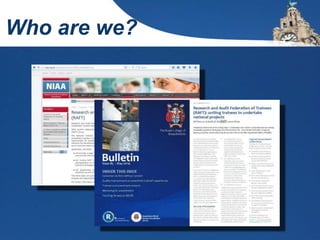
1 Who are we?
2 Merseyside Anaesthetic Trainees Audit
Activity Survey
3 Forming MAGIQ
4 Mersey Intubation Checklist Project
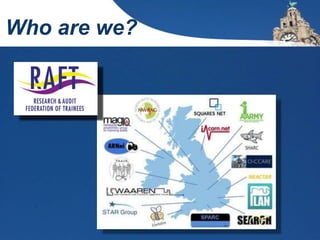
Who are we?
Who are we?
Lesson 1
Just get
started
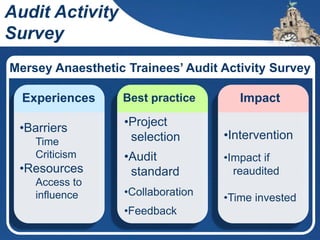
Mersey Anaesthetic Trainees’ Audit Activity Survey
Experiences Best practice Impact
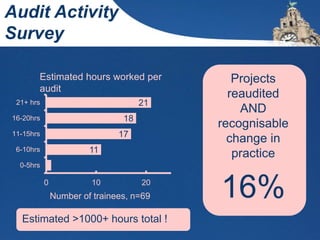
Audit Activity
Survey
•Barriers
Time
Criticism
•Resources
Access to
influence
•Project
selection
•Audit
standard
•Collaboration
•Feedback
•Intervention
•Impact if
reaudited
•Time invested
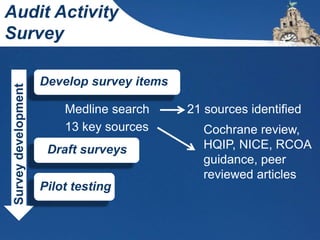
Develop survey items
Draft surveys
Pilot testing
Medline search 21 sources identified
13 key sources Cochrane review,
HQIP, NICE, RCOA
guidance, peer
reviewed articles
SurveydevelopmentAudit Activity
Survey
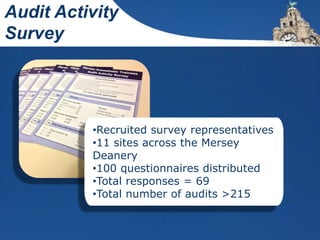
•Recruited survey representatives
•11 sites across the Mersey
Deanery
•100 questionnaires distributed
•Total responses = 69
•Total number of audits >215
Audit Activity
Survey
Number of trainees, n=69
Estimated hours worked per
audit
11
17
18
21
0 10 20
0-5hrs
6-10hrs
11-15hrs
16-20hrs
21+ hrs
Projects
reaudited
AND
recognisable
change in
practice
16%
Estimated >1000+ hours total !
Audit Activity
Survey
Lesson 2
People
aren’t used
to change
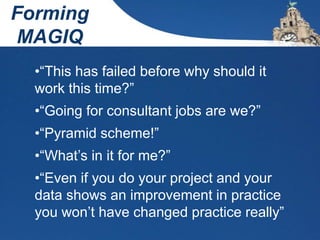
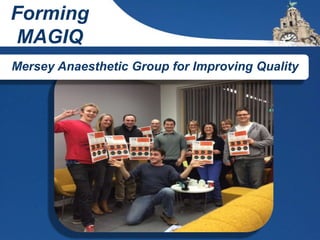
Forming
MAGIQ
•“This has failed before why should it
work this time?”
•“Going for consultant jobs are we?”
•“Pyramid scheme!”
•“What’s in it for me?”
•“Even if you do your project and your
data shows an improvement in practice
you won’t have changed practice really”
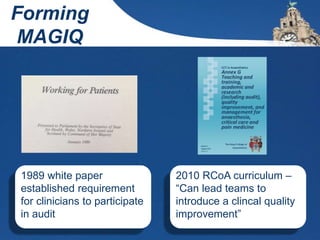
1989 white paper
established requirement
for clinicians to participate
in audit
2010 RCoA curriculum –
“Can lead teams to
introduce a clincal quality
improvement”
Forming
MAGIQ
Lesson 3
Seek out
help and
support
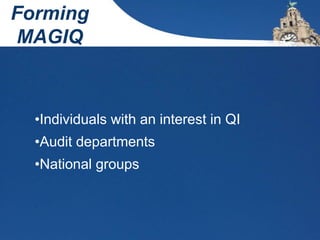
•Individuals with an interest in QI
•Audit departments
•National groups
Forming
MAGIQ
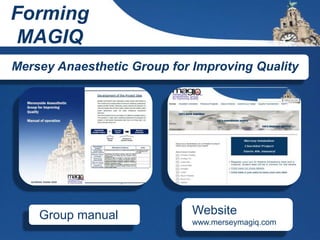
Group manual
Mersey Anaesthetic Group for Improving Quality
Website
www.merseymagiq.com
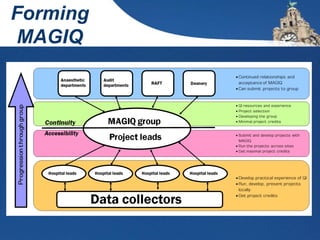
Forming
MAGIQ
Forming
MAGIQ
Lesson 4
Persevere, show
people that you’re
making an effort,
be meticulous and
dedicated
Mersey Anaesthetic Group for Improving Quality
Forming
MAGIQ
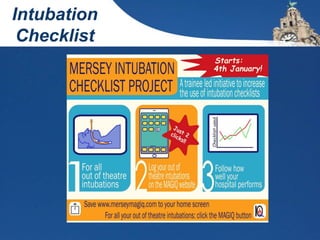
Intubation
Checklist
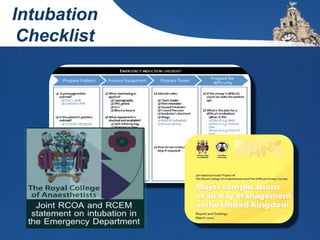
Intubation
Checklist
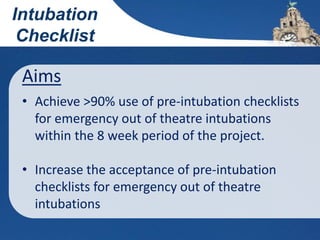
Aims
• Achieve >90% use of pre-intubation checklists
for emergency out of theatre intubations
within the 8 week period of the project.
• Increase the acceptance of pre-intubation
checklists for emergency out of theatre
intubations
Intubation
Checklist
Change
Processes
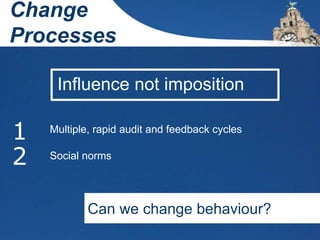
1 Multiple, rapid audit and feedback cycles
2 Social norms
Can we change behaviour?
Influence not imposition
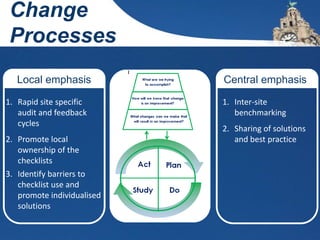
Local emphasis
1. Rapid site specific
audit and feedback
cycles
2. Promote local
ownership of the
checklists
3. Identify barriers to
checklist use and
promote individualised
solutions
1. Inter-site
benchmarking
2. Sharing of solutions
and best practice
Central emphasis
Change
Processes
Context
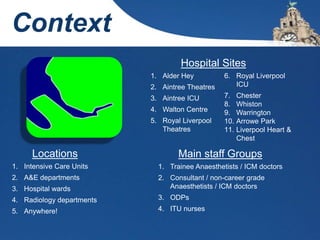
1. Alder Hey
2. Aintree Theatres
3. Aintree ICU
4. Walton Centre
5. Royal Liverpool
Theatres
6. Royal Liverpool
ICU
7. Chester
8. Whiston
9. Warrington
10. Arrowe Park
11. Liverpool Heart &
Chest
Hospital Sites
1. Trainee Anaesthetists / ICM doctors
2. Consultant / non-career grade
Anaesthetists / ICM doctors
3. ODPs
4. ITU nurses
Main staff Groups
1. Intensive Care Units
2. A&E departments
3. Hospital wards
4. Radiology departments
5. Anywhere!
Locations
Lesson 5
Information
Governance is
probably not as
bad as you think
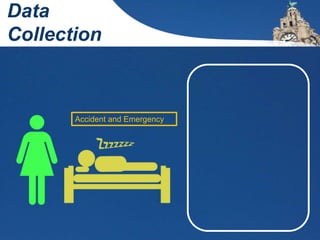
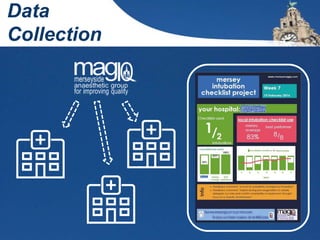
Data
Collection
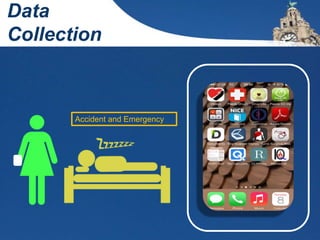
Accident and Emergency
Data
Collection
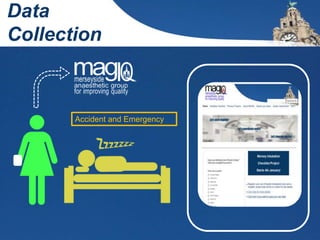
Accident and Emergency
Data
Collection
Data
Collection
?
Data
Collection
Data
Collection
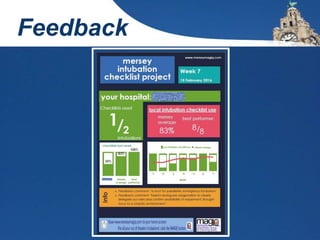
Feedback
Lesson 6
The technology
is out there (and
affordable)
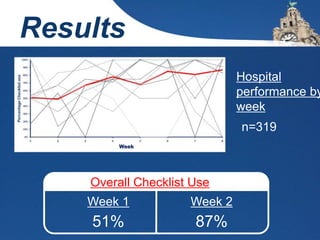
Results
Hospital
performance by
week
Overall Checklist Use
Week 1
51%
Week 2
87%
n=319
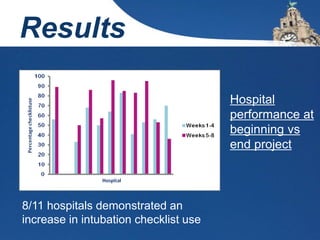
Results
Hospital
performance at
beginning vs
end project
8/11 hospitals demonstrated an
increase in intubation checklist use
Summary
•Rapid audit & feedback and social norms can
increase the use of checklists for emergency
intubations
•Region wide, trainee led Quality Improvement is
feasible and effective
Future
Directions
Questions?
www.merseymagiq.com
@mersey_magiq

IGNITE! MagIQ on improving quality

Editor's Notes

  • #2 Trainee audits, background, how we investigated, issues that we found Developed a solution in the form of a trainee RAG Sales pitch!
  • #4 Bunch of amateurs
  • #5 Bunch of amateurs!
  • #6 Bunch of amateurs!
  • #7 20 items questionnaire More than we can discuss tonight Emphasis on the QI / how impactful? part of audit Best practice further split into audit and feedback methods 4 main domains – best practice split into to 2 to further develop the feeback
  • #8 Trainee survey as unlikely to get info we wanted directly from audit departments Good surveys are hard! External validity – for generalisability Pilot testing – testing the survey with the target study group External validity – eg we wanted these results to be generalisable Response process validity – assess that respondents are interpreting things the same way as the researcher – qualitative interview Multiple rewrites
  • #9 Paper has 20% higher return rate than online – shih Using the online decision tool from the health research authority – no ethical clearance required
  • #10 Impact on trainees is clear Time is biggest limiting factor Impact on care – gold standard = only 11 trainees Huge wasted resource Does this mean actually all audits are very effective Unlikely , selection bias more likely The bottom line is the gold standard
  • #11 Old message = Conventional audit is a poor method of improving patient quality New message = people aren’t used to change, low expectation
  • #13 Culture of the yearly audit tick box for ARCP
  • #14 Balance out the negative voices Find
  • #17 Summarise
  • #18 Balance out the negative voices Find
  • #19 Share ideas & expertise Continuity of project Harnessing enthusiasm – 7pm on Wednesday – people are having an audit meeting
  • #24 Augmenting local change Using pre-existing audit structures
  • #26 Balance out the negative voices Find
  • #39 Thank the audience