1
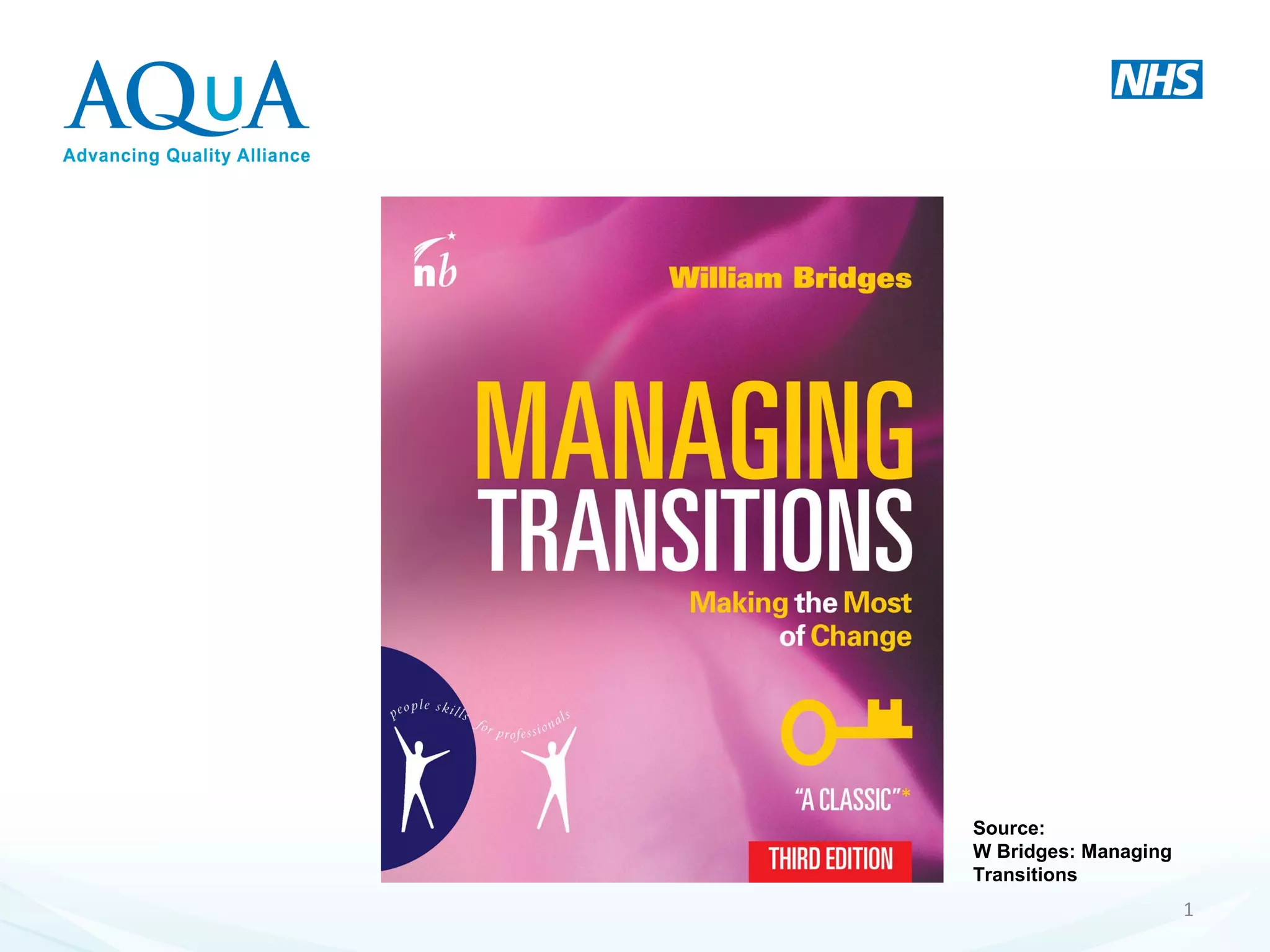
Source:
W Bridges: Managing
Transitions
2
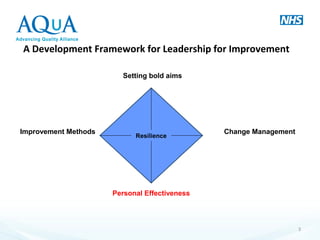
A Development Framework for Leadership for Improvement
Change Management
Setting bold aims
Personal Effectiveness
Improvement Methods
Resilience
3
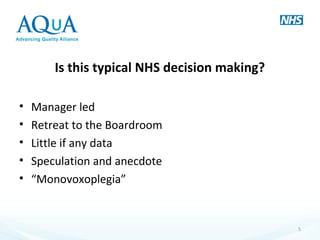
Is this typical NHS decision making?
• Manager led
• Retreat to the Boardroom
• Little if any data
• Speculation and anecdote
• “Monovoxoplegia”
5
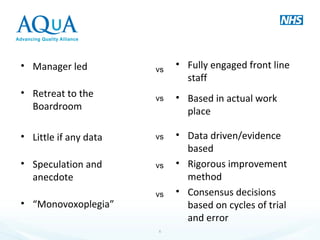
• Manager led
• Retreat to the
Boardroom
• Little if any data
• Speculation and
anecdote
• “Monovoxoplegia”
• Fully engaged front line
staff
• Based in actual work
place
• Data driven/evidence
based
• Rigorous improvement
method
• Consensus decisions
based on cycles of trial
and error
6
vs
vs
vs
vs
vs
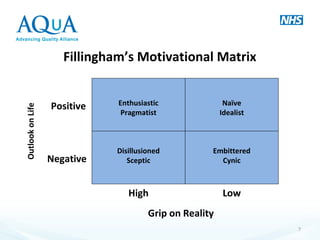
Fillingham’s Motivational Matrix
Positive
Negative
OutlookonLife
Disillusioned
Sceptic
Enthusiastic
Pragmatist
Embittered
Cynic
Naïve
Idealist
Grip on Reality
High Low
7
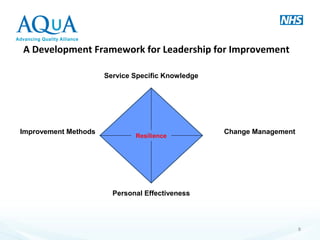
A Development Framework for Leadership for Improvement
Change Management
Service Specific Knowledge
Personal Effectiveness
Improvement Methods
Resilience
8
9
Free resilience report
• http://www.robertsoncooper.com/iresilience
10
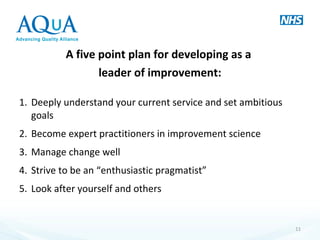
A five point plan for developing as a
leader of improvement:
1. Deeply understand your current service and set ambitious
goals
2. Become expert practitioners in improvement science
3. Manage change well
4. Strive to be an “enthusiastic pragmatist”
5. Look after yourself and others
11
12
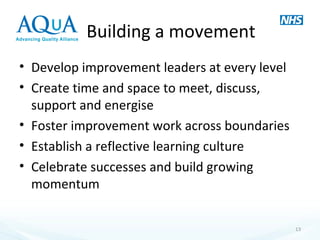
Building a movement
• Develop improvement leaders at every level
• Create time and space to meet, discuss,
support and energise
• Foster improvement work across boundaries
• Establish a reflective learning culture
• Celebrate successes and build growing
momentum
13
“The names of the patients whose lives we have saved can never
be known. Our contribution will be what did not happen to
them. And, though they are unknown, we will know that
mothers and fathers are at graduations and weddings they
would have missed, and that grandchildren will know
grandparents they might never have known, and holidays will
be taken, and work completed, and books read, and
symphonies heard, and gardens tended, which without our
work, would never have been.”
Don Berwick, IHI
14

IGNITE! Keynote: Building an improvement movement

  • 1.
  • 2.
  • 3.
    A Development Frameworkfor Leadership for Improvement Change Management Setting bold aims Personal Effectiveness Improvement Methods Resilience 3
  • 5.
    Is this typicalNHS decision making? • Manager led • Retreat to the Boardroom • Little if any data • Speculation and anecdote • “Monovoxoplegia” 5
  • 6.
    • Manager led •Retreat to the Boardroom • Little if any data • Speculation and anecdote • “Monovoxoplegia” • Fully engaged front line staff • Based in actual work place • Data driven/evidence based • Rigorous improvement method • Consensus decisions based on cycles of trial and error 6 vs vs vs vs vs
  • 7.
  • 8.
    A Development Frameworkfor Leadership for Improvement Change Management Service Specific Knowledge Personal Effectiveness Improvement Methods Resilience 8
  • 9.
  • 10.
    Free resilience report •http://www.robertsoncooper.com/iresilience 10
  • 11.
    A five pointplan for developing as a leader of improvement: 1. Deeply understand your current service and set ambitious goals 2. Become expert practitioners in improvement science 3. Manage change well 4. Strive to be an “enthusiastic pragmatist” 5. Look after yourself and others 11
  • 12.
  • 13.
    Building a movement •Develop improvement leaders at every level • Create time and space to meet, discuss, support and energise • Foster improvement work across boundaries • Establish a reflective learning culture • Celebrate successes and build growing momentum 13
  • 14.
    “The names ofthe patients whose lives we have saved can never be known. Our contribution will be what did not happen to them. And, though they are unknown, we will know that mothers and fathers are at graduations and weddings they would have missed, and that grandchildren will know grandparents they might never have known, and holidays will be taken, and work completed, and books read, and symphonies heard, and gardens tended, which without our work, would never have been.” Don Berwick, IHI 14

Editor's Notes

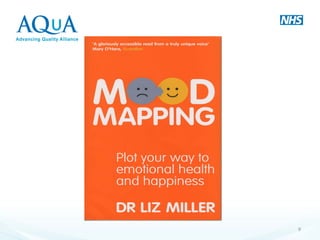
  • #10 Mood = well being, how good or bad you feel (Sign/output from resilience) Ask group to brainstorm types of mood/words for moods and plot on a mood map e.g. sad, happy – Flip chart as a group (pg 46 mood mapping book) Ask group to consider what effects their mood? E.g. events, physical health, people, personal experience, self esteem, being able to be yourself (Suggestions on next slide and your personal reservoir)
  • #11 Helps look at: Personal resilience Potential derailers Signs to look for Strategies that can be adopted to help you