Identifying RocksBy Rachel Carter
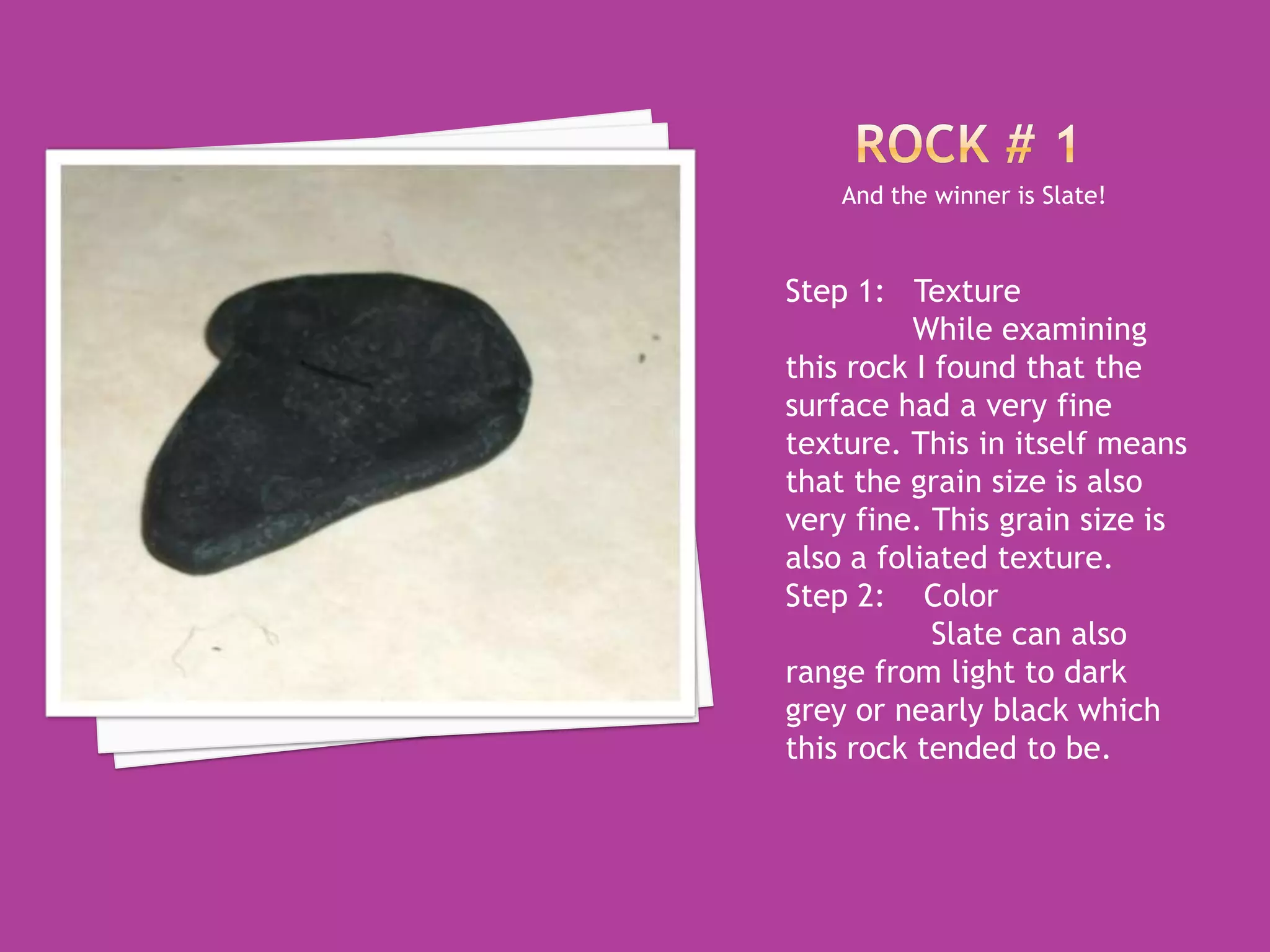
Rock # 1And the winner is Slate!Step 1:   TextureWhile examining this rock I found that the surface had a very fine texture. This in itself means that the grain size is also very fine. This grain size is also a foliated texture. Step 2:    Color	  Slate can also range from light to dark grey or nearly black which this rock tended to be.
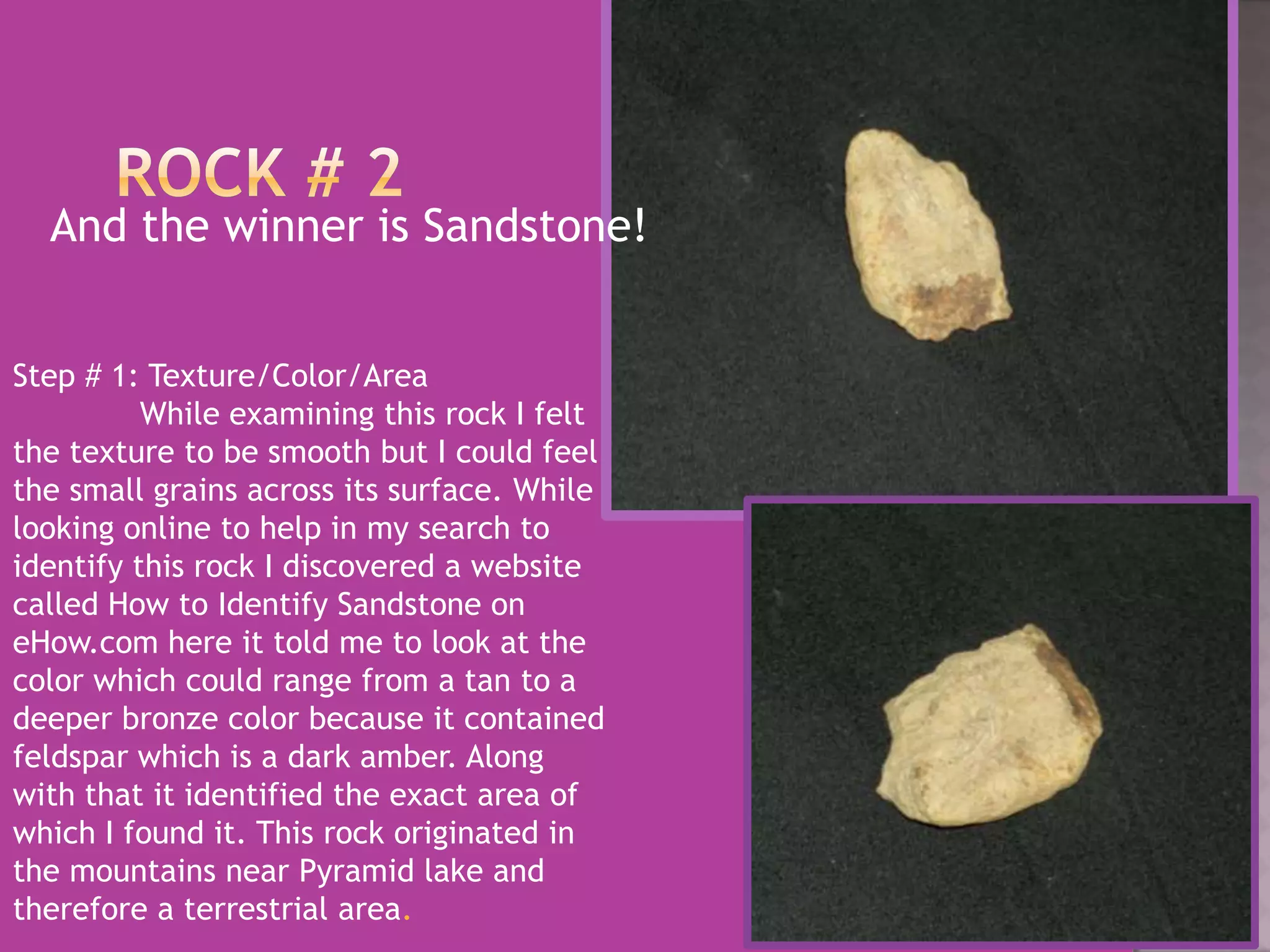
Rock # 2And the winner is Sandstone!Step # 1: Texture/Color/Area	While examining this rock I felt the texture to be smooth but I could feel the small grains across its surface. While looking online to help in my search to identify this rock I discovered a website called How to Identify Sandstone on eHow.com here it told me to look at the color which could range from a tan to a deeper bronze color because it contained feldspar which is a dark amber. Along with that it identified the exact area of which I found it. This rock originated in the mountains near Pyramid lake and therefore a terrestrial area.
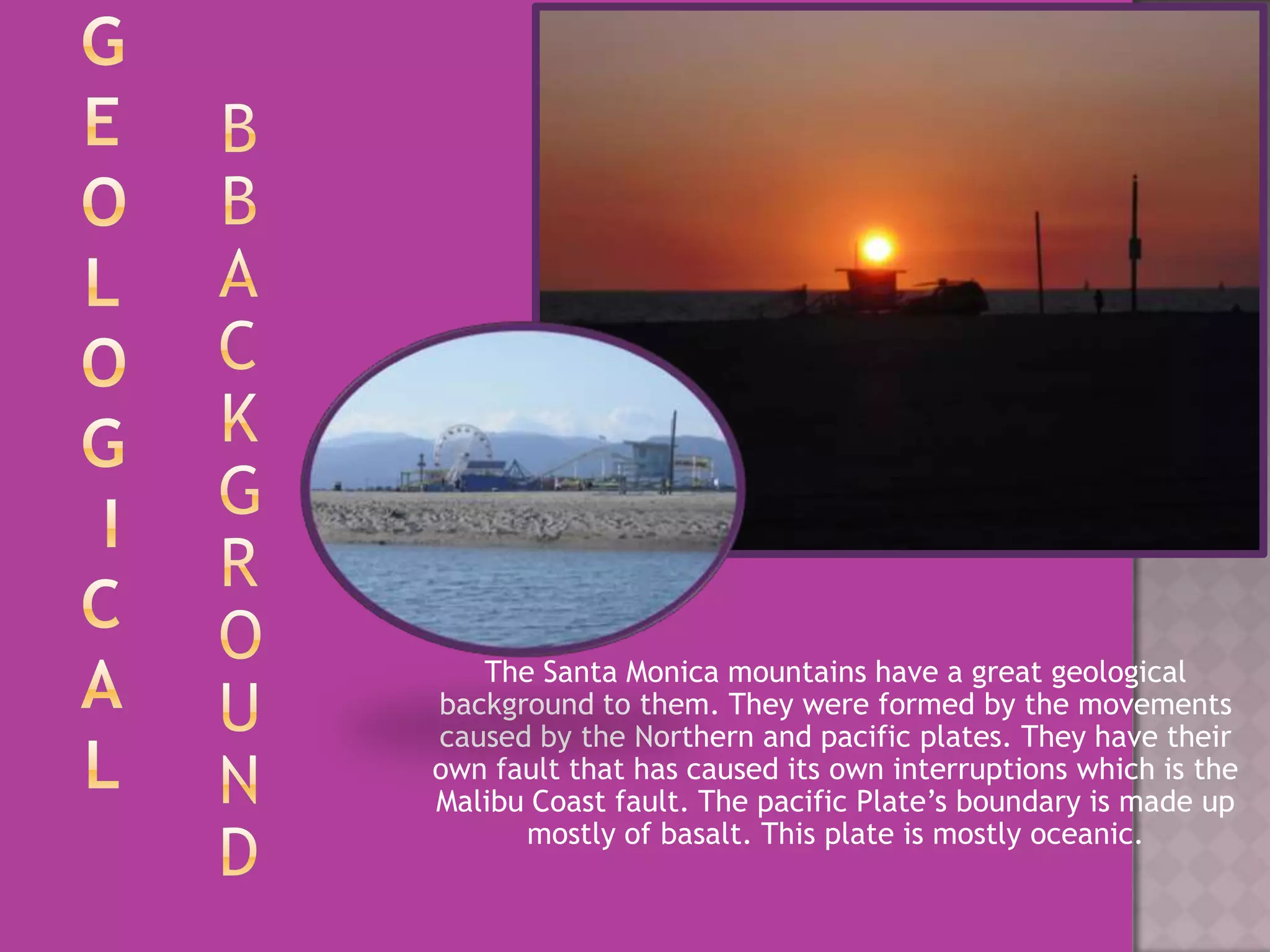
GeologicalBbackgroundThe Santa Monica mountains have a great geological background to them. They were formed by the movements caused by the Northern and pacific plates. They have their own fault that has caused its own interruptions which is the Malibu Coast fault. The pacific Plate’s boundary is made up mostly of basalt. This plate is mostly oceanic.
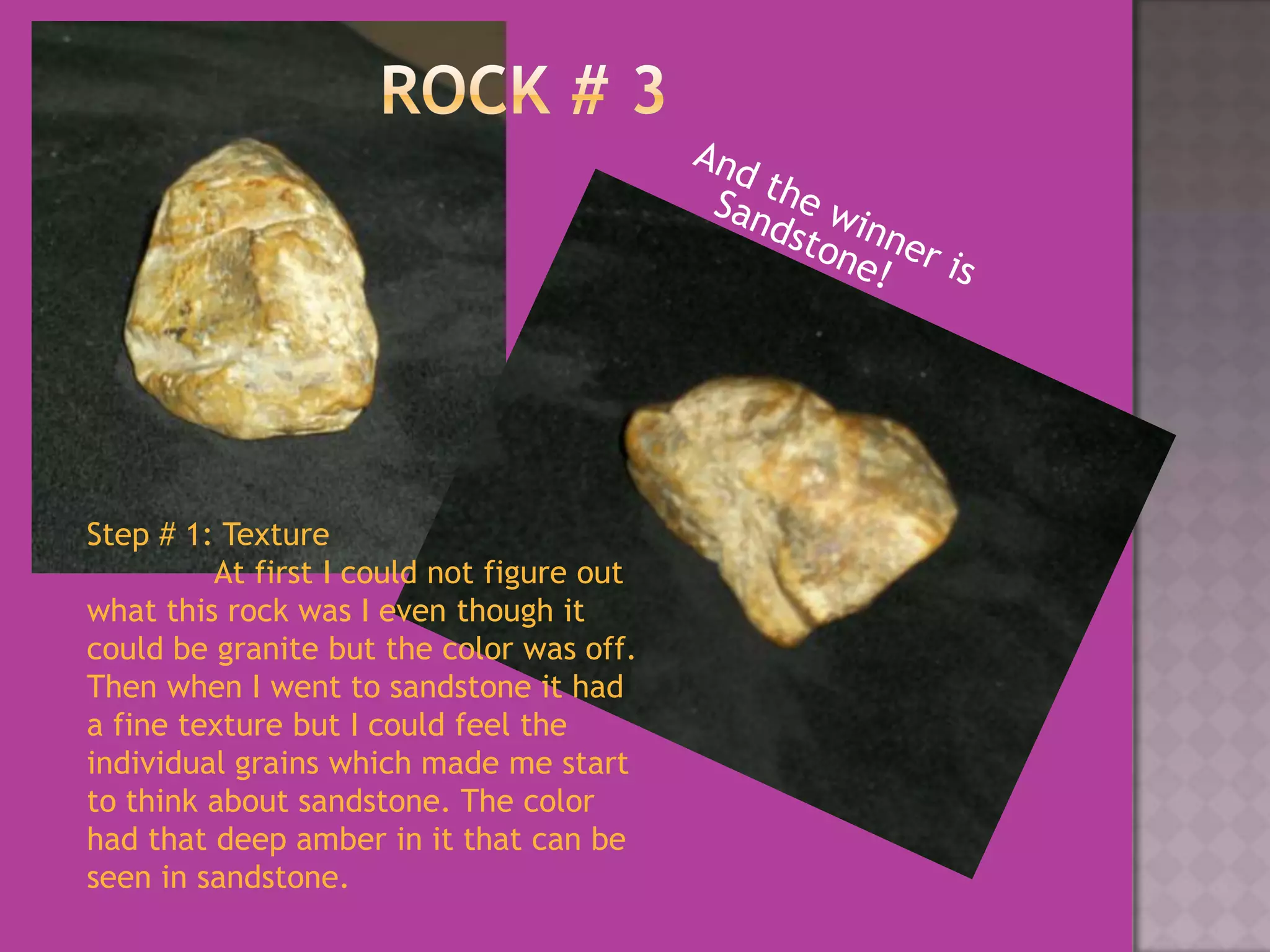
Rock # 3And the winner is Sandstone!Step # 1: Texture	At first I could not figure out what this rock was I even though it could be granite but the color was off. Then when I went to sandstone it had a fine texture but I could feel the individual grains which made me start to think about sandstone. The color had that deep amber in it that can be seen in sandstone.
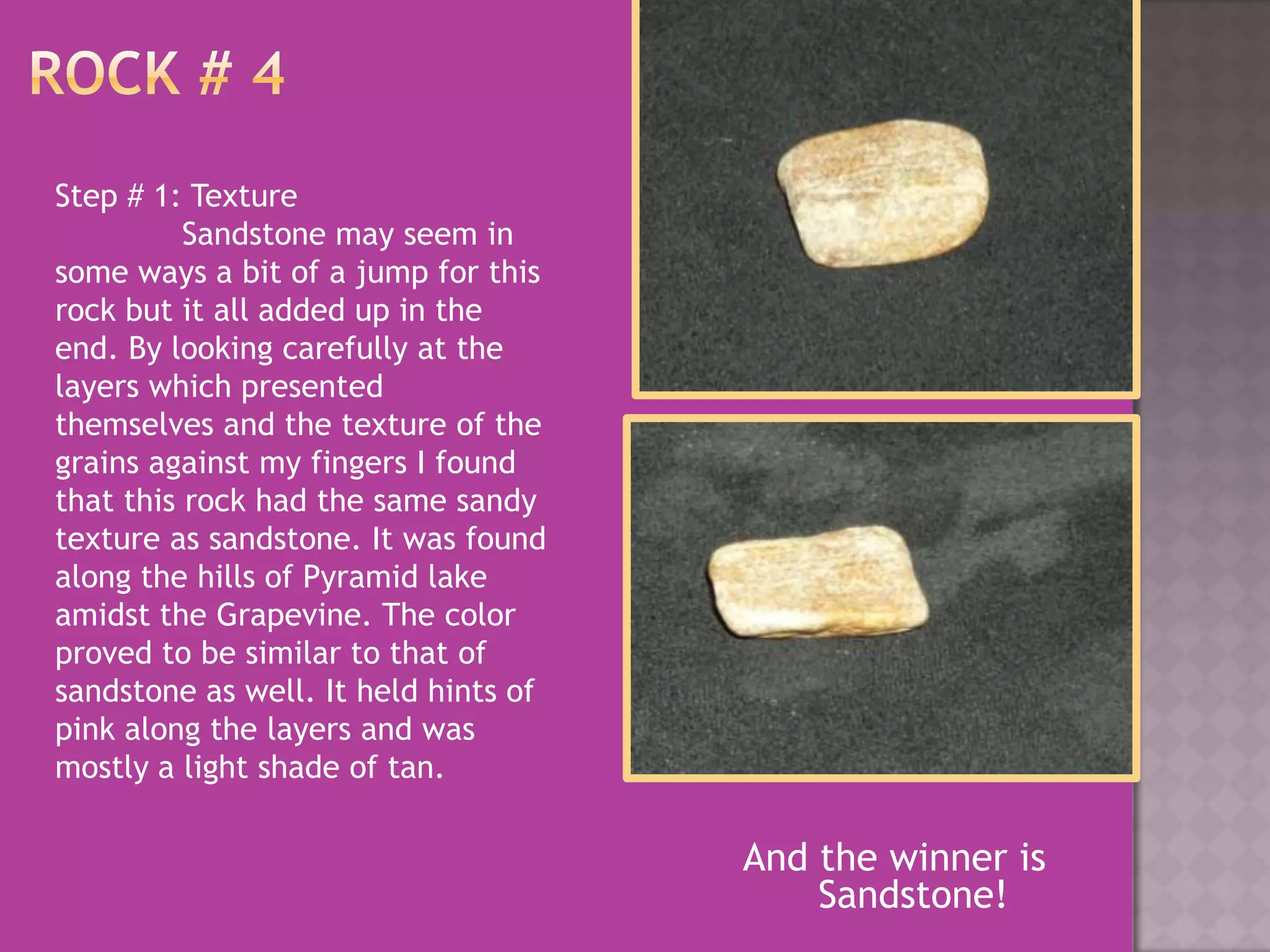
Rock # 4Step # 1: Texture	Sandstone may seem in some ways a bit of a jump for this rock but it all added up in the end. By looking carefully at the layers which presented themselves and the texture of the grains against my fingers I found that this rock had the same sandy texture as sandstone. It was found along the hills of Pyramid lake amidst the Grapevine. The color proved to be similar to that of sandstone as well. It held hints of pink along the layers and was mostly a light shade of tan. And the winner is Sandstone!
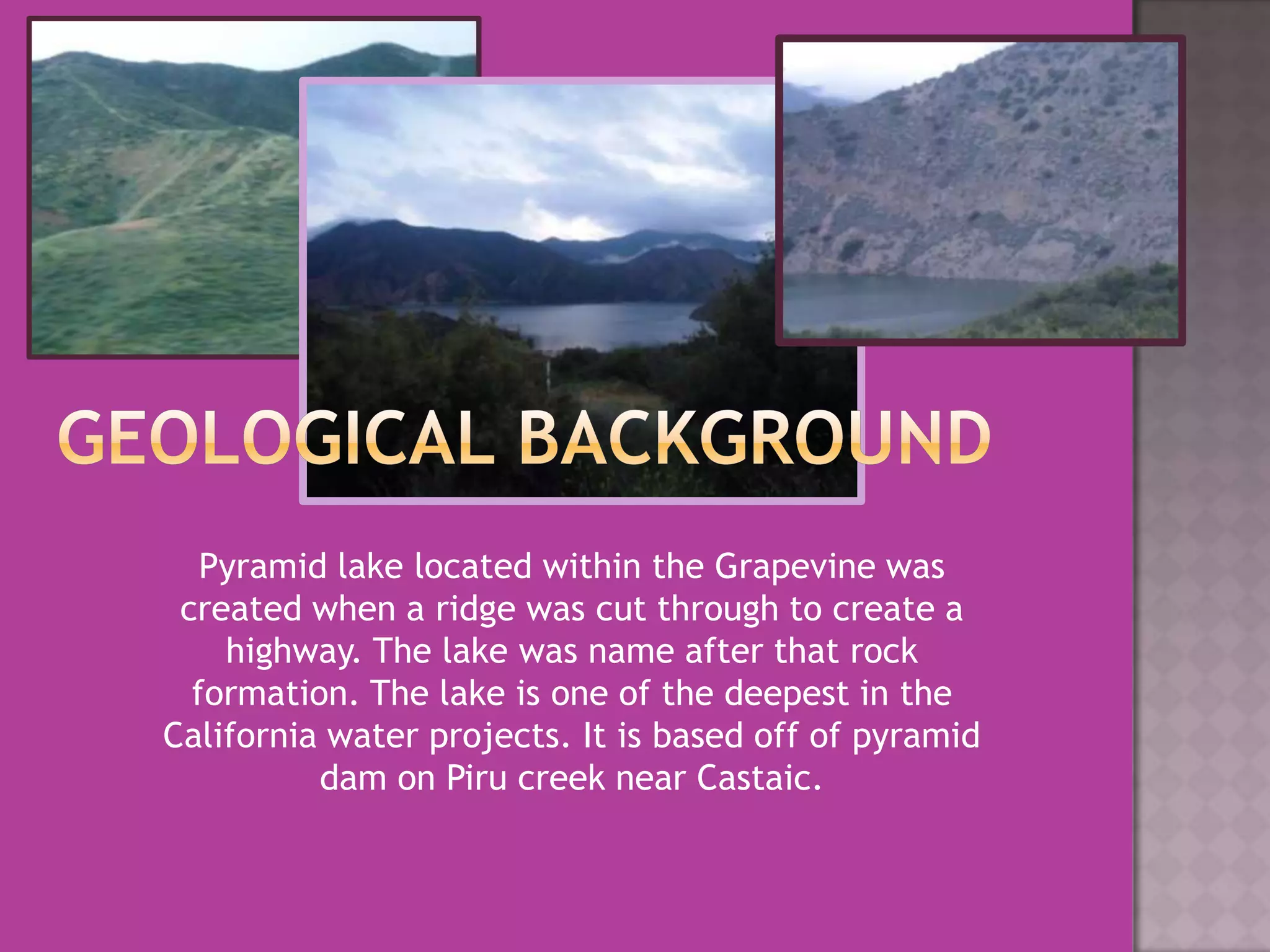
Geological BackgroundPyramid lake located within the Grapevine was created when a ridge was cut through to create a highway. The lake was name after that rock formation. The lake is one of the deepest in the California water projects. It is based off of pyramid dam on Piru creek near Castaic.
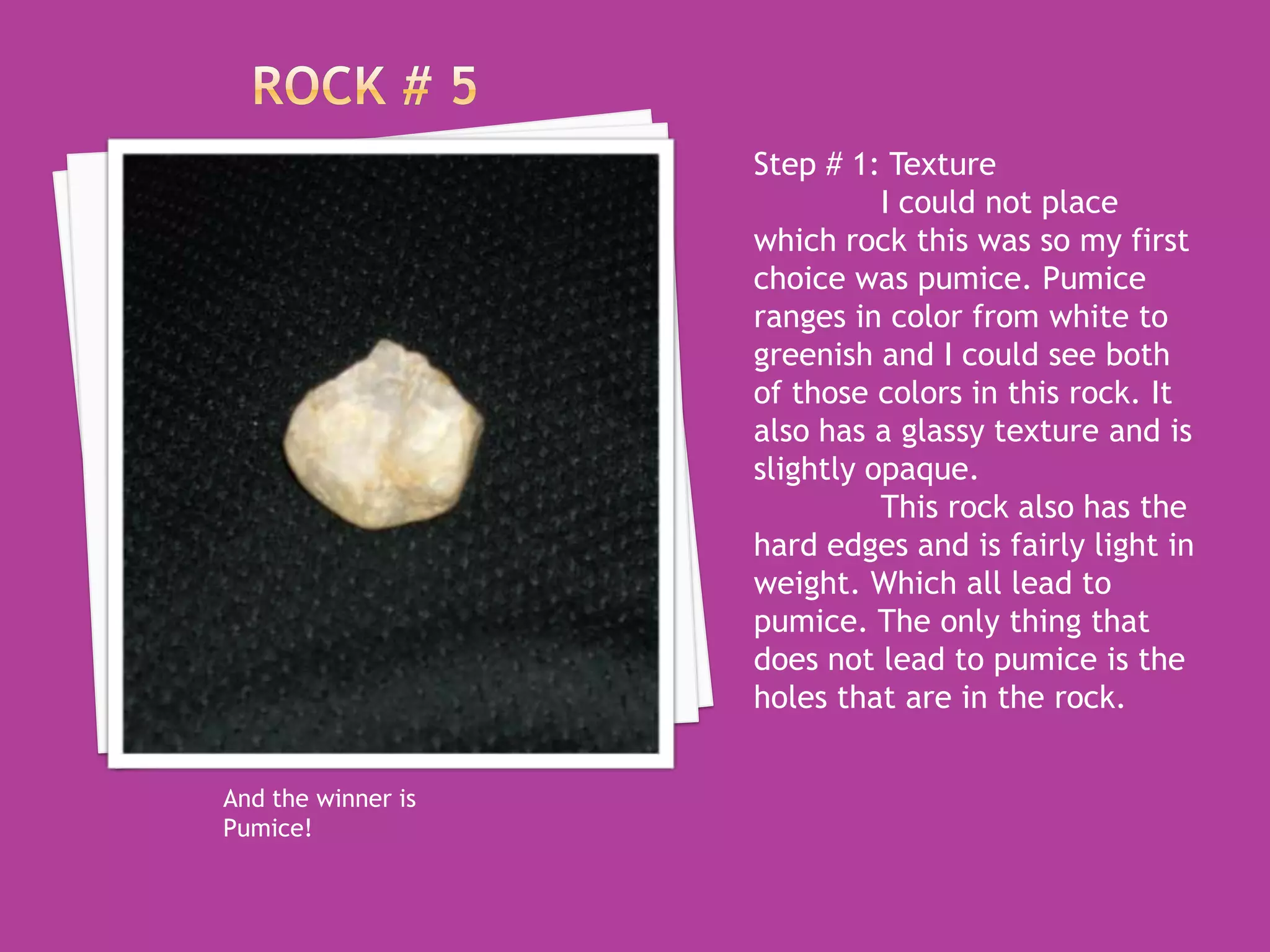
Rock # 5Step # 1: Texture	I could not place which rock this was so my first choice was pumice. Pumice ranges in color from white to greenish and I could see both of those colors in this rock. It also has a glassy texture and is slightly opaque. 	This rock also has the hard edges and is fairly light in weight. Which all lead to pumice. The only thing that does not lead to pumice is the holes that are in the rock. And the winner is Pumice!

Identifying rocks

  • 1.
  • 2.
    Rock # 1Andthe winner is Slate!Step 1: TextureWhile examining this rock I found that the surface had a very fine texture. This in itself means that the grain size is also very fine. This grain size is also a foliated texture. Step 2: Color Slate can also range from light to dark grey or nearly black which this rock tended to be.
  • 3.
    Rock # 2Andthe winner is Sandstone!Step # 1: Texture/Color/Area While examining this rock I felt the texture to be smooth but I could feel the small grains across its surface. While looking online to help in my search to identify this rock I discovered a website called How to Identify Sandstone on eHow.com here it told me to look at the color which could range from a tan to a deeper bronze color because it contained feldspar which is a dark amber. Along with that it identified the exact area of which I found it. This rock originated in the mountains near Pyramid lake and therefore a terrestrial area.
  • 4.
    GeologicalBbackgroundThe Santa Monicamountains have a great geological background to them. They were formed by the movements caused by the Northern and pacific plates. They have their own fault that has caused its own interruptions which is the Malibu Coast fault. The pacific Plate’s boundary is made up mostly of basalt. This plate is mostly oceanic.
  • 5.
    Rock # 3Andthe winner is Sandstone!Step # 1: Texture At first I could not figure out what this rock was I even though it could be granite but the color was off. Then when I went to sandstone it had a fine texture but I could feel the individual grains which made me start to think about sandstone. The color had that deep amber in it that can be seen in sandstone.
  • 6.
    Rock # 4Step# 1: Texture Sandstone may seem in some ways a bit of a jump for this rock but it all added up in the end. By looking carefully at the layers which presented themselves and the texture of the grains against my fingers I found that this rock had the same sandy texture as sandstone. It was found along the hills of Pyramid lake amidst the Grapevine. The color proved to be similar to that of sandstone as well. It held hints of pink along the layers and was mostly a light shade of tan. And the winner is Sandstone!
  • 7.
    Geological BackgroundPyramid lakelocated within the Grapevine was created when a ridge was cut through to create a highway. The lake was name after that rock formation. The lake is one of the deepest in the California water projects. It is based off of pyramid dam on Piru creek near Castaic.
  • 8.
    Rock # 5Step# 1: Texture I could not place which rock this was so my first choice was pumice. Pumice ranges in color from white to greenish and I could see both of those colors in this rock. It also has a glassy texture and is slightly opaque. This rock also has the hard edges and is fairly light in weight. Which all lead to pumice. The only thing that does not lead to pumice is the holes that are in the rock. And the winner is Pumice!