BY: MOHD HANAFI BIN SAMIRAN CLASS 4 WARUNA CLICK  HERE  FOR MORE…. Group member: 1.MOHD. HANAFI B. SAMIRAN 2.MUHAMMAD KHAIRAN SYAMIL B. ZOLKEPLY
How they Attack? What is Phishing? How to Detect.? Examples.  Damage caused by phishing. Conclusion. Sources of references. CONTENT
What is pHisHing??? Phishing is defined as the fraudulent acquisition of personal information by tricking an individual into believing the attacker is a trustworthy entity this is normally done through emails and an instant message.
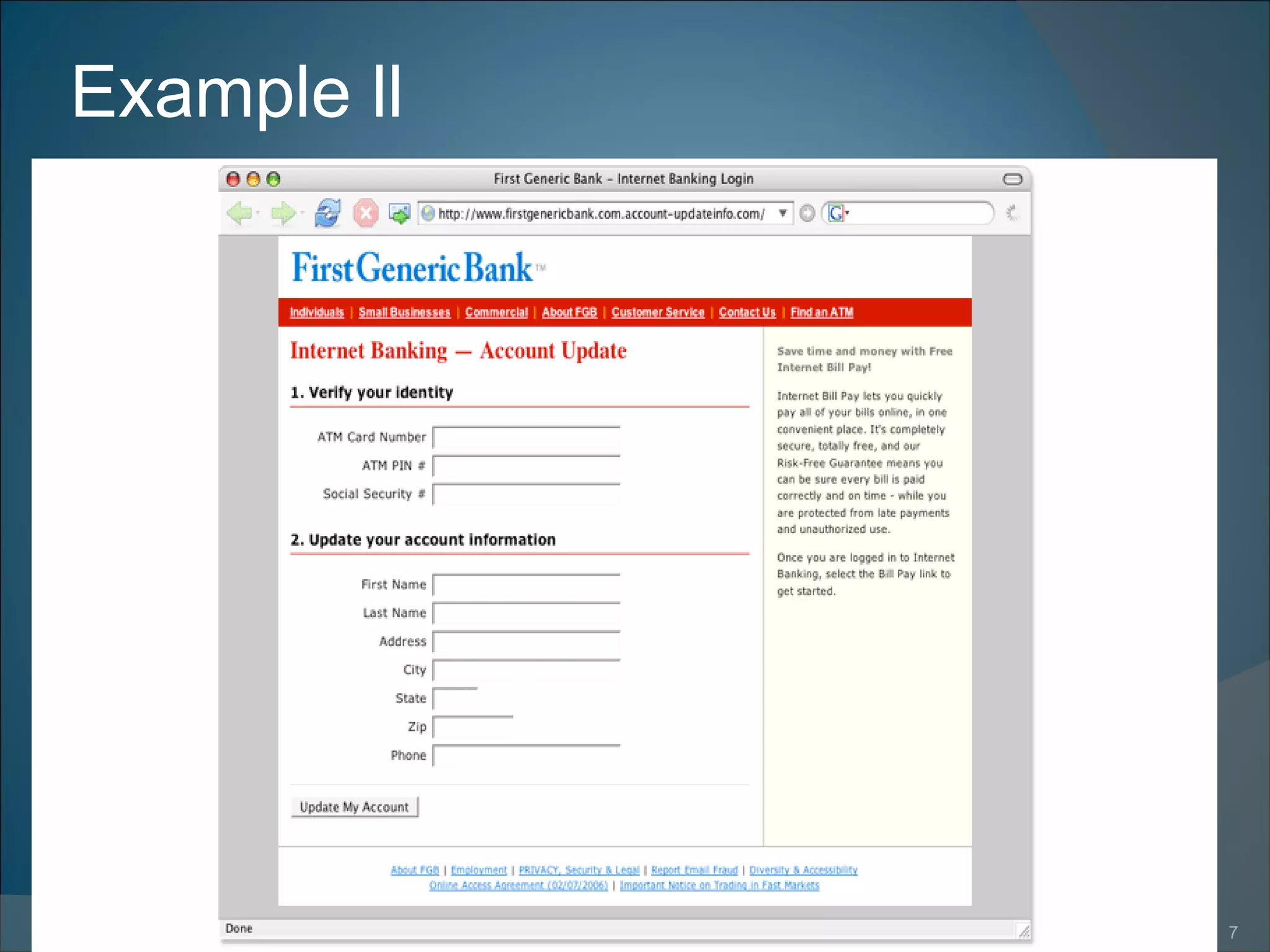
How They ATTACK….. Most attacks of phishing use some form of technical deception designed to make a link in an email appear to belong to the spoofed organization. Misspelled URLs or the use of subdomains are common tricks used by phishers, such as this example URL,  http://www.maybank.home.com/ . One method of spoofing links used web addresses containing the  @  symbol, which were used to include a username and password in a web URL
How TO DEteCt….. It is actually very noticeable. You will see misspelled URLs. One way seeing it is discovering @ in the web addresses e.g. http://www.hotmail.com@members.com.  Some web browsers such as Mozilla and Internet Explorer has closed this off while Opera gives a warning and an option to get off the website.  In another popular method of phishing, an attacker uses a bank or other services website scripts on the victim.These types of attack known as cross-site scripting.
Example l
Example ll
Damage caused by phishing. The damage caused by phishing ranges from loss of access to email to substantial financial loss. This style of  identity theft  is becoming more popular, because of the ease with which unsuspecting people often divulge personal information to phishers, including  credit card numbers ,  social security  numbers, and mothers maiden names.  There are also fears that identity thieves can obtain some such information simply by accessing public records. Once they have the information they need and want, the phishers will use that person’s detail to create fake accounts using the victims name, using up a persons credit, or even prevent the victim from accessing to their own accounts
Conclusion….. Phishing e–mails are only a small aspect of the overall phishing economy and until now, the only aspect seen by the most people. The phishing economy is a decentralized and self–organized social network of merchants and consumers governed by laws of supply and demand. This clearer picture of the landscape, the players, and insight into phishing operations will hopefully assist in the fight against online fraud .
Source Of Information 1.WEBSITE http://www.wikipedia.org/wiki/Anti-phishing_software http://www.phishtank.com/what _is_phishing.ptp?view=website http://www.microsoft.com/?Phishing-Techniques&id=1818216 http://www.webopedia.com/phishing.html 2.BOOKS. PHISHING :CUTTING THE IDENTITY THEFT LINE.BY RACHEL LININGER  & RUSSELL DEAN UINES .

ICT-phishing

  • 1.
    BY: MOHD HANAFIBIN SAMIRAN CLASS 4 WARUNA CLICK HERE FOR MORE…. Group member: 1.MOHD. HANAFI B. SAMIRAN 2.MUHAMMAD KHAIRAN SYAMIL B. ZOLKEPLY
  • 2.
    How they Attack?What is Phishing? How to Detect.? Examples. Damage caused by phishing. Conclusion. Sources of references. CONTENT
  • 3.
    What is pHisHing???Phishing is defined as the fraudulent acquisition of personal information by tricking an individual into believing the attacker is a trustworthy entity this is normally done through emails and an instant message.
  • 4.
    How They ATTACK…..Most attacks of phishing use some form of technical deception designed to make a link in an email appear to belong to the spoofed organization. Misspelled URLs or the use of subdomains are common tricks used by phishers, such as this example URL, http://www.maybank.home.com/ . One method of spoofing links used web addresses containing the @ symbol, which were used to include a username and password in a web URL
  • 5.
    How TO DEteCt…..It is actually very noticeable. You will see misspelled URLs. One way seeing it is discovering @ in the web addresses e.g. http://www.hotmail.com@members.com. Some web browsers such as Mozilla and Internet Explorer has closed this off while Opera gives a warning and an option to get off the website. In another popular method of phishing, an attacker uses a bank or other services website scripts on the victim.These types of attack known as cross-site scripting.
  • 6.
  • 7.
  • 8.
    Damage caused byphishing. The damage caused by phishing ranges from loss of access to email to substantial financial loss. This style of identity theft is becoming more popular, because of the ease with which unsuspecting people often divulge personal information to phishers, including credit card numbers , social security numbers, and mothers maiden names. There are also fears that identity thieves can obtain some such information simply by accessing public records. Once they have the information they need and want, the phishers will use that person’s detail to create fake accounts using the victims name, using up a persons credit, or even prevent the victim from accessing to their own accounts
  • 9.
    Conclusion….. Phishing e–mailsare only a small aspect of the overall phishing economy and until now, the only aspect seen by the most people. The phishing economy is a decentralized and self–organized social network of merchants and consumers governed by laws of supply and demand. This clearer picture of the landscape, the players, and insight into phishing operations will hopefully assist in the fight against online fraud .
  • 10.
    Source Of Information1.WEBSITE http://www.wikipedia.org/wiki/Anti-phishing_software http://www.phishtank.com/what _is_phishing.ptp?view=website http://www.microsoft.com/?Phishing-Techniques&id=1818216 http://www.webopedia.com/phishing.html 2.BOOKS. PHISHING :CUTTING THE IDENTITY THEFT LINE.BY RACHEL LININGER & RUSSELL DEAN UINES .