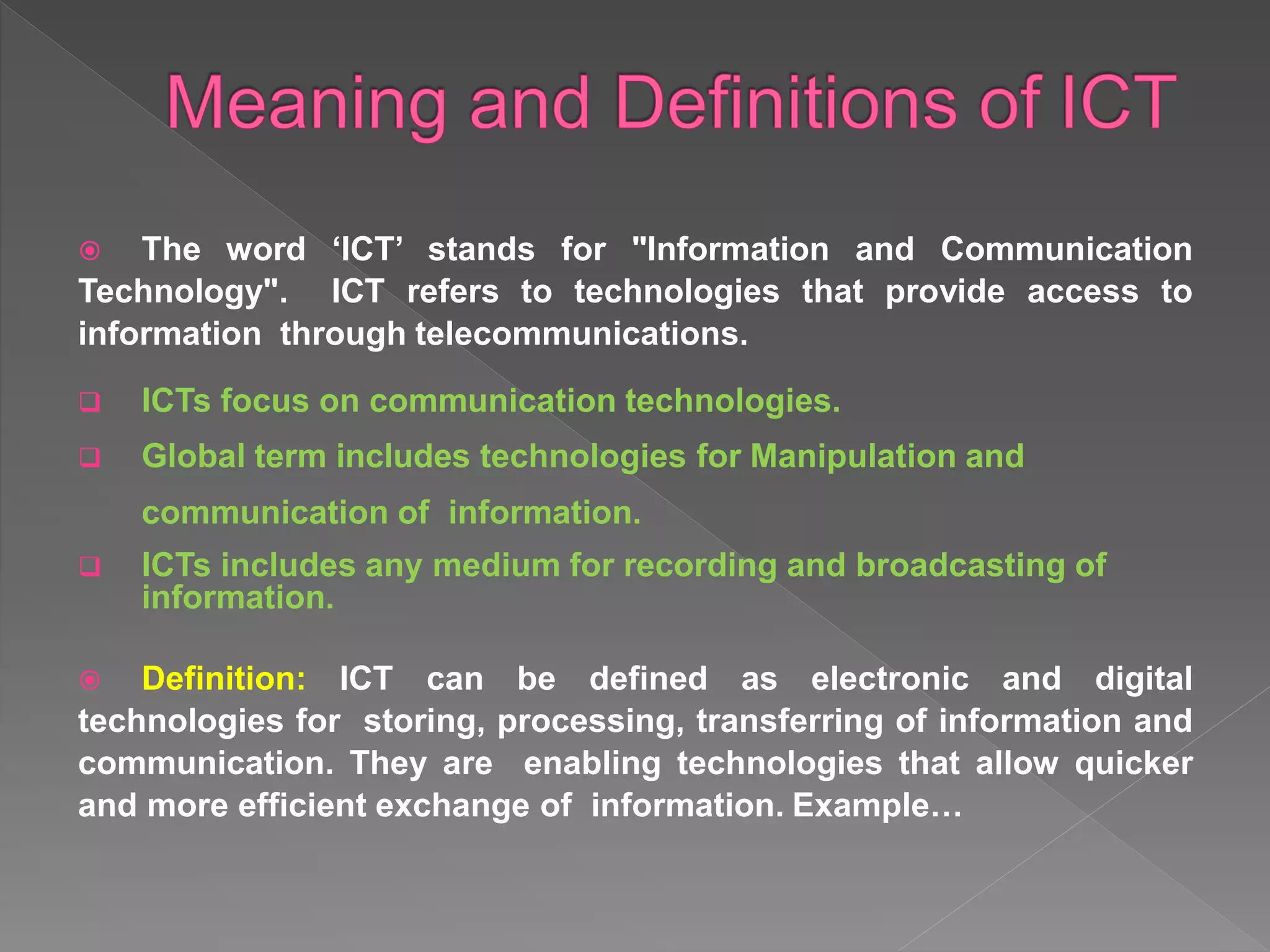
 The word ‘ICT’ stands for "Information and Communication
Technology". ICT refers to technologies that provide access to
information through telecommunications.
 ICTs focus on communication technologies.
 Global term includes technologies for Manipulation and
communication of information.
 ICTs includes any medium for recording and broadcasting of
information.
 Definition: ICT can be defined as electronic and digital
technologies for storing, processing, transferring of information and
communication. They are enabling technologies that allow quicker
and more efficient exchange of information. Example…
Tools:
Tools are something you use to do a job.
Techniques:
Techniques are procedures used to
accomplish specific activity or task.
Computer, Laptops, Internet,
Websites, Web Portals
E-mail, Internet Telephony (VoIP),
Wi-Fi
Mobile phone, Smart phones,
Tablets, Call Centers
Whats App, Face book, twitter
Interactive whiteboards
GPRS, USSD Technology, SMS,
Conference Calling
Touch Screen Systems, Information
Kiosks
E-learning
Expert Systems,
Teleconferencing, Video
conferencing
Interactive Voice Response Systems GIS, Remote Sensing Technology
Digital TV, Scanners,
Personal Digital Entertainment
Devices
Streaming media
Podcasts, Vodcasts, Blogs
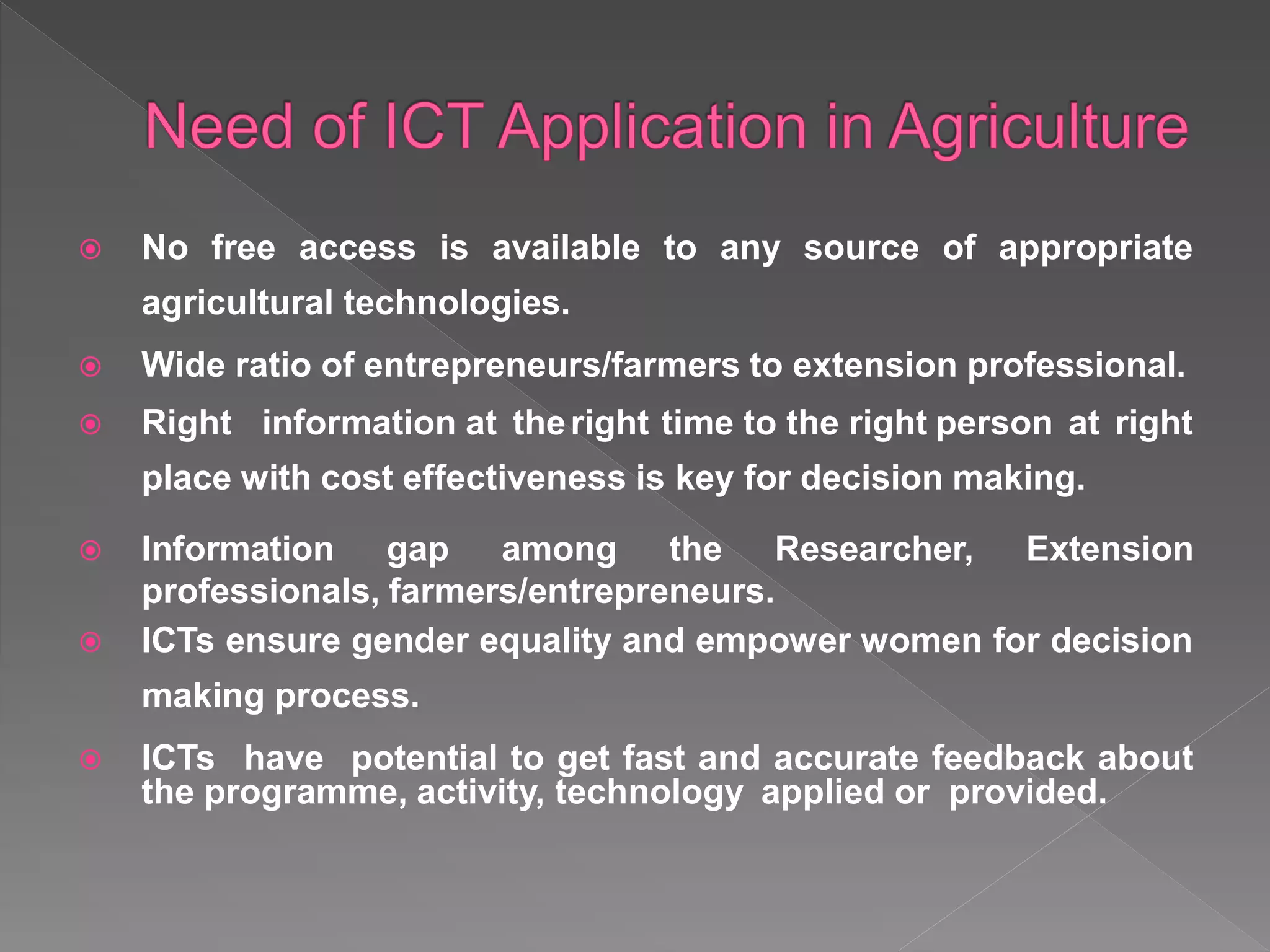
 No free access is available to any source of appropriate
agricultural technologies.
 Wide ratio of entrepreneurs/farmers to extension professional.
 Right information at theright time to the right person at right
place with cost effectiveness is key for decision making.
 Information gap among the Researcher, Extension
professionals, farmers/entrepreneurs.
 ICTs ensure gender equality and empower women for decision
making process.
 ICTs have potential to get fast and accurate feedback about
the programme, activity, technology applied or provided.
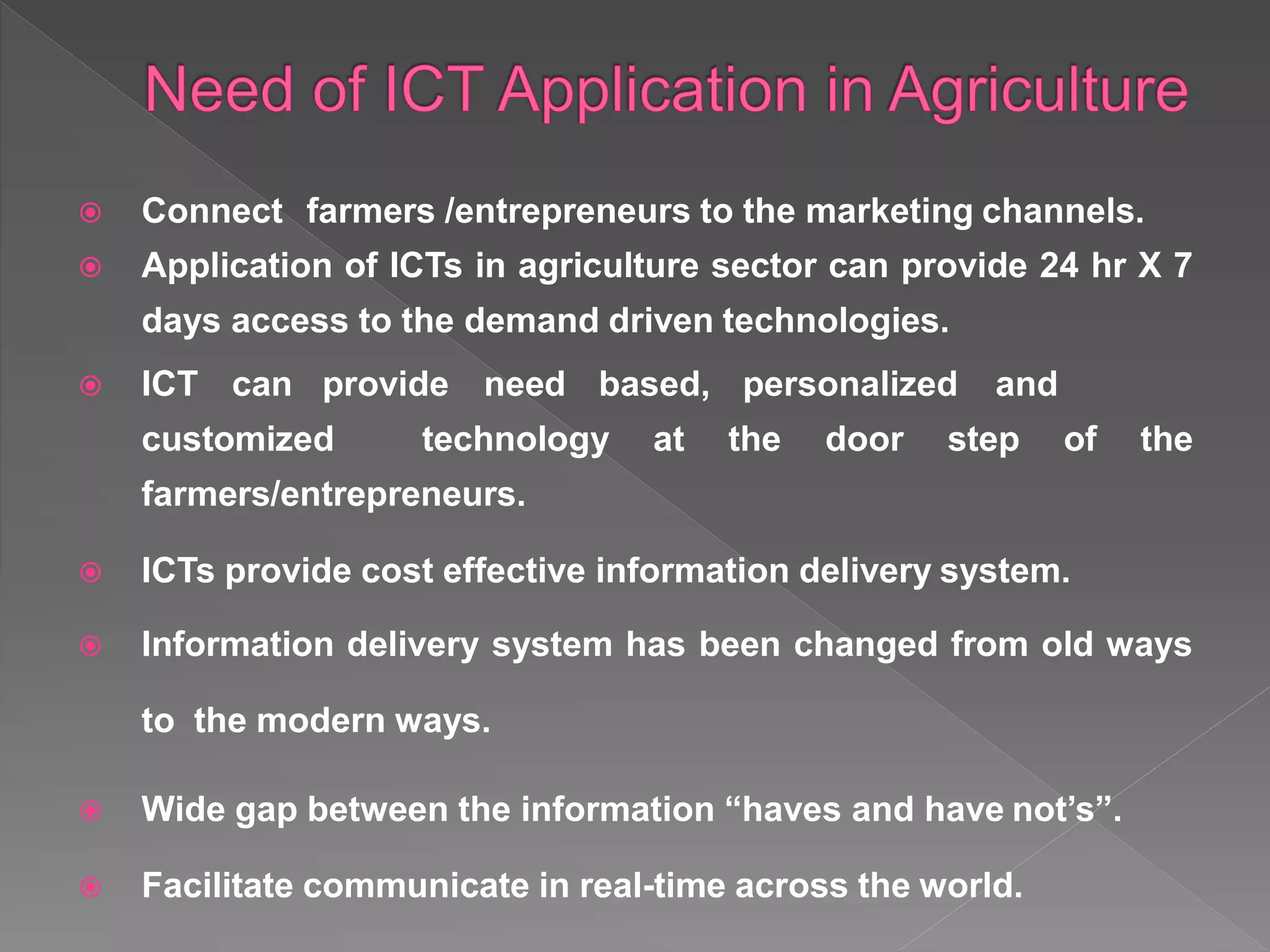
 Connect farmers /entrepreneurs to the marketing channels.
 Application of ICTs in agriculture sector can provide 24 hr X 7
days access to the demand driven technologies.
 ICT can provide need based, personalized and
customized technology at the door step of the
farmers/entrepreneurs.
 ICTs provide cost effective information delivery system.
 Information delivery system has been changed from old ways
to the modern ways.
 Wide gap between the information “haves and have not’s”.
 Facilitate communicate in real-time across the world.
Ict in agricultural extension

Ict in agricultural extension

  • 2.
     The word‘ICT’ stands for "Information and Communication Technology". ICT refers to technologies that provide access to information through telecommunications.  ICTs focus on communication technologies.  Global term includes technologies for Manipulation and communication of information.  ICTs includes any medium for recording and broadcasting of information.  Definition: ICT can be defined as electronic and digital technologies for storing, processing, transferring of information and communication. They are enabling technologies that allow quicker and more efficient exchange of information. Example…
  • 3.
    Tools: Tools are somethingyou use to do a job. Techniques: Techniques are procedures used to accomplish specific activity or task. Computer, Laptops, Internet, Websites, Web Portals E-mail, Internet Telephony (VoIP), Wi-Fi Mobile phone, Smart phones, Tablets, Call Centers Whats App, Face book, twitter Interactive whiteboards GPRS, USSD Technology, SMS, Conference Calling Touch Screen Systems, Information Kiosks E-learning Expert Systems, Teleconferencing, Video conferencing Interactive Voice Response Systems GIS, Remote Sensing Technology Digital TV, Scanners, Personal Digital Entertainment Devices Streaming media Podcasts, Vodcasts, Blogs
  • 4.
     No freeaccess is available to any source of appropriate agricultural technologies.  Wide ratio of entrepreneurs/farmers to extension professional.  Right information at theright time to the right person at right place with cost effectiveness is key for decision making.  Information gap among the Researcher, Extension professionals, farmers/entrepreneurs.  ICTs ensure gender equality and empower women for decision making process.  ICTs have potential to get fast and accurate feedback about the programme, activity, technology applied or provided.
  • 5.
     Connect farmers/entrepreneurs to the marketing channels.  Application of ICTs in agriculture sector can provide 24 hr X 7 days access to the demand driven technologies.  ICT can provide need based, personalized and customized technology at the door step of the farmers/entrepreneurs.  ICTs provide cost effective information delivery system.  Information delivery system has been changed from old ways to the modern ways.  Wide gap between the information “haves and have not’s”.  Facilitate communicate in real-time across the world.