‫الرحیم‬ ‫الرحمن‬ ‫بسم‬
‫عامه‬ ‫صحت‬ ‫وزارت‬
‫تخصص‬ ‫اکمال‬ ‫ریاست‬
‫وانکشاف‬ ‫آموزش‬ ‫آمریت‬
‫صدری‬ ‫جراحی‬ ‫دیپارتمنت‬
Supervised By Sp.Dr.Rahmani
Prepared by Dr.Anush
Shock
Shock•Objective :
• 1.Defination
• 2.epidimology
• 3.pathophysiology
• 4.stage of shock
• 5.type of shock
• 6.general clinical future
• 7.hypovolemic shock
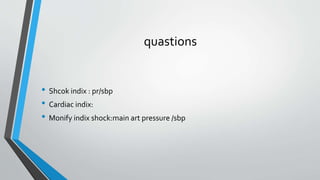
quastions
• Shcok indix : pr/sbp
• Cardiac indix:
• Monify indix shock:main art pressure /sbp
Definition of shock
• Shock defined as inadequate delivery of oxygen and nutrients to
maintain normal tissue and cellular function. (Schwartz)
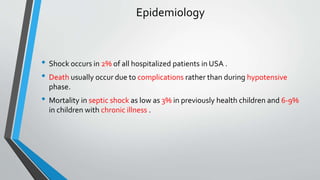
Epidemiology
• Shock occurs in 2% of all hospitalized patients in USA .
• Death usually occur due to complications rather than during hypotensive
phase.
• Mortality in septic shock as low as 3% in previously health children and 6-9%
in children with chronic illness .
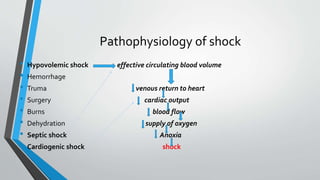
Pathophysiology of shock
• Hypovolemic shock effective circulating blood volume
• Hemorrhage
• Truma venous return to heart
• Surgery cardiac output
• Burns blood flow
• Dehydration supply of oxygen
• Septic shock Anoxia
• Cardiogenic shock shock
Stages of shock
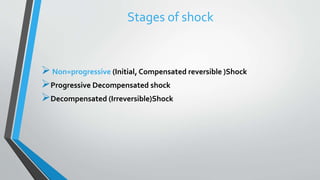
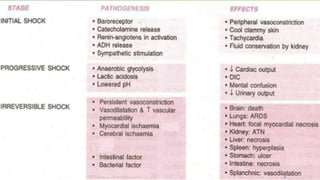
Non=progressive (Initial, Compensated reversible )Shock
Progressive Decompensated shock
Decompensated (Irreversible)Shock
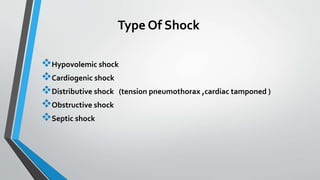
Type Of Shock
Hypovolemic shock
Cardiogenic shock
Distributive shock (tension pneumothorax ,cardiac tamponed )
Obstructive shock
Septic shock
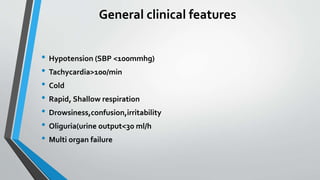
General clinical features
• Hypotension (SBP <100mmhg)
• Tachycardia>100/min
• Cold
• Rapid, Shallow respiration
• Drowsiness,confusion,irritability
• Oliguria(urine output<30 ml/h
• Multi organ failure
Hypovolemic shock
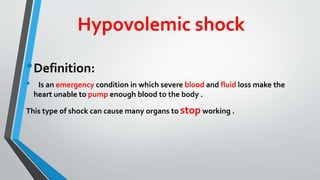
•Definition:
• Is an emergency condition in which severe blood and fluid loss make the
heart unable to pump enough blood to the body .
This type of shock can cause many organs to stop working .
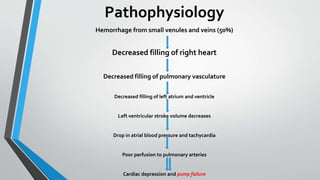
Pathophysiology
Hemorrhage from small venules and veins (50%)
Decreased filling of right heart
Decreased filling of pulmonary vasculature
Decreased filling of left atrium and ventricle
Left ventricular stroke volume decreases
Drop in atrial blood pressure and tachycardia
Poor perfusion to pulmonary arteries
Cardiac depression and pump failure
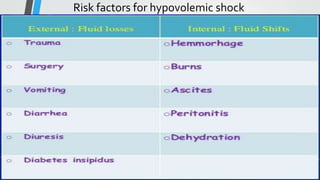
Risk factors for hypovolemic shock
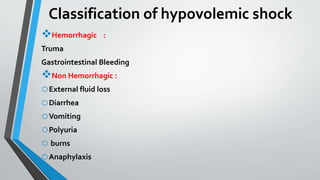
Classification of hypovolemic shock
Hemorrhagic :
Truma
Gastrointestinal Bleeding
Non Hemorrhagic :
oExternal fluid loss
oDiarrhea
oVomiting
oPolyuria
o burns
oAnaphylaxis
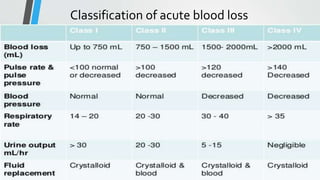
Classification of acute blood loss
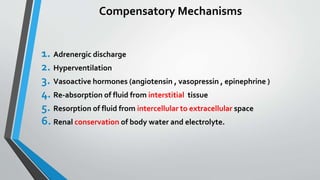
Compensatory Mechanisms
1. Adrenergic discharge
2. Hyperventilation
3. Vasoactive hormones (angiotensin , vasopressin , epinephrine )
4. Re-absorption of fluid from interstitial tissue
5. Resorption of fluid from intercellular to extracellular space
6. Renal conservation of body water and electrolyte.
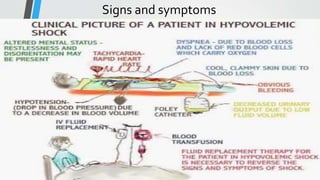
Signs and symptoms
Restlessness
Hypotension
Cool
Rapid and shallow respiration
Hypothermia
Thirst and dry mouth
Distracted look in the eye
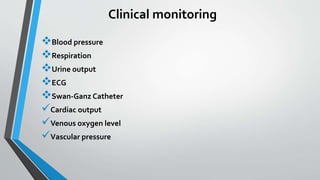
Clinical monitoring
Blood pressure
Respiration
Urine output
ECG
Swan-Ganz Catheter
Cardiac output
Venous oxygen level
Vascular pressure
Diagnosis
• Evaluation (agitation, cold Ext,tachycardia,hypotention)(25-30%B.Loss)
• Physical Exam: Ab,Chest ,Pelvic
• Hemorrhage (external , intrathoracic , intra Ab, Introperitoneal and long
bon fracture) .
• Chest X-Ray
• Pelvic radiography
• Diagnostic ultrasound
• Diagnostic peritoneal lavage
Management
•objective :
• A: Increase cardiac output
• B: increase tissue perfusion
The plan of action should be based on :
A: primary problem (stop bleeding)
B: Adequate fluid replacement
c : blood transfusion (Hb= 7 to 9)
d: improving myocardial contractility
e: correcting acid-base disturbances
Cont.…
Resuscitation
Immediate control of bleeding (rest , pressure Peking and surgical
methods)]
Infusion of fluid is the fundamental treatment
Crystalloids fluid
Colloids fluid (after crystalloid)
Drugs :
 1.sedatives
 2.chronotropic agent
 3.inotropic agent
Thank you.

Hypovolemic shock

  • 1.
    ‫الرحیم‬ ‫الرحمن‬ ‫بسم‬ ‫عامه‬‫صحت‬ ‫وزارت‬ ‫تخصص‬ ‫اکمال‬ ‫ریاست‬ ‫وانکشاف‬ ‫آموزش‬ ‫آمریت‬ ‫صدری‬ ‫جراحی‬ ‫دیپارتمنت‬ Supervised By Sp.Dr.Rahmani Prepared by Dr.Anush Shock
  • 2.
    Shock•Objective : • 1.Defination •2.epidimology • 3.pathophysiology • 4.stage of shock • 5.type of shock • 6.general clinical future • 7.hypovolemic shock
  • 3.
    quastions • Shcok indix: pr/sbp • Cardiac indix: • Monify indix shock:main art pressure /sbp
  • 4.
    Definition of shock •Shock defined as inadequate delivery of oxygen and nutrients to maintain normal tissue and cellular function. (Schwartz)
  • 5.
    Epidemiology • Shock occursin 2% of all hospitalized patients in USA . • Death usually occur due to complications rather than during hypotensive phase. • Mortality in septic shock as low as 3% in previously health children and 6-9% in children with chronic illness .
  • 6.
    Pathophysiology of shock •Hypovolemic shock effective circulating blood volume • Hemorrhage • Truma venous return to heart • Surgery cardiac output • Burns blood flow • Dehydration supply of oxygen • Septic shock Anoxia • Cardiogenic shock shock
  • 7.
    Stages of shock Non=progressive(Initial, Compensated reversible )Shock Progressive Decompensated shock Decompensated (Irreversible)Shock
  • 9.
    Type Of Shock Hypovolemicshock Cardiogenic shock Distributive shock (tension pneumothorax ,cardiac tamponed ) Obstructive shock Septic shock
  • 10.
    General clinical features •Hypotension (SBP <100mmhg) • Tachycardia>100/min • Cold • Rapid, Shallow respiration • Drowsiness,confusion,irritability • Oliguria(urine output<30 ml/h • Multi organ failure
  • 11.
    Hypovolemic shock •Definition: • Isan emergency condition in which severe blood and fluid loss make the heart unable to pump enough blood to the body . This type of shock can cause many organs to stop working .
  • 12.
    Pathophysiology Hemorrhage from smallvenules and veins (50%) Decreased filling of right heart Decreased filling of pulmonary vasculature Decreased filling of left atrium and ventricle Left ventricular stroke volume decreases Drop in atrial blood pressure and tachycardia Poor perfusion to pulmonary arteries Cardiac depression and pump failure
  • 13.
    Risk factors forhypovolemic shock
  • 14.
    Classification of hypovolemicshock Hemorrhagic : Truma Gastrointestinal Bleeding Non Hemorrhagic : oExternal fluid loss oDiarrhea oVomiting oPolyuria o burns oAnaphylaxis
  • 15.
  • 16.
    Compensatory Mechanisms 1. Adrenergicdischarge 2. Hyperventilation 3. Vasoactive hormones (angiotensin , vasopressin , epinephrine ) 4. Re-absorption of fluid from interstitial tissue 5. Resorption of fluid from intercellular to extracellular space 6. Renal conservation of body water and electrolyte.
  • 17.
    Signs and symptoms Restlessness Hypotension Cool Rapidand shallow respiration Hypothermia Thirst and dry mouth Distracted look in the eye
  • 18.
    Clinical monitoring Blood pressure Respiration Urineoutput ECG Swan-Ganz Catheter Cardiac output Venous oxygen level Vascular pressure
  • 19.
    Diagnosis • Evaluation (agitation,cold Ext,tachycardia,hypotention)(25-30%B.Loss) • Physical Exam: Ab,Chest ,Pelvic • Hemorrhage (external , intrathoracic , intra Ab, Introperitoneal and long bon fracture) . • Chest X-Ray • Pelvic radiography • Diagnostic ultrasound • Diagnostic peritoneal lavage
  • 20.
    Management •objective : • A:Increase cardiac output • B: increase tissue perfusion The plan of action should be based on : A: primary problem (stop bleeding) B: Adequate fluid replacement c : blood transfusion (Hb= 7 to 9) d: improving myocardial contractility e: correcting acid-base disturbances
  • 21.
    Cont.… Resuscitation Immediate control ofbleeding (rest , pressure Peking and surgical methods)] Infusion of fluid is the fundamental treatment Crystalloids fluid Colloids fluid (after crystalloid) Drugs :  1.sedatives  2.chronotropic agent  3.inotropic agent
  • 22.