HYPOTHESIS TESTING
Presented by -: Sonia Azam
Inferential Statistics
• Inferential statistics to make judgments of
the probability that an observed difference
between groups is a dependable one or
one that might have happened by chance.
There are two main methods
used in inferential statistics:
• Estimation &
• Hypothesis testing
What is Hypothesis
• A Hypothesis is the statement or an
assumption about relationships between
variables.
or
• A Hypothesis is a tentative explanation for
certain behaviors, phenomenon or events
that have occurred or will occur.
Interesting Hypothesis
• Bankers assumed high-income earners
are more profitable than low-income
earners.
• Old clients were more likely to diminish CD
balances by large amounts compared to
younger clients.
This was nonintrusive because
conventional wisdom suggested that older
clients have a larger portfolio of assets
and seek less risky investments
Criteria for Hypothesis
Construction
• It should be empirically testable, whether it
is right or wrong.
• It should be specific and precise.
• The statements in the hypothesis should
not be contradictory.
• It should specify variables between which
the relationship is to be established.
• It should describe one issue only.
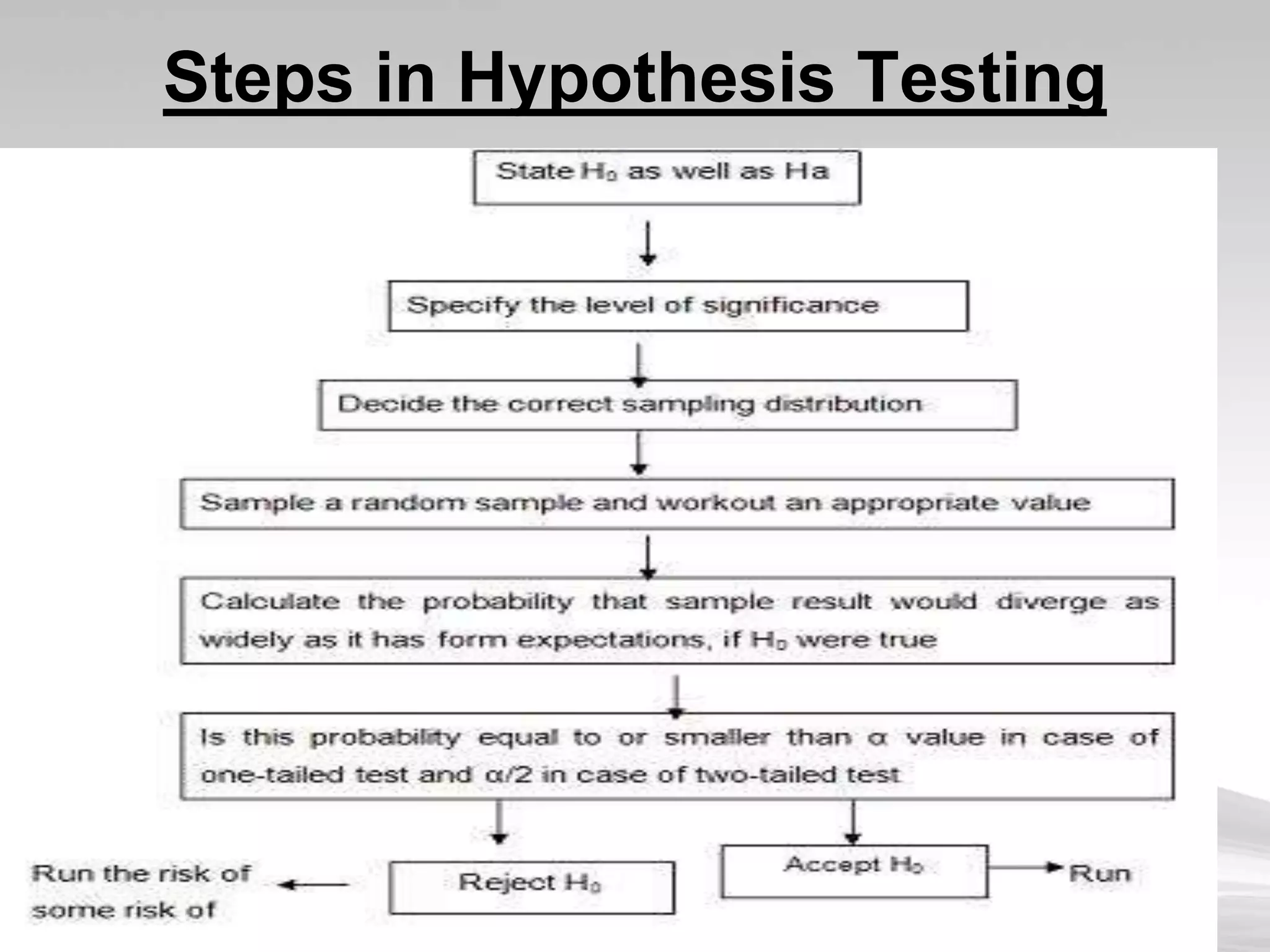
Steps in Hypothesis Testing
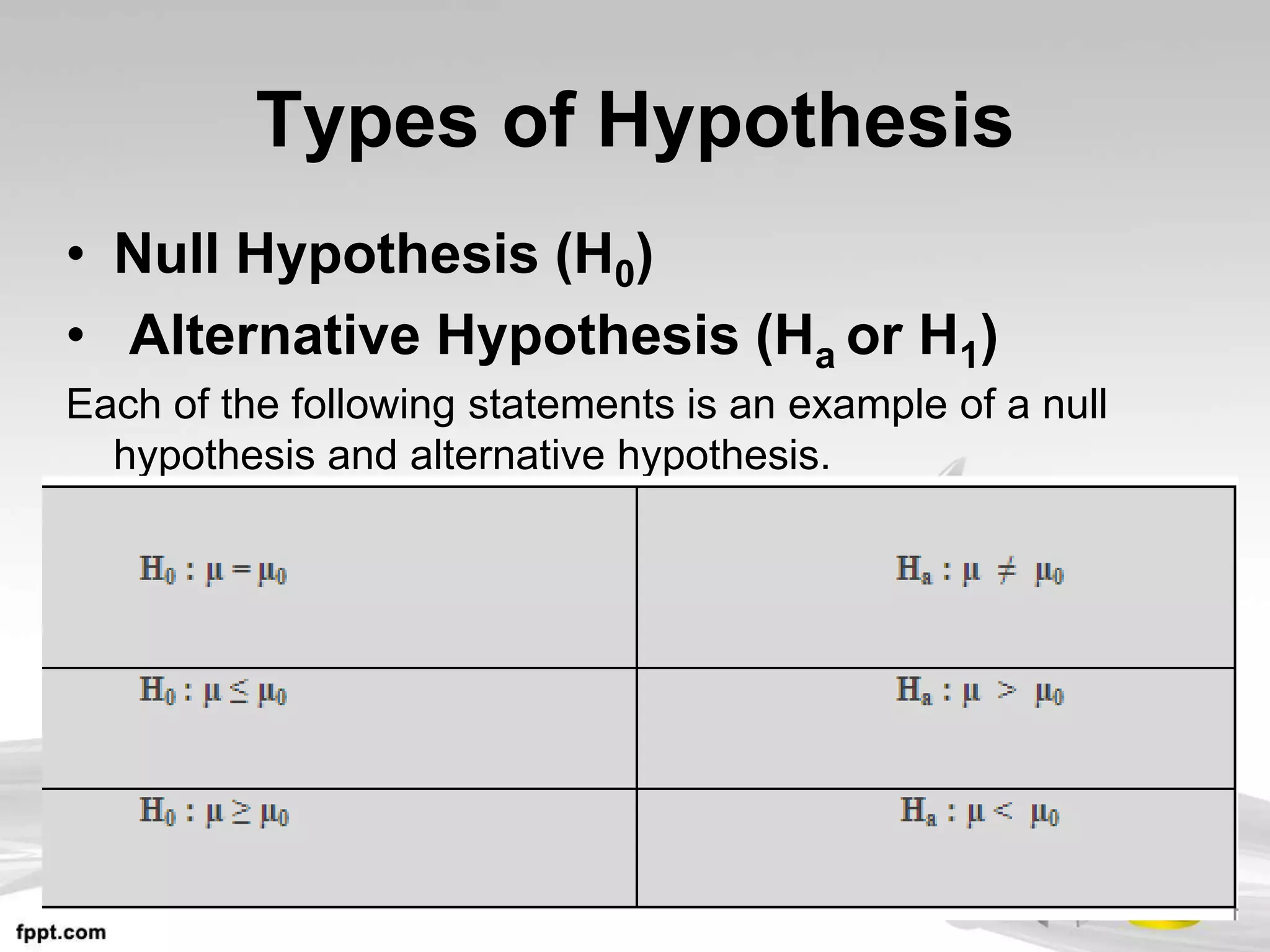
Types of Hypothesis
• Null Hypothesis (H0)
• Alternative Hypothesis (Ha or H1)
Each of the following statements is an example of a null
hypothesis and alternative hypothesis.
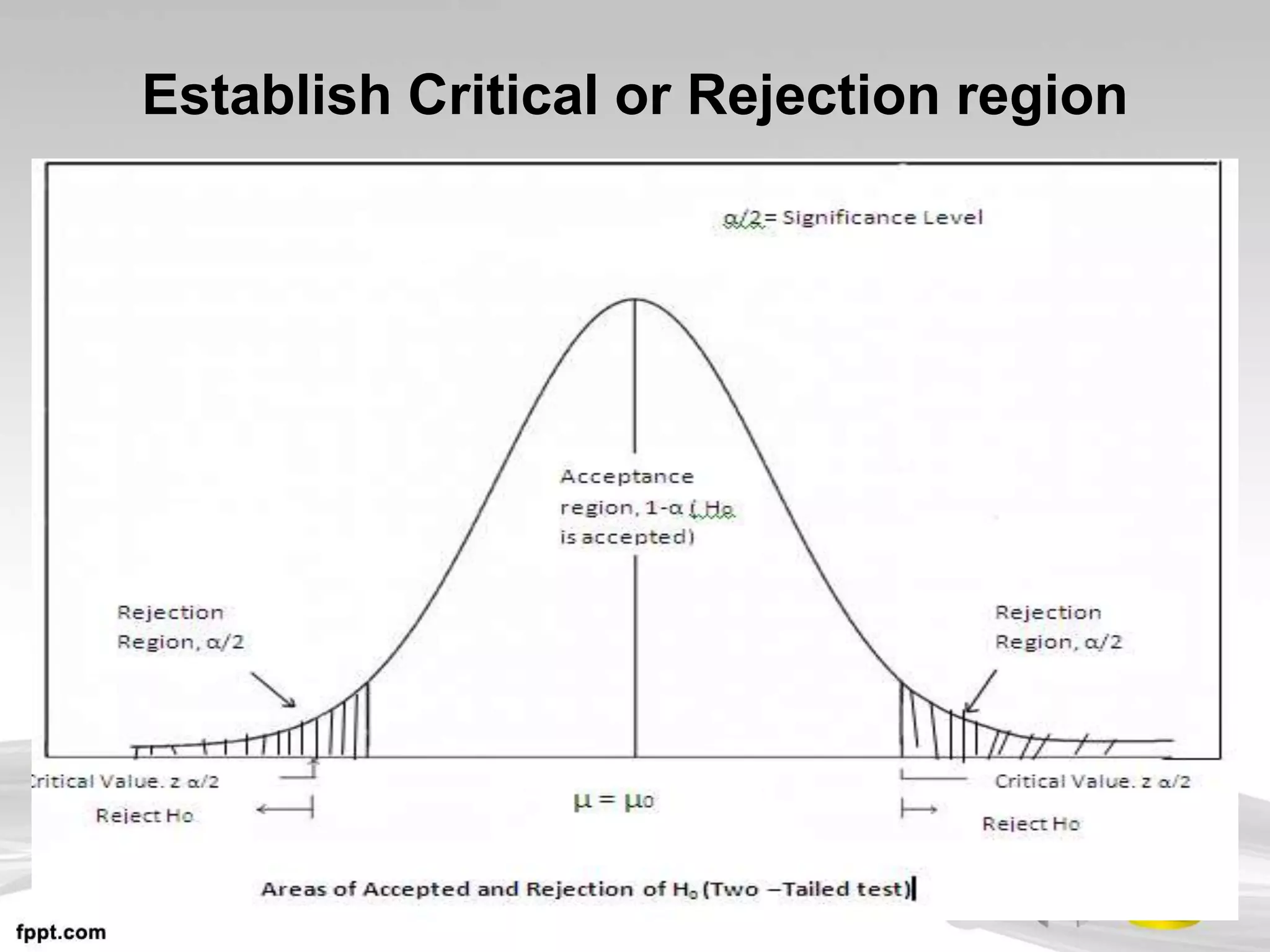
Establish Critical or Rejection region
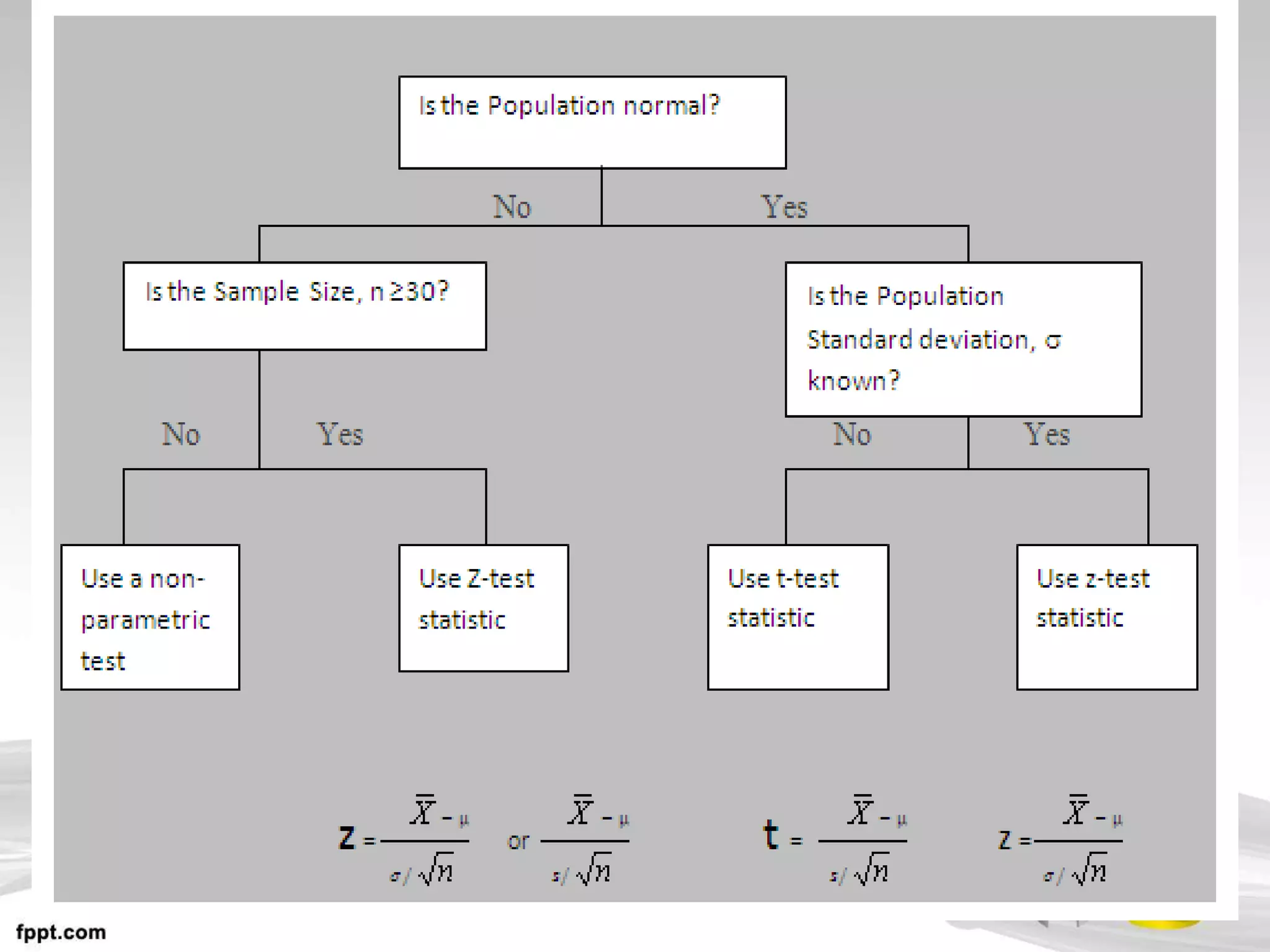
Select the Suitable Test of
significance or Test Statistic
• Whether the test involves one sample, two
samples, or samples?
• Whether two or more samples used are
independent or related?
• Is the measurement scale nominal,
ordinal, interval, or ratio?
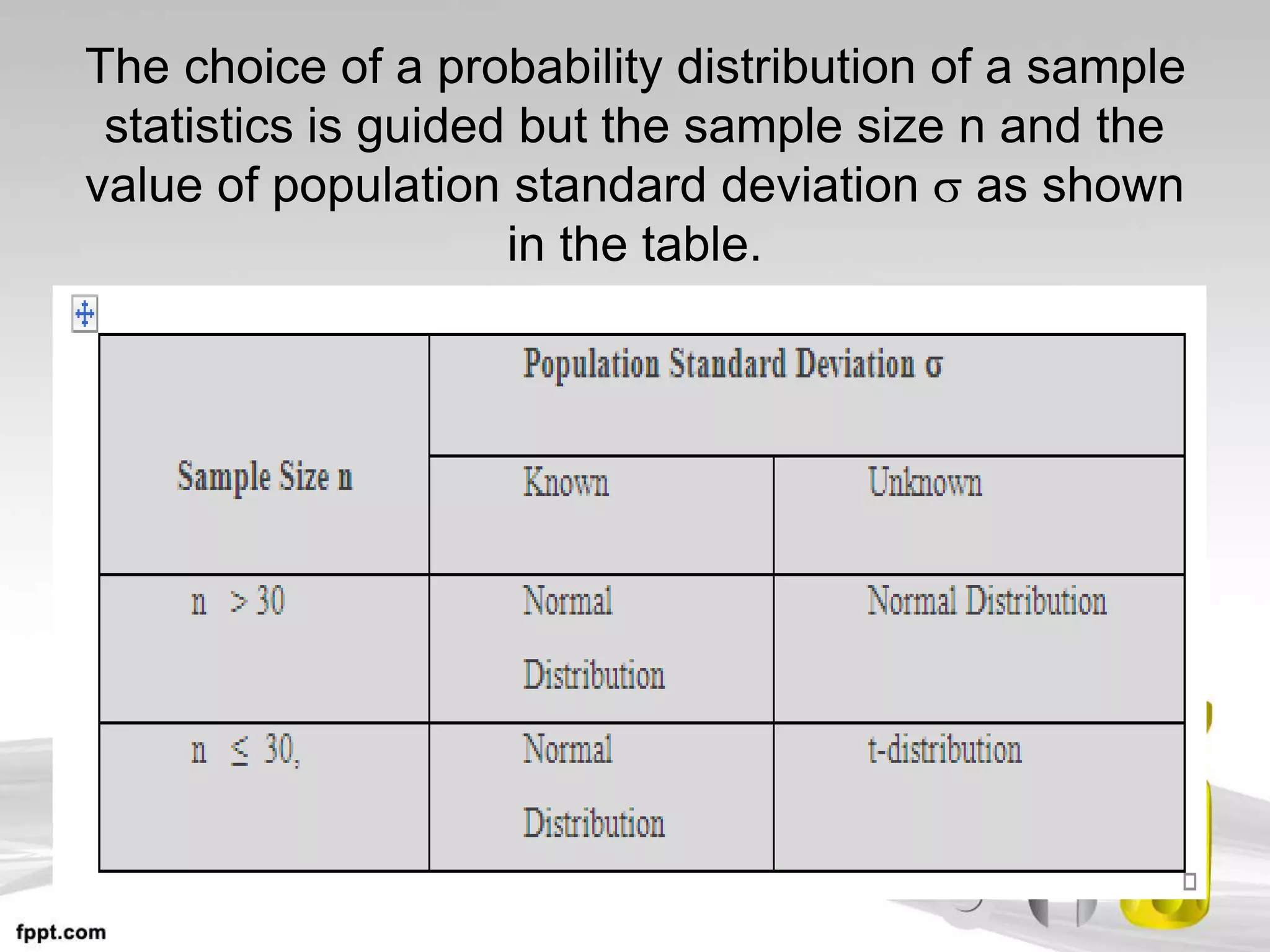
The choice of a probability distribution of a sample
statistics is guided but the sample size n and the
value of population standard deviation  as shown
in the table.
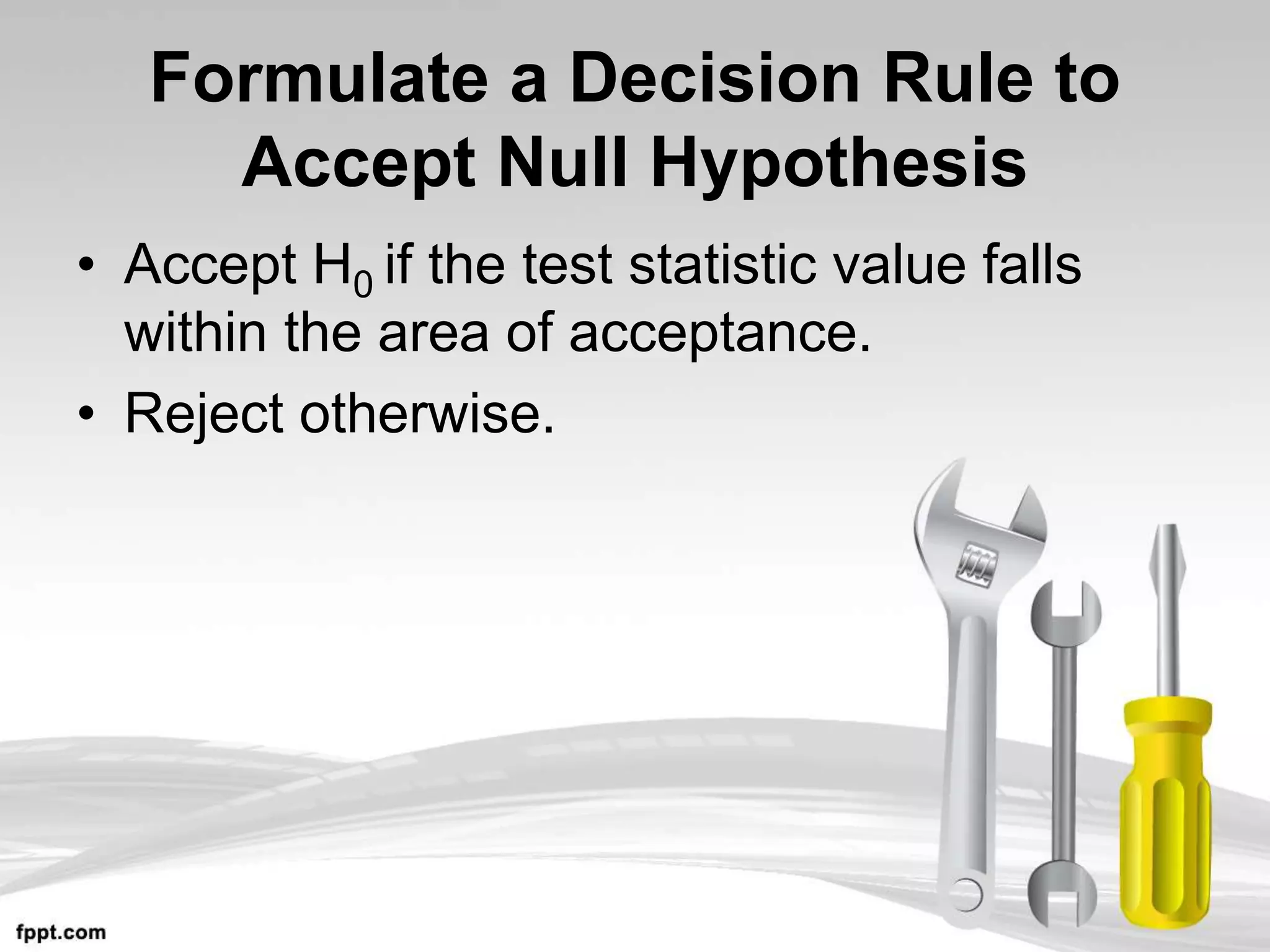
Formulate a Decision Rule to
Accept Null Hypothesis
• Accept H0 if the test statistic value falls
within the area of acceptance.
• Reject otherwise.
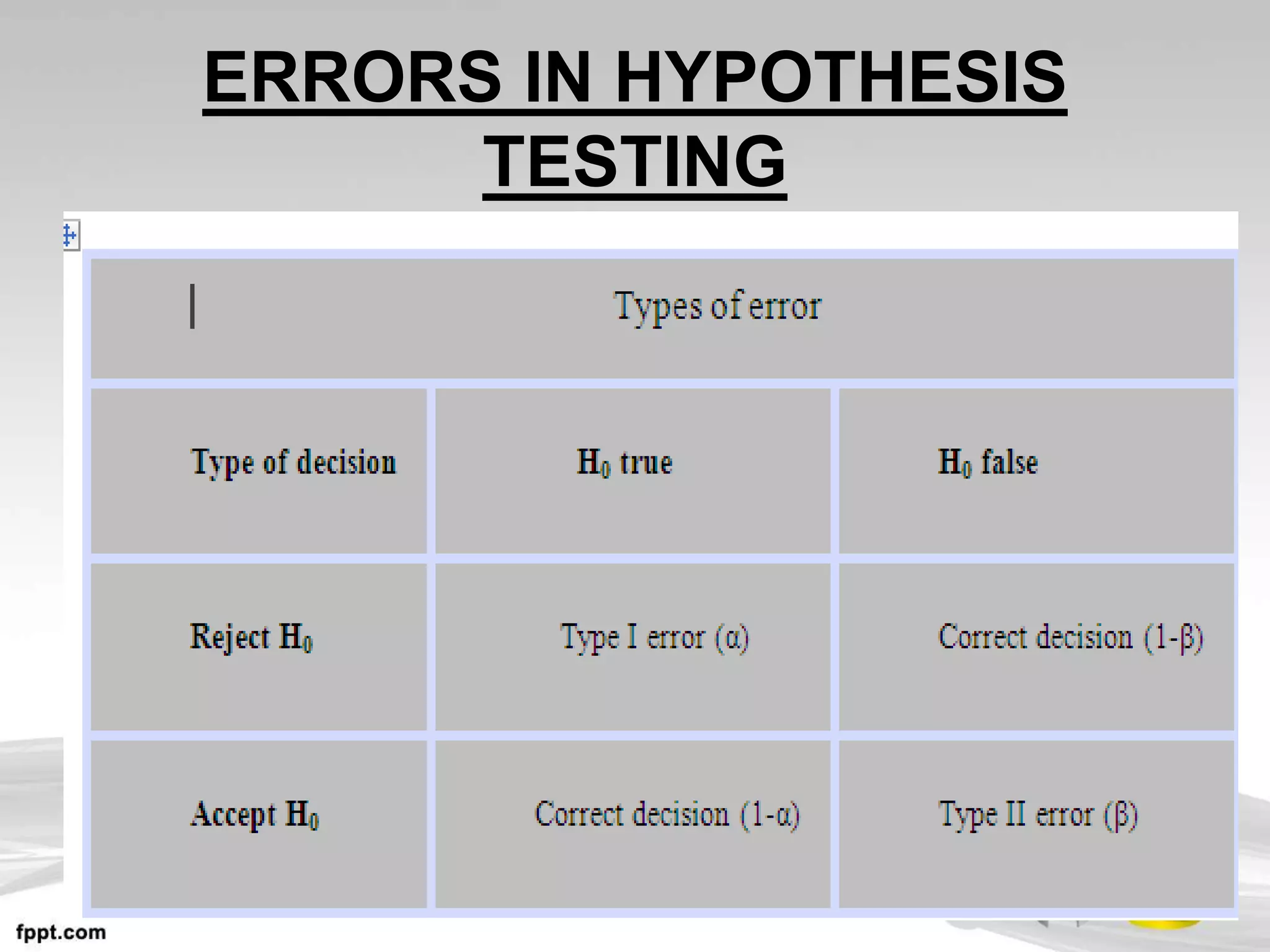
ERRORS IN HYPOTHESIS
TESTING
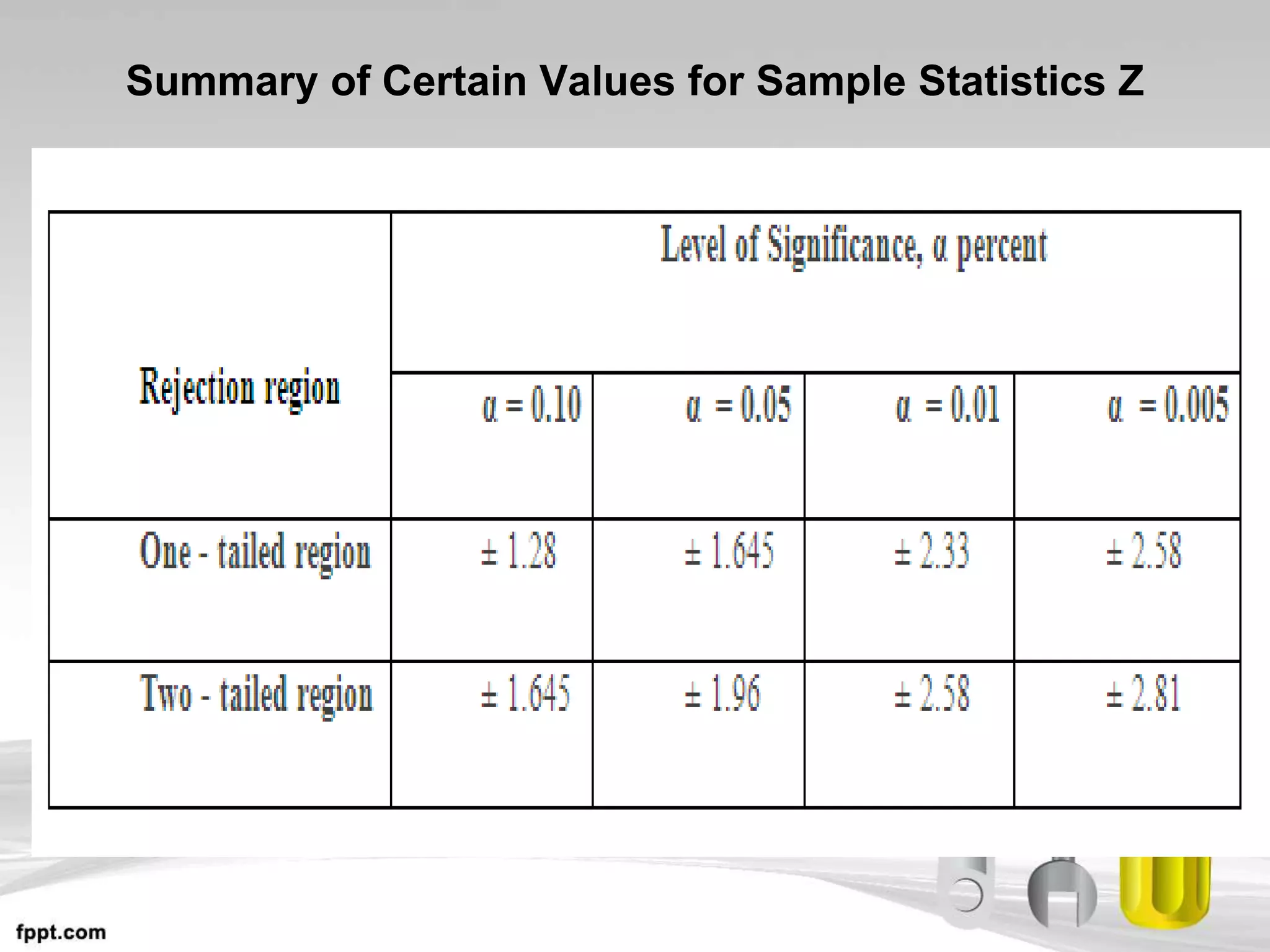
Summary of Certain Values for Sample Statistics Z
THANK YOU

Hypotheses testing

  • 1.
  • 2.
    Inferential Statistics • Inferentialstatistics to make judgments of the probability that an observed difference between groups is a dependable one or one that might have happened by chance.
  • 3.
    There are twomain methods used in inferential statistics: • Estimation & • Hypothesis testing
  • 4.
    What is Hypothesis •A Hypothesis is the statement or an assumption about relationships between variables. or • A Hypothesis is a tentative explanation for certain behaviors, phenomenon or events that have occurred or will occur.
  • 5.
    Interesting Hypothesis • Bankersassumed high-income earners are more profitable than low-income earners. • Old clients were more likely to diminish CD balances by large amounts compared to younger clients. This was nonintrusive because conventional wisdom suggested that older clients have a larger portfolio of assets and seek less risky investments
  • 6.
    Criteria for Hypothesis Construction •It should be empirically testable, whether it is right or wrong. • It should be specific and precise. • The statements in the hypothesis should not be contradictory. • It should specify variables between which the relationship is to be established. • It should describe one issue only.
  • 7.
  • 8.
    Types of Hypothesis •Null Hypothesis (H0) • Alternative Hypothesis (Ha or H1) Each of the following statements is an example of a null hypothesis and alternative hypothesis.
  • 9.
    Establish Critical orRejection region
  • 10.
    Select the SuitableTest of significance or Test Statistic • Whether the test involves one sample, two samples, or samples? • Whether two or more samples used are independent or related? • Is the measurement scale nominal, ordinal, interval, or ratio?
  • 11.
    The choice ofa probability distribution of a sample statistics is guided but the sample size n and the value of population standard deviation  as shown in the table.
  • 13.
    Formulate a DecisionRule to Accept Null Hypothesis • Accept H0 if the test statistic value falls within the area of acceptance. • Reject otherwise.
  • 14.
  • 15.
    Summary of CertainValues for Sample Statistics Z
  • 16.