HYPOMAGNESEMIA IN CRITICALLY
ILL MEDICAL PATIENTS
CS Limaye, VA Londhey, MY Nadkar, NE Borges
FROM JAPI JAN 2011

MODERATORDR. AJEET KR. CHAURASIYA
PRESENTED BY

VINEET MISHRA
Magnesium
 50% to 60% contained in bone
 4TH most common cation in the body
 Coenzyme in metabolism of protein and

carbohydrates
 Factors that regulate calcium balance appear to

influence magnesium balance
 Acts directly on myoneural junction
 Important for normal cardiac function
Low serum Mg caused by
 Prolonged fasting or starvation
 Shift: Pancreatitis, Insulin administration , Post-

parathyroidectomy
 Chronic alcoholism
 Fluid loss from gastrointestinal tract
 Prolonged parenteral nutrition without

supplementation
 Diuretics, aminoglycosides, cisplatinum, amphotericin
Manifestations
 Tremors, tetany , ↑ reflexes, paresthesias of feet and legs,

convulsions
 Positive Babinski , Chvostek and Trousseau signs
 Personality changes with agitation, depression or

confusion, hallucinations
 ECG changes (tall peaked , flat or inverted T waves ; ST

depression , U waves, voltage loss , wide QRS and
prolonged PR)
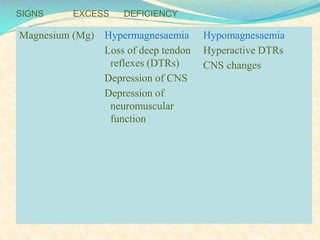
SIGNS

EXCESS

DEFICIENCY

Magnesium (Mg) Hypermagnesaemia
Loss of deep tendon
reflexes (DTRs)
Depression of CNS
Depression of
neuromuscular
function

Hypomagnesaemia
Hyperactive DTRs
CNS changes
BACKGROUND
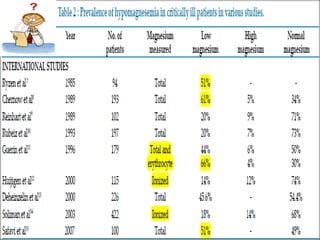
 Hypomagnesaemia is an important but

underdiagnosed electrolyte abnormality in critically ill
patients.
 There are many studies to find the prevalence of

hypomagnesaemia and its effects on mortality and
morbidity in these patients
 Studies have been carried out in intensive care units.




in respiratory intensive care unit
critically ill cancer patient
AIMS AND OBJECTIVES
• To study serum magnesium levels in critically ill patients
• To correlate serum magnesium levels with patient

outcome.
• To identify the primary medical conditions associated with
abnormalities of serum magnesium
• To identify the factors predisposing or contributing to
hypomagnesaemia in critically ill patients admitted in a
medical intensive care unit
• To detect other electrolyte abnormalities associated with
hypomagnesemia
PARAMETERS
 Length of stay in MICU
 Need for ventilatory support

 Duration of ventilatory support
 APACHE score

 Mortality
METHODOLOGY
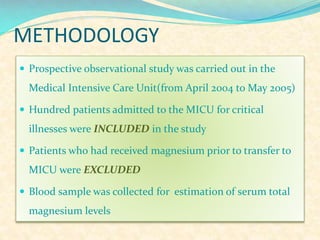
 Prospective observational study was carried out in the

Medical Intensive Care Unit(from April 2004 to May 2005)
 Hundred patients admitted to the MICU for critical

illnesses were INCLUDED in the study
 Patients who had received magnesium prior to transfer to

MICU were EXCLUDED
 Blood sample was collected for estimation of serum total

magnesium levels
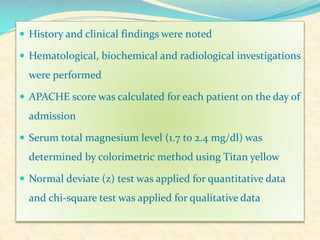
 History and clinical findings were noted
 Hematological, biochemical and radiological investigations

were performed
 APACHE score was calculated for each patient on the day of

admission
 Serum total magnesium level (1.7 to 2.4 mg/dl) was

determined by colorimetric method using Titan yellow
 Normal deviate (z) test was applied for quantitative data

and chi-square test was applied for qualitative data
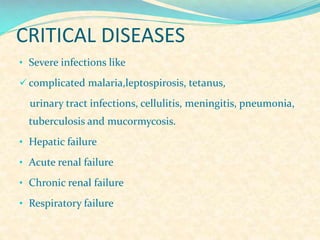
CRITICAL DISEASES
• Severe infections like
 complicated malaria,leptospirosis, tetanus,

urinary tract infections, cellulitis, meningitis, pneumonia,

tuberculosis and mucormycosis.
• Hepatic failure
• Acute renal failure

• Chronic renal failure
• Respiratory failure
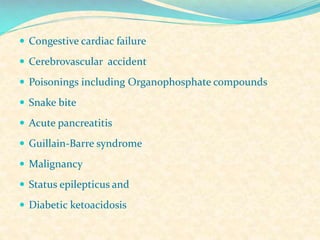
 Congestive cardiac failure
 Cerebrovascular accident
 Poisonings including Organophosphate compounds
 Snake bite
 Acute pancreatitis
 Guillain-Barre syndrome
 Malignancy

 Status epilepticus and
 Diabetic ketoacidosis
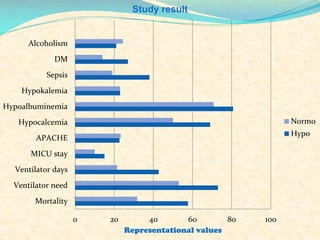
Study result

Alcoholism
DM
Sepsis
Hypokalemia
Hypoalbuminemia
Normo

Hypocalcemia

Hypo

APACHE

MICU stay
Ventilator days
Ventilator need
Mortality

0

20

40
60
80
Representational values

100
CONCLUSION
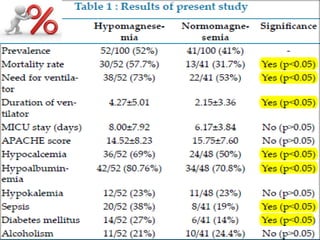
HYPOMAGNESEMIA AFFECTED/ASSOCIATED WITHHYPOCALCEMIA
HYPOALBUMINEMIA
VENTILATOR NEED
ON VENTILATOR DURATION

SEPSIS
DIABETES MELLITUS
MORTALITY
CONCLUSION CONTD. . . . .
HYPOMAGNESEMIA NOT AFFECTED/ASSOCIATED
WITHMICU STAY
APACHE II SCORE
HYPOKALEMIA
ALCOHOLISM (CHRONIC)
SUMMARY
 Hypomagnesaemia is a common electrolyte imbalance

in the critically ill patients.
 Whether hypomagnesaemia directly contributes to
cellular alterations leading to increased mortality,
morbidity and poor patient outcome in critically ill
patients or it is just a marker of critical illness is not
clear.
 Hypomagnesaemia is associated with higher mortality
rate in critically ill patients and is also associated with
more frequent and more prolonged ventilatory
support.
 It was seen in this study that hypomagnesaemia is

frequently associated with sepsis and diabetes
mellitus.
 Although there was a high incidence of
hypomagnesaemia in the present study, its correction
after magnesium supplementation was not included as
a part of the study.
 The potential benefit of magnesium supplementation
to prevent or correct hypomagnesaemia in critically ill
patients requires further study.
MAGNESIUM ESTIMATION
 Specimen: non-hemolyzed serum or lithium heparin








plasma used. EDTA and citrate bind to the Mg.
24hr urine may be used and should be acidified to avoid
Ppt.
Colorimetric method/photometric[TITAN YELLOW]: Mg
binds to calmagite, formazen dye and methylthymol blue
to form a chromogen that is measure at 532- 600nm.
Ca2+ should be eliminated from the sample
AAS- absorbance at 285.2nm
ISE- free Mg with neutral carrier inonophores
TAKE HOME MESSAGE
Hypomagnesaemia is NOT A RARE
electrolyte abnormality in critically
ill patients.
Hypomagnesemia should NOT be
misdiagnosed as Hypokalemia.
It should be ordered with Na, K
and Ca serum levels.
REMEMBER HYPOMAGNESEMIA
TOO !!
Hypomagnesemia in critically ill patients

Hypomagnesemia in critically ill patients

  • 1.
    HYPOMAGNESEMIA IN CRITICALLY ILLMEDICAL PATIENTS CS Limaye, VA Londhey, MY Nadkar, NE Borges FROM JAPI JAN 2011 MODERATORDR. AJEET KR. CHAURASIYA PRESENTED BY VINEET MISHRA
  • 4.
    Magnesium  50% to60% contained in bone  4TH most common cation in the body  Coenzyme in metabolism of protein and carbohydrates  Factors that regulate calcium balance appear to influence magnesium balance  Acts directly on myoneural junction  Important for normal cardiac function
  • 5.
    Low serum Mgcaused by  Prolonged fasting or starvation  Shift: Pancreatitis, Insulin administration , Post- parathyroidectomy  Chronic alcoholism  Fluid loss from gastrointestinal tract  Prolonged parenteral nutrition without supplementation  Diuretics, aminoglycosides, cisplatinum, amphotericin
  • 6.
    Manifestations  Tremors, tetany, ↑ reflexes, paresthesias of feet and legs, convulsions  Positive Babinski , Chvostek and Trousseau signs  Personality changes with agitation, depression or confusion, hallucinations  ECG changes (tall peaked , flat or inverted T waves ; ST depression , U waves, voltage loss , wide QRS and prolonged PR)
  • 7.
    SIGNS EXCESS DEFICIENCY Magnesium (Mg) Hypermagnesaemia Lossof deep tendon reflexes (DTRs) Depression of CNS Depression of neuromuscular function Hypomagnesaemia Hyperactive DTRs CNS changes
  • 8.
    BACKGROUND  Hypomagnesaemia isan important but underdiagnosed electrolyte abnormality in critically ill patients.  There are many studies to find the prevalence of hypomagnesaemia and its effects on mortality and morbidity in these patients  Studies have been carried out in intensive care units.   in respiratory intensive care unit critically ill cancer patient
  • 10.
    AIMS AND OBJECTIVES •To study serum magnesium levels in critically ill patients • To correlate serum magnesium levels with patient outcome. • To identify the primary medical conditions associated with abnormalities of serum magnesium • To identify the factors predisposing or contributing to hypomagnesaemia in critically ill patients admitted in a medical intensive care unit • To detect other electrolyte abnormalities associated with hypomagnesemia
  • 11.
    PARAMETERS  Length ofstay in MICU  Need for ventilatory support  Duration of ventilatory support  APACHE score  Mortality
  • 12.
    METHODOLOGY  Prospective observationalstudy was carried out in the Medical Intensive Care Unit(from April 2004 to May 2005)  Hundred patients admitted to the MICU for critical illnesses were INCLUDED in the study  Patients who had received magnesium prior to transfer to MICU were EXCLUDED  Blood sample was collected for estimation of serum total magnesium levels
  • 13.
     History andclinical findings were noted  Hematological, biochemical and radiological investigations were performed  APACHE score was calculated for each patient on the day of admission  Serum total magnesium level (1.7 to 2.4 mg/dl) was determined by colorimetric method using Titan yellow  Normal deviate (z) test was applied for quantitative data and chi-square test was applied for qualitative data
  • 14.
    CRITICAL DISEASES • Severeinfections like  complicated malaria,leptospirosis, tetanus, urinary tract infections, cellulitis, meningitis, pneumonia, tuberculosis and mucormycosis. • Hepatic failure • Acute renal failure • Chronic renal failure • Respiratory failure
  • 15.
     Congestive cardiacfailure  Cerebrovascular accident  Poisonings including Organophosphate compounds  Snake bite  Acute pancreatitis  Guillain-Barre syndrome  Malignancy  Status epilepticus and  Diabetic ketoacidosis
  • 17.
  • 18.
    CONCLUSION HYPOMAGNESEMIA AFFECTED/ASSOCIATED WITHHYPOCALCEMIA HYPOALBUMINEMIA VENTILATORNEED ON VENTILATOR DURATION SEPSIS DIABETES MELLITUS MORTALITY
  • 19.
    CONCLUSION CONTD. .. . . HYPOMAGNESEMIA NOT AFFECTED/ASSOCIATED WITHMICU STAY APACHE II SCORE HYPOKALEMIA ALCOHOLISM (CHRONIC)
  • 20.
    SUMMARY  Hypomagnesaemia isa common electrolyte imbalance in the critically ill patients.  Whether hypomagnesaemia directly contributes to cellular alterations leading to increased mortality, morbidity and poor patient outcome in critically ill patients or it is just a marker of critical illness is not clear.  Hypomagnesaemia is associated with higher mortality rate in critically ill patients and is also associated with more frequent and more prolonged ventilatory support.
  • 21.
     It wasseen in this study that hypomagnesaemia is frequently associated with sepsis and diabetes mellitus.  Although there was a high incidence of hypomagnesaemia in the present study, its correction after magnesium supplementation was not included as a part of the study.  The potential benefit of magnesium supplementation to prevent or correct hypomagnesaemia in critically ill patients requires further study.
  • 22.
    MAGNESIUM ESTIMATION  Specimen:non-hemolyzed serum or lithium heparin      plasma used. EDTA and citrate bind to the Mg. 24hr urine may be used and should be acidified to avoid Ppt. Colorimetric method/photometric[TITAN YELLOW]: Mg binds to calmagite, formazen dye and methylthymol blue to form a chromogen that is measure at 532- 600nm. Ca2+ should be eliminated from the sample AAS- absorbance at 285.2nm ISE- free Mg with neutral carrier inonophores
  • 23.
    TAKE HOME MESSAGE Hypomagnesaemiais NOT A RARE electrolyte abnormality in critically ill patients. Hypomagnesemia should NOT be misdiagnosed as Hypokalemia. It should be ordered with Na, K and Ca serum levels. REMEMBER HYPOMAGNESEMIA TOO !!

Editor's Notes

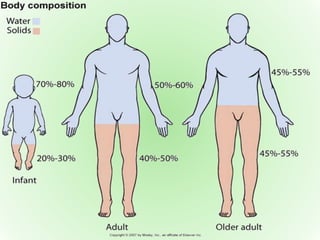
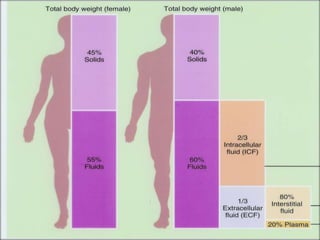
  • #5 As we can see the fluid percentage decreases with the age and also lesser in females
  • #6 Trans cellular fluidcsf,synovial,connectiv tissue etc