Hypoadrenalism – Case Presentation
Dr. Adam Stokes
ST4 in Anaesthesia & ICM
24th February 2015
Overview
1.  Case Presentation
2.  Adrenal Physiology
3.  Hypoadrenalism
1.  Causes
2.  Clinical Features
3.  Diagnosis
4.  Treatment
Case Presentation -
Background
!  40 year old man
!  PMH: Subclinical hypothyroidism (2008) – not on
replacement
!  Admission Sept 2014 with right flank pain, no
cause found
!  DH: Nil regular, NKDA.
!  SH: Non-smoker, occasional alcohol, worked up
until last 2 weeks, living with parents.
Case Presentation
!  Presentation
!  1/12 Hx of lethargy, weakness, muscular spasms
!  1/52 Hx of nausea and vomiting, hiccups
!  2-3/7 Hx of repeated vomiting, occasionally blood
tinged, patient reports feeling “slow”
!  Saw GP 2/7 ago- plan for bloods and f/u, but
parents concerned and rang 111, who advised 999.
Case Presentation
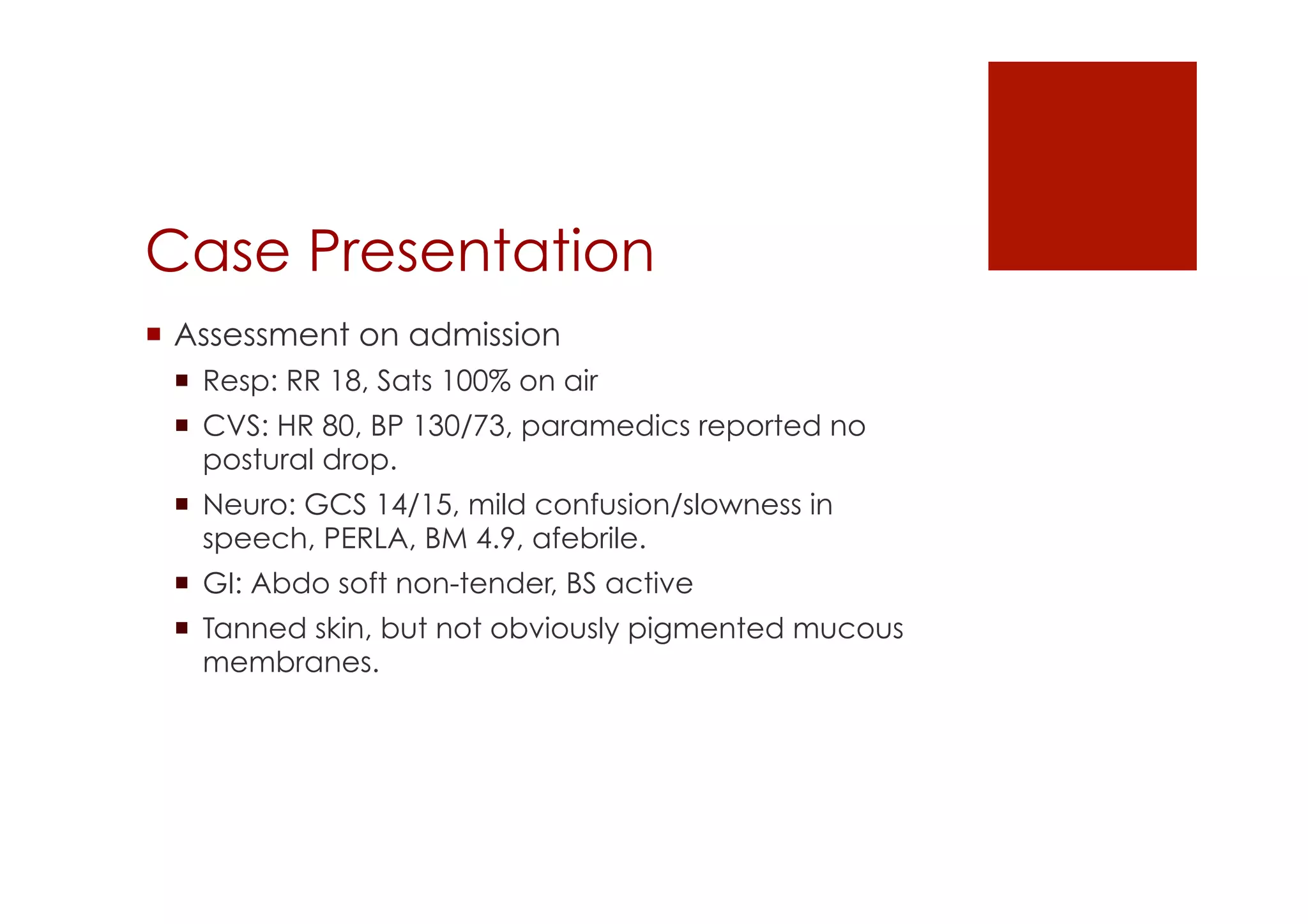
!  Assessment on admission
!  Resp: RR 18, Sats 100% on air
!  CVS: HR 80, BP 130/73, paramedics reported no
postural drop.
!  Neuro: GCS 14/15, mild confusion/slowness in
speech, PERLA, BM 4.9, afebrile.
!  GI: Abdo soft non-tender, BS active
!  Tanned skin, but not obviously pigmented mucous
membranes.
Case Presentation
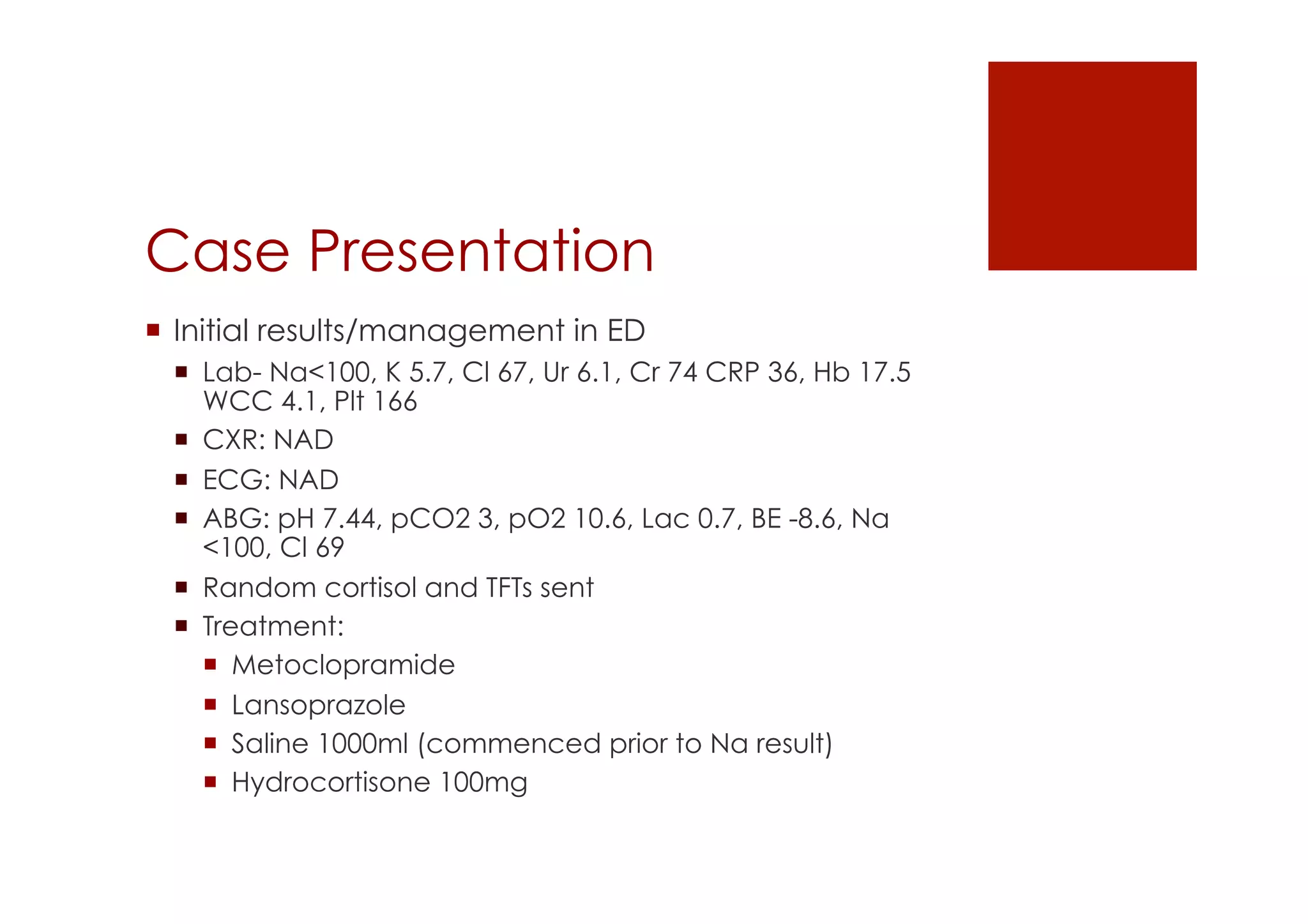
!  Initial results/management in ED
!  Lab- Na<100, K 5.7, Cl 67, Ur 6.1, Cr 74 CRP 36, Hb 17.5
WCC 4.1, Plt 166
!  CXR: NAD
!  ECG: NAD
!  ABG: pH 7.44, pCO2 3, pO2 10.6, Lac 0.7, BE -8.6, Na
<100, Cl 69
!  Random cortisol and TFTs sent
!  Treatment:
!  Metoclopramide
!  Lansoprazole
!  Saline 1000ml (commenced prior to Na result)
!  Hydrocortisone 100mg
Case Presentation
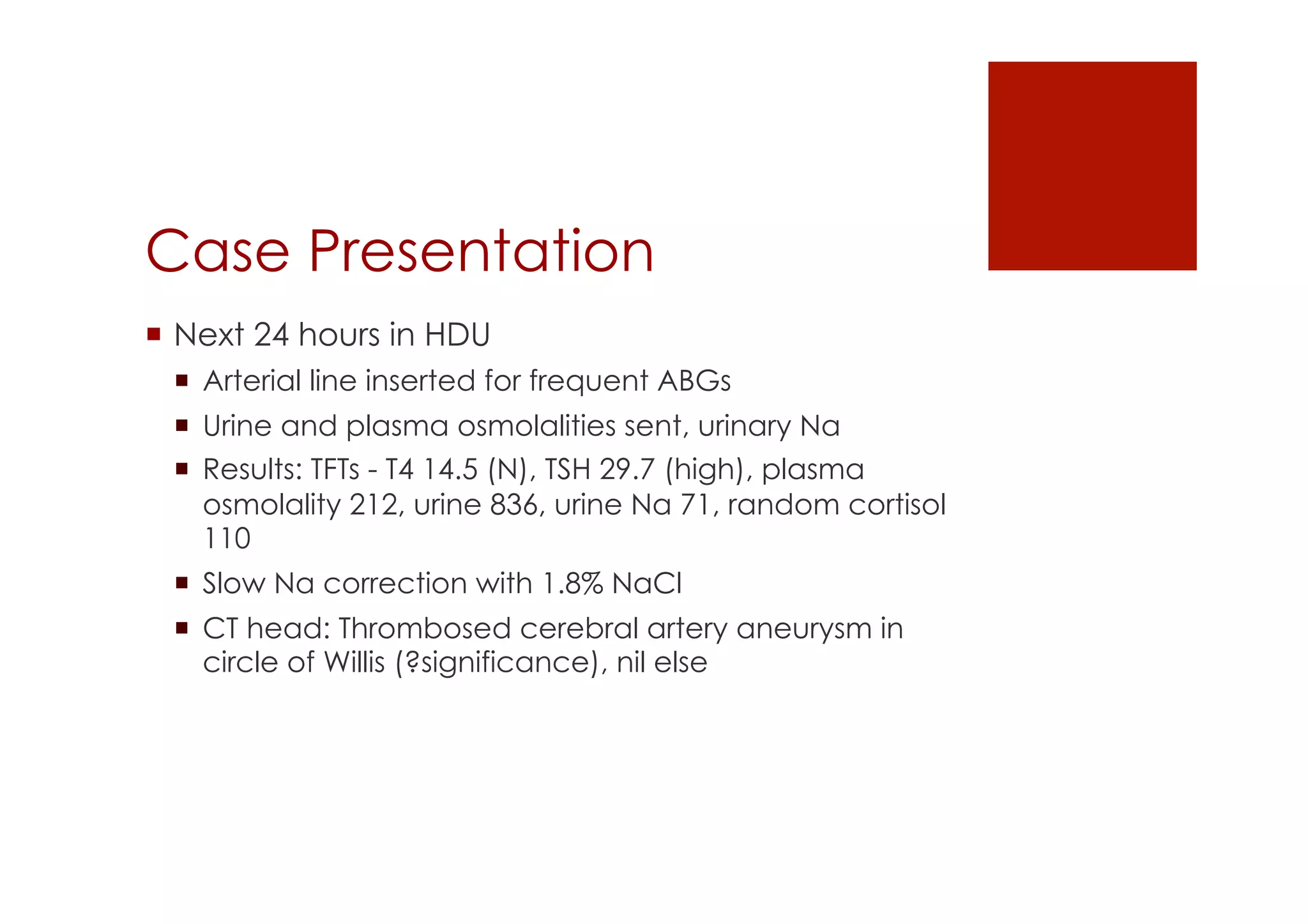
!  Next 24 hours in HDU
!  Arterial line inserted for frequent ABGs
!  Urine and plasma osmolalities sent, urinary Na
!  Results: TFTs - T4 14.5 (N), TSH 29.7 (high), plasma
osmolality 212, urine 836, urine Na 71, random cortisol
110
!  Slow Na correction with 1.8% NaCl
!  CT head: Thrombosed cerebral artery aneurysm in
circle of Willis (?significance), nil else
Case Presentation
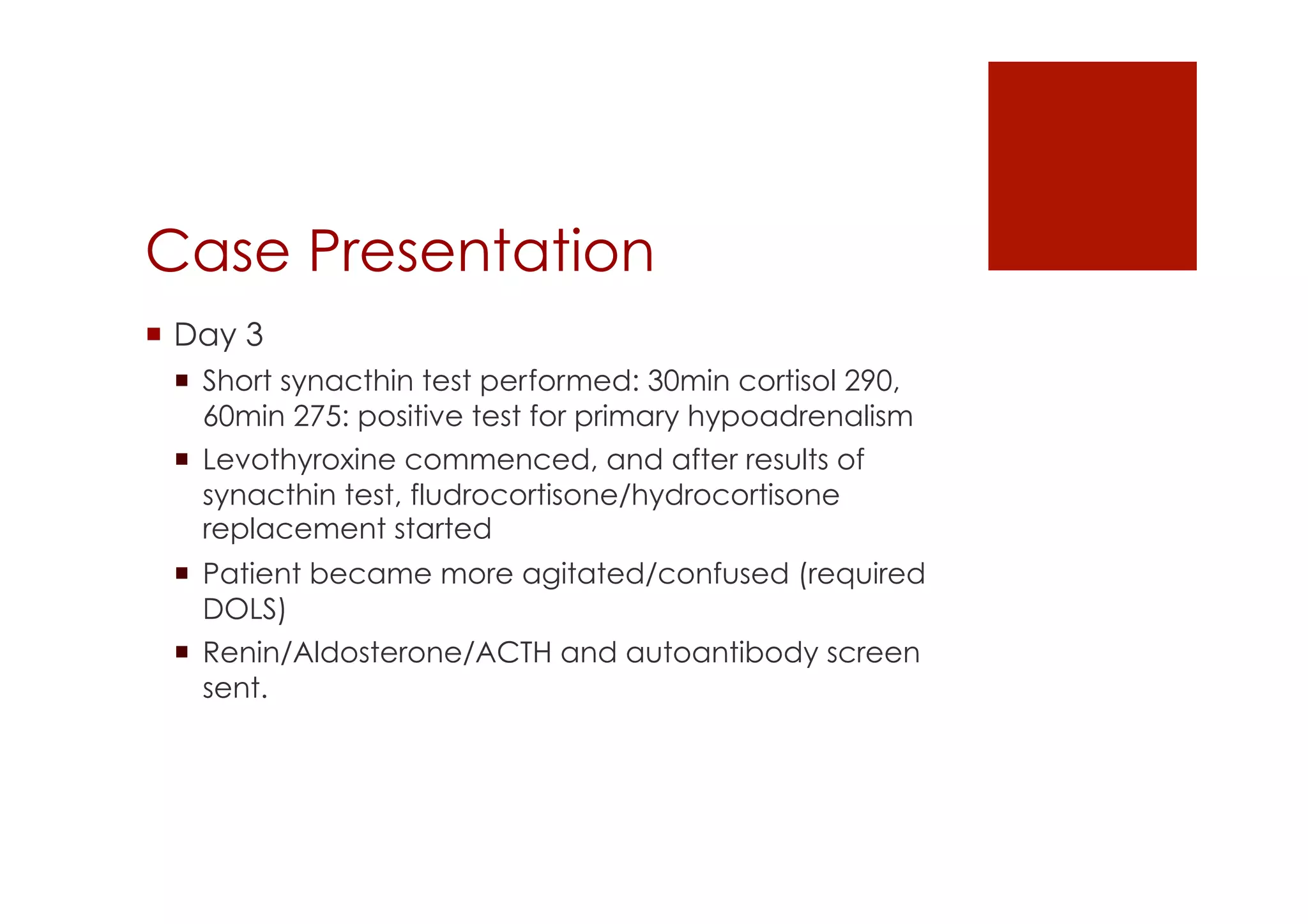
!  Day 3
!  Short synacthin test performed: 30min cortisol 290,
60min 275: positive test for primary hypoadrenalism
!  Levothyroxine commenced, and after results of
synacthin test, fludrocortisone/hydrocortisone
replacement started
!  Patient became more agitated/confused (required
DOLS)
!  Renin/Aldosterone/ACTH and autoantibody screen
sent.
Case Presentation
!  Days 4 -10
!  Gradual improvement in mental condition and
weakness with Na up to 130
!  CT head discussed with Neuro SGH- probably incidental
but will f/u in due course
!  Discharged with f/u in Endo clinic in 2/52
!  Results:
!  ACTH high.
!  Renin high.
!  Aldosterone normal.
!  Thyroid autoantibodies positive.
!  Adrenal autoantibodies weakly positive.
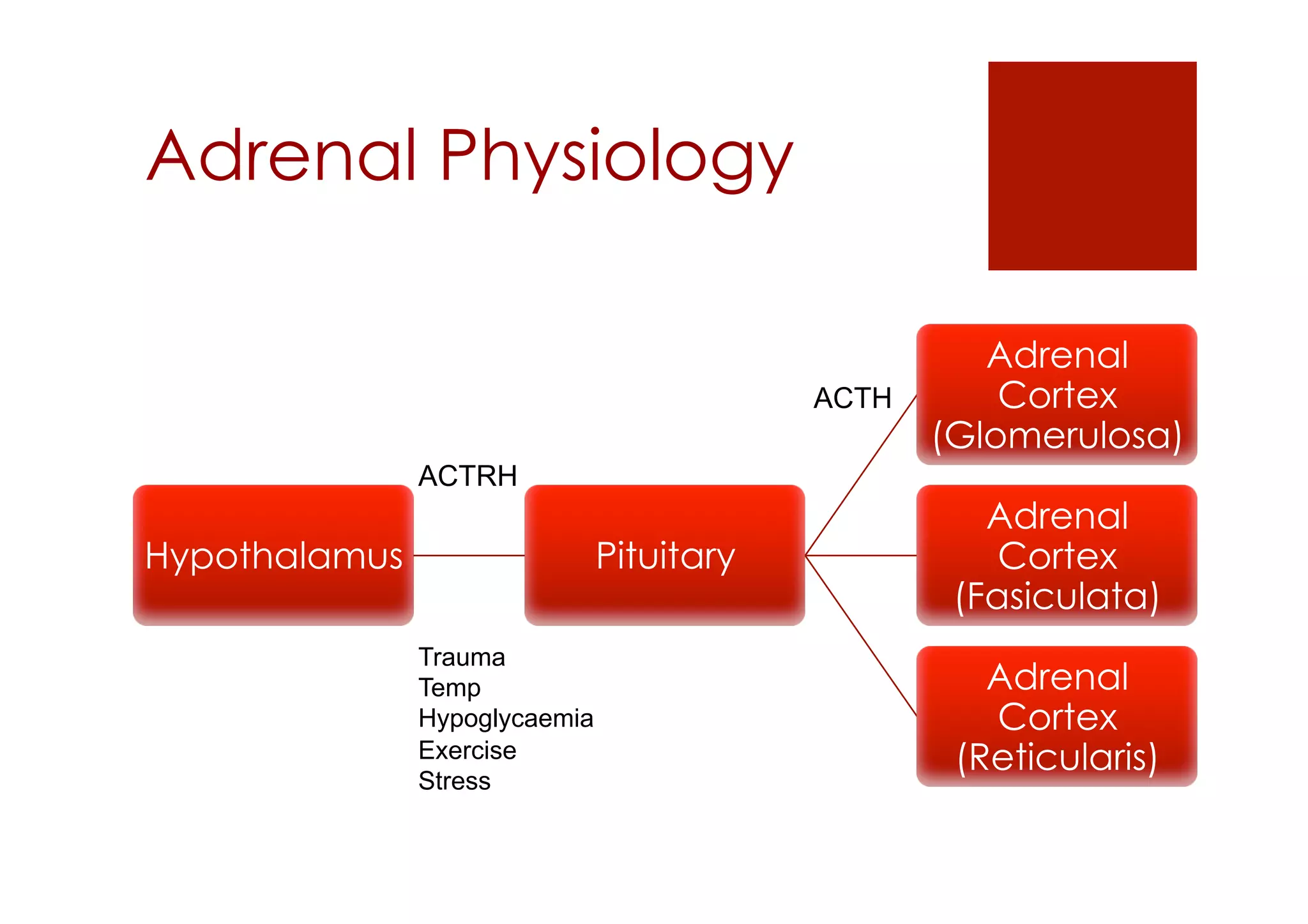
Adrenal Physiology
Hypothalamus Pituitary
Adrenal
Cortex
(Glomerulosa)
Adrenal
Cortex
(Fasiculata)
Adrenal
Cortex
(Reticularis)
ACTRH
ACTH
Trauma
Temp
Hypoglycaemia
Exercise
Stress
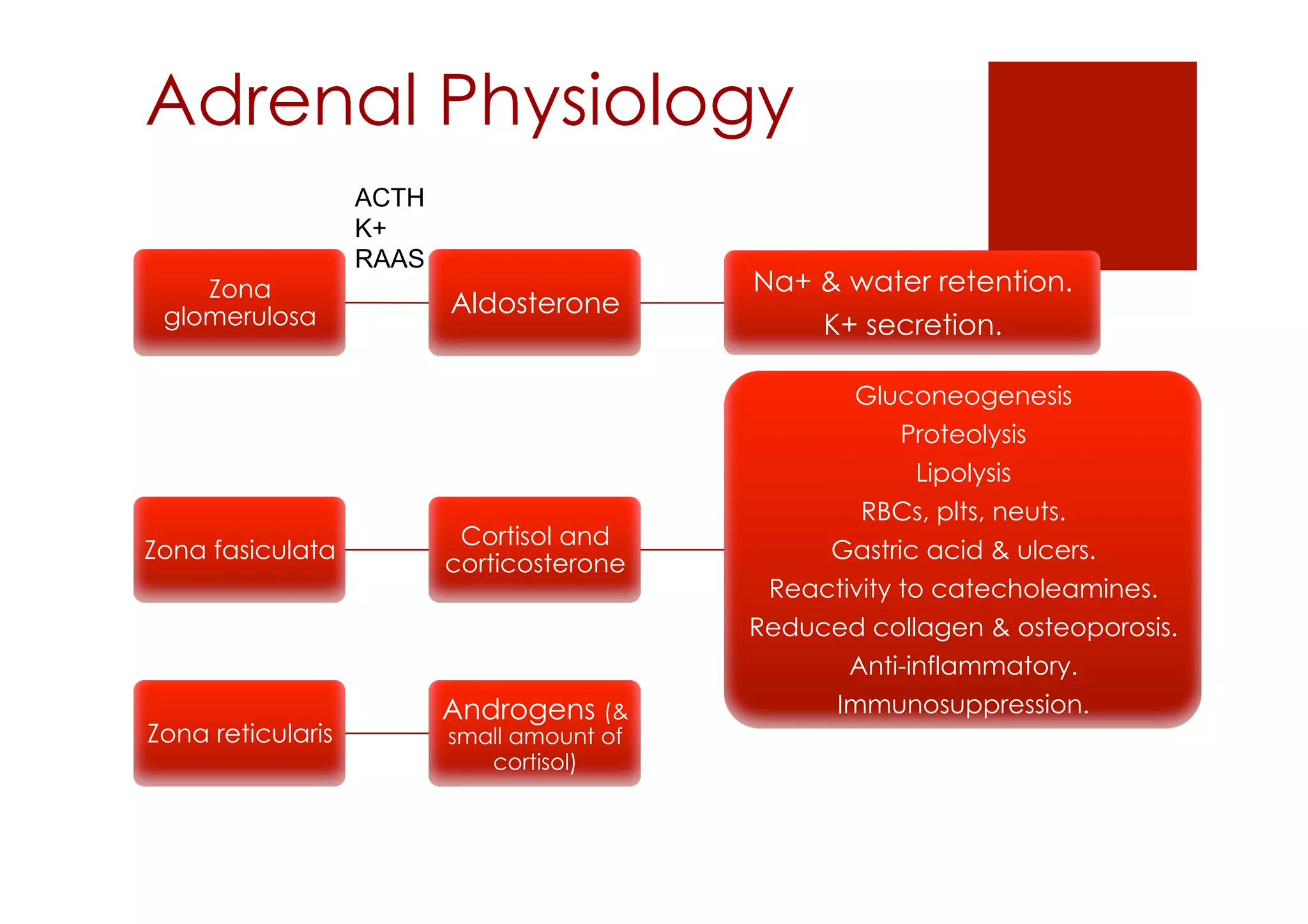
Adrenal Physiology
Zona
glomerulosa Aldosterone
Na+ & water retention.
K+ secretion.
Zona fasiculata
Cortisol and
corticosterone
Gluconeogenesis
Proteolysis
Lipolysis
RBCs, plts, neuts.
Gastric acid & ulcers.
Reactivity to catecholeamines.
Reduced collagen & osteoporosis.
Anti-inflammatory.
Immunosuppression.
Zona reticularis
Androgens (&
small amount of
cortisol)
ACTH
K+
RAAS
Hypoadrenalism
!  Causes
!  Clinical features
!  Diagnosis
!  Treatment
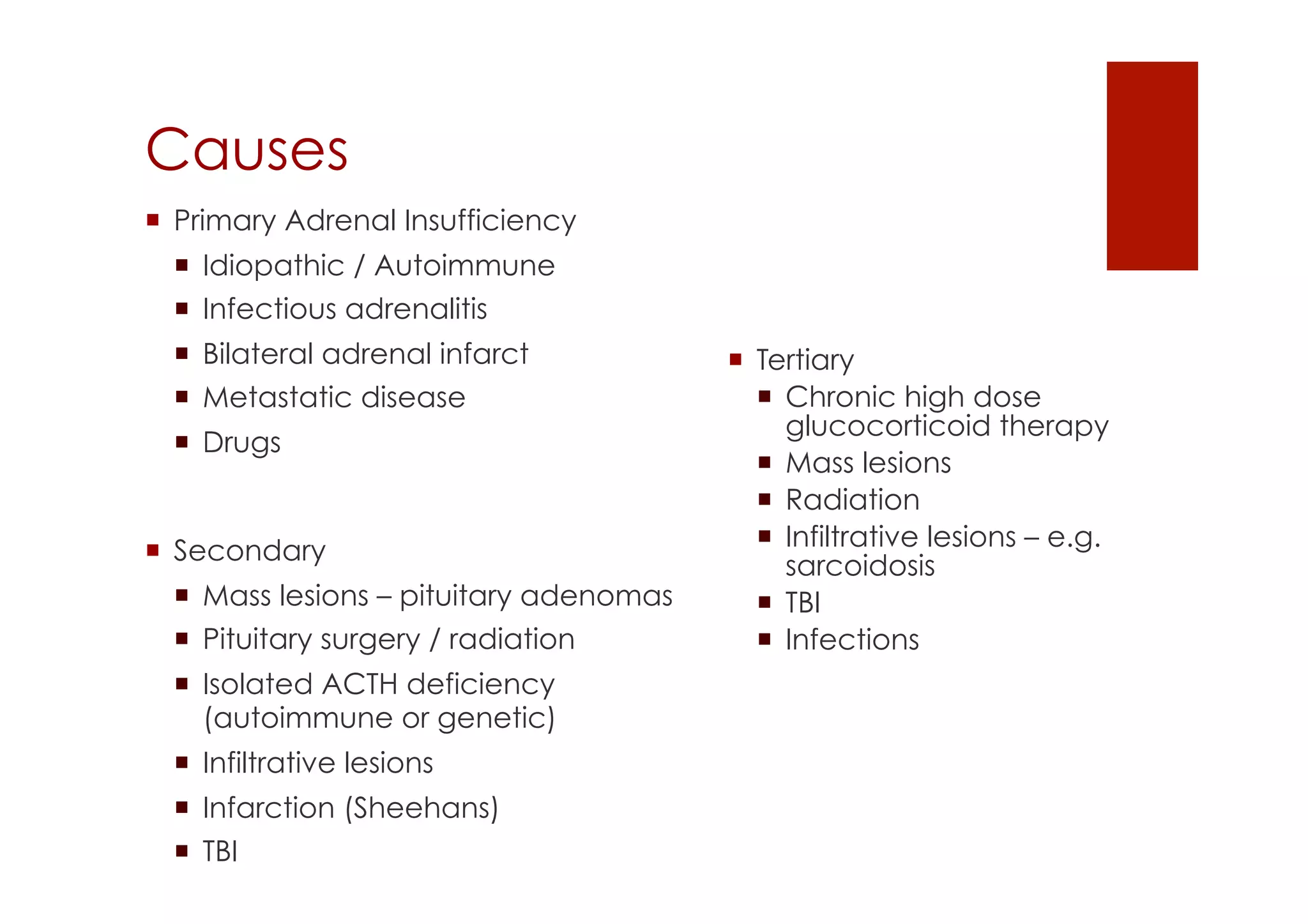
Causes
!  Secondary
!  Mass lesions – pituitary adenomas
!  Pituitary surgery / radiation
!  Isolated ACTH deficiency
(autoimmune or genetic)
!  Infiltrative lesions
!  Infarction (Sheehans)
!  TBI
!  Tertiary
!  Chronic high dose
glucocorticoid therapy
!  Mass lesions
!  Radiation
!  Infiltrative lesions – e.g.
sarcoidosis
!  TBI
!  Infections
!  Primary Adrenal Insufficiency
!  Idiopathic / Autoimmune
!  Infectious adrenalitis
!  Bilateral adrenal infarct
!  Metastatic disease
!  Drugs
Clinical Features
!  Depends on rate & extent of loss of adrenal
function, whether mineralocorticoid production is
preserved and degree of stress.
!  Adrenal crisis
!  Chronic primary adrenal insufficiency
!  Secondary or tertiary adrenal insufficiency
Clinical Features
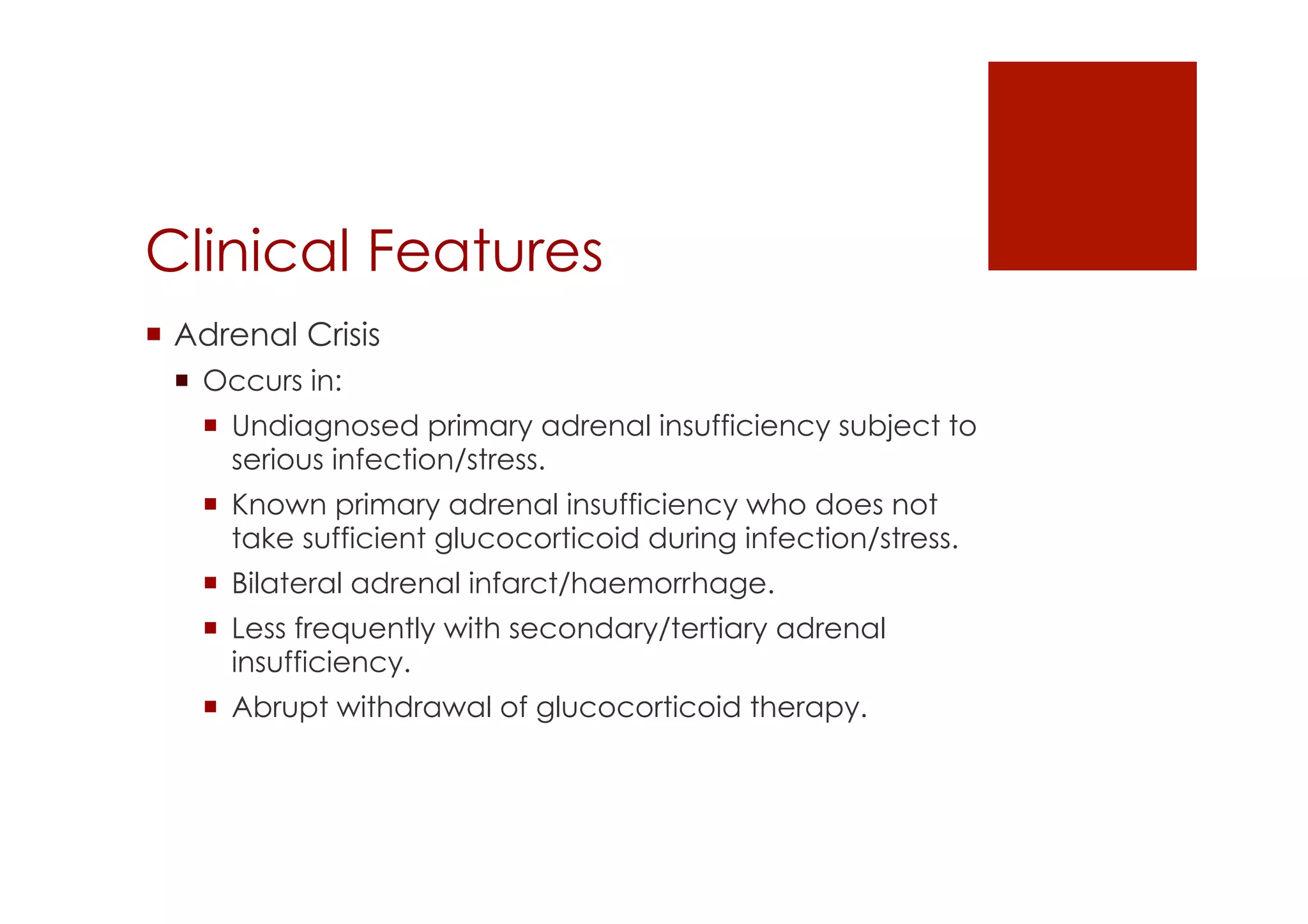
!  Adrenal Crisis
!  Occurs in:
!  Undiagnosed primary adrenal insufficiency subject to
serious infection/stress.
!  Known primary adrenal insufficiency who does not
take sufficient glucocorticoid during infection/stress.
!  Bilateral adrenal infarct/haemorrhage.
!  Less frequently with secondary/tertiary adrenal
insufficiency.
!  Abrupt withdrawal of glucocorticoid therapy.
Clinical Features
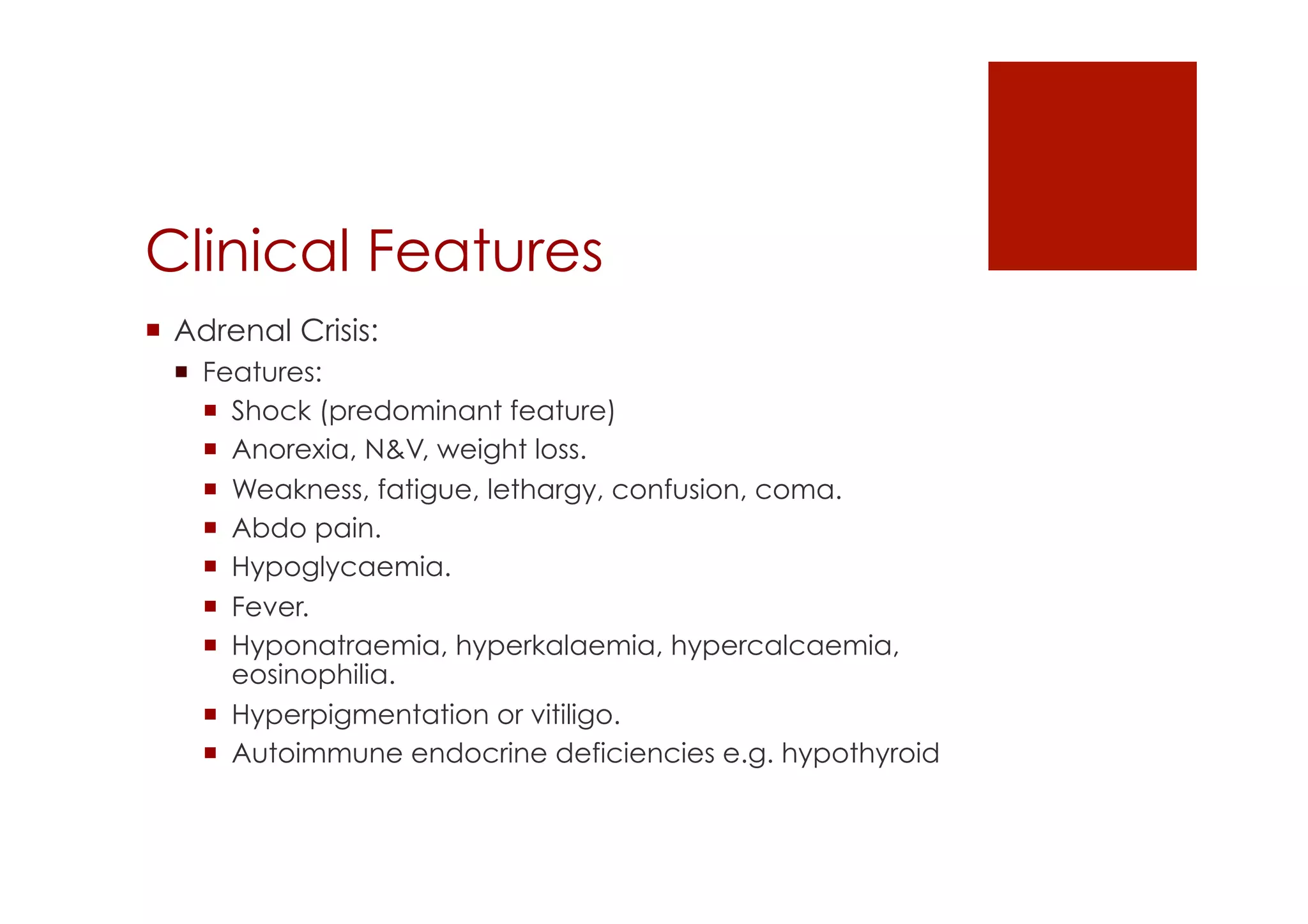
!  Adrenal Crisis:
!  Features:
!  Shock (predominant feature)
!  Anorexia, N&V, weight loss.
!  Weakness, fatigue, lethargy, confusion, coma.
!  Abdo pain.
!  Hypoglycaemia.
!  Fever.
!  Hyponatraemia, hyperkalaemia, hypercalcaemia,
eosinophilia.
!  Hyperpigmentation or vitiligo.
!  Autoimmune endocrine deficiencies e.g. hypothyroid
Clinical Features
!  Chronic Primary Adrenal Insufficiency
!  May have features of glucocorticoid,
mineralocorticoid and androgen deficiency.
!  Insidious onset
!  Non-specific features.
!  Difficult to diagnose.
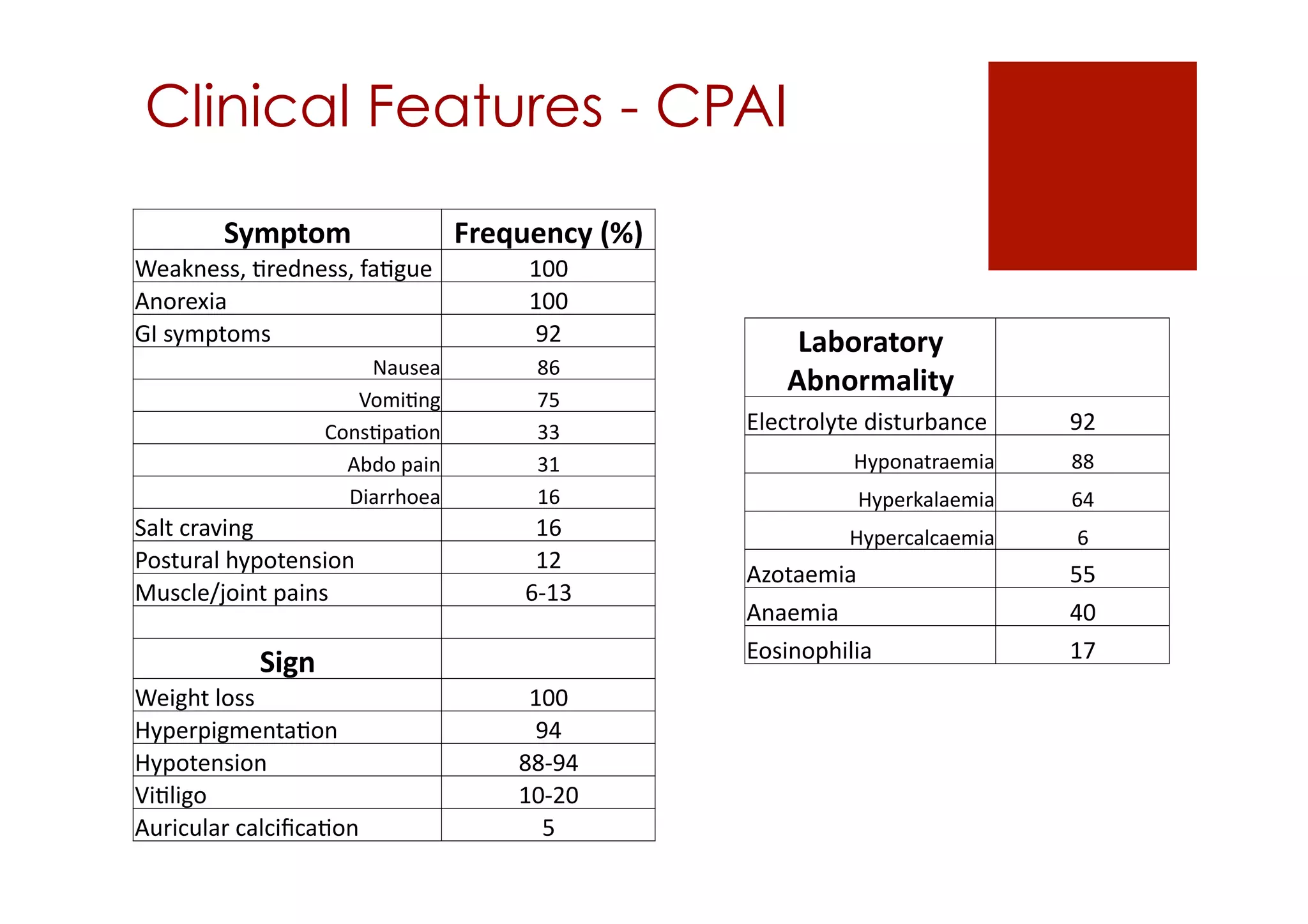
Clinical Features - CPAI
Symptom	
   Frequency	
  (%)	
  
Weakness,	
  )redness,	
  fa)gue	
   100	
  
Anorexia	
   100	
  
GI	
  symptoms	
   92	
  
Nausea	
   86	
  
Vomi)ng	
   75	
  
Cons)pa)on	
   33	
  
Abdo	
  pain	
   31	
  
Diarrhoea	
   16	
  
Salt	
  craving	
   16	
  
Postural	
  hypotension	
   12	
  
Muscle/joint	
  pains	
   6-­‐13	
  
Sign	
  
Weight	
  loss	
   100	
  
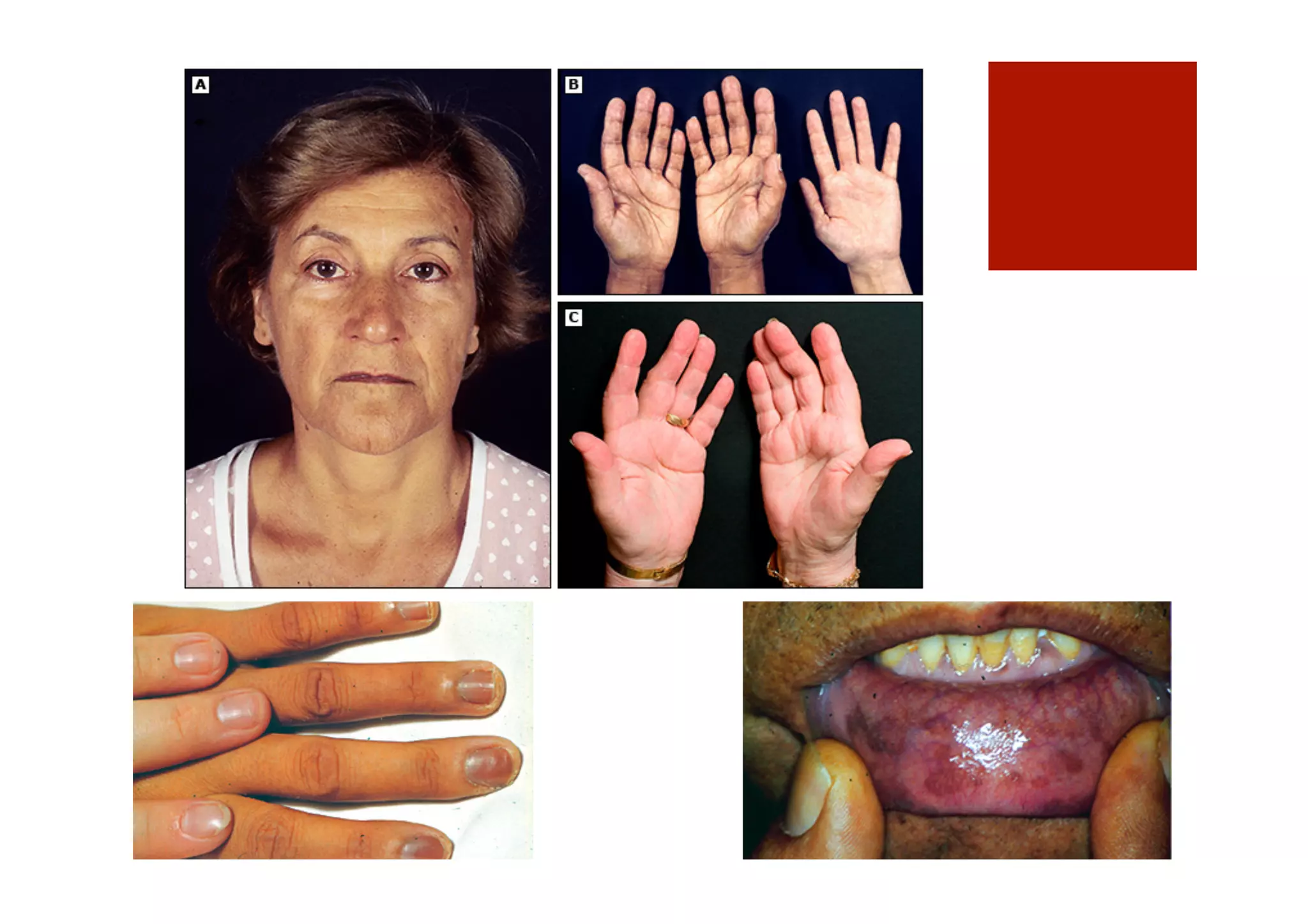
Hyperpigmenta)on	
   94	
  
Hypotension	
   88-­‐94	
  
Vi)ligo	
   10-­‐20	
  
Auricular	
  calcifica)on	
   5	
  
Laboratory	
  
Abnormality	
  
Electrolyte	
  disturbance	
   92	
  
Hyponatraemia	
   88	
  
Hyperkalaemia	
   64	
  
Hypercalcaemia	
   6	
  
Azotaemia	
   55	
  
Anaemia	
   40	
  
Eosinophilia	
   17	
  
Clinical Features
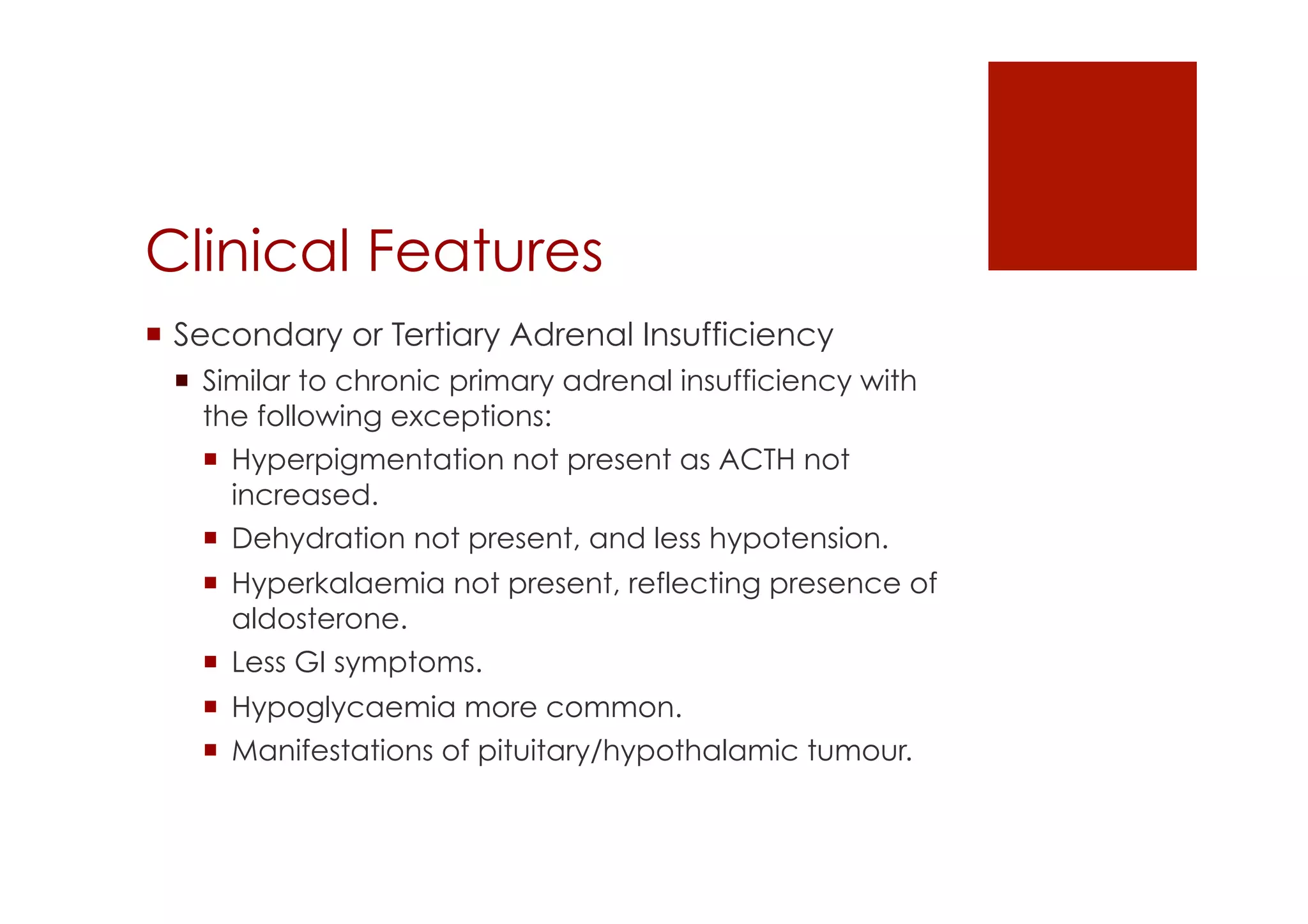
!  Secondary or Tertiary Adrenal Insufficiency
!  Similar to chronic primary adrenal insufficiency with
the following exceptions:
!  Hyperpigmentation not present as ACTH not
increased.
!  Dehydration not present, and less hypotension.
!  Hyperkalaemia not present, reflecting presence of
aldosterone.
!  Less GI symptoms.
!  Hypoglycaemia more common.
!  Manifestations of pituitary/hypothalamic tumour.
Diagnosis
!  Three stage process:
1.  Demonstrating inappropriately low cortisol
2.  Determine if cortisol deficiency is independent/
dependent of ACTH deficiency + evaluation of
mineralocorticoid secretion in pts without ACTH
deficiency.
3.  Seeking treatable cause of the primary disorder.
Diagnosis – Low Cortisol
!  Serum cortisol conc
!  Morning serum cortisol conc
!  Low is strongly suggestive of adrenal insufficiency
!  Morning salivary cortisol conc
!  For screening
!  Afternoon/night serum cortisol
!  No value
!  Urinary cortisol
!  Low in adrenal insufficiency, but can be low-normal in partial
insufficiency. Thus, unsuitable for screening.
!  Short ACTH stimulation test
Diagnosis – Level of defect
!  Need to measure basal plasma ACTH, renin and
aldosterone conc.
!  If primary, ACTH high. Will have high renin, low
aldosterone, raised K+ and decreased Na+.
!  If secondary/tertiary, ACTH low. Renin and
aldosterone usually unaffected.
!  Prolonged ACTH test will help distinguish between
primary and secondary/tertiary.
!  Differentiation between secondary and tertiary
by ACTRH – although not really important.
Diagnosis - Aetiology
!  Pituitary CT or MRI.
!  Abdominal CT.
!  CXR, urine culture for TB.
!  CT directed percutaneous fine needle aspiration
of enlarged adrenal glands.
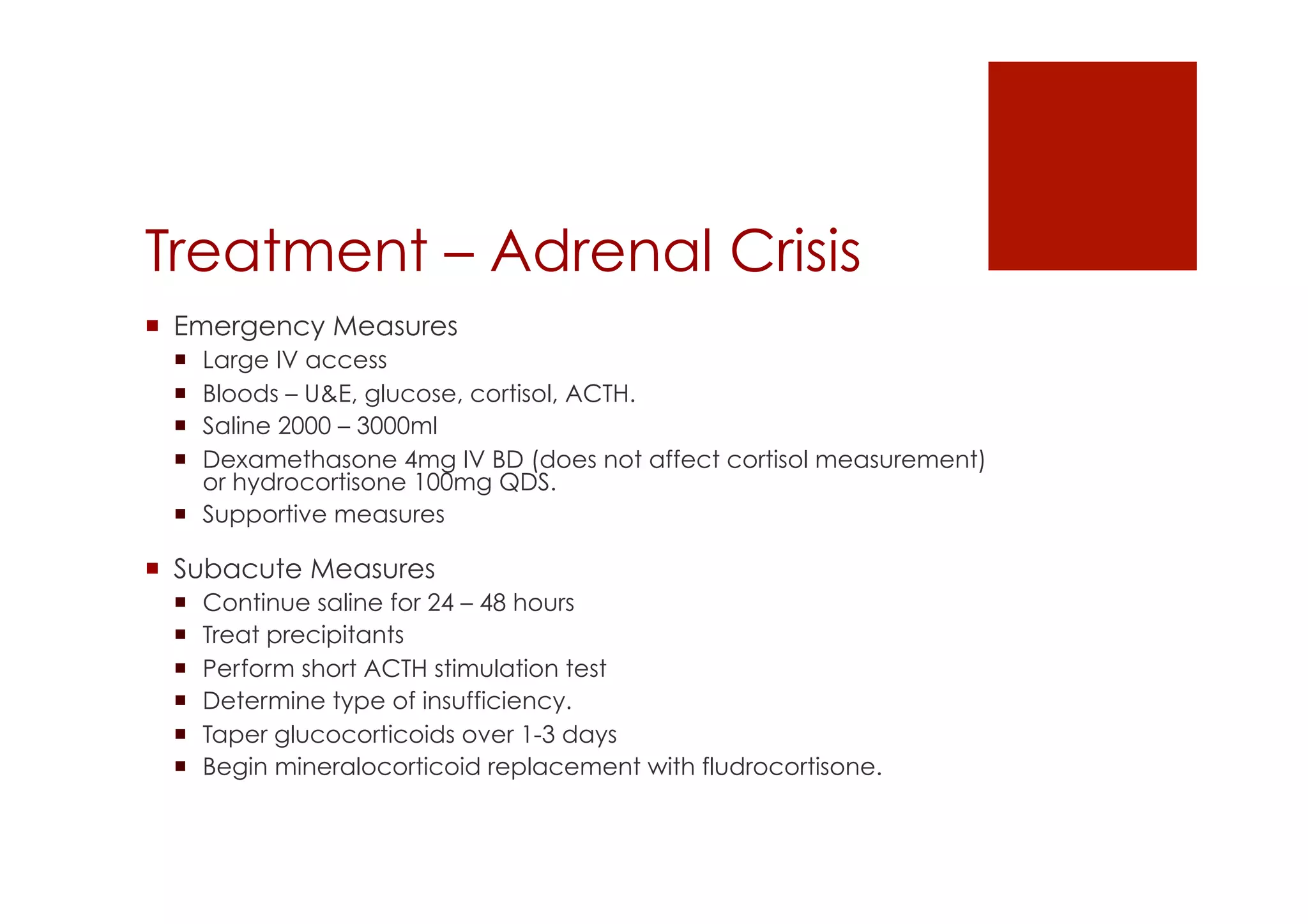
Treatment – Adrenal Crisis
!  Emergency Measures
!  Large IV access
!  Bloods – U&E, glucose, cortisol, ACTH.
!  Saline 2000 – 3000ml
!  Dexamethasone 4mg IV BD (does not affect cortisol measurement)
or hydrocortisone 100mg QDS.
!  Supportive measures
!  Subacute Measures
!  Continue saline for 24 – 48 hours
!  Treat precipitants
!  Perform short ACTH stimulation test
!  Determine type of insufficiency.
!  Taper glucocorticoids over 1-3 days
!  Begin mineralocorticoid replacement with fludrocortisone.
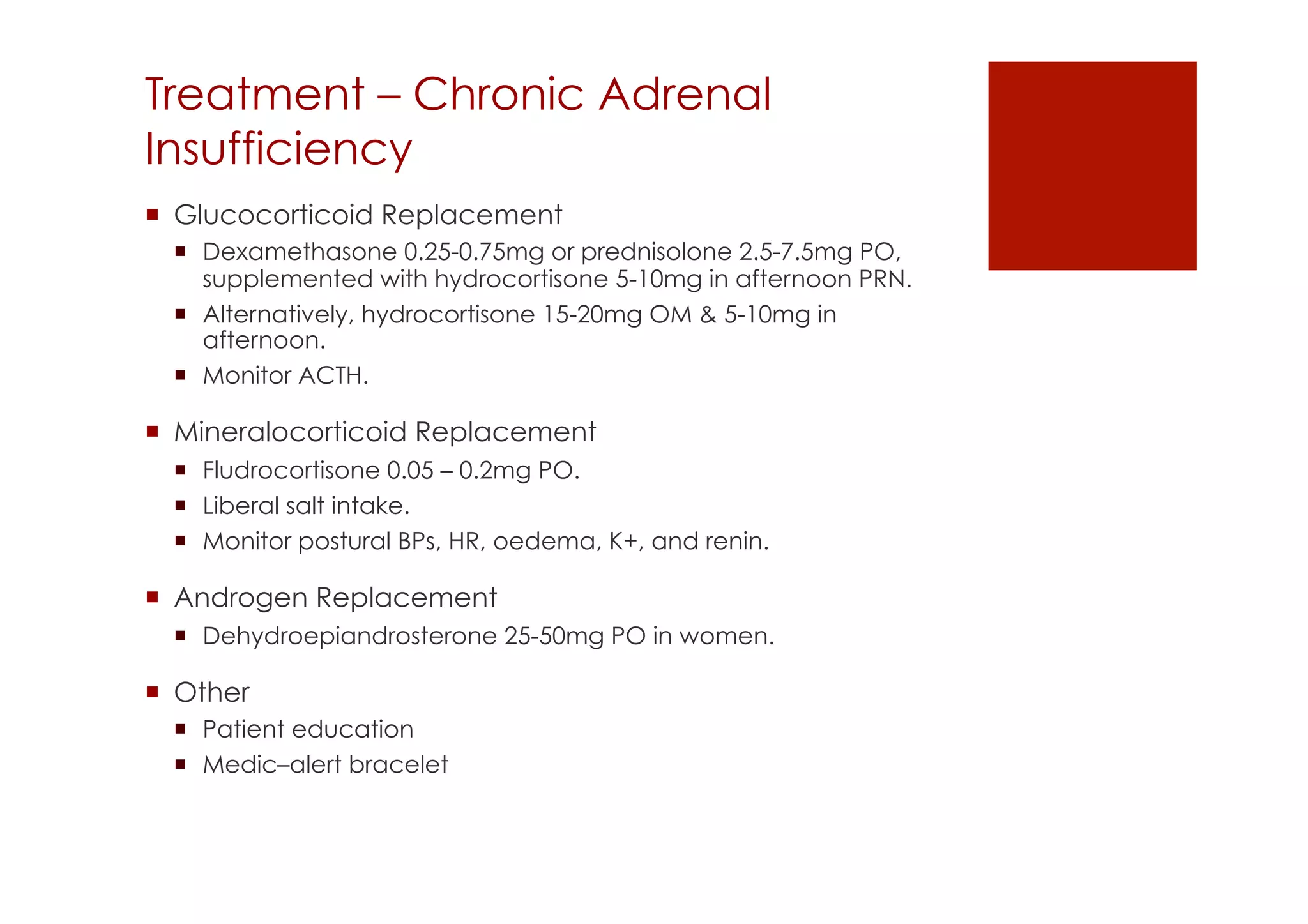
Treatment – Chronic Adrenal
Insufficiency
!  Glucocorticoid Replacement
!  Dexamethasone 0.25-0.75mg or prednisolone 2.5-7.5mg PO,
supplemented with hydrocortisone 5-10mg in afternoon PRN.
!  Alternatively, hydrocortisone 15-20mg OM & 5-10mg in
afternoon.
!  Monitor ACTH.
!  Mineralocorticoid Replacement
!  Fludrocortisone 0.05 – 0.2mg PO.
!  Liberal salt intake.
!  Monitor postural BPs, HR, oedema, K+, and renin.
!  Androgen Replacement
!  Dehydroepiandrosterone 25-50mg PO in women.
!  Other
!  Patient education
!  Medic–alert bracelet
Thank you!

Hypoadrenalism feb 2015

  • 1.
    Hypoadrenalism – CasePresentation Dr. Adam Stokes ST4 in Anaesthesia & ICM 24th February 2015
  • 2.
    Overview 1.  Case Presentation 2. Adrenal Physiology 3.  Hypoadrenalism 1.  Causes 2.  Clinical Features 3.  Diagnosis 4.  Treatment
  • 3.
    Case Presentation - Background ! 40 year old man !  PMH: Subclinical hypothyroidism (2008) – not on replacement !  Admission Sept 2014 with right flank pain, no cause found !  DH: Nil regular, NKDA. !  SH: Non-smoker, occasional alcohol, worked up until last 2 weeks, living with parents.
  • 4.
    Case Presentation !  Presentation ! 1/12 Hx of lethargy, weakness, muscular spasms !  1/52 Hx of nausea and vomiting, hiccups !  2-3/7 Hx of repeated vomiting, occasionally blood tinged, patient reports feeling “slow” !  Saw GP 2/7 ago- plan for bloods and f/u, but parents concerned and rang 111, who advised 999.
  • 5.
    Case Presentation !  Assessmenton admission !  Resp: RR 18, Sats 100% on air !  CVS: HR 80, BP 130/73, paramedics reported no postural drop. !  Neuro: GCS 14/15, mild confusion/slowness in speech, PERLA, BM 4.9, afebrile. !  GI: Abdo soft non-tender, BS active !  Tanned skin, but not obviously pigmented mucous membranes.
  • 6.
    Case Presentation !  Initialresults/management in ED !  Lab- Na<100, K 5.7, Cl 67, Ur 6.1, Cr 74 CRP 36, Hb 17.5 WCC 4.1, Plt 166 !  CXR: NAD !  ECG: NAD !  ABG: pH 7.44, pCO2 3, pO2 10.6, Lac 0.7, BE -8.6, Na <100, Cl 69 !  Random cortisol and TFTs sent !  Treatment: !  Metoclopramide !  Lansoprazole !  Saline 1000ml (commenced prior to Na result) !  Hydrocortisone 100mg
  • 7.
    Case Presentation !  Next24 hours in HDU !  Arterial line inserted for frequent ABGs !  Urine and plasma osmolalities sent, urinary Na !  Results: TFTs - T4 14.5 (N), TSH 29.7 (high), plasma osmolality 212, urine 836, urine Na 71, random cortisol 110 !  Slow Na correction with 1.8% NaCl !  CT head: Thrombosed cerebral artery aneurysm in circle of Willis (?significance), nil else
  • 8.
    Case Presentation !  Day3 !  Short synacthin test performed: 30min cortisol 290, 60min 275: positive test for primary hypoadrenalism !  Levothyroxine commenced, and after results of synacthin test, fludrocortisone/hydrocortisone replacement started !  Patient became more agitated/confused (required DOLS) !  Renin/Aldosterone/ACTH and autoantibody screen sent.
  • 9.
    Case Presentation !  Days4 -10 !  Gradual improvement in mental condition and weakness with Na up to 130 !  CT head discussed with Neuro SGH- probably incidental but will f/u in due course !  Discharged with f/u in Endo clinic in 2/52 !  Results: !  ACTH high. !  Renin high. !  Aldosterone normal. !  Thyroid autoantibodies positive. !  Adrenal autoantibodies weakly positive.
  • 10.
  • 11.
    Adrenal Physiology Zona glomerulosa Aldosterone Na+& water retention. K+ secretion. Zona fasiculata Cortisol and corticosterone Gluconeogenesis Proteolysis Lipolysis RBCs, plts, neuts. Gastric acid & ulcers. Reactivity to catecholeamines. Reduced collagen & osteoporosis. Anti-inflammatory. Immunosuppression. Zona reticularis Androgens (& small amount of cortisol) ACTH K+ RAAS
  • 12.
    Hypoadrenalism !  Causes !  Clinicalfeatures !  Diagnosis !  Treatment
  • 13.
    Causes !  Secondary !  Masslesions – pituitary adenomas !  Pituitary surgery / radiation !  Isolated ACTH deficiency (autoimmune or genetic) !  Infiltrative lesions !  Infarction (Sheehans) !  TBI !  Tertiary !  Chronic high dose glucocorticoid therapy !  Mass lesions !  Radiation !  Infiltrative lesions – e.g. sarcoidosis !  TBI !  Infections !  Primary Adrenal Insufficiency !  Idiopathic / Autoimmune !  Infectious adrenalitis !  Bilateral adrenal infarct !  Metastatic disease !  Drugs
  • 14.
    Clinical Features !  Dependson rate & extent of loss of adrenal function, whether mineralocorticoid production is preserved and degree of stress. !  Adrenal crisis !  Chronic primary adrenal insufficiency !  Secondary or tertiary adrenal insufficiency
  • 15.
    Clinical Features !  AdrenalCrisis !  Occurs in: !  Undiagnosed primary adrenal insufficiency subject to serious infection/stress. !  Known primary adrenal insufficiency who does not take sufficient glucocorticoid during infection/stress. !  Bilateral adrenal infarct/haemorrhage. !  Less frequently with secondary/tertiary adrenal insufficiency. !  Abrupt withdrawal of glucocorticoid therapy.
  • 16.
    Clinical Features !  AdrenalCrisis: !  Features: !  Shock (predominant feature) !  Anorexia, N&V, weight loss. !  Weakness, fatigue, lethargy, confusion, coma. !  Abdo pain. !  Hypoglycaemia. !  Fever. !  Hyponatraemia, hyperkalaemia, hypercalcaemia, eosinophilia. !  Hyperpigmentation or vitiligo. !  Autoimmune endocrine deficiencies e.g. hypothyroid
  • 17.
    Clinical Features !  ChronicPrimary Adrenal Insufficiency !  May have features of glucocorticoid, mineralocorticoid and androgen deficiency. !  Insidious onset !  Non-specific features. !  Difficult to diagnose.
  • 18.
    Clinical Features -CPAI Symptom   Frequency  (%)   Weakness,  )redness,  fa)gue   100   Anorexia   100   GI  symptoms   92   Nausea   86   Vomi)ng   75   Cons)pa)on   33   Abdo  pain   31   Diarrhoea   16   Salt  craving   16   Postural  hypotension   12   Muscle/joint  pains   6-­‐13   Sign   Weight  loss   100   Hyperpigmenta)on   94   Hypotension   88-­‐94   Vi)ligo   10-­‐20   Auricular  calcifica)on   5   Laboratory   Abnormality   Electrolyte  disturbance   92   Hyponatraemia   88   Hyperkalaemia   64   Hypercalcaemia   6   Azotaemia   55   Anaemia   40   Eosinophilia   17  
  • 20.
    Clinical Features !  Secondaryor Tertiary Adrenal Insufficiency !  Similar to chronic primary adrenal insufficiency with the following exceptions: !  Hyperpigmentation not present as ACTH not increased. !  Dehydration not present, and less hypotension. !  Hyperkalaemia not present, reflecting presence of aldosterone. !  Less GI symptoms. !  Hypoglycaemia more common. !  Manifestations of pituitary/hypothalamic tumour.
  • 21.
    Diagnosis !  Three stageprocess: 1.  Demonstrating inappropriately low cortisol 2.  Determine if cortisol deficiency is independent/ dependent of ACTH deficiency + evaluation of mineralocorticoid secretion in pts without ACTH deficiency. 3.  Seeking treatable cause of the primary disorder.
  • 22.
    Diagnosis – LowCortisol !  Serum cortisol conc !  Morning serum cortisol conc !  Low is strongly suggestive of adrenal insufficiency !  Morning salivary cortisol conc !  For screening !  Afternoon/night serum cortisol !  No value !  Urinary cortisol !  Low in adrenal insufficiency, but can be low-normal in partial insufficiency. Thus, unsuitable for screening. !  Short ACTH stimulation test
  • 23.
    Diagnosis – Levelof defect !  Need to measure basal plasma ACTH, renin and aldosterone conc. !  If primary, ACTH high. Will have high renin, low aldosterone, raised K+ and decreased Na+. !  If secondary/tertiary, ACTH low. Renin and aldosterone usually unaffected. !  Prolonged ACTH test will help distinguish between primary and secondary/tertiary. !  Differentiation between secondary and tertiary by ACTRH – although not really important.
  • 24.
    Diagnosis - Aetiology ! Pituitary CT or MRI. !  Abdominal CT. !  CXR, urine culture for TB. !  CT directed percutaneous fine needle aspiration of enlarged adrenal glands.
  • 25.
    Treatment – AdrenalCrisis !  Emergency Measures !  Large IV access !  Bloods – U&E, glucose, cortisol, ACTH. !  Saline 2000 – 3000ml !  Dexamethasone 4mg IV BD (does not affect cortisol measurement) or hydrocortisone 100mg QDS. !  Supportive measures !  Subacute Measures !  Continue saline for 24 – 48 hours !  Treat precipitants !  Perform short ACTH stimulation test !  Determine type of insufficiency. !  Taper glucocorticoids over 1-3 days !  Begin mineralocorticoid replacement with fludrocortisone.
  • 26.
    Treatment – ChronicAdrenal Insufficiency !  Glucocorticoid Replacement !  Dexamethasone 0.25-0.75mg or prednisolone 2.5-7.5mg PO, supplemented with hydrocortisone 5-10mg in afternoon PRN. !  Alternatively, hydrocortisone 15-20mg OM & 5-10mg in afternoon. !  Monitor ACTH. !  Mineralocorticoid Replacement !  Fludrocortisone 0.05 – 0.2mg PO. !  Liberal salt intake. !  Monitor postural BPs, HR, oedema, K+, and renin. !  Androgen Replacement !  Dehydroepiandrosterone 25-50mg PO in women. !  Other !  Patient education !  Medic–alert bracelet
  • 27.