1
HHyyppeerrtteennssiioonn
The Importance of 
Hypertension 
SSttaattiissttiiccaall ddaattaa 
TThhee ffiirrsstt kkiilllleerr 
SSiilleenntt kkiilllleerr 
MMaasskkeedd kkiilllleerr 
FFiinnaanncciiaall bbuurrddeenn 
PPrreevveennttaabbllee 
TTrreeaattaabbllee
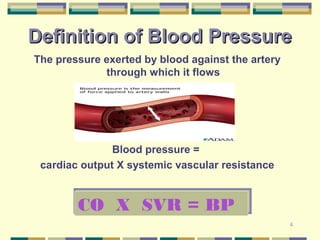
DDeeffiinniittiioonn ooff BBlloooodd PPrreessssuurree 
The pressure exerted by blood against the artery 
4 
through which it flows 
Blood pressure = 
cardiac output X systemic vascular resistance 
CO X SVR = BP
5 
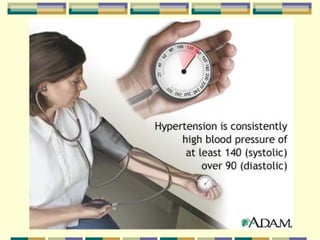
Hypertension is defined as: 
 the level of blood pressure lliinnkkeedd wwiitthh aa 
ddoouubblleedd iinnccrreeaasseedd lloonngg--tteerrmm rriisskk ffoorr 
aaddvveerrssee eevveennttss 
OR 
TThhee lleevveell ooff bblloooodd pprreessssuurree aatt wwhhiicchh tthhee 
bbeenneeffiittss ooff aaccttiioonn ((ii..ee.. tthheerraappeeuuttiicc 
iinntteerrvveennttiioonn)) eexxcceeeedd tthhoossee ooff iinnaaccttiioonn..”” 
EEvvaannss aanndd RRoossee BBrriitt MMeedd BBuullll 11997711;;2277::3377--4422
6
7
8 
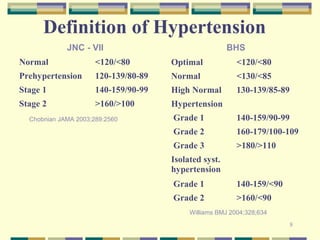
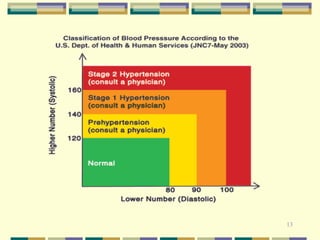
Definition of Hypertension 
JNC - VII BHS 
Normal <120/<80 
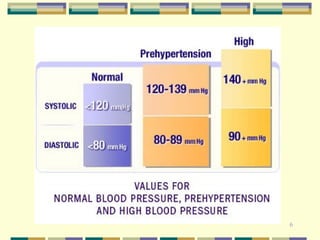
Prehypertension 120-139/80-89 
Stage 1 140-159/90-99 
Stage 2 >160/>100 
Chobnian JAMA 2003;289:2560 
Optimal <120/<80 
Normal <130/<85 
High Normal 130-139/85-89 
Hypertension 
Grade 1 140-159/90-99 
Grade 2 160-179/100-109 
Grade 3 >180/>110 
Isolated syst. 
hypertension 
Grade 1 140-159/<90 
Grade 2 >160/<90 
Williams BMJ 2004;328;634
9 
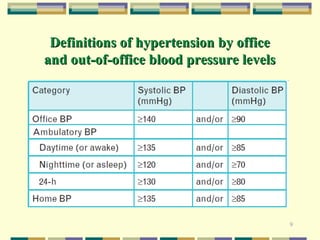
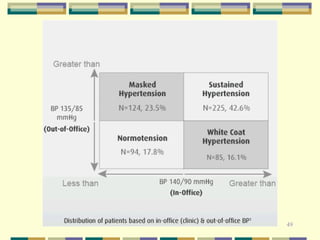
Definitions ooff hhyyppeerrtteennssiioonn bbyy ooffffiiccee 
aanndd oouutt--ooff--ooffffiiccee bblloooodd pprreessssuurree lleevveellss
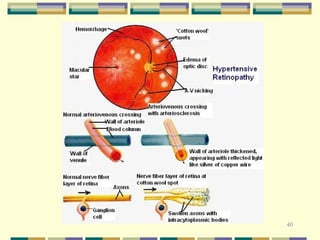
10 
Pulse Pressure 
PP = SBP – DBP 
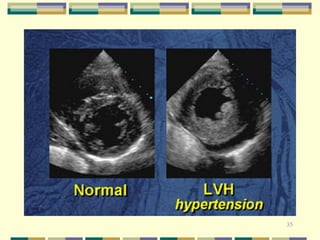
Increase in pulse pressure (PP) 
indicates greater stiffness in large 
conduit arteries, primarily the thoracic 
aorta. 
PP, therefore, is a surrogate measure 
of dynamic, cyclic stress during 
systole. 
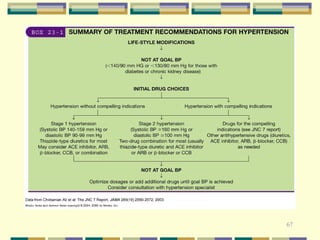
PP may be a better marker of 
increased CV risk than either systolic 
BP or diastolic BP alone in older 
persons.
11 
What clinical guidelines are 
used to categorize HTN? 
The Joint Committee on 
Prevention, Evaluation, and 
Treatment of High Blood 
Pressure (JNC 8) guidelines 
provide the most current 
guidelines
13
14 
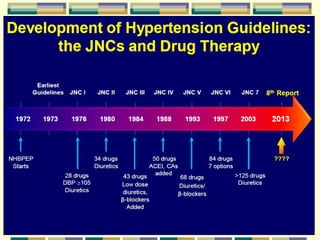
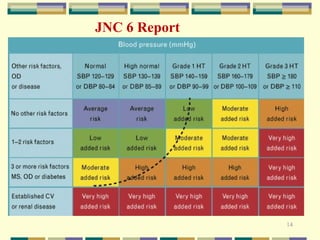
JNC 6 Report
15
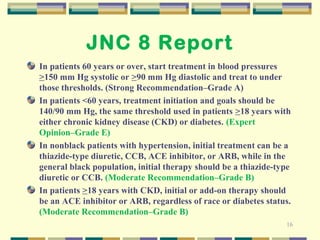
JNC 8 Report 
In patients 60 years or over, start treatment in blood pressures 
>150 mm Hg systolic or >90 mm Hg diastolic and treat to under 
those thresholds. (Strong Recommendation–Grade A) 
In patients <60 years, treatment initiation and goals should be 
140/90 mm Hg, the same threshold used in patients >18 years with 
either chronic kidney disease (CKD) or diabetes. (Expert 
Opinion–Grade E) 
In nonblack patients with hypertension, initial treatment can be a 
thiazide-type diuretic, CCB, ACE inhibitor, or ARB, while in the 
general black population, initial therapy should be a thiazide-type 
diuretic or CCB. (Moderate Recommendation–Grade B) 
In patients >18 years with CKD, initial or add-on therapy should 
be an ACE inhibitor or ARB, regardless of race or diabetes status. 
(Moderate Recommendation–Grade B) 
16
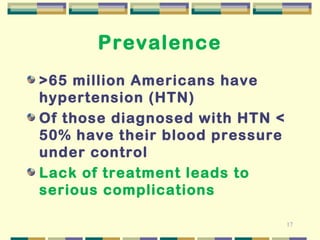
17 
Prevalence 
>65 million Americans have 
hypertension (HTN) 
Of those diagnosed with HTN < 
50% have their blood pressure 
under control 
Lack of treatment leads to 
serious complications
18 
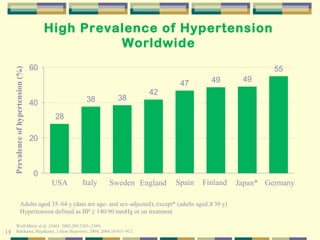
High Prevalence of Hypertension 
Worldwide 
28 
38 
42 
47 49 49 
55 
38 
60 
40 
20 
0 
Italy Sweden England Spain Finland Germany 
USA Japan* 
Prevalence of hypertension (%) 
Adults aged 35–64 y (data are age- and sex-adjusted), except* (adults aged ≥ 30 y) 
Hypertension defined as BP ³ 140/90 mmHg or on treatment 
Wolf-Maier et al. JAMA. 2003;289:2363-2369; 
Sekikawa, Hayakawa. J Hum Hypertens. 2004; 2004;18:911–912.
19 
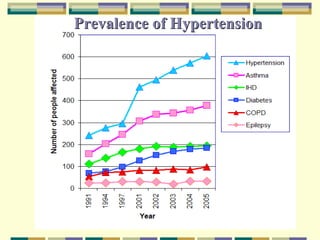
Prevalence of Hypertension
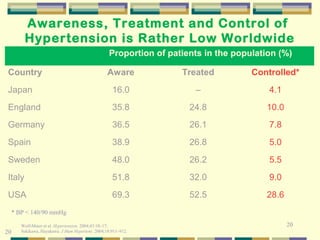
Proportion of patients in the population (%) 
Country Aware Treated Controlled* 
Japan 16.0 – 4.1 
England 35.8 24.8 10.0 
Germany 36.5 26.1 7.8 
Spain 38.9 26.8 5.0 
Sweden 48.0 26.2 5.5 
Italy 51.8 32.0 9.0 
USA 69.3 52.5 28.6 
20 
20 
Awareness, Treatment and Control of 
Hypertension is Rather Low Worldwide 
* BP < 140/90 mmHg 
Wolf-Maier et al. Hypertension. 2004;43:10–17; 
Sekikawa, Hayakawa. J Hum Hypertens. 2004;18:911–912.
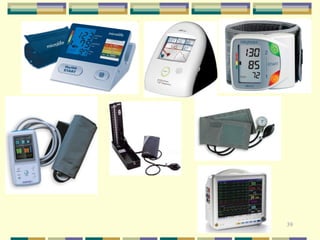
21 
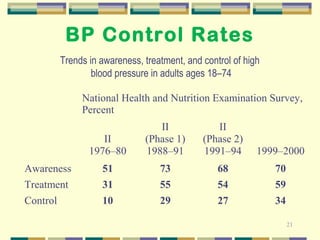
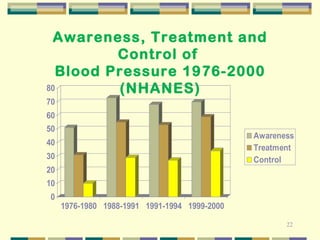
BP Control Rates 
Trends in awareness, treatment, and control of high 
blood pressure in adults ages 18–74 
National Health and Nutrition Examination Survey, 
Percent 
II 
1976–80 
II 
(Phase 1) 
1988–91 
II 
(Phase 2) 
1991–94 1999–2000 
Awareness 51 73 68 70 
Treatment 31 55 54 59 
Control 10 29 27 34
22 
Awareness, Treatment and 
Control of 
Blood Pressure 1976-2000 
(NHANES) 
80 
70 
60 
50 
40 
30 
20 
10 
0 
1976-1980 1988-1991 1991-1994 1999-2000 
Awareness 
Treatment 
Control
23
24
25 
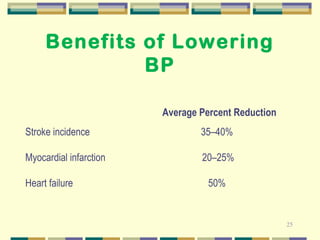
Benefits of Lowering 
BP 
Average Percent Reduction 
Stroke incidence 35–40% 
Myocardial infarction 20–25% 
Heart failure 50%
26 
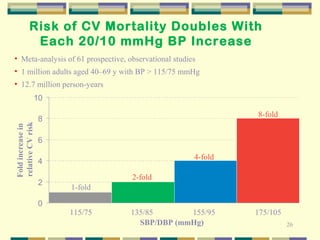
Risk of CV Mortality Doubles With 
Each 20/10 mmHg BP Increase 
• Meta-analysis of 61 prospective, observational studies 
• 1 million adults aged 40–69 y with BP > 115/75 mmHg 
• 12.7 million person-years 
10 
8 
6 
4 
2 
0 
Fold increase in 
relative CV risk 
1-fold 
2-fold 
4-fold 
8-fold 
115/75 135/85 155/95 175/105 
SBP/DBP (mmHg)
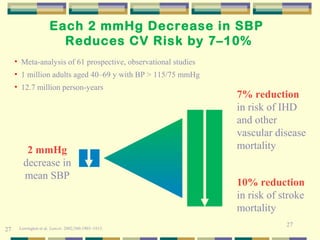
Each 2 mmHg Decrease in SBP 
Reduces CV Risk by 7–10% 
7% reduction 
in risk of IHD 
and other 
vascular disease 
mortality 
27 
27 
• Meta-analysis of 61 prospective, observational studies 
• 1 million adults aged 40–69 y with BP > 115/75 mmHg 
• 12.7 million person-years 
2 mmHg 
decrease in 
mean SBP 
10% reduction 
in risk of stroke 
mortality 
Lewington et al. Lancet. 2002;360:1903–1913.
28 
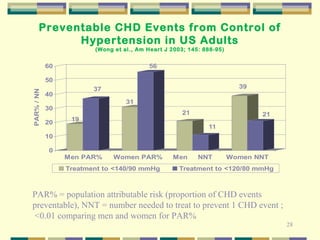
Preventable CHD Events from Control of 
Hypertension in US Adults 
(Wong et al., Am Heart J 2003; 145: 888-95) 
19 
37 
31 
56 
21 
11 
39 
21 
60 
50 
40 
30 
20 
10 
0 
PAR% / NNT 
Men PAR% Women PAR% Men NNT Women NNT 
Treatment to <140/90 mmHg Treatment to <120/80 mmHg 
PAR% = population attributable risk (proportion of CHD events 
preventable), NNT = number needed to treat to prevent 1 CHD event ; 
<0.01 comparing men and women for PAR%
29 
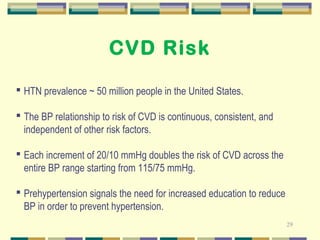
CVD Risk 
 HTN prevalence ~ 50 million people in the United States. 
 The BP relationship to risk of CVD is continuous, consistent, and 
independent of other risk factors. 
 Each increment of 20/10 mmHg doubles the risk of CVD across the 
entire BP range starting from 115/75 mmHg. 
 Prehypertension signals the need for increased education to reduce 
BP in order to prevent hypertension.
30
31
32 
Factors contribute to the 
development of primary HTN 
1. Sympathetic nervous system 
hyperactivity 
2. Renin-angiotensin-aldosterone system 
hyperactivity 
3. Endothelial dysfunction
33
34 
Types of HTN? 
PPrriimmaarryy 
• ?? ‘essential’idiopathic 
• Most common type 
found in 90-95% of 
those with HTN 
• Cause not well 
understood 
• Salt sensitive 
• RAAS dependent 
SSeeccoonnddaarryy 
• Caused by some other 
medical problem or 
condition: 
• High-dose estrogen 
• Renal artery stenosis 
• Pregnancy (PET) 
• Cushing’s syndrome 
• pheochromocytoma 
• Others?
35
Renin level ?? 
36 
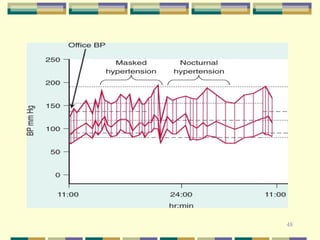
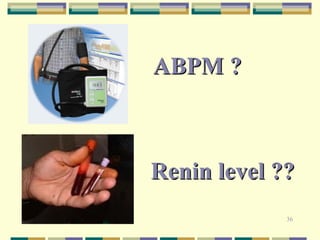
ABPM ?
37 
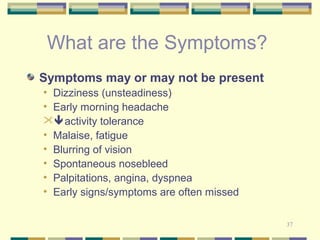
What are the Symptoms? 
Symptoms may or may not be present 
• Dizziness (unsteadiness) 
• Early morning headache 
activity tolerance 
• Malaise, fatigue 
• Blurring of vision 
• Spontaneous nosebleed 
• Palpitations, angina, dyspnea 
• Early signs/symptoms are often missed
38
39
40
41 
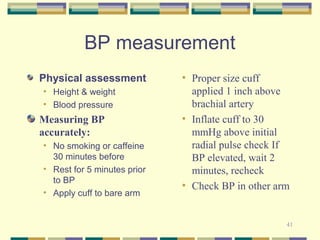
BP measurement 
Physical assessment 
• Height & weight 
• Blood pressure 
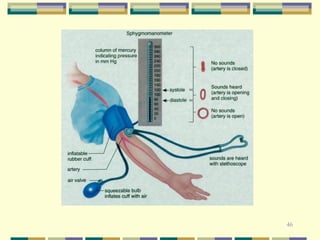
Measuring BP 
accurately: 
• No smoking or caffeine 
30 minutes before 
• Rest for 5 minutes prior 
to BP 
• Apply cuff to bare arm 
• Proper size cuff 
applied 1 inch above 
brachial artery 
• Inflate cuff to 30 
mmHg above initial 
radial pulse check If 
BP elevated, wait 2 
minutes, recheck 
• Check BP in other arm
42 
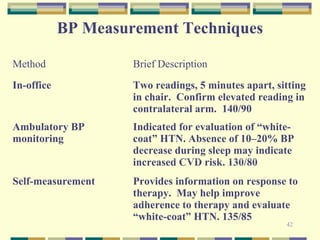
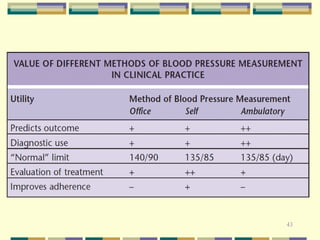
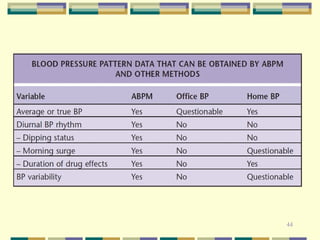
BP Measurement Techniques 
Method Brief Description 
In-office Two readings, 5 minutes apart, sitting 
in chair. Confirm elevated reading in 
contralateral arm. 140/90 
Ambulatory BP 
monitoring 
Indicated for evaluation of “white-coat” 
HTN. Absence of 10–20% BP 
decrease during sleep may indicate 
increased CVD risk. 130/80 
Self-measurement Provides information on response to 
therapy. May help improve 
adherence to therapy and evaluate 
“white-coat” HTN. 135/85
43
44
45
46
47 
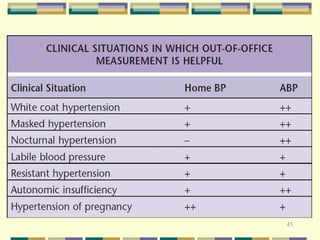
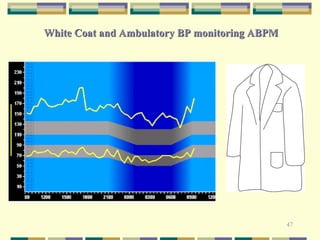
White Coat and Ambulatory BP monitoring ABPM
48
49
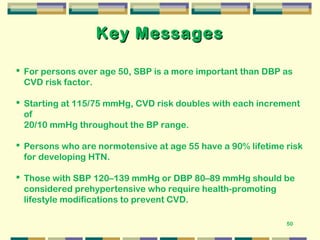
 For persons over age 50, SBP is a more important than DBP as 
CVD risk factor. 
 Starting at 115/75 mmHg, CVD risk doubles with each increment 
of 
20/10 mmHg throughout the BP range. 
 Persons who are normotensive at age 55 have a 90% lifetime risk 
for developing HTN. 
 Those with SBP 120–139 mmHg or DBP 80–89 mmHg should be 
considered prehypertensive who require health-promoting 
lifestyle modifications to prevent CVD. 
50 
KKeeyy MMeessssaaggeess
51 
Key Messages (Continued) 
 Thiazide-type diuretics should be initial drug therapy for most, 
either alone or combined with other drug classes. 
 Certain high-risk conditions are compelling indications for 
other drug classes. 
 Most patients will require two or more antihypertensive drugs 
to achieve goal BP. 
 If BP is >20/10 mmHg above goal, initiate therapy with two 
agents, one usually should be a thiazide-type diuretic.
52 
Key Messages 
(Continued) 
 The most effective therapy prescribed by the 
careful clinician will control HTN only if 
patients are motivated. 
 Motivation improves when patients have 
positive experiences with, and trust in, the 
clinician. 
 Empathy builds trust and is a potent motivator. 
 The responsible physician’s judgment remains 
paramount.
53 
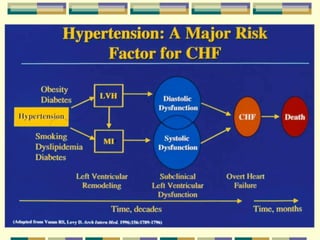
Complications of HTN 
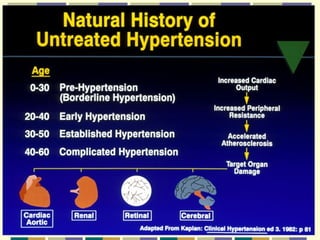
The higher the BP and the 
longer an individual has 
hypertension, the higher the 
risk of complications which 
include: 
• Hypertensive heart disease 
• Cerebrovascular disease 
• Peripheral vascular disease 
• Kidney disease 
• Retinal damage
54
55
Complications of Hypertension 
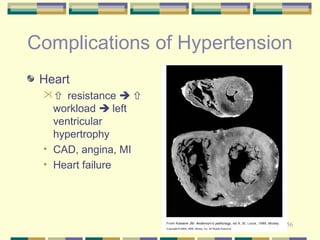
Heart 
56 
 resistance   
workload  left 
ventricular 
hypertrophy 
• CAD, angina, MI 
• Heart failure
Complications of Hypertension 
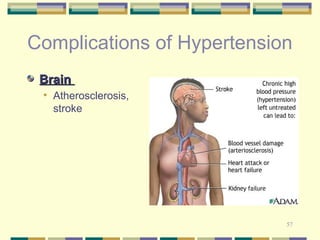
BBrraaiinn 
57 
• Atherosclerosis, 
stroke
Complications of Hypertension 
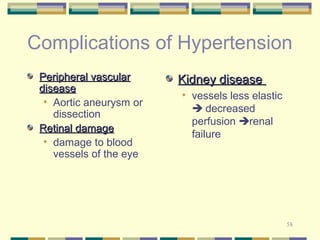
PPeerriipphheerraall vvaassccuullaarr 
ddiisseeaassee 
58 
• Aortic aneurysm or 
dissection 
RReettiinnaall ddaammaaggee 
• damage to blood 
vessels of the eye 
KKiiddnneeyy ddiisseeaassee 
• vessels less elastic 
 decreased 
perfusion renal 
failure
59 
Acute Complications 
HHyyppeerrtteennssiivvee 
CCrriissiiss:: 
Severe and abrupt 
elevation of BP 
Diastolic over 
120mm hg 
High Mortality 
Sx: papilledema, 
progressive renal 
failure, 
encephalopathy 
Most common 
cause is untreated 
hypertension 
Goal: slowly 
decrease BP
60 
Classifications 
Hypertensive Crisis 
Hypertensive crisis is 
categorized by the 
degree of organ damage 
Hypertensive 
emergency: 
BP is severely elevated 
and there is evidence of 
target organ damage 
• Especially brain 
Hypertensive urgency: 
BP is elevated but there 
is no evidence of target 
organ damage
GOAL: Reduce Complications 
61 
JNC 8 guidelines 
recommend a 
target BP of less 
than 140/90 
Except elderly 
above 60 150/90 
Patients with renal 
disease or 
diabetes need BP 
less than 140/90
62 
What Reduces Risk of 
Complications? 
REDUCING MMOODDIIFFIIABBLLEE RRIISSKK 
FFACCTTOORRSS IISS A KKEEYY 
IINNTTEERRVVEENNTTIIOONN 
Goal = Patient teaching to 
reduce risk factors 
Drug therapy is initiated if 
lifestyle changes are not 
effective to control BP
63 
Management of 
Hypertension 
Depends on risk group 
Lifestyle modifications 
Drug therapy is initiated if 
lifestyle modifications do not 
achieve goal 
Add or change drugs if goal not 
achieved
64 
Lifestyle Modification 
Lose excess weight 
Cut back on salt 
Exercise regularly 
Cease alcohol intake 
Adopt the DASH eating plan to decrease 
cholesterol intake 
STOP smoking
65 
DASH Diet 
http://www.nhlbi.nih.gov/health/public/Dietary Approaches to Stop 
Hypertension = DASH 
• A diet rich in fruits, vegetables and low-fat 
dairy products with reduced fat 
content 
• Limits sodium intake to 2.4 g/day
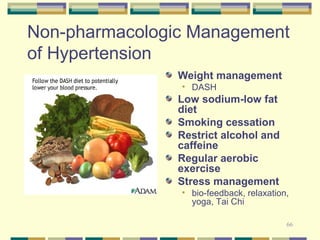
Non-pharmacologic Management 
of Hypertension 
Weight management 
• DASH 
Low sodium-low fat 
diet 
Smoking cessation 
Restrict alcohol and 
caffeine 
Regular aerobic 
exercise 
Stress management 
• bio-feedback, relaxation, 
66 
yoga, Tai Chi
67
68 
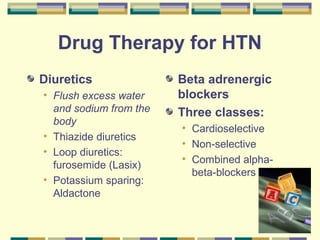
Drug Therapy for HTN 
Diuretics 
• Flush excess water 
and sodium from the 
body 
• Thiazide diuretics 
• Loop diuretics: 
furosemide (Lasix) 
• Potassium sparing: 
Aldactone 
Beta adrenergic 
blockers 
Three classes: 
• Cardioselective 
• Non-selective 
• Combined alpha-beta- 
blockers
69 
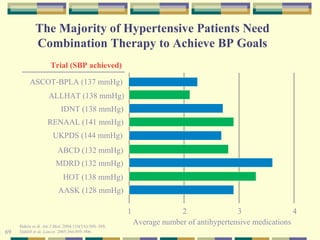
The Majority of Hypertensive Patients Need 
Combination Therapy to Achieve BP Goals 
1 2 3 4 
Average number of antihypertensive medications 
Trial (SBP achieved) 
ASCOT-BPLA (137 mmHg) 
ALLHAT (138 mmHg) 
IDNT (138 mmHg) 
RENAAL (141 mmHg) 
UKPDS (144 mmHg) 
ABCD (132 mmHg) 
MDRD (132 mmHg) 
HOT (138 mmHg) 
AASK (128 mmHg) 
Bakris et al. Am J Med. 2004;116(5A):30S–38S; 
Dahlöf et al. Lancet. 2005;366:895–906.
70 
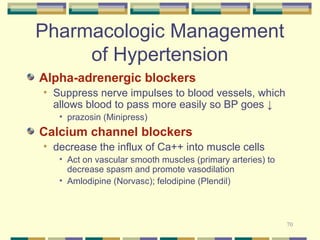
Pharmacologic Management 
of Hypertension 
Alpha-adrenergic blockers 
• Suppress nerve impulses to blood vessels, which 
allows blood to pass more easily so BP goes ↓ 
• prazosin (Minipress) 
Calcium channel blockers 
• decrease the influx of Ca++ into muscle cells 
• Act on vascular smooth muscles (primary arteries) to 
decrease spasm and promote vasodilation 
• Amlodipine (Norvasc); felodipine (Plendil)
71 
Pharmacologic Management 
of Hypertension 
Angiotensin 
converting enzyme 
(ACE) inhibitors 
• Decrease effect of 
RAA system: 
Capoten, Lisinopril 
• Diabetes mellitus 
w/proteinuria, heart 
failure 
Angiotensin II 
receptor blockers 
(ARB) 
• Prevent action of 
angiotensin II and 
produce vasodilation 
• losartan (Cozaar)
Pharmacologic Management of 
72 
Hypertension 
Vasodilators 
• Direct arterial 
vasodilation 
• Sodium nitroprusside 
(Nipride) 
• Often used in 
hypertensive crisis 
Alpha-receptor 
agonists 
• Clonidine 
• Acts on central 
nervous system 
• Lowers peripheral 
vascular resistance
Why don’t some patients respond 
73 
to therapy? 
Non-adherence to 
therapy 
• Patients don’t take 
their HTN meds → 
complications!!! 
• Cost, inadequate 
teaching, side effects, 
inconvenient dosing 
Drug related causes 
Other conditions 
Secondary 
hypertension 
Volume overload
74 
Causes of 
Resistant Hypertension 
 Improper BP measurement 
 Excess sodium intake 
 Inadequate diuretic therapy 
 Medication 
• Inadequate doses 
• Drug actions and interactions (e.g., nonsteroidal anti-inflammatory 
drugs (NSAIDs), illicit drugs, sympathomimetics, oral contraceptives) 
• Over-the-counter (OTC) drugs and herbal supplements 
 Excess alcohol intake 
 Identifiable causes of HTN
75 
Summary Key Points 
Two types of HTN: primary & secondary 
Inadequate BP control leads to serious 
complications including STROKE 
Key point: risk factor modification 
Treatment focuses on lifestyle management and 
drug therapy 
JNC 7 provides the most current treatment 
guidelines for hypertension
76 
Identifiable 
Causes of Hypertension 
 Sleep apnea 
 Drug-induced or related causes 
 Chronic kidney disease 
 Primary aldosteronism 
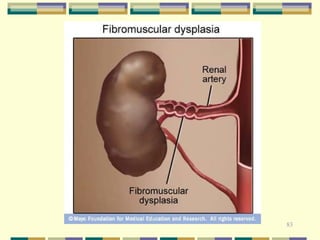
 Renovascular disease 
 Chronic steroid therapy and Cushing’s syndrome 
 Pheochromocytoma 
 Coarctation of the aorta 
 Thyroid or parathyroid disease
77 
Pheochromocytoma 
0.01-0.1% of HTN population 
• Found in 0.5% of those screened 
M = F 
3rd to 5th decades of life 
Rare, investigate only if clinically suspicion: 
• Signs or Symptoms 
• Severe HTN, HTN crisis 
• Refractory HTN (> 3 drugs) 
• HTN present @ age < 20 or > 50 ? 
• Adrenal lesion found on imaging (ex. Incidentaloma)
78 
Pheo: Signs & Symptoms 
The five P’s: 
• Pressure (HTN) 90% 
• Pain (Headache) 80% 
• Perspiration 71% 
• Palpitation 64% 
• Pallor 42% 
• Paroxysms (the sixth P!) 
The Classical Triad: 
• Pain (Headache), Perspiration, Palpitations 
• Lack of all 3 virtually excluded diagnosis of pheo in a series of 
> 21,0000 patients
79 
Pheo: Paroxysms, ‘Spells’ 
10-60 min duration 
Frequency: daily to monthly 
Spontaneous 
Precipitated: 
• Diagnostic procedures, I.A. Contrast (I.V. is OK) 
• Drugs (opiods, unopposed b-blockade, anesthesia induction, 
histamine, ACTH, glucagon, metoclopramide) 
• Strenuous exercise, movement that increases intra-abdo 
pressure (lifting, straining) 
• Micturition (bladder paraganlgioma)
80 
Pheo: ‘Rule of 10’ 
10% extra-adrenal (closer to 15%) 
10% occur in children 
10% familial (closer to 20%) 
10% bilateral or multiple (more if 
familial) 
10% recur (more if extra-adrenal) 
10% malignant 
10% discovered incidentally
81 
Plasma Metanephrines 
Not postural dependent: can draw 
normally 
Secreted continuously by pheo 
SEN 99% SPEC 89% 
False Positive: acetaminophen 
Assay not widely available yet
82 
Localization: Imaging 
CT abdomen 
• Adrenal pheo SEN 93-100% 
• Extra-adrenal pheo SEN 90% 
MRI 
• > SEN than CT for extra-adrenal pheo 
MIBG Scan 
• SEN 77-90% SPEC 95-100%
83
84 
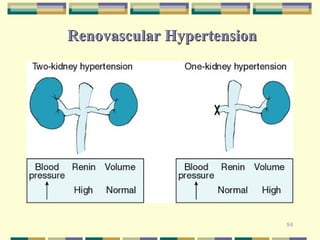
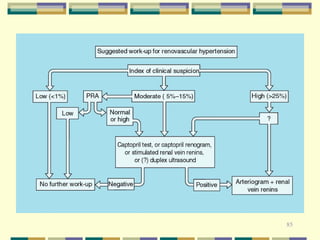
Renovascular Hypertension
85
86 
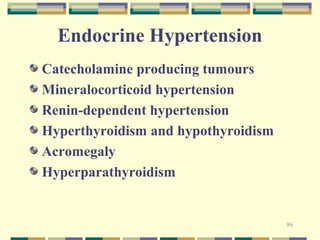
Endocrine Hypertension 
Catecholamine producing tumours 
Mineralocorticoid hypertension 
Renin-dependent hypertension 
Hyperthyroidism and hypothyroidism 
Acromegaly 
Hyperparathyroidism
87 
Typical clinical scenarios 
Difficult hypertension with hypokalaemia, 
on polypharmacy- referred to 
endocrinologist for exclusion of 2ary 
hypertension 
Coincidentaloma of adrenal with 
hypertension, on polypharmacy 
Which drugs are permissible, and after how 
much delay should there be before 
investigation?
88
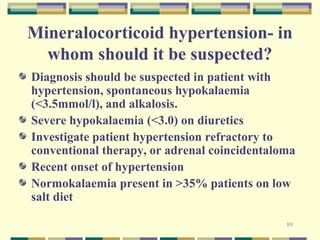
Mineralocorticoid hypertension- in 
whom should it be suspected? 
Diagnosis should be suspected in patient with 
hypertension, spontaneous hypokalaemia 
(<3.5mmol/l), and alkalosis. 
Severe hypokalaemia (<3.0) on diuretics 
Investigate patient hypertension refractory to 
conventional therapy, or adrenal coincidentaloma 
Recent onset of hypertension 
Normokalaemia present in >35% patients on low 
salt diet 
89
90 
Clinical features of 
hyperaldosteronism 
Mild to severe hypertension 
Sodium retention + intravascular vol exp 
®mineralocorticoid escape 
Resetting of osmostat (thirst provoked at higher [Na+]) 
K+ loss (kaliuresis) +/- low serum K+ (unprovoked: rule out 
diuretics, laxatives, vomiting, herbal supplements) 
Suppression of renin generation (rule out drugs,excessive 
dietary sodium intake) 
Polyuria, nocturia,fatigue,cramps, Mg++↓ 
Exclude liquorice abuse / carbenoxolone therapy 
NB minor mineralocorticoids DOC, compound B
Imaging in 1ary hyperaldosteronism 
High resolution CT scanning with thin (2-3mm) 
slices 
Bilateral adrenal venous catheter (measure cortisol, 
adrenaline + aldosterone) remains gold standard – 
operator dependent: right adrenal notoriously 
difficult to cannulate. Give iv ACTH (2μg/min) 
during sampling to magnify difference between 
tumour and non-tumorous side 
Non-tumorous side PAC = peripheral value 
because of suppressed PRA 
91
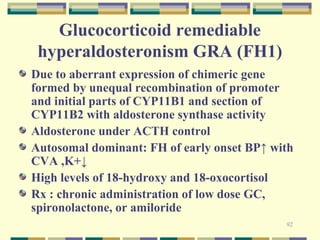
Glucocorticoid remediable 
hyperaldosteronism GRA (FH1) 
Due to aberrant expression of chimeric gene 
formed by unequal recombination of promoter 
and initial parts of CYP11B1 and section of 
CYP11B2 with aldosterone synthase activity 
Aldosterone under ACTH control 
Autosomal dominant: FH of early onset BP↑ with 
CVA ,K+↓ 
High levels of 18-hydroxy and 18-oxocortisol 
Rx : chronic administration of low dose GC, 
spironolactone, or amiloride 
92
93 
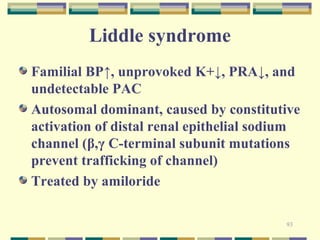
Liddle syndrome 
Familial BP↑, unprovoked K+↓, PRA↓, and 
undetectable PAC 
Autosomal dominant, caused by constitutive 
activation of distal renal epithelial sodium 
channel (β,γ C-terminal subunit mutations 
prevent trafficking of channel) 
Treated by amiloride
94 
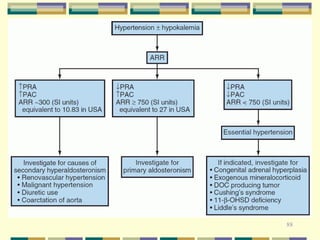
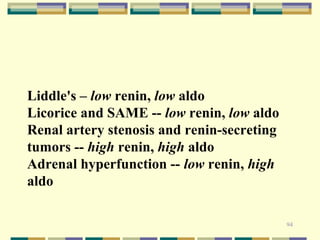
Liddle's – low renin, low aldo 
Licorice and SAME -- low renin, low aldo 
Renal artery stenosis and renin-secreting 
tumors -- high renin, high aldo 
Adrenal hyperfunction -- low renin, high 
aldo
95 
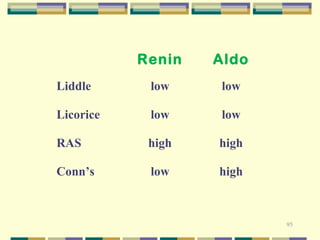
Renin Aldo 
Liddle low low 
Licorice low low 
RAS high high 
Conn’s low high
96 
Renin-Angiotesnin- 
Aldosterone System 
A drop in BP or blood 
volume causes kidneys to 
secrete rreenniinn, a 
precursor to 
angiotensin I 
Angiotensin-converting 
enzyme turns 
aannggiiootteennssiinn II iinnttoo 
aannggiiootteennssiinn IIII,, a potent 
vasoconstrictor 
Stimulates adrenal 
glands to release 
aallddoosstteerroonnee 
This prompts the 
kidneys to retain sodium 
and water 
The increased volume 
and vasoconstriction 
raise BP
97
98

Hypertension 2014 update

  • 1.
  • 2.
  • 3.
    The Importance of Hypertension SSttaattiissttiiccaall ddaattaa TThhee ffiirrsstt kkiilllleerr SSiilleenntt kkiilllleerr MMaasskkeedd kkiilllleerr FFiinnaanncciiaall bbuurrddeenn PPrreevveennttaabbllee TTrreeaattaabbllee
  • 4.
    DDeeffiinniittiioonn ooff BBllooooddPPrreessssuurree The pressure exerted by blood against the artery 4 through which it flows Blood pressure = cardiac output X systemic vascular resistance CO X SVR = BP
  • 5.
    5 Hypertension isdefined as:  the level of blood pressure lliinnkkeedd wwiitthh aa ddoouubblleedd iinnccrreeaasseedd lloonngg--tteerrmm rriisskk ffoorr aaddvveerrssee eevveennttss OR TThhee lleevveell ooff bblloooodd pprreessssuurree aatt wwhhiicchh tthhee bbeenneeffiittss ooff aaccttiioonn ((ii..ee.. tthheerraappeeuuttiicc iinntteerrvveennttiioonn)) eexxcceeeedd tthhoossee ooff iinnaaccttiioonn..”” EEvvaannss aanndd RRoossee BBrriitt MMeedd BBuullll 11997711;;2277::3377--4422
  • 6.
  • 7.
  • 8.
    8 Definition ofHypertension JNC - VII BHS Normal <120/<80 Prehypertension 120-139/80-89 Stage 1 140-159/90-99 Stage 2 >160/>100 Chobnian JAMA 2003;289:2560 Optimal <120/<80 Normal <130/<85 High Normal 130-139/85-89 Hypertension Grade 1 140-159/90-99 Grade 2 160-179/100-109 Grade 3 >180/>110 Isolated syst. hypertension Grade 1 140-159/<90 Grade 2 >160/<90 Williams BMJ 2004;328;634
  • 9.
    9 Definitions ooffhhyyppeerrtteennssiioonn bbyy ooffffiiccee aanndd oouutt--ooff--ooffffiiccee bblloooodd pprreessssuurree lleevveellss
  • 10.
    10 Pulse Pressure PP = SBP – DBP Increase in pulse pressure (PP) indicates greater stiffness in large conduit arteries, primarily the thoracic aorta. PP, therefore, is a surrogate measure of dynamic, cyclic stress during systole. PP may be a better marker of increased CV risk than either systolic BP or diastolic BP alone in older persons.
  • 11.
    11 What clinicalguidelines are used to categorize HTN? The Joint Committee on Prevention, Evaluation, and Treatment of High Blood Pressure (JNC 8) guidelines provide the most current guidelines
  • 13.
  • 14.
    14 JNC 6Report
  • 15.
  • 16.
    JNC 8 Report In patients 60 years or over, start treatment in blood pressures >150 mm Hg systolic or >90 mm Hg diastolic and treat to under those thresholds. (Strong Recommendation–Grade A) In patients <60 years, treatment initiation and goals should be 140/90 mm Hg, the same threshold used in patients >18 years with either chronic kidney disease (CKD) or diabetes. (Expert Opinion–Grade E) In nonblack patients with hypertension, initial treatment can be a thiazide-type diuretic, CCB, ACE inhibitor, or ARB, while in the general black population, initial therapy should be a thiazide-type diuretic or CCB. (Moderate Recommendation–Grade B) In patients >18 years with CKD, initial or add-on therapy should be an ACE inhibitor or ARB, regardless of race or diabetes status. (Moderate Recommendation–Grade B) 16
  • 17.
    17 Prevalence >65million Americans have hypertension (HTN) Of those diagnosed with HTN < 50% have their blood pressure under control Lack of treatment leads to serious complications
  • 18.
    18 High Prevalenceof Hypertension Worldwide 28 38 42 47 49 49 55 38 60 40 20 0 Italy Sweden England Spain Finland Germany USA Japan* Prevalence of hypertension (%) Adults aged 35–64 y (data are age- and sex-adjusted), except* (adults aged ≥ 30 y) Hypertension defined as BP ³ 140/90 mmHg or on treatment Wolf-Maier et al. JAMA. 2003;289:2363-2369; Sekikawa, Hayakawa. J Hum Hypertens. 2004; 2004;18:911–912.
  • 19.
    19 Prevalence ofHypertension
  • 20.
    Proportion of patientsin the population (%) Country Aware Treated Controlled* Japan 16.0 – 4.1 England 35.8 24.8 10.0 Germany 36.5 26.1 7.8 Spain 38.9 26.8 5.0 Sweden 48.0 26.2 5.5 Italy 51.8 32.0 9.0 USA 69.3 52.5 28.6 20 20 Awareness, Treatment and Control of Hypertension is Rather Low Worldwide * BP < 140/90 mmHg Wolf-Maier et al. Hypertension. 2004;43:10–17; Sekikawa, Hayakawa. J Hum Hypertens. 2004;18:911–912.
  • 21.
    21 BP ControlRates Trends in awareness, treatment, and control of high blood pressure in adults ages 18–74 National Health and Nutrition Examination Survey, Percent II 1976–80 II (Phase 1) 1988–91 II (Phase 2) 1991–94 1999–2000 Awareness 51 73 68 70 Treatment 31 55 54 59 Control 10 29 27 34
  • 22.
    22 Awareness, Treatmentand Control of Blood Pressure 1976-2000 (NHANES) 80 70 60 50 40 30 20 10 0 1976-1980 1988-1991 1991-1994 1999-2000 Awareness Treatment Control
  • 23.
  • 24.
  • 25.
    25 Benefits ofLowering BP Average Percent Reduction Stroke incidence 35–40% Myocardial infarction 20–25% Heart failure 50%
  • 26.
    26 Risk ofCV Mortality Doubles With Each 20/10 mmHg BP Increase • Meta-analysis of 61 prospective, observational studies • 1 million adults aged 40–69 y with BP > 115/75 mmHg • 12.7 million person-years 10 8 6 4 2 0 Fold increase in relative CV risk 1-fold 2-fold 4-fold 8-fold 115/75 135/85 155/95 175/105 SBP/DBP (mmHg)
  • 27.
    Each 2 mmHgDecrease in SBP Reduces CV Risk by 7–10% 7% reduction in risk of IHD and other vascular disease mortality 27 27 • Meta-analysis of 61 prospective, observational studies • 1 million adults aged 40–69 y with BP > 115/75 mmHg • 12.7 million person-years 2 mmHg decrease in mean SBP 10% reduction in risk of stroke mortality Lewington et al. Lancet. 2002;360:1903–1913.
  • 28.
    28 Preventable CHDEvents from Control of Hypertension in US Adults (Wong et al., Am Heart J 2003; 145: 888-95) 19 37 31 56 21 11 39 21 60 50 40 30 20 10 0 PAR% / NNT Men PAR% Women PAR% Men NNT Women NNT Treatment to <140/90 mmHg Treatment to <120/80 mmHg PAR% = population attributable risk (proportion of CHD events preventable), NNT = number needed to treat to prevent 1 CHD event ; <0.01 comparing men and women for PAR%
  • 29.
    29 CVD Risk  HTN prevalence ~ 50 million people in the United States.  The BP relationship to risk of CVD is continuous, consistent, and independent of other risk factors.  Each increment of 20/10 mmHg doubles the risk of CVD across the entire BP range starting from 115/75 mmHg.  Prehypertension signals the need for increased education to reduce BP in order to prevent hypertension.
  • 30.
  • 31.
  • 32.
    32 Factors contributeto the development of primary HTN 1. Sympathetic nervous system hyperactivity 2. Renin-angiotensin-aldosterone system hyperactivity 3. Endothelial dysfunction
  • 33.
  • 34.
    34 Types ofHTN? PPrriimmaarryy • ?? ‘essential’idiopathic • Most common type found in 90-95% of those with HTN • Cause not well understood • Salt sensitive • RAAS dependent SSeeccoonnddaarryy • Caused by some other medical problem or condition: • High-dose estrogen • Renal artery stenosis • Pregnancy (PET) • Cushing’s syndrome • pheochromocytoma • Others?
  • 35.
  • 36.
    Renin level ?? 36 ABPM ?
  • 37.
    37 What arethe Symptoms? Symptoms may or may not be present • Dizziness (unsteadiness) • Early morning headache activity tolerance • Malaise, fatigue • Blurring of vision • Spontaneous nosebleed • Palpitations, angina, dyspnea • Early signs/symptoms are often missed
  • 38.
  • 39.
  • 40.
  • 41.
    41 BP measurement Physical assessment • Height & weight • Blood pressure Measuring BP accurately: • No smoking or caffeine 30 minutes before • Rest for 5 minutes prior to BP • Apply cuff to bare arm • Proper size cuff applied 1 inch above brachial artery • Inflate cuff to 30 mmHg above initial radial pulse check If BP elevated, wait 2 minutes, recheck • Check BP in other arm
  • 42.
    42 BP MeasurementTechniques Method Brief Description In-office Two readings, 5 minutes apart, sitting in chair. Confirm elevated reading in contralateral arm. 140/90 Ambulatory BP monitoring Indicated for evaluation of “white-coat” HTN. Absence of 10–20% BP decrease during sleep may indicate increased CVD risk. 130/80 Self-measurement Provides information on response to therapy. May help improve adherence to therapy and evaluate “white-coat” HTN. 135/85
  • 43.
  • 44.
  • 45.
  • 46.
  • 47.
    47 White Coatand Ambulatory BP monitoring ABPM
  • 48.
  • 49.
  • 50.
     For personsover age 50, SBP is a more important than DBP as CVD risk factor.  Starting at 115/75 mmHg, CVD risk doubles with each increment of 20/10 mmHg throughout the BP range.  Persons who are normotensive at age 55 have a 90% lifetime risk for developing HTN.  Those with SBP 120–139 mmHg or DBP 80–89 mmHg should be considered prehypertensive who require health-promoting lifestyle modifications to prevent CVD. 50 KKeeyy MMeessssaaggeess
  • 51.
    51 Key Messages(Continued)  Thiazide-type diuretics should be initial drug therapy for most, either alone or combined with other drug classes.  Certain high-risk conditions are compelling indications for other drug classes.  Most patients will require two or more antihypertensive drugs to achieve goal BP.  If BP is >20/10 mmHg above goal, initiate therapy with two agents, one usually should be a thiazide-type diuretic.
  • 52.
    52 Key Messages (Continued)  The most effective therapy prescribed by the careful clinician will control HTN only if patients are motivated.  Motivation improves when patients have positive experiences with, and trust in, the clinician.  Empathy builds trust and is a potent motivator.  The responsible physician’s judgment remains paramount.
  • 53.
    53 Complications ofHTN The higher the BP and the longer an individual has hypertension, the higher the risk of complications which include: • Hypertensive heart disease • Cerebrovascular disease • Peripheral vascular disease • Kidney disease • Retinal damage
  • 54.
  • 55.
  • 56.
    Complications of Hypertension Heart 56  resistance   workload  left ventricular hypertrophy • CAD, angina, MI • Heart failure
  • 57.
    Complications of Hypertension BBrraaiinn 57 • Atherosclerosis, stroke
  • 58.
    Complications of Hypertension PPeerriipphheerraall vvaassccuullaarr ddiisseeaassee 58 • Aortic aneurysm or dissection RReettiinnaall ddaammaaggee • damage to blood vessels of the eye KKiiddnneeyy ddiisseeaassee • vessels less elastic  decreased perfusion renal failure
  • 59.
    59 Acute Complications HHyyppeerrtteennssiivvee CCrriissiiss:: Severe and abrupt elevation of BP Diastolic over 120mm hg High Mortality Sx: papilledema, progressive renal failure, encephalopathy Most common cause is untreated hypertension Goal: slowly decrease BP
  • 60.
    60 Classifications HypertensiveCrisis Hypertensive crisis is categorized by the degree of organ damage Hypertensive emergency: BP is severely elevated and there is evidence of target organ damage • Especially brain Hypertensive urgency: BP is elevated but there is no evidence of target organ damage
  • 61.
    GOAL: Reduce Complications 61 JNC 8 guidelines recommend a target BP of less than 140/90 Except elderly above 60 150/90 Patients with renal disease or diabetes need BP less than 140/90
  • 62.
    62 What ReducesRisk of Complications? REDUCING MMOODDIIFFIIABBLLEE RRIISSKK FFACCTTOORRSS IISS A KKEEYY IINNTTEERRVVEENNTTIIOONN Goal = Patient teaching to reduce risk factors Drug therapy is initiated if lifestyle changes are not effective to control BP
  • 63.
    63 Management of Hypertension Depends on risk group Lifestyle modifications Drug therapy is initiated if lifestyle modifications do not achieve goal Add or change drugs if goal not achieved
  • 64.
    64 Lifestyle Modification Lose excess weight Cut back on salt Exercise regularly Cease alcohol intake Adopt the DASH eating plan to decrease cholesterol intake STOP smoking
  • 65.
    65 DASH Diet http://www.nhlbi.nih.gov/health/public/Dietary Approaches to Stop Hypertension = DASH • A diet rich in fruits, vegetables and low-fat dairy products with reduced fat content • Limits sodium intake to 2.4 g/day
  • 66.
    Non-pharmacologic Management ofHypertension Weight management • DASH Low sodium-low fat diet Smoking cessation Restrict alcohol and caffeine Regular aerobic exercise Stress management • bio-feedback, relaxation, 66 yoga, Tai Chi
  • 67.
  • 68.
    68 Drug Therapyfor HTN Diuretics • Flush excess water and sodium from the body • Thiazide diuretics • Loop diuretics: furosemide (Lasix) • Potassium sparing: Aldactone Beta adrenergic blockers Three classes: • Cardioselective • Non-selective • Combined alpha-beta- blockers
  • 69.
    69 The Majorityof Hypertensive Patients Need Combination Therapy to Achieve BP Goals 1 2 3 4 Average number of antihypertensive medications Trial (SBP achieved) ASCOT-BPLA (137 mmHg) ALLHAT (138 mmHg) IDNT (138 mmHg) RENAAL (141 mmHg) UKPDS (144 mmHg) ABCD (132 mmHg) MDRD (132 mmHg) HOT (138 mmHg) AASK (128 mmHg) Bakris et al. Am J Med. 2004;116(5A):30S–38S; Dahlöf et al. Lancet. 2005;366:895–906.
  • 70.
    70 Pharmacologic Management of Hypertension Alpha-adrenergic blockers • Suppress nerve impulses to blood vessels, which allows blood to pass more easily so BP goes ↓ • prazosin (Minipress) Calcium channel blockers • decrease the influx of Ca++ into muscle cells • Act on vascular smooth muscles (primary arteries) to decrease spasm and promote vasodilation • Amlodipine (Norvasc); felodipine (Plendil)
  • 71.
    71 Pharmacologic Management of Hypertension Angiotensin converting enzyme (ACE) inhibitors • Decrease effect of RAA system: Capoten, Lisinopril • Diabetes mellitus w/proteinuria, heart failure Angiotensin II receptor blockers (ARB) • Prevent action of angiotensin II and produce vasodilation • losartan (Cozaar)
  • 72.
    Pharmacologic Management of 72 Hypertension Vasodilators • Direct arterial vasodilation • Sodium nitroprusside (Nipride) • Often used in hypertensive crisis Alpha-receptor agonists • Clonidine • Acts on central nervous system • Lowers peripheral vascular resistance
  • 73.
    Why don’t somepatients respond 73 to therapy? Non-adherence to therapy • Patients don’t take their HTN meds → complications!!! • Cost, inadequate teaching, side effects, inconvenient dosing Drug related causes Other conditions Secondary hypertension Volume overload
  • 74.
    74 Causes of Resistant Hypertension  Improper BP measurement  Excess sodium intake  Inadequate diuretic therapy  Medication • Inadequate doses • Drug actions and interactions (e.g., nonsteroidal anti-inflammatory drugs (NSAIDs), illicit drugs, sympathomimetics, oral contraceptives) • Over-the-counter (OTC) drugs and herbal supplements  Excess alcohol intake  Identifiable causes of HTN
  • 75.
    75 Summary KeyPoints Two types of HTN: primary & secondary Inadequate BP control leads to serious complications including STROKE Key point: risk factor modification Treatment focuses on lifestyle management and drug therapy JNC 7 provides the most current treatment guidelines for hypertension
  • 76.
    76 Identifiable Causesof Hypertension  Sleep apnea  Drug-induced or related causes  Chronic kidney disease  Primary aldosteronism  Renovascular disease  Chronic steroid therapy and Cushing’s syndrome  Pheochromocytoma  Coarctation of the aorta  Thyroid or parathyroid disease
  • 77.
    77 Pheochromocytoma 0.01-0.1%of HTN population • Found in 0.5% of those screened M = F 3rd to 5th decades of life Rare, investigate only if clinically suspicion: • Signs or Symptoms • Severe HTN, HTN crisis • Refractory HTN (> 3 drugs) • HTN present @ age < 20 or > 50 ? • Adrenal lesion found on imaging (ex. Incidentaloma)
  • 78.
    78 Pheo: Signs& Symptoms The five P’s: • Pressure (HTN) 90% • Pain (Headache) 80% • Perspiration 71% • Palpitation 64% • Pallor 42% • Paroxysms (the sixth P!) The Classical Triad: • Pain (Headache), Perspiration, Palpitations • Lack of all 3 virtually excluded diagnosis of pheo in a series of > 21,0000 patients
  • 79.
    79 Pheo: Paroxysms,‘Spells’ 10-60 min duration Frequency: daily to monthly Spontaneous Precipitated: • Diagnostic procedures, I.A. Contrast (I.V. is OK) • Drugs (opiods, unopposed b-blockade, anesthesia induction, histamine, ACTH, glucagon, metoclopramide) • Strenuous exercise, movement that increases intra-abdo pressure (lifting, straining) • Micturition (bladder paraganlgioma)
  • 80.
    80 Pheo: ‘Ruleof 10’ 10% extra-adrenal (closer to 15%) 10% occur in children 10% familial (closer to 20%) 10% bilateral or multiple (more if familial) 10% recur (more if extra-adrenal) 10% malignant 10% discovered incidentally
  • 81.
    81 Plasma Metanephrines Not postural dependent: can draw normally Secreted continuously by pheo SEN 99% SPEC 89% False Positive: acetaminophen Assay not widely available yet
  • 82.
    82 Localization: Imaging CT abdomen • Adrenal pheo SEN 93-100% • Extra-adrenal pheo SEN 90% MRI • > SEN than CT for extra-adrenal pheo MIBG Scan • SEN 77-90% SPEC 95-100%
  • 83.
  • 84.
  • 85.
  • 86.
    86 Endocrine Hypertension Catecholamine producing tumours Mineralocorticoid hypertension Renin-dependent hypertension Hyperthyroidism and hypothyroidism Acromegaly Hyperparathyroidism
  • 87.
    87 Typical clinicalscenarios Difficult hypertension with hypokalaemia, on polypharmacy- referred to endocrinologist for exclusion of 2ary hypertension Coincidentaloma of adrenal with hypertension, on polypharmacy Which drugs are permissible, and after how much delay should there be before investigation?
  • 88.
  • 89.
    Mineralocorticoid hypertension- in whom should it be suspected? Diagnosis should be suspected in patient with hypertension, spontaneous hypokalaemia (<3.5mmol/l), and alkalosis. Severe hypokalaemia (<3.0) on diuretics Investigate patient hypertension refractory to conventional therapy, or adrenal coincidentaloma Recent onset of hypertension Normokalaemia present in >35% patients on low salt diet 89
  • 90.
    90 Clinical featuresof hyperaldosteronism Mild to severe hypertension Sodium retention + intravascular vol exp ®mineralocorticoid escape Resetting of osmostat (thirst provoked at higher [Na+]) K+ loss (kaliuresis) +/- low serum K+ (unprovoked: rule out diuretics, laxatives, vomiting, herbal supplements) Suppression of renin generation (rule out drugs,excessive dietary sodium intake) Polyuria, nocturia,fatigue,cramps, Mg++↓ Exclude liquorice abuse / carbenoxolone therapy NB minor mineralocorticoids DOC, compound B
  • 91.
    Imaging in 1aryhyperaldosteronism High resolution CT scanning with thin (2-3mm) slices Bilateral adrenal venous catheter (measure cortisol, adrenaline + aldosterone) remains gold standard – operator dependent: right adrenal notoriously difficult to cannulate. Give iv ACTH (2μg/min) during sampling to magnify difference between tumour and non-tumorous side Non-tumorous side PAC = peripheral value because of suppressed PRA 91
  • 92.
    Glucocorticoid remediable hyperaldosteronismGRA (FH1) Due to aberrant expression of chimeric gene formed by unequal recombination of promoter and initial parts of CYP11B1 and section of CYP11B2 with aldosterone synthase activity Aldosterone under ACTH control Autosomal dominant: FH of early onset BP↑ with CVA ,K+↓ High levels of 18-hydroxy and 18-oxocortisol Rx : chronic administration of low dose GC, spironolactone, or amiloride 92
  • 93.
    93 Liddle syndrome Familial BP↑, unprovoked K+↓, PRA↓, and undetectable PAC Autosomal dominant, caused by constitutive activation of distal renal epithelial sodium channel (β,γ C-terminal subunit mutations prevent trafficking of channel) Treated by amiloride
  • 94.
    94 Liddle's –low renin, low aldo Licorice and SAME -- low renin, low aldo Renal artery stenosis and renin-secreting tumors -- high renin, high aldo Adrenal hyperfunction -- low renin, high aldo
  • 95.
    95 Renin Aldo Liddle low low Licorice low low RAS high high Conn’s low high
  • 96.
    96 Renin-Angiotesnin- AldosteroneSystem A drop in BP or blood volume causes kidneys to secrete rreenniinn, a precursor to angiotensin I Angiotensin-converting enzyme turns aannggiiootteennssiinn II iinnttoo aannggiiootteennssiinn IIII,, a potent vasoconstrictor Stimulates adrenal glands to release aallddoosstteerroonnee This prompts the kidneys to retain sodium and water The increased volume and vasoconstriction raise BP
  • 97.
  • 98.