Approach to Hypertension
- Combination therapy
DR. SANDEEP BANSAL
DM (Cardiology), DNB (Cardiology), MNAMS, FSCAI,FAPSIC
Senior Cardiologist
HEAD OF DEPARTMENT
Department of Cardiology
Vardhaman Mahavir Medical College & Safdarjang Hospital
New Delhi
World Health Day 2013: measure your blood pressure,
reduce your risk
News release
3 April 2013 | Geneva - To mark World Health Day on 7 April, WHO is
calling for intensified efforts to prevent and control hypertension, also
known as high blood pressure. Worldwide, high blood pressure is
estimated to affect more than one in three adults aged 25 and over, or
about one billion people.
Hypertension is one of the most important contributors to heart
disease and stroke – which together make up the world’s number one
cause of premature death and disability. Researchers estimate that
high blood pressure contributes to nearly 9.4 million deaths from
cardiovascular disease each year. It also increases the risk of
conditions such as kidney failure and blindness.
http://www.who.int/mediacentre/news/releases/2013/world_health_day_20130403/en/index.html accessed on 2/5/2013
WHO – World Health Organization
Lancet 2012; 380: 601-610
THE LANCET, 2012
Global Burden of Disease Study
How common is raised blood pressure?
• In 2008, worldwide, approximately 40% of adults aged 25 and above
had been diagnosed with HTN; the number of people with the
condition rose from 600 million in 1980 to 1 billion in 2008 .
• More than one in three adults worldwide have raised blood
pressure.
• Globally CVD -17 million deaths /Y, nearly one third of the total. Of
these, complications of hypertension account for 9.4 million deaths
worldwide every year .
• In 1980, almost 40% of adults in the Europe and 31% of adults in the
Americas had high blood pressure. By 2008, this had dropped to
below 30% and 23% respectively.
• In contrast, in the African region, more than 40% (and up to 50%) of
adults in many countries are estimated to have high blood pressure
and this proportion is increasing.
HTN – Hypertension; CVD – Cardiovascular Diseases
http://www.who.int/mediacentre/news/releases/2013/world_health_day_20130403/en/index.html accessed on 2/5/2013
The Indian Scenario
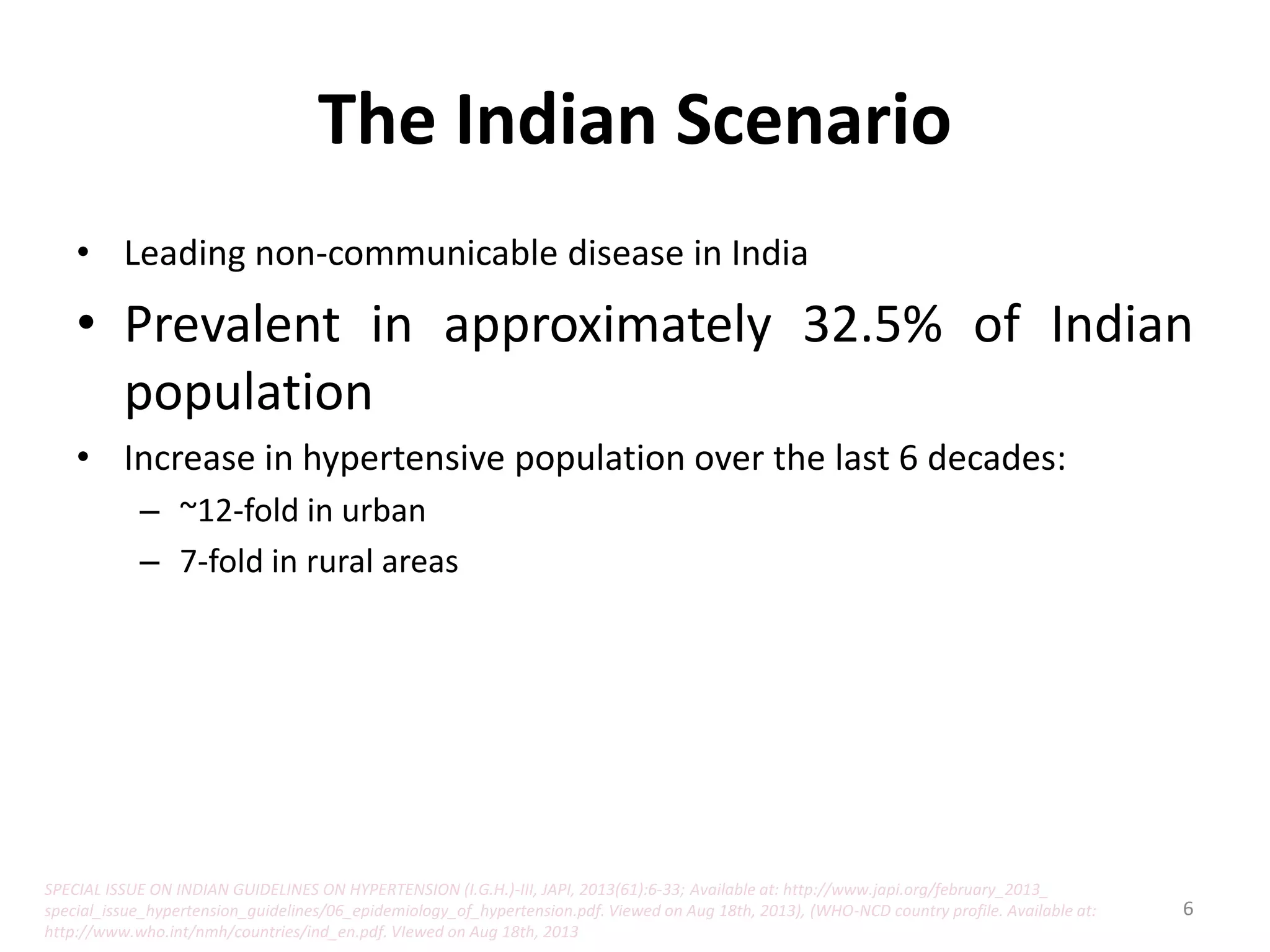
• Leading non-communicable disease in India
• Prevalent in approximately 32.5% of Indian
population
• Increase in hypertensive population over the last 6 decades:
– ~12-fold in urban
– 7-fold in rural areas
6
SPECIAL ISSUE ON INDIAN GUIDELINES ON HYPERTENSION (I.G.H.)-III, JAPI, 2013(61):6-33; Available at: http://www.japi.org/february_2013_
special_issue_hypertension_guidelines/06_epidemiology_of_hypertension.pdf. Viewed on Aug 18th, 2013), (WHO-NCD country profile. Available at:
http://www.who.int/nmh/countries/ind_en.pdf. VIewed on Aug 18th, 2013
HBP – High Blood Pressure; RF: risk factor
2.6
4
5.4
8.4
1.1 2
19.1
22.4
14.8
27
6.3
3.5
0
5
10
15
20
25
30
A B C D E F
Estimated
10-Year
Rate
(%)
Men Women
Estimated 10-Year Stroke Risk in 55-Year-Old Adults According to Levels of
Various Risk Factors Framingham Heart Study
A B C D E F
Systolic BP* 95-105 130-148 130-148 130-148 130-148 130-148
Diabetes No No Yes Yes Yes Yes
Cigarettes No No No Yes Yes Yes
Prior Atrial Fib. No No No No Yes Yes
Prior CVDNo No No No No Yes
Source: Stroke 1991;22:312-318. *BP in millimeters of mercury (mmHg)
Frequency Distribution of Untreated HTN by Age
Isolated Systolic
HTN
Isolated Diastolic
HTN
Systolic Diastolic
HTN
Why is blood pressure control so
important to health?
When your blood pressure is high:
• You are 4 times more likely to die from a
stroke
• You are 3 times more likely to die from heart
disease
• Even blood pressure that is slightly high can
put you at greater risk.
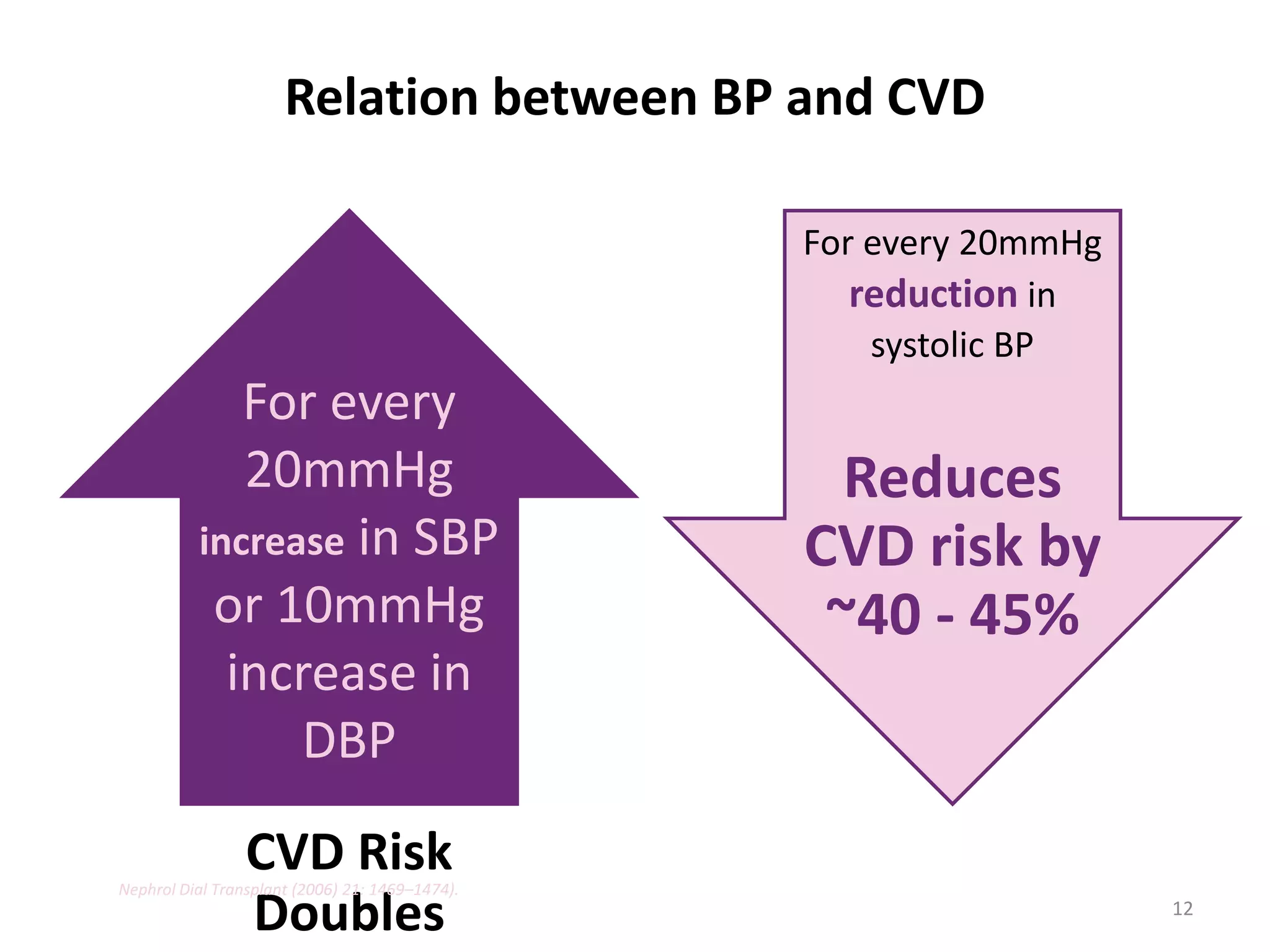
Relation between BP and CVD
For every
20mmHg
increase in SBP
or 10mmHg
increase in
DBP
CVD Risk
Doubles 12
Nephrol Dial Transplant (2006) 21: 1469–1474).
For every 20mmHg
reduction in
systolic BP
Reduces
CVD risk by
~40 - 45%
RECENT GUIDELINES IN HYPERTENSION
• ESC-ESH -2013
• INDIAN GUIDELINES-2013
• JNC 8 -2013
ESC 2013 GUIDELINES IN HYPERTENSION
(1) Epidemiological data on hypertension and BP control .
(2) Strengthening of the prognostic value of home blood pressure
monitoring (HBPM) and of its role for diagnosis and management of
hypertension, next to ambulatory blood pressuremonitoring(ABPM).
(3) Update of the prognostic significance of night-time BP, whitecoat
hypertension and masked hypertension.
(4) Re-emphasis on integration of BP, cardiovascular (CV) risk factors,
asymptomatic organ damage (OD) and clinical complications for total
CV risk assessment.
(5) Update of the prognostic significance of asymptomatic OD,
including heart, blood vessels, kidney, eye and brain.
(6) Reconsideration of the risk of overweight and target body mass
index (BMI) in hypertension.
ESC 2013 GUIDELINES IN HYPERTENSION
(7) Hypertension in young people.
(8) Initiation of antihypertensive treatment. More
evidence-based criteria and no drug treatment of high
normal BP.
(9) Target BP for treatment. More evidence-based
criteria and unified target systolic blood pressure (SBP)
(140 mmHg) in both higher and lower CV risk patients.
(10) Liberal approach to initial monotherapy, without
any all-ranking purpose.
(11) Revised schema for priorital two-drug
combinations.
(12) New therapeutic algorithms for achieving target BP.
ESC 2013 GUIDELINES IN HYPERTENSION
(13) Extended section on therapeutic strategies in
special conditions
(14) Revised recommendations on treatment of
hypertension in the elderly
(15) Drug treatment of octogenarians.
(16) Special attention to resistant hypertension and
new treatment approaches
(17) Increased attention to OD-guided therapy.
(18) New approaches to chronic management of
hypertensive disease.
Everyone can take five concrete steps to minimize the odds of
developing high BP and its adverse consequences.
• Healthy diet:
– promoting a healthy lifestyle with emphasis on proper nutrition for
infants and young people;
– reducing salt intake to less than 5 g of salt per day (just under a
teaspoon);
– eating five servings of fruit and vegetables a day;
– reducing saturated and total fat intake.
• Avoiding harmful use of alcohol i.e. limit intake to no more than
one standard drink a day
• Physical activity:
– regular physical activity and promotion of physical activity for
children and young people (at least 30 minutes a day).
– maintaining a normal weight: every 5 kg of excess weight lost can
reduce systolic blood pressure by 2 to 10 points.
• Stopping tobacco use and exposure to tobacco products
• Managing stress in healthy way such as through meditation,
appropriate physical exercise, and positive social contact.
Hypertension Control
Small differences in on-treatment BP translate
into major differences in clinical event rates
BUT…
Hypertension control remains abysmal
18
Journal of the American Society of Hypertension 4(1) (2010) 42–50, Nephrol Dial Transplant (2006) 21: 1469–1474,
CurrOpinNephrolHypertens. 2012;21(5):486-491
2 in 3
hypertensive patients
do not achieve BP<140/90mmHg
1 in 2
Stage 2 hypertensives
do not achieve BP goals
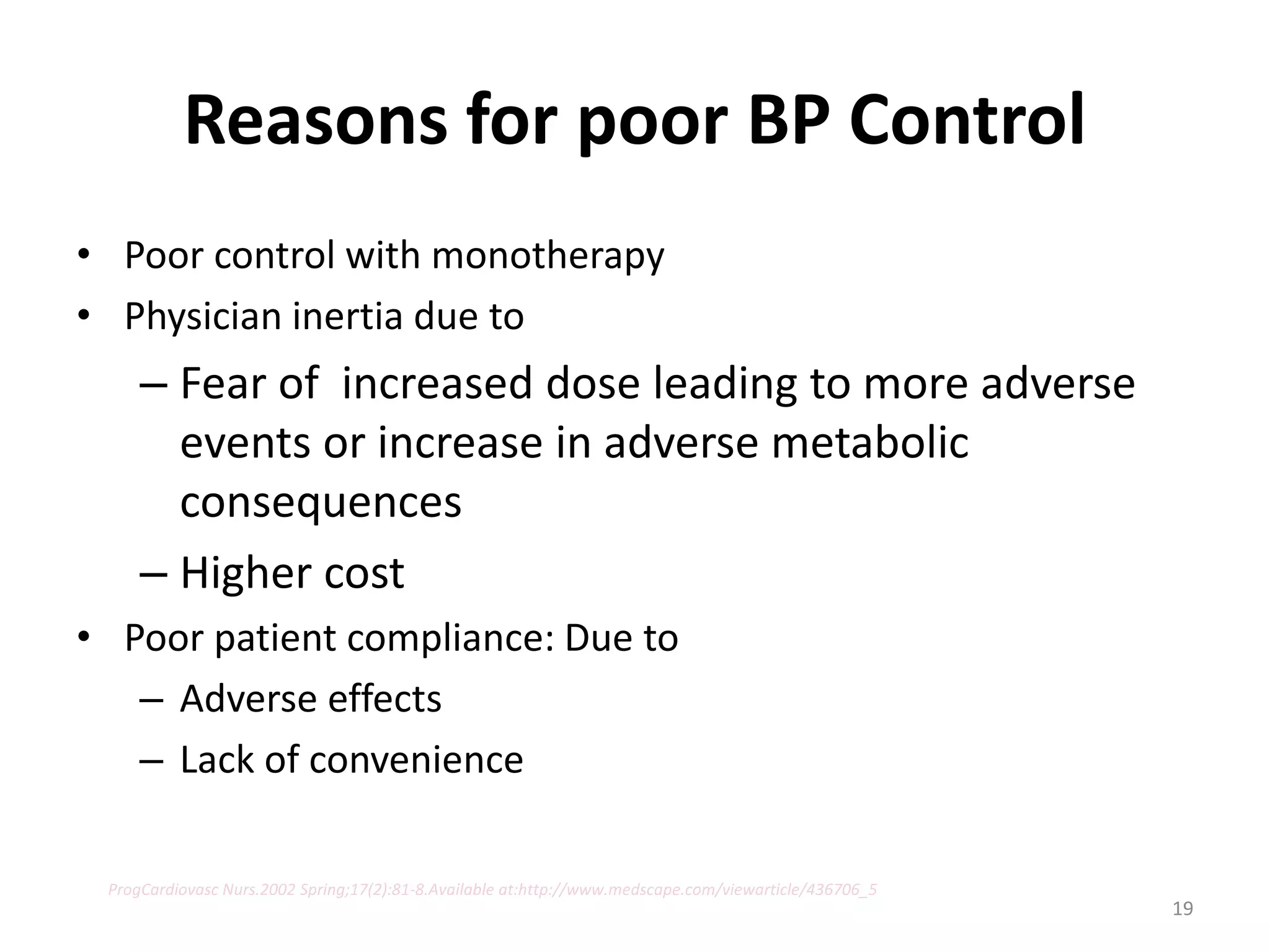
Reasons for poor BP Control
• Poor control with monotherapy
• Physician inertia due to
– Fear of increased dose leading to more adverse
events or increase in adverse metabolic
consequences
– Higher cost
• Poor patient compliance: Due to
– Adverse effects
– Lack of convenience
19
ProgCardiovasc Nurs.2002 Spring;17(2):81-8.Available at:http://www.medscape.com/viewarticle/436706_5
Traditional Stepped care approach
• Advocated by JNC over the past 30 years
20
Nephrol Dial Transplant (2006) 21: 1469–1474, Curr Opin Nephrol Hypertens. 2012;21(5):486-491
1. Start with Monotherapy
2. Uptitrate to higher dose if uncontrolled
3. If uncontrolled, add a 2nd agent
4. If uncontrolled, increase dose of 2nd agent
5. If uncontrolled, add 3rd agent
6. If uncontrolled, increase dose of 3rd agent
Efficacy
Increases
Safety
Decreases
Drawback of stepped care
• Low BP response rates with Monotherapy =
30-60% with different classes of drugs
21
Drug Responders (%)
Thiazides 50-55
Beta Blockers 45-50
Angiotensin Converting Enzyme Inhibitors 50-60
Calcium Channel Blockers 40-60
Alpha Blockers 35-40
Central Agonists 30-35
ProgCardiovasc Nurs.2002 Spring;17(2):81-8.Available at:http://www.medscape.com/viewarticle/436706_5
• No matter which drug is employed, monotherapy can
effectively reduce BP in only a limited number of
hypertensive patients and that most patients require the
combination of at least two drugs to achieve BP control .
(2007 ESH/ESC Guidelines)
22
INITIAL MONOTHERAPY
• The obvious advantage of initiating treatment
with monotherapy
– using a single agent,
– being able to ascribe effectiveness and adverse
effects to that agent.
• The disadvantages are that,
– when monotherapy with one agent is ineffective
or insufficiently effective, finding an alternative
monotherapy that is more effective or better
tolerated may be a painstaking process and
discourage adherence.
Paradigm Shift: Initiate with Combination
Therapy
Appropriate solution to the failure of
stepped care approach
Need:
• Pinpointing the cause of elevated BP is very difficult, if not
impossible
• Drug therapy accurately directed at anyone component routinely
evokes counterregulatory mechanisms which reduce the
magnitude of the overall response
• Blood pressure variability, a strong predictor of stroke and MI,
decreases with combination therapy when compared with
monotherapy
24
Nephrol Dial Transplant (2006) 21: 1469–1474, Journal of the American Society of Hypertension 4(1) (2010) 42–50, Eur Heart J. 2011
Oct;32(20):2499-506
JNC 8 2014
High Risk Hypertension
• Gender - Male
• Age - men ≥55 years;
women ≥65 years
• Dyslipidemia
• Diabetes Mellitus
• Blood glucose levels
• Obesity
• Family history
• Asymptomatic organ damage
• Cerebrovascular disease
• CHD
• PAD
• Renal Disease
• Retinopathy
27
CVD - cardiovascular disease, CKD - chronic kidney disease
Eur Heart J. 2013;34(28):2159-219
Stage 1 and Stage 2 hypertensives with > 2 risk factors & with
end organ damage, symptomatic CVD, CKD stage 3/ 4 or diabetes
Identification of High risk hypertensives
• The total CV risk is expressed as the absolute risk of dying
from CVD within 10 years
28
Stratification of total CV risk in categories of low, moderate, high and very high risk according to SBP and DBP
and prevalence of RFs, asymptomatic OD,diabetes,CKD stage or symptomatic CVD.
Eur Heart J. 2013;34(28):2159-219
Recommended Combinations
29
Eur Heart J. 2013 Jul;34(28):2159-219
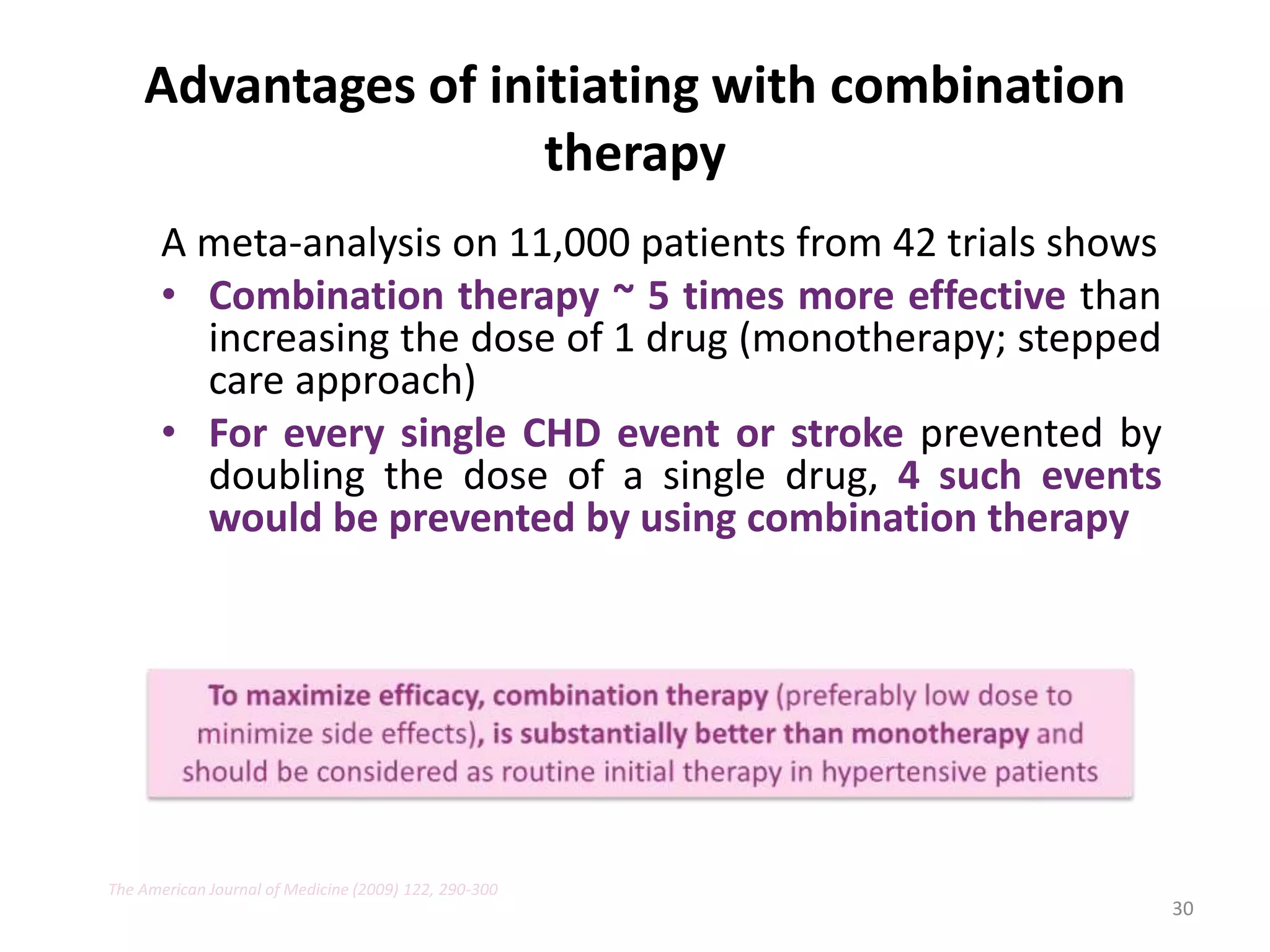
Advantages of initiating with combination
therapy
A meta-analysis on 11,000 patients from 42 trials shows
• Combination therapy ~ 5 times more effective than
increasing the dose of 1 drug (monotherapy; stepped
care approach)
• For every single CHD event or stroke prevented by
doubling the dose of a single drug, 4 such events
would be prevented by using combination therapy
30
The American Journal of Medicine (2009) 122, 290-300
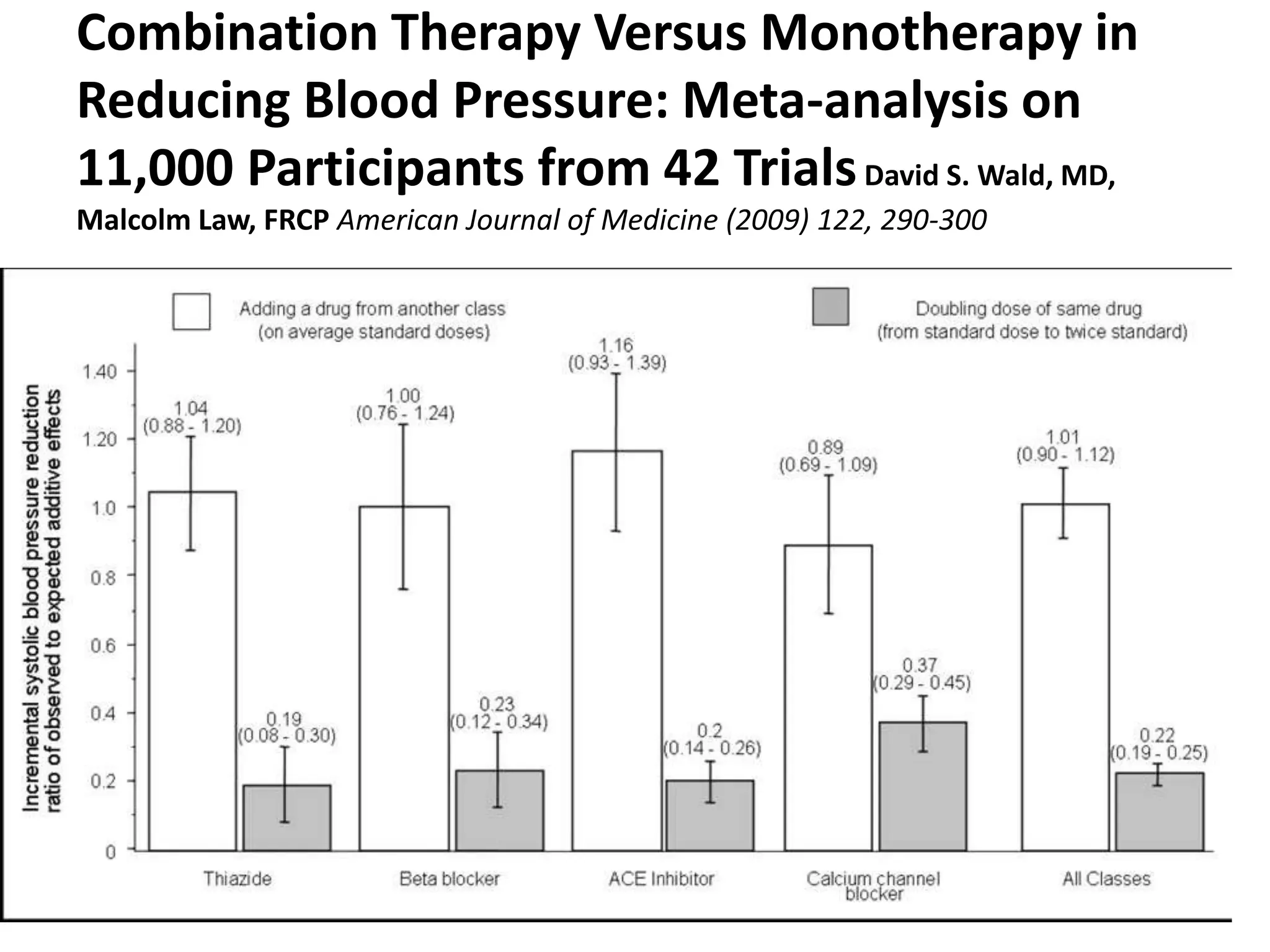
Combination Therapy Versus Monotherapy in
Reducing Blood Pressure: Meta-analysis on
11,000 Participants from 42 TrialsDavid S. Wald, MD,
Malcolm Law, FRCP American Journal of Medicine (2009) 122, 290-300
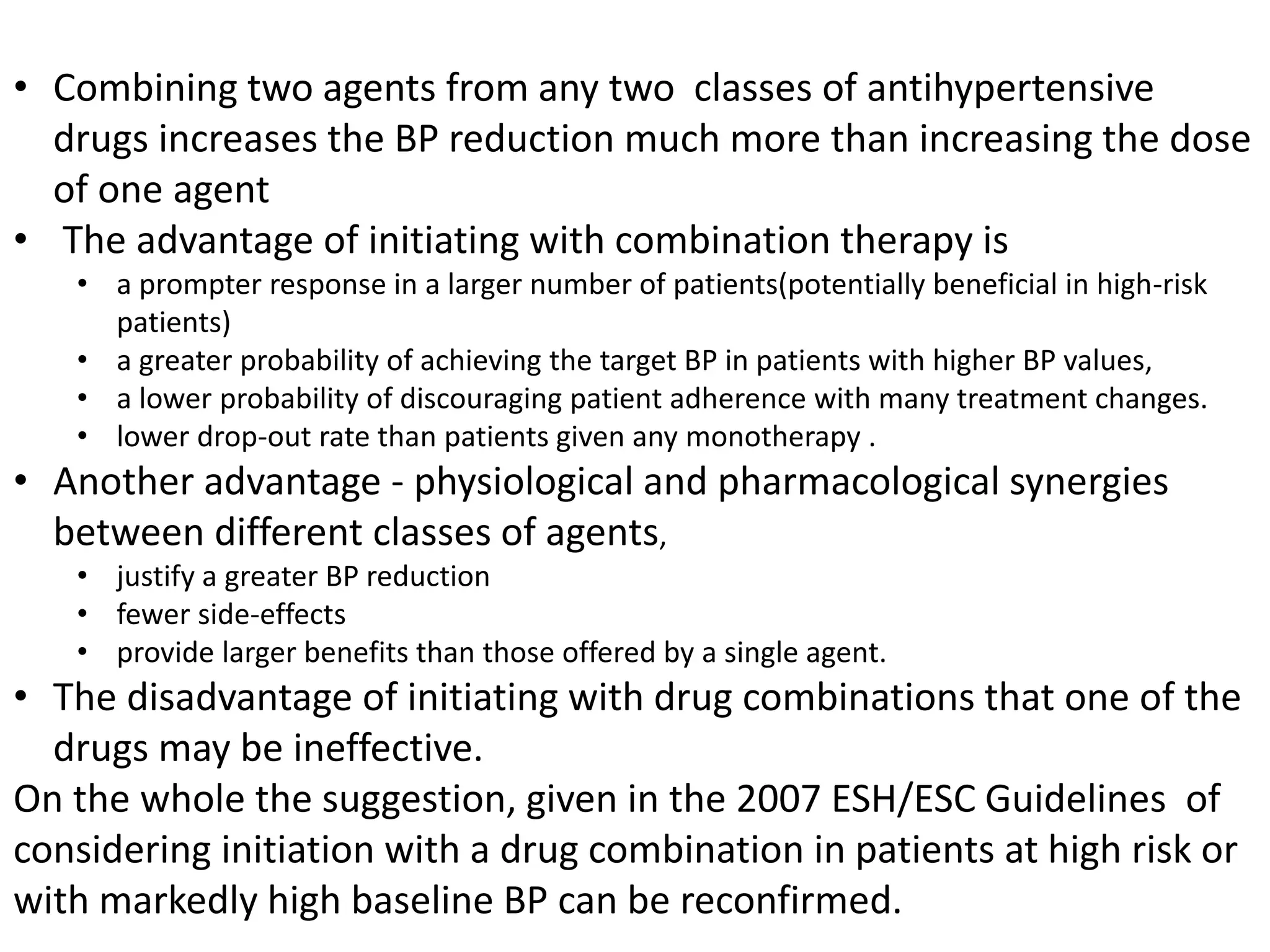
• Combining two agents from any two classes of antihypertensive
drugs increases the BP reduction much more than increasing the dose
of one agent
• The advantage of initiating with combination therapy is
• a prompter response in a larger number of patients(potentially beneficial in high-risk
patients)
• a greater probability of achieving the target BP in patients with higher BP values,
• a lower probability of discouraging patient adherence with many treatment changes.
• lower drop-out rate than patients given any monotherapy .
• Another advantage - physiological and pharmacological synergies
between different classes of agents,
• justify a greater BP reduction
• fewer side-effects
• provide larger benefits than those offered by a single agent.
• The disadvantage of initiating with drug combinations that one of the
drugs may be ineffective.
On the whole the suggestion, given in the 2007 ESH/ESC Guidelines of
considering initiation with a drug combination in patients at high risk or
with markedly high baseline BP can be reconfirmed.
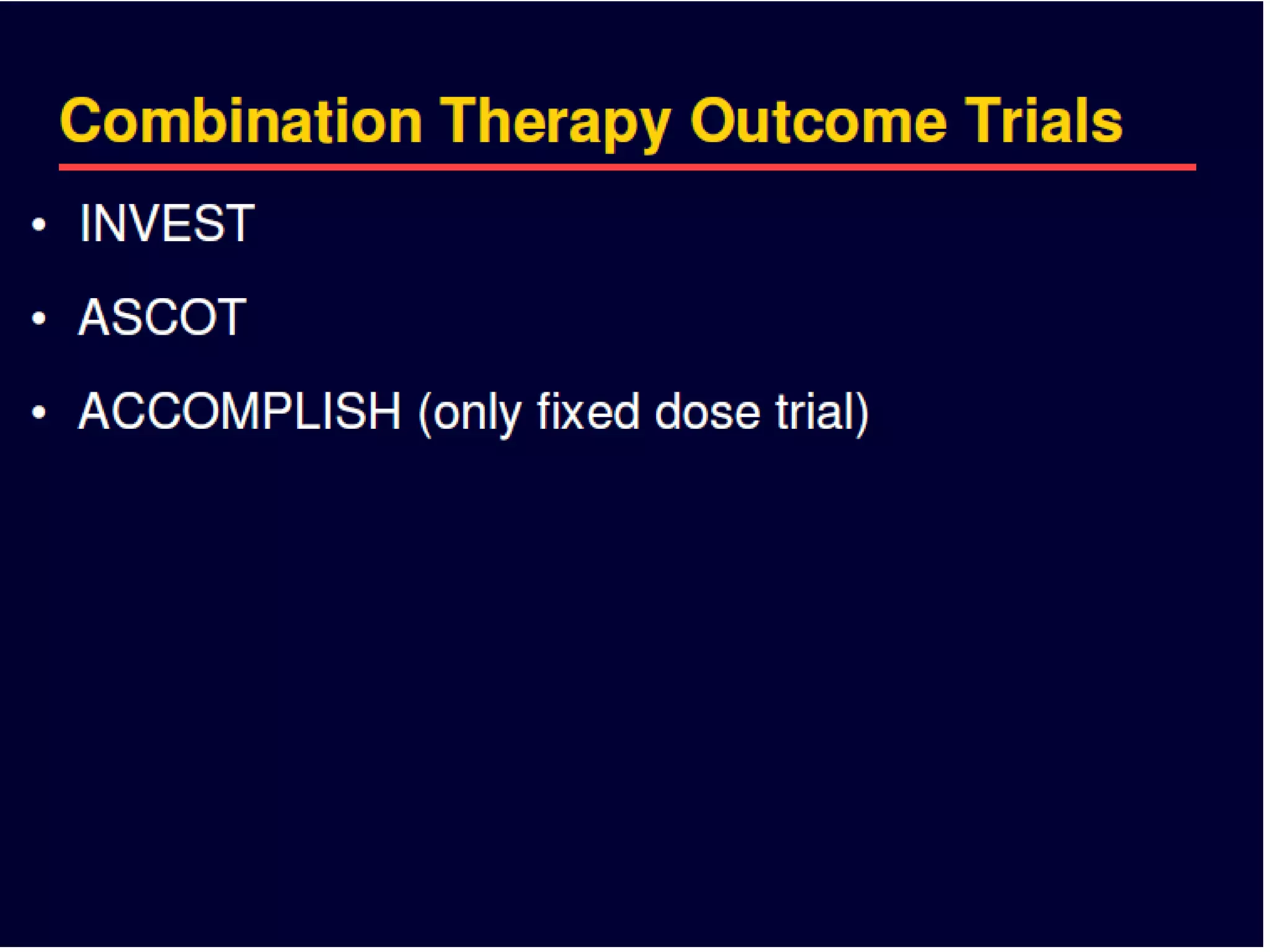
INVEST TRIAL
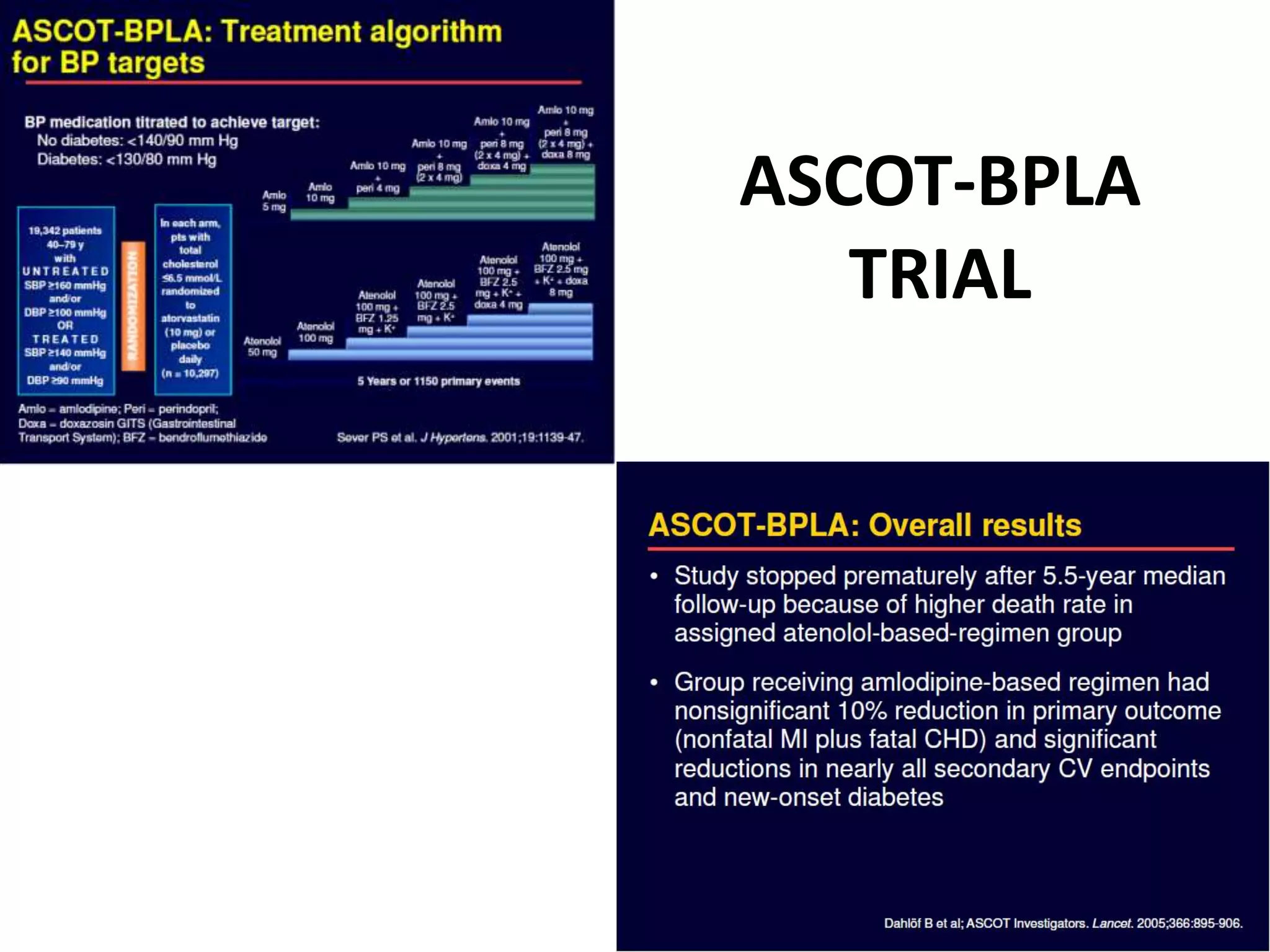
ASCOT-BPLA
TRIAL
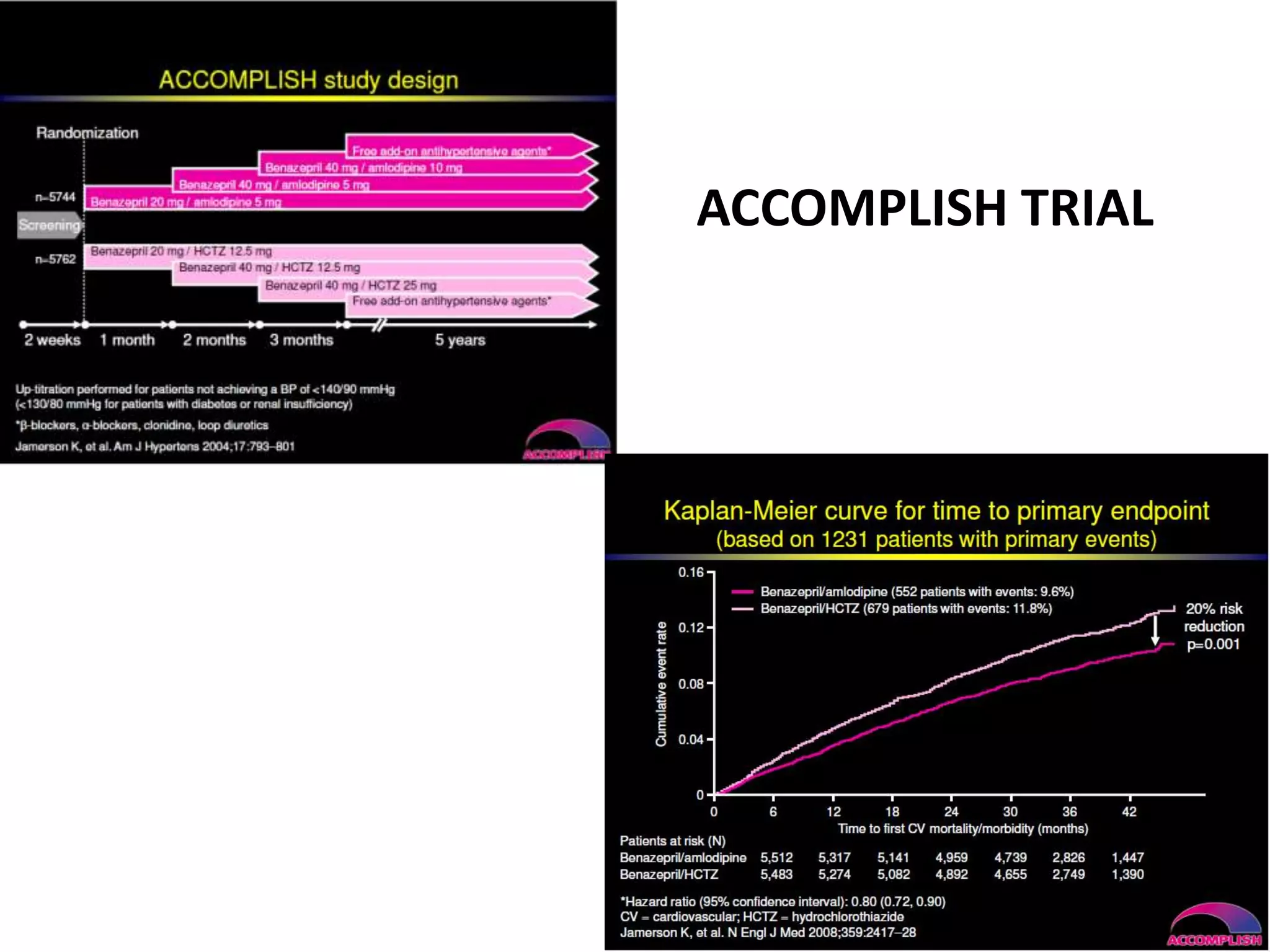
ACCOMPLISH TRIAL
Clinical evidence - ACCELERATE
ACCELERATE: Aliskiren and the calcium channel blocker
amlodipine combination as an initial treatment strategy for hypertension
control
• Parallel-group, randomized trial conducted across 10 countries
• 318 patients assigned to aliskiren, 316 to amlodipine and 620 to
aliskiren plus amlodipine for 24 weeks
• Compared to monotherapy, initial combination therapy showed
– 6.5 mm Hg greater reduction in mean SBP
– Lesser percentage of patients withdrawing
from therapy due to adverse events
42
Lancet 2011; 377: 312–320
Clinical evidence - STITCH
STITCH: Simplified Treatment Intervention to Control Hypertension
• Evaluated in patients with uncontrolled hypertension*
• Advocated the initial use of a low dose fixed-dose combination of
diuretic/ ACEI or diuretic/ ARB with subsequent uptitration of dose if
required to achieve target BP
• Initiation with low-dose combination therapy helped greater reduction of
SBP with more patients achieving target BP
43
* defined as SBP ≥ 140mmHg or DBP ≥ 90mmHg for patients without diabetes mellitus or SBP ≥ 130mmHg
or DBP ≥ 80mmHg for patients with diabetes mellitus Hypertension. 2009;53:646-653
-22.6
-10.4
-17.5
-8.2
-25
-20
-15
-10
-5
0
SBP DBP
Initial Combination Traditional Stepped Care
64.7
52.7
30
40
50
60
70
Initial Combination Traditional Stepped
Care
Reduction
in
BP
(mm
Hg)
%
patients
achieving
Traget
BP
Clinical evidence
• Multicenter, randomized, double-blind, 12-week study
• 364 stage 2 hypertensive patients allocated to
– fixed-dose combination therapy with Amlodipine besylate/Benazepril HCl
(5/20 mg/d titrated to 10/20 mg/d) or
– Amlodipine besylate monotherapy (5 mg/d titrated to 10 mg/d)
44
Am J Hypertens. 2004 Jun;17(6):495-501
-42.3
-30.4
-50
-40
-30
-20
-10
0
Initial Combination
Traditional Stepped
Care
Greater reduction in SBP was
seen in patients on initial
combination therapy, in
patients with SBP > 180 mmHg
Reduction
in
SBP
(mm
Hg)
Clinical evidence
• More patients randomized to initial combination therapy achieved the
primary endpoint & target BP <140/90 mm Hg
45
Am J Hypertens. 2004 Jun;17(6):495-501
61
43.3
30
35
40
45
50
55
60
65
Initial Combination Traditional Stepped
Care
%
patients
achiveing
target
BP
<
140/90mm
Hg
74.2
53.9
30
40
50
60
70
80
Initial Combination Traditional Stepped
Care
%
patients
achiveing
primary
endpoint
Primary endpoint: Reductions in SBP
• 25 mm Hg, if baseline SBP <180 mm Hg, or
• > 32 mm Hg, if baseline SBP > 180 mm Hg
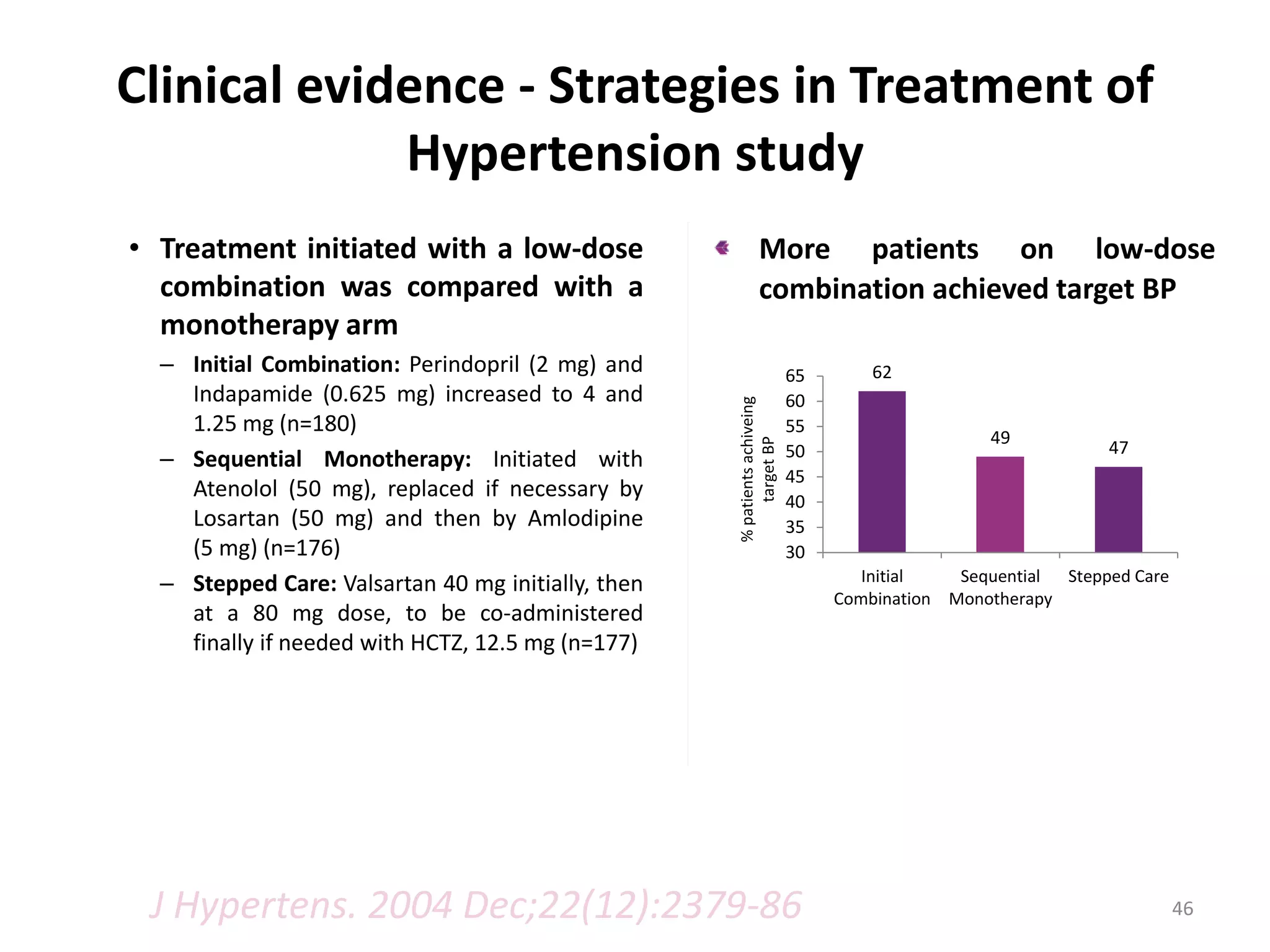
Clinical evidence - Strategies in Treatment of
Hypertension study
• Treatment initiated with a low-dose
combination was compared with a
monotherapy arm
– Initial Combination: Perindopril (2 mg) and
Indapamide (0.625 mg) increased to 4 and
1.25 mg (n=180)
– Sequential Monotherapy: Initiated with
Atenolol (50 mg), replaced if necessary by
Losartan (50 mg) and then by Amlodipine
(5 mg) (n=176)
– Stepped Care: Valsartan 40 mg initially, then
at a 80 mg dose, to be co-administered
finally if needed with HCTZ, 12.5 mg (n=177)
46
J Hypertens. 2004 Dec;22(12):2379-86
More patients on low-dose
combination achieved target BP
62
49
47
30
35
40
45
50
55
60
65
Initial
Combination
Sequential
Monotherapy
Stepped Care
%
patients
achiveing
target
BP
Matched-cohort study - Initial Combination Therapy Provides
More Prompt BP Control
Compared to Monotherapy, patients initiated on combination therapy
47
Hypertension. 2013;61:309-318
Showed higher % patients
achieving target BP
27.9
40.3
56.1
19.6
32.6
50.6
0
20
40
60
3 months 6 months 12 months
Initial Combination Monotherapy
Showed faster achievement
of BP control
9.7
11.9
6
7
8
9
10
11
12
13
Initial Combination Monotherapy
BP
control
achieved
in
Months
%patients
achiveing
target
BP
Prompt and effective BP control
achieved by initial combination
therapy correlated with
34% risk reduction in
CV events and death
Key advantages of initiating with
combination therapy
• Faster response in a larger number of
patients (beneficial in high-risk patients)
• Greater feasibility of achieving the target
BP in patients with higher BP values
• Increased patient adherence due to
minimal treatment changes and better
tolerability
• Improved long term outcomes
48
Efficacy
Increases
Safety
Increases
Eur Heart J. 2013 Jul;34(28):2159-219; Curr Opin Nephrol Hypertens. 2012;21(5):486-491
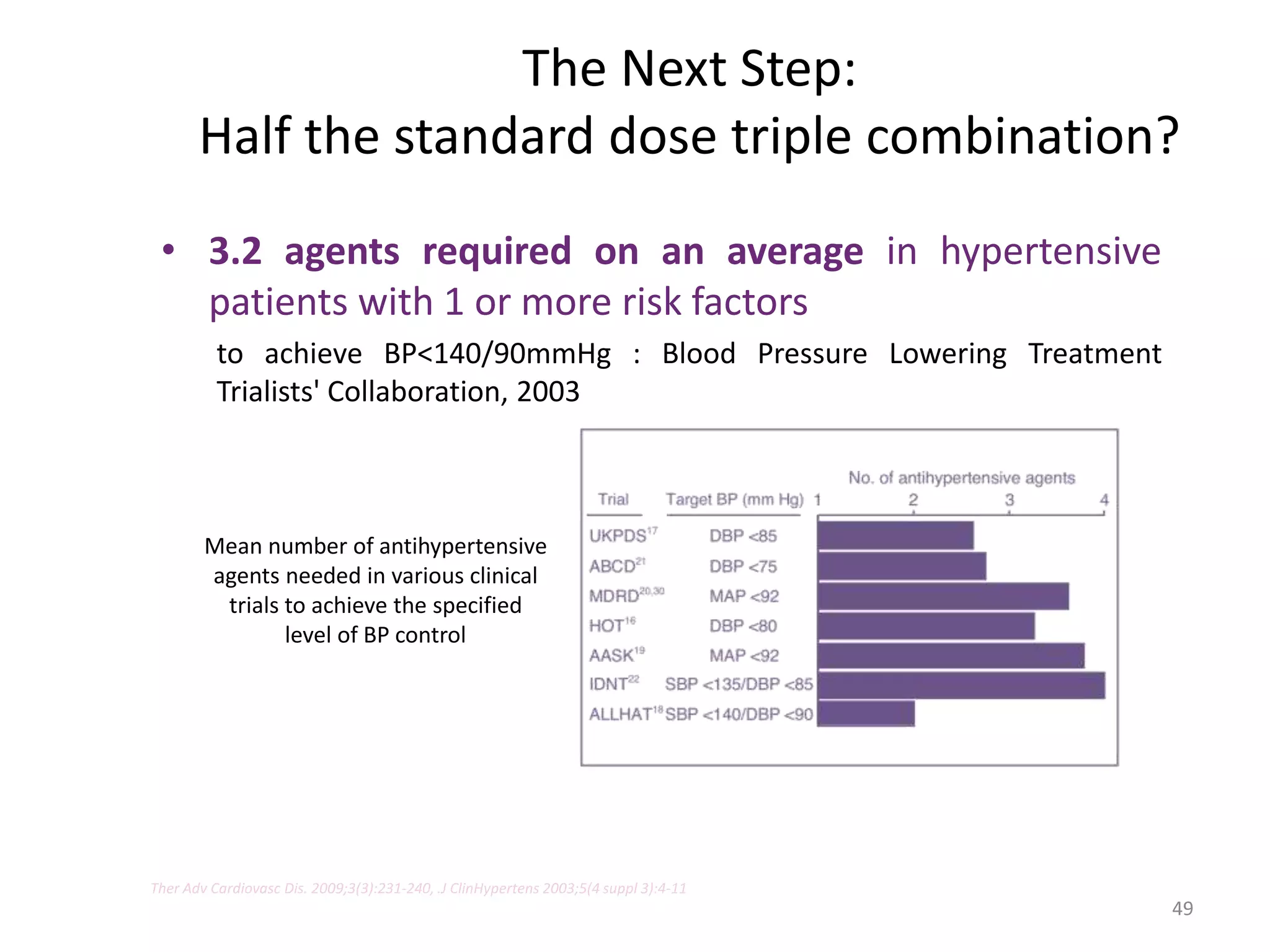
The Next Step:
Half the standard dose triple combination?
• 3.2 agents required on an average in hypertensive
patients with 1 or more risk factors
to achieve BP<140/90mmHg : Blood Pressure Lowering Treatment
Trialists' Collaboration, 2003
49
Ther Adv Cardiovasc Dis. 2009;3(3):231-240, .J ClinHypertens 2003;5(4 suppl 3):4-11
Mean number of antihypertensive
agents needed in various clinical
trials to achieve the specified
level of BP control
Half the standard dose triple
combination: for high risk hypertension?
• Advantages of low dose combination therapy studied
• 354 randomized, double blind, placebo-controlled trials assessing 5
classes of antihypertensive agents (thiazides, βblockers, ACEI, ARBs and
CCBs) in a fixed dose were studied
• Meta-analysis showed that with all the categories of drugs assessed,
BP reductions with half standard dose were only about 20% less
than those with standard dose
50
BMJ. 2003;326:1427-1434
Half the standard dose triple combination:
Effectiveness
• Three drugs used in combination at half the standard dose
reduced SBP by 20 mm Hg and DBP by 11 mm Hg
51
BMJ. 2003;326:1427-1434
One drug Two drugs Three drugs
SBP (mmHg)
6.7
(6.1 to 7.2)
13.3
(12.4 to 14.1)
19.9
(18.5 to 21.3)
DBP (mmHg)
3.7
(3.1 to 4.3)
7.3
(6.2 to 8.3)
10.7
(9.1 to 12.4)
Adverse effects were less than expected
Efficacy: BP lowering effects of drugs when used at half standard dose separately and in combination. *Reductions in
blood pressure adjusted to a usual pretreatment blood pressure of 150/90 mm Hg, the average blood pressure in
people aged 50–69 years who have a stroke or IHD event
Half the standard dose triple
combination:Effectiveness
• Reduction in BP by combination of three low-dose
drugs co-related with reduction in
– Stroke risk by two thirds
– Heart disease by half
• Every patient at increased risk would benefit from
using three drugs, apart from those with
contraindications to a particular drug
52
BMJ. 2003;326:1427-1434
Half the standard dose triple
combination: Effectiveness
• Minimizes the need for frequent titration
• Improves BP control right at the outset of treatment
• Faster response helps greater number of hypertensive patients
achieving BP control
• Efficacious in all subgroups of hypertensive patients (leading to a
better response rate)
• Greater BP controlwith fewer side-effects improves patient
compliance
53
ProgCardiovasc Nurs.2002 Spring;17(2):81-8.Available at:http://www.medscape.com/viewarticle/436706_5
Half the standard dose triple
combination: Effectiveness
Low-dose combination therapy
• Simplifies antihypertensive treatment enabling physicians to achieve
control in most patient groups
• Offers an effective alternative as first-line treatment for
hypertension, or for early use in the course of treating hypertension
• The recent ESH reappraisal of the European guidelines states that
the best combinations for hypertension treatment are combinations
of agents blocking the RAS with thiazide diuretics or CCBs and the
combination of all three drugs when needed
54
Patient Preference and Adherence 2010:4 105–113
Half the standard dose
ARB + CCB + HCTZ
The complementary
mechanisms of action
(MOA) of telmisartan
(ARB), amlodipine (CCB)
and HCTZ (diuretic)
result in additive effects
on BP reduction with
reduced side-effects
55
Ther Adv Cardiovasc Dis. 2013;7(5):246-259, viewed at http://www.medscape.com/viewarticle/812836_print viewed on Nov 25, 2013.
Half the standard dose HCTZ –
6.25mg
• An important pharmacotherapeutic intervention to achieve BP control
• Highly versatile - Augments the efficacy of nearly all other classes of
antihypertensives
• Shows BP reduction of 7/ 6 mm Hg
• Provides clinically meaningful BP lowering while minimizing adverse
effects, such as electrolyte disturbances, cholesterol elevations and
increases in serum uric acid levels
56
Seminars in Nephrology November 2011; 31(6): 495-502, Am J Med. 1996 Sep 30;101(3A):53S-60S
HCTZ Dosage (mg per day) 6.25 12.5 25 50
SBP reduction (mm Hg) 7 14 21 23
DBP reduction (mm Hg) 6 11 14 17
Half the standard dose HCTZ –
6.25mg
• Recent data have demonstrated that when used at low
doses (6.25 mg HCTZ), diuretics
– Lack significant metabolic side effects while bringing about
significant reductions in blood pressure
– Minimize adverse effects, such as electrolyte disturbances,
cholesterol elevations and increases in serum uric acid
levels
– Is devoid of clinical and metabolic side effects
– Near zero average change in serum potassium
• The incidence of hypokalemia and hyperuricemia was
greater for 25 mg per day of hydrochlorothiazide than
for 6.25 mg per day
57
Am J Med. 1996 Sep 30;101(3A):71S-82S , Am J Med. 1996 Sep 30;101(3A):53S-60S, Journal of cardiovascular pharmacology 31:3 1998 Mar pg
384-90, http://www.aafp.org/afp/2000/0515/p3049.html?printable=afp
Half the standard dose HCTZ – 6.25mg
• Adding small doses of HCTZ (6.25 mg) to Bisoprolol (10
mg)
– More effective than high-dose HCTZ monotherapy (25 mg)
– More effective than high-dose bisoprolol (40 mg)
58
Nephrol Dial Transplant (2006) 21: 1469–1474
Half the standard dose HCTZ – 6.25mg
Combination therapy of 6.25mg HCTZ with other antihypertensive agents
increased efficacy with reduced side-effects
• Low-dose combination of Bisoprolol 2.5 - 5mg + HCTZ 6.25mg
– Very effective in controlling 24 hour BP in patients with mild to moderate
hypertension
– Reduces DBP to <90mmHg in 61% patients with a safety profile similar to
placebo
• Metoprolol + Range of HCTZ (6.25mg/ 12.5mg/ 25mg)
– Low-dose combinations were almost as effective as high doses of
theindividual drugs (differences of 1-2.5 mm Hg)
– Serum potassium decreased and uric acid increased with increasing doses of
HCTZ
59
Am Fam Physician. 2000 May 15;61(10):3049-3056, Arch Intern Med. 1994 Jul 11;154(13):1461-8, Am J Hypertens. 2006 Dec;19(12):1217-25
Half the standard dose HCTZ – 6.25mg
• Enalapril + 6 mg HCTZ vs. Enalapril
– Significant reduction in mean BP (p<0.01) by 7.3mmHg (95% CI, -9.0; -6.2)
compared to Enalapril alone [4.1mmHg (-5.9; -2.9)]
– Synergistic with enalapril with absence of metabolic adverse effects
• Moexipril 3.75mg and 6.25 mg HCTZ
– Significantly reduced seating SBP and DBP (-7.6/-7.6mmHg) vs placebo (n=223;
+0.2/-3.9mmHg; p<0.05)
– 54% patients achieved good BP response (SDBP < or =90 mm Hg or > 10 mm
Hg decrease from baseline) vs 28% on placebo (p<0.001)
– Similar clinical and metabolic side-effects between the combination and
placebo groups
60
Am J Hypertens.1995 Jul;8(7):727-31, J CardiovascPharmacol. 1998 Mar;31(3):384-90
ARB + Half the standard dose HCTZ –
6.25mg
• Candesartan 8mg+ HCTZ 6.25mg
vs. Candesartan 12mg
– Similar therapeutic efficacy at the
end of 24 weeks in both groups
– No changes in the glucose and
lipid variables were observed in
both groups
61
Heart Vessels. 2013 May;28(3):316-22, Blood Press Monit. 2010 Dec;15(6):308-11
152 148
134
128
84
90
71 74
0
20
40
60
80
100
120
140
160
Candesartan 12mg (n=13) Candesartan 8mg + HCTZ
6.25mg(n=13)
SBP baseline SBP after treatment DBP baseline DBP after treatment
BP
measured
(mmHg)
Candesartan 8mg and HCTZ 6.25mg:
Another study in 41 hypertensive patients
Effective decrease in ambulatory and clinic BP levels
ARB + Half the standard dose
HCTZ – 6.25mg
Adding small doses of HCTZ (6.25 mg) to ARB
• Very effective in lowering clinic and ABP, particularly for
night-time BP
• Lowers clinic and ABPs for both SBP & DBP
• Pronounced BP reduction in sleep BP.
• Decreases rate of nondippers from 48.8 to 36.6%
62
Blood Press Monit. 2010 Dec;15(6):308-11
Half the standard dose
Telmisartan + Amlodipine + HCTZ
• A unique combination: Combines the only ARB currently indicated for the
prevention of CVD progression (Telmisartan) with one of the most broadly
used and well-studied CCBs (Amlodipine) and the most frequently used
diuretic (HCTZ)
• Reductions in BP with low dose are as follows
63
Vascular Health and Risk Management 2013:9 95–104, Curr Opin Nephrol Hypertens. 2012;21(5):486-491,
https://us.micardis.com/hcp/hypertension.jsp,, Am Fam Physician. 2000 May 15;61(10):3049-3056, Postgrad Med J 2000;76:350–353, Clin
Ther. 2001 Jun;23(6):833-50.
SBP (mm Hg) DBP ( mm Hg)
Telmisartan 20mg 6-8 6
HCTZ 6.25 mg 7 6
Amlodipine 2.5 mg 9 -12 6 -10
CONTROL Hypertension Study
• Efficacy of Telmisartan 20mg + Amlodipine 2.5mg + HCTZ 6.25mg was
assessed in the Control Hypertension study
• 512 (Intent-to-treat population) Stage 1 and 2 hypertension patients were
treated for 8 weeks with Triple Pill
– Telmisartan 20/40mg + Amlodipine 2.5/5mg +HCTZ 6.25/12.5mg fixed dose
combination tablets) versus Telmisartan 40/80 mg + HCTZ 12.5mg
64
Triple pill was found to be as
effective as the double drug therapy
in normalizing BP in these patients
BP control was seen as early as 4
weeks
Data on File
CONTROL Hypertension Study
• In patients in whom the dose was not up-titrated.
• 78% patients (on low dose triple combination) in mITT attained
normalization of BP at week 8 vs. 72% on Telmi / HCTZ
65
Data on File
CONTROL Hypertension Study
• 96% patients showed efficacy (assessed by physician’s global
evaluation of efficacy) response of “excellent” or “good” with the
triple pill.
• The triple pill was also well tolerated and enhanced patient
compliance
• Combination of Telmisartan 20 / Amlodipine 2.5 mg/
Hydrochlorthiazide 6.25 mg was found to have a significant effect on
normalization of BP in patients with Stage I & II hypertension with
good tolerability of the drug.
• Low dose of triple pill resulted in early normalization of BP in
significantly greater number of patients at 4 weeks
66
Data on File
Take home message
• Hypertension a global risk
• For every 20mmHg reduction in systolic BP, the
risk of CVD reduces by ~40 - 45%
• 30-50% patients do not achieve BP goals
• Traditional stepped care therapy has inherent
disadvantages - Efficacy and Safety move in
opposite directions
• Initiating with combination therapy an
appropriate solution to the failure of stepped
care approach
67
Take home message
• Combination therapy 5 times more effective than
increasing dose of one drug with efficacy and
safety moving in the same direction
• Data suggests ~ 3 agents required in
hypertensive patients with 1 or more risk factors
• Three drugs used in combination at half the
standard dose reduced SBP by 20 mm Hg and
DBP by 11 mm Hg that corelates to reduction in
stroke risk by two thirds & heart disease by half
68
Take home message
• Adding 3 drugs in small doses would give the
benefit of BP reduction right at the start
compared to uptitration
• Low dose Telmisartan + Amlodipine + HCTZ - a
unique combination
• In patients in whom the response to
monotherapy with a diuretic, ARB, or CCB is such
that the patient’s BP remains >20⁄10 mm Hg
above target, a rational ‘‘second step’’ might
involve up-titration directly to triple-combination
therapy
69
THANK YOU
Relation of Beta-Blocker–Induced Heart Rate
Lowering and Cardioprotection in Hypertension
Relation of Beta-Blocker–Induced Heart Rate
Lowering and Cardioprotection in Hypertension
Relation of Beta-Blocker–Induced Heart Rate
Lowering and Cardioprotection in Hypertension
Hypertension
• Global public health crisis
• 55% of all CVD are caused due to complications of hypertension
• Hypertension – the main cause of
– 45% of deaths due to heart disease &
– 51% of deaths due to stroke
75
WHO Global brief on hypertension 2013 Available at: http://apps.who.int/iris/bitstream/10665/79059/1/WHO_DCO_WHD_2013.2_eng.pdf.
Viewed on Aug 18th, 2013
Relation between BP and CVD
For every
20mmHg
increase in SBP
or 10mmHg
increase in
DBP
CVD Risk
Doubles 76
Nephrol Dial Transplant (2006) 21: 1469–1474).
For every 20mmHg
reduction in
systolic BP
Reduces
CVD risk by
~40 - 45%
Traditional Stepped care approach
• Advocated by JNC over the past 30 years
77
Nephrol Dial Transplant (2006) 21: 1469–1474, Curr Opin Nephrol Hypertens. 2012;21(5):486-491
1. Start with Monotherapy
2. Uptitrate to higher dose if uncontrolled
3. If uncontrolled, add a 2nd agent
4. If uncontrolled, increase dose of 2nd agent
5. If uncontrolled, add 3rd agent
6. If uncontrolled, increase dose of 3rd agent
Efficacy
Increases
Safety
Decreases
Drawback of stepped care
• Low BP response rates with Monotherapy =
30-60% with different classes of drugs
78
Drug Responders (%)
Thiazides 50-55
Beta Blockers 45-50
Angiotensin Converting Enzyme Inhibitors 50-60
Calcium Channel Blockers 40-60
Alpha Blockers 35-40
Central Agonists 30-35
ProgCardiovasc Nurs.2002 Spring;17(2):81-8.Available at:http://www.medscape.com/viewarticle/436706_5
INITIAL MONOTHERAPY
• The obvious advantage of initiating treatment
with monotherapy
– using a single agent,
– being able to ascribe effectiveness and adverse
effects to that agent.
• The disadvantages are that,
– when monotherapy with one agent is ineffective
or insufficiently effective, finding an alternative
monotherapy that is more effective or better
tolerated may be a painstaking process and
discourage adherence.
Paradigm Shift: Initiate with Combination
Therapy
Appropriate solution to the failure of
stepped care approach
Need:
• Pinpointing the cause of elevated BP is very difficult, if not
impossible
• Drug therapy accurately directed at anyone component routinely
evokes counterregulatory mechanisms which reduce the
magnitude of the overall response
• Blood pressure variability, a strong predictor of stroke and MI,
decreases with combination therapy when compared with
monotherapy
80
Nephrol Dial Transplant (2006) 21: 1469–1474, Journal of the American Society of Hypertension 4(1) (2010) 42–50, Eur Heart J. 2011
Oct;32(20):2499-506
The NEXT STEP in hypertension
management
Paradigm shift from stepped care to
initial combination therapy
81
Combination Therapy Versus Monotherapy in
Reducing Blood Pressure: Meta-analysis on 11,000
Participants from 42 Trials David S. Wald, MD, Malcolm Law,
FRCP American Journal of Medicine (2009) 122, 290-300
•Combining drugs from different
classes is approximately 5 times more
effective in lowering blood pressure
than increasing the dose of 1 drug.
•Combination therapy is the preferred
initial strategy in the treatment of high
blood pressure.
Advantages of initiating with combination
therapy
• Combination therapy improves tolerability
– Lower doses in combination minimises the side effects
– Side effects associated with a one agent are neutralized by
the pharmacologicproperties of the second drug
• Combination therapy enhances adherence to therapy
– Promptly achieves goal BP
– Helps reducing both the number and the frequency of dosing
• Associated with better long-term blood pressure
control
83
Journal of the American Society of Hypertension 4(1) (2010) 42–50, American Heart Journal. 2011;162(2):340-346
Approach to Hypertension - Combination therapy.pptx

Approach to Hypertension - Combination therapy.pptx

  • 1.
    Approach to Hypertension -Combination therapy DR. SANDEEP BANSAL DM (Cardiology), DNB (Cardiology), MNAMS, FSCAI,FAPSIC Senior Cardiologist HEAD OF DEPARTMENT Department of Cardiology Vardhaman Mahavir Medical College & Safdarjang Hospital New Delhi
  • 2.
    World Health Day2013: measure your blood pressure, reduce your risk News release 3 April 2013 | Geneva - To mark World Health Day on 7 April, WHO is calling for intensified efforts to prevent and control hypertension, also known as high blood pressure. Worldwide, high blood pressure is estimated to affect more than one in three adults aged 25 and over, or about one billion people. Hypertension is one of the most important contributors to heart disease and stroke – which together make up the world’s number one cause of premature death and disability. Researchers estimate that high blood pressure contributes to nearly 9.4 million deaths from cardiovascular disease each year. It also increases the risk of conditions such as kidney failure and blindness. http://www.who.int/mediacentre/news/releases/2013/world_health_day_20130403/en/index.html accessed on 2/5/2013 WHO – World Health Organization
  • 3.
    Lancet 2012; 380:601-610 THE LANCET, 2012 Global Burden of Disease Study
  • 5.
    How common israised blood pressure? • In 2008, worldwide, approximately 40% of adults aged 25 and above had been diagnosed with HTN; the number of people with the condition rose from 600 million in 1980 to 1 billion in 2008 . • More than one in three adults worldwide have raised blood pressure. • Globally CVD -17 million deaths /Y, nearly one third of the total. Of these, complications of hypertension account for 9.4 million deaths worldwide every year . • In 1980, almost 40% of adults in the Europe and 31% of adults in the Americas had high blood pressure. By 2008, this had dropped to below 30% and 23% respectively. • In contrast, in the African region, more than 40% (and up to 50%) of adults in many countries are estimated to have high blood pressure and this proportion is increasing. HTN – Hypertension; CVD – Cardiovascular Diseases http://www.who.int/mediacentre/news/releases/2013/world_health_day_20130403/en/index.html accessed on 2/5/2013
  • 6.
    The Indian Scenario •Leading non-communicable disease in India • Prevalent in approximately 32.5% of Indian population • Increase in hypertensive population over the last 6 decades: – ~12-fold in urban – 7-fold in rural areas 6 SPECIAL ISSUE ON INDIAN GUIDELINES ON HYPERTENSION (I.G.H.)-III, JAPI, 2013(61):6-33; Available at: http://www.japi.org/february_2013_ special_issue_hypertension_guidelines/06_epidemiology_of_hypertension.pdf. Viewed on Aug 18th, 2013), (WHO-NCD country profile. Available at: http://www.who.int/nmh/countries/ind_en.pdf. VIewed on Aug 18th, 2013
  • 7.
    HBP – HighBlood Pressure; RF: risk factor
  • 8.
    2.6 4 5.4 8.4 1.1 2 19.1 22.4 14.8 27 6.3 3.5 0 5 10 15 20 25 30 A BC D E F Estimated 10-Year Rate (%) Men Women Estimated 10-Year Stroke Risk in 55-Year-Old Adults According to Levels of Various Risk Factors Framingham Heart Study A B C D E F Systolic BP* 95-105 130-148 130-148 130-148 130-148 130-148 Diabetes No No Yes Yes Yes Yes Cigarettes No No No Yes Yes Yes Prior Atrial Fib. No No No No Yes Yes Prior CVDNo No No No No Yes Source: Stroke 1991;22:312-318. *BP in millimeters of mercury (mmHg)
  • 9.
    Frequency Distribution ofUntreated HTN by Age Isolated Systolic HTN Isolated Diastolic HTN Systolic Diastolic HTN
  • 10.
    Why is bloodpressure control so important to health? When your blood pressure is high: • You are 4 times more likely to die from a stroke • You are 3 times more likely to die from heart disease • Even blood pressure that is slightly high can put you at greater risk.
  • 12.
    Relation between BPand CVD For every 20mmHg increase in SBP or 10mmHg increase in DBP CVD Risk Doubles 12 Nephrol Dial Transplant (2006) 21: 1469–1474). For every 20mmHg reduction in systolic BP Reduces CVD risk by ~40 - 45%
  • 13.
    RECENT GUIDELINES INHYPERTENSION • ESC-ESH -2013 • INDIAN GUIDELINES-2013 • JNC 8 -2013
  • 14.
    ESC 2013 GUIDELINESIN HYPERTENSION (1) Epidemiological data on hypertension and BP control . (2) Strengthening of the prognostic value of home blood pressure monitoring (HBPM) and of its role for diagnosis and management of hypertension, next to ambulatory blood pressuremonitoring(ABPM). (3) Update of the prognostic significance of night-time BP, whitecoat hypertension and masked hypertension. (4) Re-emphasis on integration of BP, cardiovascular (CV) risk factors, asymptomatic organ damage (OD) and clinical complications for total CV risk assessment. (5) Update of the prognostic significance of asymptomatic OD, including heart, blood vessels, kidney, eye and brain. (6) Reconsideration of the risk of overweight and target body mass index (BMI) in hypertension.
  • 15.
    ESC 2013 GUIDELINESIN HYPERTENSION (7) Hypertension in young people. (8) Initiation of antihypertensive treatment. More evidence-based criteria and no drug treatment of high normal BP. (9) Target BP for treatment. More evidence-based criteria and unified target systolic blood pressure (SBP) (140 mmHg) in both higher and lower CV risk patients. (10) Liberal approach to initial monotherapy, without any all-ranking purpose. (11) Revised schema for priorital two-drug combinations. (12) New therapeutic algorithms for achieving target BP.
  • 16.
    ESC 2013 GUIDELINESIN HYPERTENSION (13) Extended section on therapeutic strategies in special conditions (14) Revised recommendations on treatment of hypertension in the elderly (15) Drug treatment of octogenarians. (16) Special attention to resistant hypertension and new treatment approaches (17) Increased attention to OD-guided therapy. (18) New approaches to chronic management of hypertensive disease.
  • 17.
    Everyone can takefive concrete steps to minimize the odds of developing high BP and its adverse consequences. • Healthy diet: – promoting a healthy lifestyle with emphasis on proper nutrition for infants and young people; – reducing salt intake to less than 5 g of salt per day (just under a teaspoon); – eating five servings of fruit and vegetables a day; – reducing saturated and total fat intake. • Avoiding harmful use of alcohol i.e. limit intake to no more than one standard drink a day • Physical activity: – regular physical activity and promotion of physical activity for children and young people (at least 30 minutes a day). – maintaining a normal weight: every 5 kg of excess weight lost can reduce systolic blood pressure by 2 to 10 points. • Stopping tobacco use and exposure to tobacco products • Managing stress in healthy way such as through meditation, appropriate physical exercise, and positive social contact.
  • 18.
    Hypertension Control Small differencesin on-treatment BP translate into major differences in clinical event rates BUT… Hypertension control remains abysmal 18 Journal of the American Society of Hypertension 4(1) (2010) 42–50, Nephrol Dial Transplant (2006) 21: 1469–1474, CurrOpinNephrolHypertens. 2012;21(5):486-491 2 in 3 hypertensive patients do not achieve BP<140/90mmHg 1 in 2 Stage 2 hypertensives do not achieve BP goals
  • 19.
    Reasons for poorBP Control • Poor control with monotherapy • Physician inertia due to – Fear of increased dose leading to more adverse events or increase in adverse metabolic consequences – Higher cost • Poor patient compliance: Due to – Adverse effects – Lack of convenience 19 ProgCardiovasc Nurs.2002 Spring;17(2):81-8.Available at:http://www.medscape.com/viewarticle/436706_5
  • 20.
    Traditional Stepped careapproach • Advocated by JNC over the past 30 years 20 Nephrol Dial Transplant (2006) 21: 1469–1474, Curr Opin Nephrol Hypertens. 2012;21(5):486-491 1. Start with Monotherapy 2. Uptitrate to higher dose if uncontrolled 3. If uncontrolled, add a 2nd agent 4. If uncontrolled, increase dose of 2nd agent 5. If uncontrolled, add 3rd agent 6. If uncontrolled, increase dose of 3rd agent Efficacy Increases Safety Decreases
  • 21.
    Drawback of steppedcare • Low BP response rates with Monotherapy = 30-60% with different classes of drugs 21 Drug Responders (%) Thiazides 50-55 Beta Blockers 45-50 Angiotensin Converting Enzyme Inhibitors 50-60 Calcium Channel Blockers 40-60 Alpha Blockers 35-40 Central Agonists 30-35 ProgCardiovasc Nurs.2002 Spring;17(2):81-8.Available at:http://www.medscape.com/viewarticle/436706_5
  • 22.
    • No matterwhich drug is employed, monotherapy can effectively reduce BP in only a limited number of hypertensive patients and that most patients require the combination of at least two drugs to achieve BP control . (2007 ESH/ESC Guidelines) 22
  • 23.
    INITIAL MONOTHERAPY • Theobvious advantage of initiating treatment with monotherapy – using a single agent, – being able to ascribe effectiveness and adverse effects to that agent. • The disadvantages are that, – when monotherapy with one agent is ineffective or insufficiently effective, finding an alternative monotherapy that is more effective or better tolerated may be a painstaking process and discourage adherence.
  • 24.
    Paradigm Shift: Initiatewith Combination Therapy Appropriate solution to the failure of stepped care approach Need: • Pinpointing the cause of elevated BP is very difficult, if not impossible • Drug therapy accurately directed at anyone component routinely evokes counterregulatory mechanisms which reduce the magnitude of the overall response • Blood pressure variability, a strong predictor of stroke and MI, decreases with combination therapy when compared with monotherapy 24 Nephrol Dial Transplant (2006) 21: 1469–1474, Journal of the American Society of Hypertension 4(1) (2010) 42–50, Eur Heart J. 2011 Oct;32(20):2499-506
  • 25.
  • 27.
    High Risk Hypertension •Gender - Male • Age - men ≥55 years; women ≥65 years • Dyslipidemia • Diabetes Mellitus • Blood glucose levels • Obesity • Family history • Asymptomatic organ damage • Cerebrovascular disease • CHD • PAD • Renal Disease • Retinopathy 27 CVD - cardiovascular disease, CKD - chronic kidney disease Eur Heart J. 2013;34(28):2159-219 Stage 1 and Stage 2 hypertensives with > 2 risk factors & with end organ damage, symptomatic CVD, CKD stage 3/ 4 or diabetes
  • 28.
    Identification of Highrisk hypertensives • The total CV risk is expressed as the absolute risk of dying from CVD within 10 years 28 Stratification of total CV risk in categories of low, moderate, high and very high risk according to SBP and DBP and prevalence of RFs, asymptomatic OD,diabetes,CKD stage or symptomatic CVD. Eur Heart J. 2013;34(28):2159-219
  • 29.
    Recommended Combinations 29 Eur HeartJ. 2013 Jul;34(28):2159-219
  • 30.
    Advantages of initiatingwith combination therapy A meta-analysis on 11,000 patients from 42 trials shows • Combination therapy ~ 5 times more effective than increasing the dose of 1 drug (monotherapy; stepped care approach) • For every single CHD event or stroke prevented by doubling the dose of a single drug, 4 such events would be prevented by using combination therapy 30 The American Journal of Medicine (2009) 122, 290-300
  • 31.
    Combination Therapy VersusMonotherapy in Reducing Blood Pressure: Meta-analysis on 11,000 Participants from 42 TrialsDavid S. Wald, MD, Malcolm Law, FRCP American Journal of Medicine (2009) 122, 290-300
  • 32.
    • Combining twoagents from any two classes of antihypertensive drugs increases the BP reduction much more than increasing the dose of one agent • The advantage of initiating with combination therapy is • a prompter response in a larger number of patients(potentially beneficial in high-risk patients) • a greater probability of achieving the target BP in patients with higher BP values, • a lower probability of discouraging patient adherence with many treatment changes. • lower drop-out rate than patients given any monotherapy . • Another advantage - physiological and pharmacological synergies between different classes of agents, • justify a greater BP reduction • fewer side-effects • provide larger benefits than those offered by a single agent. • The disadvantage of initiating with drug combinations that one of the drugs may be ineffective. On the whole the suggestion, given in the 2007 ESH/ESC Guidelines of considering initiation with a drug combination in patients at high risk or with markedly high baseline BP can be reconfirmed.
  • 38.
  • 39.
  • 40.
  • 42.
    Clinical evidence -ACCELERATE ACCELERATE: Aliskiren and the calcium channel blocker amlodipine combination as an initial treatment strategy for hypertension control • Parallel-group, randomized trial conducted across 10 countries • 318 patients assigned to aliskiren, 316 to amlodipine and 620 to aliskiren plus amlodipine for 24 weeks • Compared to monotherapy, initial combination therapy showed – 6.5 mm Hg greater reduction in mean SBP – Lesser percentage of patients withdrawing from therapy due to adverse events 42 Lancet 2011; 377: 312–320
  • 43.
    Clinical evidence -STITCH STITCH: Simplified Treatment Intervention to Control Hypertension • Evaluated in patients with uncontrolled hypertension* • Advocated the initial use of a low dose fixed-dose combination of diuretic/ ACEI or diuretic/ ARB with subsequent uptitration of dose if required to achieve target BP • Initiation with low-dose combination therapy helped greater reduction of SBP with more patients achieving target BP 43 * defined as SBP ≥ 140mmHg or DBP ≥ 90mmHg for patients without diabetes mellitus or SBP ≥ 130mmHg or DBP ≥ 80mmHg for patients with diabetes mellitus Hypertension. 2009;53:646-653 -22.6 -10.4 -17.5 -8.2 -25 -20 -15 -10 -5 0 SBP DBP Initial Combination Traditional Stepped Care 64.7 52.7 30 40 50 60 70 Initial Combination Traditional Stepped Care Reduction in BP (mm Hg) % patients achieving Traget BP
  • 44.
    Clinical evidence • Multicenter,randomized, double-blind, 12-week study • 364 stage 2 hypertensive patients allocated to – fixed-dose combination therapy with Amlodipine besylate/Benazepril HCl (5/20 mg/d titrated to 10/20 mg/d) or – Amlodipine besylate monotherapy (5 mg/d titrated to 10 mg/d) 44 Am J Hypertens. 2004 Jun;17(6):495-501 -42.3 -30.4 -50 -40 -30 -20 -10 0 Initial Combination Traditional Stepped Care Greater reduction in SBP was seen in patients on initial combination therapy, in patients with SBP > 180 mmHg Reduction in SBP (mm Hg)
  • 45.
    Clinical evidence • Morepatients randomized to initial combination therapy achieved the primary endpoint & target BP <140/90 mm Hg 45 Am J Hypertens. 2004 Jun;17(6):495-501 61 43.3 30 35 40 45 50 55 60 65 Initial Combination Traditional Stepped Care % patients achiveing target BP < 140/90mm Hg 74.2 53.9 30 40 50 60 70 80 Initial Combination Traditional Stepped Care % patients achiveing primary endpoint Primary endpoint: Reductions in SBP • 25 mm Hg, if baseline SBP <180 mm Hg, or • > 32 mm Hg, if baseline SBP > 180 mm Hg
  • 46.
    Clinical evidence -Strategies in Treatment of Hypertension study • Treatment initiated with a low-dose combination was compared with a monotherapy arm – Initial Combination: Perindopril (2 mg) and Indapamide (0.625 mg) increased to 4 and 1.25 mg (n=180) – Sequential Monotherapy: Initiated with Atenolol (50 mg), replaced if necessary by Losartan (50 mg) and then by Amlodipine (5 mg) (n=176) – Stepped Care: Valsartan 40 mg initially, then at a 80 mg dose, to be co-administered finally if needed with HCTZ, 12.5 mg (n=177) 46 J Hypertens. 2004 Dec;22(12):2379-86 More patients on low-dose combination achieved target BP 62 49 47 30 35 40 45 50 55 60 65 Initial Combination Sequential Monotherapy Stepped Care % patients achiveing target BP
  • 47.
    Matched-cohort study -Initial Combination Therapy Provides More Prompt BP Control Compared to Monotherapy, patients initiated on combination therapy 47 Hypertension. 2013;61:309-318 Showed higher % patients achieving target BP 27.9 40.3 56.1 19.6 32.6 50.6 0 20 40 60 3 months 6 months 12 months Initial Combination Monotherapy Showed faster achievement of BP control 9.7 11.9 6 7 8 9 10 11 12 13 Initial Combination Monotherapy BP control achieved in Months %patients achiveing target BP Prompt and effective BP control achieved by initial combination therapy correlated with 34% risk reduction in CV events and death
  • 48.
    Key advantages ofinitiating with combination therapy • Faster response in a larger number of patients (beneficial in high-risk patients) • Greater feasibility of achieving the target BP in patients with higher BP values • Increased patient adherence due to minimal treatment changes and better tolerability • Improved long term outcomes 48 Efficacy Increases Safety Increases Eur Heart J. 2013 Jul;34(28):2159-219; Curr Opin Nephrol Hypertens. 2012;21(5):486-491
  • 49.
    The Next Step: Halfthe standard dose triple combination? • 3.2 agents required on an average in hypertensive patients with 1 or more risk factors to achieve BP<140/90mmHg : Blood Pressure Lowering Treatment Trialists' Collaboration, 2003 49 Ther Adv Cardiovasc Dis. 2009;3(3):231-240, .J ClinHypertens 2003;5(4 suppl 3):4-11 Mean number of antihypertensive agents needed in various clinical trials to achieve the specified level of BP control
  • 50.
    Half the standarddose triple combination: for high risk hypertension? • Advantages of low dose combination therapy studied • 354 randomized, double blind, placebo-controlled trials assessing 5 classes of antihypertensive agents (thiazides, βblockers, ACEI, ARBs and CCBs) in a fixed dose were studied • Meta-analysis showed that with all the categories of drugs assessed, BP reductions with half standard dose were only about 20% less than those with standard dose 50 BMJ. 2003;326:1427-1434
  • 51.
    Half the standarddose triple combination: Effectiveness • Three drugs used in combination at half the standard dose reduced SBP by 20 mm Hg and DBP by 11 mm Hg 51 BMJ. 2003;326:1427-1434 One drug Two drugs Three drugs SBP (mmHg) 6.7 (6.1 to 7.2) 13.3 (12.4 to 14.1) 19.9 (18.5 to 21.3) DBP (mmHg) 3.7 (3.1 to 4.3) 7.3 (6.2 to 8.3) 10.7 (9.1 to 12.4) Adverse effects were less than expected Efficacy: BP lowering effects of drugs when used at half standard dose separately and in combination. *Reductions in blood pressure adjusted to a usual pretreatment blood pressure of 150/90 mm Hg, the average blood pressure in people aged 50–69 years who have a stroke or IHD event
  • 52.
    Half the standarddose triple combination:Effectiveness • Reduction in BP by combination of three low-dose drugs co-related with reduction in – Stroke risk by two thirds – Heart disease by half • Every patient at increased risk would benefit from using three drugs, apart from those with contraindications to a particular drug 52 BMJ. 2003;326:1427-1434
  • 53.
    Half the standarddose triple combination: Effectiveness • Minimizes the need for frequent titration • Improves BP control right at the outset of treatment • Faster response helps greater number of hypertensive patients achieving BP control • Efficacious in all subgroups of hypertensive patients (leading to a better response rate) • Greater BP controlwith fewer side-effects improves patient compliance 53 ProgCardiovasc Nurs.2002 Spring;17(2):81-8.Available at:http://www.medscape.com/viewarticle/436706_5
  • 54.
    Half the standarddose triple combination: Effectiveness Low-dose combination therapy • Simplifies antihypertensive treatment enabling physicians to achieve control in most patient groups • Offers an effective alternative as first-line treatment for hypertension, or for early use in the course of treating hypertension • The recent ESH reappraisal of the European guidelines states that the best combinations for hypertension treatment are combinations of agents blocking the RAS with thiazide diuretics or CCBs and the combination of all three drugs when needed 54 Patient Preference and Adherence 2010:4 105–113
  • 55.
    Half the standarddose ARB + CCB + HCTZ The complementary mechanisms of action (MOA) of telmisartan (ARB), amlodipine (CCB) and HCTZ (diuretic) result in additive effects on BP reduction with reduced side-effects 55 Ther Adv Cardiovasc Dis. 2013;7(5):246-259, viewed at http://www.medscape.com/viewarticle/812836_print viewed on Nov 25, 2013.
  • 56.
    Half the standarddose HCTZ – 6.25mg • An important pharmacotherapeutic intervention to achieve BP control • Highly versatile - Augments the efficacy of nearly all other classes of antihypertensives • Shows BP reduction of 7/ 6 mm Hg • Provides clinically meaningful BP lowering while minimizing adverse effects, such as electrolyte disturbances, cholesterol elevations and increases in serum uric acid levels 56 Seminars in Nephrology November 2011; 31(6): 495-502, Am J Med. 1996 Sep 30;101(3A):53S-60S HCTZ Dosage (mg per day) 6.25 12.5 25 50 SBP reduction (mm Hg) 7 14 21 23 DBP reduction (mm Hg) 6 11 14 17
  • 57.
    Half the standarddose HCTZ – 6.25mg • Recent data have demonstrated that when used at low doses (6.25 mg HCTZ), diuretics – Lack significant metabolic side effects while bringing about significant reductions in blood pressure – Minimize adverse effects, such as electrolyte disturbances, cholesterol elevations and increases in serum uric acid levels – Is devoid of clinical and metabolic side effects – Near zero average change in serum potassium • The incidence of hypokalemia and hyperuricemia was greater for 25 mg per day of hydrochlorothiazide than for 6.25 mg per day 57 Am J Med. 1996 Sep 30;101(3A):71S-82S , Am J Med. 1996 Sep 30;101(3A):53S-60S, Journal of cardiovascular pharmacology 31:3 1998 Mar pg 384-90, http://www.aafp.org/afp/2000/0515/p3049.html?printable=afp
  • 58.
    Half the standarddose HCTZ – 6.25mg • Adding small doses of HCTZ (6.25 mg) to Bisoprolol (10 mg) – More effective than high-dose HCTZ monotherapy (25 mg) – More effective than high-dose bisoprolol (40 mg) 58 Nephrol Dial Transplant (2006) 21: 1469–1474
  • 59.
    Half the standarddose HCTZ – 6.25mg Combination therapy of 6.25mg HCTZ with other antihypertensive agents increased efficacy with reduced side-effects • Low-dose combination of Bisoprolol 2.5 - 5mg + HCTZ 6.25mg – Very effective in controlling 24 hour BP in patients with mild to moderate hypertension – Reduces DBP to <90mmHg in 61% patients with a safety profile similar to placebo • Metoprolol + Range of HCTZ (6.25mg/ 12.5mg/ 25mg) – Low-dose combinations were almost as effective as high doses of theindividual drugs (differences of 1-2.5 mm Hg) – Serum potassium decreased and uric acid increased with increasing doses of HCTZ 59 Am Fam Physician. 2000 May 15;61(10):3049-3056, Arch Intern Med. 1994 Jul 11;154(13):1461-8, Am J Hypertens. 2006 Dec;19(12):1217-25
  • 60.
    Half the standarddose HCTZ – 6.25mg • Enalapril + 6 mg HCTZ vs. Enalapril – Significant reduction in mean BP (p<0.01) by 7.3mmHg (95% CI, -9.0; -6.2) compared to Enalapril alone [4.1mmHg (-5.9; -2.9)] – Synergistic with enalapril with absence of metabolic adverse effects • Moexipril 3.75mg and 6.25 mg HCTZ – Significantly reduced seating SBP and DBP (-7.6/-7.6mmHg) vs placebo (n=223; +0.2/-3.9mmHg; p<0.05) – 54% patients achieved good BP response (SDBP < or =90 mm Hg or > 10 mm Hg decrease from baseline) vs 28% on placebo (p<0.001) – Similar clinical and metabolic side-effects between the combination and placebo groups 60 Am J Hypertens.1995 Jul;8(7):727-31, J CardiovascPharmacol. 1998 Mar;31(3):384-90
  • 61.
    ARB + Halfthe standard dose HCTZ – 6.25mg • Candesartan 8mg+ HCTZ 6.25mg vs. Candesartan 12mg – Similar therapeutic efficacy at the end of 24 weeks in both groups – No changes in the glucose and lipid variables were observed in both groups 61 Heart Vessels. 2013 May;28(3):316-22, Blood Press Monit. 2010 Dec;15(6):308-11 152 148 134 128 84 90 71 74 0 20 40 60 80 100 120 140 160 Candesartan 12mg (n=13) Candesartan 8mg + HCTZ 6.25mg(n=13) SBP baseline SBP after treatment DBP baseline DBP after treatment BP measured (mmHg) Candesartan 8mg and HCTZ 6.25mg: Another study in 41 hypertensive patients Effective decrease in ambulatory and clinic BP levels
  • 62.
    ARB + Halfthe standard dose HCTZ – 6.25mg Adding small doses of HCTZ (6.25 mg) to ARB • Very effective in lowering clinic and ABP, particularly for night-time BP • Lowers clinic and ABPs for both SBP & DBP • Pronounced BP reduction in sleep BP. • Decreases rate of nondippers from 48.8 to 36.6% 62 Blood Press Monit. 2010 Dec;15(6):308-11
  • 63.
    Half the standarddose Telmisartan + Amlodipine + HCTZ • A unique combination: Combines the only ARB currently indicated for the prevention of CVD progression (Telmisartan) with one of the most broadly used and well-studied CCBs (Amlodipine) and the most frequently used diuretic (HCTZ) • Reductions in BP with low dose are as follows 63 Vascular Health and Risk Management 2013:9 95–104, Curr Opin Nephrol Hypertens. 2012;21(5):486-491, https://us.micardis.com/hcp/hypertension.jsp,, Am Fam Physician. 2000 May 15;61(10):3049-3056, Postgrad Med J 2000;76:350–353, Clin Ther. 2001 Jun;23(6):833-50. SBP (mm Hg) DBP ( mm Hg) Telmisartan 20mg 6-8 6 HCTZ 6.25 mg 7 6 Amlodipine 2.5 mg 9 -12 6 -10
  • 64.
    CONTROL Hypertension Study •Efficacy of Telmisartan 20mg + Amlodipine 2.5mg + HCTZ 6.25mg was assessed in the Control Hypertension study • 512 (Intent-to-treat population) Stage 1 and 2 hypertension patients were treated for 8 weeks with Triple Pill – Telmisartan 20/40mg + Amlodipine 2.5/5mg +HCTZ 6.25/12.5mg fixed dose combination tablets) versus Telmisartan 40/80 mg + HCTZ 12.5mg 64 Triple pill was found to be as effective as the double drug therapy in normalizing BP in these patients BP control was seen as early as 4 weeks Data on File
  • 65.
    CONTROL Hypertension Study •In patients in whom the dose was not up-titrated. • 78% patients (on low dose triple combination) in mITT attained normalization of BP at week 8 vs. 72% on Telmi / HCTZ 65 Data on File
  • 66.
    CONTROL Hypertension Study •96% patients showed efficacy (assessed by physician’s global evaluation of efficacy) response of “excellent” or “good” with the triple pill. • The triple pill was also well tolerated and enhanced patient compliance • Combination of Telmisartan 20 / Amlodipine 2.5 mg/ Hydrochlorthiazide 6.25 mg was found to have a significant effect on normalization of BP in patients with Stage I & II hypertension with good tolerability of the drug. • Low dose of triple pill resulted in early normalization of BP in significantly greater number of patients at 4 weeks 66 Data on File
  • 67.
    Take home message •Hypertension a global risk • For every 20mmHg reduction in systolic BP, the risk of CVD reduces by ~40 - 45% • 30-50% patients do not achieve BP goals • Traditional stepped care therapy has inherent disadvantages - Efficacy and Safety move in opposite directions • Initiating with combination therapy an appropriate solution to the failure of stepped care approach 67
  • 68.
    Take home message •Combination therapy 5 times more effective than increasing dose of one drug with efficacy and safety moving in the same direction • Data suggests ~ 3 agents required in hypertensive patients with 1 or more risk factors • Three drugs used in combination at half the standard dose reduced SBP by 20 mm Hg and DBP by 11 mm Hg that corelates to reduction in stroke risk by two thirds & heart disease by half 68
  • 69.
    Take home message •Adding 3 drugs in small doses would give the benefit of BP reduction right at the start compared to uptitration • Low dose Telmisartan + Amlodipine + HCTZ - a unique combination • In patients in whom the response to monotherapy with a diuretic, ARB, or CCB is such that the patient’s BP remains >20⁄10 mm Hg above target, a rational ‘‘second step’’ might involve up-titration directly to triple-combination therapy 69
  • 70.
  • 72.
    Relation of Beta-Blocker–InducedHeart Rate Lowering and Cardioprotection in Hypertension
  • 73.
    Relation of Beta-Blocker–InducedHeart Rate Lowering and Cardioprotection in Hypertension
  • 74.
    Relation of Beta-Blocker–InducedHeart Rate Lowering and Cardioprotection in Hypertension
  • 75.
    Hypertension • Global publichealth crisis • 55% of all CVD are caused due to complications of hypertension • Hypertension – the main cause of – 45% of deaths due to heart disease & – 51% of deaths due to stroke 75 WHO Global brief on hypertension 2013 Available at: http://apps.who.int/iris/bitstream/10665/79059/1/WHO_DCO_WHD_2013.2_eng.pdf. Viewed on Aug 18th, 2013
  • 76.
    Relation between BPand CVD For every 20mmHg increase in SBP or 10mmHg increase in DBP CVD Risk Doubles 76 Nephrol Dial Transplant (2006) 21: 1469–1474). For every 20mmHg reduction in systolic BP Reduces CVD risk by ~40 - 45%
  • 77.
    Traditional Stepped careapproach • Advocated by JNC over the past 30 years 77 Nephrol Dial Transplant (2006) 21: 1469–1474, Curr Opin Nephrol Hypertens. 2012;21(5):486-491 1. Start with Monotherapy 2. Uptitrate to higher dose if uncontrolled 3. If uncontrolled, add a 2nd agent 4. If uncontrolled, increase dose of 2nd agent 5. If uncontrolled, add 3rd agent 6. If uncontrolled, increase dose of 3rd agent Efficacy Increases Safety Decreases
  • 78.
    Drawback of steppedcare • Low BP response rates with Monotherapy = 30-60% with different classes of drugs 78 Drug Responders (%) Thiazides 50-55 Beta Blockers 45-50 Angiotensin Converting Enzyme Inhibitors 50-60 Calcium Channel Blockers 40-60 Alpha Blockers 35-40 Central Agonists 30-35 ProgCardiovasc Nurs.2002 Spring;17(2):81-8.Available at:http://www.medscape.com/viewarticle/436706_5
  • 79.
    INITIAL MONOTHERAPY • Theobvious advantage of initiating treatment with monotherapy – using a single agent, – being able to ascribe effectiveness and adverse effects to that agent. • The disadvantages are that, – when monotherapy with one agent is ineffective or insufficiently effective, finding an alternative monotherapy that is more effective or better tolerated may be a painstaking process and discourage adherence.
  • 80.
    Paradigm Shift: Initiatewith Combination Therapy Appropriate solution to the failure of stepped care approach Need: • Pinpointing the cause of elevated BP is very difficult, if not impossible • Drug therapy accurately directed at anyone component routinely evokes counterregulatory mechanisms which reduce the magnitude of the overall response • Blood pressure variability, a strong predictor of stroke and MI, decreases with combination therapy when compared with monotherapy 80 Nephrol Dial Transplant (2006) 21: 1469–1474, Journal of the American Society of Hypertension 4(1) (2010) 42–50, Eur Heart J. 2011 Oct;32(20):2499-506
  • 81.
    The NEXT STEPin hypertension management Paradigm shift from stepped care to initial combination therapy 81
  • 82.
    Combination Therapy VersusMonotherapy in Reducing Blood Pressure: Meta-analysis on 11,000 Participants from 42 Trials David S. Wald, MD, Malcolm Law, FRCP American Journal of Medicine (2009) 122, 290-300 •Combining drugs from different classes is approximately 5 times more effective in lowering blood pressure than increasing the dose of 1 drug. •Combination therapy is the preferred initial strategy in the treatment of high blood pressure.
  • 83.
    Advantages of initiatingwith combination therapy • Combination therapy improves tolerability – Lower doses in combination minimises the side effects – Side effects associated with a one agent are neutralized by the pharmacologicproperties of the second drug • Combination therapy enhances adherence to therapy – Promptly achieves goal BP – Helps reducing both the number and the frequency of dosing • Associated with better long-term blood pressure control 83 Journal of the American Society of Hypertension 4(1) (2010) 42–50, American Heart Journal. 2011;162(2):340-346