Hypertension
“Silent killer” (Hoel & Howard, 1997)
M. Daniel
HTN
Significance
Definition
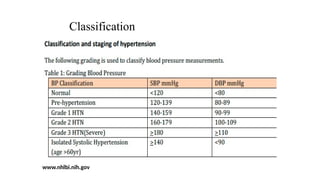
Classification
Risk factors
Manifestation
Treatment
Nursing care
Complications
Problem Magnitude
Hypertension( HTN) is the most common public health problem in the world
(30% adults)
 Ethiopia 20- 30%
Worldwide prevalence estimates for HTN may be as much as 1 billion.
>7 million deaths per year may be attributable to hypertension.
“Silent killer”
Definition
Hypertension: is defined as persistently elevated, systolic and/or diastolic blood
pressure of 140/90 mmHg or more in subjects aged 18 years and above.
The definition also applies to those individuals who are already taking
antihypertensive medications even if their current blood pressure is less than
140/90mmHg
Systolic blood pressure (SBP) is the pressure exerted when the heart
contracts and diastolic blood pressure (DBP) is the pressure exerted when
the heart muscle relaxes
Cont…
Average of two or more properly measured, seated BP readings each time.
On two or more separate office visits.
Systolic BP is more important CV risk factor after age 50.
Diastolic BP is more important before age 50.
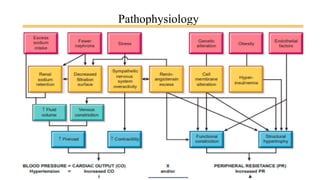
Pathophysiology
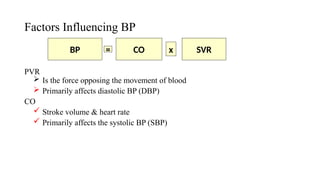
Factors Influencing BP
PVR
 Is the force opposing the movement of blood
 Primarily affects diastolic BP (DBP)
CO
 Stroke volume & heart rate
 Primarily affects the systolic BP (SBP)
BP = CO x SVR
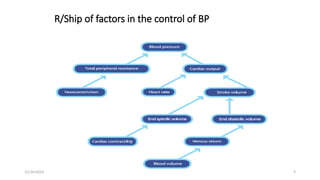
R/Ship of factors in the control of BP
12/24/2024 9
Accurate Blood Pressure Measurement
The BP apparatus should be regularly inspected and validated.
Blood pressure can be measured either by a conventional sphygmomanometer,
using a stethoscope, or by an automated electronic device.
Well trained and regularly retrained professional.
Patient properly prepared and positioned and seated quietly for at least 5 minutes
in a chair.
The auscultatory method should be used.
Noxious avoided (Caffeine, exercise, and smoking) should be avoided for at least
30 minutes before BP measurement.
Cuff size- appropriate
How to measure blood pressure
Effective treatment algorithms for hypertension are dependent on accurate blood
pressure measurement.
The following advice should be followed for measuring blood pressure:
Use the appropriate cuff size, noting the lines on the cuff to ensure that it is
positioned correctly on the arm. (If the arm circumference is >32 cm, use large
cuff.)
On initial evaluation it is preferable to measure blood pressure on both arms and
use the arm with the higher reading thereafter
The patient should be sitting with back supported, legs uncrossed, empty bladder,
relaxed for 5 minutes and not talking.
It is preferable to take at least two readings at each occasion of measurement and
to use the second reading.
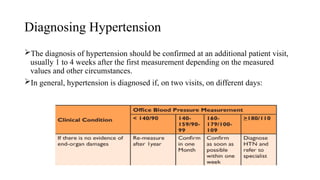
Diagnosing Hypertension
The diagnosis of hypertension should be confirmed at an additional patient visit,
usually 1 to 4 weeks after the first measurement depending on the measured
values and other circumstances.
In general, hypertension is diagnosed if, on two visits, on different days:
Classification
www.nhlbi.nih.gov
Prehypertension
SBP 120 -139mmHg and/or DBP 80 - 89 mmHg.
Pre-HTN is not a disease category rather a designation for individuals at high risk
of developing HTN.
Individuals who are prehypertensive are not candidates for drug therapy but
should be firmly and unambiguously advised to practice lifestyle modification
Pre-HTN with diabetes/kidney disease, drug therapy is indicated if a trial of
lifestyle modification fails to reduce their BP to 130/80 mmHg or less.
Hypertensive Crises
Hypertensive Urgencies: No progressive target-organ dysfunction(Accelerated
Hypertension)
Hypertensive Emergencies: Progressive end-organ dysfunction(Malignant
Hypertension)
Hypertensive Urgencies
Severely elevated BP in the upper range of stage II HTN.
Without progressive end-organ dysfunction.
E.g., Highly elevated BP without severe headache, shortness of
breath or chest pain.
Usually due to under-controlled HTN.
Hypertensive Emergencies
Severely elevated BP (>180/120mmHg).
With progressive target organ dysfunction.
Require emergent lowering of BP.
Examples: Severely elevated BP with:
 Hypertensive encephalopathy
 Acute left ventricular failure with pulmonary edema
 Acute MI or unstable angina pectoris
 Dissecting aortic aneurysm
Types of HTN
 Primary HTN:
Essential HTN.
accounts for 90%-95% cases of HTN.
unknown etiology.
 Secondary HTN:
less common cause of HTN
( 5%-10%).
Potential cause –identifiable.
Risk Primary HTN
Age
Sex
Family history
Race
Smoking
Sedentary lifestyle
Obesity :BMI
Diet
Stress
Diabetes mellitus
 Raised Cholesterol
12/24/2024 19
Causes of Secondary HTN
Common
Intrinsic renal disease
Renovascular disease
Endocrine
Coarctation of Aorta
Pheochromocytoma
Target Organs
CVS (Heart and Blood Vessels)
The kidneys
Nervous system
The Eyes
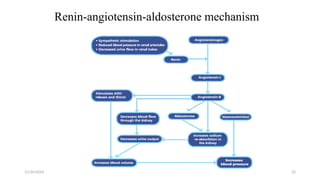
Renin-angiotensin-aldosterone mechanism
12/24/2024 22
Effects On CVS
Ventricular hypertrophy, dysfunction and failure.
Arrhithymias
Coronary artery disease, Acute MI
Arterial aneurysm, dissection, and rupture.
Effects on The Kidneys
Glomerular sclerosis leading to impaired kidney function and finally end stage
kidney disease.
Ischemic kidney disease especially when renal artery stenosis is the cause of
HTN.
Nervous System
Stroke, intracerebral and subaracnoid hemorrhage.
Cerebral atrophy and dementia.
The Eyes
Retinopathy, retinal hemorrhages and impaired vision.
Vitreous hemorrhage, retinal detachment
Neuropathy of the nerves leading to extraoccular muscle
paralysis and dysfunction
Clinical manifestations of hypertensions
General
 Usually asymptomatic
Slow progressive rise in BP
With severity symptoms involves systems
Headache
Fatigability
Dizziness
Palpitation
Blurring of vision
Epistaxis
12/24/2024 27
Systemic effects of HPN
Arteries/vascular effect
Worsens atheroma
Narrowed lumen
Blurring of vision
Epistaxis
Aneurysm
12/24/2024 28
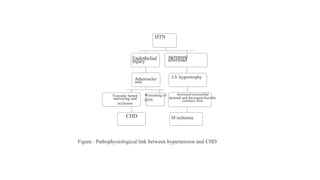
HTN
Endothelial
injury
Increased
afterload
LV hypertrophy
Atheroscler
osis
Increased myocardial
demand and decreased diastolic
coronary flow
Vascular lumen
narrowing and
occlusion
Worsening of
HTN
CHD M ischemia
Figure : Pathophysiological link between hypertension and CHD.
Systemic effects cont.
Kidneys
Arterial changes cause chronic glomerular ischemia with
subsequent glomerulosclerosis, tubular atrophy and scarring
which destroys individual nephrons one by one
Nocturia
Increased BUN & serum creatinine
12/24/2024 30
Systemic effects cont.
Heart
Left ventricular hypertrophy
Congestive cardiac failure
Ischemic heart disease
Angina pectoris
12/24/2024 31
Systemic effects cont.
Brain
Cerebral infarction; micro-infarcts (lacunae)
Cerebral hemorrhage
Dizziness
Weakness
Faintness (sudden fall)
TIA
CVA/stroke
12/24/2024 32
Systemic effects cont.
Aorta
Atheroma and aneurysms
Dissecting aneurysms
Eyes
Arterial changes, retinal exudates, hemorrhages
Progression: long course but eventually serious side effects
Papilloedema
12/24/2024 33
Systemic effects cont.
Death may be due to:
Cardiac failure
MI
Stroke
Renal failure
12/24/2024 34
Diagnostic tests
History and Physical Examination
BP measurement
Ophthalmologic examination
 Laboratory Ix
Urinalysis for blood, proteins, glucose, Urine catecholamine
Renal panel for electrolytes, urea and creatinine , BUN
Fasting Lipids and Glucose
ECG
Vascular ultrasonography
Echocardiography
Chest X-ray
12/24/2024 35
Patient evaluation
Assess lifestyle and identify other CV risk factors or concomitant disorders that
may affect prognosis and guide treatment
To identify causes of high BP- secondary HTN
To assess the presence or absence of target organ damage and CVD
Lifestyle and CV Risk factors
Cigarette smoking
Obesity
Physical inactivity
Dyslipidemia
Diabetes mellitus
Microalbuminuria or estimated GFR <60 mL/min
Age (older than 55 for men, 65 for women)
Family history of premature cardiovascular disease (men under age 55 or women
under age 65)
Target Organ Damage
Heart
 Left ventricular hypertrophy
 Angina or prior myocardial infarction
 Prior coronary revascularization
 Heart failure
Brain; Stroke or transient ischemic attack
Chronic kidney disease
PVD
Retinopathy
Goals of Treatment
Goal of management
To reduce overall CV risk factors and control BP to target level by
possible means. < 140/90 mm Hg; <130/80 if diabetic or renal d/s.
 The primary focus should be on attaining the SBP goal.
 To reduce CV and renal morbidity and mortality
 Rx benefits
Reductions in stroke incidence, averaging 35–40 percent
Reductions in MI, averaging 20–25 percent
Reductions in HF, averaging >50 percent.
Management of HTN
Non drug intervention (Patient Education and Lifestyle Modification
Pharmacological Treatment
Follow up
Hypertension treatment is indicated for adults diagnosed with hypertension, as
defined above (SBP ≥140 mmHg and/or DBP ≥90 mmHg).
Patients with SBP ≥180 mmHg or DBP ≥110 mmHg may be indicated for
immediate treatment based on one assessment
12/24/2024 40
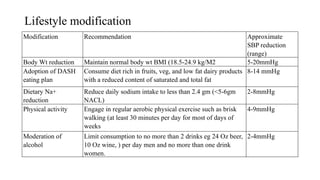
Lifestyle modification
Modification Recommendation Approximate
SBP reduction
(range)
Body Wt reduction Maintain normal body wt BMI (18.5-24.9 kg/M2 5-20mmHg
Adoption of DASH
eating plan
Consume diet rich in fruits, veg, and low fat dairy products
with a reduced content of saturated and total fat
8-14 mmHg
Dietary Na+
reduction
Reduce daily sodium intake to less than 2.4 gm (<5-6gm
NACL)
2-8mmHg
Physical activity Engage in regular aerobic physical exercise such as brisk
walking (at least 30 minutes per day for most of days of
weeks
4-9mmHg
Moderation of
alcohol
Limit consumption to no more than 2 drinks eg 24 Oz beer,
10 Oz wine, ) per day men and no more than one drink
women.
2-4mmHg
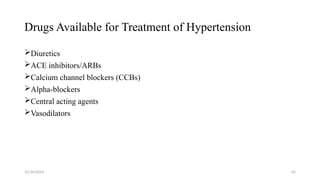
Drugs Available for Treatment of Hypertension
Diuretics
ACE inhibitors/ARBs
Calcium channel blockers (CCBs)
Alpha-blockers
Central acting agents
Vasodilators
12/24/2024 42
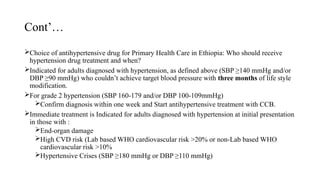
Cont’…
Choice of antihypertensive drug for Primary Health Care in Ethiopia: Who should receive
hypertension drug treatment and when?
Indicated for adults diagnosed with hypertension, as defined above (SBP ≥140 mmHg and/or
DBP ≥90 mmHg) who couldn’t achieve target blood pressure with three months of life style
modification.
For grade 2 hypertension (SBP 160-179 and/or DBP 100-109mmHg)
Confirm diagnosis within one week and Start antihypertensive treatment with CCB.
Immediate treatment is Indicated for adults diagnosed with hypertension at initial presentation
in those with :
End-organ damage
High CVD risk (Lab based WHO cardiovascular risk >20% or non-Lab based WHO
cardiovascular risk >10%
Hypertensive Crises (SBP ≥180 mmHg or DBP ≥110 mmHg)
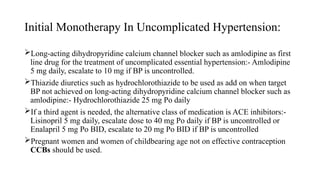
Initial Monotherapy In Uncomplicated Hypertension:
Long-acting dihydropyridine calcium channel blocker such as amlodipine as first
line drug for the treatment of uncomplicated essential hypertension:- Amlodipine
5 mg daily, escalate to 10 mg if BP is uncontrolled.
Thiazide diuretics such as hydrochlorothiazide to be used as add on when target
BP not achieved on long-acting dihydropyridine calcium channel blocker such as
amlodipine:- Hydrochlorothiazide 25 mg Po daily
If a third agent is needed, the alternative class of medication is ACE inhibitors:-
Lisinopril 5 mg daily, escalate dose to 40 mg Po daily if BP is uncontrolled or
Enalapril 5 mg Po BID, escalate to 20 mg Po BID if BP is uncontrolled
Pregnant women and women of childbearing age not on effective contraception
CCBs should be used.
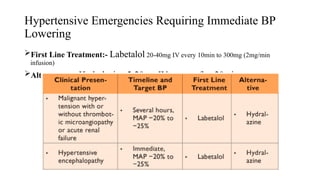
Hypertensive Emergencies Requiring Immediate BP
Lowering
First Line Treatment:- Labetalol 20-40mg IV every 10min to 300mg (2mg/min
infusion)
Alternative :- Hydralazine 5-20mg IV repeat after 20min
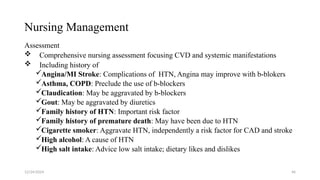
Nursing Management
Assessment
 Comprehensive nursing assessment focusing CVD and systemic manifestations
 Including history of
Angina/MI Stroke: Complications of HTN, Angina may improve with b-blokers
Asthma, COPD: Preclude the use of b-blockers
Claudication: May be aggravated by b-blockers
Gout: May be aggravated by diuretics
Family history of HTN: Important risk factor
Family history of premature death: May have been due to HTN
Cigarette smoker: Aggravate HTN, independently a risk factor for CAD and stroke
High alcohol: A cause of HTN
High salt intake: Advice low salt intake; dietary likes and dislikes
12/24/2024 46
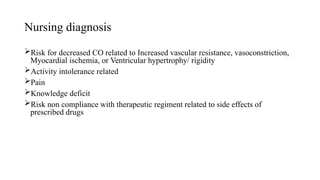
Nursing diagnosis
Risk for decreased CO related to Increased vascular resistance, vasoconstriction,
Myocardial ischemia, or Ventricular hypertrophy/ rigidity
Activity intolerance related
Pain
Knowledge deficit
Risk non compliance with therapeutic regiment related to side effects of
prescribed drugs
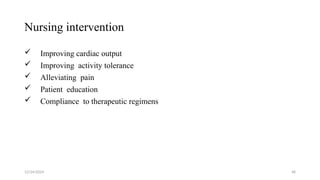
Nursing intervention
 Improving cardiac output
 Improving activity tolerance
 Alleviating pain
 Patient education
 Compliance to therapeutic regimens
12/24/2024 48
Potential complications of hypertension
Hypertensive Heart Disease
 CAD
 Left ventricular hypertrophy
 Heart failure
Cerebrovascular Disease
 Stroke
 PVD
 Nephrosclerosis
 Retinal Damage
12/24/2024 49
Thank you!!!!!!!

HTN 4 Nurses.pptx for nursing students only

  • 2.
  • 3.
  • 4.
    Problem Magnitude Hypertension( HTN)is the most common public health problem in the world (30% adults)  Ethiopia 20- 30% Worldwide prevalence estimates for HTN may be as much as 1 billion. >7 million deaths per year may be attributable to hypertension. “Silent killer”
  • 5.
    Definition Hypertension: is definedas persistently elevated, systolic and/or diastolic blood pressure of 140/90 mmHg or more in subjects aged 18 years and above. The definition also applies to those individuals who are already taking antihypertensive medications even if their current blood pressure is less than 140/90mmHg Systolic blood pressure (SBP) is the pressure exerted when the heart contracts and diastolic blood pressure (DBP) is the pressure exerted when the heart muscle relaxes
  • 6.
    Cont… Average of twoor more properly measured, seated BP readings each time. On two or more separate office visits. Systolic BP is more important CV risk factor after age 50. Diastolic BP is more important before age 50.
  • 7.
  • 8.
    Factors Influencing BP PVR Is the force opposing the movement of blood  Primarily affects diastolic BP (DBP) CO  Stroke volume & heart rate  Primarily affects the systolic BP (SBP) BP = CO x SVR
  • 9.
    R/Ship of factorsin the control of BP 12/24/2024 9
  • 10.
    Accurate Blood PressureMeasurement The BP apparatus should be regularly inspected and validated. Blood pressure can be measured either by a conventional sphygmomanometer, using a stethoscope, or by an automated electronic device. Well trained and regularly retrained professional. Patient properly prepared and positioned and seated quietly for at least 5 minutes in a chair. The auscultatory method should be used. Noxious avoided (Caffeine, exercise, and smoking) should be avoided for at least 30 minutes before BP measurement. Cuff size- appropriate
  • 11.
    How to measureblood pressure Effective treatment algorithms for hypertension are dependent on accurate blood pressure measurement. The following advice should be followed for measuring blood pressure: Use the appropriate cuff size, noting the lines on the cuff to ensure that it is positioned correctly on the arm. (If the arm circumference is >32 cm, use large cuff.) On initial evaluation it is preferable to measure blood pressure on both arms and use the arm with the higher reading thereafter The patient should be sitting with back supported, legs uncrossed, empty bladder, relaxed for 5 minutes and not talking. It is preferable to take at least two readings at each occasion of measurement and to use the second reading.
  • 12.
    Diagnosing Hypertension The diagnosisof hypertension should be confirmed at an additional patient visit, usually 1 to 4 weeks after the first measurement depending on the measured values and other circumstances. In general, hypertension is diagnosed if, on two visits, on different days:
  • 13.
  • 14.
    Prehypertension SBP 120 -139mmHgand/or DBP 80 - 89 mmHg. Pre-HTN is not a disease category rather a designation for individuals at high risk of developing HTN. Individuals who are prehypertensive are not candidates for drug therapy but should be firmly and unambiguously advised to practice lifestyle modification Pre-HTN with diabetes/kidney disease, drug therapy is indicated if a trial of lifestyle modification fails to reduce their BP to 130/80 mmHg or less.
  • 15.
    Hypertensive Crises Hypertensive Urgencies:No progressive target-organ dysfunction(Accelerated Hypertension) Hypertensive Emergencies: Progressive end-organ dysfunction(Malignant Hypertension)
  • 16.
    Hypertensive Urgencies Severely elevatedBP in the upper range of stage II HTN. Without progressive end-organ dysfunction. E.g., Highly elevated BP without severe headache, shortness of breath or chest pain. Usually due to under-controlled HTN.
  • 17.
    Hypertensive Emergencies Severely elevatedBP (>180/120mmHg). With progressive target organ dysfunction. Require emergent lowering of BP. Examples: Severely elevated BP with:  Hypertensive encephalopathy  Acute left ventricular failure with pulmonary edema  Acute MI or unstable angina pectoris  Dissecting aortic aneurysm
  • 18.
    Types of HTN Primary HTN: Essential HTN. accounts for 90%-95% cases of HTN. unknown etiology.  Secondary HTN: less common cause of HTN ( 5%-10%). Potential cause –identifiable.
  • 19.
    Risk Primary HTN Age Sex Familyhistory Race Smoking Sedentary lifestyle Obesity :BMI Diet Stress Diabetes mellitus  Raised Cholesterol 12/24/2024 19
  • 20.
    Causes of SecondaryHTN Common Intrinsic renal disease Renovascular disease Endocrine Coarctation of Aorta Pheochromocytoma
  • 21.
    Target Organs CVS (Heartand Blood Vessels) The kidneys Nervous system The Eyes
  • 22.
  • 23.
    Effects On CVS Ventricularhypertrophy, dysfunction and failure. Arrhithymias Coronary artery disease, Acute MI Arterial aneurysm, dissection, and rupture.
  • 24.
    Effects on TheKidneys Glomerular sclerosis leading to impaired kidney function and finally end stage kidney disease. Ischemic kidney disease especially when renal artery stenosis is the cause of HTN.
  • 25.
    Nervous System Stroke, intracerebraland subaracnoid hemorrhage. Cerebral atrophy and dementia.
  • 26.
    The Eyes Retinopathy, retinalhemorrhages and impaired vision. Vitreous hemorrhage, retinal detachment Neuropathy of the nerves leading to extraoccular muscle paralysis and dysfunction
  • 27.
    Clinical manifestations ofhypertensions General  Usually asymptomatic Slow progressive rise in BP With severity symptoms involves systems Headache Fatigability Dizziness Palpitation Blurring of vision Epistaxis 12/24/2024 27
  • 28.
    Systemic effects ofHPN Arteries/vascular effect Worsens atheroma Narrowed lumen Blurring of vision Epistaxis Aneurysm 12/24/2024 28
  • 29.
    HTN Endothelial injury Increased afterload LV hypertrophy Atheroscler osis Increased myocardial demandand decreased diastolic coronary flow Vascular lumen narrowing and occlusion Worsening of HTN CHD M ischemia Figure : Pathophysiological link between hypertension and CHD.
  • 30.
    Systemic effects cont. Kidneys Arterialchanges cause chronic glomerular ischemia with subsequent glomerulosclerosis, tubular atrophy and scarring which destroys individual nephrons one by one Nocturia Increased BUN & serum creatinine 12/24/2024 30
  • 31.
    Systemic effects cont. Heart Leftventricular hypertrophy Congestive cardiac failure Ischemic heart disease Angina pectoris 12/24/2024 31
  • 32.
    Systemic effects cont. Brain Cerebralinfarction; micro-infarcts (lacunae) Cerebral hemorrhage Dizziness Weakness Faintness (sudden fall) TIA CVA/stroke 12/24/2024 32
  • 33.
    Systemic effects cont. Aorta Atheromaand aneurysms Dissecting aneurysms Eyes Arterial changes, retinal exudates, hemorrhages Progression: long course but eventually serious side effects Papilloedema 12/24/2024 33
  • 34.
    Systemic effects cont. Deathmay be due to: Cardiac failure MI Stroke Renal failure 12/24/2024 34
  • 35.
    Diagnostic tests History andPhysical Examination BP measurement Ophthalmologic examination  Laboratory Ix Urinalysis for blood, proteins, glucose, Urine catecholamine Renal panel for electrolytes, urea and creatinine , BUN Fasting Lipids and Glucose ECG Vascular ultrasonography Echocardiography Chest X-ray 12/24/2024 35
  • 36.
    Patient evaluation Assess lifestyleand identify other CV risk factors or concomitant disorders that may affect prognosis and guide treatment To identify causes of high BP- secondary HTN To assess the presence or absence of target organ damage and CVD
  • 37.
    Lifestyle and CVRisk factors Cigarette smoking Obesity Physical inactivity Dyslipidemia Diabetes mellitus Microalbuminuria or estimated GFR <60 mL/min Age (older than 55 for men, 65 for women) Family history of premature cardiovascular disease (men under age 55 or women under age 65)
  • 38.
    Target Organ Damage Heart Left ventricular hypertrophy  Angina or prior myocardial infarction  Prior coronary revascularization  Heart failure Brain; Stroke or transient ischemic attack Chronic kidney disease PVD Retinopathy
  • 39.
    Goals of Treatment Goalof management To reduce overall CV risk factors and control BP to target level by possible means. < 140/90 mm Hg; <130/80 if diabetic or renal d/s.  The primary focus should be on attaining the SBP goal.  To reduce CV and renal morbidity and mortality  Rx benefits Reductions in stroke incidence, averaging 35–40 percent Reductions in MI, averaging 20–25 percent Reductions in HF, averaging >50 percent.
  • 40.
    Management of HTN Nondrug intervention (Patient Education and Lifestyle Modification Pharmacological Treatment Follow up Hypertension treatment is indicated for adults diagnosed with hypertension, as defined above (SBP ≥140 mmHg and/or DBP ≥90 mmHg). Patients with SBP ≥180 mmHg or DBP ≥110 mmHg may be indicated for immediate treatment based on one assessment 12/24/2024 40
  • 41.
    Lifestyle modification Modification RecommendationApproximate SBP reduction (range) Body Wt reduction Maintain normal body wt BMI (18.5-24.9 kg/M2 5-20mmHg Adoption of DASH eating plan Consume diet rich in fruits, veg, and low fat dairy products with a reduced content of saturated and total fat 8-14 mmHg Dietary Na+ reduction Reduce daily sodium intake to less than 2.4 gm (<5-6gm NACL) 2-8mmHg Physical activity Engage in regular aerobic physical exercise such as brisk walking (at least 30 minutes per day for most of days of weeks 4-9mmHg Moderation of alcohol Limit consumption to no more than 2 drinks eg 24 Oz beer, 10 Oz wine, ) per day men and no more than one drink women. 2-4mmHg
  • 42.
    Drugs Available forTreatment of Hypertension Diuretics ACE inhibitors/ARBs Calcium channel blockers (CCBs) Alpha-blockers Central acting agents Vasodilators 12/24/2024 42
  • 43.
    Cont’… Choice of antihypertensivedrug for Primary Health Care in Ethiopia: Who should receive hypertension drug treatment and when? Indicated for adults diagnosed with hypertension, as defined above (SBP ≥140 mmHg and/or DBP ≥90 mmHg) who couldn’t achieve target blood pressure with three months of life style modification. For grade 2 hypertension (SBP 160-179 and/or DBP 100-109mmHg) Confirm diagnosis within one week and Start antihypertensive treatment with CCB. Immediate treatment is Indicated for adults diagnosed with hypertension at initial presentation in those with : End-organ damage High CVD risk (Lab based WHO cardiovascular risk >20% or non-Lab based WHO cardiovascular risk >10% Hypertensive Crises (SBP ≥180 mmHg or DBP ≥110 mmHg)
  • 44.
    Initial Monotherapy InUncomplicated Hypertension: Long-acting dihydropyridine calcium channel blocker such as amlodipine as first line drug for the treatment of uncomplicated essential hypertension:- Amlodipine 5 mg daily, escalate to 10 mg if BP is uncontrolled. Thiazide diuretics such as hydrochlorothiazide to be used as add on when target BP not achieved on long-acting dihydropyridine calcium channel blocker such as amlodipine:- Hydrochlorothiazide 25 mg Po daily If a third agent is needed, the alternative class of medication is ACE inhibitors:- Lisinopril 5 mg daily, escalate dose to 40 mg Po daily if BP is uncontrolled or Enalapril 5 mg Po BID, escalate to 20 mg Po BID if BP is uncontrolled Pregnant women and women of childbearing age not on effective contraception CCBs should be used.
  • 45.
    Hypertensive Emergencies RequiringImmediate BP Lowering First Line Treatment:- Labetalol 20-40mg IV every 10min to 300mg (2mg/min infusion) Alternative :- Hydralazine 5-20mg IV repeat after 20min
  • 46.
    Nursing Management Assessment  Comprehensivenursing assessment focusing CVD and systemic manifestations  Including history of Angina/MI Stroke: Complications of HTN, Angina may improve with b-blokers Asthma, COPD: Preclude the use of b-blockers Claudication: May be aggravated by b-blockers Gout: May be aggravated by diuretics Family history of HTN: Important risk factor Family history of premature death: May have been due to HTN Cigarette smoker: Aggravate HTN, independently a risk factor for CAD and stroke High alcohol: A cause of HTN High salt intake: Advice low salt intake; dietary likes and dislikes 12/24/2024 46
  • 47.
    Nursing diagnosis Risk fordecreased CO related to Increased vascular resistance, vasoconstriction, Myocardial ischemia, or Ventricular hypertrophy/ rigidity Activity intolerance related Pain Knowledge deficit Risk non compliance with therapeutic regiment related to side effects of prescribed drugs
  • 48.
    Nursing intervention  Improvingcardiac output  Improving activity tolerance  Alleviating pain  Patient education  Compliance to therapeutic regimens 12/24/2024 48
  • 49.
    Potential complications ofhypertension Hypertensive Heart Disease  CAD  Left ventricular hypertrophy  Heart failure Cerebrovascular Disease  Stroke  PVD  Nephrosclerosis  Retinal Damage 12/24/2024 49
  • 50.

Editor's Notes

  • #8 Vascular Resistance
  • #13 Acute end-organ damage
  • #37 Refer WHO CV risk assessment manual
  • #40 Hypertension treatment is indicated for adults diagnosed with hypertension, as defined above (SBP ≥140 mmHg and/or DBP ≥90 mmHg). Patients with SBP ≥180 mmHg or DBP ≥110 mmHg may be indicated for immediate treatment based on one assessment
  • #44 The World Hypertension League and the International Society of Hypertension recommend the following combination therapy: • Long-acting dihydropyridine calcium channel blocker plus a thiazide diuretic, • Long-acting dihydropyridine calcium channel blocker plus a long-acting ACE inhibitor/ARB or • Long-acting ACE inhibitor/ARB plus a thiazide diuretic.
  • #45 Mean arterial BP = Cardiac output * Peripheral resistance