HYPEREMESIS
GRAVIDARUM
PREPARED BY:-
Mr. ARKAB KHAN PATHAN
INTRODUCTION:-
HYPER : EXCESSIVE
 EMESIS : VOMIT
 GRAVIDARUM : PREGNANCY
Nausea/vomit of moderate intensity are
especially common until about 16 week.
 HEG occurs when vomiting becomes
intractable in early pregnancy & cause fluid &
electrolyte imbalances & nutritional deficiency.
 women usually needs to be hospitalized.
DEFINITION:
“HG IS DEFINEDVARIABLY ASVOMITING
SUFFICIENTLY SEVERETO PRODUCE WEIGHT
LOSS, DEHYDRATION, ACIDOSIS FROM
STARVATION, ALKALOSIS FROM LOSS OF HCL IN
VOMIT & HYPOKALAMIA.”
“SEVEREVOMITING IN PREGNANCY
PERTICULARLY DURING EARLY PREGNANCY
CAUSING DELETERIOUS AFFECTION MOTHER’S
HEALTH SUCH AS WEIGHT LOSS,
DEHYDRATION, ACIDOSIS OCCURS FROM
STARVATION.”
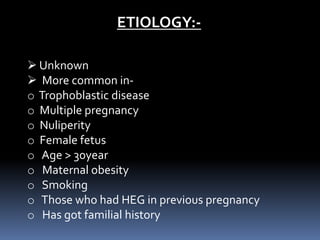
ETIOLOGY:-
 Unknown
 More common in-
o Trophoblastic disease
o Multiple pregnancy
o Nuliperity
o Female fetus
o Age > 30year
o Maternal obesity
o Smoking
o Those who had HEG in previous pregnancy
o Has got familial history
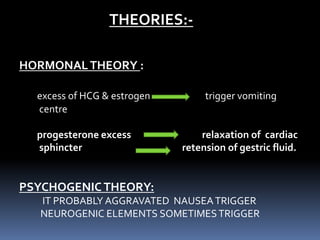
THEORIES:-
HORMONALTHEORY :
excess of HCG & estrogen trigger vomiting
centre
progesterone excess relaxation of cardiac
sphincter retension of gestric fluid.
PSYCHOGENIC THEORY:
IT PROBABLY AGGRAVATED NAUSEATRIGGER
NEUROGENIC ELEMENTS SOMETIMESTRIGGER
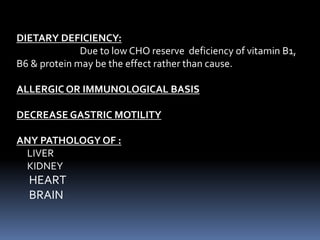
DIETARY DEFICIENCY:
Due to low CHO reserve deficiency of vitamin B1,
B6 & protein may be the effect rather than cause.
ALLERGIC OR IMMUNOLOGICAL BASIS
DECREASE GASTRIC MOTILITY
ANY PATHOLOGY OF :
LIVER
KIDNEY
HEART
BRAIN
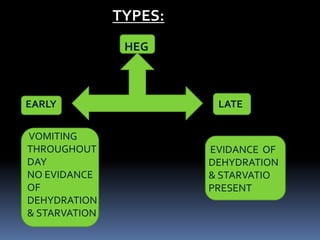
TYPES:
HEG
EARLY LATE
VOMITING
THROUGHOUT
DAY
NO EVIDANCE
OF
DEHYDRATION
& STARVATION
EVIDANCE OF
DEHYDRATION
& STARVATIO
PRESENT
CLINICAL FEATURE:-
 SYMPTOM
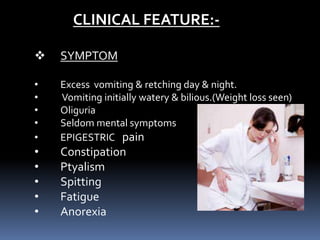
• Excess vomiting & retching day & night.
• Vomiting initially watery & bilious.(Weight loss seen)
• Oliguria
• Seldom mental symptoms
• EPIGESTRIC pain
• Constipation
• Ptyalism
• Spitting
• Fatigue
• Anorexia
 SIGN:
• Dehydration
•Muscle wasting
•Ketosis
•Weight loss > 5% of pregnancy weight
•Tachycardia
•Postural hypotension
•Dry coated tongue
•Sunken eyes
•Acetone smell in breath
CLINICAL FEATURE:-
INVESTIGATION:
a) URIN ANALYSIS
b) CBC
c) LIVER FUNCTIONTEST(LFT)
d) THYROID FUNCTIONTEST
e) ULTRASOUND SCAN
f) OPHTHELMOSCOPY
MANAGEMENT
 Principles of management:-
 To control vomiting.
 To correct fluid & electrolyte imbalance.
 To correct metabolic disturbance.
 To prevent serious complications of severe
vomiting.
 MEDICAL MANAGEMENT:
DRUGS:
Antiemetic:-
Promethazin 25mg IM bd or tds
Trifluopromazine 10mg IM
Metachlopromide 10mg IM
Hydrocortisone:- 100mg IV in drip
Pridnisolone orally
Nutritional support:-
Vitamin B1, vitamin B6, vitamin B12 & vitamin C
FLUID:
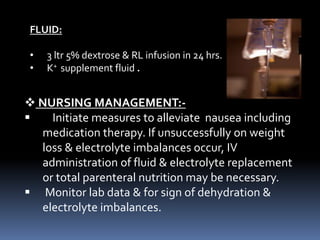
• 3 ltr 5% dextrose & RL infusion in 24 hrs.
• K+ supplement fluid .
 NURSING MANAGEMENT:-
 Initiate measures to alleviate nausea including
medication therapy. If unsuccessfully on weight
loss & electrolyte imbalances occur, IV
administration of fluid & electrolyte replacement
or total parenteral nutrition may be necessary.
 Monitor lab data & for sign of dehydration &
electrolyte imbalances.
 Monitor urine for ketone.
 Monitor fetal heart rate, fetal activity & fetal growth.
 Encourage intake of small proportion of food.
 Liquid should be taken b/w meals to avoid distending
stomach & triggering vomit.
 Encourage patient to sit upright after meal.
NURSING MANAGEMENT
 OBSTETRIC CARE:
 No therapeutic abortion is indicated if patient improve on
therapy.
Therapeutic abortion is seldom indicated on-
o Vomiting doesn’t abote on therapy
o if there is risk of complication.
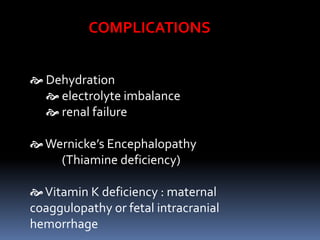
 Dehydration
 electrolyte imbalance
 renal failure
Wernicke’s Encephalopathy
(Thiamine deficiency)
Vitamin K deficiency : maternal
coaggulopathy or fetal intracranial
hemorrhage
COMPLICATIONS
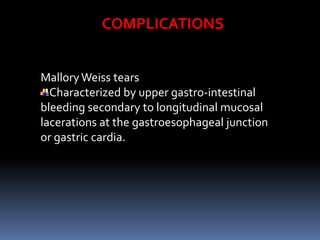
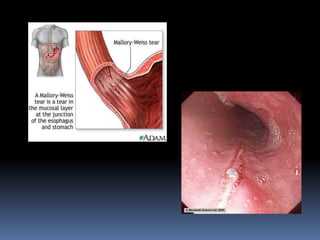
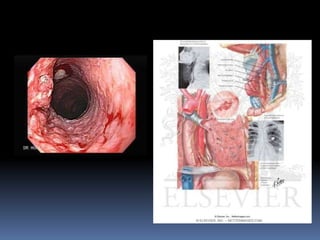
Mallory Weiss tears
Characterized by upper gastro-intestinal
bleeding secondary to longitudinal mucosal
lacerations at the gastroesophageal junction
or gastric cardia.
COMPLICATIONS
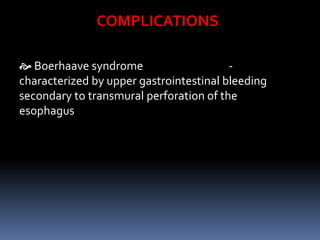
 Boerhaave syndrome -
characterized by upper gastrointestinal bleeding
secondary to transmural perforation of the
esophagus
COMPLICATIONS
 MANAGEMENT OF NAUSE ANDVOMITING
SYMPTOM:
o Drink & eat little & often.
o Meal high in CHO & low in fat is better.
o Cold meals reduce smell related nausea.
o Avoid caffeine & alcohol as these can
enhancer dehydration.
hyperemesis gravidarum

hyperemesis gravidarum

  • 1.
  • 2.
    INTRODUCTION:- HYPER : EXCESSIVE EMESIS : VOMIT  GRAVIDARUM : PREGNANCY Nausea/vomit of moderate intensity are especially common until about 16 week.  HEG occurs when vomiting becomes intractable in early pregnancy & cause fluid & electrolyte imbalances & nutritional deficiency.  women usually needs to be hospitalized.
  • 3.
    DEFINITION: “HG IS DEFINEDVARIABLYASVOMITING SUFFICIENTLY SEVERETO PRODUCE WEIGHT LOSS, DEHYDRATION, ACIDOSIS FROM STARVATION, ALKALOSIS FROM LOSS OF HCL IN VOMIT & HYPOKALAMIA.” “SEVEREVOMITING IN PREGNANCY PERTICULARLY DURING EARLY PREGNANCY CAUSING DELETERIOUS AFFECTION MOTHER’S HEALTH SUCH AS WEIGHT LOSS, DEHYDRATION, ACIDOSIS OCCURS FROM STARVATION.”
  • 4.
    ETIOLOGY:-  Unknown  Morecommon in- o Trophoblastic disease o Multiple pregnancy o Nuliperity o Female fetus o Age > 30year o Maternal obesity o Smoking o Those who had HEG in previous pregnancy o Has got familial history
  • 5.
    THEORIES:- HORMONALTHEORY : excess ofHCG & estrogen trigger vomiting centre progesterone excess relaxation of cardiac sphincter retension of gestric fluid. PSYCHOGENIC THEORY: IT PROBABLY AGGRAVATED NAUSEATRIGGER NEUROGENIC ELEMENTS SOMETIMESTRIGGER
  • 6.
    DIETARY DEFICIENCY: Due tolow CHO reserve deficiency of vitamin B1, B6 & protein may be the effect rather than cause. ALLERGIC OR IMMUNOLOGICAL BASIS DECREASE GASTRIC MOTILITY ANY PATHOLOGY OF : LIVER KIDNEY HEART BRAIN
  • 7.
    TYPES: HEG EARLY LATE VOMITING THROUGHOUT DAY NO EVIDANCE OF DEHYDRATION &STARVATION EVIDANCE OF DEHYDRATION & STARVATIO PRESENT
  • 8.
    CLINICAL FEATURE:-  SYMPTOM •Excess vomiting & retching day & night. • Vomiting initially watery & bilious.(Weight loss seen) • Oliguria • Seldom mental symptoms • EPIGESTRIC pain • Constipation • Ptyalism • Spitting • Fatigue • Anorexia
  • 9.
     SIGN: • Dehydration •Musclewasting •Ketosis •Weight loss > 5% of pregnancy weight •Tachycardia •Postural hypotension •Dry coated tongue •Sunken eyes •Acetone smell in breath CLINICAL FEATURE:-
  • 10.
    INVESTIGATION: a) URIN ANALYSIS b)CBC c) LIVER FUNCTIONTEST(LFT) d) THYROID FUNCTIONTEST e) ULTRASOUND SCAN f) OPHTHELMOSCOPY
  • 11.
    MANAGEMENT  Principles ofmanagement:-  To control vomiting.  To correct fluid & electrolyte imbalance.  To correct metabolic disturbance.  To prevent serious complications of severe vomiting.
  • 12.
     MEDICAL MANAGEMENT: DRUGS: Antiemetic:- Promethazin25mg IM bd or tds Trifluopromazine 10mg IM Metachlopromide 10mg IM Hydrocortisone:- 100mg IV in drip Pridnisolone orally Nutritional support:- Vitamin B1, vitamin B6, vitamin B12 & vitamin C
  • 13.
    FLUID: • 3 ltr5% dextrose & RL infusion in 24 hrs. • K+ supplement fluid .  NURSING MANAGEMENT:-  Initiate measures to alleviate nausea including medication therapy. If unsuccessfully on weight loss & electrolyte imbalances occur, IV administration of fluid & electrolyte replacement or total parenteral nutrition may be necessary.  Monitor lab data & for sign of dehydration & electrolyte imbalances.
  • 14.
     Monitor urinefor ketone.  Monitor fetal heart rate, fetal activity & fetal growth.  Encourage intake of small proportion of food.  Liquid should be taken b/w meals to avoid distending stomach & triggering vomit.  Encourage patient to sit upright after meal. NURSING MANAGEMENT
  • 15.
     OBSTETRIC CARE: No therapeutic abortion is indicated if patient improve on therapy. Therapeutic abortion is seldom indicated on- o Vomiting doesn’t abote on therapy o if there is risk of complication.
  • 16.
     Dehydration  electrolyteimbalance  renal failure Wernicke’s Encephalopathy (Thiamine deficiency) Vitamin K deficiency : maternal coaggulopathy or fetal intracranial hemorrhage COMPLICATIONS
  • 17.
    Mallory Weiss tears Characterizedby upper gastro-intestinal bleeding secondary to longitudinal mucosal lacerations at the gastroesophageal junction or gastric cardia. COMPLICATIONS
  • 19.
     Boerhaave syndrome- characterized by upper gastrointestinal bleeding secondary to transmural perforation of the esophagus COMPLICATIONS
  • 21.
     MANAGEMENT OFNAUSE ANDVOMITING SYMPTOM: o Drink & eat little & often. o Meal high in CHO & low in fat is better. o Cold meals reduce smell related nausea. o Avoid caffeine & alcohol as these can enhancer dehydration.