Paracuses and Hyperacusis 
Neurophysiological models 
Prof. Dr. Amr Refai
Hyperacusis, mechanisms, diagnosis and therapy 
(Baguley and Andersson, 2007)
Paracuses 
• Disturbance in auditory perception (other than loss 
of hearing sensitivity) 
• Musicians are more sensitive to detecting it, people 
infrequently complain about it (unable to recognize, 
confuse, mildly irritating..) 
• Hyperacusis is the most clinically encountered type
Paracuses 
• Intensity-related phenomena 
• Frequency-related phenomena 
• Localizing dysfunction
Frequency-related phenomena 
• Diplacusis: 
– Double hearing (sound will have a different tone 
in each ear) 
– Meniere’s disease? First to disappear on 
treatment? 
– Cochlear otosclerosis, fenestration operations 
– Potassium iodide medication, chloroform 
inhalation
Diplacusis 
• Damage to the fine tuning mechanism of the organ 
of corti (outer hair cell dysfunction?) 
• Lower intelligibility of speech, the benefits of 
hearing aids are debatable 
• PTA, speech discrimination, otoacoustic emissions 
• Diplacusimetry, psychoacoustic tuning curves
Sound localization dysfunction 
• Intensity and phase difference of sounds are 
important for sound directionalization 
• Time difference, the role of the auricles 
• Dysstereoacusis: 
– Can be seen frequently in patients with supra 
tentorial lesions (central dysfunction) 
– Can be the presenting symptom in vestibular 
shwannoma
Intensity-related phenomena 
• Paracusis Willisii: 
– Frequently mentioned with otosclerosis 
– But it is a general feature of conductive hearing 
loss 
– Patient’s can hear better in noisy environment 
– People tend to raise their voices in noisy 
environment?
Hyperacusis 
• Unusual tolerance to ordinary environmental 
sounds (Vernon, 1987) 
• Consistently exaggerated or inappropriate 
responses to sounds that are neither threatening 
nor uncomfortably loud to a typical person (Klein et 
al, 1990)
Other terms 
• Loudness recruitment: 
– Abnormal growth of loudness due to cochlear 
hearing loss, and in particular OHCs dysfunction 
(mechanism?) 
– Sounds of moderate intensity perceived as 
uncommonly loud (ABLB, SISI score?) 
– Sounds of low intensity perceived as abnormally 
uncomfortable (Hyperacusis) 
– Cross over?
Other terms 
• Phonophobia: 
– Emphasises the emotional impact of the 
sensitivity to sounds, used more in neurological 
literature 
– Phonophobia/photophobia accompanying 
migraine attacks 
– Misophonia: A term to describe disliking of 
sound without the phobic element (Jestreboff, 
2003)
Other terms 
• Noise sensitivity in psychiatric disorders: 
– Startle reflex in post traumatic stress disorders 
– The association of noise sensitivity and 
depression 
– Improvement of hyperacusis after treatment of 
depression in tinnitus patients?
Hyperacusis and tinnitus 
• 9 % point prevalence (Andersson, 2002) 
• 40-60% in patients attending tinnitus clinic 
• In patients with primarily hyperacusis complaint, 
tinnitus estimates varies between 86% (Anari et al, 
1999) and 21% (Andersson et al, 2002) 
• Hyperacusis as a precursor to the development of 
tinnitus
Severe hyperacusis 
• 4-5% of population have severe tinnitus 
• 40% of these have significant hyperacusis 
• Severe hyperacusis : 2% 
– Jastreboff, 2000 
– Baguley and Andersson, 2007
Neurophysiological models and 
mechanisms 
• Hyperactivity of the auditory nerve (Moore, 1995) 
• 5-HT (Marriage and Barnes, 1995) 
• Endogenous opioid peptides ( Sahley et al, 1996 ) 
• Auditory efferent dysfunction 
• Plastic change leading to increased central auditory 
gain
Serotonin ( 5-HT) 
• First recognized as a powerful vasoconstrictor and 
isolated by Page (1948) 
• 5 Hydroxytryptamine (5-HT) 
• Naturally produced in the pineal gland, and its 
precursor (amino acid Tryptophan) is rich in 
bananas, milk, Turkey, plums 
• 90% of Serotonin in the body is in the intestine
5-HT 
• One role of 5-HT, is as a neurotransmitter, 
regulating various functions like sleep, memory and 
learning, temperature regulation, mood, appetite, 
behaviour, cardiovascular function, muscle 
contraction, endocrine regulation and depression. 
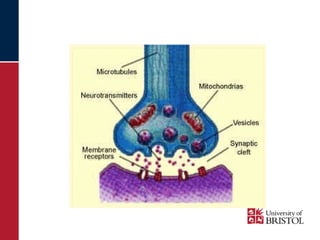
• 5-HT released at synaptic clefts in the brain 
regulate protein binding and change electrical state 
of the cell, either stimulatory or inhibitory
5-HT and depression ( The molecule of 
happiness) 
• Low serotonin levels are believed to be the cause 
of many cases of mild to severe depression which 
can lead to symptoms such as anxiety, apathy, 
fear, feelings of worthlessness, insomnia and 
fatigue. The most concrete evidence for the 
connection between serotonin and depression is 
the decreased concentrations of serotonin 
metabolites in the cerebrospinal fluid and brain 
tissues of depressed people
Serotonin ( 5-HT ) 
• Serotonergic fibres and terminal endings found 
throughout central auditory pathway (Raphe Neucli) 
through the medulla, pons and midbrain 
• Postulated role of modulating sound perception or 
determination of significance 
– ( Thompson et al, 1994, Simpson and Barnes, 
2000 )
Marriage and Barnes (1995) 
The Journal of Laryngology and Otology 
October 1995, Vol. 109, pp. 915-921 
Neurological conditions associated with 
hyperacusis: 
(a) Migraine (Solomon et al, 1992). 
• (b) Depression (Carmen, 1973). 
• (c) Pyridoxine deficiency (Oppe, 1992). 
• (d) Benzodiazepine dependence (Lader, 1984). 
• (e) Musicogenic epilepsy (case study by Fujinawa 
et al, 1977).
Neurological conditions associated with 
Hyperacusis 
• (f) Tay-Sach's disease or gangliosidosis type 2 
• (Gordon et al, 1988; Gascon et al, 1992). 
• (g) Post-traumatic stress disorder. 
• (h) Chronic/post-viral fatigue syndrome (CFS/ 
PVFS) or myalgic encephalomyelitis (ME) 
(Behan and Bakheit, 1991; Merry, 1991).
Hypothesis 
• Many conditions associated with hyperacusis, 
especially Migraine and tinnitus (probably accounts 
for 90% of cases of hyperacusis), are strongly 
related to dysfunction in 5-HT metabolism, 
probably reduction of 5-HT activity in the forebrain
Problems with 5-HT hypothesis 
• Non-specific ( Phillips and Carr, 1998 ) 
• Possible role of SSRI medication: 
– A Cochrane review has found no evidence of the its 
effects on tinnitus treatment 
– Interest in the states, under investigation
Plasticity in central auditory system 
• Plasticity first proposed by Ramon y Cajal 
( 1852 - 1934 ) 
The ability of the brain to re-organize itself 
• Caused by 
– Reorganization following an insult (sensory 
deprivation as an example) 
– Adaptation and change of functions
The role of sensory deprivation 
• Tonotopic organization through the auditory 
system means that certain frequency areas 
on the basilar membrane supplies certain 
regions in the central auditory system with 
afferent signals 
• Damage to the cochlea, resulting in SNHL 
will lead to loss of afferent information 
leaving this specific area (frequency region)
Sensory deprivation theory 
• Corresponding areas in the central auditory system 
become starved (deprived) of sensory stimulation 
• This might lead to: 
– Increased level of spontaneous activity 
– Plastic rearrangement of neurones leading to 
abnormal firing patterns 
• This can be perceived as tinnitus and hyperacusis
Recent PET scan findings 
Seng-Ha Oh (2010) 
• Pre and post cochlear implantation in pre lingual 
and post lingual hearing loss 
• PET looks at auditory cortical metabolism 
• Wider pre-operative hypometabolism of the 
auditory cortex is an indication of BETTER speech 
abilities post implantation 
• The more the duration of deafness the LESS the 
extent of hypometabolism in the auditory cortex
Final thoughts 
• Hyperacusis is a specific term and should not be 
confused with other phenomena 
• The theories of causation are still not proven, 
though strong associations with cochlear damage, 
tinnitus and migraine should provide a connection 
to the pathophysiological mechanisms of these 
conditions

Hyperacusis october 2010 amr refai

  • 1.
    Paracuses and Hyperacusis Neurophysiological models Prof. Dr. Amr Refai
  • 2.
    Hyperacusis, mechanisms, diagnosisand therapy (Baguley and Andersson, 2007)
  • 3.
    Paracuses • Disturbancein auditory perception (other than loss of hearing sensitivity) • Musicians are more sensitive to detecting it, people infrequently complain about it (unable to recognize, confuse, mildly irritating..) • Hyperacusis is the most clinically encountered type
  • 4.
    Paracuses • Intensity-relatedphenomena • Frequency-related phenomena • Localizing dysfunction
  • 5.
    Frequency-related phenomena •Diplacusis: – Double hearing (sound will have a different tone in each ear) – Meniere’s disease? First to disappear on treatment? – Cochlear otosclerosis, fenestration operations – Potassium iodide medication, chloroform inhalation
  • 6.
    Diplacusis • Damageto the fine tuning mechanism of the organ of corti (outer hair cell dysfunction?) • Lower intelligibility of speech, the benefits of hearing aids are debatable • PTA, speech discrimination, otoacoustic emissions • Diplacusimetry, psychoacoustic tuning curves
  • 7.
    Sound localization dysfunction • Intensity and phase difference of sounds are important for sound directionalization • Time difference, the role of the auricles • Dysstereoacusis: – Can be seen frequently in patients with supra tentorial lesions (central dysfunction) – Can be the presenting symptom in vestibular shwannoma
  • 8.
    Intensity-related phenomena •Paracusis Willisii: – Frequently mentioned with otosclerosis – But it is a general feature of conductive hearing loss – Patient’s can hear better in noisy environment – People tend to raise their voices in noisy environment?
  • 9.
    Hyperacusis • Unusualtolerance to ordinary environmental sounds (Vernon, 1987) • Consistently exaggerated or inappropriate responses to sounds that are neither threatening nor uncomfortably loud to a typical person (Klein et al, 1990)
  • 10.
    Other terms •Loudness recruitment: – Abnormal growth of loudness due to cochlear hearing loss, and in particular OHCs dysfunction (mechanism?) – Sounds of moderate intensity perceived as uncommonly loud (ABLB, SISI score?) – Sounds of low intensity perceived as abnormally uncomfortable (Hyperacusis) – Cross over?
  • 11.
    Other terms •Phonophobia: – Emphasises the emotional impact of the sensitivity to sounds, used more in neurological literature – Phonophobia/photophobia accompanying migraine attacks – Misophonia: A term to describe disliking of sound without the phobic element (Jestreboff, 2003)
  • 12.
    Other terms •Noise sensitivity in psychiatric disorders: – Startle reflex in post traumatic stress disorders – The association of noise sensitivity and depression – Improvement of hyperacusis after treatment of depression in tinnitus patients?
  • 13.
    Hyperacusis and tinnitus • 9 % point prevalence (Andersson, 2002) • 40-60% in patients attending tinnitus clinic • In patients with primarily hyperacusis complaint, tinnitus estimates varies between 86% (Anari et al, 1999) and 21% (Andersson et al, 2002) • Hyperacusis as a precursor to the development of tinnitus
  • 14.
    Severe hyperacusis •4-5% of population have severe tinnitus • 40% of these have significant hyperacusis • Severe hyperacusis : 2% – Jastreboff, 2000 – Baguley and Andersson, 2007
  • 15.
    Neurophysiological models and mechanisms • Hyperactivity of the auditory nerve (Moore, 1995) • 5-HT (Marriage and Barnes, 1995) • Endogenous opioid peptides ( Sahley et al, 1996 ) • Auditory efferent dysfunction • Plastic change leading to increased central auditory gain
  • 16.
    Serotonin ( 5-HT) • First recognized as a powerful vasoconstrictor and isolated by Page (1948) • 5 Hydroxytryptamine (5-HT) • Naturally produced in the pineal gland, and its precursor (amino acid Tryptophan) is rich in bananas, milk, Turkey, plums • 90% of Serotonin in the body is in the intestine
  • 17.
    5-HT • Onerole of 5-HT, is as a neurotransmitter, regulating various functions like sleep, memory and learning, temperature regulation, mood, appetite, behaviour, cardiovascular function, muscle contraction, endocrine regulation and depression. • 5-HT released at synaptic clefts in the brain regulate protein binding and change electrical state of the cell, either stimulatory or inhibitory
  • 19.
    5-HT and depression( The molecule of happiness) • Low serotonin levels are believed to be the cause of many cases of mild to severe depression which can lead to symptoms such as anxiety, apathy, fear, feelings of worthlessness, insomnia and fatigue. The most concrete evidence for the connection between serotonin and depression is the decreased concentrations of serotonin metabolites in the cerebrospinal fluid and brain tissues of depressed people
  • 20.
    Serotonin ( 5-HT) • Serotonergic fibres and terminal endings found throughout central auditory pathway (Raphe Neucli) through the medulla, pons and midbrain • Postulated role of modulating sound perception or determination of significance – ( Thompson et al, 1994, Simpson and Barnes, 2000 )
  • 21.
    Marriage and Barnes(1995) The Journal of Laryngology and Otology October 1995, Vol. 109, pp. 915-921 Neurological conditions associated with hyperacusis: (a) Migraine (Solomon et al, 1992). • (b) Depression (Carmen, 1973). • (c) Pyridoxine deficiency (Oppe, 1992). • (d) Benzodiazepine dependence (Lader, 1984). • (e) Musicogenic epilepsy (case study by Fujinawa et al, 1977).
  • 22.
    Neurological conditions associatedwith Hyperacusis • (f) Tay-Sach's disease or gangliosidosis type 2 • (Gordon et al, 1988; Gascon et al, 1992). • (g) Post-traumatic stress disorder. • (h) Chronic/post-viral fatigue syndrome (CFS/ PVFS) or myalgic encephalomyelitis (ME) (Behan and Bakheit, 1991; Merry, 1991).
  • 23.
    Hypothesis • Manyconditions associated with hyperacusis, especially Migraine and tinnitus (probably accounts for 90% of cases of hyperacusis), are strongly related to dysfunction in 5-HT metabolism, probably reduction of 5-HT activity in the forebrain
  • 24.
    Problems with 5-HThypothesis • Non-specific ( Phillips and Carr, 1998 ) • Possible role of SSRI medication: – A Cochrane review has found no evidence of the its effects on tinnitus treatment – Interest in the states, under investigation
  • 25.
    Plasticity in centralauditory system • Plasticity first proposed by Ramon y Cajal ( 1852 - 1934 ) The ability of the brain to re-organize itself • Caused by – Reorganization following an insult (sensory deprivation as an example) – Adaptation and change of functions
  • 26.
    The role ofsensory deprivation • Tonotopic organization through the auditory system means that certain frequency areas on the basilar membrane supplies certain regions in the central auditory system with afferent signals • Damage to the cochlea, resulting in SNHL will lead to loss of afferent information leaving this specific area (frequency region)
  • 27.
    Sensory deprivation theory • Corresponding areas in the central auditory system become starved (deprived) of sensory stimulation • This might lead to: – Increased level of spontaneous activity – Plastic rearrangement of neurones leading to abnormal firing patterns • This can be perceived as tinnitus and hyperacusis
  • 28.
    Recent PET scanfindings Seng-Ha Oh (2010) • Pre and post cochlear implantation in pre lingual and post lingual hearing loss • PET looks at auditory cortical metabolism • Wider pre-operative hypometabolism of the auditory cortex is an indication of BETTER speech abilities post implantation • The more the duration of deafness the LESS the extent of hypometabolism in the auditory cortex
  • 29.
    Final thoughts •Hyperacusis is a specific term and should not be confused with other phenomena • The theories of causation are still not proven, though strong associations with cochlear damage, tinnitus and migraine should provide a connection to the pathophysiological mechanisms of these conditions