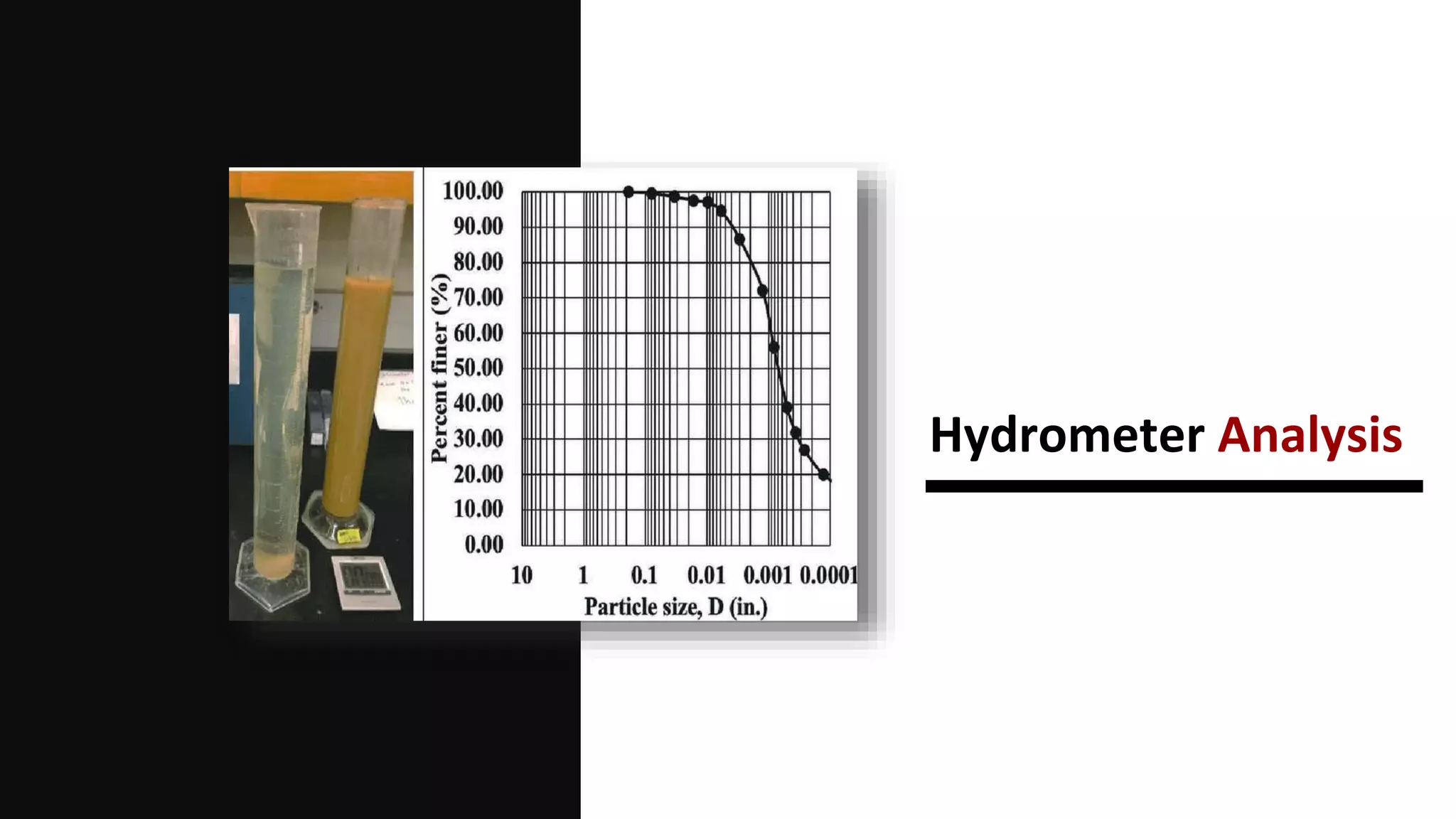
Hydrometer Analysis
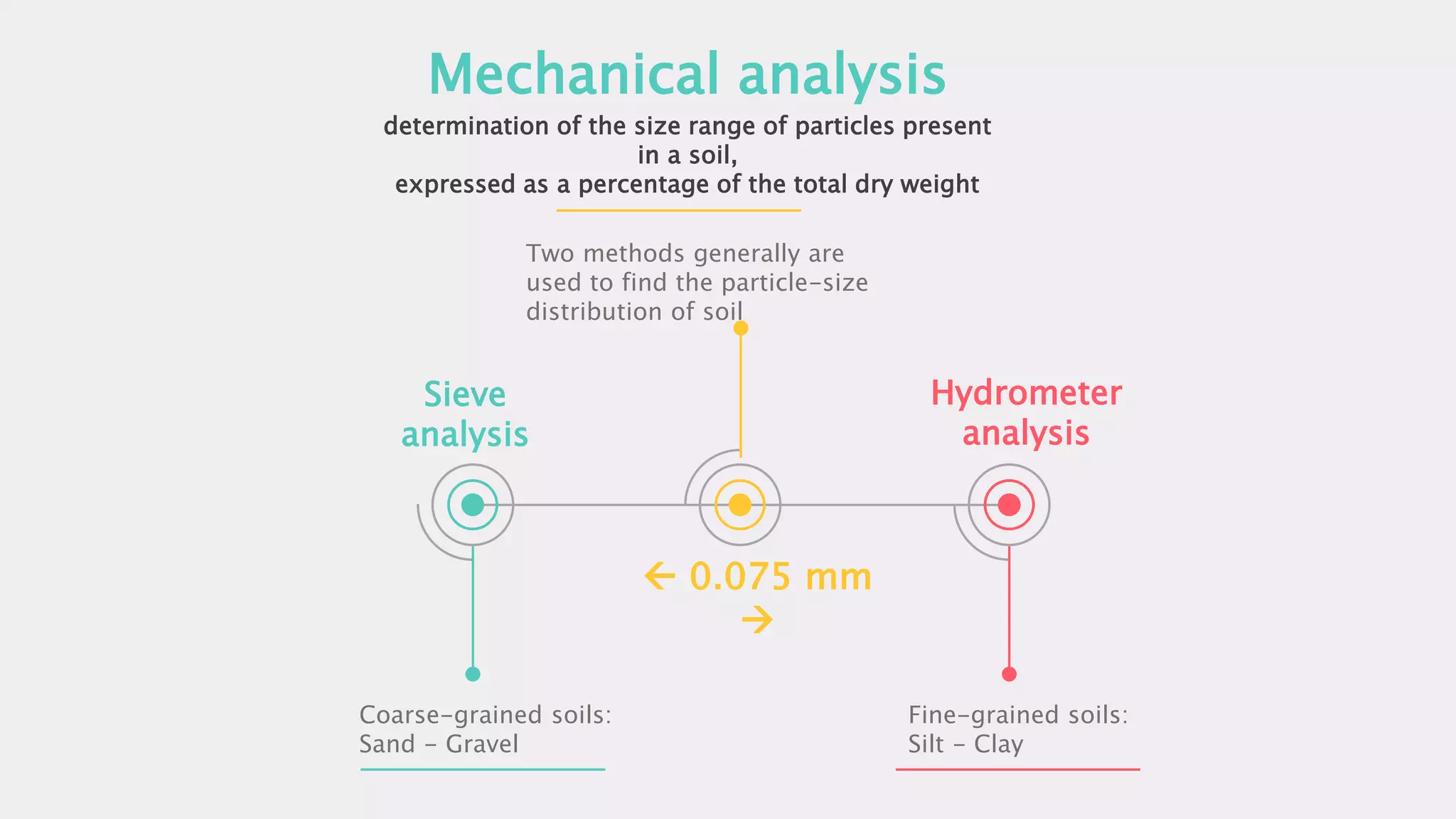
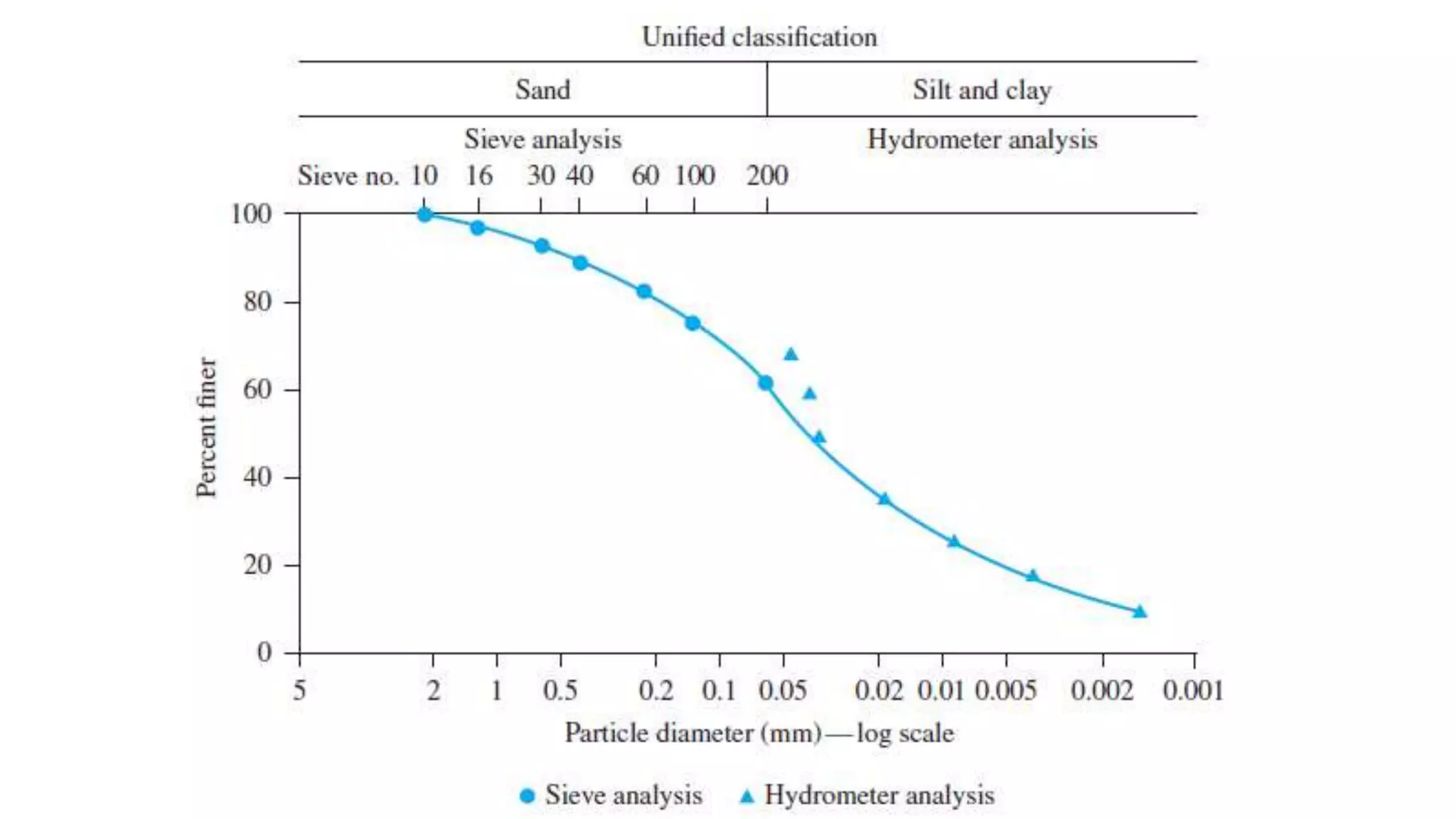
Sieve
analysis
Coarse-grained soils:
Sand - Gravel
 0.075 mm

Two methods generally are
used to find the particle-size
distribution of soil
Hydrometer
analysis
Fine-grained soils:
Silt - Clay
Mechanical analysis
determination of the size range of particles present
in a soil,
expressed as a percentage of the total dry weight
Hydrometer
Analysis
1
2
3
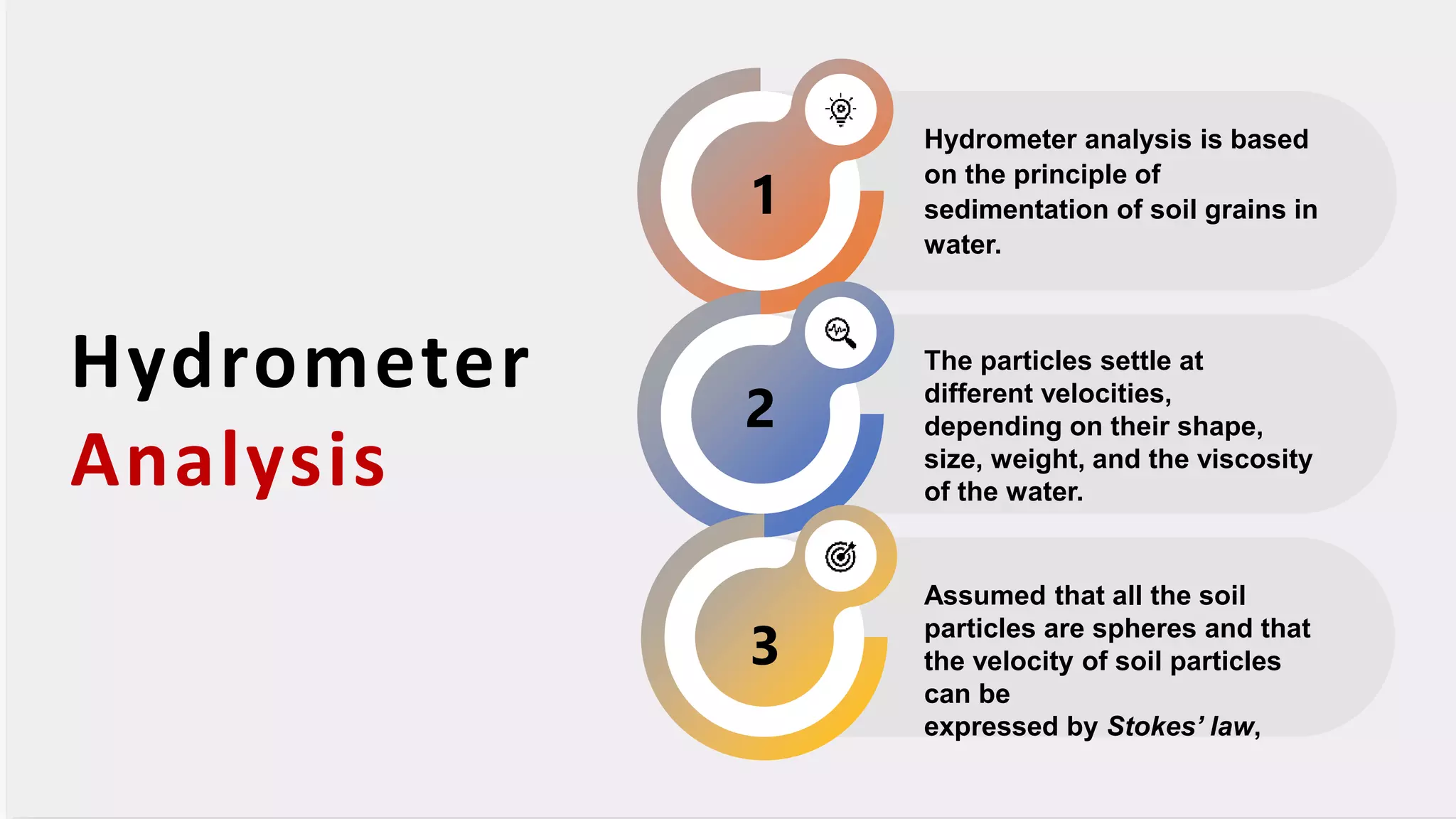
Hydrometer analysis is based
on the principle of
sedimentation of soil grains in
water.
The particles settle at
different velocities,
depending on their shape,
size, weight, and the viscosity
of the water.
Assumed that all the soil
particles are spheres and that
the velocity of soil particles
can be
expressed by Stokes’ law,
For a sphere moving in a fluid
the drag force acting on it is a
function of its diameter
Silt will settle down faster than clay
Stokes’
law
𝒗 = velocity
Ρs =density of soil particles
Ρw = density of water
η = viscosity of water
D = diameter of soil particles
Stokes 'law Velocity Volume
𝒗 =
𝝆𝒔 − 𝝆𝒘
𝟏𝟖𝜼
𝑫𝟐
Lab Equipment
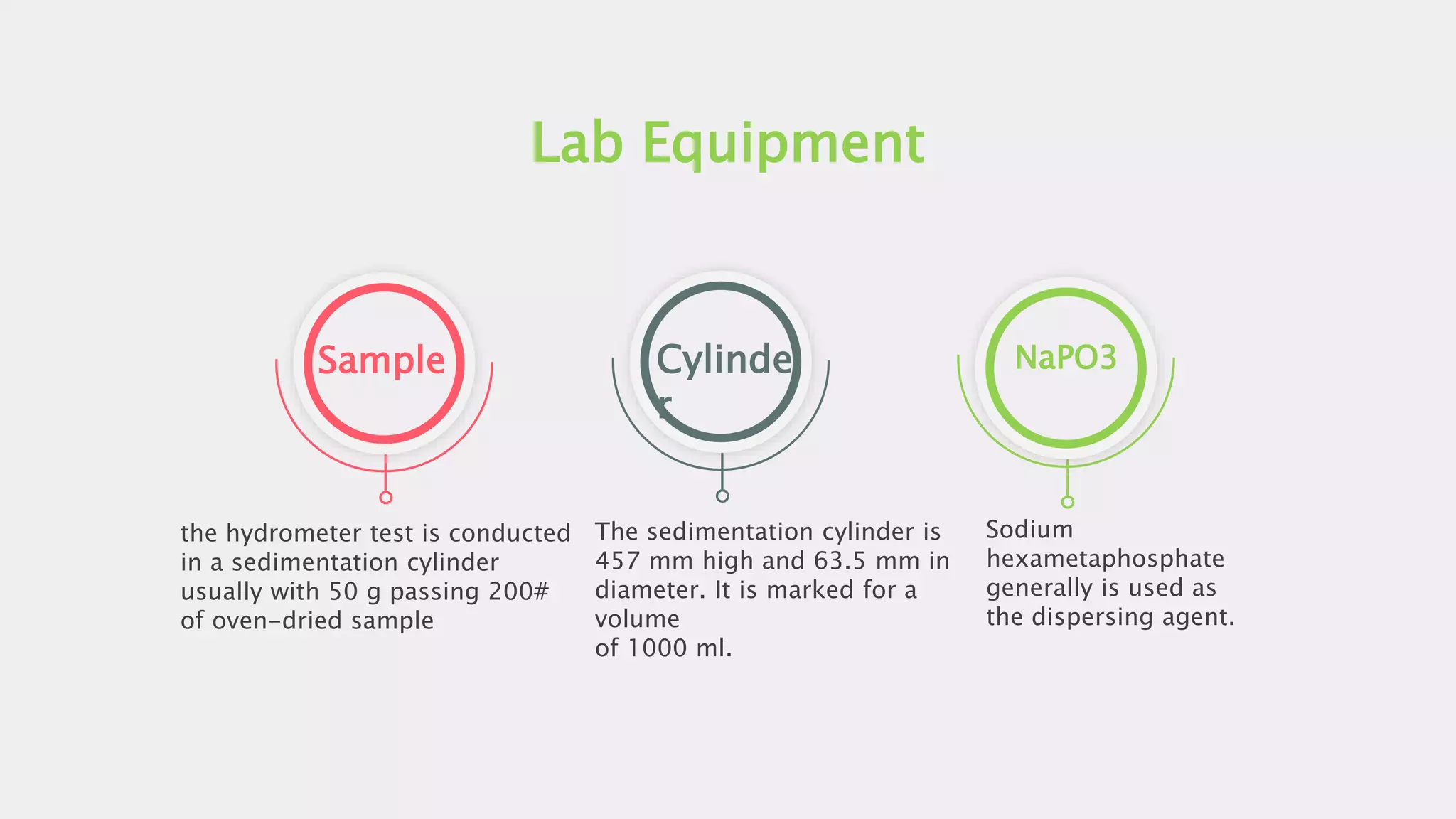
the hydrometer test is conducted
in a sedimentation cylinder
usually with 50 g passing 200#
of oven-dried sample
The sedimentation cylinder is
457 mm high and 63.5 mm in
diameter. It is marked for a
volume
of 1000 ml.
Sodium
hexametaphosphate
generally is used as
the dispersing agent.
Cylinde
r
Sample NaPO3
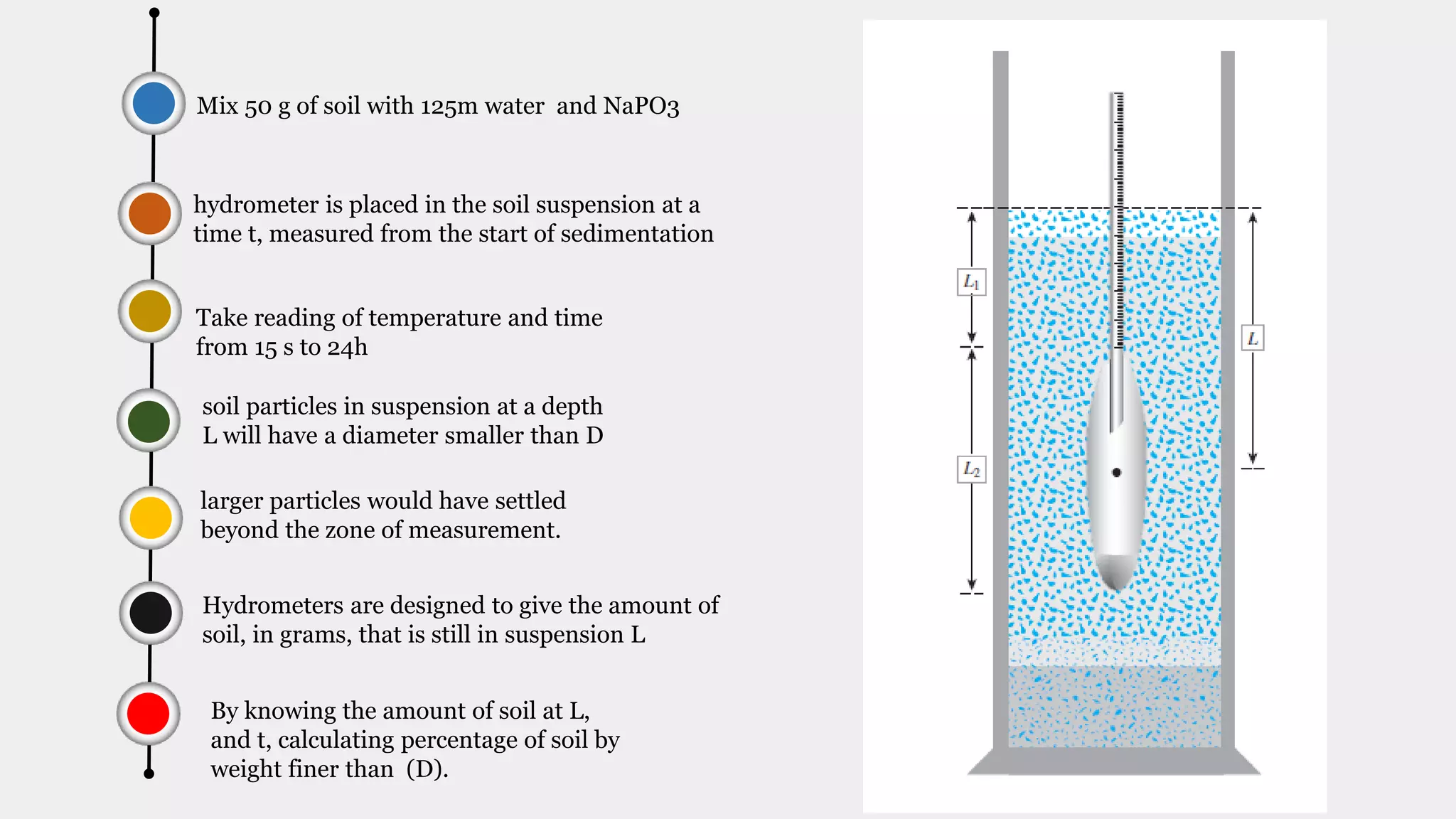
Mix 50 g of soil with 125m water and NaPO3
hydrometer is placed in the soil suspension at a
time t, measured from the start of sedimentation
Take reading of temperature and time
from 15 s to 24h
soil particles in suspension at a depth
L will have a diameter smaller than D
larger particles would have settled
beyond the zone of measurement.
By knowing the amount of soil at L,
and t, calculating percentage of soil by
weight finer than (D).
Hydrometers are designed to give the amount of
soil, in grams, that is still in suspension L
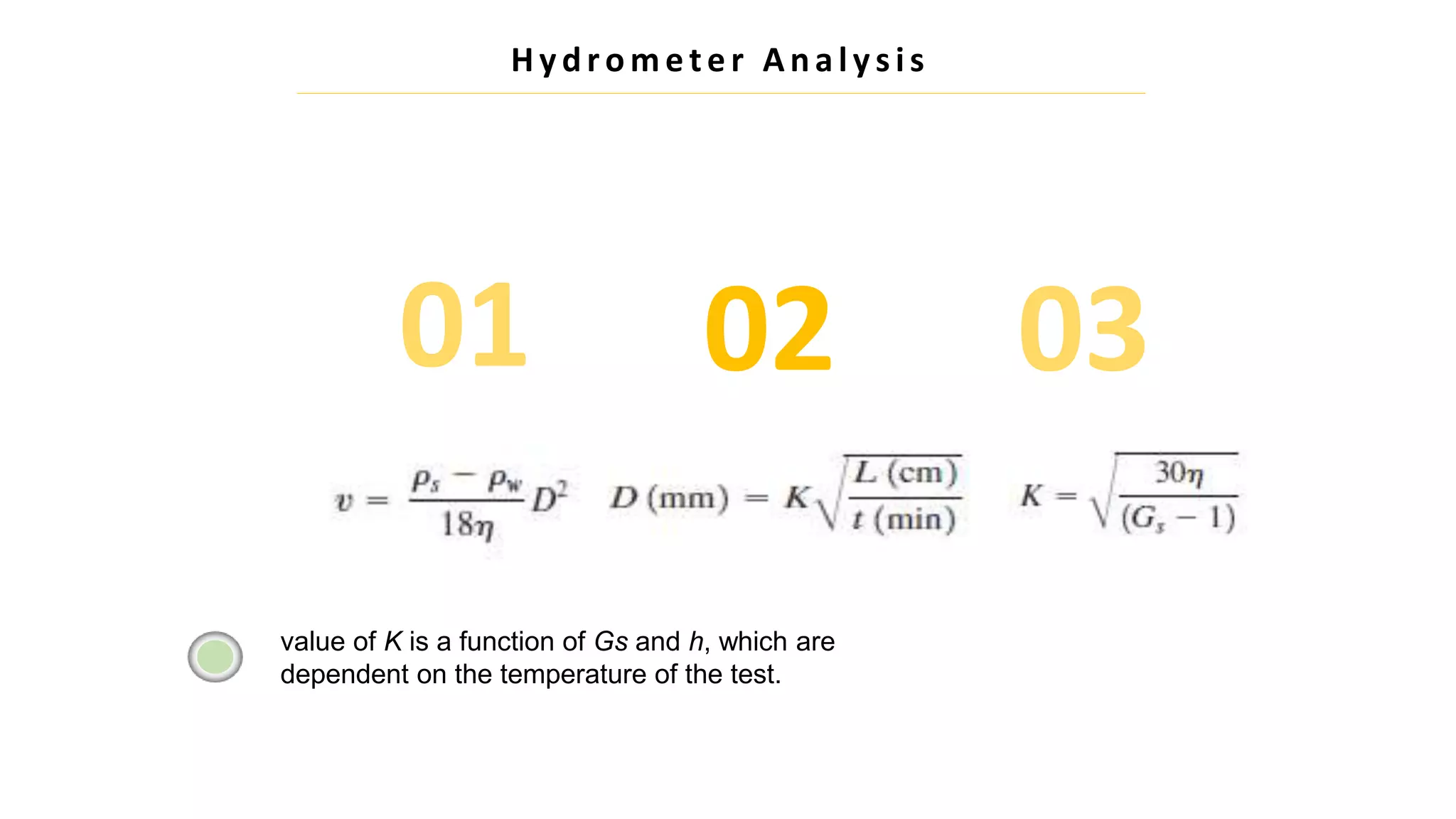
Hydro m e te r Analysis
01 02 03
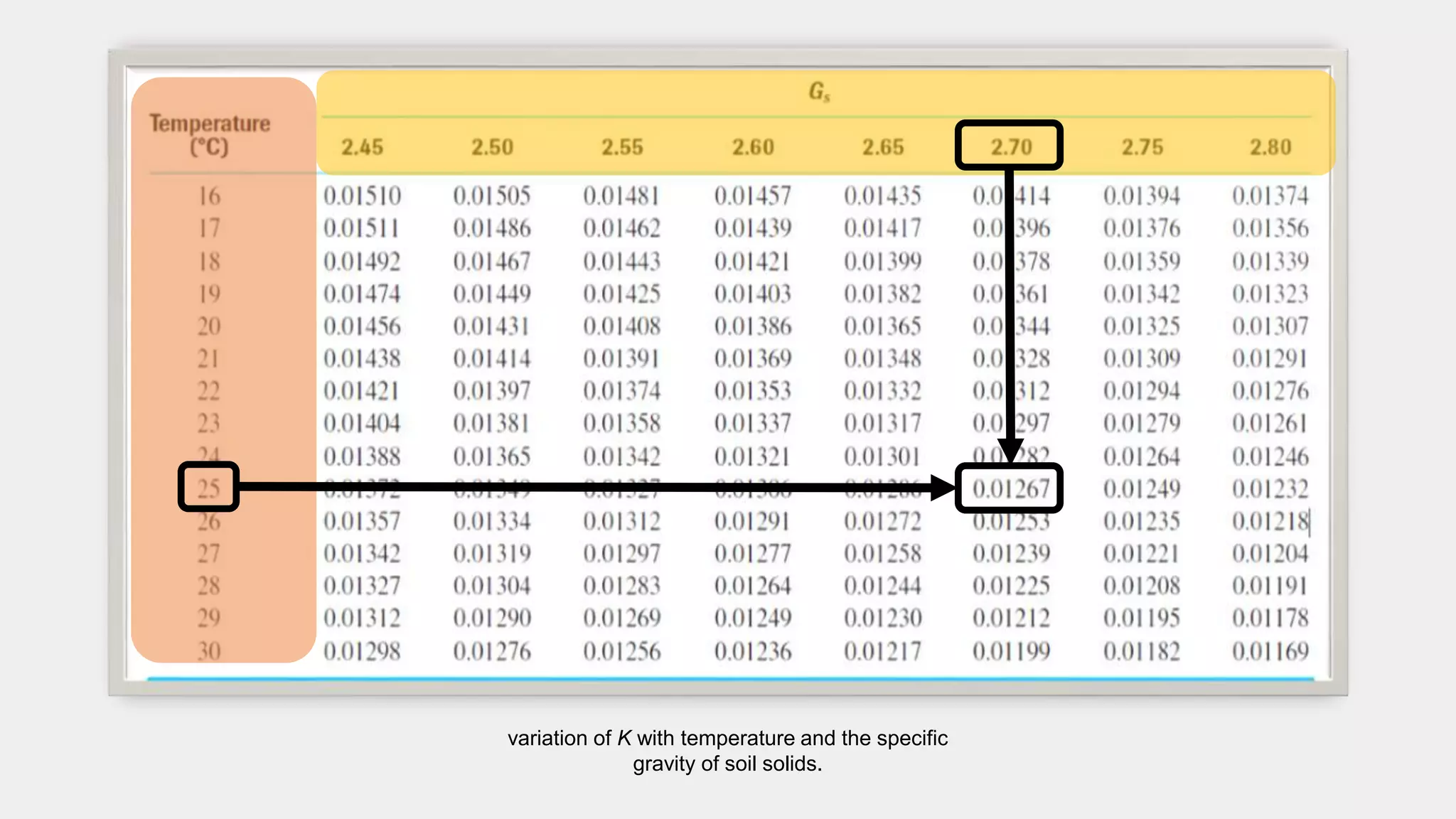
value of K is a function of Gs and h, which are
dependent on the temperature of the test.
variation of K with temperature and the specific
gravity of soil solids.
D(mm) = K √
𝐿 (𝑐𝑚)
𝑡 (𝑚𝑖𝑛)
Precent of finer % (N) =
𝐺𝑠
𝐺𝑠−𝐺𝑤
⋅
𝛾𝑤
𝑤𝑠
⋅ 𝑅 − 𝑅𝑤 ⋅ 100
V a r i a t i o n o f L w i t h H y d r o m e t e r R e a d i n g — A S T M 1 5 2 H H y d r o m e t e r
Hydrometer analysis for soil .pptx

Hydrometer analysis for soil .pptx

  • 1.
  • 2.
    Sieve analysis Coarse-grained soils: Sand -Gravel  0.075 mm  Two methods generally are used to find the particle-size distribution of soil Hydrometer analysis Fine-grained soils: Silt - Clay Mechanical analysis determination of the size range of particles present in a soil, expressed as a percentage of the total dry weight
  • 3.
    Hydrometer Analysis 1 2 3 Hydrometer analysis isbased on the principle of sedimentation of soil grains in water. The particles settle at different velocities, depending on their shape, size, weight, and the viscosity of the water. Assumed that all the soil particles are spheres and that the velocity of soil particles can be expressed by Stokes’ law,
  • 4.
    For a spheremoving in a fluid the drag force acting on it is a function of its diameter Silt will settle down faster than clay Stokes’ law 𝒗 = velocity Ρs =density of soil particles Ρw = density of water η = viscosity of water D = diameter of soil particles Stokes 'law Velocity Volume 𝒗 = 𝝆𝒔 − 𝝆𝒘 𝟏𝟖𝜼 𝑫𝟐
  • 5.
    Lab Equipment the hydrometertest is conducted in a sedimentation cylinder usually with 50 g passing 200# of oven-dried sample The sedimentation cylinder is 457 mm high and 63.5 mm in diameter. It is marked for a volume of 1000 ml. Sodium hexametaphosphate generally is used as the dispersing agent. Cylinde r Sample NaPO3
  • 6.
    Mix 50 gof soil with 125m water and NaPO3 hydrometer is placed in the soil suspension at a time t, measured from the start of sedimentation Take reading of temperature and time from 15 s to 24h soil particles in suspension at a depth L will have a diameter smaller than D larger particles would have settled beyond the zone of measurement. By knowing the amount of soil at L, and t, calculating percentage of soil by weight finer than (D). Hydrometers are designed to give the amount of soil, in grams, that is still in suspension L
  • 7.
    Hydro m ete r Analysis 01 02 03 value of K is a function of Gs and h, which are dependent on the temperature of the test.
  • 8.
    variation of Kwith temperature and the specific gravity of soil solids.
  • 9.
    D(mm) = K√ 𝐿 (𝑐𝑚) 𝑡 (𝑚𝑖𝑛) Precent of finer % (N) = 𝐺𝑠 𝐺𝑠−𝐺𝑤 ⋅ 𝛾𝑤 𝑤𝑠 ⋅ 𝑅 − 𝑅𝑤 ⋅ 100 V a r i a t i o n o f L w i t h H y d r o m e t e r R e a d i n g — A S T M 1 5 2 H H y d r o m e t e r