TYPES OF HYDROELECTRIC
POWER PLANTS
TYPES OF HYDROELECTRIC POWER
PLANTS
Different hydroelectric power plants can be built depending
on the water resource. Some hydroelectric plants are
designed for reservoirs while others can be built over rivers
without the need for reservoir constructions.
• Impoundment
• Diversion
• Pumped Storage
IMPOUNDMENT
• Impoundment is the type of hydroelectric power
plant that needs a reservoir for operation. Water
released from the dam flows through the turbines.
One advantage of this design is that water can be
controlled depending on electricity or water needs.
DIVERSION
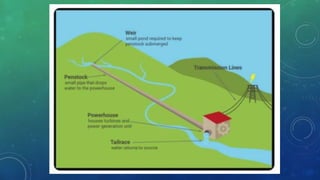
• Diversion, also known as the run-of-river, diverts some
portions of a river through a small pipe or the penstock. A
weir or a small pond is required to keep the penstock
submerged. The channeled water goes straight to the
powerhouse and turns the turbines to generate electricity.
• The used water then returns back to the river through the
tailrace – a path where the water is pumped out of the
hydroelectric power plant. This method can be used if the
water resource has a low height.
PUMPED STORAGE
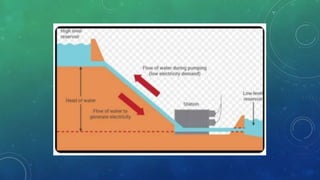
• Pumped Storage is like a battery that stores
electricity. Two reservoirs are built – top and
bottom. It stores energy by pumping water from a
lower reservoir to a higher reservoir. When
electricity is needed, the water from the upper
reservoir is released to the lower reservoir to
generate electricity. When electric demand is low,
the water in the lower reservoir is pumped back to
the upper reservoir for reuse
Hydroelectric energy supplies a large part of the
renewable energy generated in the world. It has
advantages that make it a viable alternative for electricity
production.
ADVANTAGES:
• Hydroelectric energy relies on water. As long as the
water cycle is happening, hydroelectric energy can
continue providing power.
• Hydroelectric energy is renewable. Since water goes
back to its resource through the water cycle, water can
be used again and again.
• Hydroelectric power plants are safe. They almost have
no pollutants released.
• Hydroelectric power is not limited to the generation of
electricity. Electricity generated from power plants can
be stored for future use.
• Hydroelectric energy provides affordable power,
especially to rural areas.
Hydroelectric energy is not a perfect source of energy.
Some processes involved in harnessing this energy also
cause some disadvantages or even harm to the people
and the environment.
DISADVANTAGES:
• Reservoirs can become obstacles to moving fishes. In
some locations, fish ladders are installed to help fishes
in their movement.
• Dams cause floods to rivers. The floods destroy the
habitat of some animals and plants. Animals are forced
to move to other places because of this.
• Turbines and generators can increase the temperature
of the water. This event can cause stress to the plants
and animals inhabiting the water resources.
• People living near water resources are forced to migrate
because of the change in the landscape. This affects
their livelihood and culture.
• Hydroelectricity may be cheap for the consumers but it
requires a high investment for the structures.
• Methane emissions can occur in hydroelectric power
plants.
• Some hydroelectric power plants become unusable after
some time if silt builds up on the reservoirs.
Hydroelectric energy accounts for around 16% of the
world’s electricity and 10% of the Philippines'. Many
countries still have to tap their potential in producing
hydroelectric energy. If managed properly, hydroelectric
energy can be a more sustainable source of electricity in
the long run

Hydroelectric Power Plants

  • 1.
  • 2.
    TYPES OF HYDROELECTRICPOWER PLANTS Different hydroelectric power plants can be built depending on the water resource. Some hydroelectric plants are designed for reservoirs while others can be built over rivers without the need for reservoir constructions. • Impoundment • Diversion • Pumped Storage
  • 3.
    IMPOUNDMENT • Impoundment isthe type of hydroelectric power plant that needs a reservoir for operation. Water released from the dam flows through the turbines. One advantage of this design is that water can be controlled depending on electricity or water needs.
  • 4.
    DIVERSION • Diversion, alsoknown as the run-of-river, diverts some portions of a river through a small pipe or the penstock. A weir or a small pond is required to keep the penstock submerged. The channeled water goes straight to the powerhouse and turns the turbines to generate electricity. • The used water then returns back to the river through the tailrace – a path where the water is pumped out of the hydroelectric power plant. This method can be used if the water resource has a low height.
  • 6.
    PUMPED STORAGE • PumpedStorage is like a battery that stores electricity. Two reservoirs are built – top and bottom. It stores energy by pumping water from a lower reservoir to a higher reservoir. When electricity is needed, the water from the upper reservoir is released to the lower reservoir to generate electricity. When electric demand is low, the water in the lower reservoir is pumped back to the upper reservoir for reuse
  • 8.
    Hydroelectric energy suppliesa large part of the renewable energy generated in the world. It has advantages that make it a viable alternative for electricity production. ADVANTAGES: • Hydroelectric energy relies on water. As long as the water cycle is happening, hydroelectric energy can continue providing power.
  • 9.
    • Hydroelectric energyis renewable. Since water goes back to its resource through the water cycle, water can be used again and again. • Hydroelectric power plants are safe. They almost have no pollutants released. • Hydroelectric power is not limited to the generation of electricity. Electricity generated from power plants can be stored for future use. • Hydroelectric energy provides affordable power, especially to rural areas.
  • 10.
    Hydroelectric energy isnot a perfect source of energy. Some processes involved in harnessing this energy also cause some disadvantages or even harm to the people and the environment. DISADVANTAGES: • Reservoirs can become obstacles to moving fishes. In some locations, fish ladders are installed to help fishes in their movement.
  • 11.
    • Dams causefloods to rivers. The floods destroy the habitat of some animals and plants. Animals are forced to move to other places because of this. • Turbines and generators can increase the temperature of the water. This event can cause stress to the plants and animals inhabiting the water resources. • People living near water resources are forced to migrate because of the change in the landscape. This affects their livelihood and culture.
  • 12.
    • Hydroelectricity maybe cheap for the consumers but it requires a high investment for the structures. • Methane emissions can occur in hydroelectric power plants. • Some hydroelectric power plants become unusable after some time if silt builds up on the reservoirs.
  • 13.
    Hydroelectric energy accountsfor around 16% of the world’s electricity and 10% of the Philippines'. Many countries still have to tap their potential in producing hydroelectric energy. If managed properly, hydroelectric energy can be a more sustainable source of electricity in the long run