HYBROSAVER

                                      Chandan Kumar
                                     SMRITI AGARWAL
                                     ABHISHEK MODI


Institute of Technology-Banaras Hindu University
Varanasi-221005
PROBLEM STATEMENT
•The challenge is to design a system which can provide clean and
economic energy in the villages where electricity is either not available
or available for small duration in the 24 hours


•Study Area
 The remote rural area for the study was Keyal village of district
Arwal of Bihar state, India. It is an unelectrified village. There are
500 houses having a Working population of around 2400.


     Local                                                 Hybrid
 resources and               The big idea                  Energy
  their survey                                             System
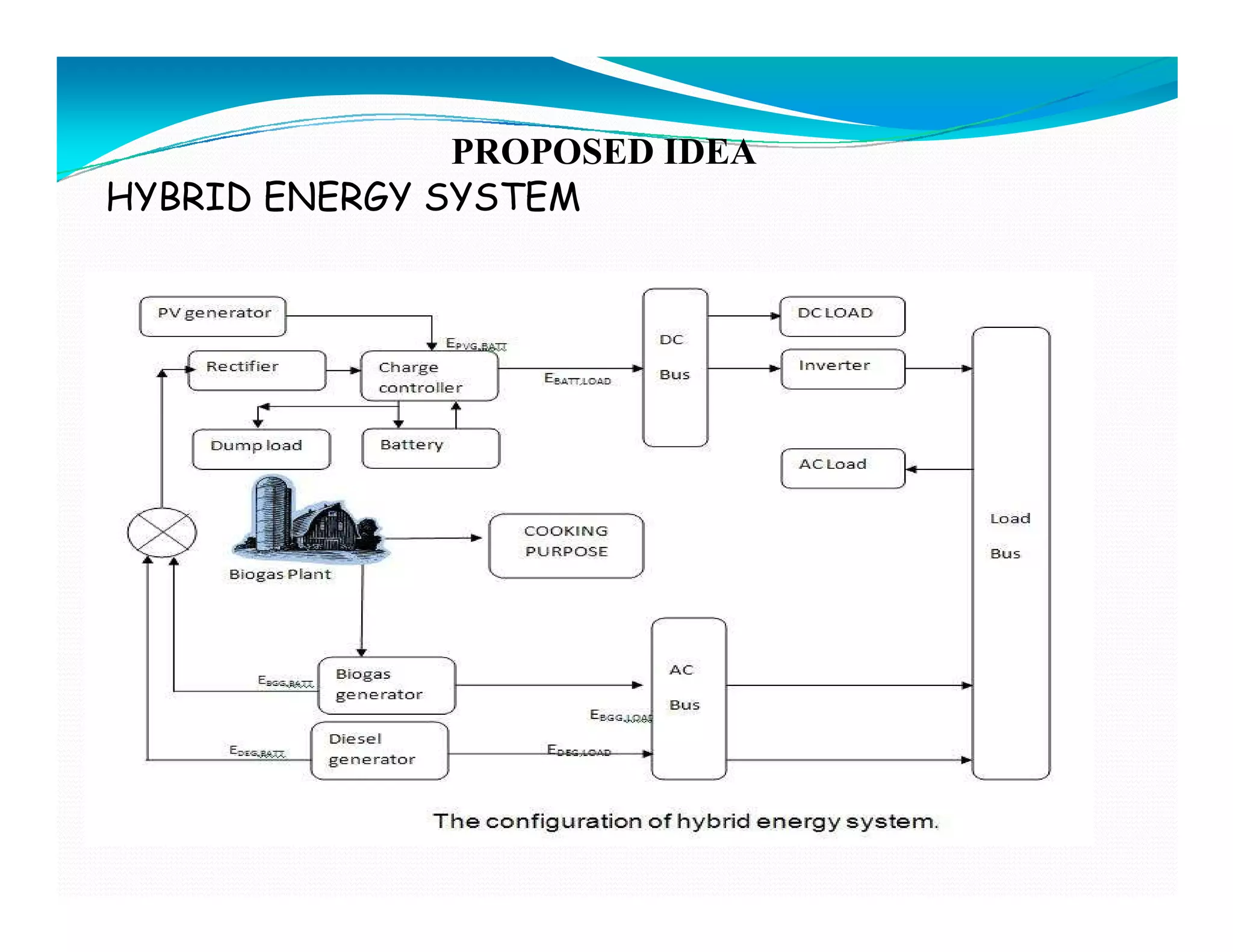
PROPOSED IDEA
HYBRID ENERGY SYSTEM
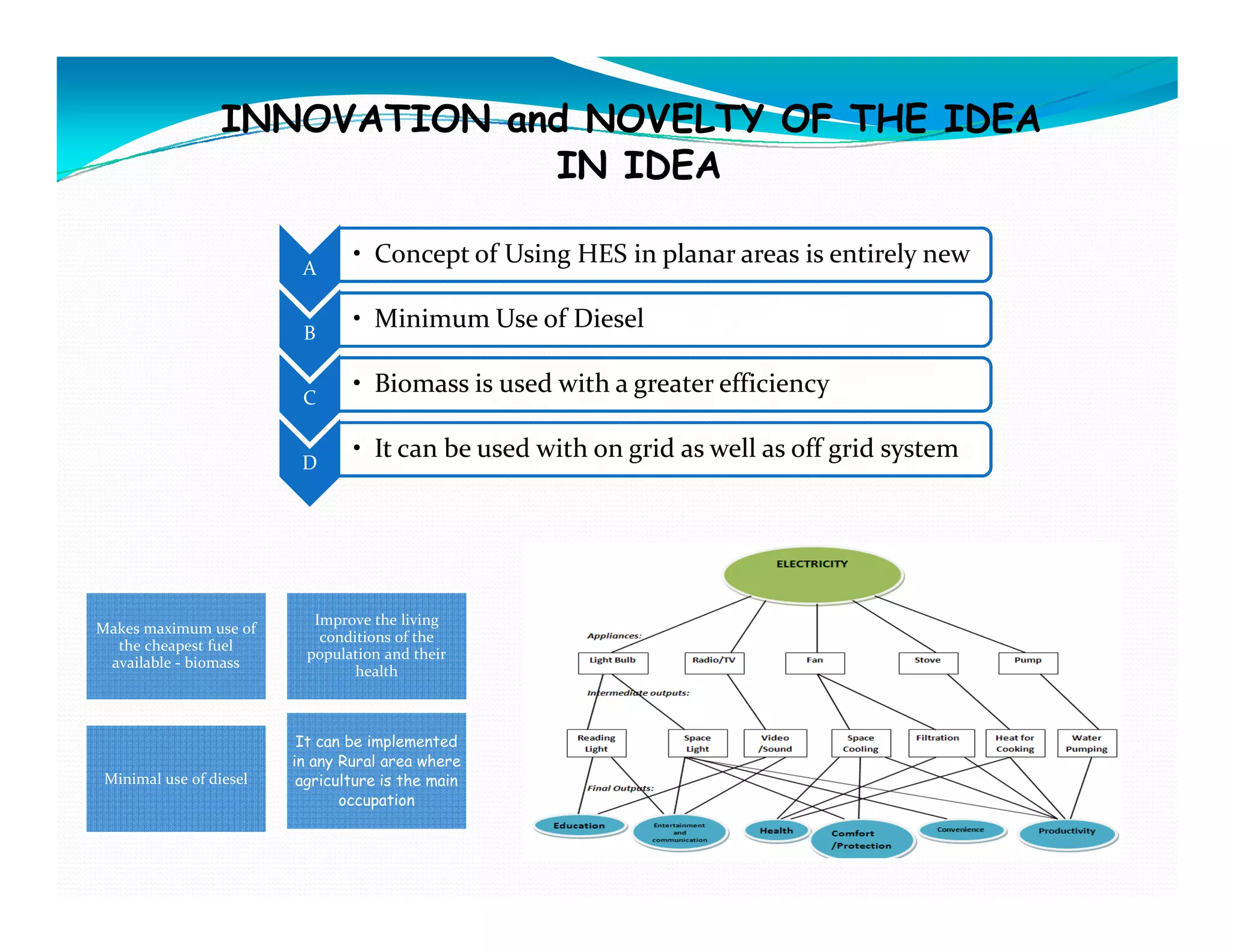
INNOVATION and NOVELTY OF THE IDEA
                               IN IDEA

                          A
                                 • Concept of Using HES in planar areas is entirely new

                          B
                                 • Minimum Use of Diesel

                          C
                                 • Biomass is used with a greater efficiency

                          D
                                 • It can be used with on grid as well as off grid system


                            Improve the living
Makes maximum use of
                             conditions of the
  the cheapest fuel
                           population and their
 available - biomass
                                  health


                          It can be implemented
                         in any Rural area where
 Minimal use of diesel    agriculture is the main
                                occupation
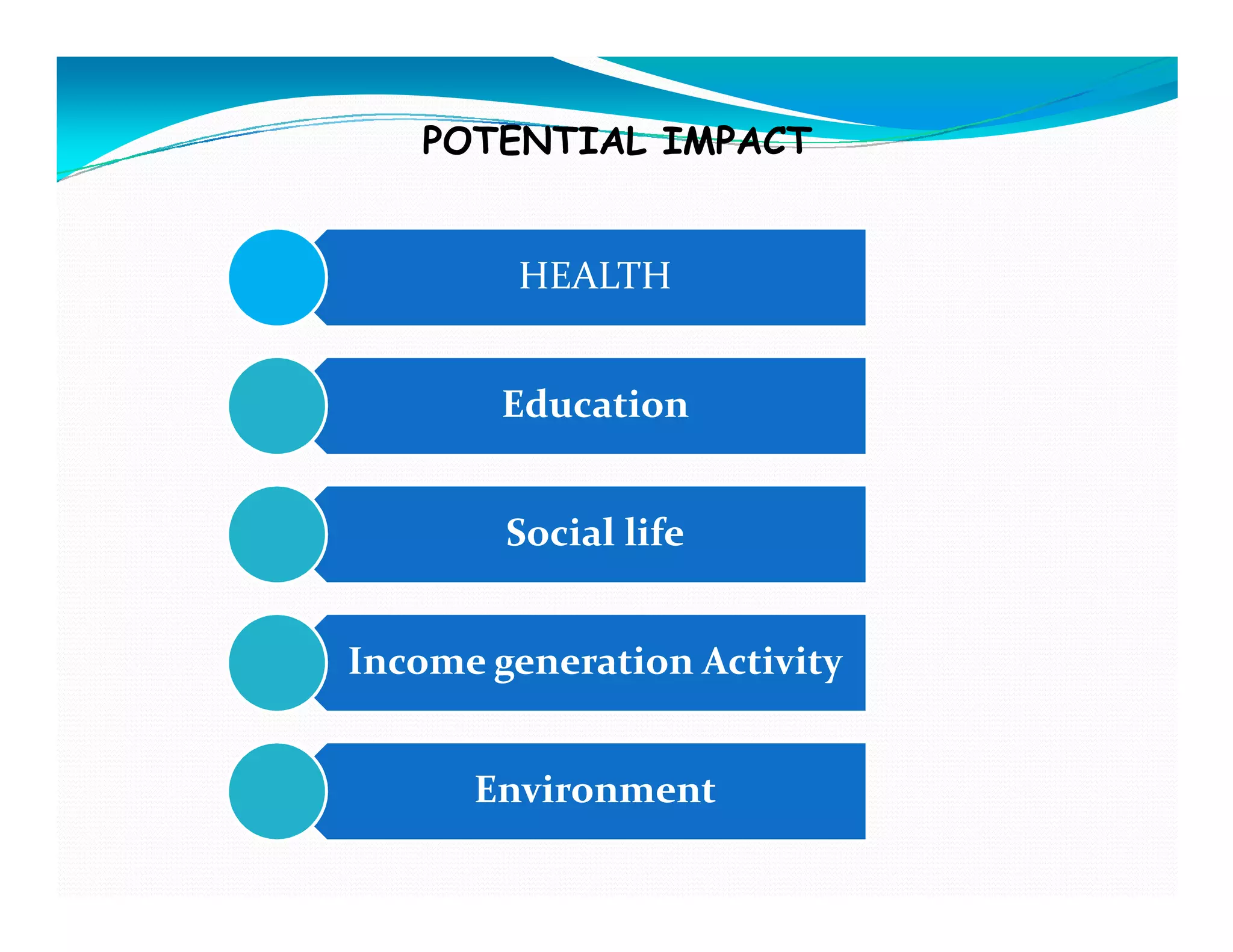
POTENTIAL IMPACT


        HEALTH


        Education


        Social life


Income generation Activity


      Environment
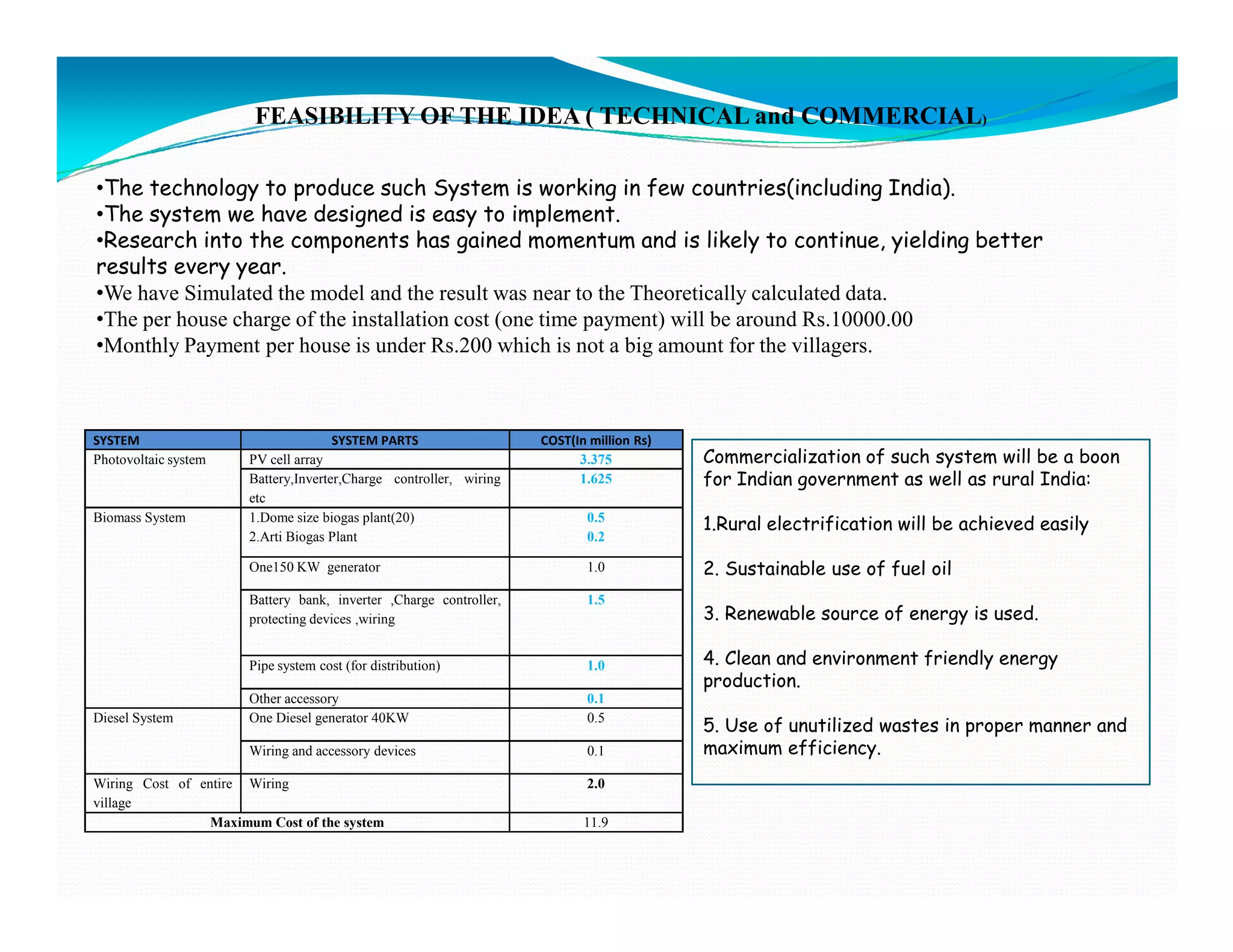
FEASIBILITY OF THE IDEA ( TECHNICAL and COMMERCIAL)

•The technology to produce such System is working in few countries(including India).
•The system we have designed is easy to implement.
•Research into the components has gained momentum and is likely to continue, yielding better
results every year.
•We have Simulated the model and the result was near to the Theoretically calculated data.
•The per house charge of the installation cost (one time payment) will be around Rs.10000.00
•Monthly Payment per house is under Rs.200 which is not a big amount for the villagers.


SYSTEM                                SYSTEM PARTS                  COST(In million Rs)
Photovoltaic system    PV cell array                                      3.375           Commercialization of such system will be a boon
                       Battery,Inverter,Charge controller, wiring         1.625           for Indian government as well as rural India:
                       etc
Biomass System         1.Dome size biogas plant(20)                        0.5
                                                                                          1.Rural electrification will be achieved easily
                       2.Arti Biogas Plant                                 0.2

                       One150 KW generator                                 1.0            2. Sustainable use of fuel oil
                       Battery bank, inverter ,Charge controller,          1.5
                       protecting devices ,wiring                                         3. Renewable source of energy is used.

                       Pipe system cost (for distribution)                 1.0            4. Clean and environment friendly energy
                                                                                          production.
                       Other accessory                                     0.1
Diesel System          One Diesel generator 40KW                           0.5
                                                                                          5. Use of unutilized wastes in proper manner and
                       Wiring and accessory devices                        0.1            maximum efficiency.
Wiring Cost of entire Wiring                                               2.0
village
                 Maximum Cost of the system                                11.9
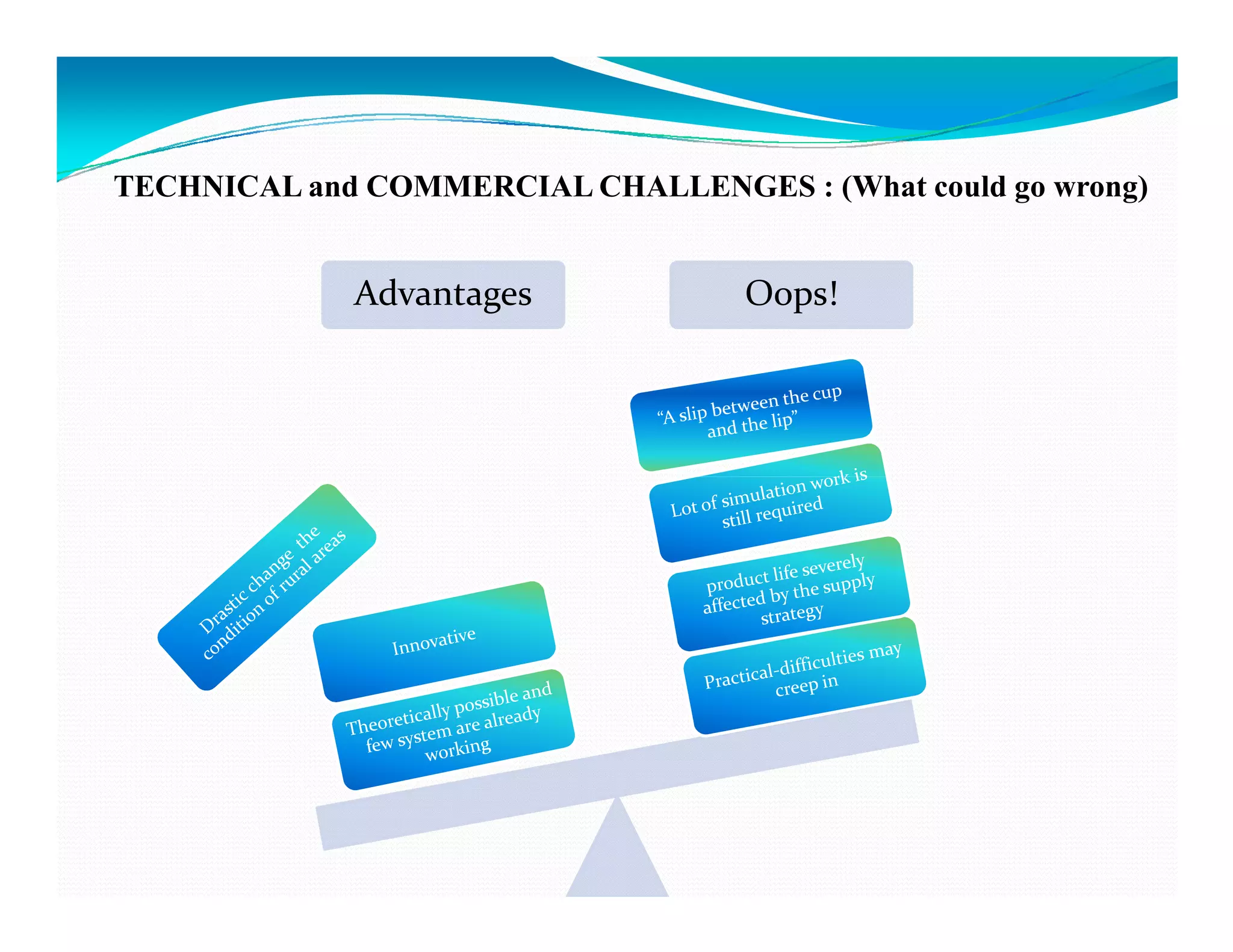
TECHNICAL and COMMERCIAL CHALLENGES : (What could go wrong)


             Advantages            Oops!
CONCLUSIONS
We can conclude from above points that Hybrid Energy System is
a very viable idea and it is no longer a question of if but rather a
question of when……until then all we can do is put our efforts into
it.


Acknowledgements:
Besides Tim Berners Lee(inventor of WWW), we’d like to thank our
teachers and of course our parents for guiding and helping us.
But perhaps most important are our friends who helped us out most when
we were depressed or unwilling to go any further.

Hybrid energy system ,ge edison challenege 2009

  • 1.
    HYBROSAVER Chandan Kumar SMRITI AGARWAL ABHISHEK MODI Institute of Technology-Banaras Hindu University Varanasi-221005
  • 2.
    PROBLEM STATEMENT •The challengeis to design a system which can provide clean and economic energy in the villages where electricity is either not available or available for small duration in the 24 hours •Study Area The remote rural area for the study was Keyal village of district Arwal of Bihar state, India. It is an unelectrified village. There are 500 houses having a Working population of around 2400. Local Hybrid resources and The big idea Energy their survey System
  • 3.
  • 4.
    INNOVATION and NOVELTYOF THE IDEA IN IDEA A • Concept of Using HES in planar areas is entirely new B • Minimum Use of Diesel C • Biomass is used with a greater efficiency D • It can be used with on grid as well as off grid system Improve the living Makes maximum use of conditions of the the cheapest fuel population and their available - biomass health It can be implemented in any Rural area where Minimal use of diesel agriculture is the main occupation
  • 5.
    POTENTIAL IMPACT HEALTH Education Social life Income generation Activity Environment
  • 6.
    FEASIBILITY OF THEIDEA ( TECHNICAL and COMMERCIAL) •The technology to produce such System is working in few countries(including India). •The system we have designed is easy to implement. •Research into the components has gained momentum and is likely to continue, yielding better results every year. •We have Simulated the model and the result was near to the Theoretically calculated data. •The per house charge of the installation cost (one time payment) will be around Rs.10000.00 •Monthly Payment per house is under Rs.200 which is not a big amount for the villagers. SYSTEM SYSTEM PARTS COST(In million Rs) Photovoltaic system PV cell array 3.375 Commercialization of such system will be a boon Battery,Inverter,Charge controller, wiring 1.625 for Indian government as well as rural India: etc Biomass System 1.Dome size biogas plant(20) 0.5 1.Rural electrification will be achieved easily 2.Arti Biogas Plant 0.2 One150 KW generator 1.0 2. Sustainable use of fuel oil Battery bank, inverter ,Charge controller, 1.5 protecting devices ,wiring 3. Renewable source of energy is used. Pipe system cost (for distribution) 1.0 4. Clean and environment friendly energy production. Other accessory 0.1 Diesel System One Diesel generator 40KW 0.5 5. Use of unutilized wastes in proper manner and Wiring and accessory devices 0.1 maximum efficiency. Wiring Cost of entire Wiring 2.0 village Maximum Cost of the system 11.9
  • 7.
    TECHNICAL and COMMERCIALCHALLENGES : (What could go wrong) Advantages Oops!
  • 8.
    CONCLUSIONS We can concludefrom above points that Hybrid Energy System is a very viable idea and it is no longer a question of if but rather a question of when……until then all we can do is put our efforts into it. Acknowledgements: Besides Tim Berners Lee(inventor of WWW), we’d like to thank our teachers and of course our parents for guiding and helping us. But perhaps most important are our friends who helped us out most when we were depressed or unwilling to go any further.