Comparison of AC-DC
Transmission Systems
Prepared By:
K. H. Shedbalkar
Department of Electrical Engineering,
Sharad Institute of Technology, College of Engineering
Comparison of AC-DC Transmission
Systems
• We need to consider following parameters for
comparison of AC-DC transmission systems.
 Economics of transmission.
 Technical Performance.
 Reliability.
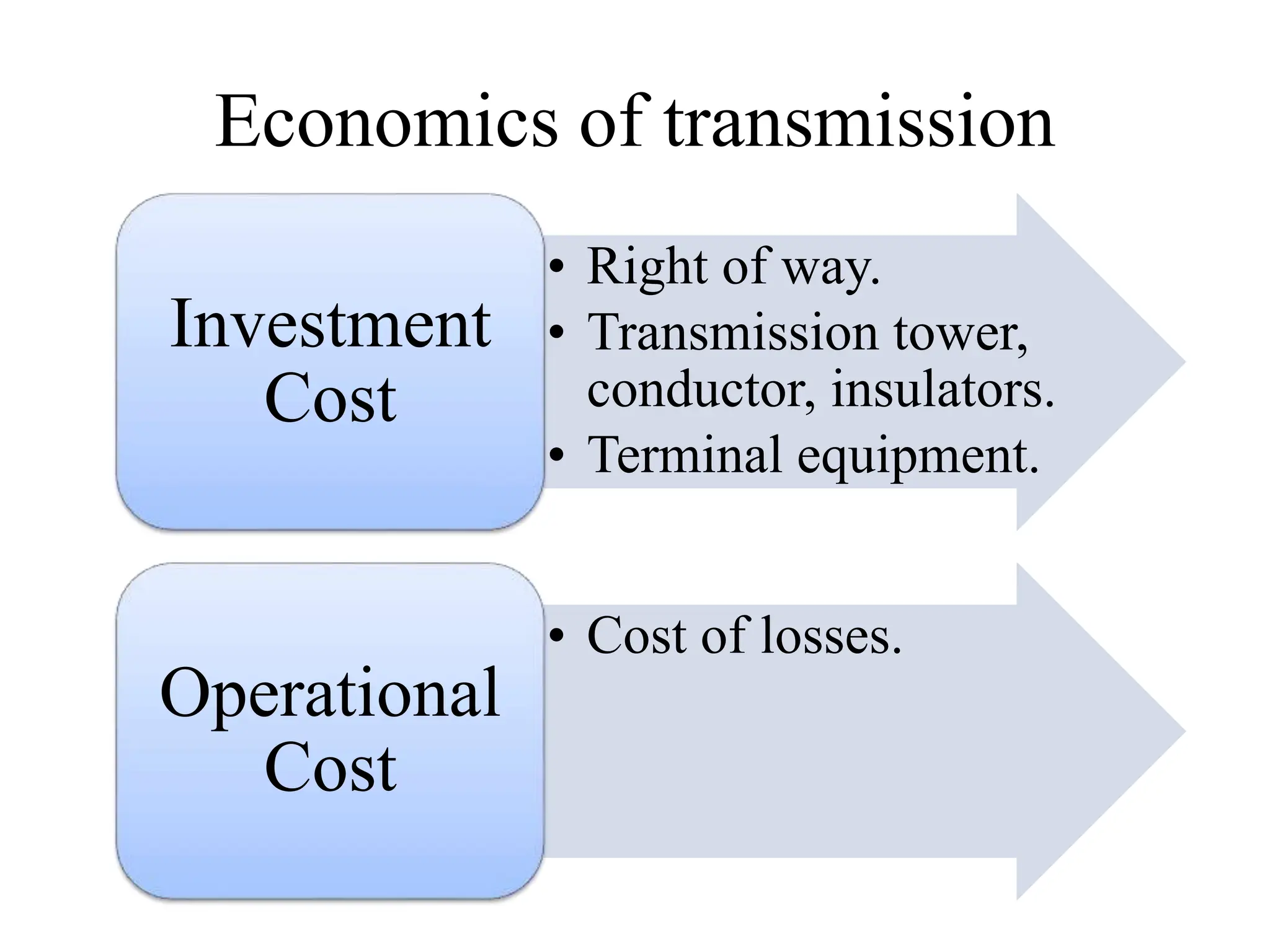
Economics of transmission
• Right of way.
• Transmission tower,
conductor, insulators.
• Terminal equipment.
Investment
Cost
• Cost of losses.
Operational
Cost
Insulator:
Characteristics of insulator changes with change in
voltage level. For simplicity we assume for AC & DC it is
same. It can be shown that DC line much power with two
conductors as an AC line with 3 conductors of same size.
This implies that for given power level, DC requires less
RoW, Simple & cheaper tower, Conductor & insulator cost
reduced.
 Power losses are reduced (67% that of AC of same
capacity).
 Absence of Skin Effect.
 The corona effect tends to be significantly low leads
to economics size of conductors.
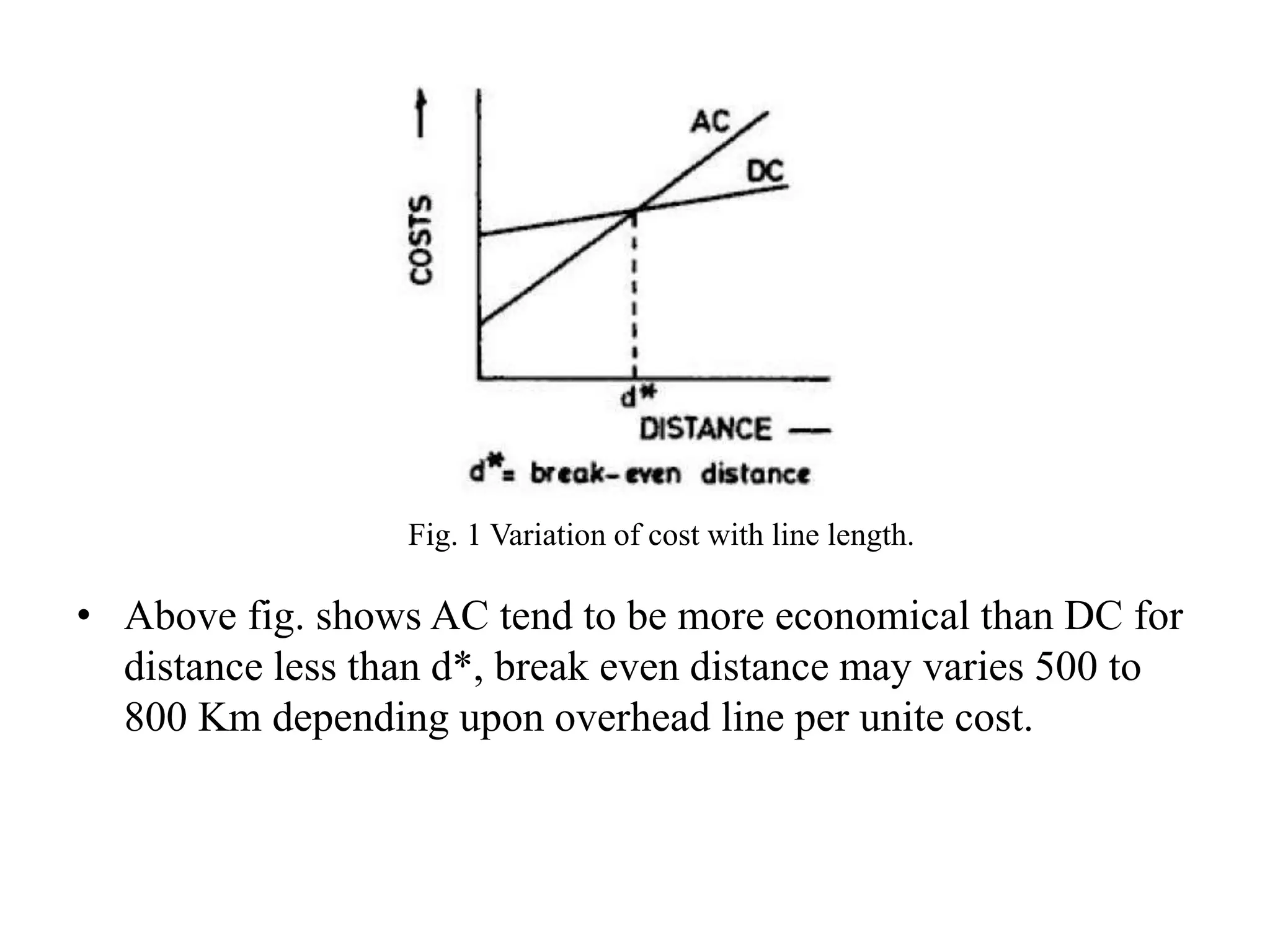
• Above fig. shows AC tend to be more economical than DC for
distance less than d*, break even distance may varies 500 to
800 Km depending upon overhead line per unite cost.
Fig. 1 Variation of cost with line length.
Technical Performance
• DC transmission systems having following
advantages :
– Full control over power transmitted.
– The ability to enhance transient & steady state
stability.
– Fast control to limit fault current in DC line.
• Stability Limit
– The power transfer in AC lines depends upon angle
difference between voltage at both ends, angle
increases with increase in distance.
• Voltage Control
– Voltage control in AC is Complicated by line
charging & inductive voltage drops, voltage profile
varies with loading. The reactive power
requirements increases with length.
– The DC converter station requires reactive power
related to line loading but line doesn’t requires.
• Line Compensation
– AC lines requires shunt & series compensation is
required for long transmission lines , mainly to
overcome the problem of line charging & stability
limitations.
Disadvantages of DC Transmission
system
• The difficulty of breaking DC currents which
results in high cost of DC breakers.
• Inability to use transformers to change voltage
levels.
• High cost of conversion equipments.
• Generation of harmonics which requires AC &
DC filters.
• Complexity of control.
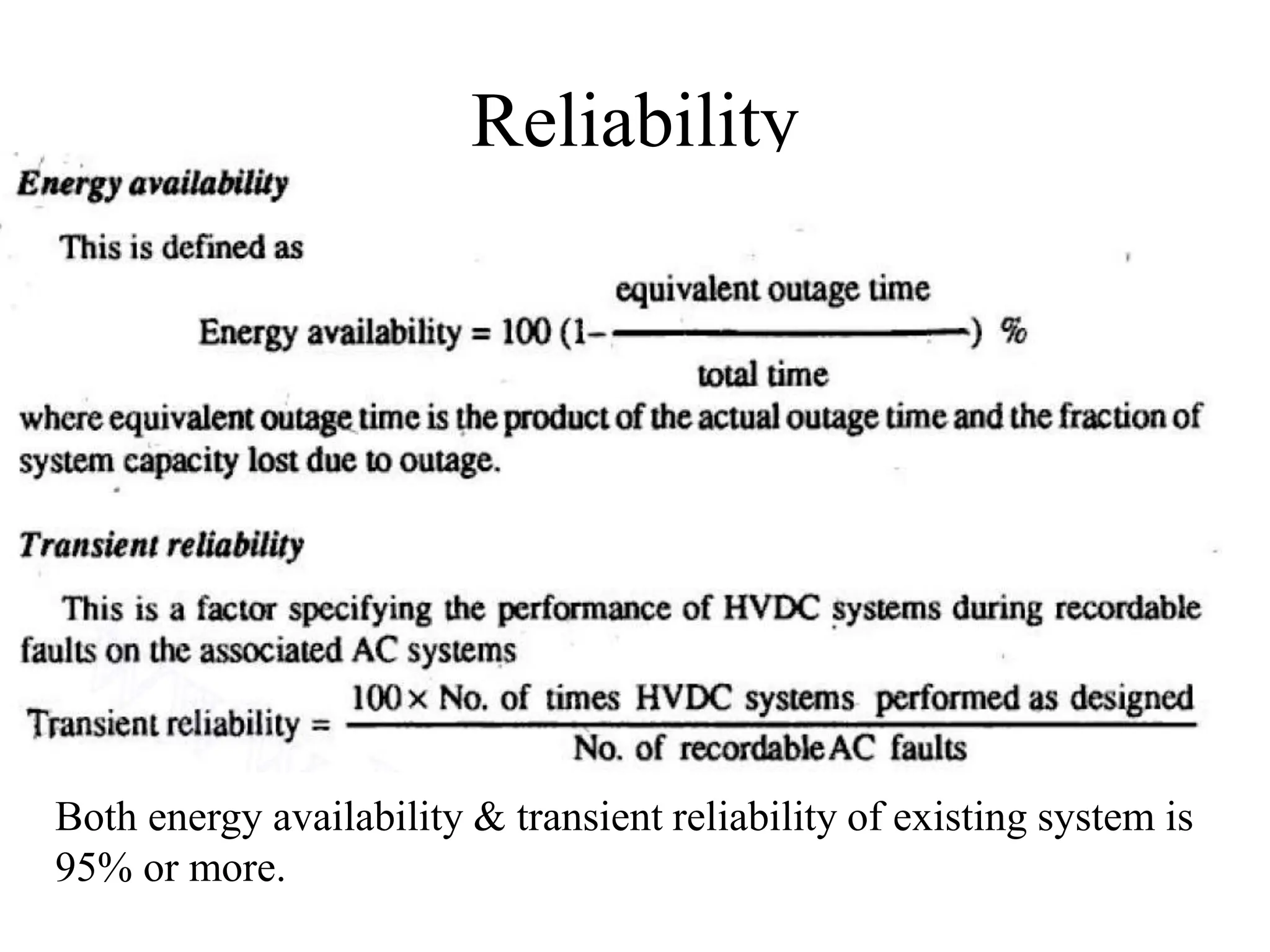
Reliability
Both energy availability & transient reliability of existing system is
95% or more.
Reference
• HVDC Power Transmission Systems, K R
Padiyar, New Age International.

HVDC_01.pptx

  • 1.
    Comparison of AC-DC TransmissionSystems Prepared By: K. H. Shedbalkar Department of Electrical Engineering, Sharad Institute of Technology, College of Engineering
  • 2.
    Comparison of AC-DCTransmission Systems • We need to consider following parameters for comparison of AC-DC transmission systems.  Economics of transmission.  Technical Performance.  Reliability.
  • 3.
    Economics of transmission •Right of way. • Transmission tower, conductor, insulators. • Terminal equipment. Investment Cost • Cost of losses. Operational Cost
  • 4.
    Insulator: Characteristics of insulatorchanges with change in voltage level. For simplicity we assume for AC & DC it is same. It can be shown that DC line much power with two conductors as an AC line with 3 conductors of same size. This implies that for given power level, DC requires less RoW, Simple & cheaper tower, Conductor & insulator cost reduced.  Power losses are reduced (67% that of AC of same capacity).  Absence of Skin Effect.  The corona effect tends to be significantly low leads to economics size of conductors.
  • 5.
    • Above fig.shows AC tend to be more economical than DC for distance less than d*, break even distance may varies 500 to 800 Km depending upon overhead line per unite cost. Fig. 1 Variation of cost with line length.
  • 6.
    Technical Performance • DCtransmission systems having following advantages : – Full control over power transmitted. – The ability to enhance transient & steady state stability. – Fast control to limit fault current in DC line.
  • 7.
    • Stability Limit –The power transfer in AC lines depends upon angle difference between voltage at both ends, angle increases with increase in distance. • Voltage Control – Voltage control in AC is Complicated by line charging & inductive voltage drops, voltage profile varies with loading. The reactive power requirements increases with length. – The DC converter station requires reactive power related to line loading but line doesn’t requires. • Line Compensation – AC lines requires shunt & series compensation is required for long transmission lines , mainly to overcome the problem of line charging & stability limitations.
  • 8.
    Disadvantages of DCTransmission system • The difficulty of breaking DC currents which results in high cost of DC breakers. • Inability to use transformers to change voltage levels. • High cost of conversion equipments. • Generation of harmonics which requires AC & DC filters. • Complexity of control.
  • 9.
    Reliability Both energy availability& transient reliability of existing system is 95% or more.
  • 10.
    Reference • HVDC PowerTransmission Systems, K R Padiyar, New Age International.