SEMINAR REPORT
ON
HVDC TRANSMISSION LINE
Submitted by
Ankit Mankotia
AAEE0016A/10
Dept. of EEE
CONTENTS
• INTRODUCTION
• TYPES OF DC LINK
• HVDC IN INDIA
• COMPARISON
• C0NVERTER STATION EQUIPMENT
• INCORPORATING HVDC INTO AC SYSTEM
• C0NVERTER STATION EQUIPMENT
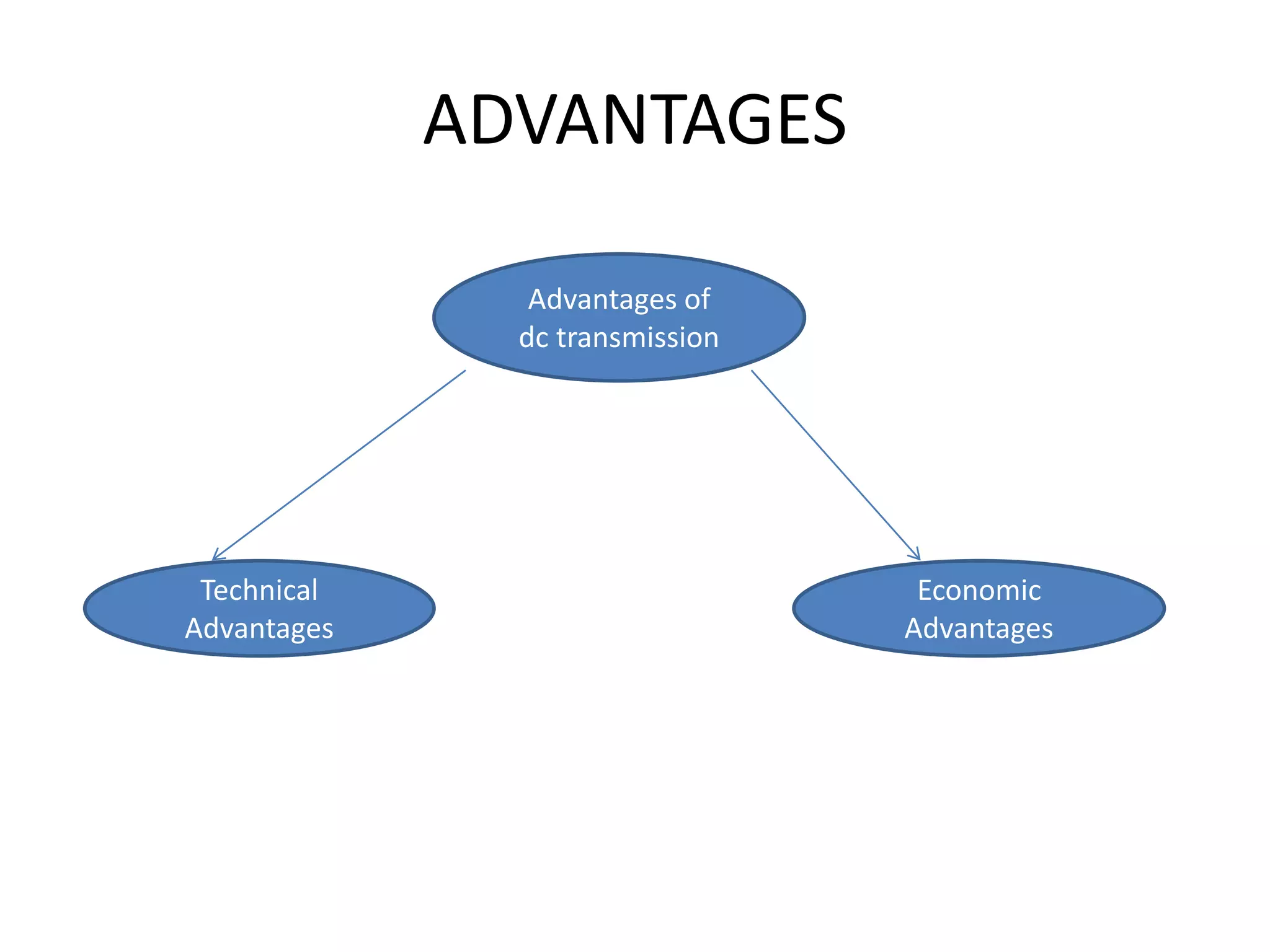
• ADVANTAGES
• PROBLEMS
• CONCLUSION
INTRODUCTION
• Now a day large amount of block of power are
needed to be transmitted.
• There arises some technical problem of
transmitting to such a long distance using ac.
• In the view of draw backs of ac the HVDC
transmission has come into picture
• The first DC link was set up in 1954 in
between Swedish main land and the
island of Gotland
• The use of an HVDC link in an ac system
requires converter station at each end of
the line
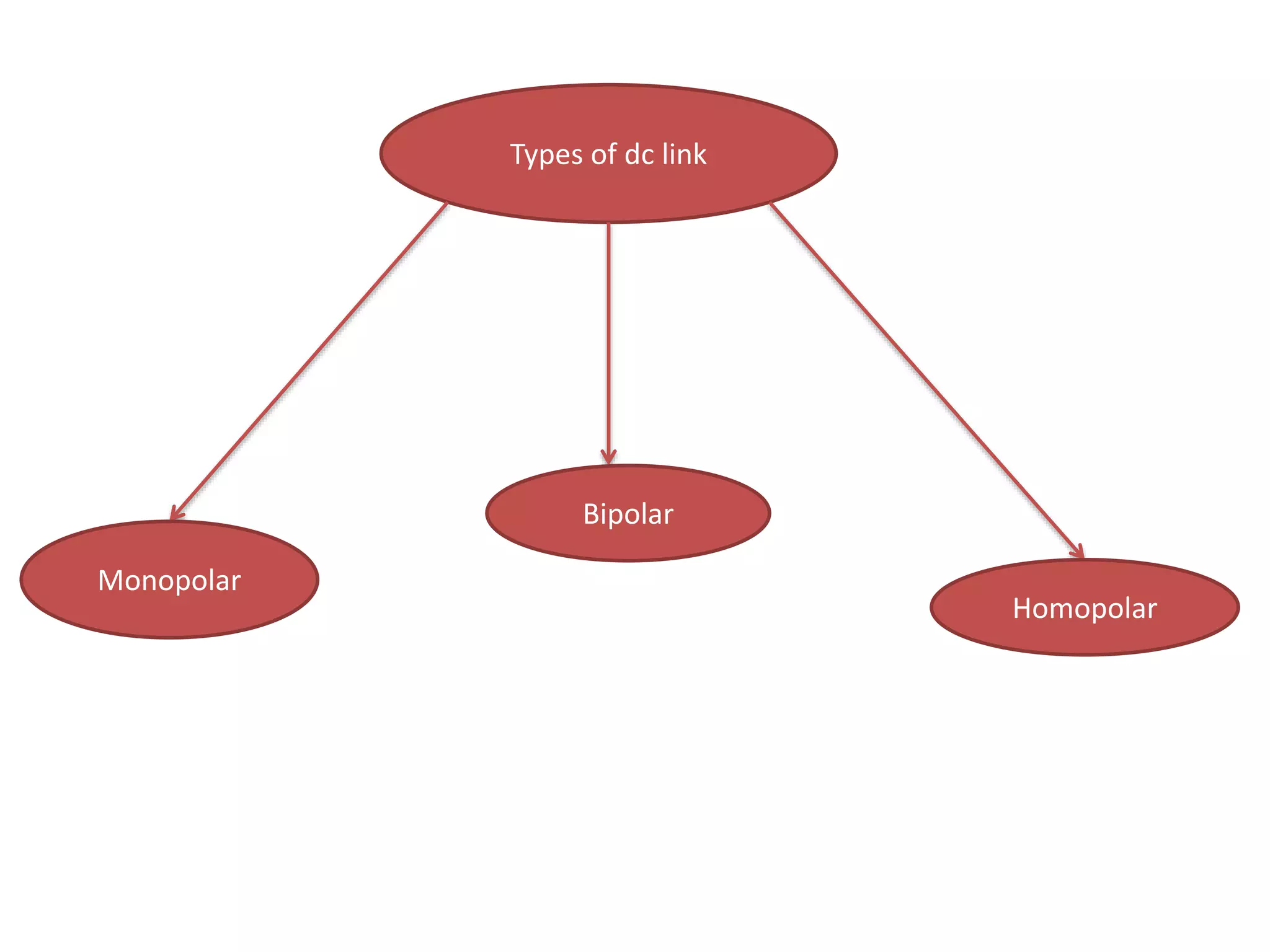
Types of dc link
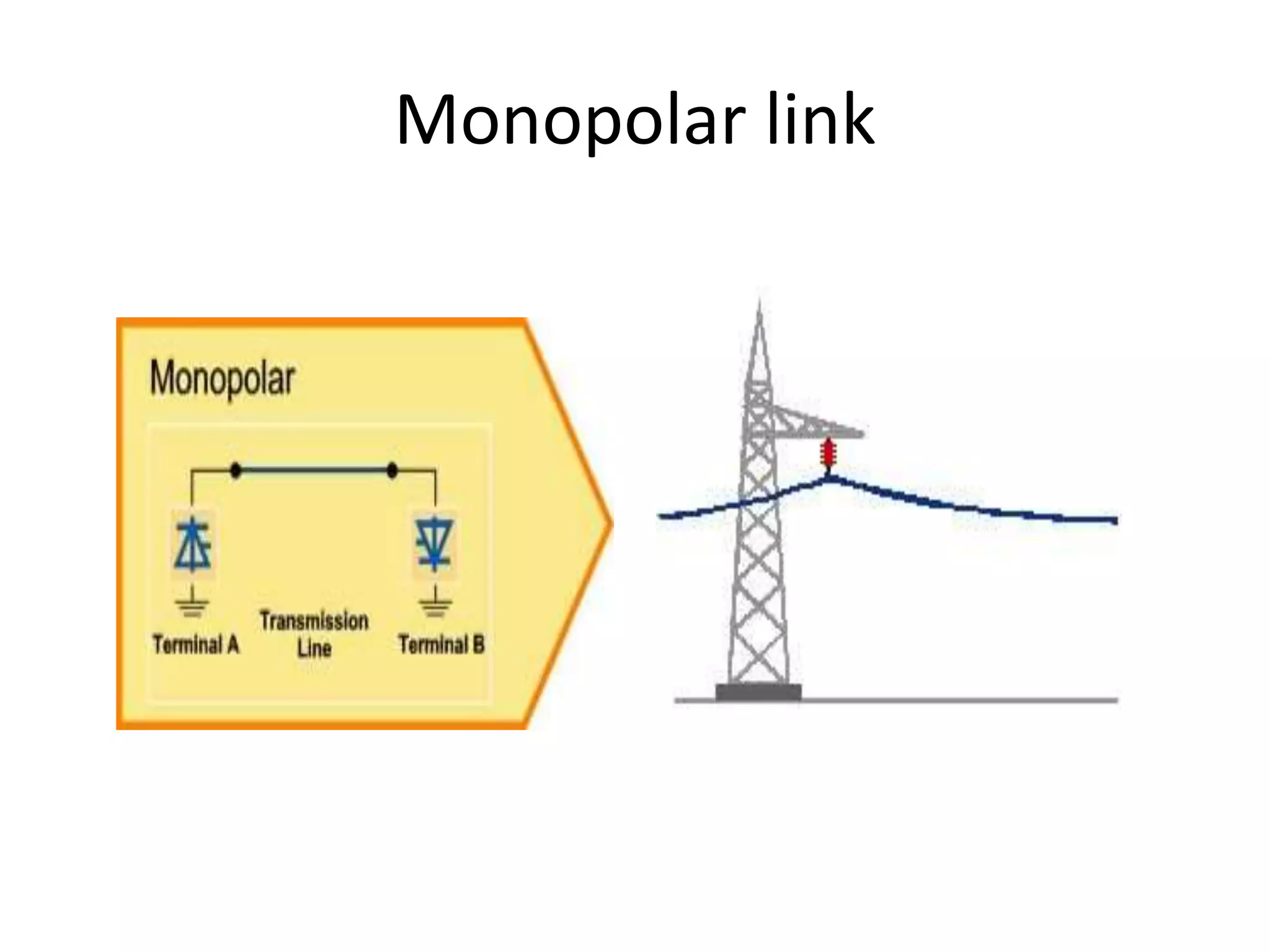
Monopolar
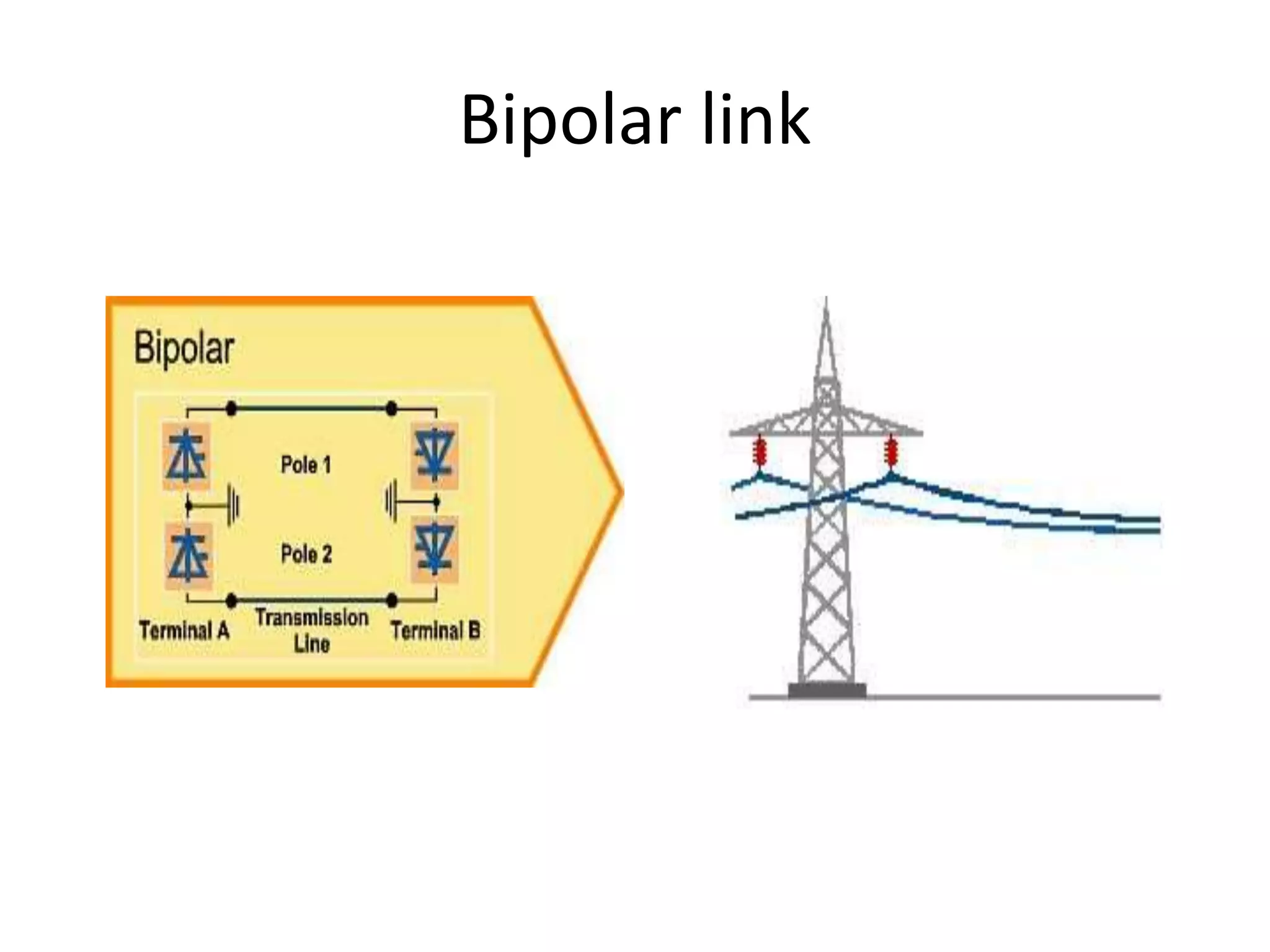
Bipolar
Homopolar
Monopolar link
Bipolar link
HVDC IN INDIA
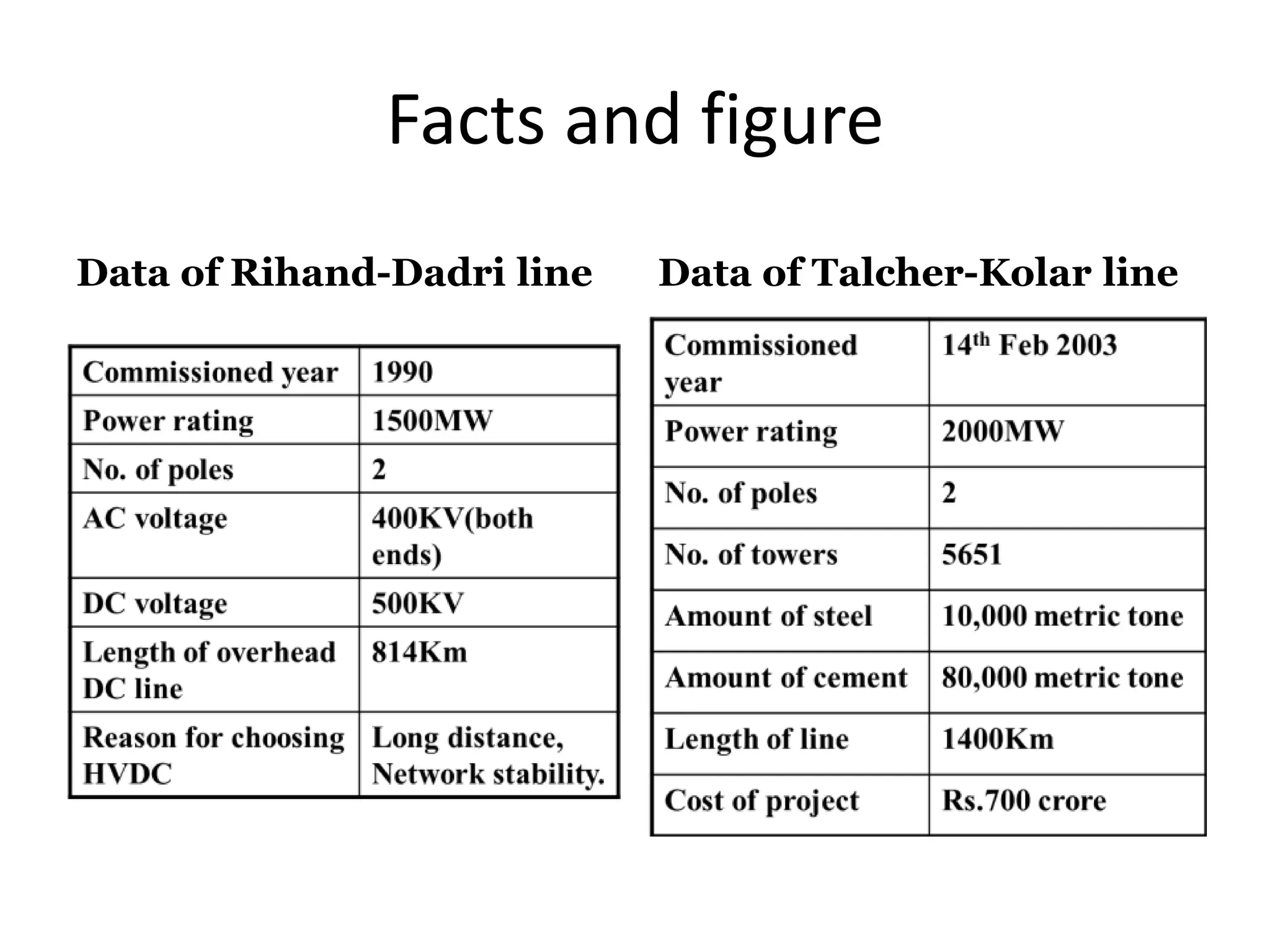
• In India presently 6 HVDC systems are in operation.
• India- Pioneer developer of HVDC since 1990 with the first
HVDC set up of 1000MW 814Km Rihand-Dadri line
between U.P & Rajasthan.
• 2000MW 1440Km Talcher-Kolar link is biggest so far
connecting four states-orissa, andhra pradesh , tamilnadu
and karnataka.
• In march 2000,Power-grid(largest power transmission
utility of India) awarded a new long distance HVDC
transmission project to SIEMENS, Germany.
• More greater plans are cooking to add 1lakh MW of power
by 2012 in which HVDC will play vital role to transmit
these powers to all corners of India.
Facts and figure
Data of Rihand-Dadri line Data of Talcher-Kolar line
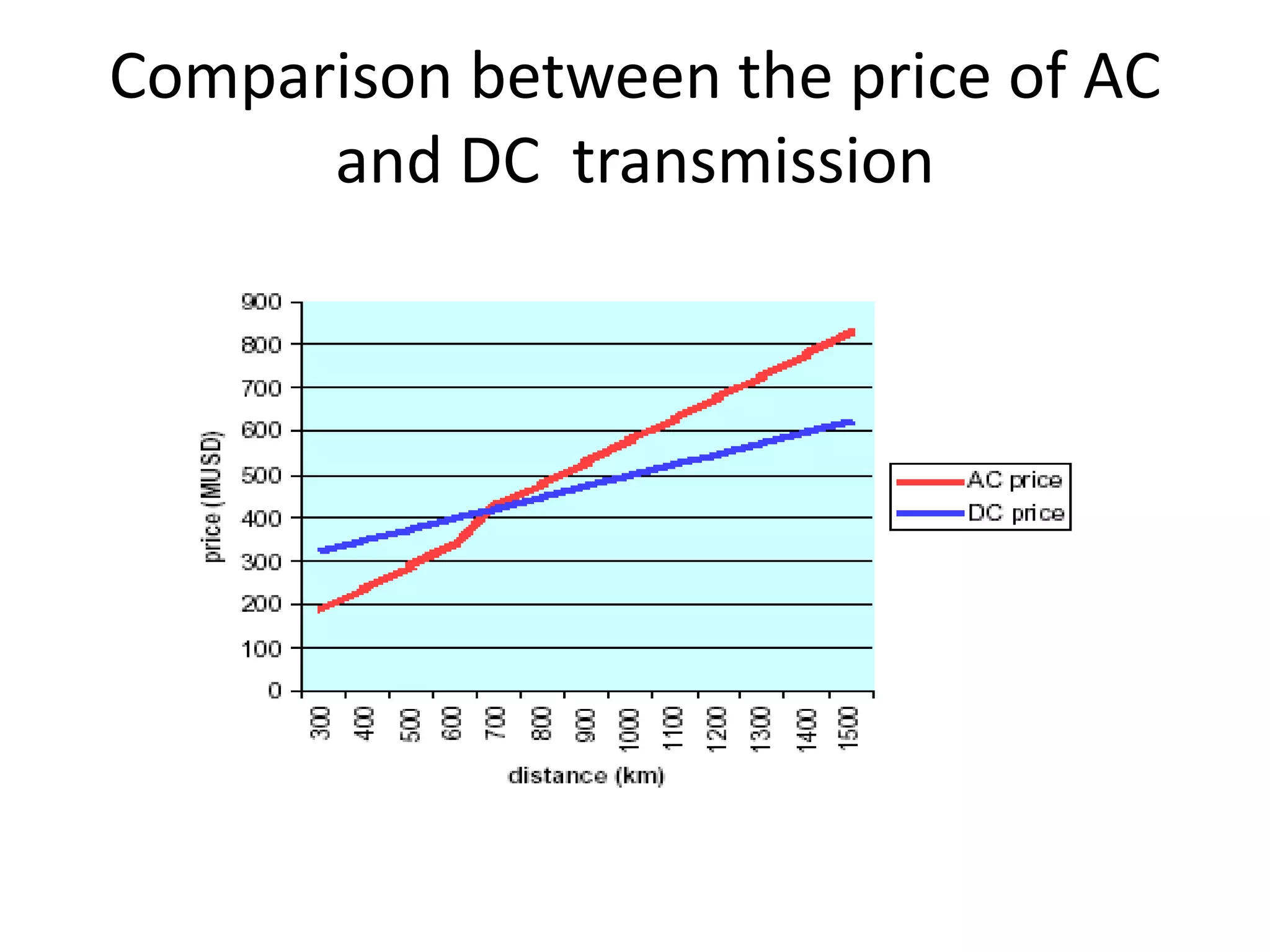
Comparison between the price of AC
and DC transmission
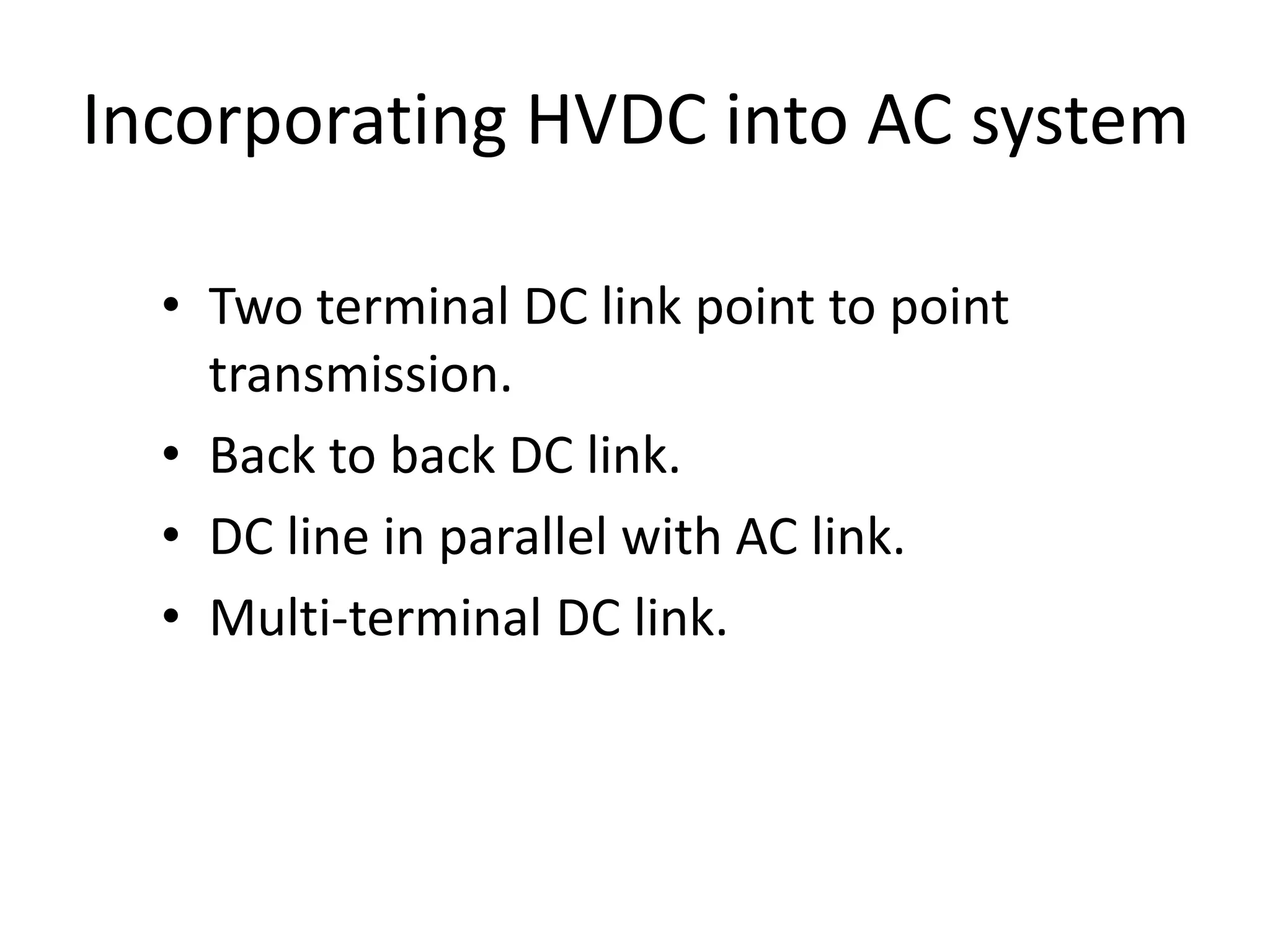
Incorporating HVDC into AC system
• Two terminal DC link point to point
transmission.
• Back to back DC link.
• DC line in parallel with AC link.
• Multi-terminal DC link.
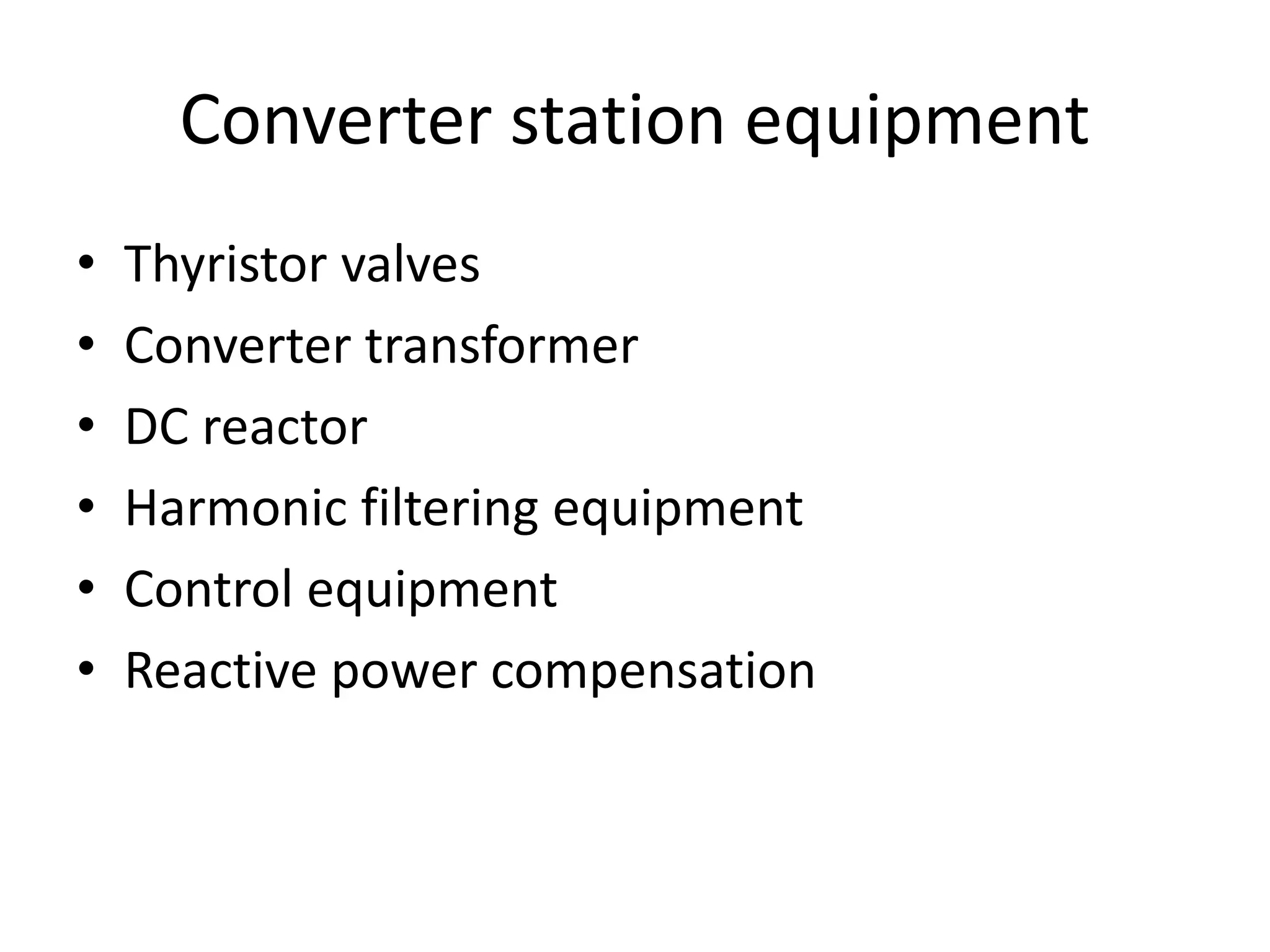
Converter station equipment
• Thyristor valves
• Converter transformer
• DC reactor
• Harmonic filtering equipment
• Control equipment
• Reactive power compensation
ADVANTAGES
Advantages of
dc transmission
Technical
Advantages
Economic
Advantages
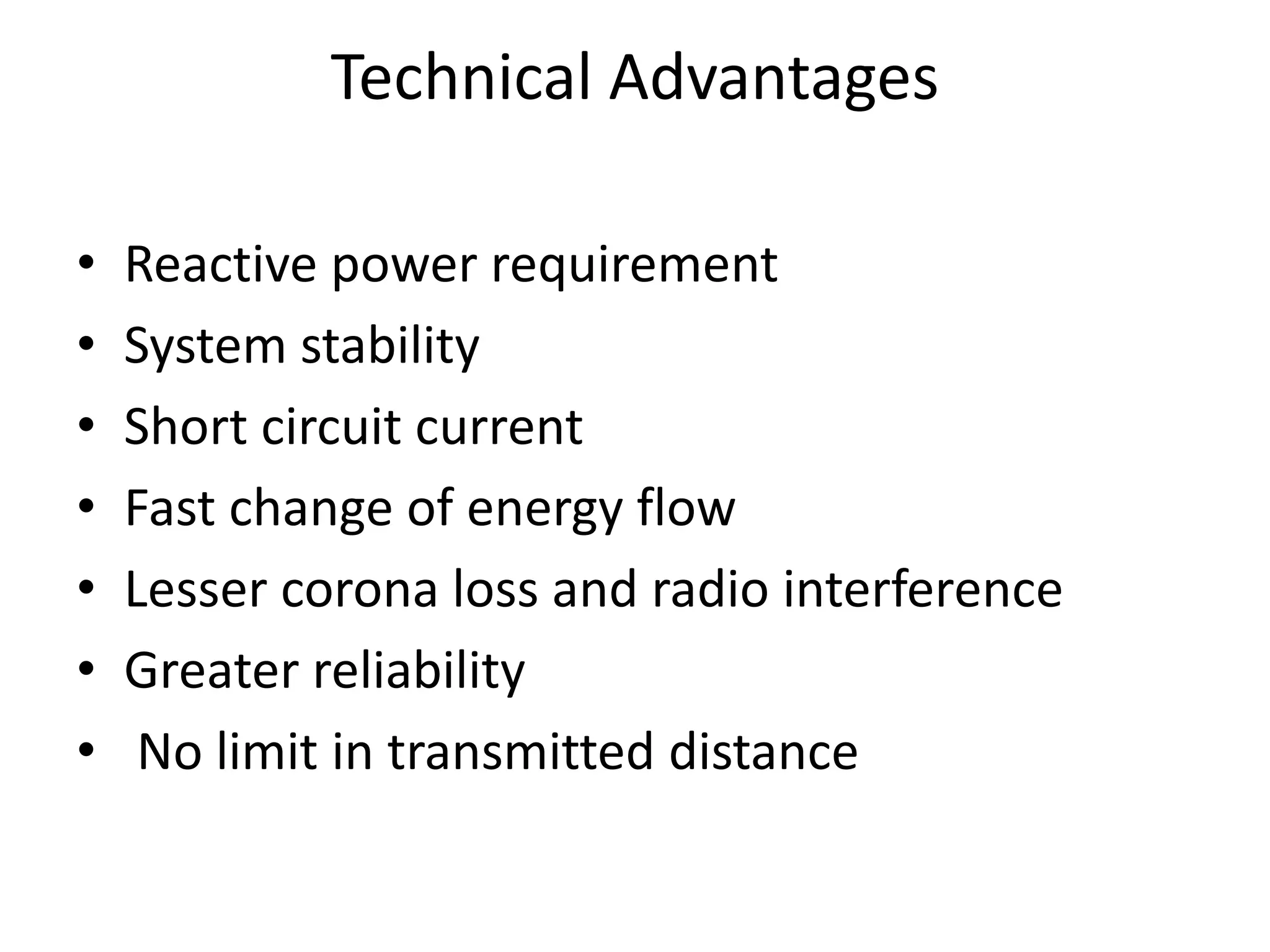
Technical Advantages
• Reactive power requirement
• System stability
• Short circuit current
• Fast change of energy flow
• Lesser corona loss and radio interference
• Greater reliability
• No limit in transmitted distance
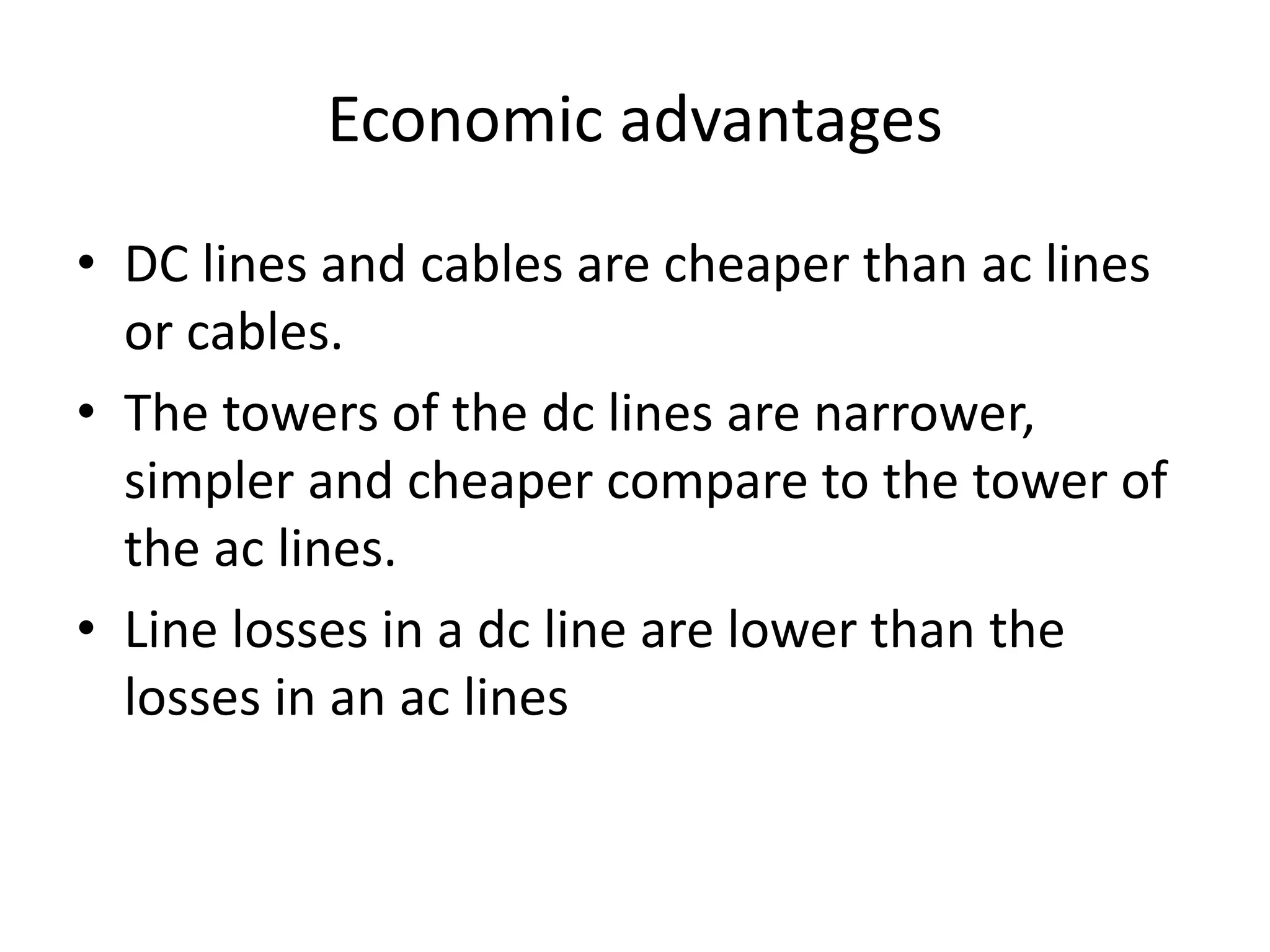
Economic advantages
• DC lines and cables are cheaper than ac lines
or cables.
• The towers of the dc lines are narrower,
simpler and cheaper compare to the tower of
the ac lines.
• Line losses in a dc line are lower than the
losses in an ac lines
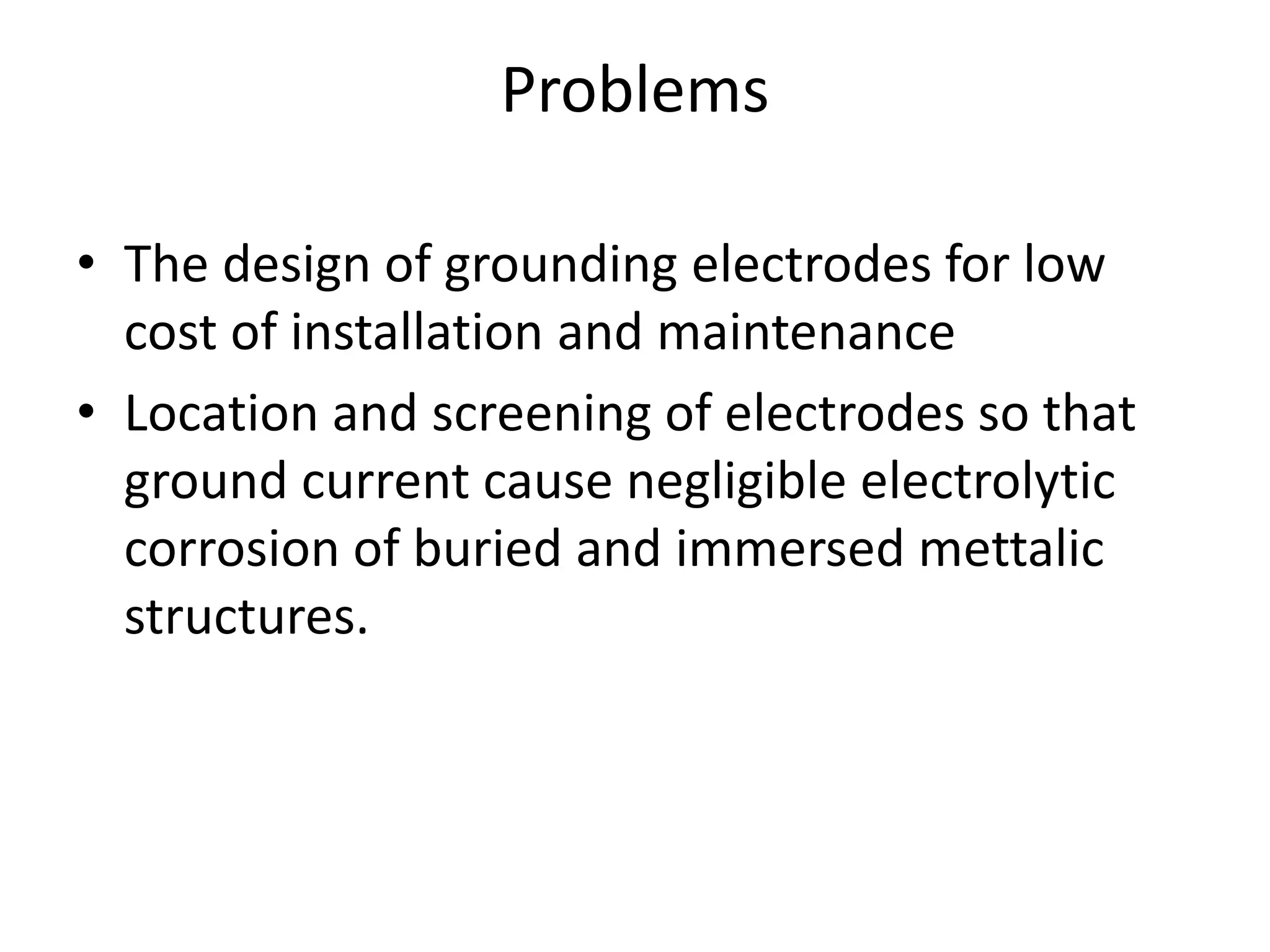
Problems
• The design of grounding electrodes for low
cost of installation and maintenance
• Location and screening of electrodes so that
ground current cause negligible electrolytic
corrosion of buried and immersed mettalic
structures.
Conclusion
HVDC offers powerful alternative to increase
stability of a power system as well as to improve
system operating flexibility and loss reduction. Our
simulations have shown that HVDC lines can be
used for oscillations’ damping and improvement of
the system stability. When a HVDC line is in parallel
with an AC-line, the AC-line can transfer more
power because of the damping control. With
damping control the AC line can transfer more
power than with no damping control.

Mankotia ankit

  • 1.
    SEMINAR REPORT ON HVDC TRANSMISSIONLINE Submitted by Ankit Mankotia AAEE0016A/10 Dept. of EEE
  • 2.
    CONTENTS • INTRODUCTION • TYPESOF DC LINK • HVDC IN INDIA • COMPARISON • C0NVERTER STATION EQUIPMENT • INCORPORATING HVDC INTO AC SYSTEM • C0NVERTER STATION EQUIPMENT • ADVANTAGES • PROBLEMS • CONCLUSION
  • 3.
    INTRODUCTION • Now aday large amount of block of power are needed to be transmitted. • There arises some technical problem of transmitting to such a long distance using ac. • In the view of draw backs of ac the HVDC transmission has come into picture
  • 4.
    • The firstDC link was set up in 1954 in between Swedish main land and the island of Gotland • The use of an HVDC link in an ac system requires converter station at each end of the line
  • 5.
    Types of dclink Monopolar Bipolar Homopolar
  • 6.
  • 7.
  • 8.
    HVDC IN INDIA •In India presently 6 HVDC systems are in operation. • India- Pioneer developer of HVDC since 1990 with the first HVDC set up of 1000MW 814Km Rihand-Dadri line between U.P & Rajasthan. • 2000MW 1440Km Talcher-Kolar link is biggest so far connecting four states-orissa, andhra pradesh , tamilnadu and karnataka. • In march 2000,Power-grid(largest power transmission utility of India) awarded a new long distance HVDC transmission project to SIEMENS, Germany. • More greater plans are cooking to add 1lakh MW of power by 2012 in which HVDC will play vital role to transmit these powers to all corners of India.
  • 9.
    Facts and figure Dataof Rihand-Dadri line Data of Talcher-Kolar line
  • 10.
    Comparison between theprice of AC and DC transmission
  • 11.
    Incorporating HVDC intoAC system • Two terminal DC link point to point transmission. • Back to back DC link. • DC line in parallel with AC link. • Multi-terminal DC link.
  • 12.
    Converter station equipment •Thyristor valves • Converter transformer • DC reactor • Harmonic filtering equipment • Control equipment • Reactive power compensation
  • 13.
  • 14.
    Technical Advantages • Reactivepower requirement • System stability • Short circuit current • Fast change of energy flow • Lesser corona loss and radio interference • Greater reliability • No limit in transmitted distance
  • 15.
    Economic advantages • DClines and cables are cheaper than ac lines or cables. • The towers of the dc lines are narrower, simpler and cheaper compare to the tower of the ac lines. • Line losses in a dc line are lower than the losses in an ac lines
  • 16.
    Problems • The designof grounding electrodes for low cost of installation and maintenance • Location and screening of electrodes so that ground current cause negligible electrolytic corrosion of buried and immersed mettalic structures.
  • 17.
    Conclusion HVDC offers powerfulalternative to increase stability of a power system as well as to improve system operating flexibility and loss reduction. Our simulations have shown that HVDC lines can be used for oscillations’ damping and improvement of the system stability. When a HVDC line is in parallel with an AC-line, the AC-line can transfer more power because of the damping control. With damping control the AC line can transfer more power than with no damping control.