



HUMAN SETTLMENTS
MUNIVENKATESH
PARAMASIVAM
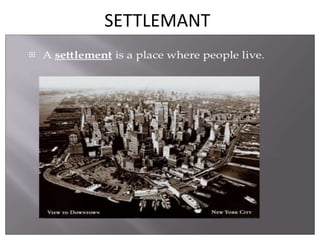
SETTLEMANT
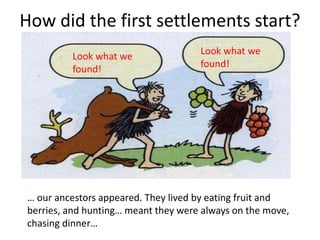
How did the first settlements start?
… our ancestors appeared. They lived by eating fruit and
berries, and hunting… meant they were always on the move,
chasing dinner…
Look what we
found!
Look what we
found!
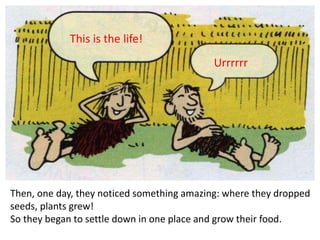
This is the life!
Urrrrrr
Then, one day, they noticed something amazing: where they dropped
seeds, plants grew!
So they began to settle down in one place and grow their food.
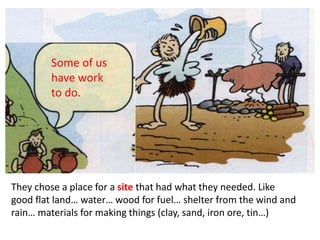
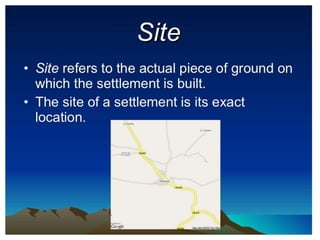
They chose a place for a site that had what they needed. Like
good flat land… water… wood for fuel… shelter from the wind and
rain… materials for making things (clay, sand, iron ore, tin…)
Some of us
have work
to do.
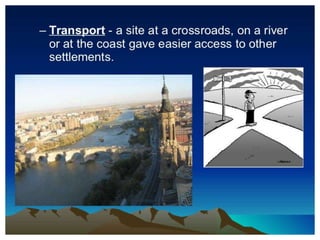
… easy access to other places for trading… and protection
from their enemies.
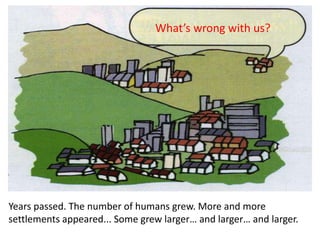
Years passed. The number of humans grew. More and more
settlements appeared... Some grew larger… and larger… and larger.
What’s wrong with us?
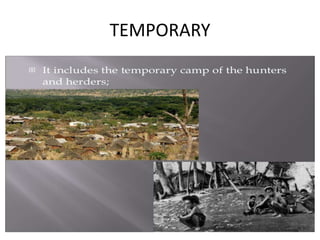
TEMPORARY
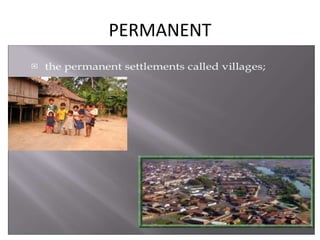
PERMANENT
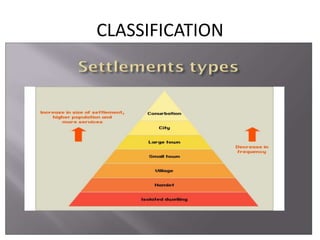
CLASSIFICATION
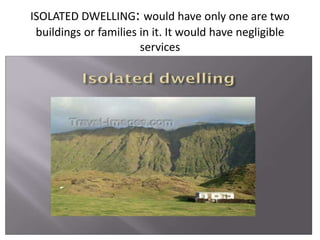
ISOLATED DWELLING: would have only one are two
buildings or families in it. It would have negligible
services
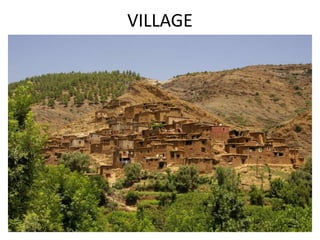
VILLAGE
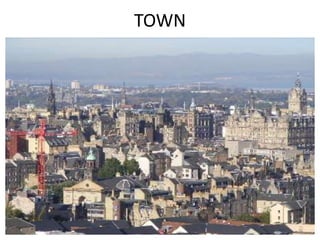
TOWN
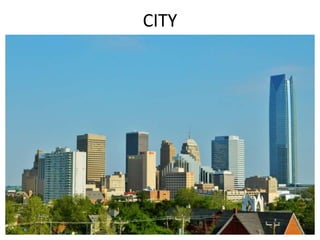
CITY
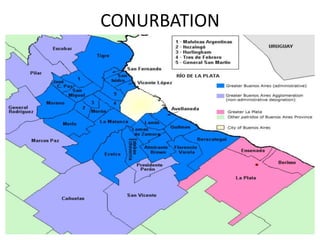
CONURBATION
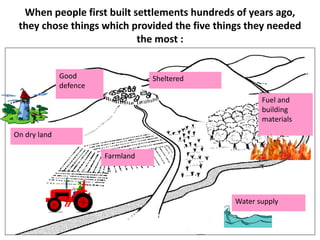
When people first built settlements hundreds of years ago,
they chose things which provided the five things they needed
the most :
Good
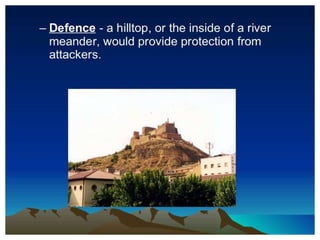
defence
Farmland
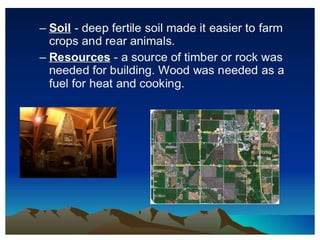
Fuel and
building
materials
Water supply
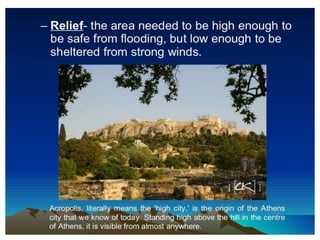
On dry land
Sheltered
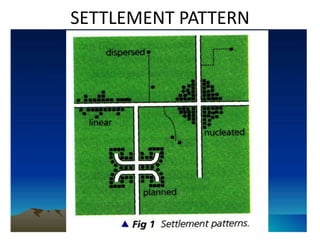
SETTLEMENT PATTERN
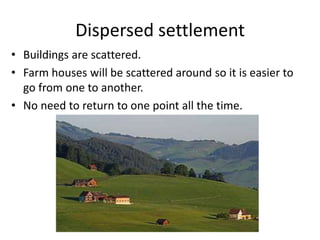
Dispersed settlement
• Buildings are scattered.
• Farm houses will be scattered around so it is easier to
go from one to another.
• No need to return to one point all the time.
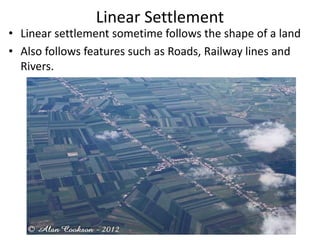
Linear Settlement
• Linear settlement sometime follows the shape of a land
• Also follows features such as Roads, Railway lines and
Rivers.
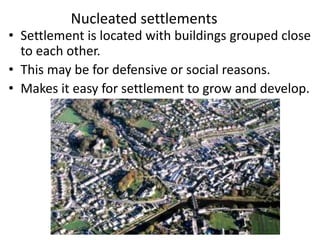
Nucleated settlements
• Settlement is located with buildings grouped close
to each other.
• This may be for defensive or social reasons.
• Makes it easy for settlement to grow and develop.
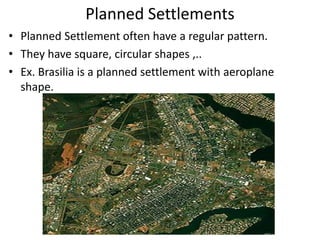
Planned Settlements
• Planned Settlement often have a regular pattern.
• They have square, circular shapes ,..
• Ex. Brasilia is a planned settlement with aeroplane
shape.
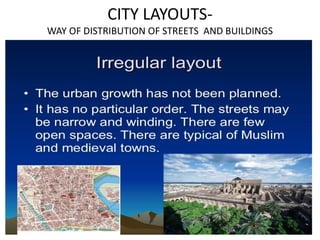
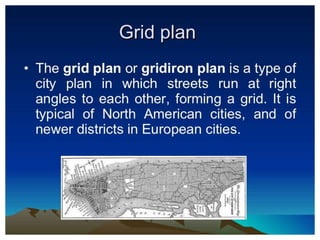
CITY LAYOUTS-
WAY OF DISTRIBUTION OF STREETS AND BUILDINGS
Human settlements and urbanization

Human settlements and urbanization

  • 1.
  • 2.
  • 5.
    How did thefirst settlements start? … our ancestors appeared. They lived by eating fruit and berries, and hunting… meant they were always on the move, chasing dinner… Look what we found! Look what we found!
  • 6.
    This is thelife! Urrrrrr Then, one day, they noticed something amazing: where they dropped seeds, plants grew! So they began to settle down in one place and grow their food.
  • 7.
    They chose aplace for a site that had what they needed. Like good flat land… water… wood for fuel… shelter from the wind and rain… materials for making things (clay, sand, iron ore, tin…) Some of us have work to do.
  • 8.
    … easy accessto other places for trading… and protection from their enemies.
  • 9.
    Years passed. Thenumber of humans grew. More and more settlements appeared... Some grew larger… and larger… and larger. What’s wrong with us?
  • 10.
  • 11.
  • 17.
  • 18.
    ISOLATED DWELLING: wouldhave only one are two buildings or families in it. It would have negligible services
  • 21.
  • 23.
  • 25.
  • 28.
  • 31.
    When people firstbuilt settlements hundreds of years ago, they chose things which provided the five things they needed the most : Good defence Farmland Fuel and building materials Water supply On dry land Sheltered
  • 37.
  • 38.
    Dispersed settlement • Buildingsare scattered. • Farm houses will be scattered around so it is easier to go from one to another. • No need to return to one point all the time.
  • 39.
    Linear Settlement • Linearsettlement sometime follows the shape of a land • Also follows features such as Roads, Railway lines and Rivers.
  • 40.
    Nucleated settlements • Settlementis located with buildings grouped close to each other. • This may be for defensive or social reasons. • Makes it easy for settlement to grow and develop.
  • 41.
    Planned Settlements • PlannedSettlement often have a regular pattern. • They have square, circular shapes ,.. • Ex. Brasilia is a planned settlement with aeroplane shape.
  • 42.
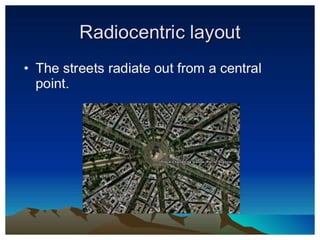
    CITY LAYOUTS- WAY OFDISTRIBUTION OF STREETS AND BUILDINGS