Microbial
Growth
Curves
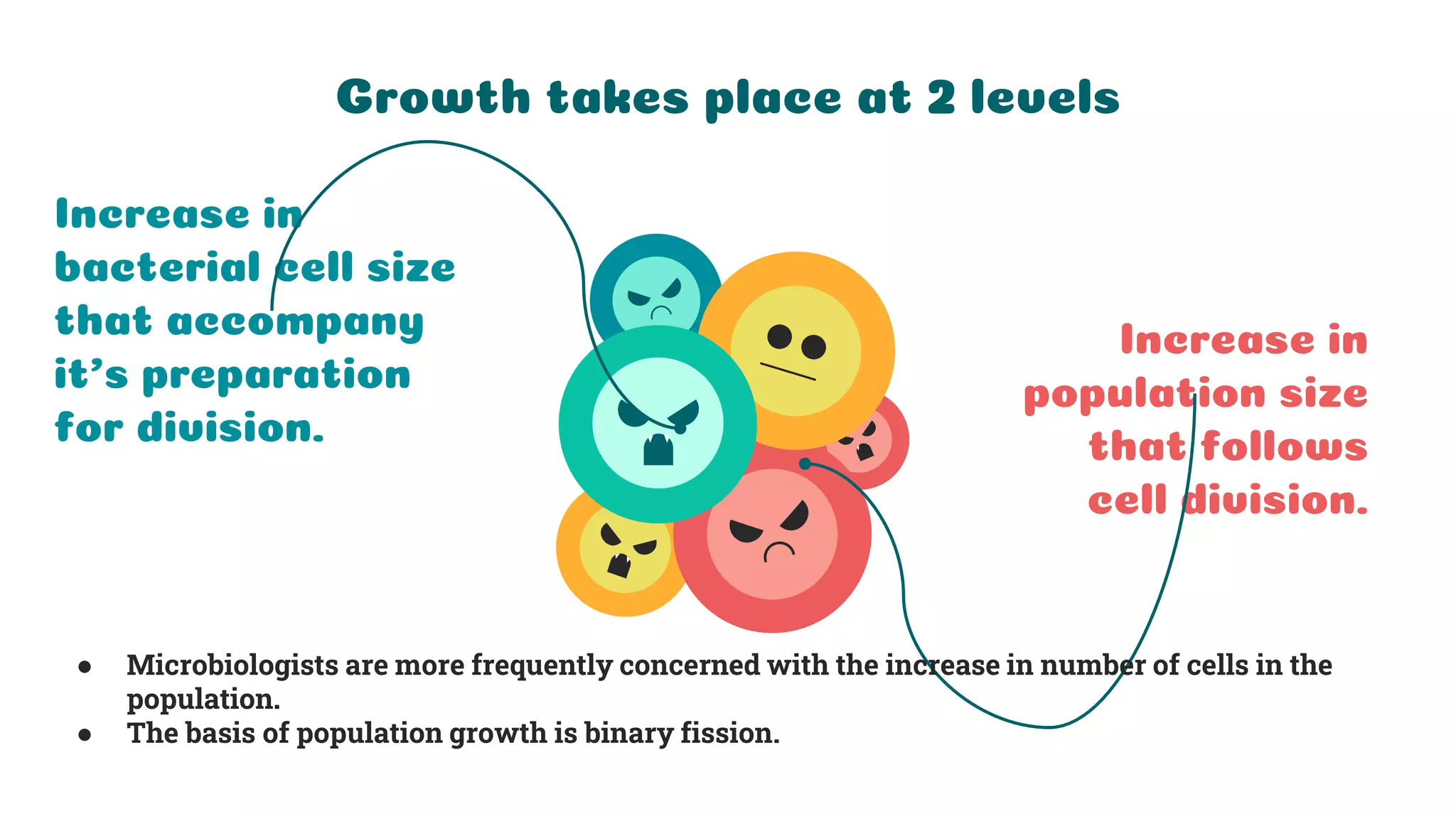
Growth takes place at 2 levels
Increase in
bacterial cell size
that accompany
it's preparation
for division.
Increase in
population size
that follows
cell division.
● Microbiologists are more frequently concerned with the increase in number of cells in the
population.
● The basis of population growth is binary fission.
Binary fission
1
To create a broth culture
2
placed in an
incubator at the
appropriate
temperature.
the medium is
inoculated with
bacteria.
3
After a certain
amount of time has
passed, the broth
becomes cloudy
from the increased
number of microbes.
● Population growth is often studied by analyzing the growth of microbes in liquid
(broth) culture by the help of growth curve.
4
Begin with a
sterile liquid
growth medium
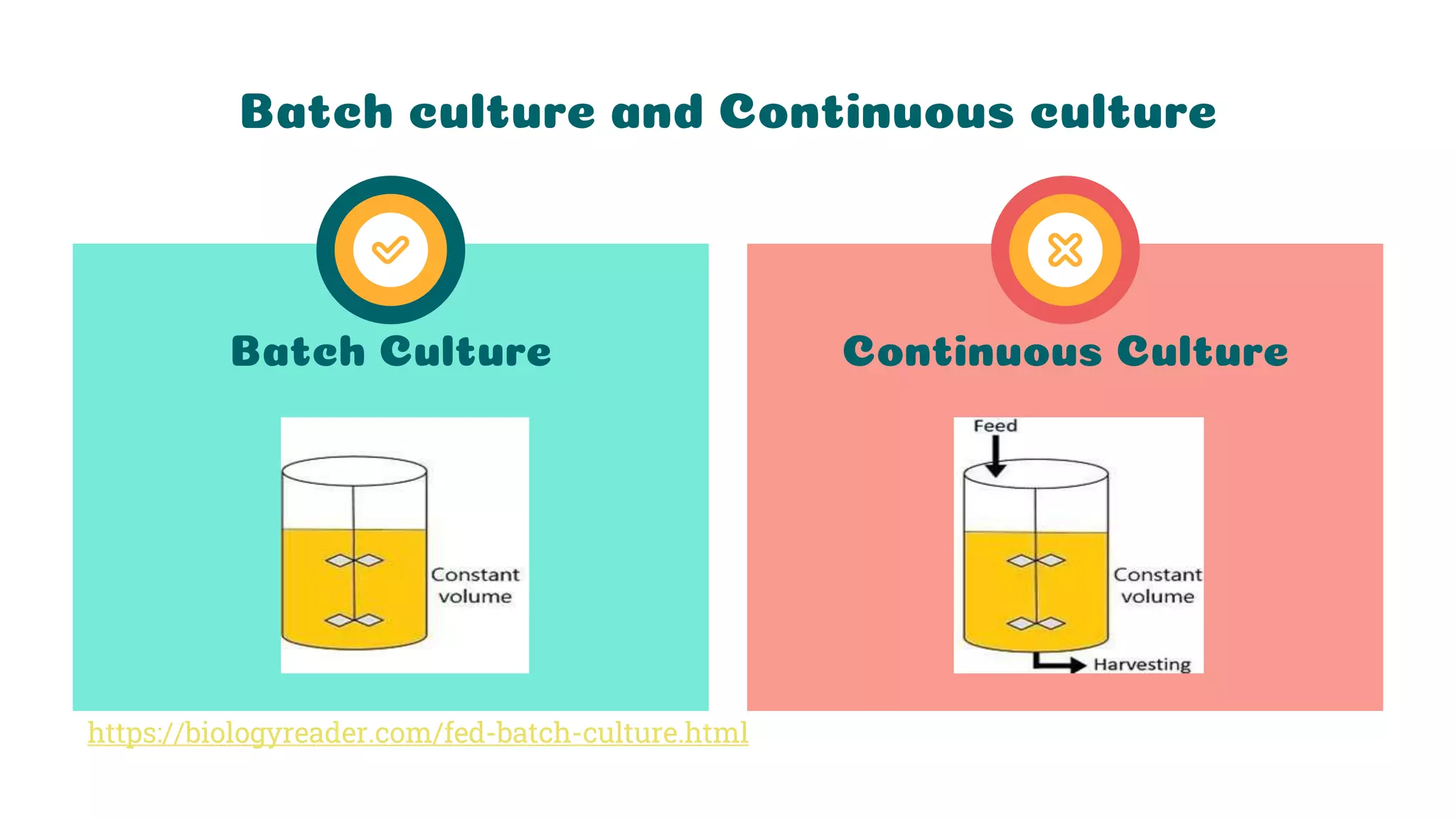
Batch culture and Continuous culture
● It is used to cultivate beneficial
microorganisms under limited
amounts of nutrients in a closed
fermenter for a certain time period.
● Microbial growth inside the batch
culture shows a typical microbial
growth curve in which four distinct
phases can be identified.
● The process of the batch culture is
stopped after the product is formed.
The process is not stopped
though the product is formed.
Batch culture
● used to grow beneficial microorganisms
under optimum level of nutrients in an
open system in which nutrients are
added continually and waste and
products are removed at the same rate.
● This keeps the growth at an exponential
phase.
● The process is not stopped though the
product is formed. Continuous removal of
the product is done without stopping the
process in continuous culture.
Continuous Culture
Batch culture and continuous culture are two types of techniques employed to cultivate
microorganisms in large scale for industrial and other purposes.
Continuous Culture
Batch Culture
Batch culture and Continuous culture
https://biologyreader.com/fed-batch-culture.html
History of bacterial growth curve
● One of Pasteur’s first students, Raulin (1869), carried out quantitative growth experiments
with the mold Aspergillus niger that revealed, surprisingly, its ability to grow on a simple
sugar and a few mineral salts. Raulin’s minimal medium is not very different from those
used today.
● Then came Henrici’s classic (Henrici, 1928) report on how bacteria change in size throughout
their growth cycle.
● Despite such examples of astute insight, a fog continued to envelop growth physiology, fueled
by quirky notions. For example, some thought that the yield of bacterial cultures was limited
by an entity called “biological space.” Others saw the growth curve as inexorably S-shaped.
● The fog began to lift with the work of, among others, two people who later went on to become
fathers of molecular biology, Alfred Hershey in the late 1930’s and Jacques Monod in the
1940’s.
● Hershey (Hershey, 1939) (collaborating with his chairman, Jacques Bronfenbrenner)
supported the use of a culture in the log phase of growth as the inoculum to start a new
culture,
● Monod (1942) consigned the growth response of whole cultures to enzyme kinetics and
showed that the rate of growth was dependent, in Michaelis–Menten fashion, on substrate
concentration, while the yield was proportional to the amount of substrate available. These
experiments were carried out with cultures growing in a steady state.
● Campbell (1957) proposed that the steady state growth condition be referred to as
“balanced growth.” In so doing, he elevated what was previously just one phase in the
growth curve (the log phase) into a general concept.
● In the Copenhagen lab then, it was demonstrated that the concentration of ribosomes
turned out to be a linear function of the growth rate.
● Studies on the mechanisms that regulate growth were greatly aided by genetic
analysis. A large number of conditional mutants, especially of E. coli, were constructed,
e.g., some heat sensitive (see Hirota et al., 1968), some cold sensitive (see Ingraham,
1969).
● Studying their phenotype at the restrictive temperatures revealed much about the
biochemical basis for growth and became an essential complement to the purely
physiological experiments.
● Recently, microbial growth physiology has seen a rebirth in a form that seeks a deeper
quantitative understanding of phenomena on a whole cell level.
History of bacterial growth curve
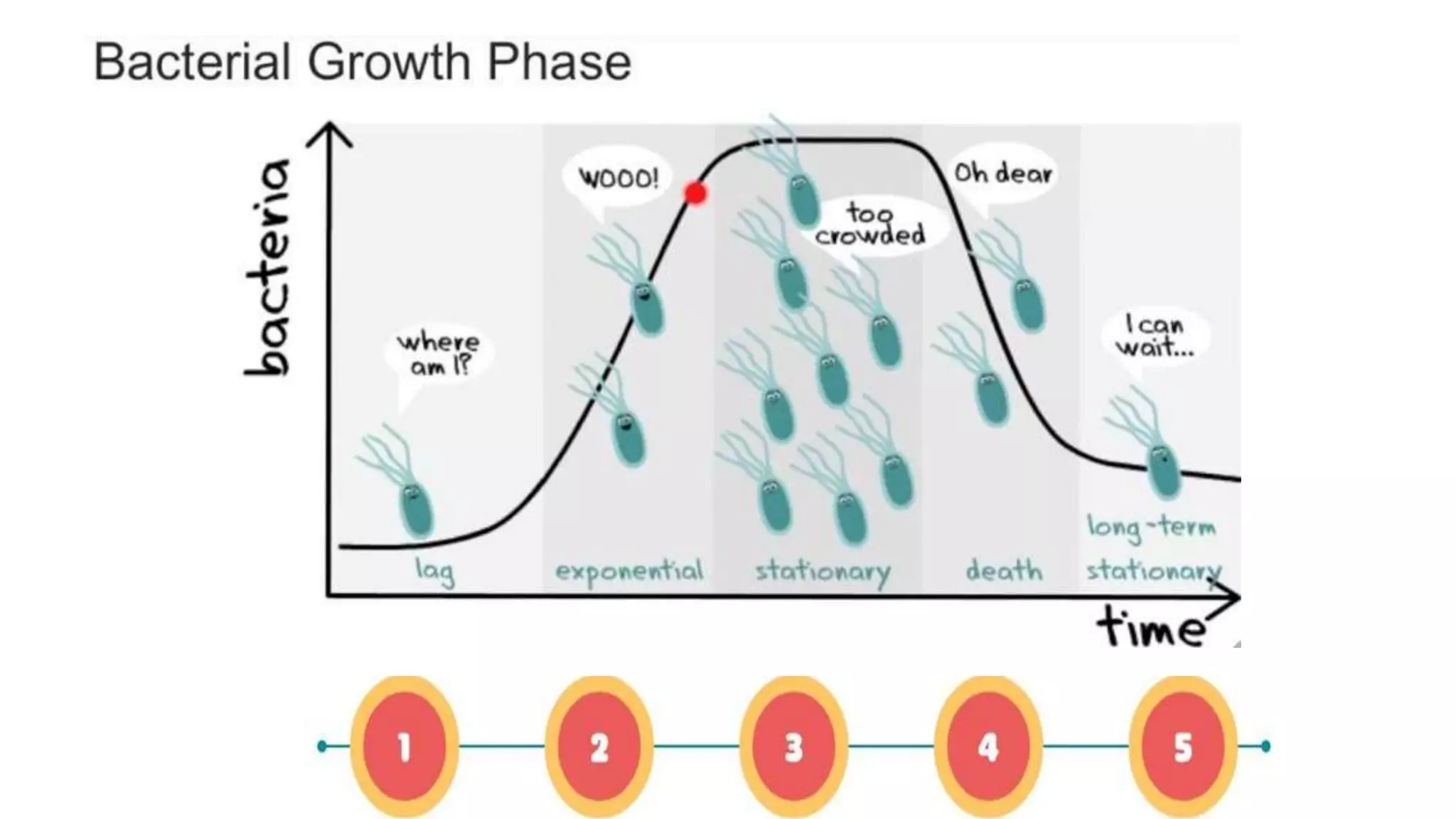
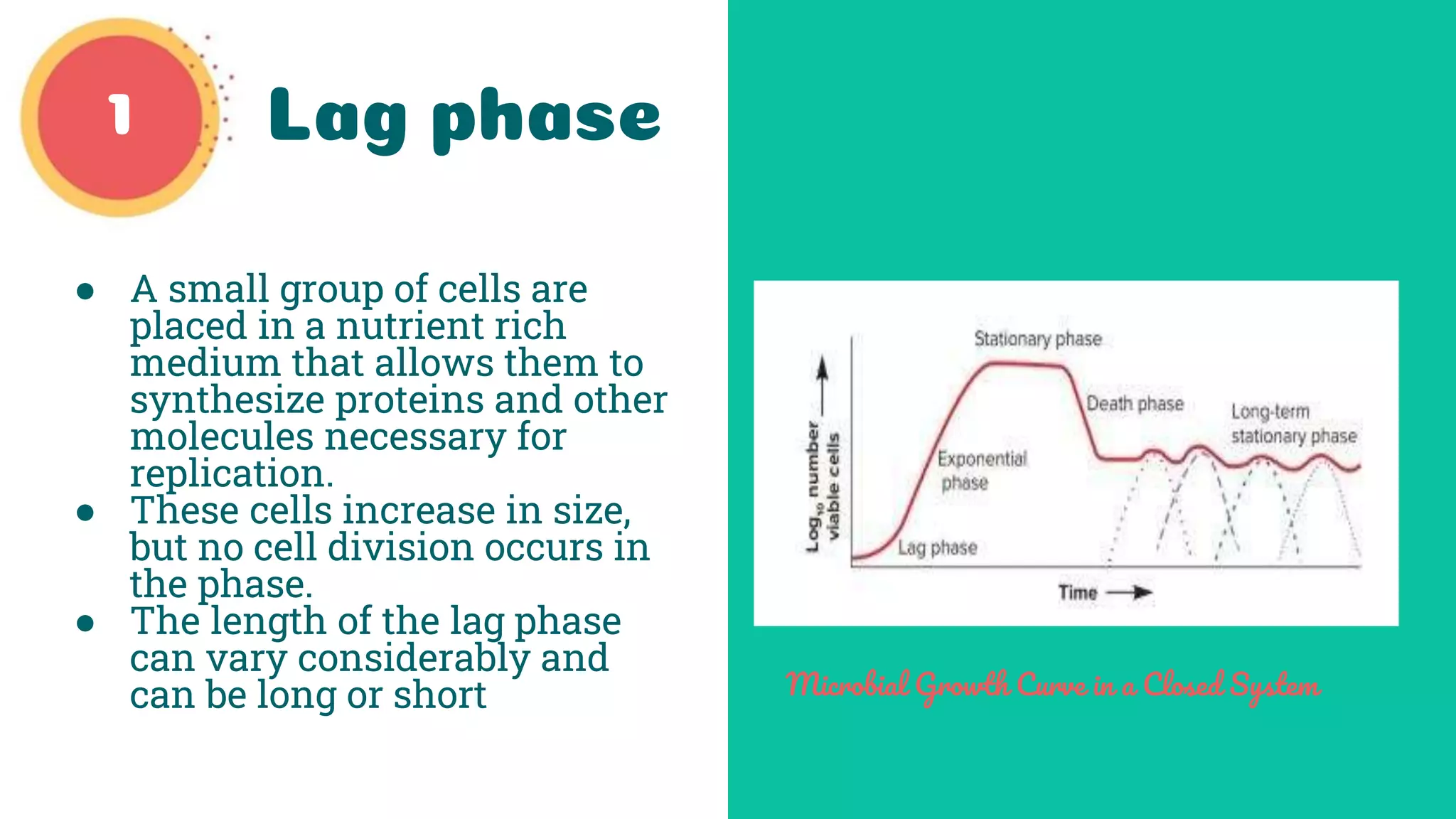
Lag phase
● A small group of cells are
placed in a nutrient rich
medium that allows them to
synthesize proteins and other
molecules necessary for
replication.
● These cells increase in size,
but no cell division occurs in
the phase.
● The length of the lag phase
can vary considerably and
can be long or short Microbial Growth Curve in a Closed System
1
● The medium may be
different from the one the
microorganism was growing
in previously. In this case,
new enzymes are needed to
use different nutrients
● The cells may be old and
depleted of ATP, essential
cofactors, and ribosomes
which must be synthesized
before growth can begin.
● Possibly the
microorganisms have been
injured and require time to
recover.
Why lag phase ?
Eventually, however, the cells begin to replicate their DNA, increase in mass, and divide. As a result,
the number of cells in the population begins to increase.
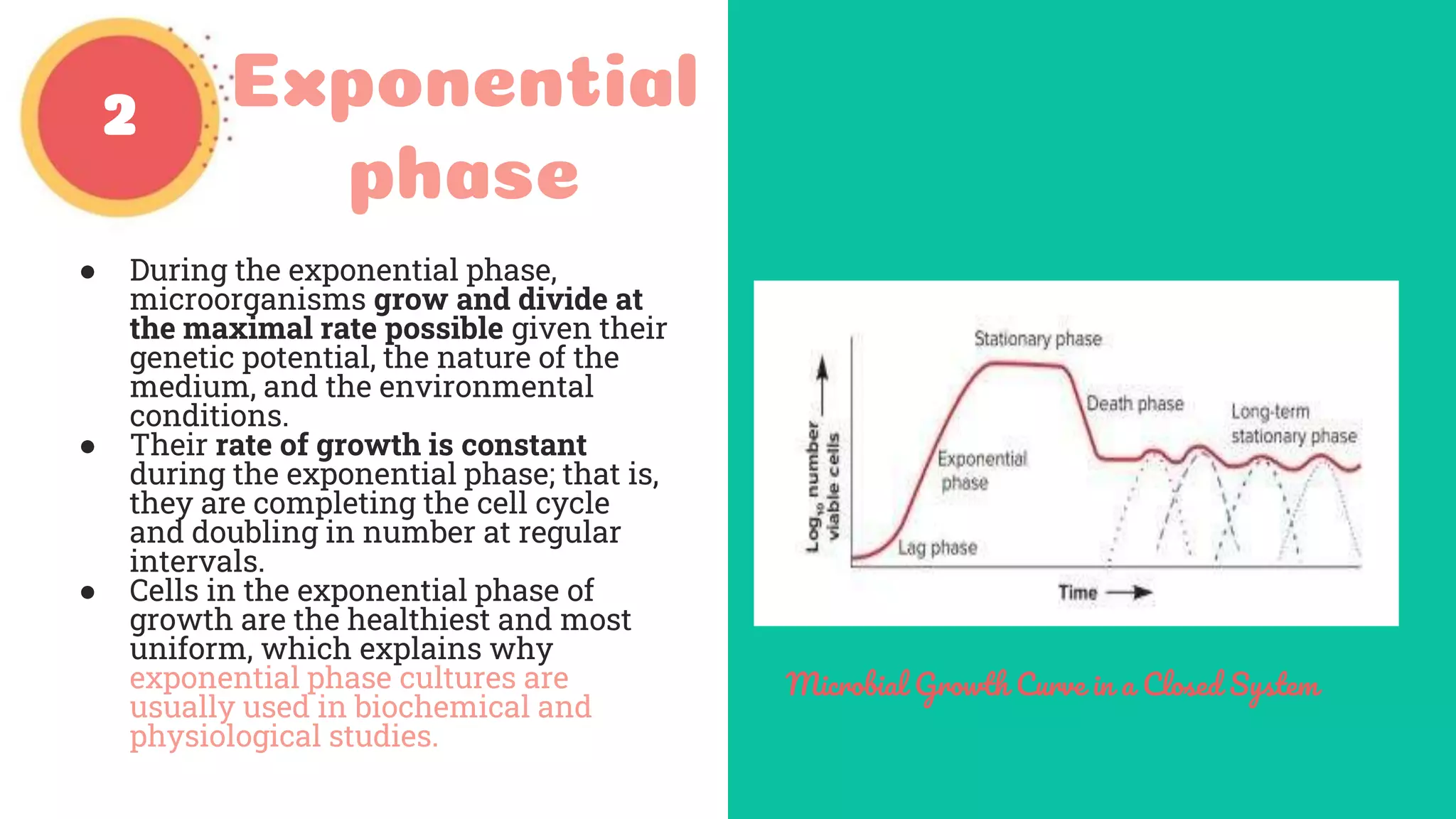
● During the exponential phase,
microorganisms grow and divide at
the maximal rate possible given their
genetic potential, the nature of the
medium, and the environmental
conditions.
● Their rate of growth is constant
during the exponential phase; that is,
they are completing the cell cycle
and doubling in number at regular
intervals.
● Cells in the exponential phase of
growth are the healthiest and most
uniform, which explains why
exponential phase cultures are
usually used in biochemical and
physiological studies.
Microbial Growth Curve in a Closed System
2 Exponential
phase
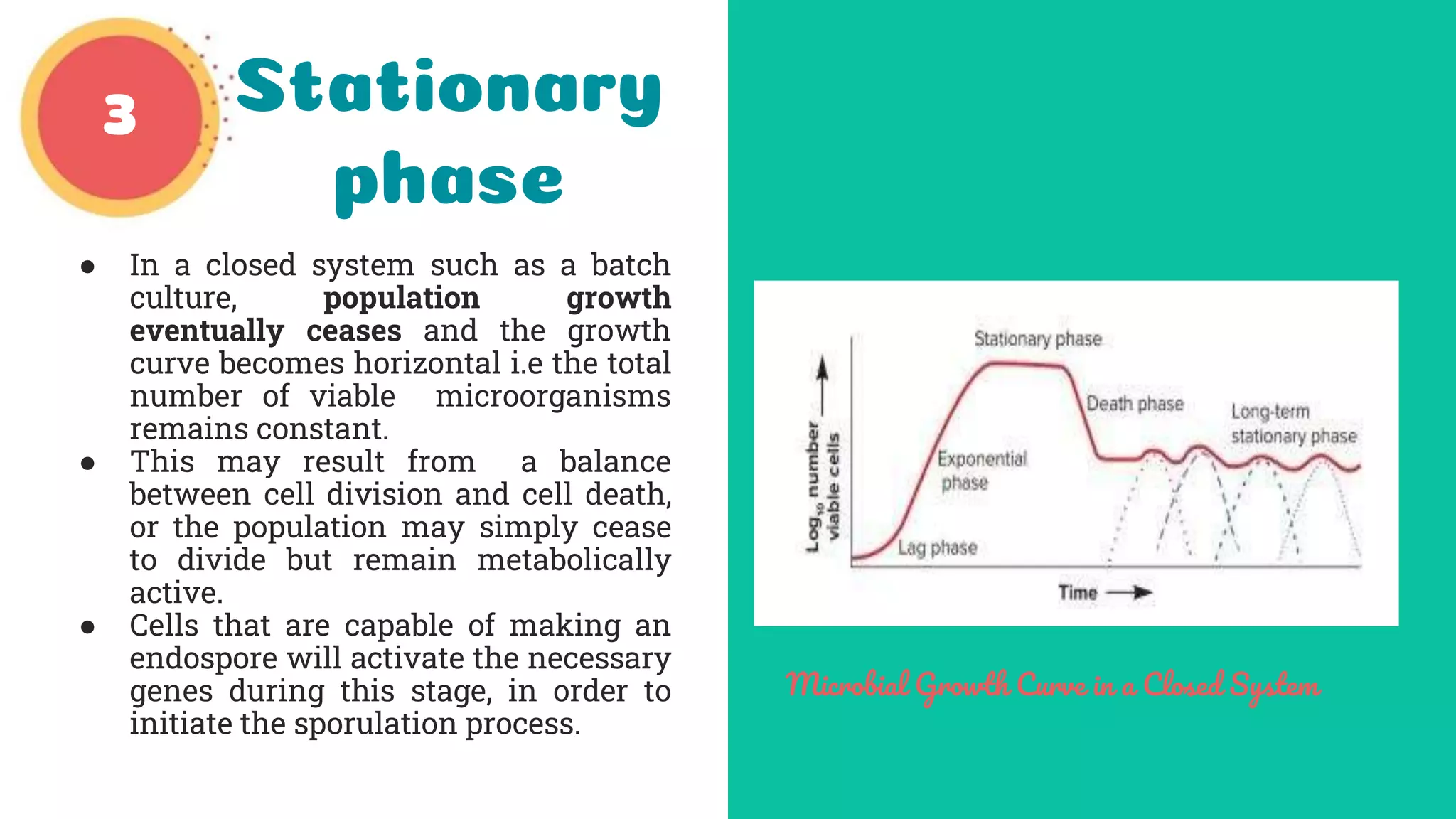
● In a closed system such as a batch
culture, population growth
eventually ceases and the growth
curve becomes horizontal i.e the total
number of viable microorganisms
remains constant.
● This may result from a balance
between cell division and cell death,
or the population may simply cease
to divide but remain metabolically
active.
● Cells that are capable of making an
endospore will activate the necessary
genes during this stage, in order to
initiate the sporulation process.
Microbial Growth Curve in a Closed System
3 Stationary
phase
Why stationary phase ?
DnaA, the protein that binds to the chromosome’s origin to initiate replication, becomes less active in
stationary phase. Ongoing replication is completed, but no further initiation occurs. This is done of
many ways the cell conserves energy by eliminating processes that are not essential to survival.
How ?
Nutrient limitation
Limitation in
availability of O2
accumulation of toxic
waste products
When a critical population
level is reached
● During this phase, the number
of viable cells declines
exponentially, with cells dying
at a constant rate.
● The steepness of the slope
corresponds to how fast cells
are losing viability
● Detrimental environmental
changes such as nutrient
deprivation and the buildup of
toxic wastes cause irreparable
harm to the cells.
Microbial Growth Curve in a Closed System
4 Death phase
It is important to note that if the turbidity of a culture is being measured as a way to
determine cell density, measurements might not decrease during this phase, since
cells could still be intact.
It has been suggested that the cells thought to be dead might be revived under
specific conditions, a condition described as viable but nonculturable (VBNC). This
state might be of importance for pathogens, where they enter a state of very low
metabolism and lack of cellular division, only to resume growth at a later time,
when conditions improve.
It has also been shown that 100% cell death is unlikely, for any cell population, as
the cells mutate to adapt to their environmental conditions, however harsh. Often
there is a tailing effect observed, where a small population of the cells cannot be
killed off. In addition, these cells might benefit from their death of their fellow cells,
which provide nutrients to the environment as they lyse and release their cellular
contents.
Some facts about Death phase
● After a period of
exponential death some
microbes have a long
period where the
population size remains
more or less constant.
● This long-term stationary
phase (also called
extended stationary
phase) can last months to
years Microbial Growth Curve in a Closed System
5
Long-Term
Stationary
phase
● Log and Stationary phase
: signs and symptoms
● Lag phase correlates with
incubation period.
● Death phase : Recovery
period
Correlation of different stages of diseases
Importance of growth curves
Implications in
microbial control,
infection, food
microbiology, and
culture technology.
1.
In some applications,
closed batch culturing
is inefficient, and
instead must use a
chemostat or
continuous cultur
4.
Understanding the
stages of cell growth is
crucial for working
with cultures.
3.
Growth patterns in
microorganisms can
account for the stages
of infection.
2.
Mathematics of
Growth
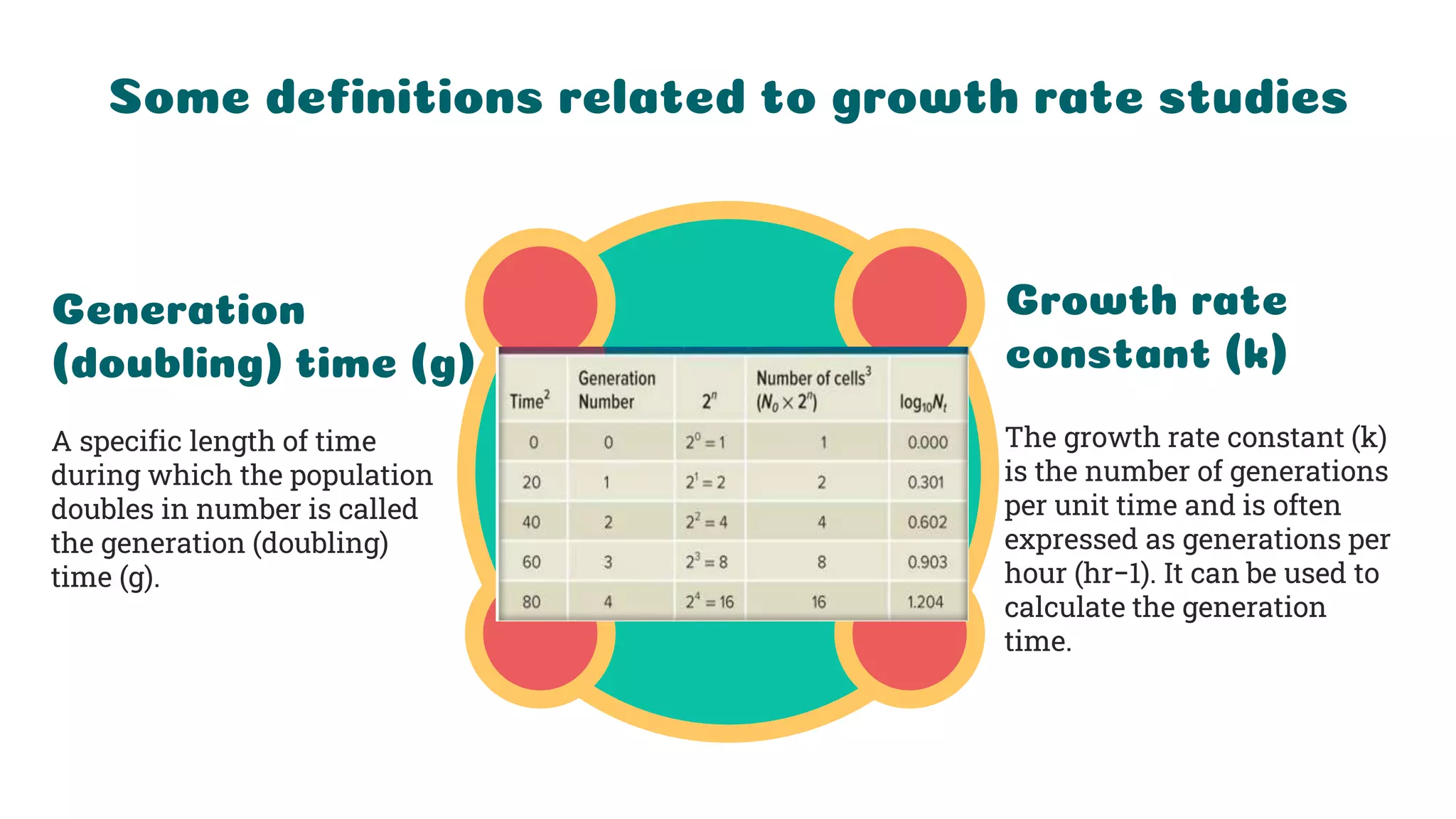
Some definitions related to growth rate studies
A specific length of time
during which the population
doubles in number is called
the generation (doubling)
time (g).
Generation
(doubling) time (g)
The growth rate constant (k)
is the number of generations
per unit time and is often
expressed as generations per
hour (hr−1). It can be used to
calculate the generation
time.
Growth rate
constant (k)
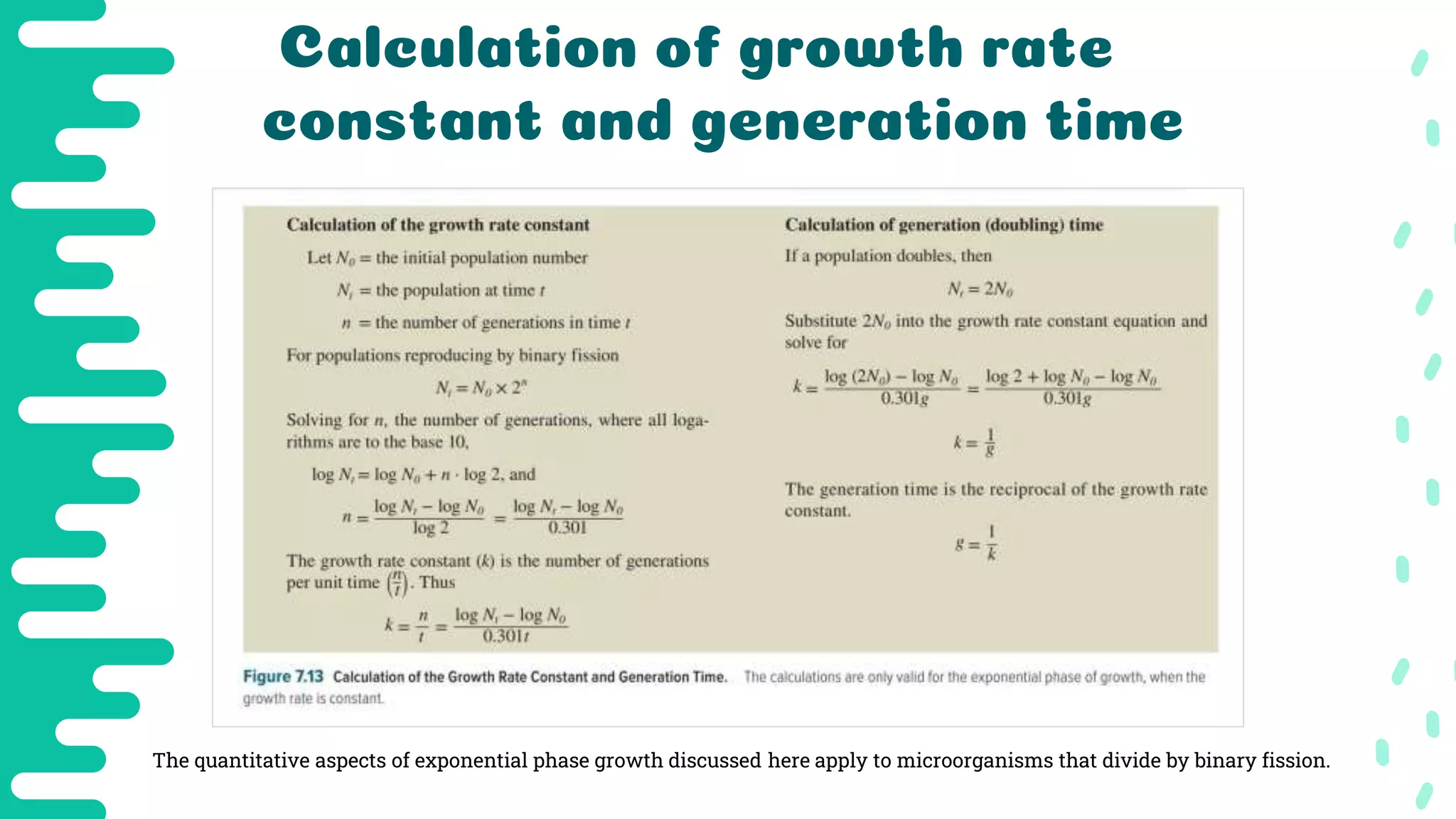
Calculation of growth rate
constant and generation time
The quantitative aspects of exponential phase growth discussed here apply to microorganisms that divide by binary fission.
Determination of generation time
from a microbial growth curve
● The generation time can also be
determined directly from a
semilogarithmic plot of growth
curve data.
● The population data are plotted
with the logarithmic axis used
for the number of cells. The time
to double the population number
is then read directly from the
plot.
● Once this is done, it can be used
to calculate the growth rate
constant.
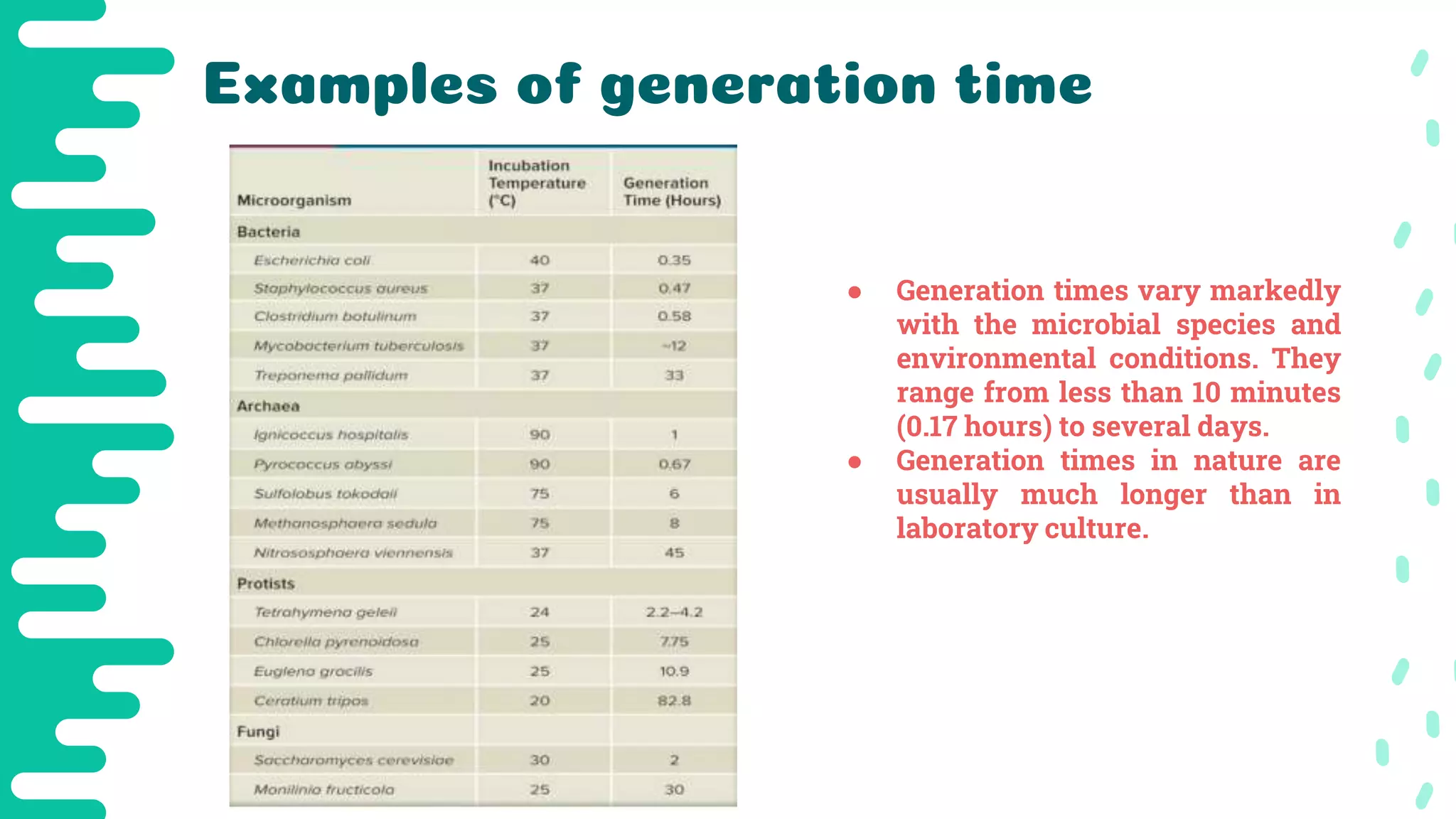
Examples of generation time
● Generation times vary markedly
with the microbial species and
environmental conditions. They
range from less than 10 minutes
(0.17 hours) to several days.
● Generation times in nature are
usually much longer than in
laboratory culture.
Solving some questions
Calculate the growth rate constant and generation time of a culture that
increases in the exponential phase from 5 × 10² to 1 × 10⁸ in 12 hours.

Microbial Growth curve

  • 1.
  • 2.
    Growth takes placeat 2 levels Increase in bacterial cell size that accompany it's preparation for division. Increase in population size that follows cell division. ● Microbiologists are more frequently concerned with the increase in number of cells in the population. ● The basis of population growth is binary fission.
  • 3.
  • 4.
    1 To create abroth culture 2 placed in an incubator at the appropriate temperature. the medium is inoculated with bacteria. 3 After a certain amount of time has passed, the broth becomes cloudy from the increased number of microbes. ● Population growth is often studied by analyzing the growth of microbes in liquid (broth) culture by the help of growth curve. 4 Begin with a sterile liquid growth medium
  • 5.
    Batch culture andContinuous culture ● It is used to cultivate beneficial microorganisms under limited amounts of nutrients in a closed fermenter for a certain time period. ● Microbial growth inside the batch culture shows a typical microbial growth curve in which four distinct phases can be identified. ● The process of the batch culture is stopped after the product is formed. The process is not stopped though the product is formed. Batch culture ● used to grow beneficial microorganisms under optimum level of nutrients in an open system in which nutrients are added continually and waste and products are removed at the same rate. ● This keeps the growth at an exponential phase. ● The process is not stopped though the product is formed. Continuous removal of the product is done without stopping the process in continuous culture. Continuous Culture Batch culture and continuous culture are two types of techniques employed to cultivate microorganisms in large scale for industrial and other purposes.
  • 6.
    Continuous Culture Batch Culture Batchculture and Continuous culture https://biologyreader.com/fed-batch-culture.html
  • 8.
    History of bacterialgrowth curve ● One of Pasteur’s first students, Raulin (1869), carried out quantitative growth experiments with the mold Aspergillus niger that revealed, surprisingly, its ability to grow on a simple sugar and a few mineral salts. Raulin’s minimal medium is not very different from those used today. ● Then came Henrici’s classic (Henrici, 1928) report on how bacteria change in size throughout their growth cycle. ● Despite such examples of astute insight, a fog continued to envelop growth physiology, fueled by quirky notions. For example, some thought that the yield of bacterial cultures was limited by an entity called “biological space.” Others saw the growth curve as inexorably S-shaped. ● The fog began to lift with the work of, among others, two people who later went on to become fathers of molecular biology, Alfred Hershey in the late 1930’s and Jacques Monod in the 1940’s. ● Hershey (Hershey, 1939) (collaborating with his chairman, Jacques Bronfenbrenner) supported the use of a culture in the log phase of growth as the inoculum to start a new culture, ● Monod (1942) consigned the growth response of whole cultures to enzyme kinetics and showed that the rate of growth was dependent, in Michaelis–Menten fashion, on substrate concentration, while the yield was proportional to the amount of substrate available. These experiments were carried out with cultures growing in a steady state.
  • 9.
    ● Campbell (1957)proposed that the steady state growth condition be referred to as “balanced growth.” In so doing, he elevated what was previously just one phase in the growth curve (the log phase) into a general concept. ● In the Copenhagen lab then, it was demonstrated that the concentration of ribosomes turned out to be a linear function of the growth rate. ● Studies on the mechanisms that regulate growth were greatly aided by genetic analysis. A large number of conditional mutants, especially of E. coli, were constructed, e.g., some heat sensitive (see Hirota et al., 1968), some cold sensitive (see Ingraham, 1969). ● Studying their phenotype at the restrictive temperatures revealed much about the biochemical basis for growth and became an essential complement to the purely physiological experiments. ● Recently, microbial growth physiology has seen a rebirth in a form that seeks a deeper quantitative understanding of phenomena on a whole cell level. History of bacterial growth curve
  • 10.
    Lag phase ● Asmall group of cells are placed in a nutrient rich medium that allows them to synthesize proteins and other molecules necessary for replication. ● These cells increase in size, but no cell division occurs in the phase. ● The length of the lag phase can vary considerably and can be long or short Microbial Growth Curve in a Closed System 1
  • 11.
    ● The mediummay be different from the one the microorganism was growing in previously. In this case, new enzymes are needed to use different nutrients ● The cells may be old and depleted of ATP, essential cofactors, and ribosomes which must be synthesized before growth can begin. ● Possibly the microorganisms have been injured and require time to recover. Why lag phase ? Eventually, however, the cells begin to replicate their DNA, increase in mass, and divide. As a result, the number of cells in the population begins to increase.
  • 12.
    ● During theexponential phase, microorganisms grow and divide at the maximal rate possible given their genetic potential, the nature of the medium, and the environmental conditions. ● Their rate of growth is constant during the exponential phase; that is, they are completing the cell cycle and doubling in number at regular intervals. ● Cells in the exponential phase of growth are the healthiest and most uniform, which explains why exponential phase cultures are usually used in biochemical and physiological studies. Microbial Growth Curve in a Closed System 2 Exponential phase
  • 13.
    ● In aclosed system such as a batch culture, population growth eventually ceases and the growth curve becomes horizontal i.e the total number of viable microorganisms remains constant. ● This may result from a balance between cell division and cell death, or the population may simply cease to divide but remain metabolically active. ● Cells that are capable of making an endospore will activate the necessary genes during this stage, in order to initiate the sporulation process. Microbial Growth Curve in a Closed System 3 Stationary phase
  • 14.
    Why stationary phase? DnaA, the protein that binds to the chromosome’s origin to initiate replication, becomes less active in stationary phase. Ongoing replication is completed, but no further initiation occurs. This is done of many ways the cell conserves energy by eliminating processes that are not essential to survival. How ? Nutrient limitation Limitation in availability of O2 accumulation of toxic waste products When a critical population level is reached
  • 15.
    ● During thisphase, the number of viable cells declines exponentially, with cells dying at a constant rate. ● The steepness of the slope corresponds to how fast cells are losing viability ● Detrimental environmental changes such as nutrient deprivation and the buildup of toxic wastes cause irreparable harm to the cells. Microbial Growth Curve in a Closed System 4 Death phase
  • 16.
    It is importantto note that if the turbidity of a culture is being measured as a way to determine cell density, measurements might not decrease during this phase, since cells could still be intact. It has been suggested that the cells thought to be dead might be revived under specific conditions, a condition described as viable but nonculturable (VBNC). This state might be of importance for pathogens, where they enter a state of very low metabolism and lack of cellular division, only to resume growth at a later time, when conditions improve. It has also been shown that 100% cell death is unlikely, for any cell population, as the cells mutate to adapt to their environmental conditions, however harsh. Often there is a tailing effect observed, where a small population of the cells cannot be killed off. In addition, these cells might benefit from their death of their fellow cells, which provide nutrients to the environment as they lyse and release their cellular contents. Some facts about Death phase
  • 17.
    ● After aperiod of exponential death some microbes have a long period where the population size remains more or less constant. ● This long-term stationary phase (also called extended stationary phase) can last months to years Microbial Growth Curve in a Closed System 5 Long-Term Stationary phase
  • 18.
    ● Log andStationary phase : signs and symptoms ● Lag phase correlates with incubation period. ● Death phase : Recovery period Correlation of different stages of diseases
  • 19.
    Importance of growthcurves Implications in microbial control, infection, food microbiology, and culture technology. 1. In some applications, closed batch culturing is inefficient, and instead must use a chemostat or continuous cultur 4. Understanding the stages of cell growth is crucial for working with cultures. 3. Growth patterns in microorganisms can account for the stages of infection. 2.
  • 20.
  • 21.
    Some definitions relatedto growth rate studies A specific length of time during which the population doubles in number is called the generation (doubling) time (g). Generation (doubling) time (g) The growth rate constant (k) is the number of generations per unit time and is often expressed as generations per hour (hr−1). It can be used to calculate the generation time. Growth rate constant (k)
  • 22.
    Calculation of growthrate constant and generation time The quantitative aspects of exponential phase growth discussed here apply to microorganisms that divide by binary fission.
  • 23.
    Determination of generationtime from a microbial growth curve ● The generation time can also be determined directly from a semilogarithmic plot of growth curve data. ● The population data are plotted with the logarithmic axis used for the number of cells. The time to double the population number is then read directly from the plot. ● Once this is done, it can be used to calculate the growth rate constant.
  • 24.
    Examples of generationtime ● Generation times vary markedly with the microbial species and environmental conditions. They range from less than 10 minutes (0.17 hours) to several days. ● Generation times in nature are usually much longer than in laboratory culture.
  • 25.
    Solving some questions Calculatethe growth rate constant and generation time of a culture that increases in the exponential phase from 5 × 10² to 1 × 10⁸ in 12 hours.