HTM 2121
TOURISM AND HOSPITALITY MARKETING


         An F&B outlet in TST East

               Lau Yan Yu Yammy       11328194D

               Sin Kai Ho Alan        11207071D

               Tam Ho Leung Anthony   11027756D

               Wong Yuk Fung Sandy    11195185D
Our flow
1)Executive summary
2)External environmental analysis
3)Opportunities and threats
4)Objectives
5)Target market
6)Marketing mix strategies and programs
7)Implementation milestone
8)Marketing budget
9)Marketing controls
Executive summary
 To outline the strategies and programs used in the opening of café in TST East


                 To analysis External environmental


      To analysis our main competitor  CAFFE HABITU


                 To analysis the promotion channels


               To calculate the cost and forecast sales


  Estimate to have the payback period within 11months
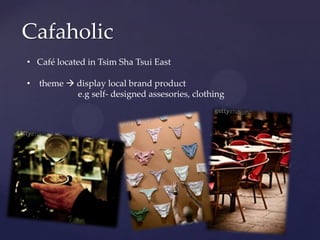
Cafaholic
• Café located in Tsim Sha Tsui East

•   theme  display local brand product
            e.g self- designed assesories, clothing
External Environmental
Analysis
Demographic trends
(TST East)
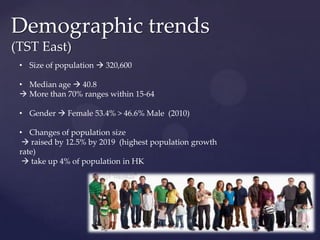
 • Size of population  320,600

 • Median age  40.8
  More than 70% ranges within 15-64

 • Gender  Female 53.4% > 46.6% Male (2010)

 • Changes of population size
   raised by 12.5% by 2019 (highest population growth
 rate)
   take up 4% of population in HK
Economic Trends
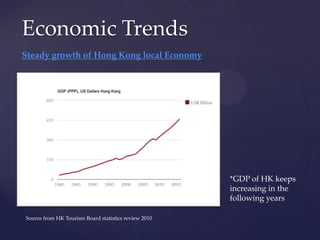
Steady growth of Hong Kong local Economy


                                                      *GDP of HK keeps
                                                      increasing in the
                                                      following years

Source from HK Tourism Board statistics review 2010
Economic Trends (cont’d)
  High purchasing power of target customers

• As indicated by income level

 median monthly domestic household income of Hong Kong (2010) :
$18000


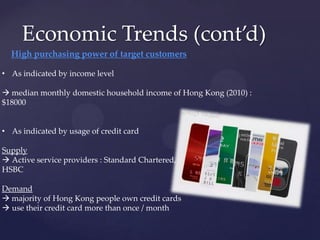
• As indicated by usage of credit card

Supply
 Active service providers : Standard Chartered,
HSBC

Demand
 majority of Hong Kong people own credit cards
 use their credit card more than once / month
Political Trends
licenses and regulations to operate café (required by
law)
• Basic
Office-insurance-Plan
Business Registration Certificate

• Maintaining the business under a legal condition
General Restaurant License

• Selling of general food items
 Frozen Confection Factory License

• Selling of frozen items such as Ice-cream
 Liquor Licensing
Political Trends (con’t)
Selling of alcoholic beverages
•  Hazard analysis and critical control
   points(HACCP)

To ensure food production procedure is
followed in established standard


Fire Safety Ordinance
•  Necessary for emergency uses
•  takes 8 to 10 weeks to proceed
SWOT Analysis
Strength
• Unique theme

• the atmosphere
 Created by displaying lovely, cool and creative
local brands

 Teenagers can be easily attracted
SWOT Analysis(con’t)
Weakness
• Financial issue

• A new and immature shop

 difficult to invite considerable numbers of investors
  within a short period

 May have insufficient money to have further
  investment
SWOT Analysis(con’t)
Opportunities
• lower price by comparing to other café
  shop in TsimShaTsui East

e.G , CaffeHabitu
the average cost per dish of Caffe Habitu
is$111

 attract more teens

• High purchasing power
Of target customers
SWOT Analysis(con’t)
Threats
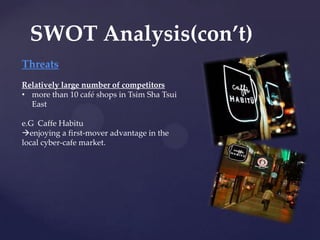
Relatively large number of competitors
• more than 10 café shops in Tsim Sha Tsui
  East

e.G Caffe Habitu
enjoying a first-mover advantage in the
local cyber-cafe market.
Objectives
Mission

• To operate a theme and ambience café

• To make it as a small museum
displaying local brand and self-designed fashion
products

• To promote our local brand as well as local culture
 (TST East)

• To promote creative industry in Hong Kong by
  increasing exposure of the local brand product.
Objectives (con’t)
Marketing Objective
First year operation objectives


• Create brand recognition for TST residents
 Maintain a group of loyal customers


• An annual growth of sales for 10%

• An annual growth of customers for 20%
Target market
Market Segmentation:
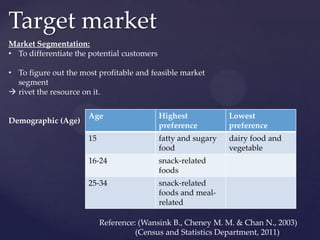
• To differentiate the potential customers

• To figure out the most profitable and feasible market
  segment
 rivet the resource on it.


                      Age                    Highest            Lowest
Demographic (Age)
                                             preference         preference
                      15                     fatty and sugary   dairy food and
                                             food               vegetable
                      16-24                  snack-related
                                             foods
                      25-34                  snack-related
                                             foods and meal-
                                             related

                           Reference: (Wansink B., Cheney M. M. & Chan N., 2003)
                                     (Census and Statistics Department, 2011)
Target market(con’t)
Market Targeting:

• Concentrated marketing

 Target the segment range from customers aged 16-30

• Combination of the age groups 15-24 and 25-34
  (share very similar preferences on food)
Market Positioning
Specific marketing mix programs
• Product,
• Price,
• Place ,
• Promotion

create the desired perception of the product.

 provides customers with a prescribed image of the product
Market Positioning-
Product
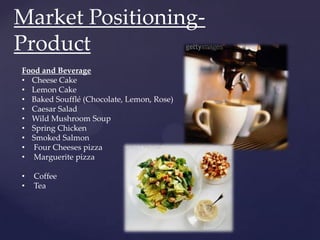
Food and Beverage
• Cheese Cake
• Lemon Cake
• Baked Soufflé (Chocolate, Lemon, Rose)
• Caesar Salad
• Wild Mushroom Soup
• Spring Chicken
• Smoked Salmon
• Four Cheeses pizza
• Marguerite pizza

•   Coffee
•   Tea
Market Positioning-
 Product (cont’d)
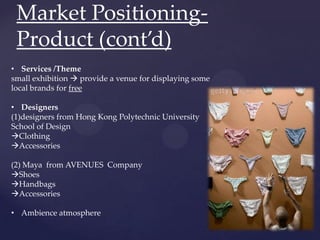
• Services /Theme
small exhibition  provide a venue for displaying some
local brands for free

• Designers
(1)designers from Hong Kong Polytechnic University
School of Design
Clothing
Accessories

(2) Maya from AVENUES Company
Shoes
Handbags
Accessories

• Ambience atmosphere
Market Positioning
   -Price
   2P Pricing Strategy

• Competition-based pricing as the pricing strategy

• Consideration of pricing method of the competitors

  make sure the price competitiveness of the café towards
its competitors

 set up the maximum price of similar items
Market Positioning
-Place
• Direct distribution

No middlemen should be involved

add a high profit margin
 high Cost
Higher price reduces the price
competitiveness
Market Positioning-
Promotion
Promotion tools

• Magazine

• Coupon

• Radio

• Homepage

• Facebook

• Showroom

• Discount
Budgeting
Sales forecasts

With the direct observation of our major
competitors forecast
Consumer per day  60


Average consumption $ 82.25


Upon calculation,
Cafaholic can balance the revenue and
expenditure within a year

(estimated to be 10.9 months)
Marketing Controls
• Maintain the accomplishment of objective
differentiate Cafaholic from other café in TST East


• Ongoing controls
 Maintain the effectiveness of promotion tools


• Adjustment on our strategy on promotion
  changing our channel on advertisement
  quit from the channel

 In case promotion get out of track
-END-

Htm2121 Mkt pj Group C (sem006) final

  • 1.
    HTM 2121 TOURISM ANDHOSPITALITY MARKETING An F&B outlet in TST East Lau Yan Yu Yammy 11328194D Sin Kai Ho Alan 11207071D Tam Ho Leung Anthony 11027756D Wong Yuk Fung Sandy 11195185D
  • 2.
    Our flow 1)Executive summary 2)Externalenvironmental analysis 3)Opportunities and threats 4)Objectives 5)Target market 6)Marketing mix strategies and programs 7)Implementation milestone 8)Marketing budget 9)Marketing controls
  • 3.
    Executive summary Tooutline the strategies and programs used in the opening of café in TST East To analysis External environmental To analysis our main competitor  CAFFE HABITU To analysis the promotion channels To calculate the cost and forecast sales Estimate to have the payback period within 11months
  • 4.
    Cafaholic • Café locatedin Tsim Sha Tsui East • theme  display local brand product e.g self- designed assesories, clothing
  • 5.
  • 6.
    Demographic trends (TST East) • Size of population  320,600 • Median age  40.8  More than 70% ranges within 15-64 • Gender  Female 53.4% > 46.6% Male (2010) • Changes of population size  raised by 12.5% by 2019 (highest population growth rate)  take up 4% of population in HK
  • 7.
    Economic Trends Steady growthof Hong Kong local Economy *GDP of HK keeps increasing in the following years Source from HK Tourism Board statistics review 2010
  • 8.
    Economic Trends (cont’d) High purchasing power of target customers • As indicated by income level  median monthly domestic household income of Hong Kong (2010) : $18000 • As indicated by usage of credit card Supply  Active service providers : Standard Chartered, HSBC Demand  majority of Hong Kong people own credit cards  use their credit card more than once / month
  • 9.
    Political Trends licenses andregulations to operate café (required by law) • Basic Office-insurance-Plan Business Registration Certificate • Maintaining the business under a legal condition General Restaurant License • Selling of general food items  Frozen Confection Factory License • Selling of frozen items such as Ice-cream  Liquor Licensing
  • 10.
    Political Trends (con’t) Sellingof alcoholic beverages • Hazard analysis and critical control points(HACCP) To ensure food production procedure is followed in established standard Fire Safety Ordinance • Necessary for emergency uses • takes 8 to 10 weeks to proceed
  • 11.
    SWOT Analysis Strength • Uniquetheme • the atmosphere  Created by displaying lovely, cool and creative local brands  Teenagers can be easily attracted
  • 12.
    SWOT Analysis(con’t) Weakness • Financialissue • A new and immature shop  difficult to invite considerable numbers of investors within a short period  May have insufficient money to have further investment
  • 13.
    SWOT Analysis(con’t) Opportunities • lowerprice by comparing to other café shop in TsimShaTsui East e.G , CaffeHabitu the average cost per dish of Caffe Habitu is$111  attract more teens • High purchasing power Of target customers
  • 14.
    SWOT Analysis(con’t) Threats Relatively largenumber of competitors • more than 10 café shops in Tsim Sha Tsui East e.G Caffe Habitu enjoying a first-mover advantage in the local cyber-cafe market.
  • 15.
    Objectives Mission • To operatea theme and ambience café • To make it as a small museum displaying local brand and self-designed fashion products • To promote our local brand as well as local culture (TST East) • To promote creative industry in Hong Kong by increasing exposure of the local brand product.
  • 16.
    Objectives (con’t) Marketing Objective Firstyear operation objectives • Create brand recognition for TST residents  Maintain a group of loyal customers • An annual growth of sales for 10% • An annual growth of customers for 20%
  • 17.
    Target market Market Segmentation: •To differentiate the potential customers • To figure out the most profitable and feasible market segment  rivet the resource on it. Age Highest Lowest Demographic (Age) preference preference 15 fatty and sugary dairy food and food vegetable 16-24 snack-related foods 25-34 snack-related foods and meal- related Reference: (Wansink B., Cheney M. M. & Chan N., 2003) (Census and Statistics Department, 2011)
  • 18.
    Target market(con’t) Market Targeting: •Concentrated marketing  Target the segment range from customers aged 16-30 • Combination of the age groups 15-24 and 25-34 (share very similar preferences on food)
  • 19.
    Market Positioning Specific marketingmix programs • Product, • Price, • Place , • Promotion create the desired perception of the product.  provides customers with a prescribed image of the product
  • 20.
    Market Positioning- Product Food andBeverage • Cheese Cake • Lemon Cake • Baked Soufflé (Chocolate, Lemon, Rose) • Caesar Salad • Wild Mushroom Soup • Spring Chicken • Smoked Salmon • Four Cheeses pizza • Marguerite pizza • Coffee • Tea
  • 21.
    Market Positioning- Product(cont’d) • Services /Theme small exhibition  provide a venue for displaying some local brands for free • Designers (1)designers from Hong Kong Polytechnic University School of Design Clothing Accessories (2) Maya from AVENUES Company Shoes Handbags Accessories • Ambience atmosphere
  • 22.
    Market Positioning -Price 2P Pricing Strategy • Competition-based pricing as the pricing strategy • Consideration of pricing method of the competitors  make sure the price competitiveness of the café towards its competitors  set up the maximum price of similar items
  • 23.
    Market Positioning -Place • Directdistribution No middlemen should be involved add a high profit margin  high Cost Higher price reduces the price competitiveness
  • 24.
    Market Positioning- Promotion Promotion tools •Magazine • Coupon • Radio • Homepage • Facebook • Showroom • Discount
  • 25.
    Budgeting Sales forecasts With thedirect observation of our major competitors forecast Consumer per day  60 Average consumption $ 82.25 Upon calculation, Cafaholic can balance the revenue and expenditure within a year (estimated to be 10.9 months)
  • 26.
    Marketing Controls • Maintainthe accomplishment of objective differentiate Cafaholic from other café in TST East • Ongoing controls  Maintain the effectiveness of promotion tools • Adjustment on our strategy on promotion changing our channel on advertisement quit from the channel  In case promotion get out of track
  • 27.