CAREER AND SUCCESSION PLANNING PRESENTED BY- DEEPAK KHANDELWAL
CAREER A career is the work a person does. It is the sequence of jobs that an individual has held throughout his or her working life . E.g. occupation of nursing.  Chosen Profession for your life. Requires a  willingness to get the training needed to build your skills for the future.
CAREER PLANNING “ Career planning consists of activities and actions that you take to achieve your individual career goals.”
CAREER PLANNING It is the life- long process a person goes through to learn about himself  such as- Purpose, Personality Interests Skills  Talents  Develop a self- concept, learn about careers, and work situations.  Make a career choice, while developing and  coping social skills.
Contd.. The major focus is matching personal goals and opportunities that are realistically available.  Career planning is building bridges from one’s current job/career to next job/career.  Well-conceived career plan is flexible to accommodate changing opportunities for development.
Importance of Career Planning People leave an organization due to lack of career growth  Deeper focus on an employee’s aims and aspirations  High-level vision and goals of company are clearly made known to employees  Growth of an organization is intrinsically linked with the growth of an individual  Matching organization vision & employees aspirations is must
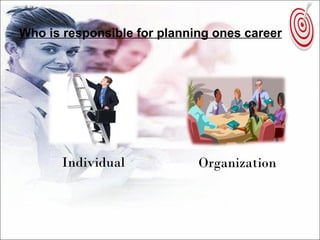
Who is responsible for planning ones career Individual Organization
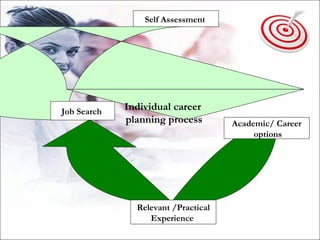
Self Assessment  Academic/ Career options Relevant /Practical Experience  Job Search  Individual career planning process
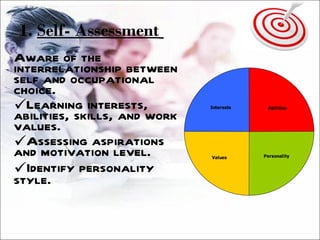
1.  Self- Assessment   Aware of the interrelationship between self and occupational choice. Learning interests, abilities, skills, and work values. Assessing aspirations and motivation level. Identify personality style.
2.  Academic / Career options Investigate the world of work in greater depth, narrow a general occupational direction into a specific one. Learning academic and career entrance requirements. Learning skills and experience required. Planning academic and career alternatives.
3.  Relevant / Practical experience   Gain practical experience through internships, cooperative education Testing new skills and try diverse experiences. Assessing likes and dislikes of work values, skills, work environments. Assessing if different coursework or skills are needed for your targeted career goals.
4.  Job Search   Learning how to prepare resume and cover letters, and complete employment applications. Learning and implementing job search strategies. Learning and practicing interviewing skills. Narrow your choices.
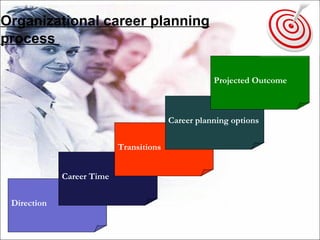
Organizational career planning process   Direction  Career Time  Transitions  Career planning options  Projected Outcome
SUCCESSION PLANNING Getting the right number of people with the  right skills, experiences, and competencies in the right jobs at the right time.
Why Succession Planning? Engages senior management in a disciplined review of organizational talent Guides development activities of staff Brings HR systems into alignment Assures continuity of key positions / Avoids transition problems. Assures new managers are prepared for their jobs Focus on Organizational Effectiveness
It’s OUR future.  WE need to make our career decision!!

Hrm mm

  • 1.
    CAREER AND SUCCESSIONPLANNING PRESENTED BY- DEEPAK KHANDELWAL
  • 2.
    CAREER A careeris the work a person does. It is the sequence of jobs that an individual has held throughout his or her working life . E.g. occupation of nursing. Chosen Profession for your life. Requires a willingness to get the training needed to build your skills for the future.
  • 3.
    CAREER PLANNING “Career planning consists of activities and actions that you take to achieve your individual career goals.”
  • 4.
    CAREER PLANNING Itis the life- long process a person goes through to learn about himself such as- Purpose, Personality Interests Skills Talents Develop a self- concept, learn about careers, and work situations. Make a career choice, while developing and coping social skills.
  • 5.
    Contd.. The majorfocus is matching personal goals and opportunities that are realistically available. Career planning is building bridges from one’s current job/career to next job/career. Well-conceived career plan is flexible to accommodate changing opportunities for development.
  • 6.
    Importance of CareerPlanning People leave an organization due to lack of career growth Deeper focus on an employee’s aims and aspirations High-level vision and goals of company are clearly made known to employees Growth of an organization is intrinsically linked with the growth of an individual Matching organization vision & employees aspirations is must
  • 7.
    Who is responsiblefor planning ones career Individual Organization
  • 8.
    Self Assessment Academic/ Career options Relevant /Practical Experience Job Search Individual career planning process
  • 9.
    1. Self-Assessment Aware of the interrelationship between self and occupational choice. Learning interests, abilities, skills, and work values. Assessing aspirations and motivation level. Identify personality style.
  • 10.
    2. Academic/ Career options Investigate the world of work in greater depth, narrow a general occupational direction into a specific one. Learning academic and career entrance requirements. Learning skills and experience required. Planning academic and career alternatives.
  • 11.
    3. Relevant/ Practical experience Gain practical experience through internships, cooperative education Testing new skills and try diverse experiences. Assessing likes and dislikes of work values, skills, work environments. Assessing if different coursework or skills are needed for your targeted career goals.
  • 12.
    4. JobSearch Learning how to prepare resume and cover letters, and complete employment applications. Learning and implementing job search strategies. Learning and practicing interviewing skills. Narrow your choices.
  • 13.
    Organizational career planningprocess Direction Career Time Transitions Career planning options Projected Outcome
  • 14.
    SUCCESSION PLANNING Gettingthe right number of people with the right skills, experiences, and competencies in the right jobs at the right time.
  • 15.
    Why Succession Planning?Engages senior management in a disciplined review of organizational talent Guides development activities of staff Brings HR systems into alignment Assures continuity of key positions / Avoids transition problems. Assures new managers are prepared for their jobs Focus on Organizational Effectiveness
  • 16.
    It’s OUR future. WE need to make our career decision!!