
Career Planning 
Succession Planning 
Prepared By : 
1
Career planning 
• Career planning is the process by which one selects 
career goals and the path to these goals. 
• The major focus of career planning is on assisting the 
employees achieve a better match between personal 
goals and the opportunities that are realistically 
available in the organization. 
2
Topics of Discussion 
• Need for Career Planning 
• Employee Career planning process 
• What Can Employees Do In Career Planning ? 
• What Can Managers Do In Career Planning ? 
• Methods of career Planning 
• Conclusion 
3
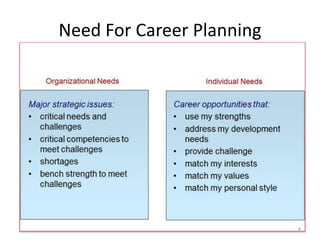
Need For Career Planning 
4
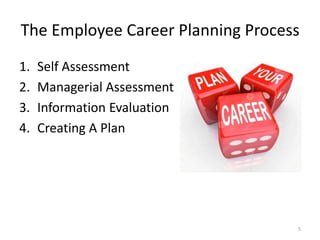
The Employee Career Planning Process 
1. Self Assessment 
2. Managerial Assessment 
3. Information Evaluation 
4. Creating A Plan 
5
Self Assessment 
• This stage assists employees in 
 Setting goals 
Values 
Skills 
Behavioural trends 
• It contributes to identify the level of 
employee's emphasis on work-life balance 
6
Managerial Assessment 
• The employees are informed on how the 
company assess their skills and knowledge 
and what place they took on company plans 
(e.g. opportunities for promotion, lateral 
moves). 
7
Information Evaluation 
• Employees establish the short and long term 
career goals that are related to respective 
competence, learning new skills, current 
designation and promotion. These objectives 
are discussed with the manager and recorded 
in the individual career plan. 
8
Creating a Plan 
• During this phase, the employees determine 
how to achieve these short and long term 
career goals. 
These plans may include 
 Attending lectures and seminars. 
 Applications to fill vacancies within the company 
 Participating in interviews 
9
What Can Employees Do In Career Planning ? 
• Take the initiative in the sense of requiring 
feedback from peers and chiefs regarding the 
strengths and weaknesses of their skills 
• Identify the stage of career development and 
the career needs 
• Seize as many opportunities to learn 
10
What Can Managers Do For Career Planning ? 
• Design and implement standards of 
performance assessment 
• Manager may refer the employee to assess his 
motivations and choices regarding career & 
professional goals 
• Systematic encouragement and support of 
staff during the implementation of the agreed 
choices for career 
11
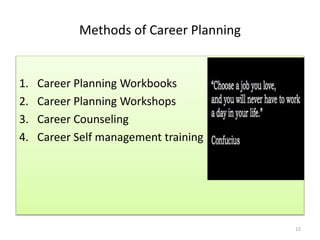
Methods of Career Planning 
1. Career Planning Workbooks 
2. Career Planning Workshops 
3. Career Counseling 
4. Career Self management training 
12
Career Planning Workbooks 
Several organizations prepared work books to guide their 
employees individually through 
1. Systematic self assessment of values 
2. Interests 
3. Abilities 
4. Goals 
5. Personal development plans. 
e.g. General Motors career development guide contains a section called “What do 
you want your future to be” in which employees make a personal evaluation. 
13
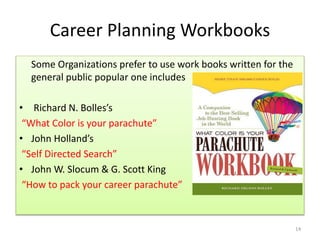
Career Planning Workbooks 
Some Organizations prefer to use work books written for the 
general public popular one includes 
• Richard N. Bolles’s 
“What Color is your parachute” 
• John Holland’s 
“Self Directed Search” 
• John W. Slocum & G. Scott King 
“How to pack your career parachute” 
14
Career Planning Workshops 
It helps in 
• Make career decisions 
• Set career goals 
• Create career options 
• Seek career planning information 
• Build Confidence & self esteem 
15
Career Counseling 
Career Counseling involves talking with 
employees about their 
 Current job activities & performance 
 Performance 
 Personal and career interest & goals 
 Personal skills 
 Suitable career development objectives 
16
Career Self management training 
Two Major objectives are : 
1. Helping employees to continuously gather 
feedback & information about their careers 
2. Encouraging them to prepare for mobility 
17
Career Planning Conclusion 
There is nothing more rewarding that doing 
something you enjoy and getting paid for it 
18
Succession Planning 
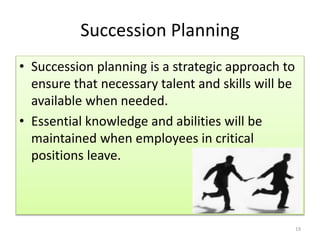
• Succession planning is a strategic approach to 
ensure that necessary talent and skills will be 
available when needed. 
• Essential knowledge and abilities will be 
maintained when employees in critical 
positions leave. 
19
Topics of Discussion 
1. Need for Succession planning 
2. Who are Successors? 
3. Steps of Succession Planning 
4. Executive Replacement Chart 
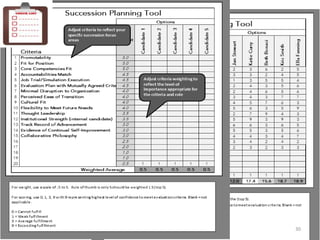
5. Succession planning check list 
6. Conclusion 
20
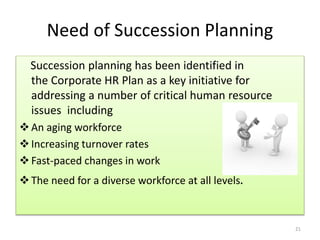
Need of Succession Planning 
Succession planning has been identified in 
the Corporate HR Plan as a key initiative for 
addressing a number of critical human resource 
issues including 
 An aging workforce 
 Increasing turnover rates 
 Fast-paced changes in work 
 The need for a diverse workforce at all levels. 
21
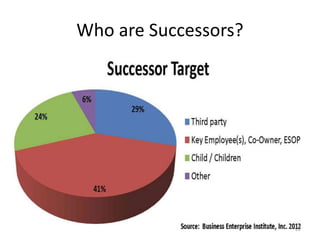
Who are Successors? 
22
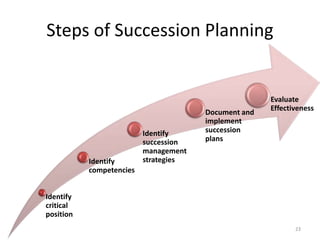
Steps of Succession Planning 
Identify 
critical 
position 
Identify 
competencies 
Identify 
succession 
management 
strategies 
Document and 
implement 
succession 
plans 
Evaluate 
Effectiveness 
23
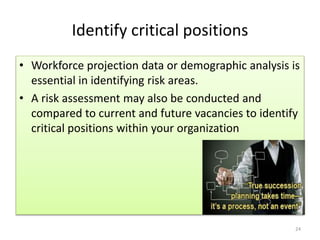
Identify critical positions 
• Workforce projection data or demographic analysis is 
essential in identifying risk areas. 
• A risk assessment may also be conducted and 
compared to current and future vacancies to identify 
critical positions within your organization 
24
Identify competencies 
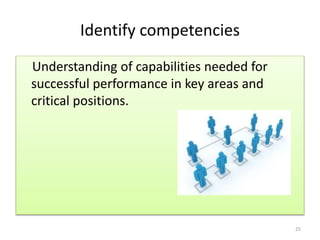
Understanding of capabilities needed for 
successful performance in key areas and 
critical positions. 
25
Identify succession management 
strategies 
Choose from a menu of several human 
resource strategies, including developing 
internal talent pools, on boarding and 
recruitment to address succession planning. 
26
Document and implement succession 
plans 
Action Plan provides a mechanism for 
clearly defining timelines and roles and 
responsibilities. 
27
Evaluate Effectiveness 
To ensure that the department or agency’s 
succession planning efforts are successful, it is 
important to systematically monitor workforce 
data, evaluate activities and make necessary 
adjustments 
28
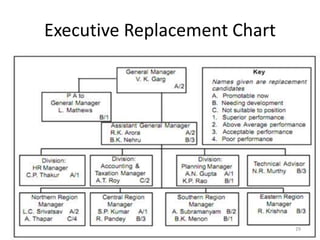
Executive Replacement Chart 
29
30
Succession Planning Conclusion 
Succession Planning is a process in which for 
every individual in a critical position, a 
successor has been planned. The successor is 
a potential replacement who could take 
charge immediately 
31
THANK YOU 
32

succession planning

  • 1.
    Career Planning SuccessionPlanning Prepared By : 1
  • 2.
    Career planning •Career planning is the process by which one selects career goals and the path to these goals. • The major focus of career planning is on assisting the employees achieve a better match between personal goals and the opportunities that are realistically available in the organization. 2
  • 3.
    Topics of Discussion • Need for Career Planning • Employee Career planning process • What Can Employees Do In Career Planning ? • What Can Managers Do In Career Planning ? • Methods of career Planning • Conclusion 3
  • 4.
    Need For CareerPlanning 4
  • 5.
    The Employee CareerPlanning Process 1. Self Assessment 2. Managerial Assessment 3. Information Evaluation 4. Creating A Plan 5
  • 6.
    Self Assessment •This stage assists employees in  Setting goals Values Skills Behavioural trends • It contributes to identify the level of employee's emphasis on work-life balance 6
  • 7.
    Managerial Assessment •The employees are informed on how the company assess their skills and knowledge and what place they took on company plans (e.g. opportunities for promotion, lateral moves). 7
  • 8.
    Information Evaluation •Employees establish the short and long term career goals that are related to respective competence, learning new skills, current designation and promotion. These objectives are discussed with the manager and recorded in the individual career plan. 8
  • 9.
    Creating a Plan • During this phase, the employees determine how to achieve these short and long term career goals. These plans may include  Attending lectures and seminars.  Applications to fill vacancies within the company  Participating in interviews 9
  • 10.
    What Can EmployeesDo In Career Planning ? • Take the initiative in the sense of requiring feedback from peers and chiefs regarding the strengths and weaknesses of their skills • Identify the stage of career development and the career needs • Seize as many opportunities to learn 10
  • 11.
    What Can ManagersDo For Career Planning ? • Design and implement standards of performance assessment • Manager may refer the employee to assess his motivations and choices regarding career & professional goals • Systematic encouragement and support of staff during the implementation of the agreed choices for career 11
  • 12.
    Methods of CareerPlanning 1. Career Planning Workbooks 2. Career Planning Workshops 3. Career Counseling 4. Career Self management training 12
  • 13.
    Career Planning Workbooks Several organizations prepared work books to guide their employees individually through 1. Systematic self assessment of values 2. Interests 3. Abilities 4. Goals 5. Personal development plans. e.g. General Motors career development guide contains a section called “What do you want your future to be” in which employees make a personal evaluation. 13
  • 14.
    Career Planning Workbooks Some Organizations prefer to use work books written for the general public popular one includes • Richard N. Bolles’s “What Color is your parachute” • John Holland’s “Self Directed Search” • John W. Slocum & G. Scott King “How to pack your career parachute” 14
  • 15.
    Career Planning Workshops It helps in • Make career decisions • Set career goals • Create career options • Seek career planning information • Build Confidence & self esteem 15
  • 16.
    Career Counseling CareerCounseling involves talking with employees about their  Current job activities & performance  Performance  Personal and career interest & goals  Personal skills  Suitable career development objectives 16
  • 17.
    Career Self managementtraining Two Major objectives are : 1. Helping employees to continuously gather feedback & information about their careers 2. Encouraging them to prepare for mobility 17
  • 18.
    Career Planning Conclusion There is nothing more rewarding that doing something you enjoy and getting paid for it 18
  • 19.
    Succession Planning •Succession planning is a strategic approach to ensure that necessary talent and skills will be available when needed. • Essential knowledge and abilities will be maintained when employees in critical positions leave. 19
  • 20.
    Topics of Discussion 1. Need for Succession planning 2. Who are Successors? 3. Steps of Succession Planning 4. Executive Replacement Chart 5. Succession planning check list 6. Conclusion 20
  • 21.
    Need of SuccessionPlanning Succession planning has been identified in the Corporate HR Plan as a key initiative for addressing a number of critical human resource issues including  An aging workforce  Increasing turnover rates  Fast-paced changes in work  The need for a diverse workforce at all levels. 21
  • 22.
  • 23.
    Steps of SuccessionPlanning Identify critical position Identify competencies Identify succession management strategies Document and implement succession plans Evaluate Effectiveness 23
  • 24.
    Identify critical positions • Workforce projection data or demographic analysis is essential in identifying risk areas. • A risk assessment may also be conducted and compared to current and future vacancies to identify critical positions within your organization 24
  • 25.
    Identify competencies Understandingof capabilities needed for successful performance in key areas and critical positions. 25
  • 26.
    Identify succession management strategies Choose from a menu of several human resource strategies, including developing internal talent pools, on boarding and recruitment to address succession planning. 26
  • 27.
    Document and implementsuccession plans Action Plan provides a mechanism for clearly defining timelines and roles and responsibilities. 27
  • 28.
    Evaluate Effectiveness Toensure that the department or agency’s succession planning efforts are successful, it is important to systematically monitor workforce data, evaluate activities and make necessary adjustments 28
  • 29.
  • 30.
  • 31.
    Succession Planning Conclusion Succession Planning is a process in which for every individual in a critical position, a successor has been planned. The successor is a potential replacement who could take charge immediately 31
  • 32.