FUNCTIONS OF HRM
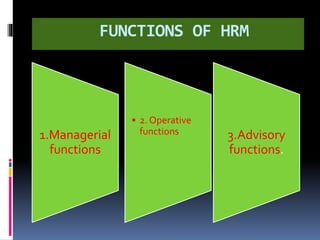
1.Managerial
functions
• 2. Operative
functions 3.Advisory
functions.
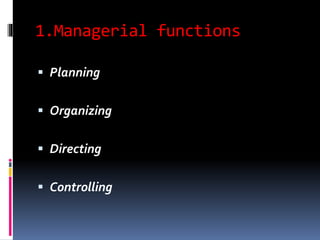
1.Managerial functions
ď‚§ Planning
ď‚§ Organizing
ď‚§ Directing
ď‚§ Controlling
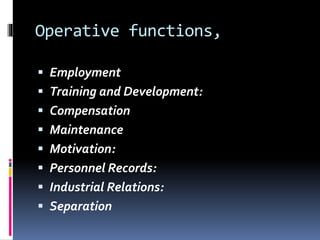
Operative functions,
ď‚§ Employment
ď‚§ Training and Development:
ď‚§ Compensation
ď‚§ Maintenance
ď‚§ Motivation:
ď‚§ Personnel Records:
ď‚§ Industrial Relations:
ď‚§ Separation
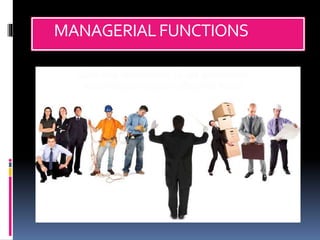
MANAGERIALFUNCTIONS
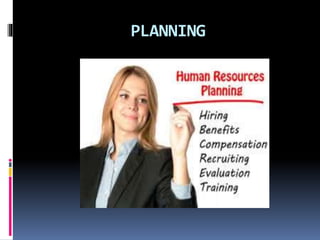
PLANNING
Planning in advance is the foremost function of a manager.
It is necessary to determine the goals of the organization
and lay down policies and procedures to reach the goals.
Planning for HR involves filling vacancies, planning job
requirements, job descriptions and determination of the
sources of recruitment. It the process of personnel planning
where supply and demand forecast for each job category is
made. Than the shortage and excess of personnel by job
category are projected for a specific time. Plans are then
developed to eliminate the forecast shortages and excess
of particular categories of human resources.
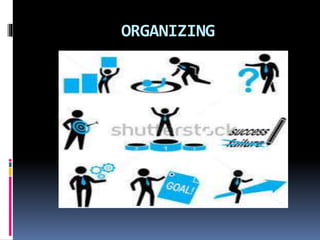
ORGANIZING
Organizing involves bringing together the human resource
in a common platform to serve organizational objective.
Plans and programmers are developed to carry out
operational work with a specified organizational structure,
with clearly defined roles and responsibility of the
employee and departmental concern.
DIRECTING
It is the people who put the organizational plans into actions.
There is a direct effect of motivation and encouragement on
productivity. Directing function thus keeps the personnel’s active
in working process of the organization. Directing function thus
can motivate the employees in an organization through career
planning, salary administration, employee morale, developing
cordial relationships and provision of safety requirements and
welfare of employees.
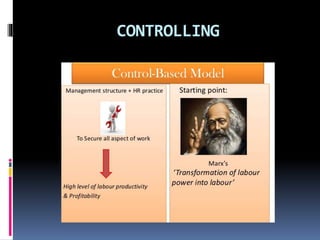
CONTROLLING
Controlling involves all the measures taken to check
whether the plans are put into correct actions. Thus
controlling is reverting back to the planning process.
The results obtained are compared with the
standard plans and attempts are made to minimize
deviations or gaps (if any). Controlling helps in
performance monitoring and personnel audit.
Operative functions are concerned with
entrusted task or duties assigned to the human
resource. It includes employment, development,
compensation, integration and maintenance of
personnel of the organization.
EMPLOYMENT
Manpower requirement is the basic necessity for
any organization. It is necessary to place the
right kind of people in the right place in right
number with right skills to achieve the
predetermined objectives. Recruitment,
selection, placement, etc. of the personnel helps
in fulfilling these objective functions
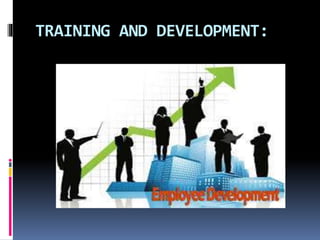
TRAINING AND DEVELOPMENT:
Training and development programmes are necessary to
enhance knowledge, skills and ability in employees. It prepares
the personnel’s for taking higher responsibilities and acquiring
the right skills for job performance. It is therefore necessary for
the organization to identify the training needs in employees and
to plan the intervention programmers accordingly. Various on-
job and off-job trainings programmes are given to develop
employees capability, required to perform a job.
COMPENSATION
Rewarding employee for performance is the biggest
motivator. It increases the work excitement and prepares
individual for responsibilities. Equitable remuneration in
the form of monetary and non-monetary rewards helps in
boosting the employee’s confidence. Techniques like job-
evaluation and performance appraisal helps in wage
fixation in an organization.
MAINTENANCE
Workers health and safety conditions are essential
prerequisite for work life balance. Efficiency of
workers can be improved significantly by providing
them with health, safety and recreational measures.
It includes provision of cafeteria, rest rooms,
counseling, group insurance, education for children
of employees, recreational facilities, etc.
MOTIVATION
Motivation coupled with ability leads to
performance. Thus with higher motivation higher
performance can be generated. Organizations try to
keep the employees motivated all the time so as to
culture a healthy work atmosphere for growth and
development
PERSONNEL RECORDS:
Keeping appropriate track records of the employees
helps in identifying their potency and limitations.
Records on activities like training, achievements,
transfer, promotion helps in identifying the work
behavior, which tends to reduce absenteeism and
employee turnover in an organization.
INDUSTRIAL RELATIONS:
Maintenance of good or healthy Industrial
relations helps in reduction of employee
grievances and disputes, brings in higher
discipline and empowerment of trade unions. It
provides an in-depth understanding of the labor
problems and their practical solutions to the top
management of the organization.
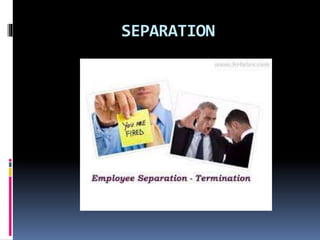
SEPARATION
It is concern with providing appropriate benefit
to the employees at the time of their retirement.
Since organizations sustainability is perennial
and employees working in it have certain limited
role to perform during their service period, it
becomes essential to provide them with due
benefits, so that they can live in prosperity after
they leave the organization.
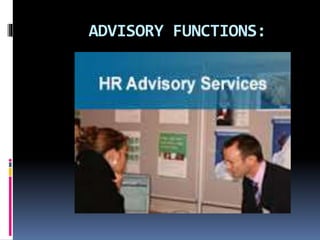
ADVISORY FUNCTIONS:
Advisory function of human resource is concern with
providing expert opinion on the matters of the
organization. A human resource manager thus can give
advice to the top level management and the departmental
heads on various issues pertaining to manpower planning,
job analysis and design, recruitment and selection,
placement, training, performance appraisal, employee
morale, plans and policies etc. This would inculcate sound
governance and congenial climate for growth of
organization concern.

Hrm function on august 03

  • 2.
    FUNCTIONS OF HRM 1.Managerial functions •2. Operative functions 3.Advisory functions.
  • 3.
    1.Managerial functions ď‚§ Planning ď‚§Organizing ď‚§ Directing ď‚§ Controlling
  • 4.
    Operative functions, ď‚§ Employment ď‚§Training and Development: ď‚§ Compensation ď‚§ Maintenance ď‚§ Motivation: ď‚§ Personnel Records: ď‚§ Industrial Relations: ď‚§ Separation
  • 5.
  • 6.
  • 7.
    Planning in advanceis the foremost function of a manager. It is necessary to determine the goals of the organization and lay down policies and procedures to reach the goals. Planning for HR involves filling vacancies, planning job requirements, job descriptions and determination of the sources of recruitment. It the process of personnel planning where supply and demand forecast for each job category is made. Than the shortage and excess of personnel by job category are projected for a specific time. Plans are then developed to eliminate the forecast shortages and excess of particular categories of human resources.
  • 8.
  • 9.
    Organizing involves bringingtogether the human resource in a common platform to serve organizational objective. Plans and programmers are developed to carry out operational work with a specified organizational structure, with clearly defined roles and responsibility of the employee and departmental concern.
  • 10.
  • 11.
    It is thepeople who put the organizational plans into actions. There is a direct effect of motivation and encouragement on productivity. Directing function thus keeps the personnel’s active in working process of the organization. Directing function thus can motivate the employees in an organization through career planning, salary administration, employee morale, developing cordial relationships and provision of safety requirements and welfare of employees.
  • 12.
  • 13.
    Controlling involves allthe measures taken to check whether the plans are put into correct actions. Thus controlling is reverting back to the planning process. The results obtained are compared with the standard plans and attempts are made to minimize deviations or gaps (if any). Controlling helps in performance monitoring and personnel audit.
  • 15.
    Operative functions areconcerned with entrusted task or duties assigned to the human resource. It includes employment, development, compensation, integration and maintenance of personnel of the organization.
  • 16.
  • 17.
    Manpower requirement isthe basic necessity for any organization. It is necessary to place the right kind of people in the right place in right number with right skills to achieve the predetermined objectives. Recruitment, selection, placement, etc. of the personnel helps in fulfilling these objective functions
  • 18.
  • 19.
    Training and developmentprogrammes are necessary to enhance knowledge, skills and ability in employees. It prepares the personnel’s for taking higher responsibilities and acquiring the right skills for job performance. It is therefore necessary for the organization to identify the training needs in employees and to plan the intervention programmers accordingly. Various on- job and off-job trainings programmes are given to develop employees capability, required to perform a job.
  • 20.
  • 21.
    Rewarding employee forperformance is the biggest motivator. It increases the work excitement and prepares individual for responsibilities. Equitable remuneration in the form of monetary and non-monetary rewards helps in boosting the employee’s confidence. Techniques like job- evaluation and performance appraisal helps in wage fixation in an organization.
  • 22.
  • 23.
    Workers health andsafety conditions are essential prerequisite for work life balance. Efficiency of workers can be improved significantly by providing them with health, safety and recreational measures. It includes provision of cafeteria, rest rooms, counseling, group insurance, education for children of employees, recreational facilities, etc.
  • 24.
  • 25.
    Motivation coupled withability leads to performance. Thus with higher motivation higher performance can be generated. Organizations try to keep the employees motivated all the time so as to culture a healthy work atmosphere for growth and development
  • 26.
  • 27.
    Keeping appropriate trackrecords of the employees helps in identifying their potency and limitations. Records on activities like training, achievements, transfer, promotion helps in identifying the work behavior, which tends to reduce absenteeism and employee turnover in an organization.
  • 28.
  • 29.
    Maintenance of goodor healthy Industrial relations helps in reduction of employee grievances and disputes, brings in higher discipline and empowerment of trade unions. It provides an in-depth understanding of the labor problems and their practical solutions to the top management of the organization.
  • 30.
  • 31.
    It is concernwith providing appropriate benefit to the employees at the time of their retirement. Since organizations sustainability is perennial and employees working in it have certain limited role to perform during their service period, it becomes essential to provide them with due benefits, so that they can live in prosperity after they leave the organization.
  • 32.
  • 33.
    Advisory function ofhuman resource is concern with providing expert opinion on the matters of the organization. A human resource manager thus can give advice to the top level management and the departmental heads on various issues pertaining to manpower planning, job analysis and design, recruitment and selection, placement, training, performance appraisal, employee morale, plans and policies etc. This would inculcate sound governance and congenial climate for growth of organization concern.