Presenters
 Mudassar Hussain 3039
 Ali raza 3042
What is HRM?
Human Resource Management
(HRM) is the function within an
organization that focuses on
recruitment of, management
of, and providing direction for the
people who work in the
organization. HRM can also be
performed by line manager.
Human Resource Management
Audit?
 It is mechanism to review the current HR
policies, practices and systems to ensure that they
fulfill the rules and regulations. The audit also
helps in identifying the areas of improvement in
the HR function. Nowadays, the audit is done
regularly in the organizations.
 The HR audit covers various functions of HR like
Recruitment, Compensation &
Benefits, Performance evaluation, Termination
Process and exit interviews etc.
Advantages of HRM audits?
 To recognize strengths
 To reveal problem areas
 Confirms compliance with latest regulations
 Ensures effective HR policies
 Builds confidence in HR function
Types of HR audits
 1.Compliance audits
 2.Best practice audits
 3.Strategic audits
 4.Function specific audits
1.Compliance audit
 A compliance audit is a comprehensive review of an
organization's adherence to regulatory guidelines.
Independent accounting, security or IT consultants
evaluate the strength and thoroughness of compliance
preparations. Auditors review security polices, user
access controls and risk managemen procedures over
the course of a compliance audit.
2.Best practices audits
 How do our recruitment practices , hiring practices
, and so on HR functions as well. . .
3.Strategic audits
 In particular , our HRM practices helping us to
achive our strategic goals etc.
4.Function specific audits
 Focus on one or more specific HRM areas , such as
compensation , T&D etc…
Legal compliances requires
auditing;
 Hiring
 Performance evaluation
 Employee discipline
 Termination
 Auditing HRIS (personnel files)
Challenges in way of auditing?
 Globalization
 Business Competitors Innovation
 Growth of the organization
 Building organizational capabilities
 Managing Change like new HRM policies
 Change technology
 Attracting and Retaining Intellectual Capital
The HRM auditing process
 1.decide on the scope of the audits.
 2.design auditing team.
 3.using checklists & available tools(softwares)
 4.Budgeting of auditing.
 5.follow laws and regulations
 6.top management support.
 7.develop the auditing checklists.
 8.use questionnaires.
 9.provide feedback to management.
 10.take actions.
Methods of HRM audits
INDIVIDUAL INTERVIEW METHOD
GROUP INTERVIEW METHOD
WORKSHOP METHOD
QUESTIONNAIRE METHOD
OBSERVATION
ANALYSIS OF SECONDARY DATA
ANALYSIS OF
REPORTS, RECORDS, MANUALS AND
OTHER PUBLISHED LITERATURE
INDIVIDUAL
INTERVIEW METHOD
 Top level management and senior
managers are
interviewed, individually. It helps in
following:

 Knowing their thinking about future
plans and opportunities available for
the company
 Knowing about their expectations
from the HR audit
 Getting sensitive information
pertaining to working styles and
culture
GROUP INTERVIEW
METHOD
 Group interviews and
discussions with the
employees and executives of
large companies for HR
audit, facilitate collection of
information about
effectiveness of existing
systems.

WORKSHOP METHOD
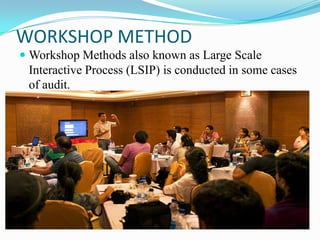
 Workshop Methods also known as Large Scale
Interactive Process (LSIP) is conducted in some cases
of audit.
QUESTIONNAIRE
METHOD
 Feed back about various
dimensions of HRD, including
the competency base of HRD
staff, the styles of line
managers, the implementation
of various HRD systems, etc are
obtained through a detailed
questionnaire from individuals
or groups for HR audit.
 This method helps in
benchmarking.
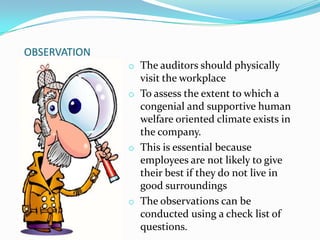
OBSERVATION
o The auditors should physically
visit the workplace
o To assess the extent to which a
congenial and supportive human
welfare oriented climate exists in
the company.
o This is essential because
employees are not likely to give
their best if they do not live in
good surroundings
o The observations can be
conducted using a check list of
questions.
ANALYSIS OF
SECONDARY DATA
 Analysis of secondary data
can give an insight into the
HRD assets and liabilities of
the company.
 Analysis of age profiles of the
employees, analysis of the
training attended, analysis of
the minutes of the meetings
held etc., help in determining
the assets and liabilities.
ANALYSIS OF REPORTS,RECORDS, MANUALS
AND OTHER PUBLISHED LITERATURE
Published literature of the company
including annual reports, marked hand-
outs, training calendar personnel
manual, and various circulars issued from
time to time are also likely to help
immensely in assessing the strengths and
weaknesses of HRD.
Safety audit?
Safety auditing is a core safety
management activity, providing
a means of identifying potential
problems before they have an
impact on safety.
security audit?
A security audit is an
essential assessment of how
effectively an organization’s
security policies are being
implemented.
Health audit?
 is a process that has been defined as "a quality
improvement process that seeks to improve
workers care and outcomes through systematic
review of care against explicit criteria and the
implementation of change
Human resource management audits

Human resource management audits

  • 2.
    Presenters  Mudassar Hussain3039  Ali raza 3042
  • 3.
    What is HRM? HumanResource Management (HRM) is the function within an organization that focuses on recruitment of, management of, and providing direction for the people who work in the organization. HRM can also be performed by line manager.
  • 4.
    Human Resource Management Audit? It is mechanism to review the current HR policies, practices and systems to ensure that they fulfill the rules and regulations. The audit also helps in identifying the areas of improvement in the HR function. Nowadays, the audit is done regularly in the organizations.  The HR audit covers various functions of HR like Recruitment, Compensation & Benefits, Performance evaluation, Termination Process and exit interviews etc.
  • 5.
    Advantages of HRMaudits?  To recognize strengths  To reveal problem areas  Confirms compliance with latest regulations  Ensures effective HR policies  Builds confidence in HR function
  • 6.
    Types of HRaudits  1.Compliance audits  2.Best practice audits  3.Strategic audits  4.Function specific audits
  • 7.
    1.Compliance audit  Acompliance audit is a comprehensive review of an organization's adherence to regulatory guidelines. Independent accounting, security or IT consultants evaluate the strength and thoroughness of compliance preparations. Auditors review security polices, user access controls and risk managemen procedures over the course of a compliance audit.
  • 8.
    2.Best practices audits How do our recruitment practices , hiring practices , and so on HR functions as well. . .
  • 9.
    3.Strategic audits  Inparticular , our HRM practices helping us to achive our strategic goals etc.
  • 10.
    4.Function specific audits Focus on one or more specific HRM areas , such as compensation , T&D etc…
  • 11.
    Legal compliances requires auditing; Hiring  Performance evaluation  Employee discipline  Termination  Auditing HRIS (personnel files)
  • 12.
    Challenges in wayof auditing?  Globalization  Business Competitors Innovation  Growth of the organization  Building organizational capabilities  Managing Change like new HRM policies  Change technology  Attracting and Retaining Intellectual Capital
  • 13.
    The HRM auditingprocess  1.decide on the scope of the audits.  2.design auditing team.  3.using checklists & available tools(softwares)  4.Budgeting of auditing.  5.follow laws and regulations  6.top management support.  7.develop the auditing checklists.  8.use questionnaires.  9.provide feedback to management.  10.take actions.
  • 14.
    Methods of HRMaudits INDIVIDUAL INTERVIEW METHOD GROUP INTERVIEW METHOD WORKSHOP METHOD QUESTIONNAIRE METHOD OBSERVATION ANALYSIS OF SECONDARY DATA ANALYSIS OF REPORTS, RECORDS, MANUALS AND OTHER PUBLISHED LITERATURE
  • 15.
    INDIVIDUAL INTERVIEW METHOD  Toplevel management and senior managers are interviewed, individually. It helps in following:   Knowing their thinking about future plans and opportunities available for the company  Knowing about their expectations from the HR audit  Getting sensitive information pertaining to working styles and culture
  • 16.
    GROUP INTERVIEW METHOD  Groupinterviews and discussions with the employees and executives of large companies for HR audit, facilitate collection of information about effectiveness of existing systems. 
  • 17.
    WORKSHOP METHOD  WorkshopMethods also known as Large Scale Interactive Process (LSIP) is conducted in some cases of audit.
  • 18.
    QUESTIONNAIRE METHOD  Feed backabout various dimensions of HRD, including the competency base of HRD staff, the styles of line managers, the implementation of various HRD systems, etc are obtained through a detailed questionnaire from individuals or groups for HR audit.  This method helps in benchmarking.
  • 19.
    OBSERVATION o The auditorsshould physically visit the workplace o To assess the extent to which a congenial and supportive human welfare oriented climate exists in the company. o This is essential because employees are not likely to give their best if they do not live in good surroundings o The observations can be conducted using a check list of questions.
  • 20.
    ANALYSIS OF SECONDARY DATA Analysis of secondary data can give an insight into the HRD assets and liabilities of the company.  Analysis of age profiles of the employees, analysis of the training attended, analysis of the minutes of the meetings held etc., help in determining the assets and liabilities.
  • 21.
    ANALYSIS OF REPORTS,RECORDS,MANUALS AND OTHER PUBLISHED LITERATURE Published literature of the company including annual reports, marked hand- outs, training calendar personnel manual, and various circulars issued from time to time are also likely to help immensely in assessing the strengths and weaknesses of HRD.
  • 22.
    Safety audit? Safety auditingis a core safety management activity, providing a means of identifying potential problems before they have an impact on safety.
  • 23.
    security audit? A securityaudit is an essential assessment of how effectively an organization’s security policies are being implemented.
  • 24.
    Health audit?  isa process that has been defined as "a quality improvement process that seeks to improve workers care and outcomes through systematic review of care against explicit criteria and the implementation of change