The
Environmental
Impact of Meat
(And How Vegetarians and
Vegans Are Saving the
Planet)
Table of Contents
 Boring Math and Science You Sort of Know
 Hopefully Shocking Math and Science That
Makes You Unhappy Inside
 A Glimmer of Hope
 Crushing Disappointment
 Really Scary Numbers
 Comparisons, Funny Pictures, Shock and Awe
 A Call to Action
 Warm and Fuzzy Feelings
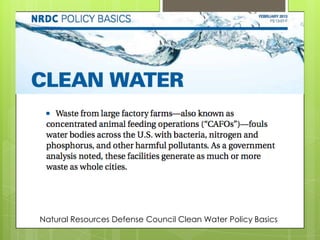
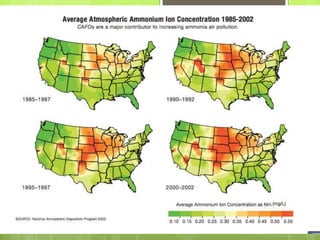
Natural Resources Defense Council Clean Water Policy Basics
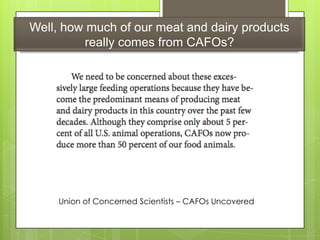
Well, how much of our meat and dairy products
really comes from CAFOs?
Union of Concerned Scientists – CAFOs Uncovered
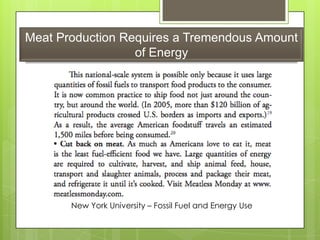
Meat Production Requires a Tremendous Amount
of Energy
New York University – Fossil Fuel and Energy Use
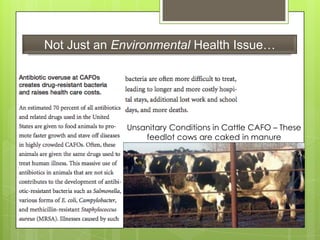
Unsanitary Conditions in Cattle CAFO – These
feedlot cows are caked in manure
Not Just an Environmental Health Issue…
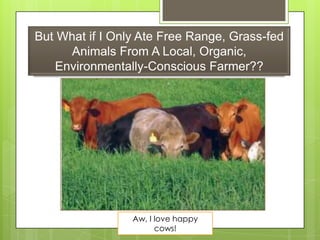
But What if I Only Ate Free Range, Grass-fed
Animals From A Local, Organic,
Environmentally-Conscious Farmer??
Aw, I love happy
cows!
Great success!
You sound pretty cool, and I think we should hang out.
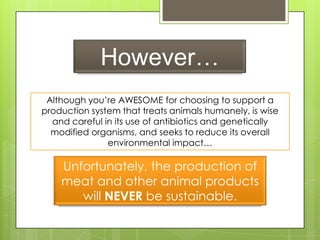
However…
Although you’re AWESOME for choosing to support a
production system that treats animals humanely, is wise
and careful in its use of antibiotics and genetically
modified organisms, and seeks to reduce its overall
environmental impact…
Unfortunately, the production of
meat and other animal products
will NEVER be sustainable.
Here is How Vegetarians and Vegans Are Saving
the Planet, One Delicious Vegan Pizza At a Time
This is my vegan pizza, and it is indeed delicious.
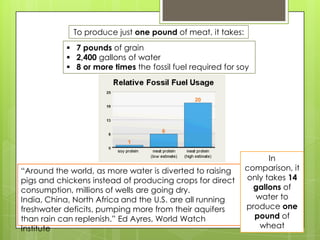
To produce just one pound of meat, it takes:
 7 pounds of grain
 2,400 gallons of water
 8 or more times the fossil fuel required for soy
“Around the world, as more water is diverted to raising
pigs and chickens instead of producing crops for direct
consumption, millions of wells are going dry.
India, China, North Africa and the U.S. are all running
freshwater deficits, pumping more from their aquifers
than rain can replenish.” Ed Ayres, World Watch
Institute
In
comparison, it
only takes 14
gallons of
water to
produce one
pound of
wheat
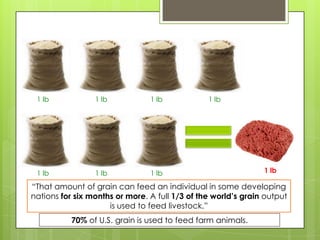
“That amount of grain can feed an individual in some developing
nations for six months or more. A full 1/3 of the world’s grain output
is used to feed livestock.”
70% of U.S. grain is used to feed farm animals.
1 lb 1 lb 1 lb 1 lb
1 lb 1 lb 1 lb 1 lb
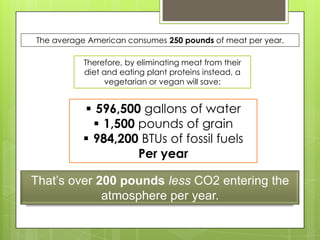
The average American consumes 250 pounds of meat per year.
Therefore, by eliminating meat from their
diet and eating plant proteins instead, a
vegetarian or vegan will save:
 596,500 gallons of water
 1,500 pounds of grain
 984,200 BTUs of fossil fuels
Per year
That’s over 200 pounds less CO2 entering the
atmosphere per year.
With 984,200 BTUs of
energy, you could…
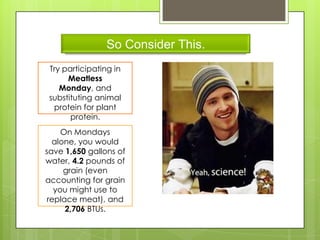
Watch every episode of Breaking Bad…21 times.
I love you Jesse
Brew 3,859 pots of coffee
Or toast 8,633 slices of bread
And that’s just the energy used to produce, package,
transport, and store the meat.
It doesn’t even count emissions like methane and
nitrogen from the farms and animals themselves.
It doesn’t even count the ecological impact of
antibiotics, habitat destruction, runoff, and waste.
It doesn’t even count most of the irreversible damage
to our water, our air, and our land caused by meat
production. Everything we need to survive…is carelessly
destroyed to feed our outsized demand for meat and
other animal products.
So Consider This.
Try participating in
Meatless
Monday, and
substituting animal
protein for plant
protein.
On Mondays
alone, you would
save 1,650 gallons of
water, 4.2 pounds of
grain (even
accounting for grain
you might use to
replace meat), and
2,706 BTUs.
Maybe You’ll End Up Liking It.
I know I do.
 Natural Resources Defense Council. (2013, February). Clean Water Policy
Basics. Retrieved from http://www.nrdc.org/legislation/policy-
basics/files/policy-basics-clean-water-FS.pdf
 Union of Concerned Scientists. (2008, April). CAFOs Uncovered. Retrieved
from
http://www.ucsusa.org/assets/documents/food_and_agriculture/cafos-
uncovered.pdf
 New York University. Fossil Fuel and Energy Use. Retrieved from
https://www.nyu.edu/sustainability/pdf/Fossil%20Fuel%20and%20Energy%2
0Use%202%20FCSummit-HO-20091207.pdf
 Vegsource.com. (2001, March). How Much Water to Make One Pound of
Beef? Retrieved from
http://www.vegsource.com/articles/pimentel_water.htm
 Chooseveg.com Wasting Resources. Retrieved from
http://www.chooseveg.com/conservation.asp
 Wannaveg.com Our Mission. Retrieved from http://wannaveg.com/
References

How Vegetarians and Vegans Are Saving the Planet

  • 1.
    The Environmental Impact of Meat (AndHow Vegetarians and Vegans Are Saving the Planet)
  • 2.
    Table of Contents Boring Math and Science You Sort of Know  Hopefully Shocking Math and Science That Makes You Unhappy Inside  A Glimmer of Hope  Crushing Disappointment  Really Scary Numbers  Comparisons, Funny Pictures, Shock and Awe  A Call to Action  Warm and Fuzzy Feelings
  • 3.
    Natural Resources DefenseCouncil Clean Water Policy Basics
  • 4.
    Well, how muchof our meat and dairy products really comes from CAFOs? Union of Concerned Scientists – CAFOs Uncovered
  • 7.
    Meat Production Requiresa Tremendous Amount of Energy New York University – Fossil Fuel and Energy Use
  • 8.
    Unsanitary Conditions inCattle CAFO – These feedlot cows are caked in manure Not Just an Environmental Health Issue…
  • 9.
    But What ifI Only Ate Free Range, Grass-fed Animals From A Local, Organic, Environmentally-Conscious Farmer?? Aw, I love happy cows!
  • 10.
    Great success! You soundpretty cool, and I think we should hang out.
  • 11.
    However… Although you’re AWESOMEfor choosing to support a production system that treats animals humanely, is wise and careful in its use of antibiotics and genetically modified organisms, and seeks to reduce its overall environmental impact… Unfortunately, the production of meat and other animal products will NEVER be sustainable.
  • 12.
    Here is HowVegetarians and Vegans Are Saving the Planet, One Delicious Vegan Pizza At a Time This is my vegan pizza, and it is indeed delicious.
  • 13.
    To produce justone pound of meat, it takes:  7 pounds of grain  2,400 gallons of water  8 or more times the fossil fuel required for soy “Around the world, as more water is diverted to raising pigs and chickens instead of producing crops for direct consumption, millions of wells are going dry. India, China, North Africa and the U.S. are all running freshwater deficits, pumping more from their aquifers than rain can replenish.” Ed Ayres, World Watch Institute In comparison, it only takes 14 gallons of water to produce one pound of wheat
  • 14.
    “That amount ofgrain can feed an individual in some developing nations for six months or more. A full 1/3 of the world’s grain output is used to feed livestock.” 70% of U.S. grain is used to feed farm animals. 1 lb 1 lb 1 lb 1 lb 1 lb 1 lb 1 lb 1 lb
  • 15.
    The average Americanconsumes 250 pounds of meat per year. Therefore, by eliminating meat from their diet and eating plant proteins instead, a vegetarian or vegan will save:  596,500 gallons of water  1,500 pounds of grain  984,200 BTUs of fossil fuels Per year That’s over 200 pounds less CO2 entering the atmosphere per year.
  • 16.
    With 984,200 BTUsof energy, you could…
  • 17.
    Watch every episodeof Breaking Bad…21 times. I love you Jesse
  • 18.
    Brew 3,859 potsof coffee
  • 19.
    Or toast 8,633slices of bread
  • 20.
    And that’s justthe energy used to produce, package, transport, and store the meat. It doesn’t even count emissions like methane and nitrogen from the farms and animals themselves. It doesn’t even count the ecological impact of antibiotics, habitat destruction, runoff, and waste. It doesn’t even count most of the irreversible damage to our water, our air, and our land caused by meat production. Everything we need to survive…is carelessly destroyed to feed our outsized demand for meat and other animal products.
  • 21.
    So Consider This. Tryparticipating in Meatless Monday, and substituting animal protein for plant protein. On Mondays alone, you would save 1,650 gallons of water, 4.2 pounds of grain (even accounting for grain you might use to replace meat), and 2,706 BTUs.
  • 22.
    Maybe You’ll EndUp Liking It. I know I do.
  • 23.
     Natural ResourcesDefense Council. (2013, February). Clean Water Policy Basics. Retrieved from http://www.nrdc.org/legislation/policy- basics/files/policy-basics-clean-water-FS.pdf  Union of Concerned Scientists. (2008, April). CAFOs Uncovered. Retrieved from http://www.ucsusa.org/assets/documents/food_and_agriculture/cafos- uncovered.pdf  New York University. Fossil Fuel and Energy Use. Retrieved from https://www.nyu.edu/sustainability/pdf/Fossil%20Fuel%20and%20Energy%2 0Use%202%20FCSummit-HO-20091207.pdf  Vegsource.com. (2001, March). How Much Water to Make One Pound of Beef? Retrieved from http://www.vegsource.com/articles/pimentel_water.htm  Chooseveg.com Wasting Resources. Retrieved from http://www.chooseveg.com/conservation.asp  Wannaveg.com Our Mission. Retrieved from http://wannaveg.com/ References