Information + action for social changeHow to Use HealthyCity.org for Community Organizing:Focus on Community-Engaged Mapping
How to Participate TodayOpen and close your Panel
View, Select, and Test your audio
Type in a question at ANY time during the webinar. We will pause throughout to respond.
Everyone will receive an email within 24 hours with additional help tools and a link to a survey. Please fill out the survey with your feedback from this sessionHealthy City is a project of…  A public policy change organization rooted in the civil rights movement
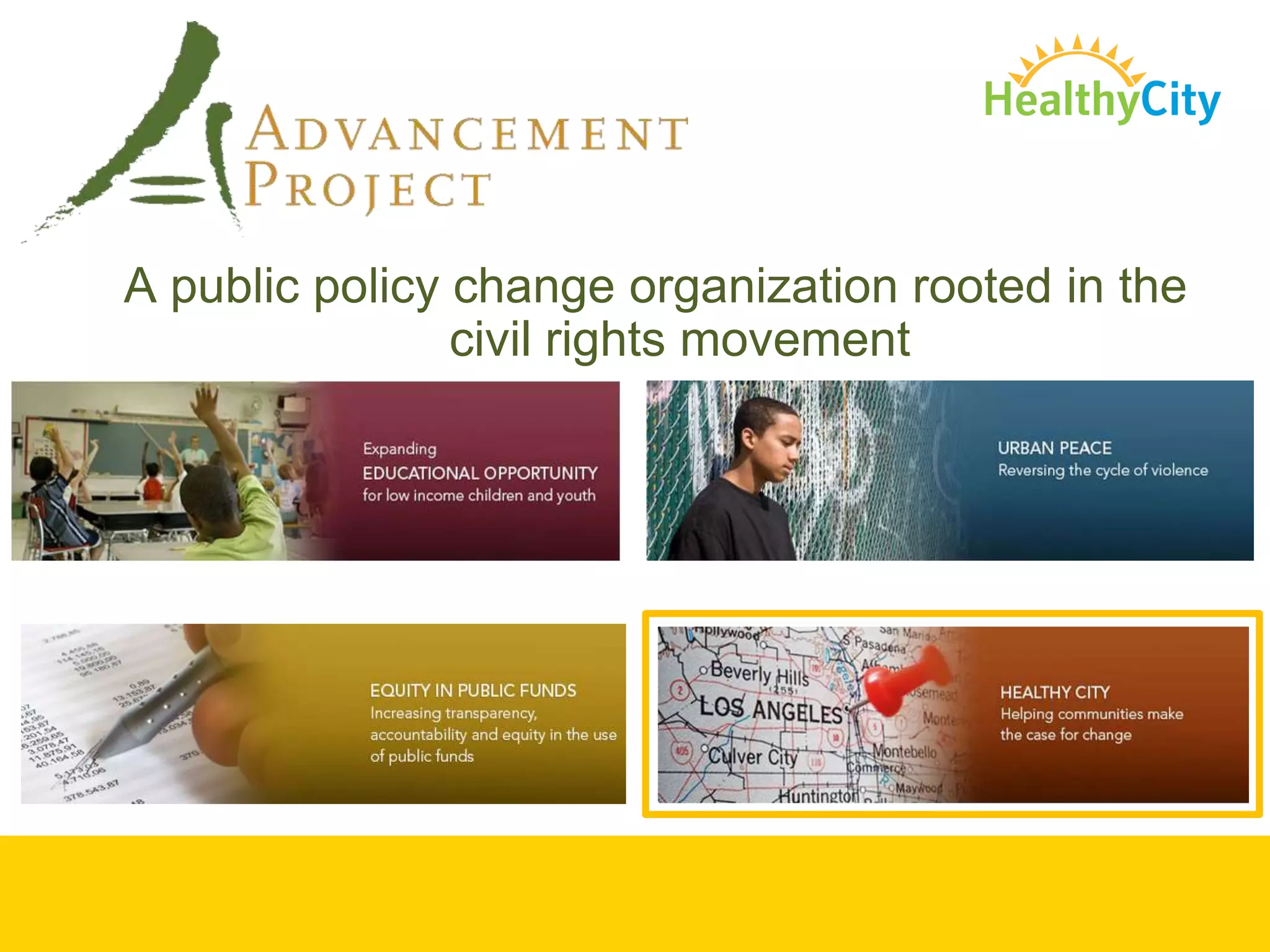
A public policy change organization rooted in the civil rights movement
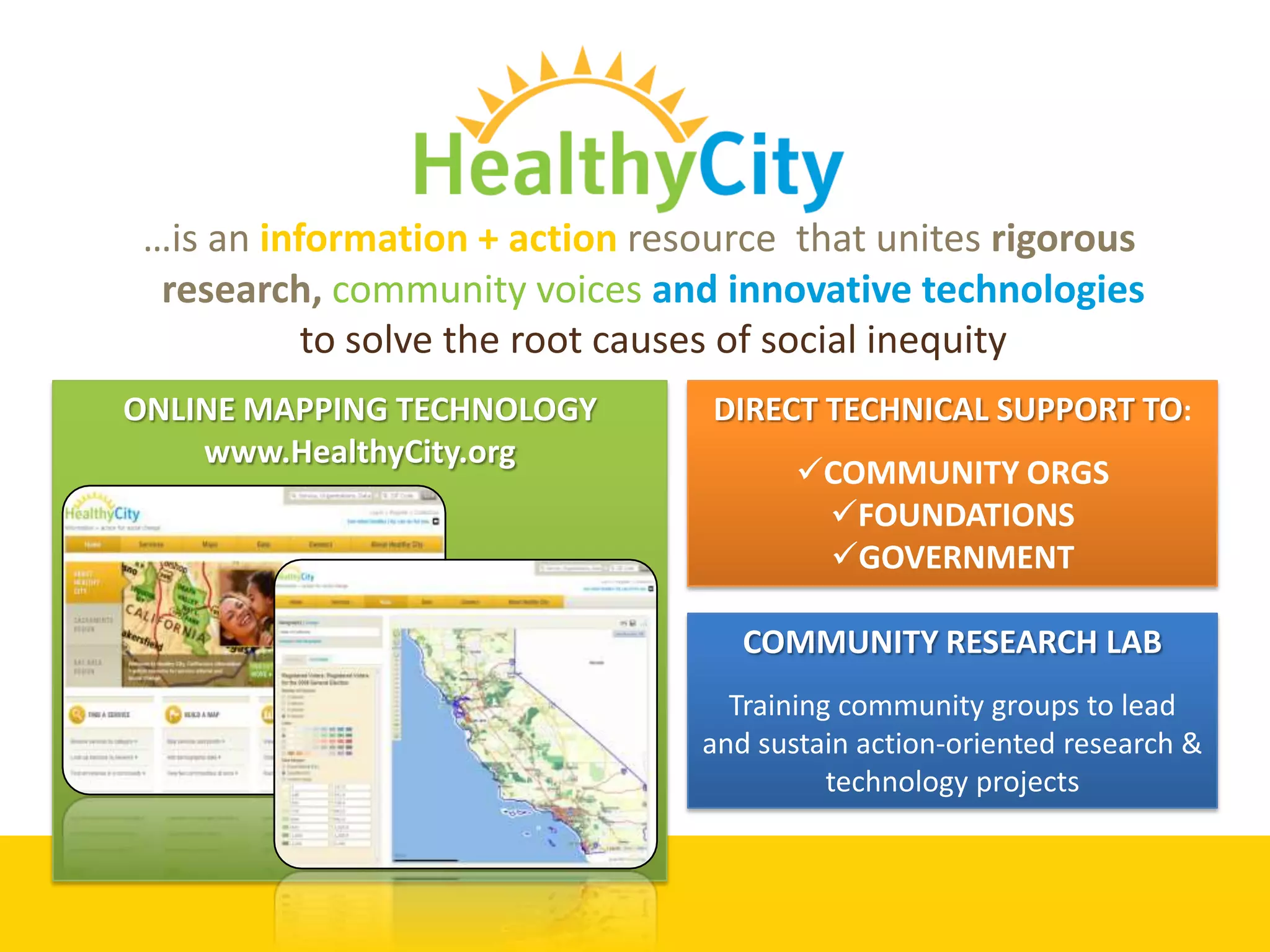
DIRECT TECHNICAL SUPPORT TO:COMMUNITY ORGS
FOUNDATIONS
GOVERNMENTONLINE MAPPING TECHNOLOGYwww.HealthyCity.orgCOMMUNITY RESEARCH LABTraining community groups to lead and sustain action-oriented research & technology projects  …is an information + action resource  that unites rigorous research, community voices and innovative technologiesto solve the root causes of social inequity
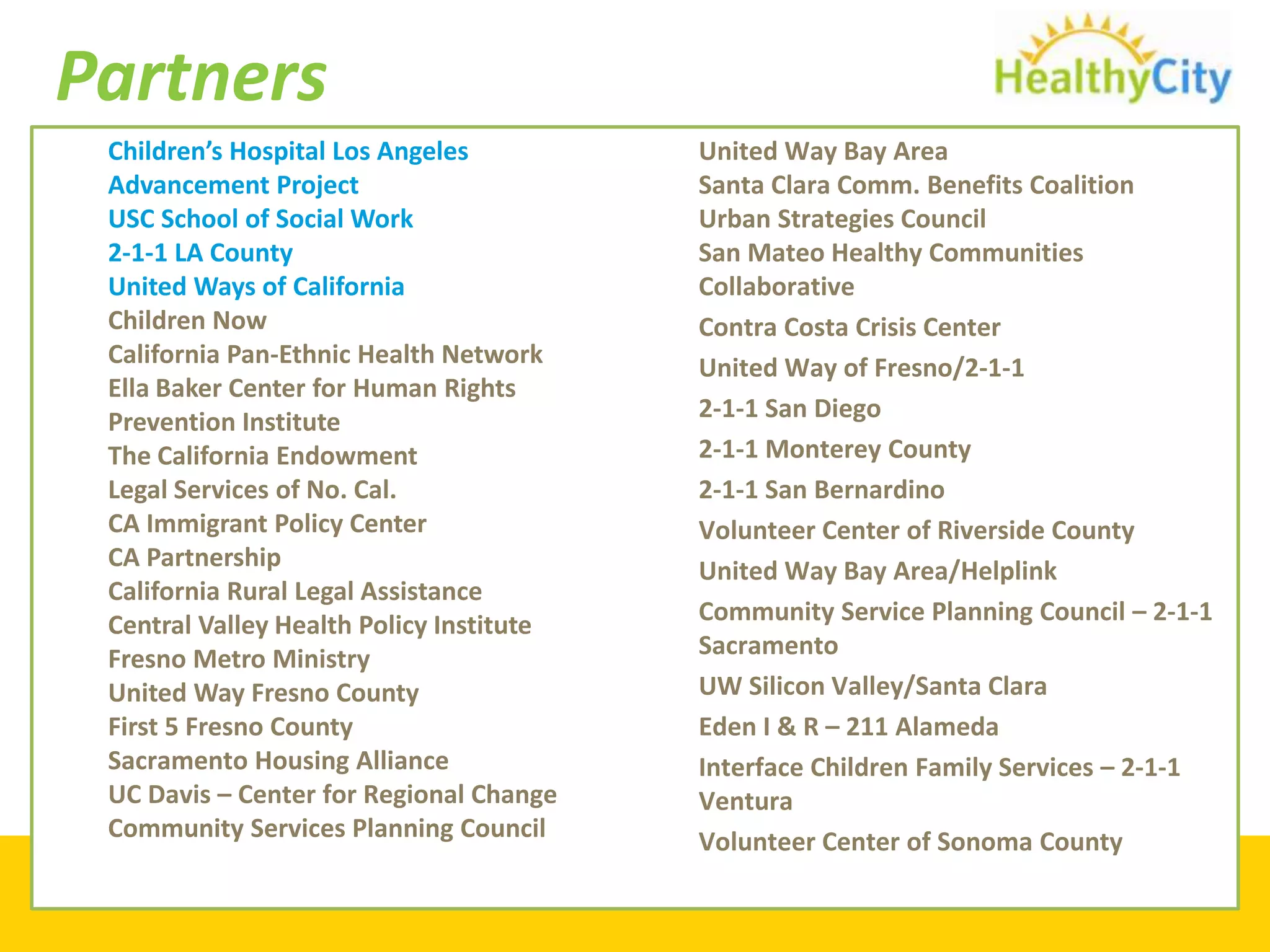
PartnersChildren’s Hospital Los AngelesAdvancement ProjectUSC School of Social Work 2-1-1 LA CountyUnited Ways of CaliforniaChildren NowCalifornia Pan-Ethnic Health NetworkElla Baker Center for Human RightsPrevention InstituteThe California EndowmentLegal Services of No. Cal.CA Immigrant Policy CenterCA PartnershipCalifornia Rural Legal AssistanceCentral Valley Health Policy InstituteFresno Metro MinistryUnited Way Fresno CountyFirst 5 Fresno CountySacramento Housing AllianceUC Davis – Center for Regional ChangeCommunity Services Planning CouncilUnited Way Bay AreaSanta Clara Comm. Benefits CoalitionUrban Strategies CouncilSan Mateo Healthy Communities CollaborativeContra Costa Crisis CenterUnited Way of Fresno/2-1-12-1-1 San Diego2-1-1 Monterey County2-1-1 San BernardinoVolunteer Center of Riverside CountyUnited Way Bay Area/HelplinkCommunity Service Planning Council – 2-1-1 SacramentoUW Silicon Valley/Santa Clara Eden I & R – 211 AlamedaInterface Children Family Services – 2-1-1 VenturaVolunteer Center of Sonoma County
Today you will learn how to:Get a snapshot of your community of interest by accessing relevant and current datasets that provide local economic, health, demographic, and other community information. Identify a community’s assets and opportunities for improvement by mapping existing assets and areas of need.Use the “Live Mapping” feature to conduct  community-engaged mapping, which can help you to gather qualitative, community-generated data from local stakeholders.
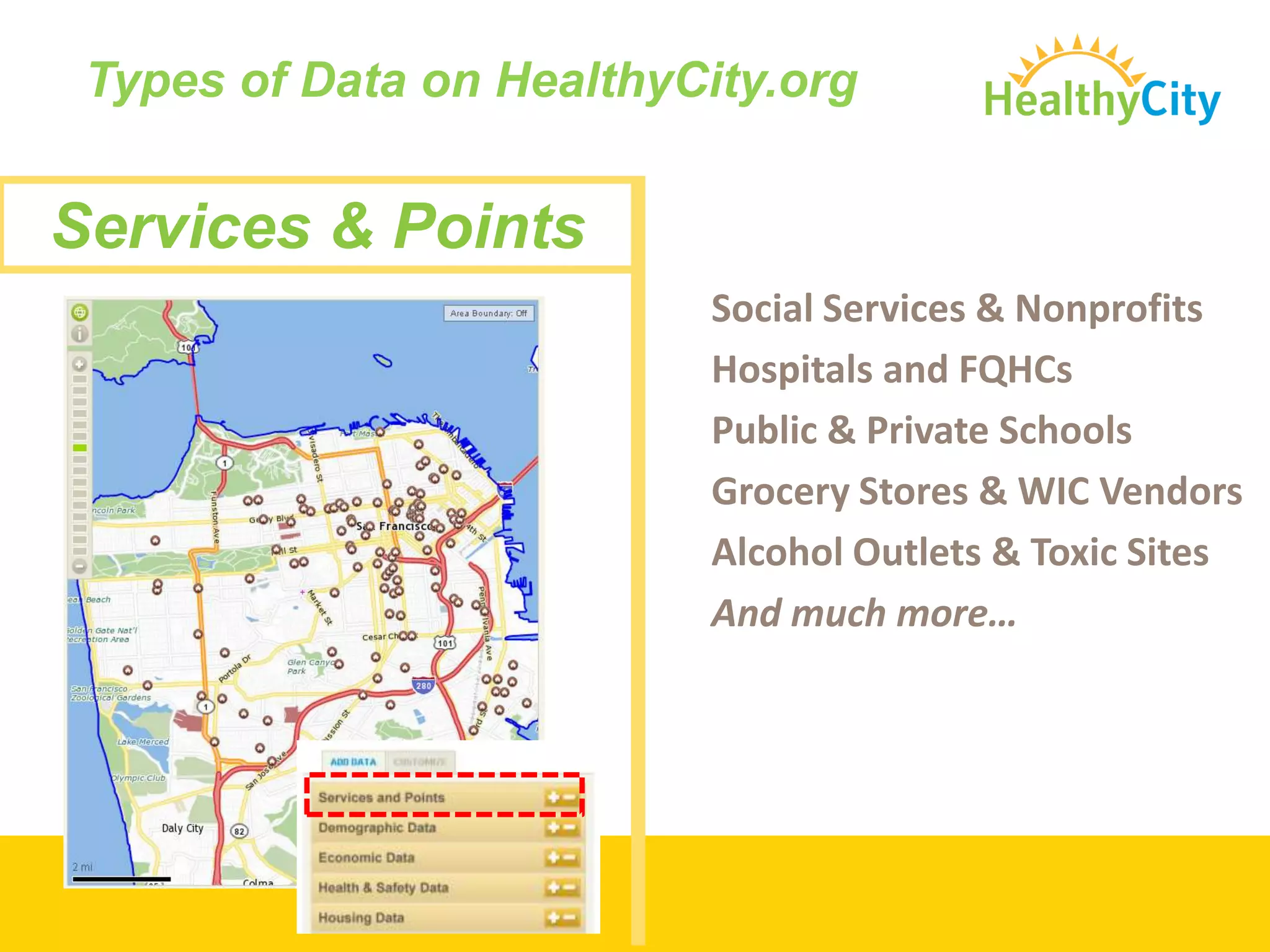
Types of Data on HealthyCity.orgServices & PointsSocial Services & NonprofitsHospitals and FQHCsPublic & Private SchoolsGrocery Stores & WIC VendorsAlcohol Outlets & Toxic SitesAnd much more…
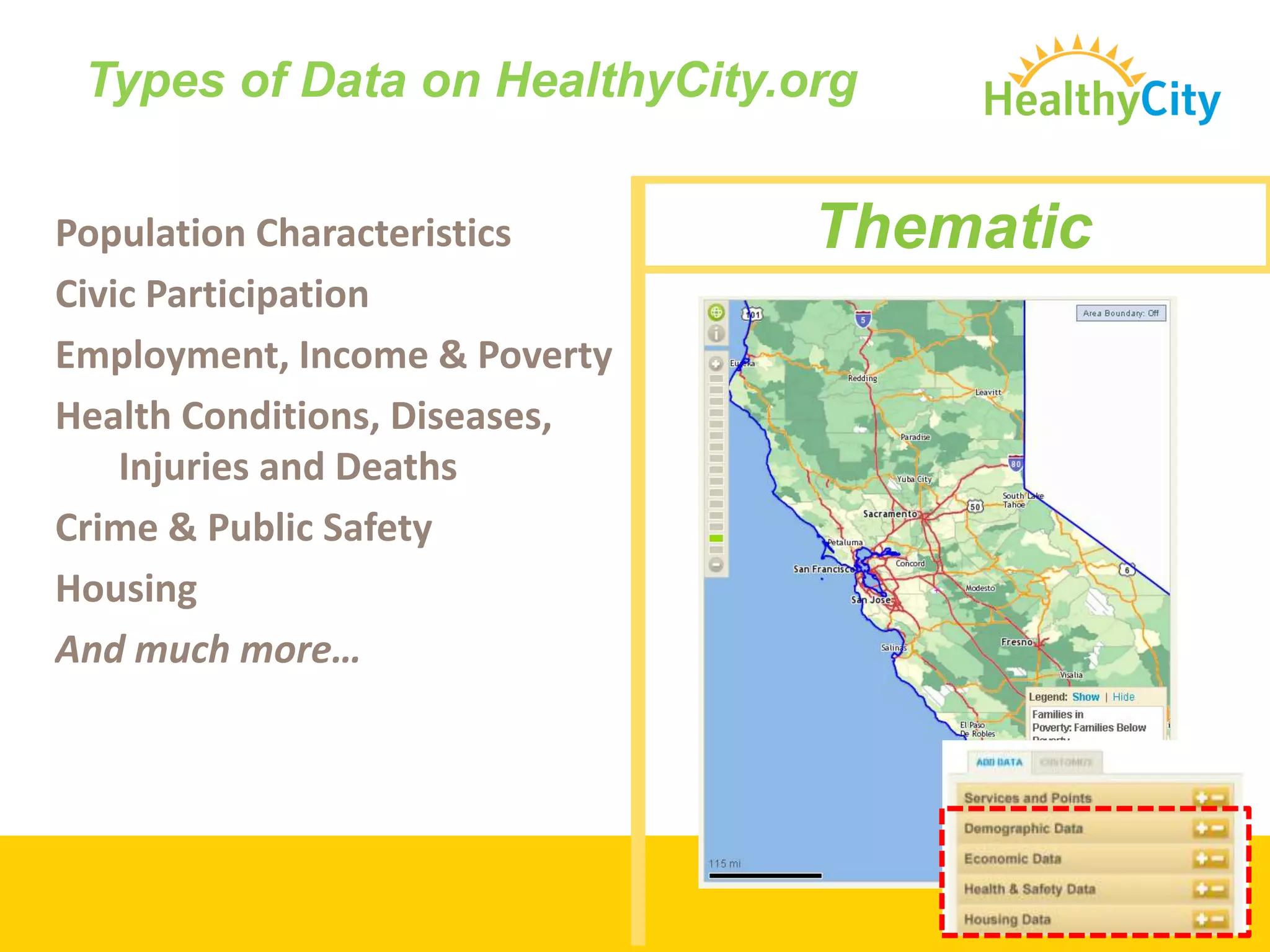
Types of Data on HealthyCity.orgThematicPopulation Characteristics  Civic ParticipationEmployment, Income & PovertyHealth Conditions, Diseases,  Injuries and DeathsCrime & Public SafetyHousingAnd much more…
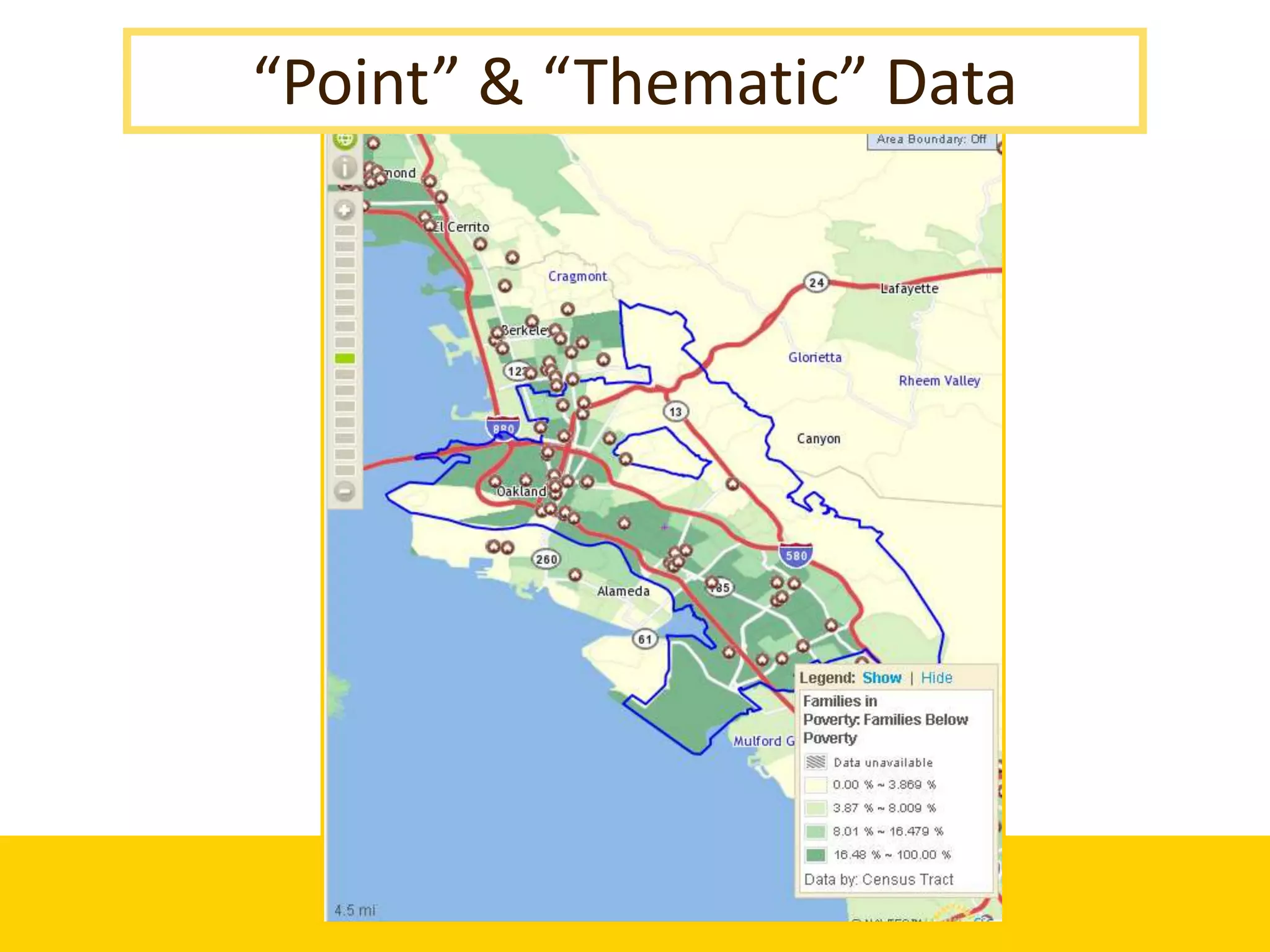
“Point” & “Thematic” Data
Question for ParticipantsWhat campaigns or projects are you working on that this webinar may help to inform?(Type it in the question section)
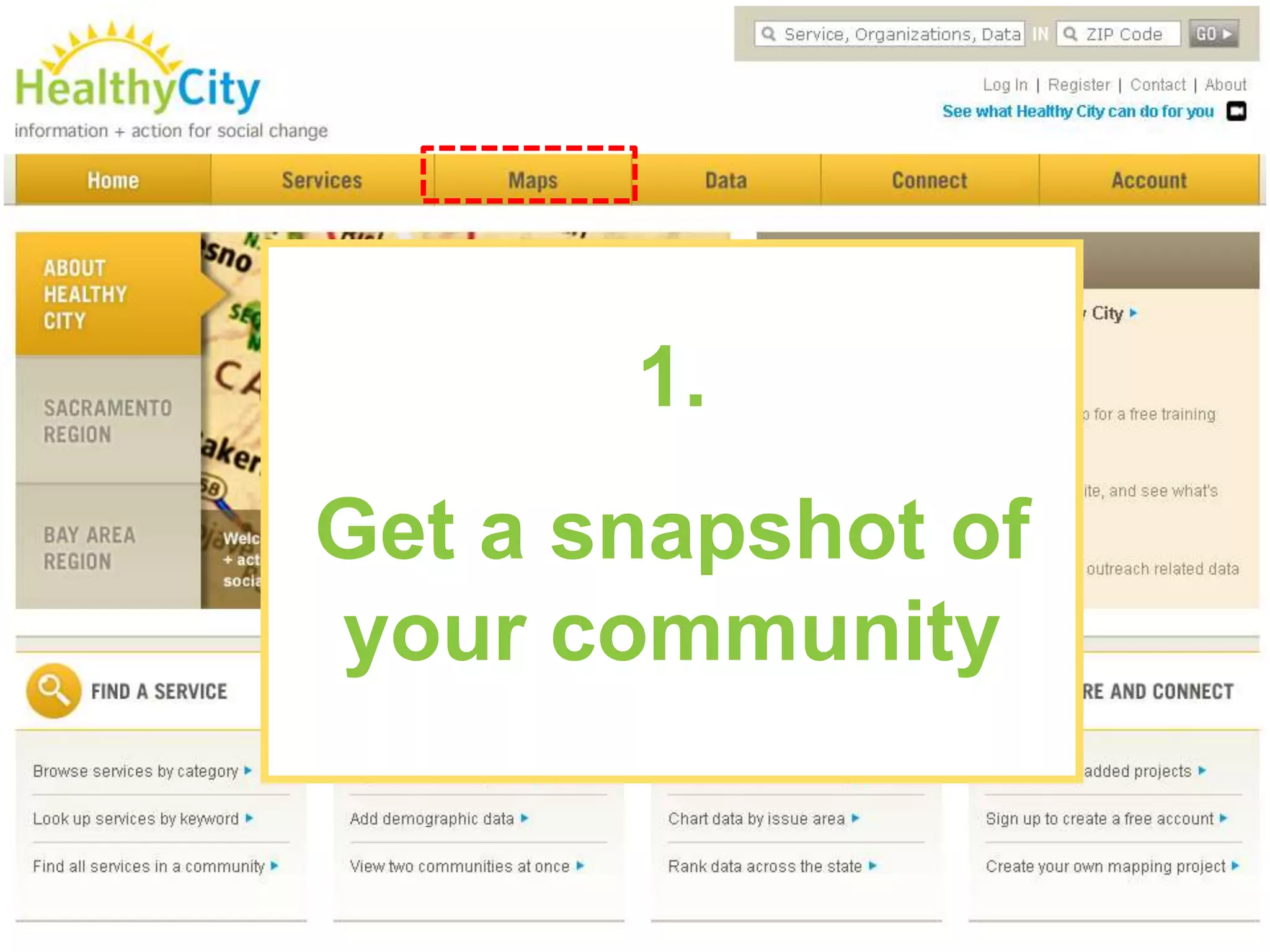
You can save and share anything you create while logged inGET STARTED!1. Get a snapshot of your community
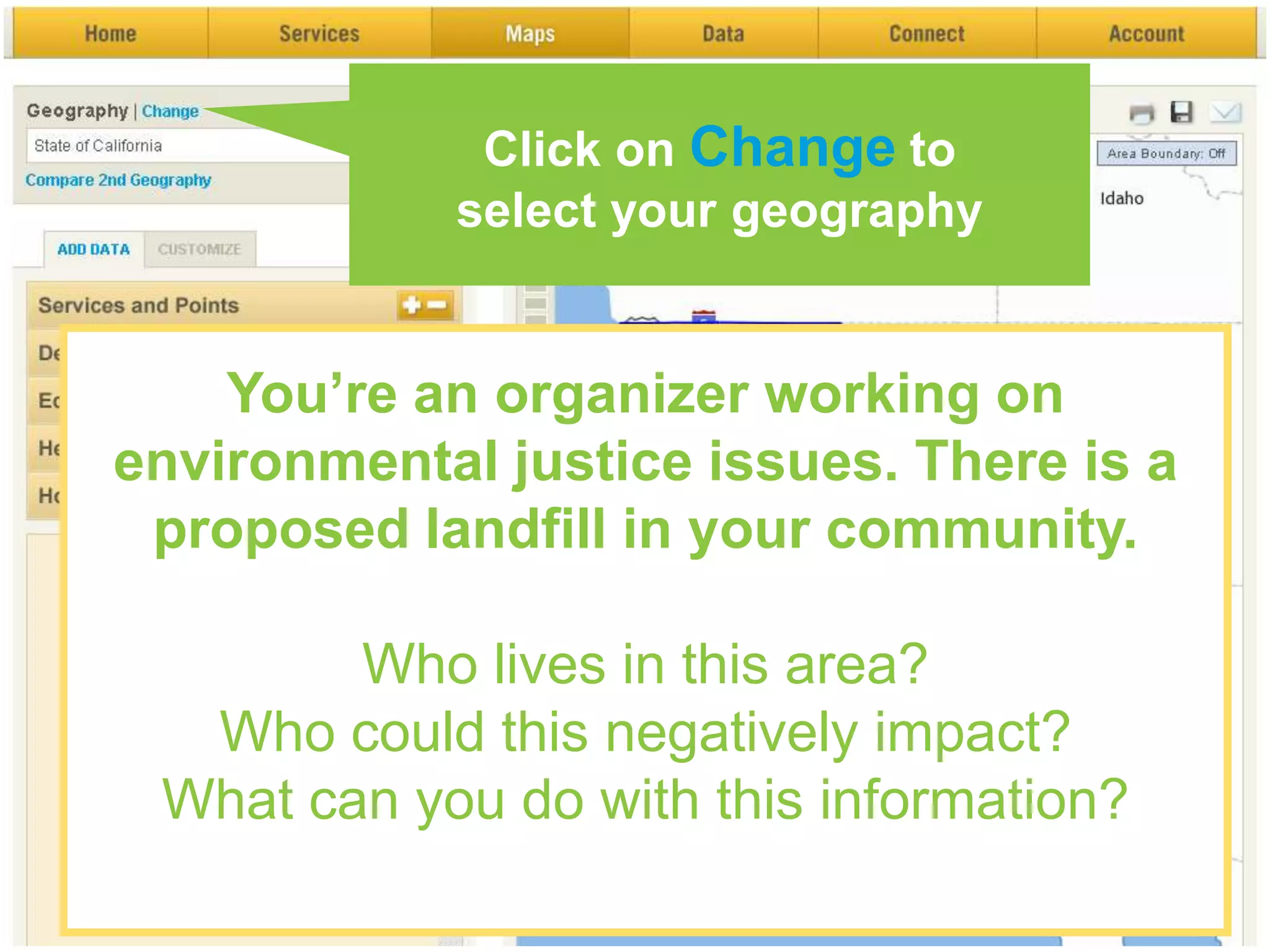
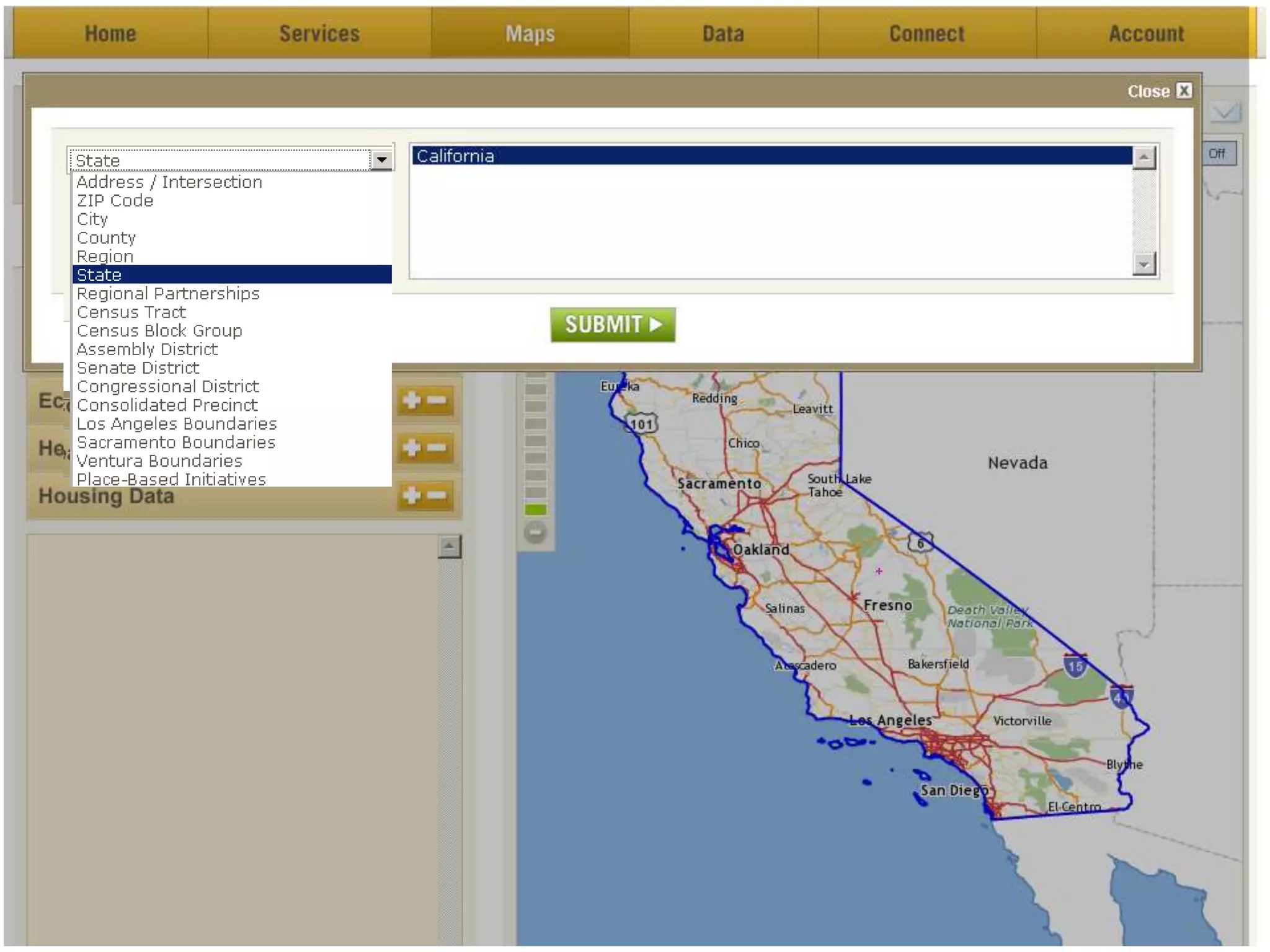
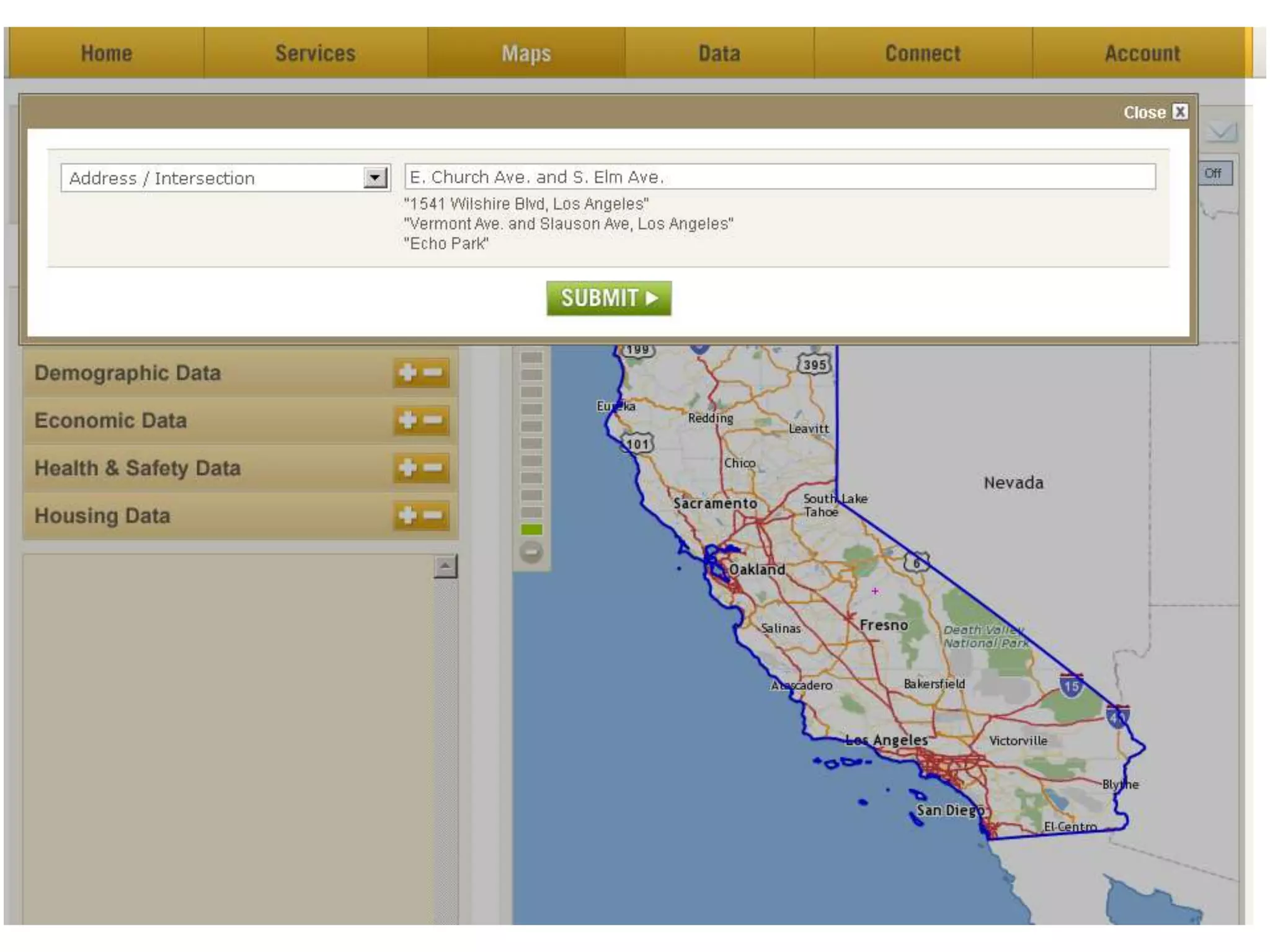
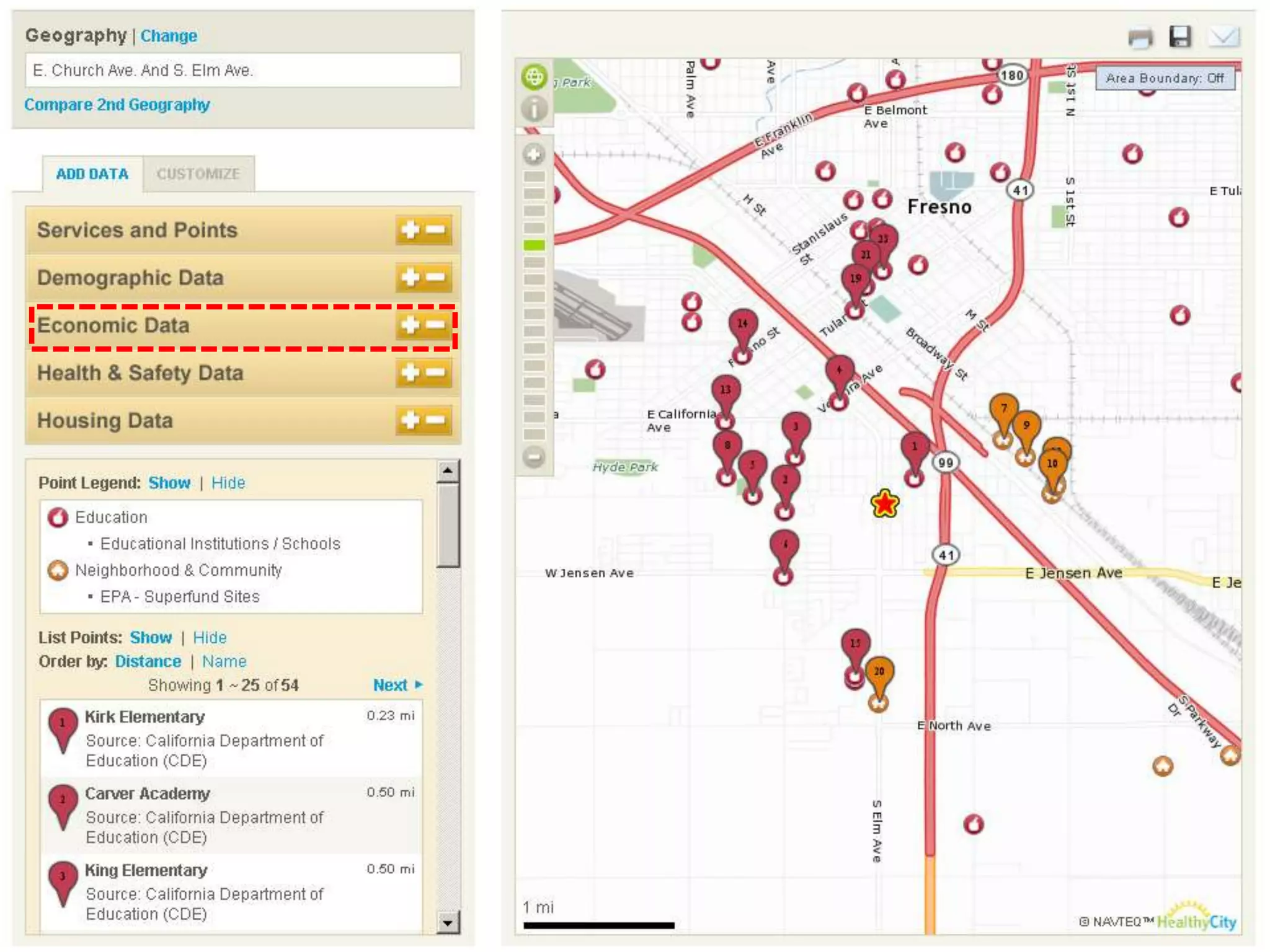
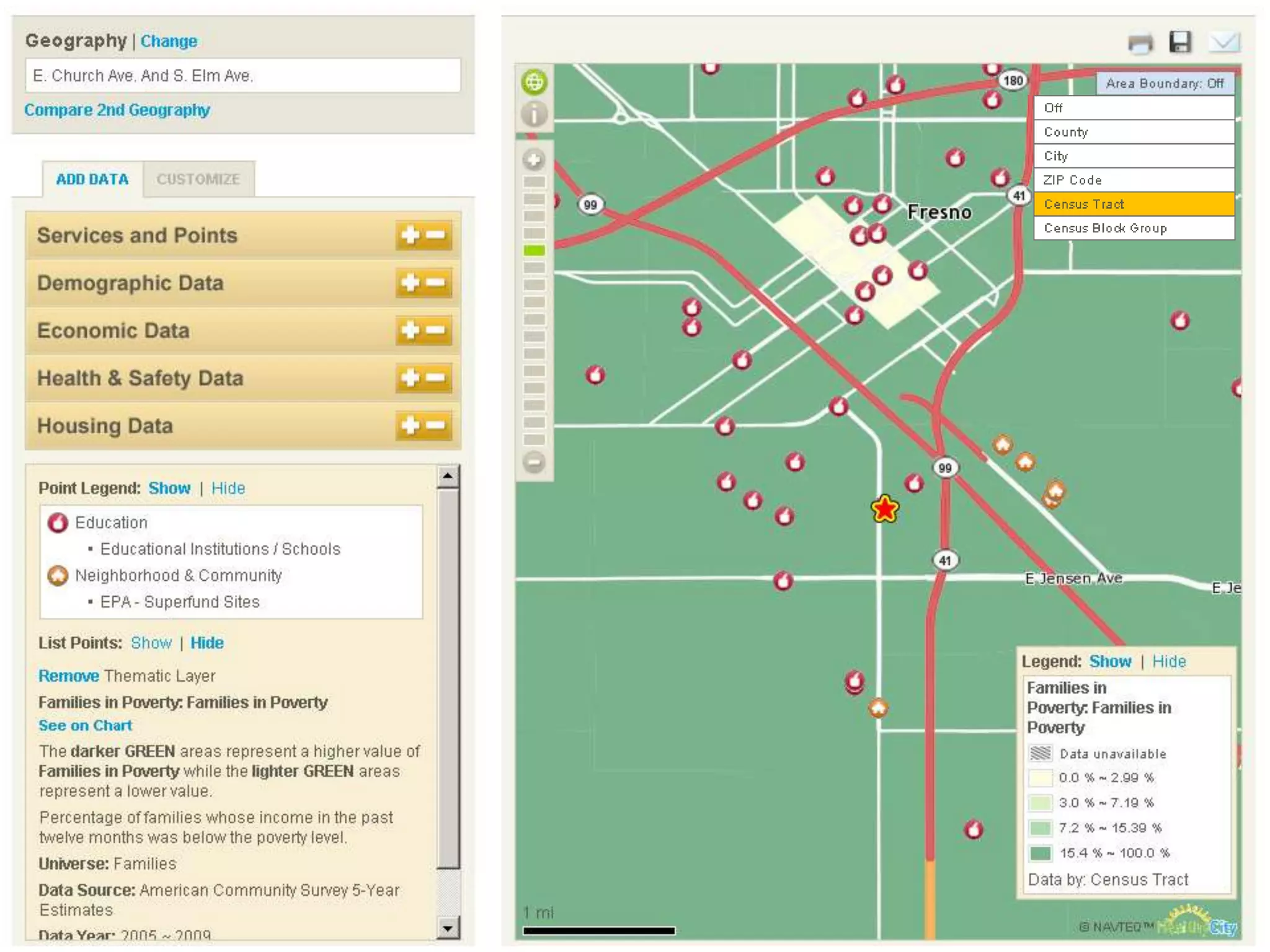
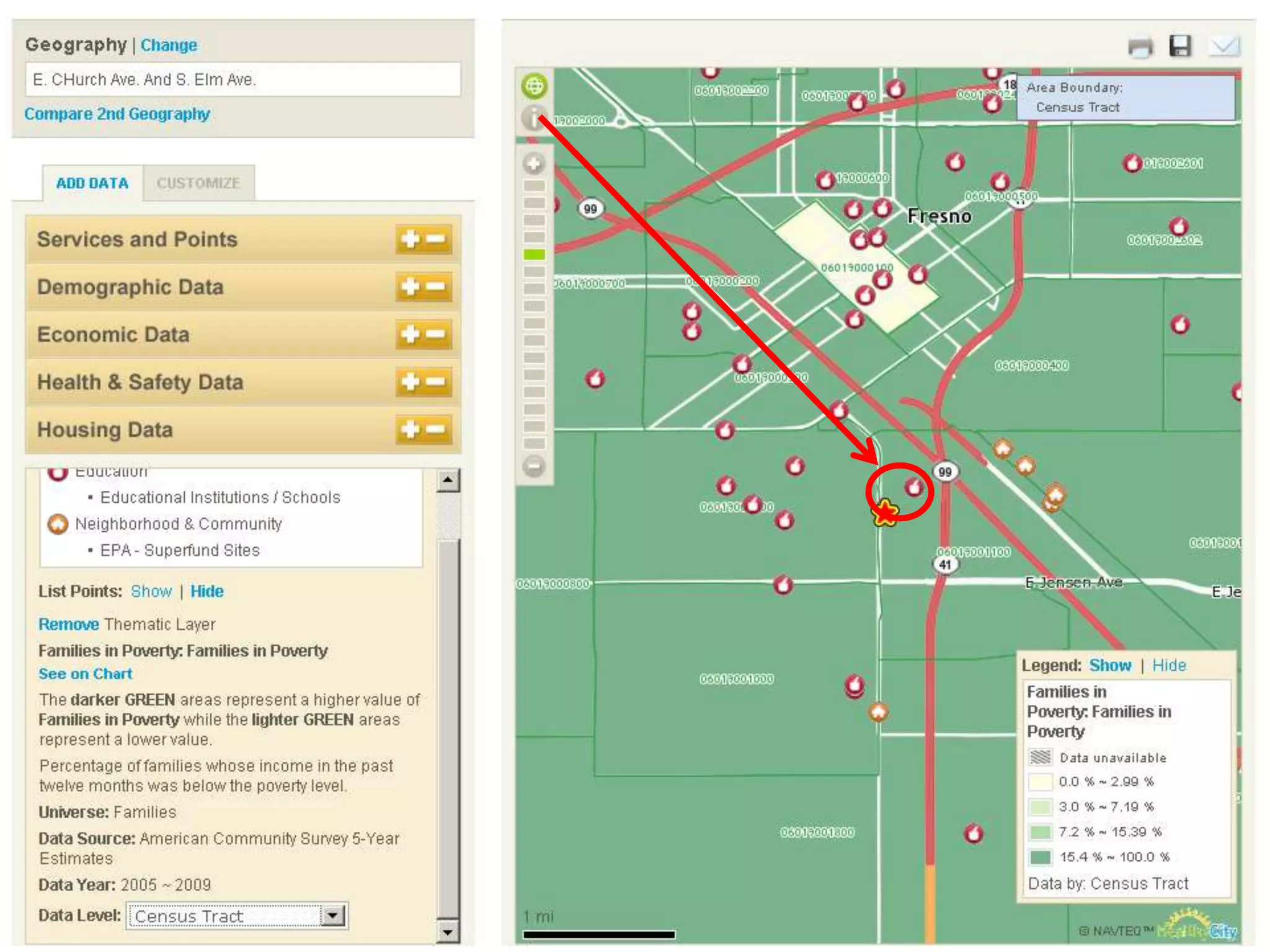
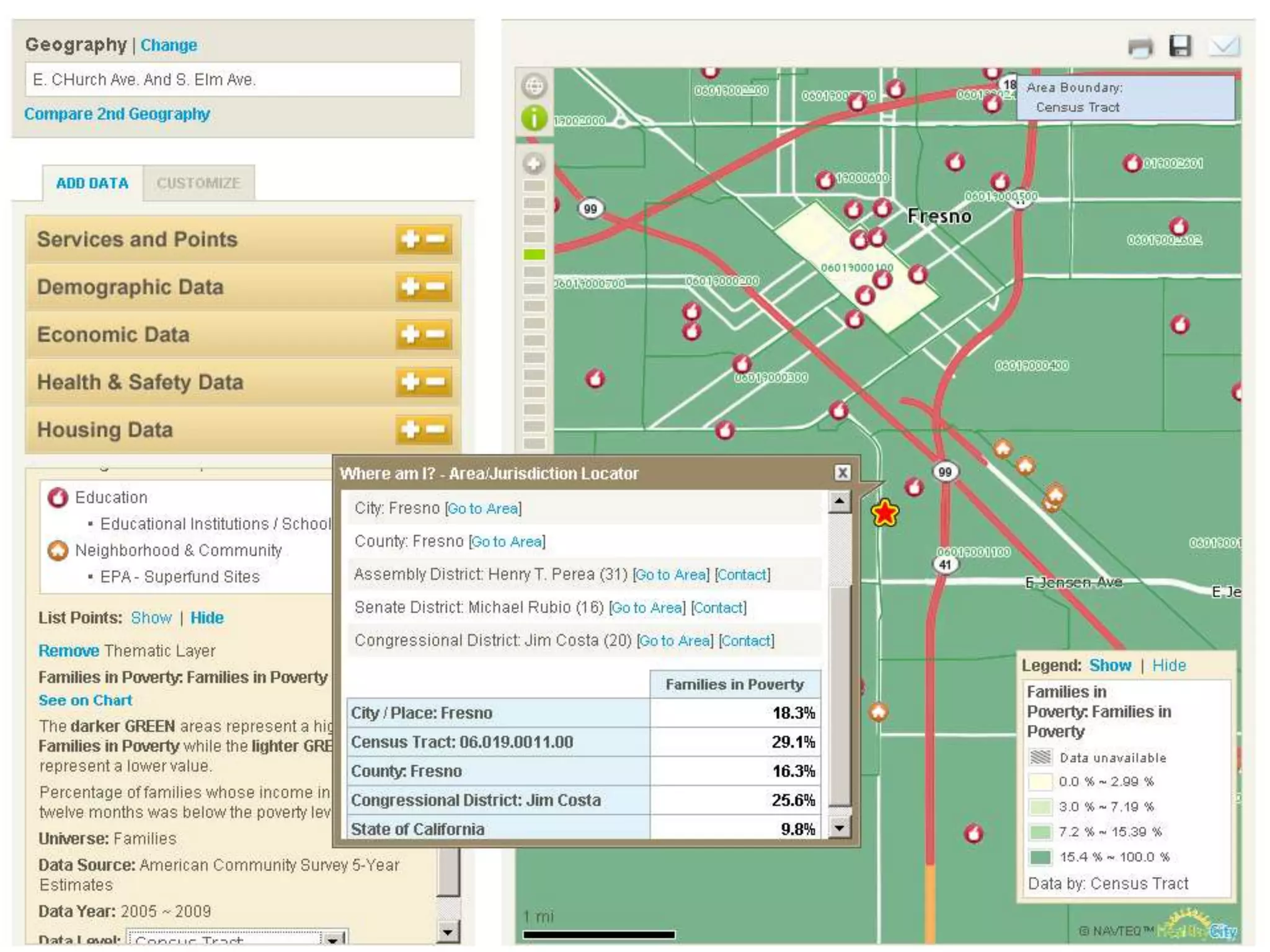
Click on Change to select your geographyYou’re an organizer working on environmental justice issues. There is a proposed landfill in your community. Who lives in this area? Who could this negatively impact?What can you do with this information?
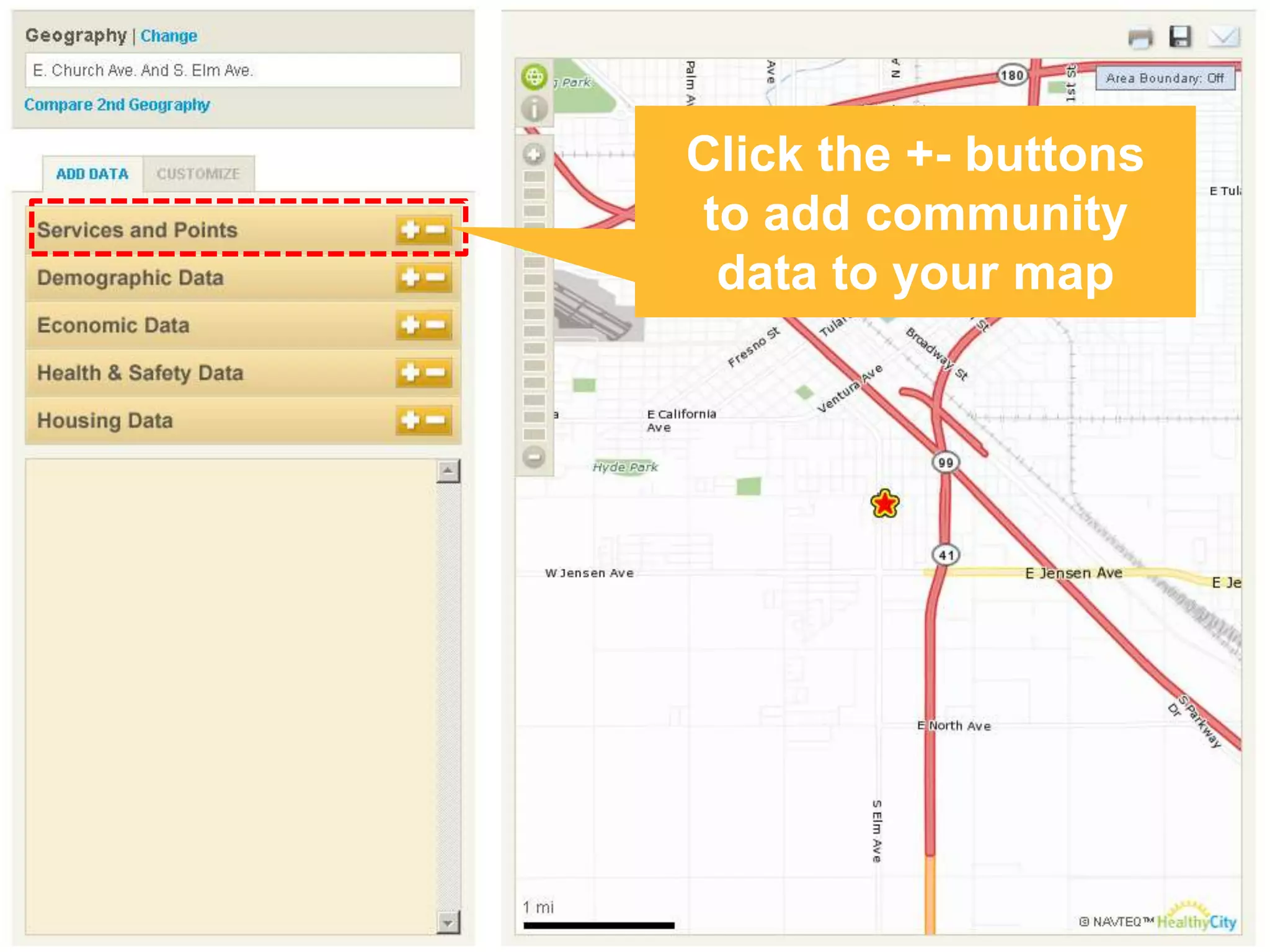
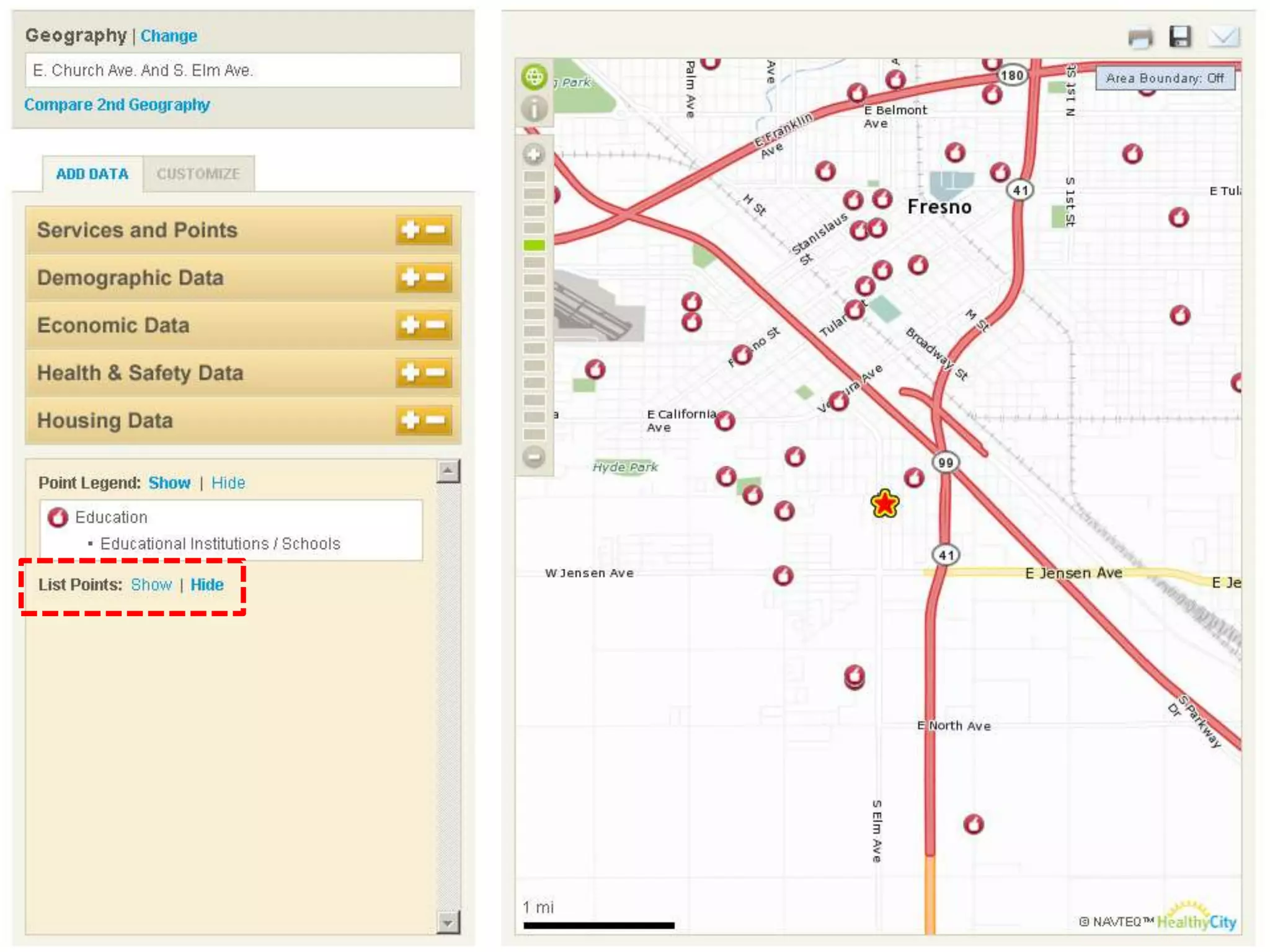
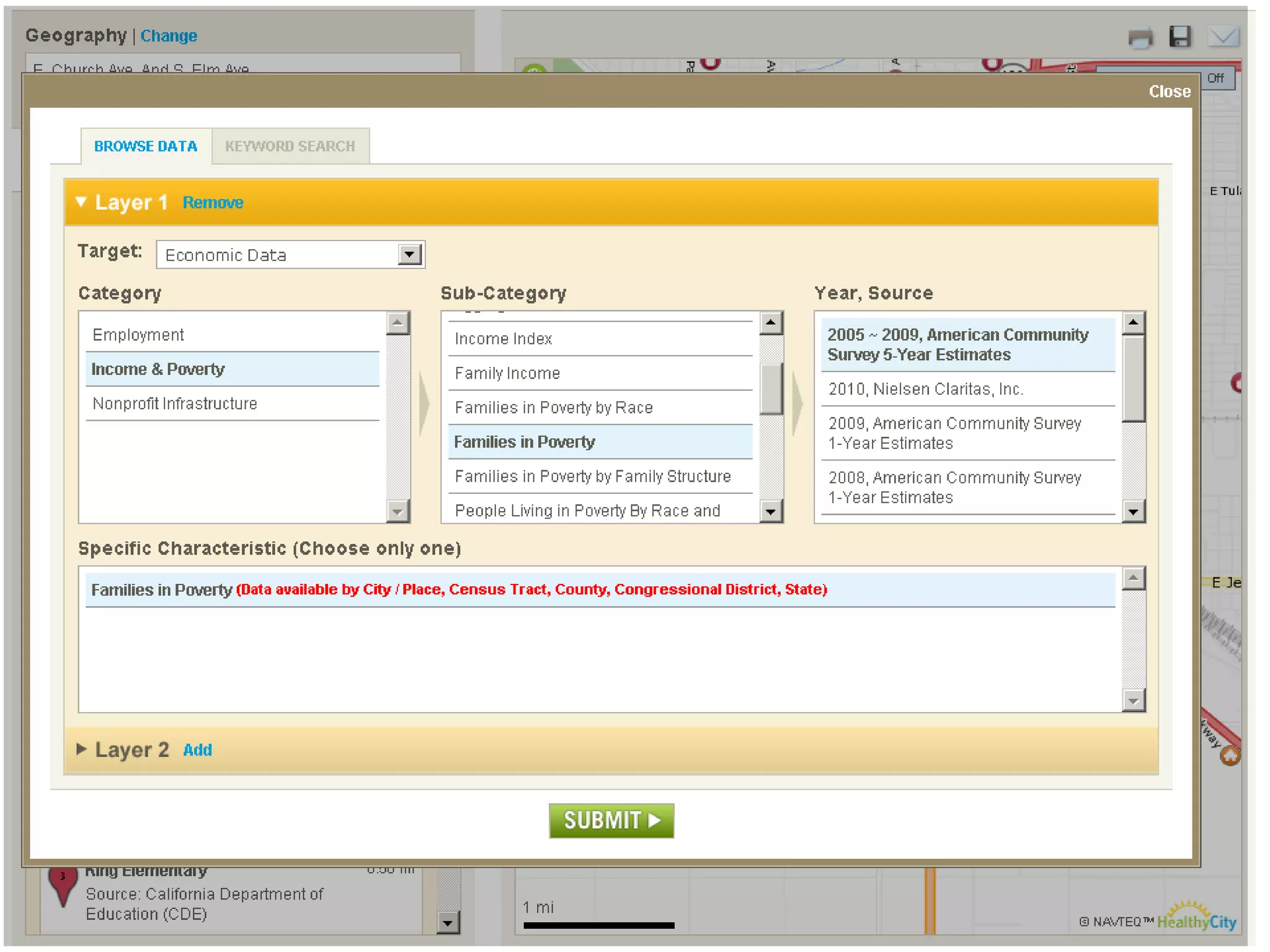
Click the +- buttons to add community data to your map
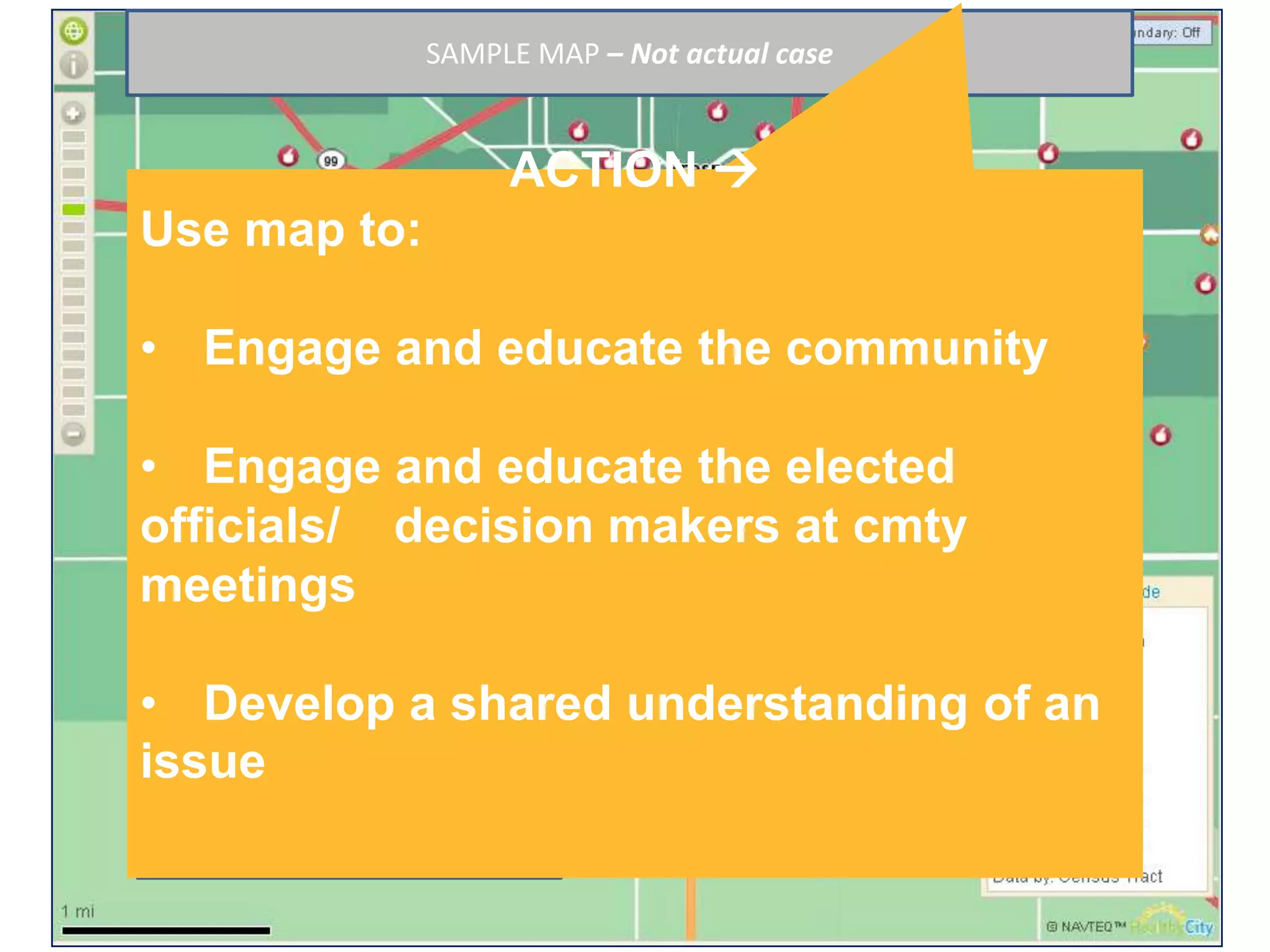
SAMPLE MAP – Not actual caseACTION  Use map to:Engage and educate the community
Engage and educate the elected officials/ 	decision makers at cmty meetings
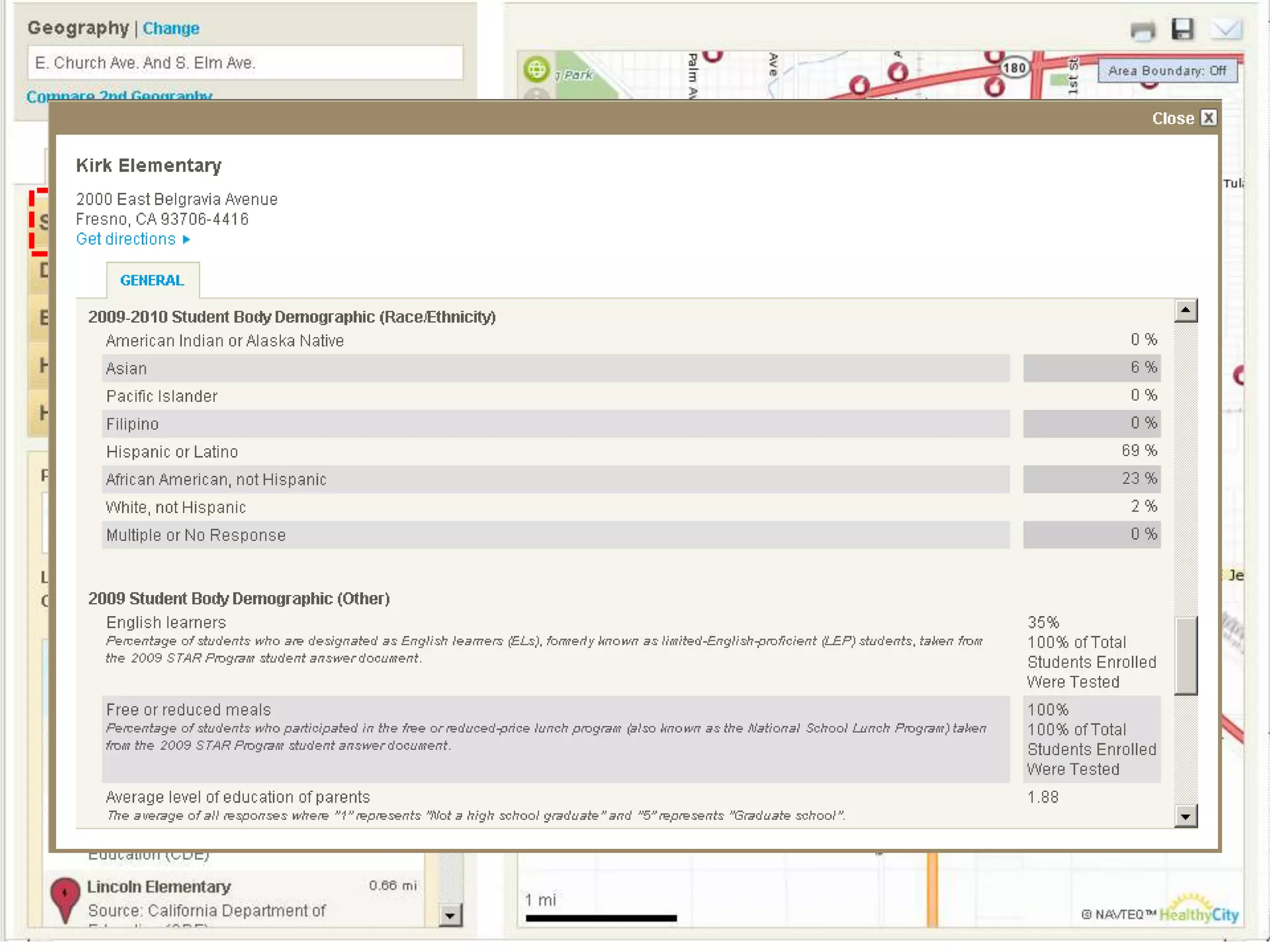
Develop a shared understanding of an issueProposed Landfill near Kirk Elementary & other schools
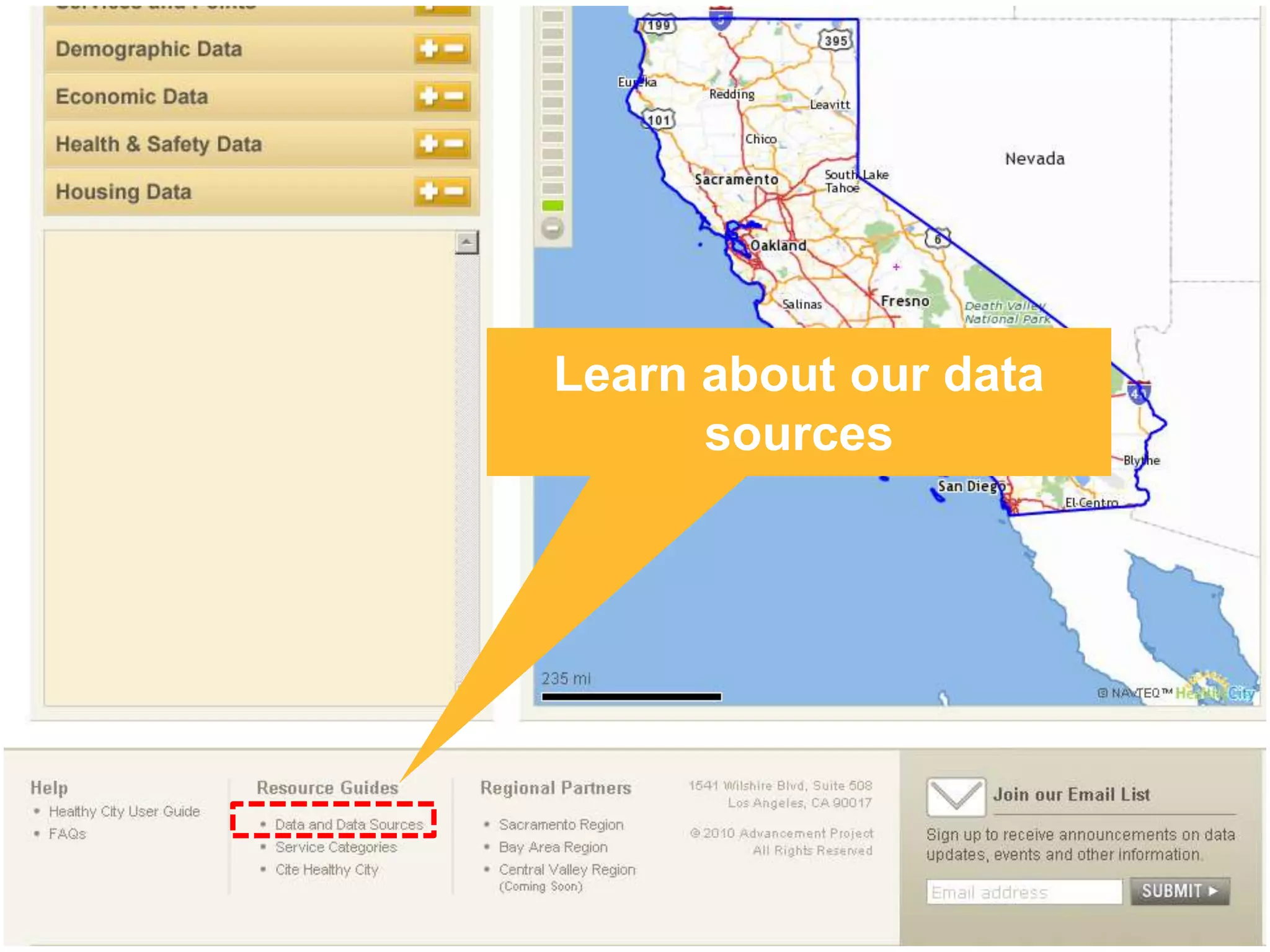
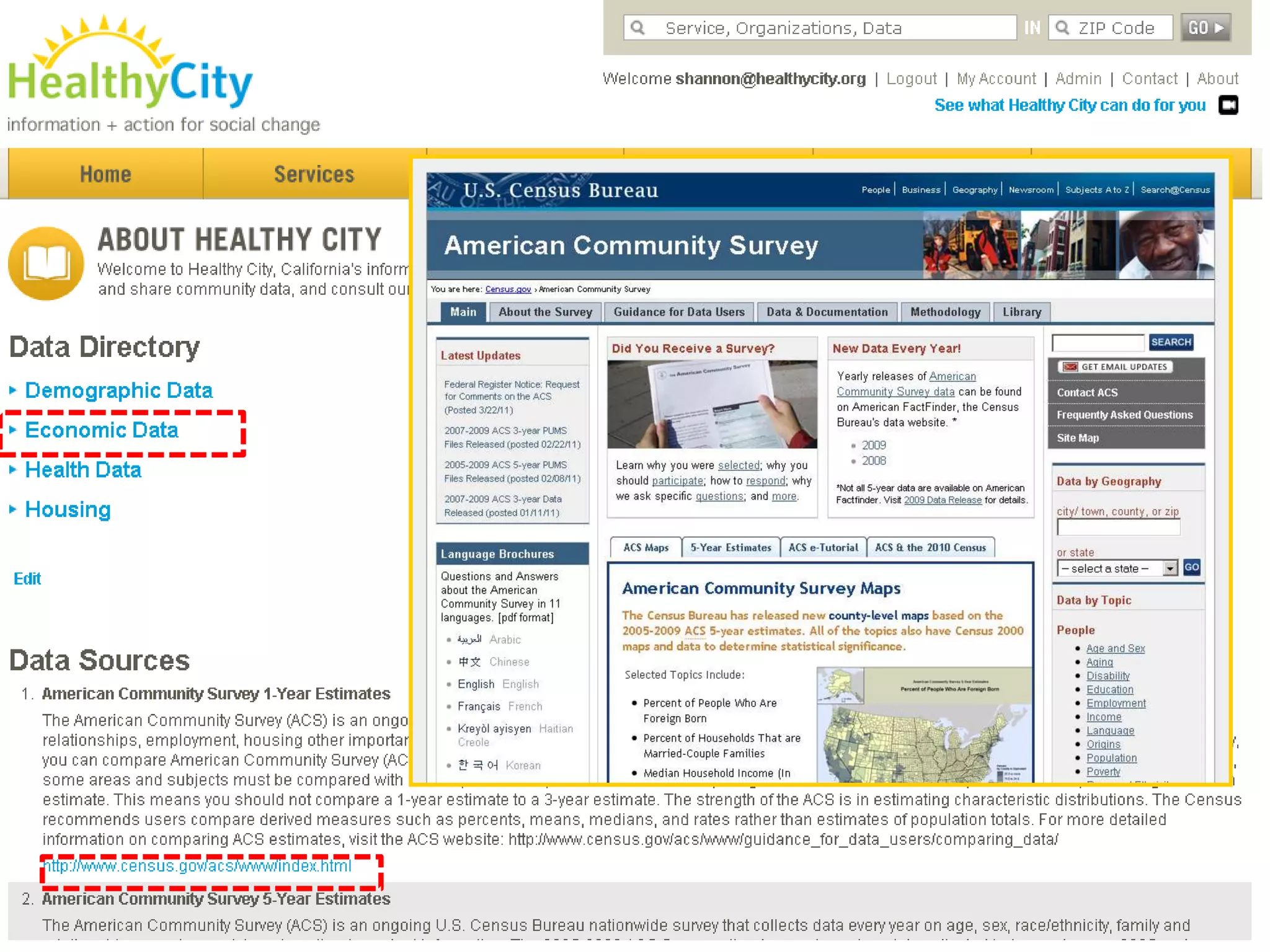
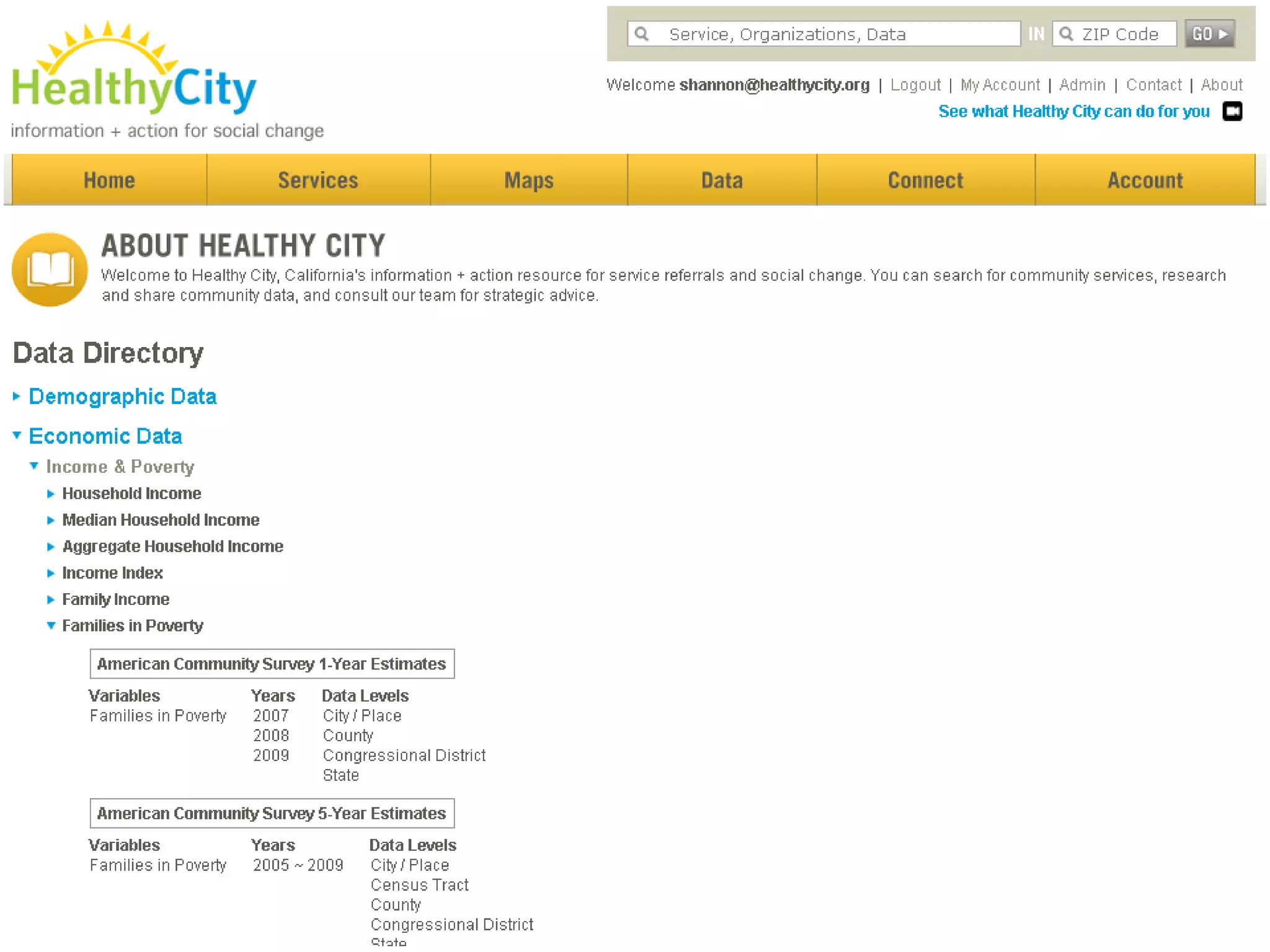
Learn about our data sources
Get a snapshot of your communityQuestions?
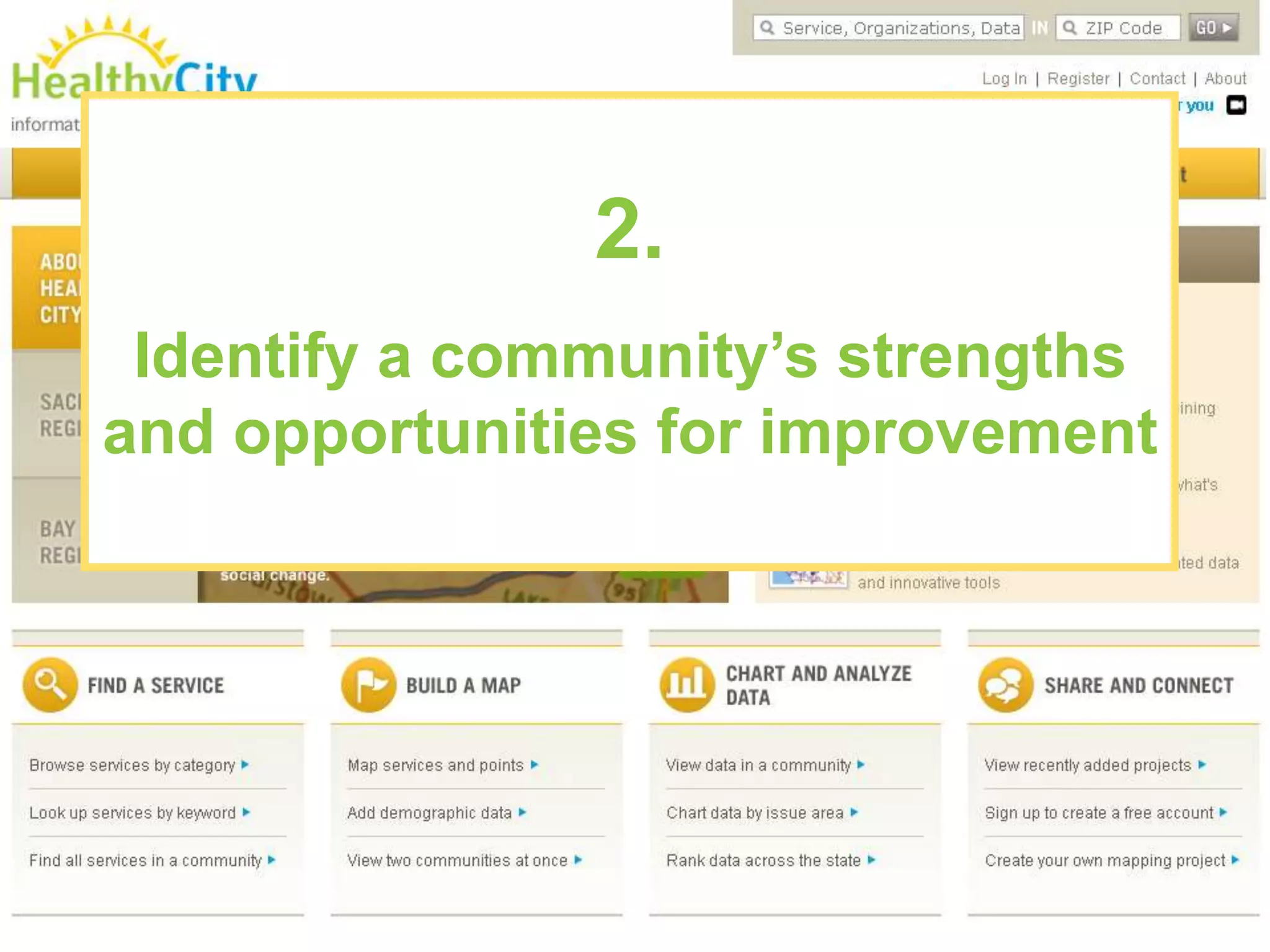
2.Identify a community’s assets and opportunities for improvement
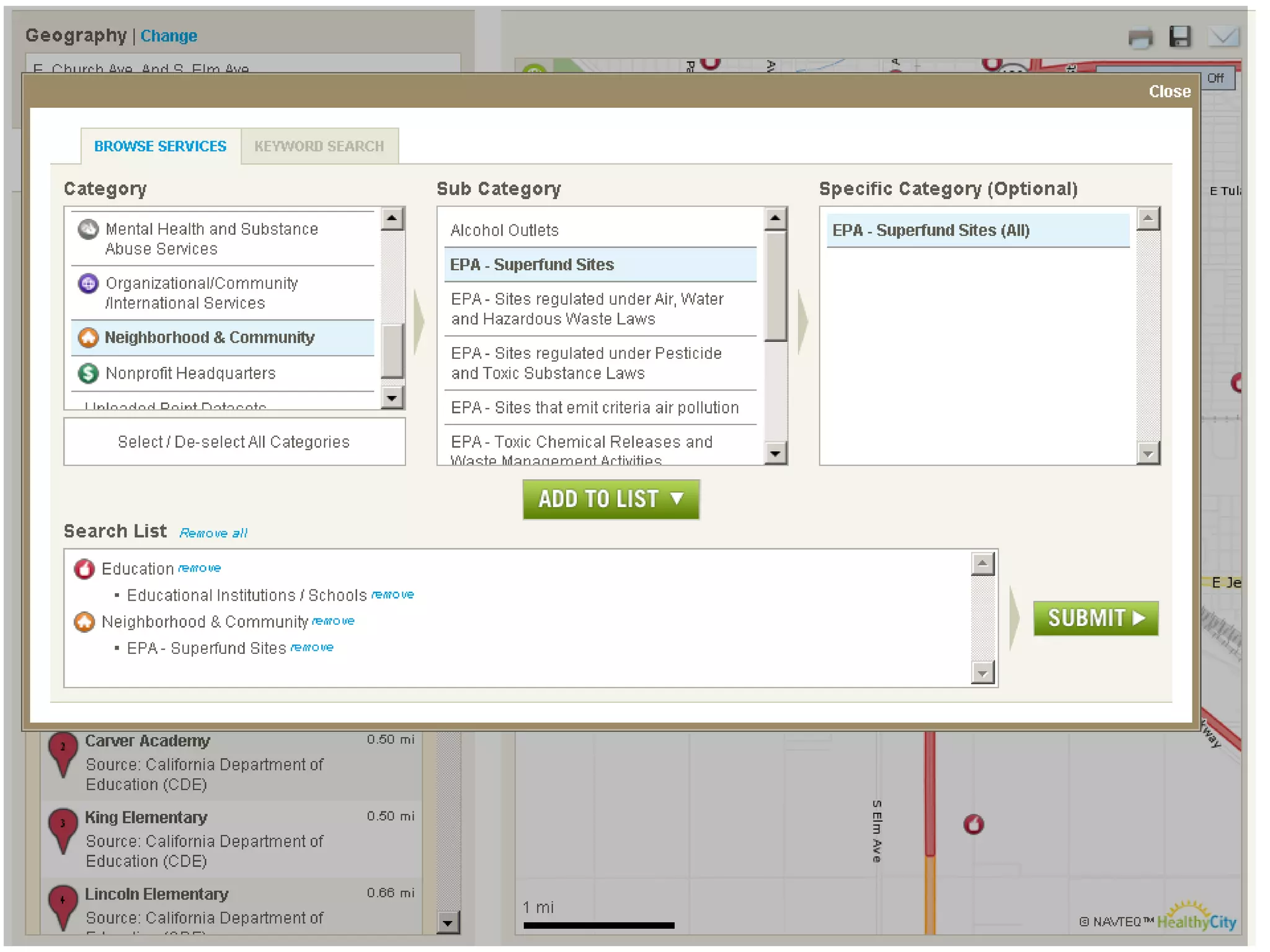
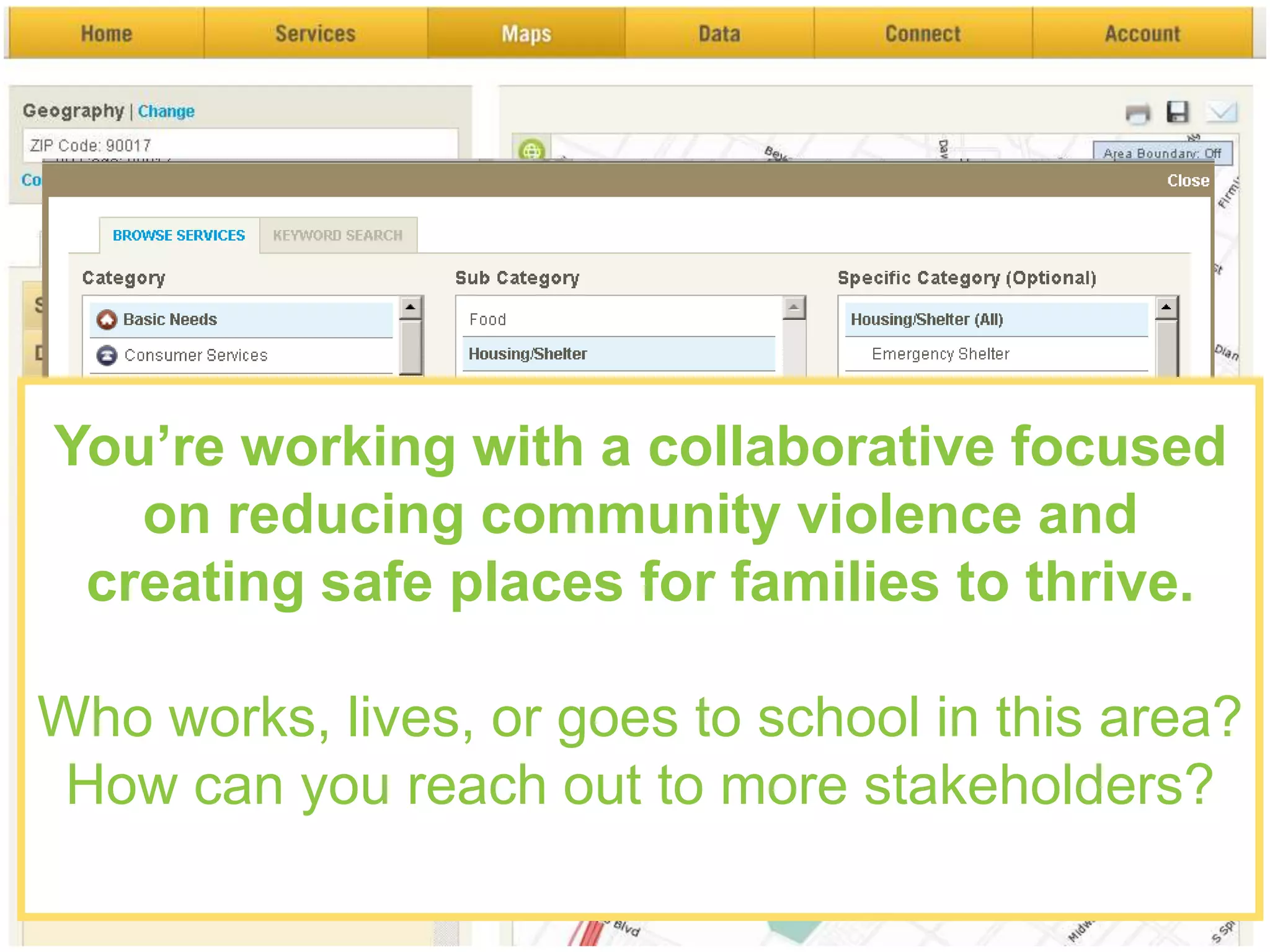
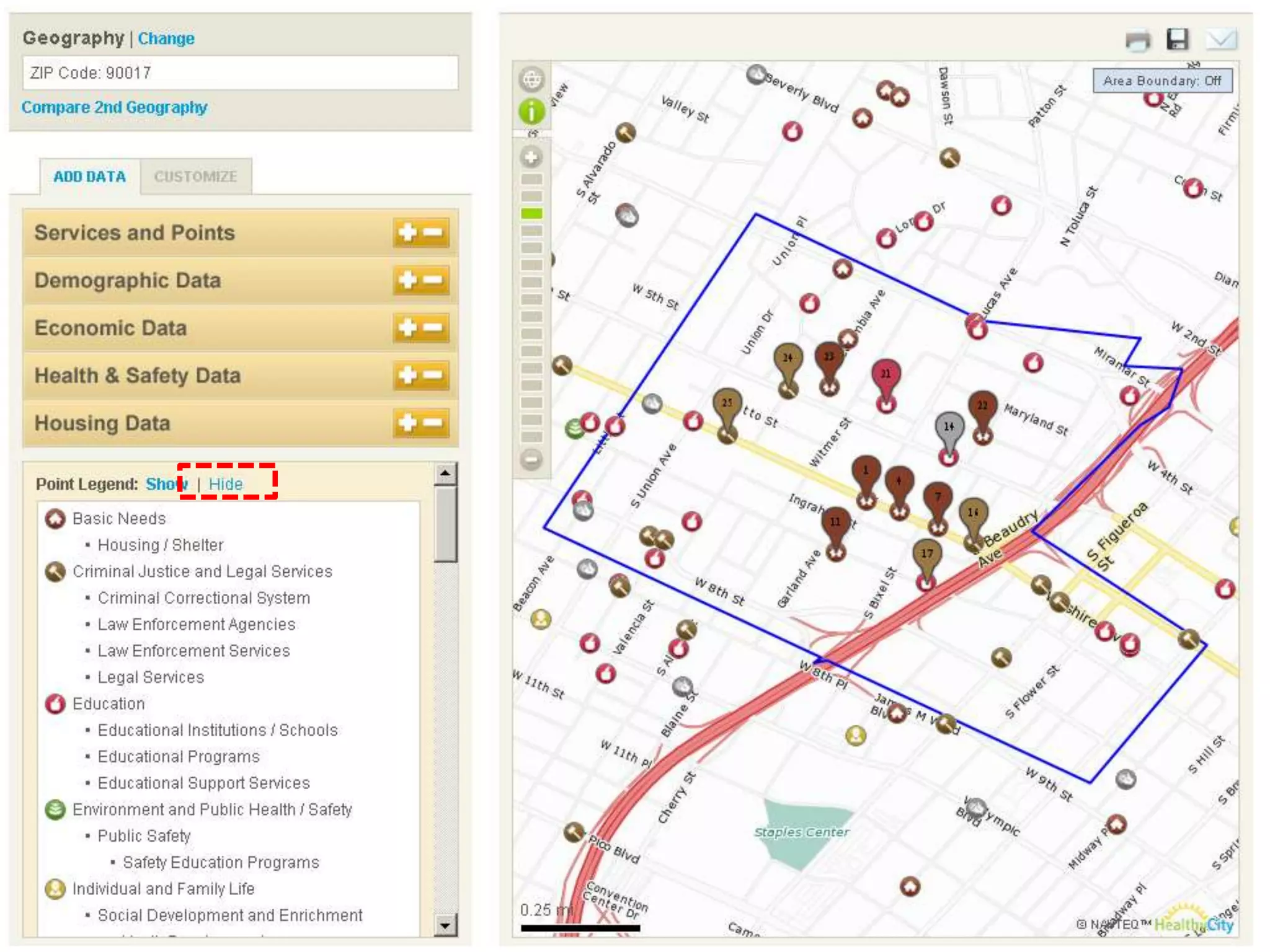
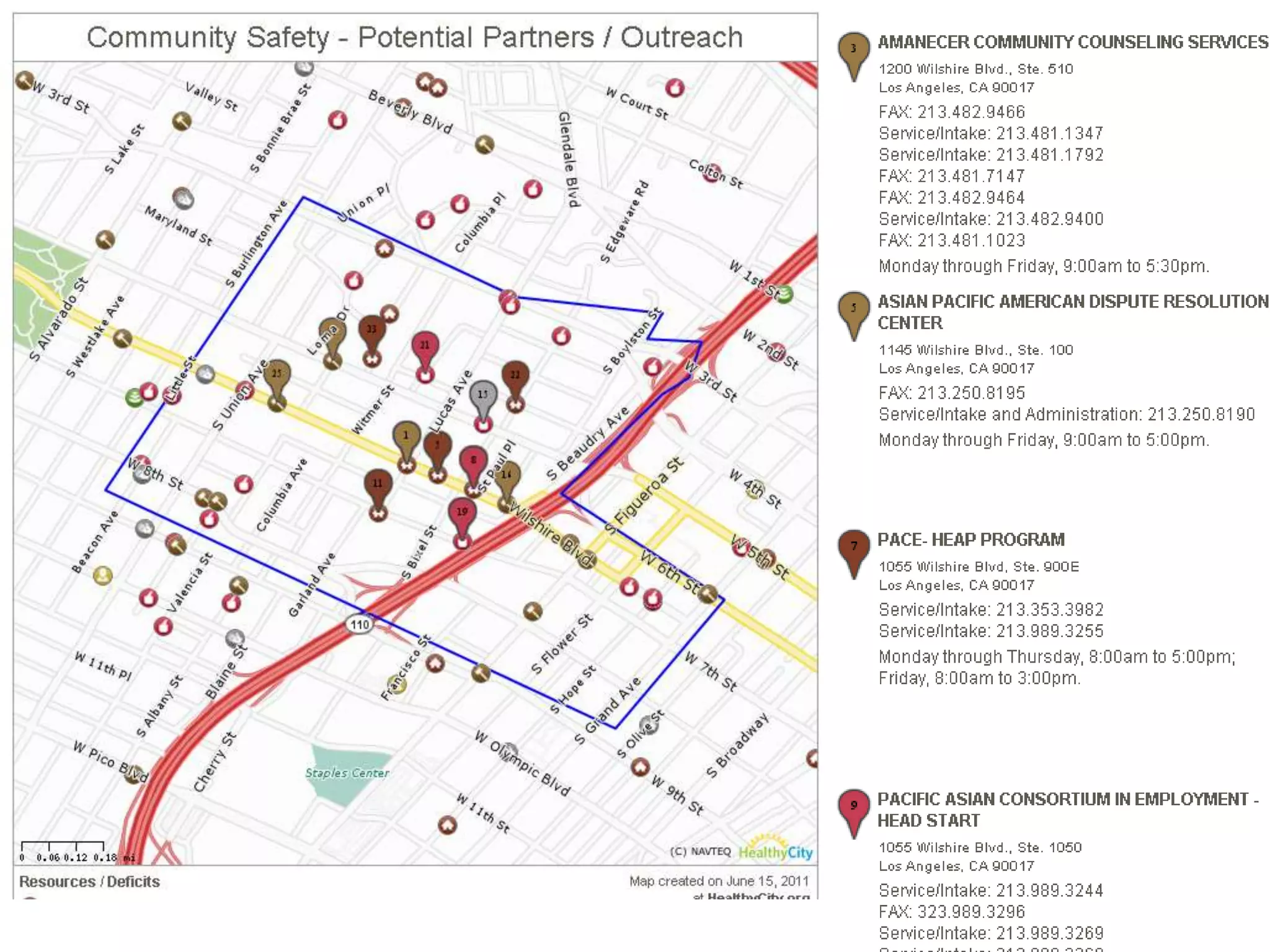
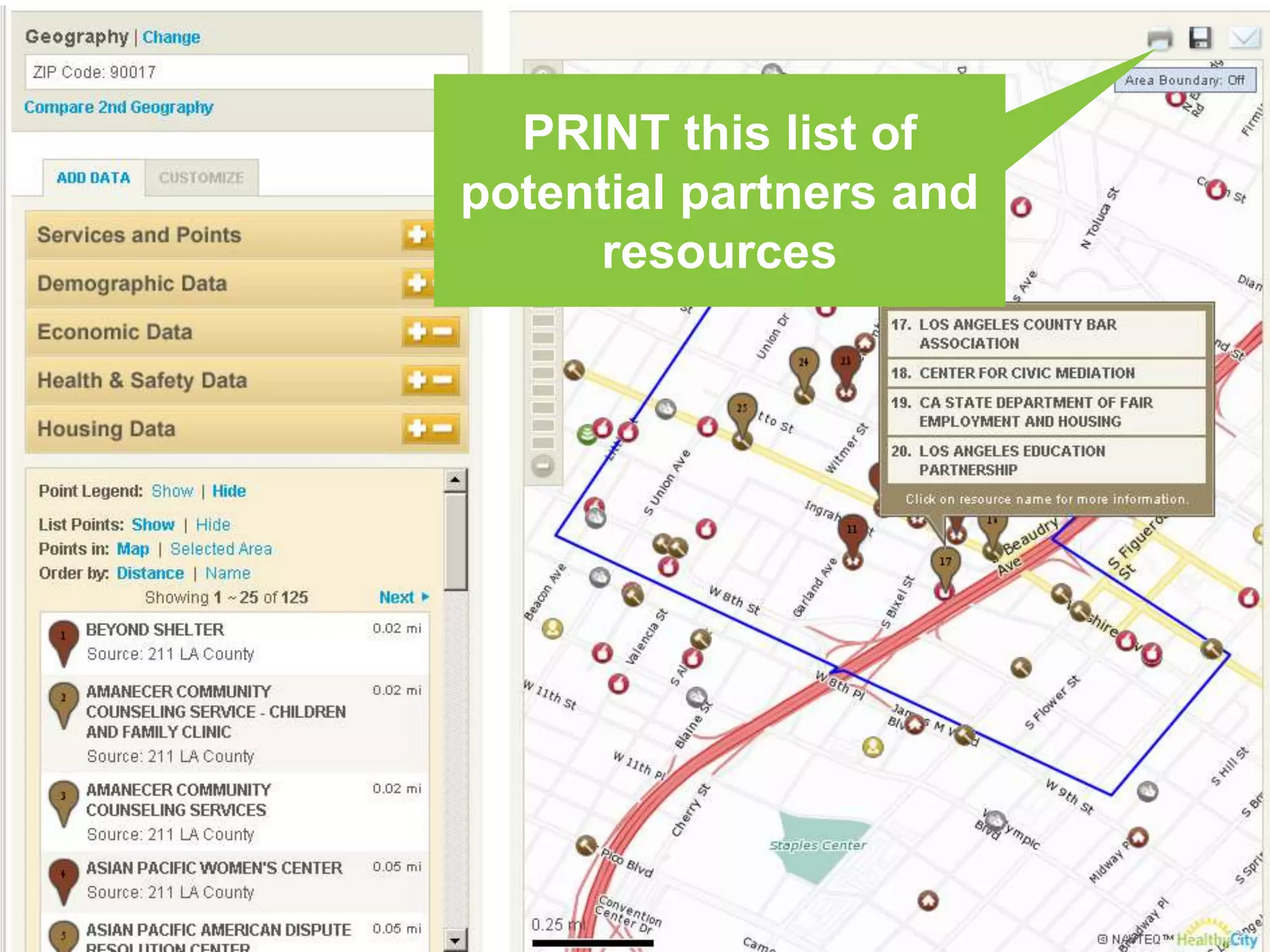
You’re working with a collaborative focused on reducing community violence and creating safe places for families to thrive. Who works, lives, or goes to school in this area?How can you reach out to more stakeholders?
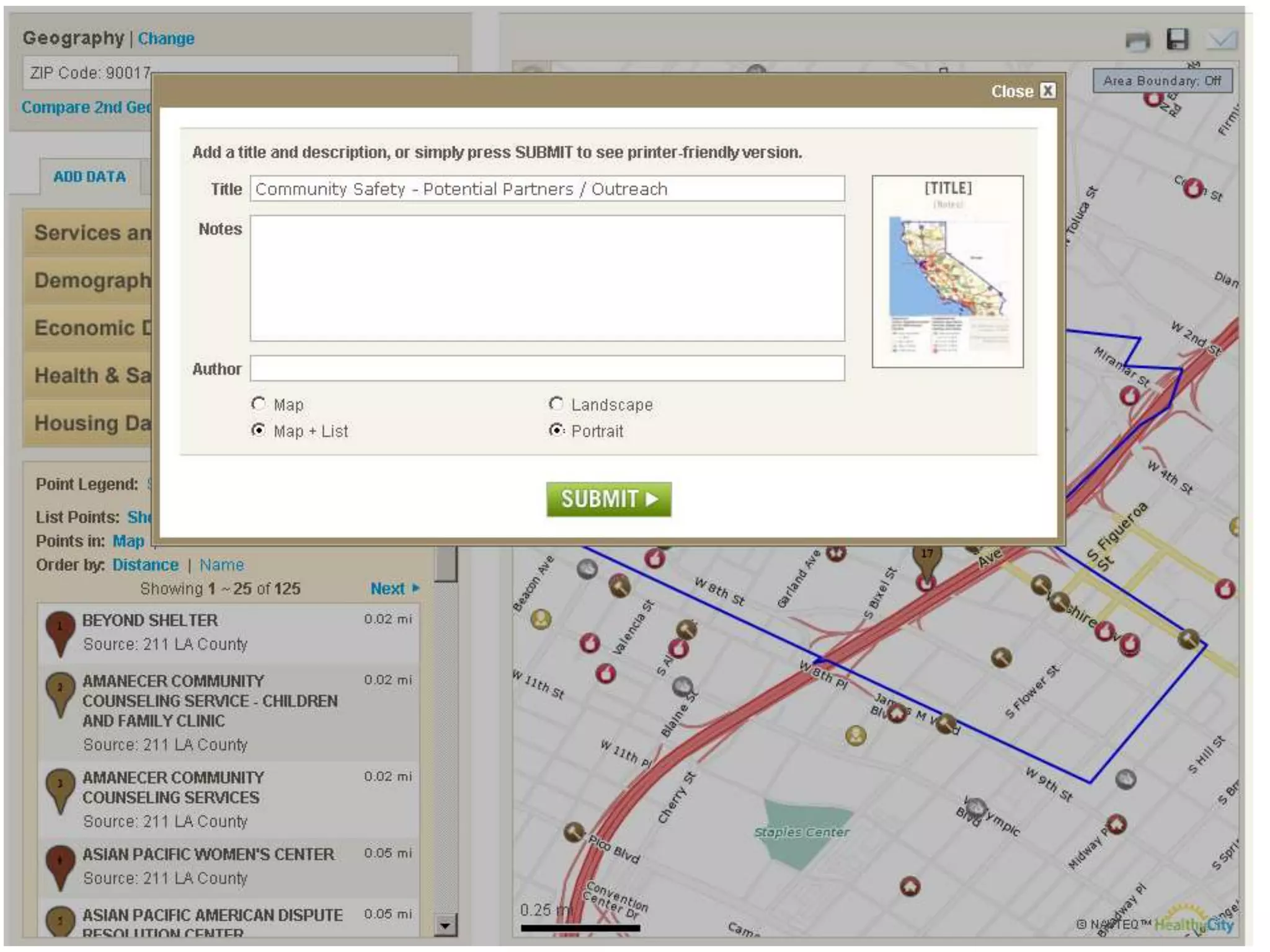
PRINT this list of potential partners and resources
Identify a community’s assets and opportunities for improvement Questions?
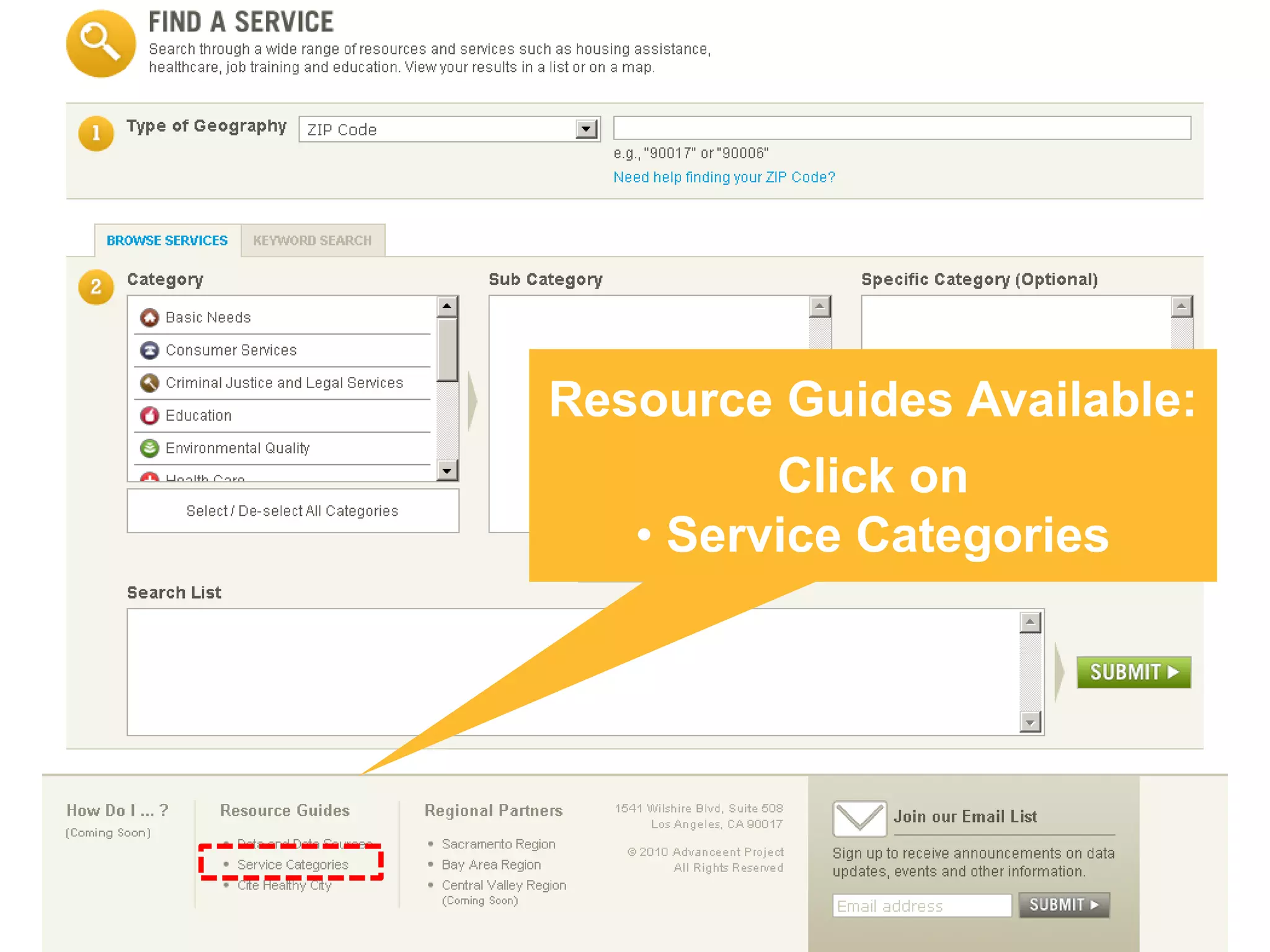
Resource Guides Available:Click on  Service Categories
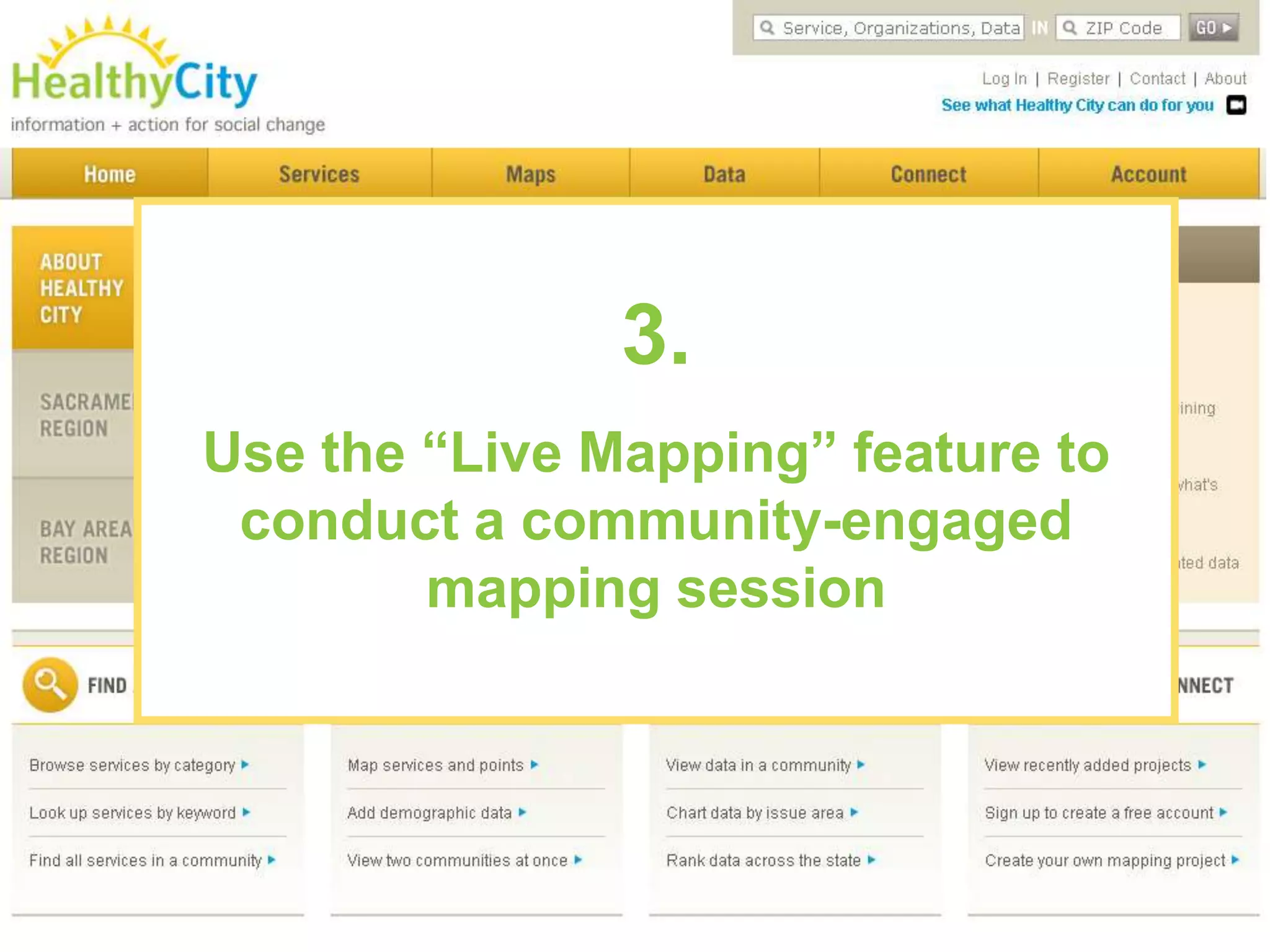
3.Use the “Live Mapping” feature to conduct a community-engaged mapping session
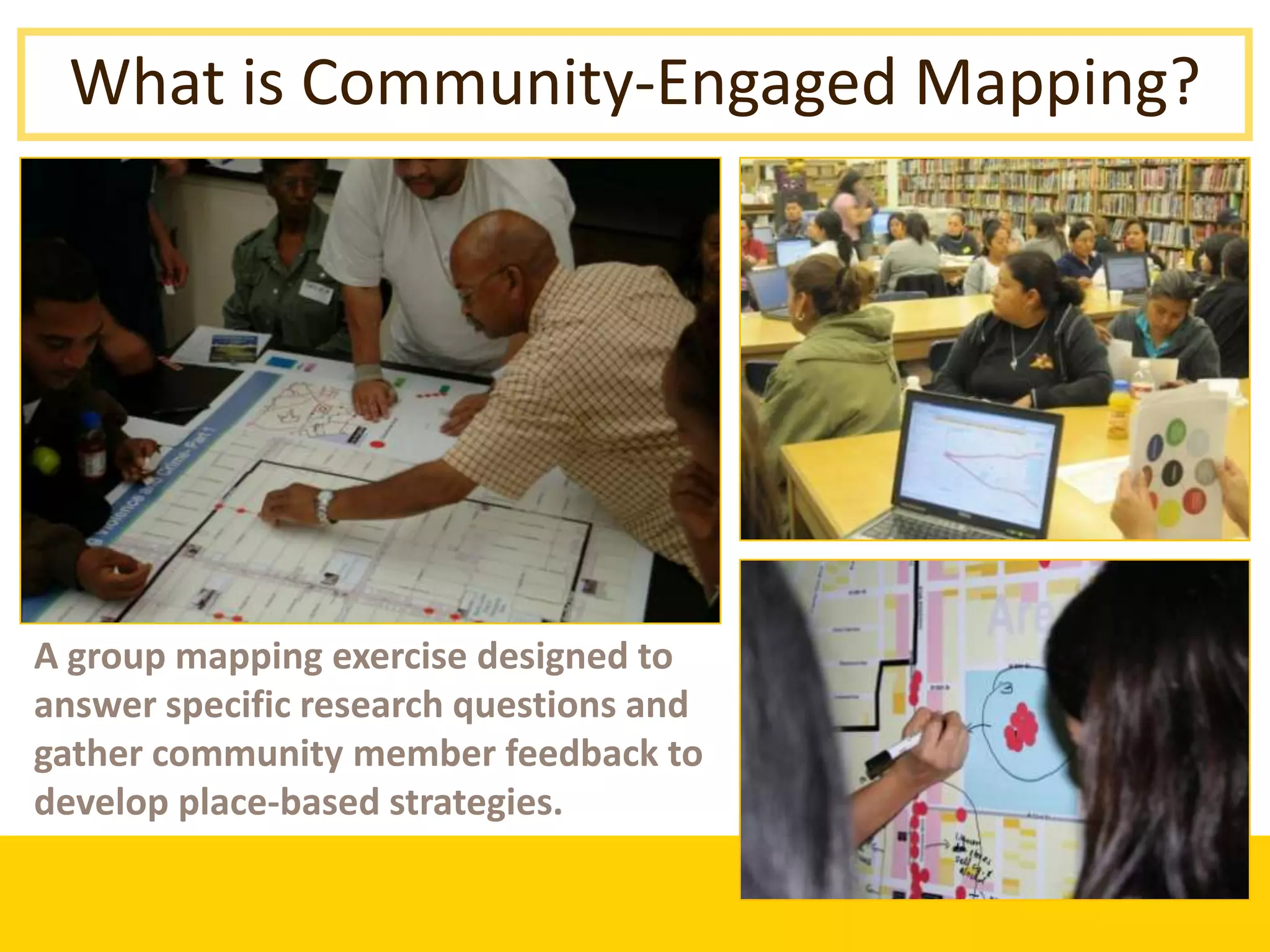
What is Community-Engaged Mapping?A group mapping exercise designed to answer specific research questions and gather community member feedback to develop place-based strategies.
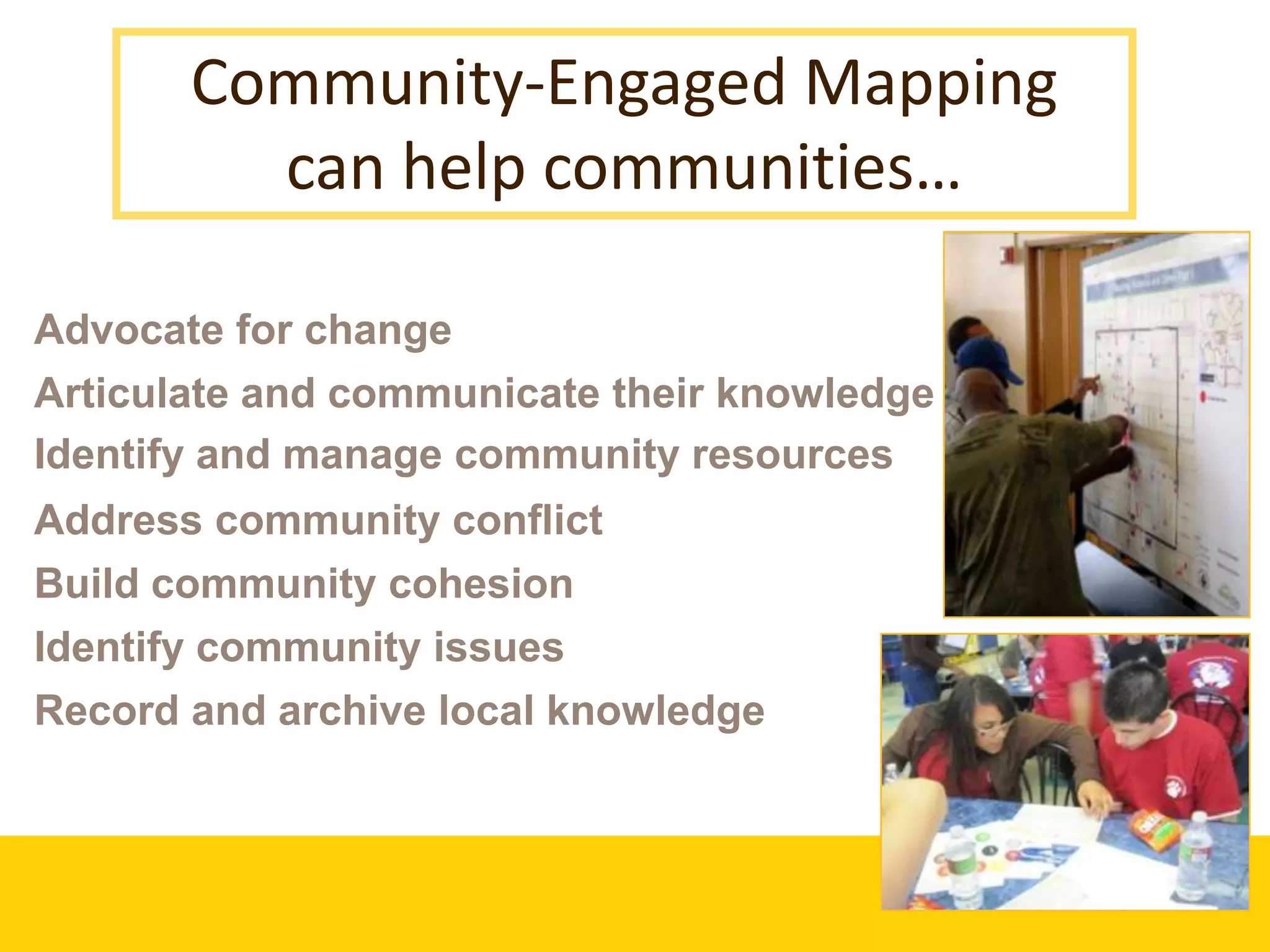
Community-Engaged Mapping can help communities…Advocate for changeArticulate and communicate their knowledgeIdentify and manage community resourcesAddress community conflictBuild community cohesionIdentify community issuesRecord and archive local knowledge
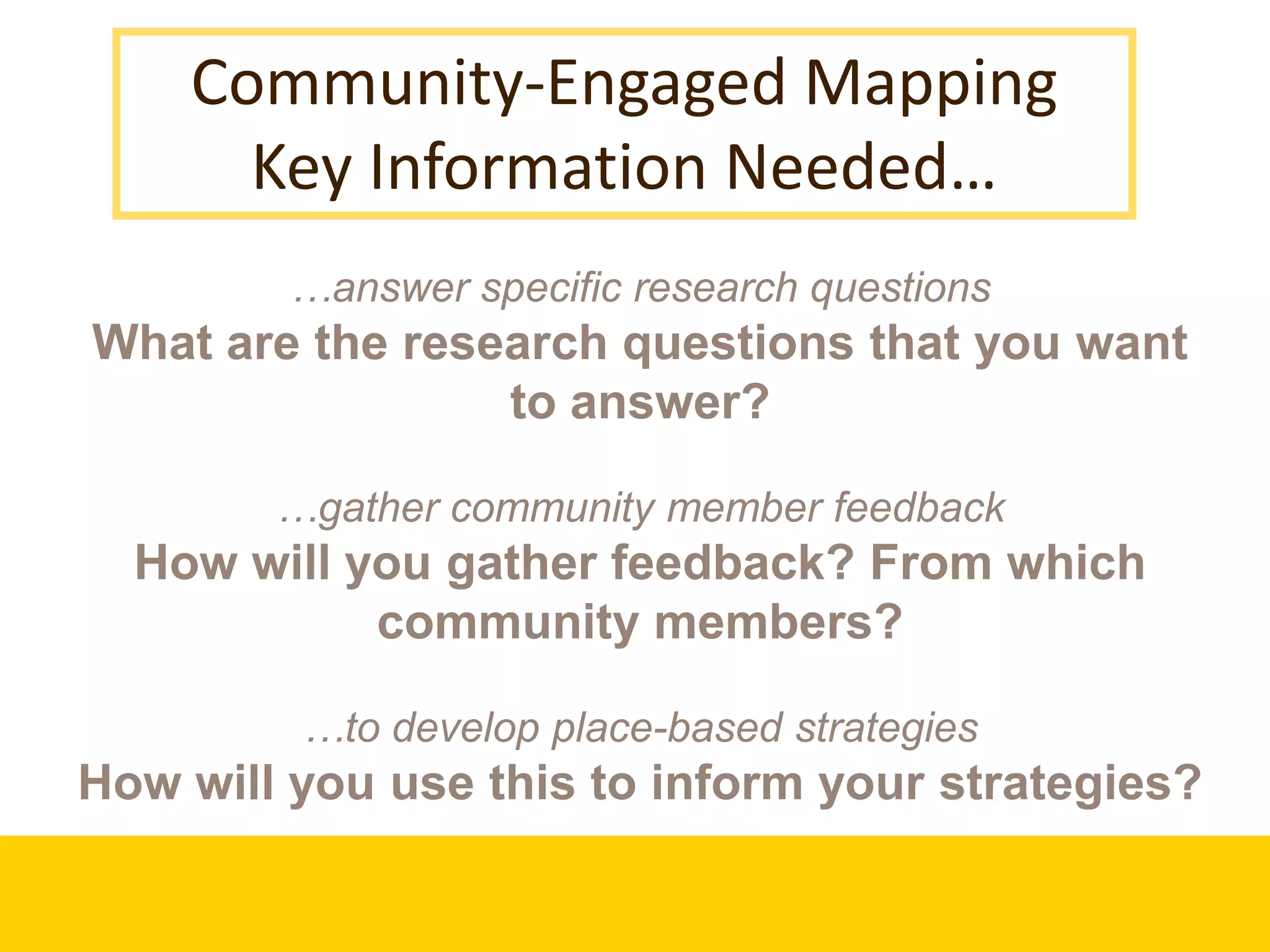
Community-Engaged Mapping Key Information Needed… …answer specific research questions What are the research questions that you want to answer? …gather community member feedbackHow will you gather feedback? From which community members? …to develop place-based strategiesHow will you use this to inform your strategies?
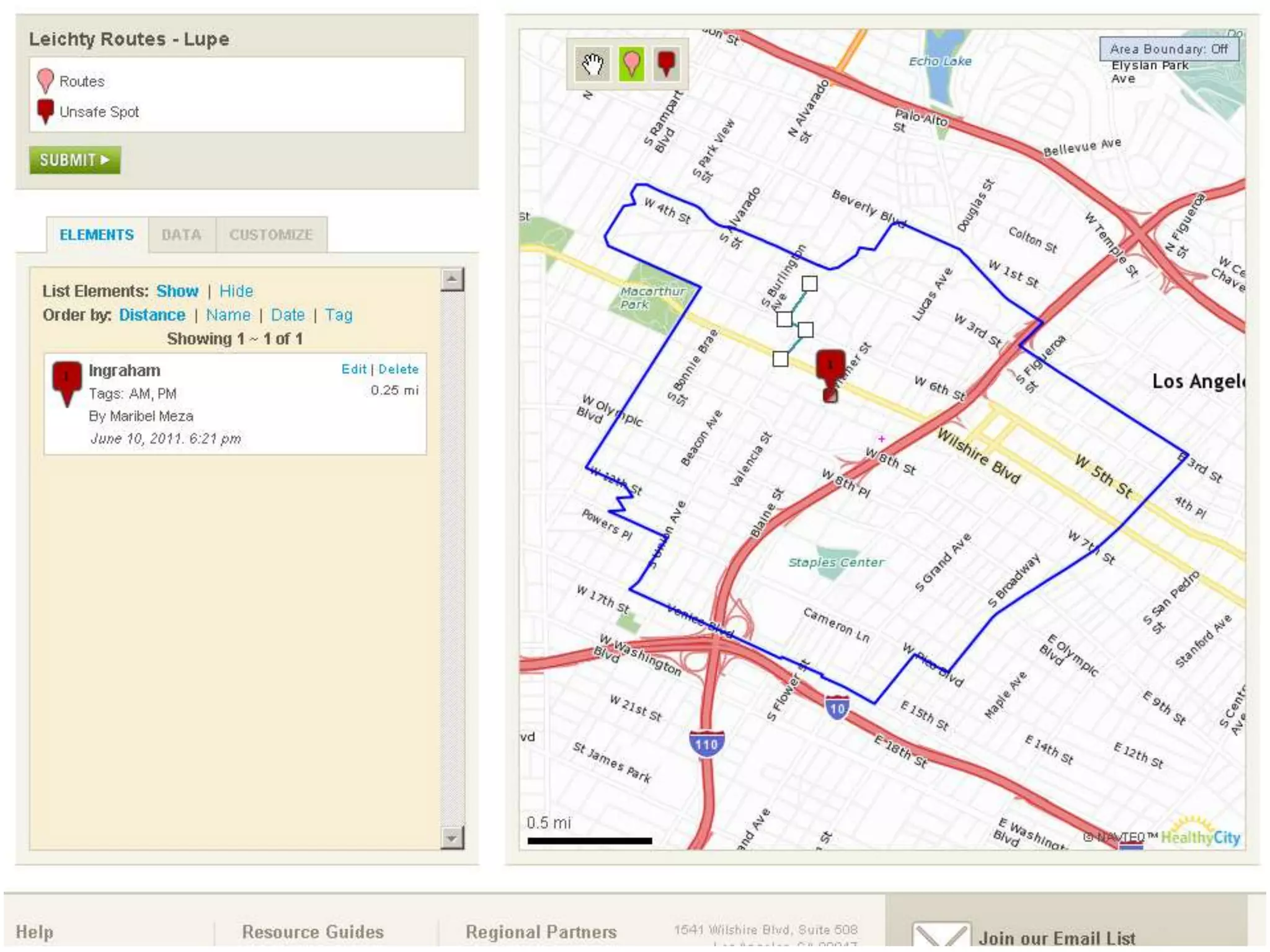
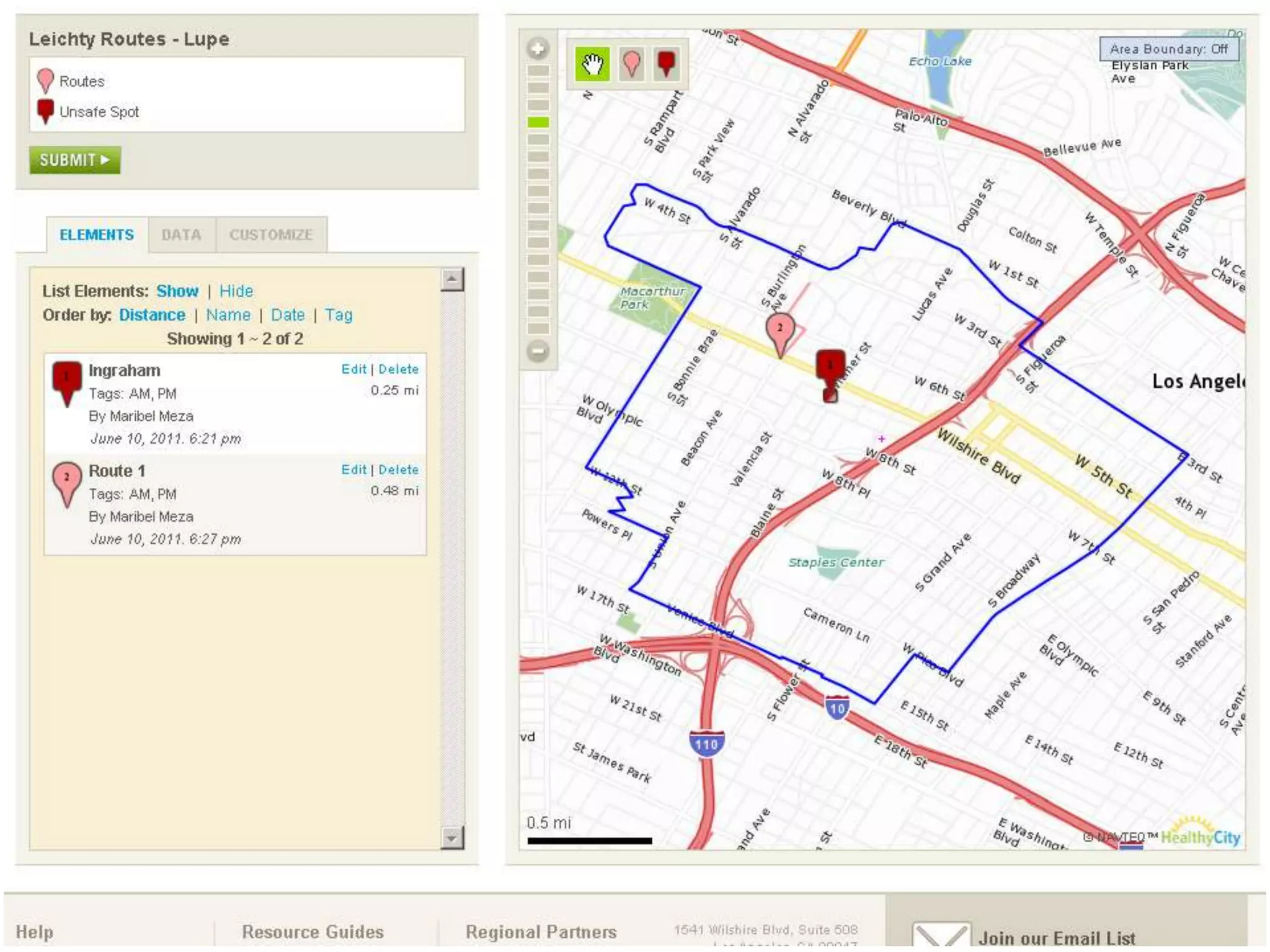
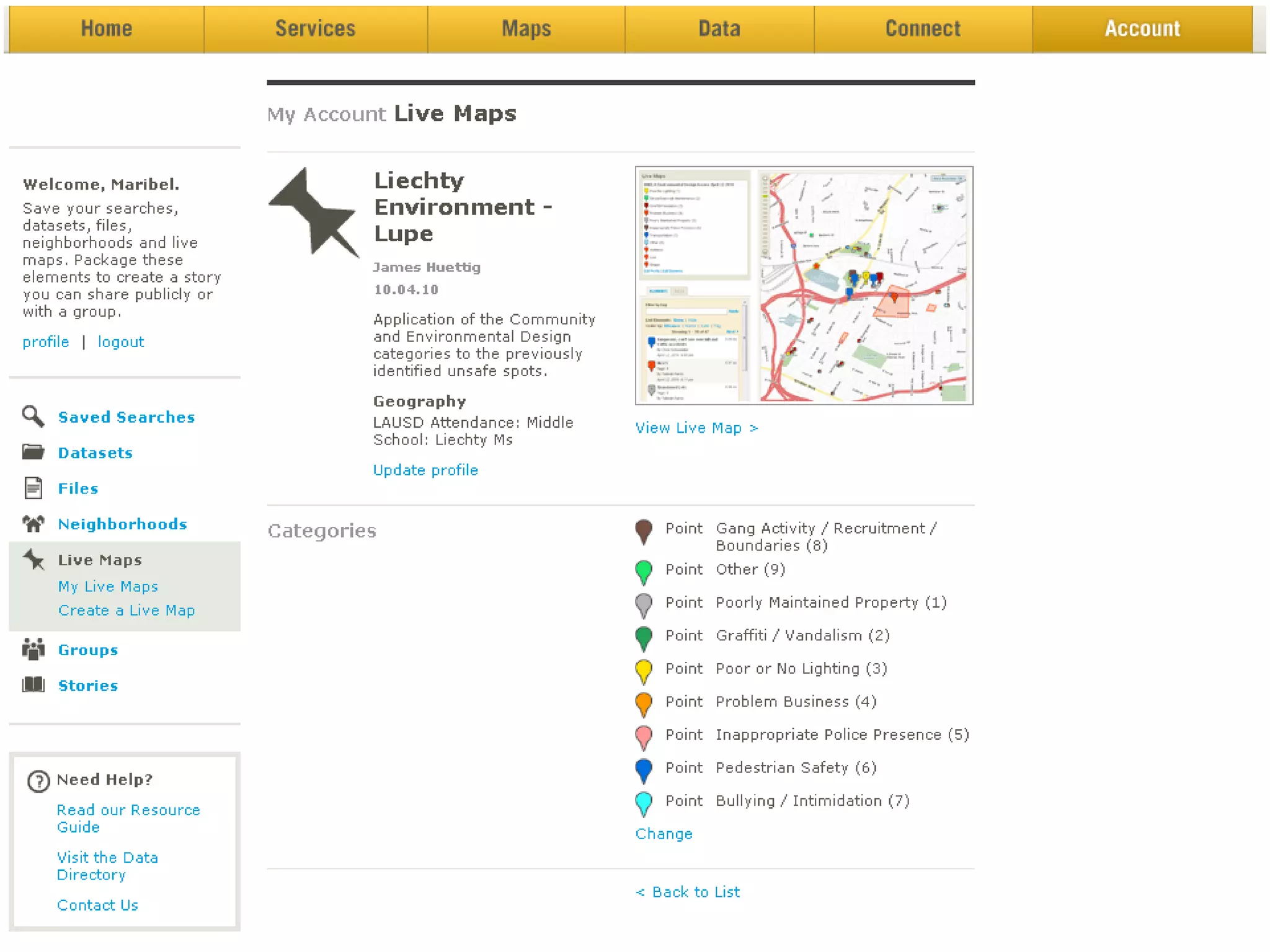
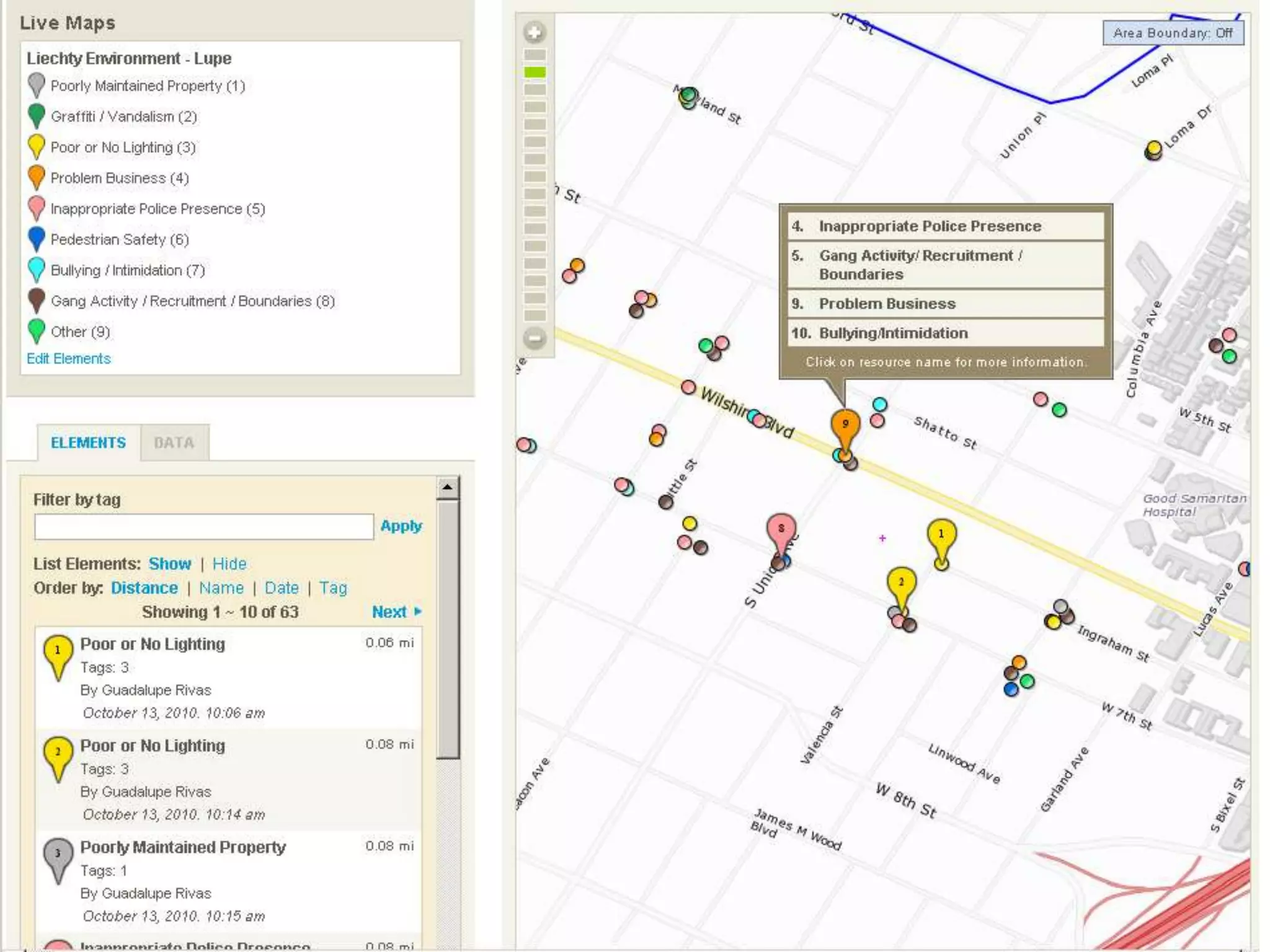
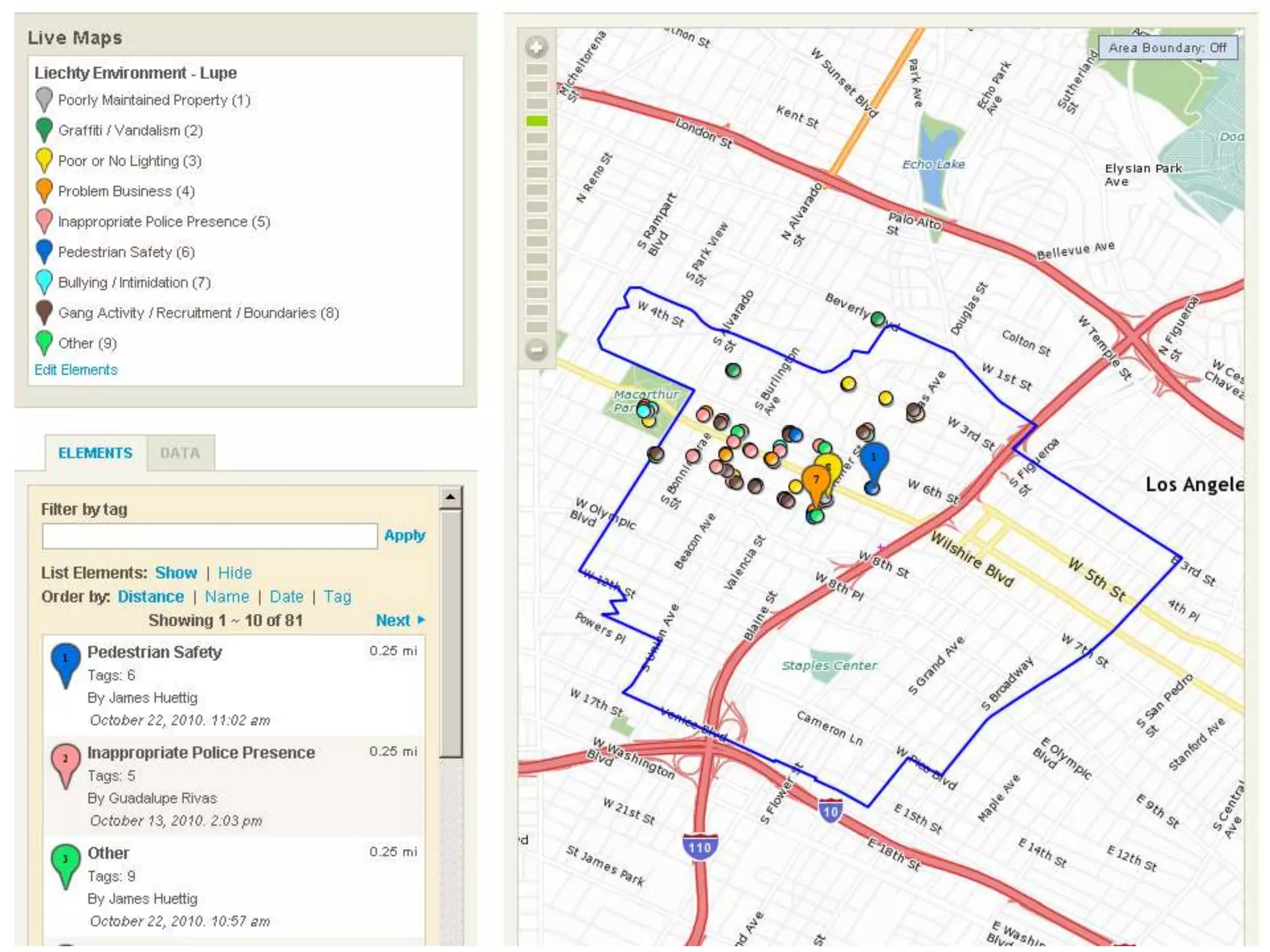
Safe Passages to School Community-engaged mapping was used to help answer the following research questions:  What areas in the community do students and 	parents feel most unsafe?
  What routes do students and parents travel to 	and from school?
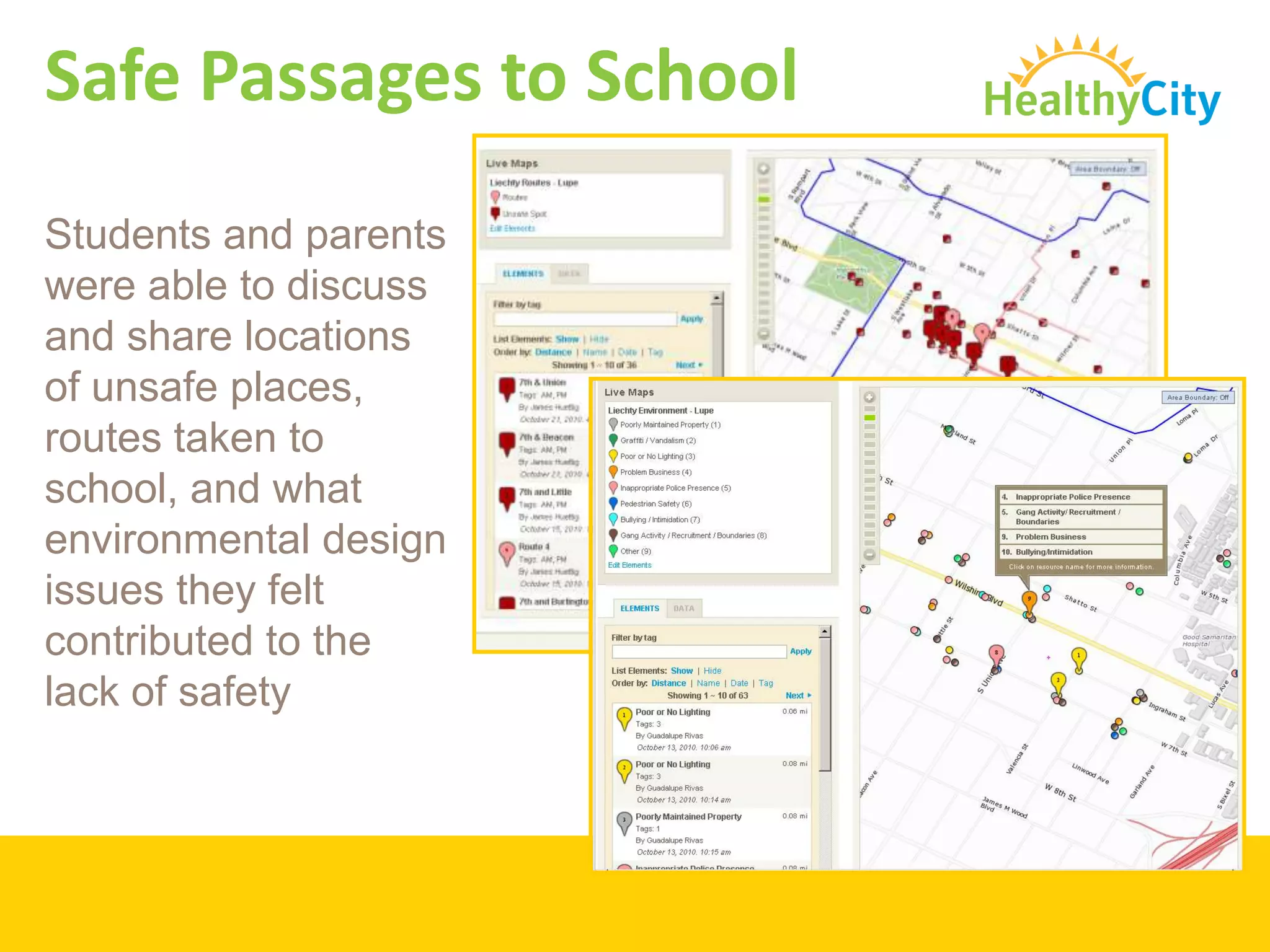
  What are the environmental design issues in this 	area that might contribute to not feeling safe 	and/or a lack of personal security?Safe Passages to SchoolStudents and parents were able to discuss and share locations of unsafe places, routes taken to school, and what environmental design issues they felt contributed to the lack of safety
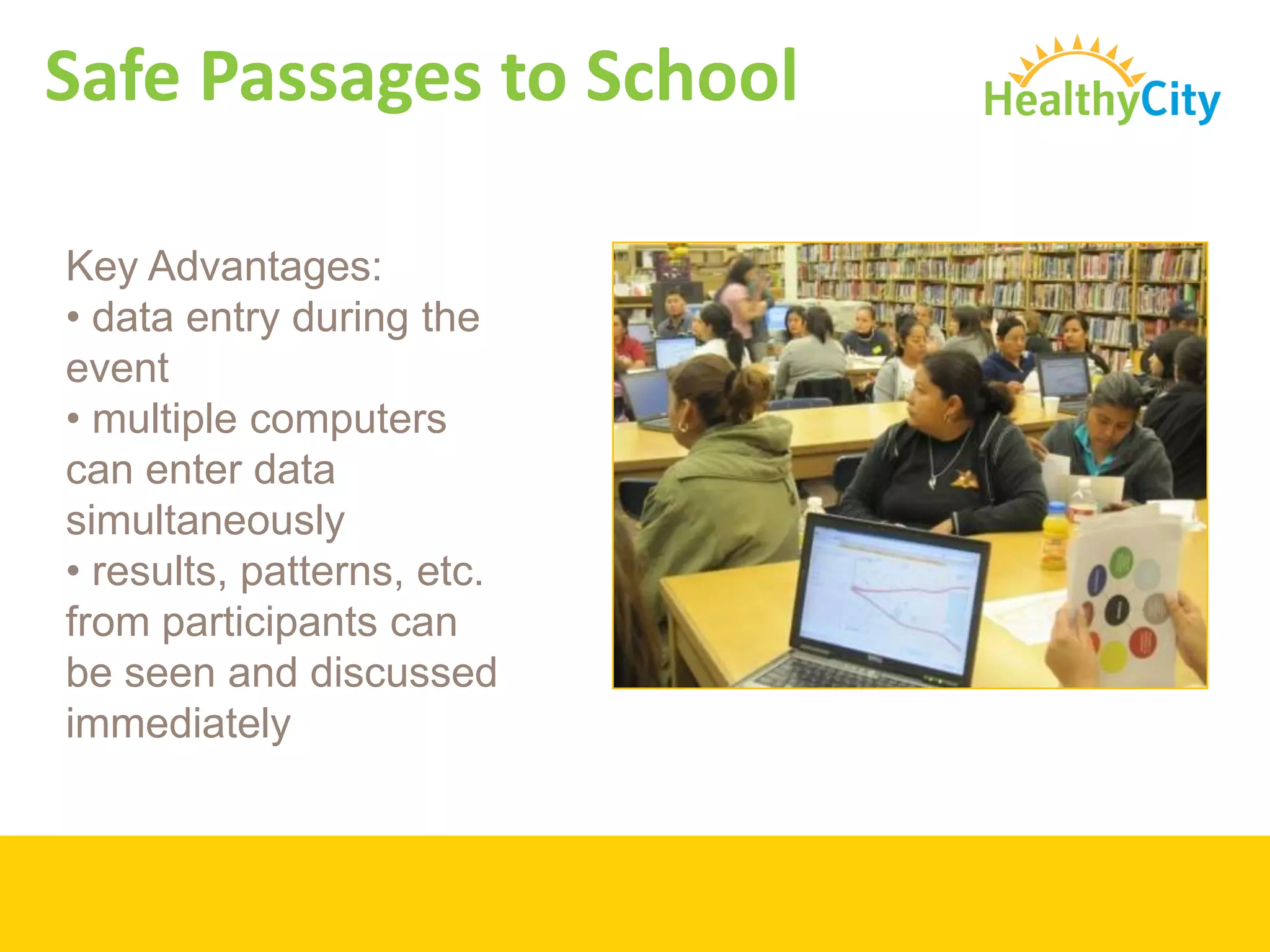
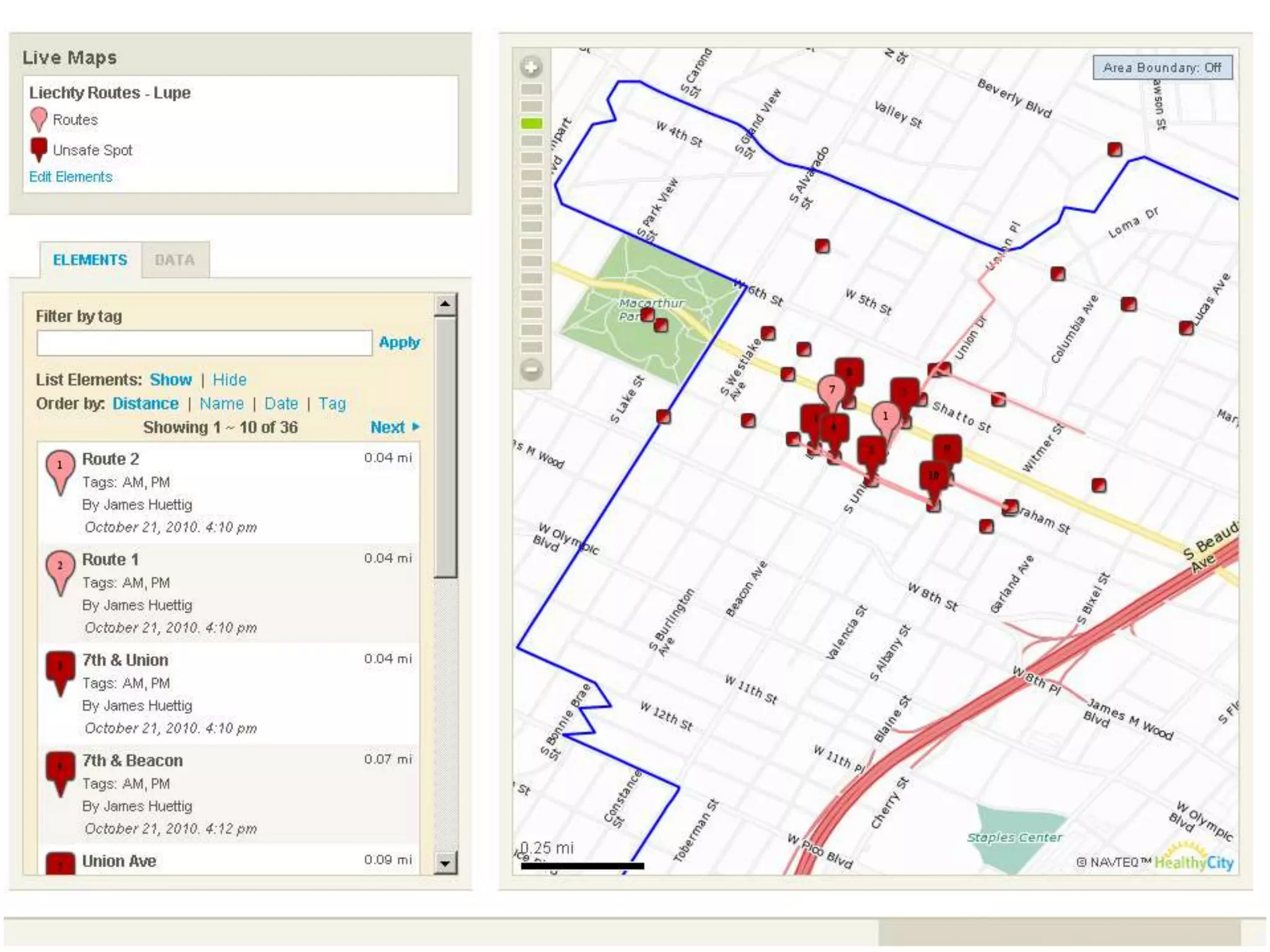
Safe Passages to School Key Advantages:  data entry during the event
 multiple computers can enter data simultaneously
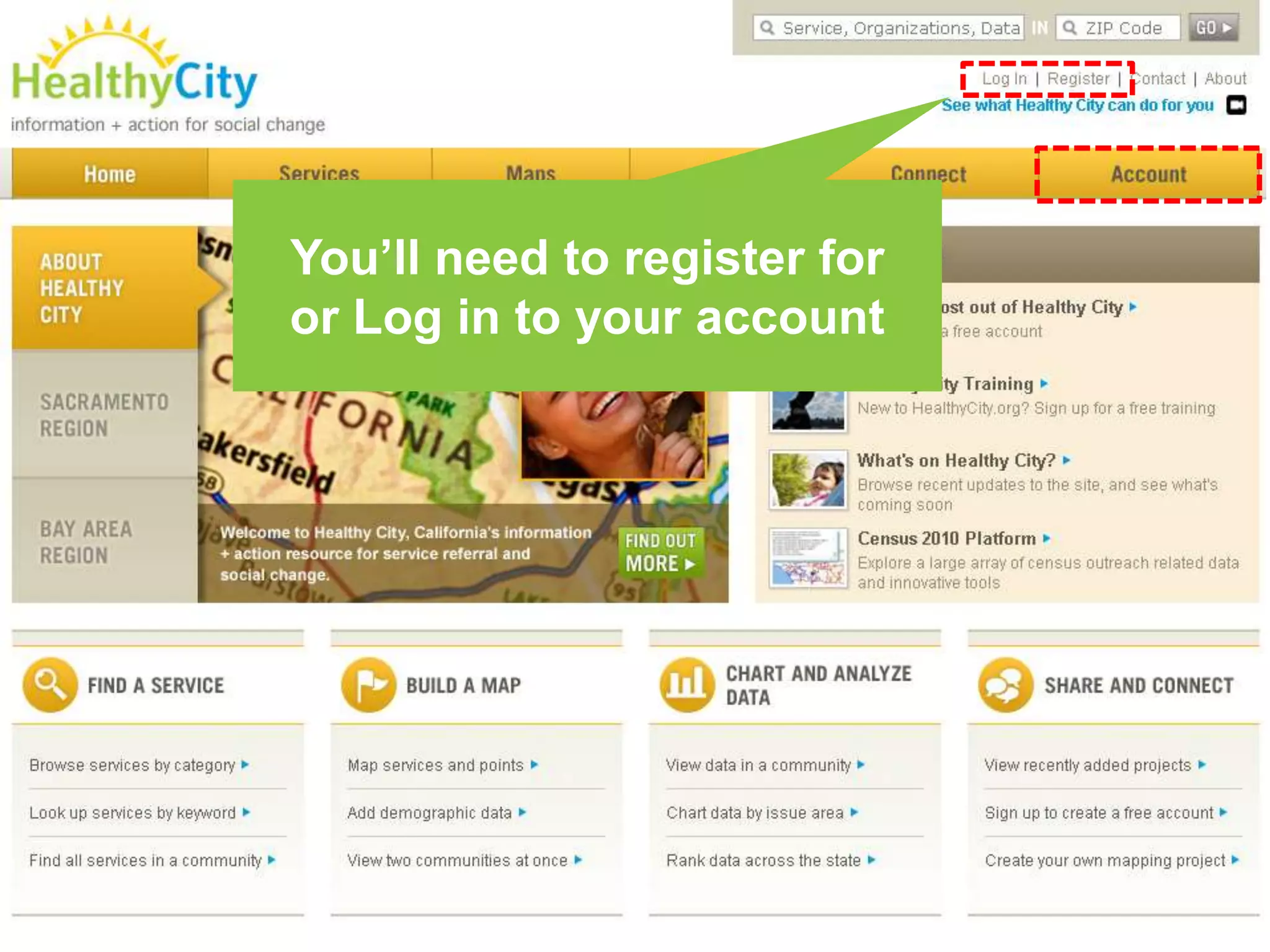
 results, patterns, etc. from participants can be seen and discussed immediatelyYou’ll need to register for or Log in to your account
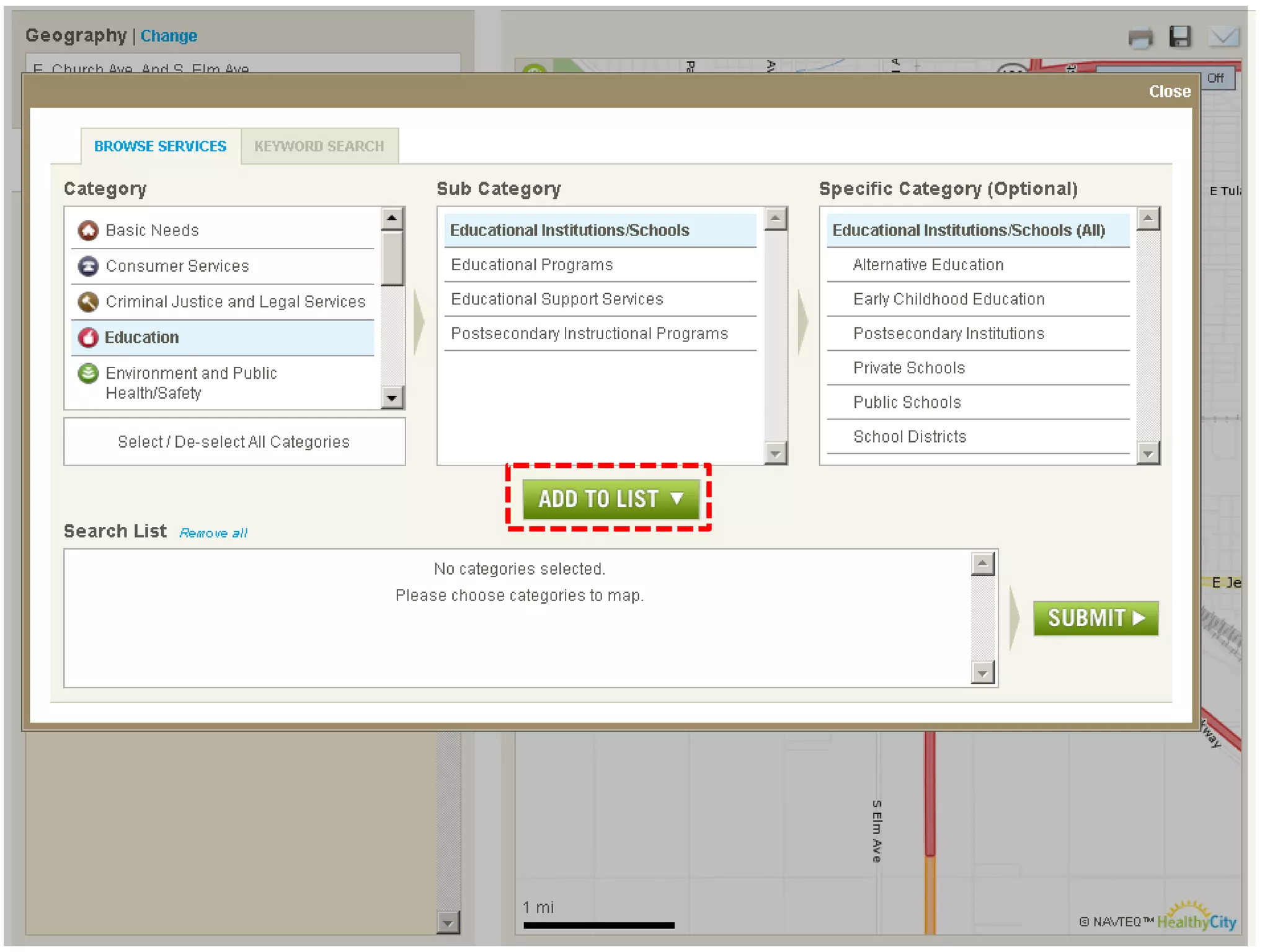
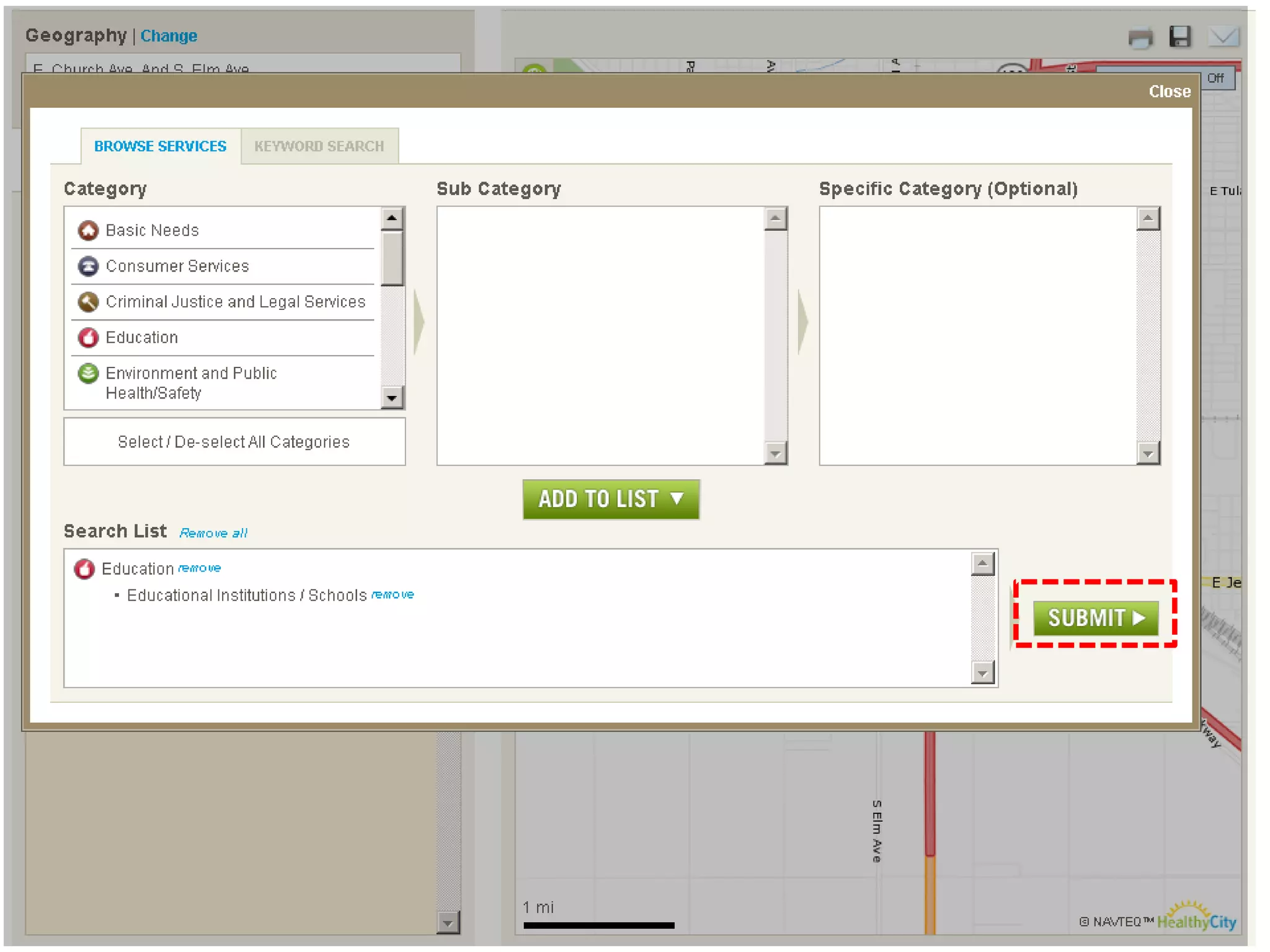
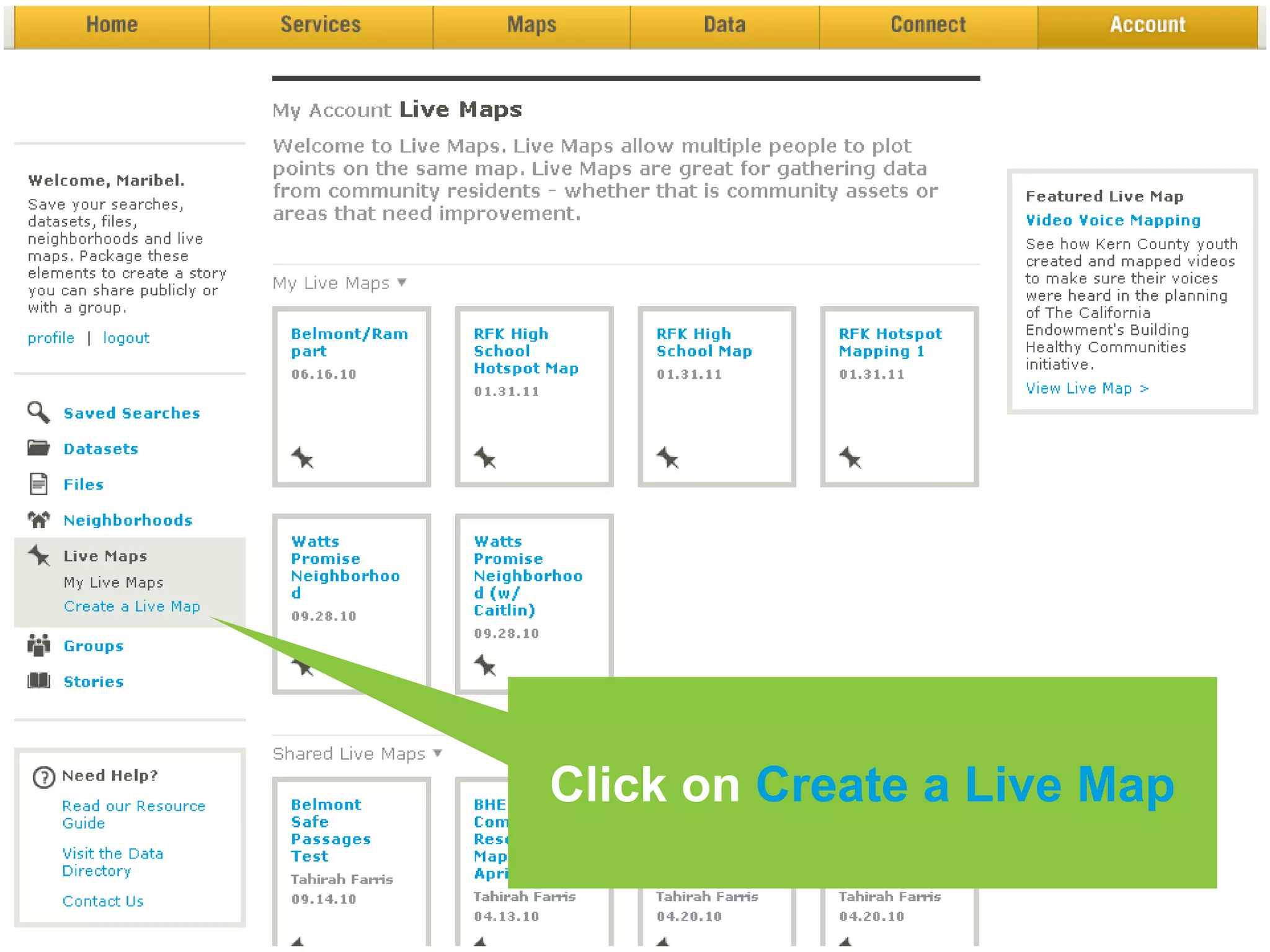
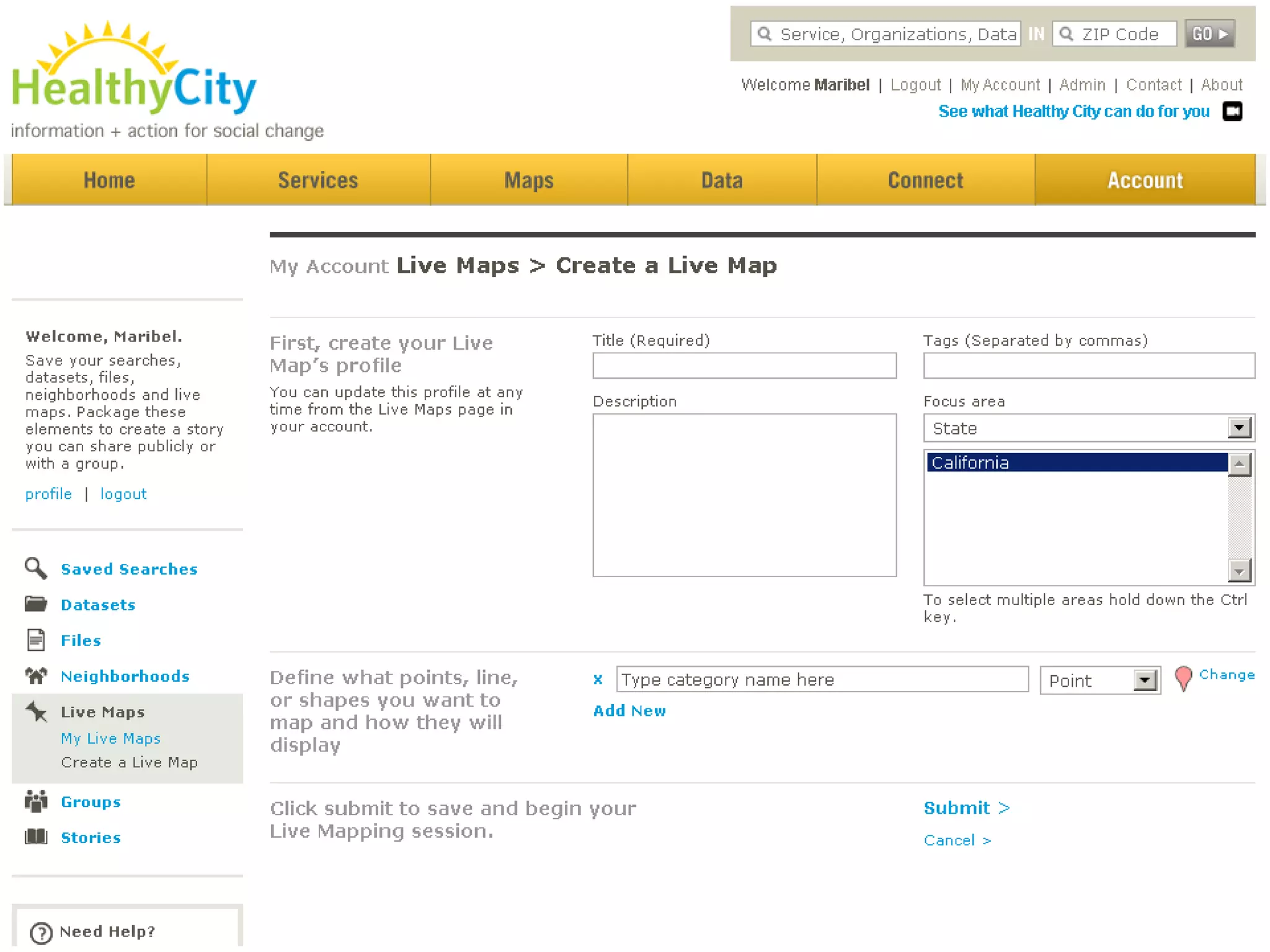
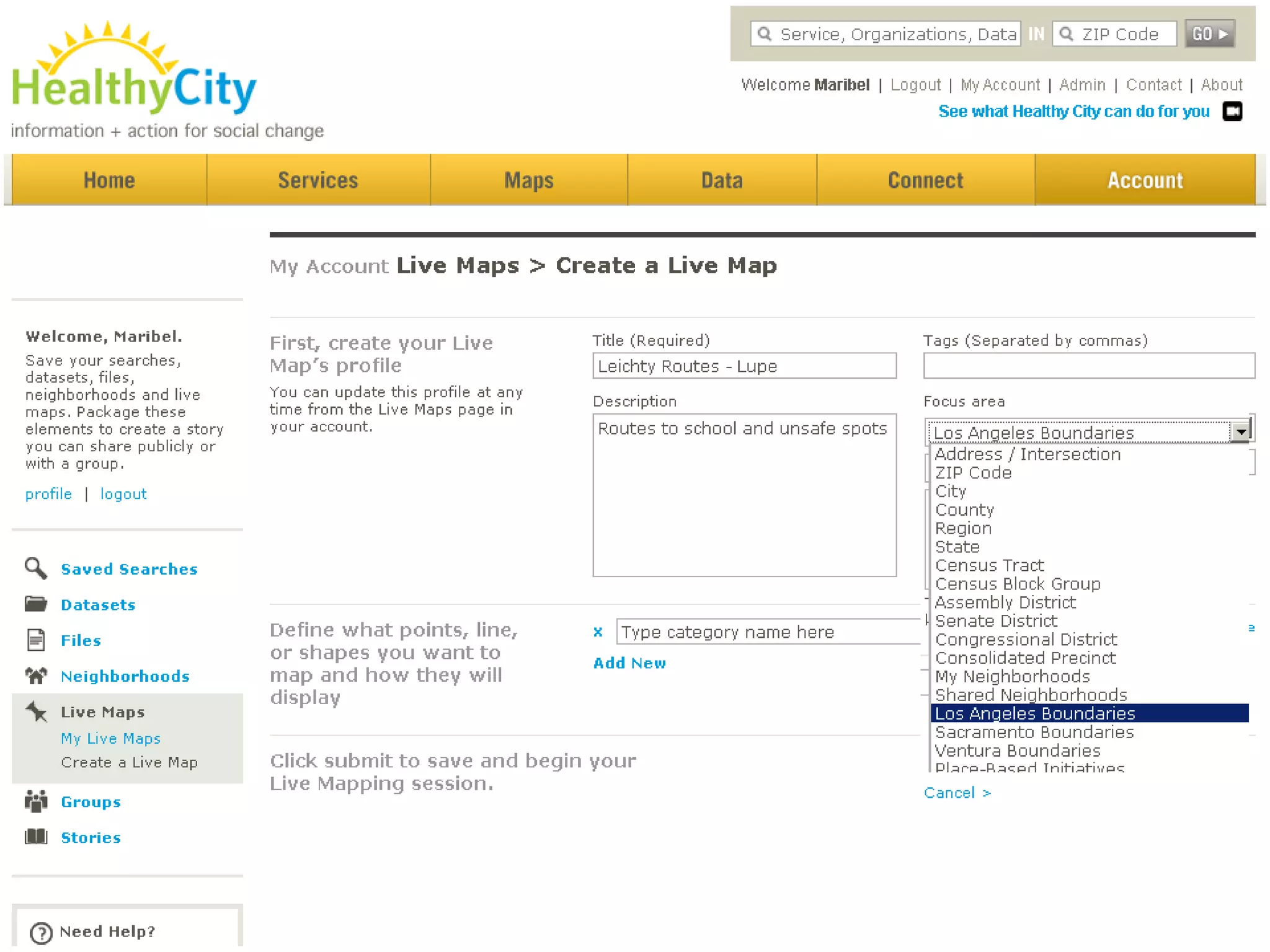
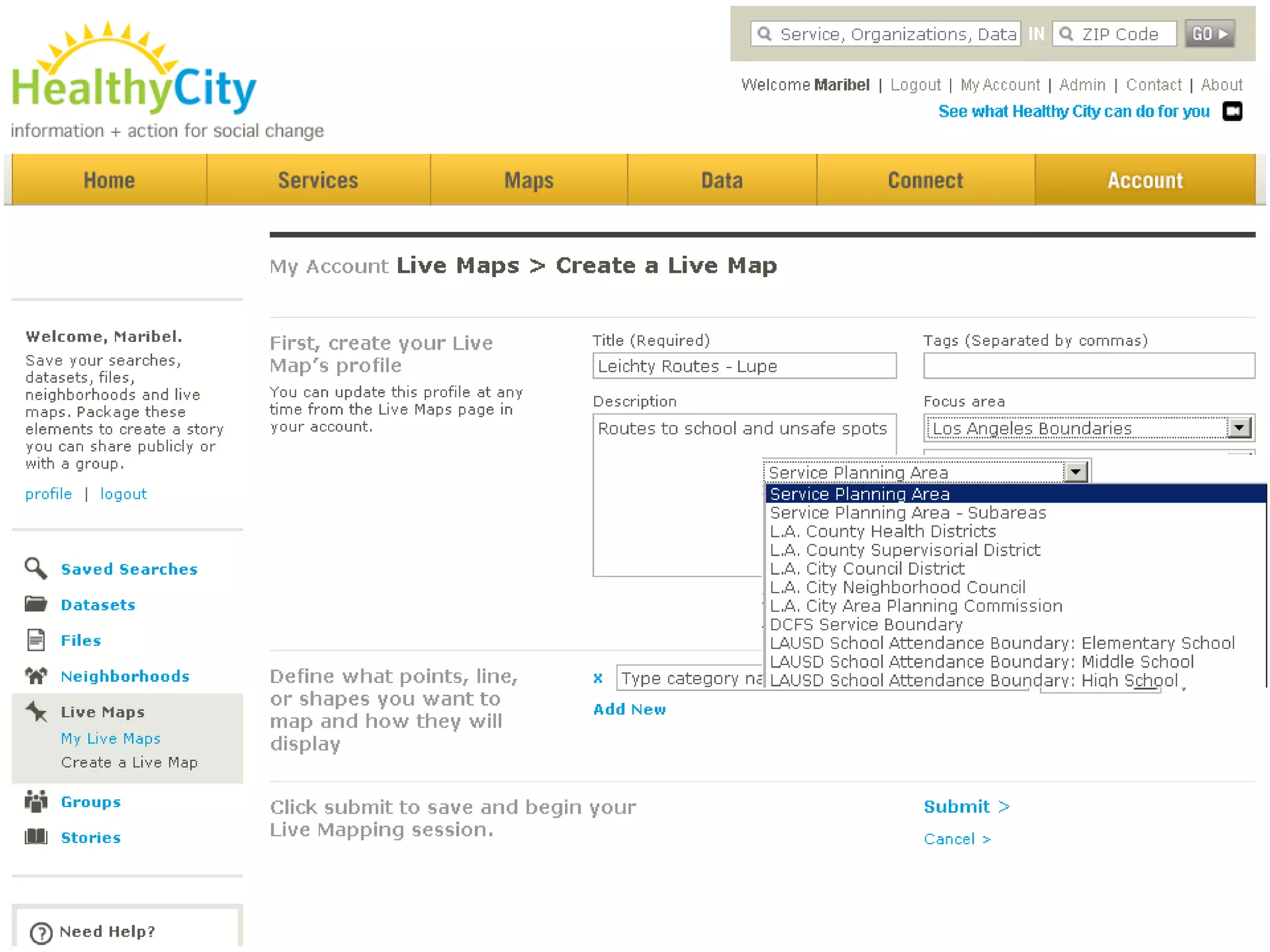
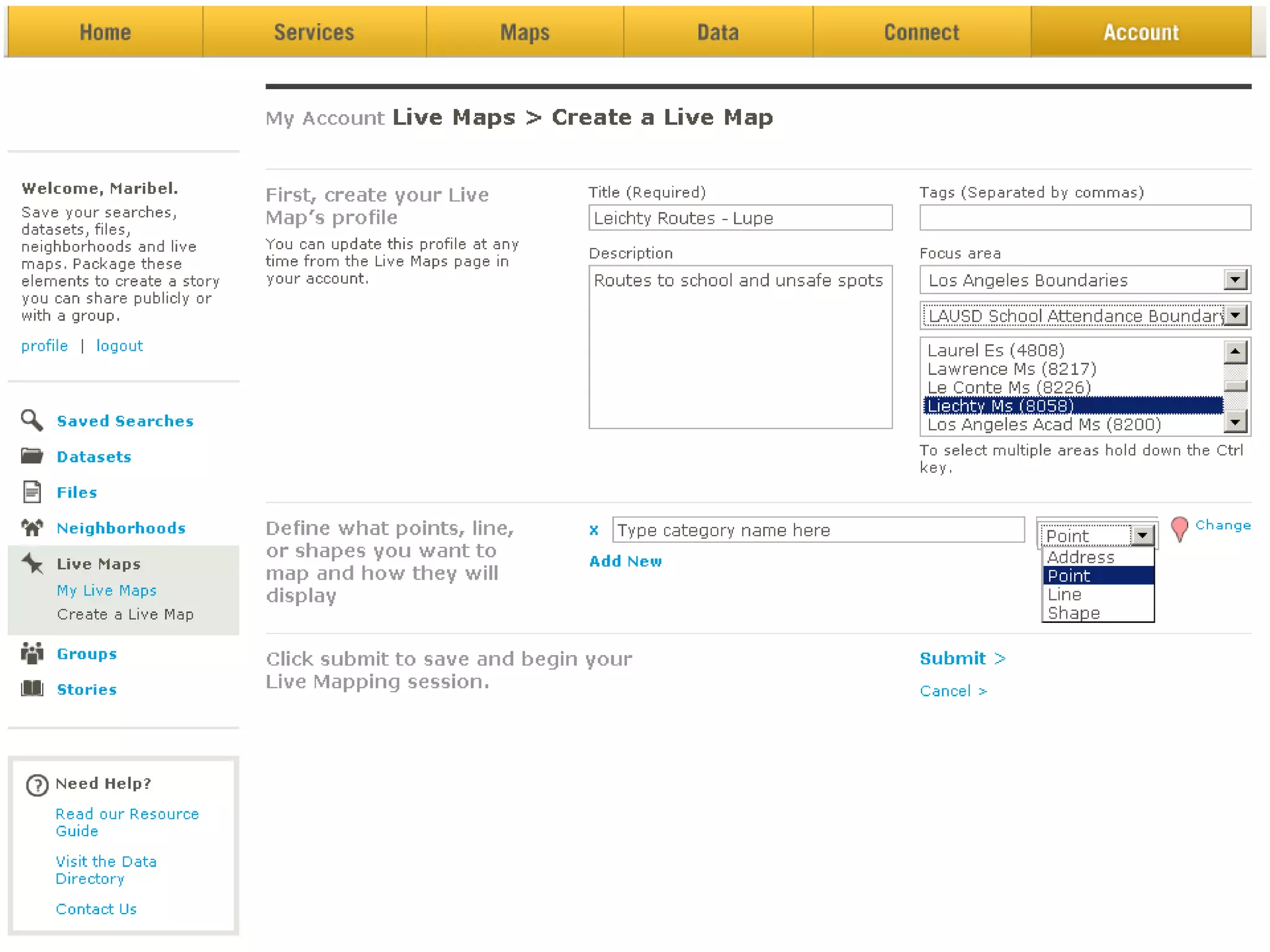
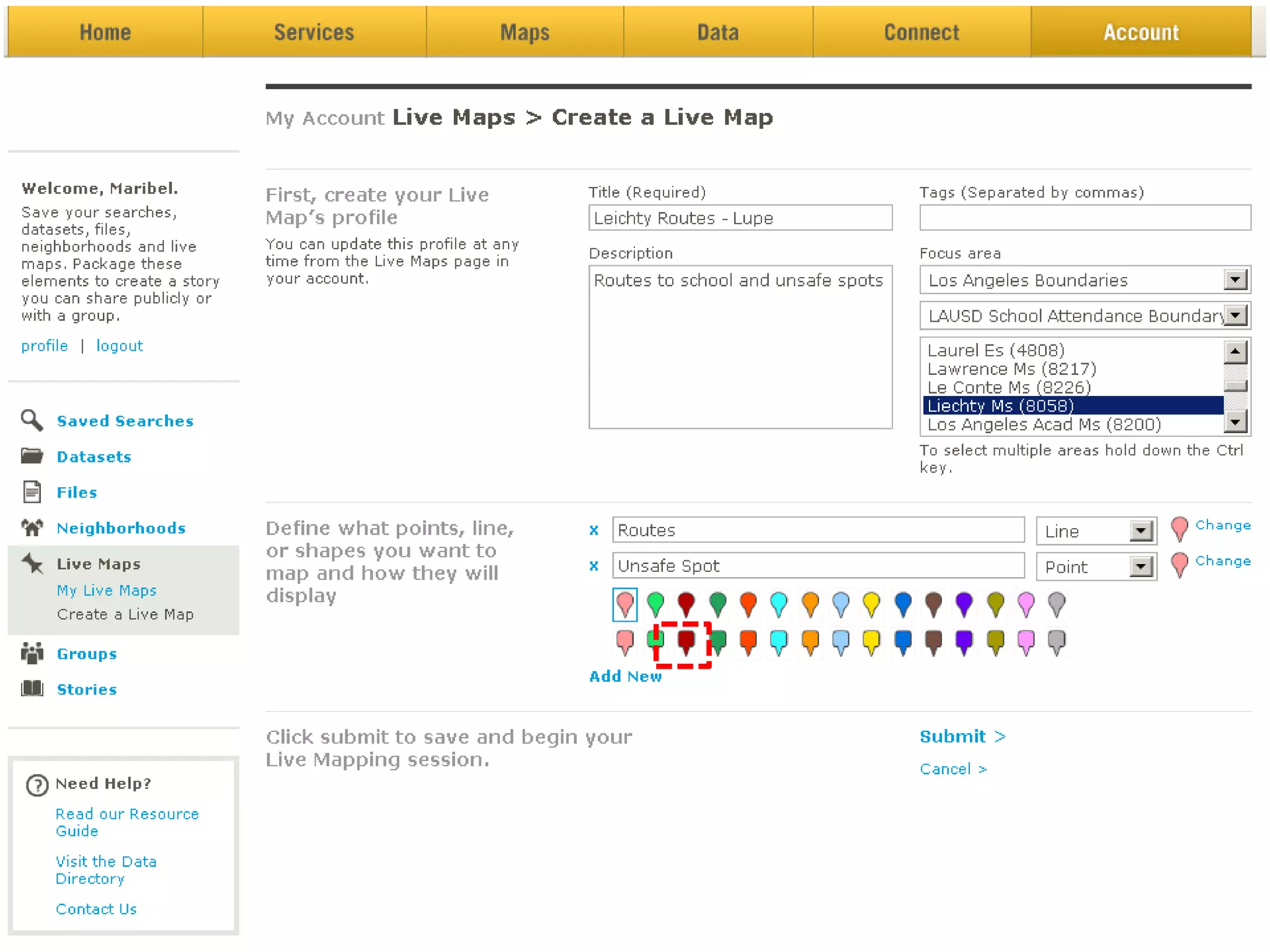
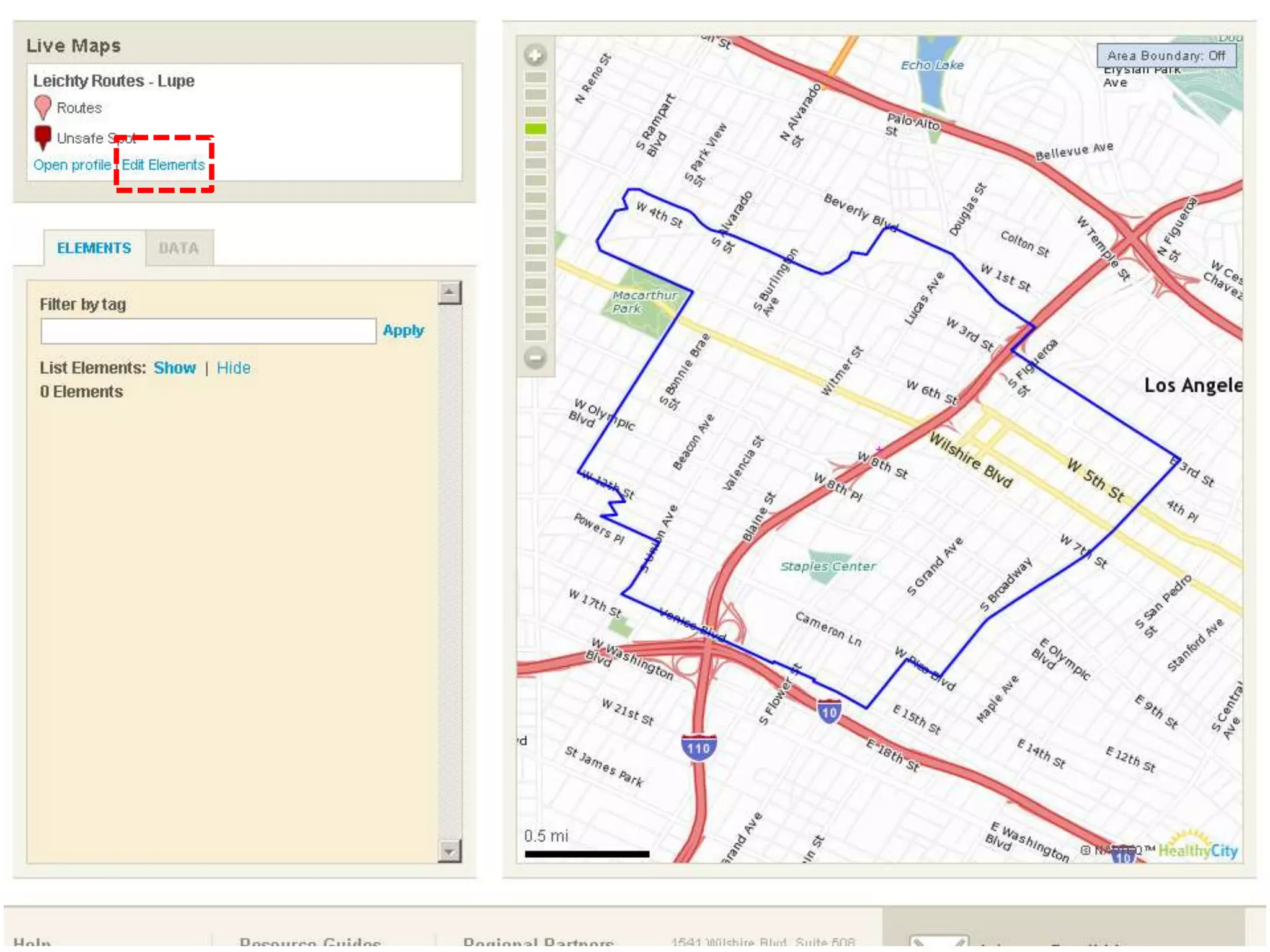
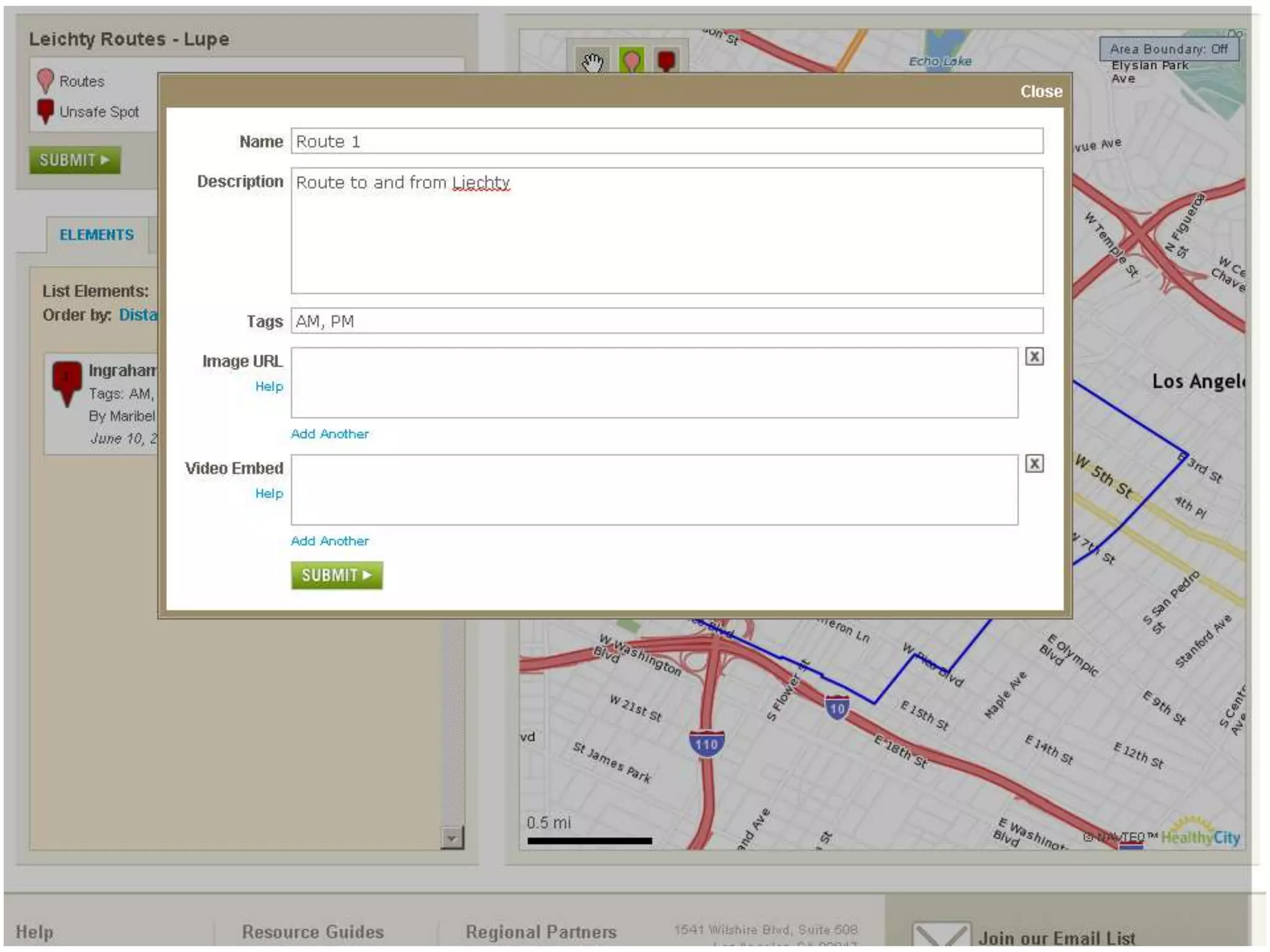
Click on Create a Live Map
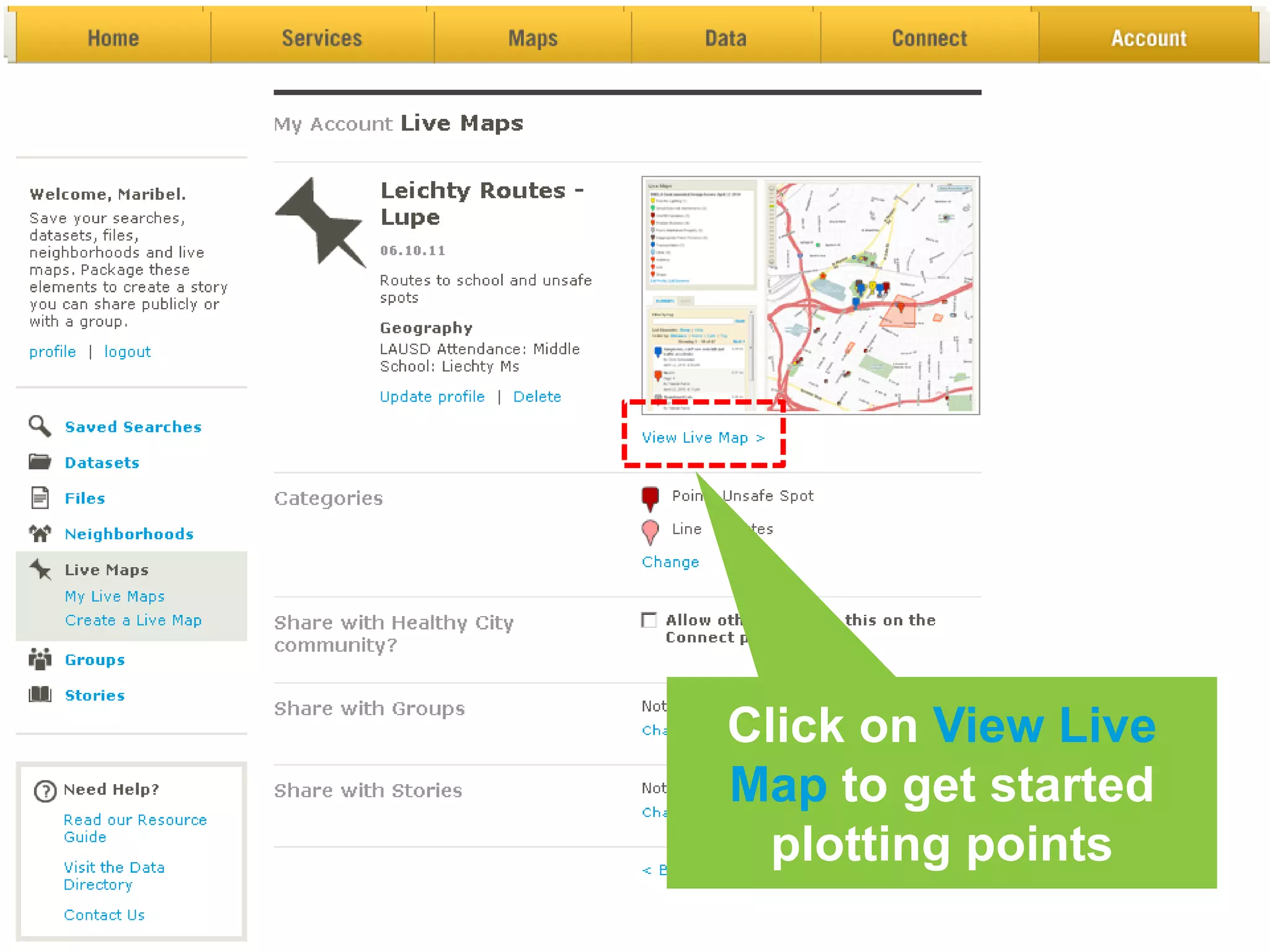
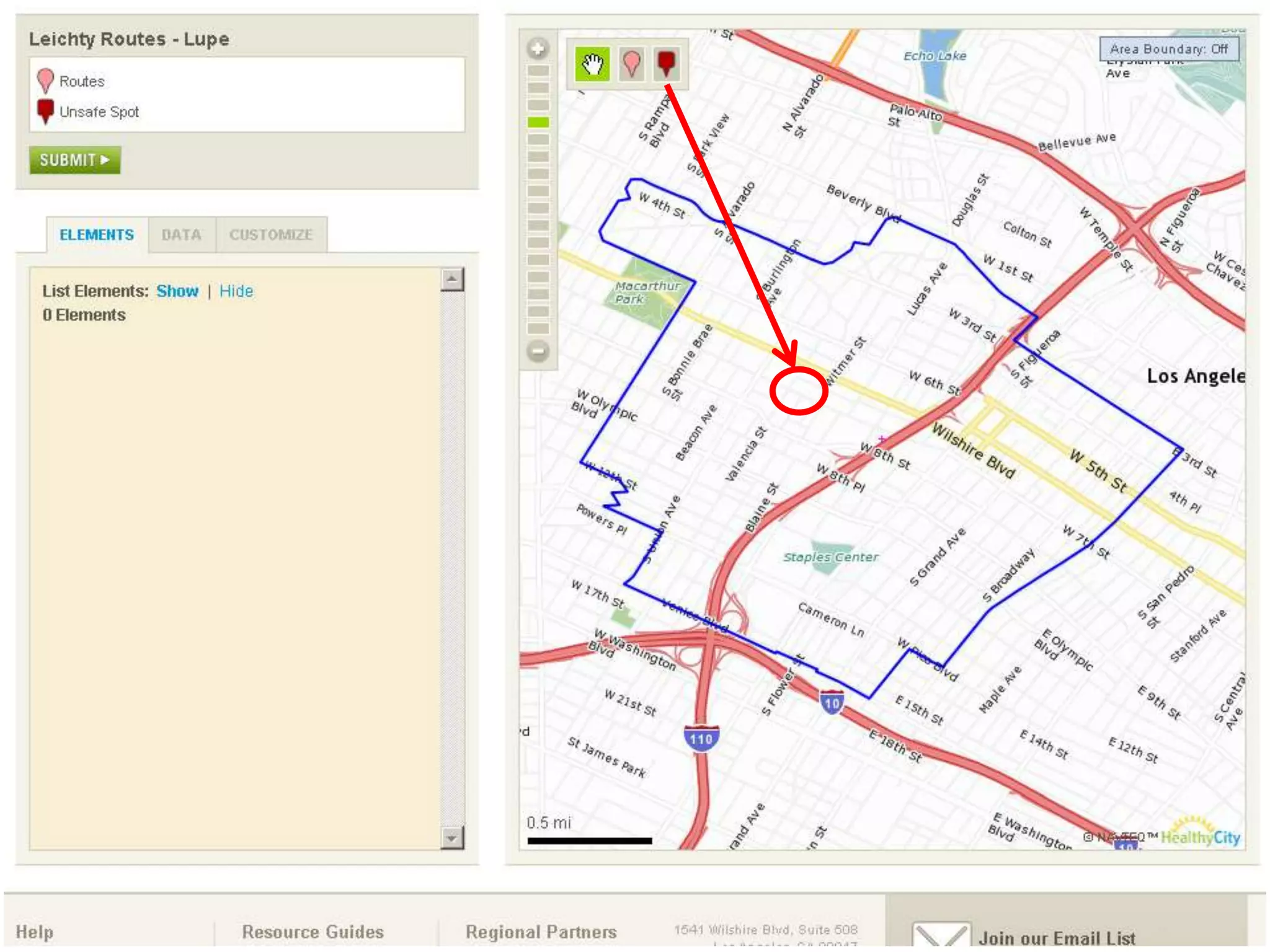
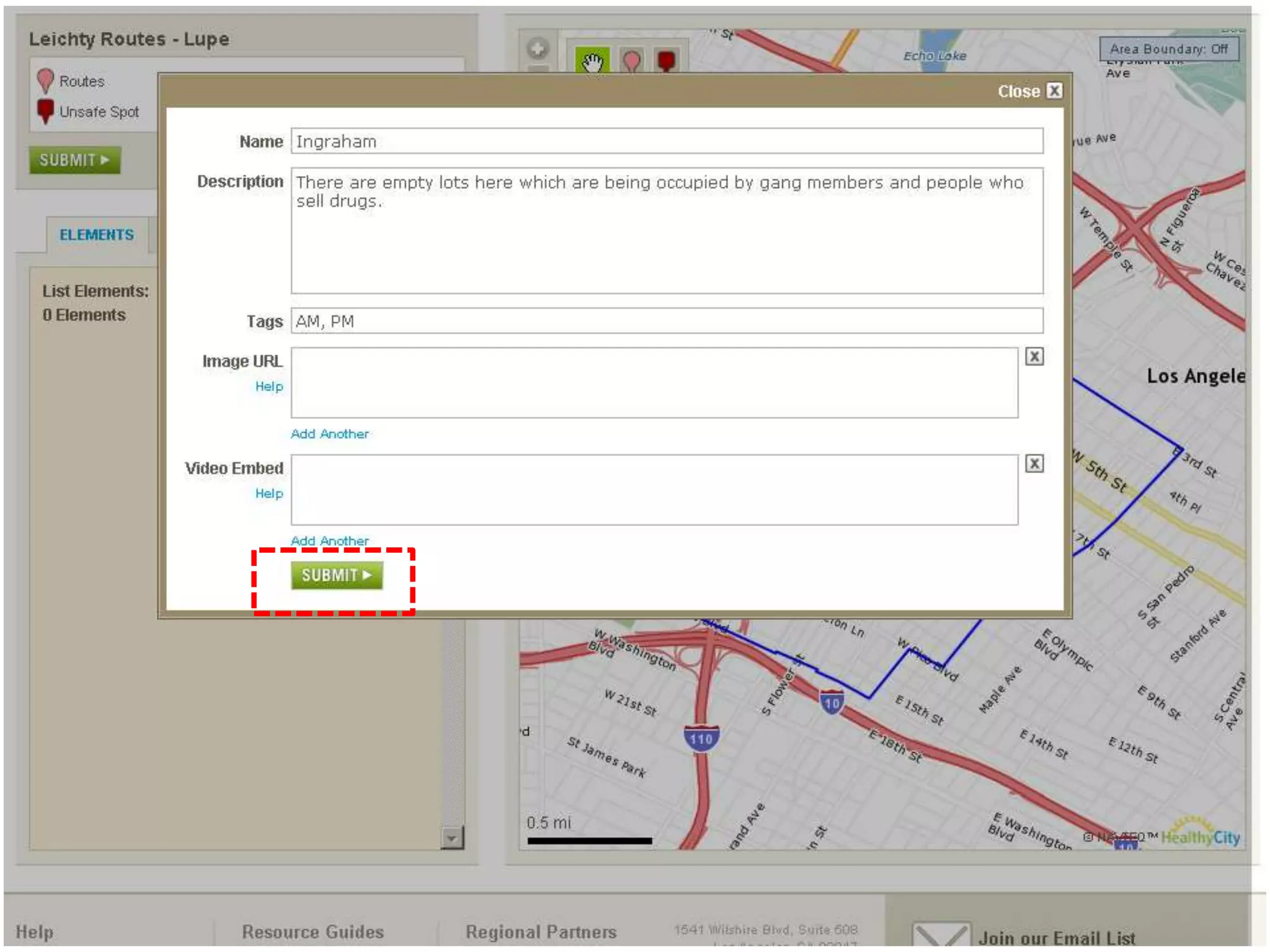
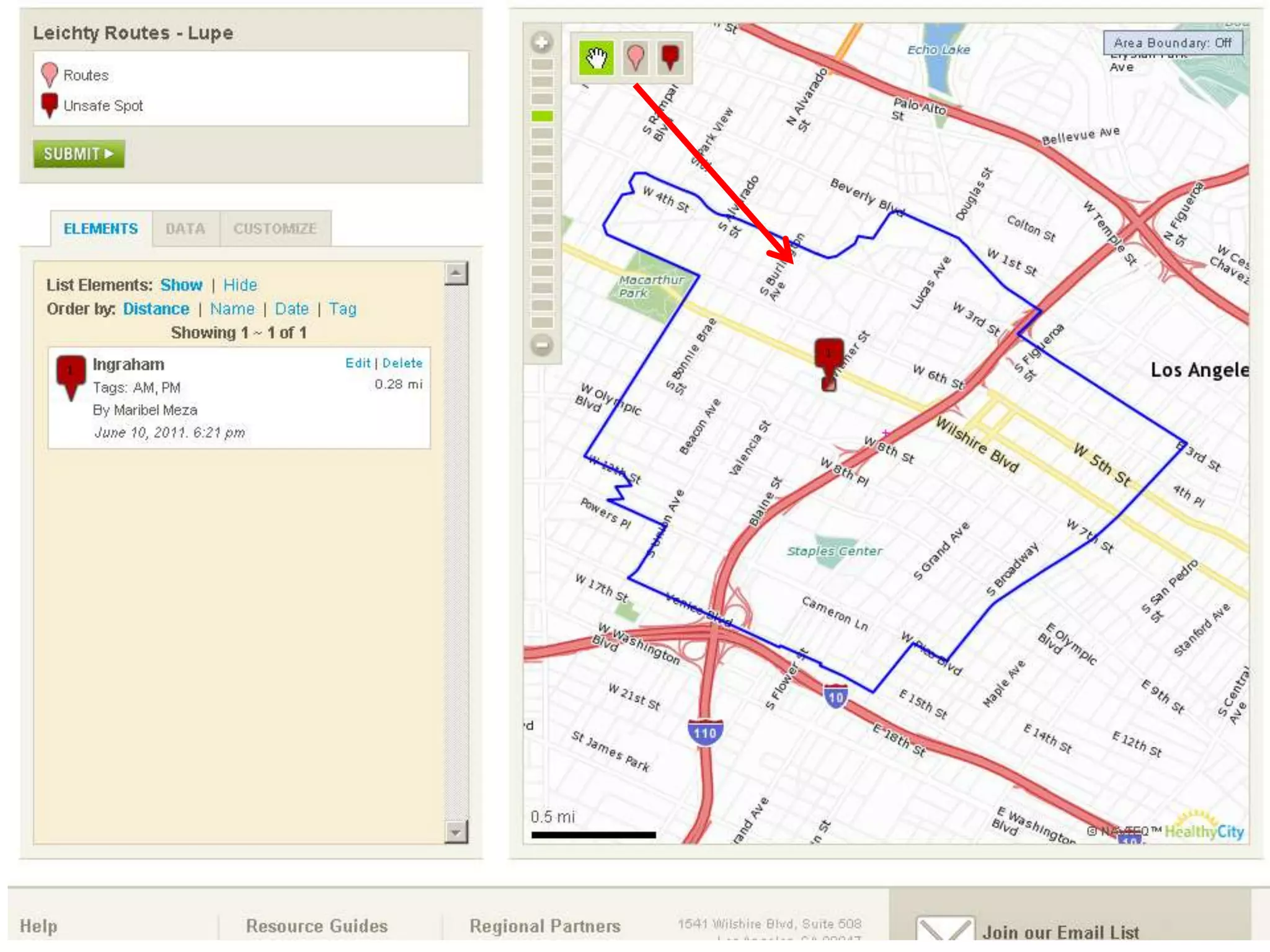
Click on View Live Map to get started plotting points

How to Use HealthyCity.org for Community Engaged Mapping

  • 1.
    Information + actionfor social changeHow to Use HealthyCity.org for Community Organizing:Focus on Community-Engaged Mapping
  • 2.
    How to ParticipateTodayOpen and close your Panel
  • 3.
    View, Select, andTest your audio
  • 4.
    Type in aquestion at ANY time during the webinar. We will pause throughout to respond.
  • 5.
    Everyone will receivean email within 24 hours with additional help tools and a link to a survey. Please fill out the survey with your feedback from this sessionHealthy City is a project of… A public policy change organization rooted in the civil rights movement
  • 6.
    A public policychange organization rooted in the civil rights movement
  • 7.
    DIRECT TECHNICAL SUPPORTTO:COMMUNITY ORGS
  • 8.
  • 9.
    GOVERNMENTONLINE MAPPING TECHNOLOGYwww.HealthyCity.orgCOMMUNITYRESEARCH LABTraining community groups to lead and sustain action-oriented research & technology projects …is an information + action resource that unites rigorous research, community voices and innovative technologiesto solve the root causes of social inequity
  • 10.
    PartnersChildren’s Hospital LosAngelesAdvancement ProjectUSC School of Social Work 2-1-1 LA CountyUnited Ways of CaliforniaChildren NowCalifornia Pan-Ethnic Health NetworkElla Baker Center for Human RightsPrevention InstituteThe California EndowmentLegal Services of No. Cal.CA Immigrant Policy CenterCA PartnershipCalifornia Rural Legal AssistanceCentral Valley Health Policy InstituteFresno Metro MinistryUnited Way Fresno CountyFirst 5 Fresno CountySacramento Housing AllianceUC Davis – Center for Regional ChangeCommunity Services Planning CouncilUnited Way Bay AreaSanta Clara Comm. Benefits CoalitionUrban Strategies CouncilSan Mateo Healthy Communities CollaborativeContra Costa Crisis CenterUnited Way of Fresno/2-1-12-1-1 San Diego2-1-1 Monterey County2-1-1 San BernardinoVolunteer Center of Riverside CountyUnited Way Bay Area/HelplinkCommunity Service Planning Council – 2-1-1 SacramentoUW Silicon Valley/Santa Clara Eden I & R – 211 AlamedaInterface Children Family Services – 2-1-1 VenturaVolunteer Center of Sonoma County
  • 11.
    Today you willlearn how to:Get a snapshot of your community of interest by accessing relevant and current datasets that provide local economic, health, demographic, and other community information. Identify a community’s assets and opportunities for improvement by mapping existing assets and areas of need.Use the “Live Mapping” feature to conduct community-engaged mapping, which can help you to gather qualitative, community-generated data from local stakeholders.
  • 13.
    Types of Dataon HealthyCity.orgServices & PointsSocial Services & NonprofitsHospitals and FQHCsPublic & Private SchoolsGrocery Stores & WIC VendorsAlcohol Outlets & Toxic SitesAnd much more…
  • 14.
    Types of Dataon HealthyCity.orgThematicPopulation Characteristics Civic ParticipationEmployment, Income & PovertyHealth Conditions, Diseases, Injuries and DeathsCrime & Public SafetyHousingAnd much more…
  • 15.
  • 16.
    Question for ParticipantsWhatcampaigns or projects are you working on that this webinar may help to inform?(Type it in the question section)
  • 17.
    You can saveand share anything you create while logged inGET STARTED!1. Get a snapshot of your community
  • 18.
    Click on Changeto select your geographyYou’re an organizer working on environmental justice issues. There is a proposed landfill in your community. Who lives in this area? Who could this negatively impact?What can you do with this information?
  • 21.
    Click the +-buttons to add community data to your map
  • 34.
    SAMPLE MAP –Not actual caseACTION  Use map to:Engage and educate the community
  • 35.
    Engage and educatethe elected officials/ decision makers at cmty meetings
  • 36.
    Develop a sharedunderstanding of an issueProposed Landfill near Kirk Elementary & other schools
  • 37.
    Learn about ourdata sources
  • 40.
    Get a snapshotof your communityQuestions?
  • 41.
    2.Identify a community’sassets and opportunities for improvement
  • 42.
    You’re working witha collaborative focused on reducing community violence and creating safe places for families to thrive. Who works, lives, or goes to school in this area?How can you reach out to more stakeholders?
  • 45.
    PRINT this listof potential partners and resources
  • 48.
    Identify a community’sassets and opportunities for improvement Questions?
  • 49.
    Resource Guides Available:Clickon Service Categories
  • 50.
    3.Use the “LiveMapping” feature to conduct a community-engaged mapping session
  • 51.
    What is Community-EngagedMapping?A group mapping exercise designed to answer specific research questions and gather community member feedback to develop place-based strategies.
  • 52.
    Community-Engaged Mapping canhelp communities…Advocate for changeArticulate and communicate their knowledgeIdentify and manage community resourcesAddress community conflictBuild community cohesionIdentify community issuesRecord and archive local knowledge
  • 53.
    Community-Engaged Mapping KeyInformation Needed… …answer specific research questions What are the research questions that you want to answer? …gather community member feedbackHow will you gather feedback? From which community members? …to develop place-based strategiesHow will you use this to inform your strategies?
  • 54.
    Safe Passages toSchool Community-engaged mapping was used to help answer the following research questions: What areas in the community do students and parents feel most unsafe?
  • 55.
    Whatroutes do students and parents travel to and from school?
  • 56.
    Whatare the environmental design issues in this area that might contribute to not feeling safe and/or a lack of personal security?Safe Passages to SchoolStudents and parents were able to discuss and share locations of unsafe places, routes taken to school, and what environmental design issues they felt contributed to the lack of safety
  • 57.
    Safe Passages toSchool Key Advantages: data entry during the event
  • 58.
    multiple computerscan enter data simultaneously
  • 59.
    results, patterns,etc. from participants can be seen and discussed immediatelyYou’ll need to register for or Log in to your account
  • 60.
    Click on Createa Live Map
  • 66.
    Click on ViewLive Map to get started plotting points
  • 78.
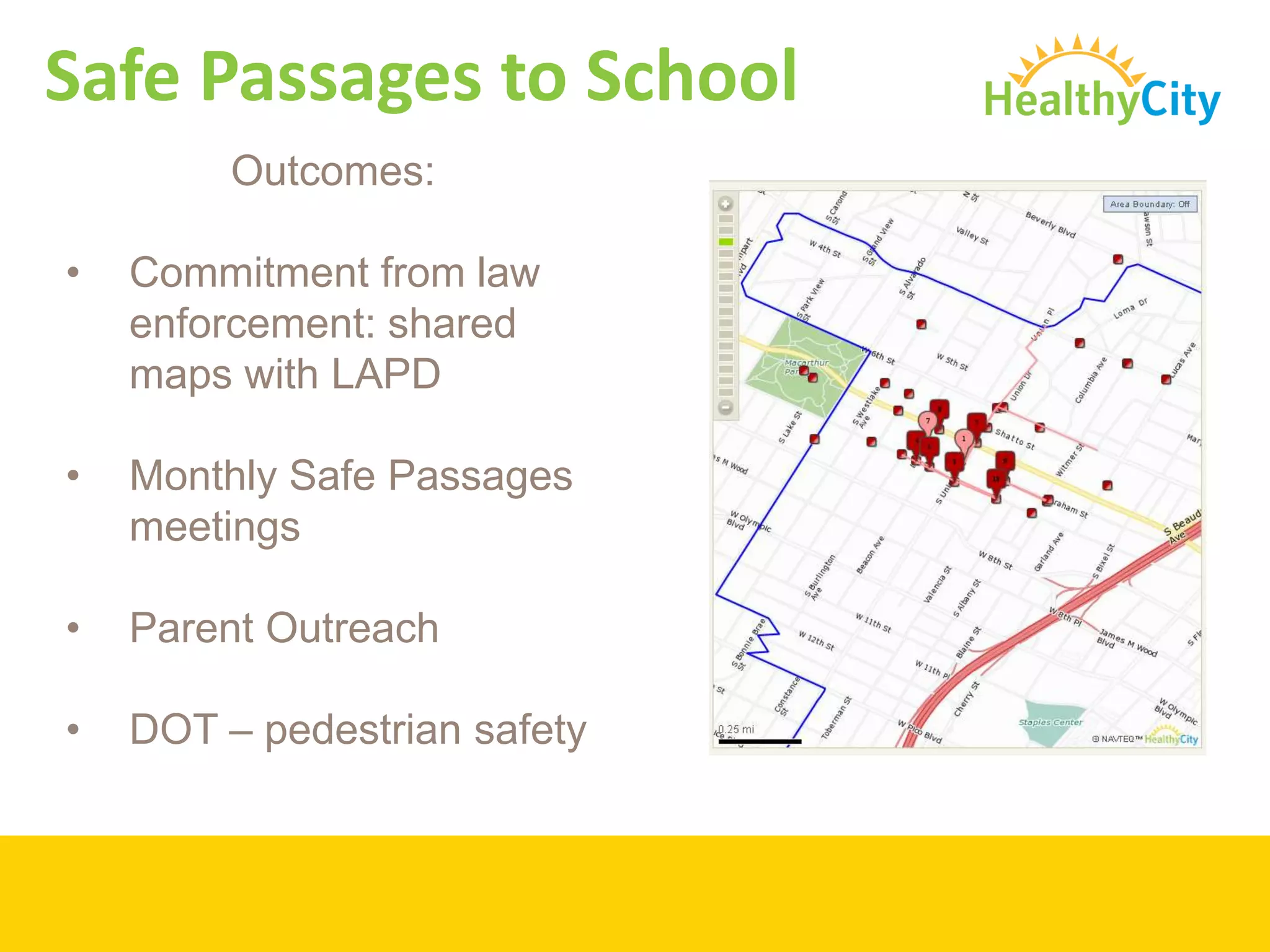
    Safe Passages toSchool Outcomes: Commitment from law enforcement: shared maps with LAPD
  • 79.
  • 80.
  • 81.
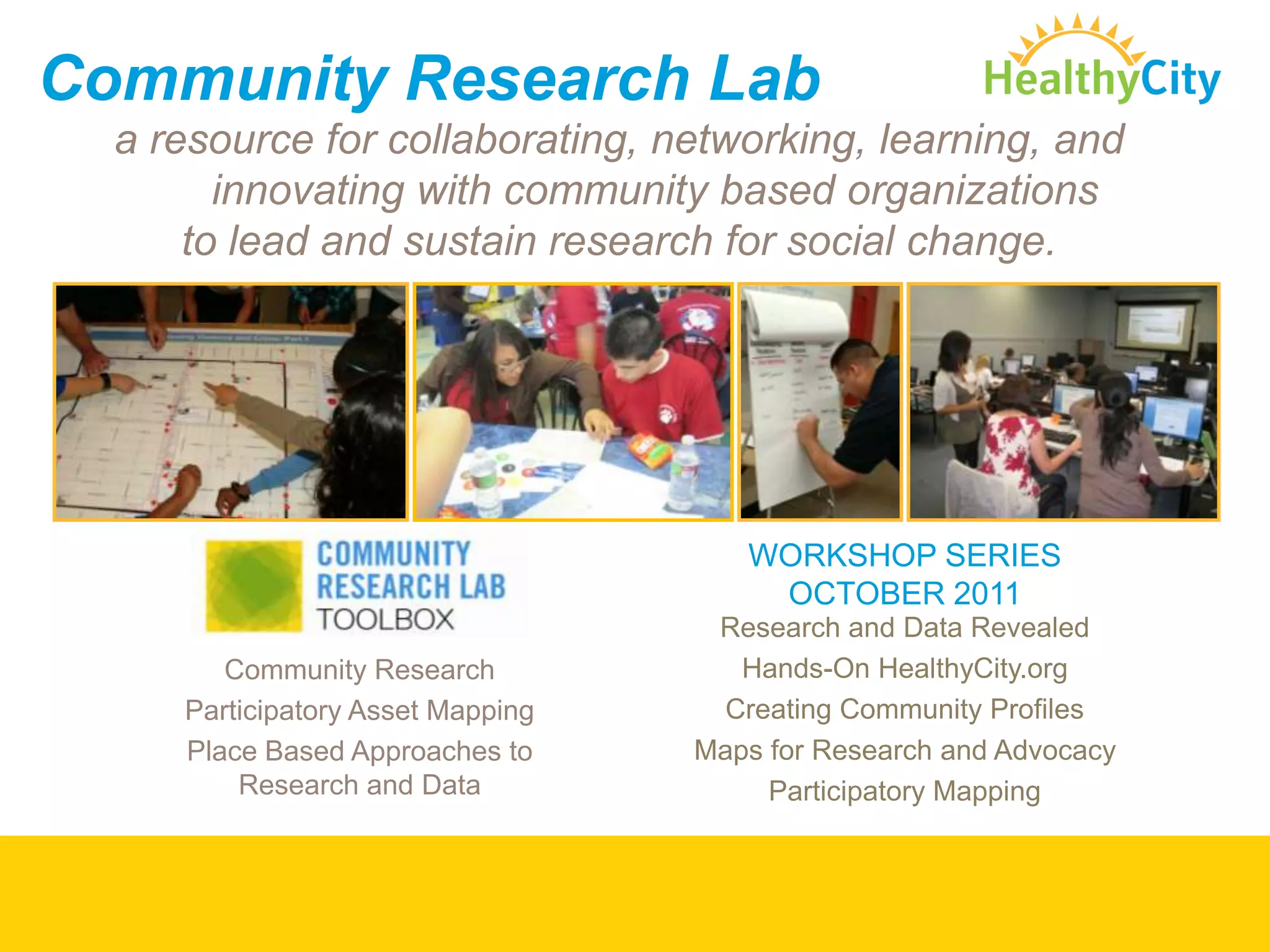
    DOT – pedestriansafetyCommunity Research Labshares best practices and methods for CBOs interested in supporting their strategies with research that combines community knowledge with Healthy City technology.WORKSHOP SERIESOCTOBER 2011Introduction to Community ResearchFacilitating a Community-Engaged Mapping ActivityCreating Maps and Community ProfilesResearch to ActionCommunity ResearchParticipatory Asset MappingCommunity Based Participatory Action Research
  • 82.
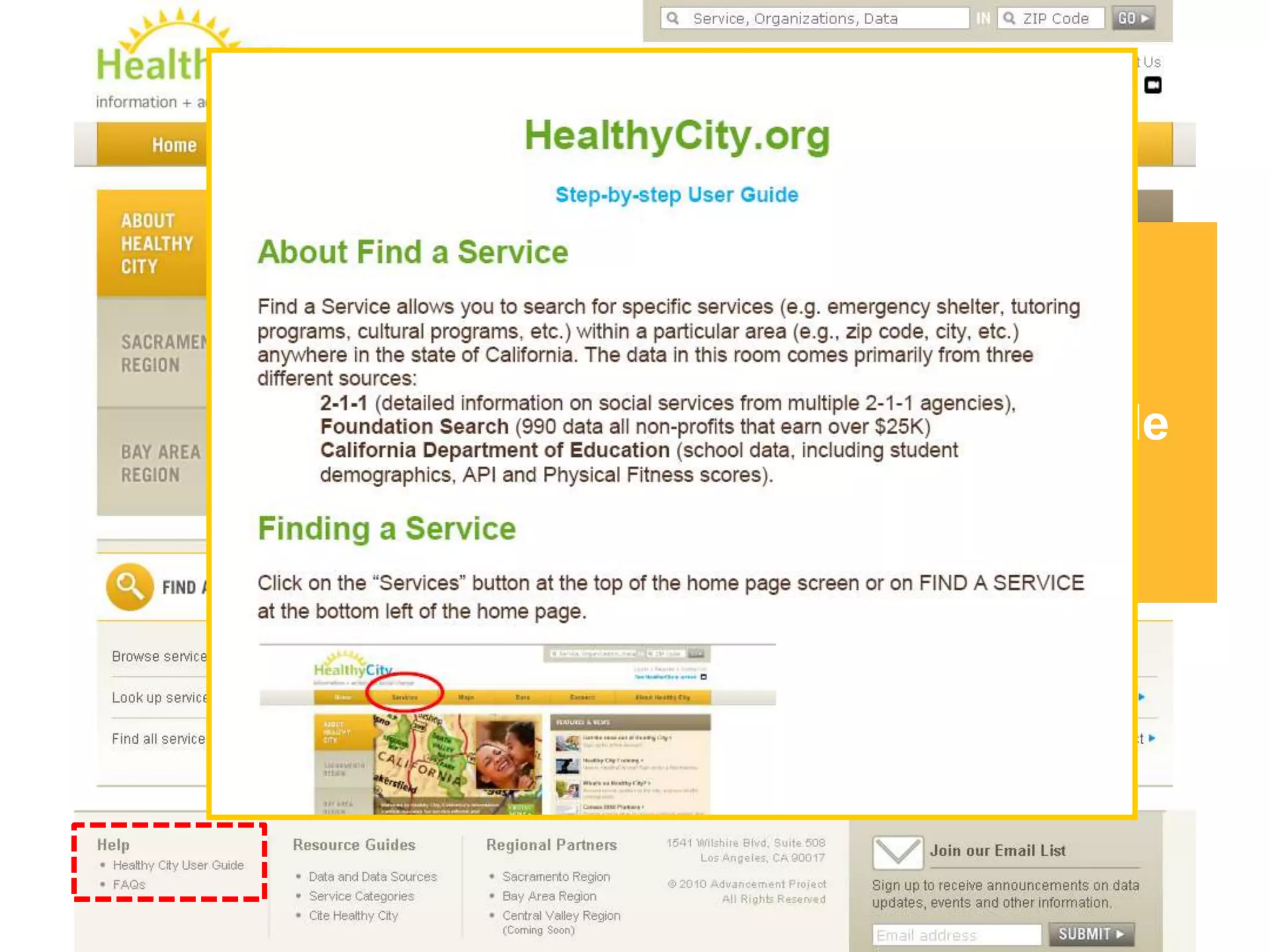
    Help is Available:Clickon Healthy City User Guideor FAQs
  • 83.

Editor's Notes

  • #12 Viewing point and thematic data together enables you to get an initial picture of the distribution of resources, while understanding a particular characteristic about an area. For example, are there educational resources in areas with low educational attainment? Is there access to fresh food in areas with a high concentration of people with diabetes?
  • #15 You’re an organizer around environmental justice issues in Fresno. Imagine there is a proposed landfill in your community. You want to bring attention to this issue, noting who lives in this area, and who will could this negatively impact.
  • #25 A Superfund site is an uncontrolled or abandoned place where hazardous waste is located, possibly affecting local ecosystems or people.
  • #26 A Superfund site is an uncontrolled or abandoned place where hazardous waste is located, possibly affecting local ecosystems or people.
  • #31 Engage and educate the community Engage and educate the elected officials/ decision makers at cmty meetingsDevelop a shared understanding of an issue
  • #36 You’re working with a collaborative that wants to reduce community violence …
  • #48 To enable communities to advocate for changeTo help communities articulate and communicate spatial knowledge to external agencies/ bodiesTo assist communities in resource management and community land-use planningTo address community conflict (between communities and outsiders, as well as internally)To increase capacity within communities (building community cohesion)To enable communities to record and archive local knowledgeSupport communities to articulate and communicate their knowledge to external agencies/bodiesEnable communities to record and archive local knowledgeSupport communities in resource management and community land-use planningEnable communities to advocate for changeIncrease capacity within communities (building community cohesion)Help address community conflict (between communities and outsiders, as well as internally)Help communities find out what they don’t already know, or confirm their suspicions about a particular place
  • #49 Topic & Geoe.g. homelessness? health disparities? youth violence? In Boyle Heights? Magnolia Place? Belmont?Based on community need, interest, mission and capacity to take action, what is the general topic you are addressing?What are the rough geographic boundaries where you would like to engage participants and take action?Some considerations:The larger the area, the more challenging it will be to collect representative dataDo these boundaries more or less describe a cohesive population or geography?The ‘community’ may not agree with your definition of the community boundaries, so consider building in time to discuss and adjust these boundariesCollaboratorsBased on the general issue and geography - who are the key stakeholders?Advocacy groups? Residents? Service providers? If you already have a collaborative, consider conducting a stakeholder analysis to see who might still be missing. And of these, who will you collaborate with? Will this group address the different constituents of the community?What is the level of participation in the different elements of the process?Clarify each participants’ expectations of the process, and in what way each person or group wants to contributeWhat is their interest and why? What resources do they have available?Issues, goals & participantsWhat is the problem/issue?How do you anticipate using the findings?Who will you collect data from?Who has specific knowledge of the topic?Do they have knowledge because they work in a specific field?Do they have knowledge because of their experience? Live, work, or go to school in the neighborhood?Are a certain age group?Engage in a particular activity?How many participants will you have?What is a good sample to be representative?What is your capacity to engage participants?Who will be your target audience for the research findings?BEWARE: It’s tempting to want to know it all! Simple is often clearest Clarify research Q & data neededBased on the issue and participants, what are the specific research questions you would like to answer? (review from workshop 1 and 3!)What do you want to know? What do you want to prove, highlight or draw attention to that is not already known, or if known, not sufficiently demonstrated? What can you feasibly act upon?What specific data do you need to answer this question? What’s available?May be a combination of community knowledge and administrative datasetse.g. perception of safety and crime statisticse.g. perception of the availability of recreation and open space and the location of parks and open spaceWhat can actually be collected?Test your assumptions! Will the data you collect both answer your research question and provide you a way to take actionExercise devpt, formatDevelop mapping exercise and data collection toolsDevelop data collection tools based on the format you would like to use to address your research question. Remember the importance of understanding the geographic component of your data – do you need addresses? Zip codes?Will you use web-based tools? Like healthycity.org!Will you need to create original forms?Determine the best participation formatWill you collect this data in person?What format will best collect the information you are seeking?Do you want to have the opportunity for group discussion?Do you have interests beyond data collection (organizing, coalition building, etc.)Examples of some participation formats:Surveys Focus groups over time, or all at once Large conveningIndividual interviews Tip! When working with healthycity.org’s live mapping, ideally focus groups are no larger than 4-5 people per computer!Tip! If you are organizing across a larger community, consider structuring your focus group break-outs around specific parts of the community, based on the experiences of participantsTip! Sometimes it makes the most sense to base focus groups on other things that people have in common: such as age, or language, etc.Based on the format (how many people) and tools (Web-based), start early to locate and secure the location for your event.Recruitment planPrepare and test web-based and other tools for data collectionConsider feasibility given the timeline & resources (people, materials, space)Develop analysis plan (review workshop 2!)A facilitation guide can be very important in ensuring consistent data collection every time and by all facilitators! Consistency in the data collected is critical to the validity of your data. Collecting data in the same way every time can help with consistency. Adhere to the script. Ask questions in the same way, answer questions in the same way.Suggestions when developing your facilitation guide. Lay out the exercise with step-by-step instructionsIdentify key roles in the exerciseSupport planning (checklist of materials, etc.)Test your exercise and facilitation guide!Are the questions clear?Do you have enough time?Can you imagine/anticipate some of the common questions or confusion that might come up? Do you anticipate conflict? How will you deal with these elements?Test the equipment, internet and visit the location for your eventREMEMBER! Have a back-up plan! Something can always go wrong with technology or any number of other moving pieces. Anticipate! And plan ahead - what will you do if this happens to you!?TrainingTrain well. Practice!! Consider training more than once, role playsConsider cross-training different roles just in caseIt is critical that each member understands the purpose, rationale, and issue being addressed very well. This will help them respond to unexpected issues as well as collect data consistentlyTrain folks on the back-up plan!Be clear that facilitators must be as ‘objective’ as possible, and avoid introducing their own opinions and bias. Consider confidentiality – fully disclose your collection and use of individual dataTrain facilitators to get permission for photos, and to observe privacy if someone does not wish to have their photo taken.Analysis & DisseminationDevelop plan for presenting and disseminating findings (review from workshop 2!), consider:What: What is the story that you are trying to tell? What do you want to show or what is the question that you are aiming to answer or approach with this map?Who:Who is your audience? Who will you show these findings to? When:Are you looking at a problem that has been ongoing? Is it a particular point in time?How:How will present this information and research? Report? On your website? At a public hearing? At a community meeting?Strategy for ActionDevelop Engagement Strategy for Action (review from workshop 3!)Determine how you want to engage community members, CBOs, elected officials, etc. – strategies may be different for each groupConduct interviews with residents, confirm or “ground-truth” dataPresentation of findings to CBOs to gather support for advocacy
  • #72 Shared maps and feedback with LAPD (along w/ bell sched)Posted in their officeChanged their patrollingMonthly safepassages meetings (school principal, AP & other lead orgs, parent outreach organizer, probation, law)Parent Outreach (so they can come to meetings for continual point of contact, feedback, report back on improvements and continuing problems)Department of Public Transportation – the safe passages collab may qualify for funding from state b/c this corner is in top 5 for collisions, and in effort to increase pedestrian safety is making funding available to collaboratives who work on these issues.