Guillermo Leturio | +49 89 8091327 61 | gleturio@simscale.com
Cyclone Separator
CFD Demo Project
Project Synopsis
Cyclone Separator CFD Simulation
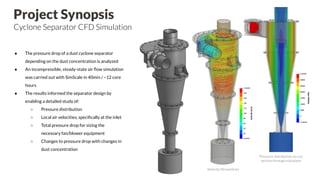
● The pressure drop of a dust cyclone separator
depending on the dust concentration is analyzed
● An incompressible, steady-state air flow simulation
was carried out with SimScale in 40min / ~12 core
hours
● The results informed the separator design by
enabling a detailed study of:
○ Pressure distribution
○ Local air velocities, specifically at the inlet
○ Total pressure drop for sizing the
necessary fan/blower equipment
○ Changes to pressure drop with changes in
dust concentration
Velocity Streamlines
Pressure distribution on cut
section through mid plane
Simulation Setup
CAD Model & Boundary Conditions
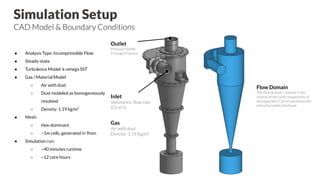
Outlet
Pressure Outlet
0 Gauge Pressure
Flow Domain
The flow domain / volume is the
inverse of the solid components of
the separator. Can be automatically
extracted within SimScale
Inlet
Volumetric flow rate
0.3 m3
/s
Gas
Air with dust
Density: 1.19 Kg/m³
● Analysis Type: Incompressible Flow
● Steady-state
● Turbulence Model: k-omega SST
● Gas / Material Model
○ Air with dust
○ Dust modeled as homogeneously
resolved
○ Density: 1.19 kg/m³
● Mesh:
○ Hex-dominant
○ ~1m cells, generated in 9min
● Simulation run:
○ ~40 minutes runtime
○ ~12 core hours
Workflow
Cyclone Separator CFD Simulation
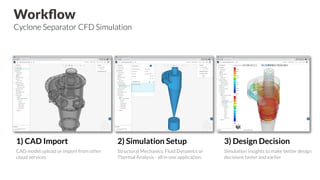
3) Design Decision
Simulation insights to make better design
decisions faster and earlier
2) Simulation Setup
Structural Mechanics, Fluid Dynamics or
Thermal Analysis - all in one application.
1) CAD Import
CAD model upload or import from other
cloud services
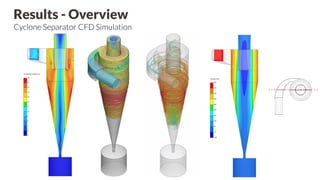
Results - Overview
Cyclone Separator CFD Simulation
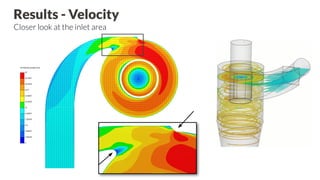
Results - Velocity
Closer look at the inlet area
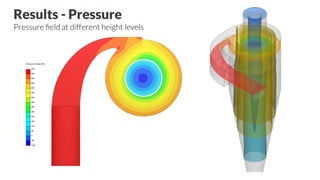
Results - Pressure
Pressure field at different height levels
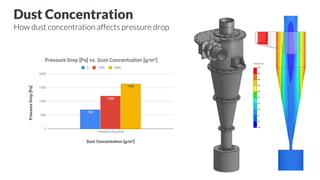
Dust Concentration
How dust concentration affects pressure drop
Thank you!
www.simscale.com

How to Use CFD to Evaluate Your Cyclone Separator Design

  • 1.
    Guillermo Leturio |+49 89 8091327 61 | gleturio@simscale.com Cyclone Separator CFD Demo Project
  • 2.
    Project Synopsis Cyclone SeparatorCFD Simulation ● The pressure drop of a dust cyclone separator depending on the dust concentration is analyzed ● An incompressible, steady-state air flow simulation was carried out with SimScale in 40min / ~12 core hours ● The results informed the separator design by enabling a detailed study of: ○ Pressure distribution ○ Local air velocities, specifically at the inlet ○ Total pressure drop for sizing the necessary fan/blower equipment ○ Changes to pressure drop with changes in dust concentration Velocity Streamlines Pressure distribution on cut section through mid plane
  • 3.
    Simulation Setup CAD Model& Boundary Conditions Outlet Pressure Outlet 0 Gauge Pressure Flow Domain The flow domain / volume is the inverse of the solid components of the separator. Can be automatically extracted within SimScale Inlet Volumetric flow rate 0.3 m3 /s Gas Air with dust Density: 1.19 Kg/m³ ● Analysis Type: Incompressible Flow ● Steady-state ● Turbulence Model: k-omega SST ● Gas / Material Model ○ Air with dust ○ Dust modeled as homogeneously resolved ○ Density: 1.19 kg/m³ ● Mesh: ○ Hex-dominant ○ ~1m cells, generated in 9min ● Simulation run: ○ ~40 minutes runtime ○ ~12 core hours
  • 4.
    Workflow Cyclone Separator CFDSimulation 3) Design Decision Simulation insights to make better design decisions faster and earlier 2) Simulation Setup Structural Mechanics, Fluid Dynamics or Thermal Analysis - all in one application. 1) CAD Import CAD model upload or import from other cloud services
  • 5.
    Results - Overview CycloneSeparator CFD Simulation
  • 6.
    Results - Velocity Closerlook at the inlet area
  • 7.
    Results - Pressure Pressurefield at different height levels
  • 8.
    Dust Concentration How dustconcentration affects pressure drop
  • 9.