CONTENTS CHILLER BASICS WORKING PRINCIPLE OF CHILLER
• REFRIGERATION CYCLE
• CHILLER COMPONENTS
• COMPONENTS FUNCTIONS & COMPARISON
• LOAD TERMINAL CONTROL OPTIONS
• CHILLER SYSTEM CONFIGURATION
• TECHNICAL TERMINOLOGY
• CHILLLER PERFORMANCE MEASUREMENT
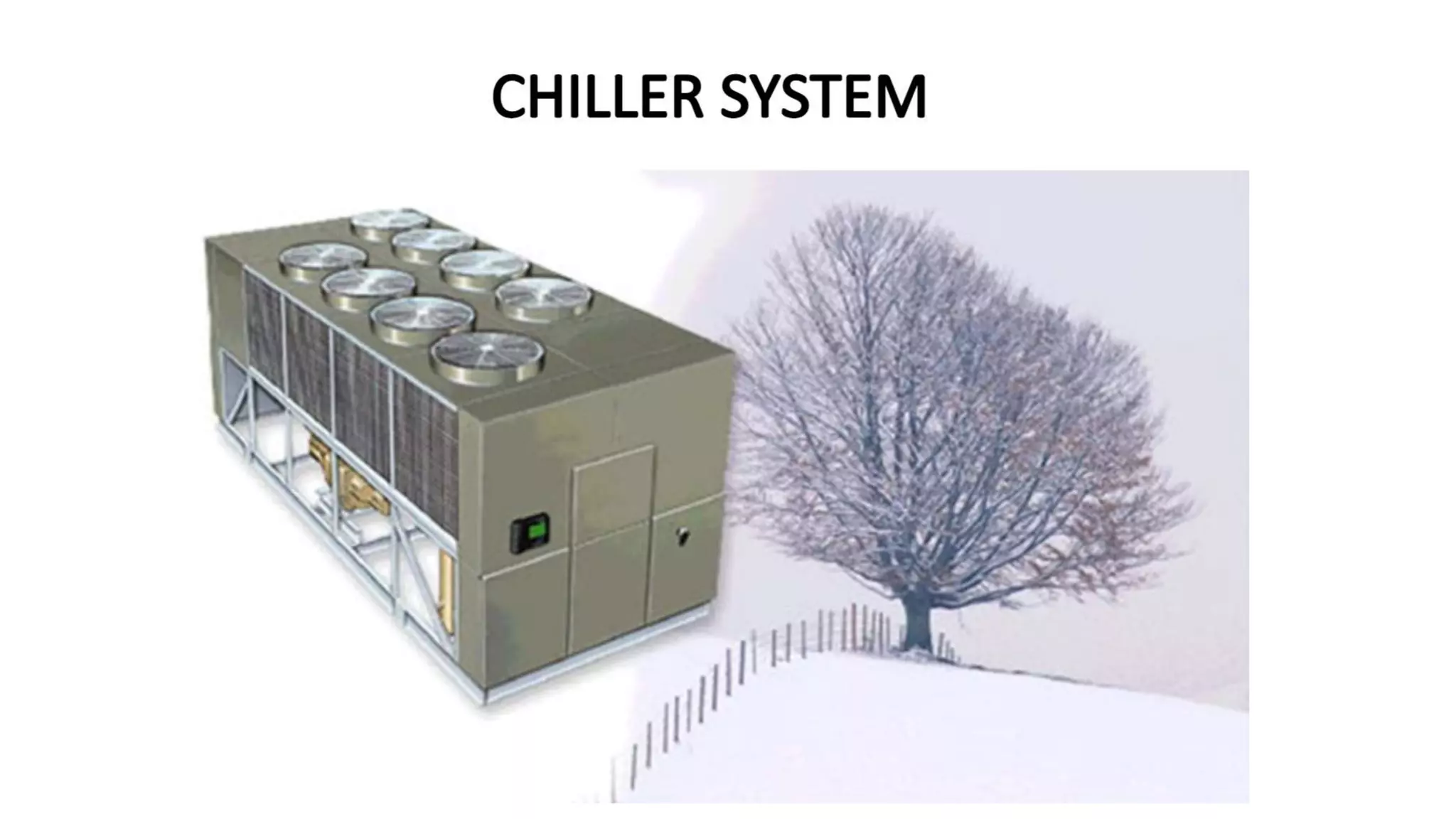
CHILLER BASICS What is a Chiller?
The refrigeration machine that produces chilled water is referred
to as a “Chiller”. A chiller is a water-cooled air conditioning
system that cools inside air, creating a more comfortable and
productive environment.
Basically, there are two types of chillers based upon the
refrigeration cycle:
1. Vapor Compression Chiller
2. Absorption Refrigeration Chiller
Based upon the condensation process of working fluid , there are
two types of chiller:
1. Air-Cooled Chiller
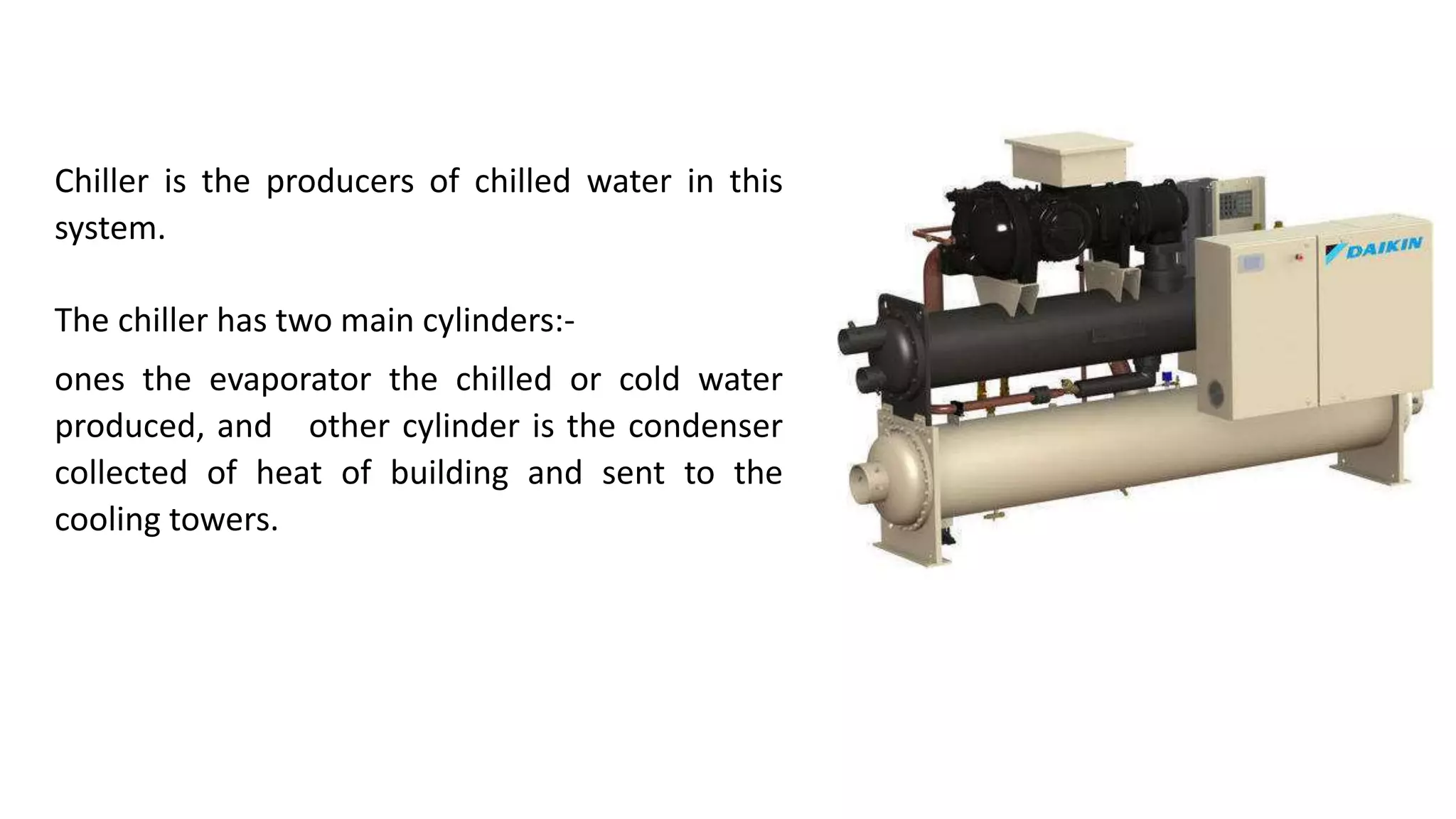
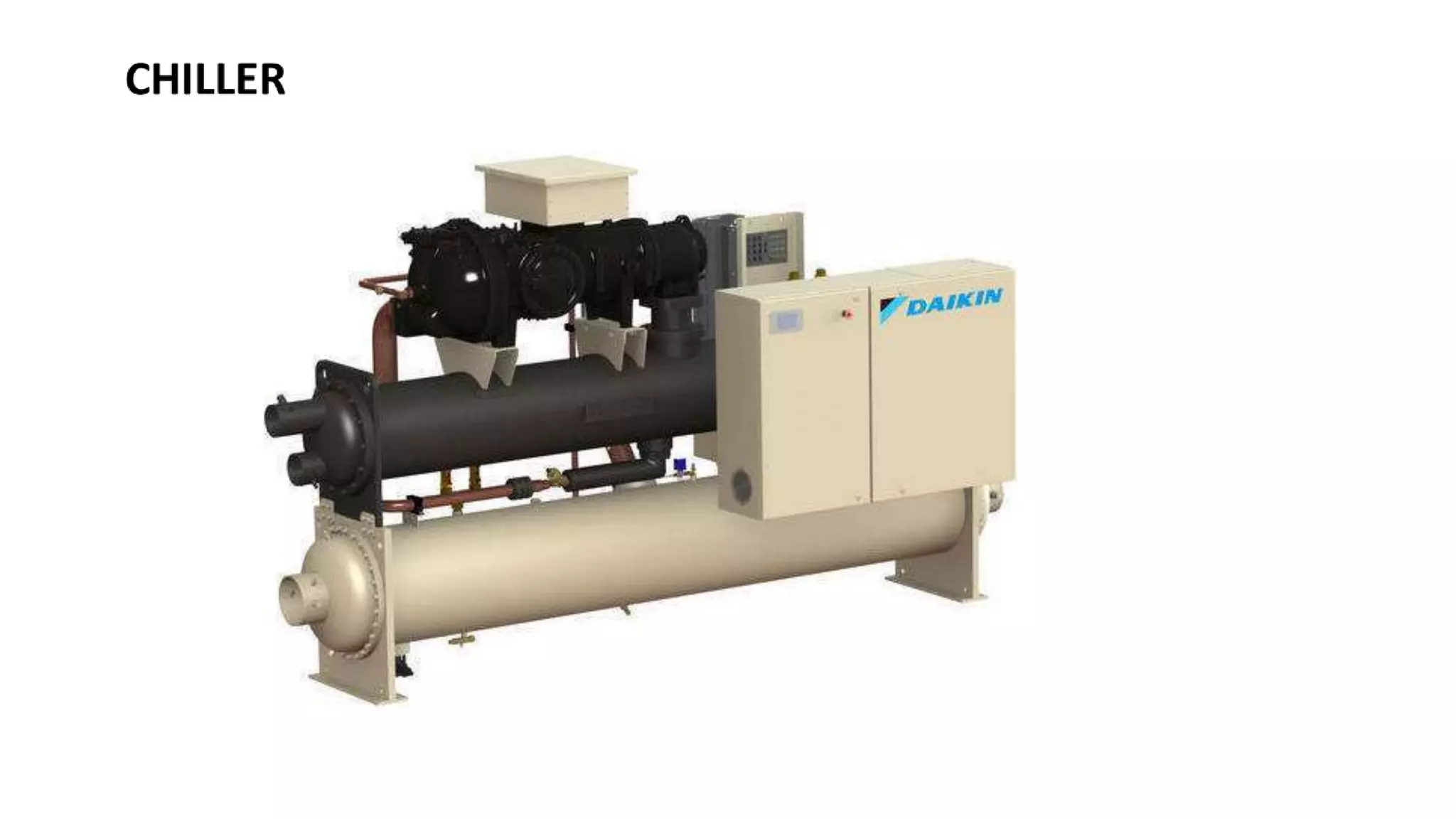
Chiller is the producers of chilled water in this
system.
The chiller has two main cylinders:-
ones the evaporator the chilled or cold water
produced, and other cylinder is the condenser
collected of heat of building and sent to the
cooling towers.
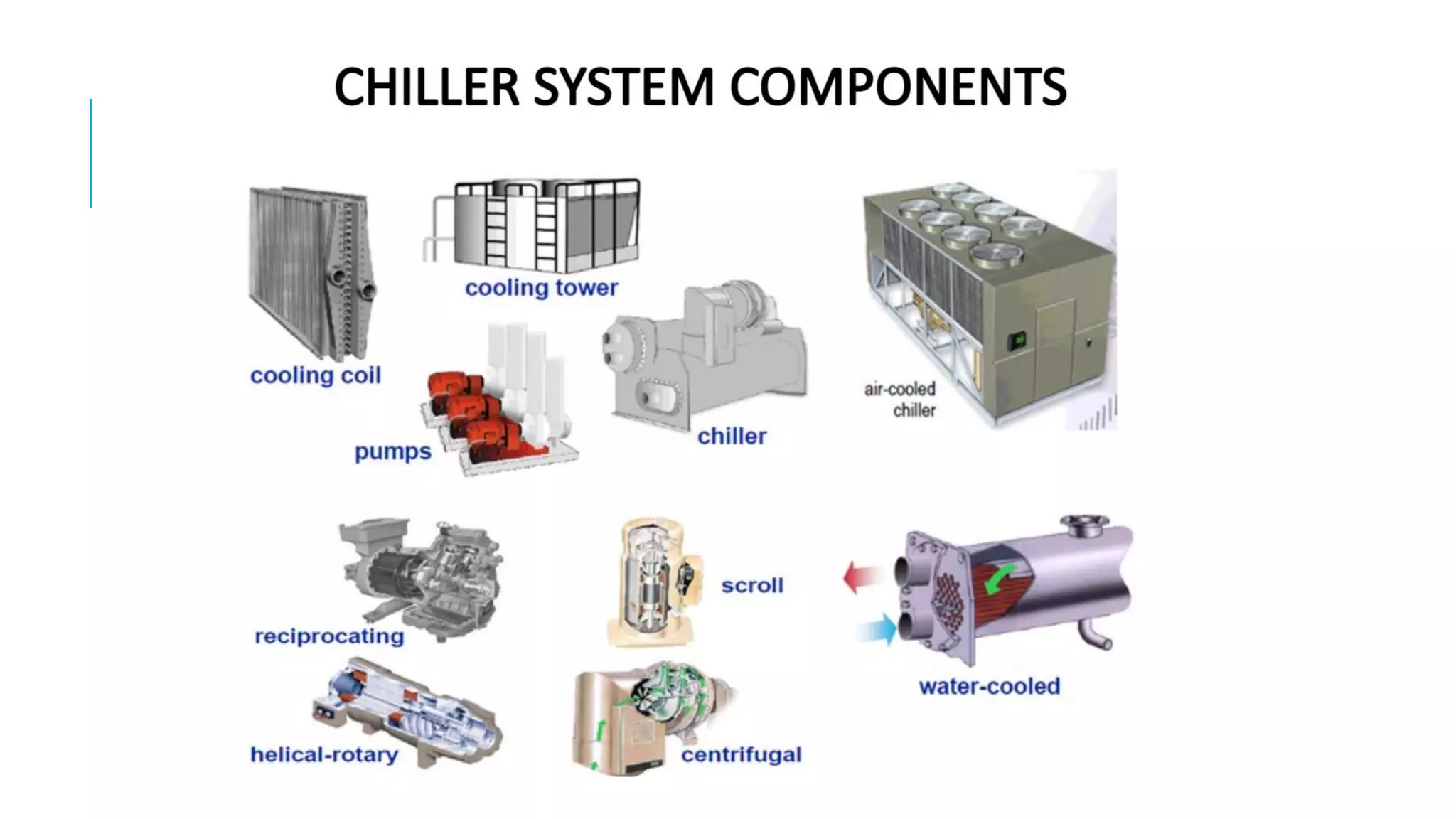
CHILLED WATER SYTEM COMPONENETS
1. Chiller (Evaporator)
2. Compressors
3. Chilled Water Pumps
4. ACC in Air Cooled Chiller
5. Cooling Tower in Water-cooled Chiller
6. Condensate water pumps in water-cooled chiller
7. Load Terminals (chilled water cooling coils)
8. Chilled and condenser-water distribution systems include piping, expansion valve,
control valve, check valves, strainers etc.
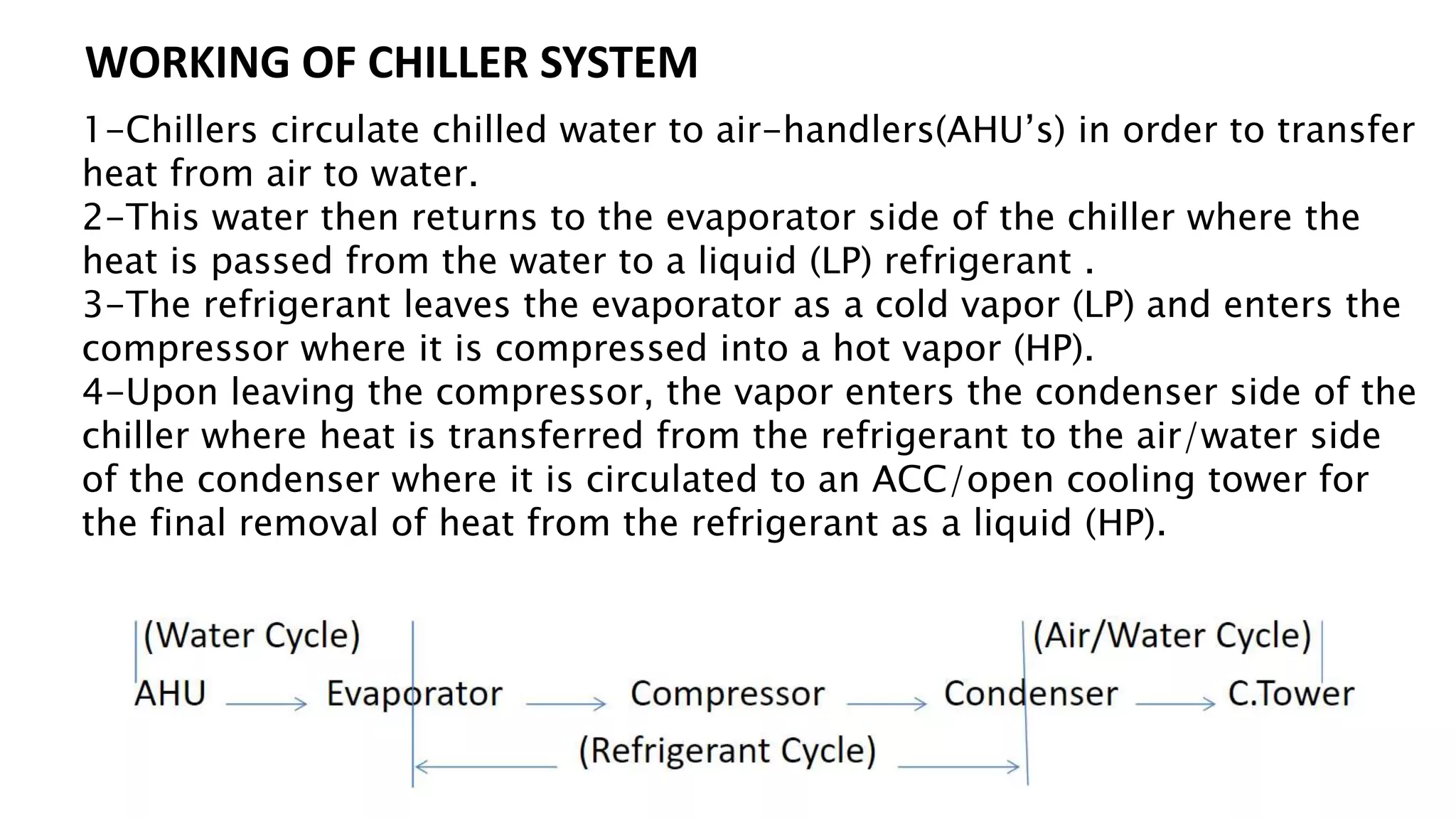
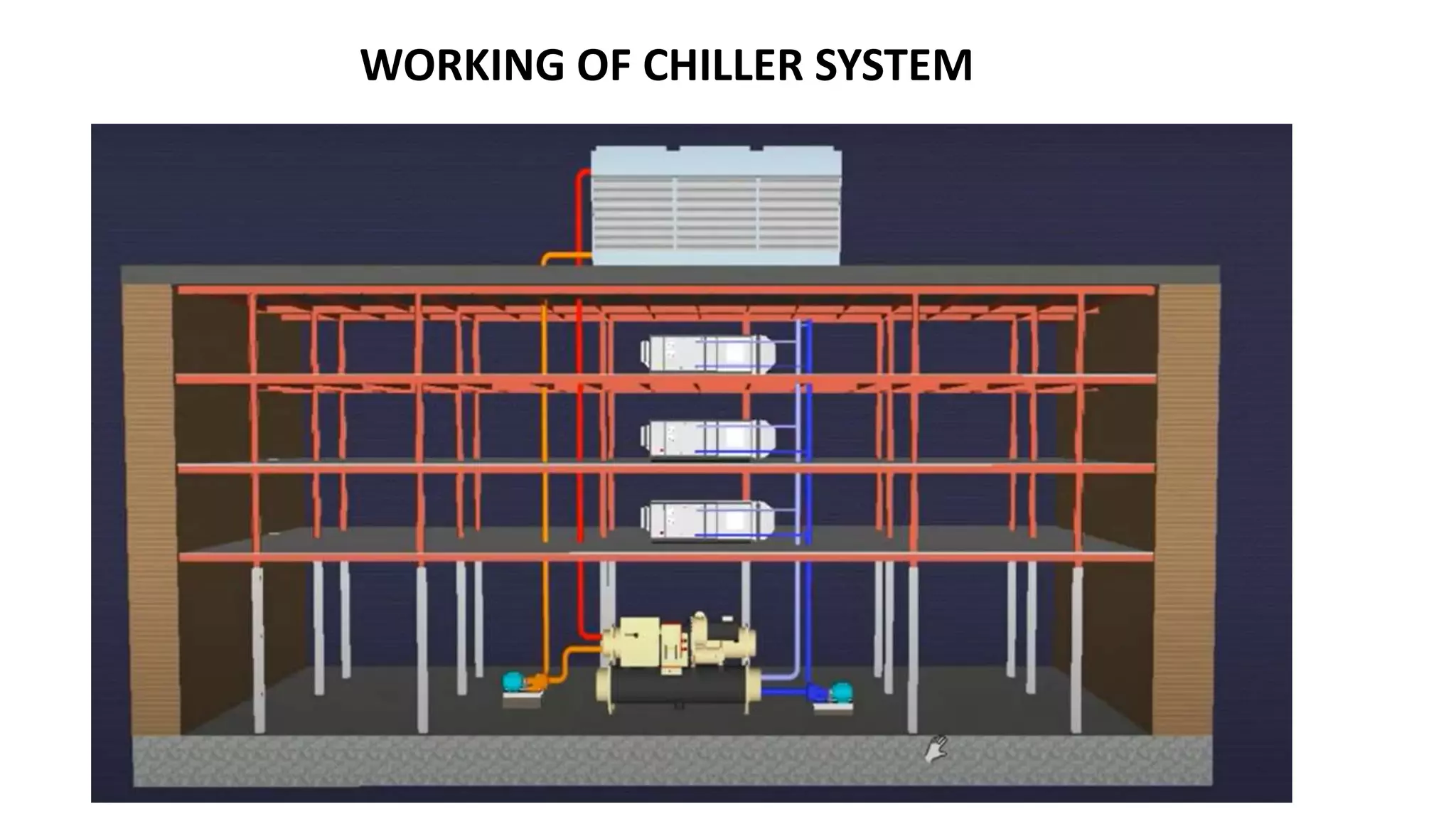
WORKING OF CHILLER SYSTEM
1-Chillers circulate chilled water to air-handlers(AHU’s) in order to transfer
heat from air to water.
2-This water then returns to the evaporator side of the chiller where the
heat is passed from the water to a liquid (LP) refrigerant .
3-The refrigerant leaves the evaporator as a cold vapor (LP) and enters the
compressor where it is compressed into a hot vapor (HP).
4-Upon leaving the compressor, the vapor enters the condenser side of the
chiller where heat is transferred from the refrigerant to the air/water side
of the condenser where it is circulated to an ACC/open cooling tower for
the final removal of heat from the refrigerant as a liquid (HP).
WORKING OF CHILLER SYSTEM
EVAPORATOR
EXPANSION VALVE
Water cycle in the evaporator
Evaporator
Water cycle in the condenser
condenser
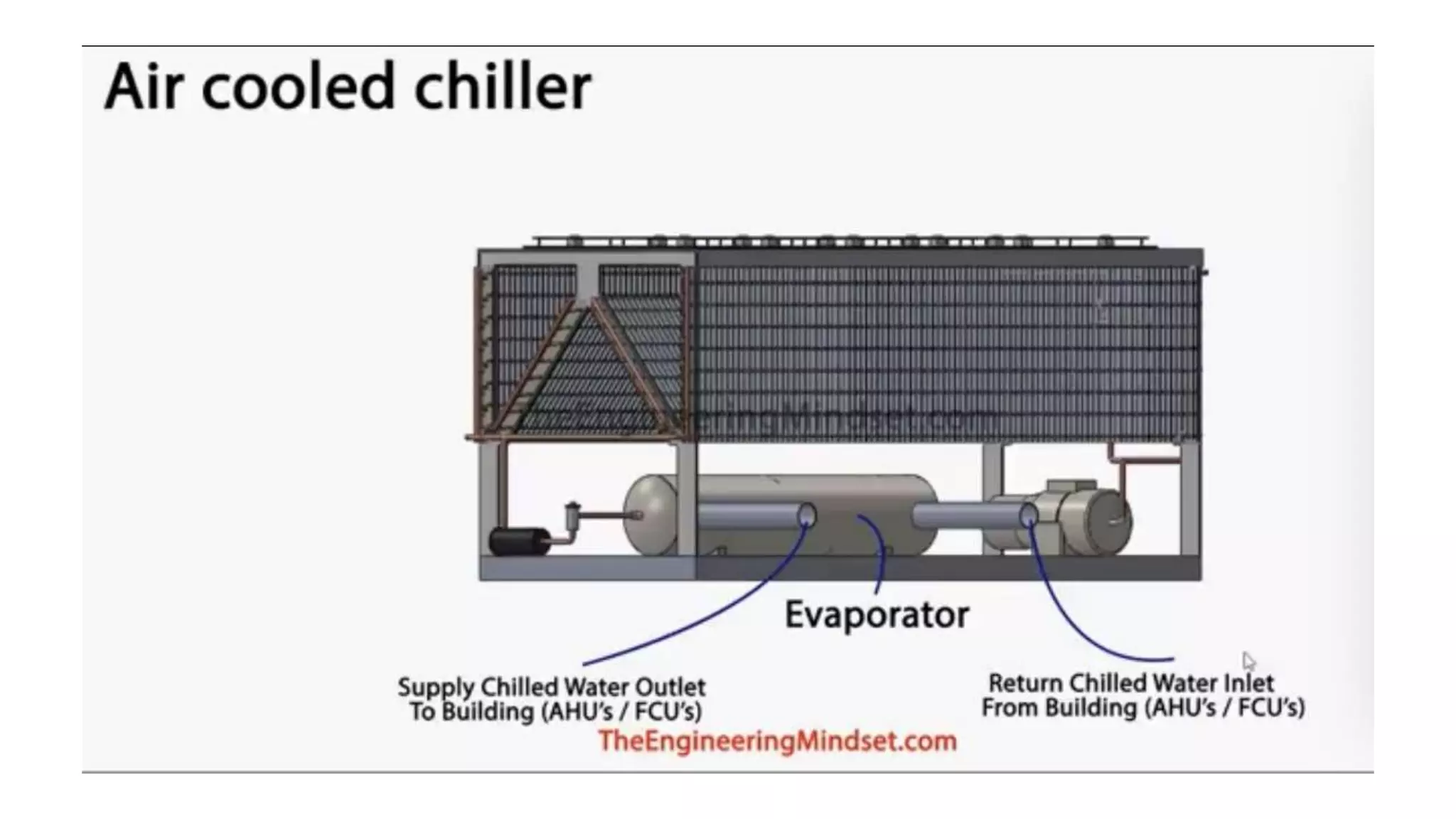
Air cooled chiller
1.Tons of refrigeration (TR):
One ton of refrigeration is the amount of cooling obtained by one ton of ice
melting in one day i.e. kcal/h or thermal kW.
2. Net Refrigerating Capacity:
A quantity defined as the mass flow rate of the evaporator water multiplied by
the difference in enthalpy of water entering and leaving the cooler, expressed in
kcal/h, tons of Refrigeration.
3. kW/ton rating:
Commonly referred to as efficiency, but actually power input to compressor
motor divided by tons of cooling produced, or kilowatts per ton (kW/ton). Lower
kW/ton indicates higher efficiency.
TERMINOLOGY
4.Coefficient of Performance (COP):
Chiller efficiency measured in cooling output (kcal/hr) divided by electric power input.
5. Energy Efficiency Ratio (EER):
Performance of smaller chillers and rooftop units is frequently measured in EER rather
than kW/ton. EER is calculated by dividing a chiller's cooling capacity (in kcal/h) by its
power input (in watts) at full-load conditions. The higher the EER, the more efficient the
unit.
TERMINOLOGY
● The refrigeration TR is assessed as
TR = Q x Cp x (Ti – To) / 3024
Where Q is mass flow rate of coolant in kg/hr
Cp is coolant specific heat in kCal /kg deg C
Ti is inlet, temperature of coolant to evaporator (chiller) in °C
To is outlet temperature of coolant from evaporator (chiller) in °C.
The above TR is also called as chiller tonnage.
● The specific power consumption kW/TR is a useful indicator of the performance of
refrigeration system. By measuring refrigeration duty performed in TR and the kilowatt
inputs, kW/TR is used as a reference energy performance indicator.
PERFORMANCE ASSESSMENT OF CHILLER SYSTEM
● In a centralized chilled water system, apart from the
compressor unit, power is also consumed by the chilled
water (secondary) coolant pump as well condenser water
(for heat rejection to cooling tower) pump and cooling
tower fan in the cooling tower.
Effectively, the overall energy consumption would be
towards:
– Compressor kW
– Chilled water pump kW
– Condenser water pump kW
– Cooling tower fan kW, for induced / forced draft towers
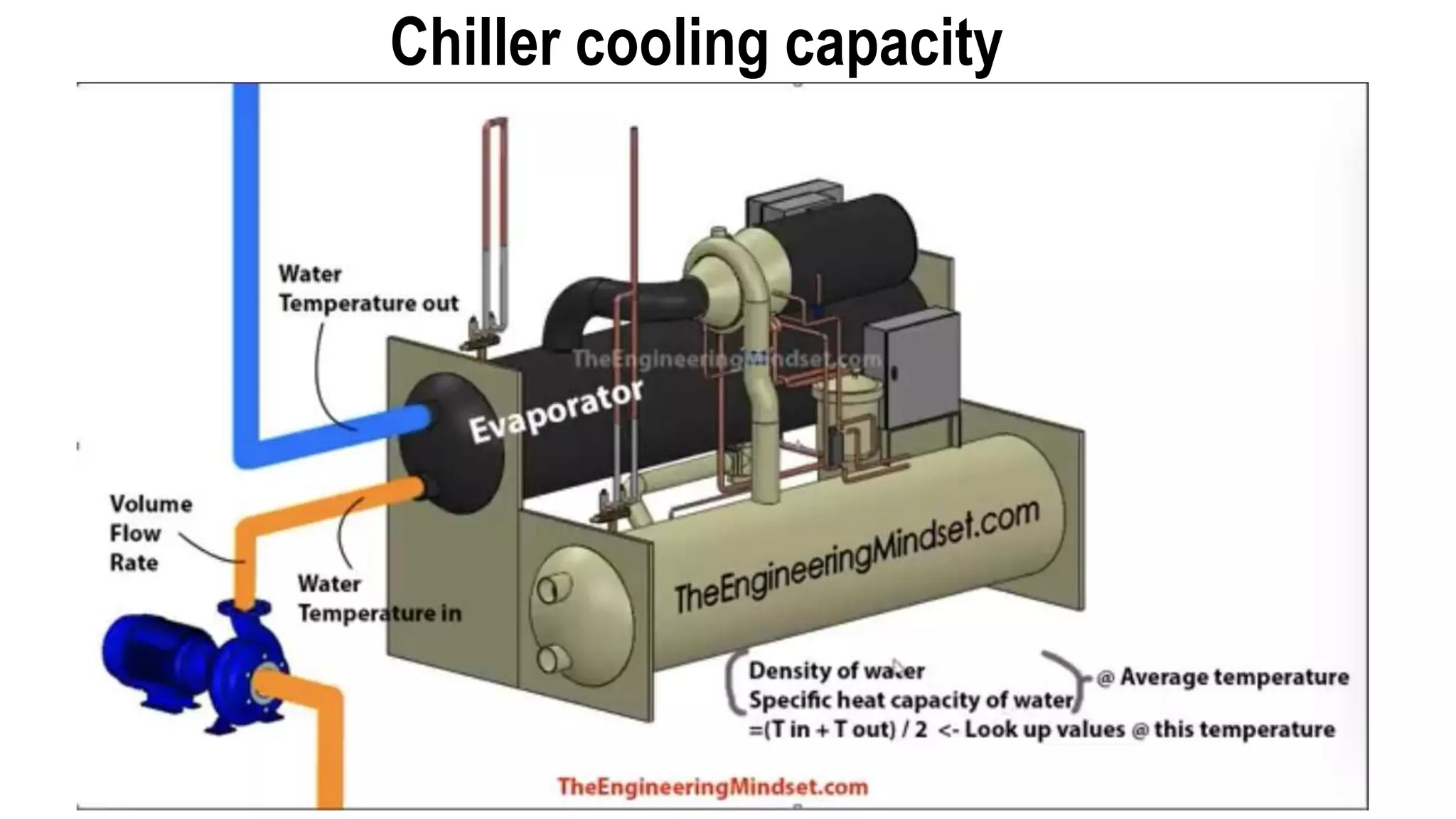
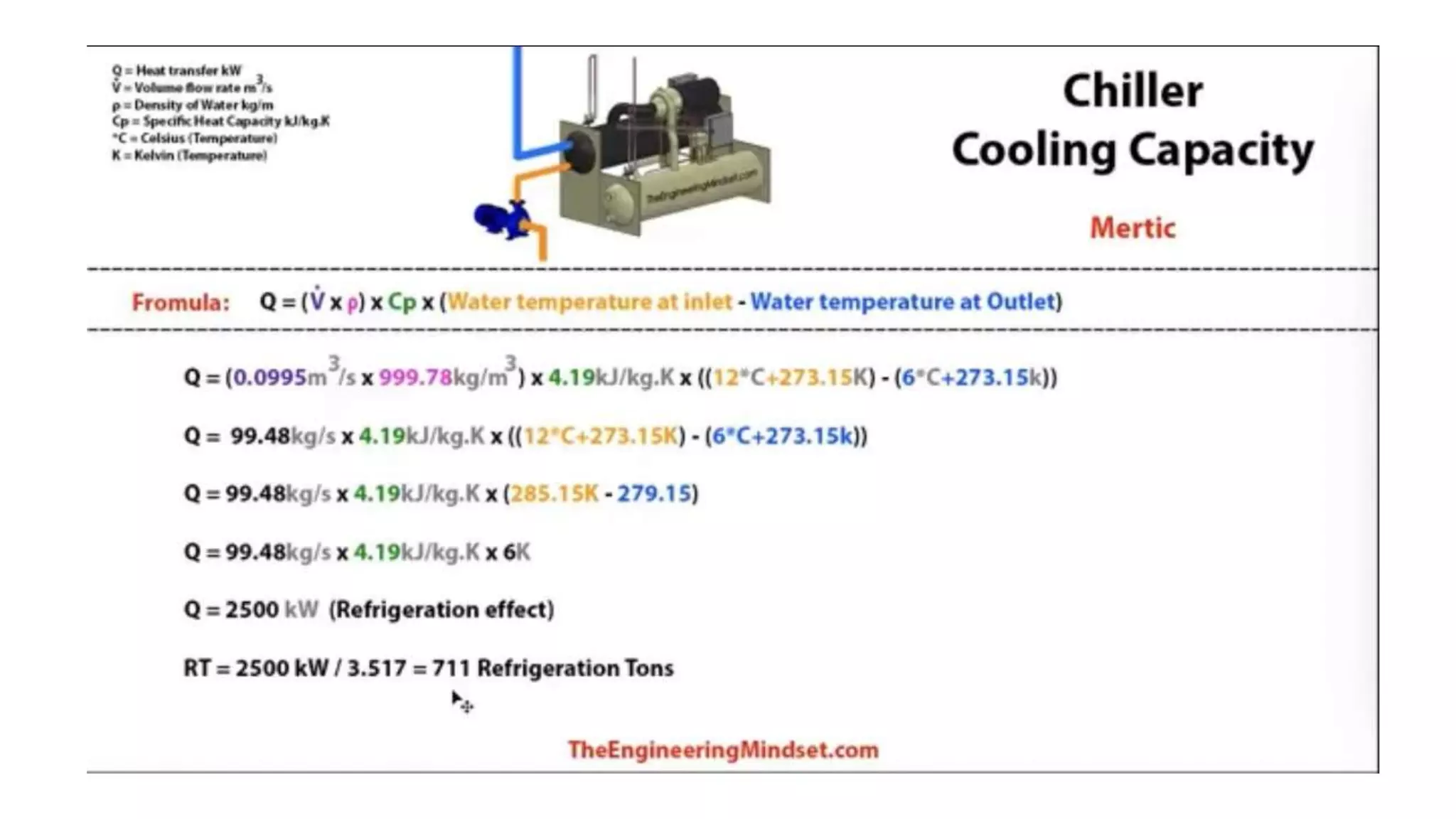
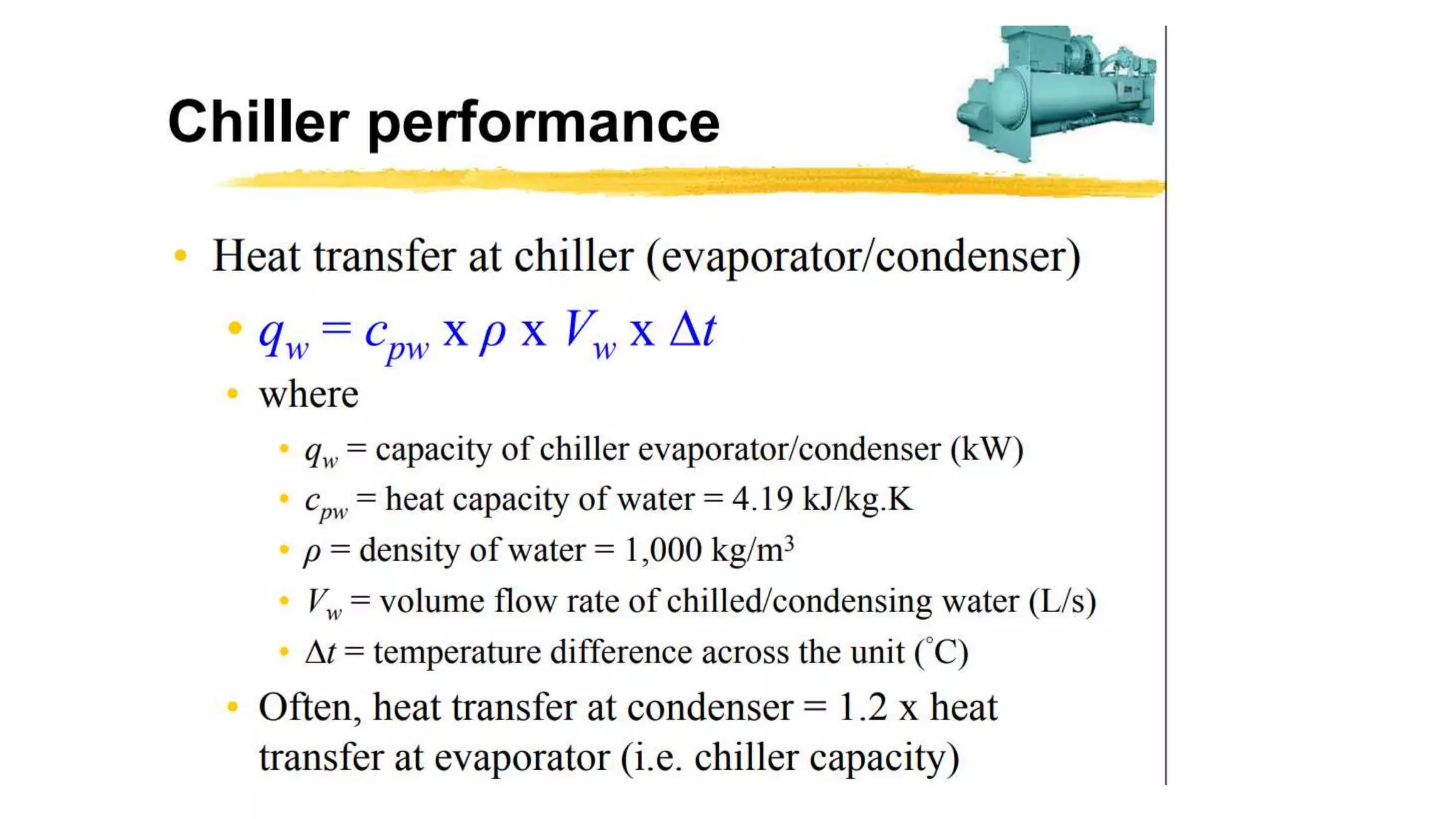
Chiller cooling capacity
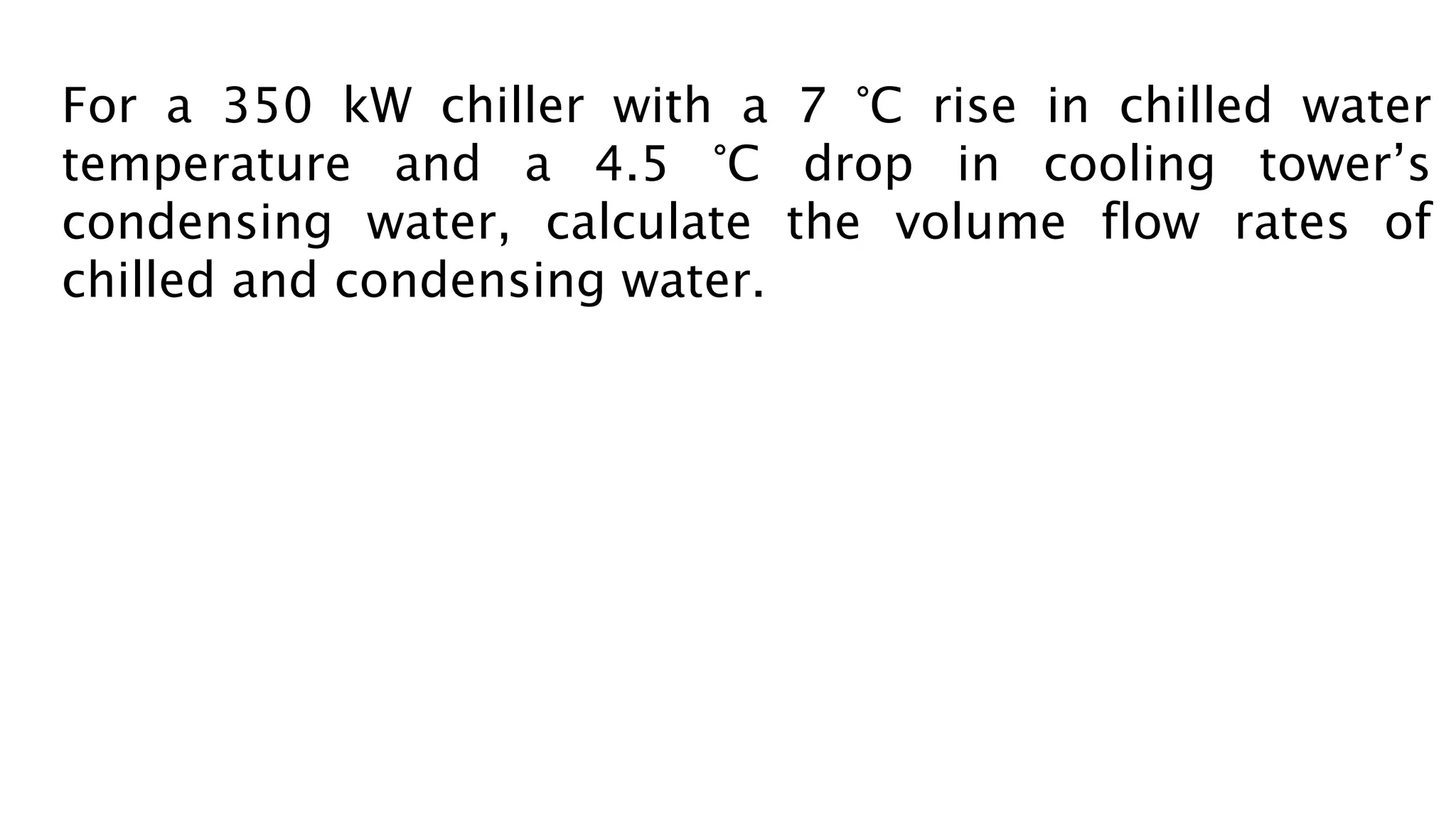
For a 350 kW chiller with a 7 °C rise in chilled water
temperature and a 4.5 °C drop in cooling tower’s
condensing water, calculate the volume flow rates of
chilled and condensing water.
chiller.pptx
chiller.pptx
chiller.pptx
chiller.pptx

chiller.pptx

  • 2.
    CONTENTS CHILLER BASICSWORKING PRINCIPLE OF CHILLER • REFRIGERATION CYCLE • CHILLER COMPONENTS • COMPONENTS FUNCTIONS & COMPARISON • LOAD TERMINAL CONTROL OPTIONS • CHILLER SYSTEM CONFIGURATION • TECHNICAL TERMINOLOGY • CHILLLER PERFORMANCE MEASUREMENT
  • 3.
    CHILLER BASICS Whatis a Chiller? The refrigeration machine that produces chilled water is referred to as a “Chiller”. A chiller is a water-cooled air conditioning system that cools inside air, creating a more comfortable and productive environment. Basically, there are two types of chillers based upon the refrigeration cycle: 1. Vapor Compression Chiller 2. Absorption Refrigeration Chiller Based upon the condensation process of working fluid , there are two types of chiller: 1. Air-Cooled Chiller
  • 4.
    Chiller is theproducers of chilled water in this system. The chiller has two main cylinders:- ones the evaporator the chilled or cold water produced, and other cylinder is the condenser collected of heat of building and sent to the cooling towers.
  • 5.
    CHILLED WATER SYTEMCOMPONENETS 1. Chiller (Evaporator) 2. Compressors 3. Chilled Water Pumps 4. ACC in Air Cooled Chiller 5. Cooling Tower in Water-cooled Chiller 6. Condensate water pumps in water-cooled chiller 7. Load Terminals (chilled water cooling coils) 8. Chilled and condenser-water distribution systems include piping, expansion valve, control valve, check valves, strainers etc.
  • 7.
    WORKING OF CHILLERSYSTEM 1-Chillers circulate chilled water to air-handlers(AHU’s) in order to transfer heat from air to water. 2-This water then returns to the evaporator side of the chiller where the heat is passed from the water to a liquid (LP) refrigerant . 3-The refrigerant leaves the evaporator as a cold vapor (LP) and enters the compressor where it is compressed into a hot vapor (HP). 4-Upon leaving the compressor, the vapor enters the condenser side of the chiller where heat is transferred from the refrigerant to the air/water side of the condenser where it is circulated to an ACC/open cooling tower for the final removal of heat from the refrigerant as a liquid (HP).
  • 11.
  • 12.
  • 13.
  • 14.
    Water cycle inthe evaporator Evaporator
  • 15.
    Water cycle inthe condenser condenser
  • 18.
  • 22.
    1.Tons of refrigeration(TR): One ton of refrigeration is the amount of cooling obtained by one ton of ice melting in one day i.e. kcal/h or thermal kW. 2. Net Refrigerating Capacity: A quantity defined as the mass flow rate of the evaporator water multiplied by the difference in enthalpy of water entering and leaving the cooler, expressed in kcal/h, tons of Refrigeration. 3. kW/ton rating: Commonly referred to as efficiency, but actually power input to compressor motor divided by tons of cooling produced, or kilowatts per ton (kW/ton). Lower kW/ton indicates higher efficiency. TERMINOLOGY
  • 23.
    4.Coefficient of Performance(COP): Chiller efficiency measured in cooling output (kcal/hr) divided by electric power input. 5. Energy Efficiency Ratio (EER): Performance of smaller chillers and rooftop units is frequently measured in EER rather than kW/ton. EER is calculated by dividing a chiller's cooling capacity (in kcal/h) by its power input (in watts) at full-load conditions. The higher the EER, the more efficient the unit. TERMINOLOGY
  • 25.
    ● The refrigerationTR is assessed as TR = Q x Cp x (Ti – To) / 3024 Where Q is mass flow rate of coolant in kg/hr Cp is coolant specific heat in kCal /kg deg C Ti is inlet, temperature of coolant to evaporator (chiller) in °C To is outlet temperature of coolant from evaporator (chiller) in °C. The above TR is also called as chiller tonnage. ● The specific power consumption kW/TR is a useful indicator of the performance of refrigeration system. By measuring refrigeration duty performed in TR and the kilowatt inputs, kW/TR is used as a reference energy performance indicator. PERFORMANCE ASSESSMENT OF CHILLER SYSTEM
  • 26.
    ● In acentralized chilled water system, apart from the compressor unit, power is also consumed by the chilled water (secondary) coolant pump as well condenser water (for heat rejection to cooling tower) pump and cooling tower fan in the cooling tower. Effectively, the overall energy consumption would be towards: – Compressor kW – Chilled water pump kW – Condenser water pump kW – Cooling tower fan kW, for induced / forced draft towers
  • 27.
  • 32.
    For a 350kW chiller with a 7 °C rise in chilled water temperature and a 4.5 °C drop in cooling tower’s condensing water, calculate the volume flow rates of chilled and condensing water.