Literature Review
By
Mr. Mutahar AL-Nahari
Parts of Presentation
The topic will be discussed in terms of:
Definitions
Purpose of Literature Review(LR)
Issues considered before Writing LR
Relationships of LR with Components of Research
 Organizing LR
Steps & Strategies for Writing LR
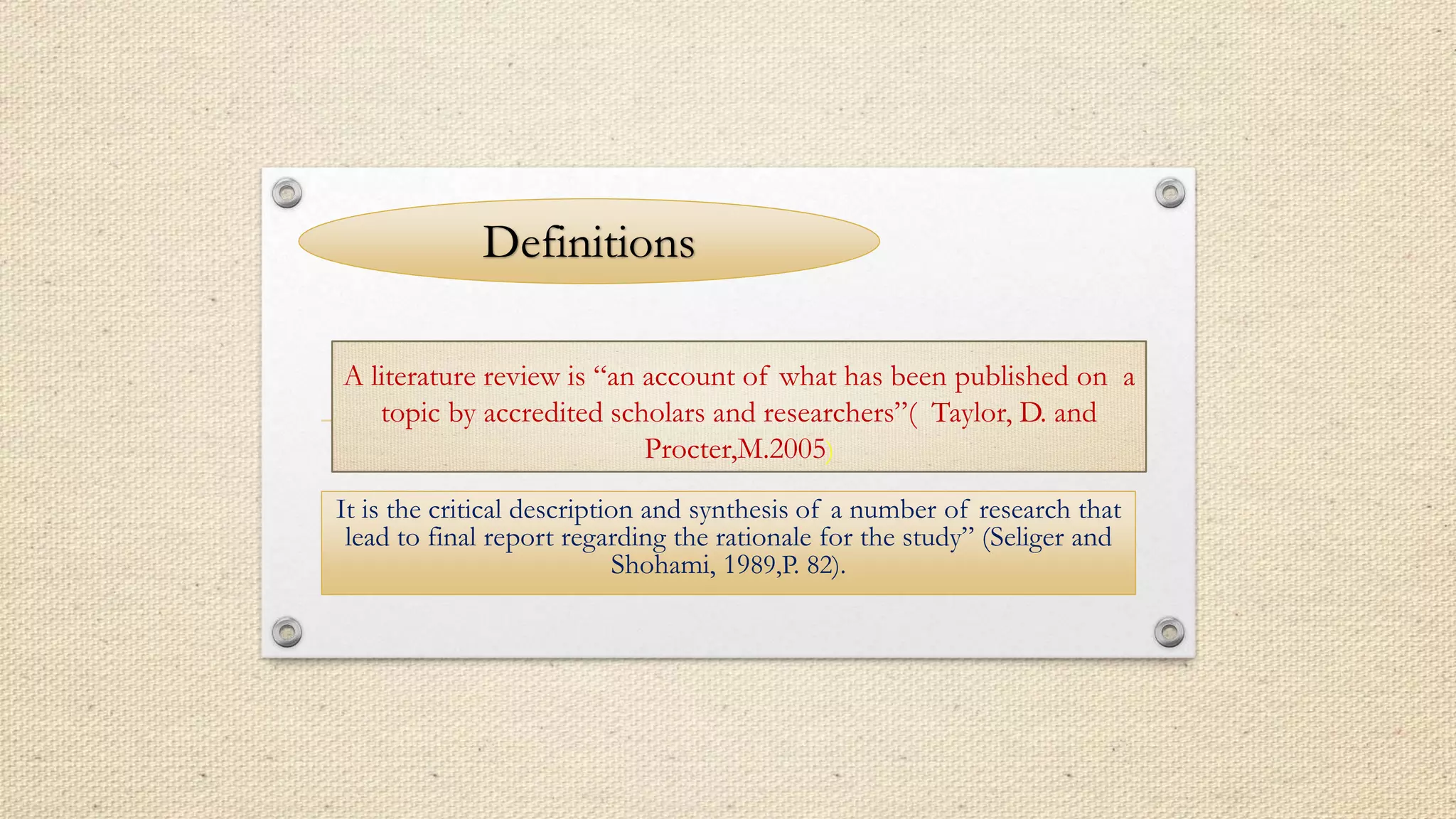
A literature review is “an account of what has been published on a
topic by accredited scholars and researchers”( Taylor, D. and
Procter,M.2005)
It is the critical description and synthesis of a number of research that
lead to final report regarding the rationale for the study” (Seliger and
Shohami, 1989,P. 82).
Definitions
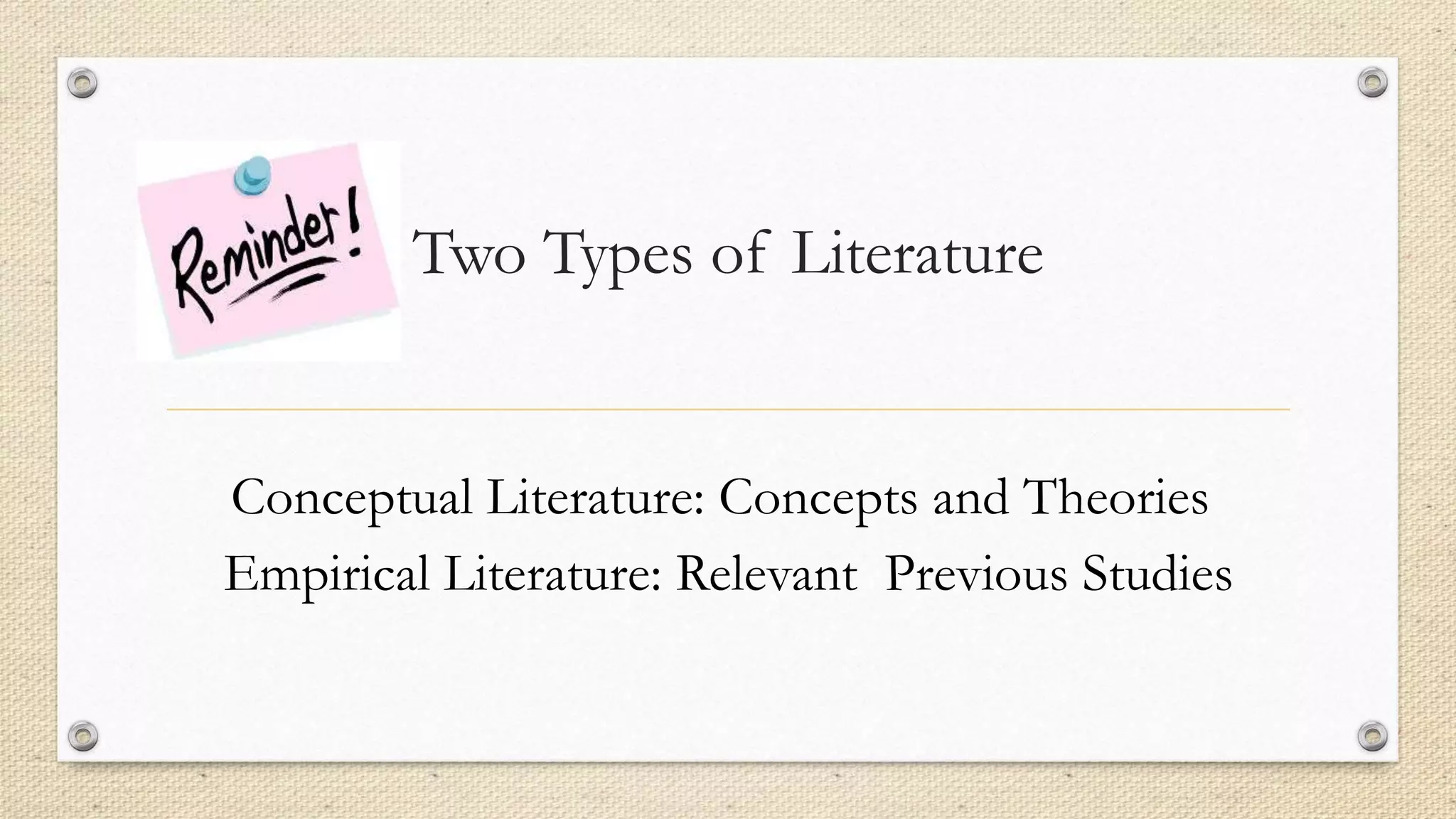
Two Types of Literature
Conceptual Literature: Concepts and Theories
Empirical Literature: Relevant Previous Studies
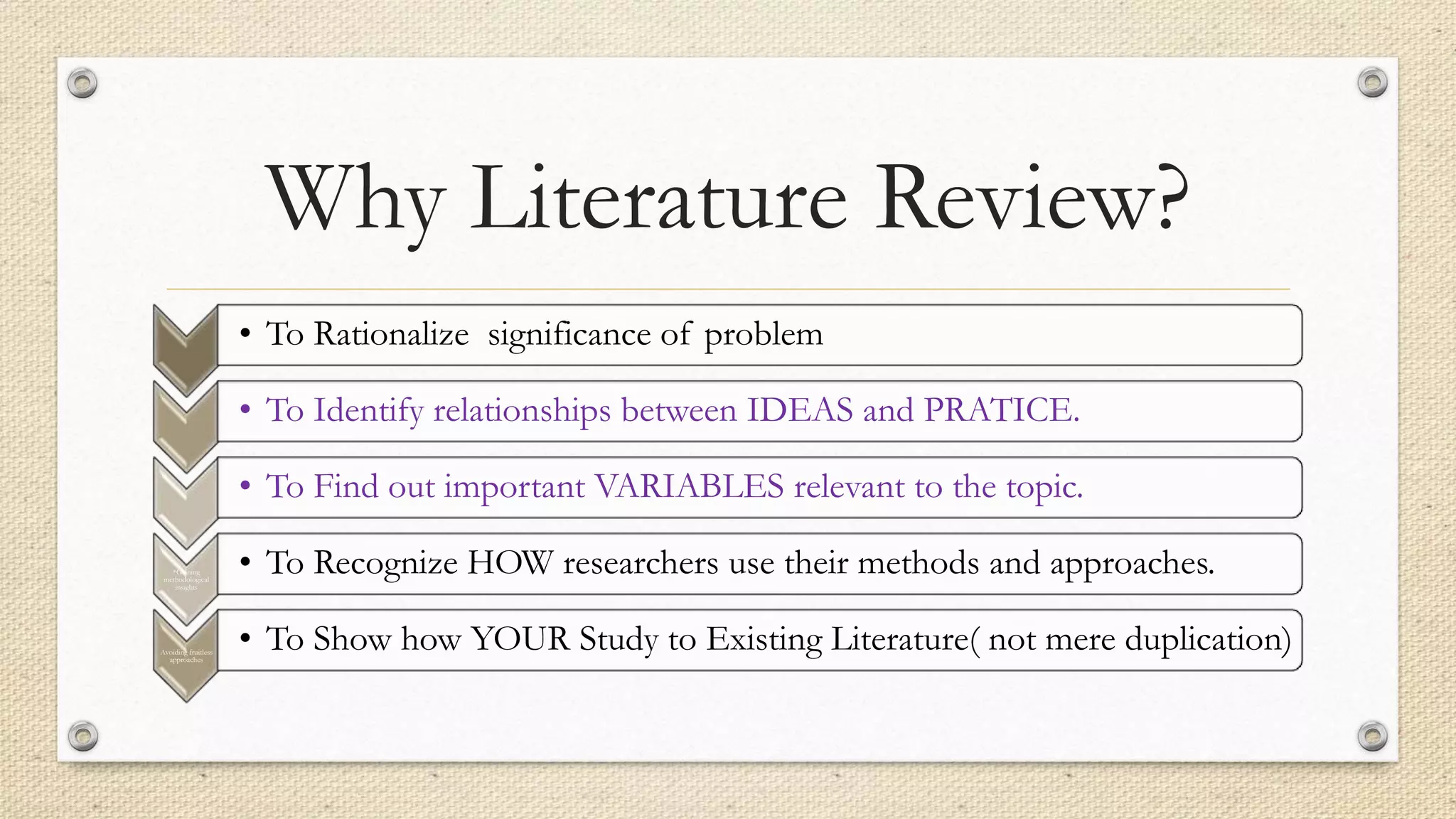
Why Literature Review?
• To Rationalize significance of problem
• To Identify relationships between IDEAS and PRATICE.
• To Find out important VARIABLES relevant to the topic.
*Gaining
methodological
insights
• To Recognize HOW researchers use their methods and approaches.
Avoiding fruitless
approaches
• To Show how YOUR Study to Existing Literature( not mere duplication)
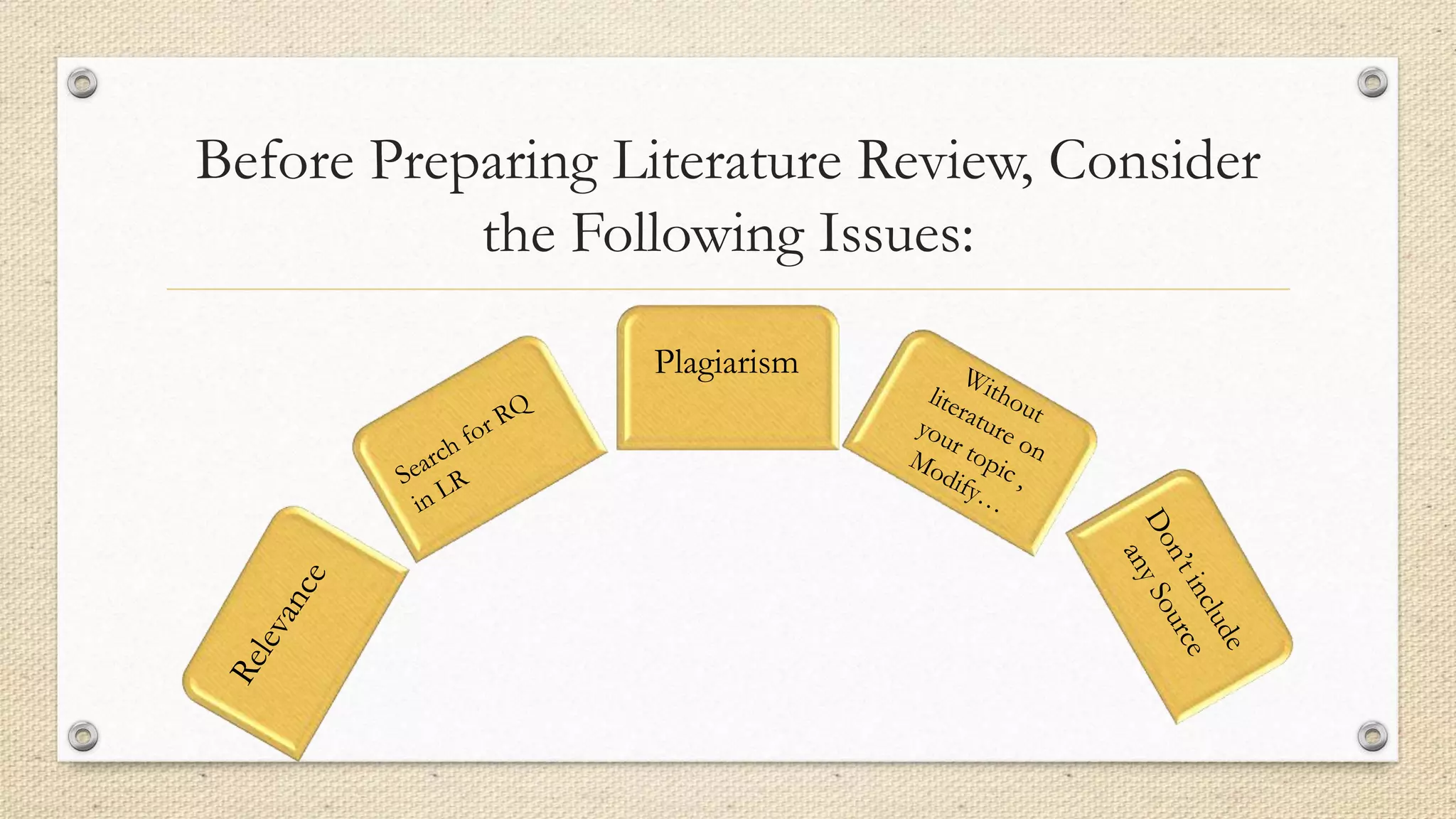
Before Preparing Literature Review, Consider
the Following Issues:
Plagiarism
Relationship of Literature Review with other
Components of Research
Research
Methods
Analysis,
Results and
Discussion
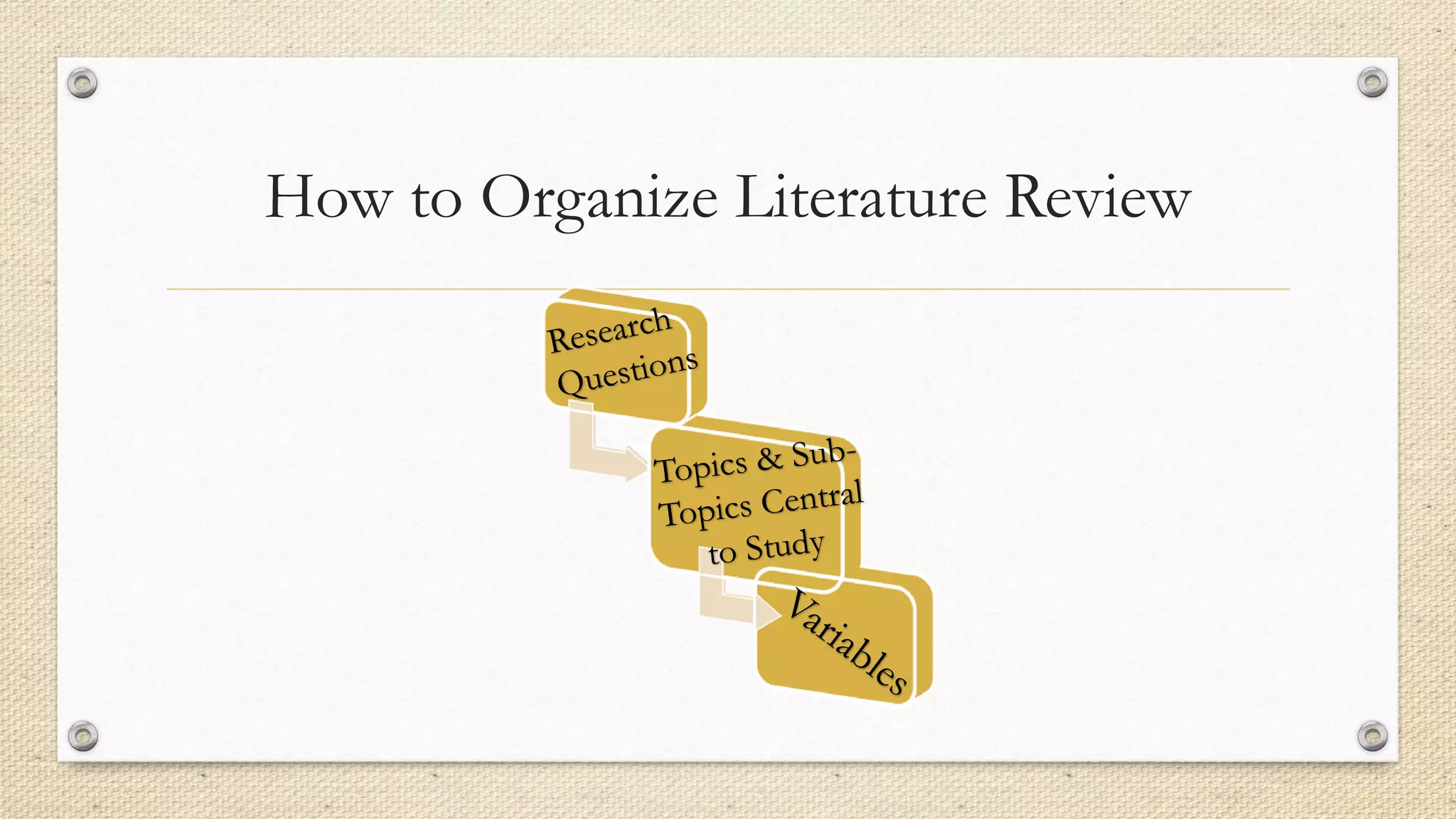
How to Organize Literature Review
Steps and Strategies for Writing Literature
Review
Steps Strategies
Locate Relevant
Literature.
Identify key terms in your topic.
Identify key authors and journals.
Use state-of-the-art articles.
Scan tables of contents from key
journals.
Use reference lists from articles,
books, etc.
Avoid the popular press.
Steps and Strategies for Writing Literature
Review
Steps Strategies
Critically read the
literature.
Identify strengths & weaknesses
of individual articles
Identify strengths and weaknesses
of the field as a whole
Steps and Strategies for Writing Literature
Review
Steps Strategies
Prepare to write
Investigate expected length and
format of the LR.
Make a preliminary outline.
Organize the literature you will
cover.
Limit the scope of the review
to the topic at hand.
Steps and Strategies for Writing Literature
Review
Steps Strategies
Write the introduction.
Write sub-sections.
Use transition markers.
Synthesize and critically evaluate LR.
Be careful not to plagiarize.
Practise summarizing & paraphrasing.
Write the Review.
Steps and strategies for writing a literature
Review
Steps Strategies
Indicate
the gap.
Use the review to lead to your
research questions.
(Unresolved issues)
References
• Bell, J. (1999). Doing your Research Project. Philadelphia: Open University Press.
• Paltridge B. and Starfield, S. (2007). Thesis and Dissertation Writing in a
Second Language. New York. Routledge.
• Seliger, H. & Shohamy, E. (1989). Second Language Research Methods. Oxford:
Oxford University Press.
• Taylor, D. and Procter, M. (2008). The Literature Review: A Few Tips On
Conducting It. Health Sciences Writing Centre, University of Toronto
• Wallwork, A. (2011). English for Writing Research Paper. New York: Springer
The End

Writing literature Review

  • 1.
  • 2.
    Parts of Presentation Thetopic will be discussed in terms of: Definitions Purpose of Literature Review(LR) Issues considered before Writing LR Relationships of LR with Components of Research  Organizing LR Steps & Strategies for Writing LR
  • 3.
    A literature reviewis “an account of what has been published on a topic by accredited scholars and researchers”( Taylor, D. and Procter,M.2005) It is the critical description and synthesis of a number of research that lead to final report regarding the rationale for the study” (Seliger and Shohami, 1989,P. 82). Definitions
  • 4.
    Two Types ofLiterature Conceptual Literature: Concepts and Theories Empirical Literature: Relevant Previous Studies
  • 5.
    Why Literature Review? •To Rationalize significance of problem • To Identify relationships between IDEAS and PRATICE. • To Find out important VARIABLES relevant to the topic. *Gaining methodological insights • To Recognize HOW researchers use their methods and approaches. Avoiding fruitless approaches • To Show how YOUR Study to Existing Literature( not mere duplication)
  • 6.
    Before Preparing LiteratureReview, Consider the Following Issues: Plagiarism
  • 7.
    Relationship of LiteratureReview with other Components of Research Research Methods Analysis, Results and Discussion
  • 8.
    How to OrganizeLiterature Review
  • 9.
    Steps and Strategiesfor Writing Literature Review Steps Strategies Locate Relevant Literature. Identify key terms in your topic. Identify key authors and journals. Use state-of-the-art articles. Scan tables of contents from key journals. Use reference lists from articles, books, etc. Avoid the popular press.
  • 10.
    Steps and Strategiesfor Writing Literature Review Steps Strategies Critically read the literature. Identify strengths & weaknesses of individual articles Identify strengths and weaknesses of the field as a whole
  • 11.
    Steps and Strategiesfor Writing Literature Review Steps Strategies Prepare to write Investigate expected length and format of the LR. Make a preliminary outline. Organize the literature you will cover. Limit the scope of the review to the topic at hand.
  • 12.
    Steps and Strategiesfor Writing Literature Review Steps Strategies Write the introduction. Write sub-sections. Use transition markers. Synthesize and critically evaluate LR. Be careful not to plagiarize. Practise summarizing & paraphrasing. Write the Review.
  • 13.
    Steps and strategiesfor writing a literature Review Steps Strategies Indicate the gap. Use the review to lead to your research questions. (Unresolved issues)
  • 14.
    References • Bell, J.(1999). Doing your Research Project. Philadelphia: Open University Press. • Paltridge B. and Starfield, S. (2007). Thesis and Dissertation Writing in a Second Language. New York. Routledge. • Seliger, H. & Shohamy, E. (1989). Second Language Research Methods. Oxford: Oxford University Press. • Taylor, D. and Procter, M. (2008). The Literature Review: A Few Tips On Conducting It. Health Sciences Writing Centre, University of Toronto • Wallwork, A. (2011). English for Writing Research Paper. New York: Springer
  • 15.