Introduction to Research 
November 7, 2014 
http://research-methodology.net/wp-content/ 
uploads/2012/04/Research-Design.jpg
What comes to mind when you hear 
the word ‘Research’?
Research Myths 
• Something you do in libraries 
• Something you do in laboratories 
• College requirement
You do research almost in every aspect 
of your life 
• When buying a scooter/car 
– Read consumer guides 
– Visit car dealers 
– Talk to others about their cars 
• When looking for a job 
– Study want ads 
– Check bulletin boards 
– Ask friends, family, etc. 
• When choosing a college or academic major
All these require research 
• Deciding on a career 
• Settling a place to live 
• Buying a house 
• Choosing a girlfriend/boyfriend
Re-search 
• Prefix ‘re’ means going back or doing it again 
• It suggests repetition 
• Searching again and again
Research as a life skill 
• A step towards living consciously and 
deliberately 
• Determining what you think or do 
• Impact on the quality of your life 
• Influencing how you perceive the world and 
what choices you make
Exploring 
• You are a natural investigator 
• Engaged in informal research all your life 
• You discovered shortcuts in your life 
• You learned from mistakes 
• You found answers to questions you had 
The question lies on your attitude and skills
Steps 
• Gathering available facts 
• Verify reliability of the facts you gathered 
(talking to people, asking/confirming, etc.) 
• Getting at the truth of what happened- the 
difficulty of achieving absolute knowledge 
– Consider a physician having a consultation with a 
patient (ailments, questions re. symptoms, 
treatment based on evidence gathered)
Steps 
• Understand and evaluate the facts gathered 
• Objective or subjective 
• Get a balanced view of any subject before 
reaching to a conclusion or making a stand on 
ethical issues
Evaluating sources p. 4 
• Is it up-to-date 
• Author’s credentials 
• Journal/newspaper- slanted views? 
• Is the source adequately documented? 
• Is the language vague? Discriminatory? 
• How was the book reviewed?
• Discover what other people have already studied 
more extensively that you will be able to do 
• Distinguish what is known and what is still open 
for research 
• Original research to test conclusions by 
conducting interviews, polls, surveys, etc. 
• OR researching what is known; still original- you 
will be making sense of the facts and arrive at 
your own conclusions
Reporting 
• Communicating what you have found as 
clearly as possible to others 
• Organized, clear, readable, and interesting 
• Reflect your best effort to make what you 
have discovered understandable to others
Resources 
• The library 
• Academic resources 
• The Internet 
• The community 
• People
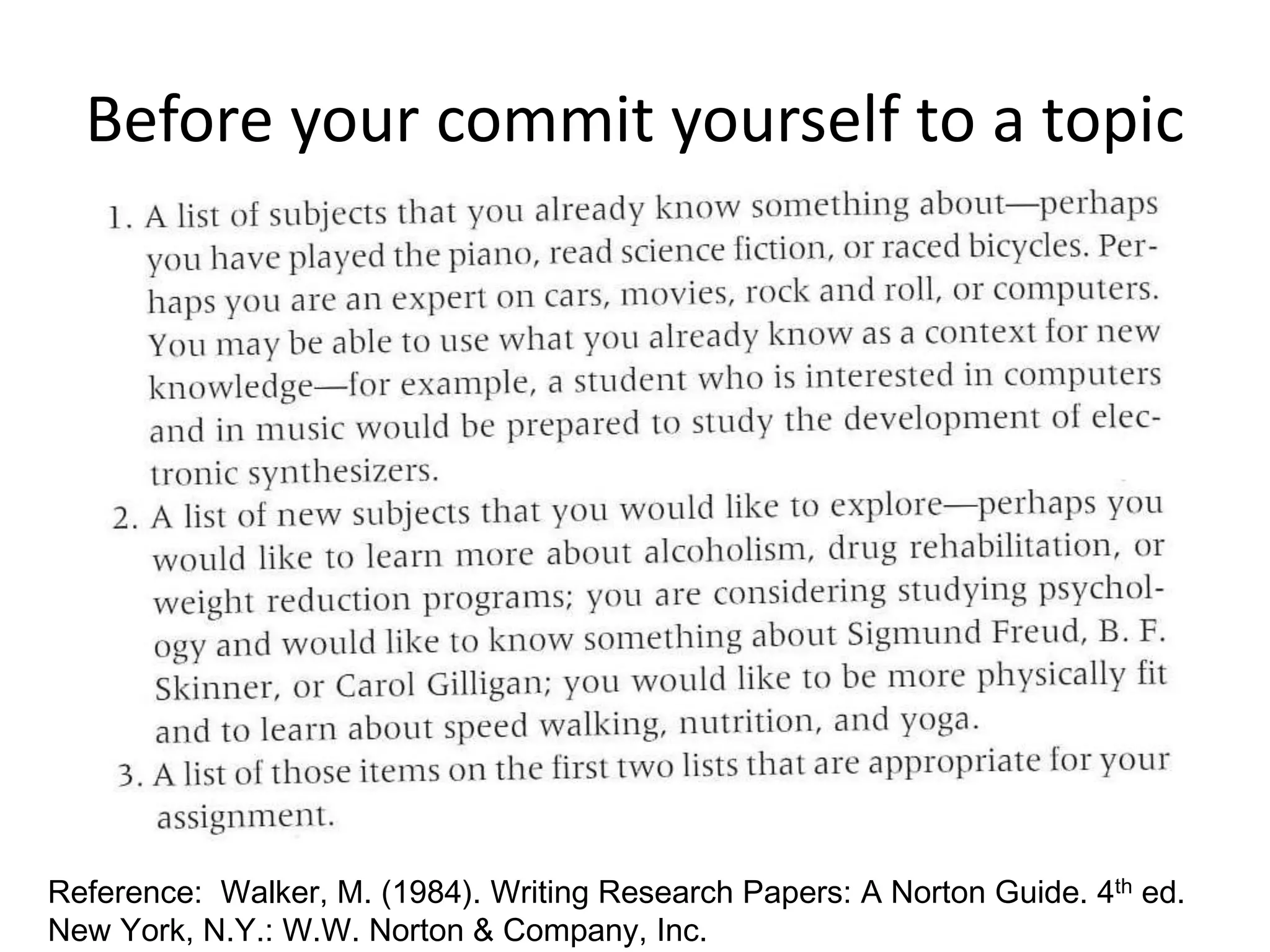
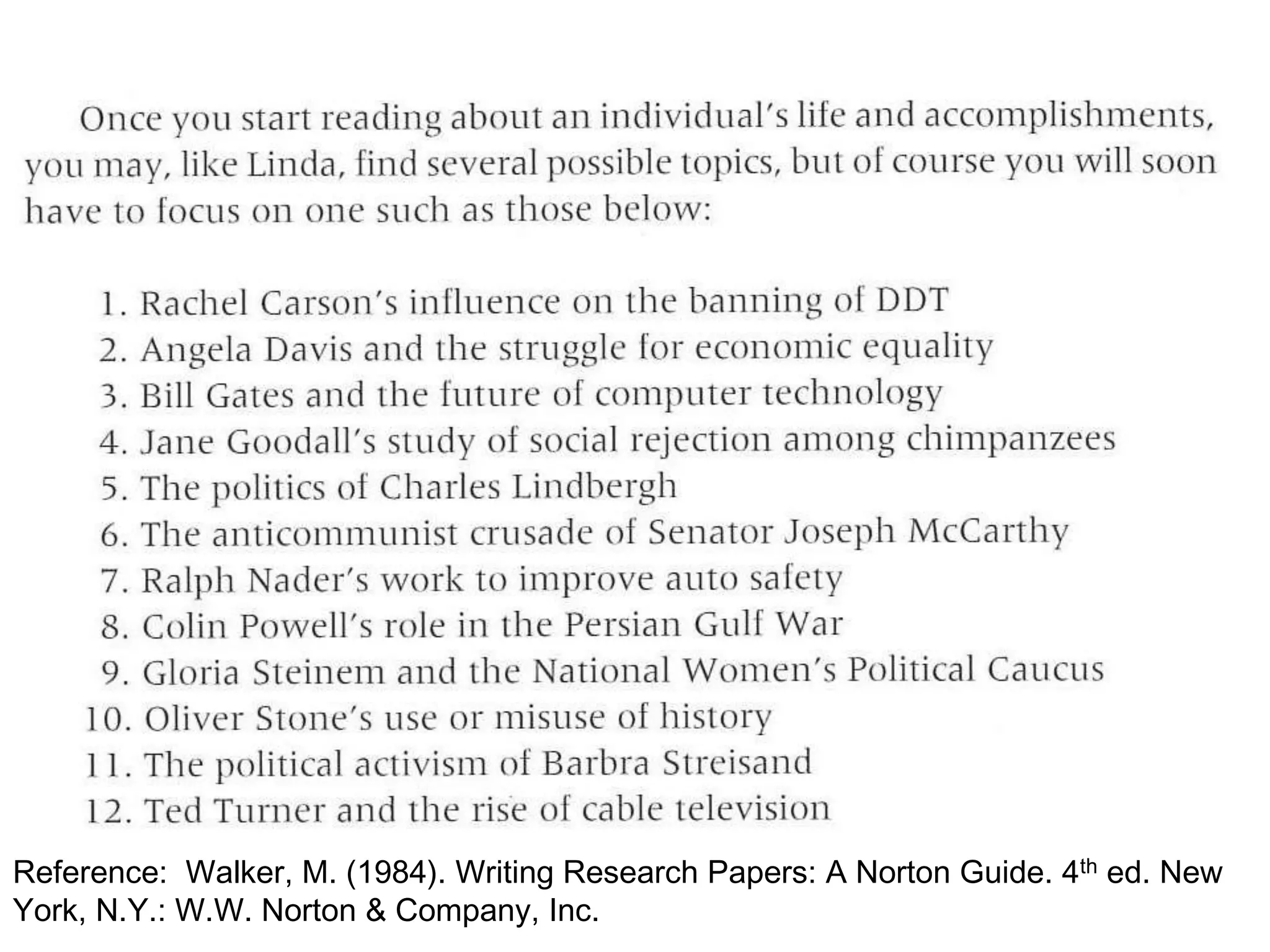
Before your commit yourself to a topic 
Reference: Walker, M. (1984). Writing Research Papers: A Norton Guide. 4th ed. 
New York, N.Y.: W.W. Norton & Company, Inc.
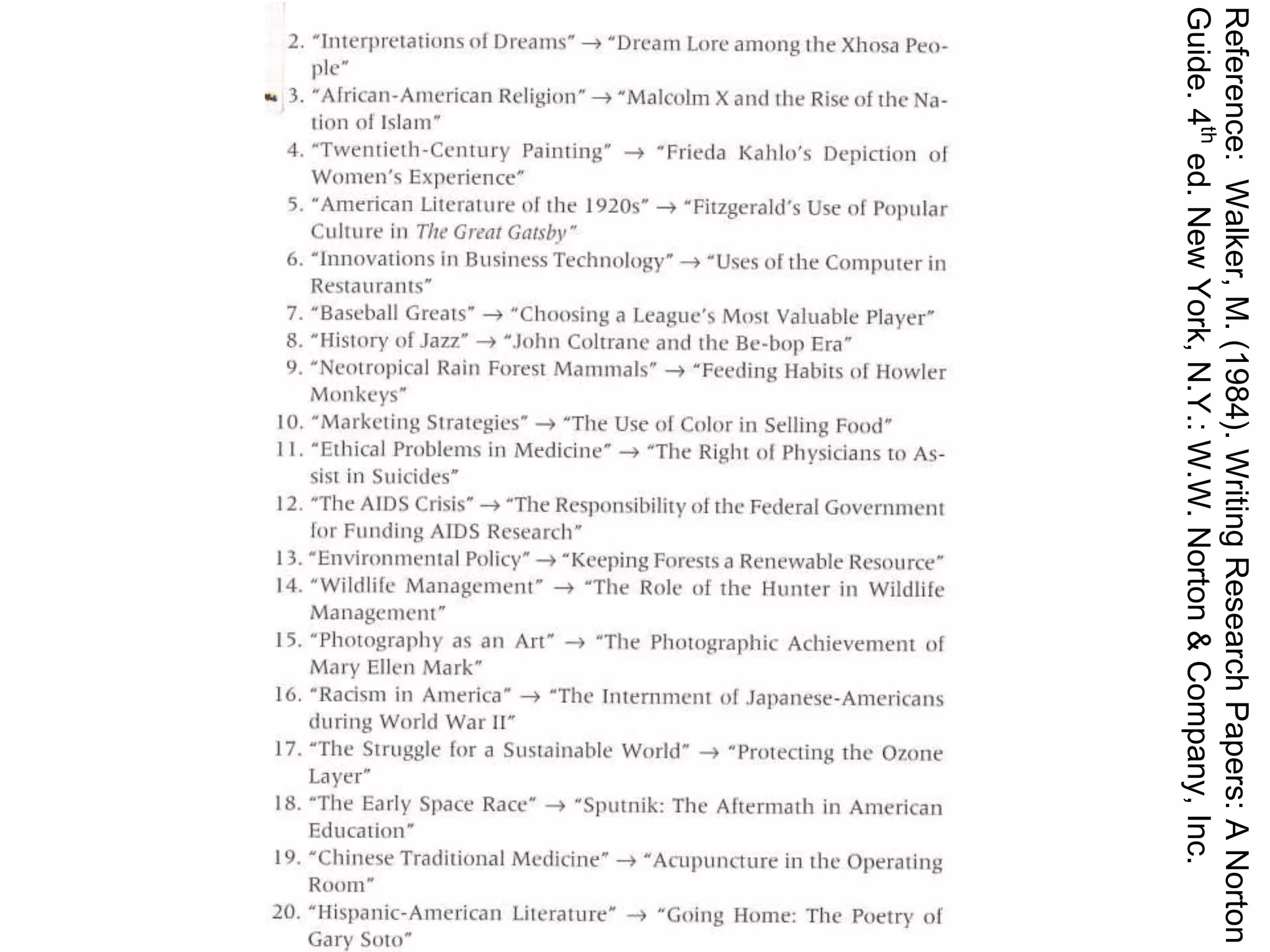
Reference: Walker, M. (1984). Writing Research Papers: A Norton 
Guide. 4th ed. New York, N.Y.: W.W. Norton & Company, Inc. 
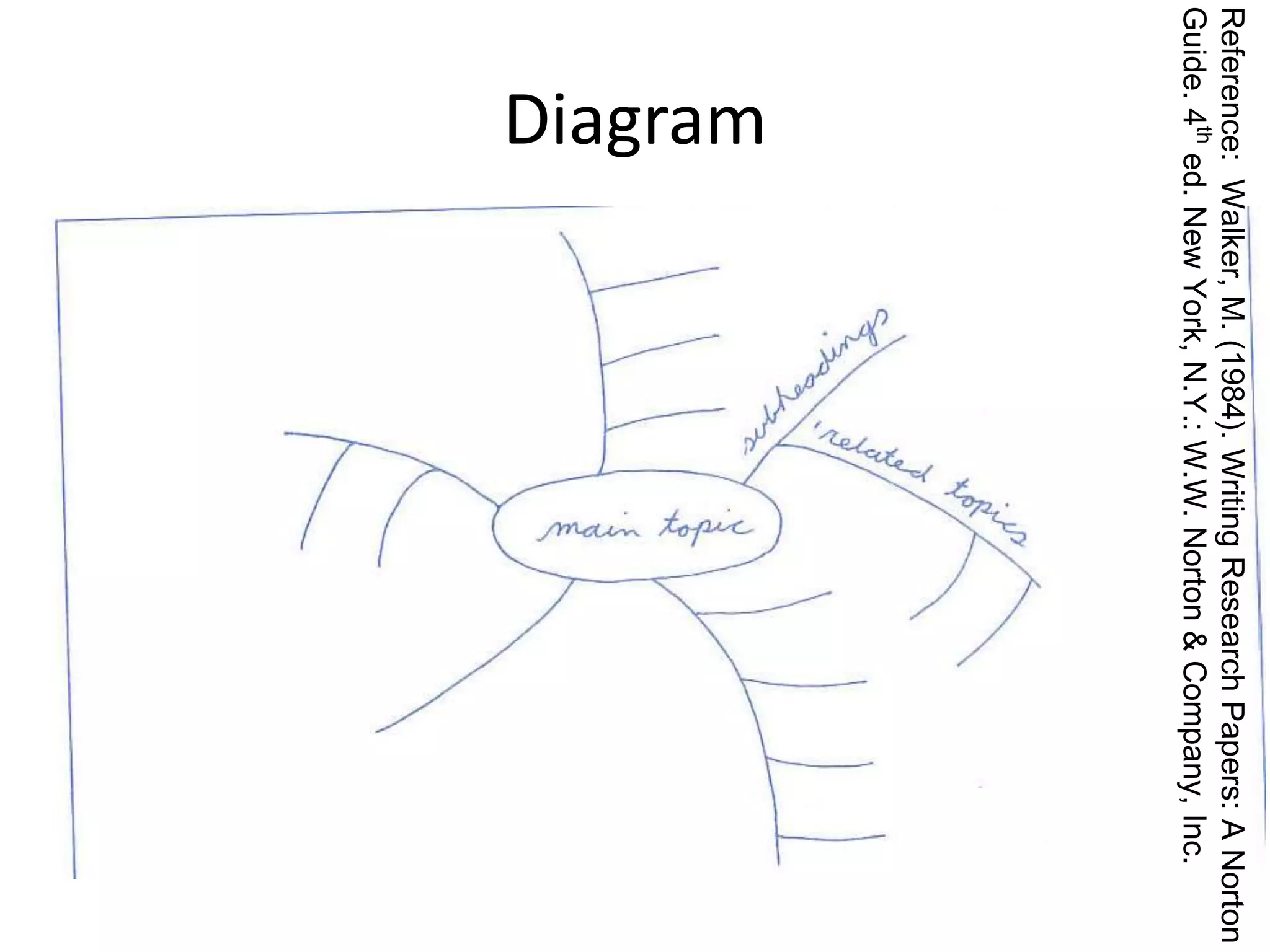
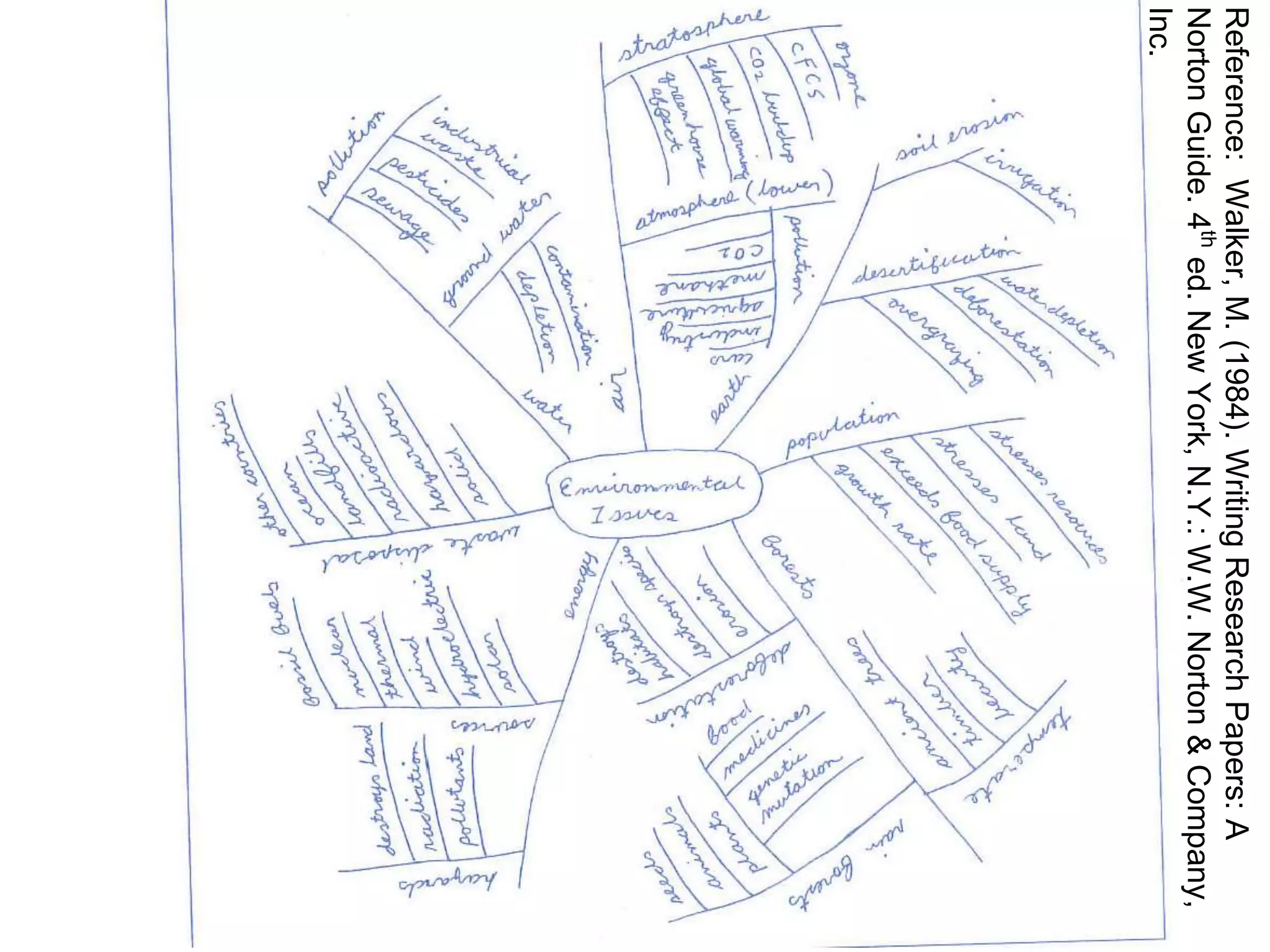
Diagram
Reference: Walker, M. (1984). Writing Research Papers: A 
Norton Guide. 4th ed. New York, N.Y.: W.W. Norton & Company, 
Inc.
Reference: Walker, M. (1984). Writing Research Papers: A Norton Guide. 4th ed. New 
York, N.Y.: W.W. Norton & Company, Inc.
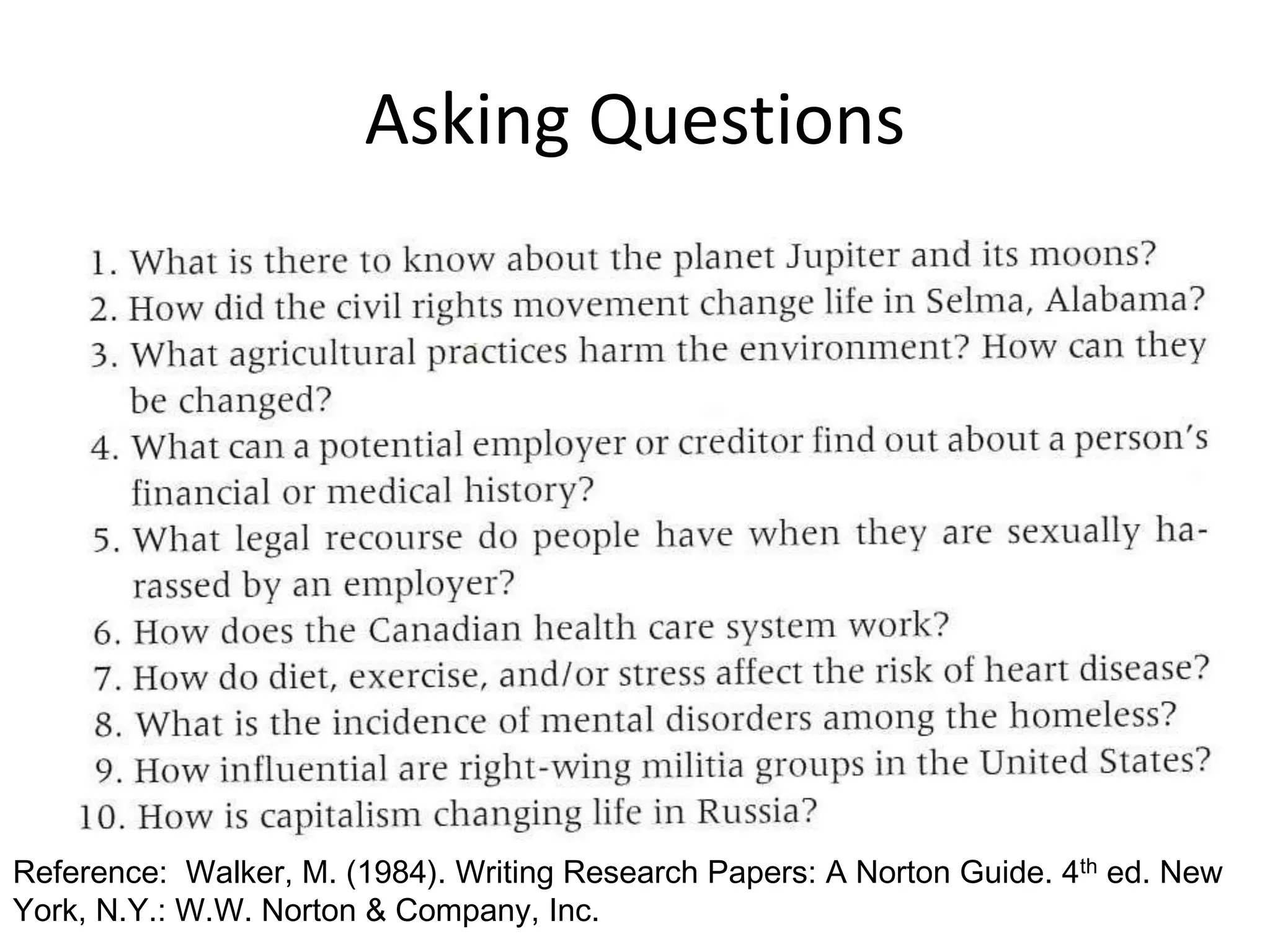
Asking Questions 
Reference: Walker, M. (1984). Writing Research Papers: A Norton Guide. 4th ed. New 
York, N.Y.: W.W. Norton & Company, Inc.
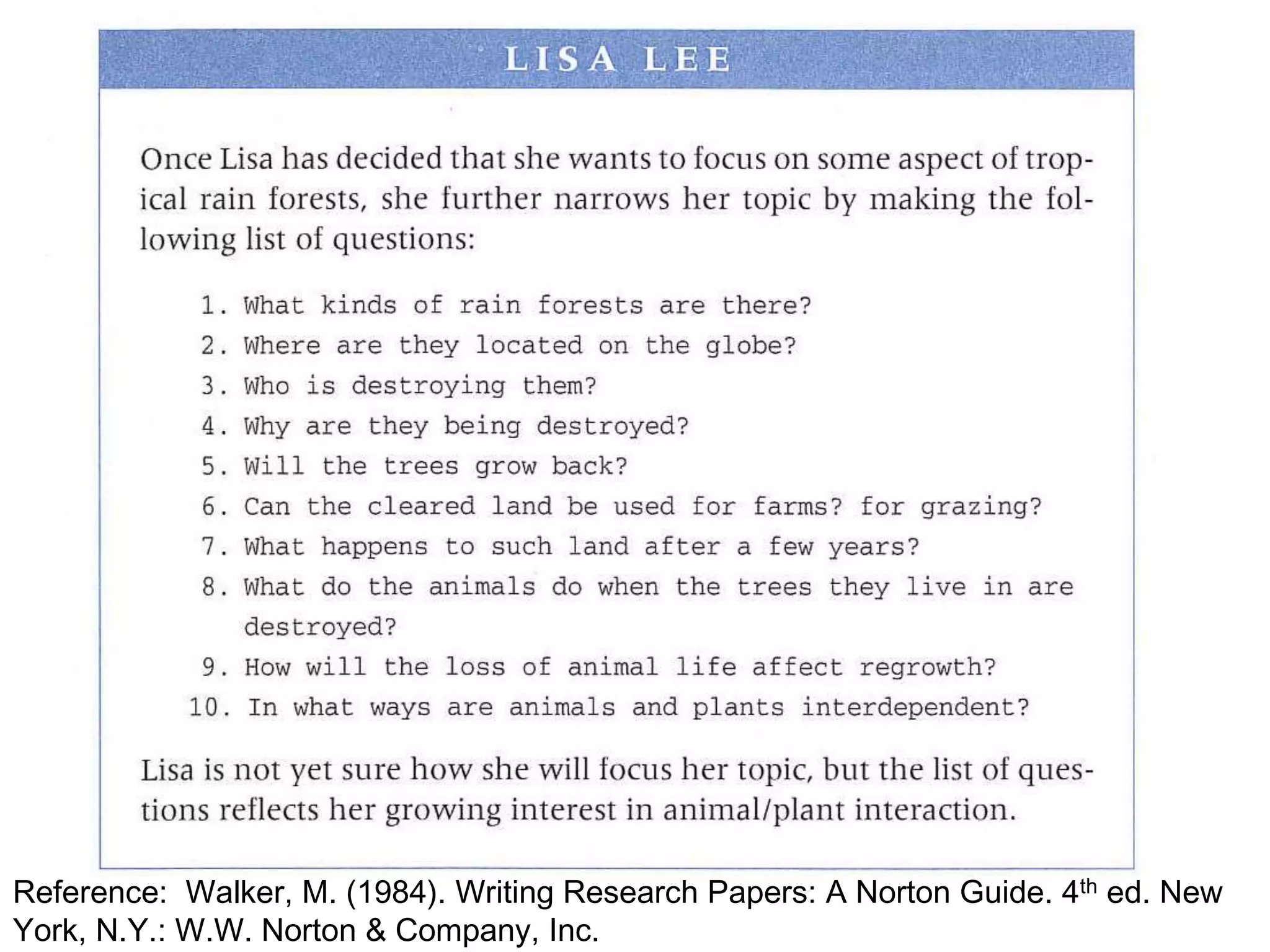
Reference: Walker, M. (1984). Writing Research Papers: A Norton Guide. 4th ed. New 
York, N.Y.: W.W. Norton & Company, Inc.
Reference: Walker, M. (1984). Writing Research Papers: A Norton 
Guide. 4th ed. New York, N.Y.: W.W. Norton & Company, Inc. 
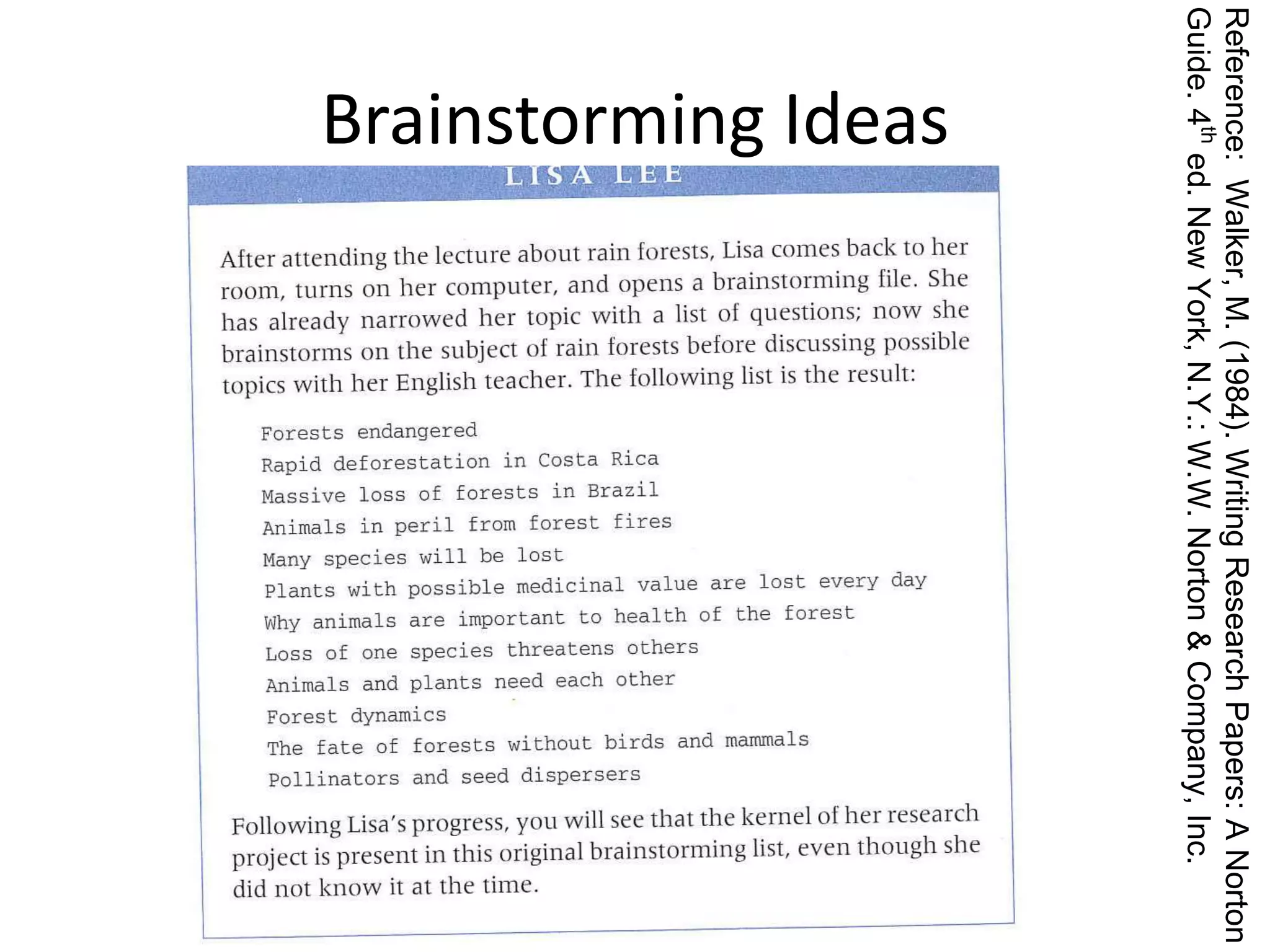
Brainstorming Ideas
Reference: Walker, M. (1984). Writing Research Papers: A Norton 
Guide. 4th ed. New York, N.Y.: W.W. Norton & Company, Inc.
Reference: Walker, M. (1984). Writing Research Papers: A Norton Guide. 4th ed. New 
York, N.Y.: W.W. Norton & Company, Inc.
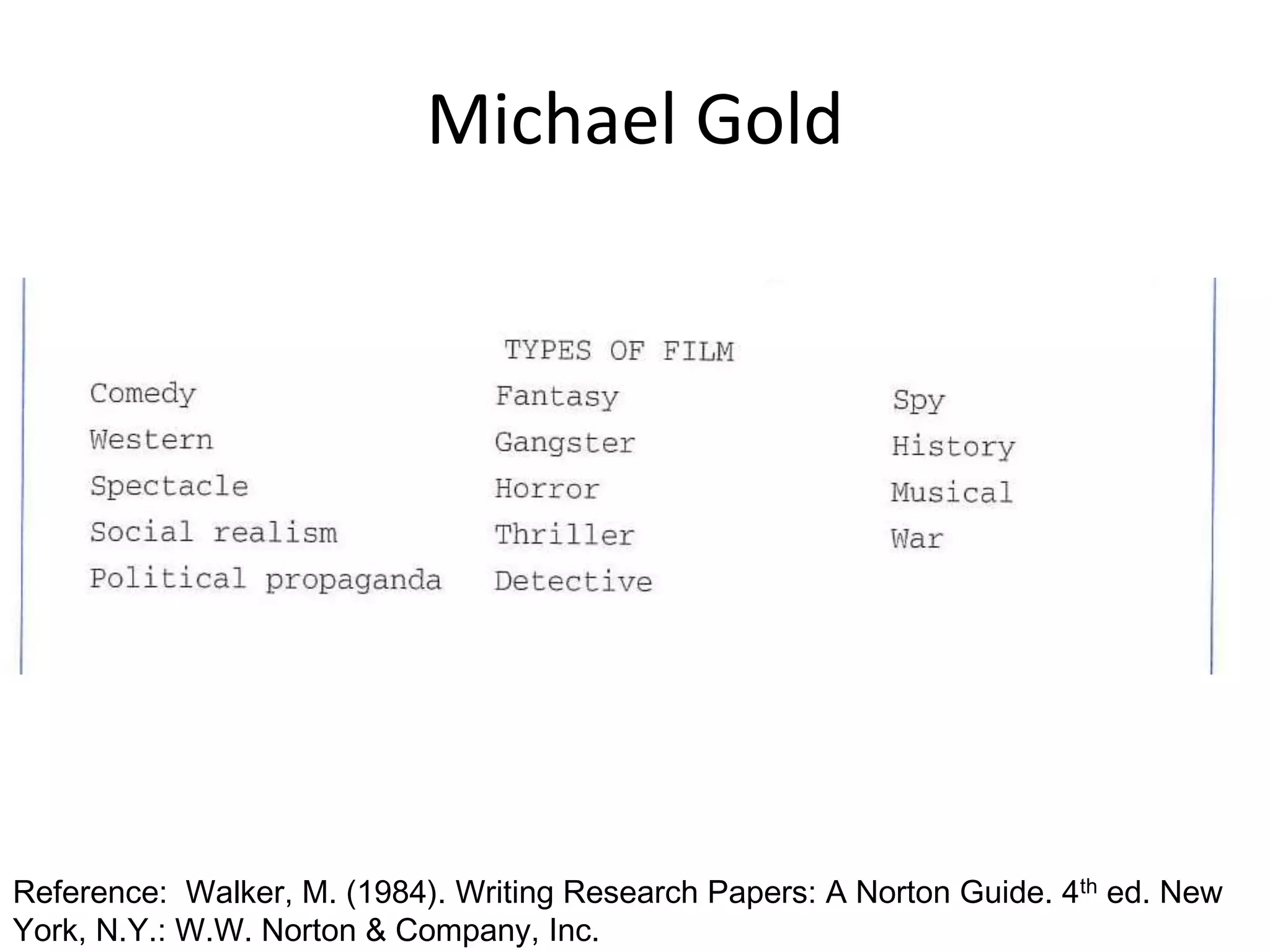
Michael Gold 
Reference: Walker, M. (1984). Writing Research Papers: A Norton Guide. 4th ed. New 
York, N.Y.: W.W. Norton & Company, Inc.
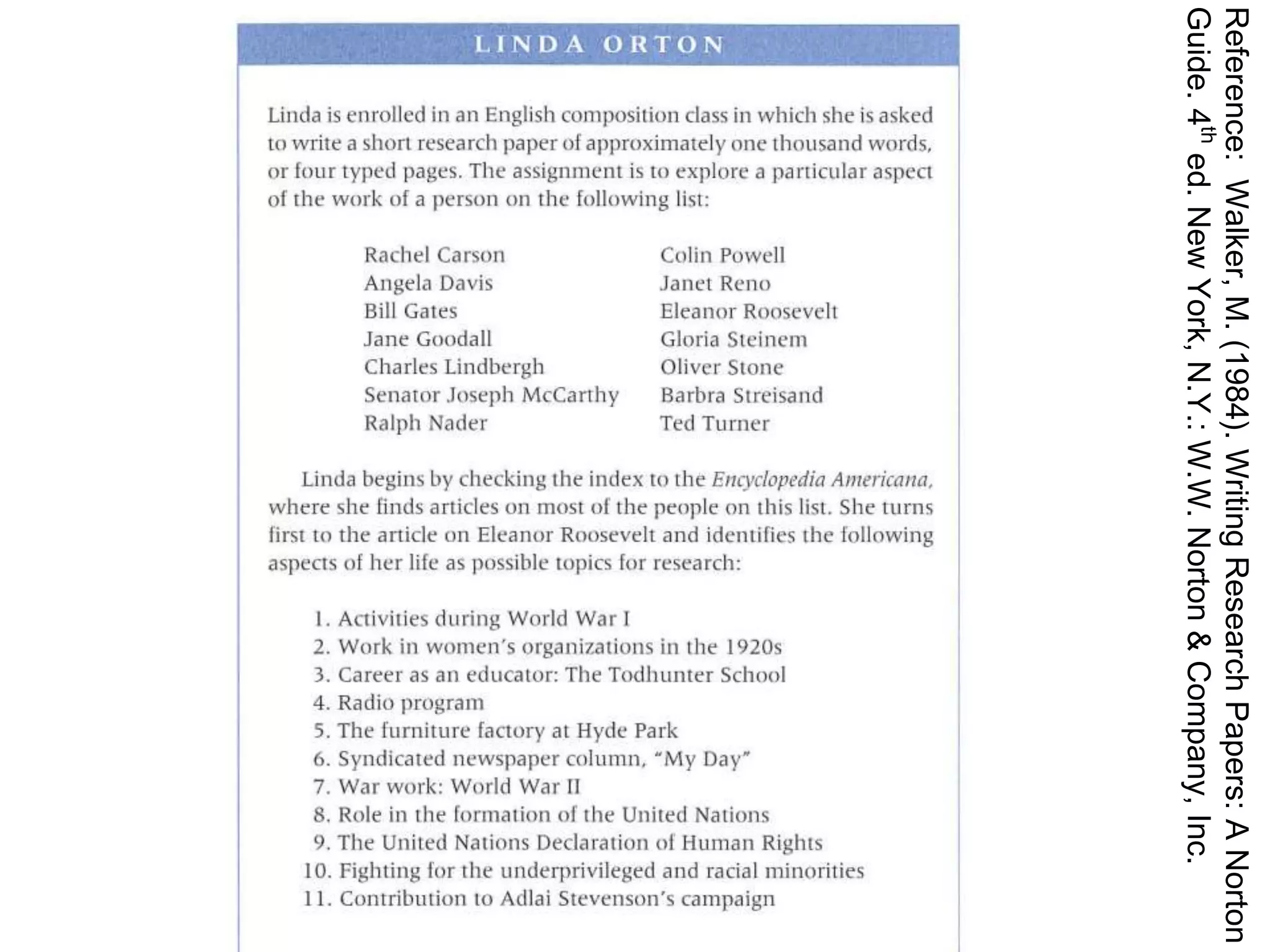
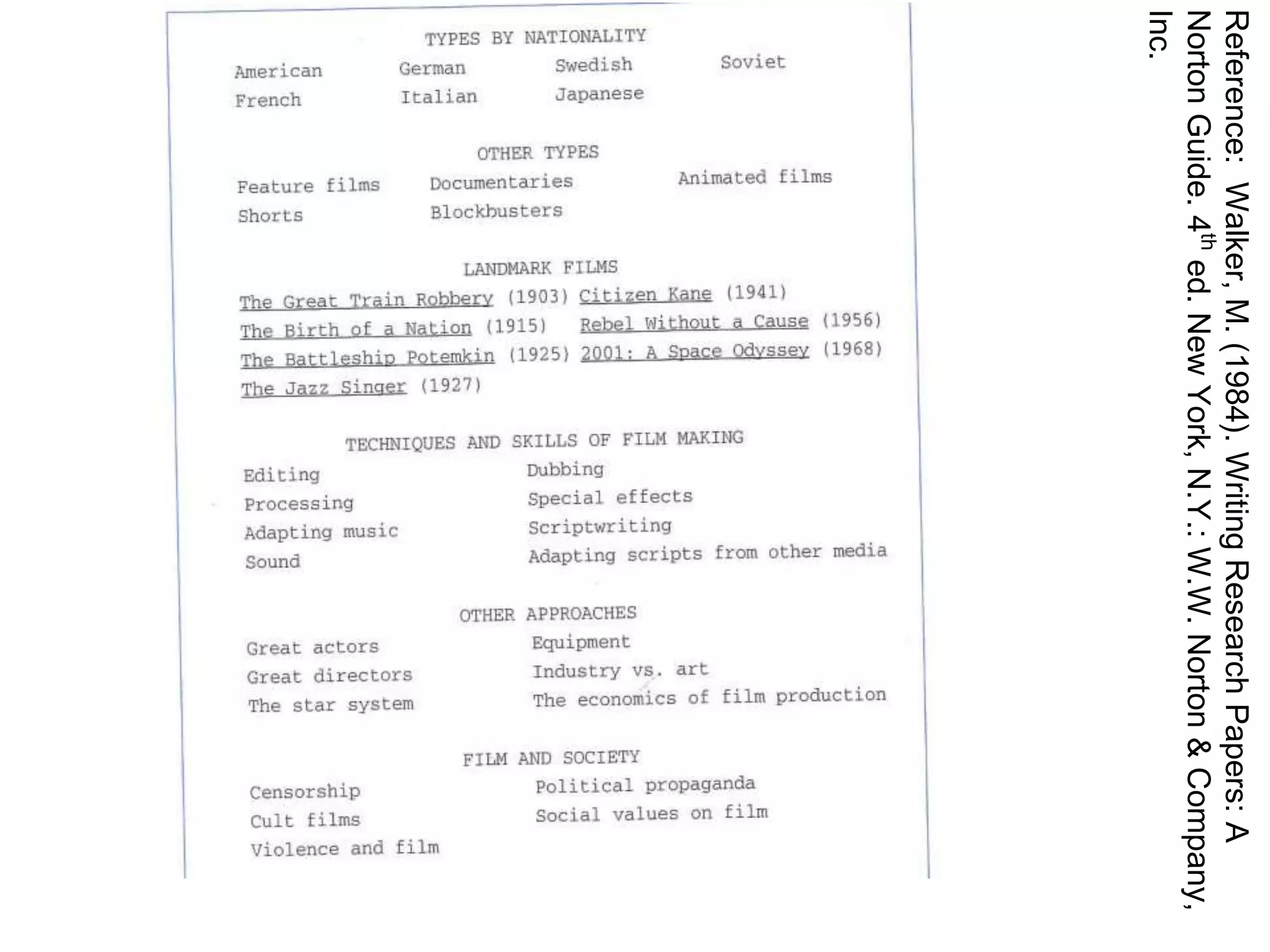
Reference: Walker, M. (1984). Writing Research Papers: A 
Norton Guide. 4th ed. New York, N.Y.: W.W. Norton & Company, 
Inc.
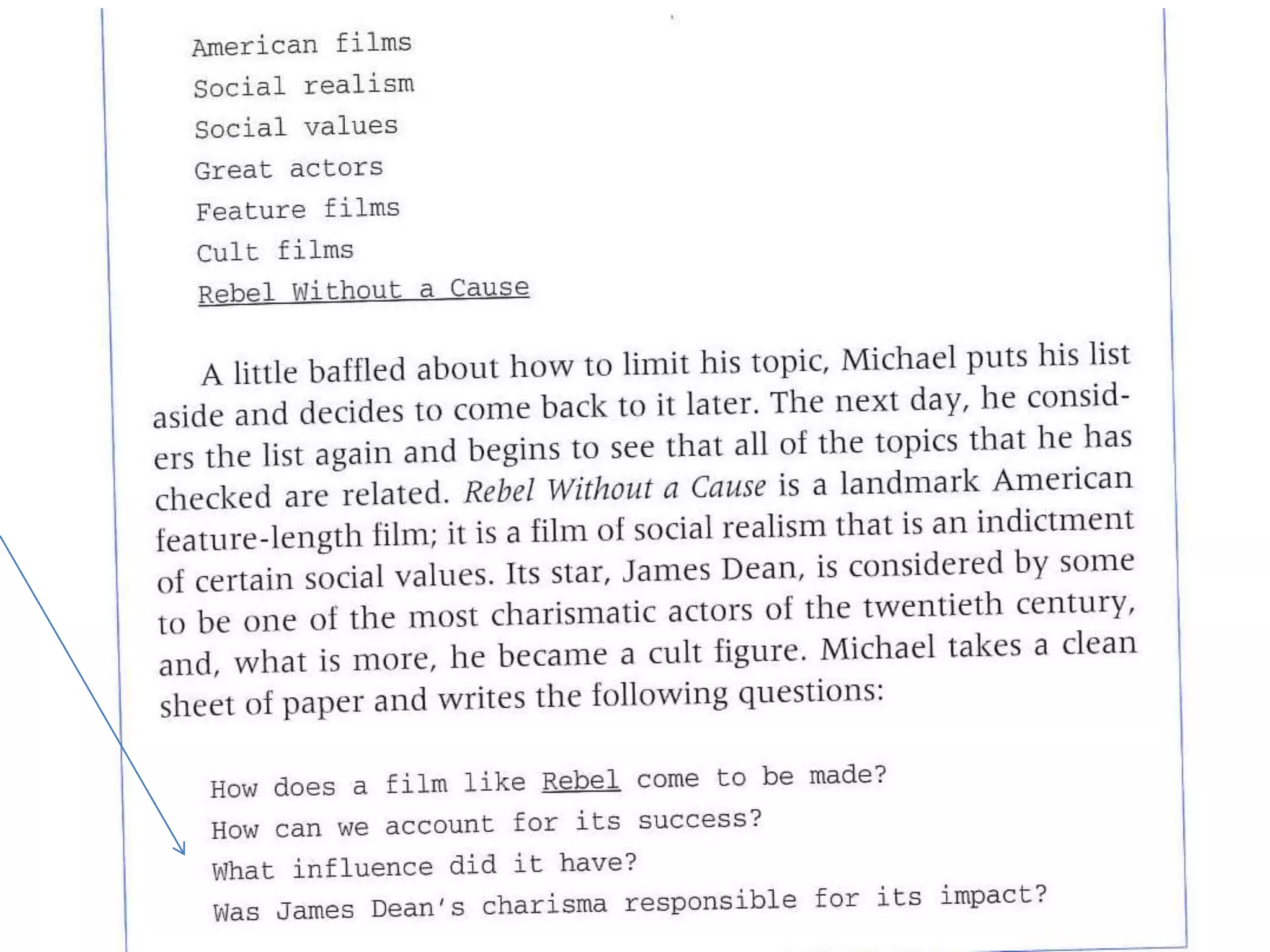
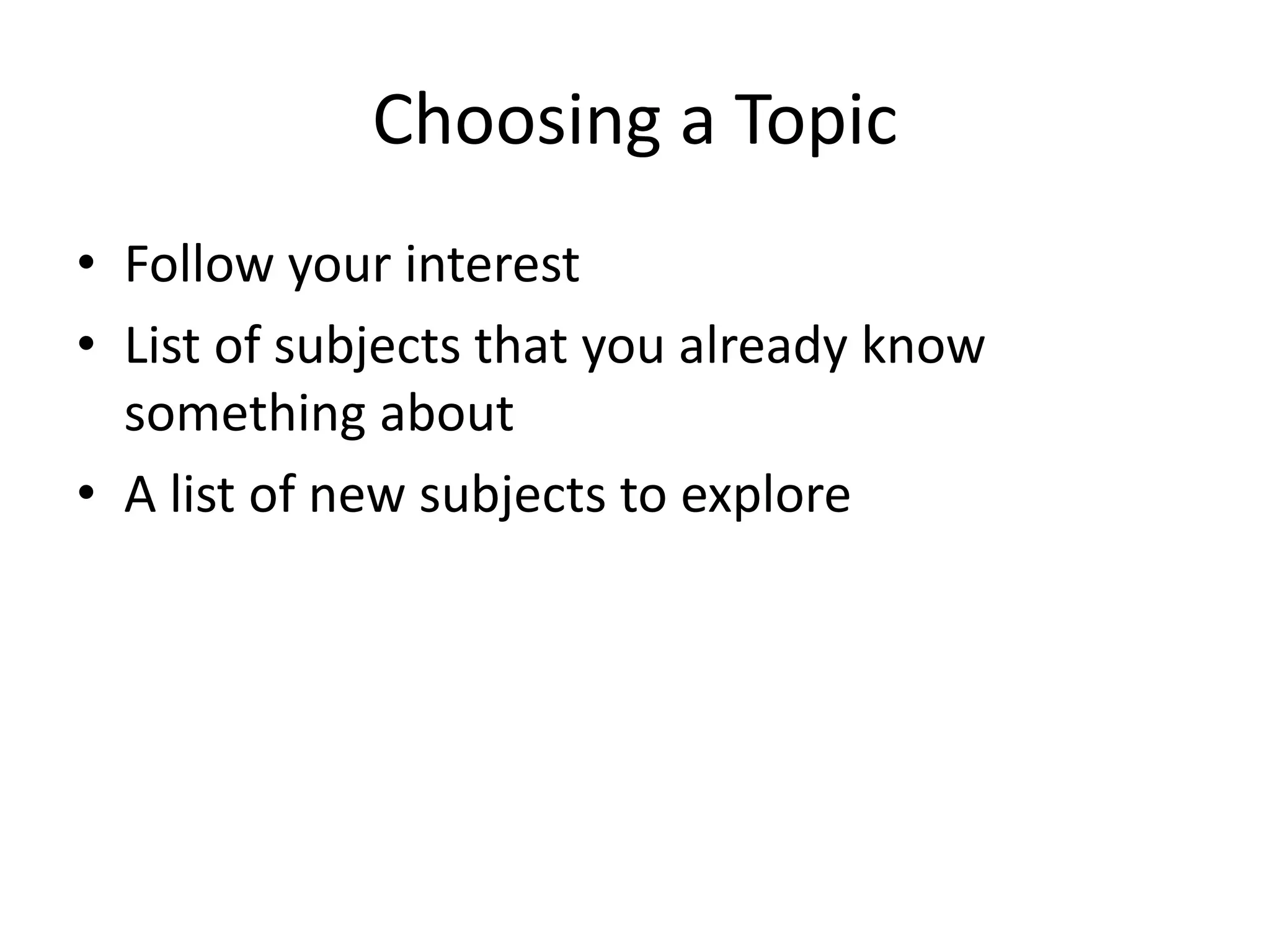
Choosing a Topic 
• Follow your interest 
• List of subjects that you already know 
something about 
• A list of new subjects to explore
Reference: Walker, M. (1984). Writing Research Papers: A Norton 
Guide. 4th ed. New York, N.Y.: W.W. Norton & Company, Inc.
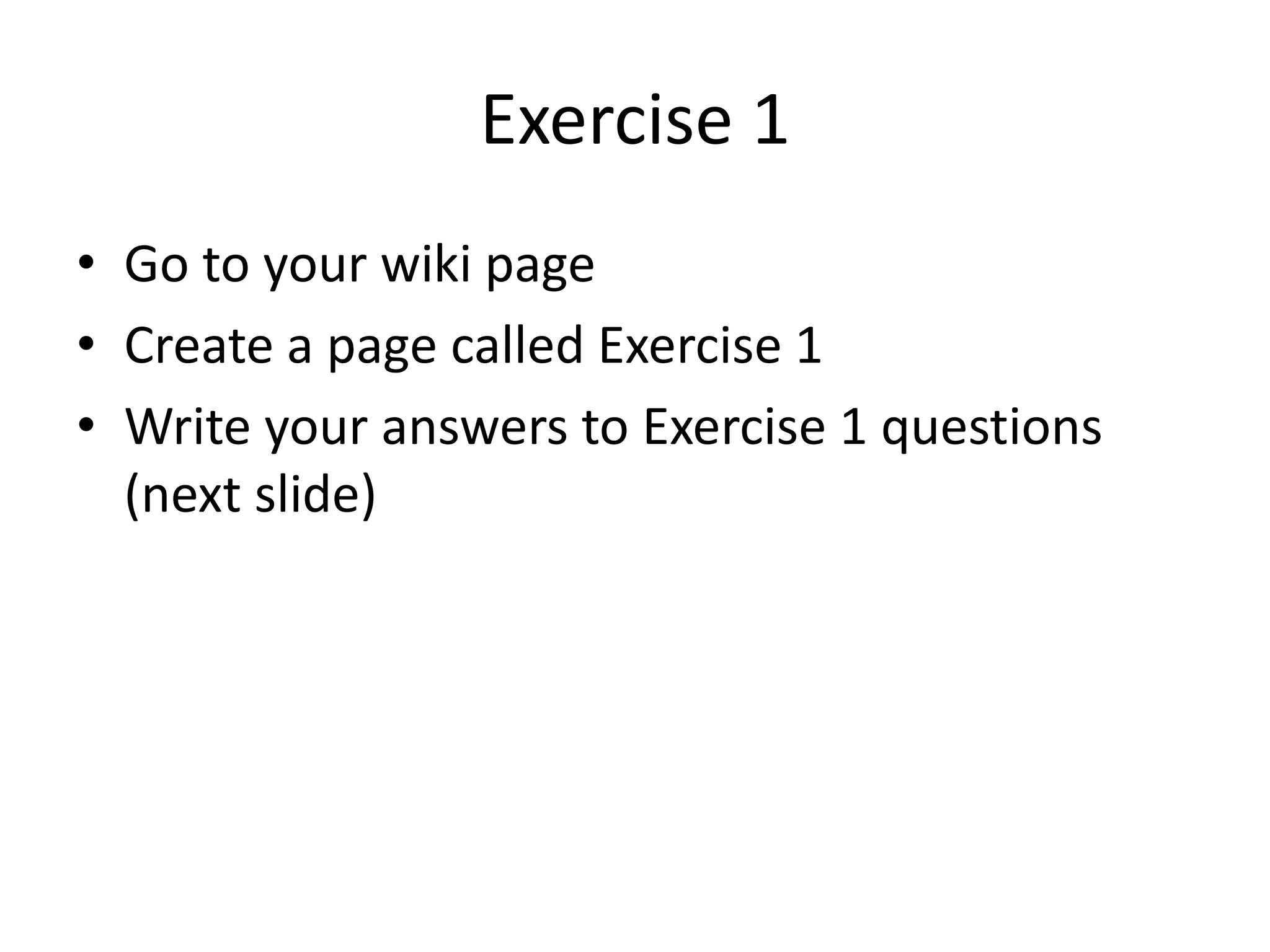
Exercise 1 
• Go to your wiki page 
• Create a page called Exercise 1 
• Write your answers to Exercise 1 questions 
(next slide)
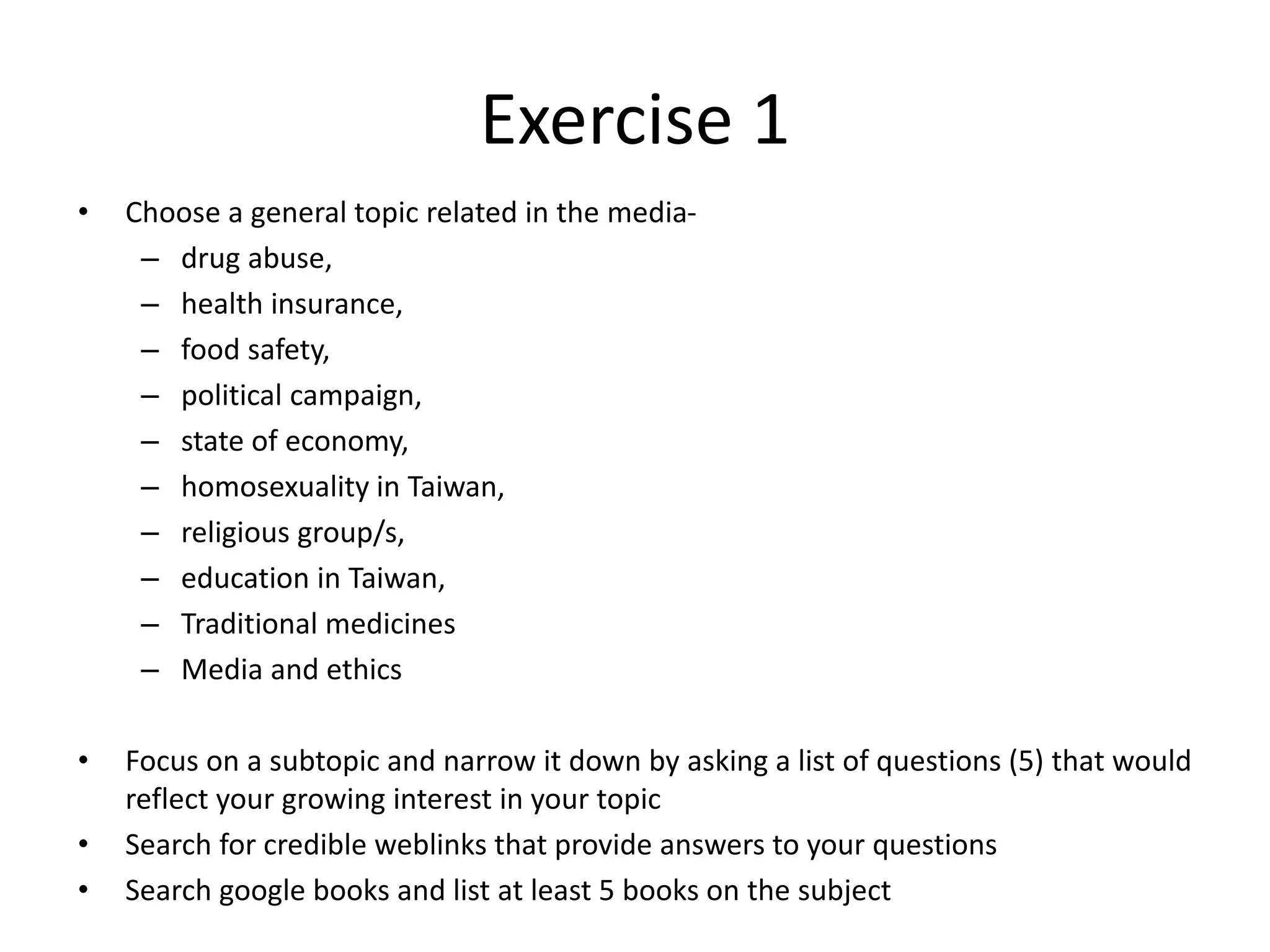
Exercise 1 
• Choose a general topic related in the media- 
– drug abuse, 
– health insurance, 
– food safety, 
– political campaign, 
– state of economy, 
– homosexuality in Taiwan, 
– religious group/s, 
– education in Taiwan, 
– Traditional medicines 
– Media and ethics 
• Focus on a subtopic and narrow it down by asking a list of questions (5) that would 
reflect your growing interest in your topic 
• Search for credible weblinks that provide answers to your questions 
• Search google books and list at least 5 books on the subject

Introduction to Research

  • 1.
    Introduction to Research November 7, 2014 http://research-methodology.net/wp-content/ uploads/2012/04/Research-Design.jpg
  • 2.
    What comes tomind when you hear the word ‘Research’?
  • 3.
    Research Myths •Something you do in libraries • Something you do in laboratories • College requirement
  • 4.
    You do researchalmost in every aspect of your life • When buying a scooter/car – Read consumer guides – Visit car dealers – Talk to others about their cars • When looking for a job – Study want ads – Check bulletin boards – Ask friends, family, etc. • When choosing a college or academic major
  • 5.
    All these requireresearch • Deciding on a career • Settling a place to live • Buying a house • Choosing a girlfriend/boyfriend
  • 7.
    Re-search • Prefix‘re’ means going back or doing it again • It suggests repetition • Searching again and again
  • 8.
    Research as alife skill • A step towards living consciously and deliberately • Determining what you think or do • Impact on the quality of your life • Influencing how you perceive the world and what choices you make
  • 9.
    Exploring • Youare a natural investigator • Engaged in informal research all your life • You discovered shortcuts in your life • You learned from mistakes • You found answers to questions you had The question lies on your attitude and skills
  • 10.
    Steps • Gatheringavailable facts • Verify reliability of the facts you gathered (talking to people, asking/confirming, etc.) • Getting at the truth of what happened- the difficulty of achieving absolute knowledge – Consider a physician having a consultation with a patient (ailments, questions re. symptoms, treatment based on evidence gathered)
  • 11.
    Steps • Understandand evaluate the facts gathered • Objective or subjective • Get a balanced view of any subject before reaching to a conclusion or making a stand on ethical issues
  • 12.
    Evaluating sources p.4 • Is it up-to-date • Author’s credentials • Journal/newspaper- slanted views? • Is the source adequately documented? • Is the language vague? Discriminatory? • How was the book reviewed?
  • 13.
    • Discover whatother people have already studied more extensively that you will be able to do • Distinguish what is known and what is still open for research • Original research to test conclusions by conducting interviews, polls, surveys, etc. • OR researching what is known; still original- you will be making sense of the facts and arrive at your own conclusions
  • 14.
    Reporting • Communicatingwhat you have found as clearly as possible to others • Organized, clear, readable, and interesting • Reflect your best effort to make what you have discovered understandable to others
  • 15.
    Resources • Thelibrary • Academic resources • The Internet • The community • People
  • 18.
    Before your commityourself to a topic Reference: Walker, M. (1984). Writing Research Papers: A Norton Guide. 4th ed. New York, N.Y.: W.W. Norton & Company, Inc.
  • 19.
    Reference: Walker, M.(1984). Writing Research Papers: A Norton Guide. 4th ed. New York, N.Y.: W.W. Norton & Company, Inc. Diagram
  • 20.
    Reference: Walker, M.(1984). Writing Research Papers: A Norton Guide. 4th ed. New York, N.Y.: W.W. Norton & Company, Inc.
  • 21.
    Reference: Walker, M.(1984). Writing Research Papers: A Norton Guide. 4th ed. New York, N.Y.: W.W. Norton & Company, Inc.
  • 22.
    Asking Questions Reference:Walker, M. (1984). Writing Research Papers: A Norton Guide. 4th ed. New York, N.Y.: W.W. Norton & Company, Inc.
  • 23.
    Reference: Walker, M.(1984). Writing Research Papers: A Norton Guide. 4th ed. New York, N.Y.: W.W. Norton & Company, Inc.
  • 24.
    Reference: Walker, M.(1984). Writing Research Papers: A Norton Guide. 4th ed. New York, N.Y.: W.W. Norton & Company, Inc. Brainstorming Ideas
  • 25.
    Reference: Walker, M.(1984). Writing Research Papers: A Norton Guide. 4th ed. New York, N.Y.: W.W. Norton & Company, Inc.
  • 26.
    Reference: Walker, M.(1984). Writing Research Papers: A Norton Guide. 4th ed. New York, N.Y.: W.W. Norton & Company, Inc.
  • 27.
    Michael Gold Reference:Walker, M. (1984). Writing Research Papers: A Norton Guide. 4th ed. New York, N.Y.: W.W. Norton & Company, Inc.
  • 28.
    Reference: Walker, M.(1984). Writing Research Papers: A Norton Guide. 4th ed. New York, N.Y.: W.W. Norton & Company, Inc.
  • 30.
    Choosing a Topic • Follow your interest • List of subjects that you already know something about • A list of new subjects to explore
  • 31.
    Reference: Walker, M.(1984). Writing Research Papers: A Norton Guide. 4th ed. New York, N.Y.: W.W. Norton & Company, Inc.
  • 32.
    Exercise 1 •Go to your wiki page • Create a page called Exercise 1 • Write your answers to Exercise 1 questions (next slide)
  • 33.
    Exercise 1 •Choose a general topic related in the media- – drug abuse, – health insurance, – food safety, – political campaign, – state of economy, – homosexuality in Taiwan, – religious group/s, – education in Taiwan, – Traditional medicines – Media and ethics • Focus on a subtopic and narrow it down by asking a list of questions (5) that would reflect your growing interest in your topic • Search for credible weblinks that provide answers to your questions • Search google books and list at least 5 books on the subject

Editor's Notes

  • #21 Reference: Walker, M. (1984). Writing Research Papers: A Norton Guide. 4th ed. New York, N.Y.: W.W. Norton & Company, Inc.