RESUME WORKSHOP
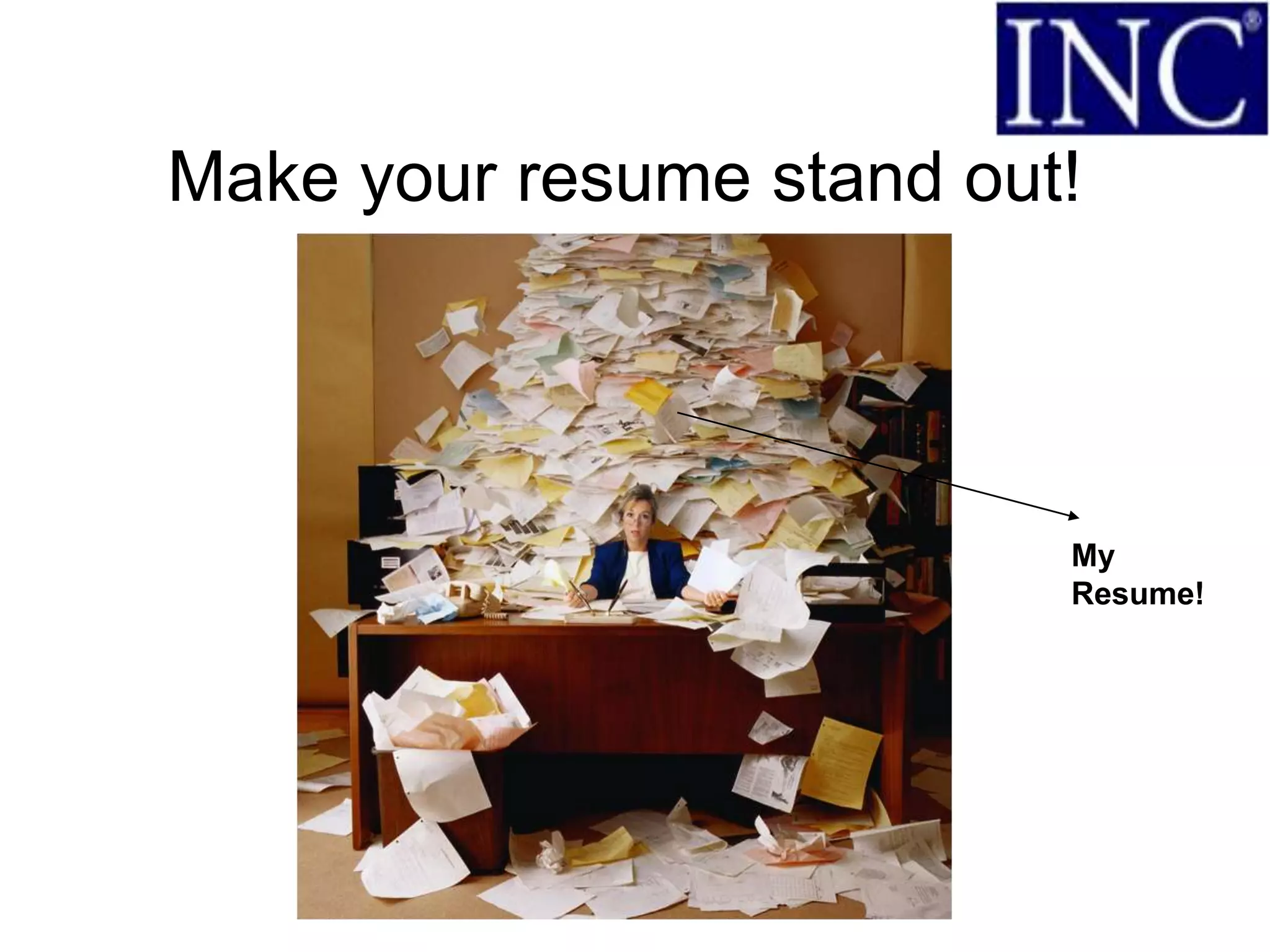
Make your resume stand out!


                          My
                          Resume!
WHAT IS A RESUME?

Webster’s defines
resume as :

“A SUMMARY”

    “A SET OF
ACCOMPLISHMENTS”
WHAT IS A RESUME?
• The answer to “What can you do for me?”

• Highlights the relevant facts about you, your education, and
  your experience.

• Makes the first impression about you.

• Positions you in the mind of the employer, thus creating a
  value.

• The interview gets you the job, the resume gets you the
  interview!
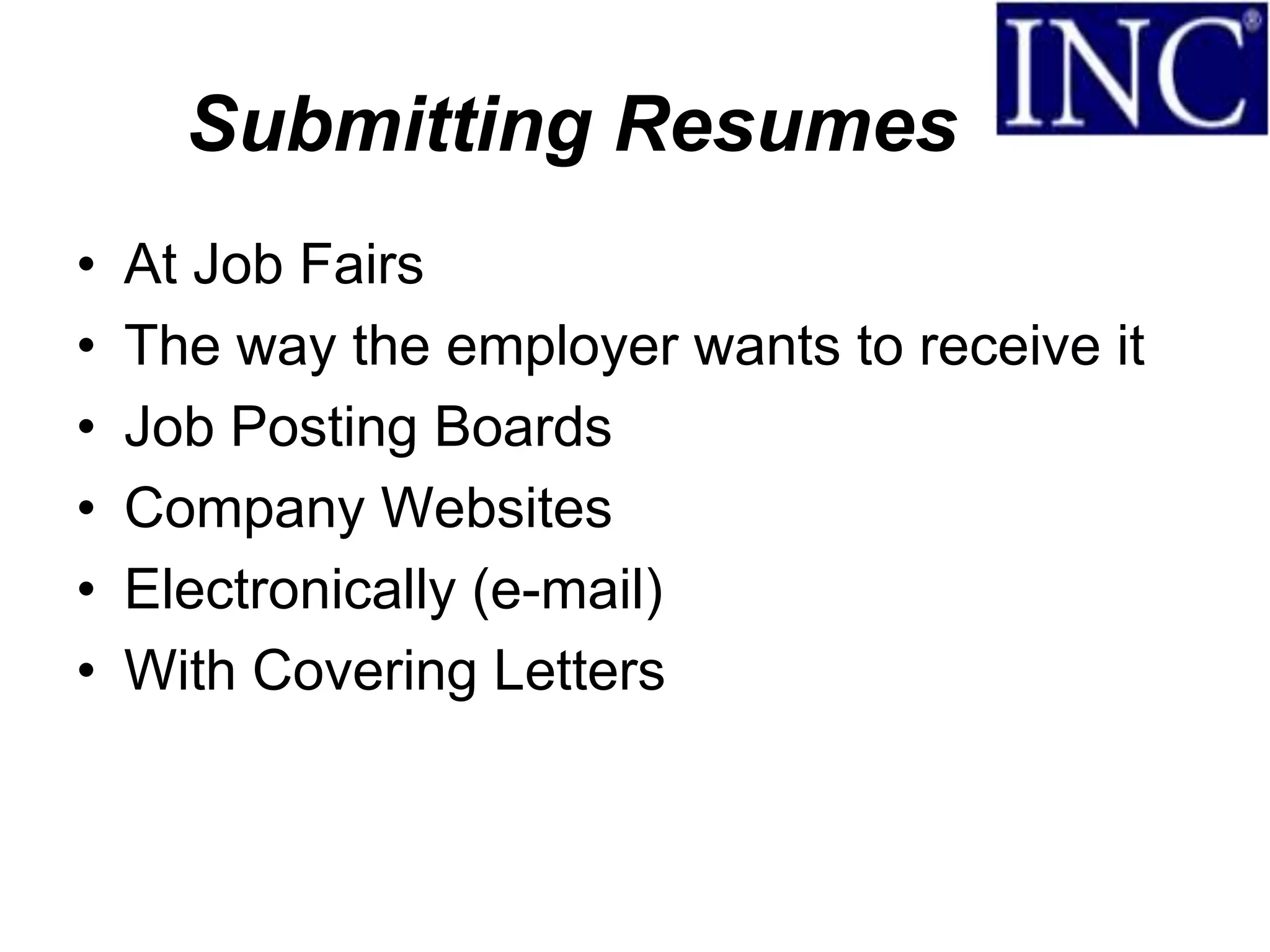
Submitting Resumes
•   At Job Fairs
•   The way the employer wants to receive it
•   Job Posting Boards
•   Company Websites
•   Electronically (e-mail)
•   With Covering Letters
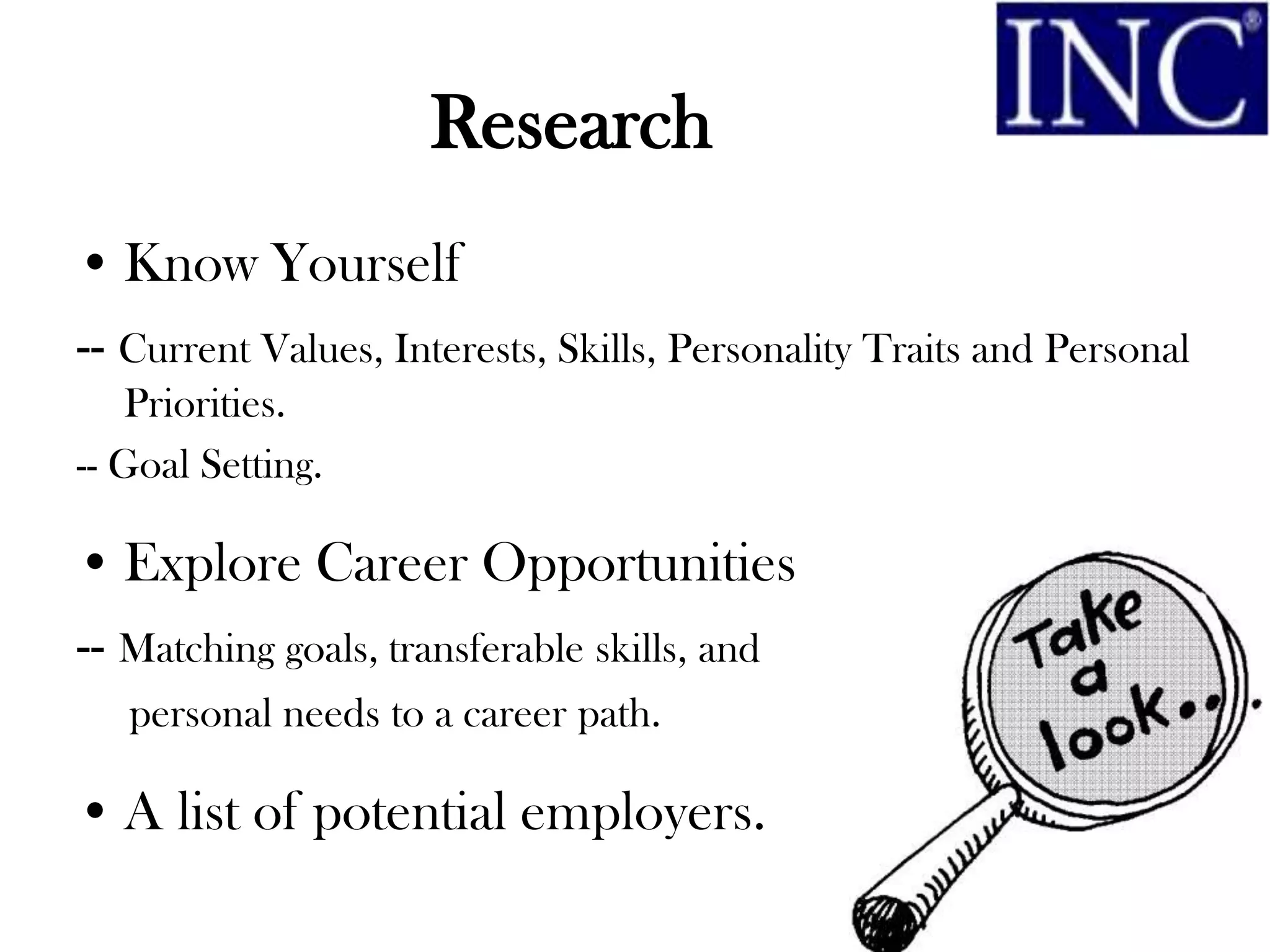
Research
• Know Yourself
-- Current Values, Interests, Skills, Personality Traits and Personal
    Priorities.
-- Goal Setting.

• Explore Career Opportunities
-- Matching goals, transferable skills, and
   personal needs to a career path.

• A list of potential employers.
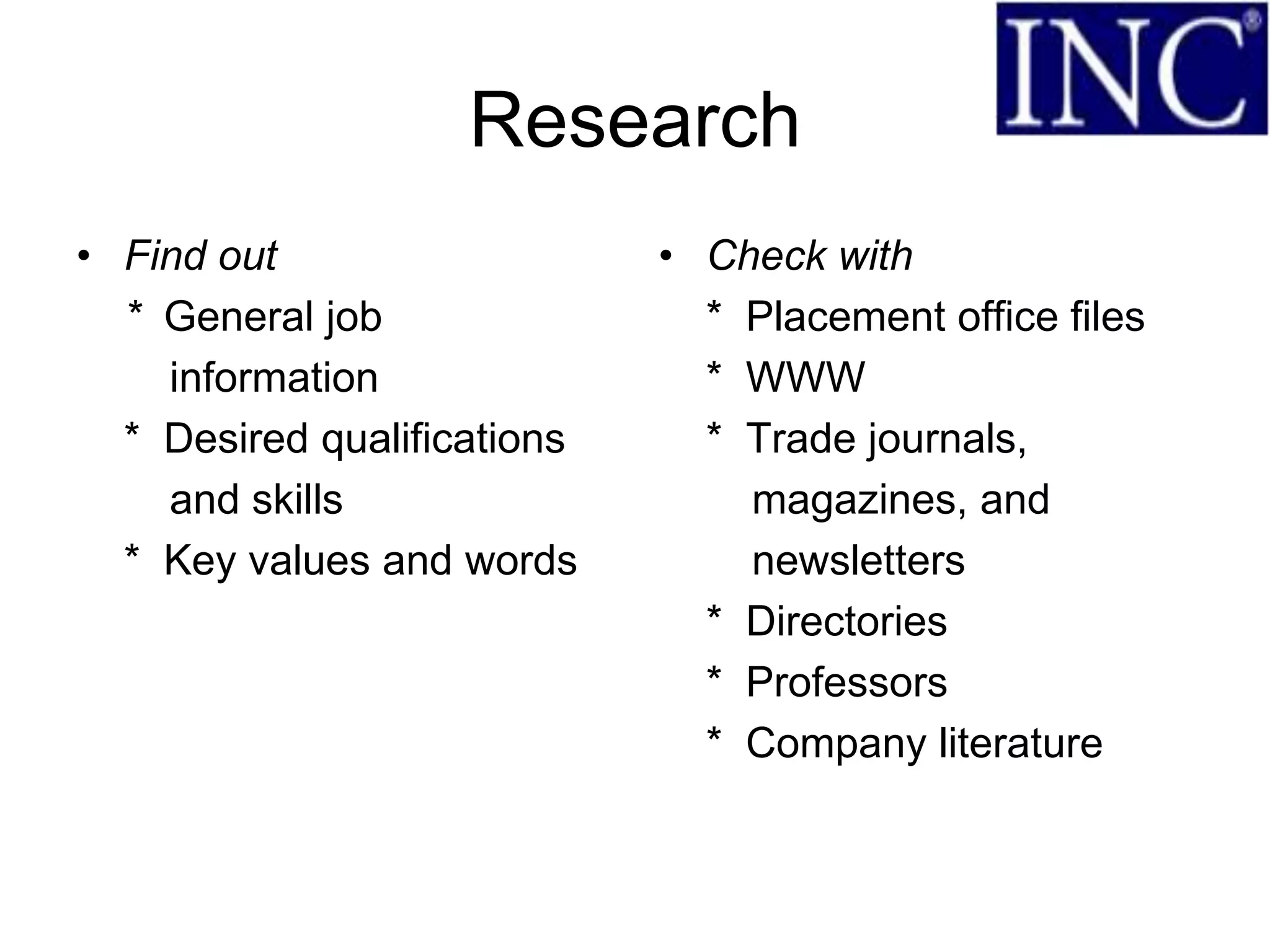
Research
• Find out                   • Check with
  * General job                * Placement office files
    information                * WWW
  * Desired qualifications     * Trade journals,
    and skills                   magazines, and
  * Key values and words         newsletters
                               * Directories
                               * Professors
                               * Company literature
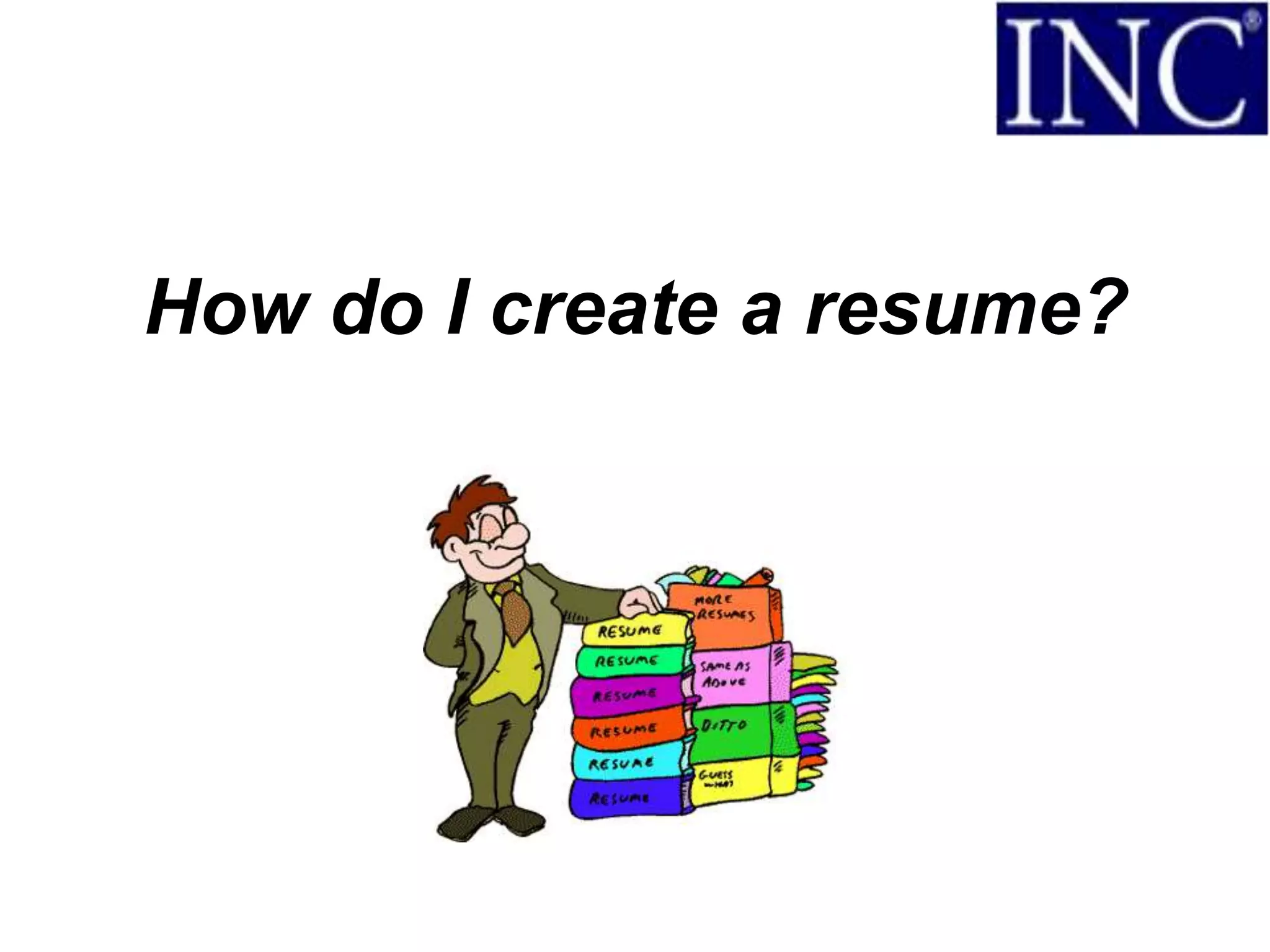
How do I create a resume?
Consider the following categories
• Objective (what you want to do)
• Education (schools, locations, degree, dates,
                    relevant courses)
• Project (coursework)
• Work Experiences (paid, unpaid, volunteer)
• Skills (Computer, Technical, Language)
• Accomplishments (don’t be shy)
CONTACT INFORMATION


 • Make it easy for recruiter to find you
 • Name (largest font)
 • Address, City and State
 • Telephone Number
 • Email Address
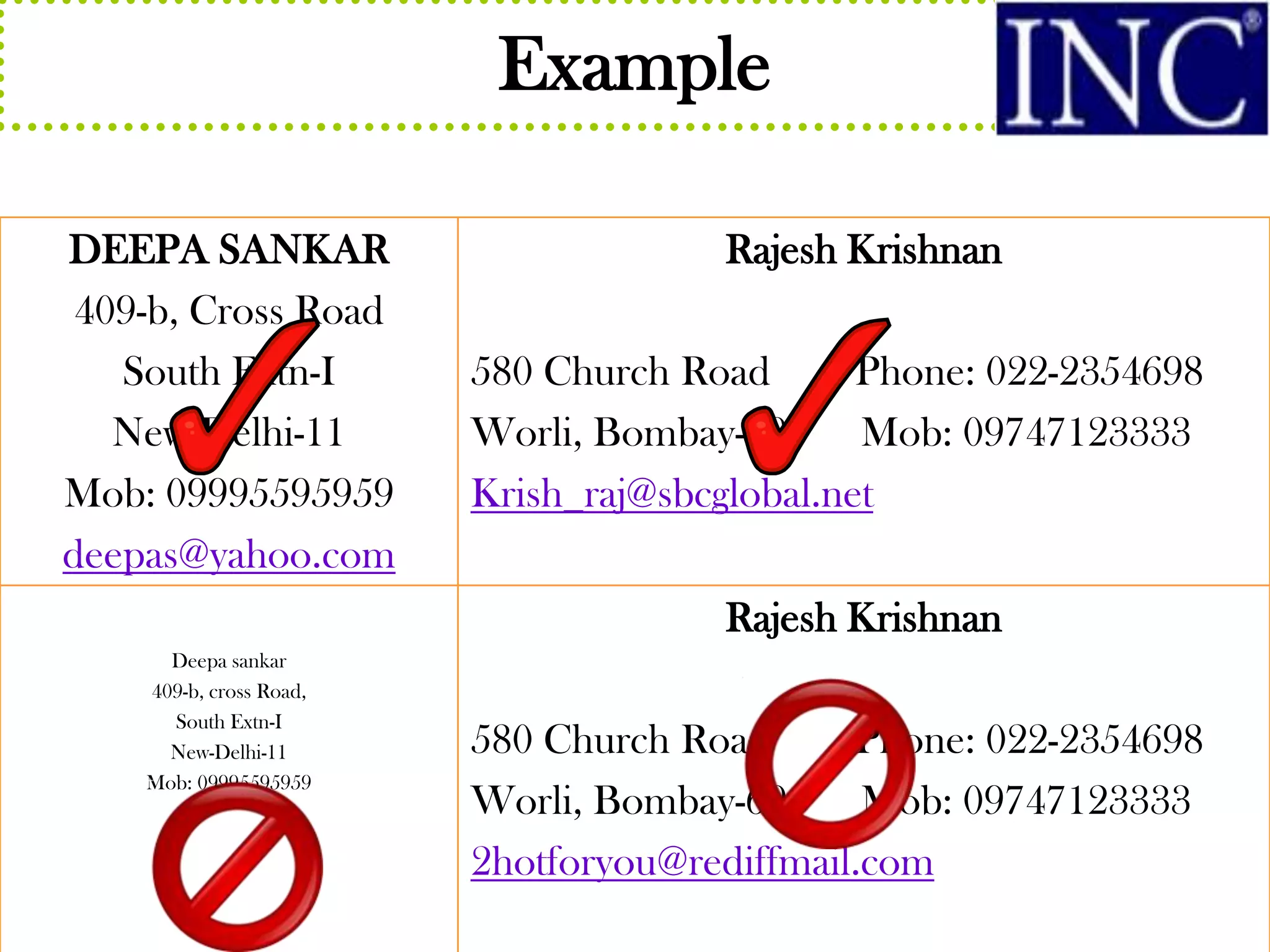
Example

DEEPA SANKAR                          Rajesh Krishnan
 409-b, Cross Road
   South Extn-I          580 Church Road       Phone: 022-2354698
   New Delhi-11          Worli, Bombay-69      Mob: 09747123333
Mob: 09995595959         Krish_raj@sbcglobal.net
deepas@yahoo.com
                                      Rajesh Krishnan
      Deepa sankar
    409-b, cross Road,
      South Extn-I
      New-Delhi-11       580 Church Road      Phone: 022-2354698
    Mob: 09995595959
                         Worli, Bombay-69      Mob: 09747123333
                         2hotforyou@rediffmail.com
Objective Statement
• One to three sentence summary of your
  area of expertise and career interest.
• Write as complete sentences or as
  descriptive phrases with minimal
  punctuation.
• Relate your existing skills directly to the
  job you are seeking. Demonstrate what
  you can do for the company rather than
  what they can do for you.
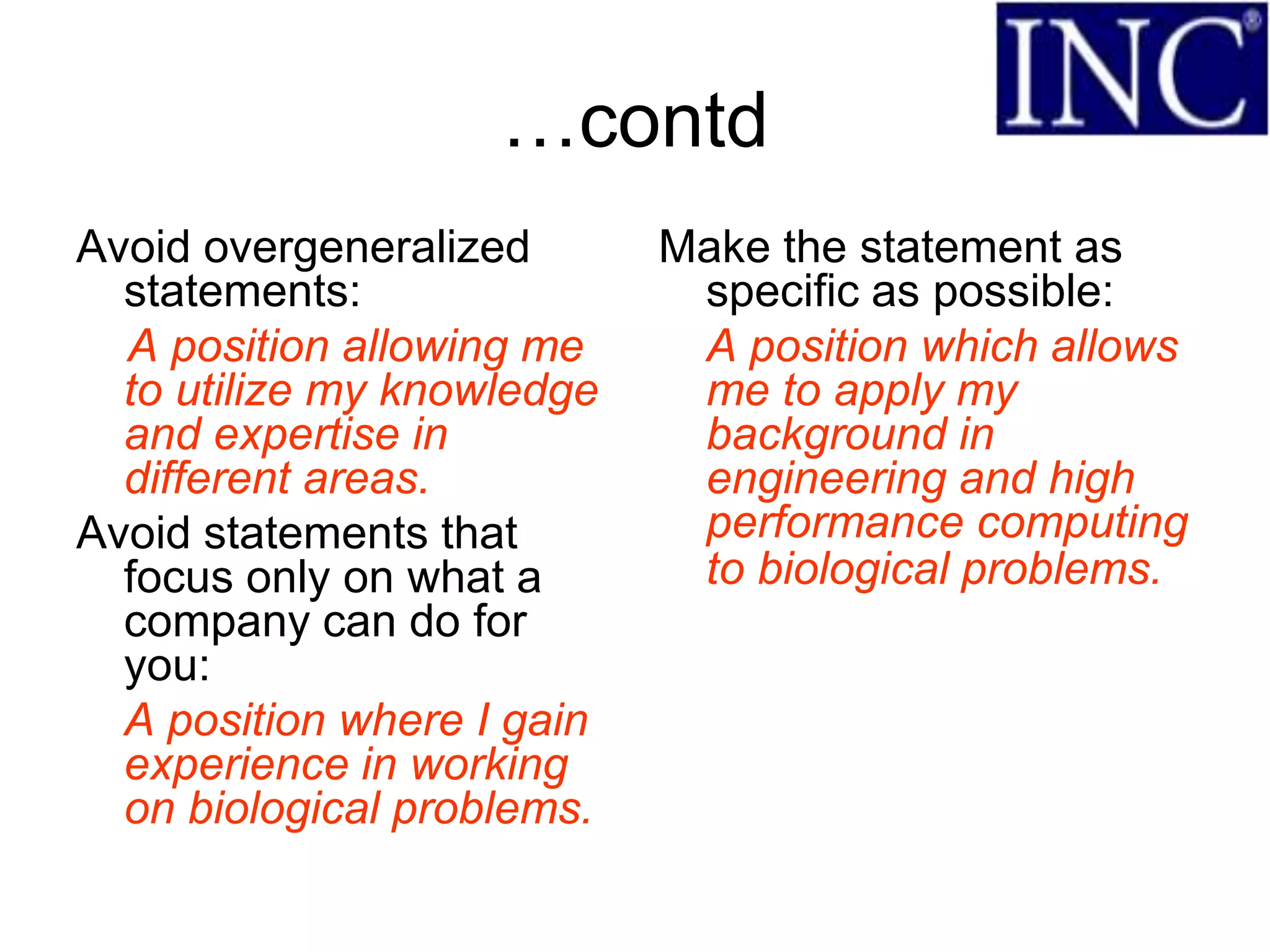
…contd
Avoid overgeneralized       Make the statement as
  statements:                specific as possible:
  A position allowing me     A position which allows
  to utilize my knowledge    me to apply my
  and expertise in           background in
  different areas.           engineering and high
Avoid statements that        performance computing
  focus only on what a       to biological problems.
  company can do for
  you:
  A position where I gain
  experience in working
  on biological problems.
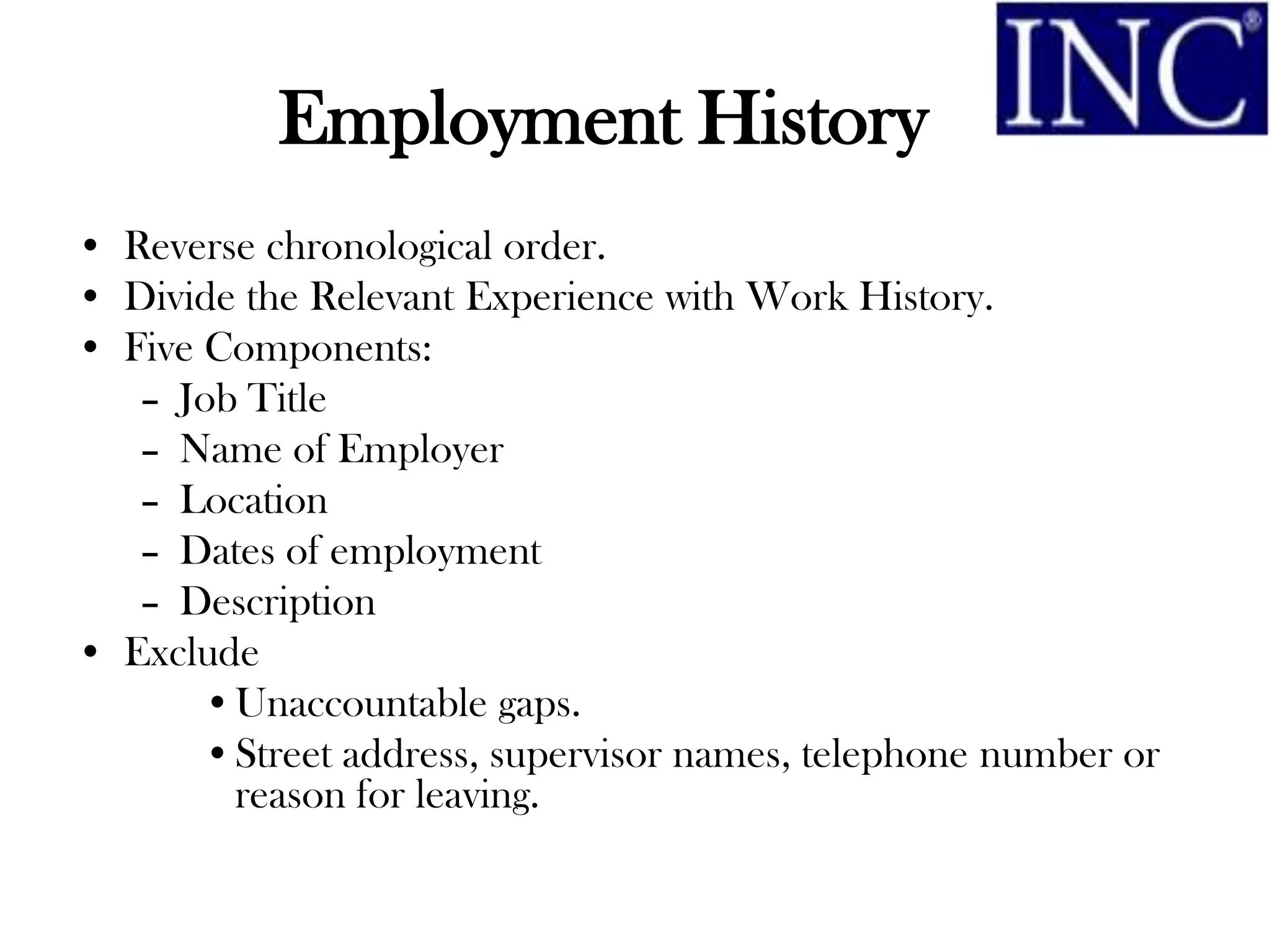
Employment History
• Reverse chronological order.
• Divide the Relevant Experience with Work History.
• Five Components:
   – Job Title
   – Name of Employer
   – Location
   – Dates of employment
   – Description
• Exclude
       •Unaccountable gaps.
       •Street address, supervisor names, telephone number or
        reason for leaving.
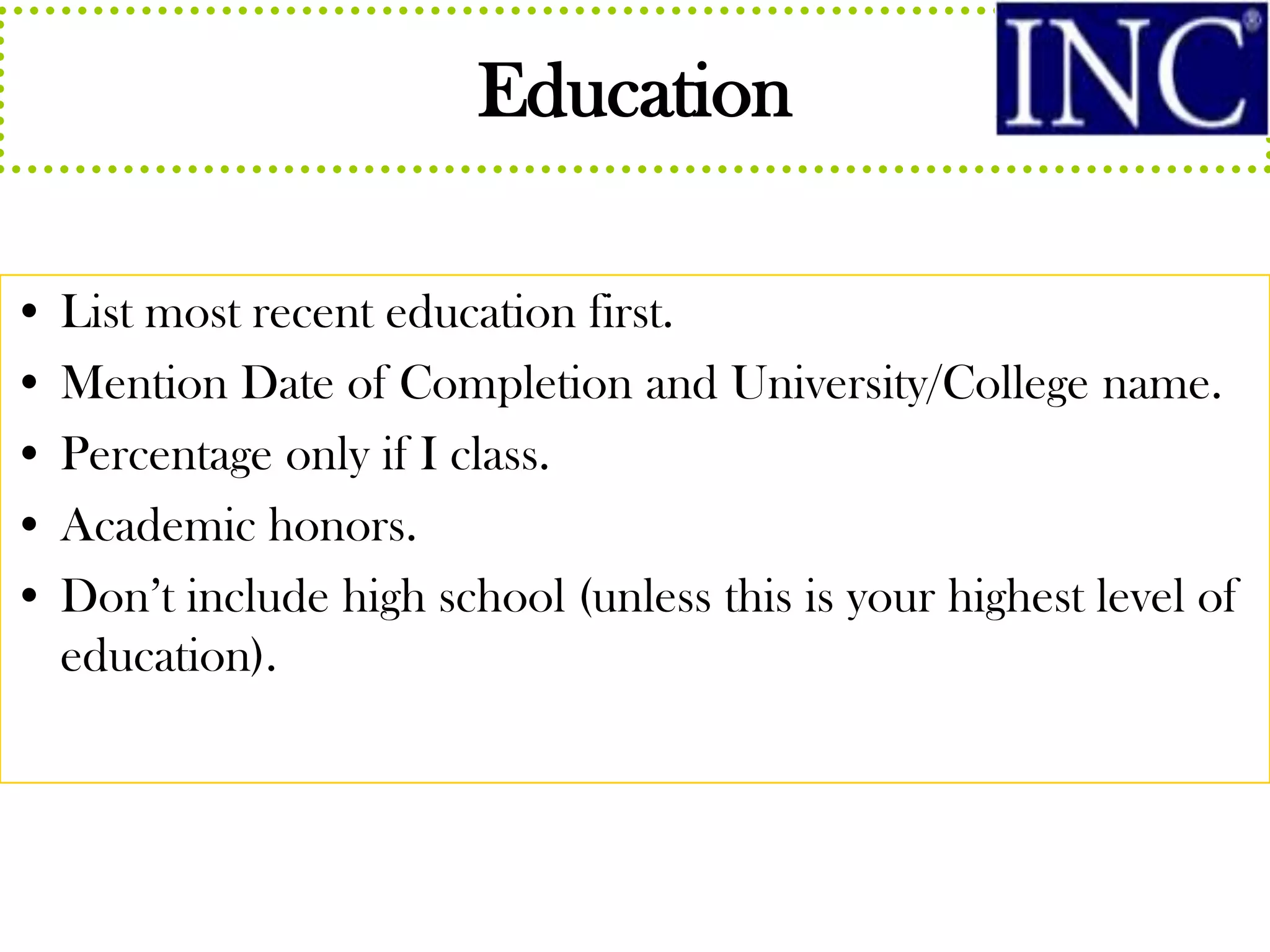
Education

• List most recent education first.
• Mention Date of Completion and University/College name.
• Percentage only if I class.
• Academic honors.
• Don’t include high school (unless this is your highest level of
  education).
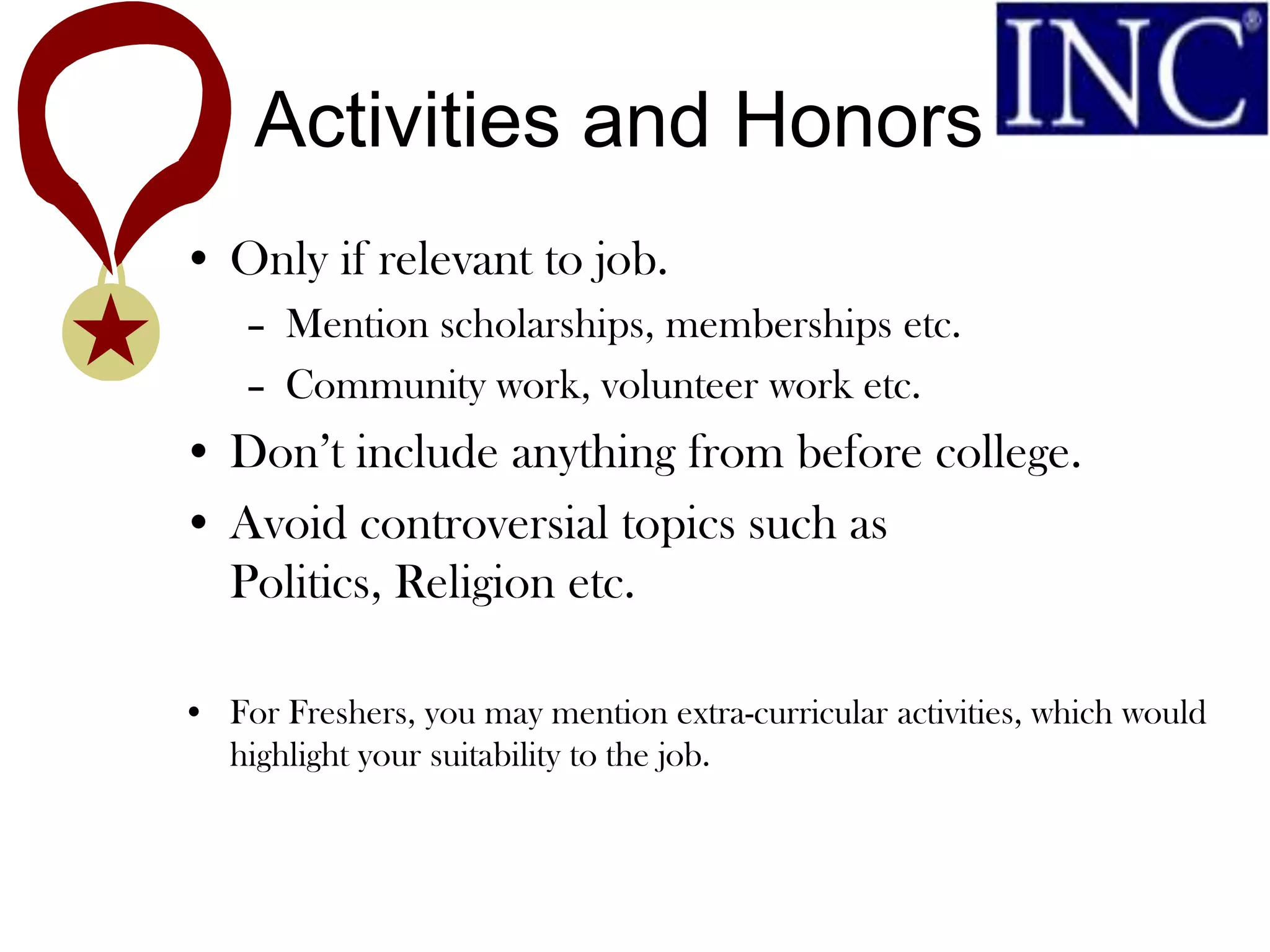
Activities and Honors
• Only if relevant to job.
    – Mention scholarships, memberships etc.
    – Community work, volunteer work etc.
• Don’t include anything from before college.
• Avoid controversial topics such as
  Politics, Religion etc.

• For Freshers, you may mention extra-curricular activities, which would
  highlight your suitability to the job.
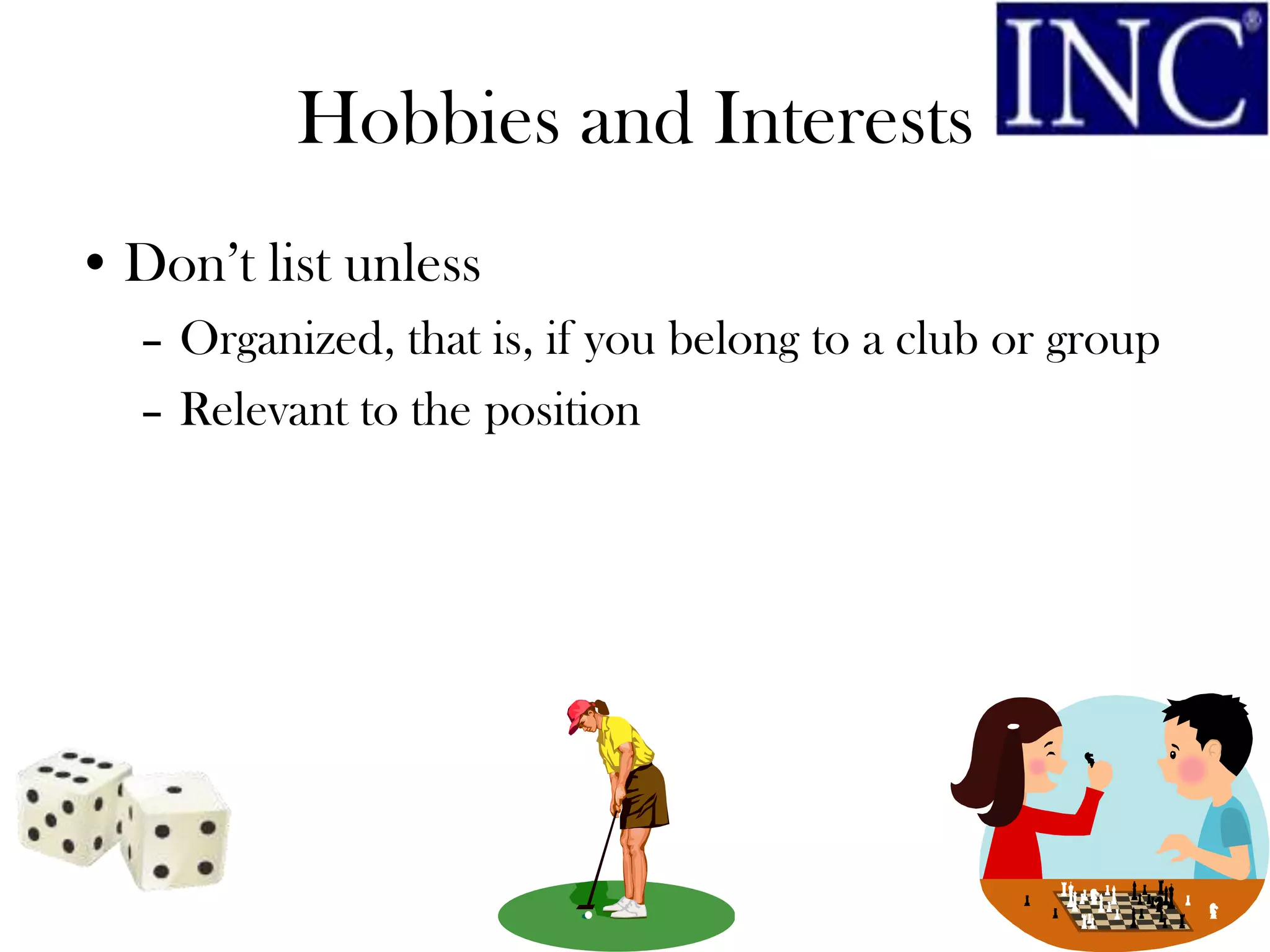
Hobbies and Interests
• Don’t list unless
  – Organized, that is, if you belong to a club or group
  – Relevant to the position
References
• In general, do not include the names and
  addresses of your references on your
  resume.
• It is enough to state that references are
  available upon request.
• Choose professional references rather
  than character references. Employers and
  professors who know you and your work
  are the best references.
10 RESUME DO’S
•   Make sure it looks professional
•   Use standard sized, white/light tint paper
•   Print on only one side
•   Try to keep it to one page (undergrad)
•   Format well and have white space
•   Use bullets and powerful verbs
•   Keep it positive
•   Be honest, but don’t undersell yourself
•   Use the vocabulary (keywords) of your field
•   Keep your contact information current
10 RESUME DON’TS
•   Exaggerate
•   Have misspelled words or names
•   Include photograph, marital status, sex, age
•   Handwrite changes or additions
•   Make it too crowded with no white space
•   Send it without a cover letter
•   Have unexplained abbreviations
•   Use personal pronouns
•   Use fonts smaller than 10 pt.
•   Use a template-they’re tougher to alter
The Final Test


Does your resume answer these questions:
     •Does it clearly and quickly communicate to employer that you
      can do the job?
     •Do your strengths come across?
     •Does everything support the job you are targeting?
     •Should anything be removed?
     •Does it really sell your skills?
how to make a resume

how to make a resume

  • 1.
  • 2.
    Make your resumestand out! My Resume!
  • 3.
    WHAT IS ARESUME? Webster’s defines resume as : “A SUMMARY” “A SET OF ACCOMPLISHMENTS”
  • 4.
    WHAT IS ARESUME? • The answer to “What can you do for me?” • Highlights the relevant facts about you, your education, and your experience. • Makes the first impression about you. • Positions you in the mind of the employer, thus creating a value. • The interview gets you the job, the resume gets you the interview!
  • 5.
    Submitting Resumes • At Job Fairs • The way the employer wants to receive it • Job Posting Boards • Company Websites • Electronically (e-mail) • With Covering Letters
  • 6.
    Research • Know Yourself --Current Values, Interests, Skills, Personality Traits and Personal Priorities. -- Goal Setting. • Explore Career Opportunities -- Matching goals, transferable skills, and personal needs to a career path. • A list of potential employers.
  • 7.
    Research • Find out • Check with * General job * Placement office files information * WWW * Desired qualifications * Trade journals, and skills magazines, and * Key values and words newsletters * Directories * Professors * Company literature
  • 8.
    How do Icreate a resume?
  • 9.
    Consider the followingcategories • Objective (what you want to do) • Education (schools, locations, degree, dates, relevant courses) • Project (coursework) • Work Experiences (paid, unpaid, volunteer) • Skills (Computer, Technical, Language) • Accomplishments (don’t be shy)
  • 10.
    CONTACT INFORMATION •Make it easy for recruiter to find you • Name (largest font) • Address, City and State • Telephone Number • Email Address
  • 11.
    Example DEEPA SANKAR Rajesh Krishnan 409-b, Cross Road South Extn-I 580 Church Road Phone: 022-2354698 New Delhi-11 Worli, Bombay-69 Mob: 09747123333 Mob: 09995595959 Krish_raj@sbcglobal.net deepas@yahoo.com Rajesh Krishnan Deepa sankar 409-b, cross Road, South Extn-I New-Delhi-11 580 Church Road Phone: 022-2354698 Mob: 09995595959 Worli, Bombay-69 Mob: 09747123333 2hotforyou@rediffmail.com
  • 12.
    Objective Statement • Oneto three sentence summary of your area of expertise and career interest. • Write as complete sentences or as descriptive phrases with minimal punctuation. • Relate your existing skills directly to the job you are seeking. Demonstrate what you can do for the company rather than what they can do for you.
  • 13.
    …contd Avoid overgeneralized Make the statement as statements: specific as possible: A position allowing me A position which allows to utilize my knowledge me to apply my and expertise in background in different areas. engineering and high Avoid statements that performance computing focus only on what a to biological problems. company can do for you: A position where I gain experience in working on biological problems.
  • 14.
    Employment History • Reversechronological order. • Divide the Relevant Experience with Work History. • Five Components: – Job Title – Name of Employer – Location – Dates of employment – Description • Exclude •Unaccountable gaps. •Street address, supervisor names, telephone number or reason for leaving.
  • 15.
    Education • List mostrecent education first. • Mention Date of Completion and University/College name. • Percentage only if I class. • Academic honors. • Don’t include high school (unless this is your highest level of education).
  • 16.
    Activities and Honors •Only if relevant to job. – Mention scholarships, memberships etc. – Community work, volunteer work etc. • Don’t include anything from before college. • Avoid controversial topics such as Politics, Religion etc. • For Freshers, you may mention extra-curricular activities, which would highlight your suitability to the job.
  • 17.
    Hobbies and Interests •Don’t list unless – Organized, that is, if you belong to a club or group – Relevant to the position
  • 18.
    References • In general,do not include the names and addresses of your references on your resume. • It is enough to state that references are available upon request. • Choose professional references rather than character references. Employers and professors who know you and your work are the best references.
  • 20.
    10 RESUME DO’S • Make sure it looks professional • Use standard sized, white/light tint paper • Print on only one side • Try to keep it to one page (undergrad) • Format well and have white space • Use bullets and powerful verbs • Keep it positive • Be honest, but don’t undersell yourself • Use the vocabulary (keywords) of your field • Keep your contact information current
  • 21.
    10 RESUME DON’TS • Exaggerate • Have misspelled words or names • Include photograph, marital status, sex, age • Handwrite changes or additions • Make it too crowded with no white space • Send it without a cover letter • Have unexplained abbreviations • Use personal pronouns • Use fonts smaller than 10 pt. • Use a template-they’re tougher to alter
  • 22.
    The Final Test Doesyour resume answer these questions: •Does it clearly and quickly communicate to employer that you can do the job? •Do your strengths come across? •Does everything support the job you are targeting? •Should anything be removed? •Does it really sell your skills?