How to Evaluate and
Present a Primary
Source
Starting Points
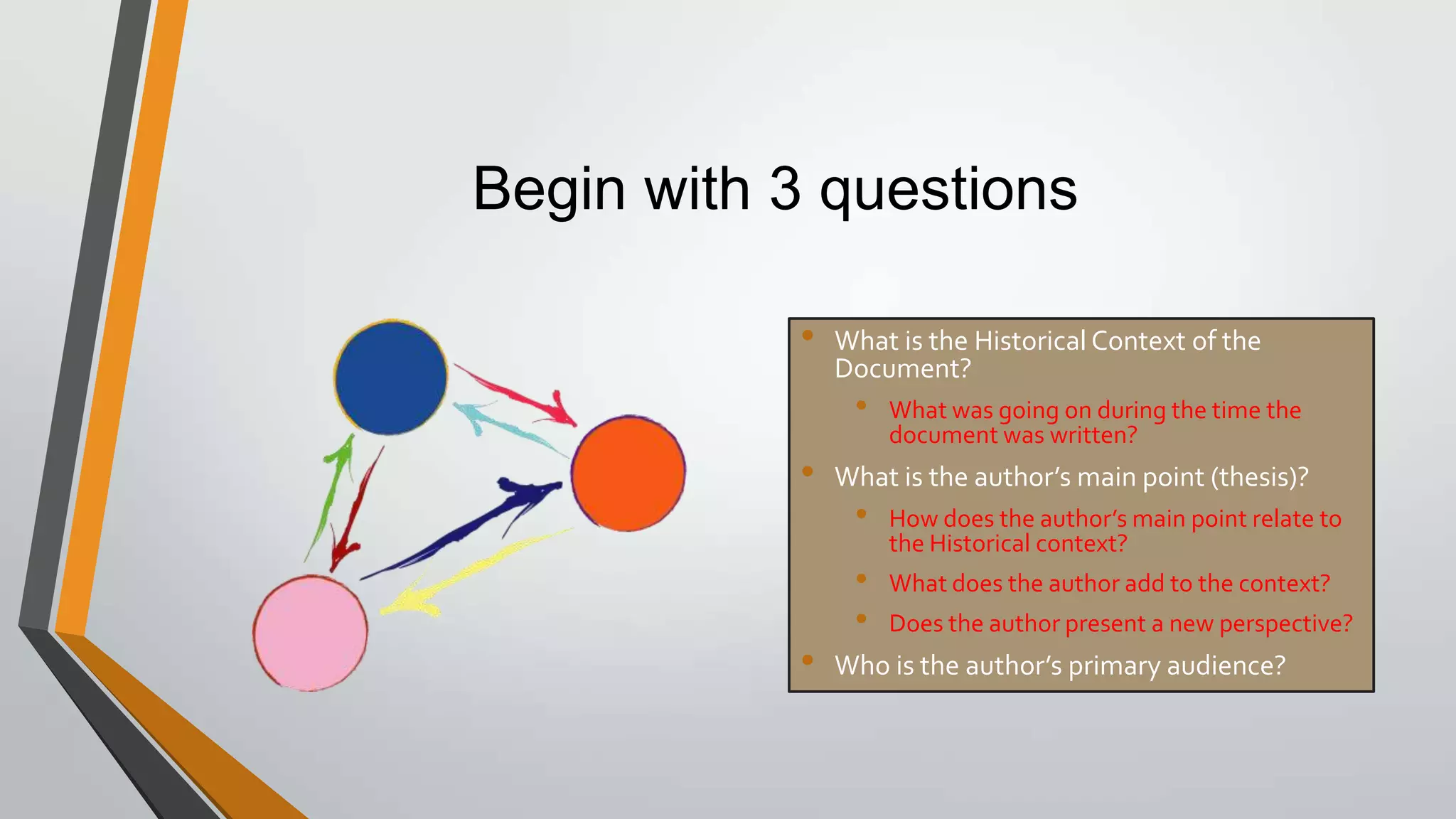
Begin with 3 questions
•

What is the Historical Context of the
Document?

•

•

•

What was going on during the time the
document was written?

What is the author’s main point (thesis)?

•
•
•

How does the author’s main point relate to
the Historical context?
What does the author add to the context?
Does the author present a new perspective?

Who is the author’s primary audience?
Ask Questions of the Source
•
•

Who wrote it
What does the document discuss

•

•
•

•

Is it general or specific?

When was it written?
Where was it written? Where is the action or
issue?
Why did the author write it?
Perspective

•

What is the author’s perspective?

•

•

From what point of view is the author arguing
the main point of the document?

Does the author support the dominant
perspective of the event, issue, idea?
Reliability: Support; Accurate; Authenticity;
Veracity
•

How does the author support his/her main
point? (argument, evidence, appeal to
emotion or belief)

•
•

•
•
•

What is the author’s strongest point in support
of the thesis?
What is the weakest?

Is the source authentic?
Is the source accurate as far as you can tell?
Is the source reliable (tells the truth as the
author knows it to be)?
Historical Significance

•

What is the historical significance of

•
•
•
•

The document
The author
The main point
The Point of View
What is the Big Picture?

•
•

Is the author asking one of those “big
questions?”
If not, can this source be included as one
perspective in a “big picture” question?
Tips for a Good Presentation or
Blog Post
•
•
•

•

•

Use the points in slides 1-7 as an outline

You don’t need to answer all points, just the ones that
fit your source
Use only the details that explain your source or support
your interpretation of the source
Don’t assume your source is accurate or reliable just
because it is historical

Do not invoke presentism unless you make it clear that
you are making a comment based on current, rather
than historical perspective and context

•
•

Be creative
Use media

How to evaluate and present a primary source

  • 1.
    How to Evaluateand Present a Primary Source Starting Points
  • 2.
    Begin with 3questions • What is the Historical Context of the Document? • • • What was going on during the time the document was written? What is the author’s main point (thesis)? • • • How does the author’s main point relate to the Historical context? What does the author add to the context? Does the author present a new perspective? Who is the author’s primary audience?
  • 3.
    Ask Questions ofthe Source • • Who wrote it What does the document discuss • • • • Is it general or specific? When was it written? Where was it written? Where is the action or issue? Why did the author write it?
  • 4.
    Perspective • What is theauthor’s perspective? • • From what point of view is the author arguing the main point of the document? Does the author support the dominant perspective of the event, issue, idea?
  • 5.
    Reliability: Support; Accurate;Authenticity; Veracity • How does the author support his/her main point? (argument, evidence, appeal to emotion or belief) • • • • • What is the author’s strongest point in support of the thesis? What is the weakest? Is the source authentic? Is the source accurate as far as you can tell? Is the source reliable (tells the truth as the author knows it to be)?
  • 6.
    Historical Significance • What isthe historical significance of • • • • The document The author The main point The Point of View
  • 7.
    What is theBig Picture? • • Is the author asking one of those “big questions?” If not, can this source be included as one perspective in a “big picture” question?
  • 8.
    Tips for aGood Presentation or Blog Post • • • • • Use the points in slides 1-7 as an outline You don’t need to answer all points, just the ones that fit your source Use only the details that explain your source or support your interpretation of the source Don’t assume your source is accurate or reliable just because it is historical Do not invoke presentism unless you make it clear that you are making a comment based on current, rather than historical perspective and context • • Be creative Use media