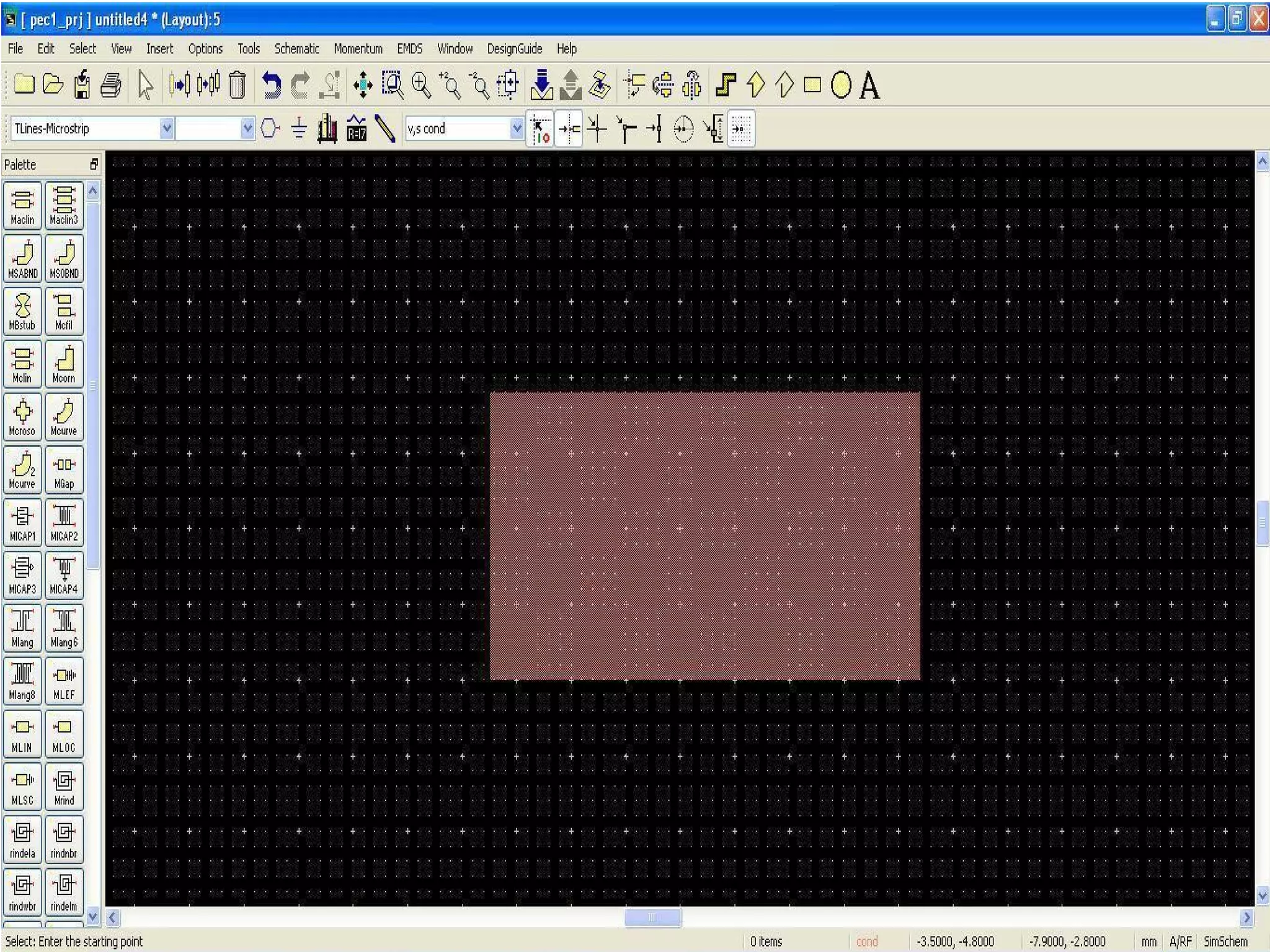
HOW TO DESIGN MICROSTRIP
PATCH ANTENNA IN ADS 2009
Prepared By,
R.THANDAIAH PRABU M.E., (Ph.D.,)
PRATHYUSHA ENGINEERING COLLEGE, CHENNAI
thandaiah@gmail.com
Mobile: +91-9751445529
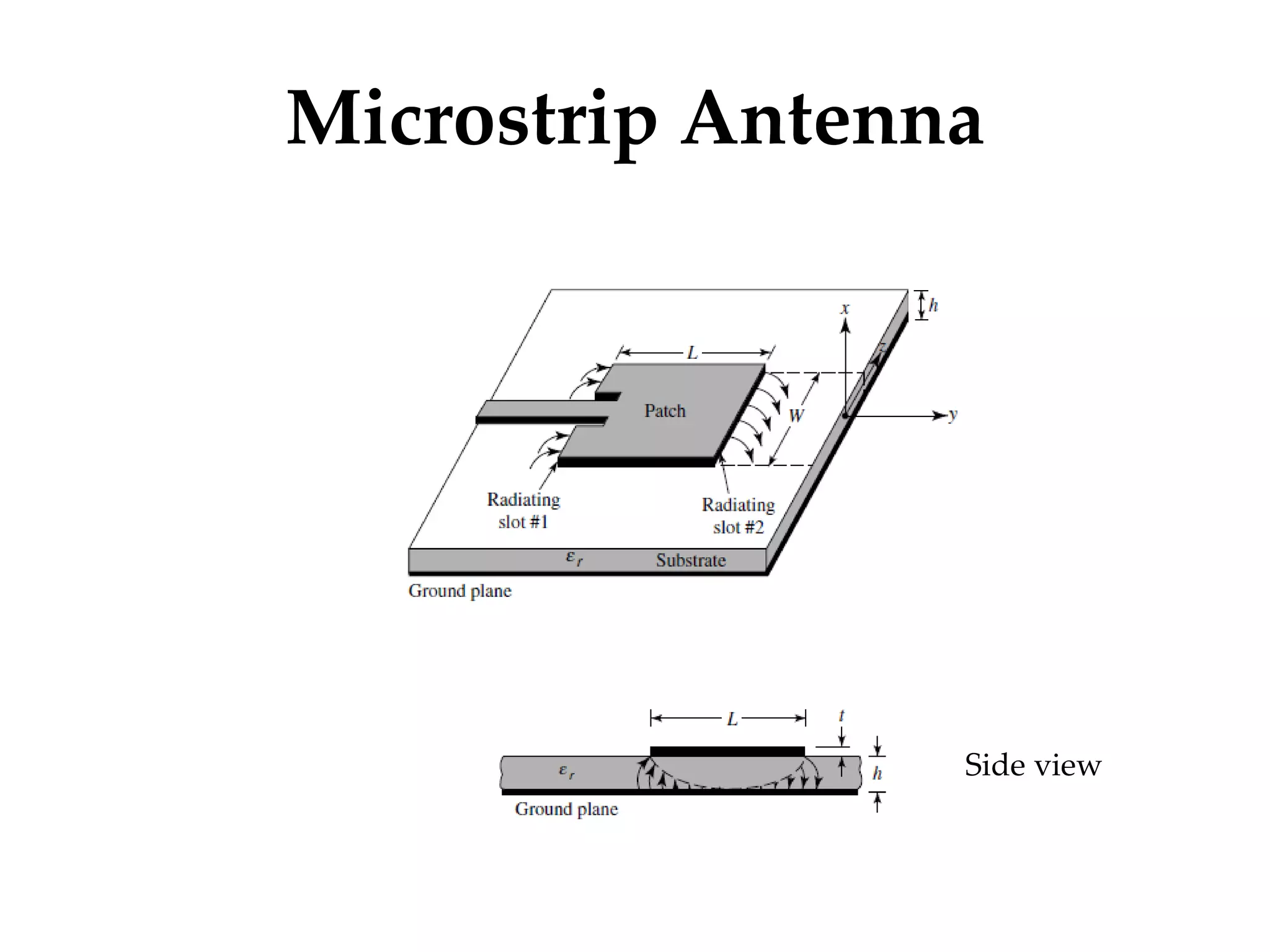
Microstrip Antenna
Side view
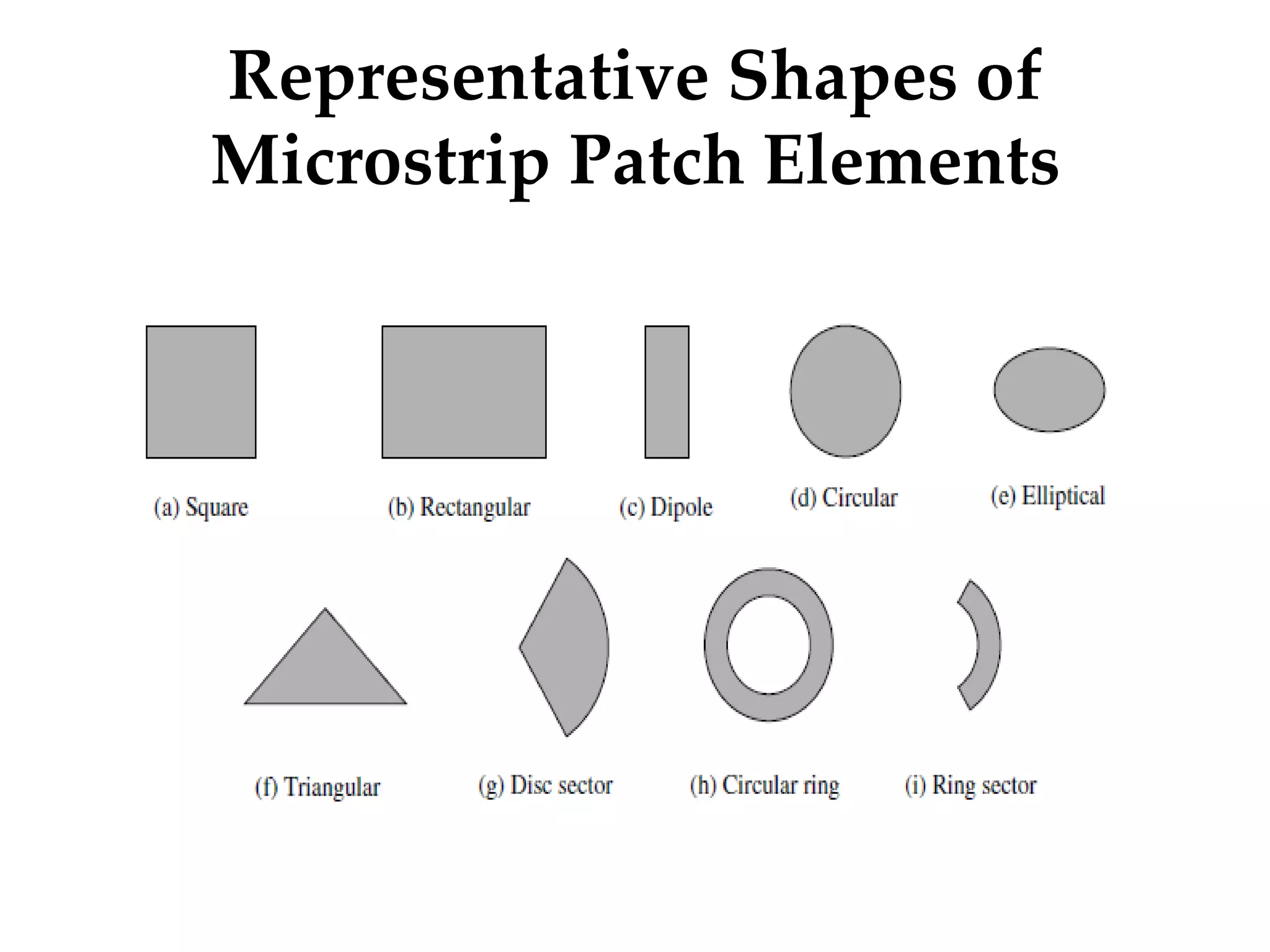
Representative Shapes of
Microstrip Patch Elements
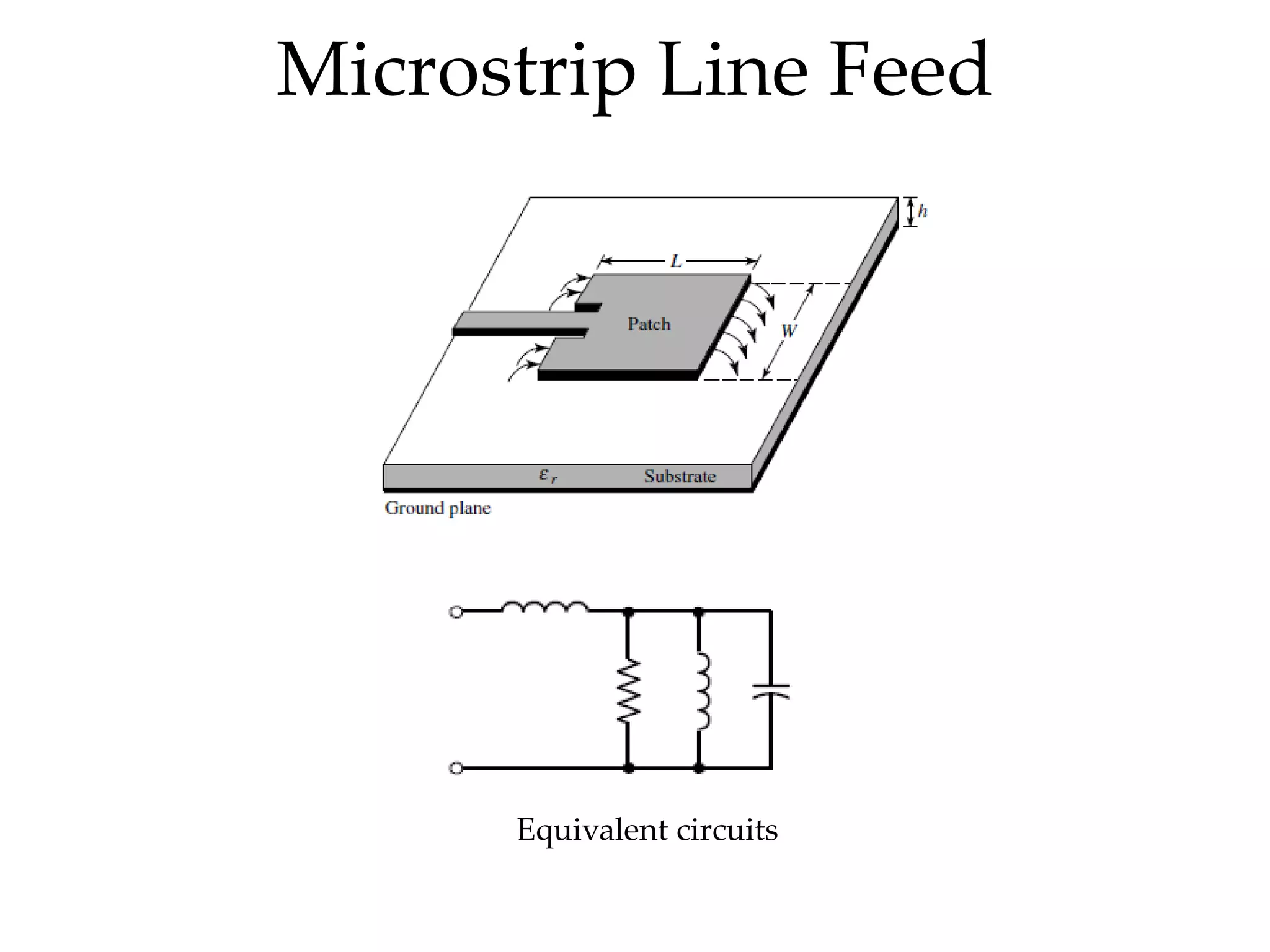
Microstrip Line Feed
Equivalent circuits
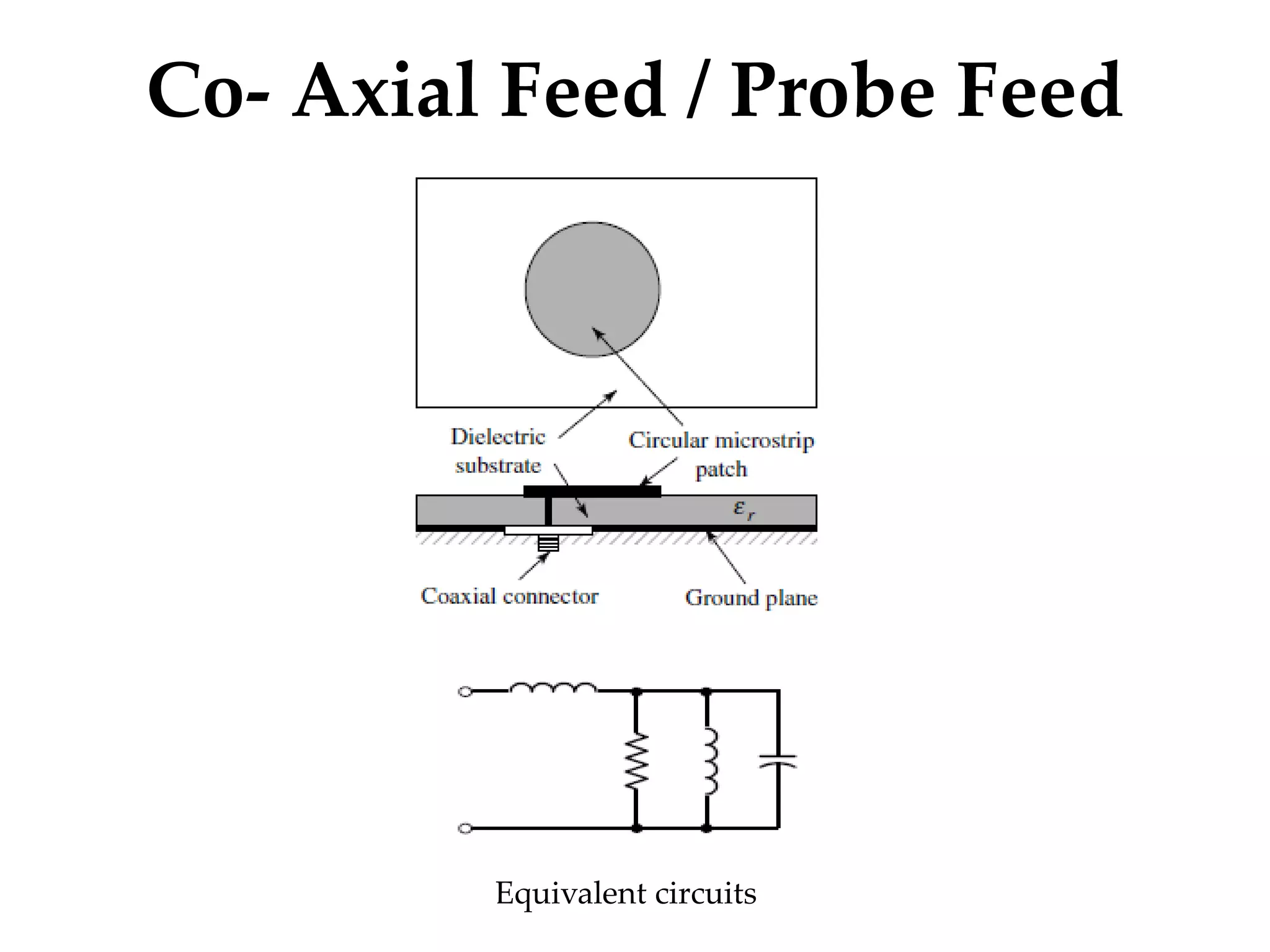
Co- Axial Feed / Probe Feed
Equivalent circuits
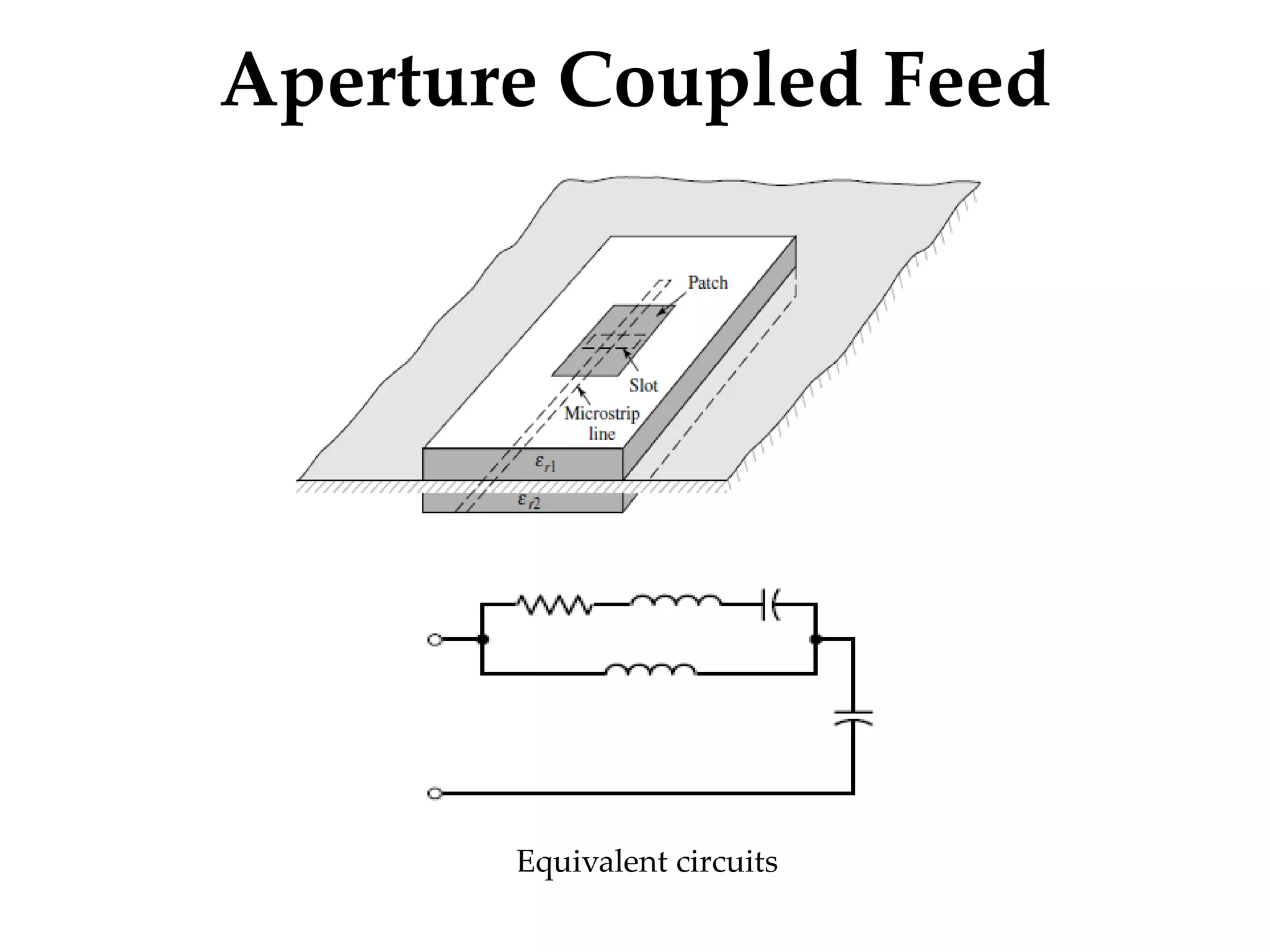
Aperture Coupled Feed
Equivalent circuits
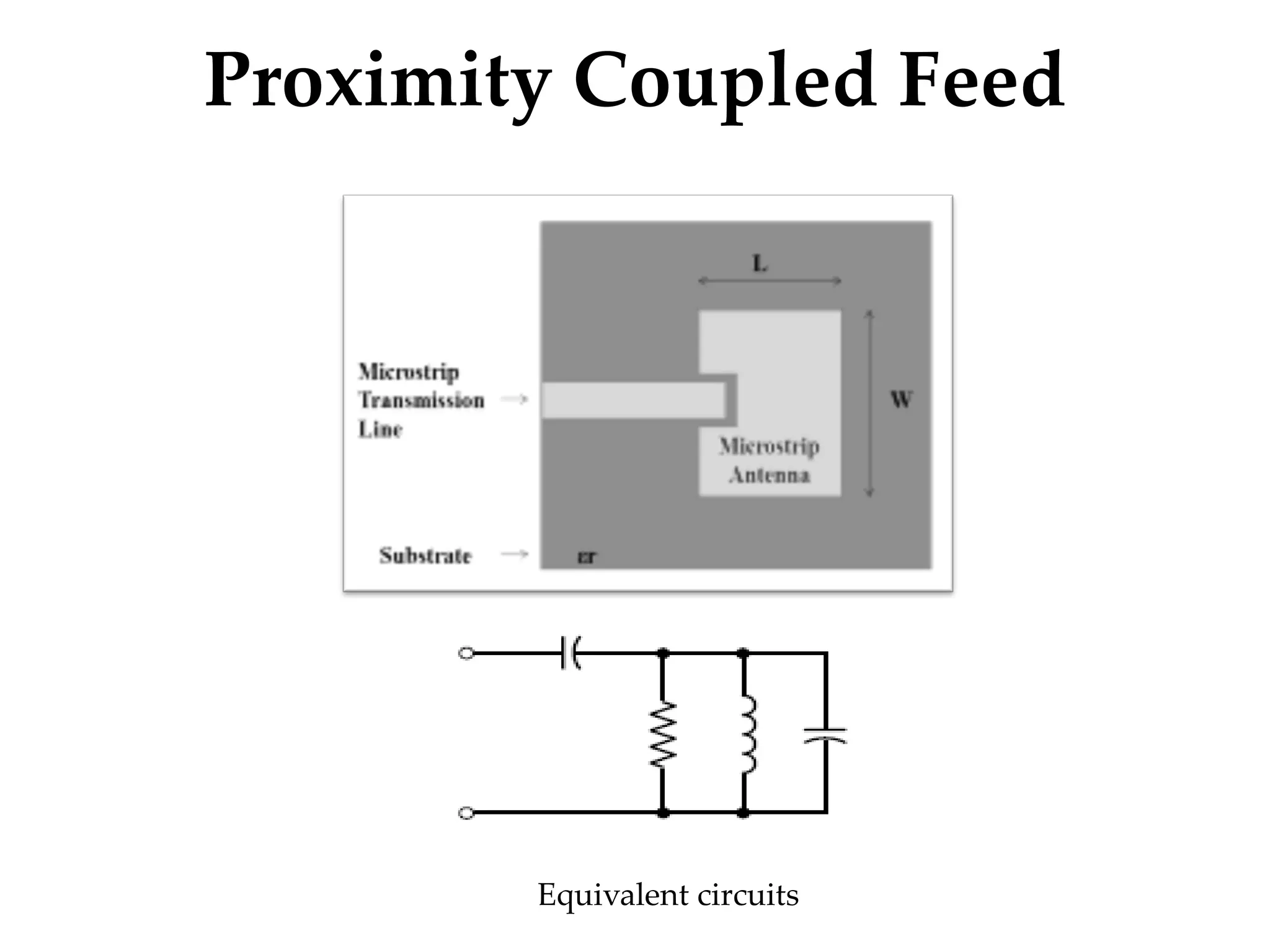
Proximity Coupled Feed
Equivalent circuits
Characteristics Micro Strip
Line Feed
Coaxial Feed Aperture
Coupled Feed
Proximity Coupled
Feed
Spurious Feed
Radiation
More More Less Minimum
Reliability Better Poor due to
soldering
Good Good
Ease of Fabrication Easy Soldering and
Drilling Needed
Alignment
required
Alignment required
Impedance Matching Easy Easy Easy Easy
Bandwidth (achieved
with Impedance
Matching)
2 to 5% 2 to 5% 21% 13%
Advantages Simple and Easy to
Fabricate, it can be
eached on the same
substrate
Feed can be
placed at any
desired
direction, Low
spurious
radiation
Eliminates
spurious
radiation
Eliminates spurious
radiation
Disadvantages It gives undesired
radiation
Narrow
bandwidth and
difficult to
model
Fabrication
Process is
difficult
Thickness of
antenna increases
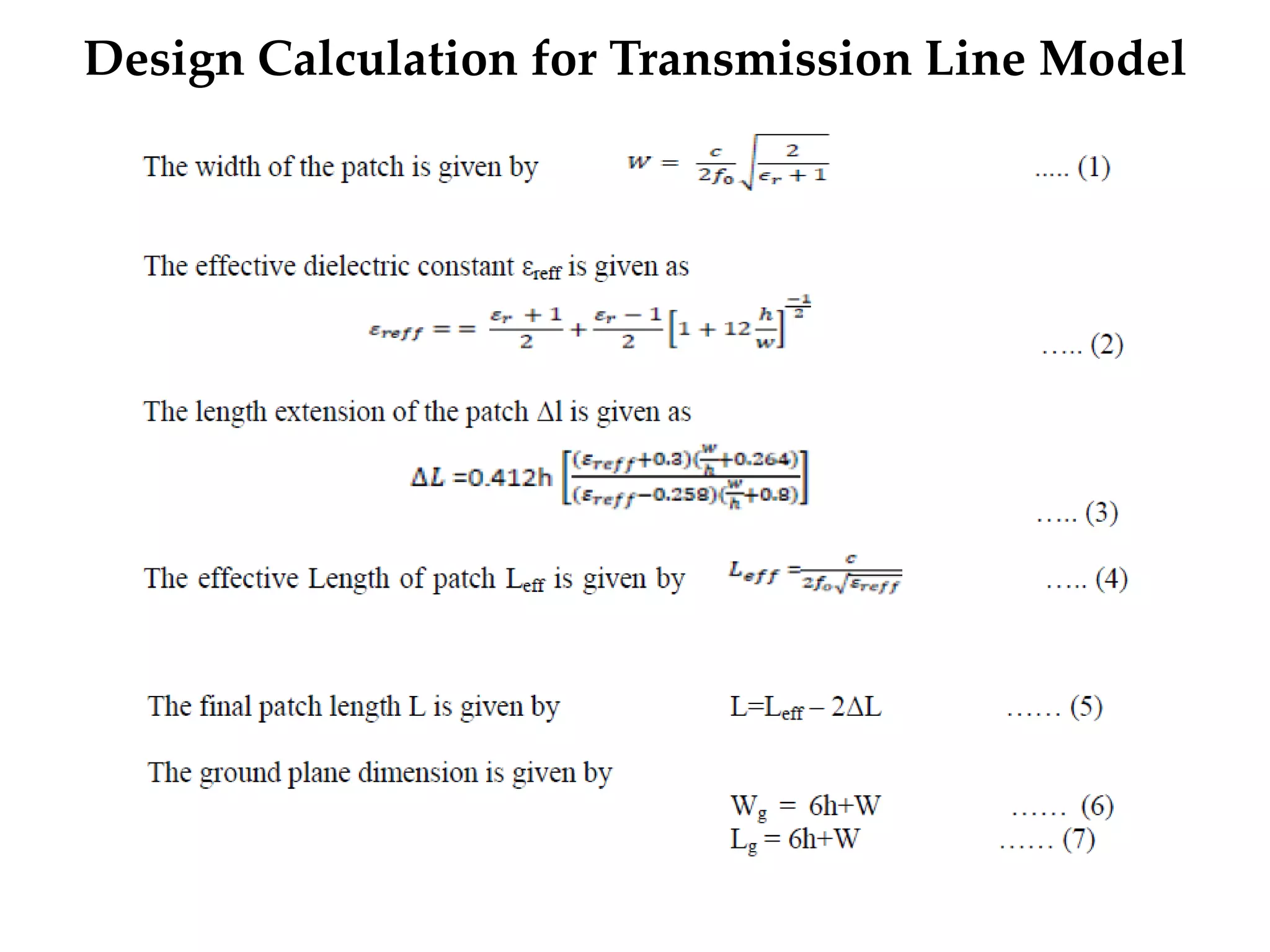
Design Calculation for Transmission Line Model
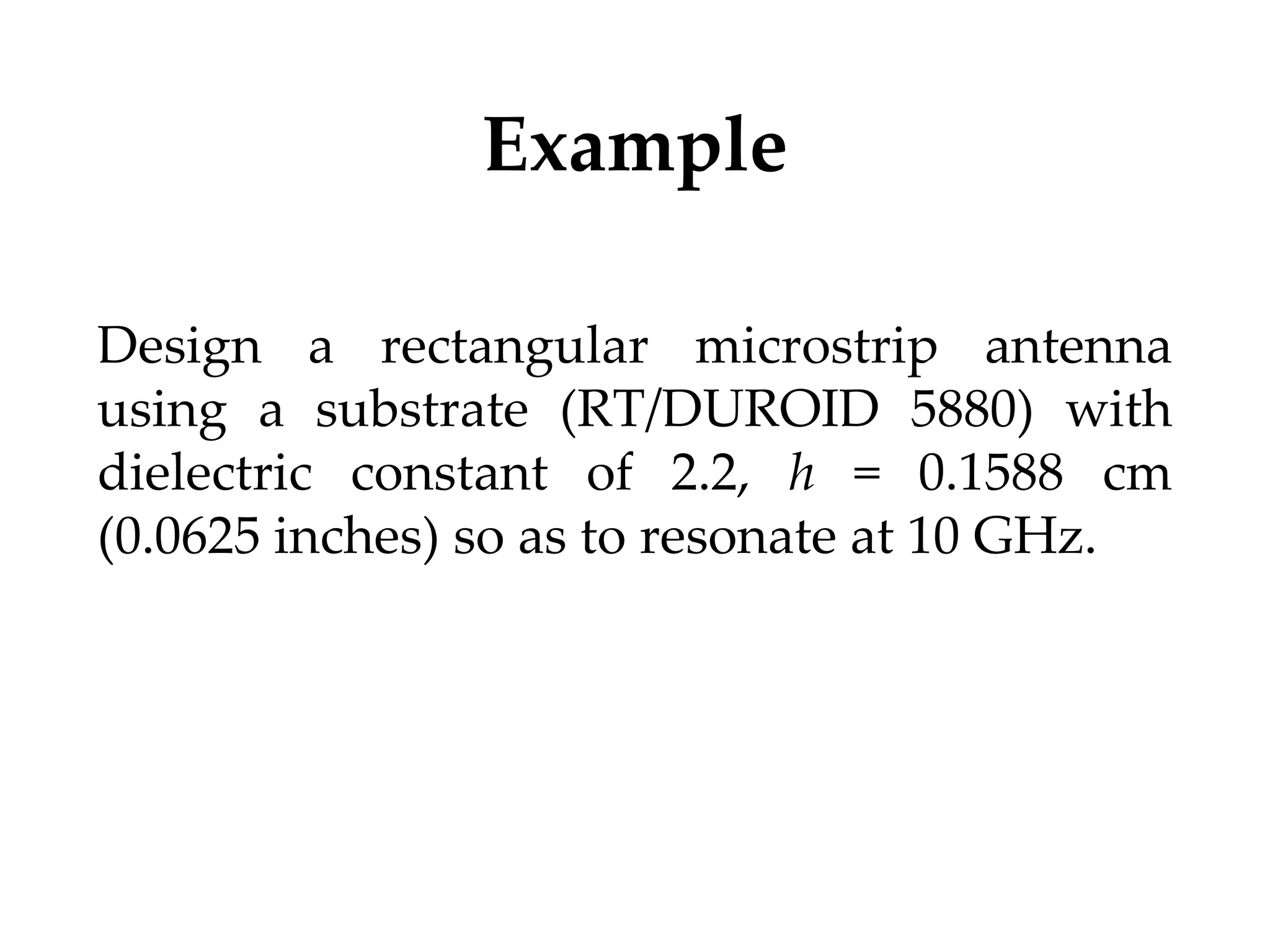
Example
Design a rectangular microstrip antenna
using a substrate (RT/DUROID 5880) with
dielectric constant of 2.2, h = 0.1588 cm
(0.0625 inches) so as to resonate at 10 GHz.
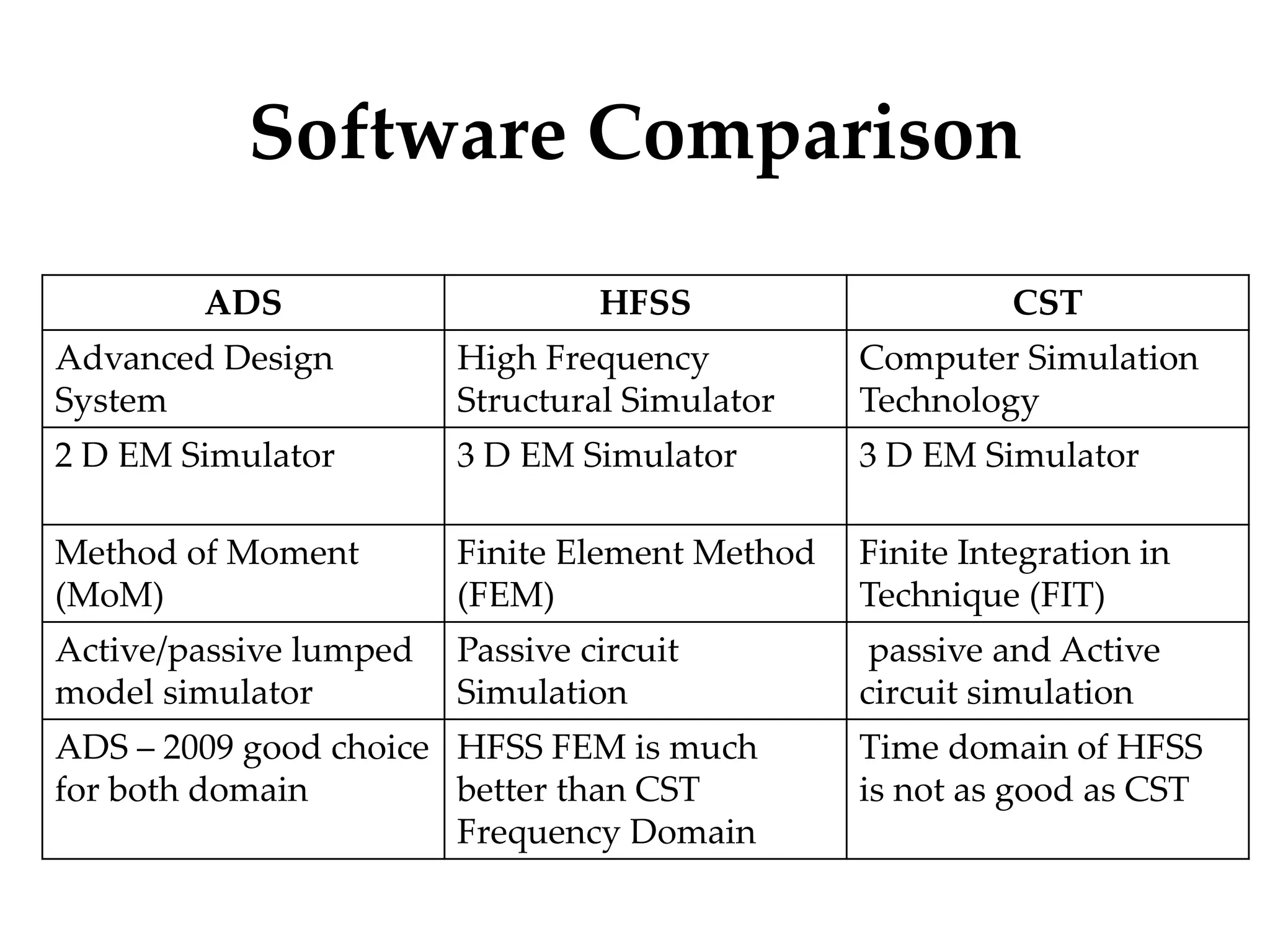
Software Comparison
ADS HFSS CST
Advanced Design
System
High Frequency
Structural Simulator
Computer Simulation
Technology
2 D EM Simulator 3 D EM Simulator 3 D EM Simulator
Method of Moment
(MoM)
Finite Element Method
(FEM)
Finite Integration in
Technique (FIT)
Active/passive lumped
model simulator
Passive circuit
Simulation
passive and Active
circuit simulation
ADS – 2009 good choice
for both domain
HFSS FEM is much
better than CST
Frequency Domain
Time domain of HFSS
is not as good as CST
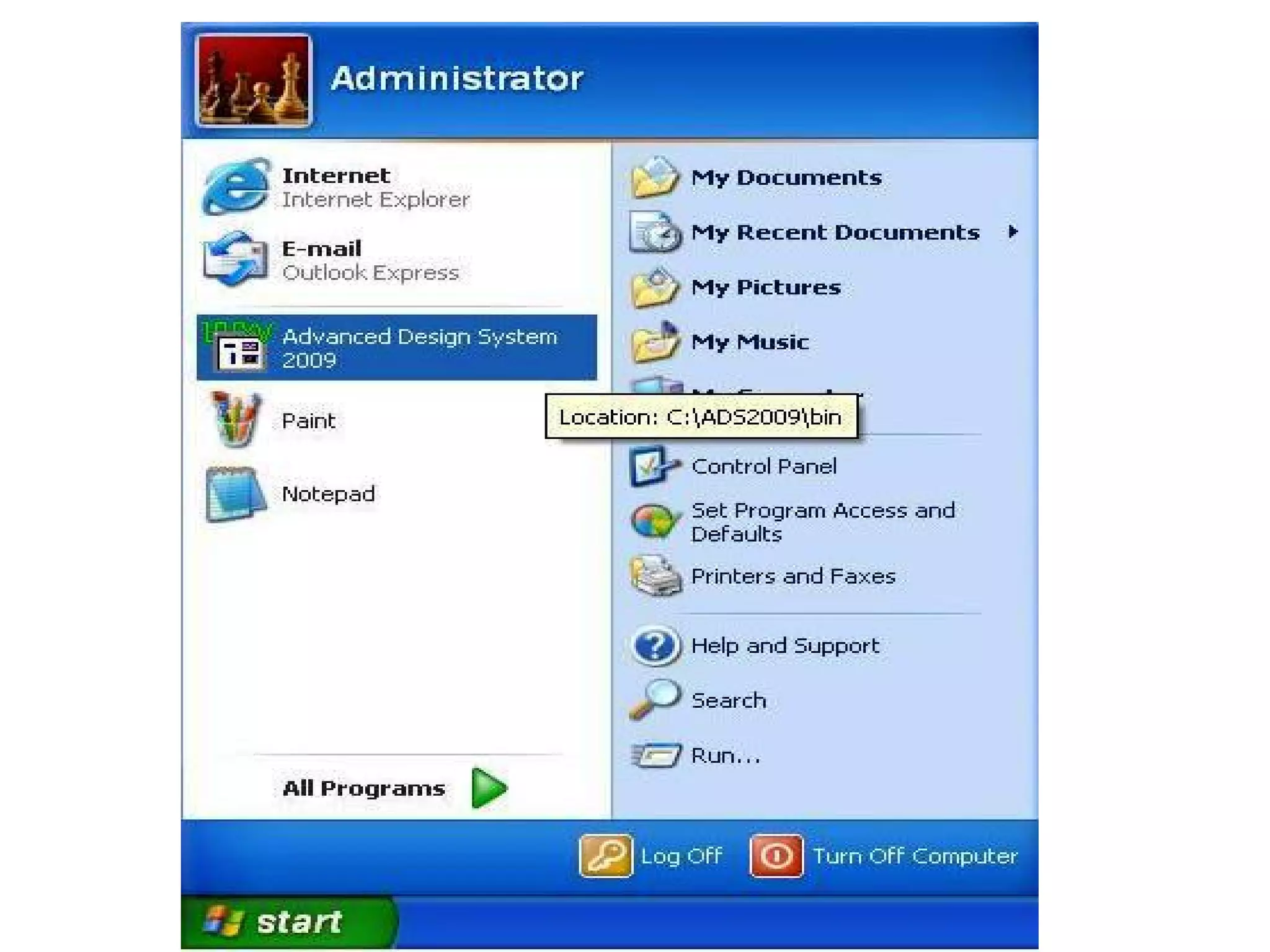
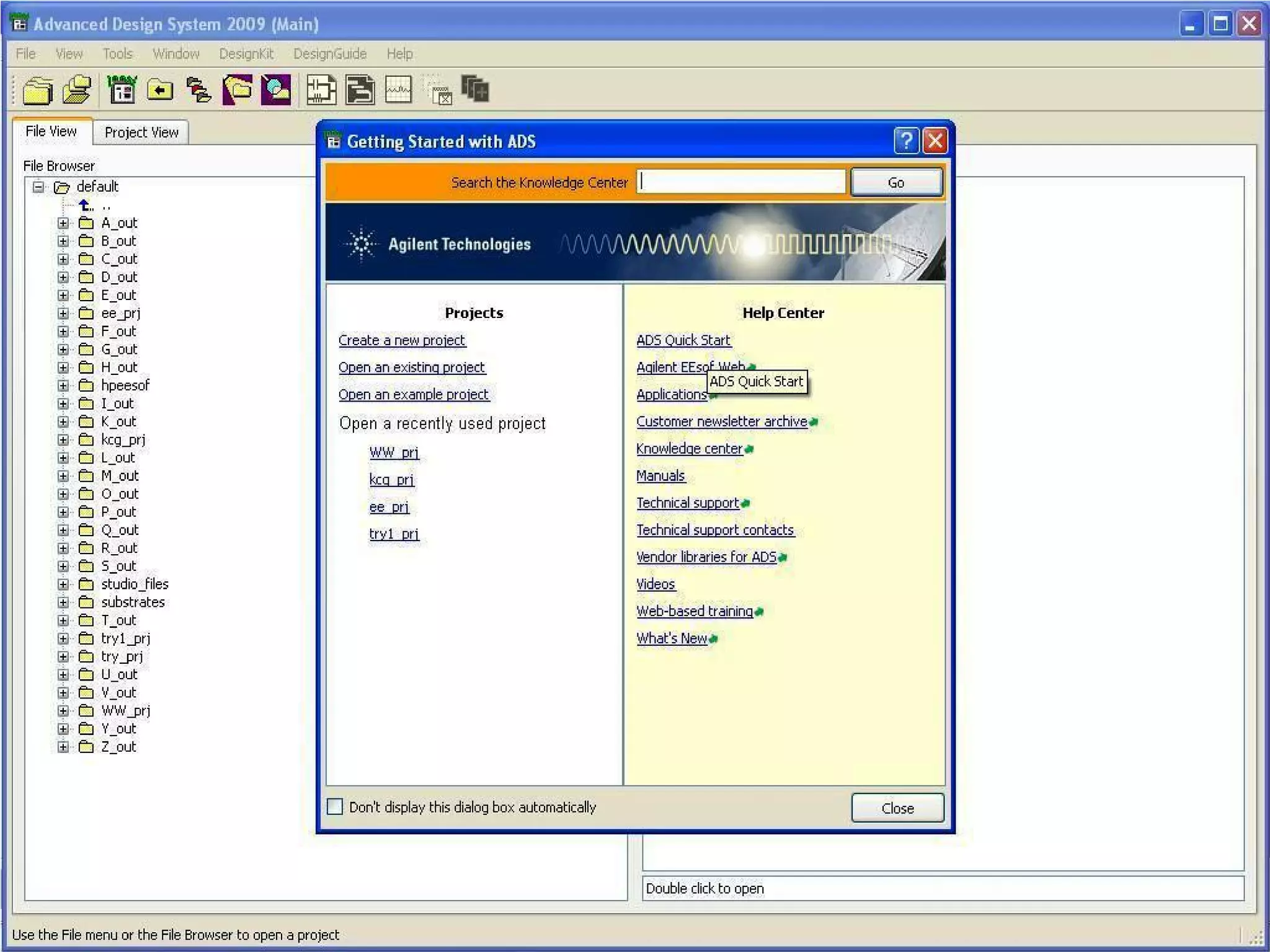
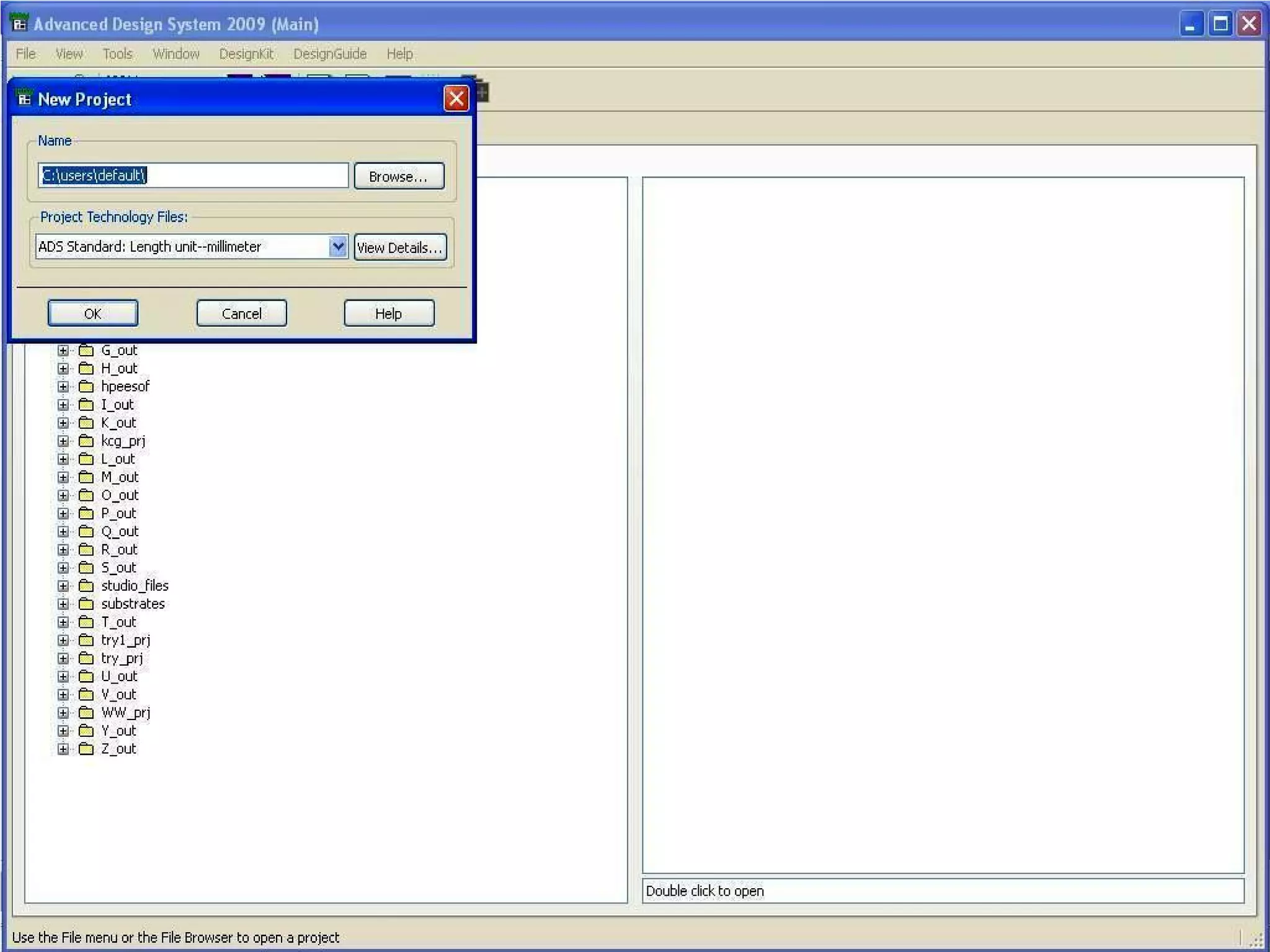
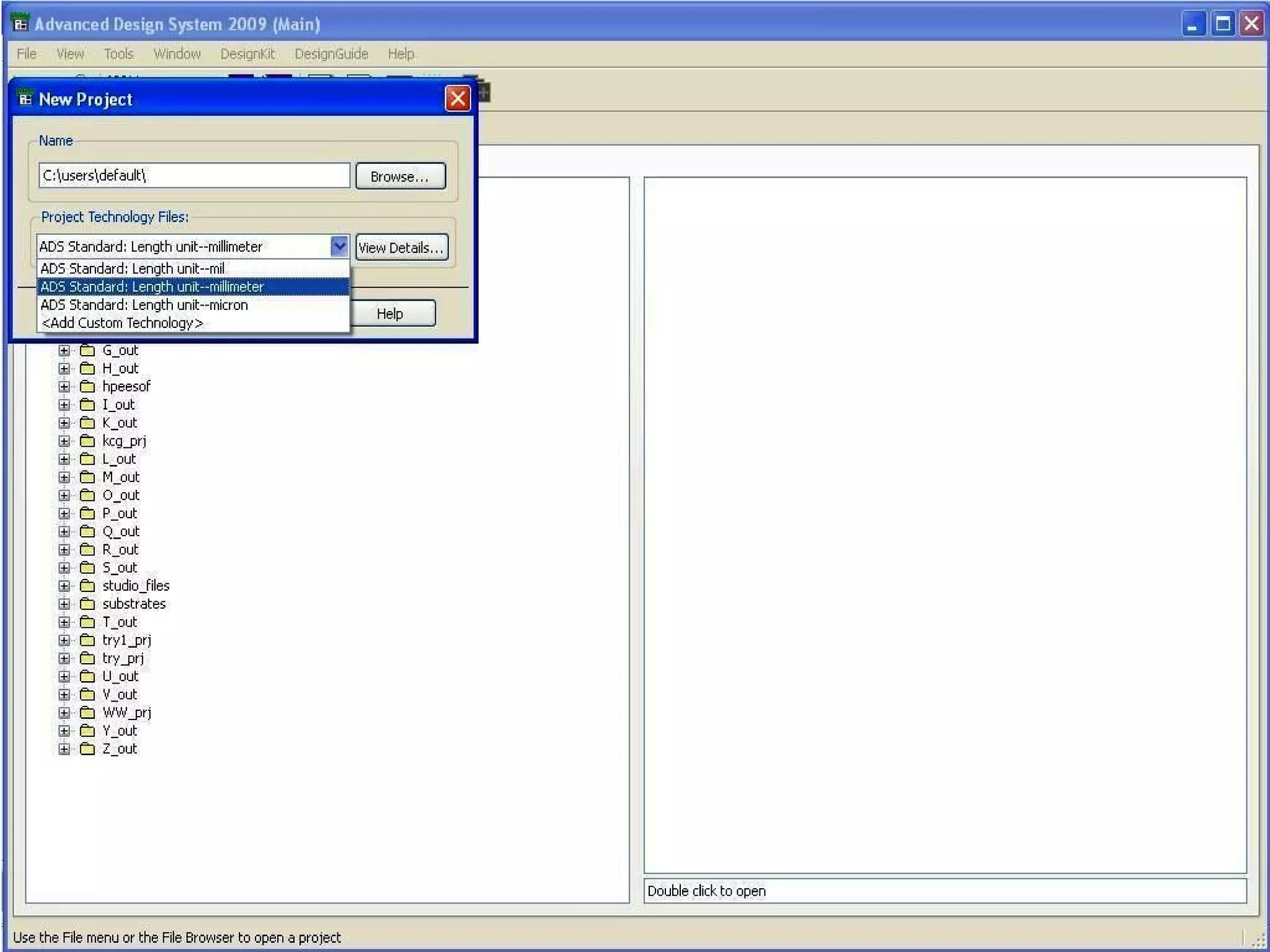
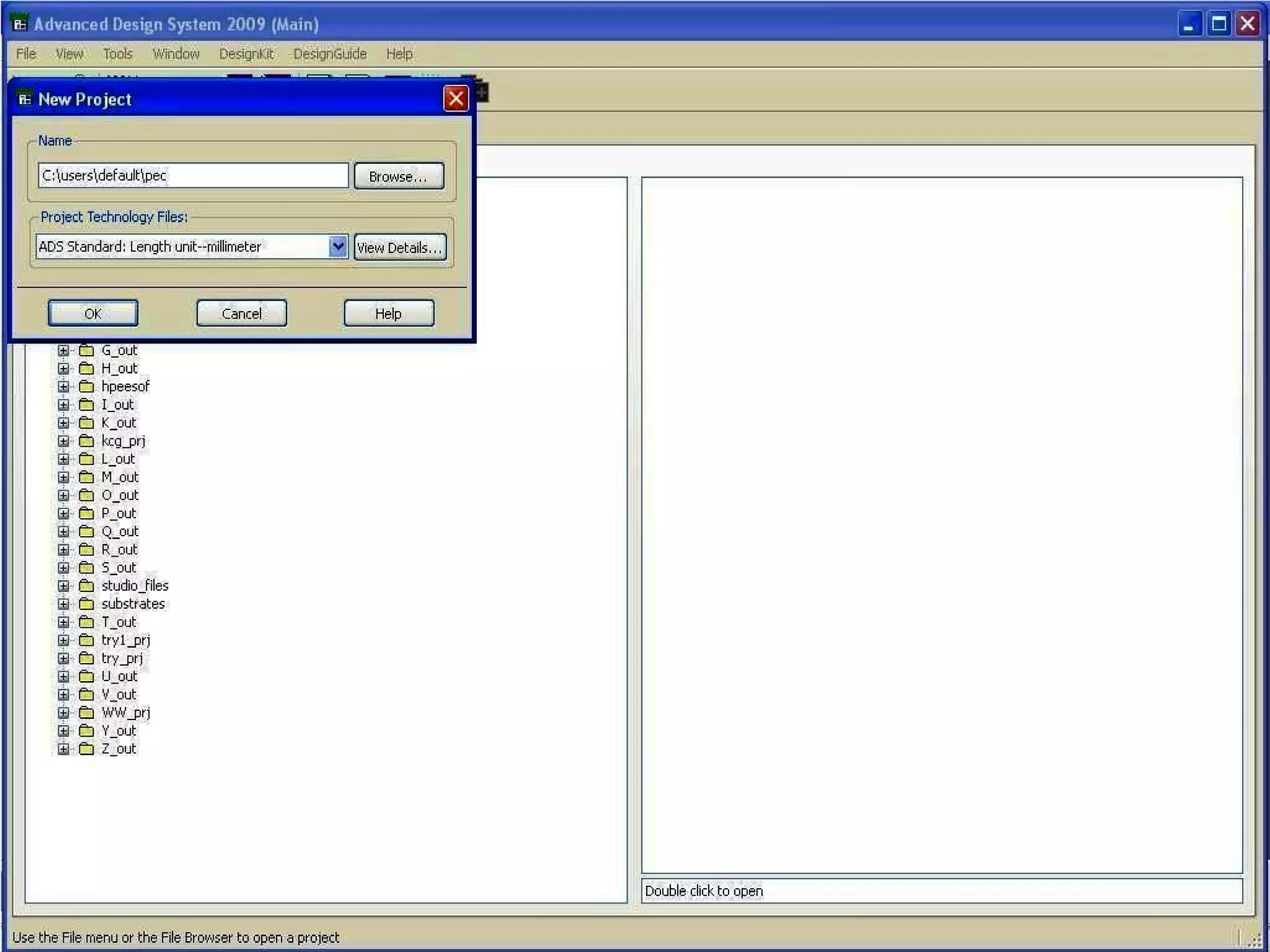
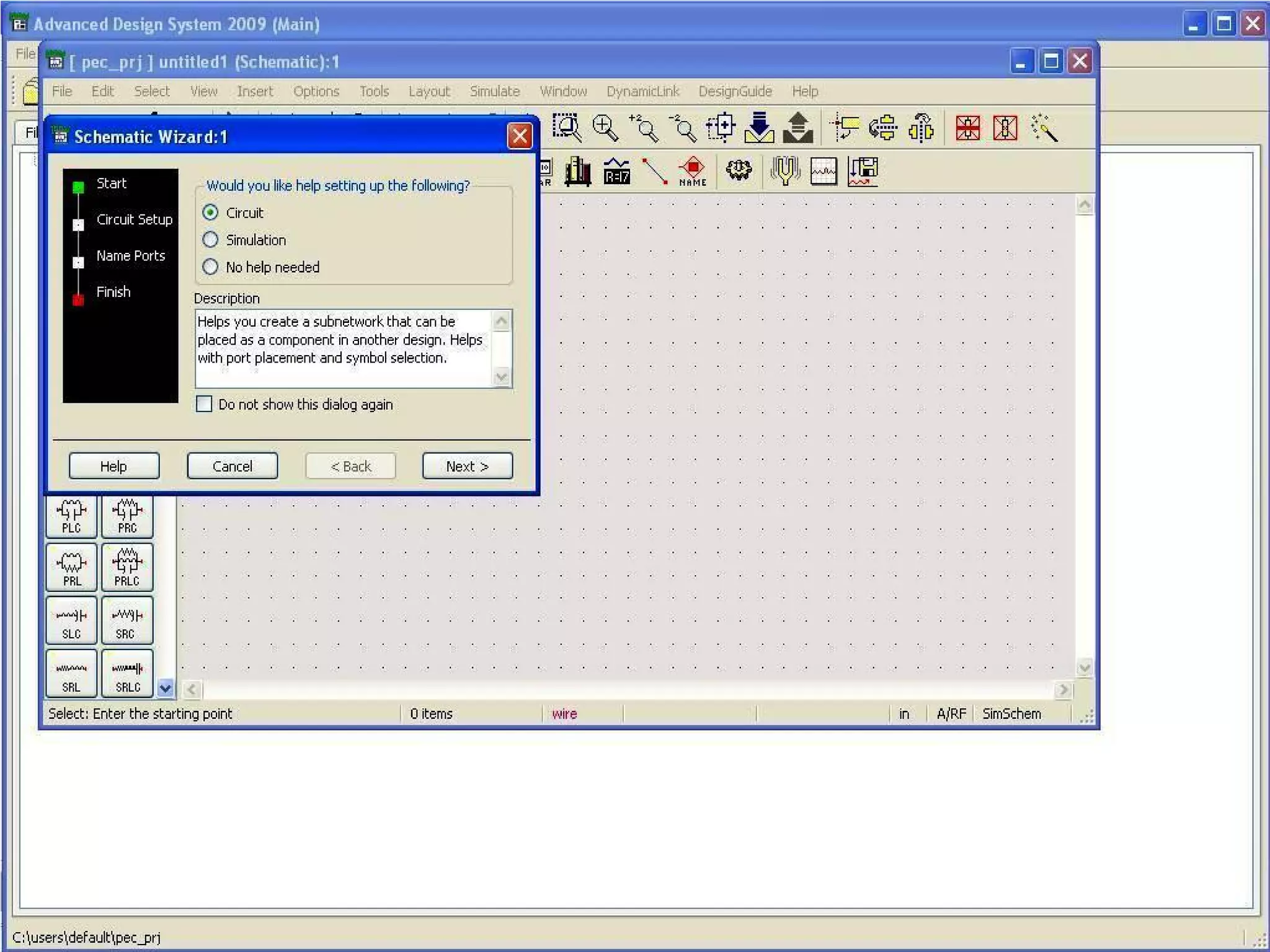
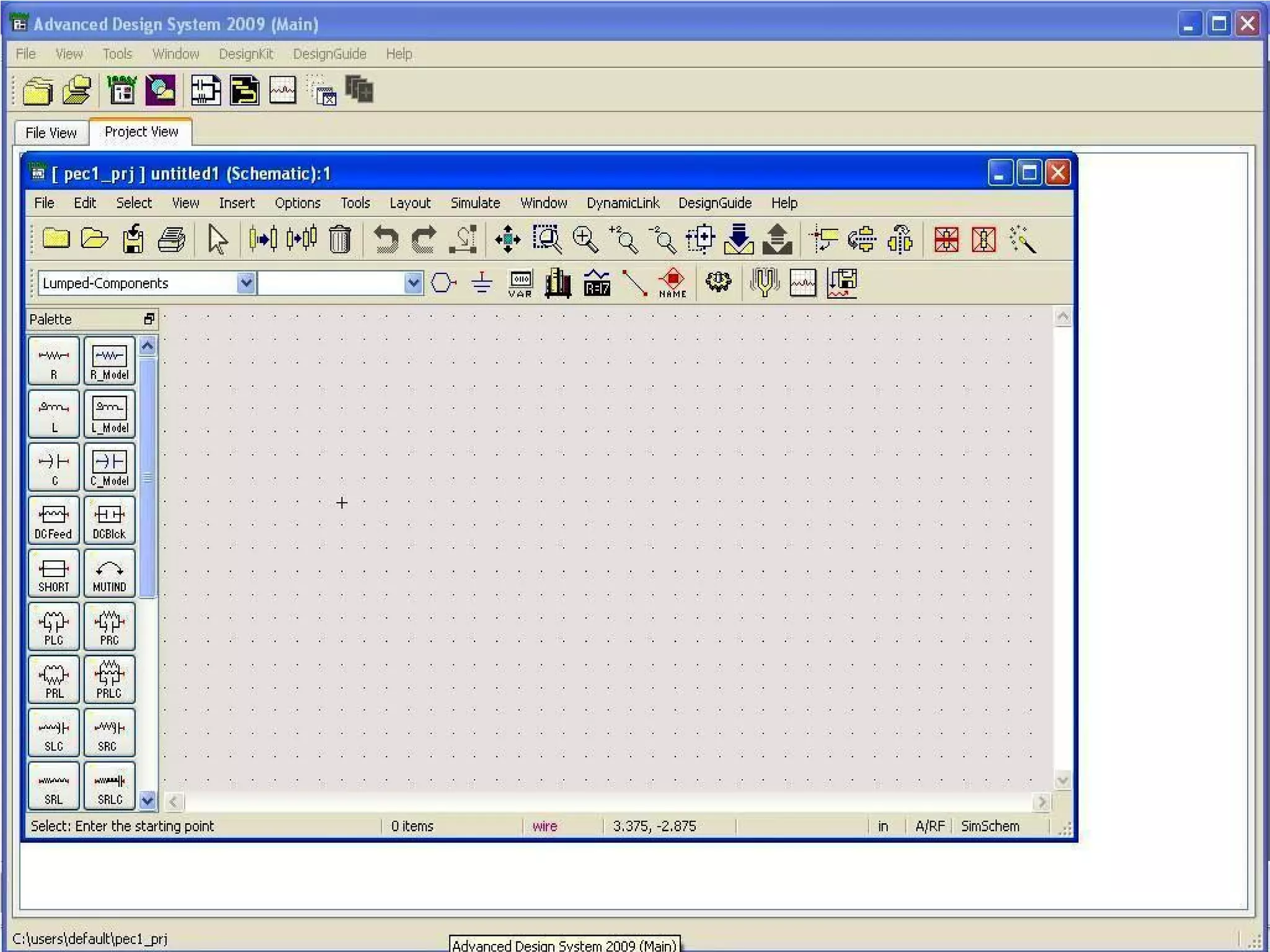
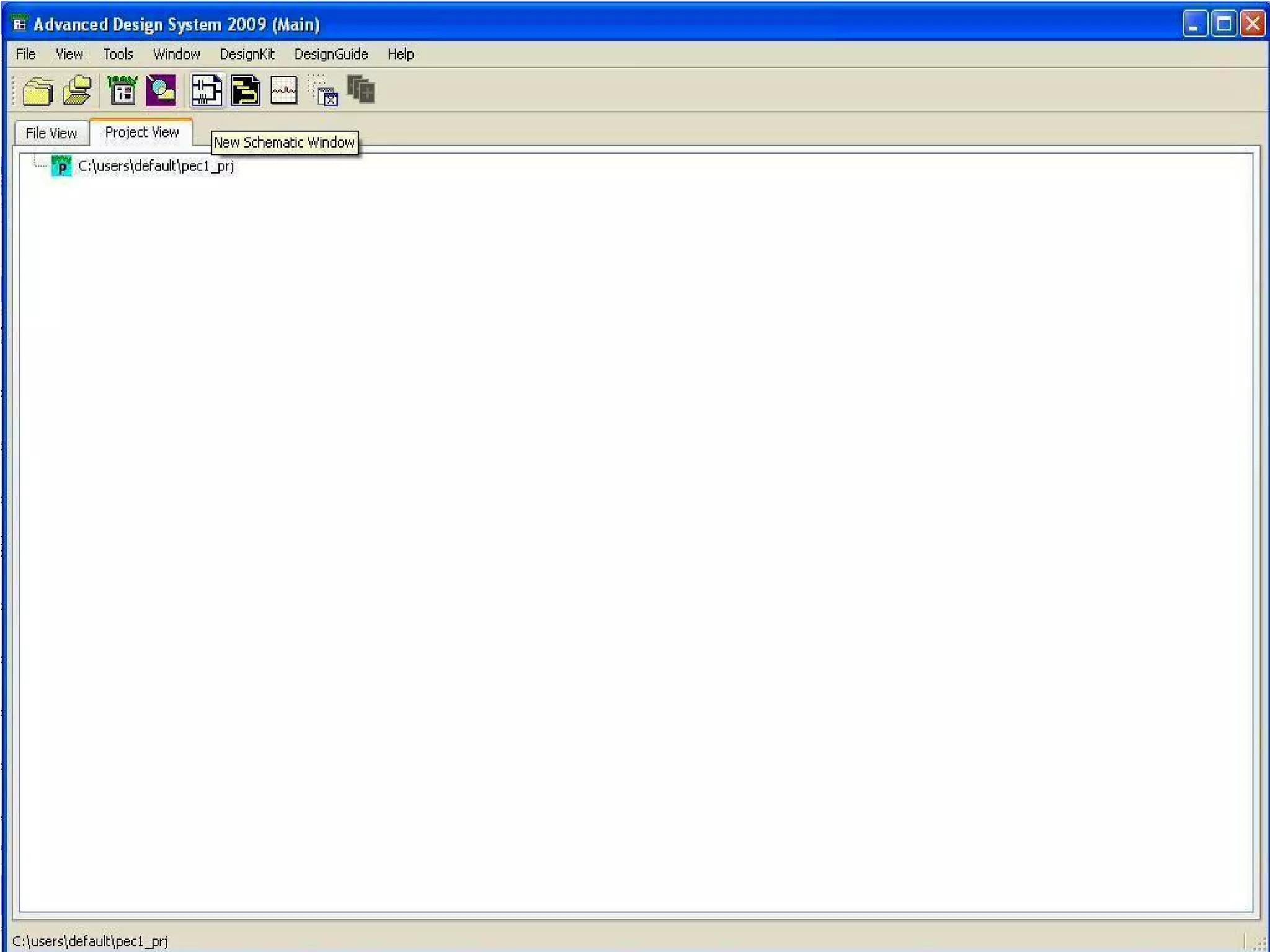
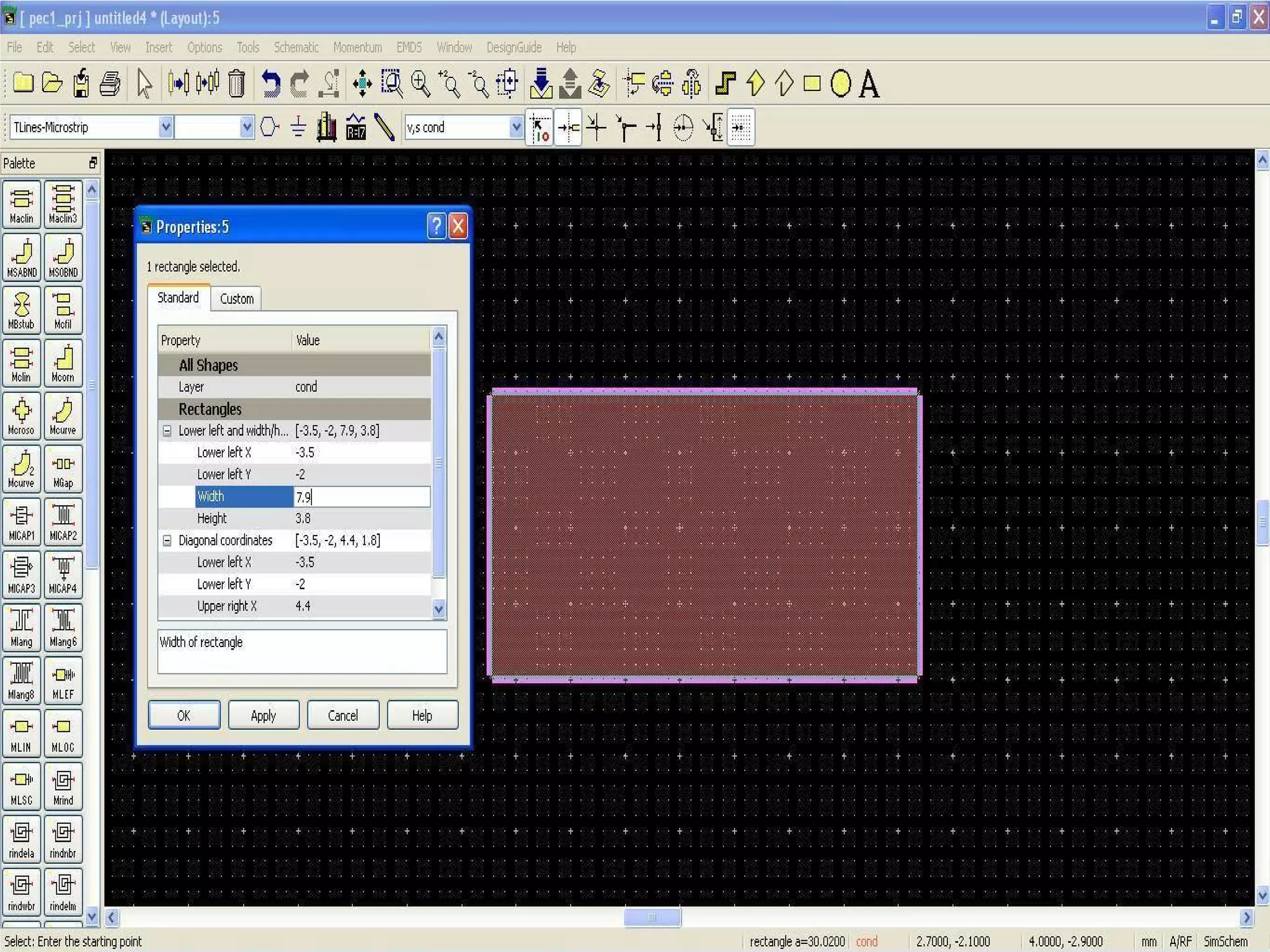
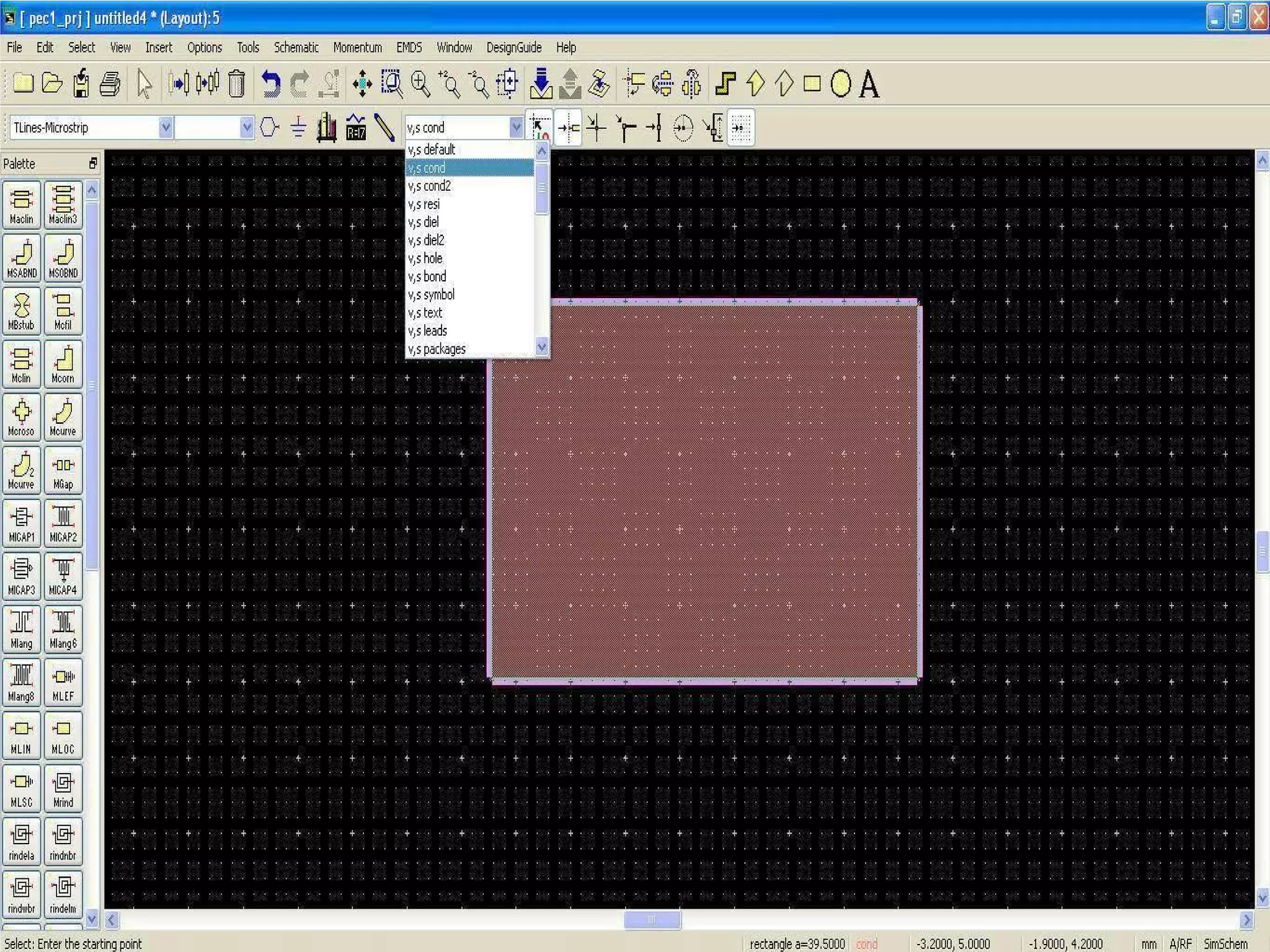
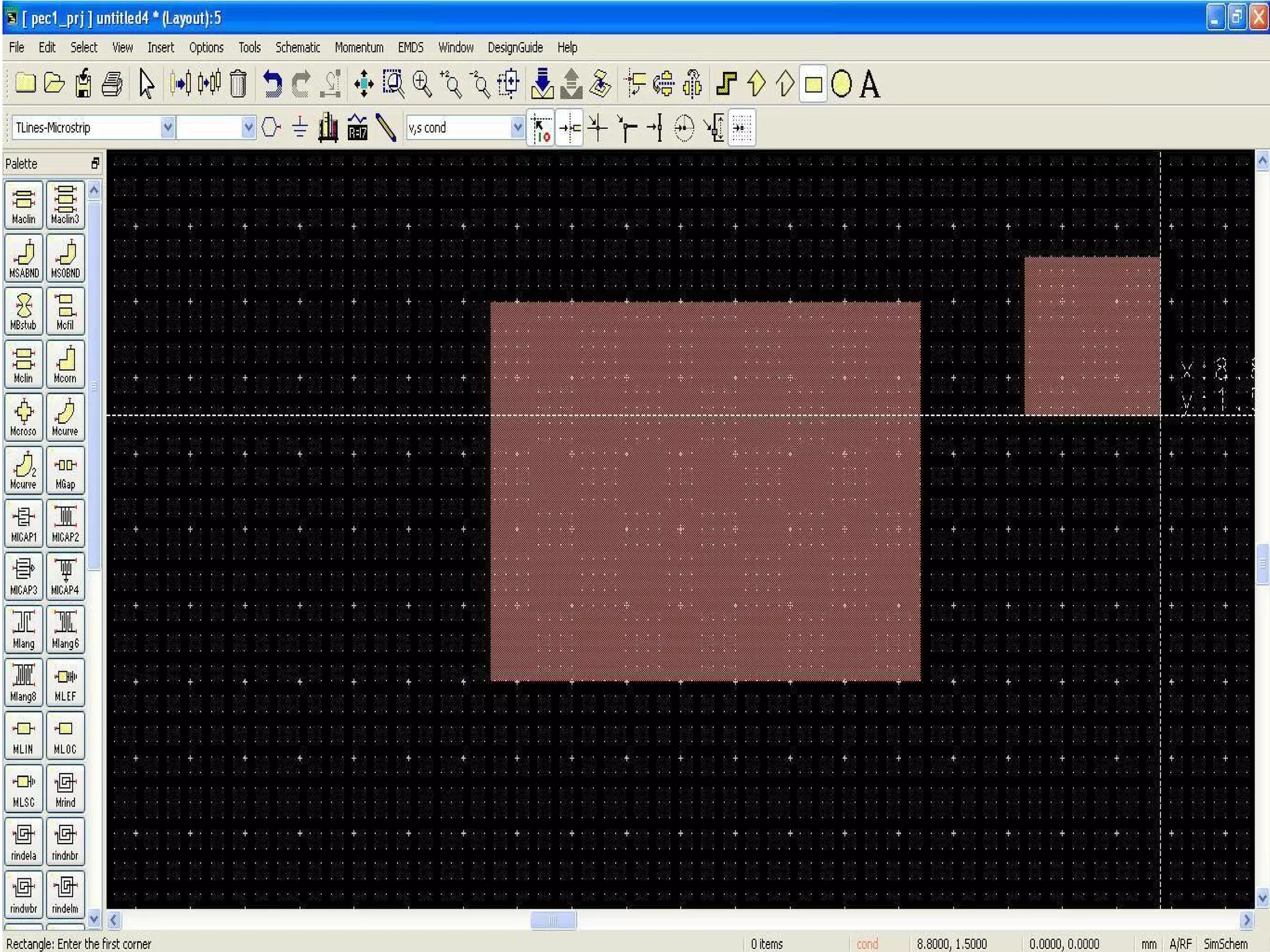
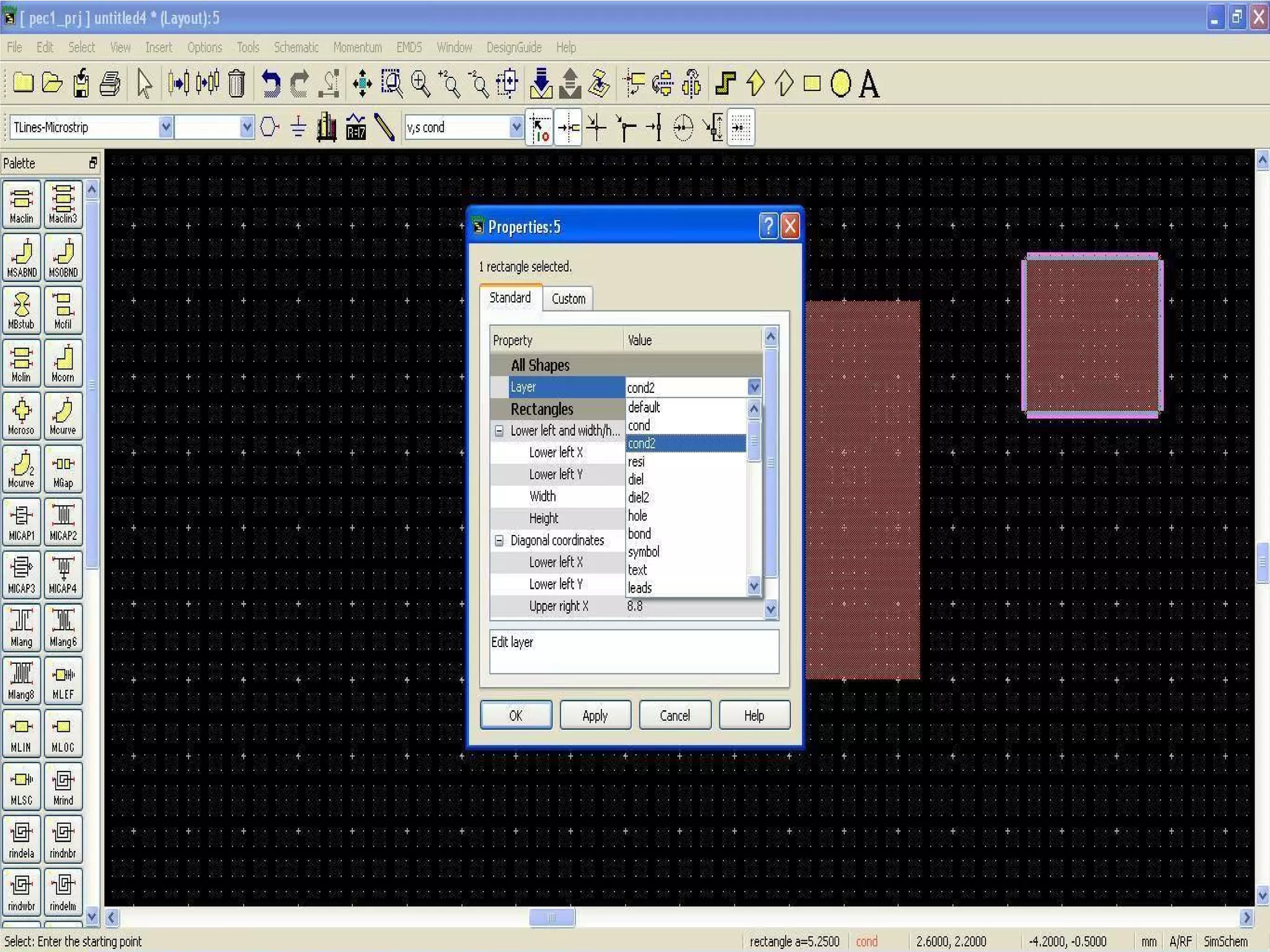
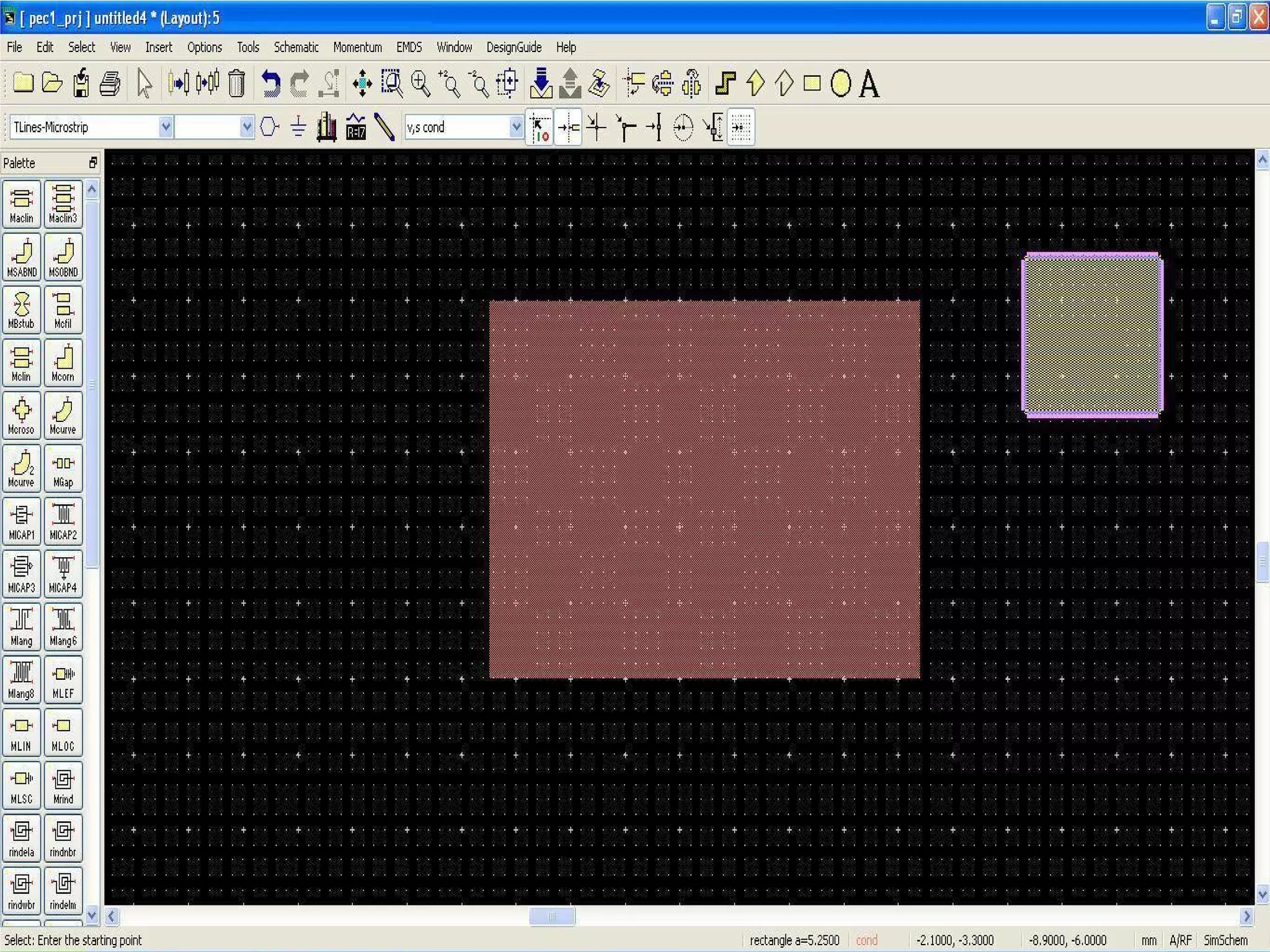
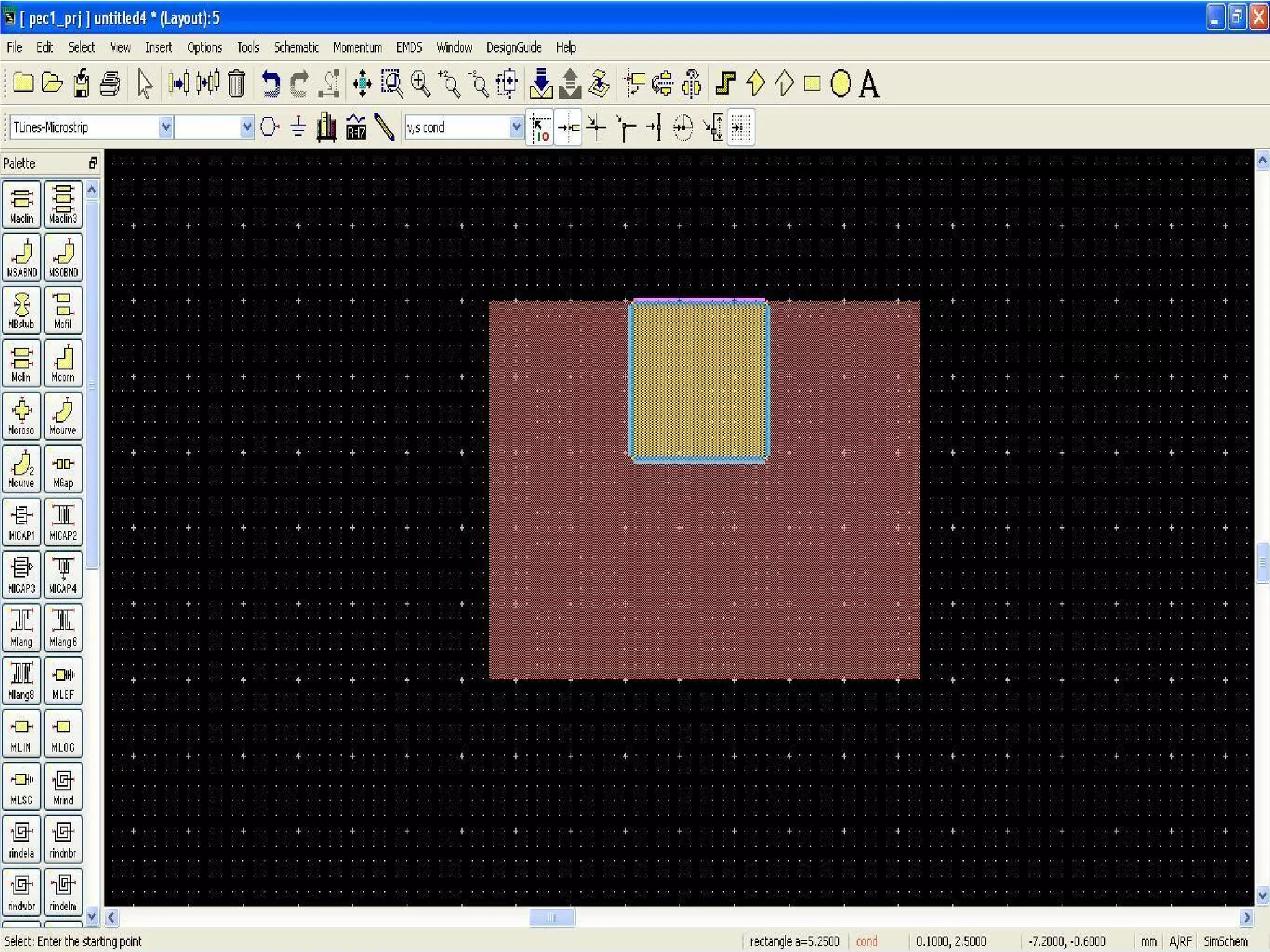
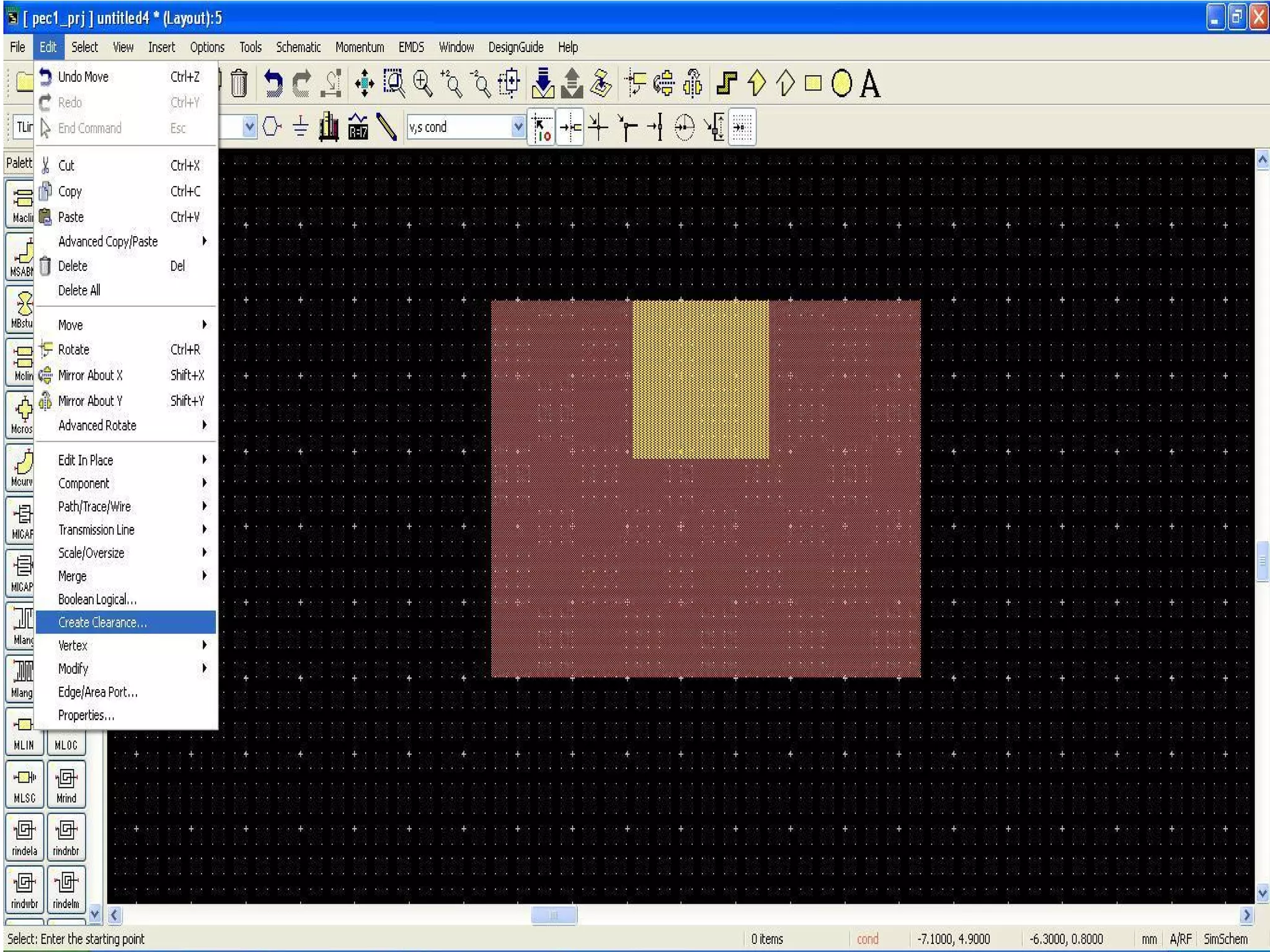
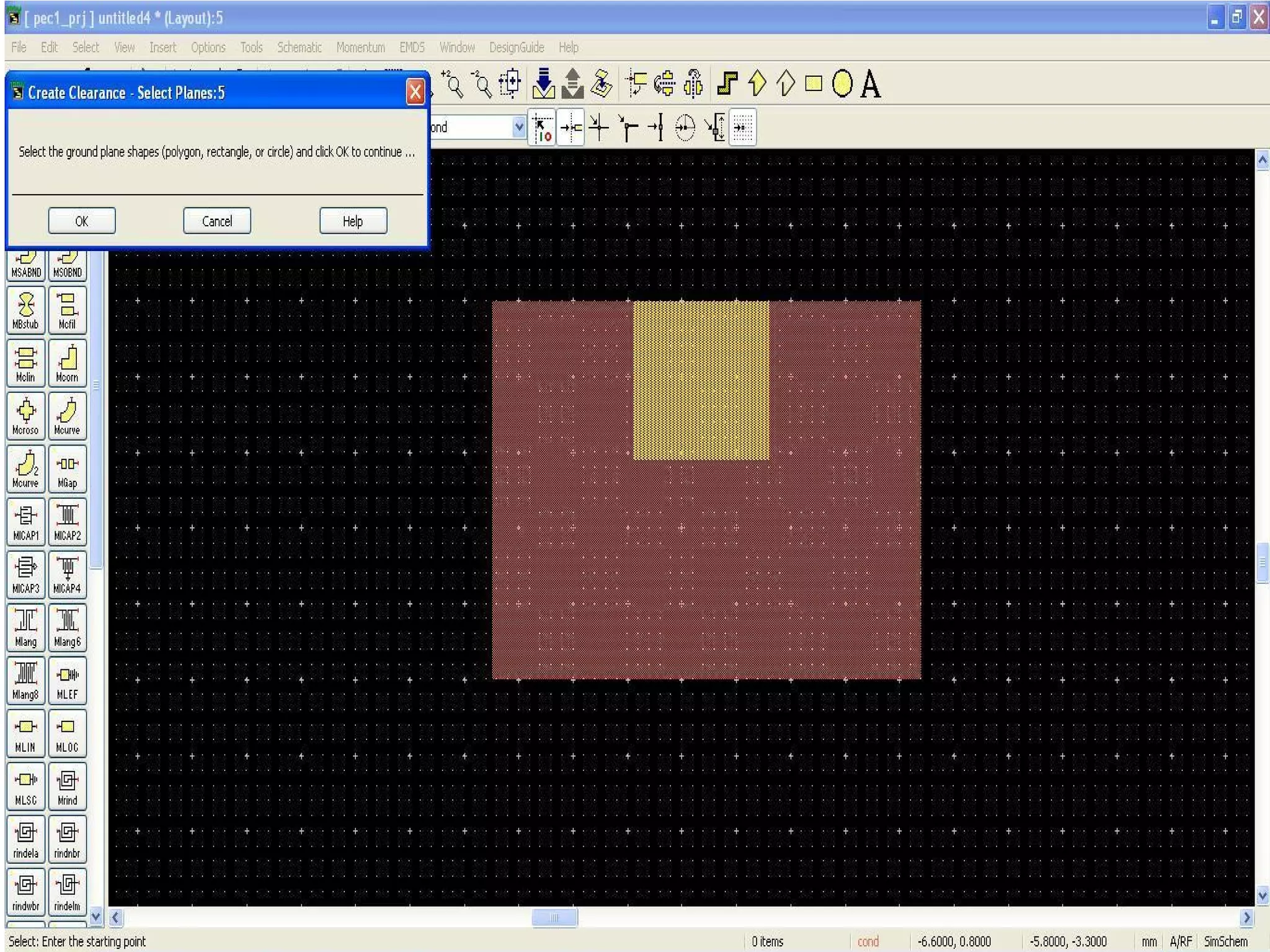
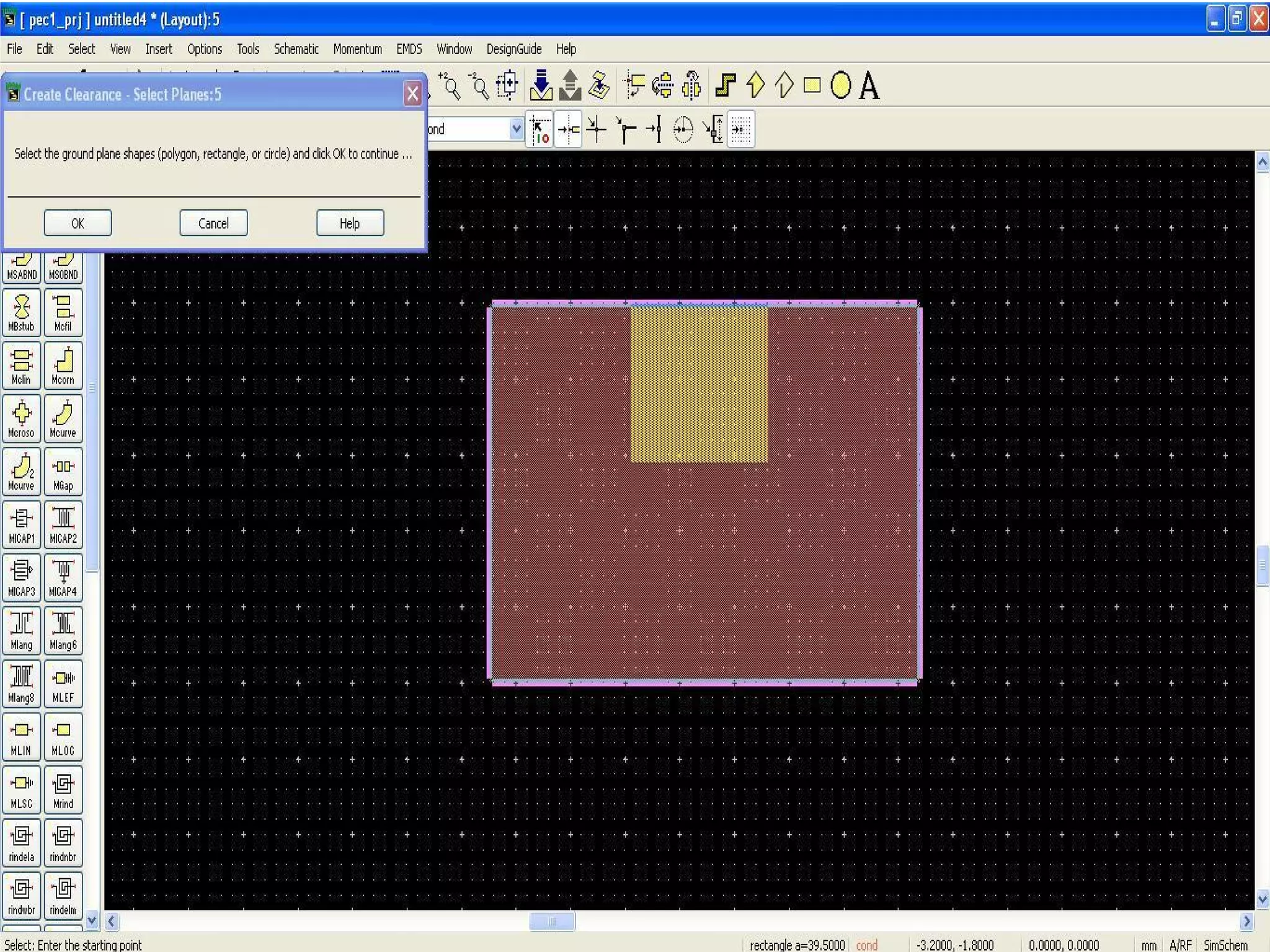
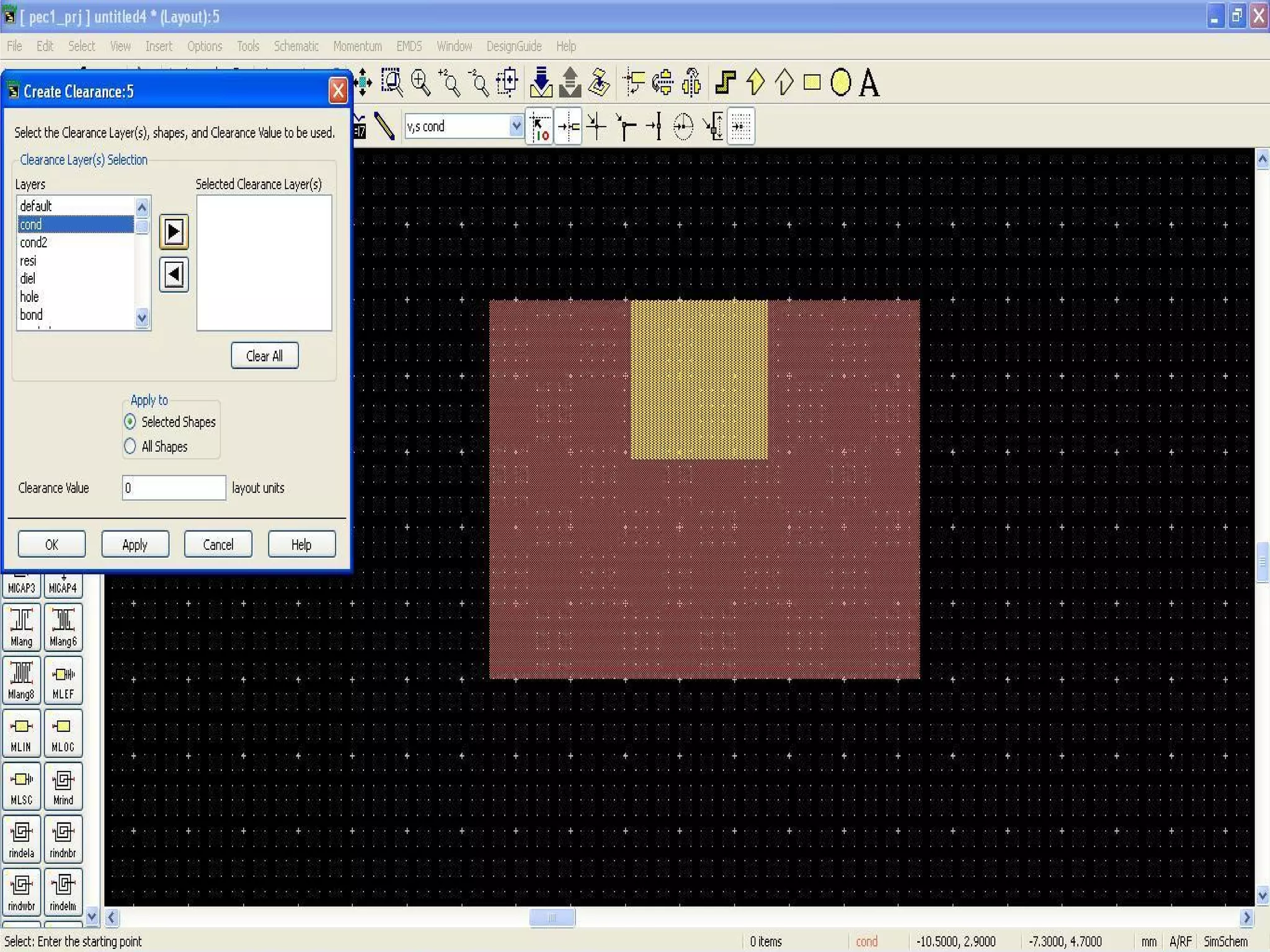
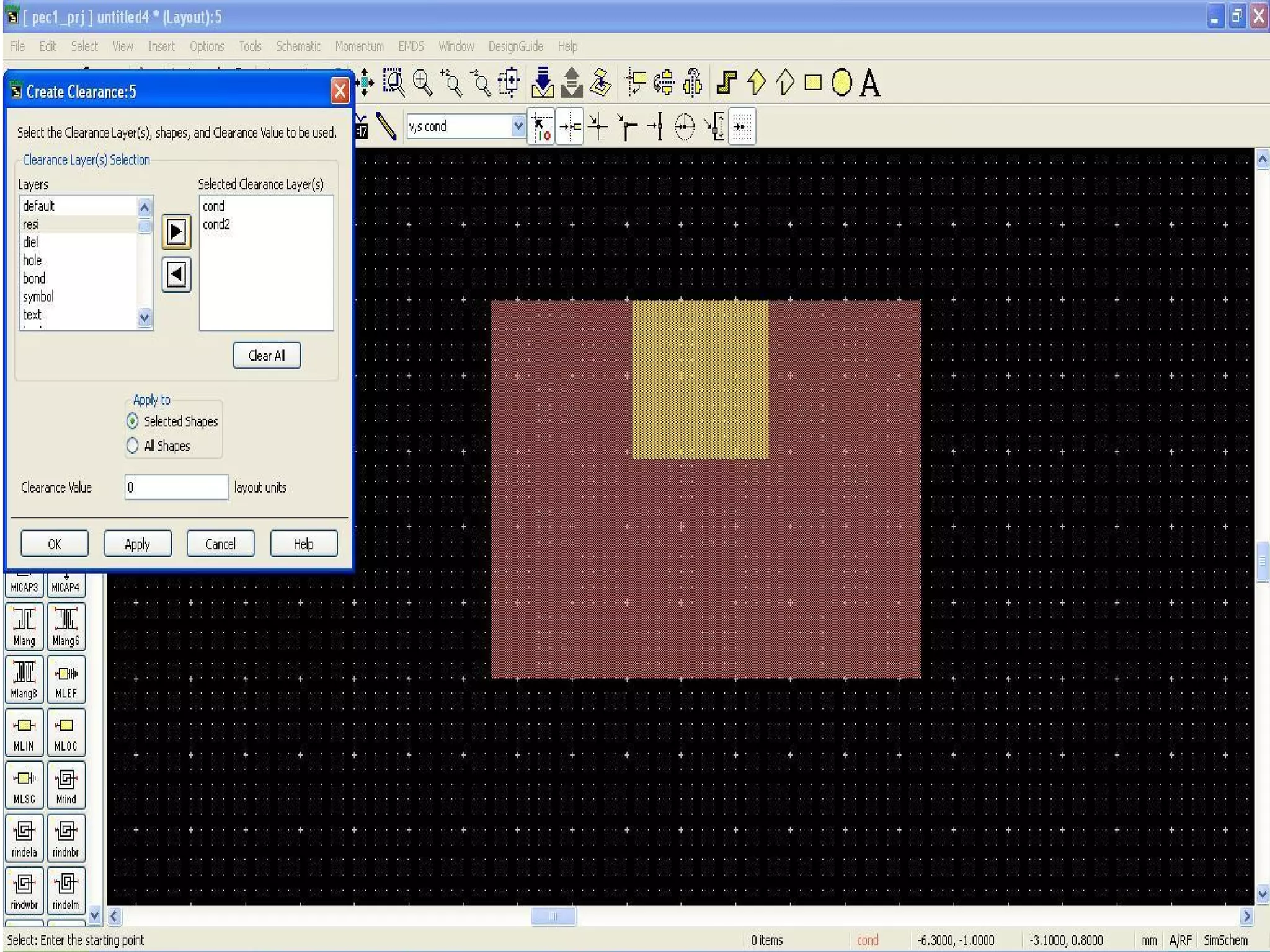
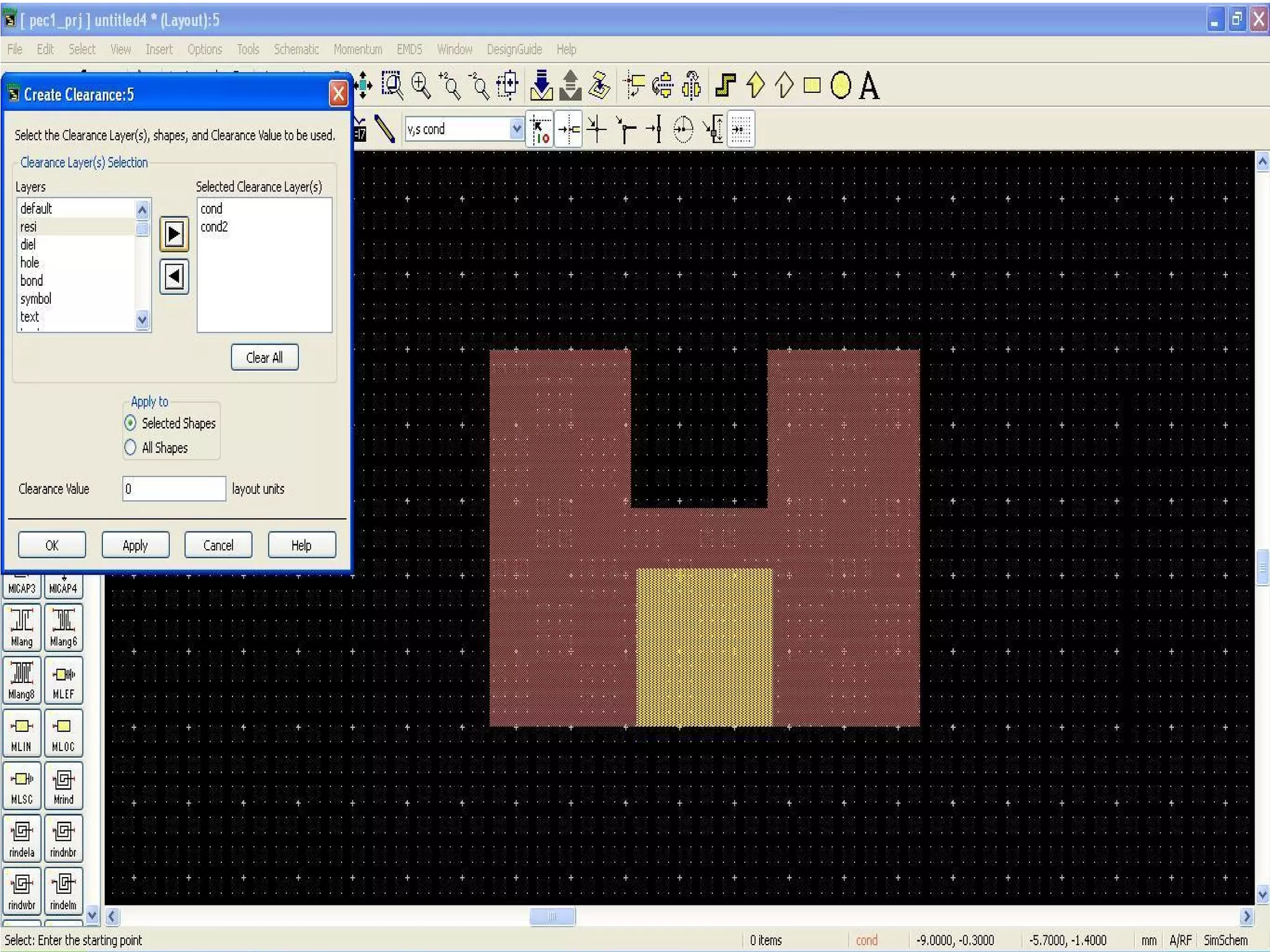
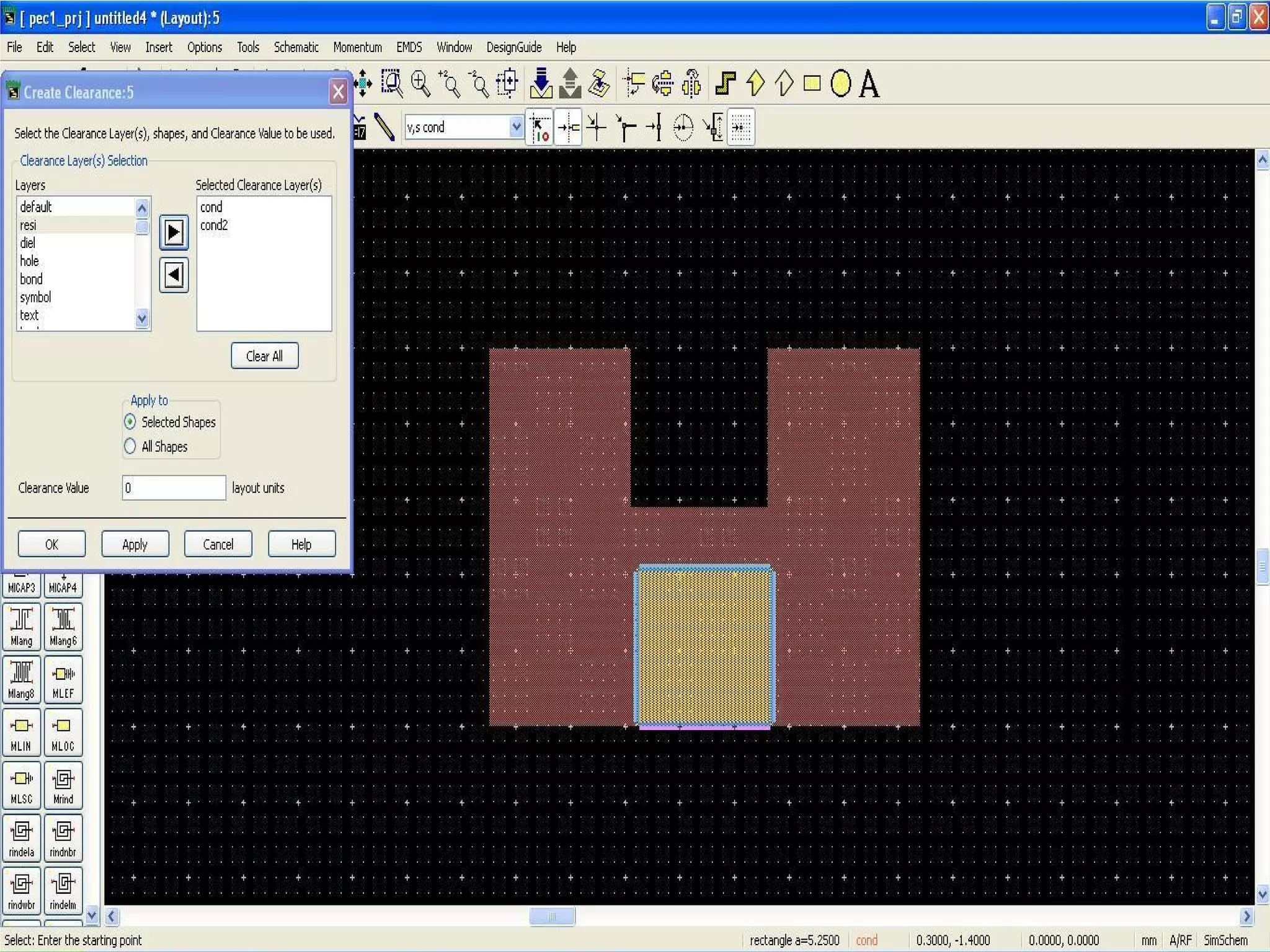
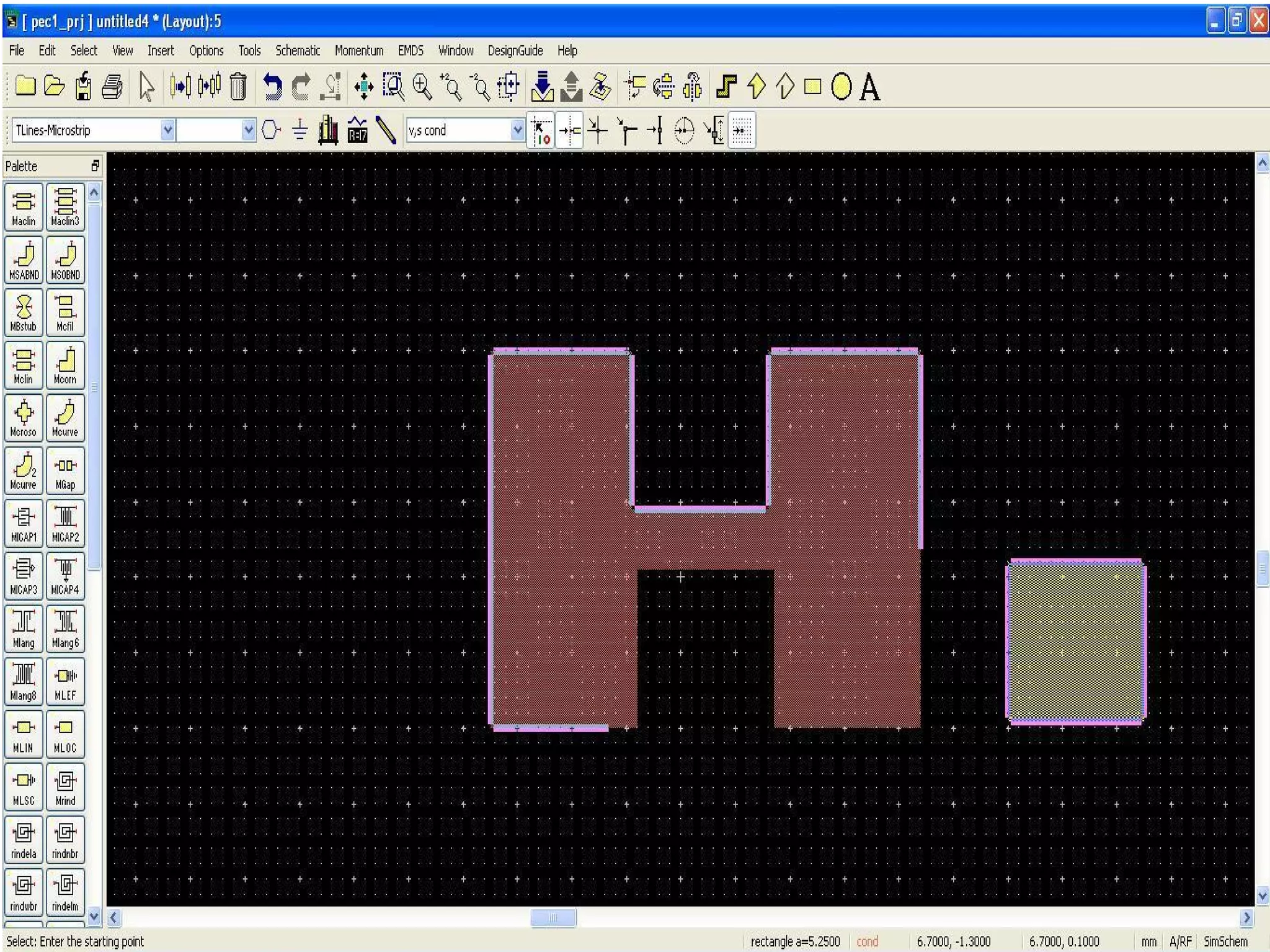
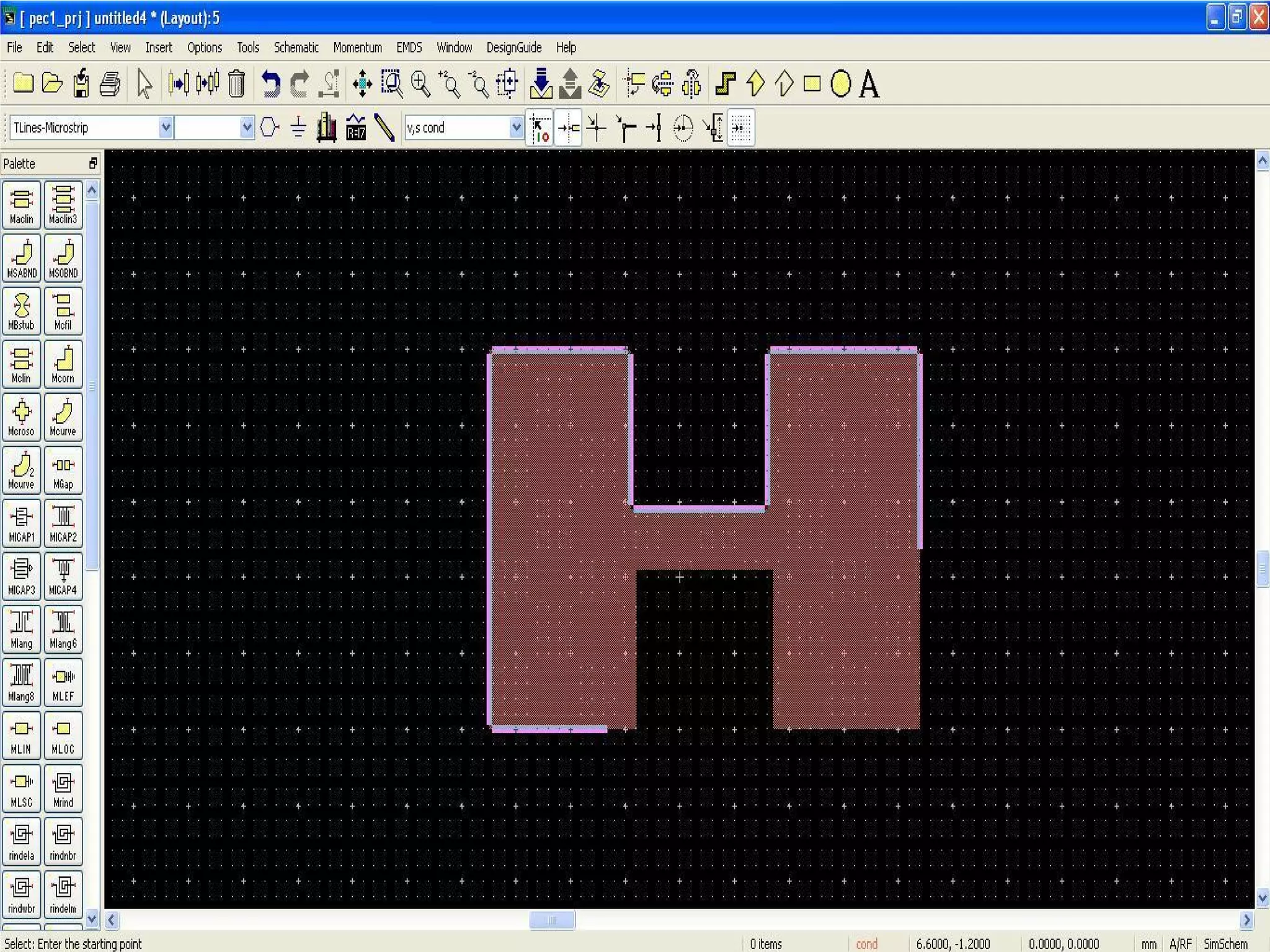
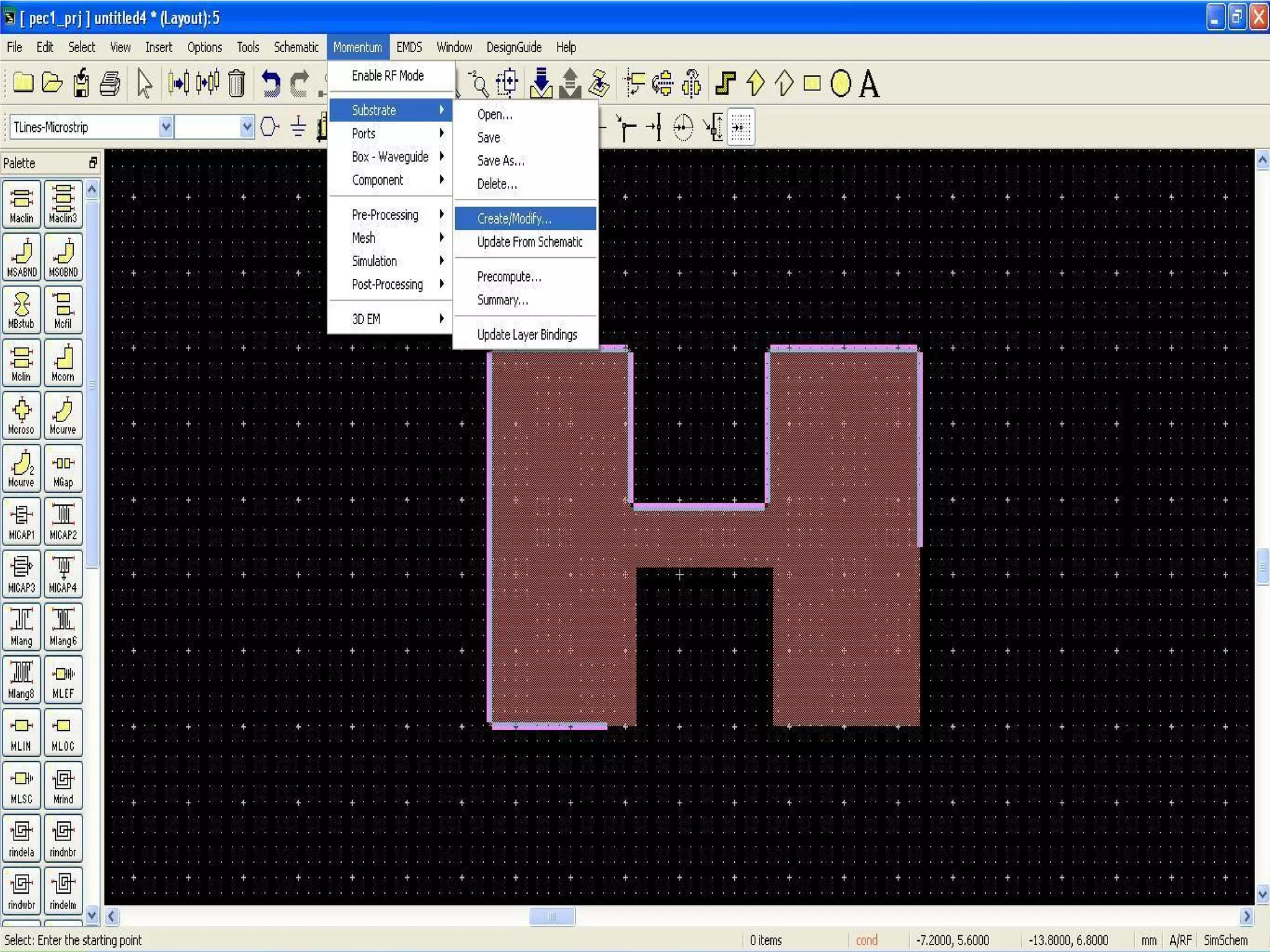
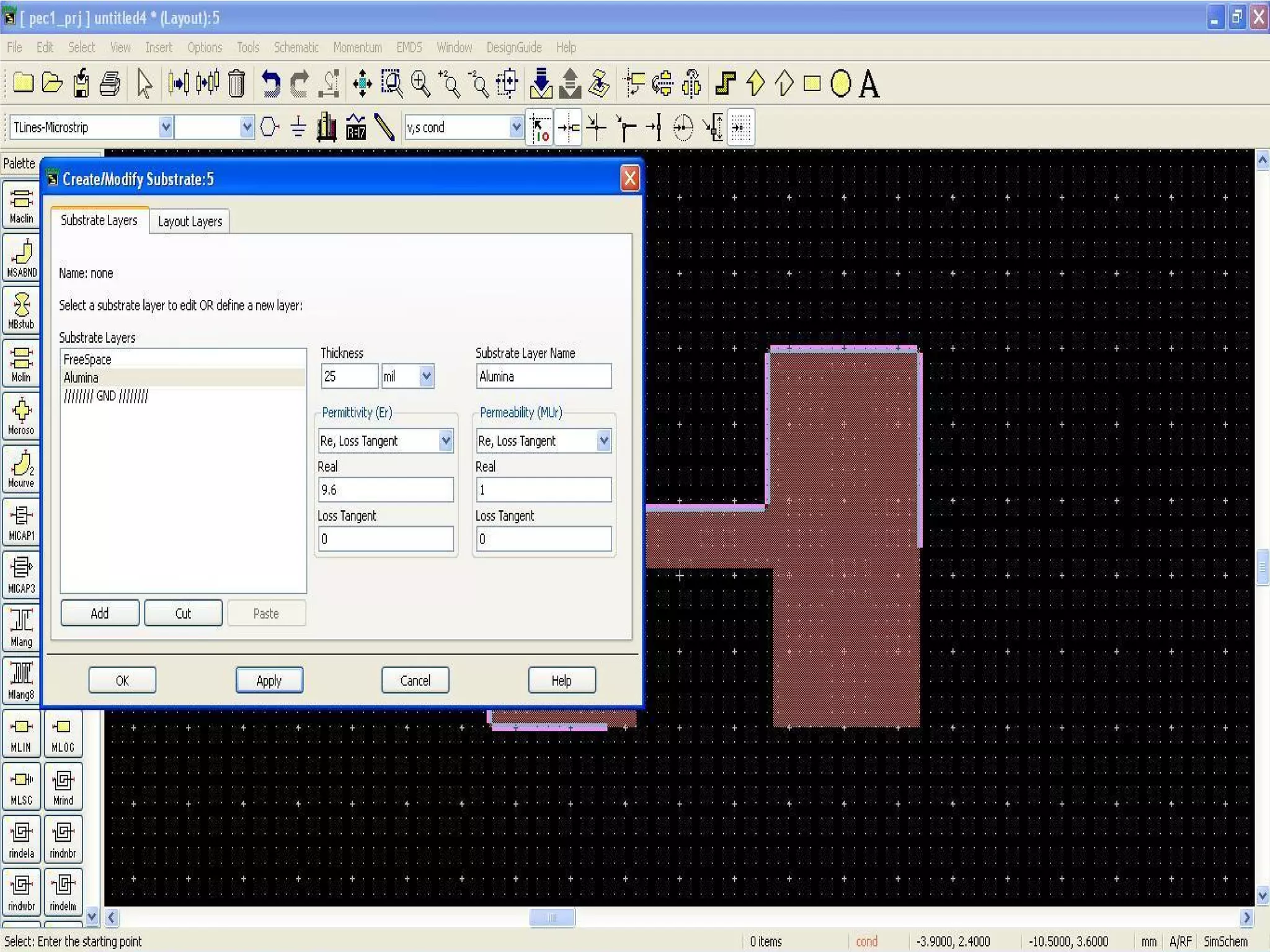
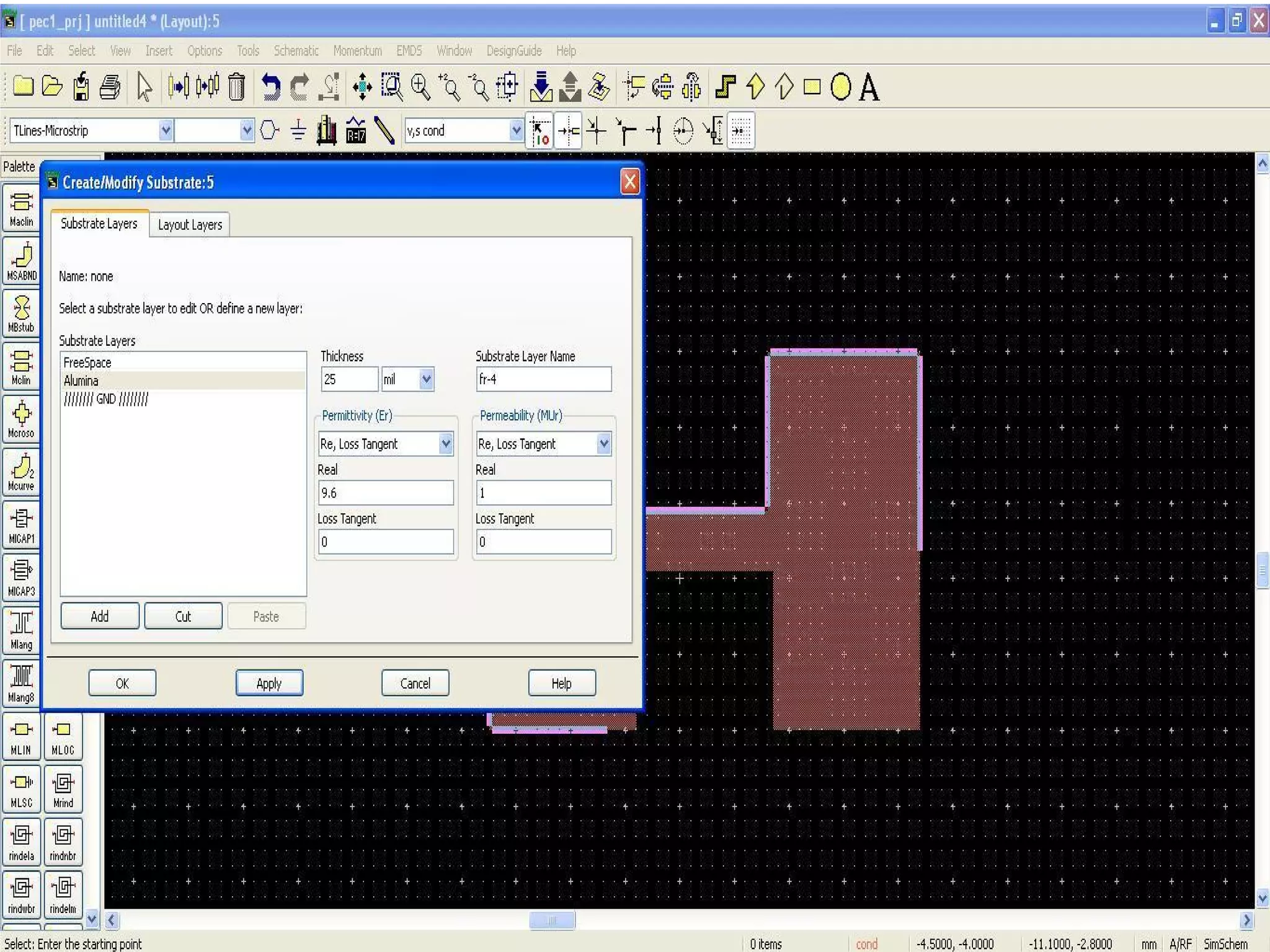
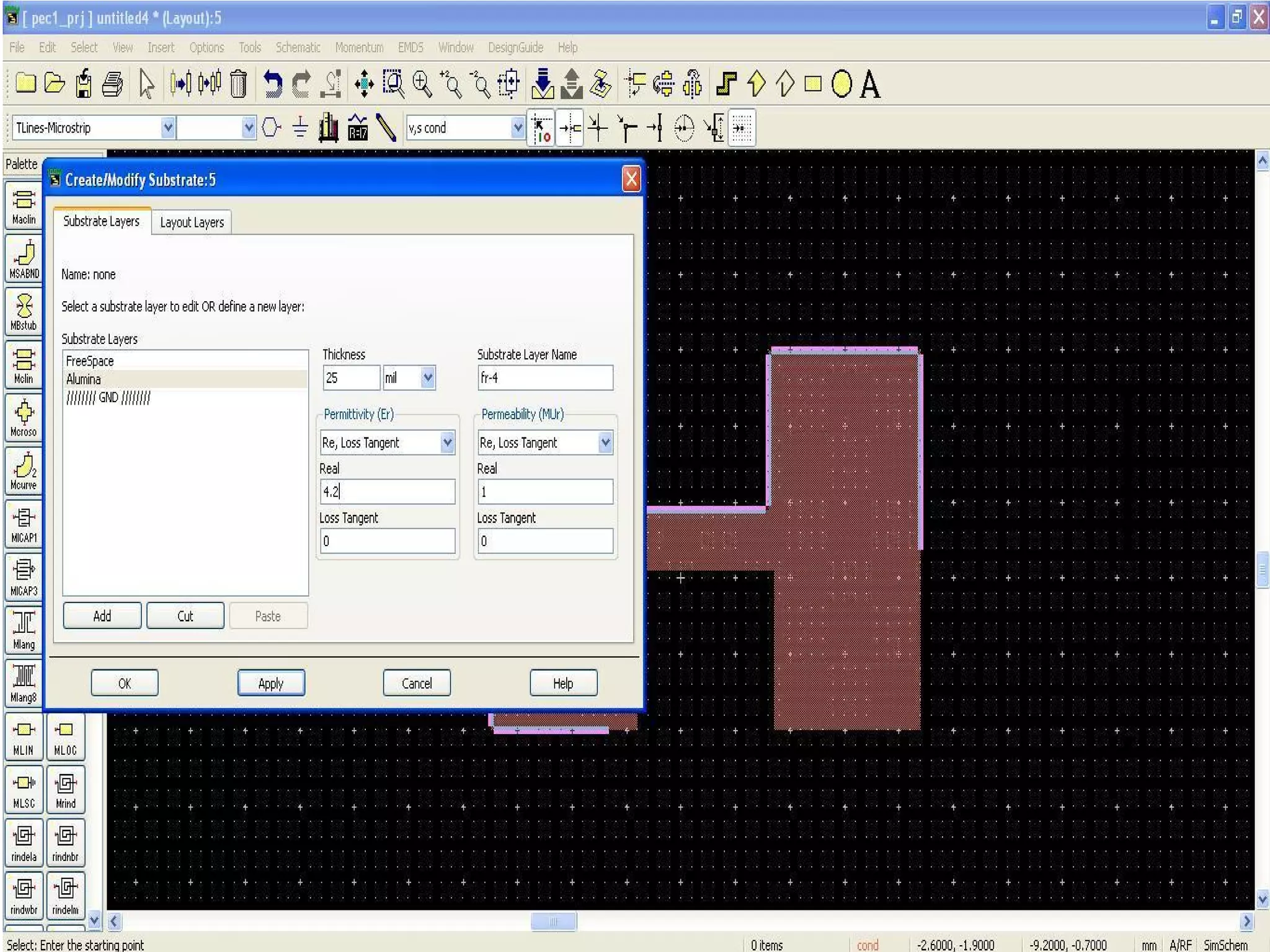
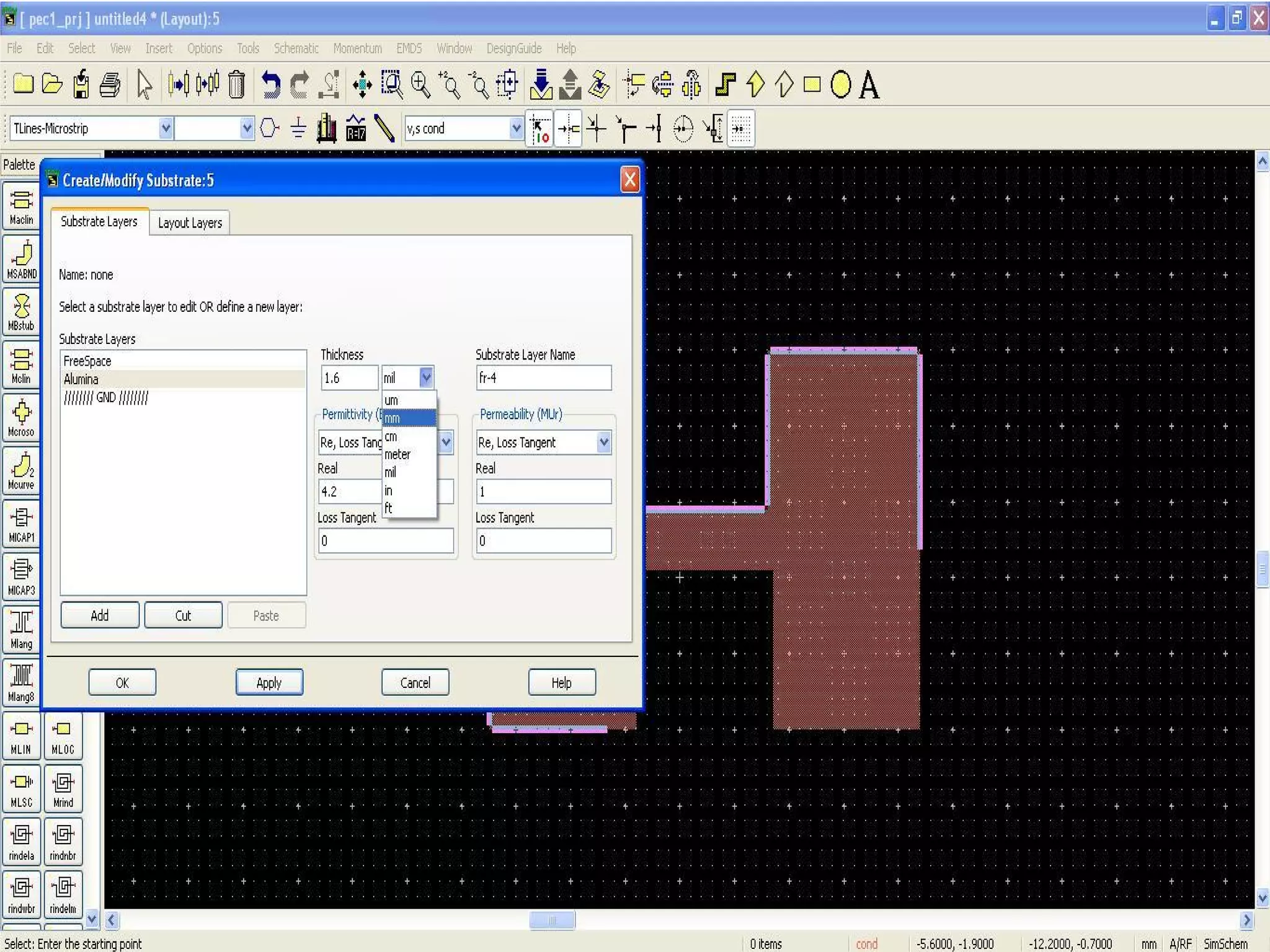
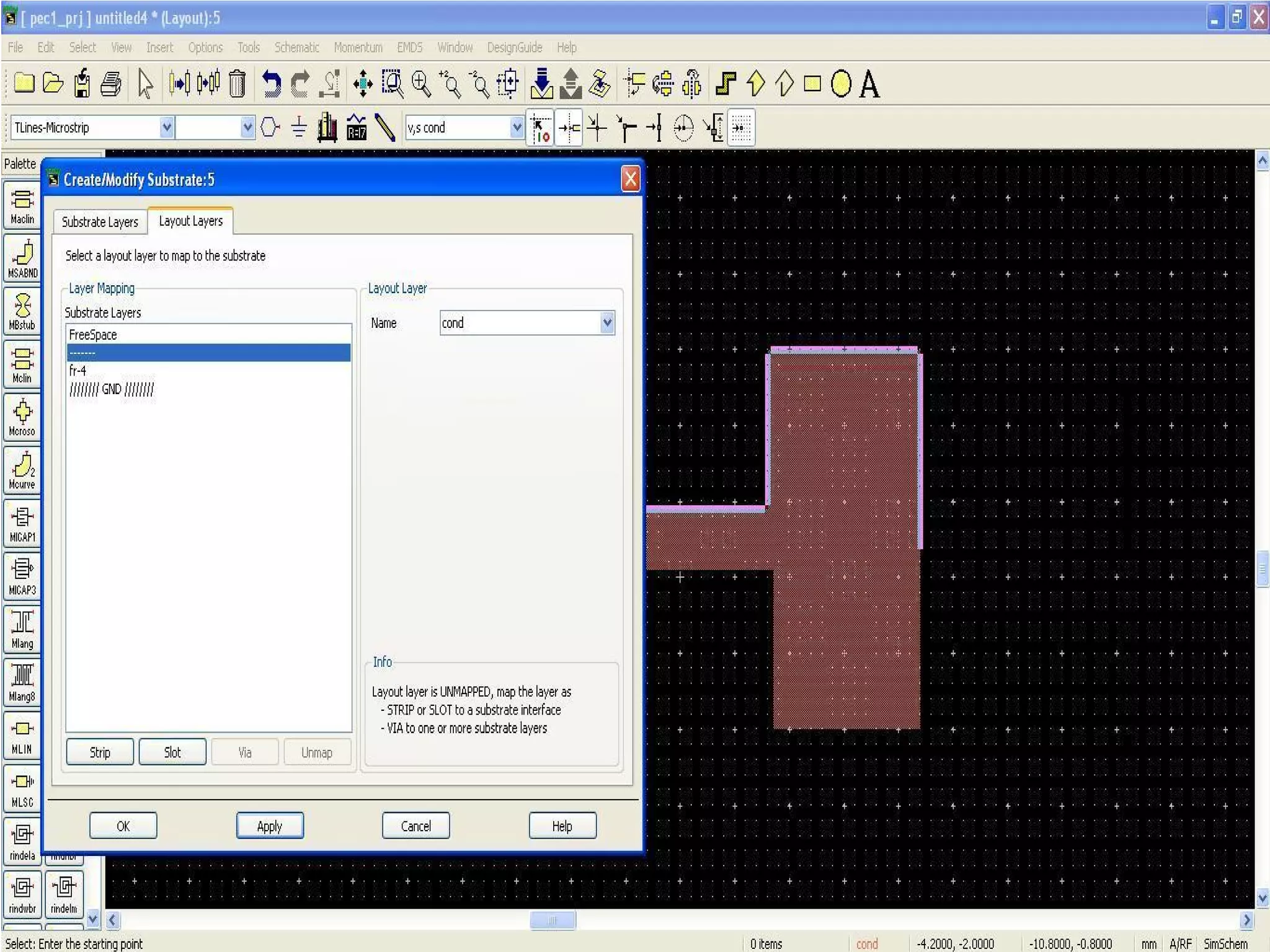
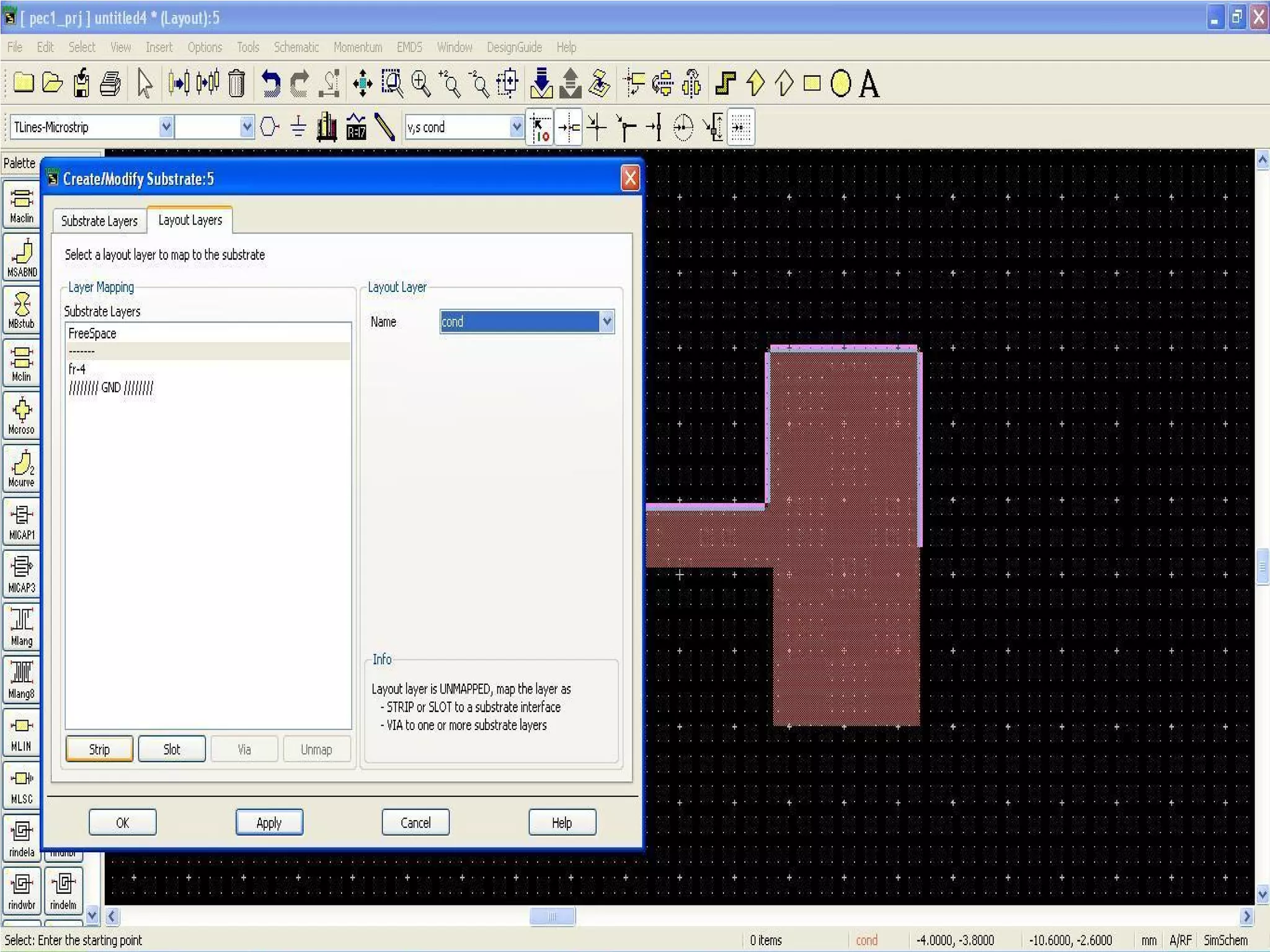
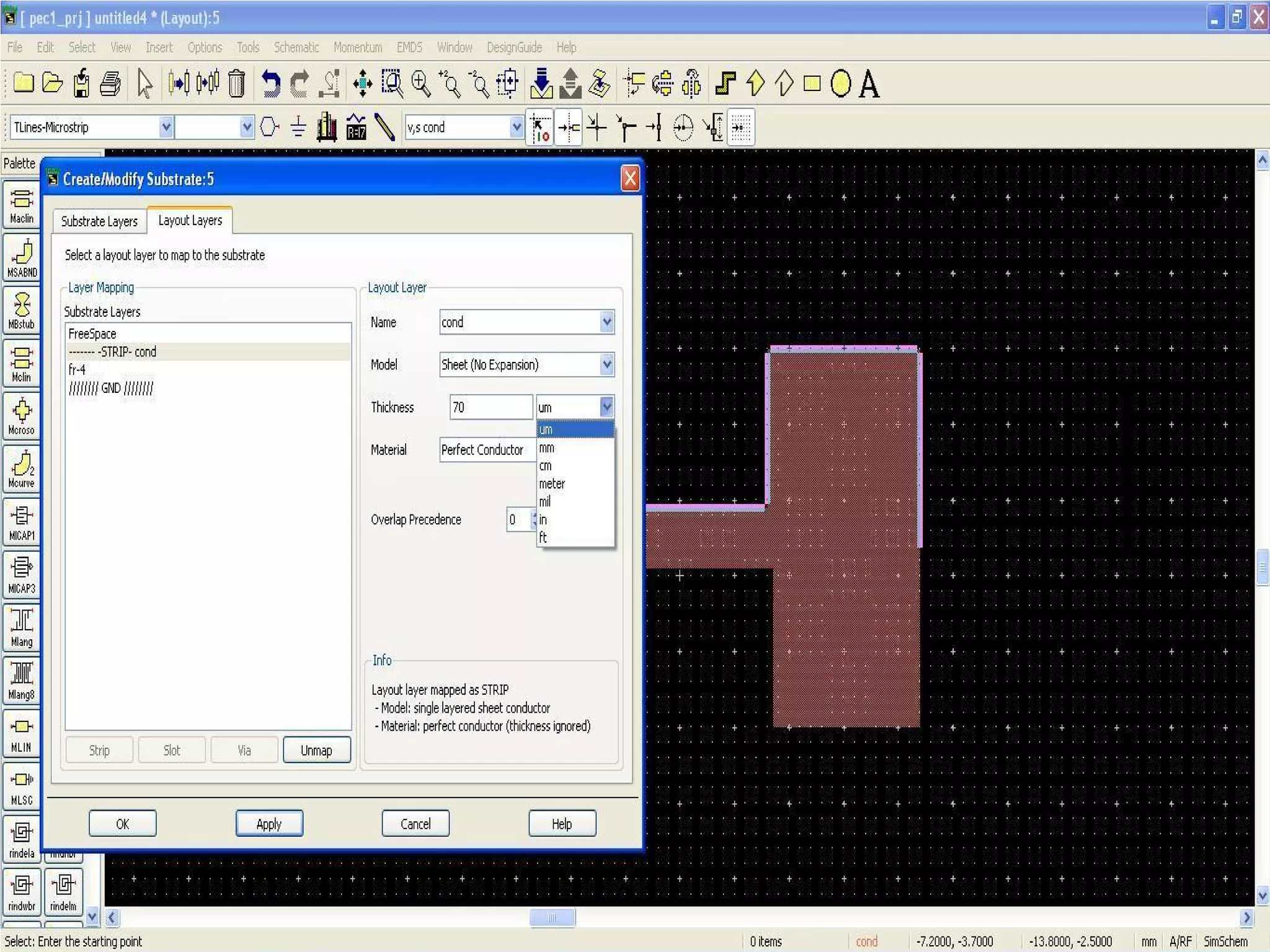
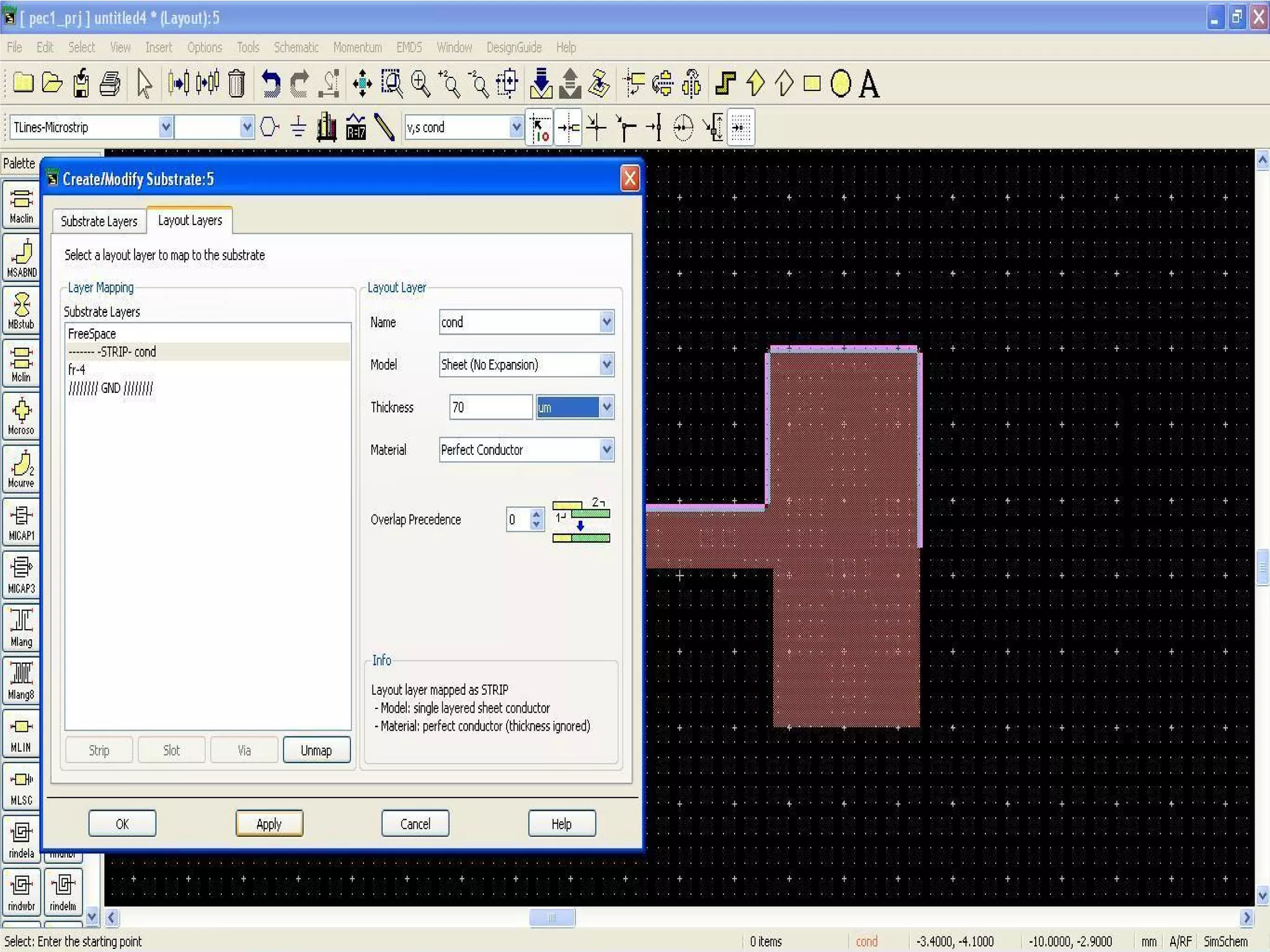
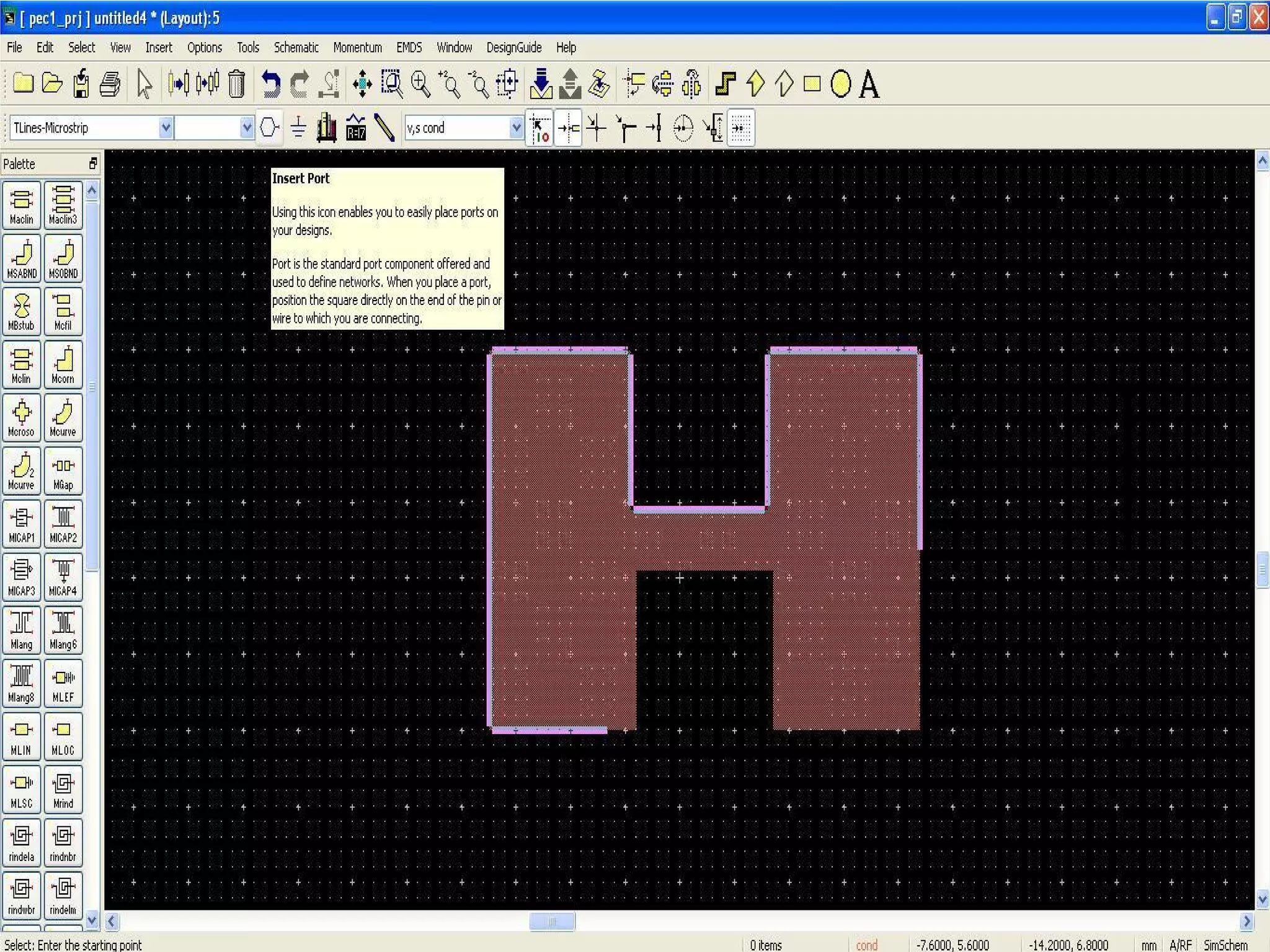
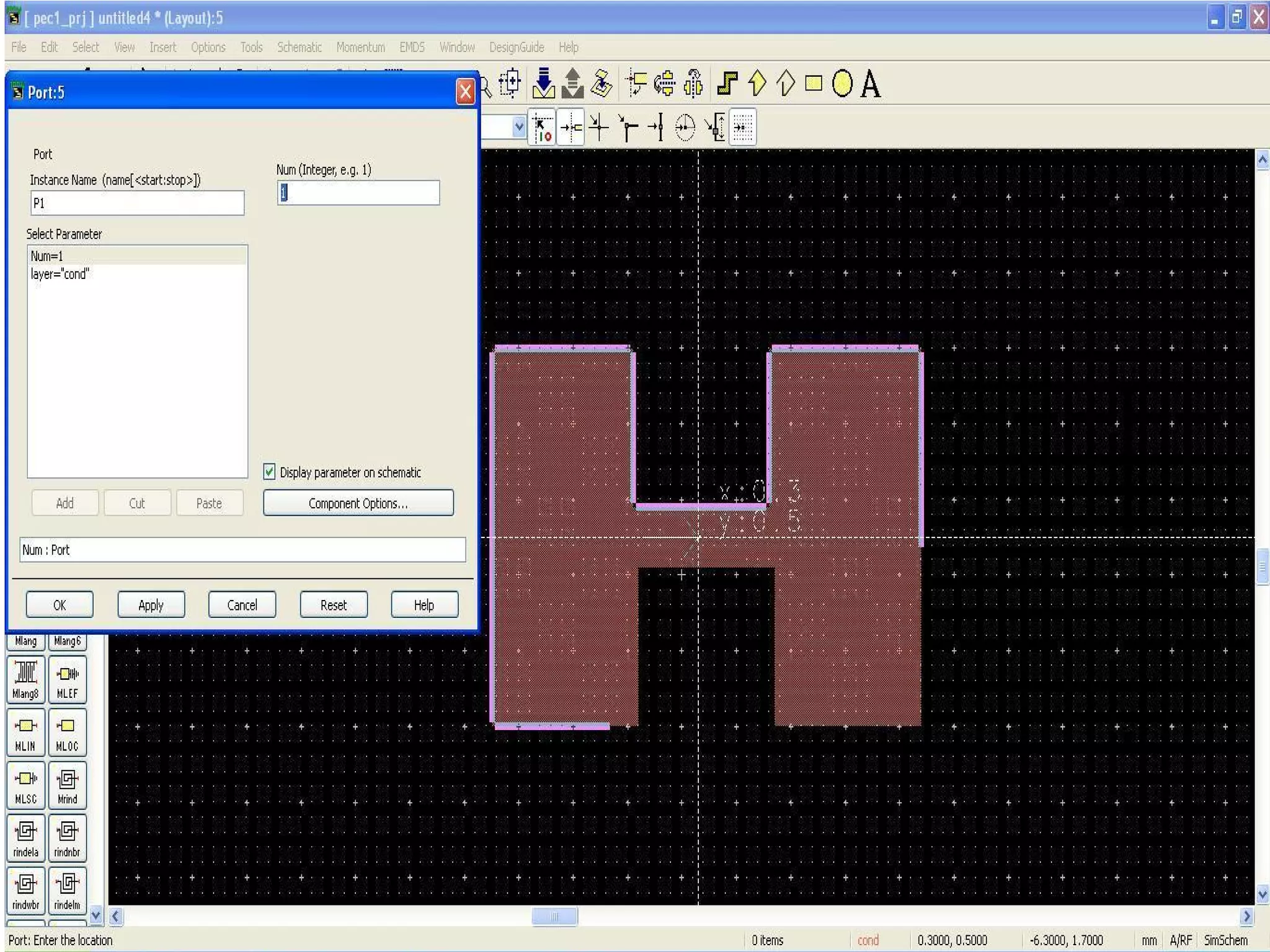
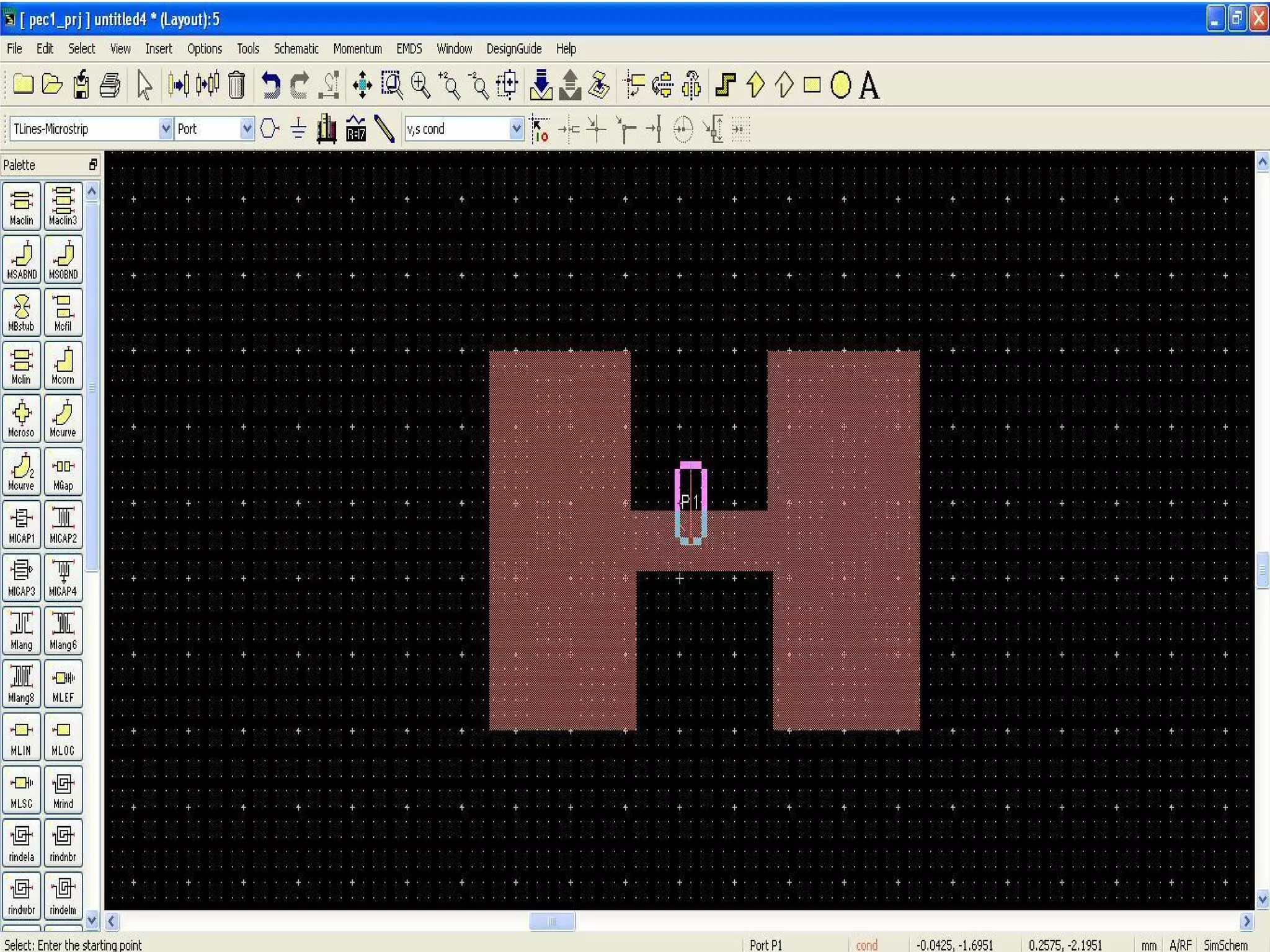
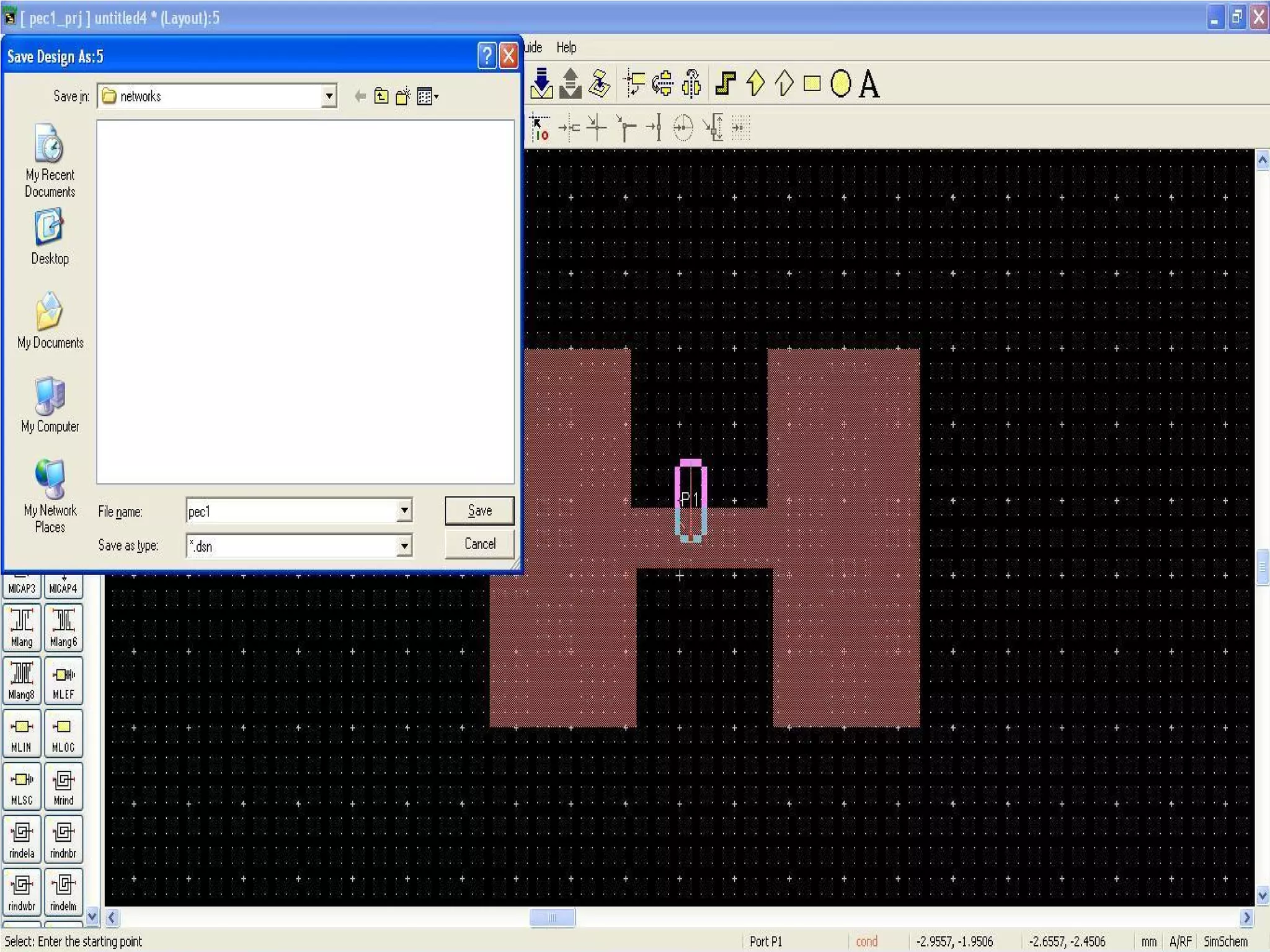
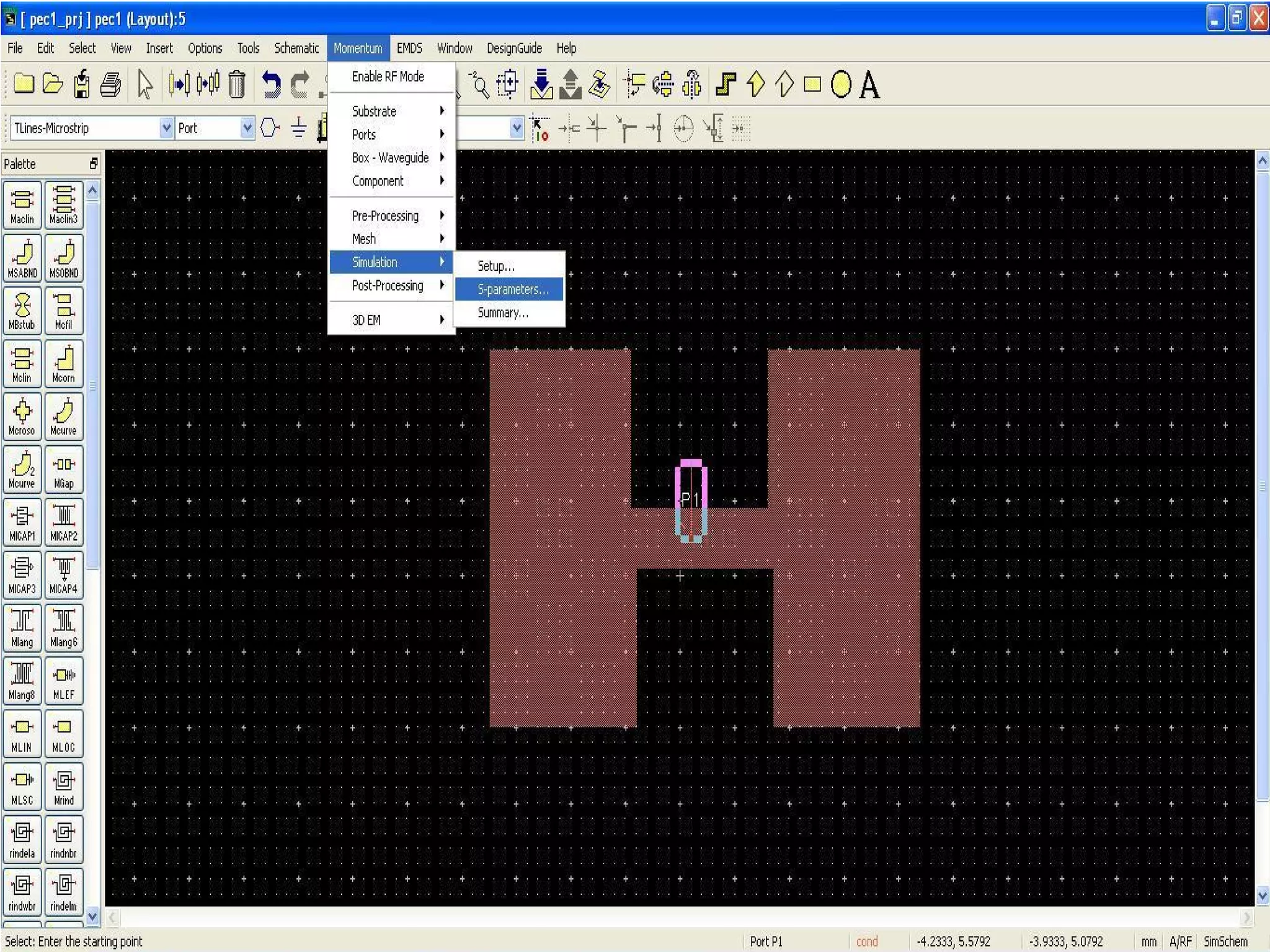
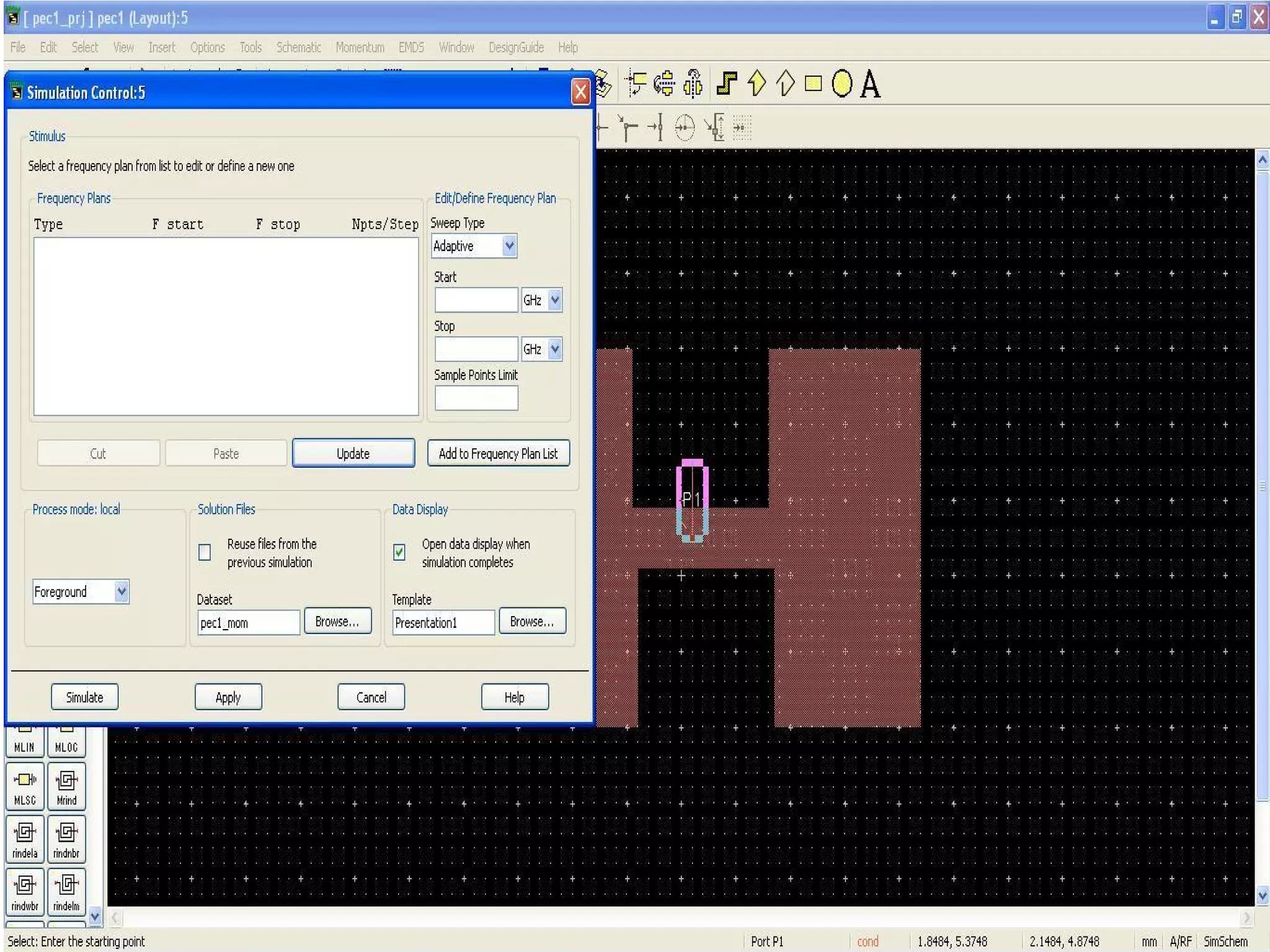
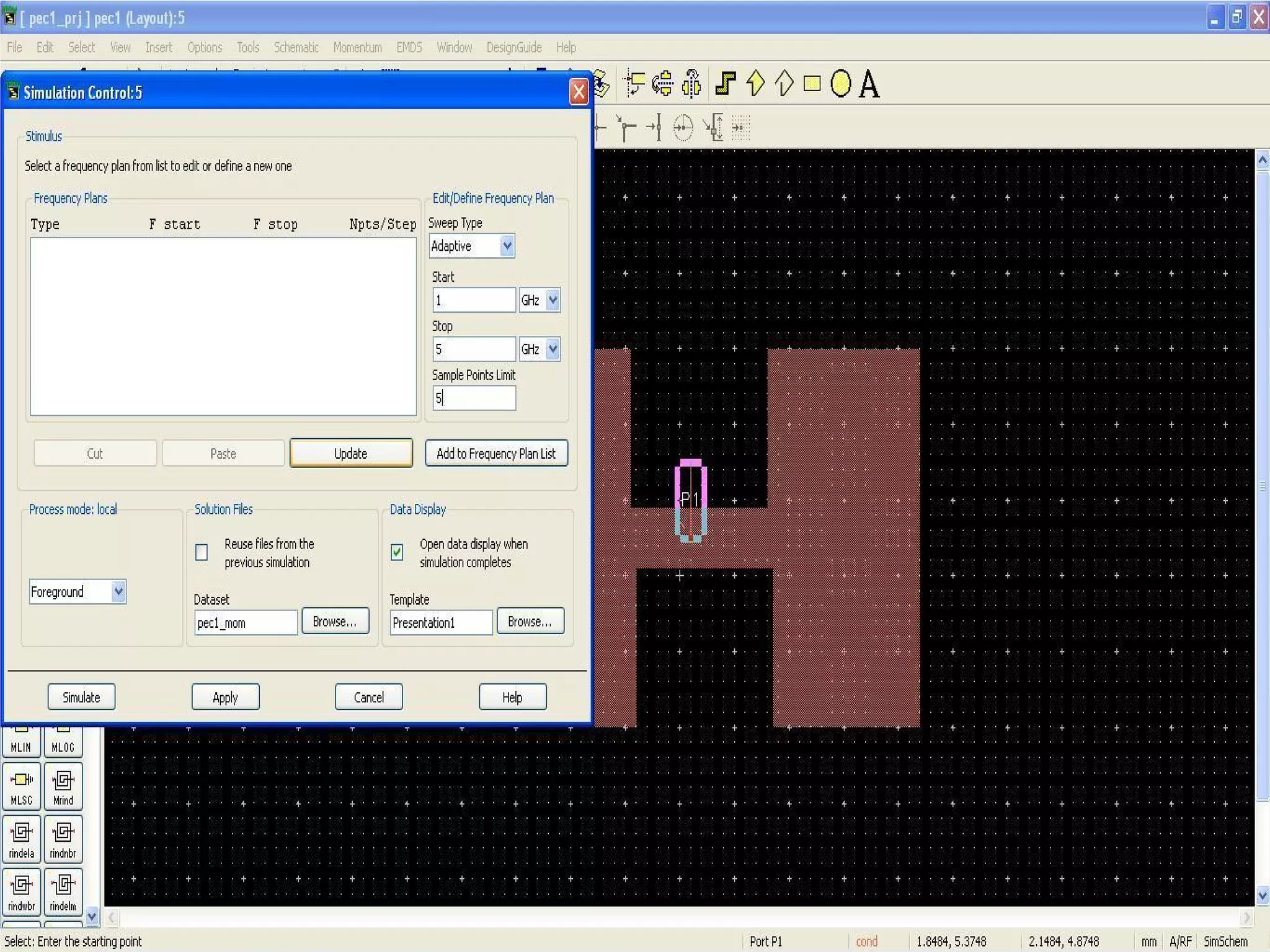
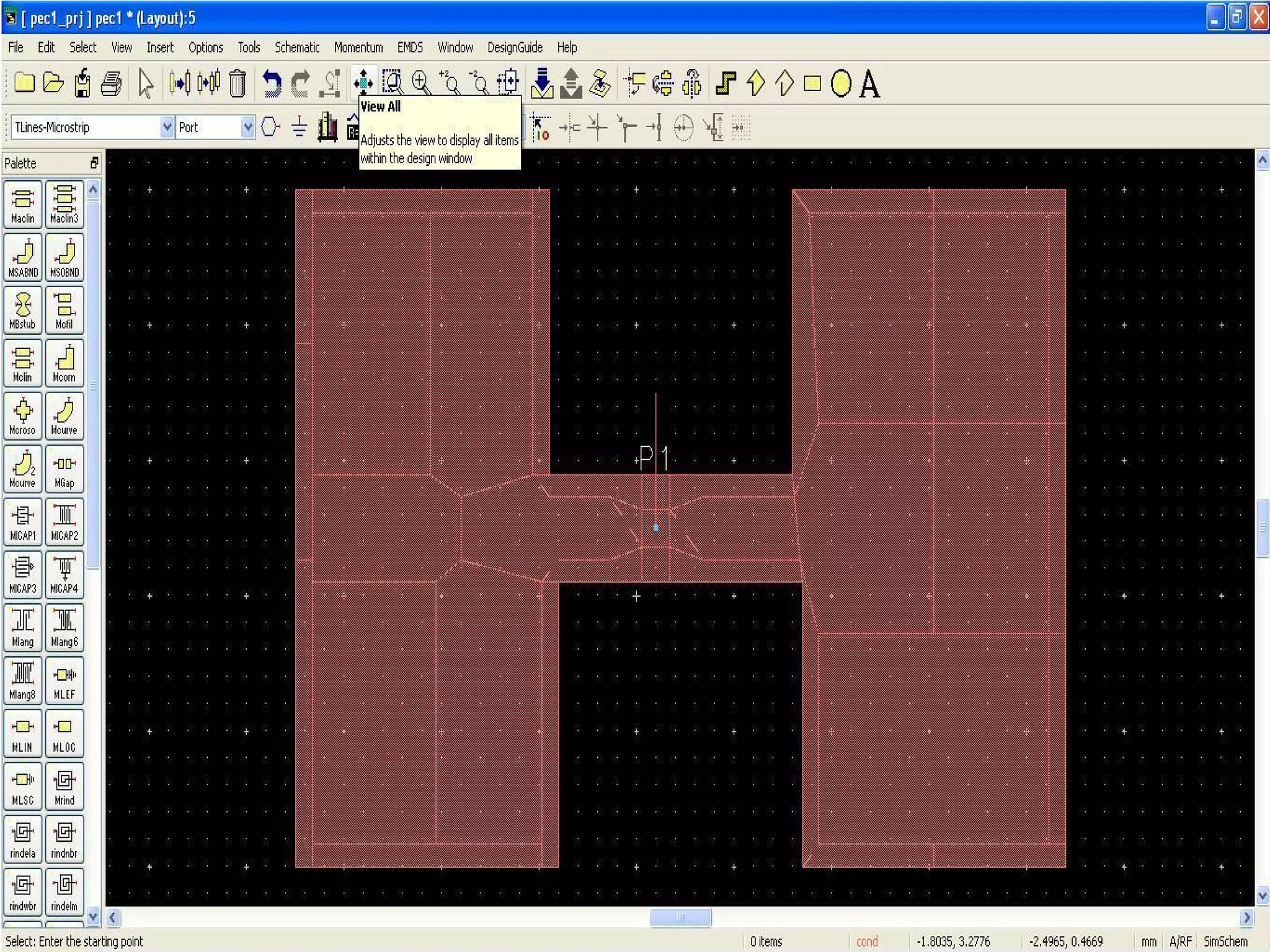
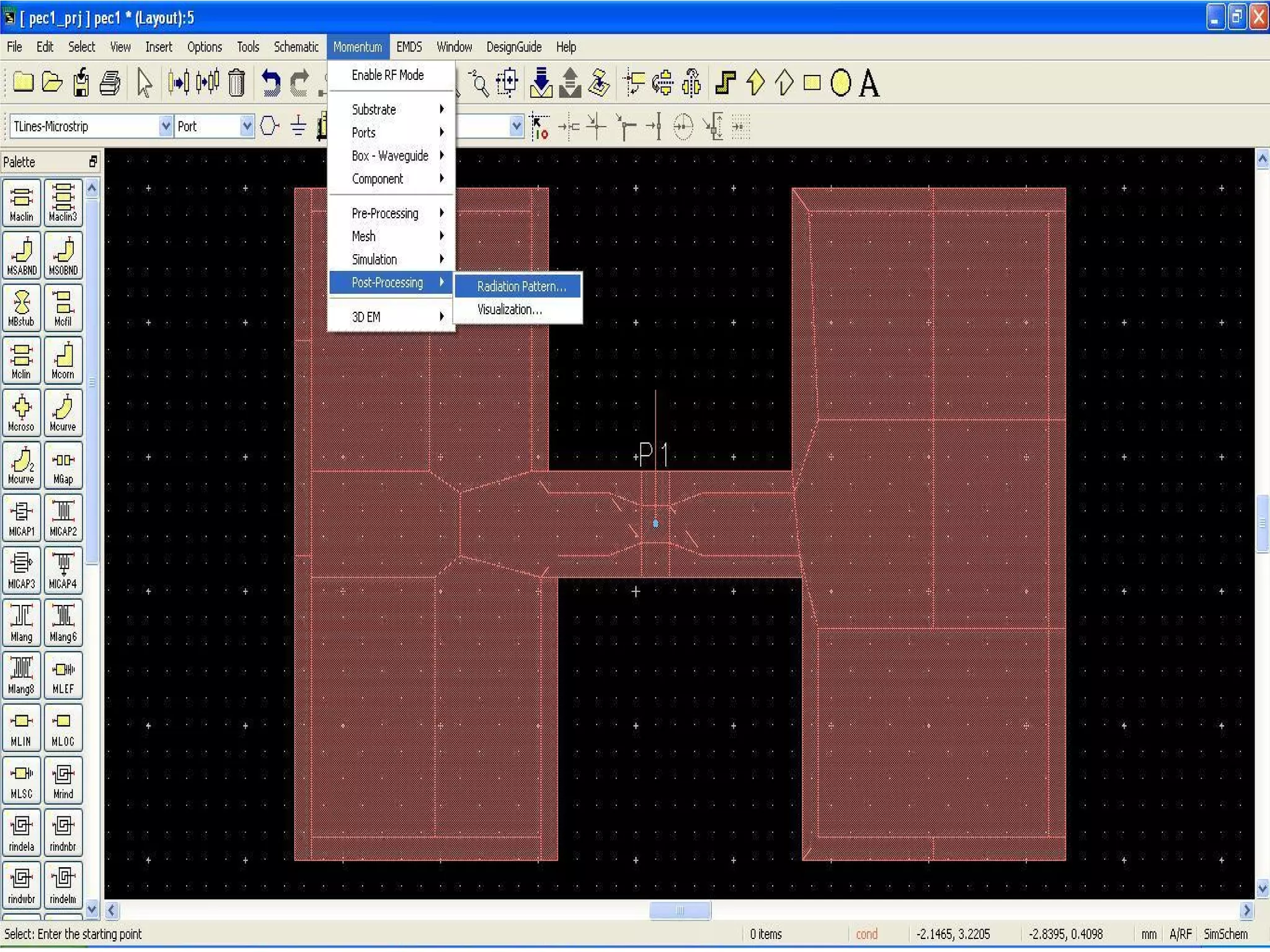
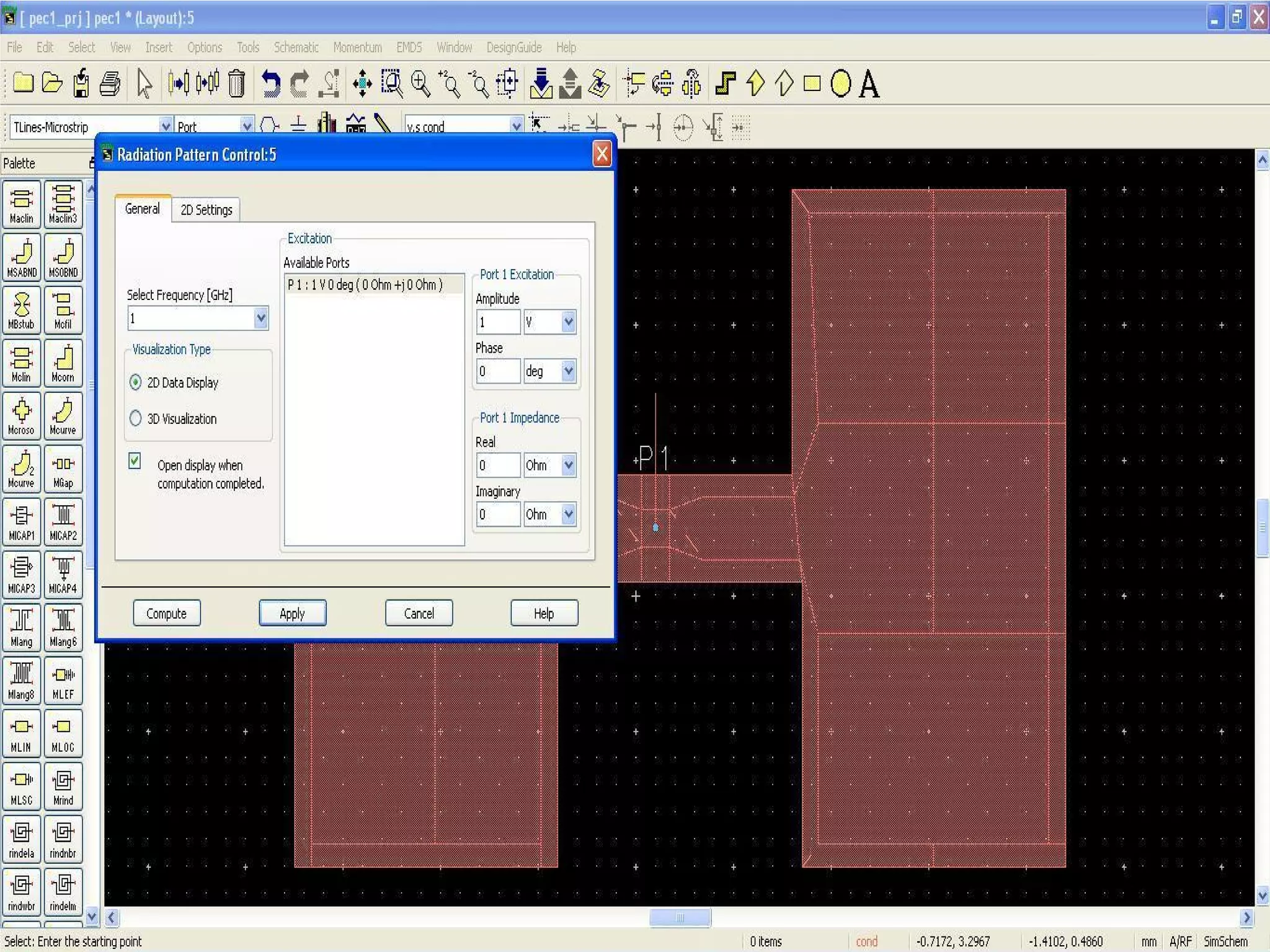
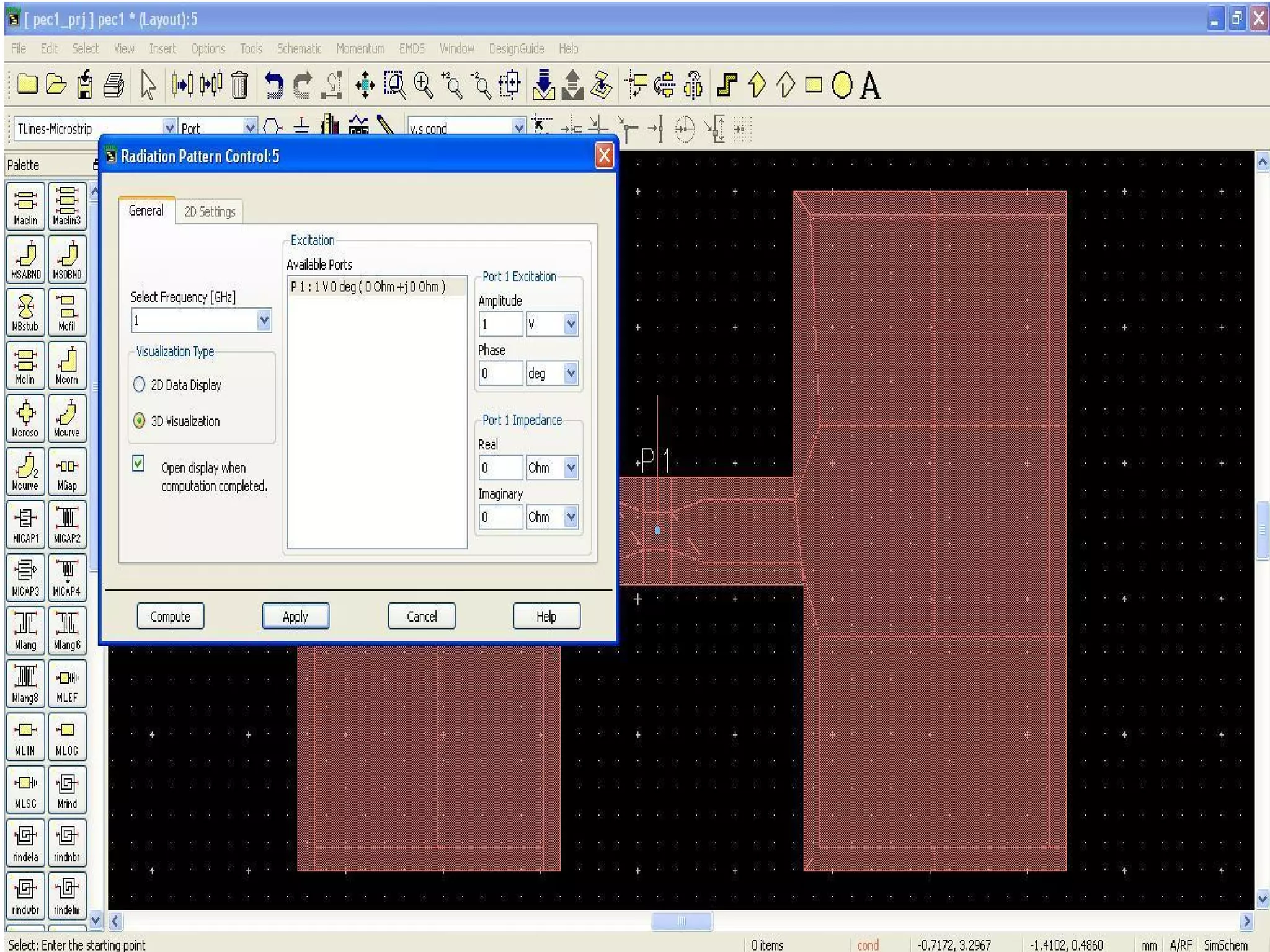
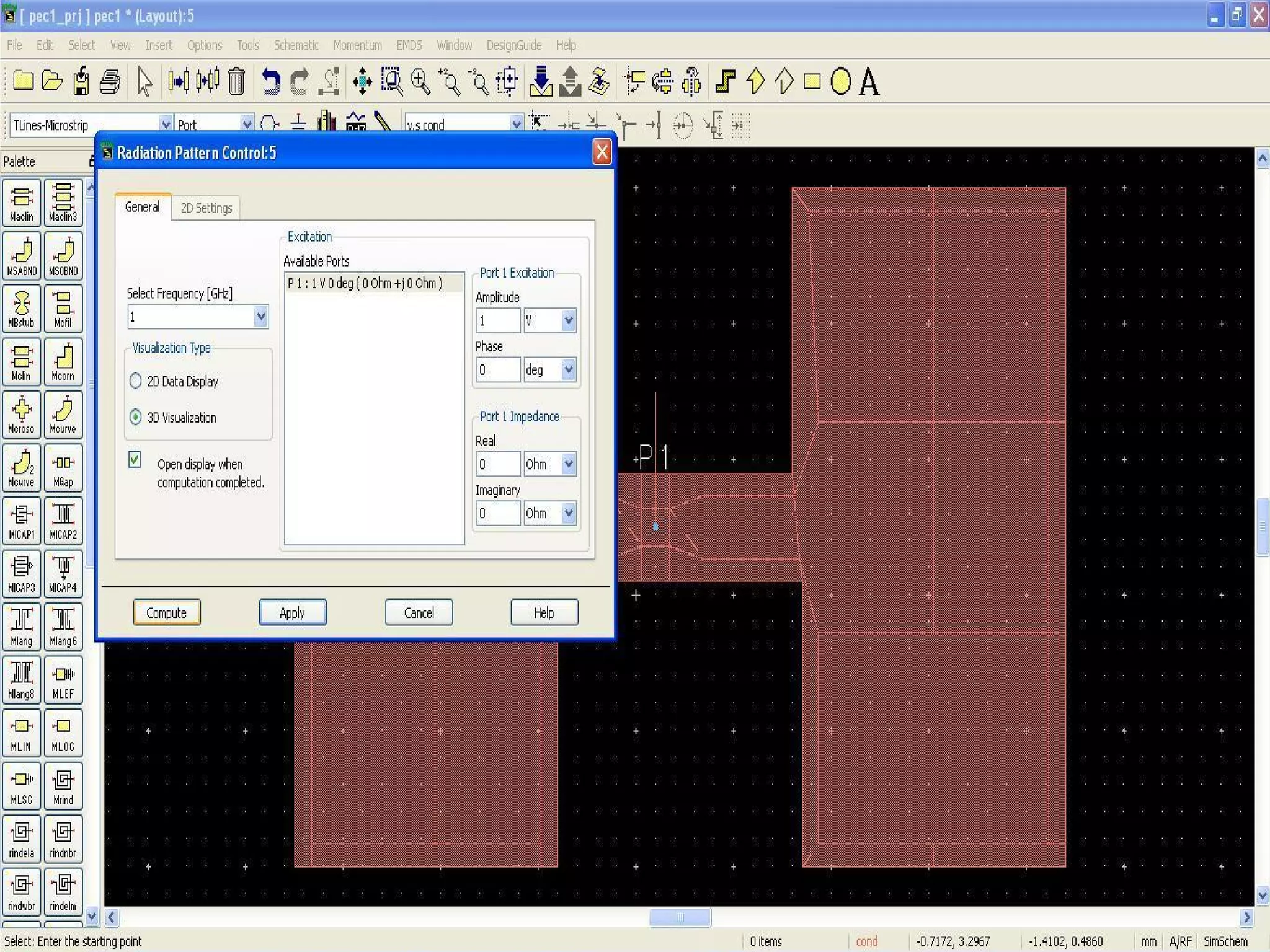
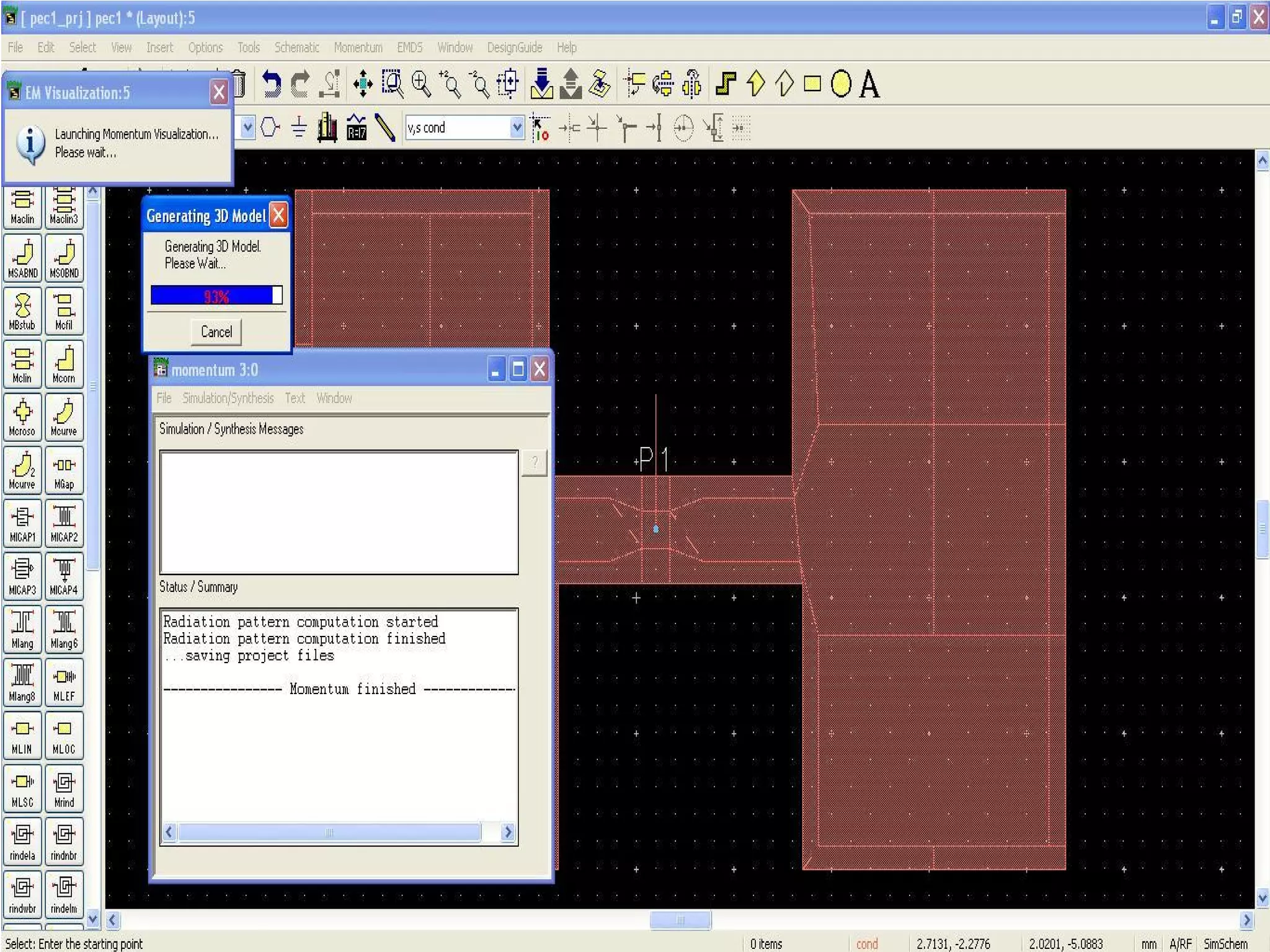
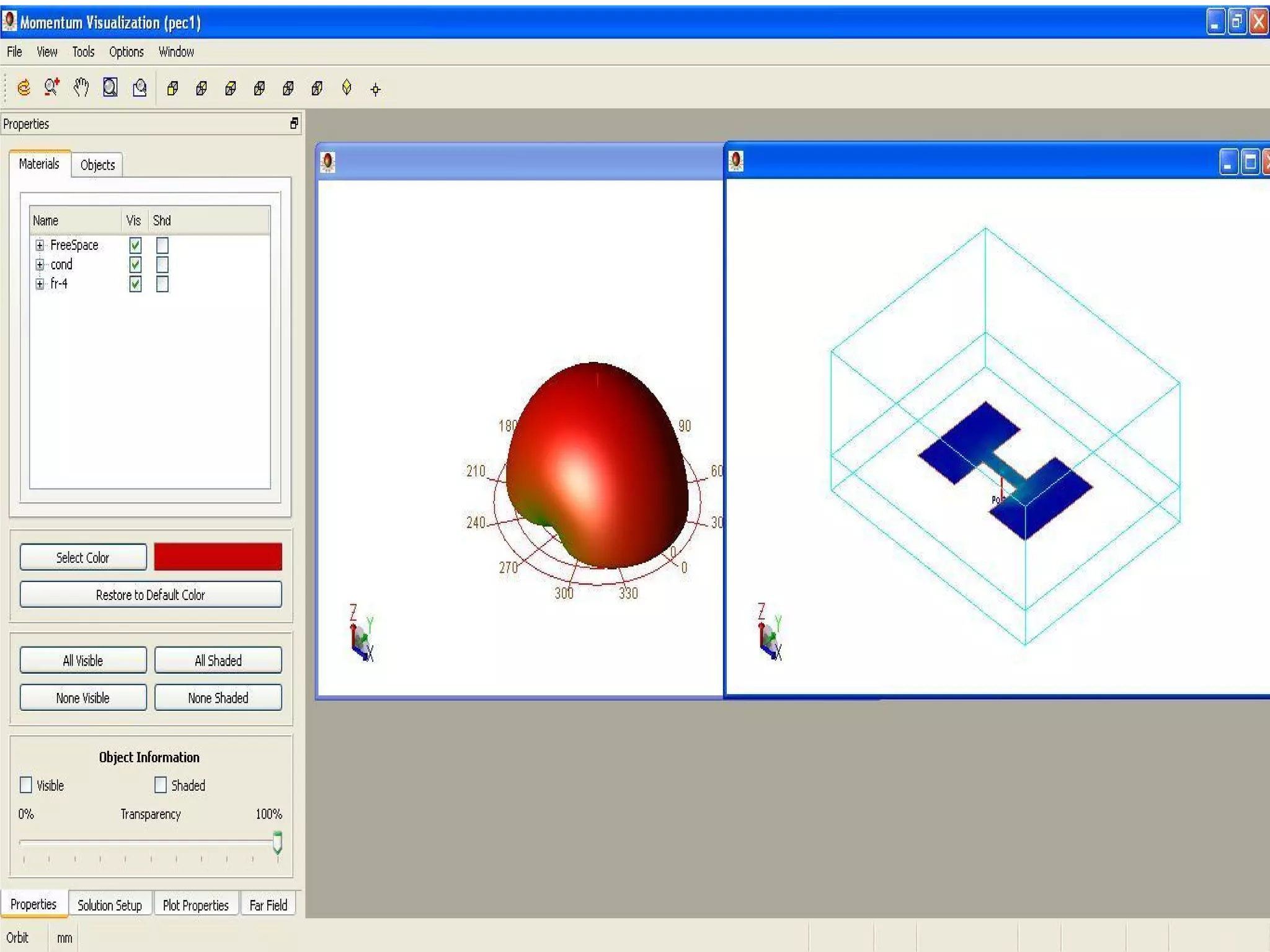
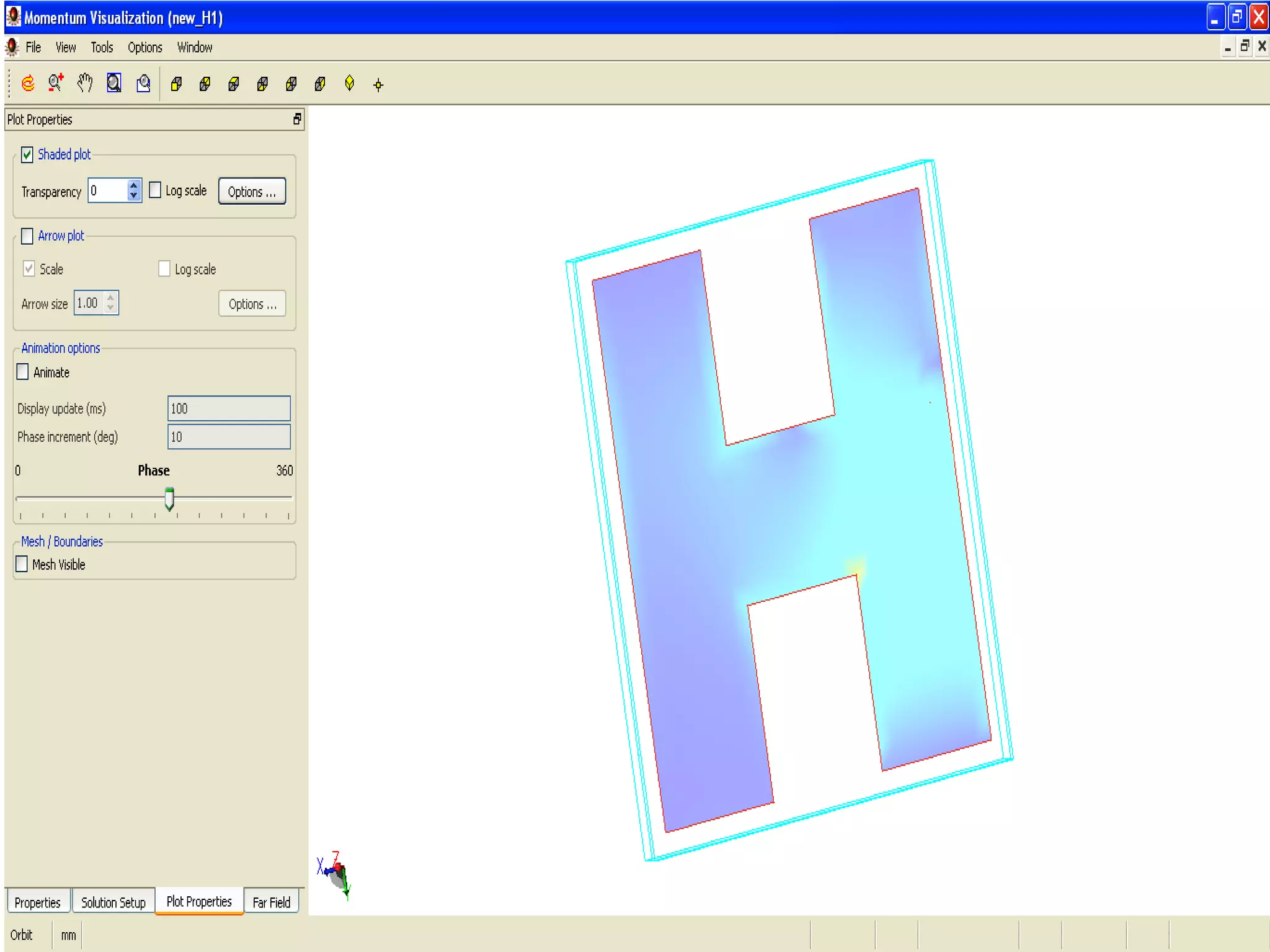
How to Design in ADS 2009
Contact:
thandaiah@gmail.com
thandaiahprabu.ece@prathyusha.edu.in
Mobile: +91-9751445529

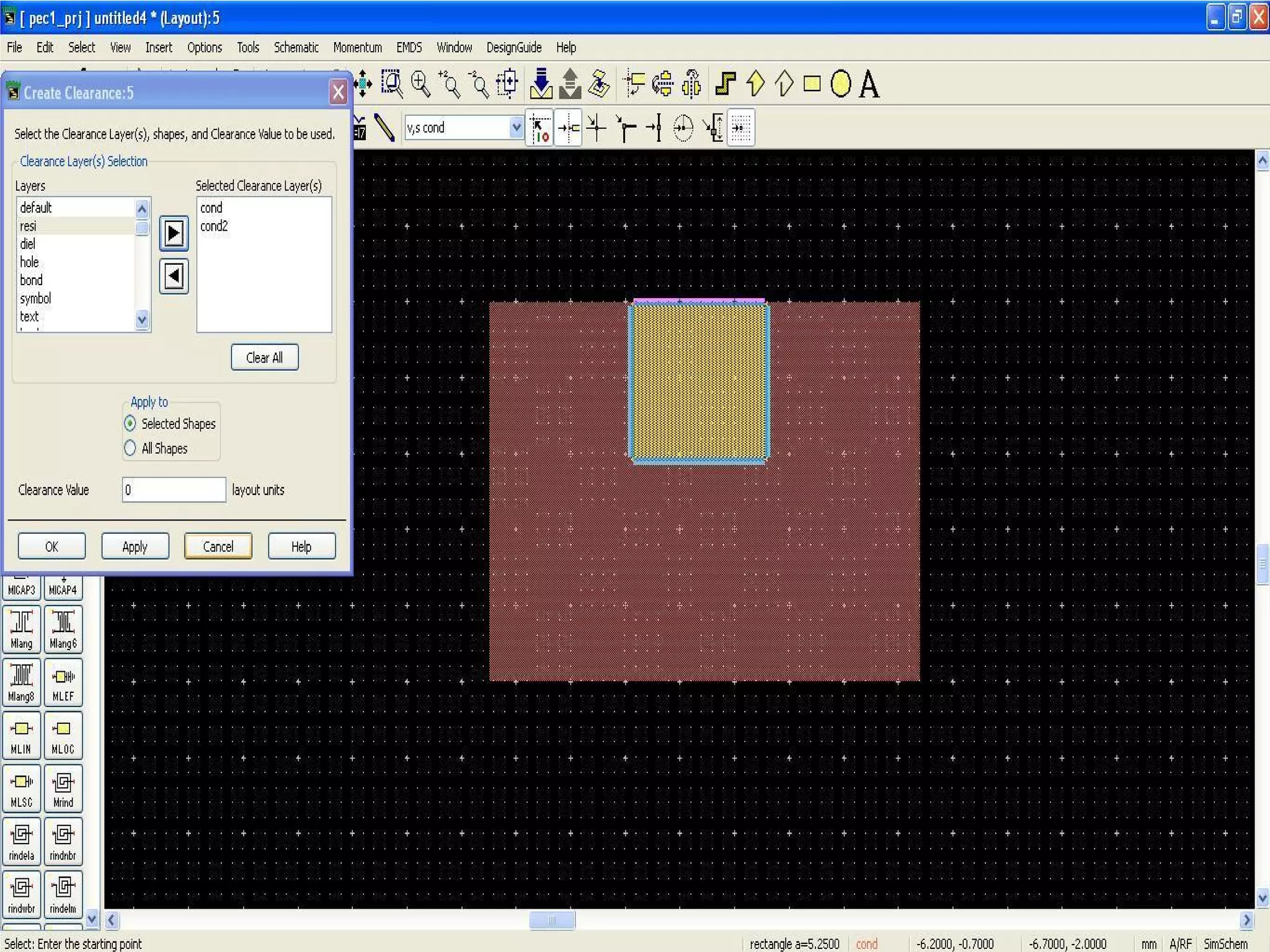
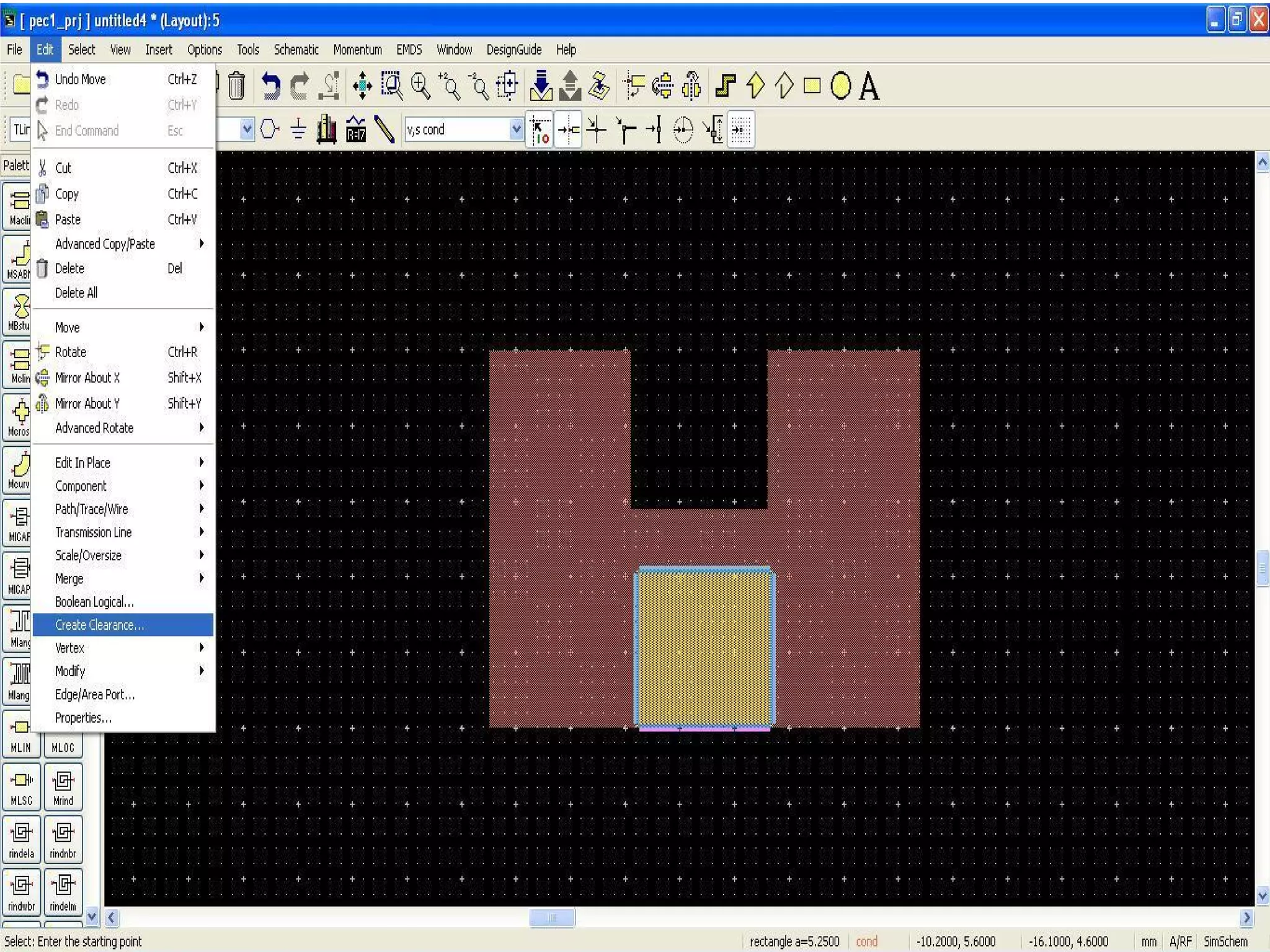
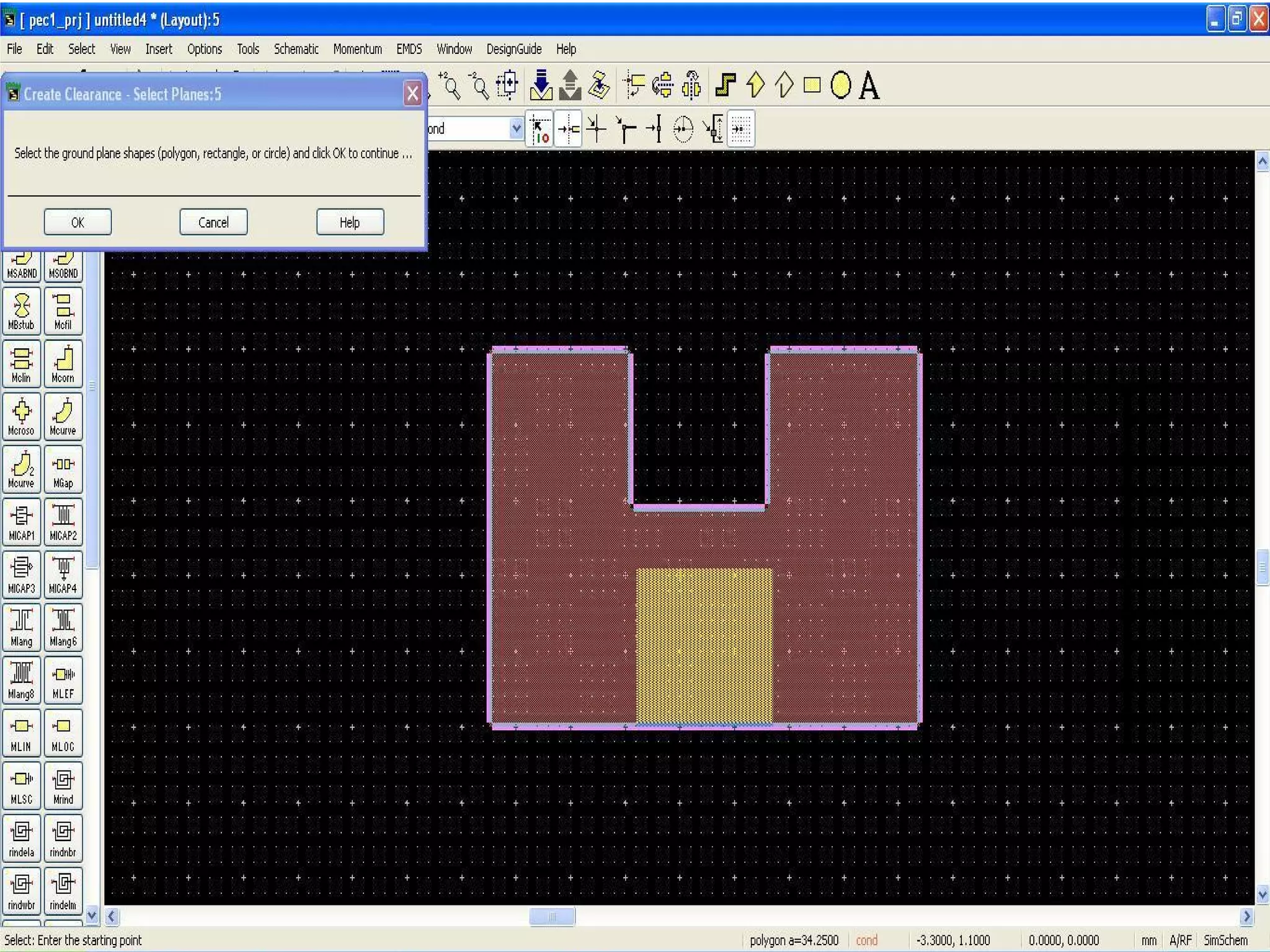
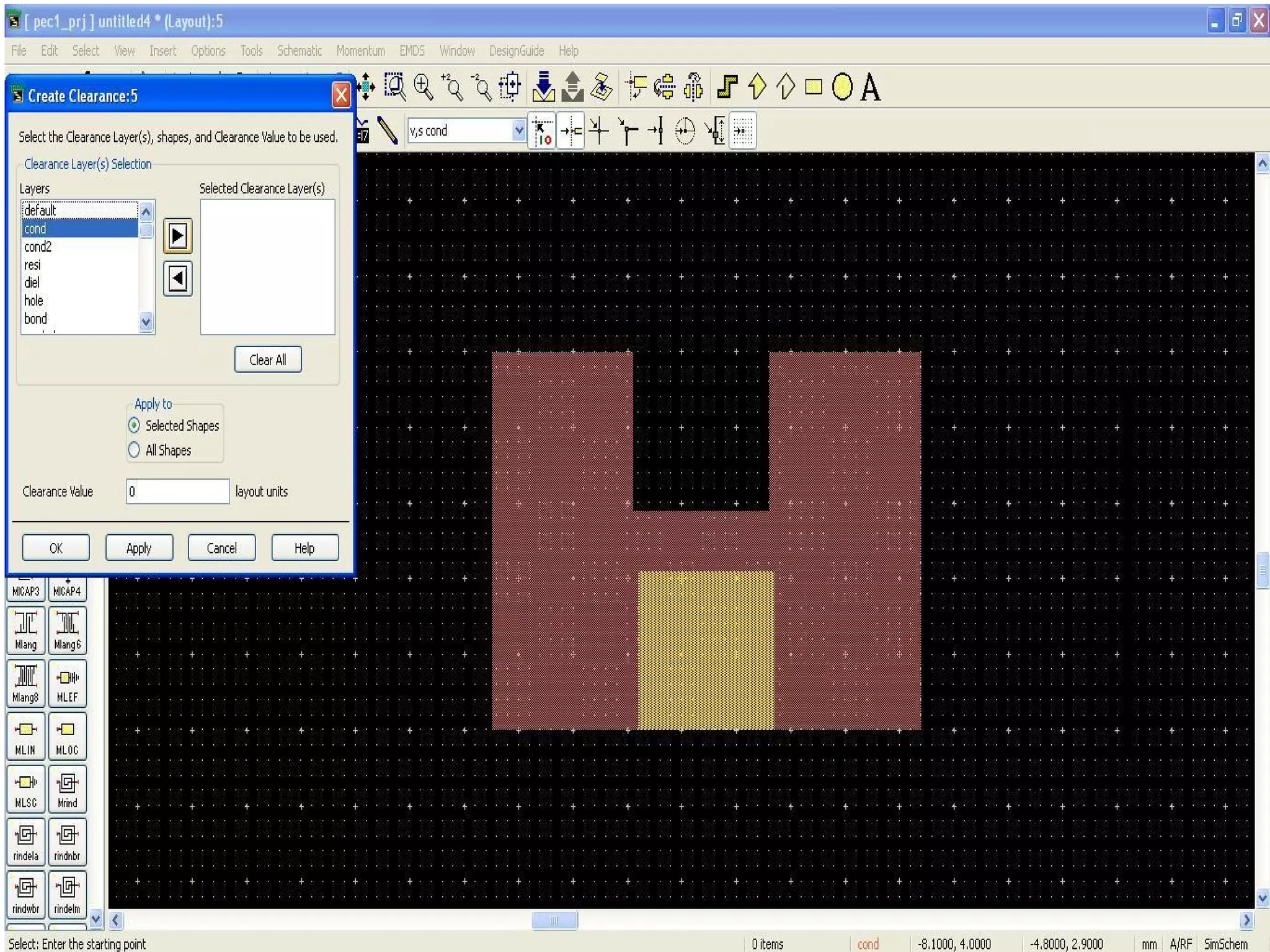
How to design Microstrip patch antenna design in ads 2009

  • 1.
    HOW TO DESIGNMICROSTRIP PATCH ANTENNA IN ADS 2009 Prepared By, R.THANDAIAH PRABU M.E., (Ph.D.,) PRATHYUSHA ENGINEERING COLLEGE, CHENNAI thandaiah@gmail.com Mobile: +91-9751445529
  • 2.
  • 3.
  • 4.
  • 5.
    Co- Axial Feed/ Probe Feed Equivalent circuits
  • 6.
  • 7.
  • 8.
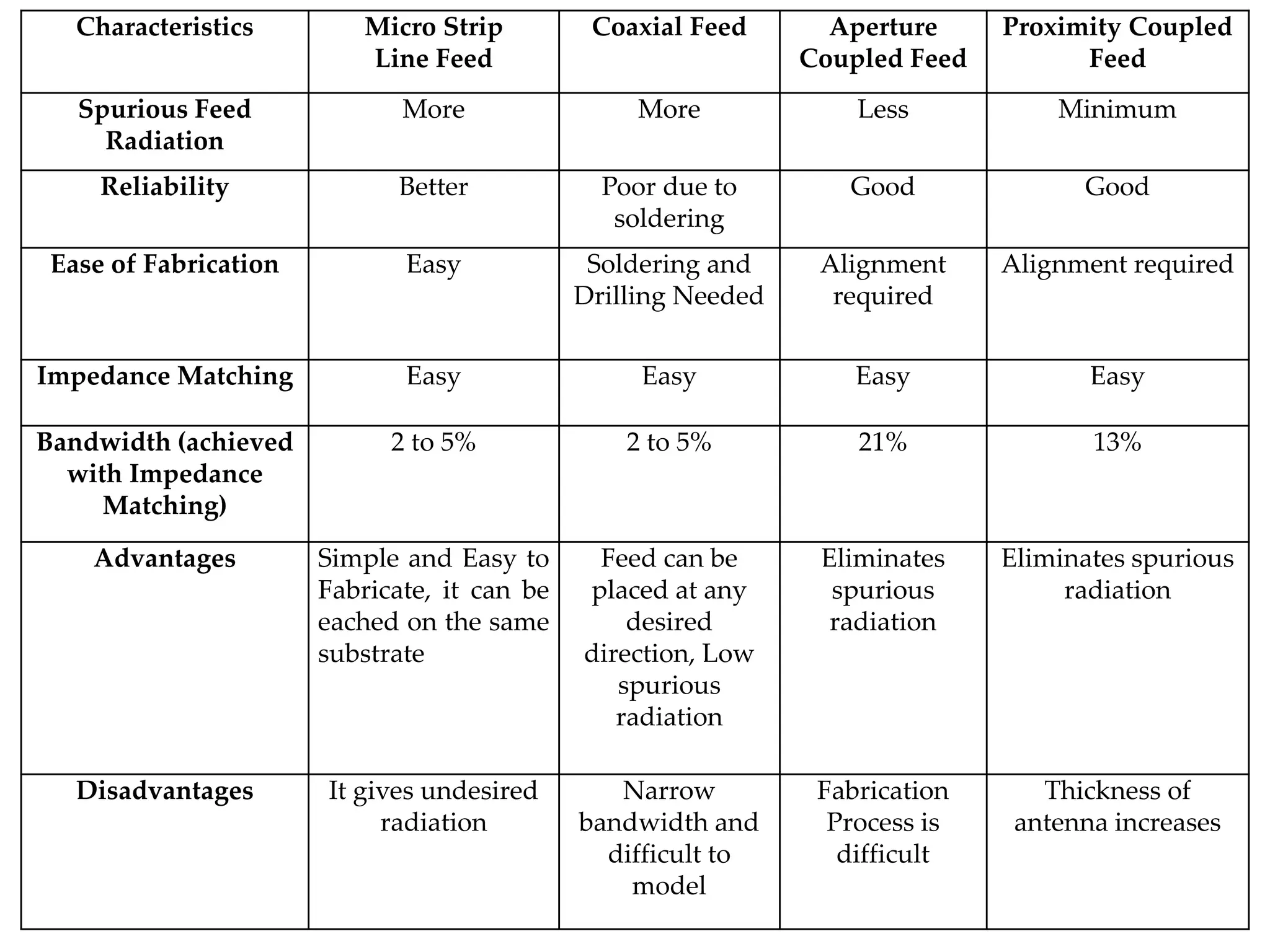
    Characteristics Micro Strip LineFeed Coaxial Feed Aperture Coupled Feed Proximity Coupled Feed Spurious Feed Radiation More More Less Minimum Reliability Better Poor due to soldering Good Good Ease of Fabrication Easy Soldering and Drilling Needed Alignment required Alignment required Impedance Matching Easy Easy Easy Easy Bandwidth (achieved with Impedance Matching) 2 to 5% 2 to 5% 21% 13% Advantages Simple and Easy to Fabricate, it can be eached on the same substrate Feed can be placed at any desired direction, Low spurious radiation Eliminates spurious radiation Eliminates spurious radiation Disadvantages It gives undesired radiation Narrow bandwidth and difficult to model Fabrication Process is difficult Thickness of antenna increases
  • 9.
    Design Calculation forTransmission Line Model
  • 10.
    Example Design a rectangularmicrostrip antenna using a substrate (RT/DUROID 5880) with dielectric constant of 2.2, h = 0.1588 cm (0.0625 inches) so as to resonate at 10 GHz.
  • 11.
    Software Comparison ADS HFSSCST Advanced Design System High Frequency Structural Simulator Computer Simulation Technology 2 D EM Simulator 3 D EM Simulator 3 D EM Simulator Method of Moment (MoM) Finite Element Method (FEM) Finite Integration in Technique (FIT) Active/passive lumped model simulator Passive circuit Simulation passive and Active circuit simulation ADS – 2009 good choice for both domain HFSS FEM is much better than CST Frequency Domain Time domain of HFSS is not as good as CST
  • 12.
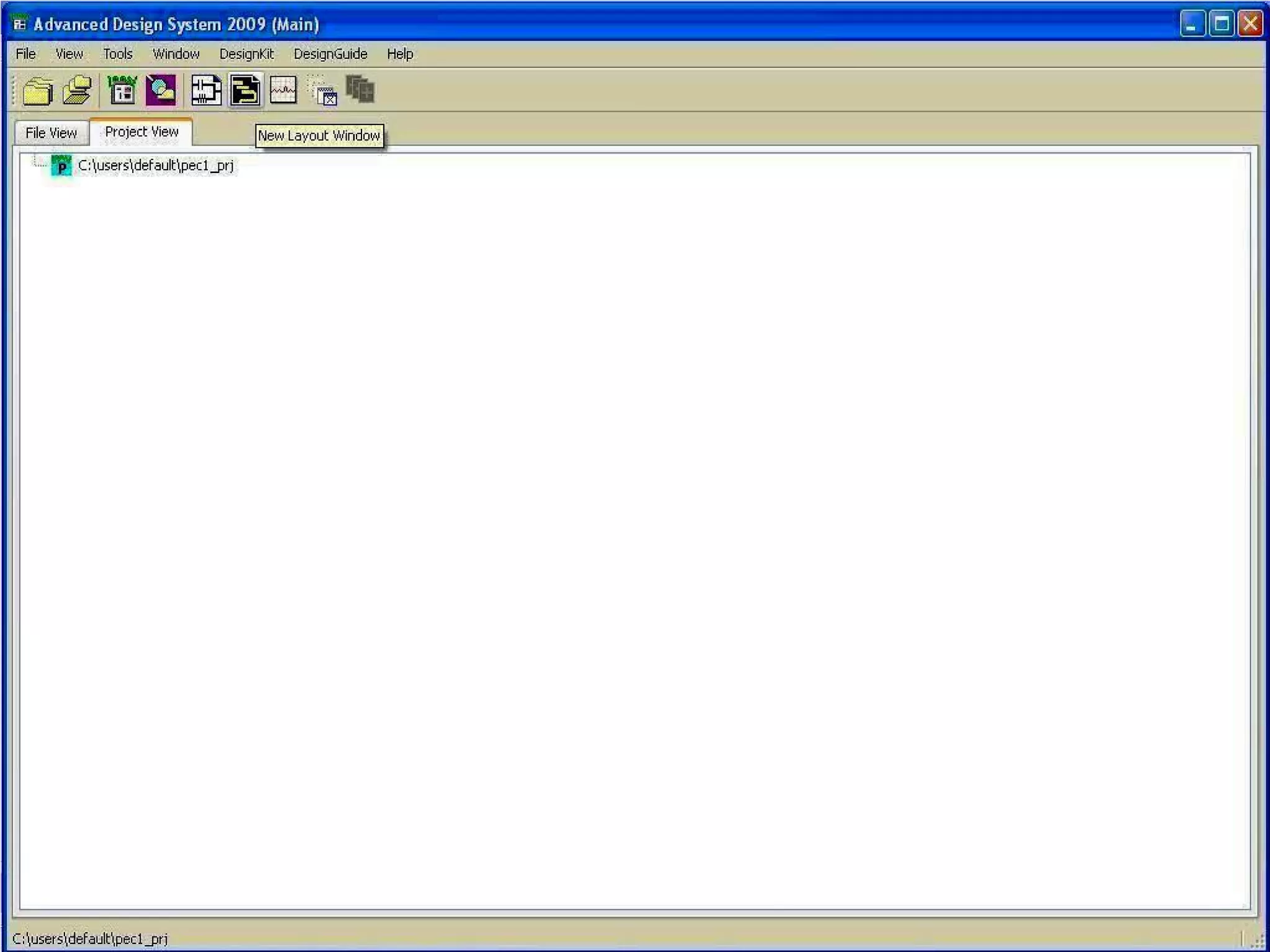
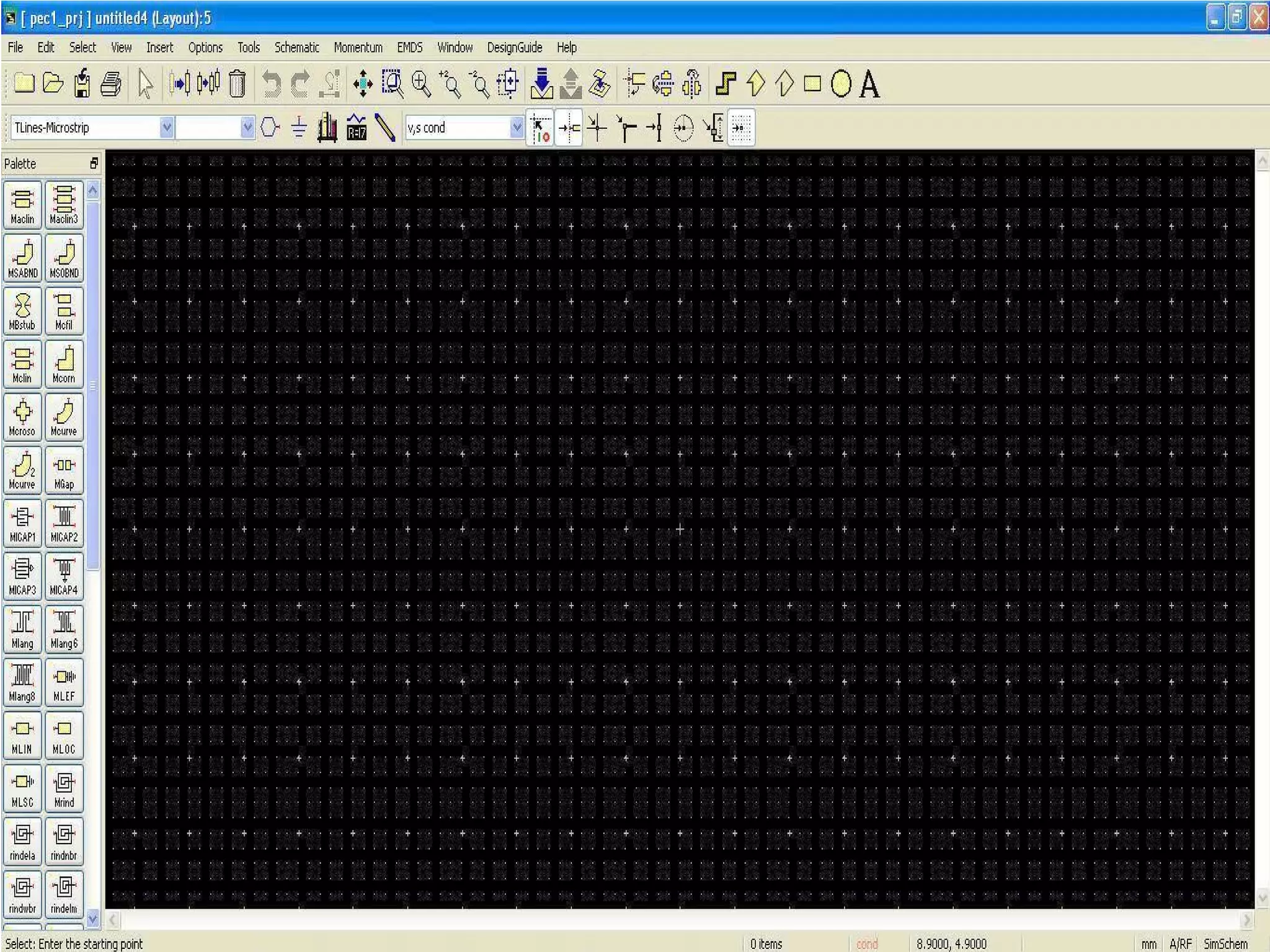
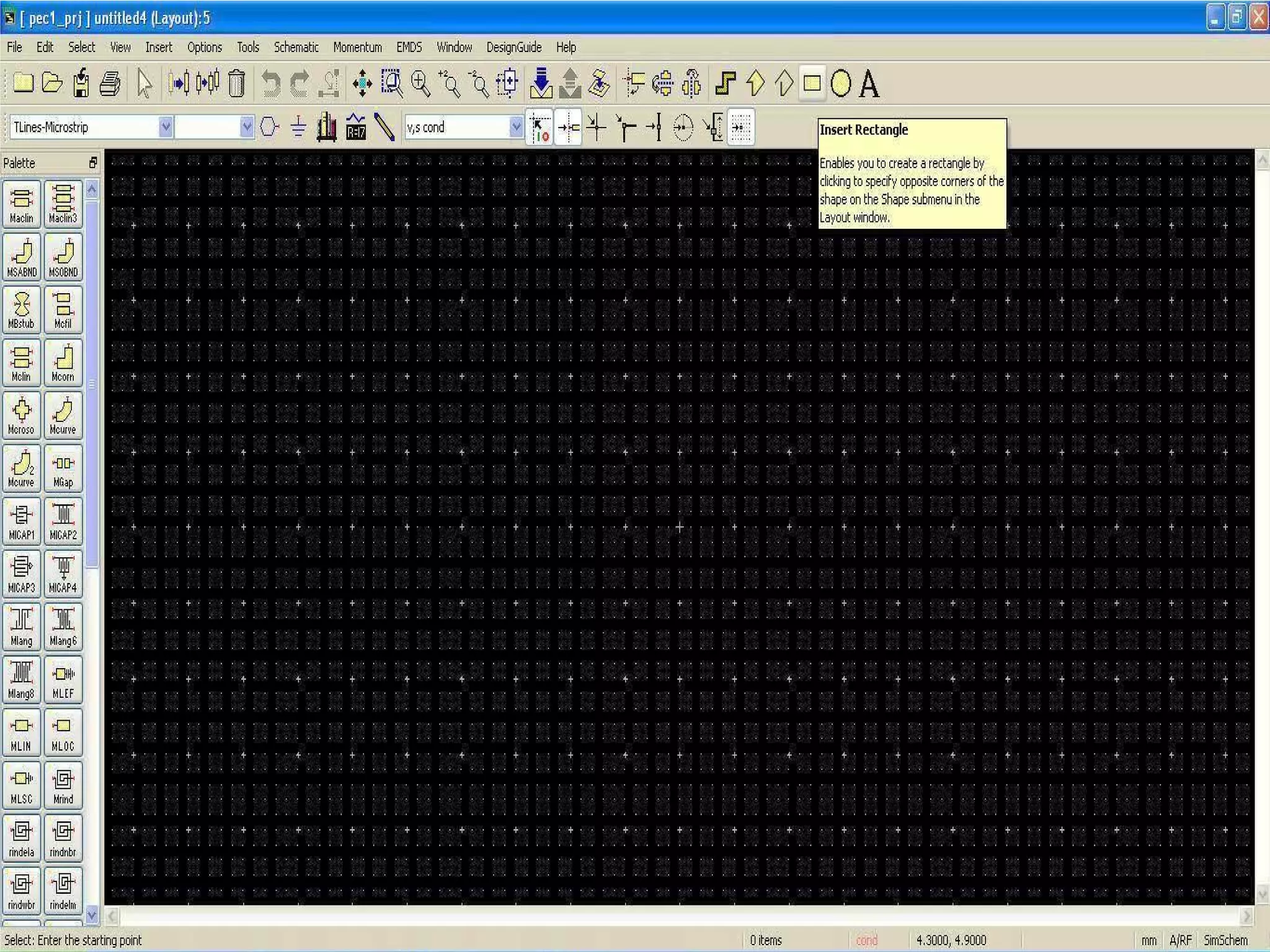
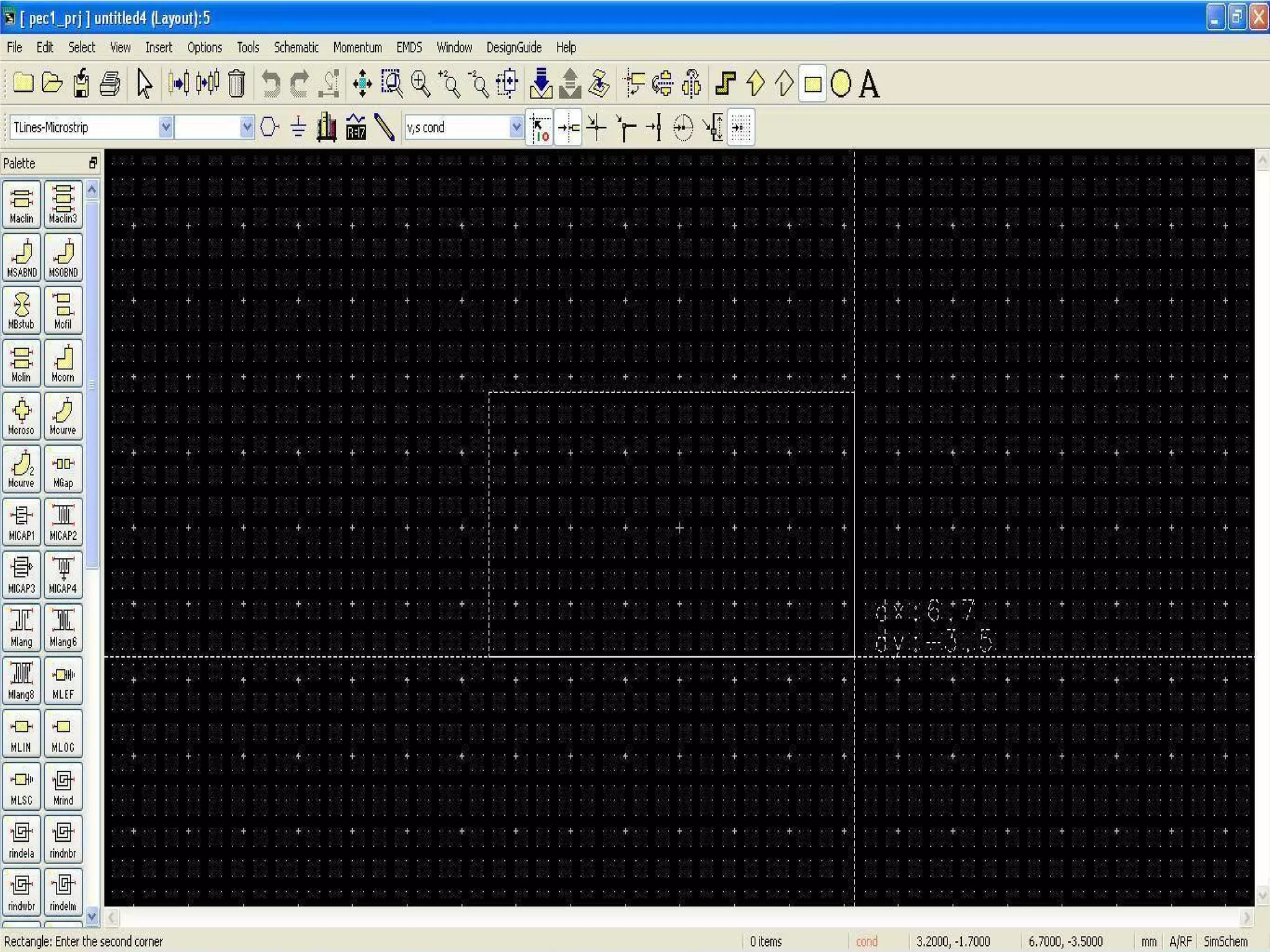
    How to Designin ADS 2009
  • 77.