
A Social Media Listening Strategy
To Build & Protect Your Brand
FocusOn: Social Media – a Virtual Event
September 12, 2016
Christine B. Whittemore
What does it mean to have a true social media
listening strategy to build and protect your brand?
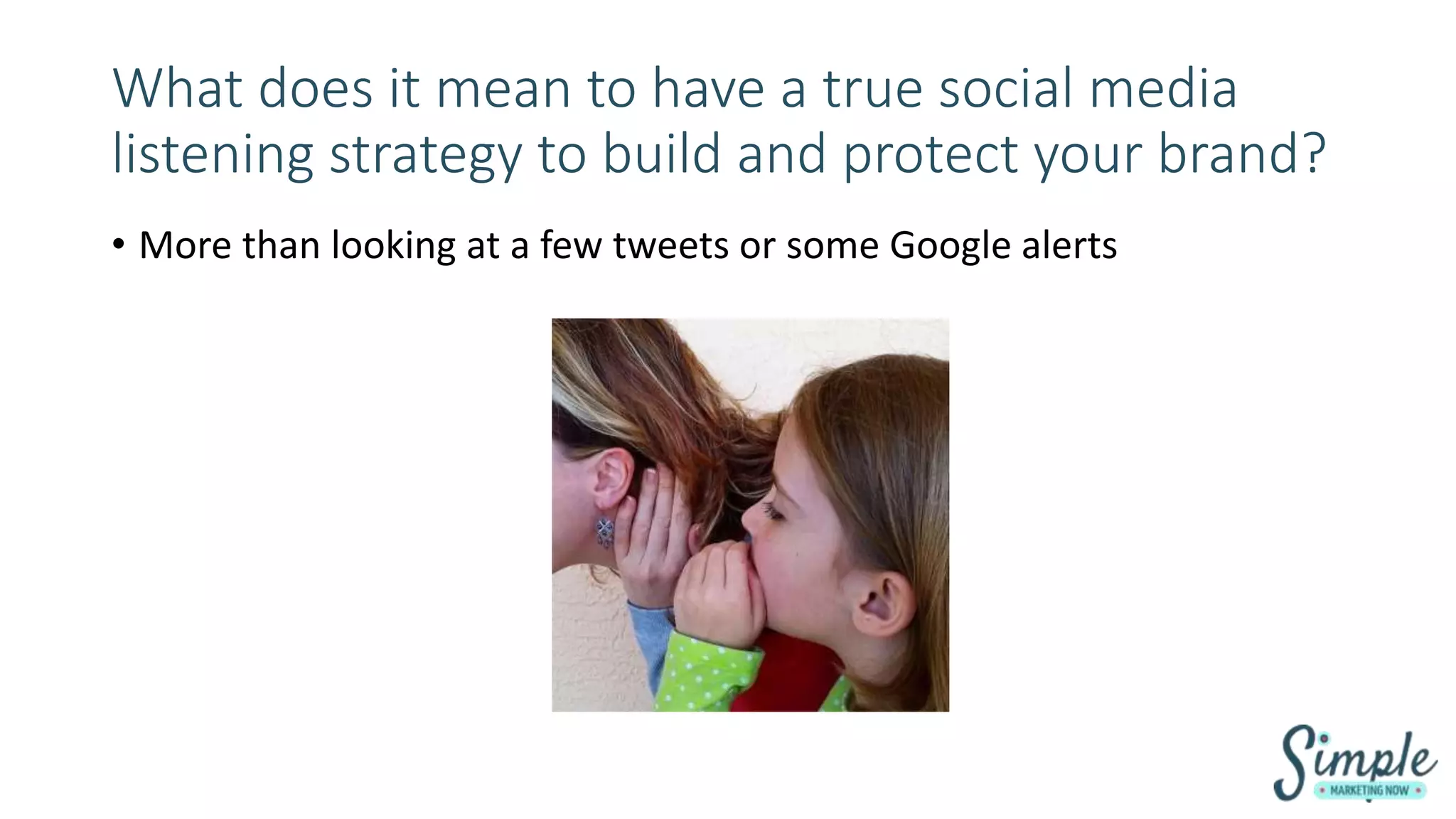
• More than looking at a few tweets or some Google alerts
It’s a Systematic Approach to Monitoring
What’s Being Said
• About you, your company, your brand, your industry
• On social networks
• By real people
And Carefully Listening
• From the perspective of your customers
• To make your business better informed about what matters to them
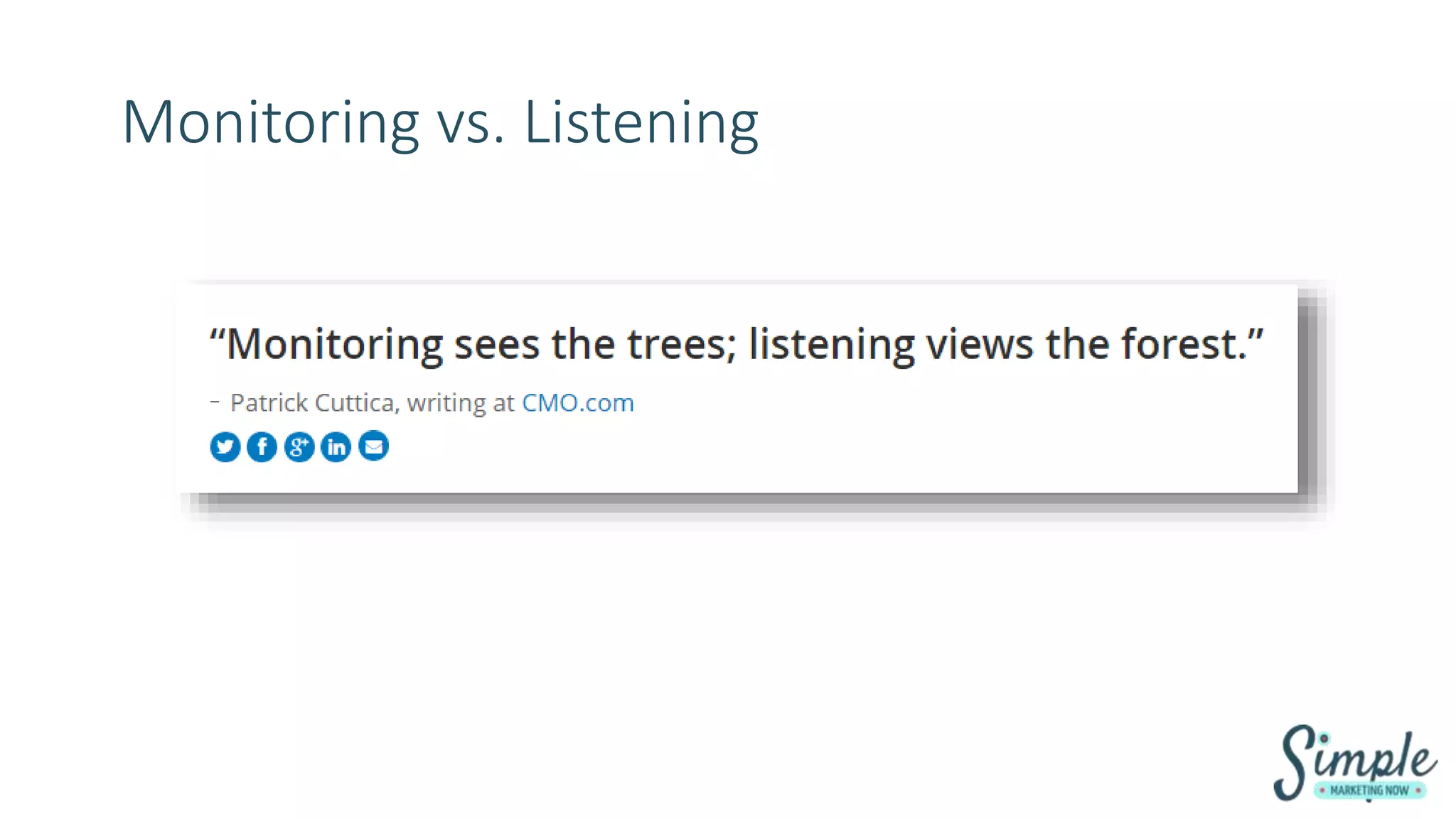
Monitoring vs. Listening
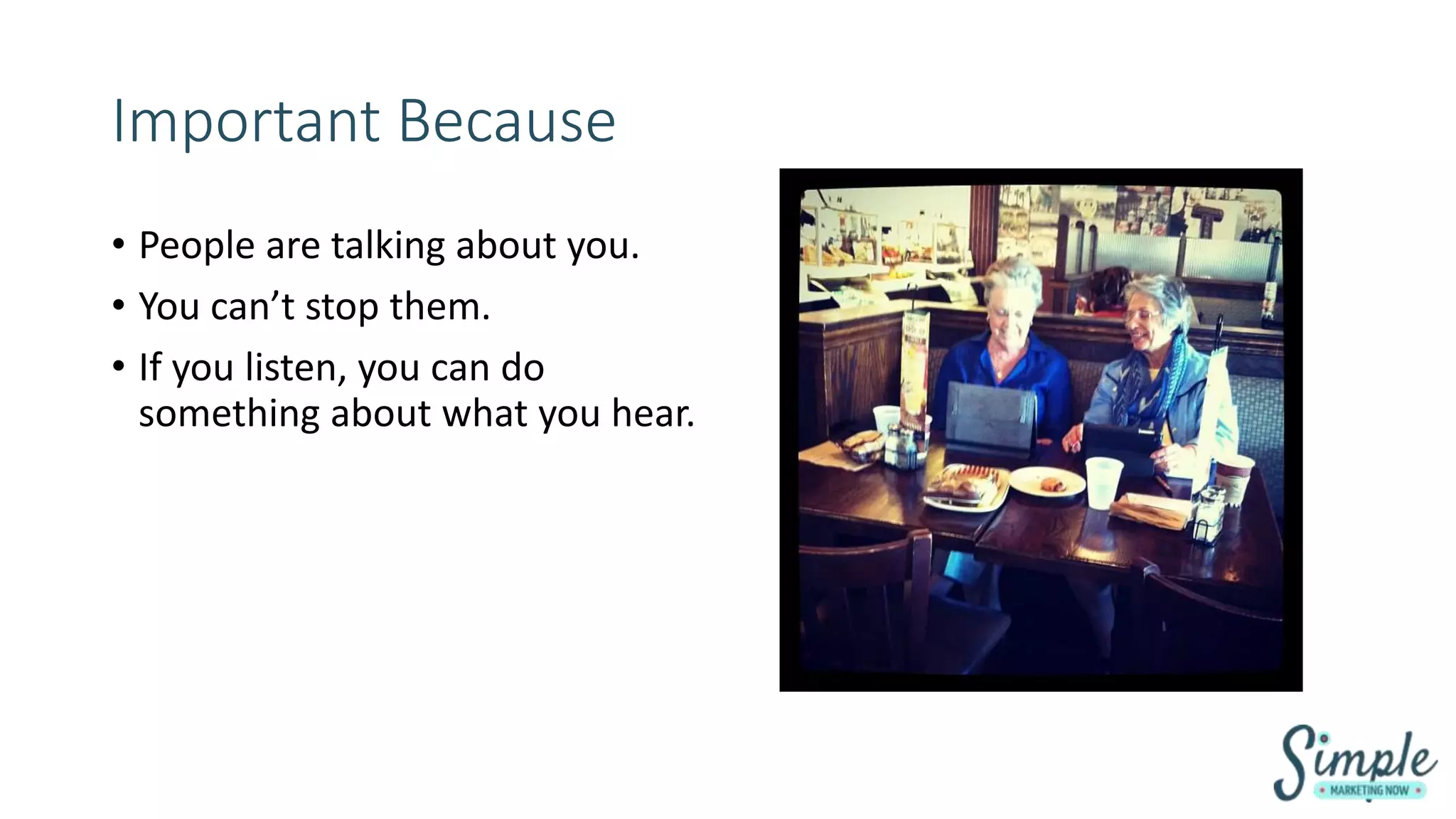
Important Because
• People are talking about you.
• You can’t stop them.
• If you listen, you can do
something about what you hear.
A Social Media Listening Strategy Means You
Can….
• Gain context for reviews and complaints
• Refine buyer personas
• Gather marketing insights
• Validate content ideas
• Identify & connect with thought leaders, including journalists
• Be part of the conversation
• Be social vs. just doing social
What You Need for Your Listening Strategy
• Determine your goal
• Find relevant conversations
• Decide what to do when you find them
• Prepare for the unexpected
• Develop a routine
• Establish a listening process
• Identify tools for listening & monitoring
What Is Your Goal?
• Thought leadership?
• Customer service?
• Engage a specific audience?
Find Relevant Conversations
• Two elements
• Where do your constituents hang out online?
• What are the right terms for finding conversations
Where Do Your Constituents Hang Out Online?
• Facebook Groups
• LinkedIn Groups
• Forums
• SlideShare
• Quora
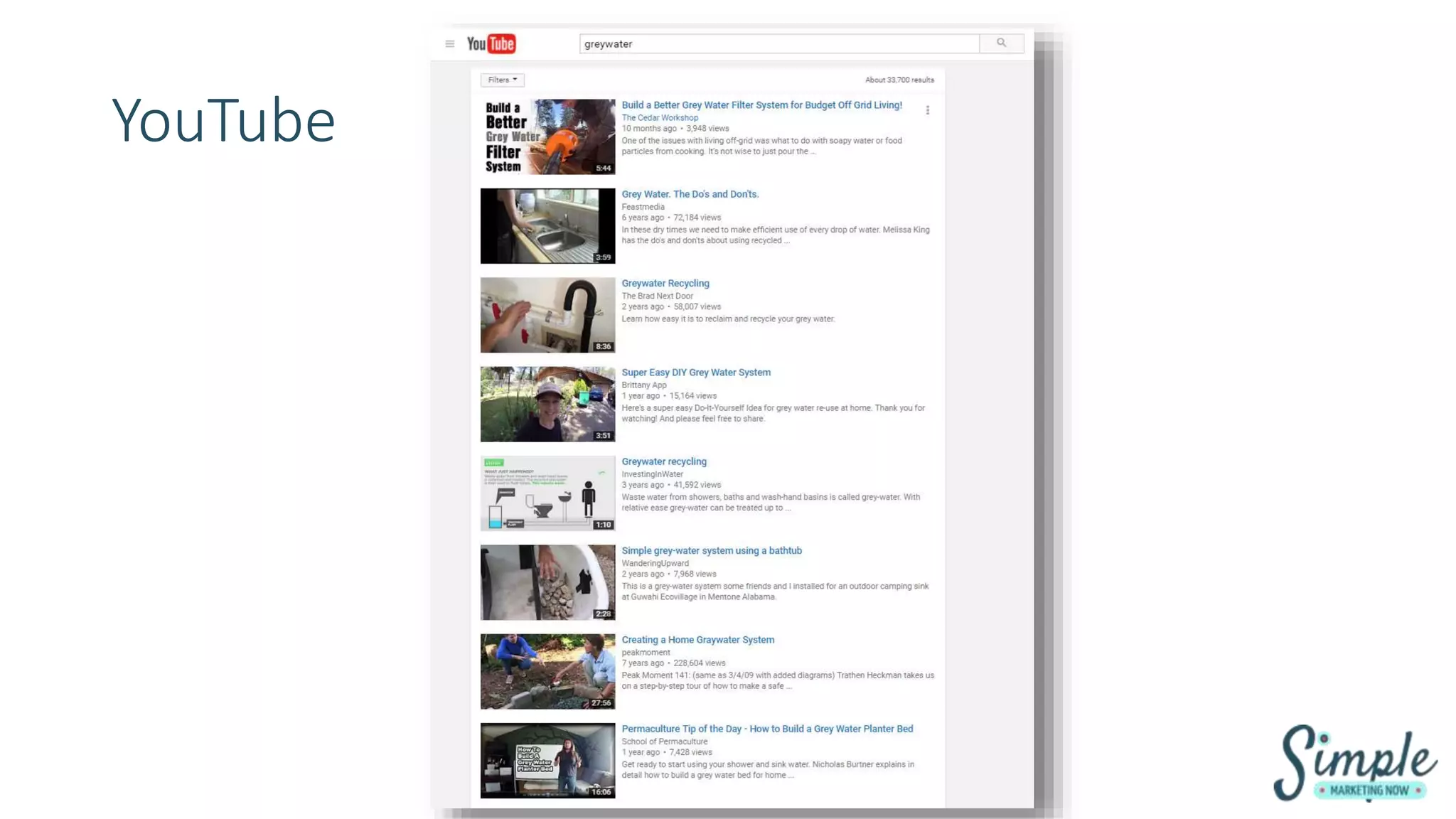
• YouTube
• Twitter
• Google+
• ?
Finding the Right Conversation Terms
Can be difficult depending how ‘noisy’ the industry is
• Search category/industry
• Search for #s, chats
• List important trade shows or organizations #s
• Terms competitors use
• Identify influencers
12/42
What Search Terms Do They Use?
• Broad terms
• Product categories
• Problems
• Specific terms
• Company name
• Brand names
They know you!
Be Aware of
• Multiple meanings: steam vs. STEAM vs. steampunk vs. ….
• Steam engines
• Steam showers
• Steam ovens
• ???
• Terms to exclude
• Job(s)
• ???
What To Do When You Find Conversations?
• Follow the profiles
• Favorite the updates
• Add profiles to a list or create search streams
• Listen
• Engage
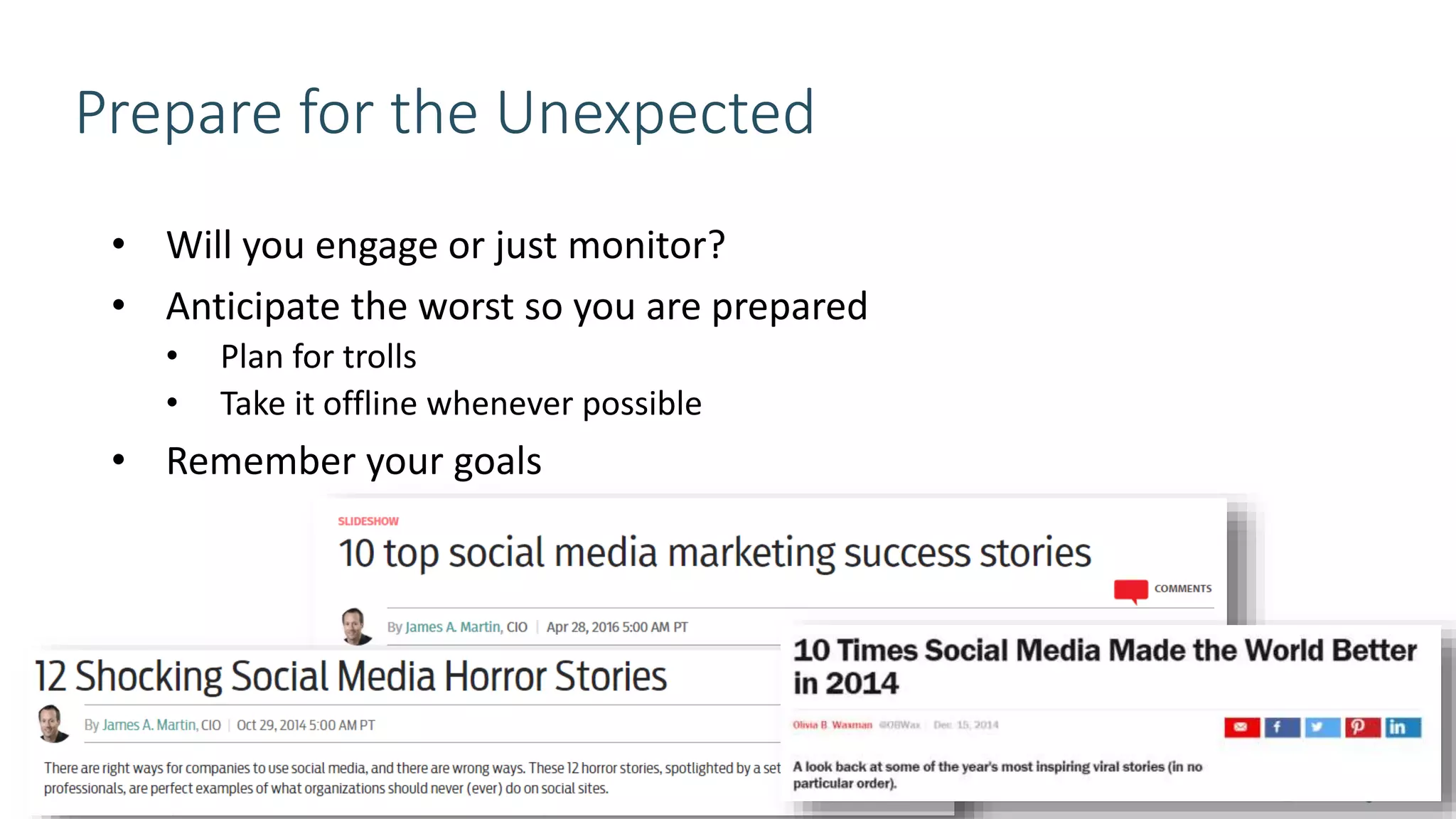
Prepare for the Unexpected
• Will you engage or just monitor?
• Anticipate the worst so you are prepared
• Plan for trolls
• Take it offline whenever possible
• Remember your goals
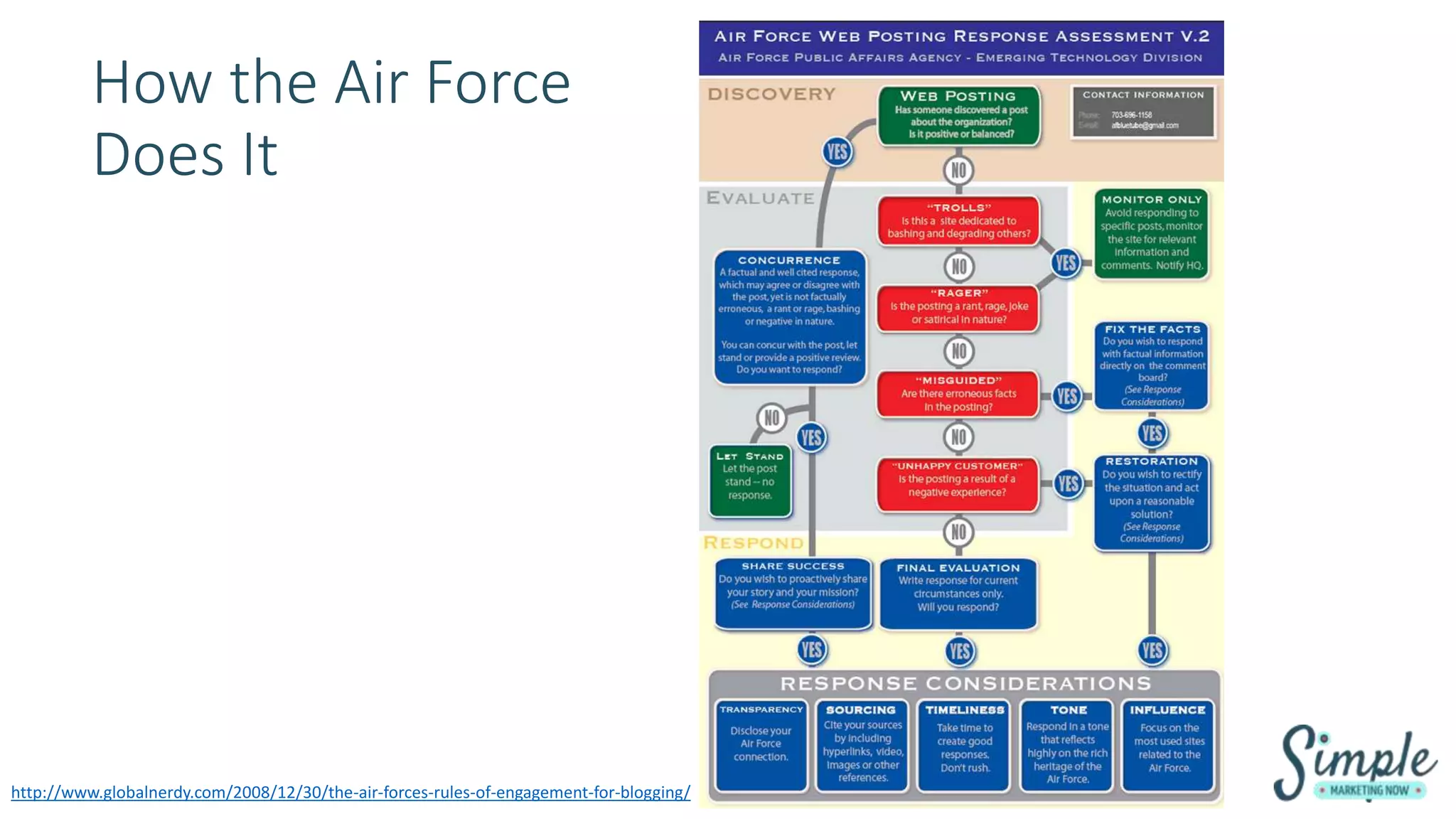
How the Air Force
Does It
http://www.globalnerdy.com/2008/12/30/the-air-forces-rules-of-engagement-for-blogging/
Can You Involve Others in Your Organization?
• It’s more social
• Better insights
• Makes you more nimble
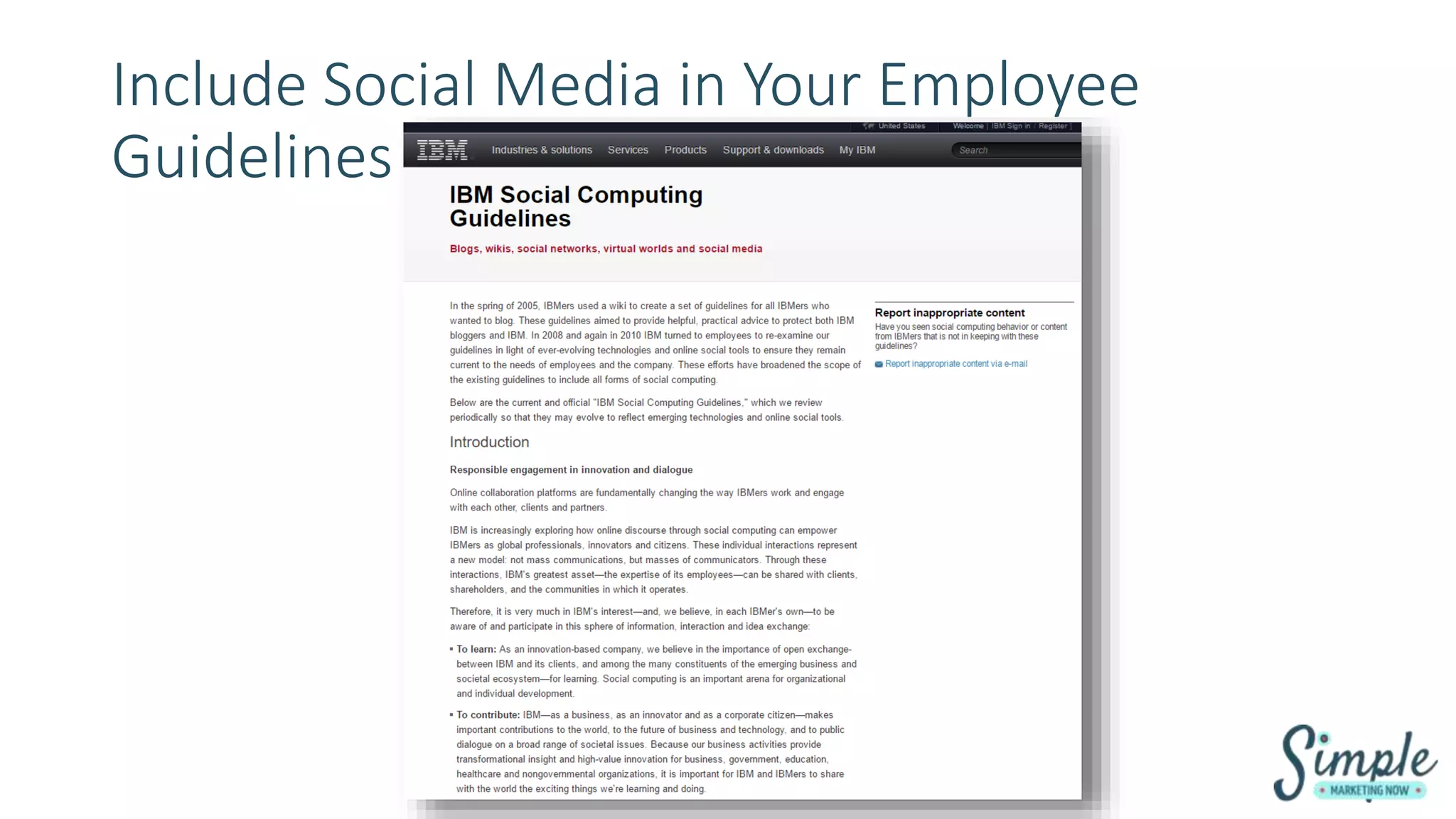
Include Social Media in Your Employee
Guidelines
The Listening Process
• Pick search terms – single words vs. tight combinations of words
• Greywater vs. grey water
• General search to find:
• Influencers
• Relevant hashtags & terms
• Create streams to monitor
• Twitter lists
• Search terms
• Specific profiles
• #hashtags
• Interact as appropriate
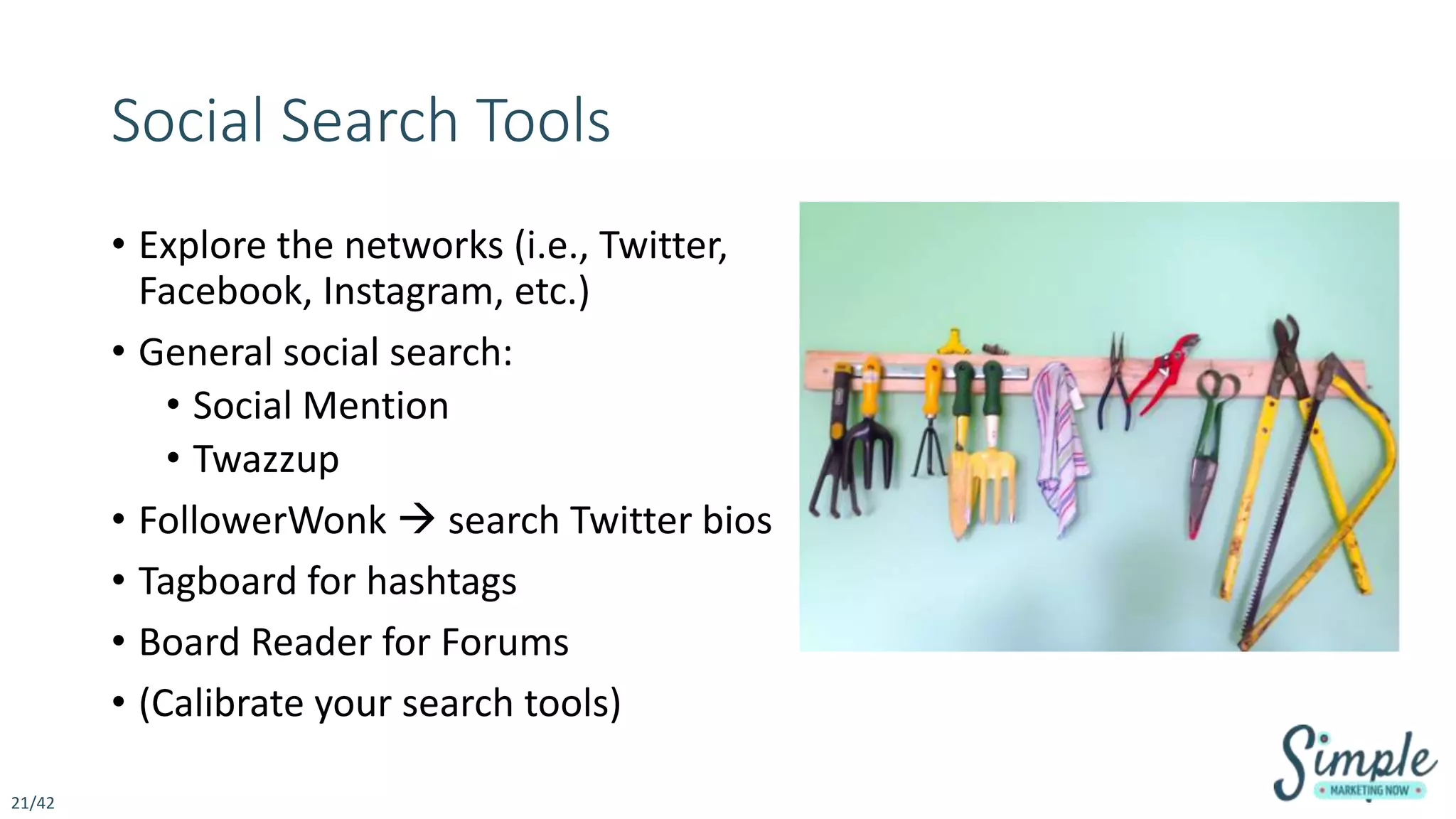
Social Search Tools
• Explore the networks (i.e., Twitter,
Facebook, Instagram, etc.)
• General social search:
• Social Mention
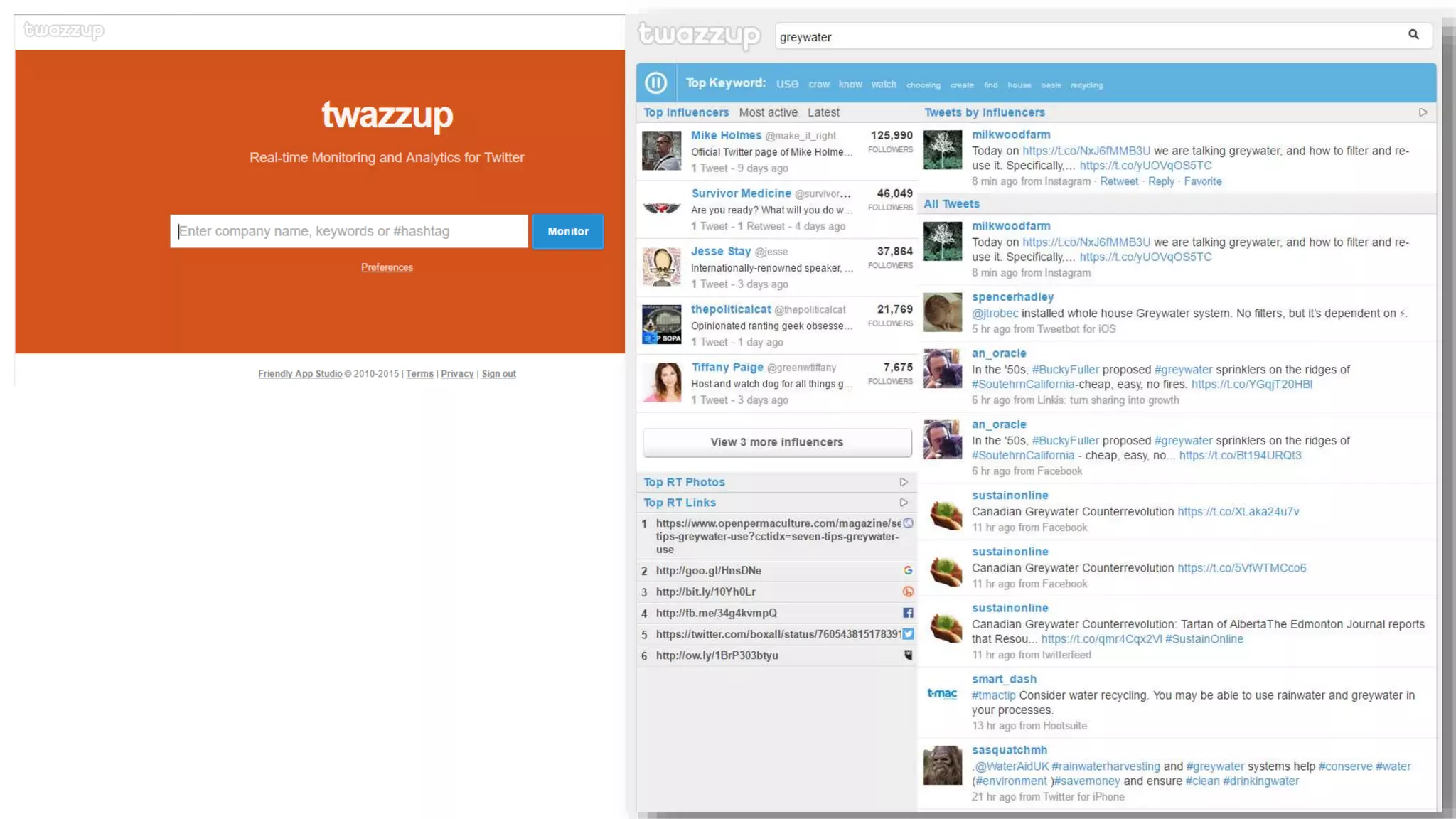
• Twazzup
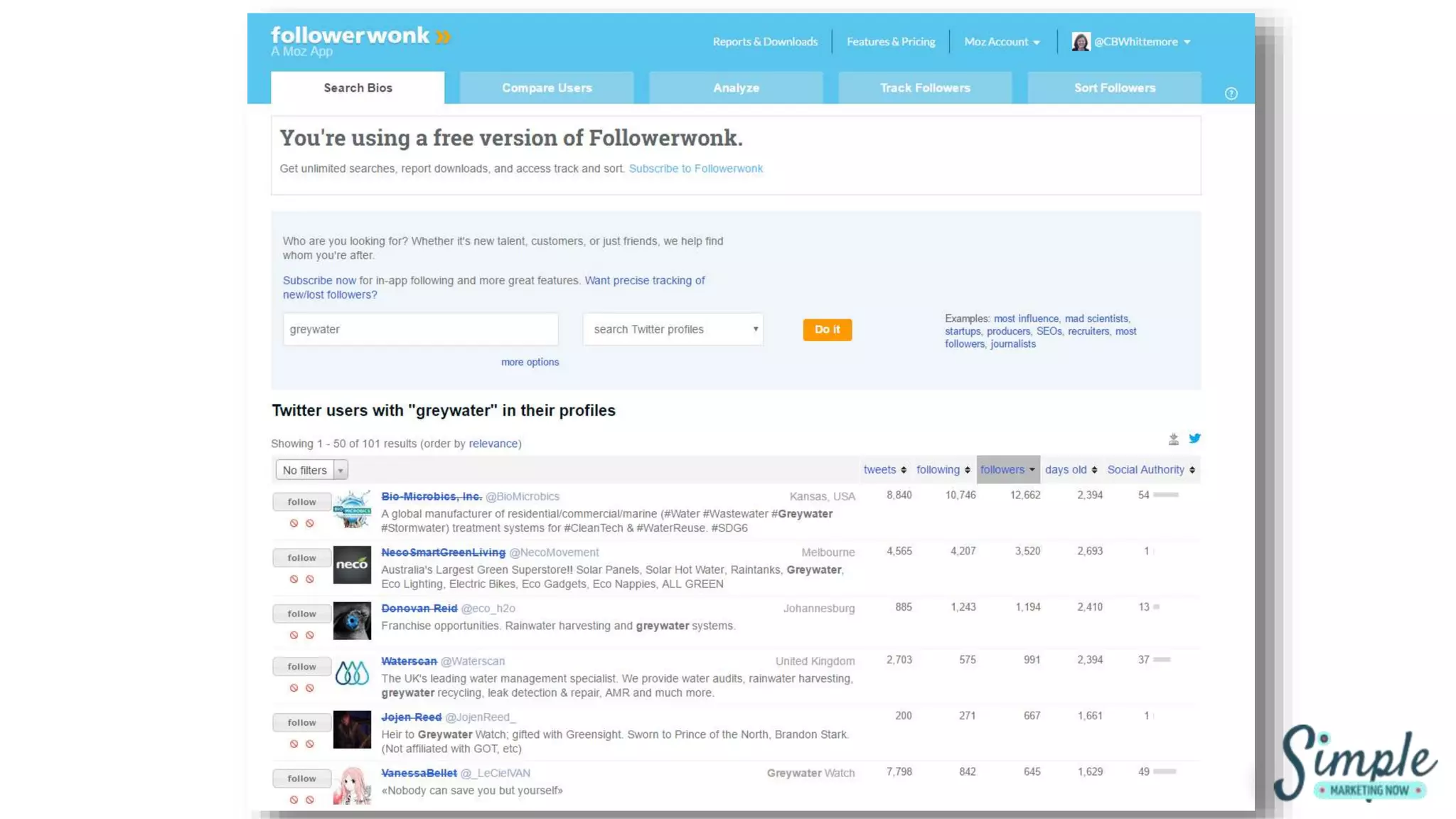
• FollowerWonk  search Twitter bios
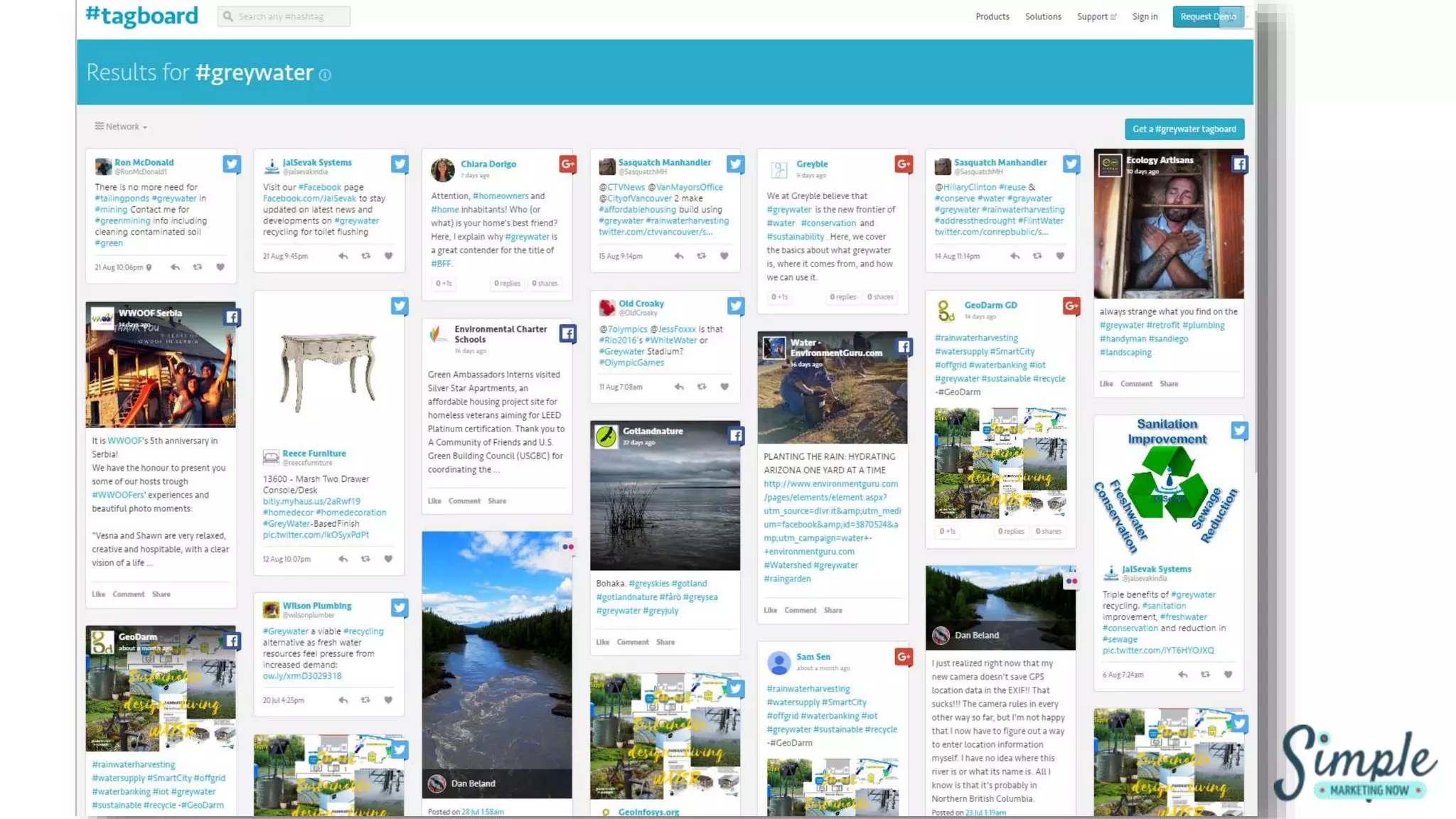
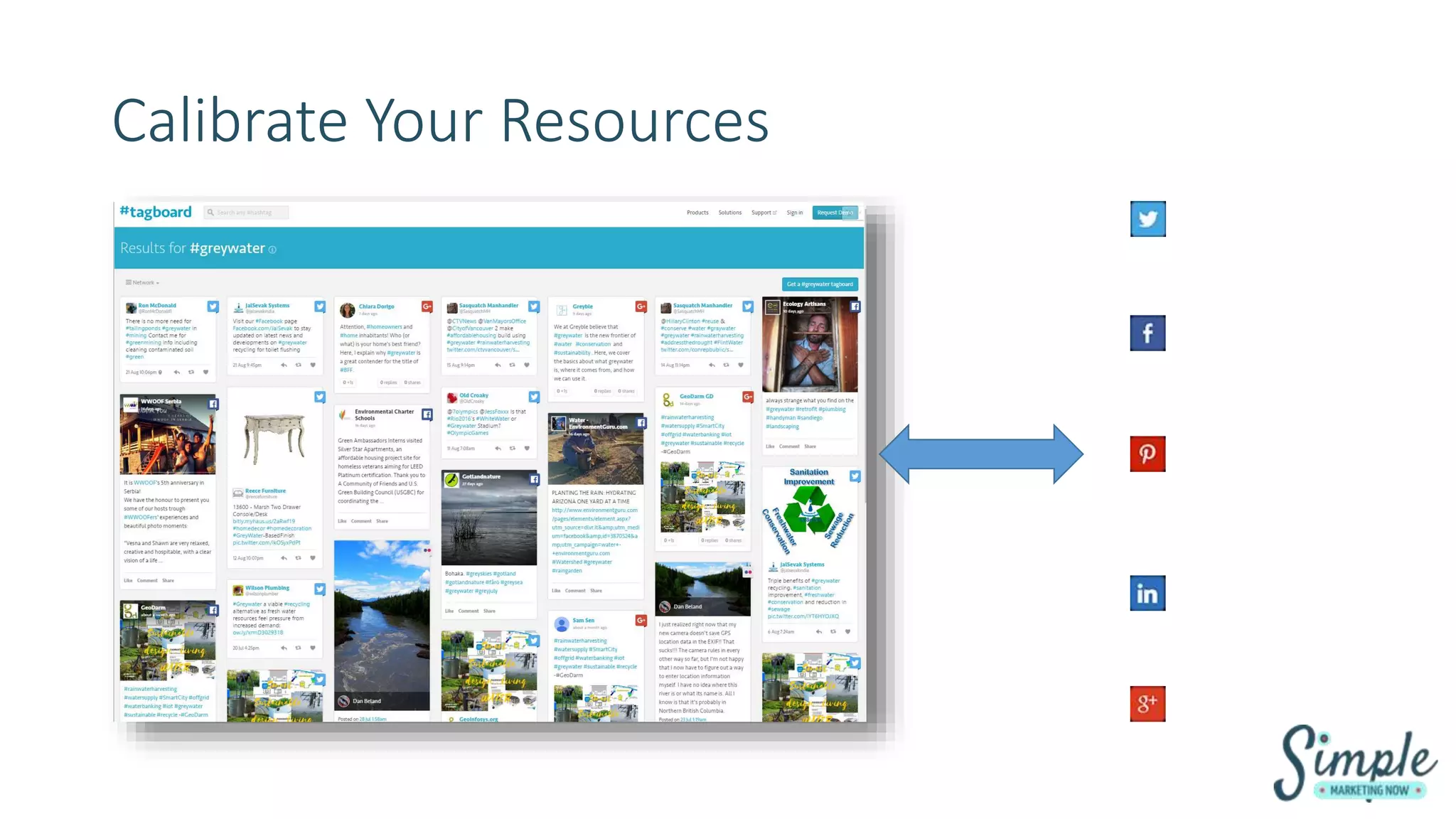
• Tagboard for hashtags
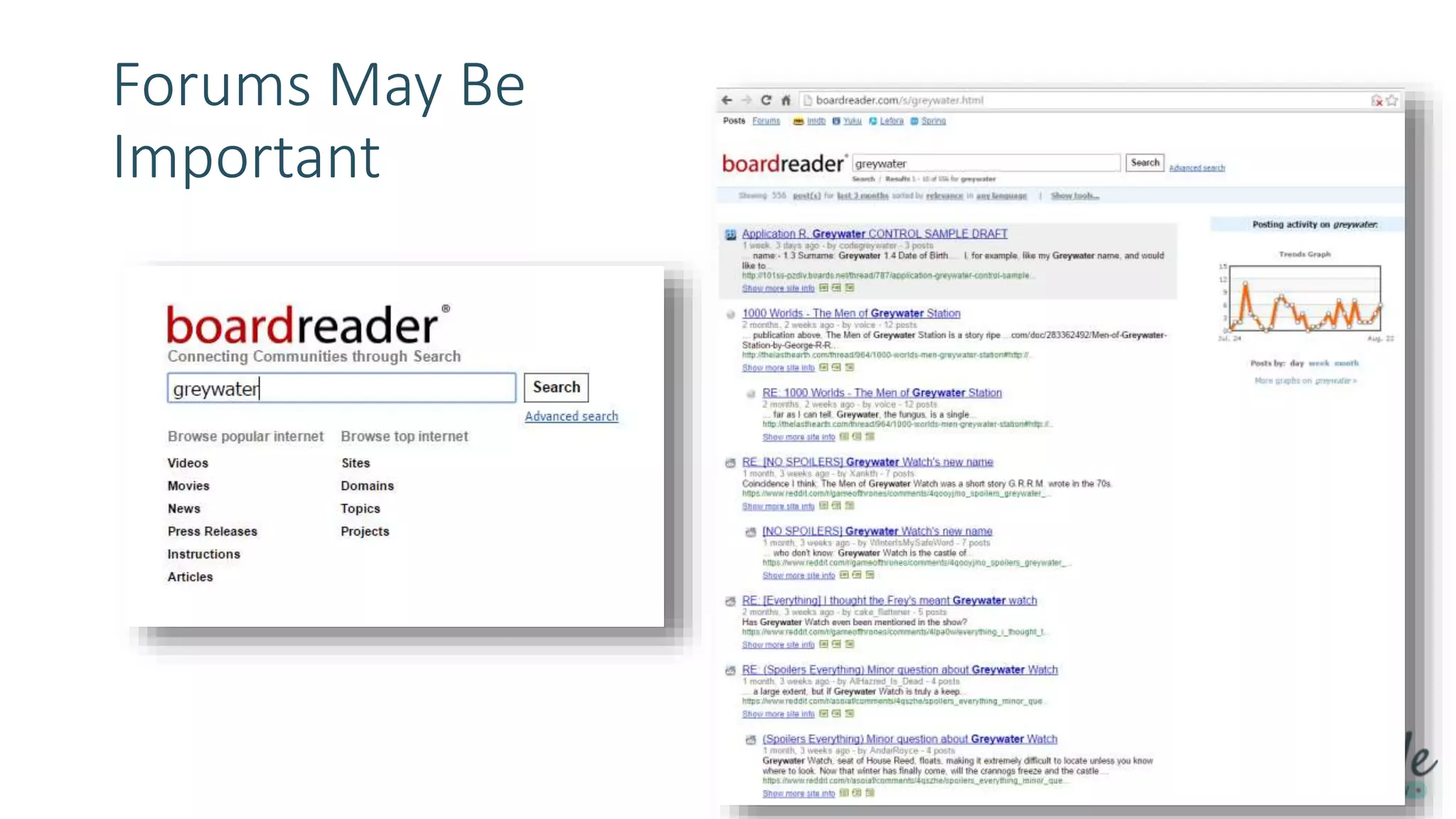
• Board Reader for Forums
• (Calibrate your search tools)
21/42
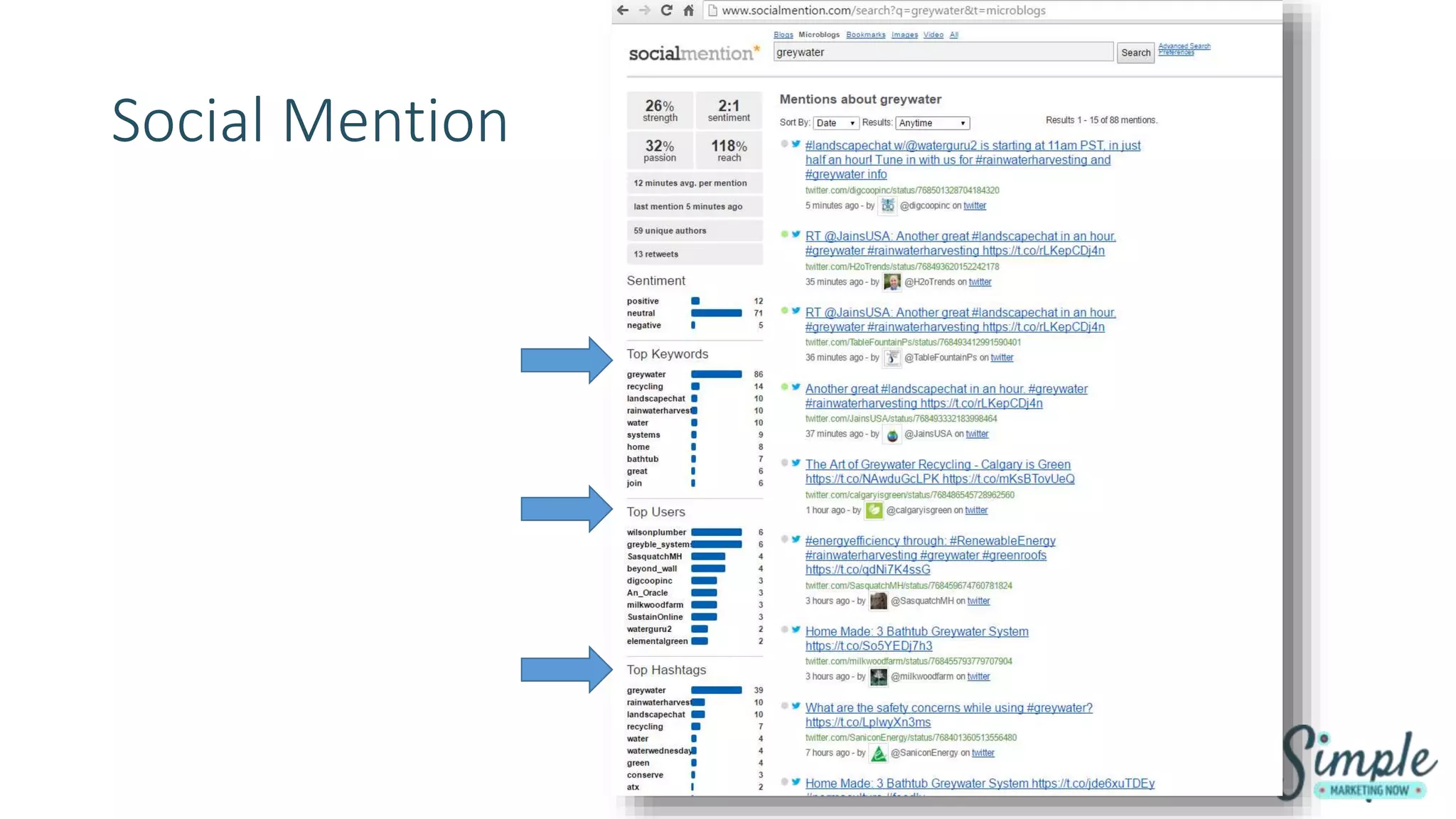
Social Mention
Forums May Be
Important
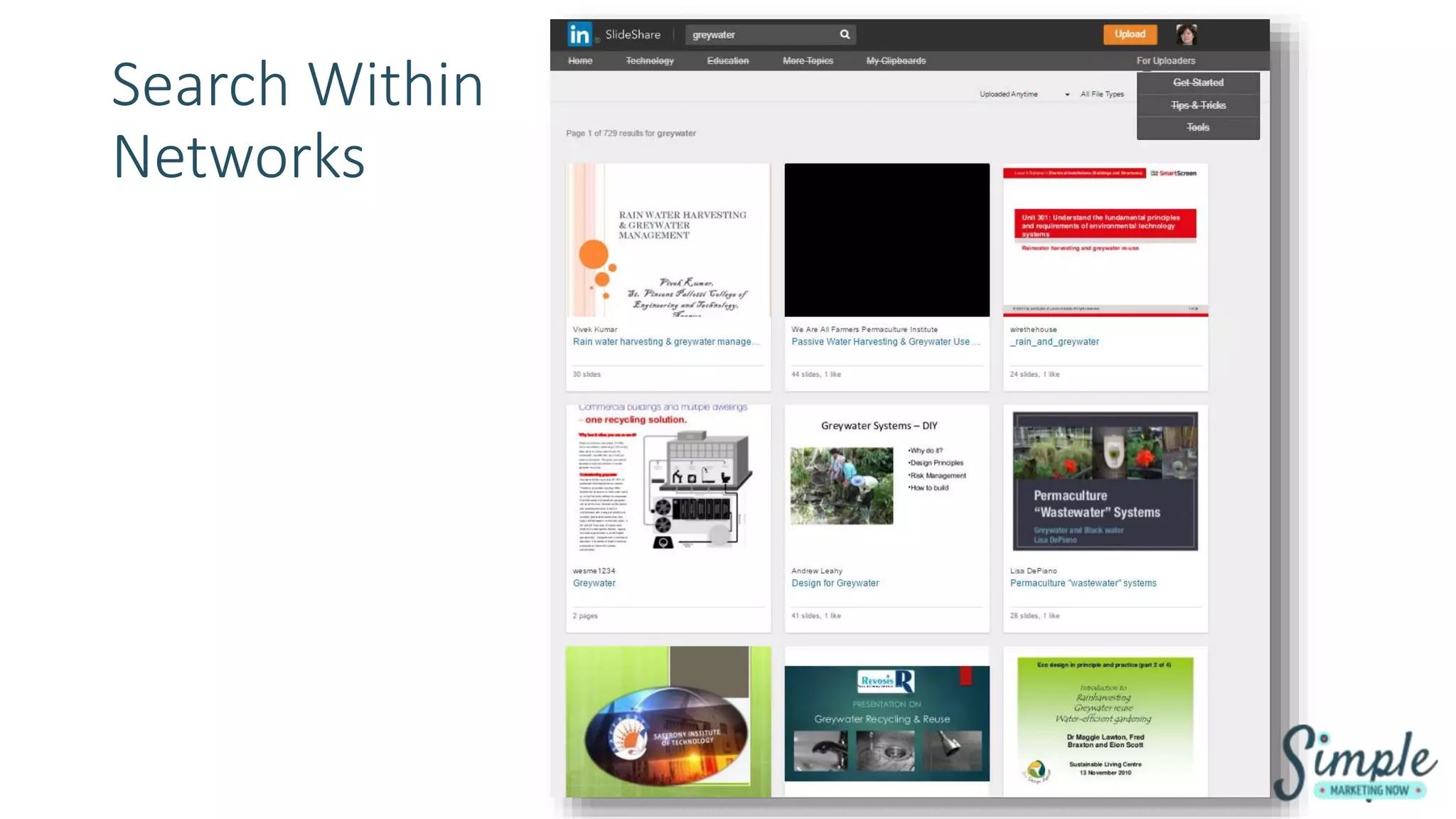
Search Within
Networks
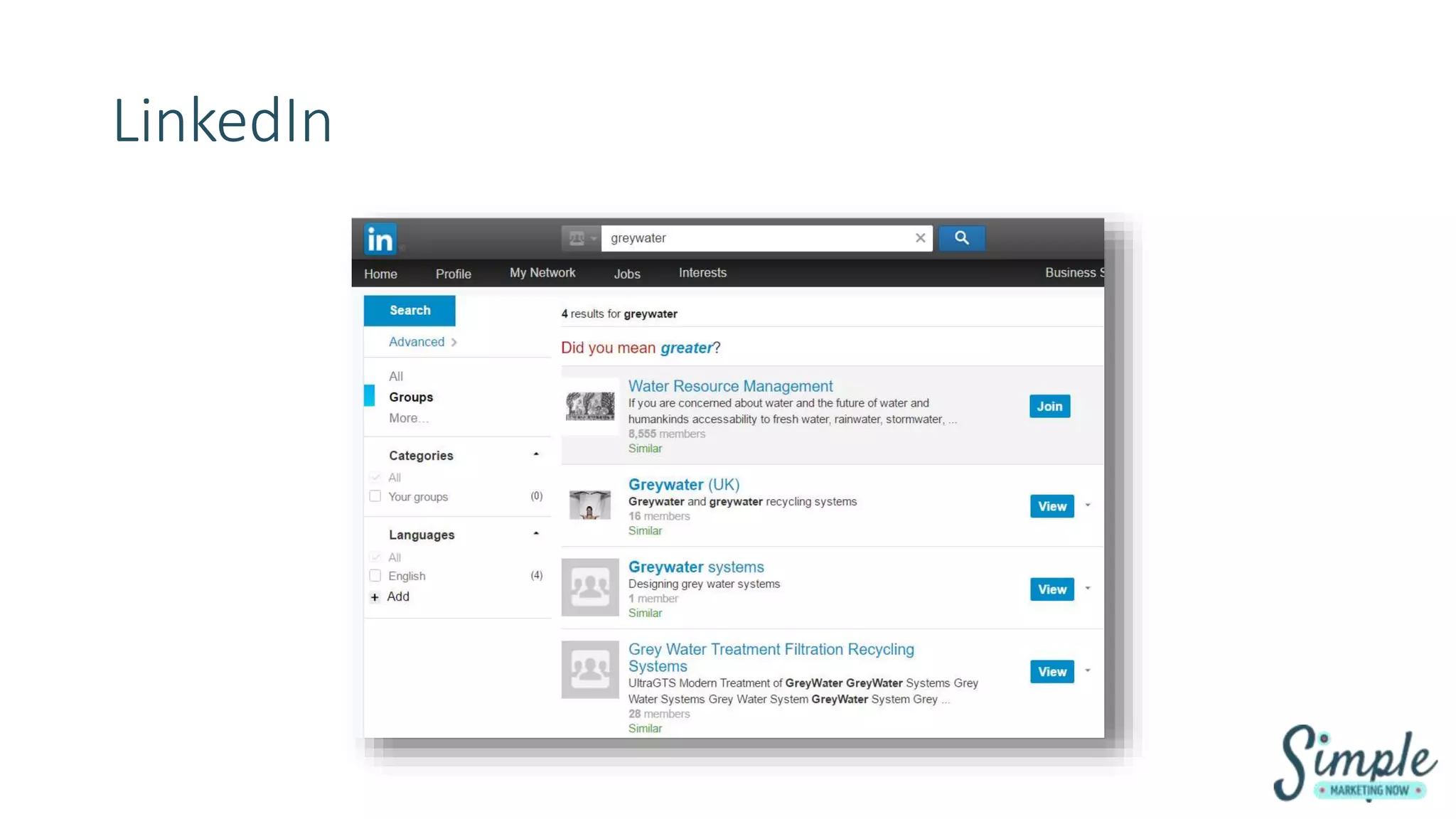
LinkedIn
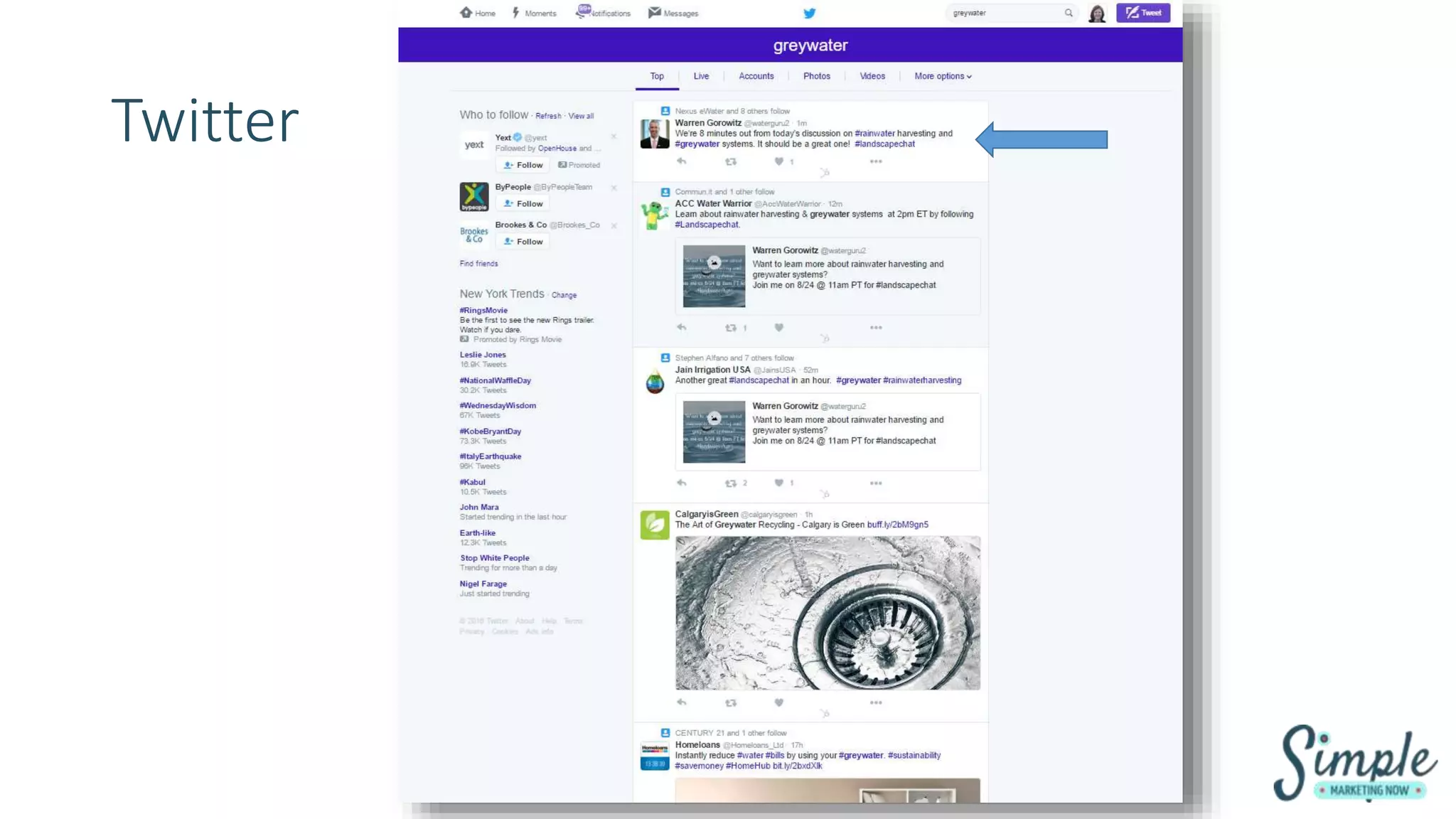
Twitter
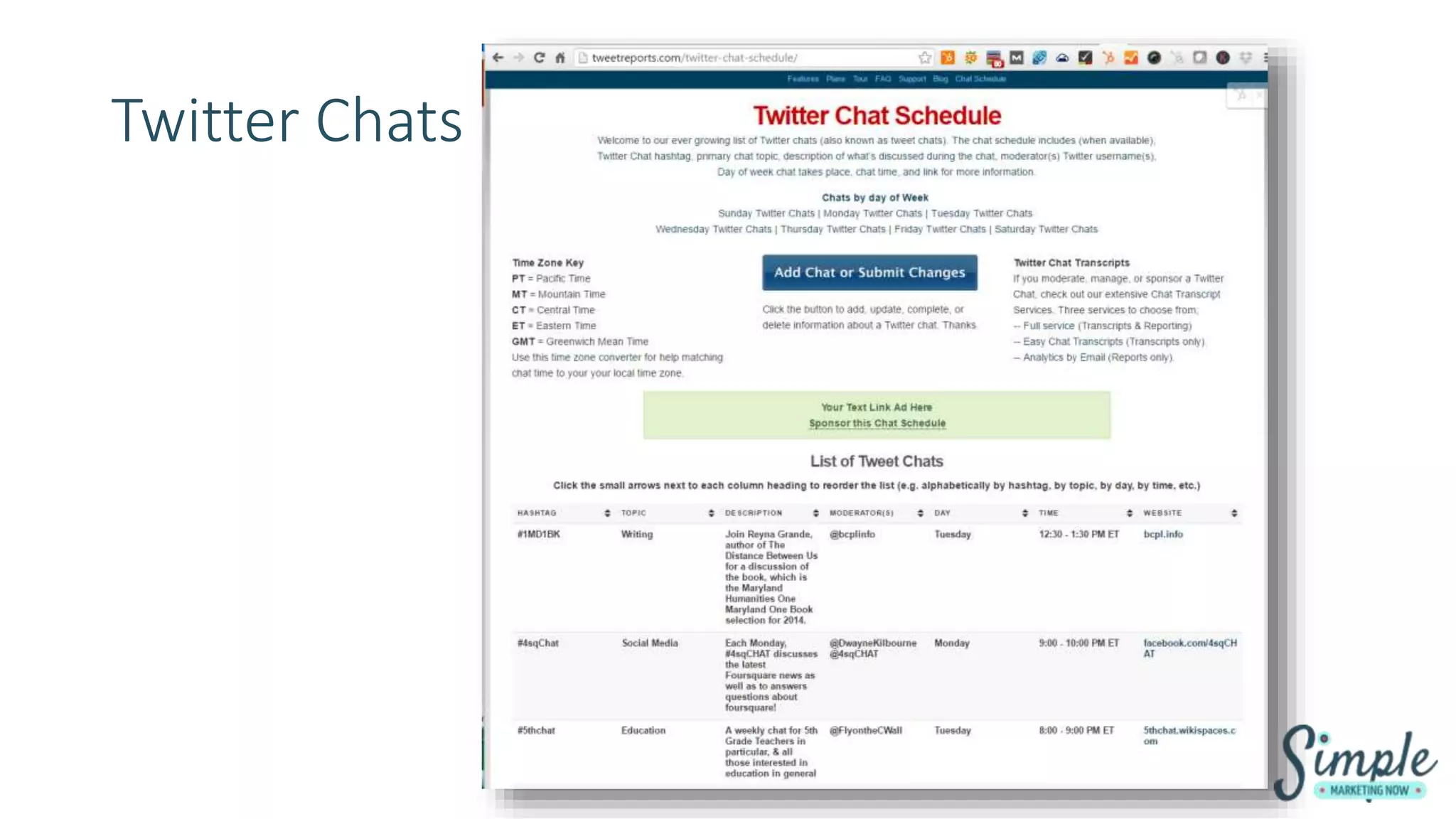
Twitter Chats
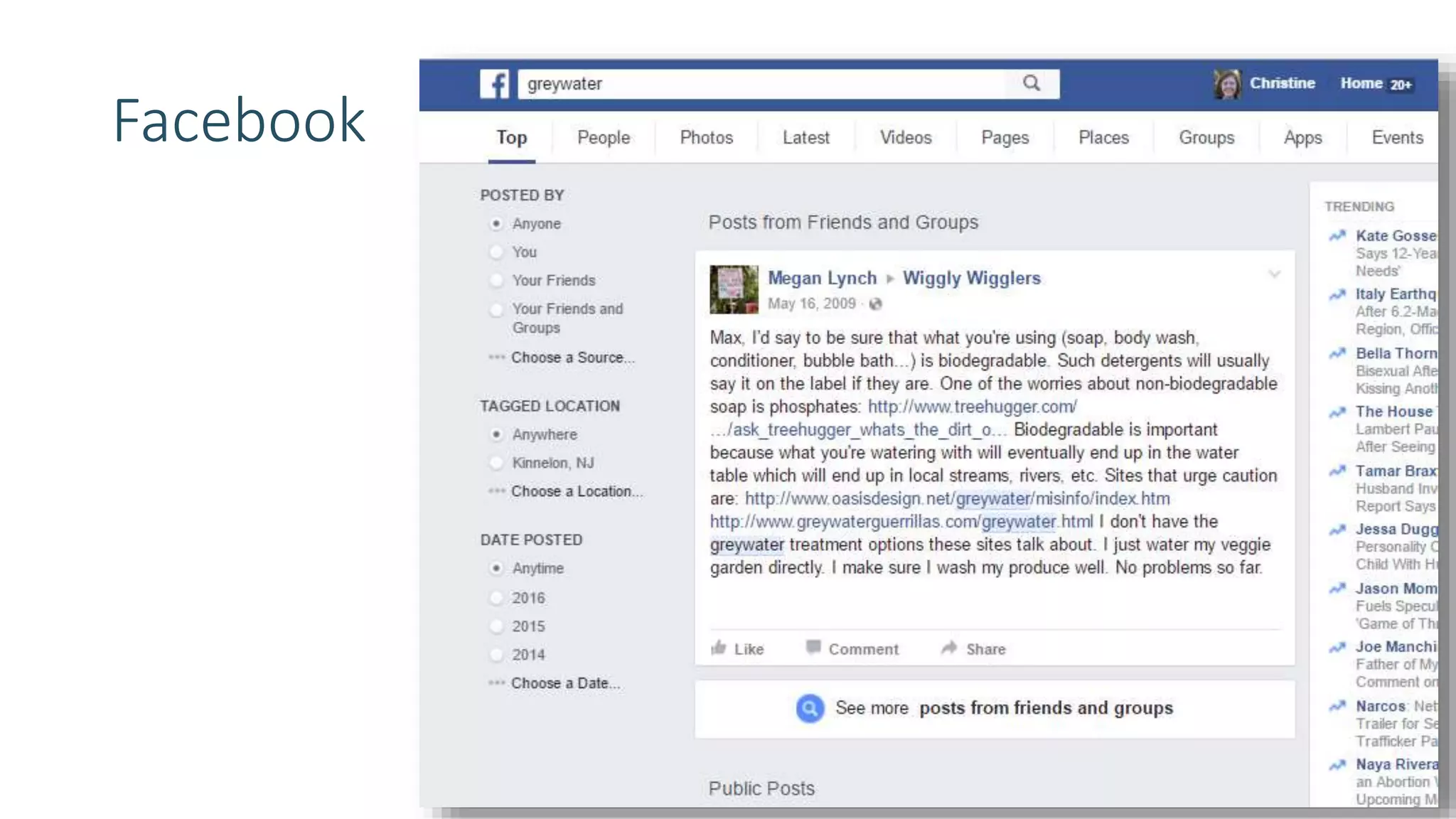
Facebook
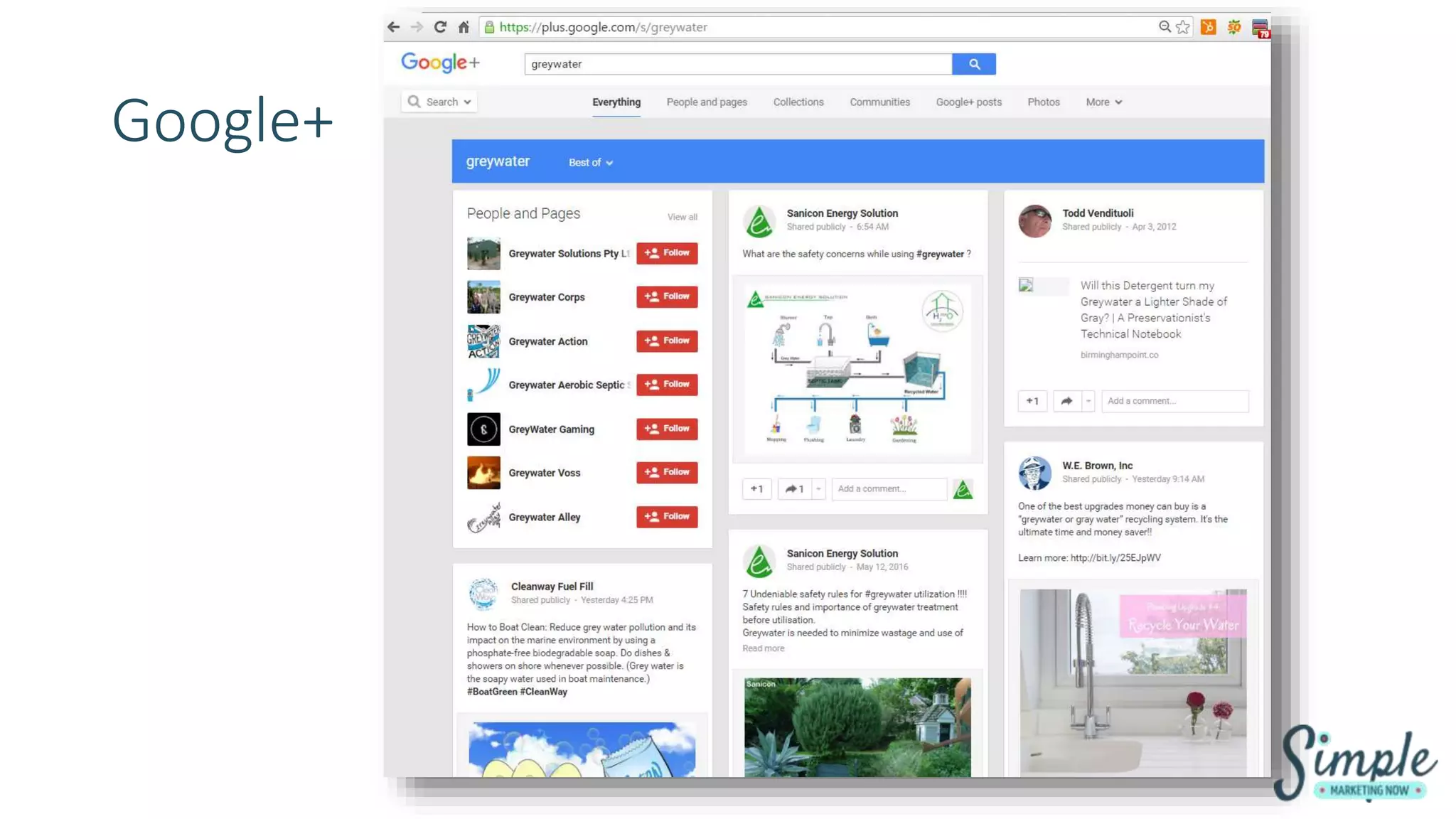
Google+
YouTube
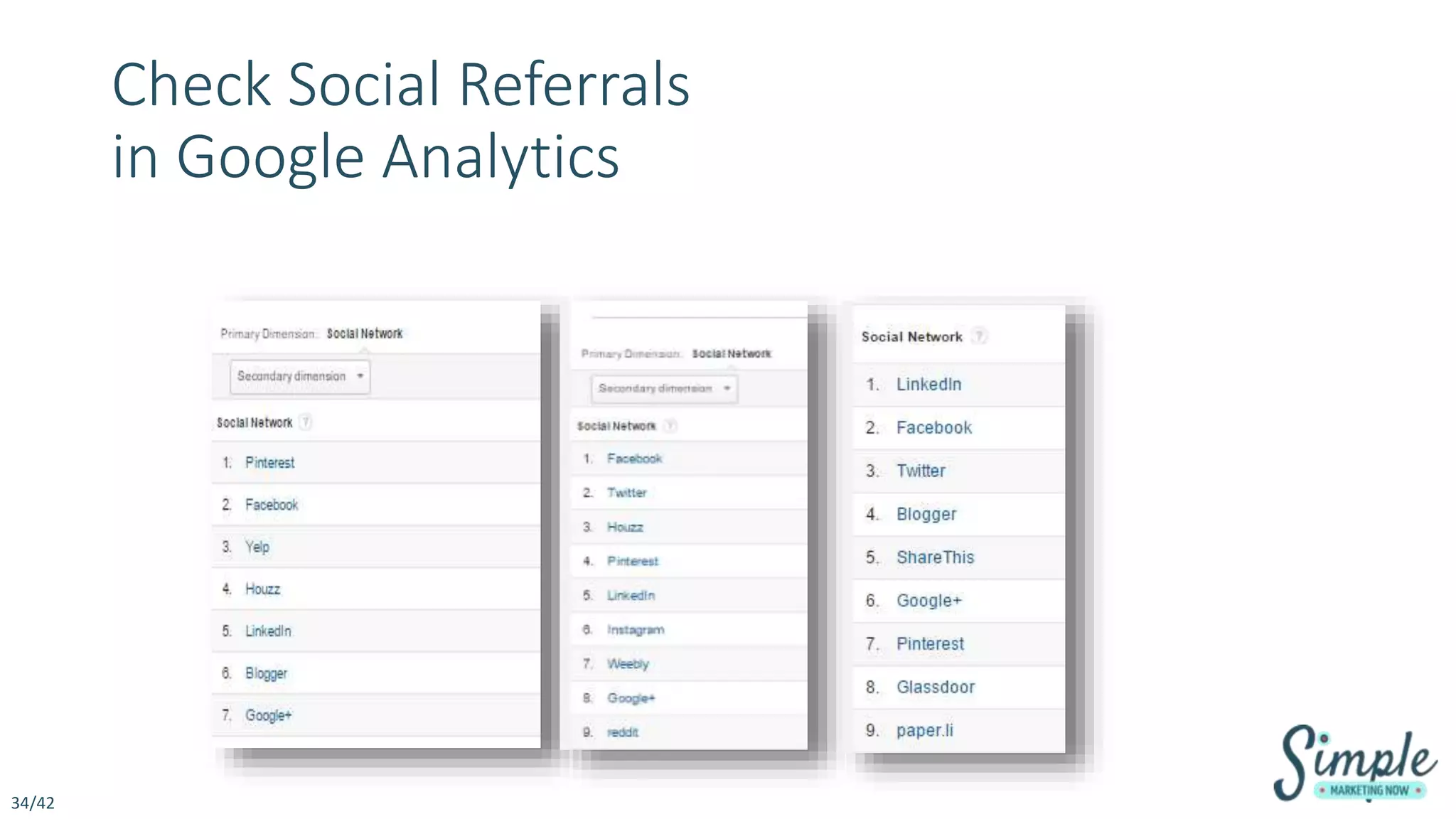
Check Social Referrals
in Google Analytics
34/42
Calibrate Your Resources
Bonus Tip: Benchmark Your Company on
Google Search
• Do review sites appear?
• G+: acknowledge publicly
• Yelp: acknowledge privately
• Get to the bottom of bad reviews; learn from them
• Unclaimed directory listings?
Claim them
Add photos
Include consistent profiles
Look like someone lives there
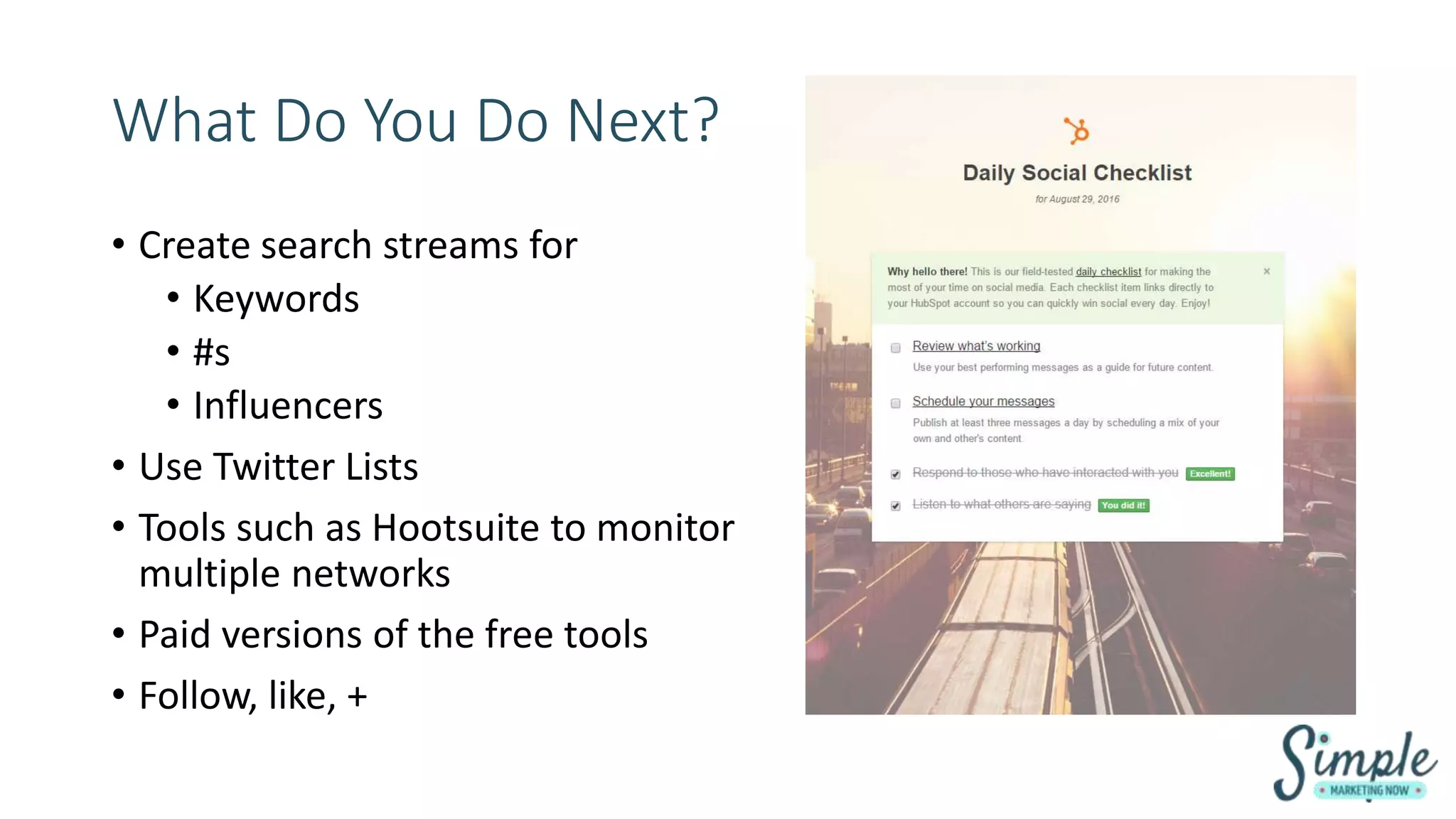
What Do You Do Next?
• Create search streams for
• Keywords
• #s
• Influencers
• Use Twitter Lists
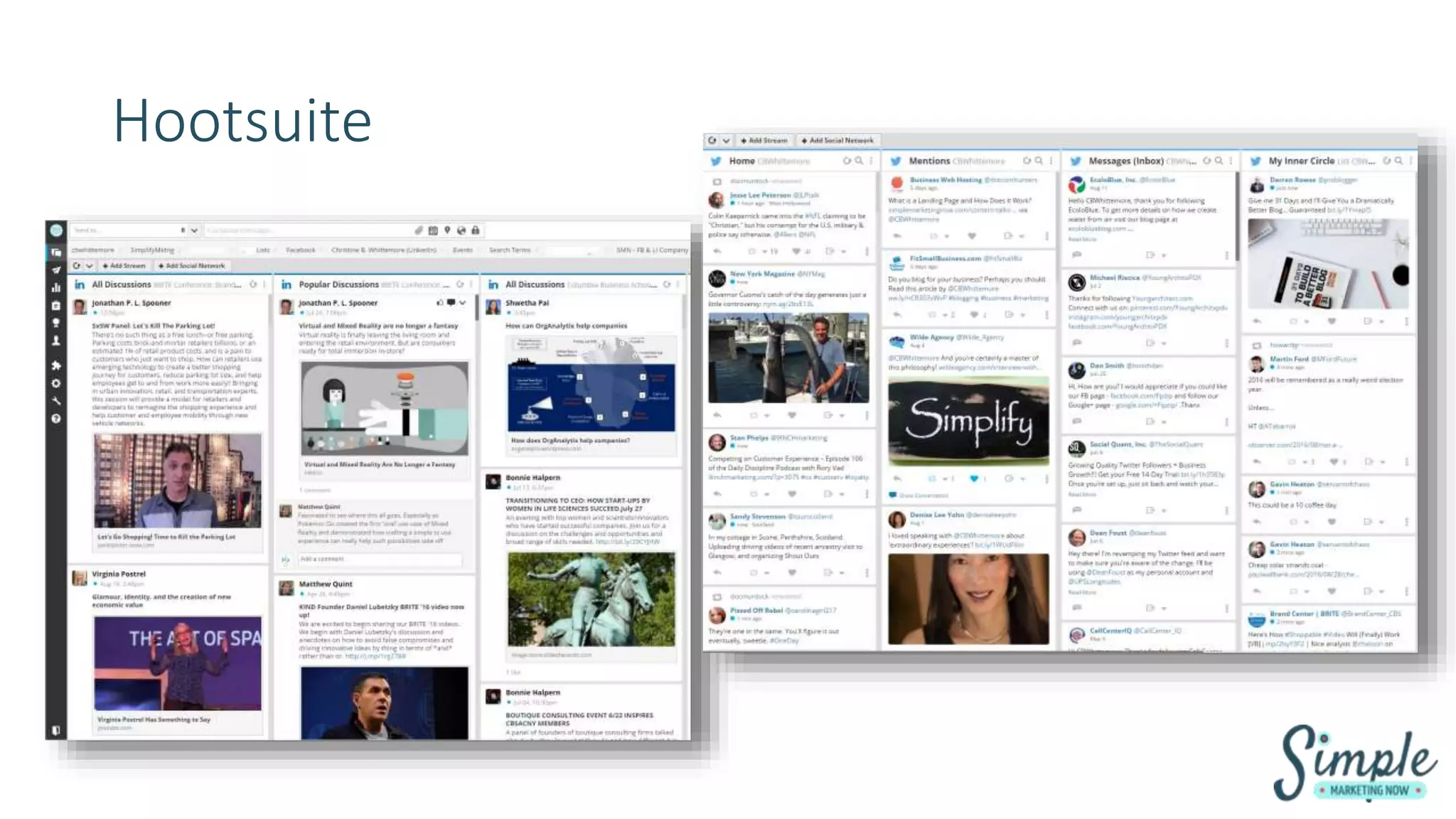
• Tools such as Hootsuite to monitor
multiple networks
• Paid versions of the free tools
• Follow, like, +
Hootsuite
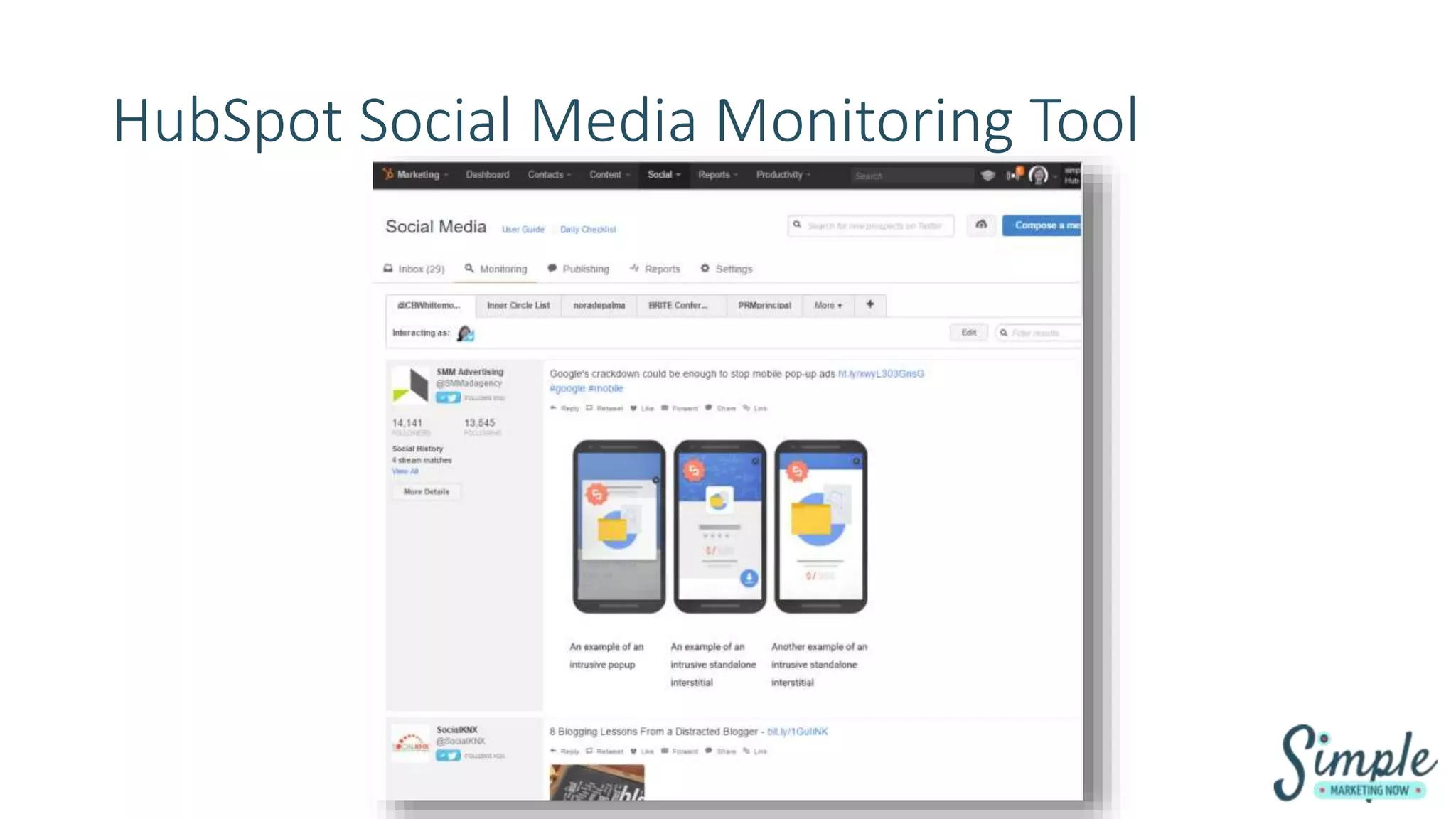
HubSpot Social Media Monitoring Tool
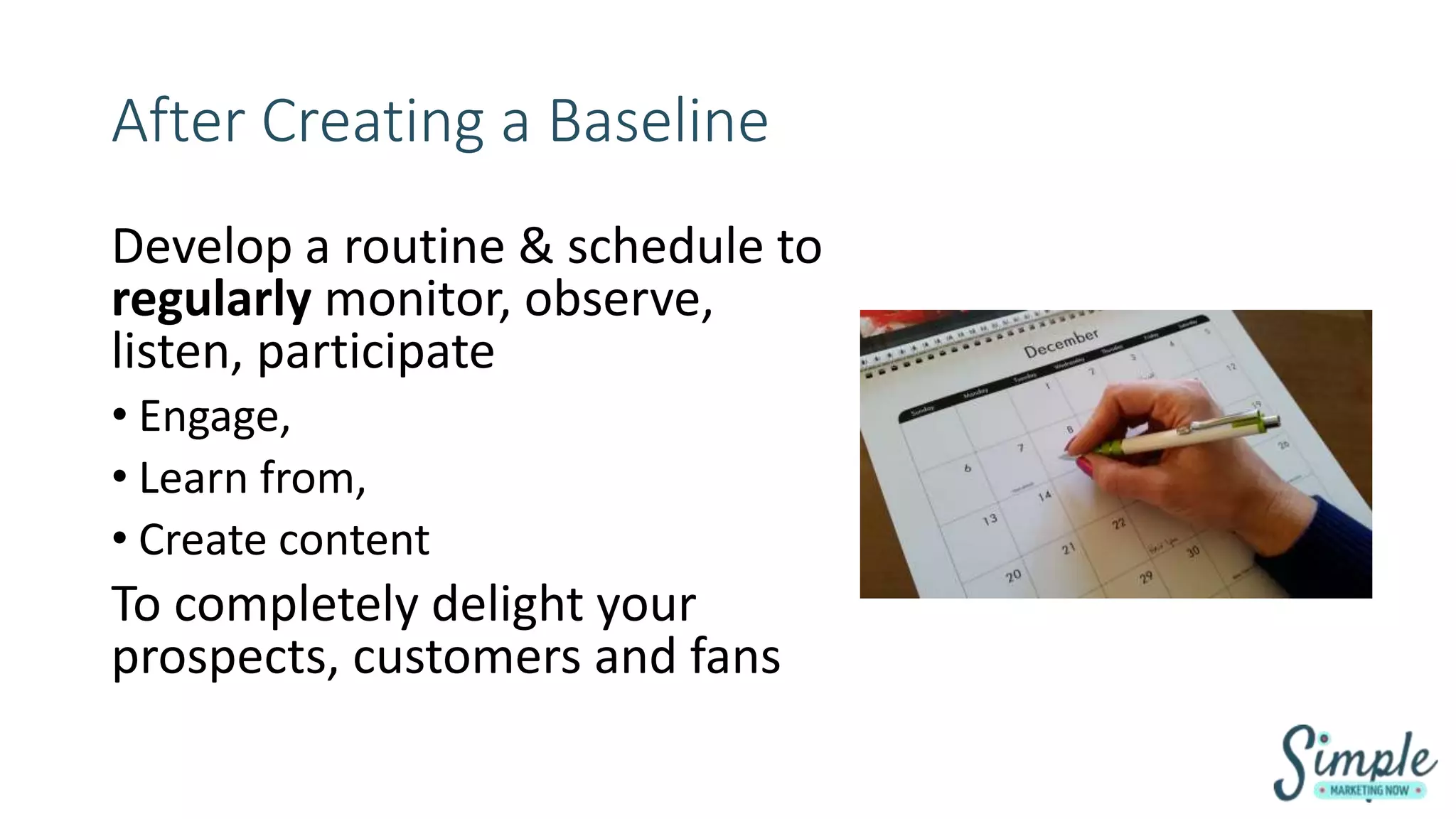
After Creating a Baseline
Develop a routine & schedule to
regularly monitor, observe,
listen, participate
• Engage,
• Learn from,
• Create content
To completely delight your
prospects, customers and fans
Recap
• Conversations are happening online. Why not listen & learn?
• To create a social media listening strategy, you’ll need to:
• Find relevant conversations
• Take next steps including be prepared for the unexpected
• Develop a listening process and routine
• Identify the best tools to use
• Be sure to identify your goals.
Contact Information
• Christine B. Whittemore
• Chief Simplifier, Simple Marketing Now
• cbwhittemore@simplemarketingnow.com
• @cbwhittemore
• www.simplemarketingnow.com

How to Create a Social Media Listening Strategy to Build & Protect Your Brand

  • 1.
    A Social MediaListening Strategy To Build & Protect Your Brand FocusOn: Social Media – a Virtual Event September 12, 2016 Christine B. Whittemore
  • 2.
    What does itmean to have a true social media listening strategy to build and protect your brand? • More than looking at a few tweets or some Google alerts
  • 3.
    It’s a SystematicApproach to Monitoring What’s Being Said • About you, your company, your brand, your industry • On social networks • By real people
  • 4.
    And Carefully Listening •From the perspective of your customers • To make your business better informed about what matters to them
  • 5.
  • 6.
    Important Because • Peopleare talking about you. • You can’t stop them. • If you listen, you can do something about what you hear.
  • 7.
    A Social MediaListening Strategy Means You Can…. • Gain context for reviews and complaints • Refine buyer personas • Gather marketing insights • Validate content ideas • Identify & connect with thought leaders, including journalists • Be part of the conversation • Be social vs. just doing social
  • 8.
    What You Needfor Your Listening Strategy • Determine your goal • Find relevant conversations • Decide what to do when you find them • Prepare for the unexpected • Develop a routine • Establish a listening process • Identify tools for listening & monitoring
  • 9.
    What Is YourGoal? • Thought leadership? • Customer service? • Engage a specific audience?
  • 10.
    Find Relevant Conversations •Two elements • Where do your constituents hang out online? • What are the right terms for finding conversations
  • 11.
    Where Do YourConstituents Hang Out Online? • Facebook Groups • LinkedIn Groups • Forums • SlideShare • Quora • YouTube • Twitter • Google+ • ?
  • 12.
    Finding the RightConversation Terms Can be difficult depending how ‘noisy’ the industry is • Search category/industry • Search for #s, chats • List important trade shows or organizations #s • Terms competitors use • Identify influencers 12/42
  • 13.
    What Search TermsDo They Use? • Broad terms • Product categories • Problems • Specific terms • Company name • Brand names They know you!
  • 14.
    Be Aware of •Multiple meanings: steam vs. STEAM vs. steampunk vs. …. • Steam engines • Steam showers • Steam ovens • ??? • Terms to exclude • Job(s) • ???
  • 15.
    What To DoWhen You Find Conversations? • Follow the profiles • Favorite the updates • Add profiles to a list or create search streams • Listen • Engage
  • 16.
    Prepare for theUnexpected • Will you engage or just monitor? • Anticipate the worst so you are prepared • Plan for trolls • Take it offline whenever possible • Remember your goals
  • 17.
    How the AirForce Does It http://www.globalnerdy.com/2008/12/30/the-air-forces-rules-of-engagement-for-blogging/
  • 18.
    Can You InvolveOthers in Your Organization? • It’s more social • Better insights • Makes you more nimble
  • 19.
    Include Social Mediain Your Employee Guidelines
  • 20.
    The Listening Process •Pick search terms – single words vs. tight combinations of words • Greywater vs. grey water • General search to find: • Influencers • Relevant hashtags & terms • Create streams to monitor • Twitter lists • Search terms • Specific profiles • #hashtags • Interact as appropriate
  • 21.
    Social Search Tools •Explore the networks (i.e., Twitter, Facebook, Instagram, etc.) • General social search: • Social Mention • Twazzup • FollowerWonk  search Twitter bios • Tagboard for hashtags • Board Reader for Forums • (Calibrate your search tools) 21/42
  • 22.
  • 26.
  • 27.
  • 28.
  • 29.
  • 30.
  • 31.
  • 32.
  • 33.
  • 34.
    Check Social Referrals inGoogle Analytics 34/42
  • 35.
  • 36.
    Bonus Tip: BenchmarkYour Company on Google Search • Do review sites appear? • G+: acknowledge publicly • Yelp: acknowledge privately • Get to the bottom of bad reviews; learn from them • Unclaimed directory listings? Claim them Add photos Include consistent profiles Look like someone lives there
  • 37.
    What Do YouDo Next? • Create search streams for • Keywords • #s • Influencers • Use Twitter Lists • Tools such as Hootsuite to monitor multiple networks • Paid versions of the free tools • Follow, like, +
  • 38.
  • 39.
    HubSpot Social MediaMonitoring Tool
  • 40.
    After Creating aBaseline Develop a routine & schedule to regularly monitor, observe, listen, participate • Engage, • Learn from, • Create content To completely delight your prospects, customers and fans
  • 41.
    Recap • Conversations arehappening online. Why not listen & learn? • To create a social media listening strategy, you’ll need to: • Find relevant conversations • Take next steps including be prepared for the unexpected • Develop a listening process and routine • Identify the best tools to use • Be sure to identify your goals.
  • 42.
    Contact Information • ChristineB. Whittemore • Chief Simplifier, Simple Marketing Now • cbwhittemore@simplemarketingnow.com • @cbwhittemore • www.simplemarketingnow.com