Presented by Laura Cranford, 6th Grade STEAM Teacher, Pine Tree ISD
How Classcraft Helps Close Achievement Gaps
Laura Cranford @techlikeaninja lcranford@ptisd.org
About me
Laura Cranford
● Behavior intervention for students with
emotional/behavioral disorders
● Child protective services caseworker
● 6th grade math teacher
● Graduate student Texas A&M Commerce -
Educational Technology Leadership
6th grade STEAM - Engineering with cross-curriculum
in science, technology, art, and math
What is an achievement gap?
The “achievement gap” in education refers to the disparity in
academic performance between groups of students.
It is most often used to describe the troubling performance gaps
between ethnic groups who are at the lower end of the
performance scale and their non-Hispanic white peers.
It is also used to show the academic disparity between students
from low-income families and those who are better off.
Factors that correlate to student
achievement rates
● Parent education
● Economics (poverty/affluence)
● Language acquisition
● Ethnicity
What can I do as a teacher to make sure I
am not contributing to this problem?
Understanding behaviors
● Behavior is communication
● Ever had a family member, spouse, girlfriend,
or boyfriend give you the silent treatment?
● What is that behavior telling us?
Student behaviors
It may be hard to understand where a student's poor
choices come from. Remember that behavior is
communication, and students are trying to send a
message with every action taken in the classroom.
There are 4 common reasons that students exhibit
inappropriate behavior:
● Seeking attention
● Taking revenge
● Displaying power
● Displaying feelings of inadequacy
How we respond to these behaviors
can increase or decrease
achievement gaps
The importance of interventions
With so many students in classrooms
these days, it's tempting for a teacher to
simply let poor behavioral choices go and
spend as much time as possible teaching
the lesson.
But in the long-term, this is not the wisest
choice.
At the classroom level
Teachers provide Tier 1 interventions
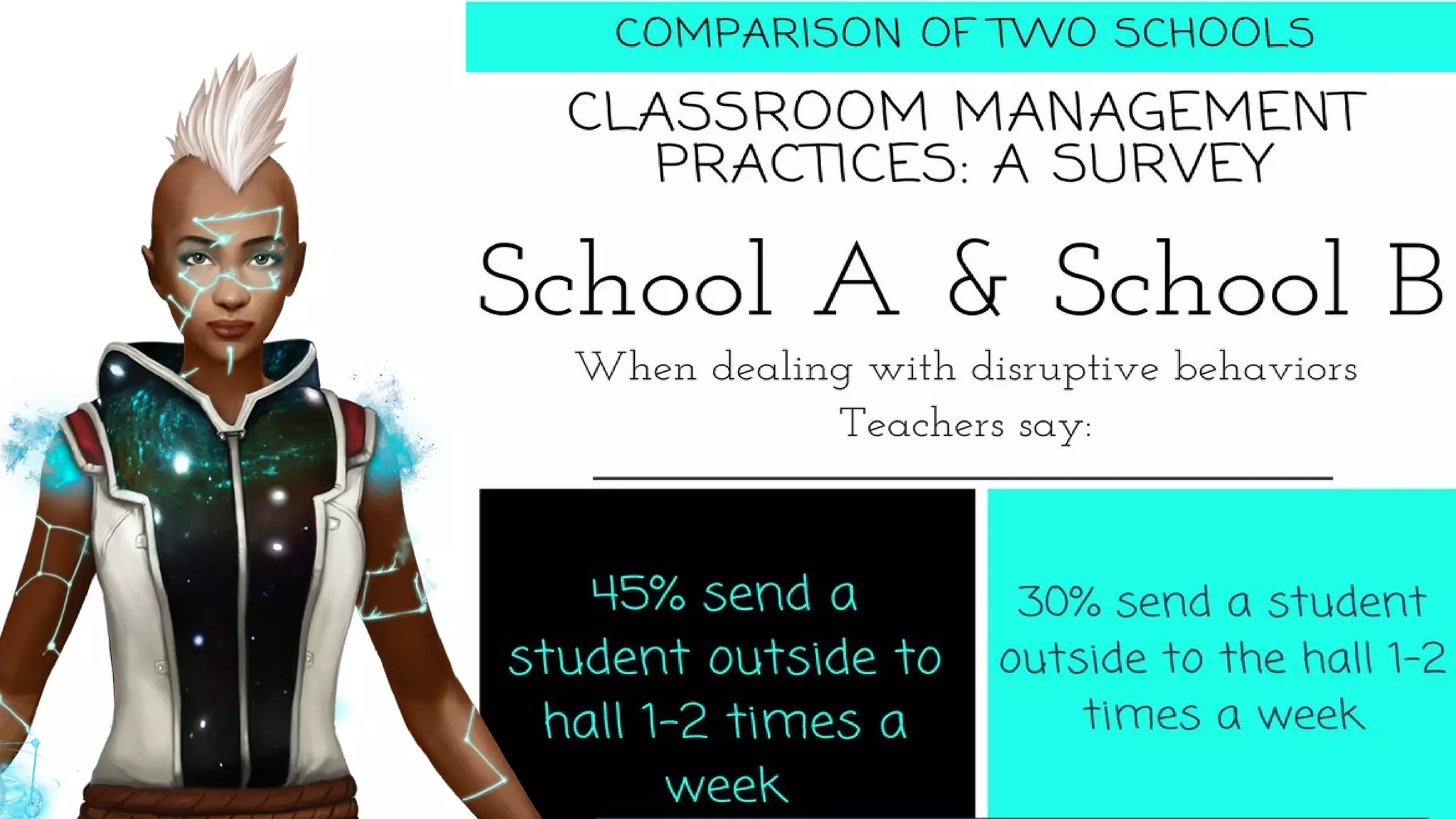
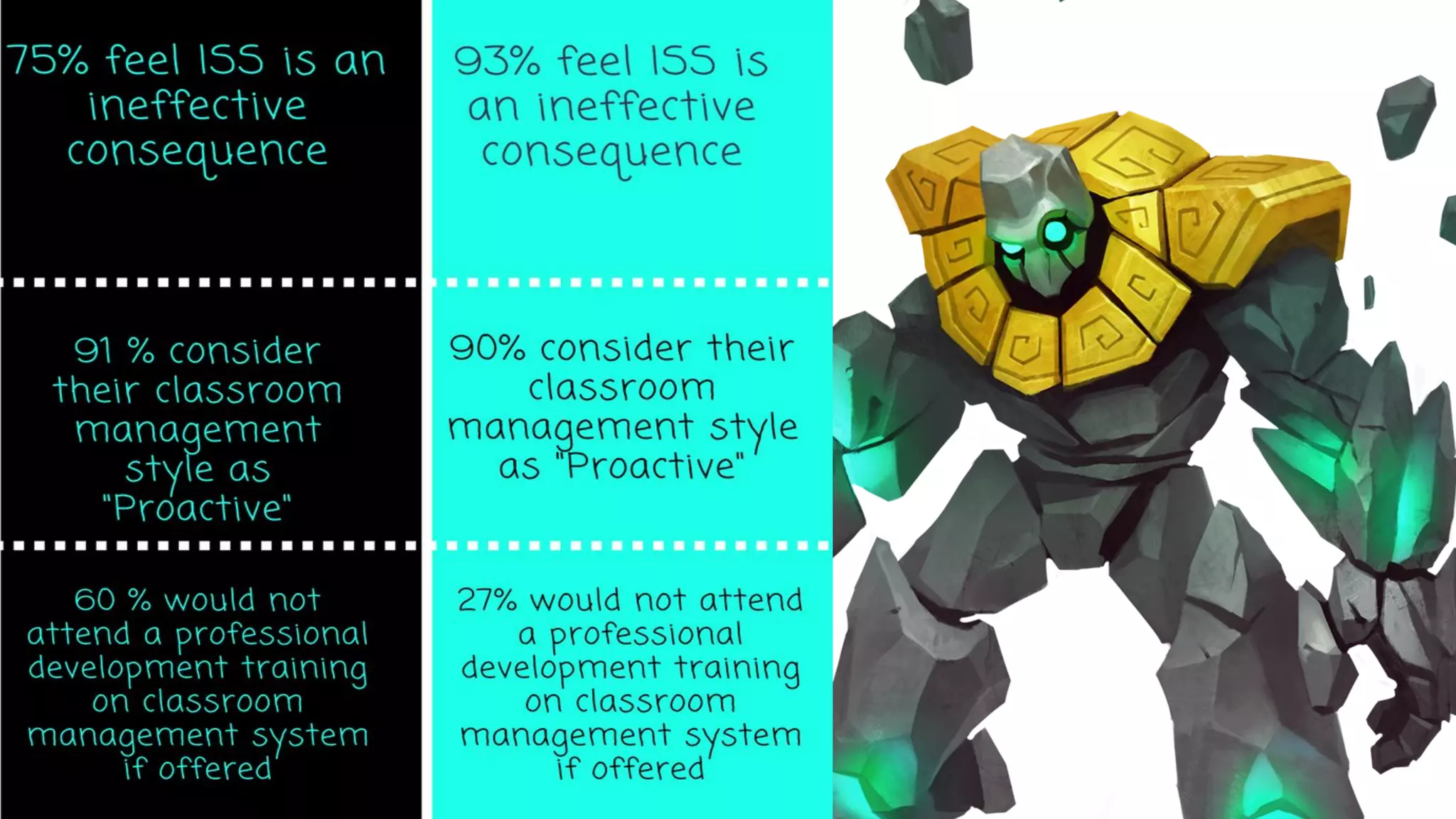
Let’s look at how many schools
have discipline set up
Common Level I disciplinary offenses
Some examples:
1. Being tardy to class
2. Refusing to follow classroom rules
3. Refusing to participate in classroom activities or fulfill assignments
4. Failure to bring appropriate materials to class
5. Unauthorized use of any item or electronic device that causes class
disruption
6. Eating, drinking, or gum-chewing without permission in an instructional area
7. Disruption of the orderly classroom process
8. Running, making excessive noise, obstructing, or other disruptions in halls,
buildings, classrooms, or other supervised settings
The classroom teacher may use one or more
of the following consequences:
1. Warning
2. Teacher/student conference
3. Parent conference or call
4. In-class disciplinary actions or assignment
5. Withdrawal of student privileges
6. Detention
7. Confiscation of disruptive items or materials
8. Supervised campus service assignment
Before making a disciplinary referral
Ask yourself:
● Is this a serious issue (i.e. fight, drugs, alcohol) or
potential threat to other students that requires
immediate attention by an administrator?
● If this is a minor issue, what steps have I taken to
handle the issue myself?
● Have I contacted the student's parents and
involved them in this process?
● Have I documented the steps that I have taken in
an attempt to correct this issue?
The power of relationships
Students:
Are humans (even middle school students)
Make mistakes
May not have learned appropriate behavior
at home or anywhere else
May need your love
The old and the new
Back in the day:
Today:
Students today face more
challenges than ever
Economically disadvantaged students may:
● Live in a single-parent home or with relatives
● May have a parent in jail
● No positive male/female role model
● Be raised by extended family members
Start this year off right
● Build positive relationships with your students’
families by making initial contact with them at the
beginning of the year and maintaining regular
contact throughout the year
● The greater the needs of your students, the greater
the need for you to establish and maintain contact
with their families.
Relationships help studets feel safe
● Reductions in referrals,
suspensions, and expulsions
● Decline in tardy rates
● Increase in student attendance
and connectedness
● Perceptions of increased safety
and civility
Why Classcraft?
● Expectations can be tied to schoolwide expectations
● Tier 1 classroom system for teaching expectations,
providing acknowledgments, and managing rule
violations linked to schoolwide MTBF
● Classroom management decisions are based on
classroom behavioral data
● Effective instructional strategies implemented with
fidelity
● Curriculum matched to student needs and data
Age-appropriate
inappropriate behaviors
● Just remember kids will be kids
● As children grow into their teen years, they need as
much control over their lives as they can have
● What is your goal as a teacher?
● Are you a detective trying to make a case?
● Or are you a teacher using this time to teach
appropriate behaviors?
Positive Behavioral
Interventions & Supports
Classroom PBIS:
● Preventative
● Responsive
● Decrease disruptions
● Increase instructional time
● Improve social behavior
● Improve academic outcomes
Core principles of PBIS and Classcraft
● Teaches appropriate behavior to all children
● Uses early intervention
● Adopts a multi-tier model of service delivery
● Incorporates research-based interventions
● Monitors student progress to inform interventions
● Uses data to inform decision-making
● Offers multiple types of assessment
To do or not to do?
1. Pre-correction and proximity
2. Gentle verbal reprimand and discussion
3. Family contact
4. Humor
5. Praise students who are behaving responsibly
6. Restitution
7. Emotional reaction
8. Give positive feedback when behavior improves
Discipline systems in school
● Are a last resort
● They are not meant to handle every issue
● Administration should be called to handle
Level 2 offenses or higher
● Or for repeated behaviors that
interventions are not working for
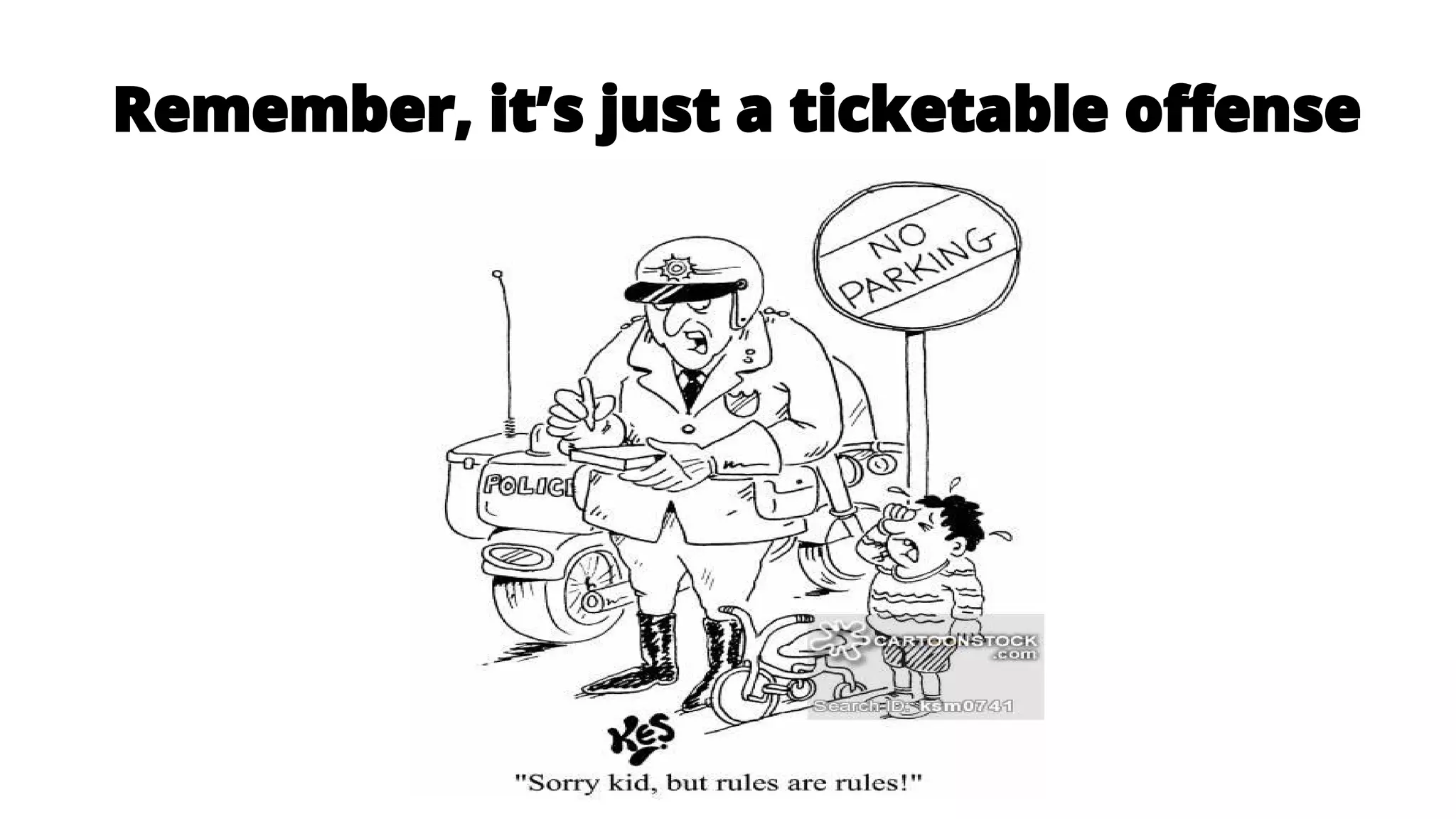
Remember, it’s just a ticketable offense
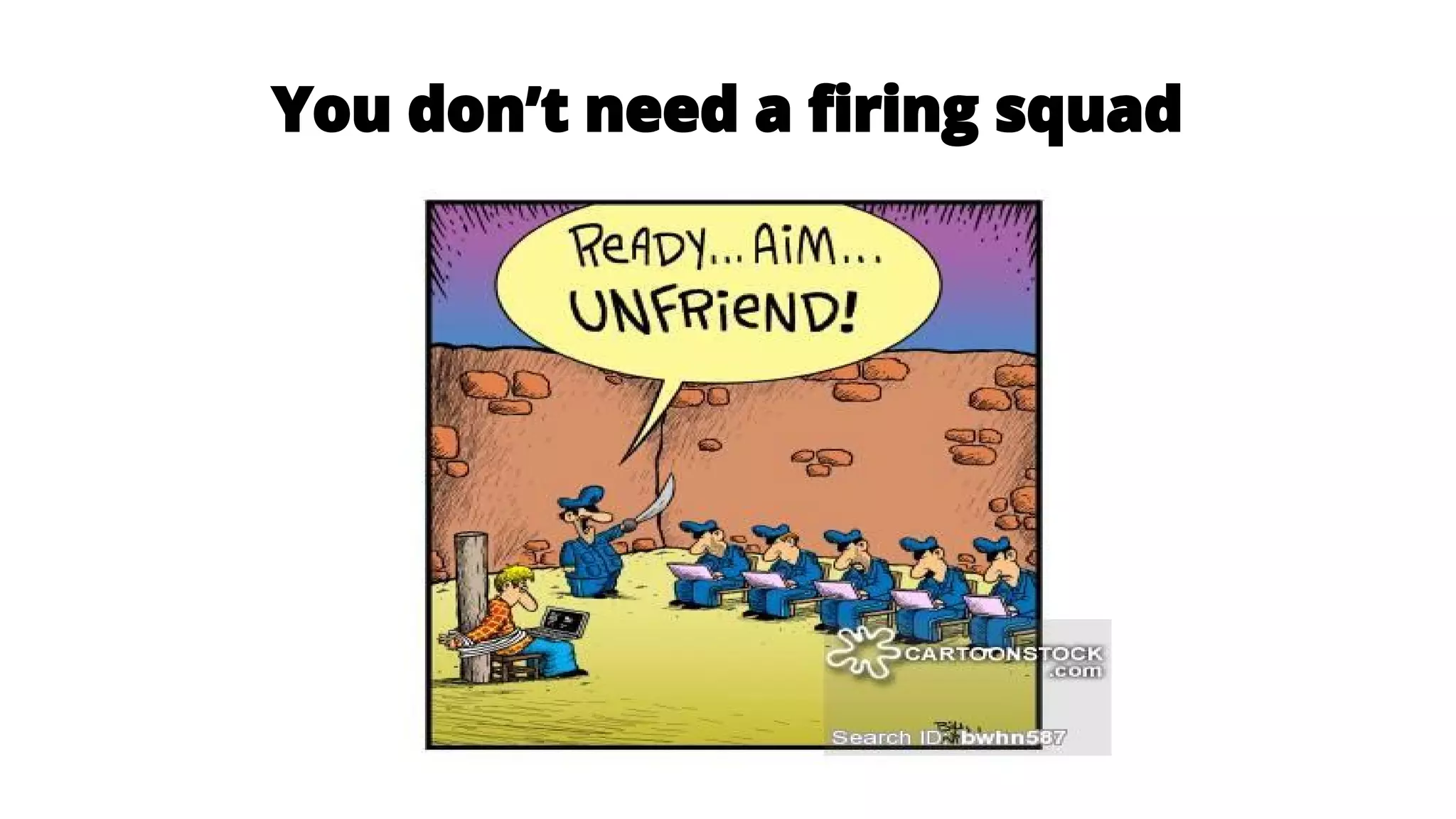
You don’t need a firing squad
Level up with these behaviors — XP
I start off with procedures that I want followed every day
for the school year
● Line up quietly in the hallway
● Place your backpacks on the wall
● Raise your hand before speaking out
● Working well in a team
● Cleaned area before leaving the room
Over time, these can change to other behaviors I want to
see in my students, even academic ones
Remove HP for negative behavior
Remember those Level 1 offenses?
I changed the wording so the students will understand
1. Being tardy to class
2. Not using technology appropriately
3. Eating, drinking, or gum-chewing without permission in class
4. Disruption, talking out in class, excessive noise
5. Disruption, off task
6. Running
7. Out of placement (wandering the halls)
Consequences of falling in battle
● You have amnesia: You forget all your powers this week
● Banishment! You must move to Isolation Isle. No
communication with your team for one day.
● Immobilized: You lose your remaining AP
● Your bad deed is recorded forever in the sign-in book (receives a
sign-in)
● Nothing (you lucky duck)
● Lunch detention with Ms. Cranford (helps the relationship
process)
● You must salute the Gamemaster for two days anytime you see
Ms. Cranford anywhere in the school
So think of your schoolwide discipline
Weekly Consequences:
1st sign-in: Warning
2nd sign-in: Reflection sheet signed by parent
3rd sign-in: Lunch Detention
4th sign-in: Afterschool Detention
5th sign-in: In-school suspension
Consequences of falling in battle
● You have amnesia: You forget all your powers this week
● Banishment! You must move to Isolation Isle. No
communication with your team for one day.
● Immobilized: You lose your remaining AP
● Your bad deed is recorded forever in the sign-in book (receives a
sign-in)
● Nothing (you lucky duck)
● Lunch detention with Ms. Cranford (helps the relationship
process)
● You must salute the Gamemaster for two days anytime you see
Ms. Cranford anywhere in the school
If you notice
The student has to lose HP over a period of time, not the
first time a behavior happens. Once he loses all his HP, there
is a 1/7 chance my student will receive a sign-in.
● Less sign-ins, less office referrals
● Less out-of-class placement
● Helping to close those gaps
Q&A
Laura Cranford
Teacher, 6th grade STEAM
Classcraft Ambassador
Techlikeaninja@gmail.com
@techlikeaninja
classcraft.com
facebook.com/classcraftgame
@classcraftgame
Stay in Touch

How to Close Achievement Gaps in K-12

  • 1.
    Presented by LauraCranford, 6th Grade STEAM Teacher, Pine Tree ISD How Classcraft Helps Close Achievement Gaps Laura Cranford @techlikeaninja lcranford@ptisd.org
  • 2.
    About me Laura Cranford ●Behavior intervention for students with emotional/behavioral disorders ● Child protective services caseworker ● 6th grade math teacher ● Graduate student Texas A&M Commerce - Educational Technology Leadership 6th grade STEAM - Engineering with cross-curriculum in science, technology, art, and math
  • 3.
    What is anachievement gap? The “achievement gap” in education refers to the disparity in academic performance between groups of students. It is most often used to describe the troubling performance gaps between ethnic groups who are at the lower end of the performance scale and their non-Hispanic white peers. It is also used to show the academic disparity between students from low-income families and those who are better off.
  • 4.
    Factors that correlateto student achievement rates ● Parent education ● Economics (poverty/affluence) ● Language acquisition ● Ethnicity
  • 5.
    What can Ido as a teacher to make sure I am not contributing to this problem?
  • 6.
    Understanding behaviors ● Behavioris communication ● Ever had a family member, spouse, girlfriend, or boyfriend give you the silent treatment? ● What is that behavior telling us?
  • 7.
    Student behaviors It maybe hard to understand where a student's poor choices come from. Remember that behavior is communication, and students are trying to send a message with every action taken in the classroom. There are 4 common reasons that students exhibit inappropriate behavior: ● Seeking attention ● Taking revenge ● Displaying power ● Displaying feelings of inadequacy
  • 8.
    How we respondto these behaviors can increase or decrease achievement gaps
  • 9.
    The importance ofinterventions With so many students in classrooms these days, it's tempting for a teacher to simply let poor behavioral choices go and spend as much time as possible teaching the lesson. But in the long-term, this is not the wisest choice.
  • 11.
    At the classroomlevel Teachers provide Tier 1 interventions
  • 12.
    Let’s look athow many schools have discipline set up
  • 13.
    Common Level Idisciplinary offenses Some examples: 1. Being tardy to class 2. Refusing to follow classroom rules 3. Refusing to participate in classroom activities or fulfill assignments 4. Failure to bring appropriate materials to class 5. Unauthorized use of any item or electronic device that causes class disruption 6. Eating, drinking, or gum-chewing without permission in an instructional area 7. Disruption of the orderly classroom process 8. Running, making excessive noise, obstructing, or other disruptions in halls, buildings, classrooms, or other supervised settings
  • 14.
    The classroom teachermay use one or more of the following consequences: 1. Warning 2. Teacher/student conference 3. Parent conference or call 4. In-class disciplinary actions or assignment 5. Withdrawal of student privileges 6. Detention 7. Confiscation of disruptive items or materials 8. Supervised campus service assignment
  • 15.
    Before making adisciplinary referral Ask yourself: ● Is this a serious issue (i.e. fight, drugs, alcohol) or potential threat to other students that requires immediate attention by an administrator? ● If this is a minor issue, what steps have I taken to handle the issue myself? ● Have I contacted the student's parents and involved them in this process? ● Have I documented the steps that I have taken in an attempt to correct this issue?
  • 16.
    The power ofrelationships Students: Are humans (even middle school students) Make mistakes May not have learned appropriate behavior at home or anywhere else May need your love
  • 17.
    The old andthe new Back in the day: Today:
  • 18.
    Students today facemore challenges than ever Economically disadvantaged students may: ● Live in a single-parent home or with relatives ● May have a parent in jail ● No positive male/female role model ● Be raised by extended family members
  • 19.
    Start this yearoff right ● Build positive relationships with your students’ families by making initial contact with them at the beginning of the year and maintaining regular contact throughout the year ● The greater the needs of your students, the greater the need for you to establish and maintain contact with their families.
  • 20.
    Relationships help studetsfeel safe ● Reductions in referrals, suspensions, and expulsions ● Decline in tardy rates ● Increase in student attendance and connectedness ● Perceptions of increased safety and civility
  • 21.
    Why Classcraft? ● Expectationscan be tied to schoolwide expectations ● Tier 1 classroom system for teaching expectations, providing acknowledgments, and managing rule violations linked to schoolwide MTBF ● Classroom management decisions are based on classroom behavioral data ● Effective instructional strategies implemented with fidelity ● Curriculum matched to student needs and data
  • 22.
    Age-appropriate inappropriate behaviors ● Justremember kids will be kids ● As children grow into their teen years, they need as much control over their lives as they can have ● What is your goal as a teacher? ● Are you a detective trying to make a case? ● Or are you a teacher using this time to teach appropriate behaviors?
  • 25.
    Positive Behavioral Interventions &Supports Classroom PBIS: ● Preventative ● Responsive ● Decrease disruptions ● Increase instructional time ● Improve social behavior ● Improve academic outcomes
  • 26.
    Core principles ofPBIS and Classcraft ● Teaches appropriate behavior to all children ● Uses early intervention ● Adopts a multi-tier model of service delivery ● Incorporates research-based interventions ● Monitors student progress to inform interventions ● Uses data to inform decision-making ● Offers multiple types of assessment
  • 27.
    To do ornot to do? 1. Pre-correction and proximity 2. Gentle verbal reprimand and discussion 3. Family contact 4. Humor 5. Praise students who are behaving responsibly 6. Restitution 7. Emotional reaction 8. Give positive feedback when behavior improves
  • 28.
    Discipline systems inschool ● Are a last resort ● They are not meant to handle every issue ● Administration should be called to handle Level 2 offenses or higher ● Or for repeated behaviors that interventions are not working for
  • 29.
    Remember, it’s justa ticketable offense
  • 30.
    You don’t needa firing squad
  • 31.
    Level up withthese behaviors — XP I start off with procedures that I want followed every day for the school year ● Line up quietly in the hallway ● Place your backpacks on the wall ● Raise your hand before speaking out ● Working well in a team ● Cleaned area before leaving the room Over time, these can change to other behaviors I want to see in my students, even academic ones
  • 32.
    Remove HP fornegative behavior Remember those Level 1 offenses? I changed the wording so the students will understand 1. Being tardy to class 2. Not using technology appropriately 3. Eating, drinking, or gum-chewing without permission in class 4. Disruption, talking out in class, excessive noise 5. Disruption, off task 6. Running 7. Out of placement (wandering the halls)
  • 33.
    Consequences of fallingin battle ● You have amnesia: You forget all your powers this week ● Banishment! You must move to Isolation Isle. No communication with your team for one day. ● Immobilized: You lose your remaining AP ● Your bad deed is recorded forever in the sign-in book (receives a sign-in) ● Nothing (you lucky duck) ● Lunch detention with Ms. Cranford (helps the relationship process) ● You must salute the Gamemaster for two days anytime you see Ms. Cranford anywhere in the school
  • 34.
    So think ofyour schoolwide discipline Weekly Consequences: 1st sign-in: Warning 2nd sign-in: Reflection sheet signed by parent 3rd sign-in: Lunch Detention 4th sign-in: Afterschool Detention 5th sign-in: In-school suspension
  • 35.
    Consequences of fallingin battle ● You have amnesia: You forget all your powers this week ● Banishment! You must move to Isolation Isle. No communication with your team for one day. ● Immobilized: You lose your remaining AP ● Your bad deed is recorded forever in the sign-in book (receives a sign-in) ● Nothing (you lucky duck) ● Lunch detention with Ms. Cranford (helps the relationship process) ● You must salute the Gamemaster for two days anytime you see Ms. Cranford anywhere in the school
  • 36.
    If you notice Thestudent has to lose HP over a period of time, not the first time a behavior happens. Once he loses all his HP, there is a 1/7 chance my student will receive a sign-in. ● Less sign-ins, less office referrals ● Less out-of-class placement ● Helping to close those gaps
  • 38.
  • 39.
    Laura Cranford Teacher, 6thgrade STEAM Classcraft Ambassador Techlikeaninja@gmail.com @techlikeaninja classcraft.com facebook.com/classcraftgame @classcraftgame Stay in Touch