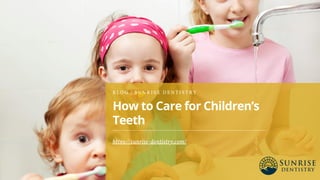
How to Care for Children’s
Teeth
B L O G | S U N R I S E D E N T I S T R Y
https://sunrise-dentistry.com/
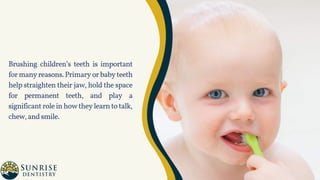
Brushing children’s teeth is important
formanyreasons.Primaryorbabyteeth
help straighten their jaw, hold the space
for permanent teeth, and play a
significantroleinhowtheylearntotalk,
chew,andsmile.
Having healthy children’s teeth also
helps with confidence in school and
other social activities. Following dental
care tips to establish good oral health
habits early in life will encourage
lifelongpatterns.
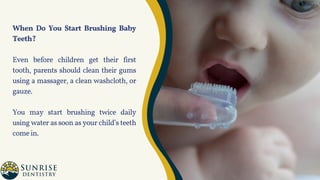
When Do You Start Brushing Baby
Teeth?
Even before children get their first
tooth, parents should clean their gums
using a massager, a clean washcloth, or
gauze.
You may start brushing twice daily
using water as soon as your child’s teeth
comein.
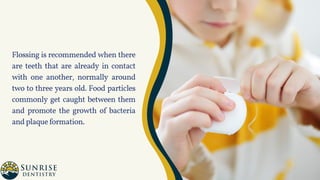
Flossing is recommended when there
are teeth that are already in contact
with one another, normally around
two to three years old. Food particles
commonly get caught between them
and promote the growth of bacteria
andplaqueformation.
Children develop cavities in the same
way as adults do. Starchy snacks like
crackers and even milk, a sweetened
liquid, may increase your child’s risk of
cavities. They are also susceptible to the
same conditions that damage adult
teeth.
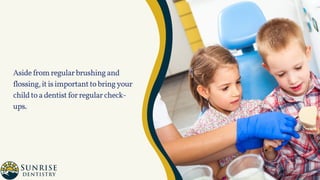
Asidefromregularbrushingand
flossing,itisimportanttobringyour
childtoadentistforregularcheck-
ups.
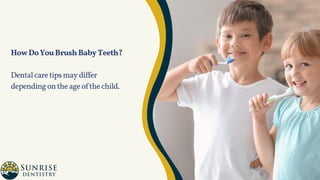
HowDoYouBrushBabyTeeth?
Dentalcaretipsmaydiffer
dependingontheageofthechild.
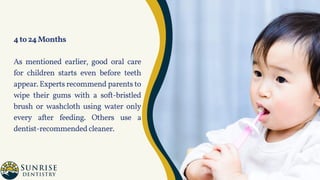
4to24Months
As mentioned earlier, good oral care
for children starts even before teeth
appear. Experts recommend parents to
wipe their gums with a soft-bristled
brush or washcloth using water only
every after feeding. Others use a
dentist-recommendedcleaner.
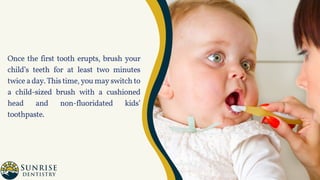
Once the first tooth erupts, brush your
child’s teeth for at least two minutes
twiceaday.Thistime,youmayswitchto
a child-sized brush with a cushioned
head and non-fluoridated kids’
toothpaste.
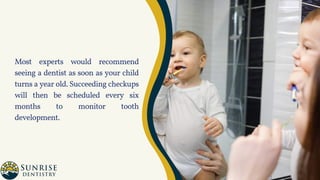
Most experts would recommend
seeing a dentist as soon as your child
turns a year old. Succeeding checkups
will then be scheduled every six
months to monitor tooth
development.
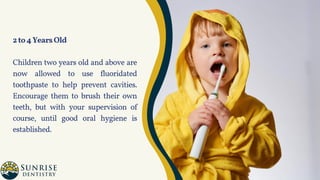
2to4YearsOld
Children two years old and above are
now allowed to use fluoridated
toothpaste to help prevent cavities.
Encourage them to brush their own
teeth, but with your supervision of
course, until good oral hygiene is
established.
If your child resists teeth cleaning,
think of other ways to make it more
funandcreative.
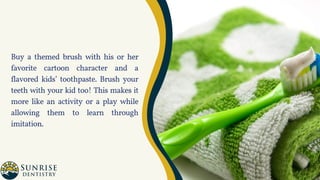
Buy a themed brush with his or her
favorite cartoon character and a
flavored kids’ toothpaste. Brush your
teeth with your kid too! This makes it
more like an activity or a play while
allowing them to learn through
imitation.
You also have to be aware of the
impact that nutrition, drinks, and
food have on oral health. At this
stage, your kid is already eating solid
food.
You must promote healthy eating
habits by avoiding sugary drinks and
unhealthy snack options. Do not
forget about calcium and fluoride,
which are important for the growth
anddevelopmentofchildren’steeth.
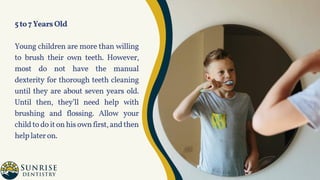
5to7YearsOld
Young children are more than willing
to brush their own teeth. However,
most do not have the manual
dexterity for thorough teeth cleaning
until they are about seven years old.
Until then, they’ll need help with
brushing and flossing. Allow your
childtodoitonhisownfirst,andthen
helplateron.
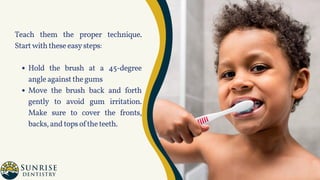
Hold the brush at a 45-degree
angleagainstthegums
Move the brush back and forth
gently to avoid gum irritation.
Make sure to cover the fronts,
backs,andtopsoftheteeth.
Teach them the proper technique.
Startwiththeseeasysteps:
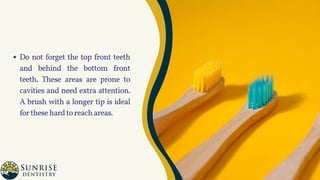
Do not forget the top front teeth
and behind the bottom front
teeth. These areas are prone to
cavities and need extra attention.
A brush with a longer tip is ideal
forthesehardtoreachareas.
Children also thrive on regular
schedules, so do this at the same time
daily. Permanent molars will start to
appear at age five, so make sure to
clean teeth using a fluorinated
toothpaste every morning and night
beforebedtime.
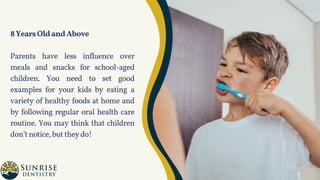
8YearsOldandAbove
Parents have less influence over
meals and snacks for school-aged
children. You need to set good
examples for your kids by eating a
variety of healthy foods at home and
by following regular oral health care
routine. You may think that children
don’tnotice,buttheydo!
Also, encourage whole grains and
fruits as their snacks. Keep sugar
drinks to a minimum as it can
promote tooth decay. Increase water
intake as well! At this age, your child
already has a mixture of baby and
permanentteeth.Theyareofdifferent
sizes too! You may need to replace his
or her brush again to suit this
complexity.
Many of the same treatment and
evaluation options that adults have
are also available to kids. These
include x-rays, dental sealants,
orthodontictreatment,andmore.
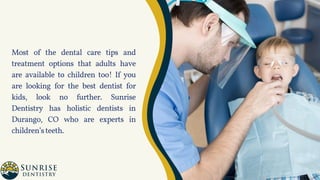
Most of the dental care tips and
treatment options that adults have
are available to children too! If you
are looking for the best dentist for
kids, look no further. Sunrise
Dentistry has holistic dentists in
Durango, CO who are experts in
children’steeth.
dale@durangolive.net
EMAIL ADDRESS
(970)247-3303
PHONE NUMBER
https://sunrise-dentistry.com/
CLICK BELOW TO VISIT SITE:
Contact
Details

How to Care for Children’s Teeth

  • 1.
    How to Carefor Children’s Teeth B L O G | S U N R I S E D E N T I S T R Y https://sunrise-dentistry.com/
  • 2.
    Brushing children’s teethis important formanyreasons.Primaryorbabyteeth help straighten their jaw, hold the space for permanent teeth, and play a significantroleinhowtheylearntotalk, chew,andsmile.
  • 3.
    Having healthy children’steeth also helps with confidence in school and other social activities. Following dental care tips to establish good oral health habits early in life will encourage lifelongpatterns.
  • 4.
    When Do YouStart Brushing Baby Teeth? Even before children get their first tooth, parents should clean their gums using a massager, a clean washcloth, or gauze. You may start brushing twice daily using water as soon as your child’s teeth comein.
  • 5.
    Flossing is recommendedwhen there are teeth that are already in contact with one another, normally around two to three years old. Food particles commonly get caught between them and promote the growth of bacteria andplaqueformation.
  • 6.
    Children develop cavitiesin the same way as adults do. Starchy snacks like crackers and even milk, a sweetened liquid, may increase your child’s risk of cavities. They are also susceptible to the same conditions that damage adult teeth.
  • 7.
  • 8.
  • 9.
    4to24Months As mentioned earlier,good oral care for children starts even before teeth appear. Experts recommend parents to wipe their gums with a soft-bristled brush or washcloth using water only every after feeding. Others use a dentist-recommendedcleaner.
  • 10.
    Once the firsttooth erupts, brush your child’s teeth for at least two minutes twiceaday.Thistime,youmayswitchto a child-sized brush with a cushioned head and non-fluoridated kids’ toothpaste.
  • 11.
    Most experts wouldrecommend seeing a dentist as soon as your child turns a year old. Succeeding checkups will then be scheduled every six months to monitor tooth development.
  • 12.
    2to4YearsOld Children two yearsold and above are now allowed to use fluoridated toothpaste to help prevent cavities. Encourage them to brush their own teeth, but with your supervision of course, until good oral hygiene is established.
  • 13.
    If your childresists teeth cleaning, think of other ways to make it more funandcreative.
  • 14.
    Buy a themedbrush with his or her favorite cartoon character and a flavored kids’ toothpaste. Brush your teeth with your kid too! This makes it more like an activity or a play while allowing them to learn through imitation.
  • 15.
    You also haveto be aware of the impact that nutrition, drinks, and food have on oral health. At this stage, your kid is already eating solid food.
  • 16.
    You must promotehealthy eating habits by avoiding sugary drinks and unhealthy snack options. Do not forget about calcium and fluoride, which are important for the growth anddevelopmentofchildren’steeth.
  • 17.
    5to7YearsOld Young children aremore than willing to brush their own teeth. However, most do not have the manual dexterity for thorough teeth cleaning until they are about seven years old. Until then, they’ll need help with brushing and flossing. Allow your childtodoitonhisownfirst,andthen helplateron.
  • 18.
    Hold the brushat a 45-degree angleagainstthegums Move the brush back and forth gently to avoid gum irritation. Make sure to cover the fronts, backs,andtopsoftheteeth. Teach them the proper technique. Startwiththeseeasysteps:
  • 19.
    Do not forgetthe top front teeth and behind the bottom front teeth. These areas are prone to cavities and need extra attention. A brush with a longer tip is ideal forthesehardtoreachareas.
  • 20.
    Children also thriveon regular schedules, so do this at the same time daily. Permanent molars will start to appear at age five, so make sure to clean teeth using a fluorinated toothpaste every morning and night beforebedtime.
  • 21.
    8YearsOldandAbove Parents have lessinfluence over meals and snacks for school-aged children. You need to set good examples for your kids by eating a variety of healthy foods at home and by following regular oral health care routine. You may think that children don’tnotice,buttheydo!
  • 22.
    Also, encourage wholegrains and fruits as their snacks. Keep sugar drinks to a minimum as it can promote tooth decay. Increase water intake as well! At this age, your child already has a mixture of baby and permanentteeth.Theyareofdifferent sizes too! You may need to replace his or her brush again to suit this complexity.
  • 23.
    Many of thesame treatment and evaluation options that adults have are also available to kids. These include x-rays, dental sealants, orthodontictreatment,andmore.
  • 24.
    Most of thedental care tips and treatment options that adults have are available to children too! If you are looking for the best dentist for kids, look no further. Sunrise Dentistry has holistic dentists in Durango, CO who are experts in children’steeth.
  • 25.