EARLY
CHILDHOOD
ORAL HEALTH
S F C C D E N T A L H Y G I E N E C L A S S O F 2 0 2 0
K A Y L E E L A U G H L I N , M E G A N S I M P S O N , R E A G A N S O U M O K I L
GENERAL
INFORMATION
ERUPTION PATTERN
BENEFITS OF BABY TEETH
• Guide permanent teeth into place
• Chewing for proper nutrition
• Speech
• Overall health
• Jaw and face formation
• Self-esteem
CARE TIPS
PREGNANCY
• Dental check up
• Brush 2x daily with fluoridated
toothpaste
• Floss daily
• Avoid sweets and sticky foods
• Visit doctor for prenatal care
• Adequate amounts of calcium
• *Pregnant women may experience
changes to their gums*
BIRTH TO 1-YEAR
• Place baby’s head in your lap to clean their teeth
• Use a soft toothbrush, damp washcloth, or gauze
• Begin brushing without toothpaste as soon as teeth appear
– Toothpaste is NOT recommended for this age
• Check their teeth monthly for changes
1-YEAR TO 5-YEARS
• Brush teeth daily, especially before bed
– Use a pea-size amount of fluoride toothpaste
• Brush at the same time every day to establish habits
• Replace toothbrushes when a child has strep throat, recurring sore throats, or when
bristles are worn out
• Brush your teeth along with your child to set a good example, and help them brush
their own
• Start flossing when teeth become closer together
• Do not use mouthwash until the child knows not to swallow (usually around age 6)
• Check their teeth monthly for changes
REGULAR
DENTIST VISITS
DENTAL CARE
• It is recommended that children have their first visit 6 months after the eruption of
their first tooth or by age 1
– The main goal is to encourage a positive dental experience for them
• Keep scheduled dental visits/establish a dental home
• Keep a positive attitude about the dentist
• Walk your child through what will happen
DECAY
DECAY
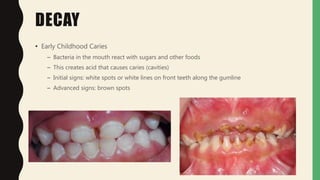
• Early Childhood Caries
– Bacteria in the mouth react with sugars and other foods
– This creates acid that causes caries (cavities)
– Initial signs: white spots or white lines on front teeth along the gumline
– Advanced signs: brown spots
PREVENTING EARLY CHILDHOOD
CARIES
• Do not let children go to sleep with a bottle containing anything other than water
– No juice, milk, formula, etc.
• Teach children to drink from a cup around 6-9 months
• Wipe infants’ mouths out after breastfeeding or bottle feeding
• Start brushing teeth as soon as they come in
• Do not put your child’s pacifier in your own mouth or share drinks
FLUORIDE
• It is a natural mineral that helps prevent tooth decay
• Community water fluoridation is the best method
– Supplements are recommended for children beginning at 6 months of age when they do
not have fluoridated water
– Communicate with health care providers to determine your child’s needs for supplements
• Daily brushing with a toothpaste containing fluoride for children >1-year-old
NUTRITION
DIET RECOMMENDATIONS
• Give your child a healthy diet
• Limit sweets
• Avoid sticky foods
• Give healthy snacks
– Crisp, crunchy raw foods (carrots, green peppers, apples, oranges)
– Grain products (bread, tortilla chips, pretzels, crackers)
– Milk and dairy (milk, yogurt, cheese, cottage cheese)
– Meats
TRAUMA
SIGNS OF TRAUMA IN YOUNG
CHILDREN
• Bruising or other injuries in the head and neck area
• Fractures
• Displaced, missing, or chipped teeth
– In case of accidents, such as falling off a bike:
• Do NOT wipe the tooth off
• Put the tooth in milk or spit on it and get into a dentist ASAP
• Petechiae (small, red dots) on the roof of mouth
• STD lesions/symptoms
• Bite marks
• Dental neglect
REFERENCES
• American Academy of Pediatric Dentistry (2017). Oral and dental aspects of child abuse
and neglect.
• Missouri Coalition for Oral Health (n.d.). Show me your smile: Oral health flip chart.
• Wilkins, E. M., Wyche, C. J., & Boyd, L. D. (2017). Clinical practice of the dental hygienist.
Philadelphia, Pennsylvania: Wolters Kluwer.
QUESTIONS?

Early Childhood Presentation

  • 1.
    EARLY CHILDHOOD ORAL HEALTH S FC C D E N T A L H Y G I E N E C L A S S O F 2 0 2 0 K A Y L E E L A U G H L I N , M E G A N S I M P S O N , R E A G A N S O U M O K I L
  • 2.
  • 3.
  • 4.
    BENEFITS OF BABYTEETH • Guide permanent teeth into place • Chewing for proper nutrition • Speech • Overall health • Jaw and face formation • Self-esteem
  • 5.
  • 6.
    PREGNANCY • Dental checkup • Brush 2x daily with fluoridated toothpaste • Floss daily • Avoid sweets and sticky foods • Visit doctor for prenatal care • Adequate amounts of calcium • *Pregnant women may experience changes to their gums*
  • 7.
    BIRTH TO 1-YEAR •Place baby’s head in your lap to clean their teeth • Use a soft toothbrush, damp washcloth, or gauze • Begin brushing without toothpaste as soon as teeth appear – Toothpaste is NOT recommended for this age • Check their teeth monthly for changes
  • 8.
    1-YEAR TO 5-YEARS •Brush teeth daily, especially before bed – Use a pea-size amount of fluoride toothpaste • Brush at the same time every day to establish habits • Replace toothbrushes when a child has strep throat, recurring sore throats, or when bristles are worn out • Brush your teeth along with your child to set a good example, and help them brush their own • Start flossing when teeth become closer together • Do not use mouthwash until the child knows not to swallow (usually around age 6) • Check their teeth monthly for changes
  • 9.
  • 10.
    DENTAL CARE • Itis recommended that children have their first visit 6 months after the eruption of their first tooth or by age 1 – The main goal is to encourage a positive dental experience for them • Keep scheduled dental visits/establish a dental home • Keep a positive attitude about the dentist • Walk your child through what will happen
  • 11.
  • 12.
    DECAY • Early ChildhoodCaries – Bacteria in the mouth react with sugars and other foods – This creates acid that causes caries (cavities) – Initial signs: white spots or white lines on front teeth along the gumline – Advanced signs: brown spots
  • 13.
    PREVENTING EARLY CHILDHOOD CARIES •Do not let children go to sleep with a bottle containing anything other than water – No juice, milk, formula, etc. • Teach children to drink from a cup around 6-9 months • Wipe infants’ mouths out after breastfeeding or bottle feeding • Start brushing teeth as soon as they come in • Do not put your child’s pacifier in your own mouth or share drinks
  • 14.
    FLUORIDE • It isa natural mineral that helps prevent tooth decay • Community water fluoridation is the best method – Supplements are recommended for children beginning at 6 months of age when they do not have fluoridated water – Communicate with health care providers to determine your child’s needs for supplements • Daily brushing with a toothpaste containing fluoride for children >1-year-old
  • 15.
  • 16.
    DIET RECOMMENDATIONS • Giveyour child a healthy diet • Limit sweets • Avoid sticky foods • Give healthy snacks – Crisp, crunchy raw foods (carrots, green peppers, apples, oranges) – Grain products (bread, tortilla chips, pretzels, crackers) – Milk and dairy (milk, yogurt, cheese, cottage cheese) – Meats
  • 17.
  • 18.
    SIGNS OF TRAUMAIN YOUNG CHILDREN • Bruising or other injuries in the head and neck area • Fractures • Displaced, missing, or chipped teeth – In case of accidents, such as falling off a bike: • Do NOT wipe the tooth off • Put the tooth in milk or spit on it and get into a dentist ASAP • Petechiae (small, red dots) on the roof of mouth • STD lesions/symptoms • Bite marks • Dental neglect
  • 19.
    REFERENCES • American Academyof Pediatric Dentistry (2017). Oral and dental aspects of child abuse and neglect. • Missouri Coalition for Oral Health (n.d.). Show me your smile: Oral health flip chart. • Wilkins, E. M., Wyche, C. J., & Boyd, L. D. (2017). Clinical practice of the dental hygienist. Philadelphia, Pennsylvania: Wolters Kluwer.
  • 20.