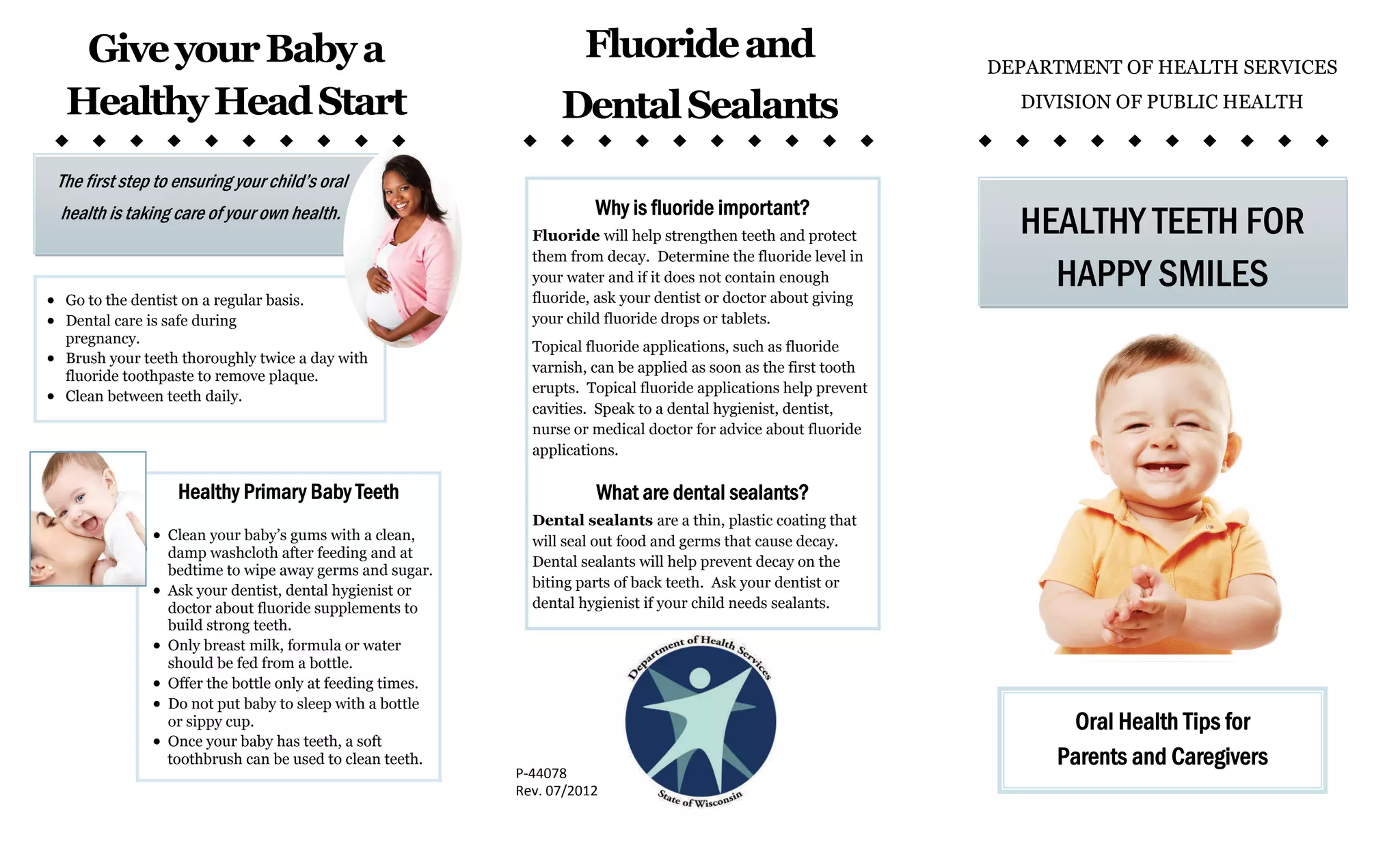
HEALTHY TEETH FOR
HAPPY SMILES
DEPARTMENT OF HEALTH SERVICES
DIVISION OF PUBLIC HEALTH
Oral Health Tips for
Parents and Caregivers
 Go to the dentist on a regular basis.
 Dental care is safe during
pregnancy.
 Brush your teeth thoroughly twice a day with
fluoride toothpaste to remove plaque.
 Clean between teeth daily.
The first step to ensuring your child’s oral
health is taking care of your own health.
Healthy Primary Baby Teeth
 Clean your baby’s gums with a clean,
damp washcloth after feeding and at
bedtime to wipe away germs and sugar.
 Ask your dentist, dental hygienist or
doctor about fluoride supplements to
build strong teeth.
 Only breast milk, formula or water
should be fed from a bottle.
 Offer the bottle only at feeding times.
 Do not put baby to sleep with a bottle
or sippy cup.
 Once your baby has teeth, a soft
toothbrush can be used to clean teeth.
GiveyourBabya
HealthyHeadStart
 
Why is fluoride important?
Fluoride will help strengthen teeth and protect
them from decay. Determine the fluoride level in
your water and if it does not contain enough
fluoride, ask your dentist or doctor about giving
your child fluoride drops or tablets.
Topical fluoride applications, such as fluoride
varnish, can be applied as soon as the first tooth
erupts. Topical fluoride applications help prevent
cavities. Speak to a dental hygienist, dentist,
nurse or medical doctor for advice about fluoride
applications.
What are dental sealants?
Dental sealants are a thin, plastic coating that
will seal out food and germs that cause decay.
Dental sealants will help prevent decay on the
biting parts of back teeth. Ask your dentist or
dental hygienist if your child needs sealants.
Fluorideand
DentalSealants
P‐44078 
Rev. 07/2012 
 
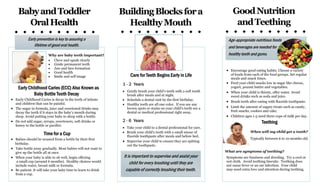
Care for Teeth Begins Early in Life
1 - 2 Years
 Gently brush your child’s teeth with a soft tooth
brush after meals and at night.
 Schedule a dental visit by the first birthday.
 Healthy teeth are all one color. If you see any
brown spots or stains on your child's teeth see a
dental or medical professional right away.
2 - 6 Years
 Take your child to a dental professional for care.
 Brush your child’s teeth with a small smear of
fluoride toothpaste after meals and before bed.
 Supervise your child to ensure they are spitting
out the toothpaste.
 Encourage good eating habits. Choose a variety
of foods from each of the food groups. Set regular
meals and snack times.
 Feed your child snacks low in sugar like cheese,
yogurt, peanut butter and vegetables.
 When your child is thirsty, offer water. Avoid
sweet drinks such as soda and juice.
 Brush teeth after eating with fluoride toothpaste.
 Limit the amount of sugary treats such as candy,
fruit snacks, cookies and cake.
 Children ages 1-5 need three cups of milk per day.
Teething
When will my child get a tooth?
Typically between 6 to 10 months old.
What are symptoms of teething?
Symptoms are fussiness and drooling. Try a cool or
wet cloth. Avoid teething biscuits. Teething does
not cause fever or an ear infection. Your child
may need extra love and attention during teething.
It is important to supervise and assist your
child for every brushing until they are
capable of correctly brushing their teeth.
BabyandToddler
OralHealth
 
Early Childhood Caries (ECC) Also Known as
Baby Bottle Tooth Decay
 Early Childhood Caries is decay in the teeth of infants
and children that can be painful.
 The sugar in formula, juice and sweetened drinks may
decay the teeth if it stays in the baby’s mouth during
sleep. Avoid putting your baby to sleep with a bottle.
 Do not add sugar, syrups, sweeteners, soft drinks or
honey to the bottle or pacifier.
Time for a Cup
 Babies should be weaned from a bottle by their first
birthday.
 Take bottle away gradually. Most babies will not want to
give up the bottle all at once.
 When your baby is able to sit well, begin offering
a small cup (around 6 months). Healthy choices would
include water, breast milk or formula.
 Be patient. It will take your baby time to learn to drink
from a cup.
GoodNutrition
andTeething
Early prevention is key to assuring a
lifetime of good oral health.
Age-appropriate nutritious foods
and beverages are needed for
healthy teeth and gums.
BuildingBlocksfora
HealthyMouth
Why are baby teeth important?
 Chew and speak clearly
 Guide permanent teeth
 Jaw and face formation
 Good health
 Smile and self image

Dental care

  • 1.
    HEALTHY TEETH FOR HAPPYSMILES DEPARTMENT OF HEALTH SERVICES DIVISION OF PUBLIC HEALTH Oral Health Tips for Parents and Caregivers  Go to the dentist on a regular basis.  Dental care is safe during pregnancy.  Brush your teeth thoroughly twice a day with fluoride toothpaste to remove plaque.  Clean between teeth daily. The first step to ensuring your child’s oral health is taking care of your own health. Healthy Primary Baby Teeth  Clean your baby’s gums with a clean, damp washcloth after feeding and at bedtime to wipe away germs and sugar.  Ask your dentist, dental hygienist or doctor about fluoride supplements to build strong teeth.  Only breast milk, formula or water should be fed from a bottle.  Offer the bottle only at feeding times.  Do not put baby to sleep with a bottle or sippy cup.  Once your baby has teeth, a soft toothbrush can be used to clean teeth. GiveyourBabya HealthyHeadStart   Why is fluoride important? Fluoride will help strengthen teeth and protect them from decay. Determine the fluoride level in your water and if it does not contain enough fluoride, ask your dentist or doctor about giving your child fluoride drops or tablets. Topical fluoride applications, such as fluoride varnish, can be applied as soon as the first tooth erupts. Topical fluoride applications help prevent cavities. Speak to a dental hygienist, dentist, nurse or medical doctor for advice about fluoride applications. What are dental sealants? Dental sealants are a thin, plastic coating that will seal out food and germs that cause decay. Dental sealants will help prevent decay on the biting parts of back teeth. Ask your dentist or dental hygienist if your child needs sealants. Fluorideand DentalSealants P‐44078  Rev. 07/2012 
  • 2.
      Care for TeethBegins Early in Life 1 - 2 Years  Gently brush your child’s teeth with a soft tooth brush after meals and at night.  Schedule a dental visit by the first birthday.  Healthy teeth are all one color. If you see any brown spots or stains on your child's teeth see a dental or medical professional right away. 2 - 6 Years  Take your child to a dental professional for care.  Brush your child’s teeth with a small smear of fluoride toothpaste after meals and before bed.  Supervise your child to ensure they are spitting out the toothpaste.  Encourage good eating habits. Choose a variety of foods from each of the food groups. Set regular meals and snack times.  Feed your child snacks low in sugar like cheese, yogurt, peanut butter and vegetables.  When your child is thirsty, offer water. Avoid sweet drinks such as soda and juice.  Brush teeth after eating with fluoride toothpaste.  Limit the amount of sugary treats such as candy, fruit snacks, cookies and cake.  Children ages 1-5 need three cups of milk per day. Teething When will my child get a tooth? Typically between 6 to 10 months old. What are symptoms of teething? Symptoms are fussiness and drooling. Try a cool or wet cloth. Avoid teething biscuits. Teething does not cause fever or an ear infection. Your child may need extra love and attention during teething. It is important to supervise and assist your child for every brushing until they are capable of correctly brushing their teeth. BabyandToddler OralHealth   Early Childhood Caries (ECC) Also Known as Baby Bottle Tooth Decay  Early Childhood Caries is decay in the teeth of infants and children that can be painful.  The sugar in formula, juice and sweetened drinks may decay the teeth if it stays in the baby’s mouth during sleep. Avoid putting your baby to sleep with a bottle.  Do not add sugar, syrups, sweeteners, soft drinks or honey to the bottle or pacifier. Time for a Cup  Babies should be weaned from a bottle by their first birthday.  Take bottle away gradually. Most babies will not want to give up the bottle all at once.  When your baby is able to sit well, begin offering a small cup (around 6 months). Healthy choices would include water, breast milk or formula.  Be patient. It will take your baby time to learn to drink from a cup. GoodNutrition andTeething Early prevention is key to assuring a lifetime of good oral health. Age-appropriate nutritious foods and beverages are needed for healthy teeth and gums. BuildingBlocksfora HealthyMouth Why are baby teeth important?  Chew and speak clearly  Guide permanent teeth  Jaw and face formation  Good health  Smile and self image