Building Safety Culture
BY SAFETY TECH SOLUTIONS
DEMECH CHEMICAL PRODUCTS PVT. LTD.
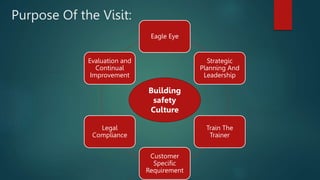
Purpose Of the Visit:
Eagle Eye
Strategic
Planning And
Leadership
Train The
Trainer
Customer
Specific
Requirement
Legal
Compliance
Evaluation and
Continual
Improvement
Building
safety
Culture
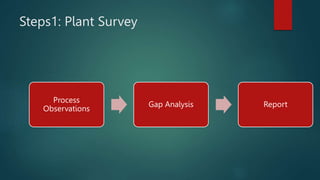
Steps1: Plant Survey
Process
Observations
Gap Analysis Report
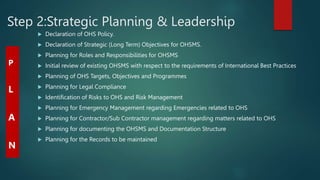
Step 2:Strategic Planning & Leadership
 Declaration of OHS Policy.
 Declaration of Strategic (Long Term) Objectives for OHSMS.
 Planning for Roles and Responsibilities for OHSMS
 Initial review of existing OHSMS with respect to the requirements of International Best Practices
 Planning of OHS Targets, Objectives and Programmes
 Planning for Legal Compliance
 Identification of Risks to OHS and Risk Management
 Planning for Emergency Management regarding Emergencies related to OHS
 Planning for Contractor/Sub Contractor management regarding matters related to OHS
 Planning for documenting the OHSMS and Documentation Structure
 Planning for the Records to be maintained
P
L
A
N
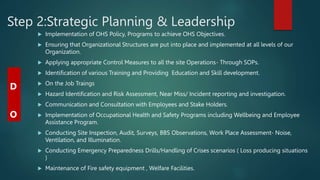
Step 2:Strategic Planning & Leadership
 Implementation of OHS Policy, Programs to achieve OHS Objectives.
 Ensuring that Organizational Structures are put into place and implemented at all levels of our
Organization.
 Applying appropriate Control Measures to all the site Operations- Through SOPs.
 Identification of various Training and Providing Education and Skill development.
 On the Job Traings
 Hazard Identification and Risk Assessment, Near Miss/ Incident reporting and investigation.
 Communication and Consultation with Employees and Stake Holders.
 Implementation of Occupational Health and Safety Programs including Wellbeing and Employee
Assistance Program.
 Conducting Site Inspection, Audit, Surveys, BBS Observations, Work Place Assessment- Noise,
Ventilation, and Illumination.
 Conducting Emergency Preparedness Drills/Handling of Crises scenarios ( Loss producing situations
)
 Maintenance of Fire safety equipment , Welfare Facilities.
D
O
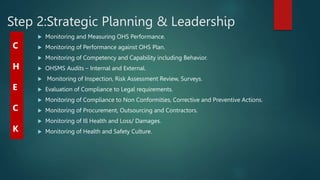
Step 2:Strategic Planning & Leadership
 Monitoring and Measuring OHS Performance.
 Monitoring of Performance against OHS Plan.
 Monitoring of Competency and Capability including Behavior.
 OHSMS Audits – Internal and External.
 Monitoring of Inspection, Risk Assessment Review, Surveys.
 Evaluation of Compliance to Legal requirements.
 Monitoring of Compliance to Non Conformities, Corrective and Preventive Actions.
 Monitoring of Procurement, Outsourcing and Contractors.
 Monitoring of Ill Health and Loss/ Damages.
 Monitoring of Health and Safety Culture.
C
H
E
C
K
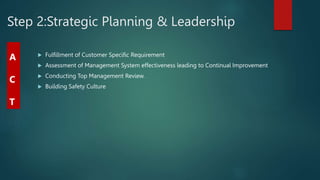
Step 2:Strategic Planning & Leadership
 Fulfillment of Customer Specific Requirement
 Assessment of Management System effectiveness leading to Continual Improvement
 Conducting Top Management Review.
 Building Safety Culture
A
C
T
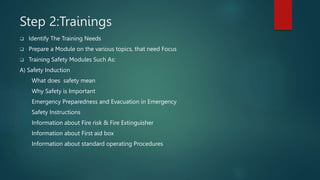
Step 2:Trainings
 Identify The Training Needs
 Prepare a Module on the various topics, that need Focus
 Training Safety Modules Such As:
A) Safety Induction
What does safety mean
Why Safety is Important
Emergency Preparedness and Evacuation in Emergency
Safety Instructions
Information about Fire risk & Fire Extinguisher
Information about First aid box
Information about standard operating Procedures
Step 2:Trainings
B) Establishment of Risk Assessment – HIRA
Formation HIRA Team
Formation of HIRA Format
Identification of Work Activity
Finding Potential Hazards
Possible Accident /ill Health & Persons At Risk
Existing Risk Control Measures (if any)
Risk Evaluation
Basis of Controls ( Elimination, Substitution, Engg Control, Admin Control, PPE )
Step 2:Trainings
C) Importance of PPE & Its Usage
What is PPE
Types of PPEs
Identification of PPEs according to HIRA Study
Identification of PPE Matrix
Responsibilities and awareness of use of PPEs
Maintenance and Storage
Disposal
Step 2:Trainings
D) Work Permit
Formation of Work Permit Format
Identification of Work Activity related to work Permit
Documents Required
Work Permit Initiation and Authorization Matrix
Tool box talk
Tools and Equipment Inspection
Surprise Audit at site
Closure of Work Permit
Extension of permit & Night shift permit
Step 2:Trainings
E) Awareness about Fire and Fire extinguishers
Fire Triangle & Fire Classes
The company emergency evacuation plan.
Each worker's role in the plan.
Mock Drill
Assembly Point
Types of Fire extinguishers
Usage of Fire extinguishers
Step 2:Trainings Topics
 Near Miss, Unsafe Act, Unsafe Conditions
 Work at Height
 Job safety Analysis
 Electrical safety
 Lock Out Tag out
 Material Handling
 Management and Control of hazardous Substances
 Chemical Handling
 MSDS
 Safety Precautions in Welding process
 Precaution on Lifting Tools & tackles
 Machinery & Equipment safety
 Precautions regarding use of portable electric equipment's
 Monitoring of sub-contractor
Step 4:Documentaion
 Safety Policies
 Strategic Objectives
 Standard Operating Procedures – SOP’s
 Work Instructions
 Check Lists
 Records
 Plan – Do – Check – Act ( PDCA )
 Audits
Step 5:Culture Developments
 Formation of Various teams, First Aiders, Fire Fighters
 Safety Committee
 Safety Co - coordinators on Site
 Various Safety Events
 Safety Suggestion Scheme
 2 way Communication
 Management Review
 Health And Surveillance
 Environment Management
Step 6:Way Forward…….
 Certification Of ISO 45001:2018 (occupational health and safety (OH&S) management
system)
 Certification Of National Safety Council
 Certification Of British Safety Council
Demech training.pptx

Demech training.pptx

  • 1.
    Building Safety Culture BYSAFETY TECH SOLUTIONS DEMECH CHEMICAL PRODUCTS PVT. LTD.
  • 2.
    Purpose Of theVisit: Eagle Eye Strategic Planning And Leadership Train The Trainer Customer Specific Requirement Legal Compliance Evaluation and Continual Improvement Building safety Culture
  • 3.
  • 4.
    Step 2:Strategic Planning& Leadership  Declaration of OHS Policy.  Declaration of Strategic (Long Term) Objectives for OHSMS.  Planning for Roles and Responsibilities for OHSMS  Initial review of existing OHSMS with respect to the requirements of International Best Practices  Planning of OHS Targets, Objectives and Programmes  Planning for Legal Compliance  Identification of Risks to OHS and Risk Management  Planning for Emergency Management regarding Emergencies related to OHS  Planning for Contractor/Sub Contractor management regarding matters related to OHS  Planning for documenting the OHSMS and Documentation Structure  Planning for the Records to be maintained P L A N
  • 5.
    Step 2:Strategic Planning& Leadership  Implementation of OHS Policy, Programs to achieve OHS Objectives.  Ensuring that Organizational Structures are put into place and implemented at all levels of our Organization.  Applying appropriate Control Measures to all the site Operations- Through SOPs.  Identification of various Training and Providing Education and Skill development.  On the Job Traings  Hazard Identification and Risk Assessment, Near Miss/ Incident reporting and investigation.  Communication and Consultation with Employees and Stake Holders.  Implementation of Occupational Health and Safety Programs including Wellbeing and Employee Assistance Program.  Conducting Site Inspection, Audit, Surveys, BBS Observations, Work Place Assessment- Noise, Ventilation, and Illumination.  Conducting Emergency Preparedness Drills/Handling of Crises scenarios ( Loss producing situations )  Maintenance of Fire safety equipment , Welfare Facilities. D O
  • 6.
    Step 2:Strategic Planning& Leadership  Monitoring and Measuring OHS Performance.  Monitoring of Performance against OHS Plan.  Monitoring of Competency and Capability including Behavior.  OHSMS Audits – Internal and External.  Monitoring of Inspection, Risk Assessment Review, Surveys.  Evaluation of Compliance to Legal requirements.  Monitoring of Compliance to Non Conformities, Corrective and Preventive Actions.  Monitoring of Procurement, Outsourcing and Contractors.  Monitoring of Ill Health and Loss/ Damages.  Monitoring of Health and Safety Culture. C H E C K
  • 7.
    Step 2:Strategic Planning& Leadership  Fulfillment of Customer Specific Requirement  Assessment of Management System effectiveness leading to Continual Improvement  Conducting Top Management Review.  Building Safety Culture A C T
  • 8.
    Step 2:Trainings  IdentifyThe Training Needs  Prepare a Module on the various topics, that need Focus  Training Safety Modules Such As: A) Safety Induction What does safety mean Why Safety is Important Emergency Preparedness and Evacuation in Emergency Safety Instructions Information about Fire risk & Fire Extinguisher Information about First aid box Information about standard operating Procedures
  • 9.
    Step 2:Trainings B) Establishmentof Risk Assessment – HIRA Formation HIRA Team Formation of HIRA Format Identification of Work Activity Finding Potential Hazards Possible Accident /ill Health & Persons At Risk Existing Risk Control Measures (if any) Risk Evaluation Basis of Controls ( Elimination, Substitution, Engg Control, Admin Control, PPE )
  • 10.
    Step 2:Trainings C) Importanceof PPE & Its Usage What is PPE Types of PPEs Identification of PPEs according to HIRA Study Identification of PPE Matrix Responsibilities and awareness of use of PPEs Maintenance and Storage Disposal
  • 11.
    Step 2:Trainings D) WorkPermit Formation of Work Permit Format Identification of Work Activity related to work Permit Documents Required Work Permit Initiation and Authorization Matrix Tool box talk Tools and Equipment Inspection Surprise Audit at site Closure of Work Permit Extension of permit & Night shift permit
  • 12.
    Step 2:Trainings E) Awarenessabout Fire and Fire extinguishers Fire Triangle & Fire Classes The company emergency evacuation plan. Each worker's role in the plan. Mock Drill Assembly Point Types of Fire extinguishers Usage of Fire extinguishers
  • 13.
    Step 2:Trainings Topics Near Miss, Unsafe Act, Unsafe Conditions  Work at Height  Job safety Analysis  Electrical safety  Lock Out Tag out  Material Handling  Management and Control of hazardous Substances  Chemical Handling  MSDS  Safety Precautions in Welding process  Precaution on Lifting Tools & tackles  Machinery & Equipment safety  Precautions regarding use of portable electric equipment's  Monitoring of sub-contractor
  • 14.
    Step 4:Documentaion  SafetyPolicies  Strategic Objectives  Standard Operating Procedures – SOP’s  Work Instructions  Check Lists  Records  Plan – Do – Check – Act ( PDCA )  Audits
  • 15.
    Step 5:Culture Developments Formation of Various teams, First Aiders, Fire Fighters  Safety Committee  Safety Co - coordinators on Site  Various Safety Events  Safety Suggestion Scheme  2 way Communication  Management Review  Health And Surveillance  Environment Management
  • 16.
    Step 6:Way Forward……. Certification Of ISO 45001:2018 (occupational health and safety (OH&S) management system)  Certification Of National Safety Council  Certification Of British Safety Council