how to become iPhone
developer:)))
Agenda

•Tramdroid
• How to become iPhone developer

• iPhone OS overview

• Core Application Architecture

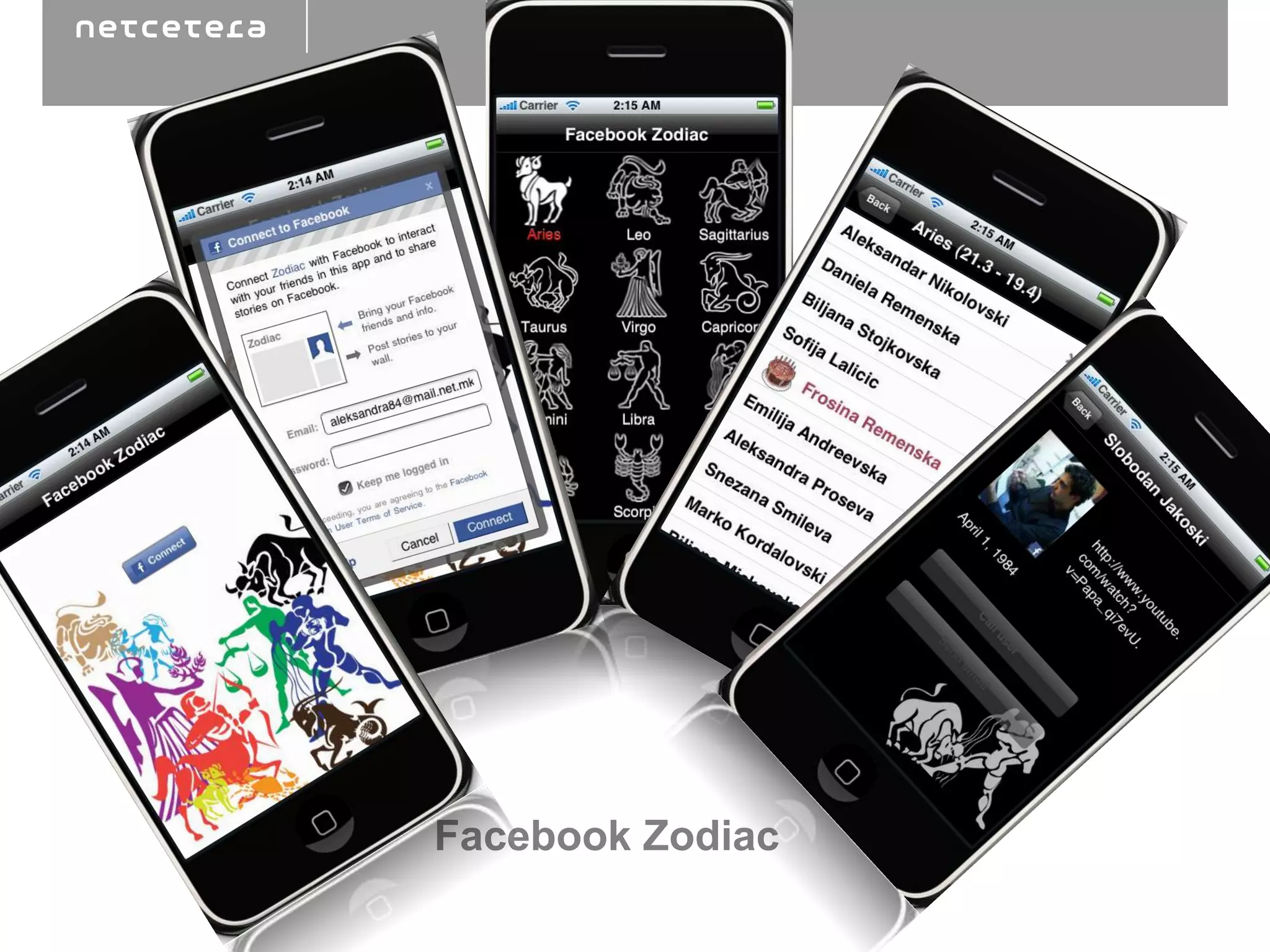
•Facebook Zodiac
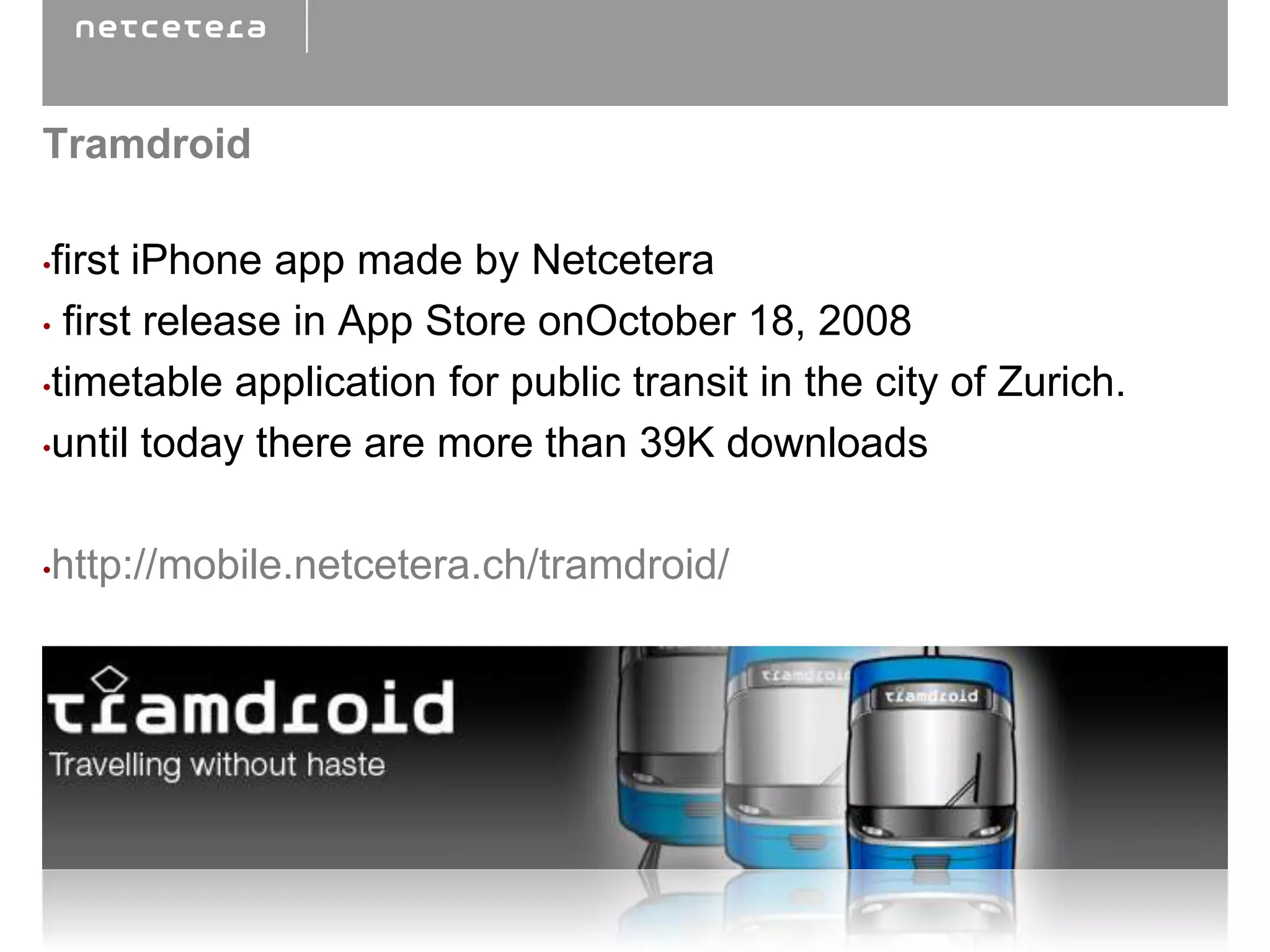
Tramdroid

•first iPhone app made by Netcetera
• first release in App Store onOctober 18, 2008

•timetable application for public transit in the city of Zurich.

•until today there are more than 39K downloads


•http://mobile.netcetera.ch/tramdroid/
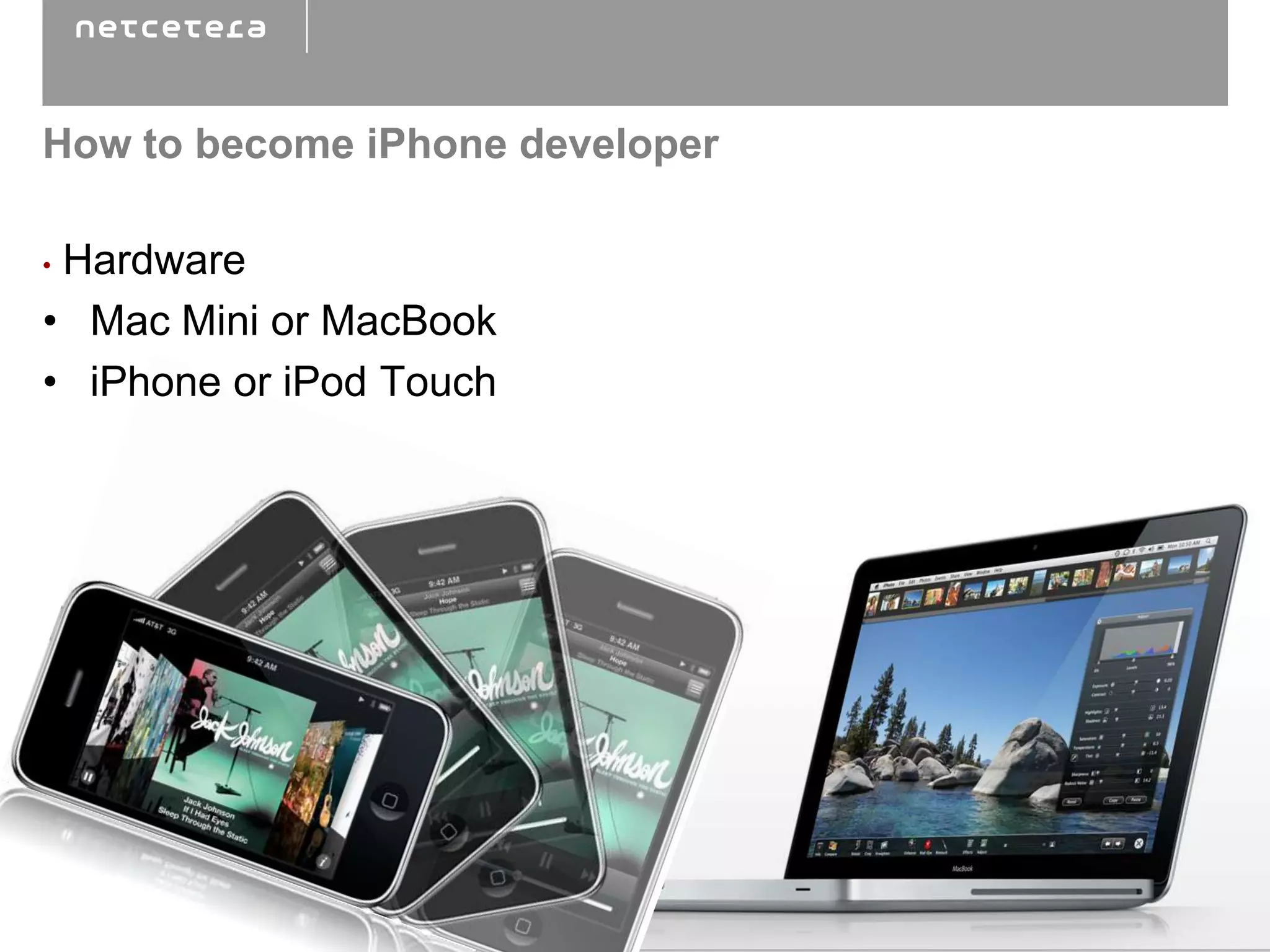
How to become iPhone developer

•Hardware
• Mac Mini or MacBook
• iPhone or iPod Touch
How to become iPhone developer

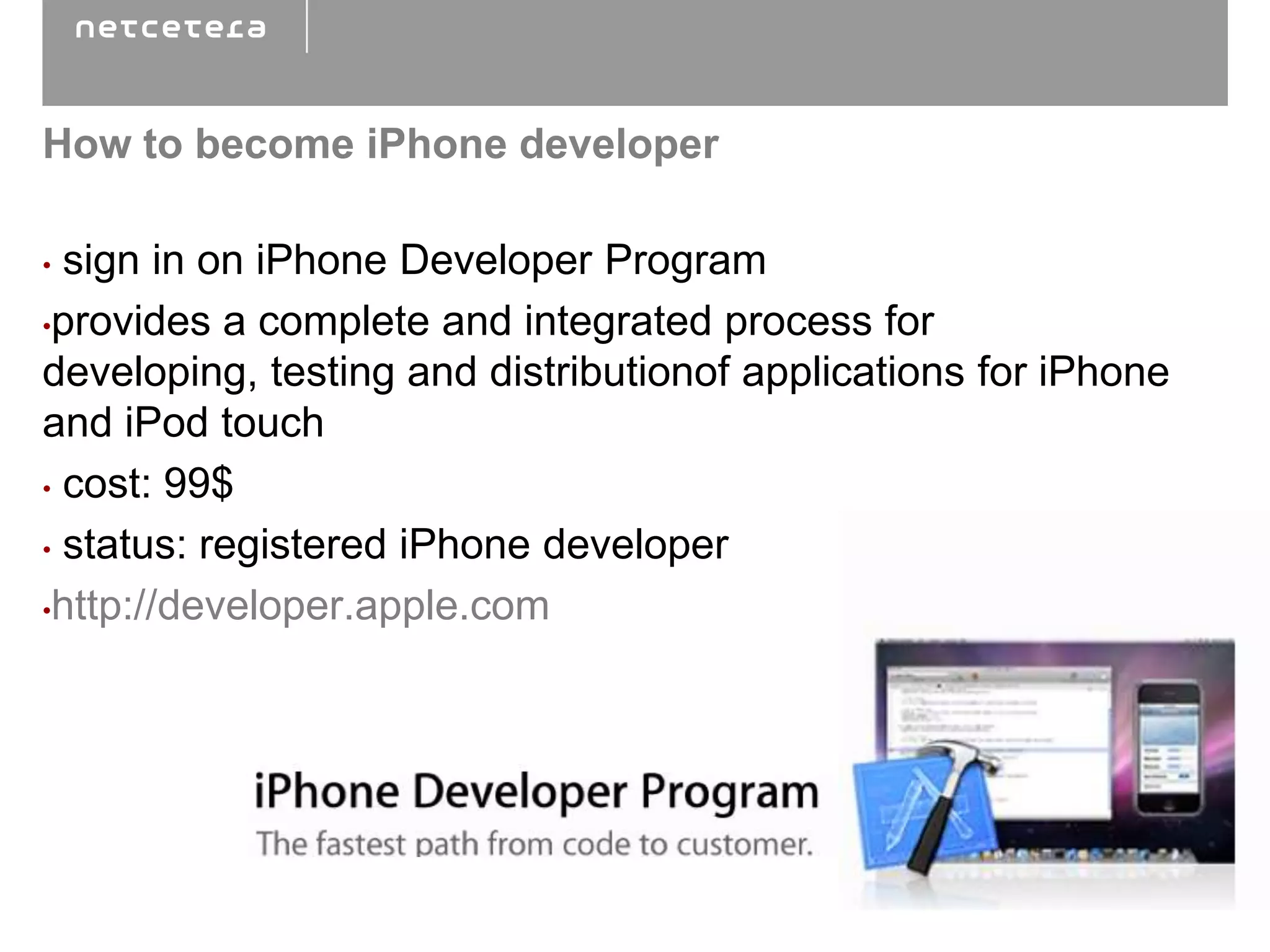
• sign in on iPhone Developer Program
•provides a complete and integrated process for
developing, testing and distributionof applications for iPhone
and iPod touch
• cost: 99$

• status: registered iPhone developer

•http://developer.apple.com
iPhone Developer Program

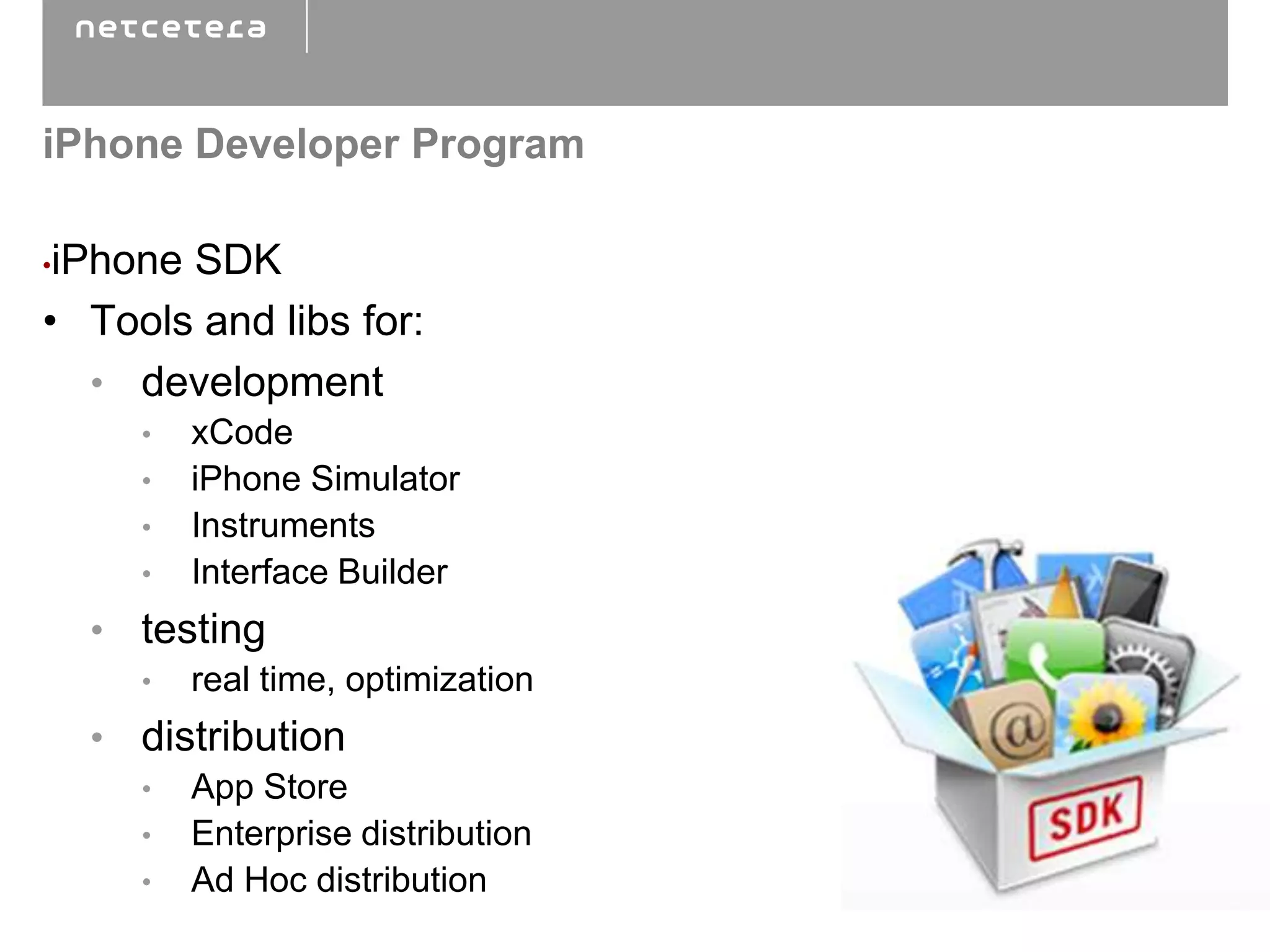
•iPhone SDK
• Tools and libs for:
   • development
      •   xCode
      •   iPhone Simulator
      •   Instruments
      •   Interface Builder
    • testing
      •   real time, optimization
    • distribution
      •   App Store
      •   Enterprise distribution
      •   Ad Hoc distribution
iPhone OS overview

•operating system developed by Apple Inc. for the iPhone and
iPod Touch
•similar to Mac OS X


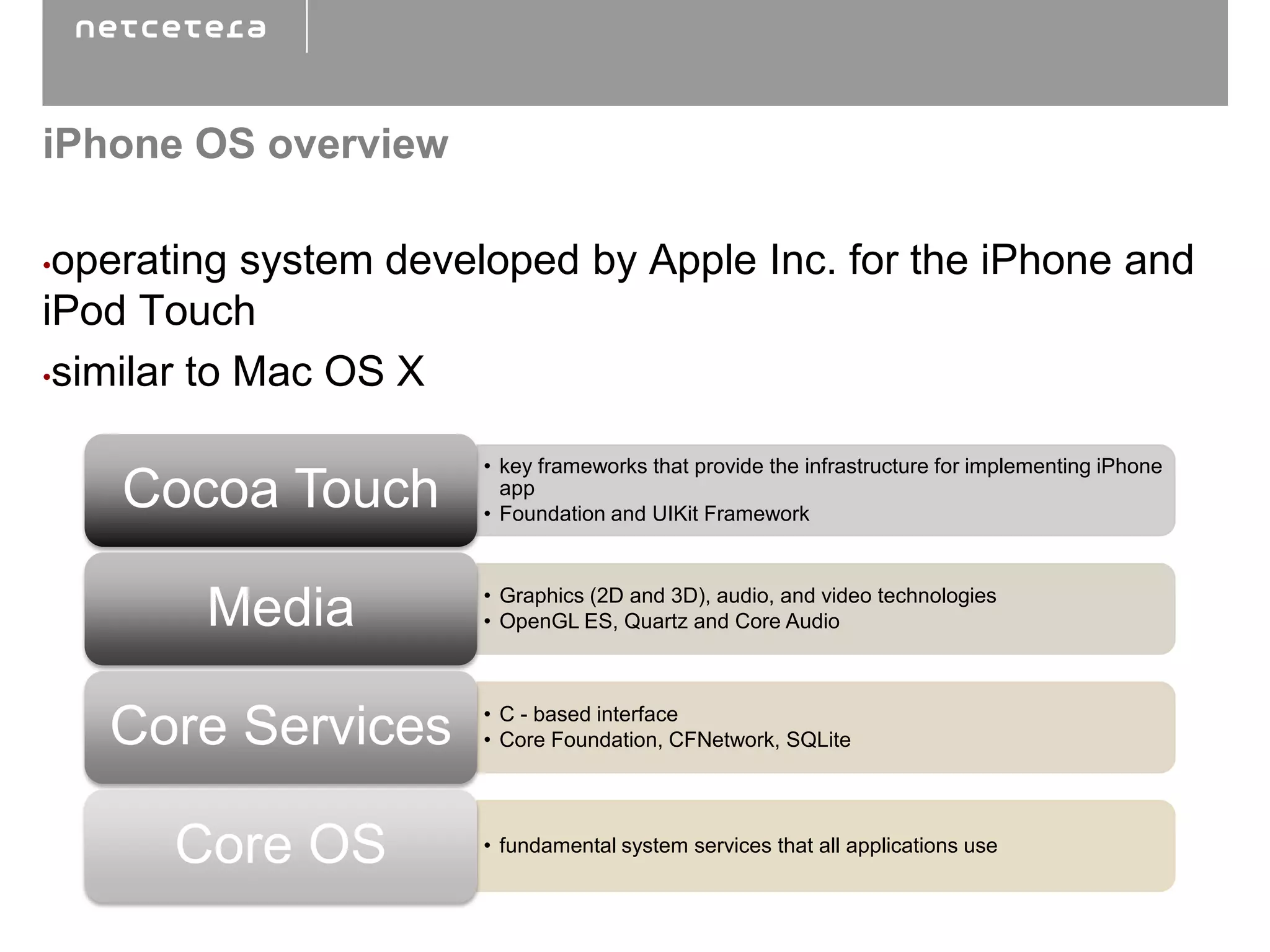
                      • key frameworks that provide the infrastructure for implementing iPhone
    Cocoa Touch         app
                      • Foundation and UIKit Framework


                      • Graphics (2D and 3D), audio, and video technologies
        Media         • OpenGL ES, Quartz and Core Audio


                      • C - based interface
    Core Services     • Core Foundation, CFNetwork, SQLite


      Core OS         • fundamental system services that all applications use
Core Application Architecture

•Every iPhone app is created by using the UIKit Framework
• From the time the application is launched by the user, to the
time it exits, the UIKit framework manage it
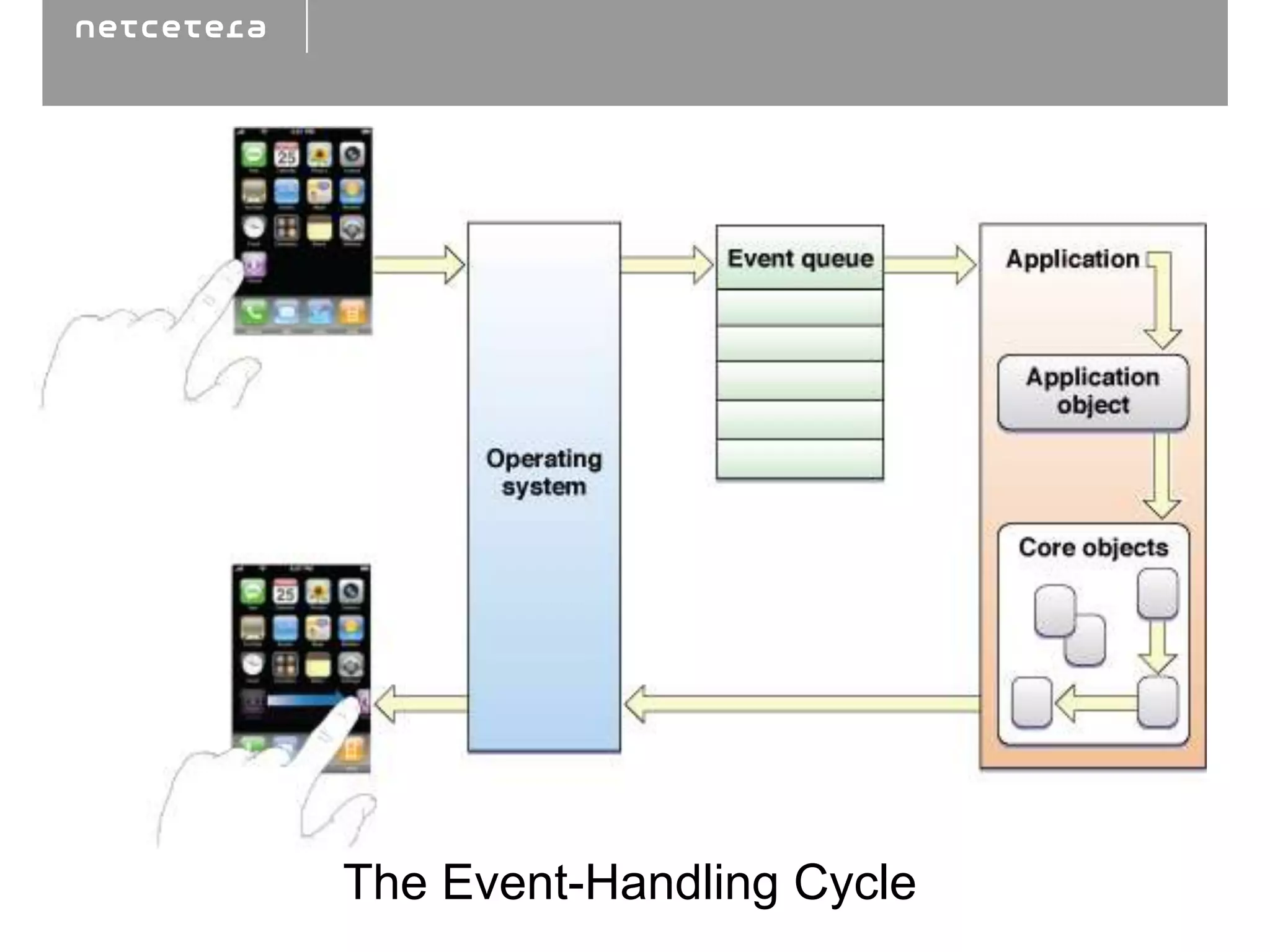
•the application continuouslyreceives events from the system

and must respond to those events
•UIApplication object is receiving those events, but responding
to the events should be done in the code
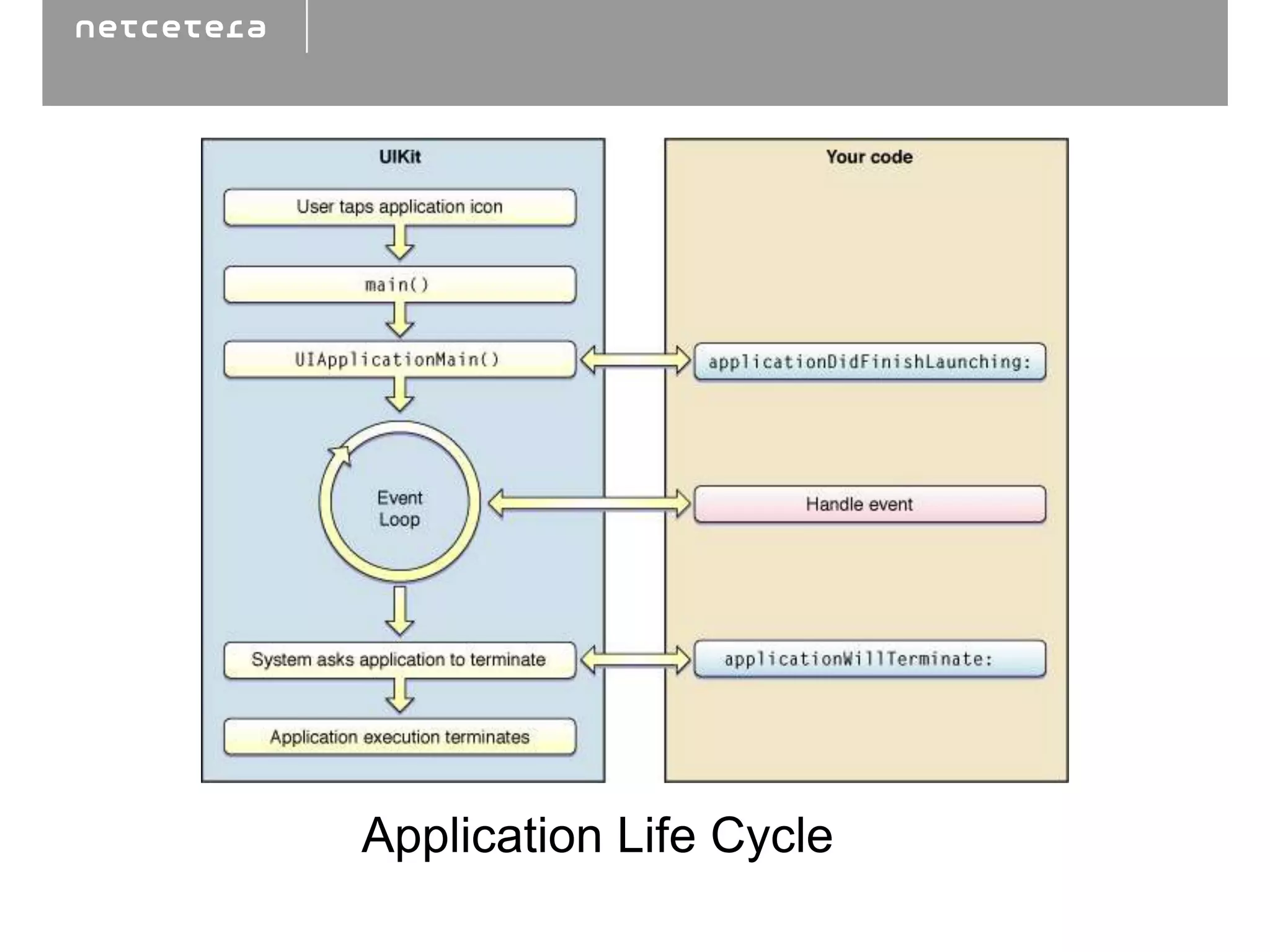
Application Life Cycle


      Application Life Cycle
The Event-Handling Cycle
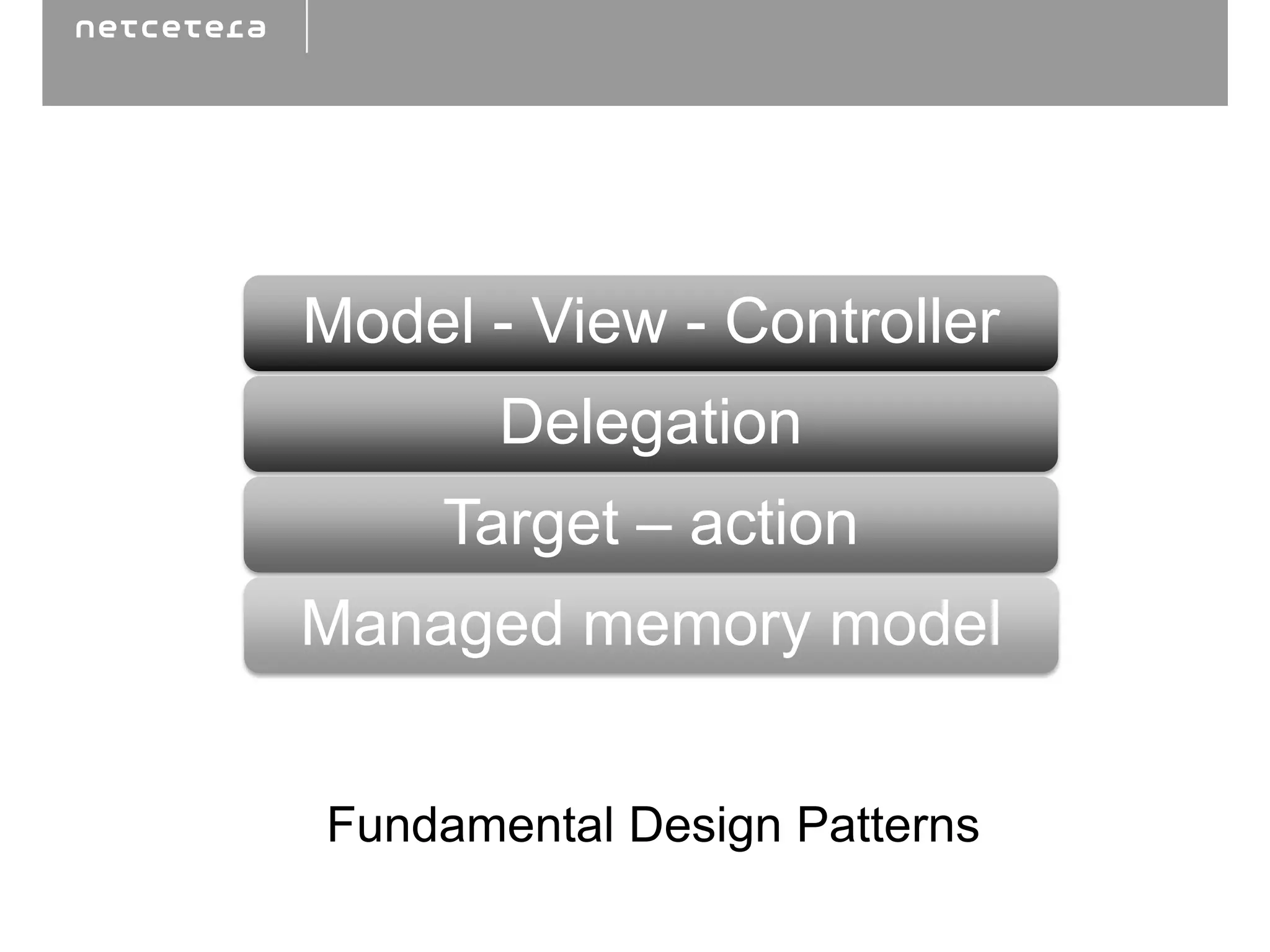
Model - View - Controller
       Delegation
     Target – action
Managed memory model


Fundamental Design Patterns
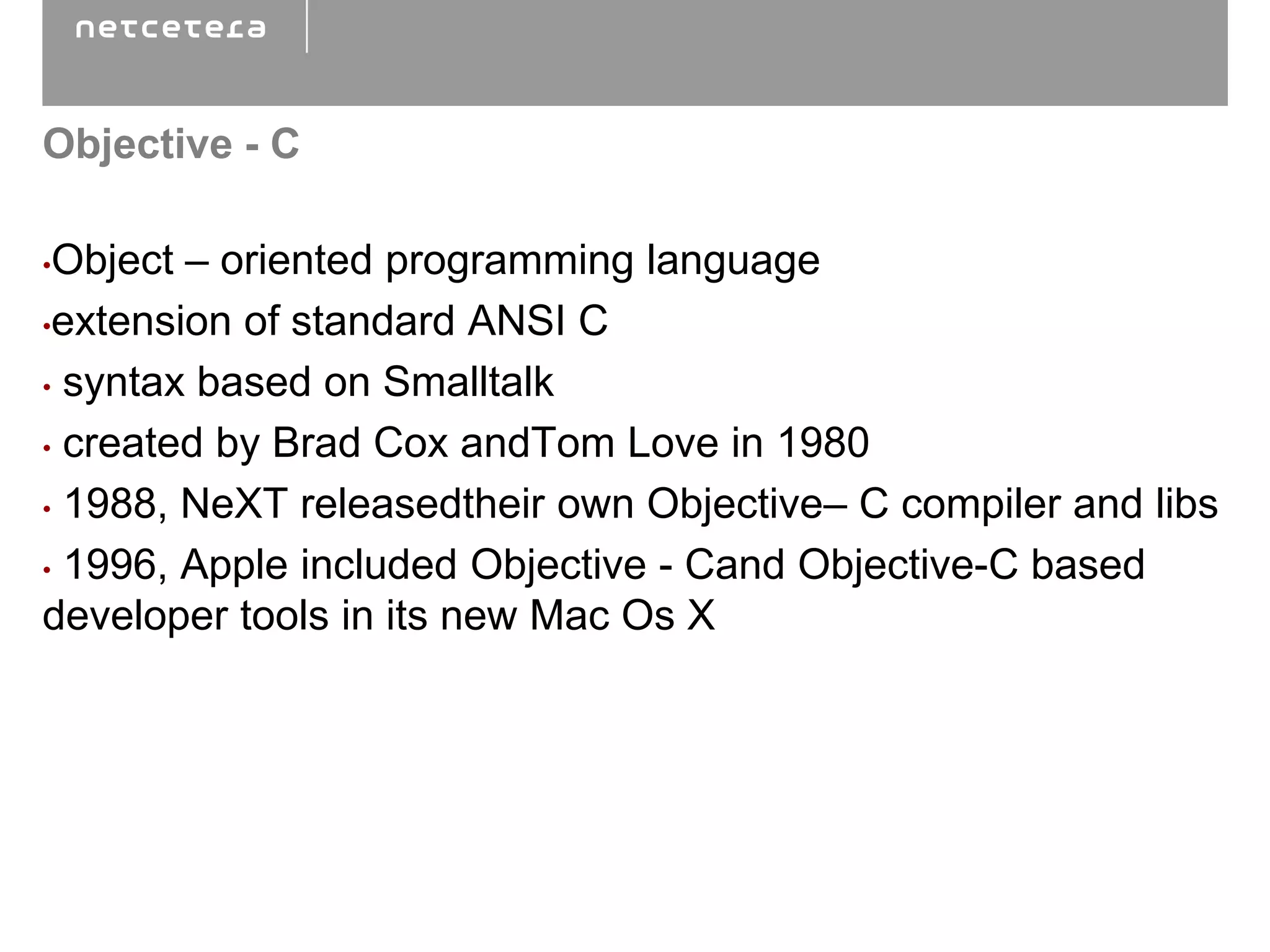
Objective - C

•Object – oriented programming language
•extension of standard ANSI C

• syntax based on Smalltalk

• created by Brad Cox andTom Love in 1980

• 1988, NeXT releasedtheir own Objective– C compiler and libs

• 1996, Apple included Objective - Cand Objective-C based
developer tools in its new Mac Os X
Objective - C

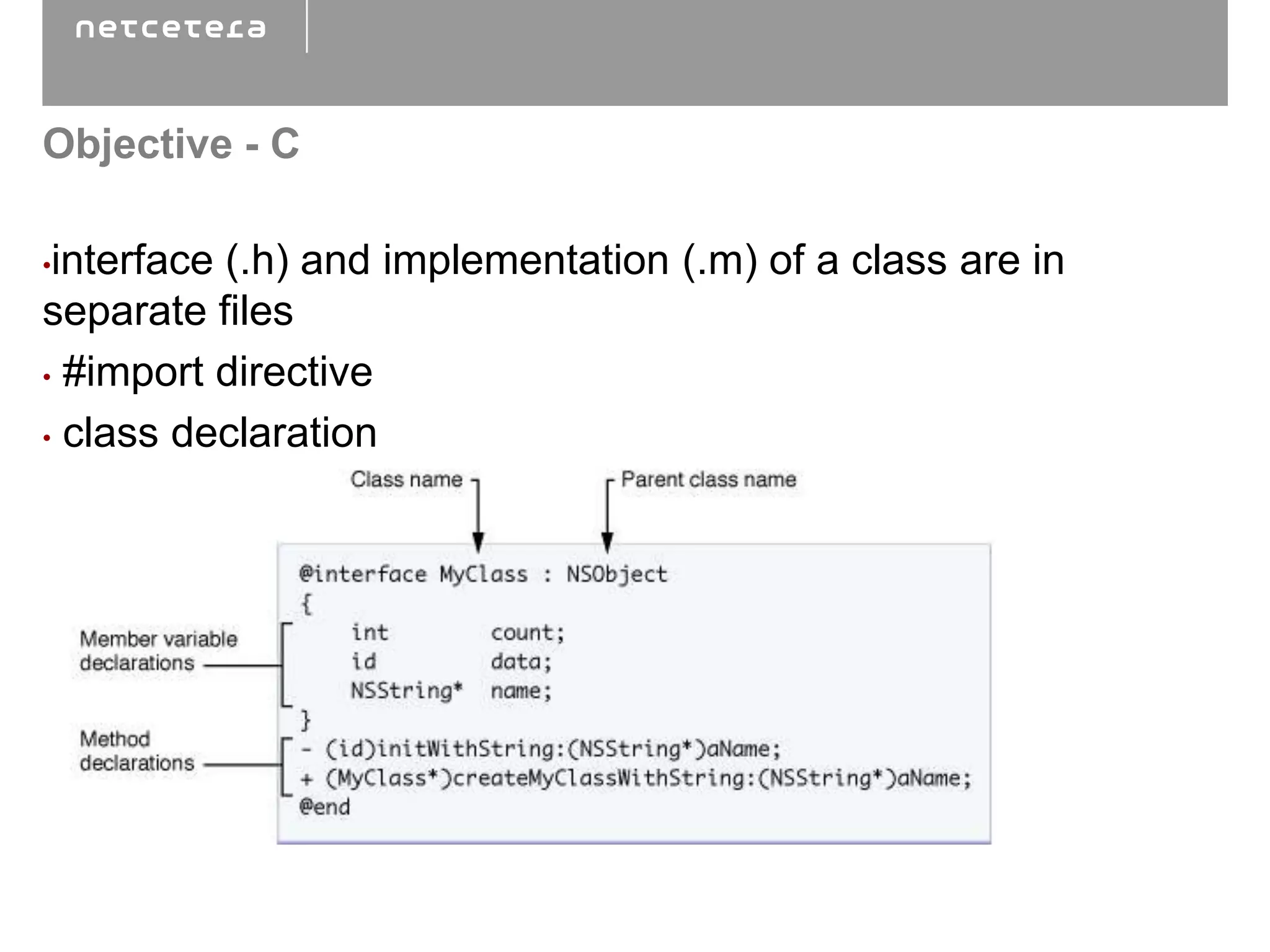
•interface (.h) and implementation (.m) of a class are in
separate files
• #import directive

• class declaration
Objective - C

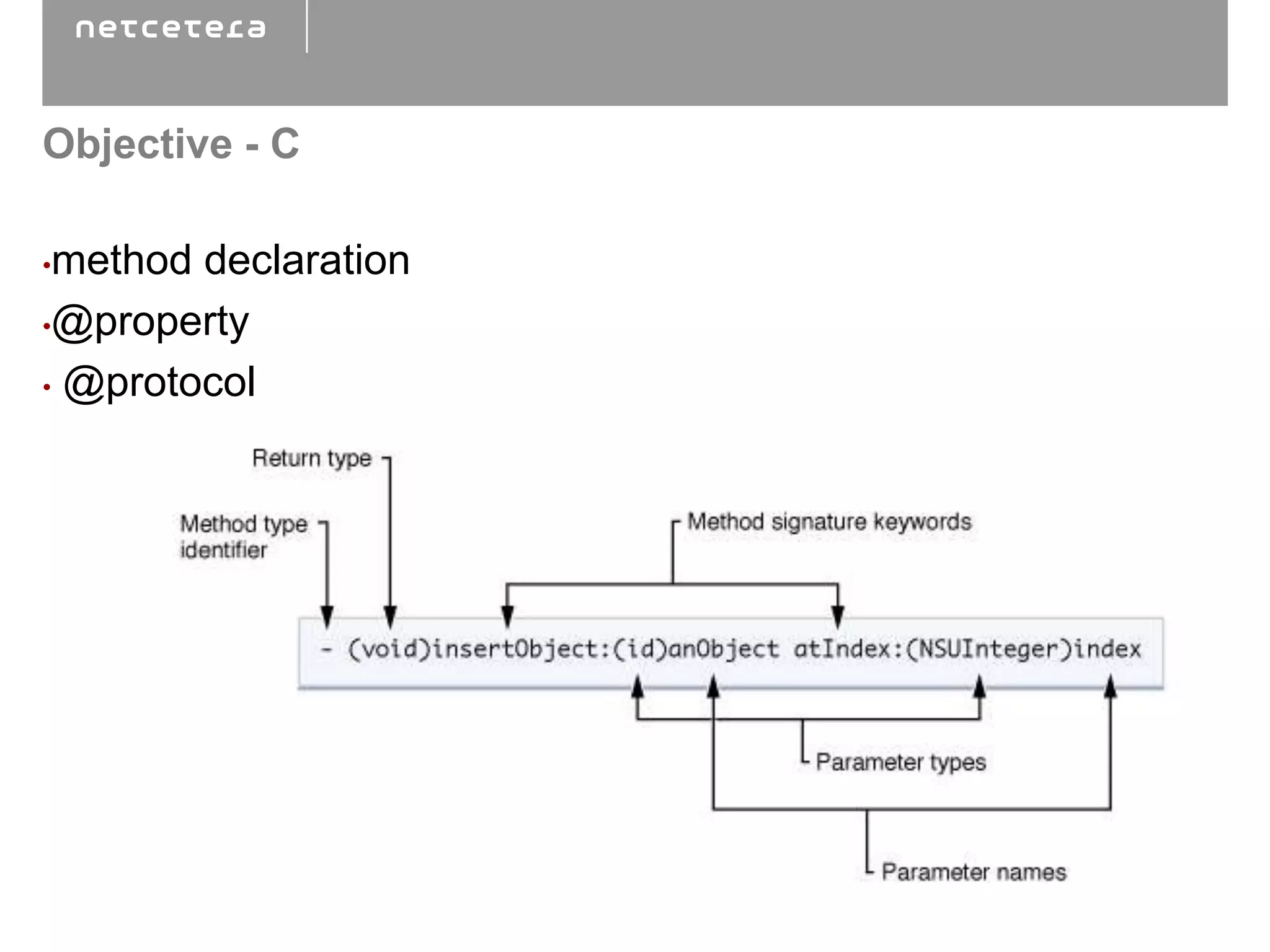
•method declaration
•@property

• @protocol
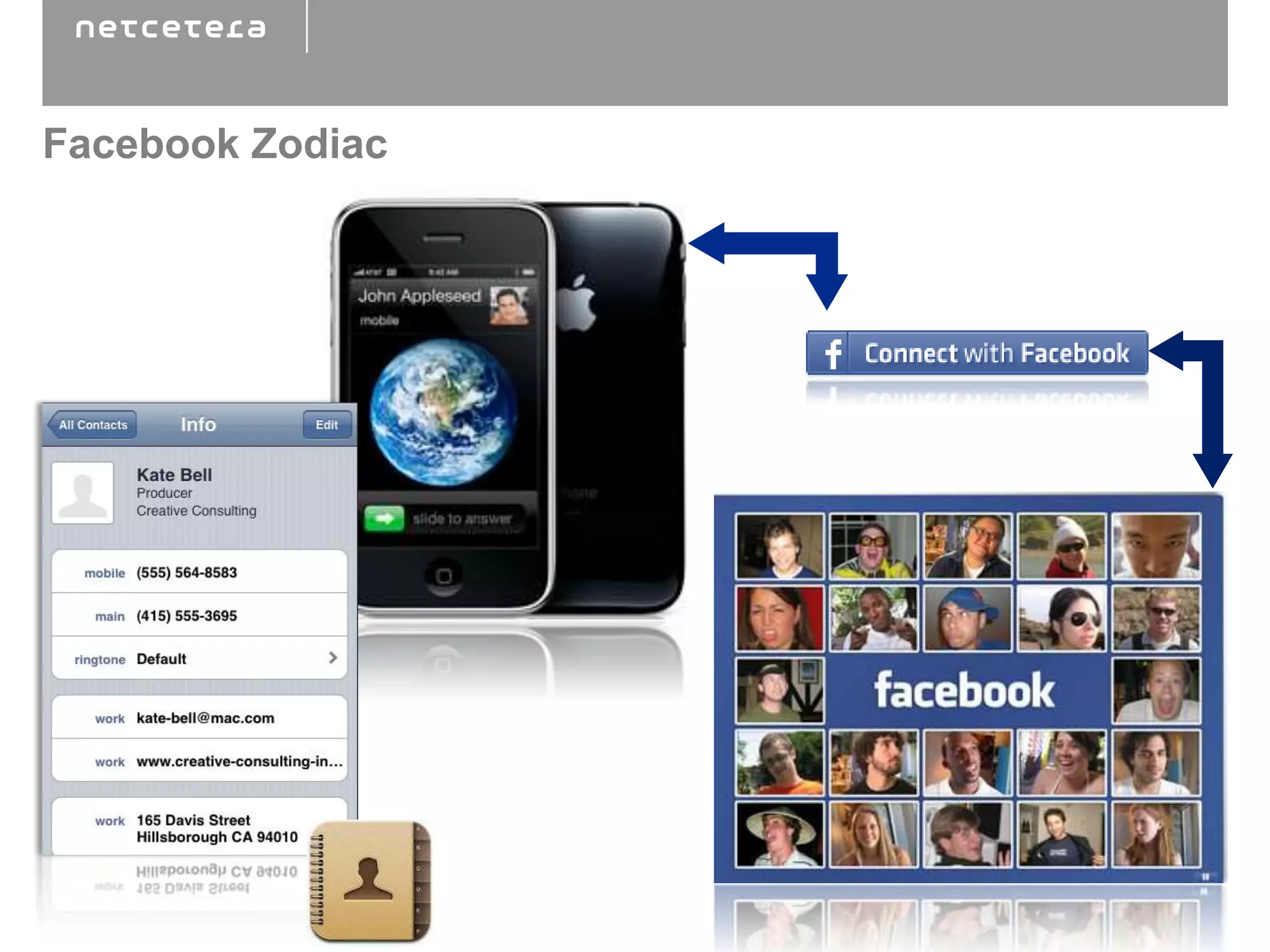
Facebook Zodiac
Facebook Connect foriPhone

•released on March 14, 2009
•Facebook Connect provides

   • Login mechanism
   • User session data
   • Integration with Feed application
   • ability to call methods from the Facebook API


http://svn.facebook.com/svnroot/platform/clients/packages/fbc
•

onnect-iphone.zip
Facebook Zodiac
Questions ?

How to become iPhone developer

  • 1.
    how to becomeiPhone developer:)))
  • 2.
    Agenda •Tramdroid • How tobecome iPhone developer • iPhone OS overview • Core Application Architecture •Facebook Zodiac
  • 3.
    Tramdroid •first iPhone appmade by Netcetera • first release in App Store onOctober 18, 2008 •timetable application for public transit in the city of Zurich. •until today there are more than 39K downloads •http://mobile.netcetera.ch/tramdroid/
  • 4.
    How to becomeiPhone developer •Hardware • Mac Mini or MacBook • iPhone or iPod Touch
  • 5.
    How to becomeiPhone developer • sign in on iPhone Developer Program •provides a complete and integrated process for developing, testing and distributionof applications for iPhone and iPod touch • cost: 99$ • status: registered iPhone developer •http://developer.apple.com
  • 6.
    iPhone Developer Program •iPhoneSDK • Tools and libs for: • development • xCode • iPhone Simulator • Instruments • Interface Builder • testing • real time, optimization • distribution • App Store • Enterprise distribution • Ad Hoc distribution
  • 7.
    iPhone OS overview •operatingsystem developed by Apple Inc. for the iPhone and iPod Touch •similar to Mac OS X • key frameworks that provide the infrastructure for implementing iPhone Cocoa Touch app • Foundation and UIKit Framework • Graphics (2D and 3D), audio, and video technologies Media • OpenGL ES, Quartz and Core Audio • C - based interface Core Services • Core Foundation, CFNetwork, SQLite Core OS • fundamental system services that all applications use
  • 8.
    Core Application Architecture •EveryiPhone app is created by using the UIKit Framework • From the time the application is launched by the user, to the time it exits, the UIKit framework manage it •the application continuouslyreceives events from the system and must respond to those events •UIApplication object is receiving those events, but responding to the events should be done in the code
  • 9.
    Application Life Cycle Application Life Cycle
  • 10.
  • 11.
    Model - View- Controller Delegation Target – action Managed memory model Fundamental Design Patterns
  • 12.
    Objective - C •Object– oriented programming language •extension of standard ANSI C • syntax based on Smalltalk • created by Brad Cox andTom Love in 1980 • 1988, NeXT releasedtheir own Objective– C compiler and libs • 1996, Apple included Objective - Cand Objective-C based developer tools in its new Mac Os X
  • 13.
    Objective - C •interface(.h) and implementation (.m) of a class are in separate files • #import directive • class declaration
  • 14.
    Objective - C •methoddeclaration •@property • @protocol
  • 15.
  • 16.
    Facebook Connect foriPhone •releasedon March 14, 2009 •Facebook Connect provides • Login mechanism • User session data • Integration with Feed application • ability to call methods from the Facebook API http://svn.facebook.com/svnroot/platform/clients/packages/fbc • onnect-iphone.zip
  • 17.
  • 18.

Editor's Notes

  • #10 The application life cycle constitutes the sequence of events that occurs between the launch and termination of your application. In iPhone OS, the user launches your application by tapping its icon on the Home screen. Shortly after the tap occurs, the system displays some transitional graphics and proceeds to launch your application by calling its main function. From this point on, the bulk of the initialization work is handed over to UIKit, which loads the application’s user interface and readies its event loop.During the event loop, UIKit coordinates the delivery of events to your custom objects and responds to commands issued by your application. When the user performs an action that would cause your application to quit, UIKit notifies your application and begins the termination process.