
Submitted to:- Submitted by:-
DR. Pervez Talib Shahbaz hasan(14mba-11)
Faizan khan(14MBA-05)
ingredients
 Case study
 What science teaches us
 Gestures speak louder than words
 Principle of public speaking
Be nervous don’t panic
Be open
Connect with the audience
Be passionate about your topic
 Conclusion
Case study
At the meeting
 Carol a vice president of sales, strides energetically
to the podium.
 Carol talks to the audience, and tells a story from
her days as a field reporter.
 She accents her words with animated gestures
 Rehearsal carried in front of a small audience of
trusted colleagues to deliver her closer confidently.
Case study(cont.)
 But carol senses that something’s amiss:-
The audience is not exhibiting the kind of
enthusiasm needed to get the year off to a great
start.
She begins to panic: what’s happening? Is
there anything she can do to salvage the
situation.
What science teaches us
 If spoken message and body language are
mismatched, audiences will respond to the
nonverbal message
 Peoples natural and unstudied gestures are often
indicators of what they will think and say next
Gestures speak louder than.......
 We nod vigorously, shake our heads, roll our eyes,
all of which express reactions more immediately
and more powerfully than words can
 Non verbal elements are:-
 maintaining eye contact
Spreading of arms
Walking from behind the podium
 If human beings the second, non verbal
conversation actually starts first
Principle of public speaking
 Be nervous don’t panic
 Open to your audience
 Connecting with your audience
 Being passionate
 Speaking slowly
 Throw your fear
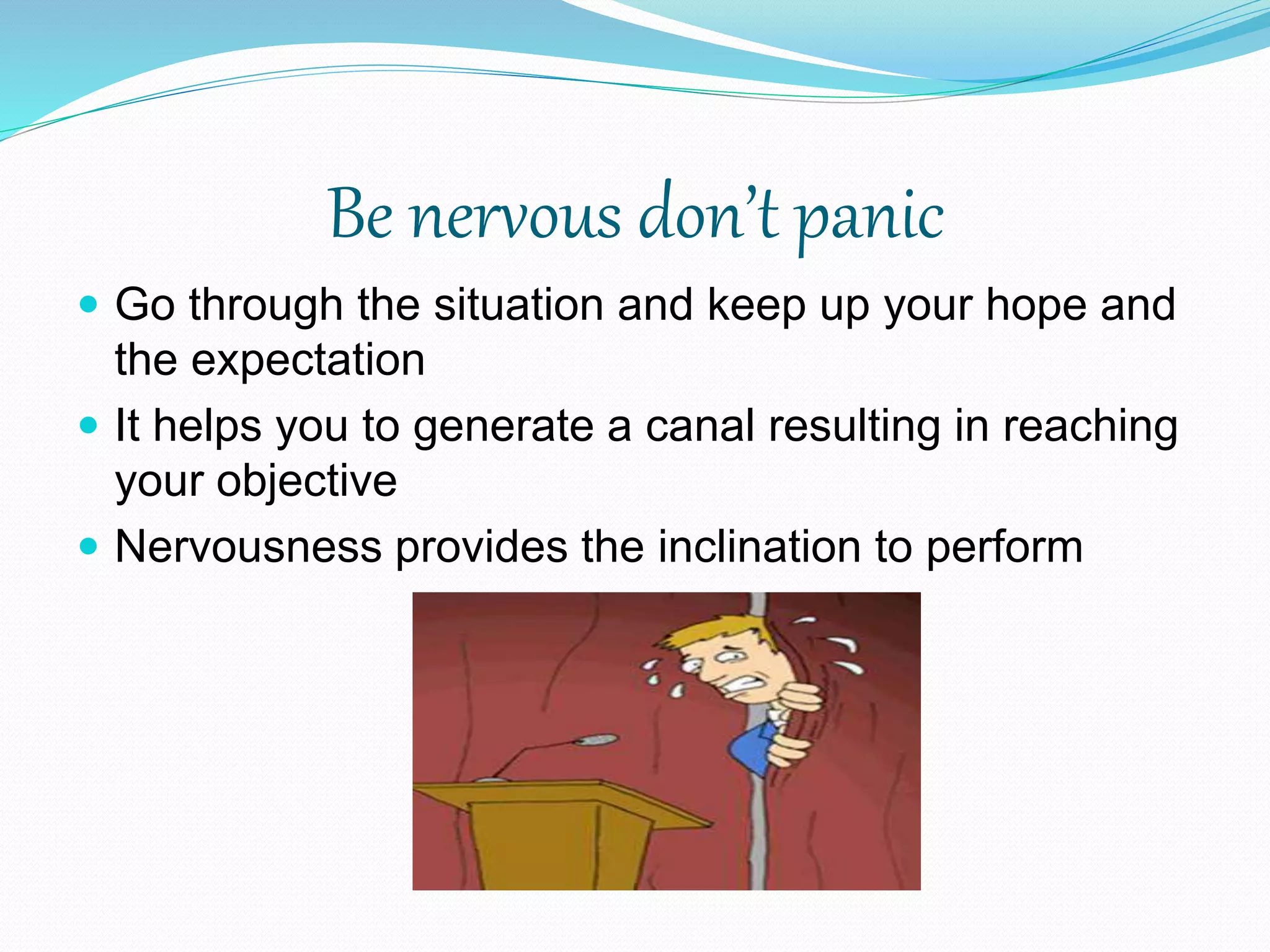
Be nervous don’t panic
 Go through the situation and keep up your hope and
the expectation
 It helps you to generate a canal resulting in reaching
your objective
 Nervousness provides the inclination to perform
To be open
 Imagine giving your presentation to someone with
whom you are completely relaxed.
 Notice what that mental picture looks like but
particularly what it feels like.
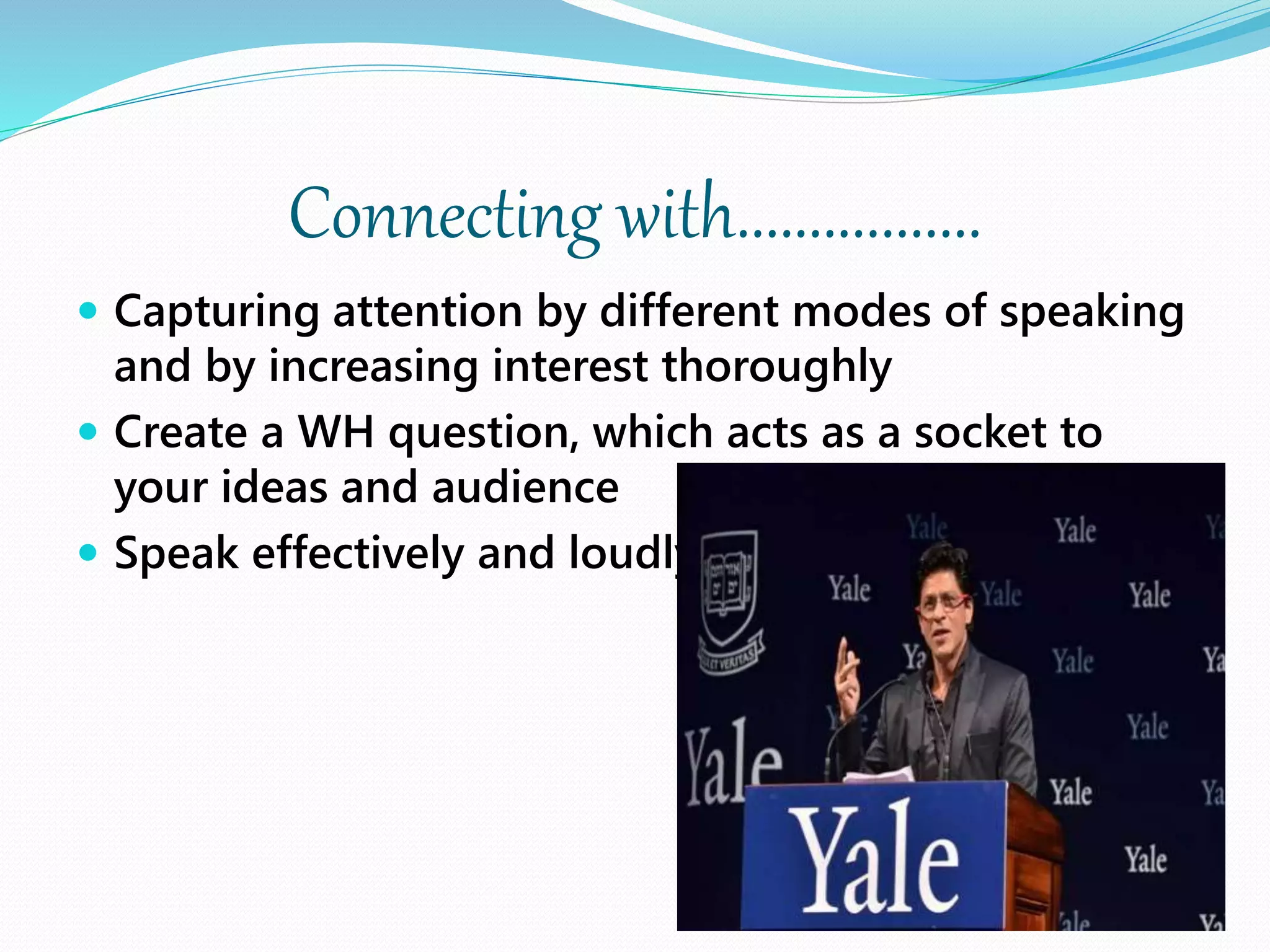
Connecting with.................
 Capturing attention by different modes of speaking
and by increasing interest thoroughly
 Create a WH question, which acts as a socket to
your ideas and audience
 Speak effectively and loudly
Being passionate about your topic
 Think and believe in subject matter which you have
to get through
 Try to get the best hold and feeling of it deeply
 Get focused as much as possible
 Commitment and hard work should be there to get
it crystal clear
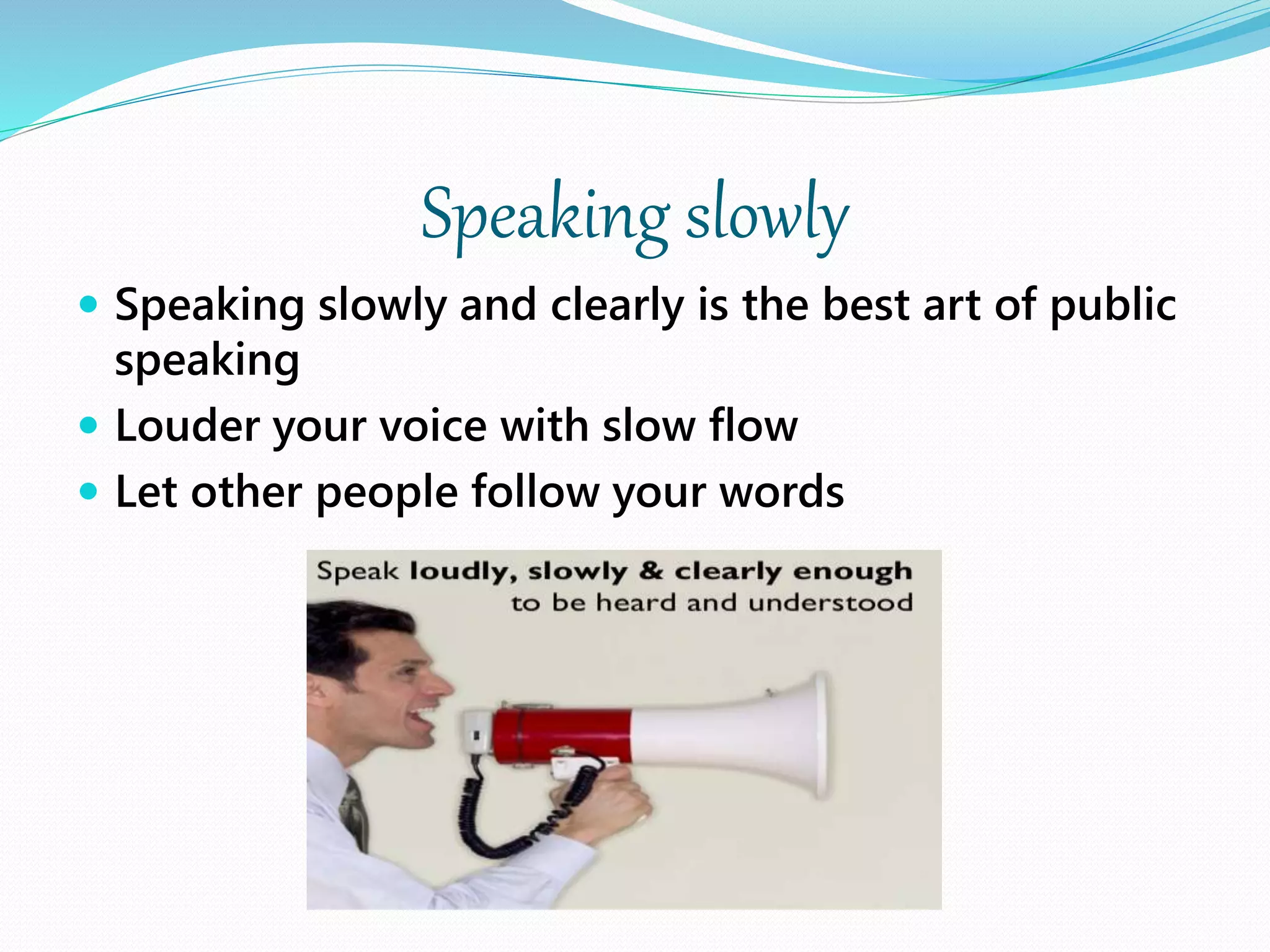
Speaking slowly
 Speaking slowly and clearly is the best art of public
speaking
 Louder your voice with slow flow
 Let other people follow your words
conclusion
 Speaking is an art
 More practice more gain
 Be effective as much as possible
 Get your content up to the mark
How to become an Authentic speaker

How to become an Authentic speaker

  • 1.
    Submitted to:- Submittedby:- DR. Pervez Talib Shahbaz hasan(14mba-11) Faizan khan(14MBA-05)
  • 2.
    ingredients  Case study What science teaches us  Gestures speak louder than words  Principle of public speaking Be nervous don’t panic Be open Connect with the audience Be passionate about your topic  Conclusion
  • 3.
    Case study At themeeting  Carol a vice president of sales, strides energetically to the podium.  Carol talks to the audience, and tells a story from her days as a field reporter.  She accents her words with animated gestures  Rehearsal carried in front of a small audience of trusted colleagues to deliver her closer confidently.
  • 4.
    Case study(cont.)  Butcarol senses that something’s amiss:- The audience is not exhibiting the kind of enthusiasm needed to get the year off to a great start. She begins to panic: what’s happening? Is there anything she can do to salvage the situation.
  • 5.
    What science teachesus  If spoken message and body language are mismatched, audiences will respond to the nonverbal message  Peoples natural and unstudied gestures are often indicators of what they will think and say next
  • 6.
    Gestures speak louderthan.......  We nod vigorously, shake our heads, roll our eyes, all of which express reactions more immediately and more powerfully than words can  Non verbal elements are:-  maintaining eye contact Spreading of arms Walking from behind the podium  If human beings the second, non verbal conversation actually starts first
  • 7.
    Principle of publicspeaking  Be nervous don’t panic  Open to your audience  Connecting with your audience  Being passionate  Speaking slowly  Throw your fear
  • 8.
    Be nervous don’tpanic  Go through the situation and keep up your hope and the expectation  It helps you to generate a canal resulting in reaching your objective  Nervousness provides the inclination to perform
  • 9.
    To be open Imagine giving your presentation to someone with whom you are completely relaxed.  Notice what that mental picture looks like but particularly what it feels like.
  • 10.
    Connecting with.................  Capturingattention by different modes of speaking and by increasing interest thoroughly  Create a WH question, which acts as a socket to your ideas and audience  Speak effectively and loudly
  • 11.
    Being passionate aboutyour topic  Think and believe in subject matter which you have to get through  Try to get the best hold and feeling of it deeply  Get focused as much as possible  Commitment and hard work should be there to get it crystal clear
  • 12.
    Speaking slowly  Speakingslowly and clearly is the best art of public speaking  Louder your voice with slow flow  Let other people follow your words
  • 13.
    conclusion  Speaking isan art  More practice more gain  Be effective as much as possible  Get your content up to the mark