10 TIPS
F O R I M P R O V I N G Y O U R
S P E A K I N G S K I L L S
by
MARJORIE LEE NORTH
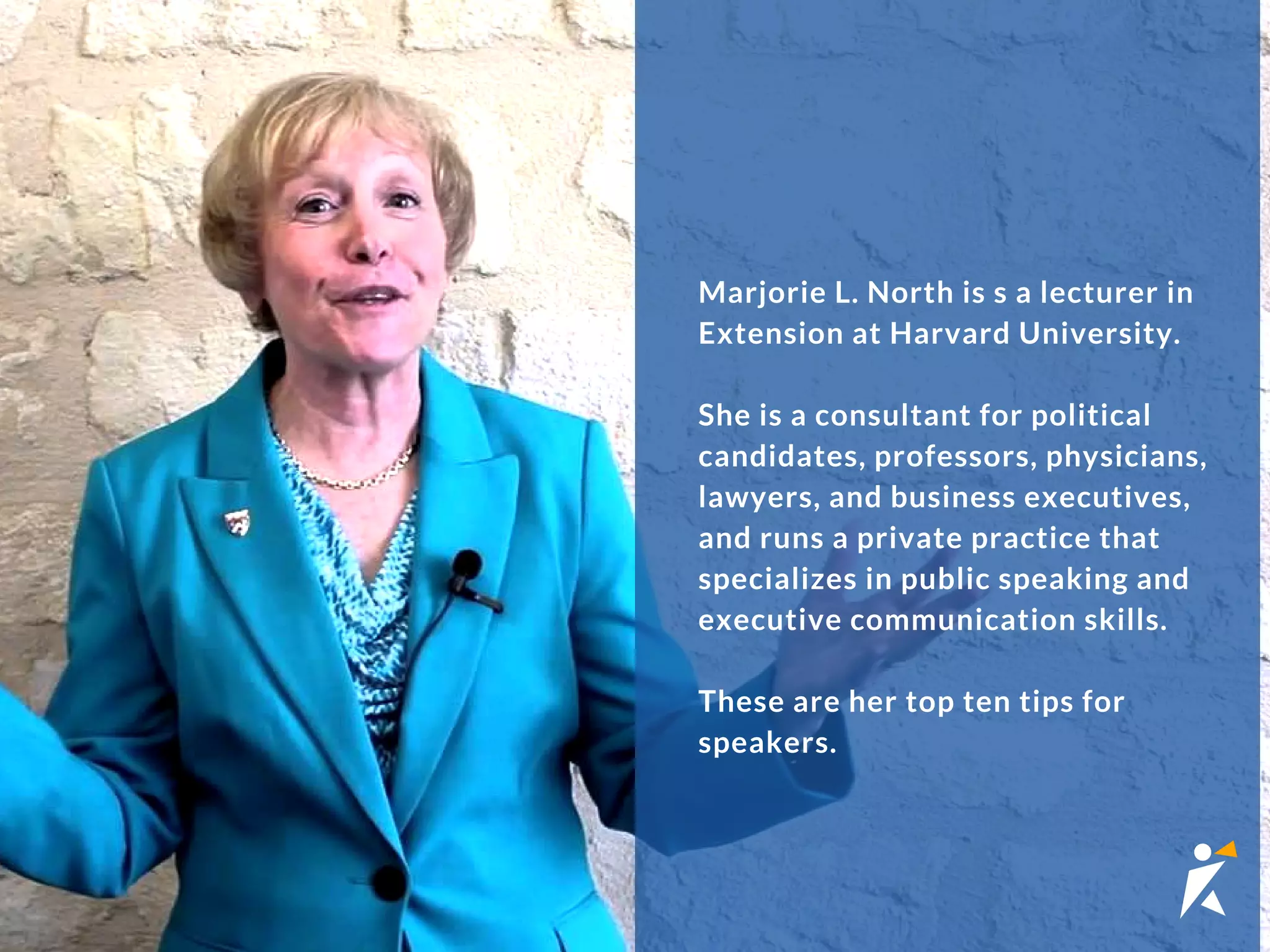
Marjorie L. North is s a lecturer in
Extension at Harvard University.
She is a consultant for political
candidates, professors, physicians,
lawyers, and business executives,
and runs a private practice that
specializes in public speaking and
executive communication skills. 
These are her top ten tips for
speakers. 
TIP #1
Nervousness is normal.
Practice and prepare.
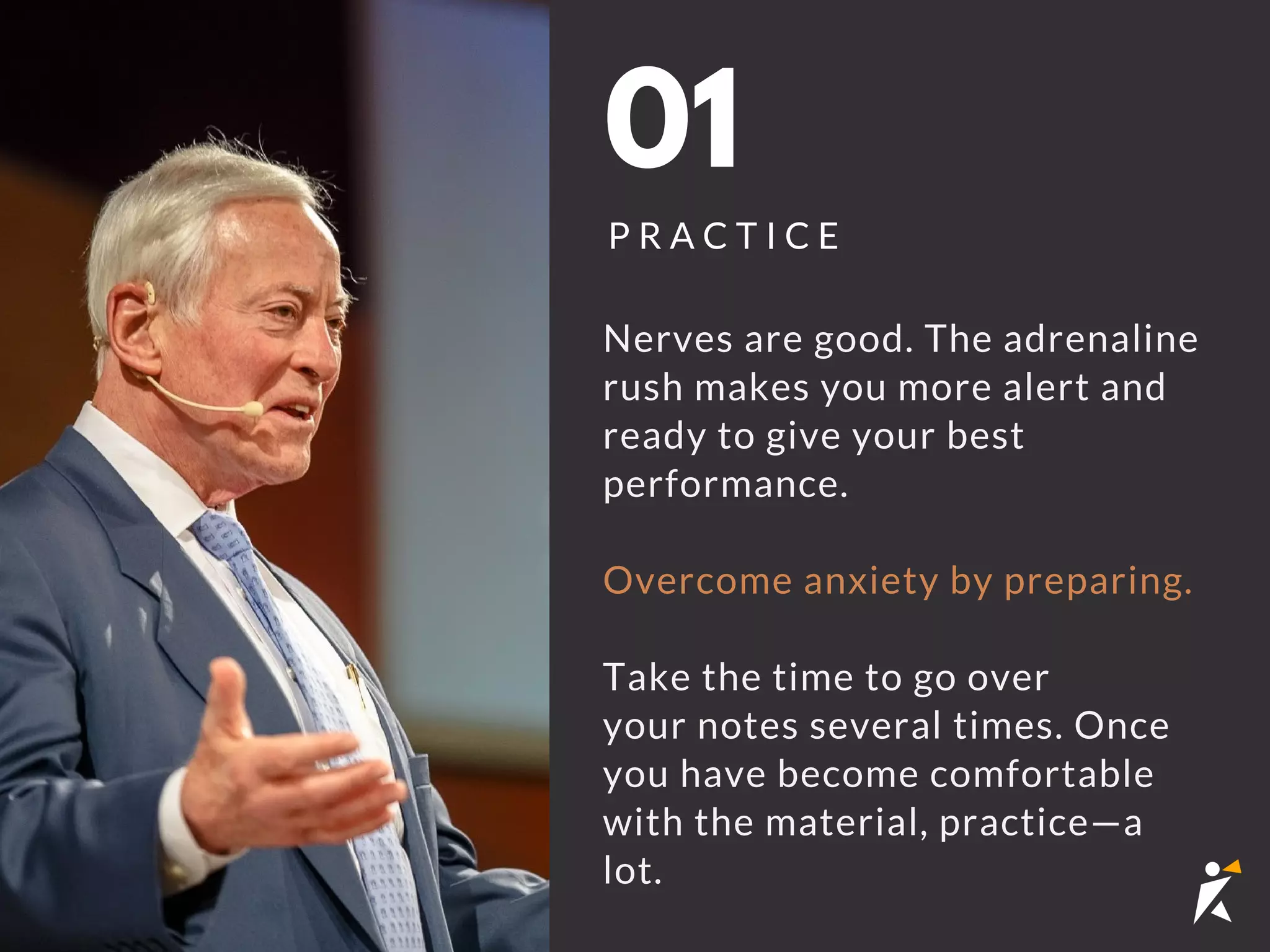
01
P R A C T I C E
Nerves are good. The adrenaline
rush makes you more alert and
ready to give your best
performance.
Overcome anxiety by preparing.
Take the time to go over
your notes several times. Once
you have become comfortable
with the material, practice—a
lot. 
TIP #2
Know your audience.
Your speech is about them,
not you.
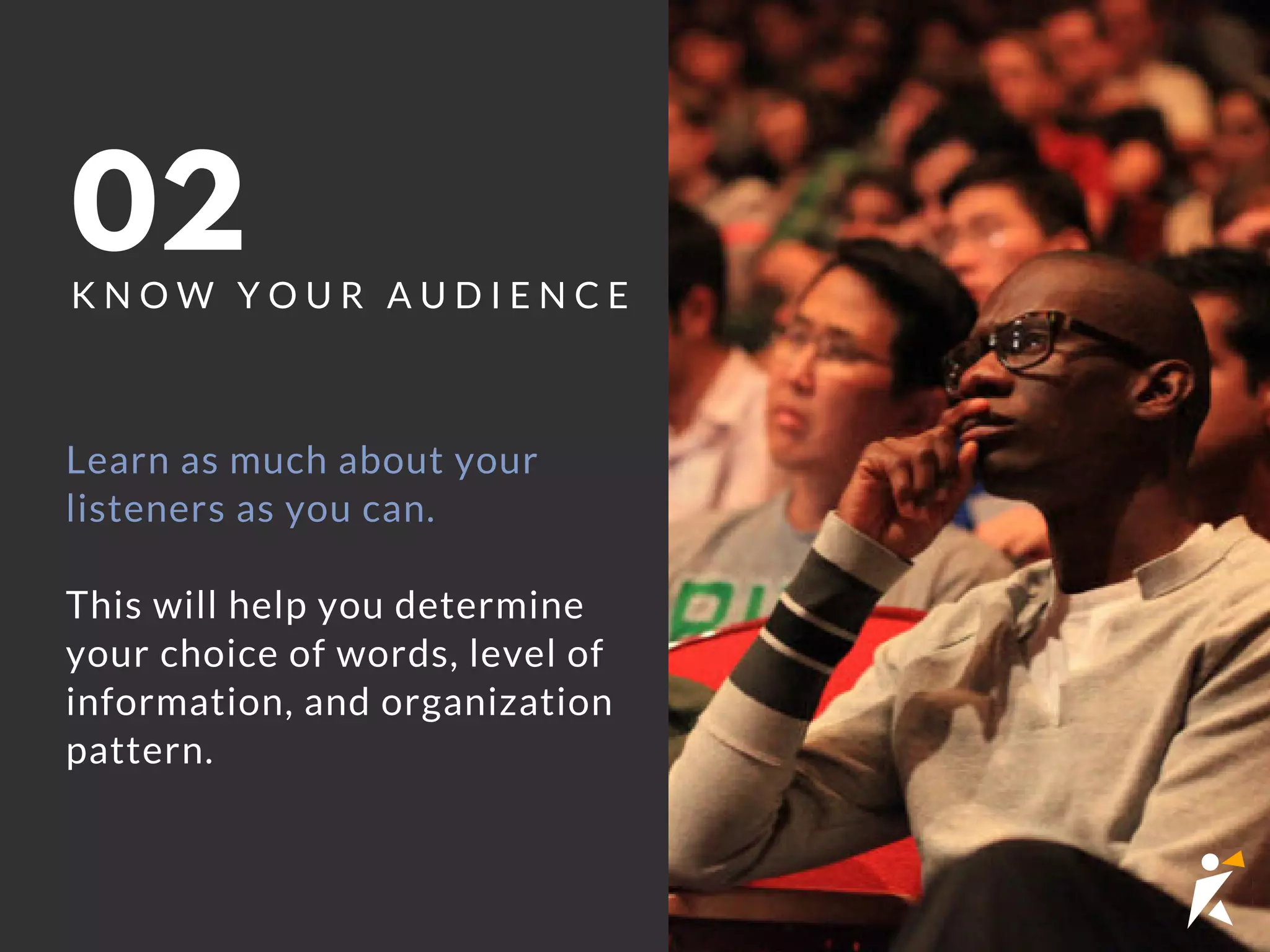
02K N O W Y O U R A U D I E N C E
Learn as much about your
listeners as you can.
This will help you determine
your choice of words, level of
information, and organization
pattern.
TIP #3
Organize your material in
the most effective manner
to attain your purpose.
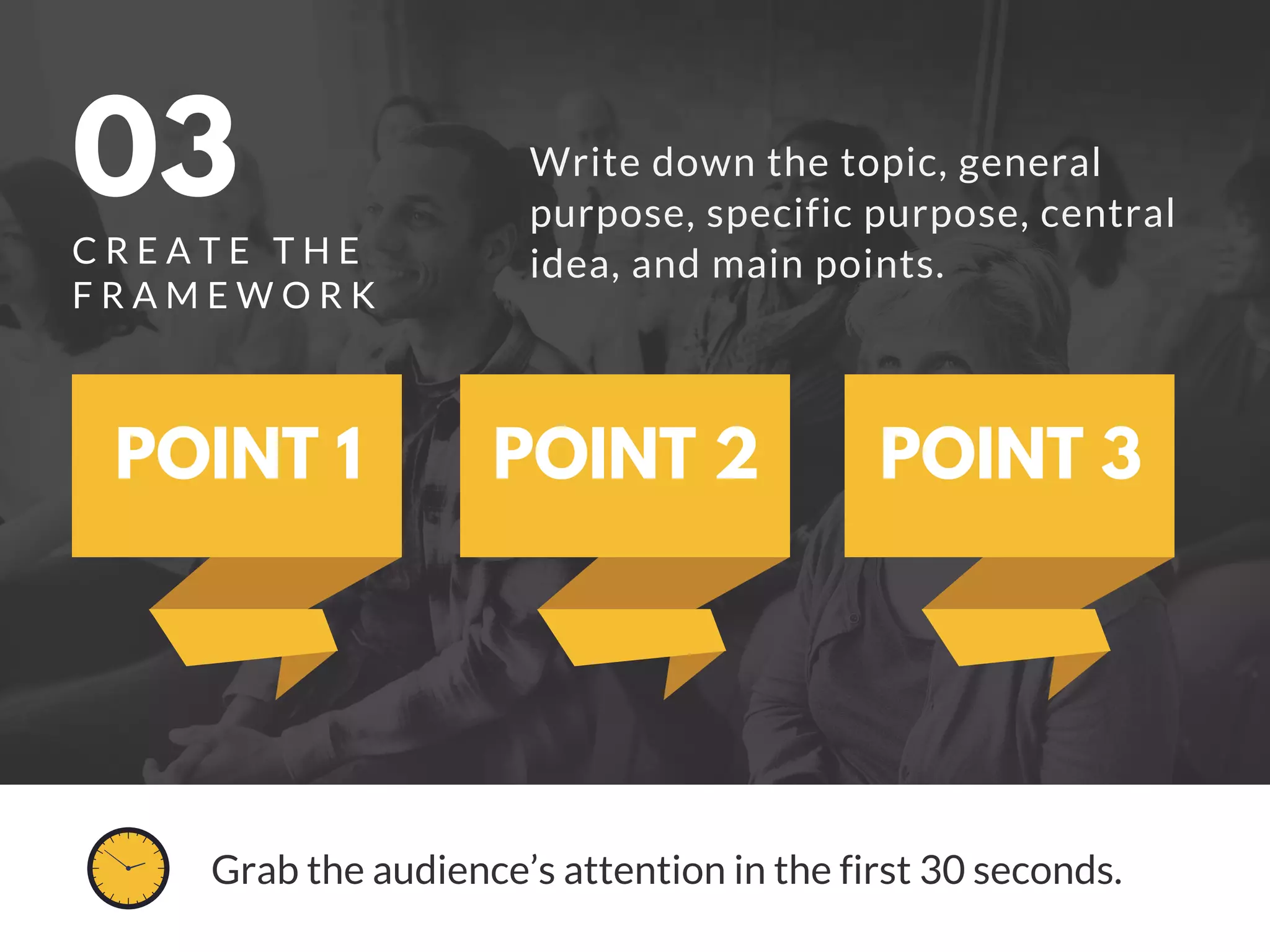
Write down the topic, general
purpose, specific purpose, central
idea, and main points.
POINT 1 POINT 2 POINT 3
03
C R E A T E T H E
F R A M E W O R K
Grab the audience’s attention in the first 30 seconds.
TIP #4
Watch for feedback.
Adapt to it.
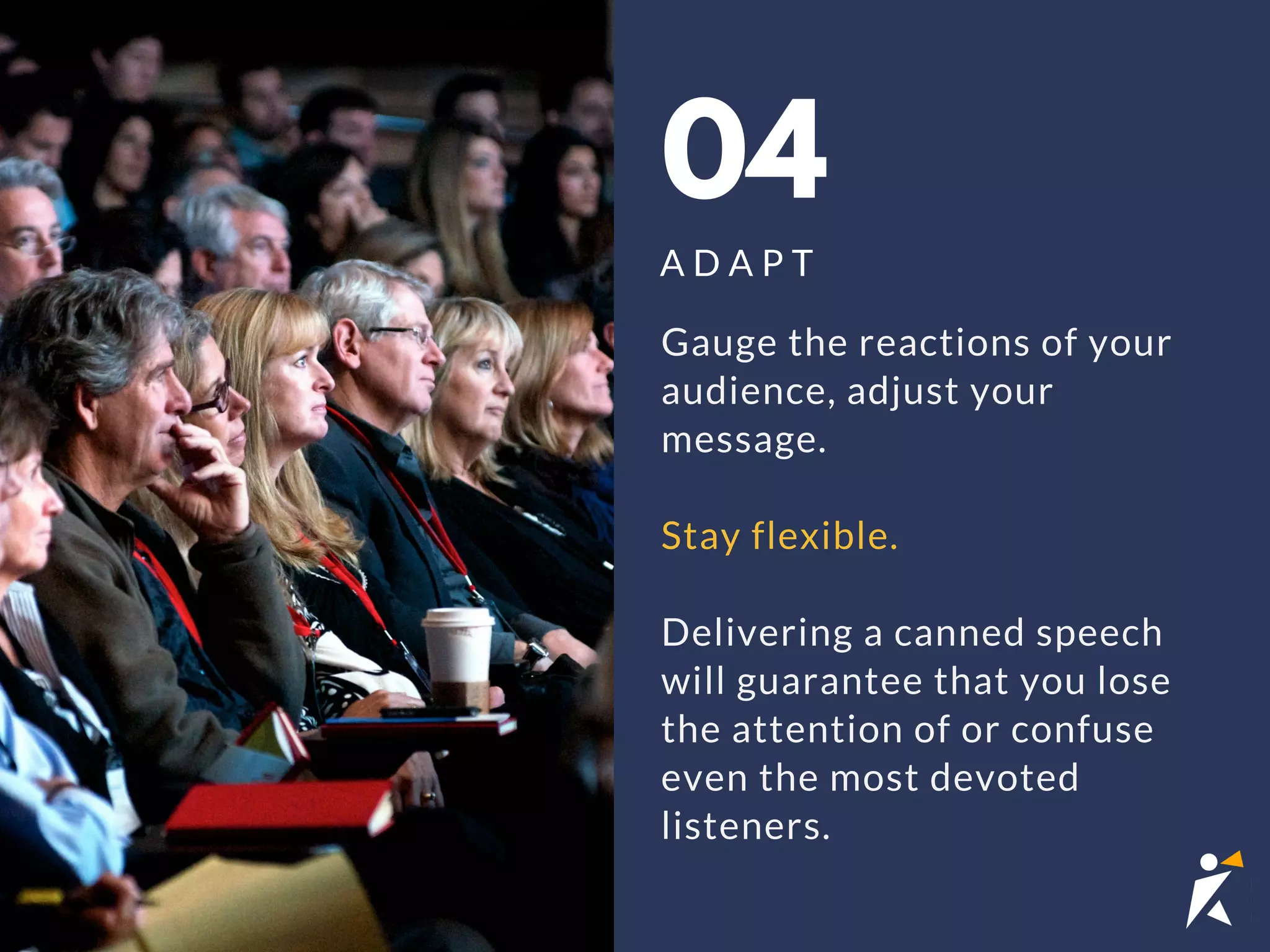
04
A D A P T
Gauge the reactions of your
audience, adjust your
message.
Stay flexible.
Delivering a canned speech
will guarantee that you lose
the attention of or confuse
even the most devoted
listeners.
TIP #5
Let your personality come
through.
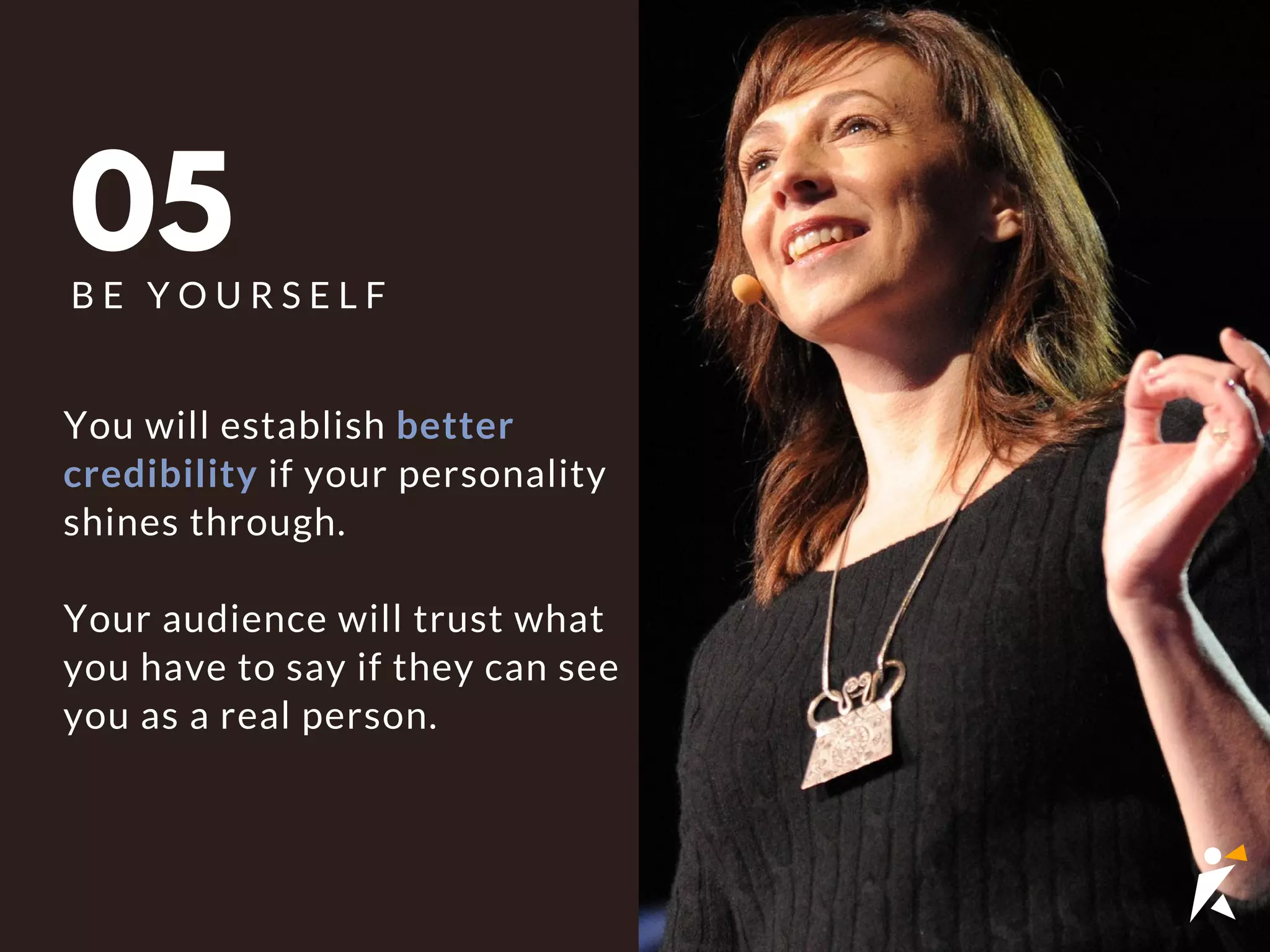
05B E Y O U R S E L F
You will establish better
credibility if your personality
shines through.
Your audience will trust what
you have to say if they can see
you as a real person.
TIP #6
Use humor.
Tell stories. 
 Use effective language.
Inject a funny anecdote or story in
your presentation, and you will
certainly grab your audience’s
attention.
06
P E R S O N A L
T O U C H E S
HA! WOW HMM...
TIP #7
Don’t read unless you have to.
Work from an outline.
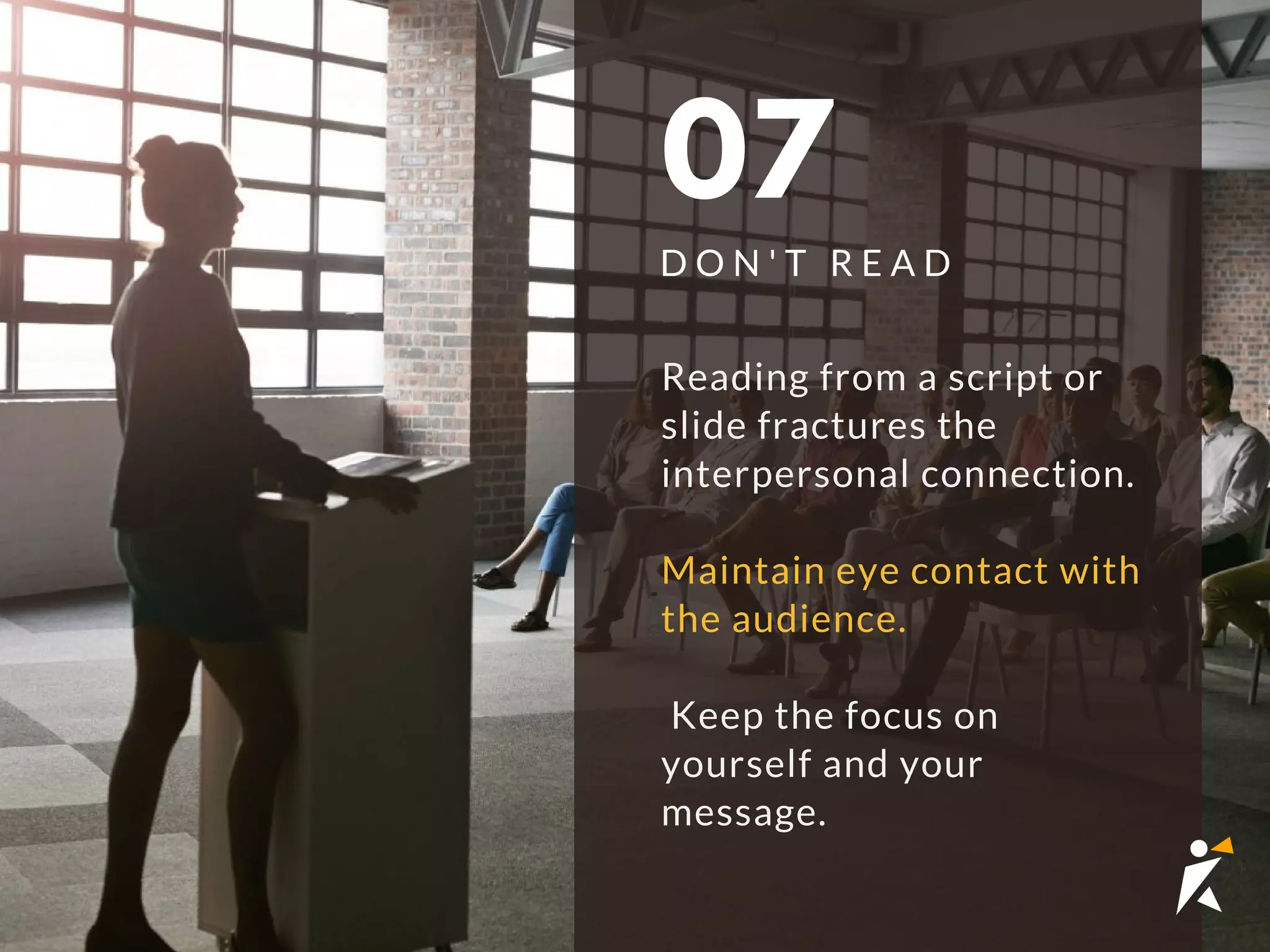
07
D O N ' T R E A D
Reading from a script or
slide fractures the
interpersonal connection.
Maintain eye contact with
the audience.
 Keep the focus on
yourself and your
message. 
TIP #8
Use your voice and hands
effectively.
Omit nervous gestures.
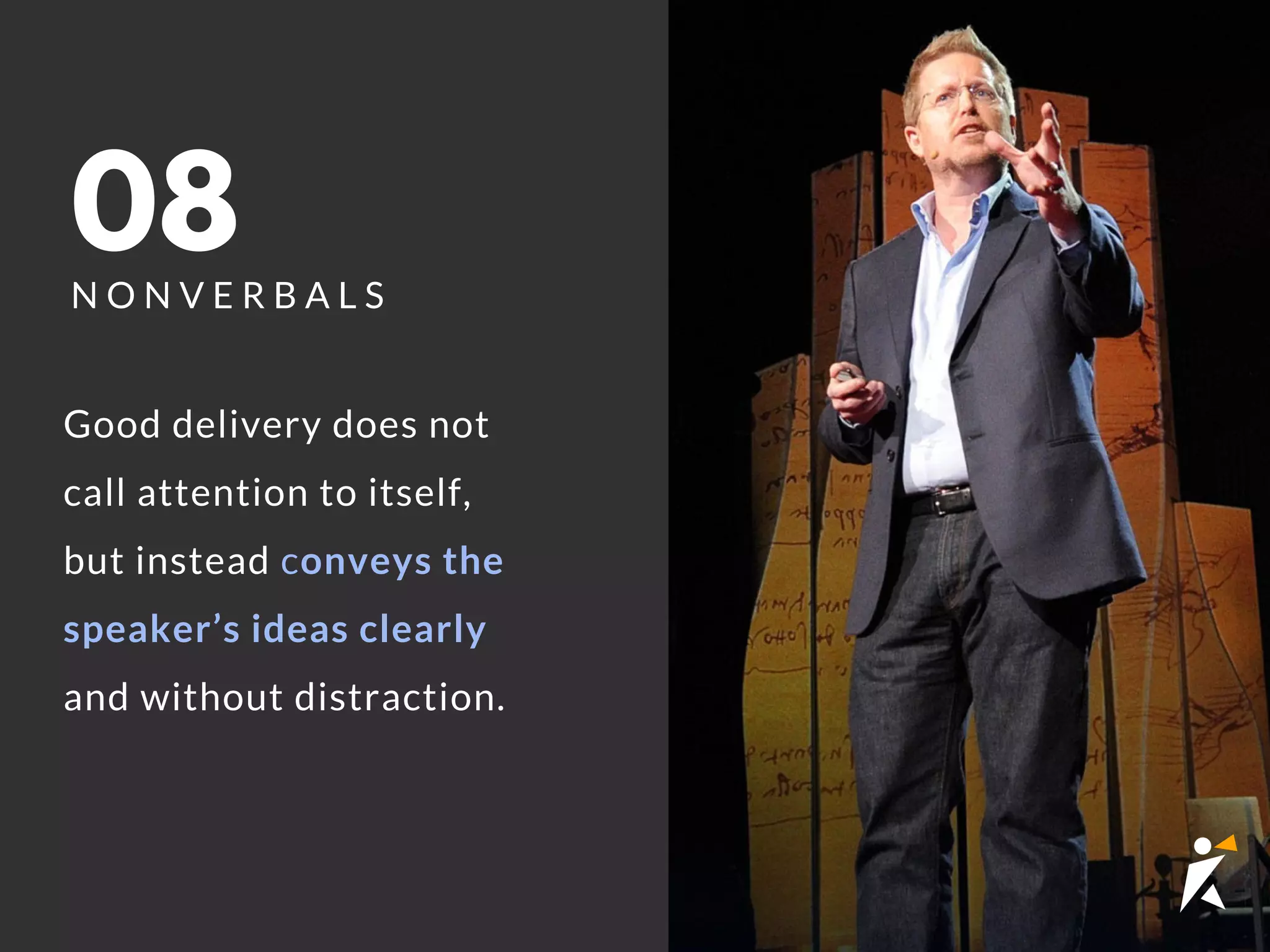
08N O N V E R B A L S
Good delivery does not
call attention to itself,
but instead conveys the
speaker’s ideas clearly
and without distraction.
TIP #9
Grab attention at
the beginning, and close with
a dynamic end.
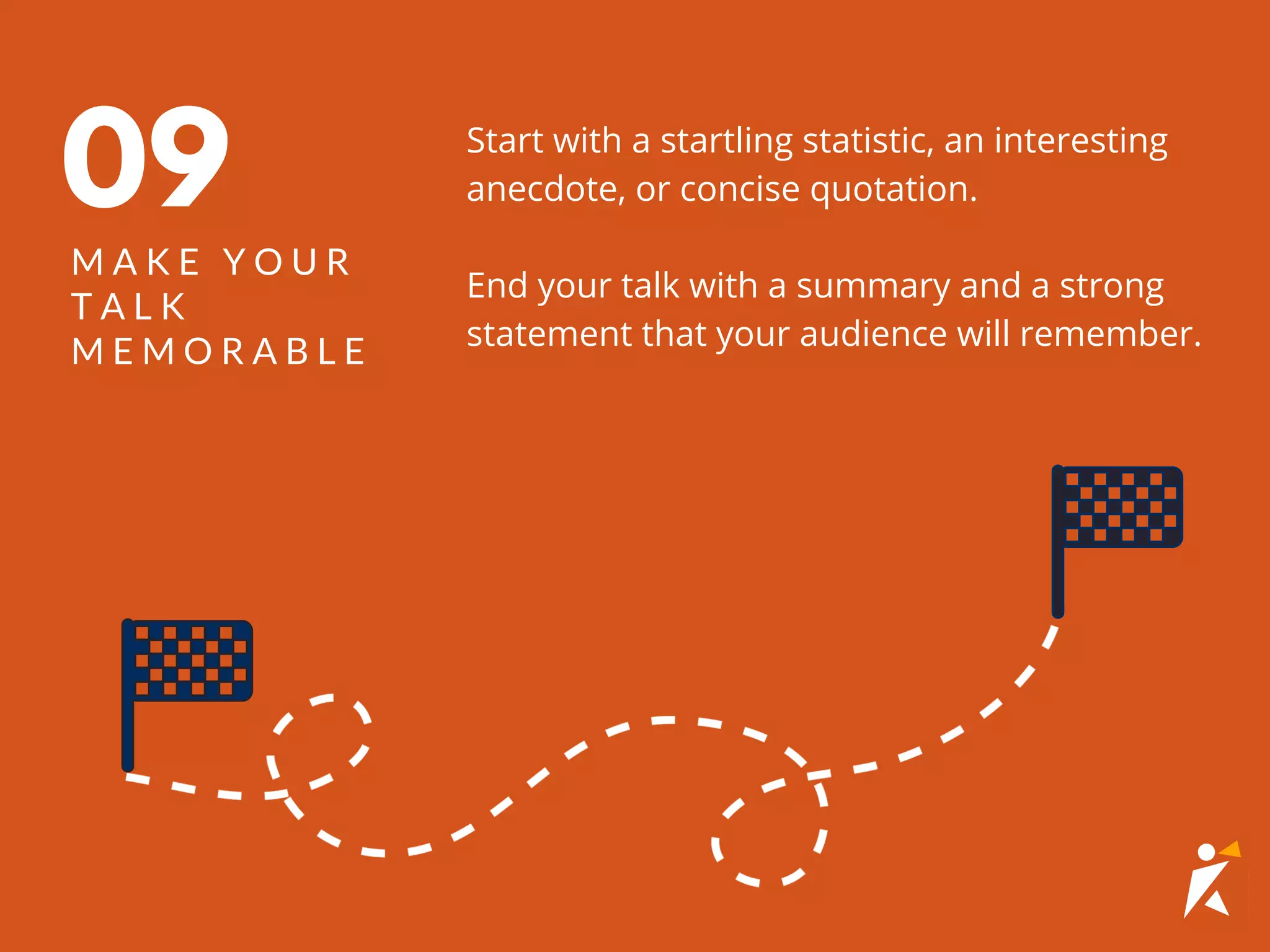
Start with a startling statistic, an interesting
anecdote, or concise quotation.
End your talk with a summary and a strong
statement that your audience will remember.
09
M A K E Y O U R
T A L K
M E M O R A B L E
TIP #10
Use audiovisual aids wisely.
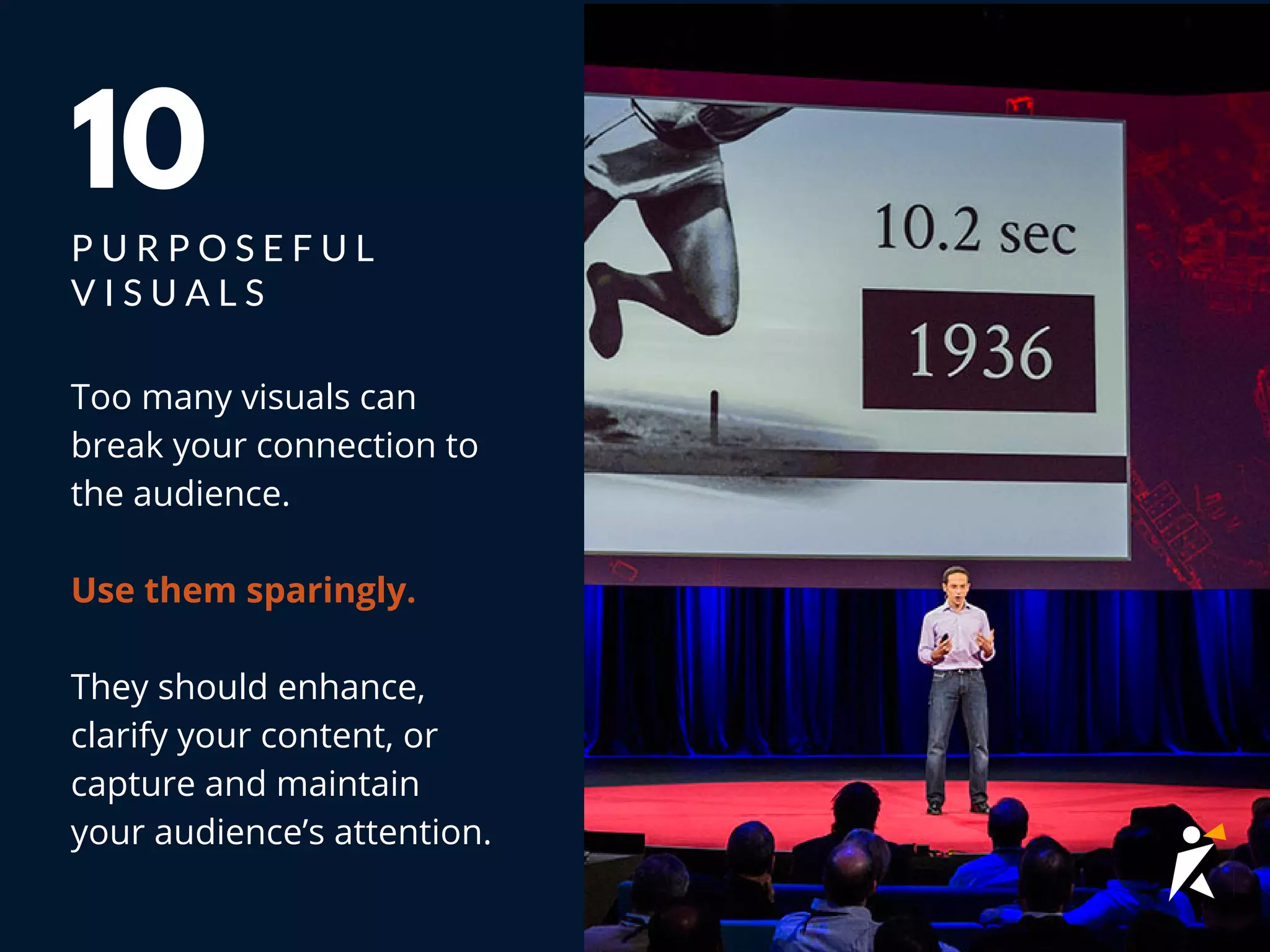
Too many visuals can
break your connection to
the audience.
Use them sparingly.
They should enhance,
clarify your content, or
capture and maintain
your audience’s attention.
10
P U R P O S E F U L
V I S U A L S
Good communication is never
perfect—and nobody expects
you to be perfect.
However, putting in the requisite
time to prepare will help you
deliver a better presentation.
10 TIPS FOR IMPROVING YOUR
PUBLIC SPEAKING SKILLS
W R I T T E N B Y M A R J O R I E L E E N O R T H
D E S I G N E D B Y E S T H E R S N I P P E
P U B L I S H E D B Y H A R V A R D U N I V E R S I T Y
P R E S E N T E D B Y
W W W . S P E A K E R H U B . C O M

10 Tips to be a great speaker [Visual Guide]

  • 1.
    10 TIPS F OR I M P R O V I N G Y O U R S P E A K I N G S K I L L S by MARJORIE LEE NORTH
  • 2.
    Marjorie L. Northis s a lecturer in Extension at Harvard University. She is a consultant for political candidates, professors, physicians, lawyers, and business executives, and runs a private practice that specializes in public speaking and executive communication skills.  These are her top ten tips for speakers. 
  • 3.
    TIP #1 Nervousness isnormal. Practice and prepare.
  • 4.
    01 P R AC T I C E Nerves are good. The adrenaline rush makes you more alert and ready to give your best performance. Overcome anxiety by preparing. Take the time to go over your notes several times. Once you have become comfortable with the material, practice—a lot. 
  • 5.
    TIP #2 Know youraudience. Your speech is about them, not you.
  • 6.
    02K N OW Y O U R A U D I E N C E Learn as much about your listeners as you can. This will help you determine your choice of words, level of information, and organization pattern.
  • 7.
    TIP #3 Organize yourmaterial in the most effective manner to attain your purpose.
  • 8.
    Write down thetopic, general purpose, specific purpose, central idea, and main points. POINT 1 POINT 2 POINT 3 03 C R E A T E T H E F R A M E W O R K Grab the audience’s attention in the first 30 seconds.
  • 9.
    TIP #4 Watch forfeedback. Adapt to it.
  • 10.
    04 A D AP T Gauge the reactions of your audience, adjust your message. Stay flexible. Delivering a canned speech will guarantee that you lose the attention of or confuse even the most devoted listeners.
  • 11.
    TIP #5 Let yourpersonality come through.
  • 12.
    05B E YO U R S E L F You will establish better credibility if your personality shines through. Your audience will trust what you have to say if they can see you as a real person.
  • 13.
    TIP #6 Use humor. Tellstories.   Use effective language.
  • 14.
    Inject a funnyanecdote or story in your presentation, and you will certainly grab your audience’s attention. 06 P E R S O N A L T O U C H E S HA! WOW HMM...
  • 15.
    TIP #7 Don’t readunless you have to. Work from an outline.
  • 16.
    07 D O N' T R E A D Reading from a script or slide fractures the interpersonal connection. Maintain eye contact with the audience.  Keep the focus on yourself and your message. 
  • 17.
    TIP #8 Use yourvoice and hands effectively. Omit nervous gestures.
  • 18.
    08N O NV E R B A L S Good delivery does not call attention to itself, but instead conveys the speaker’s ideas clearly and without distraction.
  • 19.
    TIP #9 Grab attention at the beginning,and close with a dynamic end.
  • 20.
    Start with astartling statistic, an interesting anecdote, or concise quotation. End your talk with a summary and a strong statement that your audience will remember. 09 M A K E Y O U R T A L K M E M O R A B L E
  • 21.
  • 22.
    Too many visuals can breakyour connection to the audience. Use them sparingly. They should enhance, clarify your content, or capture and maintain your audience’s attention. 10 P U R P O S E F U L V I S U A L S
  • 23.
    Good communication isnever perfect—and nobody expects you to be perfect. However, putting in the requisite time to prepare will help you deliver a better presentation.
  • 24.
    10 TIPS FORIMPROVING YOUR PUBLIC SPEAKING SKILLS W R I T T E N B Y M A R J O R I E L E E N O R T H D E S I G N E D B Y E S T H E R S N I P P E P U B L I S H E D B Y H A R V A R D U N I V E R S I T Y P R E S E N T E D B Y W W W . S P E A K E R H U B . C O M